Cadmium sulphide (CdS) thin films were prepared on glass substrates using the spin-coating technique from a precursor solution containing cadmium nitrate tetrahydrate (Cd(NO₃)₂•4H₂O), indium nitrate hydrate (In(NO₃)₃•xH₂O), thiourea (CH₄N₂S), and ammonium nitrate (NH₄NO₃). This study focused on synthesizing indium-doped CdS thin films via spin coating and examining how varying indium concentrations (0.004 M, 0.006 M, 0.008 M, and 0.010 M) affect the structural and optical properties of the films. The resulting thin films were analyzed using several characterization techniques, including X-ray diffraction (XRD), UV-Visible spectroscopy (UV-Vis), and scanning electron microscopy (SEM). Analysis of the absorbance spectra indicated that the optical band gap energy ranged from 3.63 eV to 3.88 eV, with the highest value observed at an indium concentration of 0.008 M. Optical measurements obtained through UV-Vis spectrophotometry confirmed high transparency within the visible region. These findings suggest that increasing the indium content leads to a widening of the band gap.
The increasing global demand for sustainable and cost-efficient energy solutions has significantly accelerated advancements in thin-film photovoltaic technologies. Thin films are particularly important in solar cell development because they enhance light absorption while reducing raw material usage 1. Among various window layer materials explored, cadmium sulfide (CdS) stands out due to its wide band gap, high transparency in the visible region, and excellent electrical characteristics. As a II-VI semiconductor, bulk CdS typically exhibits a direct band gap of approximately 2.42 eV, which can be substantially increased through doping or nanostructuring reaching up to 3.88 eV as demonstrated in the present study. This tunable nature of the band gap renders CdS highly suitable for use in optoelectronic devices such as solar cells, LEDs, and photodetectors 2. CdS mainly crystallizes in the hexagonal (wurtzite) phase, although a metastable cubic phase can also form. The crystalline structure significantly affects the optical and electronic behavior of the material, which in turn influences the overall performance of the devices 3.
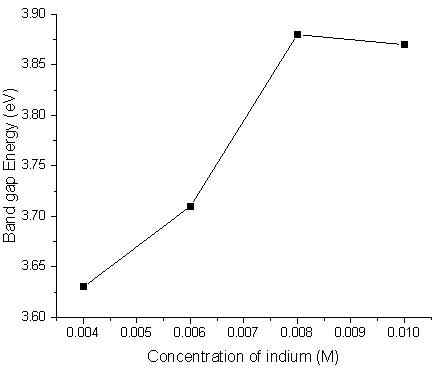
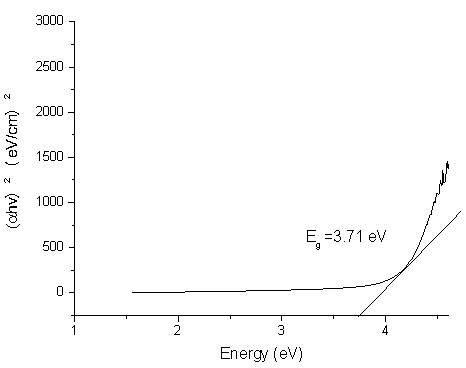
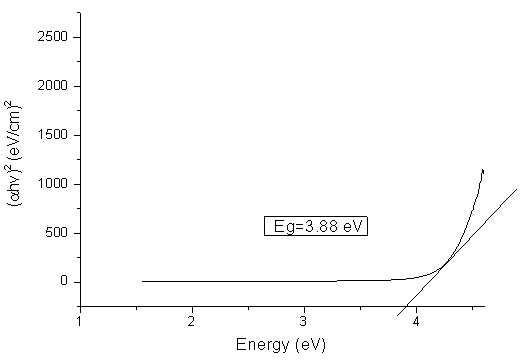
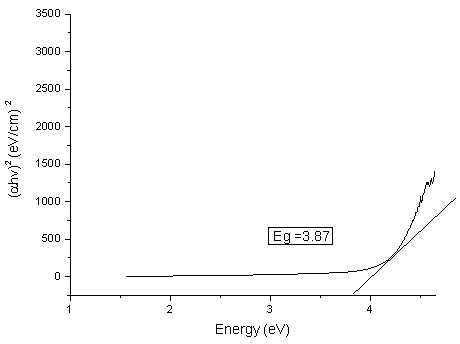
CdS has gained widespread recognition as a window material in thin-film solar cells and is often paired with absorber layers such as CdTe 4, CuInGaSe₂ 5, CuO 6, PbS 7, Cu₂ZnSnS₄ 8, SnS 9, and ZnS 10. This is attributed to its high visible light transmittance and favorable band alignment. Unlike some conventional window materials that may pose environmental concerns or suffer from limited chemical stability, CdS offers a combination of reliable stability and excellent optoelectronic performance, making it compatible with various heterojunction architectures 11. Substitutional doping of CdS with elements like indium has been employed to improve its conductivity and optical transparency, tailoring the material for more efficient photovoltaic applications 12. In this investigation, indium was introduced as a dopant at concentrations of 0.004 M, 0.006 M, 0.008 M, and 0.010 M for the samples labeled SA, SB, SC, and SD, respectively. The corresponding optical band gaps measured were 3.63 eV, 3.71 eV, 3.88 eV, and 3.87 eV, indicating a trend of band gap widening with increasing indium concentration.
Various deposition methods are employed in the synthesis of CdS thin films, including chemical bath deposition (CBD) 13, thermal evaporation 14, pulsed laser deposition (PLD) 15, sputtering 16, atomic layer deposition (ALD) 16, physical vapor deposition 17, spray pyrolysis 18, molecular beam epitaxy 19, close space sublimation 20, successive ionic layer adsorption and reaction (SILAR) 21, screen printing 22, and spin coating 23. While many of these methods yield high-quality films with good control over properties, they are often associated with high costs and complex procedures 24. In contrast, the spin coating technique has gained attention due to its simplicity, affordability, and scalability 25. This method involves applying a precursor solution onto a substrate, followed by rapid spinning to produce a uniform and thin film. By adjusting spin speed, solution viscosity, and annealing conditions, precise control over film thickness and surface morphology can be achieved.
Although prior studies have explored the doping of CdS with elements such as Ni, Fe, Cu, Co, Ag, and Zn, the use of indium as a dopant have not been optimized despite the fact that it is the best dopant. Indium proves to be an effective dopant for CdS thin films, as the substitution of Cd²⁺ ions with higher valence In³⁺ ions introduces additional free electrons, thereby significantly enhancing n-type conductivity 26.
In this work, CdS thin films were successfully fabricated using the spin-coating method, employing cadmium nitrate and thiourea as precursors and indium nitrate as the dopant. X-ray diffraction (XRD) analysis confirmed that all films retained a pure hexagonal CdS phase. UV-Visible spectrophotometry revealed high transparency in the visible range and a tunable band gap, underscoring the films’ potential for window layer applications in solar cells. The observed band gap shift with increased indium concentration underscores the role of dopant levels in modulating the optical properties of CdS to optimize device efficiency.
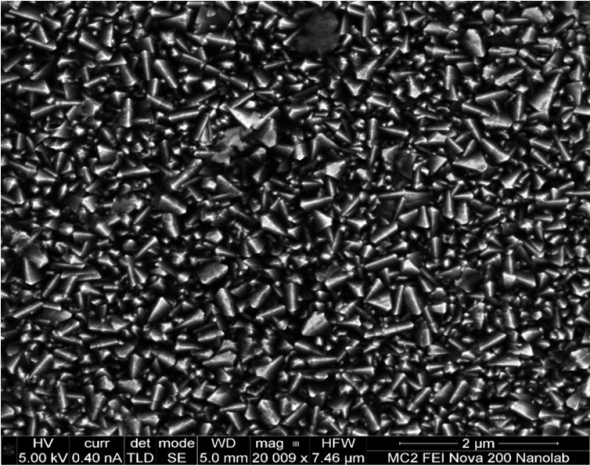
Scanning Electron Microscopy (SEM) analysis revealed that the films exhibited a compact and uniformly distributed grain structure an advantageous morphology that helps minimize surface recombination and enhance carrier mobility. Although extensive research has been conducted on CdS thin films, this study underscores the pivotal role of dopant concentration optimization in enhancing structural and optical properties, thereby addressing the challenge of low power conversion efficiency (PCE) in photovoltaic cells.
By emphasizing the use of spin coating and controlled indium doping, this research contributes to the ongoing development of high-performance window layers for thin-film photovoltaic devices. Future research should assess the long-term environmental stability of these films under real-world operating conditions and benchmark their performance against other doped and undoped window materials to evaluate their viability for commercial solar technologies.
The materials used for the fabrication of indium-doped cadmium sulfide (CdS:In) thin films included cadmium nitrate tetrahydrate (Cd(NO₃)₂•4H₂O),(99.95 % purity) sigma Aldrich, indium nitrate hydrate (In(NO₃)₃•xH₂O), 99.95 % purity) sigma Aldrich, thiourea (CH₄N₂S) (99.99%purity) sigma Aldrich, and ammonium nitrate (NH₄NO₃) sigma Aldrich, with distilled water serving as the solvent. Ammonium hydroxide (NH₄OH) was employed to adjust the pH of the precursor solutions. All reagents were of analytical grade and used without further purification. Fluorine-doped tin oxide (FTO) coated glass substrates were selected as the deposition base due to their excellent conductivity and optical transparency.
2.2. Preparation of CdS: In SolutionTo prepare the CdS:In precursor solutions, 1 M cadmium nitrate tetrahydrate and 1 M thiourea were dissolved in distilled water along with varying concentrations of indium nitrate hydrate (0.004 M, 0.006 M, 0.008 M, and 0.010 M for samples SA, SB, SC, and SD respectively). Ammonium nitrate was added as a complexing agent to stabilize the metal ions in solution. The pH of each solution was adjusted using ammonium hydroxide to create a slightly basic medium suitable for CdS formation. The solutions were stirred continuously at 70 °C for 1 hour using a magnetic stirrer and hot plate to ensure complete mixing and dissolution of all constituents.
2.3. Preparation of SubstratesFluorine-doped tin oxide (FTO) glass substrates were used for film deposition. The substrates were thoroughly cleaned using ethanol and then the repeated process using deionized water to eliminate surface impurities and ensure proper adhesion of the CdS:In films. The cleaned substrates were then dried and stored in a clean environment prior to deposition
2.4. Film Deposition and Subsequent TreatmentCdS:In thin films were deposited on the cleaned FTO substrates using the spin coating technique. A few drops of the precursor solution were placed on each substrate and spun at 2000 rpm for 60 seconds to form a uniform coating. After each coating cycle, the films were pre-baked in an oven at 100 °C for 60 minutes to drive off solvents and remove organic residues. The coated substrates were allowed to cool gradually within the oven. This process was repeated four times for each sample. The final films were labeled SA, SB, SC, and SD, corresponding to indium concentrations of 0.004 M, 0.006 M, 0.008 M, and 0.010 M, respectively. Following each spin coating cycle, the films were annealed on a hot plate at 350 °C (optimum temperature) for 20 minutes to evaporate the solvent and remove organic residues. After annealing, the films were cooled gradually to room temperature inside the oven. This coating and annealing process was repeated four times for each sample to achieve the desired film thickness.
We observed that film thickness increases with increasing concentration of indium. This makes film with controlled thickness to be deposited. SCOUT software was used to measure the film thickness. The average coated thickness was evaluated to be about 10nm per coating cycle. Generally, the thickness of the coating depends on the speed at which solution level falls, concentration, and viscosity of the respective solution, temperature and relative humidity.
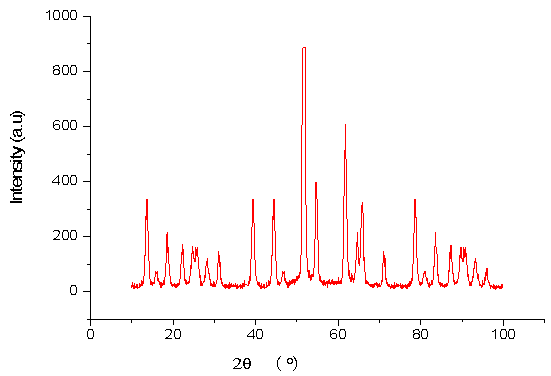
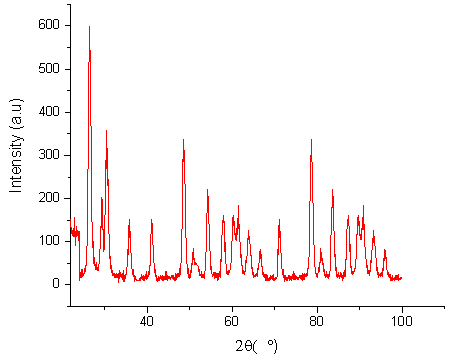
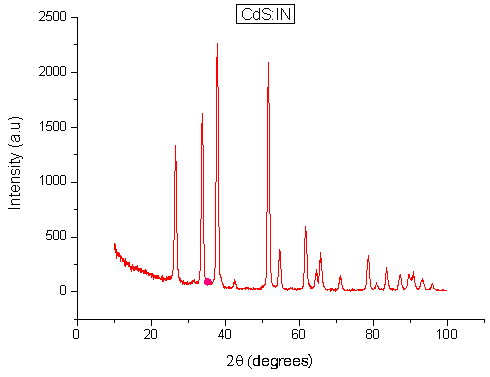
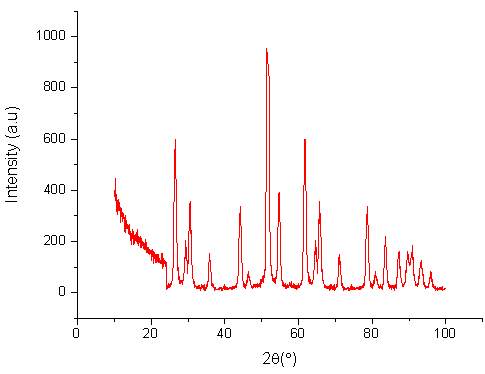
Structural studies were performed using an X-ray diffractometer scanning at a rate of 2°/min over a range of 10°–100° with CuKα radiation (λ = 1.5406 Å) operating at 40 kV and 20 mA. Figure 1 (a-d) shows X-Ray Diffraction (XRD) pattern for a CdS:In film.. The sharp and intense peaks refer to different crystalline planes with different orientations of crystals. The XRD pattern exhibit major diffraction peaks at 26.64°, 33.42°, 38.21°, 42.62°, and 51.79° which corresponds to (002), (101), (102), (110) and (112) crystal planes, respectively. The XRD pattern is in good agreement with JCPDS data (JCPDS No: 41-1049) of pure hexagonal CdS:In 27. The average crystallite size of CdS:In crystals is calculated using the Scherrer formula,
 |
Here D is the grain size, K is a constant taken to be 0.9, β is the full width at half maximum (FWHM) in radians and λ is the wavelength of the x-rays. The CdScrystallite sizes have been determined from the width of the XRD to be 5 nm to 10 nm for the CdS films. The average crystallite size calculated after XRD pattern analysis is D = 8.15 nm


The surface morphology of the thin-film layers was examined using an Ultra 55 Karl-Zeiss scanning electron microscope (SEM). The SEM analysis of the CdS:In thin film reveals a densely packed nanostructured morphology with cone-like and rod-shaped crystallites uniformly distributed across the surface. The nanostructures vary in size but are generally consistent in shape and orientation, suggesting polycrystalline growth with good homogeneity. No significant cracks, voids, or peeling are observed, indicating good film adhesion and mechanical stability. Overall, the film demonstrates a uniform and well-developed morphology, characteristic of high-quality CdS:In thin films suitable for photovoltaic cell applications.

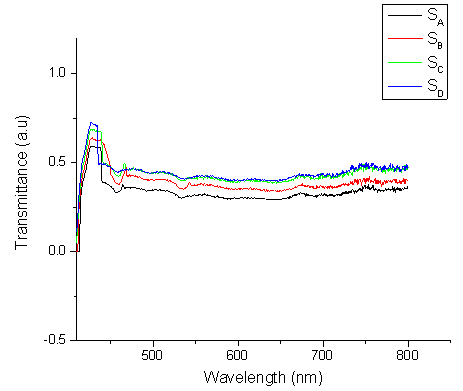
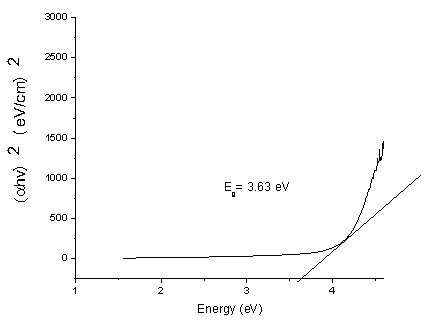
Optical transmission data were obtained using UV-Vis spectrophotometer. The wavelength range was set at 300nm to 1100nm .origin pro 8.5 software was utilized to index the transmission data as shown in spectral figure 4. The optical band gap has been obtained from the plot of (𝛼ℎ𝜈)2 against ℎν (shown in Figures 5(a)-(d) via extrapolating the straight line portion of the curve to intercept the energy axis. The band gap energy obtained as intercept on ℎν axis were found to be 3.63 eV, 3.71 eV, 3.88 eV, and 3.87 eV for samples SA, SB,SC and SD respectively. The observed increase in band gap energy with indium doping can be attributed to the Burstein-Moss effect 28. As the concentration of indium increases, more charge carriers are introduced into the conduction band, causing a shift of the Fermi level into the conduction band 29. This leads to the filling of low-energy states in the conduction band, requiring photons of higher energy to excite electrons from the valence band to the conduction band. Consequently, the optical band gap appears to increase with higher doping levels.


Figure 3 shows a widening band gap with corresponding increase in concentration of indium. When the concentration of indium was 0.004 M,0.006M, 0.008M and 0.010 M the band gap energies were 3.63, 3.71, 3.88 and 3.87 eV respectively. A similar trend of band gap widening and then narrowing for higher doping concentrations is reported by Josh et al. 30 with Cu-doped ZnO thin films prepared by sol- gel spin coating method.
The transmittance spectrum of indium doped cadmium sulphide thin films is transparent with the average transmittance ranging between 60% - 73% at wavelength range of between 400nm to 800 nm as shown in Figure 4. A similar increase in transmittance with increase in dopant concentration is reported by Ma et al 31 with Zn doping on CdS thin films by chemical bath deposition and by muthusamy and muthukamaran 32 with CU- doping on CdS thin films by chemical bath deposition. The rise in average transmittance observed in all indium-doped cadmium sulphide (CdS) thin films can be attributed to intrinsic modifications within the material. These changes are primarily driven by the incorporation of indium, which alters the electronic structure of CdS and influences the film’s surface morphology. Such structural and electronic adjustments reduce light absorption and scattering, resulting in improved optical transparency.


This study successfully fabricated and characterized indium-doped (CdS:In) thin films using the spin coating technique, with a focus on tuning their optical and structural properties for application as window layers in thin-film solar cells. The variation of indium nitrate concentration in the precursor solution significantly influenced the optical band gap and crystallinity of the resulting films. UV-Vis spectroscopy revealed a progressive increase in optical band gap energy from 3.63 eV to 3.88 eV for samples SA to SD, corresponding to indium concentrations of 0.004 M to 0.01 M, respectively. This tunability demonstrates the potential of CdS:In films for optimizing light transmission and enhancing the efficiency of underlying absorber layers in photovoltaic devices. X-ray diffraction analysis confirmed the formation of a pure hexagonal CdS structure with no extraneous peaks, indicating high phase purity and crystallinity. The systematic optimization of indium doping levels allowed for improved control over the optoelectronic properties of the films. These findings affirm that indium-doped CdS thin films, when fabricated under optimized conditions, are well-suited for use as efficient and transparent window layers in thin-film photovoltaic technologies.
The authors would like to express their sincere gratitude to the Electronics Research Lab, Physics Department, Egerton University for providing the spin coaters used for depositing thin films, the UV-Vis spectrophotometer for optical analysis, and the solar cell simulator for testing the fabricated cells. We also extend our thanks to the Center for Complex Particle Systems, University of Michigan, for generously providing access to the XRD and SEM equipment for structural and morphological characterization, respectively.
The authors declare that there is no conflict of interest.
John Ogana Ogechi: Writing original draft, Methodology, Investigation,Formal analysis.
Daniel Ketui: Writing review & editing, Supervision, Methodology, Conceptualization.
Duke Oeba: Writing review & editing, Supervision, Methodology, Conceptualization
| [1] | N. Obare, W. Isoe, A. Nalianya, M. Mageto, and V. Odari, “Numerical study of copper antimony sulphide (CuSbS2) solar cell by SCAPS-1D,” Heliyon, vol. 10, no. 5, 2024. | ||
| In article | View Article PubMed | ||
| [2] | A. Kuddus, S. K. Mostaque, S. Mouri, and J. Hossain, “Emerging II-VI wide bandgap semiconductor device technologies,” Phys. Scr., vol. 99, no. 2, p. 022001, 2024. | ||
| In article | View Article | ||
| [3] | K. Chen, S. Schünemann, S. Song, and H. Tüysüz, “Structural effects on optoelectronic properties of halide perovskites,” Chem. Soc. Rev., vol. 47, no. 18, pp. 7045–7077, 2018. | ||
| In article | View Article PubMed | ||
| [4] | Z. Fang, X. C. Wang, H. C. Wu, and C. Z. Zhao, “Achievements and challenges of CdS/CdTe solar cells,” Int. J. Photoenergy, vol. 2011, no. 1, p. 297350, 2011. | ||
| In article | View Article | ||
| [5] | S. R. Kodigala, Cu (In1-xGax) Se2 Based thin film solar cells, vol. 35. Academic Press, 2011. | ||
| In article | View Article | ||
| [6] | S. S. Hossain et al., “Facile synthesis of CuO/CdS heterostructure photocatalyst for the effective degradation of dye under visible light,” Environ. Res., vol. 188, p. 109803, 2020. | ||
| In article | View Article PubMed | ||
| [7] | J. Hernández-Borja, Y. Vorobiev, and R. Ramírez-Bon, “Thin film solar cells of CdS/PbS chemically deposited by an ammonia-free process,” Sol. Energy Mater. Sol. Cells, vol. 95, no. 7, pp. 1882–1888, 2011. | ||
| In article | View Article | ||
| [8] | S. D. B. George et al., “Microwave-assisted synthesis of Cu2ZnSnS4 and Cu2Zn0. 5Ni0. 5SnS4 nanoparticles for thin-film solar cells,” J. Mater. Sci. Mater. Electron., vol. 35, no. 34, pp. 1–19, 2024. | ||
| In article | View Article | ||
| [9] | R. R. KT, “Investigations on the parameters limiting the performance of CdS/SnS solar cell.,” Int. J. Energy Res., vol. 42, no. 5, 2018. | ||
| In article | View Article | ||
| [10] | J. Han, G. Fu, V. Krishnakumar, C. Liao, W. Jaegermann, and M.-P. Besland, “Preparation and characterization of ZnS/CdS bi-layer for CdTe solar cell application,” J. Phys. Chem. Solids, vol. 74, no. 12, pp. 1879–1883, 2013. | ||
| In article | View Article | ||
| [11] | W. Wang, J. Xue, and J. Liu, “Recent advances in CdS heterojunctions: morphology, synthesis, performances and prospects,” J. Mater. Chem. A, vol. 12, no. 18, pp. 10659–10675, 2024. | ||
| In article | View Article | ||
| [12] | R. Bagheri and H. Kafashan, “Structural and optical properties of In-doped CdS nanostructures: a comprehensive study,” Ceram. Int., vol. 50, no. 19, pp. 37041–37056, 2024. | ||
| In article | View Article | ||
| [13] | F. Liu et al., “Characterization of chemical bath deposited CdS thin films at different deposition temperature,” J. Alloys Compd., vol. 493, no. 1–2, pp. 305–308, 2010. | ||
| In article | View Article | ||
| [14] | N. Memarian, S. M. Rozati, I. Concina, and A. Vomiero, “Deposition of nanostructured CdS thin films by thermal evaporation method: effect of substrate temperature,” Materials, vol. 10, no. 7, p. 773, 2017. | ||
| In article | View Article PubMed | ||
| [15] | B. Liu et al., “Effects of deposition temperature and CdCl2 annealing on the CdS thin films prepared by pulsed laser deposition,” J. Alloys Compd., vol. 654, pp. 333–339, 2016. | ||
| In article | View Article | ||
| [16] | M. Islam et al., “Comparison of structural and optical properties of CdS thin films grown by CSVT, CBD and sputtering techniques,” Energy Procedia, vol. 33, pp. 203–213, 2013. | ||
| In article | View Article | ||
| [17] | I. Vakaliuk, R. Yavorskiy, L. Nykyruy, B. Naidych, and Y. S. Yavorskyy, “Morphology and optical properties of CdS thin films prepared by Physical Vapor Deposition method,” Phys. Chem. Solid State, vol. 23, no. 4, pp. 669–677, 2022. | ||
| In article | View Article | ||
| [18] | M. Shkir, I. Ashraf, A. Khan, M. T. Khan, A. M. El-Toni, and S. AlFaify, “A facile spray pyrolysis fabrication of Sm: CdS thin films for high-performance photodetector applications,” Sens. Actuators Phys., vol. 306, p. 111952, 2020. | ||
| In article | View Article | ||
| [19] | K. Li et al., “Molecular beam epitaxy deposition of in situ O-doped CdS films for highly efficient Sb2 (S, Se) 3 solar cells,” Adv. Funct. Mater., vol. 33, no. 48, p. 2304141, 2023. | ||
| In article | View Article | ||
| [20] | D.-B. Li et al., “Stable and efficient CdS/Sb2Se3 solar cells prepared by scalable close space sublimation,” Nano Energy, vol. 49, pp. 346–353, 2018. | ||
| In article | View Article | ||
| [21] | S.-Y. Lee et al., “A general guide for adsorption of cadmium sulfide (CdS) quantum dots by successive ionic layer adsorption and reaction (SILAR) for efficient CdS-sensitized photoelectrochemical cells,” Appl. Surf. Sci., vol. 589, p. 152898, 2022. | ||
| In article | View Article | ||
| [22] | A. Tang et al., “A new photoelectric ink based on nanocellulose/CdS quantum dots for screen-printing,” Carbohydr. Polym., vol. 148, pp. 29–35, 2016. | ||
| In article | View Article PubMed | ||
| [23] | G. K. Rahane et al., “Photoelectrochemical investigation on the cadmium sulfide (CdS) thin films prepared using spin coating technique,” ES Mater. Manuf., vol. 11, pp. 57–64, 2020. | ||
| In article | |||
| [24] | M. A. Butt et al., “Optical thin films fabrication techniques—Towards a low-cost solution for the integrated photonic platform: A review of the current status,” Materials, vol. 15, no. 13, p. 4591, 2022. | ||
| In article | View Article PubMed | ||
| [25] | A. C. Mendhe, “Spin coating: Easy technique for thin films,” in Simple Chemical Methods for Thin Film Deposition: Synthesis and Applications, Springer, 2023, pp. 387–424. | ||
| In article | View Article | ||
| [26] | R. Olvera-Rivas et al., “Effect of indium doping on structural, optical and electrical properties of cadmium sulfide thin films,” Chalcogenide Lett, vol. 17, no. 7, pp. 329–336, 2020. | ||
| In article | |||
| [27] | X. Yang, B. Wang, Y. Mu, M. Zheng, and Y. Wang, “Photocatalytic performance of cubic and hexagonal phase CdS synthesized via different Cd sources,” J. Electron. Mater., vol. 48, pp. 2895–2901, 2019. | ||
| In article | View Article | ||
| [28] | C. M. Turgut, “Refractive Index Tuning with Burstein-Moss Effect in Indium Nitrite Under Photoexcitation,” 2009. | ||
| In article | |||
| [29] | C. Benouis, M. Benhaliliba, A. S. Juarez, M. Aida, F. Chami, and F. Yakuphanoglu, “The effect of indium doping on structural, electrical conductivity, photoconductivity and density of states properties of ZnO films,” J. Alloys Compd., vol. 490, no. 1–2, pp. 62–67, 2010. | ||
| In article | View Article | ||
| [30] | K. Joshi, M. Rawat, S. K. Gautam, R. Singh, R. Ramola, and F. Singh, “Band gap widening and narrowing in Cu-doped ZnO thin films,” J. Alloys Compd., vol. 680, pp. 252–258, 2016. | ||
| In article | View Article | ||
| [31] | [L. Ma, X. Ai, and X. Wu, “Effect of substrate and Zn doping on the structural, optical and electrical properties of CdS thin films prepared by CBD method,” J. Alloys Compd., vol. 691, pp. 399–406, 2017. | ||
| In article | View Article | ||
| [32] | M. Muthusamy and S. Muthukumaran, “Effect of Cu-doping on structural, optical and photoluminescence properties of CdS thin films,” Optik, vol. 126, no. 24, pp. 5200–5206, 2015. | ||
| In article | View Article | ||
Published with license by Science and Education Publishing, Copyright © 2025 Ogechi Ogana John, Daniel Ketui and Duke Oeba
 This work is licensed under a Creative Commons Attribution 4.0 International License. To view a copy of this license, visit
http://creativecommons.org/licenses/by/4.0/
This work is licensed under a Creative Commons Attribution 4.0 International License. To view a copy of this license, visit
http://creativecommons.org/licenses/by/4.0/
| [1] | N. Obare, W. Isoe, A. Nalianya, M. Mageto, and V. Odari, “Numerical study of copper antimony sulphide (CuSbS2) solar cell by SCAPS-1D,” Heliyon, vol. 10, no. 5, 2024. | ||
| In article | View Article PubMed | ||
| [2] | A. Kuddus, S. K. Mostaque, S. Mouri, and J. Hossain, “Emerging II-VI wide bandgap semiconductor device technologies,” Phys. Scr., vol. 99, no. 2, p. 022001, 2024. | ||
| In article | View Article | ||
| [3] | K. Chen, S. Schünemann, S. Song, and H. Tüysüz, “Structural effects on optoelectronic properties of halide perovskites,” Chem. Soc. Rev., vol. 47, no. 18, pp. 7045–7077, 2018. | ||
| In article | View Article PubMed | ||
| [4] | Z. Fang, X. C. Wang, H. C. Wu, and C. Z. Zhao, “Achievements and challenges of CdS/CdTe solar cells,” Int. J. Photoenergy, vol. 2011, no. 1, p. 297350, 2011. | ||
| In article | View Article | ||
| [5] | S. R. Kodigala, Cu (In1-xGax) Se2 Based thin film solar cells, vol. 35. Academic Press, 2011. | ||
| In article | View Article | ||
| [6] | S. S. Hossain et al., “Facile synthesis of CuO/CdS heterostructure photocatalyst for the effective degradation of dye under visible light,” Environ. Res., vol. 188, p. 109803, 2020. | ||
| In article | View Article PubMed | ||
| [7] | J. Hernández-Borja, Y. Vorobiev, and R. Ramírez-Bon, “Thin film solar cells of CdS/PbS chemically deposited by an ammonia-free process,” Sol. Energy Mater. Sol. Cells, vol. 95, no. 7, pp. 1882–1888, 2011. | ||
| In article | View Article | ||
| [8] | S. D. B. George et al., “Microwave-assisted synthesis of Cu2ZnSnS4 and Cu2Zn0. 5Ni0. 5SnS4 nanoparticles for thin-film solar cells,” J. Mater. Sci. Mater. Electron., vol. 35, no. 34, pp. 1–19, 2024. | ||
| In article | View Article | ||
| [9] | R. R. KT, “Investigations on the parameters limiting the performance of CdS/SnS solar cell.,” Int. J. Energy Res., vol. 42, no. 5, 2018. | ||
| In article | View Article | ||
| [10] | J. Han, G. Fu, V. Krishnakumar, C. Liao, W. Jaegermann, and M.-P. Besland, “Preparation and characterization of ZnS/CdS bi-layer for CdTe solar cell application,” J. Phys. Chem. Solids, vol. 74, no. 12, pp. 1879–1883, 2013. | ||
| In article | View Article | ||
| [11] | W. Wang, J. Xue, and J. Liu, “Recent advances in CdS heterojunctions: morphology, synthesis, performances and prospects,” J. Mater. Chem. A, vol. 12, no. 18, pp. 10659–10675, 2024. | ||
| In article | View Article | ||
| [12] | R. Bagheri and H. Kafashan, “Structural and optical properties of In-doped CdS nanostructures: a comprehensive study,” Ceram. Int., vol. 50, no. 19, pp. 37041–37056, 2024. | ||
| In article | View Article | ||
| [13] | F. Liu et al., “Characterization of chemical bath deposited CdS thin films at different deposition temperature,” J. Alloys Compd., vol. 493, no. 1–2, pp. 305–308, 2010. | ||
| In article | View Article | ||
| [14] | N. Memarian, S. M. Rozati, I. Concina, and A. Vomiero, “Deposition of nanostructured CdS thin films by thermal evaporation method: effect of substrate temperature,” Materials, vol. 10, no. 7, p. 773, 2017. | ||
| In article | View Article PubMed | ||
| [15] | B. Liu et al., “Effects of deposition temperature and CdCl2 annealing on the CdS thin films prepared by pulsed laser deposition,” J. Alloys Compd., vol. 654, pp. 333–339, 2016. | ||
| In article | View Article | ||
| [16] | M. Islam et al., “Comparison of structural and optical properties of CdS thin films grown by CSVT, CBD and sputtering techniques,” Energy Procedia, vol. 33, pp. 203–213, 2013. | ||
| In article | View Article | ||
| [17] | I. Vakaliuk, R. Yavorskiy, L. Nykyruy, B. Naidych, and Y. S. Yavorskyy, “Morphology and optical properties of CdS thin films prepared by Physical Vapor Deposition method,” Phys. Chem. Solid State, vol. 23, no. 4, pp. 669–677, 2022. | ||
| In article | View Article | ||
| [18] | M. Shkir, I. Ashraf, A. Khan, M. T. Khan, A. M. El-Toni, and S. AlFaify, “A facile spray pyrolysis fabrication of Sm: CdS thin films for high-performance photodetector applications,” Sens. Actuators Phys., vol. 306, p. 111952, 2020. | ||
| In article | View Article | ||
| [19] | K. Li et al., “Molecular beam epitaxy deposition of in situ O-doped CdS films for highly efficient Sb2 (S, Se) 3 solar cells,” Adv. Funct. Mater., vol. 33, no. 48, p. 2304141, 2023. | ||
| In article | View Article | ||
| [20] | D.-B. Li et al., “Stable and efficient CdS/Sb2Se3 solar cells prepared by scalable close space sublimation,” Nano Energy, vol. 49, pp. 346–353, 2018. | ||
| In article | View Article | ||
| [21] | S.-Y. Lee et al., “A general guide for adsorption of cadmium sulfide (CdS) quantum dots by successive ionic layer adsorption and reaction (SILAR) for efficient CdS-sensitized photoelectrochemical cells,” Appl. Surf. Sci., vol. 589, p. 152898, 2022. | ||
| In article | View Article | ||
| [22] | A. Tang et al., “A new photoelectric ink based on nanocellulose/CdS quantum dots for screen-printing,” Carbohydr. Polym., vol. 148, pp. 29–35, 2016. | ||
| In article | View Article PubMed | ||
| [23] | G. K. Rahane et al., “Photoelectrochemical investigation on the cadmium sulfide (CdS) thin films prepared using spin coating technique,” ES Mater. Manuf., vol. 11, pp. 57–64, 2020. | ||
| In article | |||
| [24] | M. A. Butt et al., “Optical thin films fabrication techniques—Towards a low-cost solution for the integrated photonic platform: A review of the current status,” Materials, vol. 15, no. 13, p. 4591, 2022. | ||
| In article | View Article PubMed | ||
| [25] | A. C. Mendhe, “Spin coating: Easy technique for thin films,” in Simple Chemical Methods for Thin Film Deposition: Synthesis and Applications, Springer, 2023, pp. 387–424. | ||
| In article | View Article | ||
| [26] | R. Olvera-Rivas et al., “Effect of indium doping on structural, optical and electrical properties of cadmium sulfide thin films,” Chalcogenide Lett, vol. 17, no. 7, pp. 329–336, 2020. | ||
| In article | |||
| [27] | X. Yang, B. Wang, Y. Mu, M. Zheng, and Y. Wang, “Photocatalytic performance of cubic and hexagonal phase CdS synthesized via different Cd sources,” J. Electron. Mater., vol. 48, pp. 2895–2901, 2019. | ||
| In article | View Article | ||
| [28] | C. M. Turgut, “Refractive Index Tuning with Burstein-Moss Effect in Indium Nitrite Under Photoexcitation,” 2009. | ||
| In article | |||
| [29] | C. Benouis, M. Benhaliliba, A. S. Juarez, M. Aida, F. Chami, and F. Yakuphanoglu, “The effect of indium doping on structural, electrical conductivity, photoconductivity and density of states properties of ZnO films,” J. Alloys Compd., vol. 490, no. 1–2, pp. 62–67, 2010. | ||
| In article | View Article | ||
| [30] | K. Joshi, M. Rawat, S. K. Gautam, R. Singh, R. Ramola, and F. Singh, “Band gap widening and narrowing in Cu-doped ZnO thin films,” J. Alloys Compd., vol. 680, pp. 252–258, 2016. | ||
| In article | View Article | ||
| [31] | [L. Ma, X. Ai, and X. Wu, “Effect of substrate and Zn doping on the structural, optical and electrical properties of CdS thin films prepared by CBD method,” J. Alloys Compd., vol. 691, pp. 399–406, 2017. | ||
| In article | View Article | ||
| [32] | M. Muthusamy and S. Muthukumaran, “Effect of Cu-doping on structural, optical and photoluminescence properties of CdS thin films,” Optik, vol. 126, no. 24, pp. 5200–5206, 2015. | ||
| In article | View Article | ||