sciepub.com
 Quick Submission

Bacterial Treatment of Drill Cuttings
S.E. Ibekwe1, , G.C. Okpokwasili1
1Department of Microbology, University of Port Harcourt, P.M.B 5323 Port Harcourt, Nigeria
Abstract
The presence of polycyclic aromatic hydrocarbons (PAH) from crude oil and gas condensate, ferrochrome lignosulphate and lead compounds in drill cuttings and drilling mud additives are of environmental concern during exploration and development drilling operations. These environmental toxicants encountered during drilling operations were reason for carrying out this study. This research was tailored toward adopting scientific and technological method that is efficient and cost effective in reducing these chemical toxicants in the environment below the acceptable limit in order to have sustainable environment and achieve millennium goal on environment. This target was achieved by stimulating the hydrocarbon utilizing bacteria associated with drill cuttings for degradation of PAH and TPH. The physiochemical parameters supporting the proliferation of the hydrocarbon utilizing bacteria were determined. Microbial populations, total petroleum hydrocarbon (TPH) and PAH were monitored at intervals throughout the period of the study. Drill cutting (Dc) from oil well in Usan field was sampled for treatment using bioremediation technology. The five treatment options designated Dc, Dc +S, Dc+F, Dc+S+F+D and Dc + D were set in triplicates in different cells using plastic bowls. A total of 15 plastics bowls of 35cm in diameter by 11cm depth were used. The setup was sampled repeatedly at intervals for analysis within the study period. Four treatment options were biostimulated with soil(S), NPK fertilizer (F), or gold crew dispersant (D) while unamended (Dc) and heat-treated (hDc) options served as controls. For each treatment option, 2kg (wet weight) of drill cutting was amended with 40g of treatment material. The bioremediation process was investigated in a 56-day study period. Unamended treatment (Dc) had the highest heterotrophic bacterial count (4.5 x 10⁵cfu/g) on day 0 while Dc+D had the lowest count (3.0 x 10³ cfu/g) on day 56. The hydrocarbon utilizing bacterial count showed that Dc +D had both the highest (6.5x 10³ cfu/g) on day 28 and also the lowest count (2.6 x 10²cfu/g ) on day 56. For all the treatment options on day 0 the total petroleum hydrocarbon (TPH) ranged from 33.22 to 46.00 mg/kg while polycyclic aromatic hydrocarbons (PAH) ranged from 3.51 to 6.4mg/kg. In all the treatment option by day 56, the TPH was <8.0mg/kg and PAH <2.5mg/kg. By day 56, the percentages of biodegradation of TPH as measured with GC-FID were Dc(71.82%), Dc+S(77.09%),Dc+F(83.58%), Dc+S+F+D(79.95%), Dc+D(81.58%) and heat-treated (30.56%). PAH percentage degradation rates were as follows: Dc (49.92%), Dc+S (52.35%), Dc+F (86.09%), Dc+S+F+D (64.74%), Dc+D (74.20%) and heat-treated (2.23%). Dc+F gave the highest percentage degradation for both TPH and PAH. Fifty-two hydrocarbon utilizing bacterial isolates were obtained. The bacterial isolates were Bacillus spp.(26.92%),Proteus Sp.(1.92%), Pseudomonas spp.(7.46%), Alcaligenes spp.(5.77%), Micrococcus spp(7.55%), Acinetobacter sp(1.92%), Aeromonas spp (21.15%) and unidentified (28.85%). Screen test, for degradative potential of the isolates indicated that many of the bacterial isolates had hydrocarbon degradative potential. This result showed that the drill cuttings investigated could be remediated using microbial agents and that environmental factor (abiotic factors) had a role to play in hydrocarbon alternation as shown in the heat –treated control.
Keywords: drill cuttings, bioremediation, TPH, PAH
Copyright © 2016 Science and Education Publishing. All Rights Reserved.Cite this article:
- S.E. Ibekwe, G.C. Okpokwasili. Bacterial Treatment of Drill Cuttings. International Journal of Environmental Bioremediation & Biodegradation. Vol. 4, No. 1, 2016, pp 13-20. http://pubs.sciepub.com/ijebb/4/1/3
- Ibekwe, S.E., and G.C. Okpokwasili. "Bacterial Treatment of Drill Cuttings." International Journal of Environmental Bioremediation & Biodegradation 4.1 (2016): 13-20.
- Ibekwe, S. , & Okpokwasili, G. (2016). Bacterial Treatment of Drill Cuttings. International Journal of Environmental Bioremediation & Biodegradation, 4(1), 13-20.
- Ibekwe, S.E., and G.C. Okpokwasili. "Bacterial Treatment of Drill Cuttings." International Journal of Environmental Bioremediation & Biodegradation 4, no. 1 (2016): 13-20.
| Import into BibTeX | Import into EndNote | Import into RefMan | Import into RefWorks |
At a glance: Figures
1. Introduction
Exploration for development and production of oil and gas resources can cause physical, chemical and biological disturbance to the local environment. Drilling of wells is the main activity in exploration and development to determine if fossil fuels (oil and gas) are present [1]. A wide variety of fluids has been used for drilling, including water or mud-in-water slurry, oil, synthetic organic fluids, brine-in-oil or synthetic emulsions, mists and foams [1, 2].
Drill cuttings are particles of crushed rock produced by the grinding action of the drill bit as it penetrates into the earth. The amounts of drilling fluids solids and crude oil that remain attached to cuttings vary depending on the grain size of the crushed rock from the strata being drilled. Drill cuttings range in size from clay-sized particles (2μm) to coarse gravel (>30mm) [1, 2].
The potential environmental concerns of crude oil and drill cuttings from drilling operations have attracted increasing societal interest and scrutiny. A range of other non-biological methods have been employed for the disposal of drill cuttings including burial pits, landfills and thermal treatments such as incineration and thermal desorption. More recently, bioremediation has been looked into as a sure alternative method for the treatment of drill cuttings and drilling waste management.
Bioremediation is simply the act of adding materials such as nutrients, microbial products or microorganism to contaminated environments to cause an acceleration of the natural biodegradation process [3, 4]. The organic pollutants of most concern in drill cuttings are hydrocarbons in their various forms and heavy metals. The most common are petroleum hydrocarbons which include n-alkanes, other aliphatics, aromatic compounds and other minor constituents [5, 6].
Bioremediation, especially when it can be carried out in-situ, offers a cost-effective means of pollutant clean up. It is an enhancement process of environmental pollution cleanup with little or no ecological impact [7, 8]. During hydrocarbon bioremediation, a number of indices are monitored to score the effectiveness of the technology. Use of fundamental chemical analysis for pollutant identification and standard microbiological techniques for qualification of viable microbial populations are the starting points of monitoring.
In this research, the following treatment options were selected which include, drill cuttings alone, drill cuttings and soil, drill cuttings and NPK fertilizer, drill cuttings, soil fertilizer and gold crew dispersant, drill cuttings and gold crew dispersant, and finally heat-treated drill cuttings sample. All these treatment options were subjected to the same environmental conditions for 56-day period.
2. Materials and Methods
2.1. Sampling Site/sample CollectionThe drill cuttings were collected from Delta Environmental Logistics Company, Onne,Rivers State, Nigeria. Delta Environmental Logistics Company is a contracting company that receives and treats drill cuttings and other industrial wastes. The drill cuttings samples were collected using spatula. The samples were transported to the laboratory where they were homogenized using sterile spatula.
2.2. Experimental Set-upBioremediation of drill cuttings was conducted with drill cuttings slurry for a 56-day period. The drill cuttings (Dc) were sampled for treatment using bioremediation technology. There were four treatment options designated Dc+S, Dc+F, Dc+S +F + D and Dc + D with two controls Dc and hDc. The various treatment options and the controls were set up in triplicates in different cells using plastic bowls of 35cm diameter by 11cm depth. The four treatment options were biostimulated or amended with Soil (S), NPK Fertilizer (F) or Gold crew dispersant (D) while unamended (Dc) and heat-treated (hDc) options served as controls. For each treatment option, 2kg (wet weight) drill cuttings was amended with 40g of treatment material (i.e. ratio 50:1 sample/treatment material). The (hDc) was autoclaved at 121oC for 15 minutes at 15psi.





In each treatment, parameters such pH, hydrocarbon-utilizing bacterial count, total heterotrophic bacterial count, total organic carbon, sulphate, nitrate, phosphate, heavy metals, and hydrocarbon level were determined. Before the application of treatment materials, there was pretreatment analysis of the test samples (drill cuttings and soil) using the parameters listed above. This was done to establish a baseline data of the samples.
In monitoring the conditions and bioremediation process in each set up, little quantities of different treatment options and the controls were collected and analyzed for total petroleum hydrocarbon (TPH) and polycyclic aromatic hydrocarbon (PAH) and microbial population on day zero and subsequent analysis were carried out throughout the duration (56-day) of the study.
2.3. Statistical Analysis of DataStatistical analysis was carried out on the data generated from the bacterial counts and hydrocarbon concentrations for the different treatments using analysis of variance (ANOVA) and Duncan Multiple Comparison test, to test for the significant difference between the various treatment options at 95% (p<0.05) confidence.
2.4. Quality Assurance and Quality Control (QA/QC)Triplicate set up for precision
Duplicate analysis to check precision
Blank analysis to check contamination
Calibration to check sensitivity and precision of instruments
Outliers test to check systematic errors; methodic, instrument and/or personal errors.
2.5. Enumeration/identification of Total Heterotrophic Bacteria (THB) and Hydrocarbon Utilizing Bacteria (HUB)Bacterial counts for THB and HUB were carried out on baseline sample, day zero, 28 and 56 respectively. From each treatment option and control, 1g (wet weight) of drill cuttings was homogenized in 0.85% of normal saline in tenfold dilution. Dilutions (tenfold) of the suspensions were plated out in duplicate on nutrient agar (LAB M, United Kingdom) and incubated at 30oC for 24 hours for the THB counts. For HUB counts, appropriate dilutions were selected and plated out in duplicate on mineral salt medium (MSA) of [9, 10]. Hyd+rocarbons (sterilized crude oil were supplied through the mechanism of vapour phase transfer to hydrocarbon utilizing bacteria by placing sterile Whatman No. 1 filter paper saturated with sterile crude oil and aseptically placed on the surface of the lid of the inverted Petri dishes. The plates were incubated at 30°C for 7 days. Individuals colonies of the hydrocarbon utilizing bacteria were examined for cultural characteristics and were picked out and subculture for biochemical test. The following biochemical test: catalase, oxidase, indole production, citrate utilization, triple sugar iron utilization, methyl red-voges proskauer, starch hydrolysis, sugar fermentation; glucose, sucrose, lactose were used to identify and characterize the hydrocarbon utilizing bacteria. Other phenotypic tests done were motility test and Gram stain. The reduction of TPHs and PAHs was analysed on each sampling day with gas chromatograph flame ionizing detector (GC-FID).
3. Results
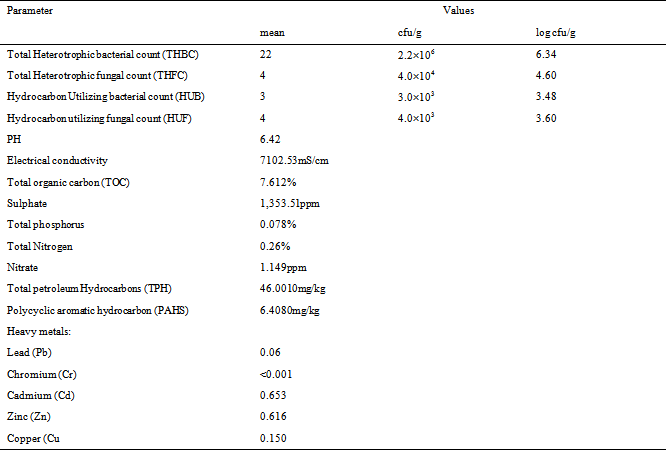
3.1. Baseline Characteristics of Drill CuttingsThe values of the baseline bacterial (total heterotrophic (THB) and hydrocarbon utilizing bacteria (HUB), physicochemical parameters (nitrate, phosphate, sulphate, pH, conductivity, total nitrogen and total organic contents), gas chromatographic analysis of total petroleum hydrocarbons (TPH) and polycyclic aromatic hydrocarbons (PAH) as well as the heavy metal contents in the drill cuttings sample are presented in Table 2. The bacterial counts (for total heterotrophic bacterial (THB) and hydrocarbon utilizing bacterial (HUB) differs 106cfu/g and 103cfu/g respectively. This was indicative of the fact that the bacterial populations making up the THB were capable of utilizing petroleum hydrocarbons. The concentrations of the TPH and PAH in the drill cuttings also showed that there is active bacterial population in the drill cuttings that uses the hydrocarbons in the drill cuttings as source of carbon and energy owing to their low concentration in this drill cuttings that has high level of petroleum hydrocarbons. The baseline hydrocarbon contents in the drill cuttings before bioremediation were 46.0010mg/kg and 6.4080mg/kg TPH and PAHs respectively.




During the 56-day bioremediation period under study, different trends were observed in all the biological and hydrocarbon parameters analyzed in the different amended and control drill cuttings samples in cells in plastic bowls.
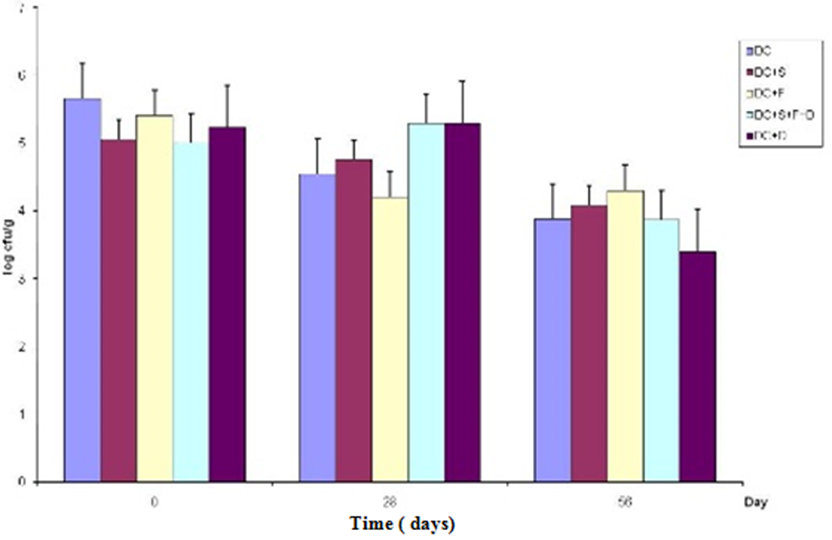
The total heterotrophic bacterial counts (THB) are presented in Figure 1. There was a general decrease for all treatments but Dc had the highest THB count of4.5 x 105cfu/g on day 0 while Dc + D had the lowest THB count of 3.0 x 10³cfu/g on day 28. All other treatments which were Dc + S, Dc + F, Dc + S + F + D decreased from 105cfu/g by day 0 to 103cfu/g by day 56 when the experiment ended. Control hDc recorded no bacterial growth on day 0 but had few insignificant bacterial on day 28 and 56. The THB counts were not statistically significant at P < 0.05 using one way ANOVA.

 Download as
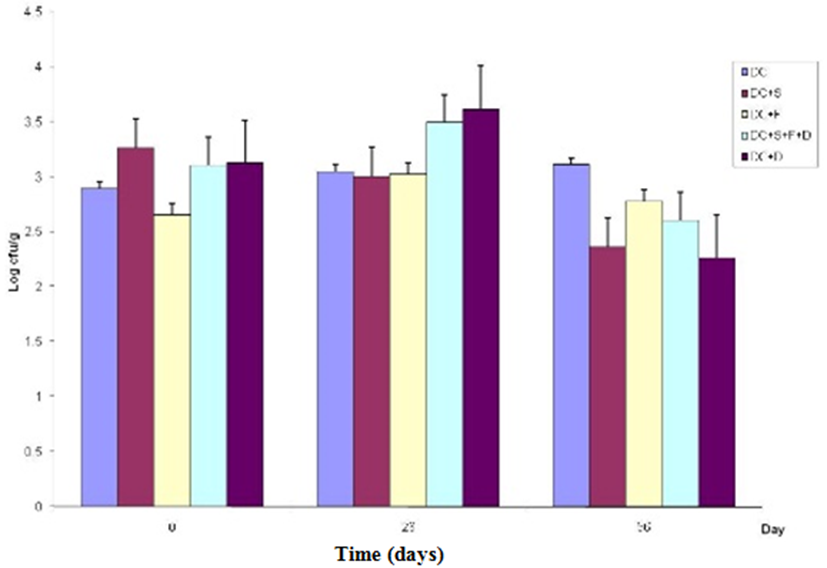
Figure 2 represents the hydrocarbon utilizing bacteria (HUB) counts across all treatments including control during the 56-day bioremediation. HUB counts in various treatments differed, Dc and Dc + F increased from 102cfu/g on day 0 to 103cfu/g on day 56 while Dc + S, Dc + S + F + D and Dc + D decreased from 103cfu/g on day 0 to 102cfu/g on day 56. Dc + D had the highest HUB count of 6.5 x10³cfu/g on day 28 and also the lowest count of 2.6 x 10²cfu/g on day 56. The heat-treated control hDcshowed no growth for THB and HUB on day 0 and 28 but an insignificant growth on day 56. The statistical result of the HUB showed that Dc + F and Dc + S + F + D were statistically significant at P < 0.05 while Dc, Dc + S and Dc + D were not statistically significant at P < 0.05 using one way analysis of variance (ANOVA) and Duncan multiple comparison test.
 Download as
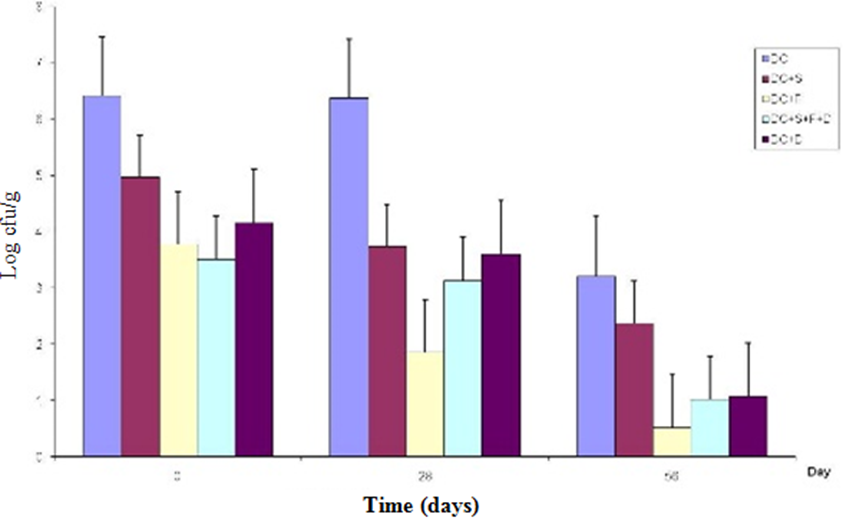
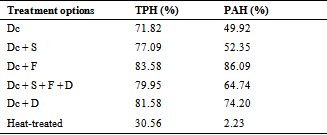
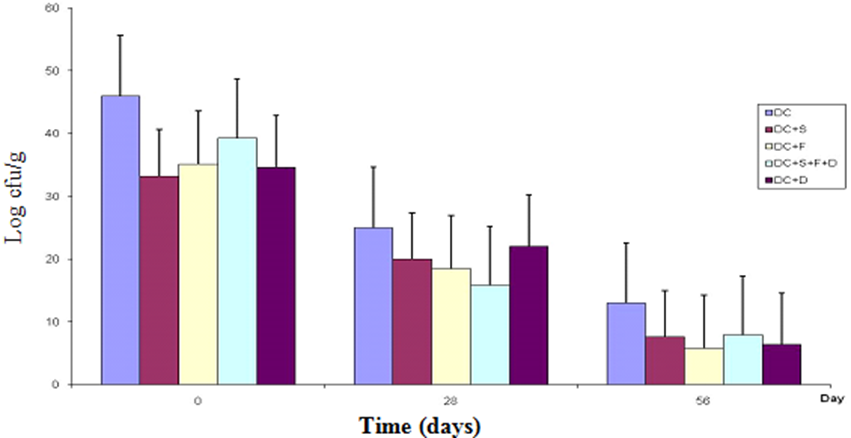
The degradation of the hydrocarbons (TPHs and PAHs) present in the drill cuttings samples amended with different nutrient sources and the biotic and abiotic controls (Dc and hDc) are shown in Figures 3 and 4. For all the treatments on day 0, the total petroleum hydrocarbons (TPH) range from 33.22 to 46.00 mg/kg. By day 56, the TPH of all the treatments were reduced to <8mg/kg. By day 56, the percentage (loss) degradation of TPH of various treatment options as measured with gas chromatograph flame ionization detector (GC-FID) were Dc (71.82%) and heat treatment (hDc) (30.56 %). From Figure 3, Dc had the highest TPH (46.00mg/kg) on day 0 while Dc + F recorded the lowest TPH (5.76mg/kg) on day 56 with percentage loss of 83.58%. The percentage loss of TPH was statistically significant at 95% (P < 0.05) confidence interval using ANOVA and LED (Least Square deviation for multiple comparison and Duncan multiple test for significant different. The PAH for all the treatment options on day 0 range 3.51 to 6.41mg/kg. By day 56, the PAH of all treatment options were reduced to <2.5mg/kg. By day 56, the percentage of biodegradation of PAHs, as measured with GC-FID were Dc (49.92%), Dc + S (52.35%), Dc + F (86.09%), Dc+S+F+D (64.74%), Dc + D (74.20%) and heat-treated (2.23%).
 Download as
From Figure 4, Dc+F gave the highest degradation rate (86.09%) while the heat-treated option had the lowest degradation rate. Also from Figure 4, Dc had the highest PAH (6.41mg/kg) on day 0 while Dc+F recorded the lowest (0.52mg/kg) PAH on day 56 with the highest degradation rate (86.09%). The PAH of Dc+S, Dc+F, Dc+S+F+D and Dc+D were significantly defferent from the PAH of Dc + heat-treated. PAH of Dc+S is significantly different to PAH of Dc and Dc+F but not significantly different to PAH of Dc+S+F+D and Dc+D. Also there is significant difference between the PAH of Dc+D and Dc+F at 95% (P<0.05) confidence interval using analysis of variance- Least Square Deviation (LSD) for multiple comparison and Duncan multiple test for significant difference.
 Download as
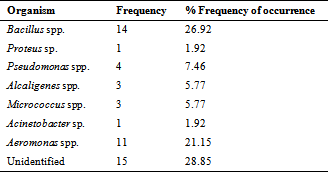
A variety of bacteria were isolated from the amended and unamended drill cuttings during the 56-day period of bioremediation. All the bacteria were from genera of bacteria known to have the ability to degrade petroleum hydrocarbons. These isolates were fifty-two in number, thirty-seven of which were assigned tentative identities and belonged to the genera of Bacillus, Proteus, Pseudomonas, Alcaligenes, Micrococcus, Acinetobacter and Aeromonas. Fifteen bacterial isolates could not be given tentative identities and were designated unidentified bacterial isolates. The frequency of occurrence of the isolates of the bacteria identified in the study and percentage loss of TPH and PAH is given in Table 3 and Table 4 respectively.




 by day 56)

4. Discussion
The drill cuttings were sampled for treatment using bioremediation technology. Four treatment options designated Dc + S, Dc + F, Dc + S + F + D and Dc + D and two controls (Dc and heat-treated) were set up in triplicate in different cells in plastic bowls. This experimental design was adopted with slight modifications from [11, 12]. The setup was in plastic bowls of 35cm by 11cm. Four treatment options were stimulated with soil(s), NPK (20:10:10) fertilizer (F) or Gold Crew dispersant (D) while unamended (Dc) and heat-treated were controls. This amendment is in agreement with work of [13] and [14]. For each treatment options, 2kg (wet weight) drill cuttings were amended with 40g of treatment material according to [13, 15] and [14]. Physicochemical, total heterotrophic bacterial counts (THB), hydrocarbon utilizing bacterial (HUB) as well as gas chromatographic (GC) analysis were carried out on the nutrient amended and control samples over a 56 day period as the experiment progressed. Dc (unamended control for natural attenuation) was composed of the drill cuttings and indigenous bacteria only while the heat-treated was sterilized using autoclave to monitor the effect of environmental factors during bioremediation [13, 15].
Control (Dc) had the highest heterotrophic bacterial count (4.5105cfu/g) on day 0 while Dc + D had the lowest count (3.0 103cfu/g) on day 56. For the hydrocarbon utilizing bacteria, Dc + D recorded the highest count (6.5103cfu/g) on day 28 and also the lowest count (2.6 102cfu/g) on day 56. From the result, it was clear that the indigenous bacteria in the drill cuttings were already acclimatized to hydrocarbons since there was also loss of TPH and PAH in the control as bioremediation progressed. [16] and [13, 15] observed similar results.
For all the treatment options on day 0, the total petroleum hydrocarbons (TPH) ranged from 33.22 to 46.00mg/kg while polycyclic aromatic hydrocarbons (PAH) ranged from 3.51 to 6.41mg/kg. In all the treatment options by day 56, the TPH was < 8.0mg/kg and PAH < 3.3mg/kg. For Dc, the TPH decreased from an initial value of 46.00mg/kg on day 0 to 12.96mg/kg on day 56 while Dc + S decreased from 33.24mg/kg on day 0 to 7.61mg/kg on day 56. The TPH decreased from 35.11mg/kg on day 0 to 5.76mg/kg on day 56 for treatment Dc + F while Dc + S + F + D decreased from 39.28mg/kg on day 0 to 7.88mg/kg on day 56. The TPH for Dc + D decreased from 34.65mg/kg on day 0 to 6.38 mg/kg on day 56 as shown in Figure 3. While the heat-treated control decreased from 16.45 mg/kg on day 0 to 11.42mg/kg on day 56. The PAH showed the same trend in all the treatment options as shown in Figure 4. The PAH of Dc decreased from 6.41mg/kg on day 0 to 3.21mg/kg on day 56 while Dc + S decreased from 4.97mg/kg on day 0 to 2.37mg/kg on day 56. Dc + F recorded a decrease from 3.76mg/kg on day 0 to 0.52mg/kg on day 56 while Dc + S +F + D showed decrease of PAH from 3.51mg/kg on day 0 to 1.23mg/kg on day 56. The Dc + D PAH decreased from 4.15mg/kg on day 0 to 1.07mg/kg on day 56 while the heat treated option showed slight decreased from 3.67mg/kg on day 0 to 3.59mg/kg on day 56. The TPH of the amended were significantly different from the TPH of Dc and heat-treated at 95% confidence interval (p < 0.05) but were not significantly different to one another. The unamended control (Dc) contained populations of crude oil degrading bacteria which increased with time with the depletion of hydrocarbons proving that indigenous bacterial communities in the hydrocarbon- impacted drill cuttings have the natural capacity to degrade TPHs and PAHs since they could use crude oil components as a source of carbon and energy. Statistically, the rate of degradation of both TPH and PAHs in the unamended control and biostimulated treatments was significantly different at 95% confidence interval (p< 0.05) using analysis of variance- LSD multiple comparison test and Duncan multiple test for significant difference. However, the degradation of both TPH and PAH in the biostimulated treatments were not significantly different to one another at 95% confidence interval (p< 0.05). This observation meant that biodegradation of crude oil hydrocarbons in the amended and control drill cuttings slurries showed a similar decrease. Similar observation was made by Chikereet al. (2009a, b) in bioreactor-based bioremediation oil-polluted marine sediment. (17) Observed the same when they reviewed some of the case studies of bioremediation projects that took place shortly after the Exxon- Valdez colossal oil spill. In one of such, the researchers used inipol Epazz oleophilic fertilizer to treat the oil-impacted shorelines. The researchers found out that C18: phytane ratio in the treated plots reduced during summer of 1989 when the study was done. However, the control plots also showed a similar decrease in the ratio of hydrocarbons used as biodegradation index.
Heat-treated sample served to measure the effect of environmental (abiotic) factors on biodegradation since all microbial life was removed by autoclaving the drill cuttings. In this treatment, the TPH decreased from 16.45mg/kg on day 0 to 11.42mg/kg on day 56 while PAH reduced from 3.67mg/kg on day 0 to 3.59 mg/kg on day 56. The rates of biodegradation of TPH and PAH were (30.56%) and 2.23% respectively. This was much less than those of the unameneded drill cuttings (Dc) as well as the amended drill cuttings. The loss of hydrocarbons can be attributed to abiotic factor since plastic bowls were used and hence no leaching [13, 15, 18]. Microbial activities coupled with abiotic factors (such as tilling achieved using stirrers and sprinkling of water) in the drill cuttings could be useful tools for remedial operations. In the amended drill cuttings slurries namely Dc + S, Dc + F, Dc + S + F + D and Dc + D, it was observed that the THB and HUB counts increased in all the four enhanced drill cuttings with few exceptions over the 56 day period thus, resulting in corresponding hydrocarbon losses when compared to the heat-treated control that showed minimal microbial growth. Increases in microbial counts (THB and HUB) in crude oil-contaminated soils and sediments amended with organic and inorganic nutrient sources have been reported by other researchers. [19] Examined (bacterial) dynamics and crude oil degradation after biostimulation and found out that nutrient enhancement increased bacterial counts which correlated significantly with hydrocarbon attenuation. This same observation was made by several workers [20, 21, 22, 23, 24].
In this study, the rates or percentages of biodegradation of TPH after day 56, as measured with GC-FID were Dc (71.82%), Dc + S (77.09%), Dc + F (83.58%), Dc + S + F + D (79.95%), Dc + D (81.58%) and heat-treated 30.56%. PAH degradation rates were as follows: Dc (49.92%), Dc + S (52.35%), Dc + F (86.09%), Dc + S + F + D (64.74%), Dc + D (74.20%) and heat-treated (2.23%). Dc + F gave the highest degradation rate for both TPH and PAH. The degradation rate result is in line with reports of Rolinget al. (2002) on bacterial dynamics and crude oil degradation after biostimulation and Chikereet al. (2009a, b). THB and HUB counts increased as hydrocarbon content decreased.
The hydrocarbon losses recorded in the biostimulated drill cuttings slurries can be attributed to microbial activities which resulted in consumption of nitrogen and phosphorus added in the form NPK (20:10:10) fertilizer and organic sources of nitrogen and phosphorus from the soil. [25] Reported that nutrient amendment over a wide range of concentrations significantly improved crude oil degradation.
Fifty-two hydrocarbon utilizing bacterial isolates were obtained. The bacterial isolates were Bacillus spp (26.92%), Proteus sp (1.92%), Pseudomonas spp (7.46%), Alcaligenes spp (5.77%), Micrococcus spp (5.77%), Acinetobacter sp (1.92%), Aeromonas spp (21.15%) and unidentified bacterial isolates (28.85%). The organisms genera identified in this study is in agreement with the report of [13, 15] who also identified Bacillus, Pseudomonas, Proteus, Alcaligenes and Micrococcus in bioreactor-based bioremediation of hydrocarbon-polluted Niger Delta marine sediment. These findings are also in line with [26] report on microorganisms able to degrade some toxic chemicals like drill cuttings.
Screen tests for degradative potential of the isolates indicate that many of the bacterial isolates were hydrocarbon degraders. This is confirmed by the rate of loss of TPH and PAH during the study [27, 28, 29].
These results showed that the drill cuttings investigated have been remediated using microbial agents and that environmental factors (abiotic factors) played some roles to hydrocarbon attenuation as shown in the heat-treated control.
5. Conclusions
(i) The concentration of the toxicants- TPH, PAH were reduced below acceptable limit which suggest that the technology was effective.
(ii) Different experimental setup showed varying degrees of remediation with D+F being the most efficient and effective.
(iii) Environmental factors also played a role in the remediation as shown by heat-treated setup.
(iv) Drill cuttings only, if left for natural attenuation will take a longer time to degrade hence the need for biotreatment.
(v) The global problem of drill cuttings is what this study has proffered solution to, through bioremediation technology.
References
| [1] | OGP (International Association of Oil and Gas Producers). 2003. Environmental aspects of the use and disposal of non aqueous drilling fluids associated with offshore oil and gas operations. Report 342 from OGP, London, p.103. | ||
 In article In article | |||
| [2] | Whittaker, A. (Ed.). 1985. Theory and Application of Drilling Fluid Hydraulics. International Human Resources Development Corporation, Boston. 203pp. | ||
| In article | View Article | ||
| [3] | US Congress.1991.Office of Technology Assessment. Bioremediation for marine oil spills. Background paper, OTA-BP-0. Washington, DC: US Government Printing Office. 32pp. | ||
| In article | |||
| [4] | Okpokwasili, G. C. and Nnubia, C. 1995.Effects of drilling fluids on marine bacteria from a Nigeria offshore oilfield. Environmental Management.19: 923-929. | ||
| In article | View Article | ||
| [5] | Atlas, R. M. and Philip, J. 2005, Bioremediation: Applied Microbial Solutions for Real world Environmental Cleanup. American society for Microbiology (ASM) Press, Washington, DC, pp.78-105. | ||
| In article | |||
| [6] | Sarkar, D., Ferguson, M., Datta, R. and Birnbaum, S. 2005. Bioremediation of petroleum hydrocarbons in contaminated soils: Comparison of biosolids addition, carbon supplementation and monitoring natural attenuation. Environmental Pollution 136: 187-195. | ||
| In article | View Article PubMed | ||
| [7] | Cappello, S., Caneso, G., Zampino, D., Monticelli, L., Maimone, G., Dnearo, R., Tripod, B. Troussellier, M., Yakimov, N. and Giuliano. L. 2007. Microbial community dynamics during assays of harbour oil spill bioremediation: Amicroscale simulation study. Journal of Applied Microbiology.155: 587-595. | ||
| In article | View Article | ||
| [8] | Kumar, M. and Khanna, S. 2010.Diversity of 16S rRNA and dioxygenase genes detected in coal tar-contaminated site undergoing active bioremediation.Journal of Applied Microbiology 108:1252-1262. | ||
| In article | View Article PubMed | ||
| [9] | Mills, A. L., Breuil, C. and Colwell, R. R. 1978.Enumeration of petroleum-minerals in the world ocean.Deep-Sea Research. 15: 433-459. | ||
| In article | |||
| [10] | Okpokwasili, G.C. and Okorie, B. B. 1988. Biodegradation potentials of microorganisms isolated from car engine lubricating oil. Tribology International. 21: 215-220. | ||
| In article | View Article | ||
| [11] | Odokuma, L.O. and Ibor, M. N. 2002. Nitrogen fixing bacteria enhanced bioremediation of a crude oil polluted soil. Global Journal of Pure and Applied Science 8: 455-468. | ||
| In article | View Article | ||
| [12] | Raymond, R.I., Hudson, J. O. and Jamison, V. W. 1976.Oil degradation in soil.Applied and Environmental Microbiology.31: 522-535. | ||
| In article | PubMed | ||
| [13] | Chikere, C.B., Okpokwasili, G. C. and Ichiakor, O. 2009b.Characterization of hydrocarbon utilizing bacteria in tropical marine sediments.African. Journal of Biotechnology8: 2541-2544. | ||
| In article | |||
| [14] | Abu, G. O. and Ogiji, P. A. 1996. Initial test of a bioremediation scheme for the cleanup of an oil-polluted water body in a rural community in Nigeria. Bioresouces Technology 58:7-12. | ||
| In article | View Article | ||
| [15] | Chikere, C. B., Okpokwasili, G. C. and Chikere, B. O. 2009a.Bacterial diversity in a tropical crude oil-polluted soil undergoing bioremediation. African Journal of Biotechnology 8: 2535-2540. | ||
| In article | |||
| [16] | Odokuma, L. O. and Dickson, A. A. 2003. Bioremediation of a crude oil-polluted tropical rain forest soil.Global Journal of Environmental Science 2: 29-40. | ||
| In article | |||
| [17] | Rosenberg, E. and Ron, E.Z. 1996. Bioremediation of petroleum contamination. In: Crawford, R. L. and Crawford, D. L (eds) Bioremediation: Principles and Application. Cambridge University Press, Cambridge, pp 100-124. | ||
| In article | View Article PubMed | ||
| [18] | vanHamme, J.D., Singh, A. and Ward, O. P. 2003. Recent advances in petroleum microbiology. Microbiologyand Molecular Biology Review 67: 503-549. | ||
| In article | View Article PubMed | ||
| [19] | Roling W. F. M., Milner, M. G., Jones, K., Lee, D. M., Daniel, F., Swannell, R. P. J. and Head, I. M. 2002 Robust hydrocarbon degradation and dynamics of bacterial communities during nutrient-enhanced oil spill bioremediation. Applied and Environmental Microbiology 68: 5537-5548. | ||
| In article | View Article PubMed | ||
| [20] | Okpokwasili, G. C. and Amanchukwu, S. C. (1988) Petroleum hydrocarbon degradation by Candida species. Environment International 14: 243-247. | ||
| In article | View Article | ||
| [21] | Okpokwasili, G. C. and James, W. A. 1995 Microbial contamination of kerosene, gasoline and crude oil and their spoilage potentials. Material und Organismen 29:147-156. | ||
| In article | |||
| [22] | Margesin, R., Hammerle, M. and Tscherko, D. 2007. Microbial activity and community composition during bioremediation of diesel-oil contaminated soil: Effects of hydrocarbon concentration, fertilizers and incubation time. Microbial Ecology55: 259-269. | ||
| In article | View Article PubMed | ||
| [23] | Okpokwasili, G. C. and Odokuma, L. O. 1994 Tolerance of Nitrobacter to toxicity of some Nigerian crude oils.Bulletin of Environmental Contaminant and Toxicology 52: 388-395. | ||
| In article | View Article PubMed | ||
| [24] | Okpokwasili, G. C., Somerville, C. C., Sullivan, M., Grimes, D. J. and Colwell, R.R. 1986 Plasmid mediated degradation of hydrocarbons in estuarine bacteria. Oil and Chemical Pollution 5: 117-129. | ||
| In article | View Article | ||
| [25] | Roling, W.F.M., Milner, M. G., Jones, K. Lee, D. M., Fratepietro, F., Swannell, R. P. J., Daniel, F. and Head, I. M. 2004. Bacterial community dynamics and hydrocarbon degradation during a field scale evaluation of bioremediation in a mudflat beach contaminated with buried oil. Appliedand Environmental Microbiology 70: 2603-2613. | ||
| In article | View Article PubMed | ||
| [26] | Brown, C. M., Campbell, I. and Priest, F. G. 1988.Introduction to Biotechnology. Blackwell, Oxford. | ||
| In article | |||
| [27] | George-Okafor, U. O., Tasie, F. and Muotoe-Okafor, F. 2009. Hydrocarbon degradation potentials of indigenous fungal isolates from petroleum contaminated soils. Journal of Physical and Natural Sciences. | ||
| In article | |||
| [28] | Bergey’s Manual of Determinative Bacteriology. 1993. Williams and Wilkins, Baltimore, USA. | ||
| In article | |||
| [29] | EGASPIN, 2002(Environmental Guidelines and Standards for the Petroleum Industry in Nigeria. Revised Edition. Environmental Studies Unit, Department of Petroleum Resources(DPR), Lagos. | ||
| In article | |||
 CiteULike
 Mendeley
 StumbleUpon
 Delicious
 Facebook
 Twitter
 LinkedIn
 counts during bioremediation)
 counts during bioremediation)
 concentrations of contaminated drill cuttings during bioremediation)
 concentrations of contaminated drill cuttings during bioremediation)