sciepub.com
 Quick Submission

Temporal Variations in the Characteristics of Pre-treated Effluents from a Brewery in Makurdi Metropolis-Nigeria
Iwar Raphael Terungwa1, Kola’ Ogedengbe2, , Oparaku L.A.3
1Department of Agricultural and Environmental Engineering, University of Agriculture, Makurdi, Benue State, Nigeria
2Department of Agricultural and Environmental Engineering, University of Ibadan, Ibadan, Oyo State, Nigeria
3Department of Agricultural and Environmental Engineering, University of Agriculture, P.M.B 2373, Makurdi
Abstract
In this study, physically, chemically and biologically pre-treated effluents from a brewery were characterized for a period of six months. This was to ascertain the type and concentrations of residual pollutants in the effluent streams released to a receiving perennial river in the study area. Effluent samples were collected at the outfall point for a consecutive period of six months, beginning from February, 2014. Samples were preserved and taken to the laboratory for tests on each sampling date. pH and Temperatures (ambient and effluent) were however determined in-situ. All samples were analyzed in accordance with the “standard methods for the examination of water and wastewater”. Pollutants concentrations in mg/l ranged between; 3.25-6.35, 76.4-183.0, 220.0-435.0, 55.1-85.0, 169.4-232.5, 4.70-6.6, 6.05-8.2 and 1.3-4.05 for DO, BOD5, COD, TSS, TDS, NO3-, PO4-3 and NH4+ respectively. Conductivity ranged between 307.0-405.5µs/cm, turbidity was between 24.2-41.35NTU, pH was 6.2-7.15, while ambient and water temperatures were 30.0-33.0 and 36.2-40.1 respectively. In comparison with FEPA and USEPA discharge limits, most of the pollutants were found to be residual in the effluents and need to be removed by suitable advanced and/or tertiary treatment method(s), before the effluents can be discharged into the perennial river in an environmentally friendly manner.
Keywords: brewery effluents, effluent characteristics, river Benue, temporal variations
Copyright © 2016 Science and Education Publishing. All Rights Reserved.Cite this article:
- Iwar Raphael Terungwa, Kola’ Ogedengbe, Oparaku L.A.. Temporal Variations in the Characteristics of Pre-treated Effluents from a Brewery in Makurdi Metropolis-Nigeria. American Journal of Environmental Protection. Vol. 4, No. 2, 2016, pp 55-60. http://pubs.sciepub.com/env/4/2/3
- Terungwa, Iwar Raphael, Kola’ Ogedengbe, and Oparaku L.A.. "Temporal Variations in the Characteristics of Pre-treated Effluents from a Brewery in Makurdi Metropolis-Nigeria." American Journal of Environmental Protection 4.2 (2016): 55-60.
- Terungwa, I. R. , Ogedengbe, K. , & L.A., O. (2016). Temporal Variations in the Characteristics of Pre-treated Effluents from a Brewery in Makurdi Metropolis-Nigeria. American Journal of Environmental Protection, 4(2), 55-60.
- Terungwa, Iwar Raphael, Kola’ Ogedengbe, and Oparaku L.A.. "Temporal Variations in the Characteristics of Pre-treated Effluents from a Brewery in Makurdi Metropolis-Nigeria." American Journal of Environmental Protection 4, no. 2 (2016): 55-60.
| Import into BibTeX | Import into EndNote | Import into RefMan | Import into RefWorks |
At a glance: Figures
1. Introduction
1.1. BackgroundRapid growth in industrialization is of great benefits to Nigeria as a nation. However, most industries have incomplete or no sewerage system. The wastewaters from factories are discharged into land and water bodies. Ref. [1] reported that industrialization movements in several cities have contributed large amounts of pollutants through indiscriminate discharge of effluents into drains. It is well established that pollution lowers the quality of life in various aspects. Besides the direct health effects, the subtle danger of pollutants lies in the fact that they may be mutagenic or toxic and lead to several human afflictions such as cancer, cardio-vascular disease and premature ageing [2].
Industrial wastes are the ones which result from industrial processing operation. Though industrial wastes could be liquid, solid and a gas, this present study is concerned with the liquid part, which is commonly known as industrial wastewater. Industrial wastewaters are either discharged directly into the receiving water (if they meet the necessary standards) or else are discharged into municipal sewers. Sometimes, industrial wastewaters are treated partially before their discharge into sewers, or else are treated separately through suitable treatment processes so that the treated effluent is safe. According to [3], industrial wastewaters are varied and complex. They affect, in some way or the other, the normal life of a stream or normal functioning of sewerage and sewage treatment plants, unless pretreated at the source point itself. If they are discharged directly into the receiving waters, it may result in discoloration, foul smell and killing of aquatic life, apart from making the water unfit for various other purposes.
Industrial wastewater disposal needs proper consideration from the point of view of manufacture, public and environmental engineer alike. From the public point of view, industrial wastewater causes pollution to streams making it unfit for domestic, recreational and commercial purposes, deteriorate sewers and treatment plants and increase cost of treatment. From the point of view of manufacturer or industrialist, the wastewater is a liability and it has to be disposed of with least possible cost. From the point of view of environmental engineer, knowledge of chemistry and bio-chemistry has to be judiciously applied to reduce the volume and polluting strength of the wastewater [3].
These can be achieved through proper monitoring and characterization of various industrial wastewater streams peculiar to the area in question. However, certain factors affect the choice of any of the earlier mentioned wastewater disposal alternatives, these factors include; self purification capacity of the receiving water bodies, tolerance limits for the inland surface waters, economic aspects of both the manufacturers as well as municipalities and technical advantage of mixing the industrial wastewater with domestic sewage.
These factors must be considered for an effective wastewater characterization exercise and design of treatment plants for the wastewater. However, due to inappropriate legislation in the present day Nigeria, industrial wastewater that contain various toxic, corrosive, inflammable, radioactive and biological pollutants are discharged indiscriminately, into the nations inland surface water bodies, across various states of the country and by various industrialists.
These practices have been reported by scholars to cause various effects on soil, surface water and ground water [4, 5]. Some of such effects include; destruction of ecosystem, destruction of marine biota, hindering of fisheries and other agricultural operations, poisoning of sea foods contamination of surface and ground water, disturbance of soil functions and reduction of plant productivity and chance of survival as well as causing bio-accumulation and food chain accumulation problems and general health hazards to humans among others [4].
Most industrialist employ only primary and secondary treatments of their wastewater (physical and biological treatments), which do not efficiently remove all contaminants of concern in the wastewater. This is basically due to economic reasons, as every manufacturer is poised to maximizing profits. In other to meet stringent wastewater discharge standards, there is need for industrialists to employ tertiary and/or advanced treatments of their wastewater, especially for those whose wastewater constituents are difficult to remove by only physical and biological means.
Brewing industries are one of the major industrial users of water. These industries have one of the wastes most difficult to treat satisfactorily. The high organic content of brewery effluent classifies it as a very high-strength waste in terms of chemical oxygen demand, from 1000 mg/L to 4000 mg/L and biochemical oxygen demand of up to 1500 mg/L [6]. The treatment of brewery wastewater effluent is a costly task for the brewer in order to meet the government regulations and to practice environmentally friendly manufacturing. The untreated effluent discharge from these industries is coloured and highly intoxicating due to presence of alcohol and can be toxic to aquatic life in receiving waters, hence the need for the treatment of brewery wastewater effluent before being discharged into water courses. However, the current problems in water and wastewater treatment stem from the increasing pollution of waters by organic compounds that are difficult to decompose biologically because these substances resist the self-purification capabilities of the rivers as well as decomposition in conventional wastewater treatment plants. Consequently, conventional mechanical-biological purification no longer suffices and must be supplemented by an additional stage of processing. Brewery wastewater (BW) is mainly contaminated with putrescible organic matter and large amount of organic wastewater which is being discharged in brewery and other food related processing such as the processing of soybean products; these contain high concentrations of COD, BOD, TN and TP [7].
These wastewaters are also rich in monosaccharide, oligosaccharides, K, P, Ca, vitamins, organic acids, water-soluble protein, amino acids, lipids and other nutrients [8]. Brewery wastes generated include water treatment wastes, caustic boil-out solutions used for clean-ups in the brew house, and soak solutions and caustic rinses in the bottling area and organic loading, spent grain and hops, filter cakes in dry form and accidental losses from operational errors and leaking equipment [9]. However, the quality and quantity of brewery effluent can fluctuate significantly as it depends on various different processes that take place within the brewery. The amount of wastewater produced is related to the specific water consumption. A part of the water is disposed with the brewery by-products and a part is lost by evaporation. As a result the wastewater to beer ratio is often 1.2-2 hectoliter/hectoliter less than the water to beer ratio. Brewery wastewater (effluents) is mainly organic in nature and highly variable. Organic components in brewery effluent (expressed as BOD5) are generally easily biodegradable as these mainly consist of sugars, soluble starch, ethanol, volatile fatty acids and so on.
The brewery solids (expressed as TSS) mainly consist of spent grains, kieselguhr, waste yeast and (‘hot’) trub. Brewery effluent`s pH levels are mostly determined by the amount and type of chemicals used at the clean in place (CIP) units (caustic soda, phosphoric acid, nitric acid and so on). Nitrogen and phosphorous levels are mainly dependent on the handling of raw material and the amount of spent yeast present in the effluent. Elevated phosphorous levels can also be the result of phosphorous containing chemicals used in the CIP unit [10].
Untreated or partially treated brewery effluents are known to have, high biological oxygen demand (BOD), high chemical oxygen demand (COD) and high concentrations of suspended solids (SS). The high levels of BOD are indications of the pollution strength of the wastewaters and also indicate that there could be low oxygen available for living organisms in the wastewater when utilizing the organic matter present. High COD levels imply toxic condition and the presence of biologically resistant organic substances [11].Brewery effluents, having chemical (with very high organic contents) and microbial contaminants, results in a rather chaotic layout of utilities such as water supply, irrigation and laundry of the receiving river [12].
Makurdi city is located on the bank of River Benue, Nigeria. The river is the major source of water to the residents of the city as both the Municipal water treatment plant and farmers abstract their water from the river. The river is also a major source of recreation and fishing by most residents of the city. With increasing number of industries and human population in the city, most of the industries including Benue brewery are located along the river bank which directly discharge their wastewater into the river with or without proper treatments. This increases the pollution level of the river and also the cost of water treatment for consumption by government. It also put other users who do not have the capacity to treat the water at risk of disease, poor fishing return and crop damage. Studies on the characterization of the various industrial wastewaters being discharged into the river Benue are rare in literature despite its necessity for pollution control programs. With proper characterization of industrial wastewater discharges in the study area, industrialist can be made to adhere to safe discharge standards for their wastewater and thus reduce the pollution level of the receiving River Benue.
The high rate of untreated/partially-treated effluent discharged into River Benue at Makurdi is alarming coupled with some rural dwellers that use the river as their toilet while some people use the same river as their main source of drinking water. Ref. [13] assessed the water quality of River Benue as a result of point and non point effluent pollution sources but were not specific with the extent of pollution damage caused by each source.
Benue Brewery is located at about 2km from the bank of River Benue in Makurdi Metropolis. The industry discharges its wastewater through a lined channel into the River Benue. The wastewater is treated on site by physical means in combination with the activated sludge system, before being discharged. Despite the efforts of the industrialists in reducing the pollution load of their effluents on the receiving River Benue, physical observation of the effluents at the outfall point has revealed the presence of severe odours, elevated temperatures and colour in the effluents as well as evidence of eutrophication of the receiving water body. These observations and literature search has necessitated this study, which aims at characterizing the brewery effluents at the outfall point, compare with effluent discharge standards and make necessary recommendations.
2. Materials and Methods
2.1. Determination of Pre-Treated Brewery Wastewater CharacteristicsBiologically, pre-treated brewery effluents from a brewery in Makurdi metropolis were collected by grab sampling from the effluent outfall point. Samples were collected once a month and in duplicates for a period of six months (February to July, 2014). Samples were collected in two -litre plastic containers which were initially washed with distilled water and soap to remove any contaminants that might be present. At the sampling point, the containers were again rinsed twice with the effluents before samples were collected by grab method [14].
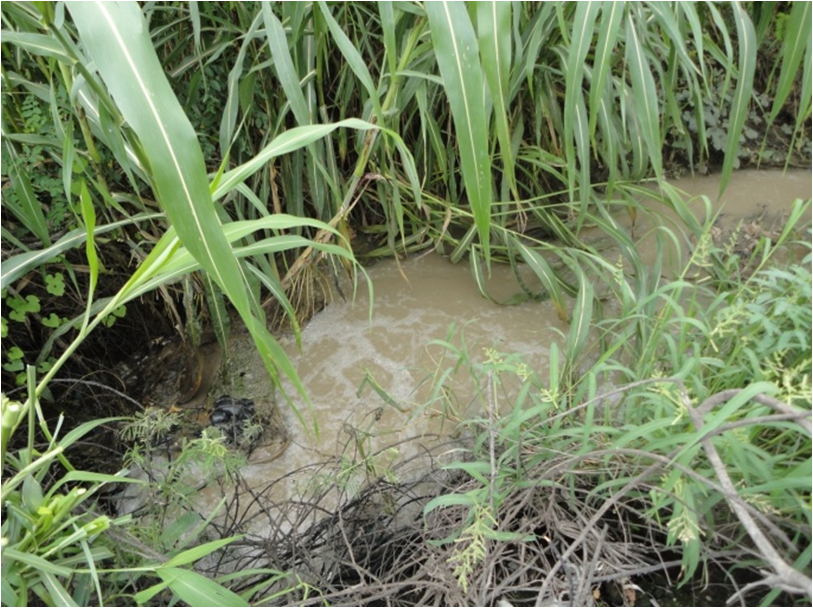
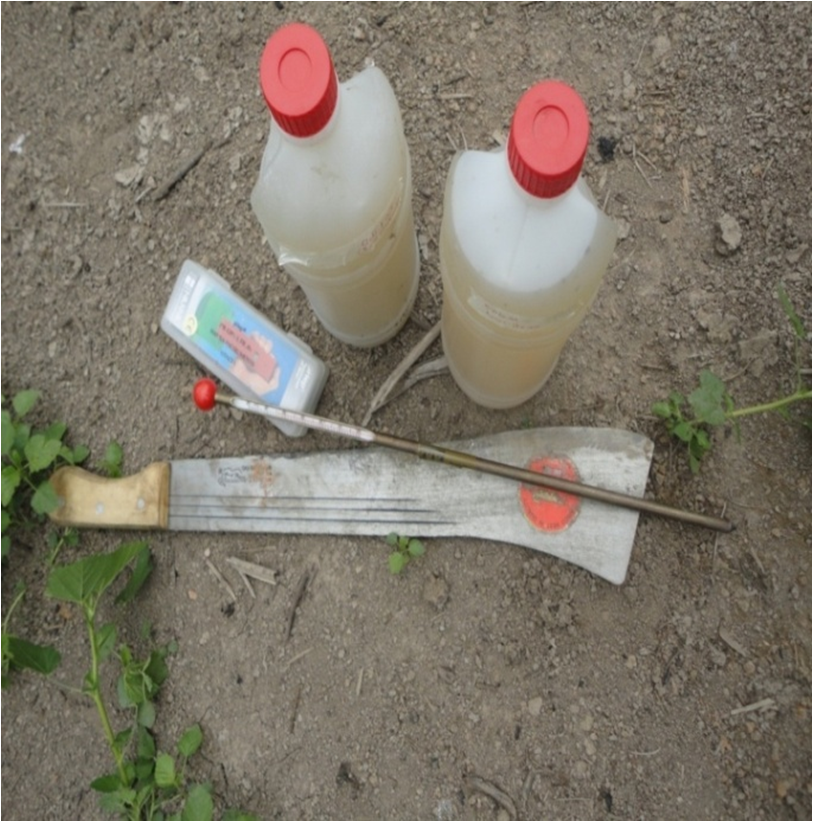
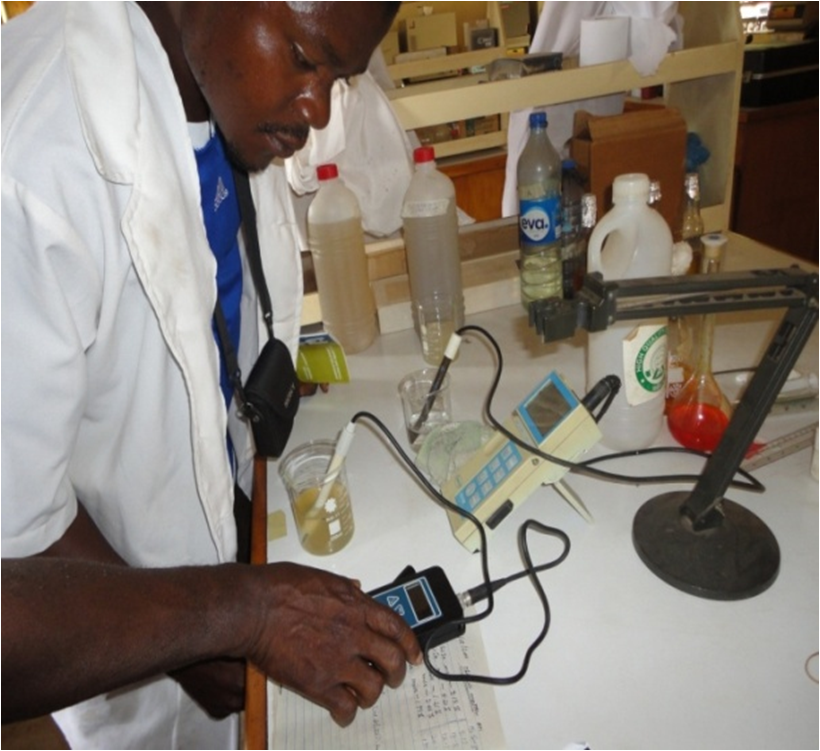
Effluent characteristics such as pH and temperature were determined in-situ using a pH meter model H1 96107, manufactured by Hanna Instruments Italy and an environmental thermometer (ELE) model HPC7H15, respectively (plates 1, 2 and 3). They were then put in an ice-filled container and taken to the laboratory for further tests and analysis [15].
2.2. Laboratory Tests and AnalysisSamples were subjected to the following tests at the Benue State Environmental Sanitation Agency’s Central Laboratory (UN- Assisted Project) in Makurdi; chemical oxygen demand (COD), dissolved oxygen (DO), total dissolved solids (TDS), Total suspended solids (TSS), Colour, odour, turbidity, conductivity, ammonia, nitrates, phosphates and bio-chemical oxygen demand (BOD). TDS and conductivity were determined using a TDS/Conductivity meter, HACH model CO 150, COD, TSS, ammonia, nitrates, phosphates and DO were determined using a portable data logging spectrophotometer, manufactured by HACH, model DR/2010. BOD was however, determined by the Winkler method [14]. Turbidity was determined using a turbidimeter Standard kit model 2100A manufactured by HACH in 2010.Total suspended solids were determined by the method described by [16]. Colour and Odour were determined by mere observations. Analyses were done in replicates and results for each parameter were reported as monthly means and compared with various effluents discharge standards. This was done to emphasize the need for an advanced treatment for brewery wastewater using any suitable advanced or tertiary treatment method(s), so as to meet-up with the stringent wastewater discharge limits and preserve the receiving surface water bodies from extreme pollution levels. Some of the materials also used were: Sterilized plastic bottles, conical flasks, beakers, stirrers and spatulas, measuring cylinders, appropriate reagents for every parameter tested, cotton and other necessary laboratory equipment.

 Download as

 Download as
 Download as
3. Results and Discussion
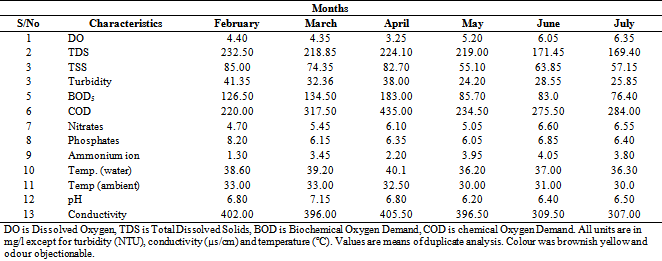
3.1. Characteristics of Pre-treated Brewery EffluentsPhysically, chemically and biologically treated effluents from a brewery in Makurdi were analyzed for a period of six months, covering both the dry and the wet seasons. This was done in order to identify residual pollutants in the effluent, which did not respond to the physico-chemico-biological methods. Effluent characteristics analysed, their monthly variations and range are shown in Table 1.
DO ranged between 3.25 – 6.35mg/l, TDS ranged between 169.40 -232.50mg/l, TSS was between 55.10 – 85.00mg/l, COD, NO3- and PO43- ranged between 220.00 – 435.50, 4.70 – 6.60 and 6.05 – 8.20 mg/l respectively. Conductivity was between, 307.00 – 405.50 us/cm, while the colour was light-brown and odour was objectionable throughout the period of analysis. The water temperature and ambient conditions were 36.20 – 40.10 and 30.00 – 33.00°C, respectively.
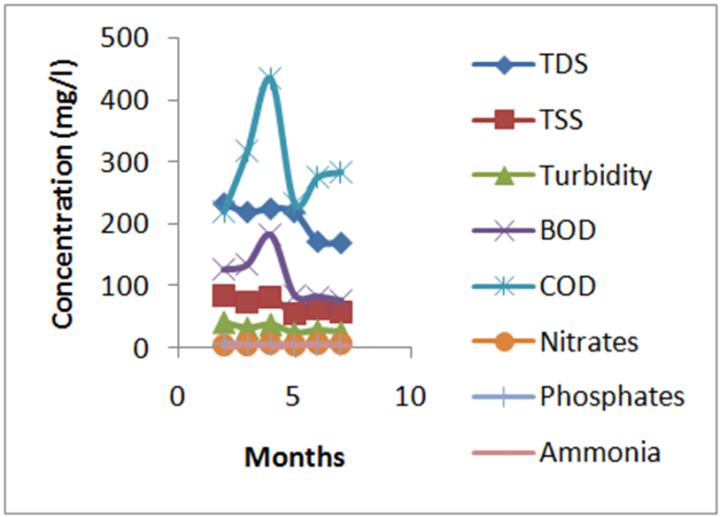
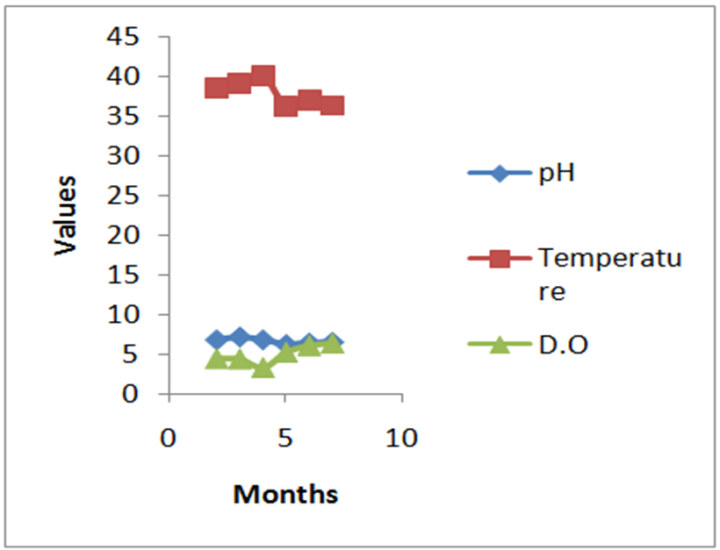
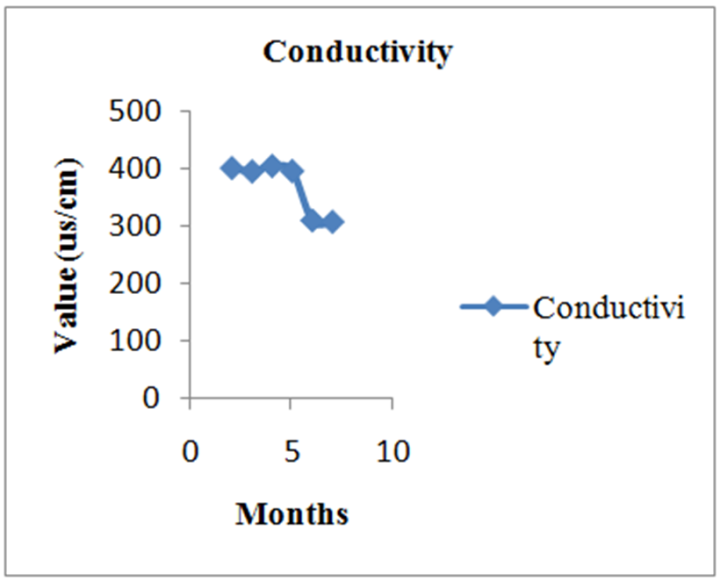
The temporal (monthly) variations in the wastewater characteristics indicate that all parameters were highest in the month of February except for BOD, COD, NO3-, NH4, temperature, pH and conductivity which were higher in the month of March (Figure 1, Figure 2 and Figure 3). This was largely due to the dryness of the season which is associated with high evaporation and temperatures which reduces the volumes of wastewater, thereby increasing the concentrations of pollutants in the wastewater. The D.O was however, highest in the month of July. This is because of the turbulent nature of the wastewater stream, associated with the wet season, which favours the dissolution of oxygen in the wastewater. These results are in conformity with the finding of [17].




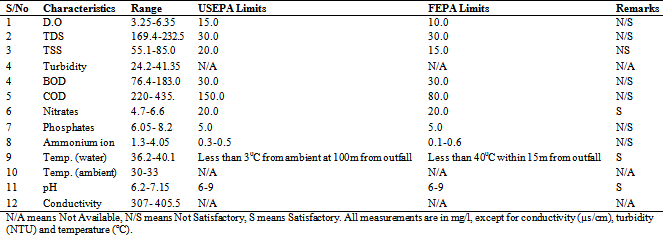


A comparison of the effluent characteristics with FEPA and USEPA discharge limits (Table 2), shows that most parameters did not conform with the standards except for, NO3-, temperature, and pH which were within the target limits. Thus the pre-treated brewery effluents was characterized as having a wide range of residual pollutants, which needed to be further removed to reduce their pollution load on the receiving river Benue water.
 Download as
 Download as
 Download as
4. Conclusions
In this study, physico-chemico-biologically, pre-treated effluents from a brewery in Makurdi metropolis; Benue State was characterized. This was to ascertain if some residual pollutants, which resist the available onsite pre-treatment were still present in the effluent, which are being discharged into river Benue. The effluents were sampled at the outfall point and analyzed for a consecutive monthly period of six (6) months; beginning from February and ending in July, 2014.
Characterization revealed that six (6) criteria pollutants were residual in the effluent. These are; BOD5, COD, TSS, TDS, PO4-3 and NH4+, with concentration values of 76.4-183.0, 220.0-435.0, 55.1-85.0, 169.4-232.5, 6.05-8.2 and 1.3-4.05 mg/l respectively. These values were found to be far higher than the FEPA discharge limits and as such need to be further removed. Moreover, they can be seen as one of the causes of the extreme pollution levels of River Benue.
References
| [1] | El-Shahaby, O.A., Abdel, M., Soliman, M.I., and Mashaly, I.A. (2003). Genotoxicology Screening of Industrial Wastewater using the Allium Cepa Chromosomes Aberration Assay. Pakistan Biological Sciences, 6 (1): 23-28. | ||
 In article In article | View Article | ||
| [2] | Grover, I.S., and Kaur, S. (1999). Genotoxicity Screening of Wastewater Samples from Sewage and Industrial Effluent detected by the Allium Root Anaphase Aberration and Micronucleus Assays. Mutation Research, 426: 183-188. | ||
| In article | View Article | ||
| [3] | Punmia, B.C., Arun, K.J., and Ashok, K.J. (2008).Wastewater Engineering. Laxmi Publications, New Delhi. | ||
| In article | |||
| [4] | Rim-Rukeh, A. and Agbozu, I.E. (2006). Impact of partially treated Sewage Effluent on the Water Quality of Recipient Epie Creek Niger Delta, Nigeria using Malaysian Water Quality Index (WQI). Journal of Applied Science and Environmental Management, 17 (1): 5-12. | ||
| In article | |||
| [5] | Defew, L., Mair, J., and Guzman, H. (2004).An Assessment of Metal Contamination in Mangrove Sediments and Leaves from Punta Mala Bay, Pacific Panama.Marine Pollution Bulletin 50 (5): 547-552. | ||
| In article | View Article PubMed | ||
| [6] | Sangodoyin, A.Y. (2012). Soil, Water and Wastes: A Complex Relationship. Inaugural Lecture delivered at the University of Ibadan on 28June, 2012. University Press, Ibadan | ||
| In article | |||
| [7] | Madukasi, E.I., Zhou, J.J., He, C. (2012). Photosynthetic Bacteria Organic Wastewater Treatment: Effect of Anaerobic-Pretreatment. International Journal of Research in Chemistry and Environment, 2 (2), 188-195. | ||
| In article | |||
| [8] | Zhu F.G., Li J.Z., Wu P., Jin H.Z., and Wang Z.(2008). The Performance and Phase Separated Characteristics of an Anaerobic Baffled Reactor Treating Soybean Protein Processing Wastewater. Bioresour. Technol., 99, 8027-8033 | ||
| In article | View Article PubMed | ||
| [9] | Tesfalem F. (2011). Impact of Brewery Effluent on River Water Quality: The case of Meta- Abo Brewery Factory and Finchewa River in Sebeta, Ethiopia. Msc. Thesis, Department of Environmental Sciences, Addis Ababa University, Ethiopia. | ||
| In article | |||
| [10] | Lenhardt, W. S. (1995). Personnel communication, April 17th & 18th. | ||
| In article | |||
| [11] | Sawyer C.N., McCarty P.L. and Parkin P.L. (2004).Chemistry for Environmental Engineering and Science, 5th Ed. McGraw-Hill Book Company, New York, 110-175. | ||
| In article | |||
| [12] | Belgiorno, V., Rizzo, L., Fatta, D., Roca, C.D., Lofrano, G., Nikolaou, A., Naddeo, V., and Meric, S. (2007). Review on Endocrine Disrupting-Emerging Compounds in Urban Wastewater: Occurrence and Removal by Photocatalysis and Ultrasonic Crops (flax, cotton and hemp), Indus. Crops Prod.19: 219-226. | ||
| In article | |||
| [13] | Apeh, S. and O.E. Ezenta, (2012).Assessment of Surface Water Quality of River Benue at Makurdi. Journal of Emerging Trends in Engineering and Applied Sciences (JETEAS), 3(6): 904-913 | ||
| In article | |||
| [14] | American Public Health Association (APHA) (2005). Standard methods for Examination of water and Wastewater, 21th Edition, APHA, Washington D C. | ||
| In article | |||
| [15] | Olafadehan, O.A., Jinadu, O.W., Salami, L., Popoola, O.T. (2012). Treatment of Brewery Wastewater Effluent using Activated Carbon prepared from Coconut Shell. International Journal of Applied Science and Technology, 2 (1): 165-178. | ||
| In article | |||
| [16] | Miroslav, R., and Vladimir, N.B. (1999). Practical Environmental Analysis.The Royal Society of Chemistry, Cambridge, U.K. | ||
| In article | |||
| [17] | Ishaq, S. E., Agada, P. O., and Rufus, S. (2012). Spatial and Temporal Variation in Water Quality of River Benue, Nigeria. Journal of Environmental Protection, 3: 915-921. | ||
| In article | View Article | ||
 CiteULike
 Mendeley
 StumbleUpon
 Delicious
 Facebook
 Twitter
 LinkedIn