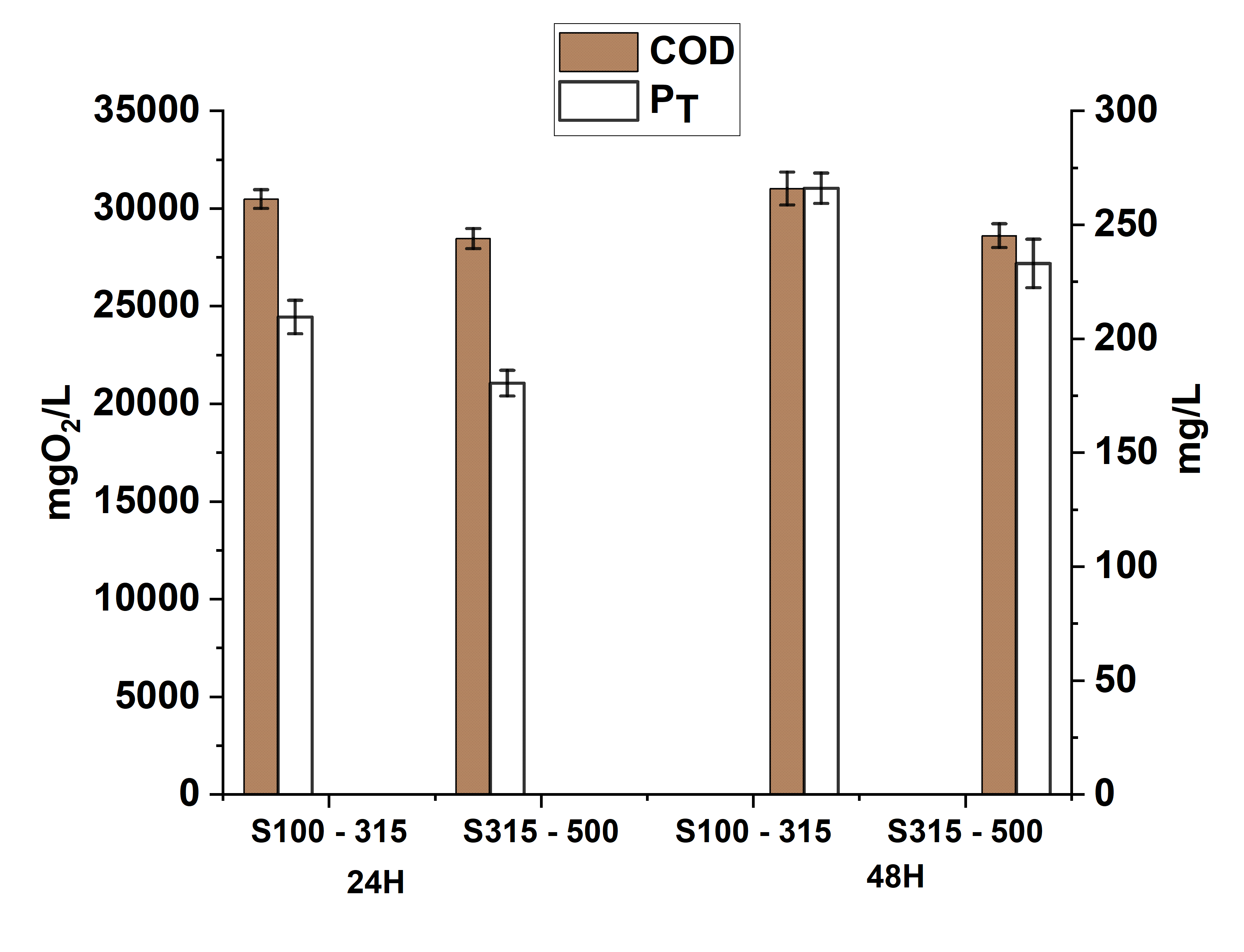
This article explores the leaching behavior of Musa paradisiaca banana peels for synthesizing a liquid soil amendment. The banana peels were collected, dried, and finely ground using sieves with mesh sizes of 100 µm, 315 µm, 500 µm, and 1000 µm. Leaching tests were conducted in accordance with standard X30–402/1-4, using a liquid/solid ratio of L/S = 10. Tests were performed on the powder with particle sizes from 100 µm to 315 µm, and the fraction with grain sizes ranging from 315 µm to 500 µm. The results showed that the organic matter content in the various fractions after drying and grinding is nearly constant regardless of particle size. Analysis of the minerals in the powder revealed that it consists primarily of K, N, Ca, P, and Mg, with values of 51.8 g/kg DM; 23.1 g/kg DM; 5.7 g/kg DM; 3.7 g/kg DM; and 3.6 g/kg DM, respectively. Total nitrogen (TN) yields interesting results after 24 hours compared to 48 hours of extraction. For a 24 hours contact time, the S100-315 µm and S315-500 µm particles produced 313.72 mgN/L and 257.7 mgN/L, respectively. For a 48 hours contact time, the S100-315 µm and S315-500 µm particles produced 414.71 mgN/L and 286.15 mgN/L, respectively.. Total phosphorus is higher for 48 hours extraction compared to 24 hours extraction, with an average of 222.25 mgP/L. The ratio COD/NT = 31.2 ˃ 15–20 and COD/PT = 44.7 < 50–70; therefore, these results support the use of banana peels to produce a liquid soil amendment.
Agriculture remains the most critical sector in the African region, employing approximately 65 to 70% of the labor force and supporting the livelihoods of 90% of the population. However, the agricultural sector in sub-Saharan Africa is not fully optimized and operates well below its potential. In modern agriculture, most biochemicals and inorganic fertilizers have been used in crop production worldwide 1. Synthetic fertilizers affect soil fertility when used over a long period, which harms human health. Despite their adverse effects on the environment and concerns regarding global health 2, chemical fertilizers continue to dominate conventional agriculture. This widespread use is due to their wide availability, immediate effectiveness, and affordability 3. Recently, many agricultural sectors have shifted their focus toward adopting sustainable practices aimed at meeting growing food demand while minimizing environmental impacts and the depletion of non-renewable resources 4. Among these initiatives, organic farming is attracting considerable interest. For example, the European Commission’s Green Deal aims to convert at least 25% of the EU’s agricultural land to organic farming by 2030 5. In this context, promoting the implementation and evaluation of technologies for recovering nutrients from biomass to produce fertilizers is among the Commission’s top priorities. In 2017, it was estimated that 28 EU members states produced 86 million metric tons of bio-wastes, primarily food waste and yard waste 6. This strategy prioritizes environmentally friendly practices, ecosystem preservation, and resource conservation, particularly through the use of biofertilizers. These biofertilizers are generally derived from living microorganisms and compounds produced by bacteria, fungi, and algae 5. Biofertilizers prevent damage to the natural composition of soils, supplying them with nutrients and, to a certain extent, helping to purify them of accumulated chemicals 7. Biofertilizers provide nutrients necessary for plant growth, whether from organic or mineral sources. They stimulate microbial processes in the soil, supplying nutrients that are easily assimilated by plants and transforming unusable elements into usable ones through biological processes 8. Biofertilizers are beneficial to both humans and nature. They fix atmospheric nitrogen for plant growth 9. Furthermore, they solubilize insoluble forms of phosphorus – such as tricalcium phosphates of iron and aluminum – into available forms 10. Organic farming is a production system that avoids, or even largely excludes, the use of fertilizers, pesticides, growth regulators, and growth-promoting feed additives. Environmental, social, and economic sustainability goals are at the heart of organic farming. For plants to grow normally, seventeen elements are required. C, H, and O come from the air, and the other elements come from the soil. Primary nutrients are used by plants in relatively large quantities and are often supplemented in the form of fertilizers (nitrogen, phosphorus, and potassium). On the other hand, secondary nutrients such as Ca, Mg, and S are also used in large quantities but are sufficiently supplied and are normally readily available. Trace elements are required in minute quantities. Micronutrients include iron, zinc, molybdenum, manganese, boron, copper, cobalt, and chlorine. demonstrated that banana peels contain micronutrients essential for plant fertilization: nitrogen, phosphorus, potassium, calcium, sulfur, and magnesium. 11 The micronutrients they contain are: iron, manganese, boron, zinc, copper, and molybdenum, which promote the growth of vegetable plants, from seed germination through flowering and fruiting. The objective of this study is to investigate the nutrient content of sweet banana peels with a view to their subsequent utilization through the synthesis of a liquid soil amendment.
The primary objective of this study is to characterize the extracts from leaching tests using dried and ground banana peels with a view to their agronomic utilization for fertilizing vegetable crops. In fact, bananas are grown throughout nearly the entire territory of Togo, particularly in the Plateaux region. The motivation for this study can be summarized by three common observations: (i) banana consumers discard the peels once the fruit has been eaten; (ii) banana peels are believed to have fertilizing properties and could be used to produce liquid fertilizer, (iii): the challenges of farming in urban areas, coupled with the increase in the global population - particularly in Africa - call for an alternative method of soilless cultivation.
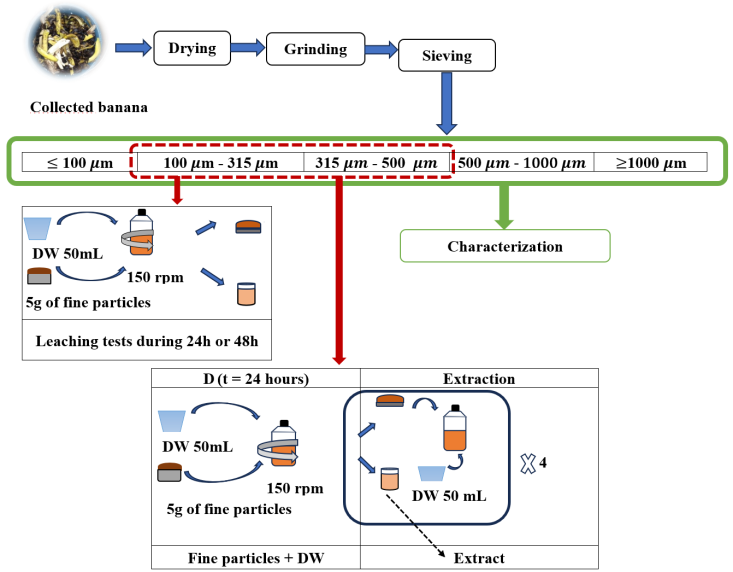
2.1. Leaching of SubstratesLeaching involves bringing the dried and ground substrate into contact with distilled water in order to release the organic matter. To achieve this goal, banana peels were collected in Togo’s West Plateaux region from fruits sellers in local markets and from consumers who had already been educated about the project. The banana peels were then air - dried until a constant mass was achieved, finely ground using a Moulinex Grinder-type powder mill, and sieved through screens of various mesh sizes. The different fractions separated are: S≤100, S100-315, S315-500, S500-1000, and S≥1000, using sieves of 100 µm, 315 µm, 500 µm, and 1000 µm. Following this step, leaching tests were conducted in accordance with standard X30-402/1-4 using an L/S ratio of 10 (Figure 1). The leaching tests were performed on the major fractions after grinding and screening: the powder with a particle size between 100 µm and 315 µm on the one hand, and the powder with a particle size between 315 µm and 500 µm on the other. Prior to this, the organic matter content was determined by loss on ignition for the various powder fractions after grinding. Leaching was carried out in two stages: first, with a contact time of 24 hours, followed by a second stage with a contact time of 48 hours. Four recirculation leaching tests, each with a contact time of 24 hours, were conducted. The coding system adopted to better identify the different extractions is presented in Table 1.

The physicochemical characterization of the substrates and liquids obtained after leaching tests is an essential step in evaluating their agronomic potential, stability, and safety. Analysis of parameters such as elemental composition, pH, moisture content, electrical conductivity, organic matter, chemical oxygen demand (COD), biological oxygen demand (BOD₅), and major nutrient content (total nitrogen, phosphorus, potassium) allows for an assessment of the product’s fertilizing value. Furthermore, the quantification of trace elements (Ca, Mg, Fe, Zn, Cu) and the testing for potential contaminants (heavy metals, undesirable organic compounds) are essential to ensure regulatory compliance and safe use. Finally, evaluating additional parameters such as the C/N ratio or biodegradability helps optimize processing methods and adapt the agronomic use of the resulting liquid soil amendments
For the solid fraction, the parameters determined are moisture content, particle size distribution after grinding, elemental composition, organic and inorganic matter content, and total Kjeldahl nitrogen.
Moisture content (%H): must be determined as quickly as possible to minimize losses due to evaporation. It is determined in accordance with standard NF ISO 11465 (1994). A sample mass is placed in an oven for 24 hours at 105 ± 2°C. The tests are performed in triplicate.
Distribution: Once dried, the banana peels were ground using a blender (Moulinex Original Grinder). The resulting powder was then sieved using 100 µm, 315 µm, 500 µm, and 1000 µm sieves.
Elemental Analysis: The samples were first mineralized to remove organic matter and obtain the mineral fraction using aqua regia (2/3 HCl and 1/3 HNO3). 5g sample is calcined; the ash is collected and treated with aqua regia in a 50 mL volumetric flask. The liquid is then filtered through a 0.45 µm filter and analyzed by microwave plasma atomic emission spectrometry (MP-AES).
Organic matter (OM): OM content is determined according to the NF T90-029 standard: after drying a 5 g to 10 g test sample of powder at 105±2°C for 16 hours, the samples are calcined at 550±2°C for 2 hours.
The Kjeldahl nitrogen content (NTK) is determined in accordance with the French standard AFNOR ISO 11-261. 0.55 g of finely ground dry sample is mineralized at 180°C for 1 hour, then at 460°C for 1 hour in the presence of 10 mL of 96% concentrated sulfuric acid, a pinch of catalyst (approximately 5 g), and three temperature-stabilizing beads. The mineralized residue is then distilled after neutralization with 50 mL of excess 30% sodium hydroxide solution. The distillate is then collected in an Erlenmeyer flask containing 10 mL of 0.1N sulfuric acid. It is then titrated with a 0.1N sodium hydroxide solution in the presence of bromothymol blue or methyl red.
The physicochemical analyses performed on the liquid phase are pH, conductivity (χ), the SUVA index, Chemical Oxygen Demand (COD), five-day Biochemical Oxygen Demand (BOD₅), total nitrogen (NT), and phosphorus. These parameters are analyzed after centrifugation and filtration at 2,500 rpm for 5 minutes using cellulose nitrate filters with a pore size of 0.45 µm.
pH: measurements are performed using a 3620 IDS Multiparameter Ag/AgCl pH meter, equipped with a glass cell combined with a 3M Ag/AgClKCl reference electrode (accuracy at 0.1 pH units). Before any measurement, calibration is performed using three buffer solutions with pH values of 4.01, 7.01, and 10.01.
Electrical Conductivity (EC): Electrical conductivity is measured using a 3620 IDS Multiparameter conductivity meter with a conductivity probe (maximum error = ±0.02)
Chemical Oxygen Demand (COD): expresses the amount of oxygen required to oxidize organic matter, whether biodegradable or not. The measurement principle is based on the oxidation of the sample (in this case, an extract obtained after leaching banana peel powder) by potassium dichromate (K2Cr2O7) at 105 2°C for 2 hours in an acidic medium. COD measurement was performed using the LCK 914 Kit (measurement range: 5 to 60 gO₂/L), and the color intensity due to Cr3+ions was measured using a Hach DR 4000 spectrophotometer.
BOD5: BOD5 is determined using the Oxytop respirometric method. BOD measurement with the Oxytop system is based on the pressure principle (differential measurement). The analysis is performed by measuring pressure using piezoelectric pressure sensors.
SUVA: The SUVA index is used to evaluate the aromaticity of organic molecules. It correlates with the hydrophobicity of the molecules; the more hydrophobic the molecules are, the more aromatic they are, and the higher the SUVA index. The UV absorbance at 254 nm is measured on the sample, which has been filtered through a 0.45 µm cellulose nitrate filter and then diluted. The wavelength at 254 nm is measured using a SHIMADZU (UV-1800) Gemini BV spectrophotometer. Dissolved organic carbon (DOC) is determined using a SHIMADZU TOC-L TOC meter (accuracy ±2%, detection limit 50 µgC.L-1).
The plants we plan to use for cultivation tests after making liquid fertilizer include, among others, tomato, pepper, and lettuce. These plants were chosen because of their consumption, especially in developing countries 12, 13. Seedlings (tomato, pepper, lettuce) were sampled from gardeners. Then, they were dried and ground to obtain a fine powder for CHNS elemental analysis and then for mineral element analysis using the MP-AES method.
Characterizing the waste is essential prior to any treatment process in order to optimize the type of treatment to be applied and also allows for the evaluation of the effectiveness of the pretreatments used to stabilize the waste 14. Figure 2 shows that for banana peels, organic matter is not related to particle size. The particle size fractions S≤100; S100-315; S315-500; S500-1000; and S≤1000 yield organic matter contents of 811.9 g/kg DM, 801.3 g/kg DM; 805.6 g/kg DM; 806.2 g/kg DM; and 844.7 g/kg DM, with an average of 813.9 g/kg DM, or 81.6% g/kg DM
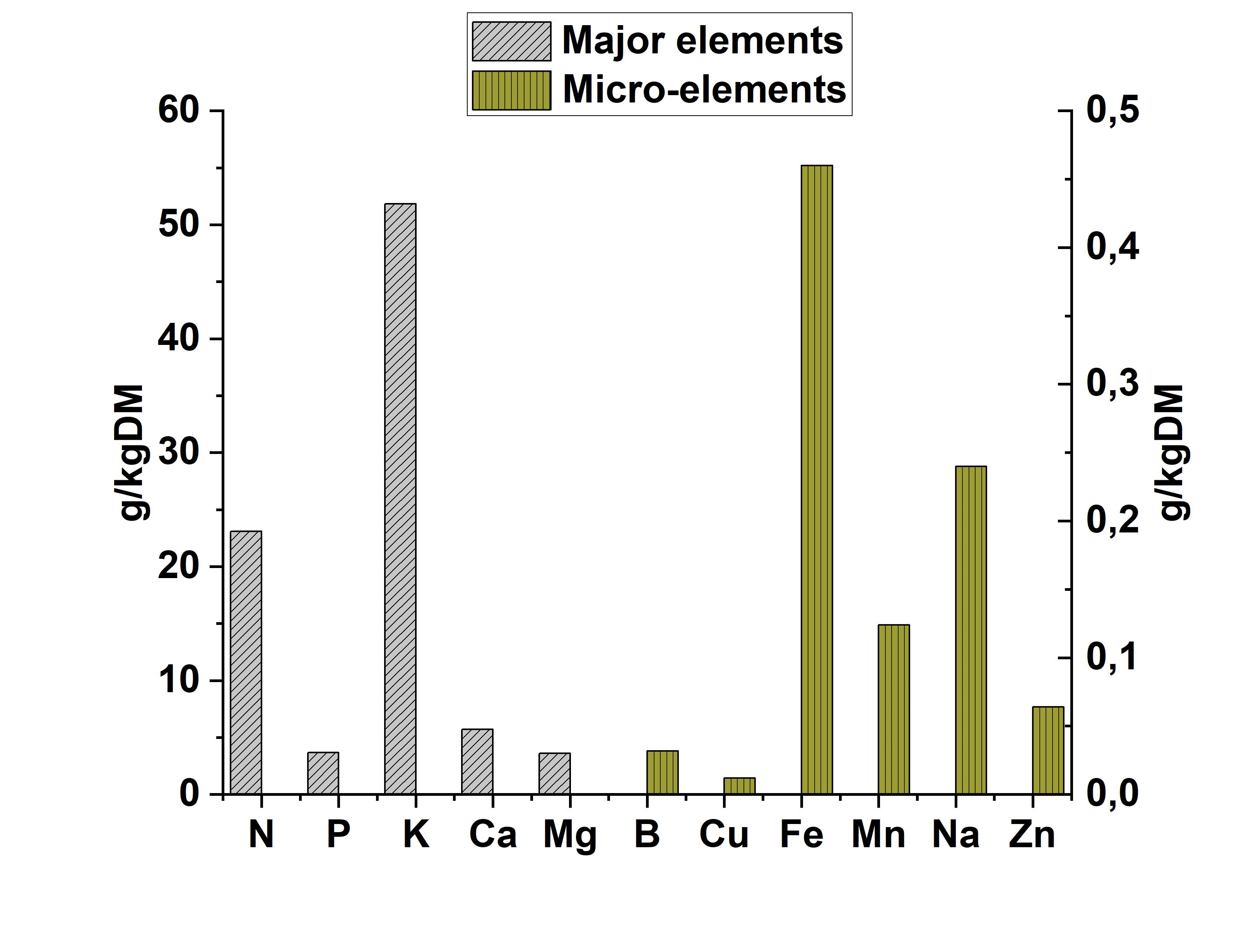
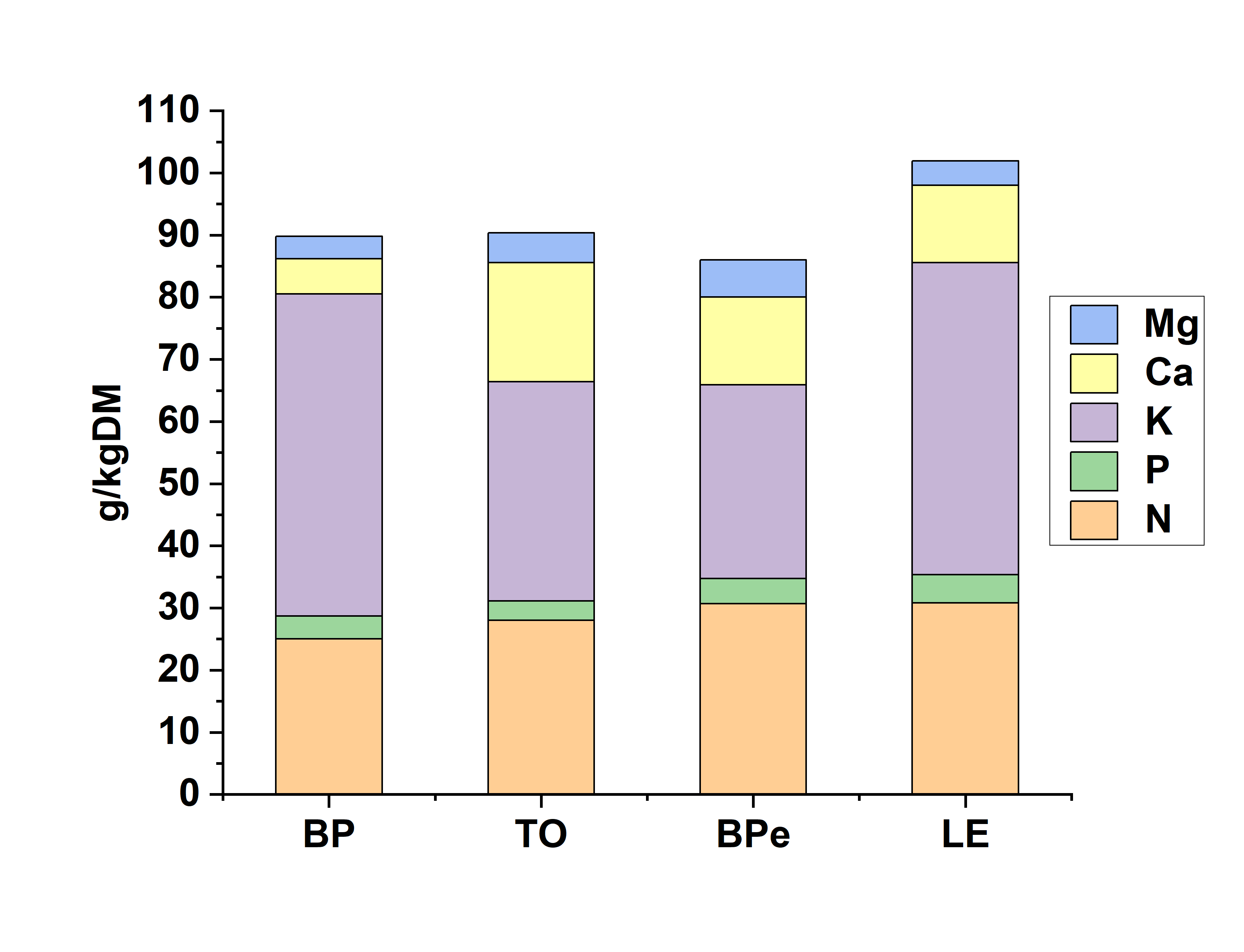
The results in Figure 2 reveal that potassium (K), nitrogen (N), calcium (Ca), phosphorus (P), and magnesium (Mg) are the most abundant elements in the banana peels of the studied variety, with respective values of 51.82 g/kg DM; 23.1 g/kg DM; 5.7 g/kg DM; 3.68 g/kg DM; and 3.62 g/kg DM, respectively. 15, who studied bell pepper plants (Capsicum annum var. annum) grown under conditions of macronutrient and boron deficiency, observed visible symptoms on the leaves and fruits. Among the nutrients tested, the descending order of those that most limit the growth of pepper plants is as follows: N, K, P, Mg, S, Ca, and B. Banana peels from Musa paradisiaca are therefore of agronomic interest given their relatively high content of macronutrients, particularly potassium (K). Nitrogen analysis was carried out using two methods: the CHNS method, which yielded 23.1 g/kg, and the Kjeldahl method, which yielded 15.75 g/kg. Comparison of Total Nitrogen estimation by Kjeldahl Method and CHNS Analyzer in Dry Tropical Grassland 16 found similar relationships.

Nitrogen is an essential element for plant growth and development. Indeed, this nutrient is a component of essential molecules such as amino acids and proteins, nucleic acids, and chlorophyll. It is also a constituent of certain secondary metabolites (alkaloids, phenolamides, glycoalkaloids). Variations in its availability in the environment therefore affect plant growth. Numerous studies show that excessive nitrogen fertilization maximizes plant biomass production 17. 18 demonstrated that a high nitrogen concentration increases grapevine leaf biomass compared to treatments with lower nitrogen levels. Similarly, authors showed that nitrogen limitation in tomatoes reduces growth, primarily due to lower leaf area production 18, 19.
3.2. Content of C, H, N, and S in Banana PeelsOther parameters also play a role in assessing waste to be treated biologically; one such parameter is the C/N ratio. In this study, this ratio was 19.7 (Table 2). It is well known that the biodegradability of organic waste depends on its C/N ratio 20, hence the need to know the final and initial C/N ratios of the products resulting from biotransformation. The C/N ratio is often used to assess the maturity of biotransformation 21. Generally, carbon-to-nitrogen ratios decrease during the biotransformation process; this decrease is due to the degradation and mineralization of organic matter 22. This ratio must be less than 15 at the end of biotransformation 23. C, H, N, and S are among the elements commonly used to characterize waste quality, along with oxygen and phosphorus (O and P) 24. Generally, the ratio considered optimal for anaerobic digestion ranges from 20 to 35 25. However, it has been shown that the optimal range can be broader, varying between 15 and 45 depending on the reactor technology and the nature of the substrates 26. In this study, carbon is the most abundant element (45.19%), followed by nitrogen (2.31%), hydrogen, and sulfur. 27, in their study on the effect of the C/N ratio on a membrane - aerated biofilm reactor (MABR) specifically, COD and nitrogen removal, biofilm characteristics, and microbial community structure reached the same conclusion.
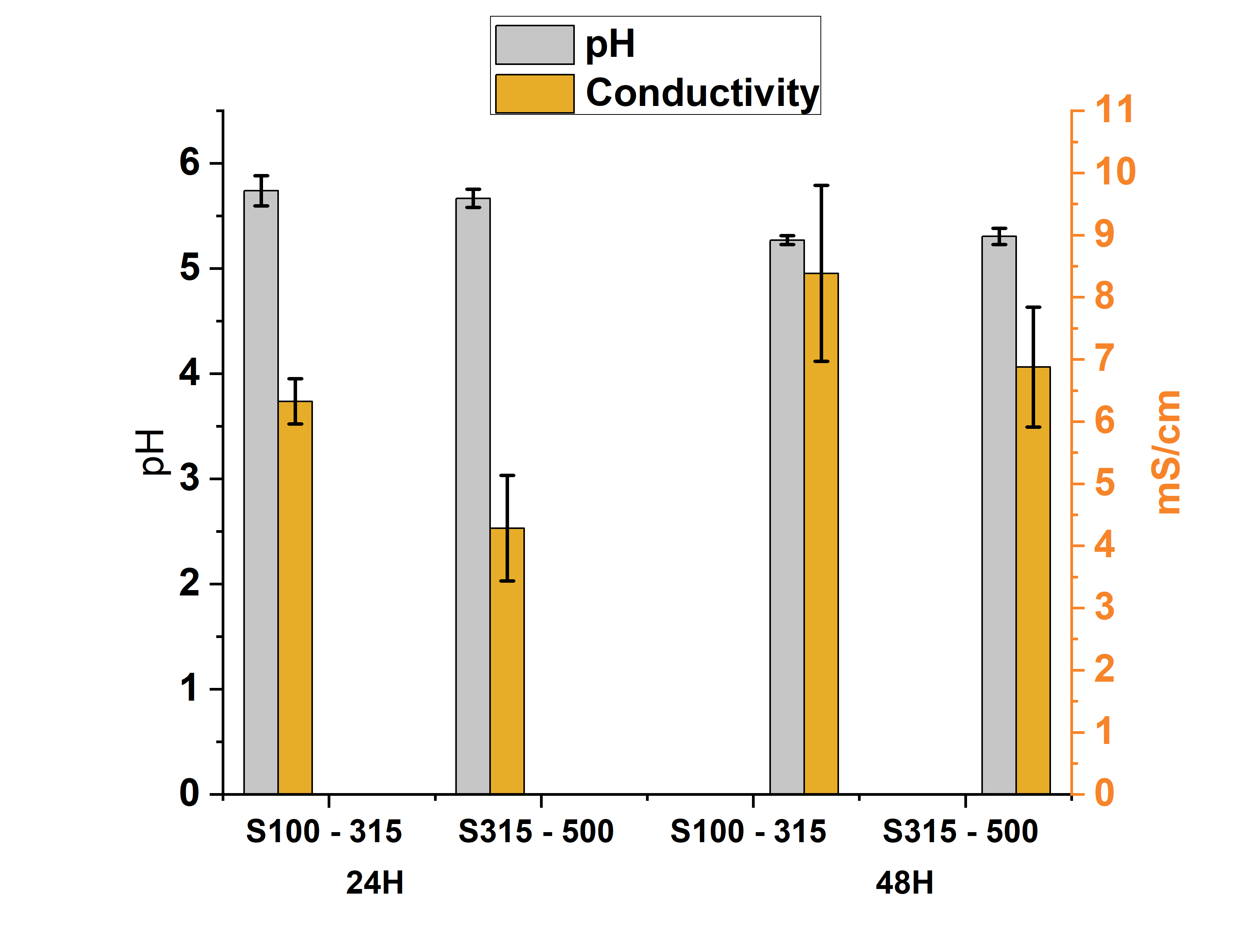
pH and conductivity are parameters used to assess biodegradability and nutrient bioavailability 28. The average pH for a 24 hours contact time for the S100-315 and S315-500 particle sizes was 5.7 and 5.6, respectively (Figure 3). The average pH after 48 hours is 5.3 for both particle sizes. These pH values are acidic but close to neutral, ensuring the proper functioning of bacteria in the soil. According to 29, pH can be a limiting factor for bacterial activity, negatively impacting plants. These bacteria generally thrive at pH values between 5 and 9.

As for conductivity, the average values are 6.3 mS/cm and 4.3 mS/cm, respectively, for the two particle size fractions over 24 hours, whereas over 48 hours, average values of 4.8 mS/cm and 6.9 mS/cm are obtained for the two particle size fractions in that order.
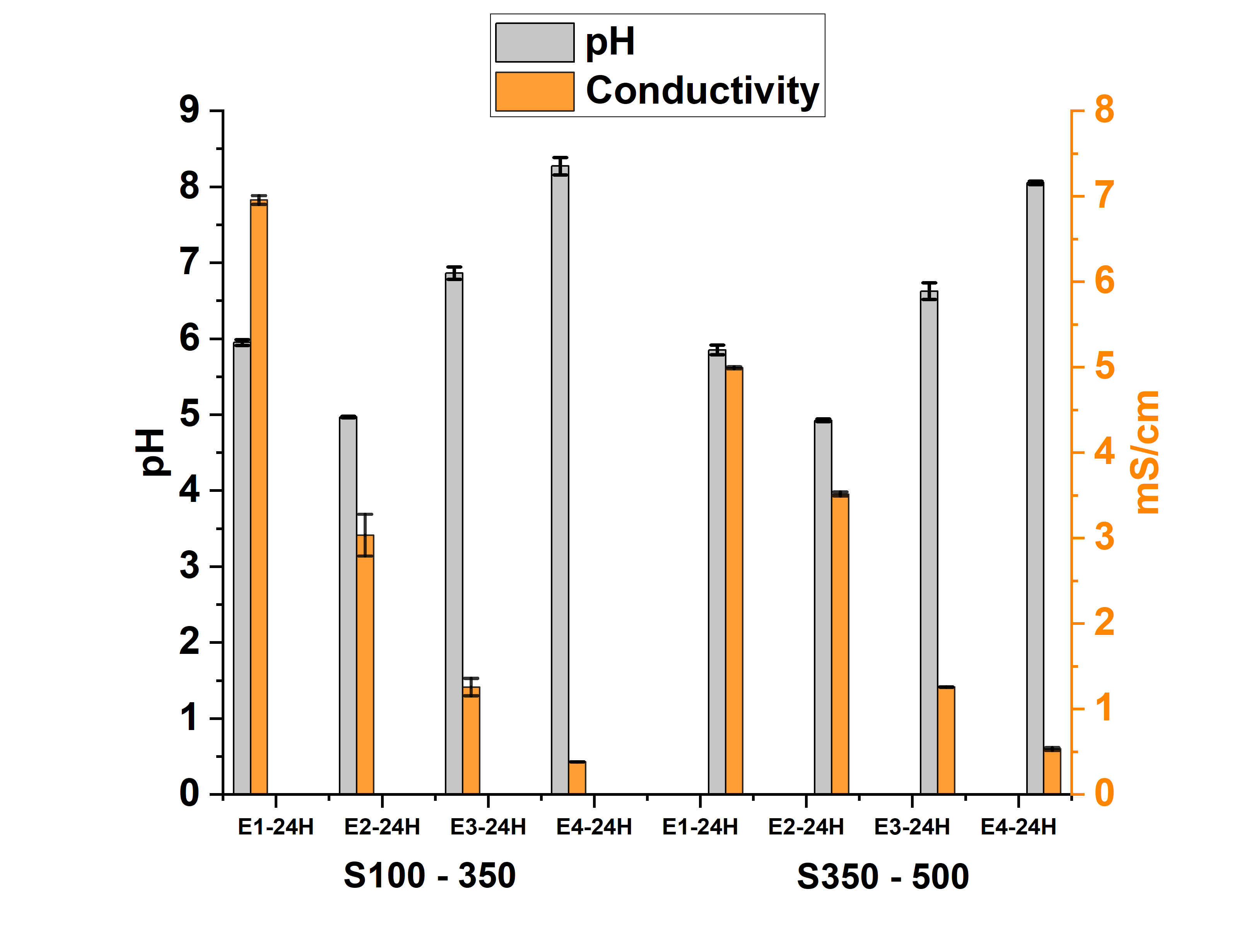
This study expanded our analysis by include four (04) extractions E1-24H, E2-24H, E3-24H, and E4-24H on the two major size fractions, namely G100-315 and G315-500. Figure 4 shows a correlation between pH and conductivity in the four extracts obtained for the two major size fractions. The results reveal that the pH is acidic for the first two extractions. This can be explained by the higher concentration of organic matter in the first two solid fractions brought into contact with distilled water. Furthermore, the decrease in conductivity is an indication that the organic matter content decreases with the number of extractions 30.

The pH, which tends toward neutrality, indicates that the solid fraction is becoming less and less rich in organic matter. The pH values (5.3 and 5.7) and conductivity values (4.28 mS/cm and 8.38 mS/cm) fall within the ranges reported in the literature. 31 obtained pH values ranging from 4.5 to 9 and conductivity values ranging from 2.5 mS/cm to 35.1 mS/cm. During processing to produce a liquid soil amendment, the pH may change as the organic matter stabilizes.
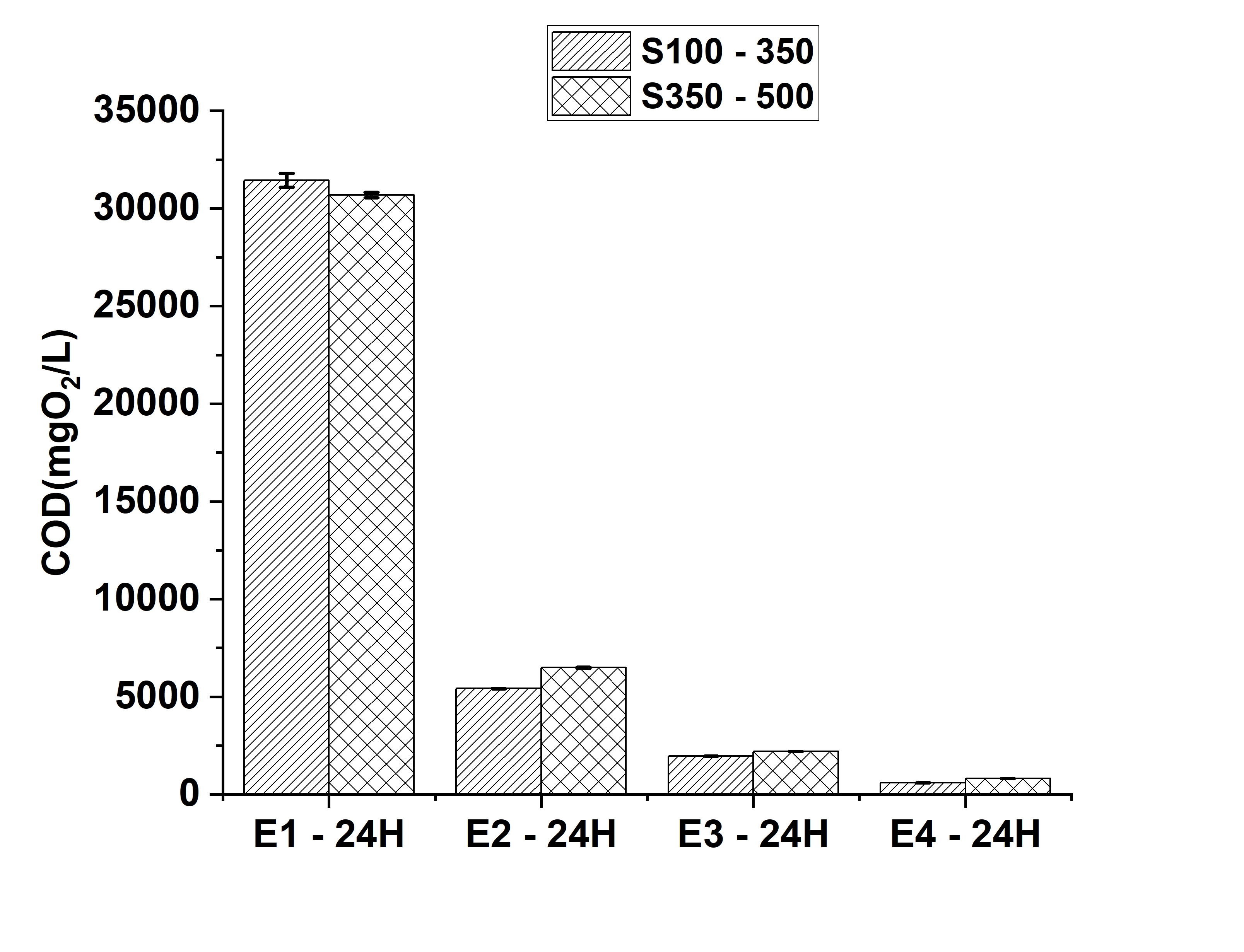
COD is a parameter that estimates the biodegradable and non-biodegradable organic load 32. Figure 5 shows the COD content of the four extractions, again for the major fractions obtained after grinding. Analysis of this figure reveals that the first two extractions account for most of the organic matter that can be released into distilled water. For S100-315, the four extractions E1-24H, E2-24H, E3-24H, and E4-24H have COD concentrations of 31,437.33 mg O₂/L, 5,420 mg O₂/L, 1,959 mg O₂/L, and 599 mg O₂/L, respectively. The G315-500 samples, meanwhile, have COD concentrations of 30,686.67 mg O₂/L; 6,490 mg O₂/L; 2,209.33 mg O₂/L, and 814 mg O₂/L, respectively.

Following these analyses, SUVA which represents the ratio of UV absorbance at 254 nm to organic carbon was also evaluated. This parameter is used to assess the aromatic character of a solution; the higher the SUVA, the more aromatic the molecules are and the less biodegradable they are 33. Table 3 provides information on the SUVA values for the four extracts E1-24H, E2-24H, E3-24H, and E4-24H. Analysis of this table reveals that the SUVA increases with the number of extractions. The residual molecules are therefore more aromatic than the initial ones. Many authors prefer the SUVA index over the BOD₅/COD ratio because it is more representative of the state of waste degradation 34. Its correlation with biogas production during storage has also been demonstrated 35. This finding is consistent with the work by 36, who noted that the types of organic compounds present in leachate change as waste degrades. Thus, the degradation of organic matter is accompanied by an increase in the aromaticity of the molecules and a disappearance of short-chain aliphatic compounds, polysaccharides, and readily biodegradable alcohols 37. The first extractions therefore contain molecules that are less aromatic and, as a result, more biodegradable than the molecules in the later extractions. It is therefore advisable to include the first extractions in biological treatment to achieve good treatment efficiency and reduce both the treatment duration and the resources required.
In this study, we got a BOD5/COD = 0.32, showing that the banana peel extract is biodegradable. A BOD5/COD ratio over 0.3 indicates a biodegradable leachate that can likely be treated biologically 38
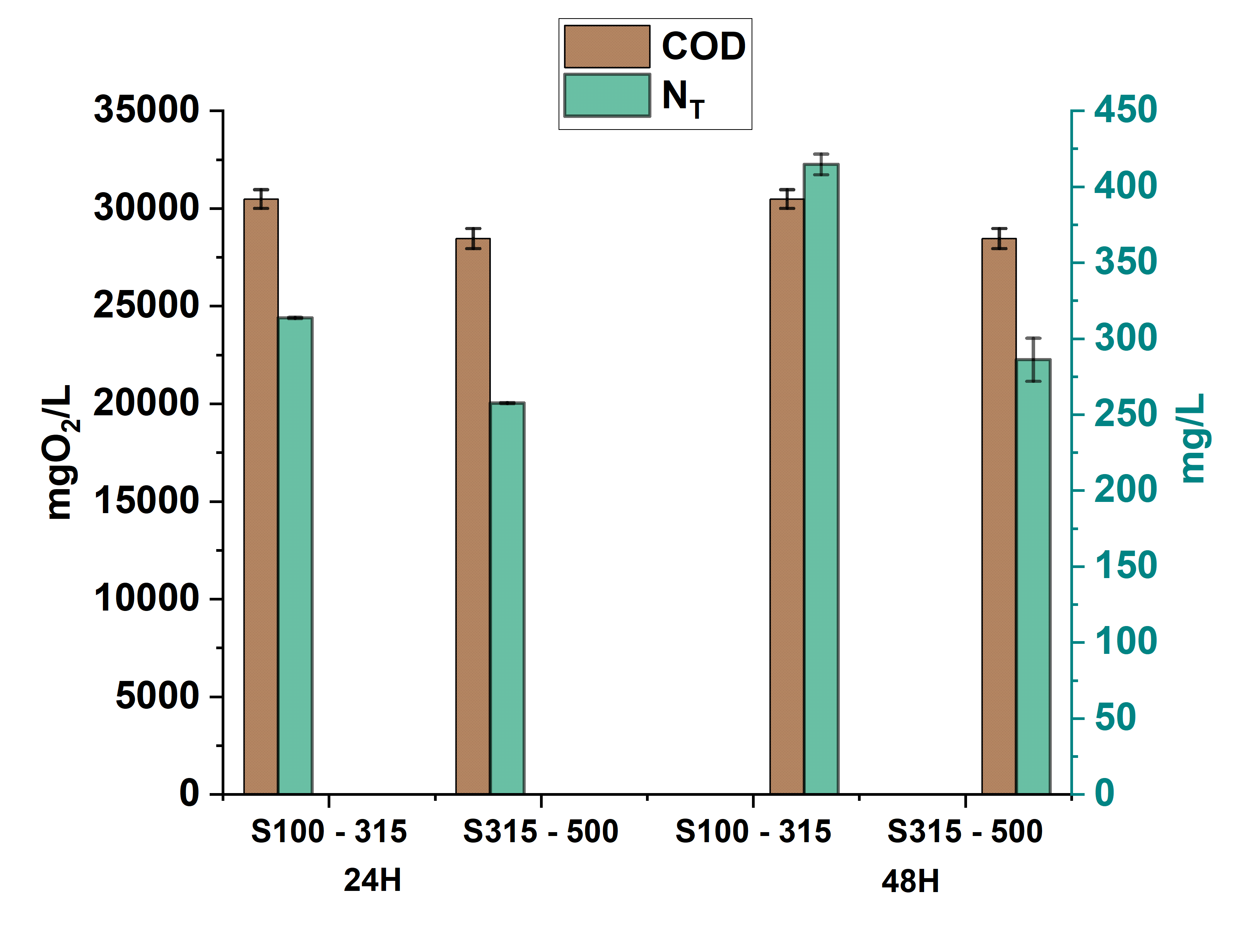
Figure 6 shows the different concentrations of total nitrogen compared to the COD of the various major fractions (S100-315 and S315-500) for contact times of 24 hours and 48 hours, respectively. After 24 hours, total nitrogen in S100-315 and S315-500 accounted for 1.0% and 0.9% of COD, respectively, and after 48 hours, 1.3% and 1.0%. This demonstrates that contact area and contact time increase the concentration of organic matter in distilled water in batch leaching tests 39. However, the difference is not significant enough when moving from a 24 hours contact time to a 48 hours contact time.
Similarly, total phosphorus is an important element in plant development showed that phosphorus deficiency led to slower root system development in barley and young apple trees 40, 41. Since phosphate fertilizers are produced from natural phosphates, phosphorus is considered a non-renewable resource that is expected to be depleted within 50 to 60 years 42. It is one of the three major mineral elements 43. Its inclusion in physicochemical analyses is therefore important for assessing the quality of the soil amendment to be synthesized. Figure 7 shows the concentration of total phosphorus in the extracts for contact times of 24 hours and 48 hours, for S100-315 and S315-500, respectively.


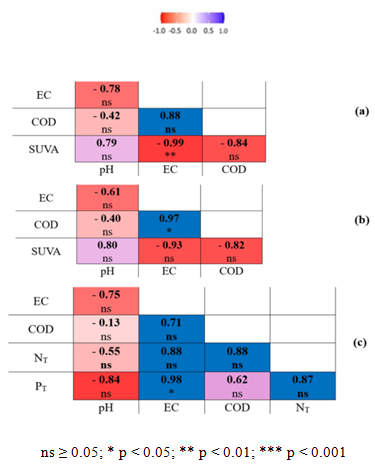
To identify potential interactions among the physicochemical parameters of the substrates, a Pearson correlation analysis was performed on the pH, electrical conductivity, COD, and SUVA data obtained after each of the four extractions (Figures 8a and 8b), and then on the pH, conductivity, COD, total nitrogen, and total phosphorus obtained after 24 and 48 hours of contact time. This analysis aimed to identify linear relationships between the variables, with correlations considered statistically significant when the p-value was less than 0.05.
Regardless of the size of the fractions considered, the results show a significant correlation only between COD and electrical conductivity (Figures 8a and 8b). This correlation can be explained by the fact that both parameters (COD and electrical conductivity) partially reflect the overall load of each extract. However, no significant correlation was observed between pH, SUVA, and the other parameters. These parameters are intrinsically linked to changes in biodegradable organic matter when the loaded liquid undergoes changes over time. Since the analyses were performed on the extracts without subjecting them to any treatment process, a correlation between pH, SUVA, and the other parameters cannot be considered.

A Pearson correlation analysis of the parameters (pH, EC, COD, NT, and PT) for the 24 hours and 48 hours extractions of the two fractions reveals that the only statistically significant correlation is that observed between electrical conductivity and total phosphorus (r = 0.98; p < 0.01). This strong correlation suggests that an increase in total phosphorus concentration is accompanied by an increase in electrical conductivity. In contrast, no significant correlation was observed between pH and the other parameters, or between COD and the nutrients. Similarly, the correlations between COD, PT, and NT, although sometimes high, were not statistically significant. Similar correlations have been reported in the literature 28, 44. However, these results should be interpreted with caution, as the small number of observations may limit the detection of statistically significant correlations.
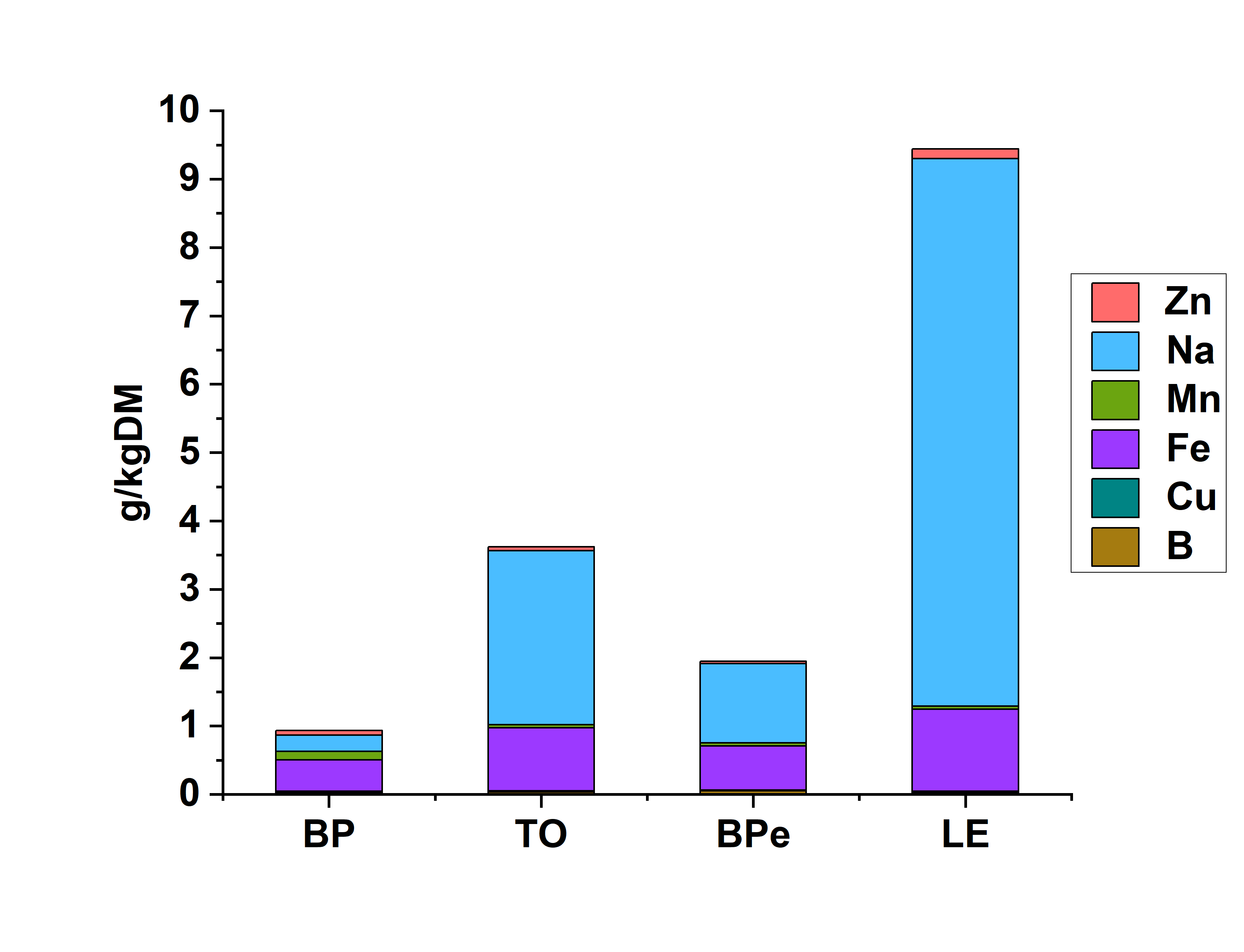
3.5. Plants Elemental Composition AnalysisTo further advance our objectives, we analyzed the mineral composition of various plant parts intended for soilless cultivation, comparing them to banana peels. The plants included tomatoes, bell peppers, and lettuce. Analysis of these results shows that banana peels have a nutrient composition like that of the plants selected for the soilless cultivation trials. Macronutrients such as N, P, K, Mg, and Ca have acceptable levels to produce a liquid soil amendment. Sodium (Na) is the least abundant element in banana peels; however, the cumulative effect could help compensate for the sodium content. Understanding the physicochemical properties of the fertilizer is crucial for determining the average nutrient concentration, thereby ensuring optimal conditions for plant growth. Among these elements, carbon (C), hydrogen (H), and oxygen (O) are key elements supplied to the plant through the air. Macronutrients are categorized into primary macronutrients and secondary macronutrients. Primary macronutrients consist of nitrogen (N), phosphorus (P), and potassium (K), while secondary macronutrients include calcium (Ca), magnesium (Mg), and sulfur (S). Micronutrients include boron (B), iron (Fe), manganese (Mn), copper (Cu), zinc, and molybdenum (Mo). Plants require micro-nutriments in small quantities 45, 46. Plant-based fertilizer solutions are now available on the market and can be used as sources of macro- and micronutrients 47, 48. Figure 9 and Figure 10 show the mineral concentration in banana peels (BP), compared to the roots, stems, and leaves of tomatoes (TO), peppers (BPe), and lettuce (LE).

This study, whose primary objective was to investigate the fertilizing potential of banana peels from Musa paradisiaca, allowed us to identify several key points upon analysis of the data obtained. The organic matter content in banana peels is virtually the same regardless of the particle size of the powder obtained after grinding; it is approximately 80% DM. About mineral salts, potassium (K) is the most abundant, followed by nitrogen (N), calcium (Ca), and magnesium (Mg). These elements are classified as primary macronutrients (N, P, and K) and secondary macronutrients (Ca, Mg, and S). This high mineral content makes banana peels suitable for use in the production of a liquid soil amendment. Analysis of the elemental composition results yielded a C/N ratio of 19.7; since this ratio falls within the range of 15 to 45, biological treatment is a viable option. Leaching tests, which release organic matter into distilled water, allowed us to determine the concentration of organic matter in the water based on parameters such as COD, BOD₅, SUVA, total nitrogen (N), total phosphorus (P), conductivity, and pH. These analyses were conducted on the two main fractions S100-315 and S315-500 for two contact times: 24 hours and 48 hours. Smaller particles release more organic matter than larger ones, and the 48-hour contact time mobilizes slightly more organic matter than the 24-hour contact time. However, the difference between the two contact times is not significant. The first two extractions (E1-24H and E2-24H) mobilize more organic matter. The SUVA indicates that the first molecules mobilized are more biodegradable. Thus, two extractions of 24 hours each allow for the mobilization of the most biodegradable organic matter. An analysis comparing the mineral content of banana peels with that of various parts of tomatoes, bell peppers, and lettuce reveals that banana peels have a composition similar to that of plants intended for soilless cultivation.
The authors declare that they have no known competing financial interests or personal relationships that could have appeared to influence the work reported in this paper.
| [1] | G. Mawlood, O. Al-Rubaie, M. Najm, Y. Sumuu, O. Asri, et A. Saadi, «Enhance the productivity of field crops through bio- and organic fertilization as a sustainable alternative to chemical fertilizers: A Comprehensive review», Pharaonic J. Sci., vol. 1, no 2, p. 136152, août 2025. | ||
| In article | View Article | ||
| [2] | M. Clark et D. Tilman, «Comparative analysis of environmental impacts of agricultural production systems, agricultural input efficiency, and food choice», Environ. Res. Lett., vol. 12, no 6, p. 064016, juin 2017. | ||
| In article | View Article PubMed | ||
| [3] | T. Brunelle et al., «Reducing chemical inputs in agriculture requires a system change», Commun. Earth Environ., vol. 5, no 1, p. 369, juill. 2024. | ||
| In article | View Article | ||
| [4] | D. Egas, S. Azarkamand, C. Casals, S. Ponsá, L. Llenas, et J. Colón, «Life cycle assessment of bio-based fertilizers production systems: where are we and where should we be heading?», Int. J. Life Cycle Assess., vol. 28, no 6, p. 626650, juin 2023. | ||
| In article | View Article | ||
| [5] | E. Montemayor, E. P. Andrade, A. Bonmatí, et A. Antón, «Critical analysis of life cycle inventory datasets for organic crop production systems», Int. J. Life Cycle Assess., vol. 27, no 4, p. 543563, avr. 2022. | ||
| In article | View Article | ||
| [6] | N. Cudecka-Purina et al., «Food Waste Assessment and Household Biowaste Management in Latvia: Towards a Circular Economy», Biomass, vol. 5, no 4, p. 58, déc. 2025. | ||
| In article | View Article | ||
| [7] | K. Kagan, K. Jonak, et A. Wolińska, «The Impact of Reduced N Fertilization Rates According to the “Farm to Fork” Strategy on the Environment and Human Health», Appl. Sci., vol. 14, no 22, p. 10726, janv. 2024. | ||
| In article | View Article | ||
| [8] | S. Figiel, P. Rusek, U. Ryszko, et M. S. Brodowska, «Microbially Enhanced Biofertilizers: Technologies, Mechanisms of Action, and Agricultural Applications», Agronomy, vol. 15, no 5, p. 1191, mai 2025. | ||
| In article | View Article | ||
| [9] | E. E. Ammar et al., «A comprehensive overview of eco-friendly bio-fertilizers extracted from living organisms», Environ. Sci. Pollut. Res., vol. 30, no 53, p. 113119113137, nov. 2023. | ||
| In article | View Article PubMed | ||
| [10] | J. L. C. Damo, M. Pedro, et M. L. Sison, «Phosphate Solubilization and Plant Growth Promotion by Enterobacter sp. Isolate», Appl. Microbiol., vol. 4, no 3, p. 11771192, sept. 2024. | ||
| In article | View Article | ||
| [11] | S. S. Dhaliwal et al., «Enhanced Organic Carbon Triggers Transformations of Macronutrients, Micronutrients, and Secondary Plant Nutrients and Their Dynamics in the Soil under Different Cropping Systems-A Review», J. Soil Sci. Plant Nutr., vol. 24, no 3, p. 52725292, sept. 2024. | ||
| In article | View Article | ||
| [12] | T. N. Yonli et O. Odette, «Les consommateurs des produits maraîchers biologiques à OuagadougouConsumers of organic market garden products in Ouagadougou», Anthropol. Food, janv. 2023. | ||
| In article | View Article | ||
| [13] | T. Suvo, H. Biswas, M. Jewel, Md. S. Islam, et md. shafiqul islam Khan, «Impact of substrate on soilless tomato cultivation», Int. J. Agric. Res. Innov. Technol., vol. 6, p. 82, févr. 2017. | ||
| In article | View Article | ||
| [14] | H. Lee et al., «Pretreatment methods for monitoring microplastics in soil and freshwater sediment samples: A comprehensive review», Sci. Total Environ., vol. 871, p. 161718, mai 2023. | ||
| In article | View Article PubMed | ||
| [15] | L. A. M. Lisboa et al., «Morpho-Physiological Assessment of Tomato and Bell Pepper in Response to Nutrient Restriction», Stresses, vol. 4, no 1, p. 172184, mars 2024. | ||
| In article | View Article | ||
| [16] | V. P. Gautam, S. Mishra, et H. Ahmed, «Comparison of total nitrogen Estimation by Kjeldahl method and CHNS analyzer in dry tropical grassland», Int. J. Plant Environ., vol. 9, no 02, p. 180182, 2023. | ||
| In article | View Article | ||
| [17] | Q. Wang, S. Li, J. Li, et D. Huang, «The Utilization and Roles of Nitrogen in Plants», Forests, vol. 15, no 7, p. 1191, juill. 2024. | ||
| In article | View Article | ||
| [18] | V. L. Pinheiro et al., «Structural Traits, Production, Biomass Allocation, and Changes in Leaf Investment in Megathyrsus maximus cv. MG12 Paredão Under Nitrogen Fertilization and Cutting Intervals», Nitrogen, vol. 6, no 1, p. 12, mars 2025. | ||
| In article | View Article | ||
| [19] | D. Gil-Villar et al., «La variation des réponses à la limitation de l’azote chez Solanum lycopersicum var. cerasiforme et S. pimpinellifolium ainsi qu’en hybrides révèle un potentiel génétique pour améliorer l’efficacité de l’utilisation de l’azote (NUE) dans la sélection de tomates», Plant Physiol. Biochem., vol. 229, p. 110428, déc. 2025. | ||
| In article | |||
| [20] | R. M. Ahmad et al., «Optimizing Biogas Production and Digestive Stability through Waste Co-Digestion», Sustainability, vol. 16, no 7, p. 3045, janv. 2024. | ||
| In article | View Article | ||
| [21] | F. A. Azis, M. Choo, H. Suhaimi, et P. E. Abas, «The Effect of Initial Carbon to Nitrogen Ratio on Kitchen Waste Composting Maturity», Sustainability, vol. 15, no 7, p. 6191, janv. 2023. | ||
| In article | View Article | ||
| [22] | S. Manzoni et M. F. Cotrufo, «Mechanisms of soil organic carbon and nitrogen stabilization in mineral-associated organic matter – insights from modeling in phase space», Biogeosciences, vol. 21, no 18, p. 40774098, sept. 2024. | ||
| In article | View Article | ||
| [23] | N. A. Khan et al., «C/N ratio effect on oily wastewater treatment using column type SBR: machine learning prediction and metagenomics study», Sci. Rep., vol. 14, p. 22950, oct. 2024. | ||
| In article | View Article PubMed | ||
| [24] | M. R. Islam, Q. Wang, Y. Guo, W. Wang, S. Sharmin, et C. Ebere Enyoh, «Physico-Chemical Characterization of Food Wastes for Potential Soil Application», Processes, vol. 11, no 1, p. 250, janv. 2023. | ||
| In article | View Article | ||
| [25] | J. Schultz, M. Scherzinger, A. Y. Elbanhawy, et M. Kaltschmitt, «Long-Term Continuous Anaerobic Co-digestion of Residual Biomass—Model Validation and Model-Based Investigation of Different Carbon-to-Nitrogen Ratios», BioEnergy Res., vol. 18, no 1, p. 58, juin 2025. | ||
| In article | View Article | ||
| [26] | H. Zhong, L. Dong, Y. Tang, L. Qi, et M. Wang, «The C/N Ratio’s Effect on a Membrane-Aerated Biofilm Reactor (MABR): COD and Nitrogen Removal, Biofilm Characteristics, and Microbial Community Structure», Water, vol. 15, no 24, p. 4298, janv. 2023. | ||
| In article | View Article | ||
| [27] | S. Yadav et D. Singh, «Assessment of biochar developed via torrefaction of food waste as feedstock for steam gasification to produce hydrogen rich gas», Carbon Res., vol. 2, no 1, p. 34, sept. 2023. | ||
| In article | View Article | ||
| [28] | N. J. Barrow et A. E. Hartemink, «The effects of pH on nutrient availability depend on both soils and plants», Plant Soil, vol. 487, no 1, p. 2137, juin 2023. | ||
| In article | View Article | ||
| [29] | X. Zhou, T. Tahvanainen, L. Malard, L. Chen, J. Pérez-Pérez, et F. Berninger, «Global analysis of soil bacterial genera and diversity in response to pH», Soil Biol. Biochem., vol. 198, p. 109552, nov. 2024. | ||
| In article | View Article | ||
| [30] | T. Rahmani, A. Rahimi, et S. Nojavan, «Study on electrical current variations in electromembrane extraction process: Relation between extraction recovery and magnitude of electrical current», Anal. Chim. Acta, vol. 903, p. 8190, janv. 2016. | ||
| In article | View Article PubMed | ||
| [31] | E. I. Chereches et A. A. Minea, «Experiments on the Electrical Conductivity of PEG 400 Nanocolloids Enhanced with Two Oxide Nanoparticles», Nanomaterials, vol. 13, no 9, p. 1555, janv. 2023. | ||
| In article | View Article PubMed | ||
| [32] | Z. Lv, X. Ran, J. Liu, Y. Feng, X. Zhong, et N. Jiao, «Effectiveness of Chemical Oxygen Demand as an Indicator of Organic Pollution in Aquatic Environments», Ocean-Land-Atmosphere Res., vol. 3, p. 0050, juin 2024. | ||
| In article | View Article | ||
| [33] | J. A. Korak et G. McKay, «Meta-Analysis of Optical Surrogates for the Characterization of Dissolved Organic Matter», Environ. Sci. Technol., vol. 58, no 17, p. 73807392, avr. 2024. | ||
| In article | View Article PubMed | ||
| [34] | M. S. Begum, J.-H. Park, L. Yang, K. H. Shin, et J. Hur, «Optical and molecular indices of dissolved organic matter for estimating biodegradability and resulting carbon dioxide production in inland waters: A review», Water Res., vol. 228, p. 119362, janv. 2023. | ||
| In article | View Article PubMed | ||
| [35] | X. Guo et al., «Characterization of dissolved organic matter from biogas residue composting using spectroscopic techniques», Waste Manag., vol. 78, p. 301309, août 2018. | ||
| In article | View Article PubMed | ||
| [36] | O. Baziz, F. Beline, et P. Durand, «Impacts on water quality of producing biogas on pig farms as a function of the associated agricultural practices», Environ. Res. Commun., vol. 6, no 7, p. 075021, juill. 2024. | ||
| In article | View Article | ||
| [37] | A. S. Obeng, J. Dunne, M. Giltrap, et F. Tian, «Soil organic matter carbon chemistry signatures, hydrophobicity and humification index following land use change in temperate peat soils», Heliyon, vol. 9, no 9, sept. 2023. | ||
| In article | View Article PubMed | ||
| [38] | D.-G. Rudaru, I. E. Lucaciu, et A. M. Fulgheci, «Correlation between BOD5 and COD–biodegradability indicator of wastewater», Romanian J. Ecol. Environ. Chem., vol. 4, no 2, p. 8086, 2022. | ||
| In article | View Article | ||
| [39] | K. Mizerna et A. Król, «The importance of time and other determinants in the assessment of heavy metals release during solid waste management», Sci. Rep., vol. 13, no 1, p. 1651, janv. 2023. | ||
| In article | View Article PubMed | ||
| [40] | M. A. Bhat et al., «Soil and Mineral Nutrients in Plant Health: A Prospective Study of Iron and Phosphorus in the Growth and Development of Plants», Curr. Issues Mol. Biol., vol. 46, no 6, p. 51945222, juin 2024. | ||
| In article | View Article PubMed | ||
| [41] | B. Xie et al., «Comparative physiological, metabolomic, and transcriptomic analyses reveal mechanisms of apple dwarfing rootstock root morphogenesis under nitrogen and/or phosphorus deficient conditions», Front. Plant Sci., vol. 14, juin 2023. | ||
| In article | View Article PubMed | ||
| [42] | F. Solangi et al., «The Global Dilemma of Soil Legacy Phosphorus and Its Improvement Strategies under Recent Changes in Agro-Ecosystem Sustainability», ACS Omega, vol. 8, no 26, p. 2327123282, juill. 2023. | ||
| In article | View Article PubMed | ||
| [43] | L. Zhang, L. Chang, H. Liu, M. de Jesús Puy Alquiza, et Y. Li, «Biochar application to soils can regulate soil phosphorus availability: a review», Biochar, vol. 7, no 1, p. 13, janv. 2025. | ||
| In article | View Article | ||
| [44] | L. A. Labib, S. Ahmed, M. A. Malek, et Md. F. Hasan, «Agrowaste-Derived Liquid Organic Fertilizer and Temperature Stabilization in Vertical Aeroponics for Crop Production», Plant-Environ. Interact., vol. 7, no 3, 2026. | ||
| In article | View Article PubMed | ||
| [45] | S. Thapa et al., «Managing Micronutrients for Improving Soil Fertility, Health, and Soybean Yield», Sustainability, vol. 13, no 21, p. 11766, janv. 2021. | ||
| In article | View Article | ||
| [46] | S. Prusty, R. K. Sahoo, S. Nayak, S. Poosapati, et D. M. Swain, «Proteomic and Genomic Studies of Micronutrient Deficiency and Toxicity in Plants», Plants, vol. 11, no 18, p. 2424, janv. 2022. | ||
| In article | View Article PubMed | ||
| [47] | K. Weimers, K.-J. Bergstrand, M. Hultberg, et H. Asp, «Liquid Anaerobic Digestate as Sole Nutrient Source in Soilless Horticulture—Or Spiked With Mineral Nutrients for Improved Plant Growth», Front. Plant Sci., vol. 13, mars 2022. | ||
| In article | View Article PubMed | ||
| [48] | D. Skrzypczak et al., «Recent innovations in fertilization with treated digestate from food waste to recover nutrients for arid agricultural fields», Environ. Sci. Pollut. Res., vol. 31, no 29, p. 4156341585, juin 2024. | ||
| In article | View Article PubMed | ||
Published with license by Science and Education Publishing, Copyright © 2026 Wémboma YABA, Taba To’ora KAGA, Piyabalo KODOM, Virginie PALLIER, Kwamivi Nyonuwosro SEGBEAYA and Geneviève FEUILLADE
 This work is licensed under a Creative Commons Attribution 4.0 International License. To view a copy of this license, visit
http://creativecommons.org/licenses/by/4.0/
This work is licensed under a Creative Commons Attribution 4.0 International License. To view a copy of this license, visit
http://creativecommons.org/licenses/by/4.0/
| [1] | G. Mawlood, O. Al-Rubaie, M. Najm, Y. Sumuu, O. Asri, et A. Saadi, «Enhance the productivity of field crops through bio- and organic fertilization as a sustainable alternative to chemical fertilizers: A Comprehensive review», Pharaonic J. Sci., vol. 1, no 2, p. 136152, août 2025. | ||
| In article | View Article | ||
| [2] | M. Clark et D. Tilman, «Comparative analysis of environmental impacts of agricultural production systems, agricultural input efficiency, and food choice», Environ. Res. Lett., vol. 12, no 6, p. 064016, juin 2017. | ||
| In article | View Article PubMed | ||
| [3] | T. Brunelle et al., «Reducing chemical inputs in agriculture requires a system change», Commun. Earth Environ., vol. 5, no 1, p. 369, juill. 2024. | ||
| In article | View Article | ||
| [4] | D. Egas, S. Azarkamand, C. Casals, S. Ponsá, L. Llenas, et J. Colón, «Life cycle assessment of bio-based fertilizers production systems: where are we and where should we be heading?», Int. J. Life Cycle Assess., vol. 28, no 6, p. 626650, juin 2023. | ||
| In article | View Article | ||
| [5] | E. Montemayor, E. P. Andrade, A. Bonmatí, et A. Antón, «Critical analysis of life cycle inventory datasets for organic crop production systems», Int. J. Life Cycle Assess., vol. 27, no 4, p. 543563, avr. 2022. | ||
| In article | View Article | ||
| [6] | N. Cudecka-Purina et al., «Food Waste Assessment and Household Biowaste Management in Latvia: Towards a Circular Economy», Biomass, vol. 5, no 4, p. 58, déc. 2025. | ||
| In article | View Article | ||
| [7] | K. Kagan, K. Jonak, et A. Wolińska, «The Impact of Reduced N Fertilization Rates According to the “Farm to Fork” Strategy on the Environment and Human Health», Appl. Sci., vol. 14, no 22, p. 10726, janv. 2024. | ||
| In article | View Article | ||
| [8] | S. Figiel, P. Rusek, U. Ryszko, et M. S. Brodowska, «Microbially Enhanced Biofertilizers: Technologies, Mechanisms of Action, and Agricultural Applications», Agronomy, vol. 15, no 5, p. 1191, mai 2025. | ||
| In article | View Article | ||
| [9] | E. E. Ammar et al., «A comprehensive overview of eco-friendly bio-fertilizers extracted from living organisms», Environ. Sci. Pollut. Res., vol. 30, no 53, p. 113119113137, nov. 2023. | ||
| In article | View Article PubMed | ||
| [10] | J. L. C. Damo, M. Pedro, et M. L. Sison, «Phosphate Solubilization and Plant Growth Promotion by Enterobacter sp. Isolate», Appl. Microbiol., vol. 4, no 3, p. 11771192, sept. 2024. | ||
| In article | View Article | ||
| [11] | S. S. Dhaliwal et al., «Enhanced Organic Carbon Triggers Transformations of Macronutrients, Micronutrients, and Secondary Plant Nutrients and Their Dynamics in the Soil under Different Cropping Systems-A Review», J. Soil Sci. Plant Nutr., vol. 24, no 3, p. 52725292, sept. 2024. | ||
| In article | View Article | ||
| [12] | T. N. Yonli et O. Odette, «Les consommateurs des produits maraîchers biologiques à OuagadougouConsumers of organic market garden products in Ouagadougou», Anthropol. Food, janv. 2023. | ||
| In article | View Article | ||
| [13] | T. Suvo, H. Biswas, M. Jewel, Md. S. Islam, et md. shafiqul islam Khan, «Impact of substrate on soilless tomato cultivation», Int. J. Agric. Res. Innov. Technol., vol. 6, p. 82, févr. 2017. | ||
| In article | View Article | ||
| [14] | H. Lee et al., «Pretreatment methods for monitoring microplastics in soil and freshwater sediment samples: A comprehensive review», Sci. Total Environ., vol. 871, p. 161718, mai 2023. | ||
| In article | View Article PubMed | ||
| [15] | L. A. M. Lisboa et al., «Morpho-Physiological Assessment of Tomato and Bell Pepper in Response to Nutrient Restriction», Stresses, vol. 4, no 1, p. 172184, mars 2024. | ||
| In article | View Article | ||
| [16] | V. P. Gautam, S. Mishra, et H. Ahmed, «Comparison of total nitrogen Estimation by Kjeldahl method and CHNS analyzer in dry tropical grassland», Int. J. Plant Environ., vol. 9, no 02, p. 180182, 2023. | ||
| In article | View Article | ||
| [17] | Q. Wang, S. Li, J. Li, et D. Huang, «The Utilization and Roles of Nitrogen in Plants», Forests, vol. 15, no 7, p. 1191, juill. 2024. | ||
| In article | View Article | ||
| [18] | V. L. Pinheiro et al., «Structural Traits, Production, Biomass Allocation, and Changes in Leaf Investment in Megathyrsus maximus cv. MG12 Paredão Under Nitrogen Fertilization and Cutting Intervals», Nitrogen, vol. 6, no 1, p. 12, mars 2025. | ||
| In article | View Article | ||
| [19] | D. Gil-Villar et al., «La variation des réponses à la limitation de l’azote chez Solanum lycopersicum var. cerasiforme et S. pimpinellifolium ainsi qu’en hybrides révèle un potentiel génétique pour améliorer l’efficacité de l’utilisation de l’azote (NUE) dans la sélection de tomates», Plant Physiol. Biochem., vol. 229, p. 110428, déc. 2025. | ||
| In article | |||
| [20] | R. M. Ahmad et al., «Optimizing Biogas Production and Digestive Stability through Waste Co-Digestion», Sustainability, vol. 16, no 7, p. 3045, janv. 2024. | ||
| In article | View Article | ||
| [21] | F. A. Azis, M. Choo, H. Suhaimi, et P. E. Abas, «The Effect of Initial Carbon to Nitrogen Ratio on Kitchen Waste Composting Maturity», Sustainability, vol. 15, no 7, p. 6191, janv. 2023. | ||
| In article | View Article | ||
| [22] | S. Manzoni et M. F. Cotrufo, «Mechanisms of soil organic carbon and nitrogen stabilization in mineral-associated organic matter – insights from modeling in phase space», Biogeosciences, vol. 21, no 18, p. 40774098, sept. 2024. | ||
| In article | View Article | ||
| [23] | N. A. Khan et al., «C/N ratio effect on oily wastewater treatment using column type SBR: machine learning prediction and metagenomics study», Sci. Rep., vol. 14, p. 22950, oct. 2024. | ||
| In article | View Article PubMed | ||
| [24] | M. R. Islam, Q. Wang, Y. Guo, W. Wang, S. Sharmin, et C. Ebere Enyoh, «Physico-Chemical Characterization of Food Wastes for Potential Soil Application», Processes, vol. 11, no 1, p. 250, janv. 2023. | ||
| In article | View Article | ||
| [25] | J. Schultz, M. Scherzinger, A. Y. Elbanhawy, et M. Kaltschmitt, «Long-Term Continuous Anaerobic Co-digestion of Residual Biomass—Model Validation and Model-Based Investigation of Different Carbon-to-Nitrogen Ratios», BioEnergy Res., vol. 18, no 1, p. 58, juin 2025. | ||
| In article | View Article | ||
| [26] | H. Zhong, L. Dong, Y. Tang, L. Qi, et M. Wang, «The C/N Ratio’s Effect on a Membrane-Aerated Biofilm Reactor (MABR): COD and Nitrogen Removal, Biofilm Characteristics, and Microbial Community Structure», Water, vol. 15, no 24, p. 4298, janv. 2023. | ||
| In article | View Article | ||
| [27] | S. Yadav et D. Singh, «Assessment of biochar developed via torrefaction of food waste as feedstock for steam gasification to produce hydrogen rich gas», Carbon Res., vol. 2, no 1, p. 34, sept. 2023. | ||
| In article | View Article | ||
| [28] | N. J. Barrow et A. E. Hartemink, «The effects of pH on nutrient availability depend on both soils and plants», Plant Soil, vol. 487, no 1, p. 2137, juin 2023. | ||
| In article | View Article | ||
| [29] | X. Zhou, T. Tahvanainen, L. Malard, L. Chen, J. Pérez-Pérez, et F. Berninger, «Global analysis of soil bacterial genera and diversity in response to pH», Soil Biol. Biochem., vol. 198, p. 109552, nov. 2024. | ||
| In article | View Article | ||
| [30] | T. Rahmani, A. Rahimi, et S. Nojavan, «Study on electrical current variations in electromembrane extraction process: Relation between extraction recovery and magnitude of electrical current», Anal. Chim. Acta, vol. 903, p. 8190, janv. 2016. | ||
| In article | View Article PubMed | ||
| [31] | E. I. Chereches et A. A. Minea, «Experiments on the Electrical Conductivity of PEG 400 Nanocolloids Enhanced with Two Oxide Nanoparticles», Nanomaterials, vol. 13, no 9, p. 1555, janv. 2023. | ||
| In article | View Article PubMed | ||
| [32] | Z. Lv, X. Ran, J. Liu, Y. Feng, X. Zhong, et N. Jiao, «Effectiveness of Chemical Oxygen Demand as an Indicator of Organic Pollution in Aquatic Environments», Ocean-Land-Atmosphere Res., vol. 3, p. 0050, juin 2024. | ||
| In article | View Article | ||
| [33] | J. A. Korak et G. McKay, «Meta-Analysis of Optical Surrogates for the Characterization of Dissolved Organic Matter», Environ. Sci. Technol., vol. 58, no 17, p. 73807392, avr. 2024. | ||
| In article | View Article PubMed | ||
| [34] | M. S. Begum, J.-H. Park, L. Yang, K. H. Shin, et J. Hur, «Optical and molecular indices of dissolved organic matter for estimating biodegradability and resulting carbon dioxide production in inland waters: A review», Water Res., vol. 228, p. 119362, janv. 2023. | ||
| In article | View Article PubMed | ||
| [35] | X. Guo et al., «Characterization of dissolved organic matter from biogas residue composting using spectroscopic techniques», Waste Manag., vol. 78, p. 301309, août 2018. | ||
| In article | View Article PubMed | ||
| [36] | O. Baziz, F. Beline, et P. Durand, «Impacts on water quality of producing biogas on pig farms as a function of the associated agricultural practices», Environ. Res. Commun., vol. 6, no 7, p. 075021, juill. 2024. | ||
| In article | View Article | ||
| [37] | A. S. Obeng, J. Dunne, M. Giltrap, et F. Tian, «Soil organic matter carbon chemistry signatures, hydrophobicity and humification index following land use change in temperate peat soils», Heliyon, vol. 9, no 9, sept. 2023. | ||
| In article | View Article PubMed | ||
| [38] | D.-G. Rudaru, I. E. Lucaciu, et A. M. Fulgheci, «Correlation between BOD5 and COD–biodegradability indicator of wastewater», Romanian J. Ecol. Environ. Chem., vol. 4, no 2, p. 8086, 2022. | ||
| In article | View Article | ||
| [39] | K. Mizerna et A. Król, «The importance of time and other determinants in the assessment of heavy metals release during solid waste management», Sci. Rep., vol. 13, no 1, p. 1651, janv. 2023. | ||
| In article | View Article PubMed | ||
| [40] | M. A. Bhat et al., «Soil and Mineral Nutrients in Plant Health: A Prospective Study of Iron and Phosphorus in the Growth and Development of Plants», Curr. Issues Mol. Biol., vol. 46, no 6, p. 51945222, juin 2024. | ||
| In article | View Article PubMed | ||
| [41] | B. Xie et al., «Comparative physiological, metabolomic, and transcriptomic analyses reveal mechanisms of apple dwarfing rootstock root morphogenesis under nitrogen and/or phosphorus deficient conditions», Front. Plant Sci., vol. 14, juin 2023. | ||
| In article | View Article PubMed | ||
| [42] | F. Solangi et al., «The Global Dilemma of Soil Legacy Phosphorus and Its Improvement Strategies under Recent Changes in Agro-Ecosystem Sustainability», ACS Omega, vol. 8, no 26, p. 2327123282, juill. 2023. | ||
| In article | View Article PubMed | ||
| [43] | L. Zhang, L. Chang, H. Liu, M. de Jesús Puy Alquiza, et Y. Li, «Biochar application to soils can regulate soil phosphorus availability: a review», Biochar, vol. 7, no 1, p. 13, janv. 2025. | ||
| In article | View Article | ||
| [44] | L. A. Labib, S. Ahmed, M. A. Malek, et Md. F. Hasan, «Agrowaste-Derived Liquid Organic Fertilizer and Temperature Stabilization in Vertical Aeroponics for Crop Production», Plant-Environ. Interact., vol. 7, no 3, 2026. | ||
| In article | View Article PubMed | ||
| [45] | S. Thapa et al., «Managing Micronutrients for Improving Soil Fertility, Health, and Soybean Yield», Sustainability, vol. 13, no 21, p. 11766, janv. 2021. | ||
| In article | View Article | ||
| [46] | S. Prusty, R. K. Sahoo, S. Nayak, S. Poosapati, et D. M. Swain, «Proteomic and Genomic Studies of Micronutrient Deficiency and Toxicity in Plants», Plants, vol. 11, no 18, p. 2424, janv. 2022. | ||
| In article | View Article PubMed | ||
| [47] | K. Weimers, K.-J. Bergstrand, M. Hultberg, et H. Asp, «Liquid Anaerobic Digestate as Sole Nutrient Source in Soilless Horticulture—Or Spiked With Mineral Nutrients for Improved Plant Growth», Front. Plant Sci., vol. 13, mars 2022. | ||
| In article | View Article PubMed | ||
| [48] | D. Skrzypczak et al., «Recent innovations in fertilization with treated digestate from food waste to recover nutrients for arid agricultural fields», Environ. Sci. Pollut. Res., vol. 31, no 29, p. 4156341585, juin 2024. | ||
| In article | View Article PubMed | ||