Purpose: This research investigates the impact of green marketing strategies on customer value in the Egyptian OTC pharmaceutical market. It examines the relationships between green marketing dimensions (awareness, impact, perceived benefits, and availability) and customer value components (financial, perceived quality, and psychological value). The study employs a quantitative research methodology, utilizing a structured questionnaire to collect data from a sample of consumers in Egypt. Structural Equation Modeling (SEM) is employed to analyse the data and test the proposed hypotheses. The findings reveal a significant positive impact of green marketing strategies on customer value. Moreover, the study explores the moderating effects of demographic factors (gender, income level, and education level) on these relationships. The implications of these findings for practitioners and policymakers are discussed, along with suggestions for future research. Research methodology: The study employs a quantitative research design, which is suitable for examining relationships between variables and testing hypotheses. This design allows for the collection of numerical data that can be statistically analysed. specifically, a cross-sectional survey design. This design allows for the collection of data at a specific point in time, enabling the examination of the relationships between green marketing strategies and customer value in the Egyptian OTC pharmaceutical market. Main Findings: The study's findings provide a clear answer to the research questions and demonstrate a positive relationship between green marketing strategy (green marketing awareness, green marketing impact, green marketing perceived benefits, and green marketing availability) and customer value (financial value “value of money”, perceived quality, and psychological value) for OTC products in the Egyptian pharmaceutical market through three moderating variables (gender, income level, and education level). Implications: Based on the findings of this research, the following implications for practitioners in the Egyptian OTC pharmaceutical industry can be drawn: Prioritize Green Marketing: Pharmaceutical companies should prioritize green marketing strategies as a key driver of customer value. Enhance Green Marketing Awareness: Invest in effective communication channels to increase consumer awareness of green initiatives and their benefits. Highlight Environmental Impact: Clearly communicate the environmental impact of green products and practices. Focus on Perceived Benefits: Emphasize the specific benefits that consumers can derive from using green products. Ensure Product Availability: Ensure that green products are readily available to customers through a well-established distribution network. Tailor Strategies to Demographics: Consider the specific needs and preferences of different demographic segments when implementing green marketing strategies. Limitations and Future Work: The study had limitations that were beyond the researcher's control and could have influenced the results (Gelman & Hill, 2006; Gelman & Loken, 2014). Questionnaire research instruments were distributed electronically to individuals representing themselves as leaders, and it is possible that survey recipients forwarded the survey to non-qualified respondents. The survey included sections for respondents to confirm their qualifications, which helped to mitigate the limitation.
In recent times, green marketing has emerged as a global strategic choice to combat pollution. Similar as global warming and the impact of environmental pollution. Like in other developing and industrialized regions of the world, green marketing has become a particularly prominent miracle in the contemporary/ ultramodern world and is regarded as a crucial strategy for supporting sustainable development. 1 There is no one universally accepted definition of green marketing, there is more than one definition. (Macharia, et al., 2017, p. 69; Bagheri, 2014, p. 76). The term of green marketing is used interchangeably with “sustainable marketing”, “ecological marketing”, or “environmental marketing”. (Govender and Govender, 2016, p. 77). The term green marketing was firstly introduced by the American Marketing Association (A.M.A) in 1975 through its first workshop “Ecological Marketing” to examine the impact of marketing on the natural environment. According to the American Marketing Association, green marketing is the marketing of products that are presumed to be environmentally safe. It also has been referred to as an emerging branch of marketing which focuses on environmental protection along with the customer satisfaction. In addition, it emphasizes the strategies that makes eco-friendly environment. 2 Moreover, Green marketing strategies have made a substantial contribution towards tackling and overcoming the current global environmental issues. That individuals and organizations can benefit from green marketing strategies and at the same time protect the environment to achieve sustainable development. Green marketing mix, which denotes a set of marketing tools and elements allows a firm to serve the target market and achieve organizational goals without harming the natural environment (Al-Salaymeh (2013). At the same time, it facilitates product sales. 3, 4 Active involvement in environmental protection motivates family and friends to purchase green products, thus furthering the sustainable development in the country (Gopalakrishnan and Muruganandam, 2013). Green marketing mix consists of: Green Product, Green Price, Green Distribution, and Green Promotion. The purpose of this research is to find out if there is a relationship and/or impact of green marketing strategy on the level of customer value within the empirical context of the Egyptian pharmaceutical industry and market for OTC. 5, 6 Furthermore, the findings could assist the decision-makers in the Egyptian OTC pharmaceutical industry to achieve green marketing strategy for accomplishing specific marketing agenda, such as customer value. Besides, there is a limited understanding of how customer value (with special reference to OTC) can be boosted through effective marketing tools such as green marketing strategy. Green marketing is not just a trend, it's a growing movement. This is done based on a relevant literature review which led to the development of research questions, hypotheses, conceptual model, and quantitative study using 5 Likert scale questionnaires was conducted. PLS-SEM analysis were used for data analysis which included correlation analysis, and regression analysis. 7, 8, 9
1.1. Research GapAcademic Gap:
Literature review has indicated that, there is lack of conceptualization of green marketing strategy for achieving specific marketing agenda, such as; customer value. Besides there is a limited understanding of how customer value (with special reference to OTC) can be boosted through effective marketing tools such as green marketing strategy. There is in adequate research on the relationship and / or impact of green marketing strategy on the level of customer value within the empirical context of the Egyptian pharmaceutical industry and market for OTC. 10, 11
Practice Gap:
Analysis of secondary data and quantitative research has demonstrated that there is very little and poorly effective use of green marketing strategy to maximize customer value for OTC products by the Egyptian pharmaceutical industry. 12
1.2. Research ObjectiveThe study aims to achieve the following objectives:
• Firstly, understand the impact of different underline dimensions of green marketing strategy on the customer value especially in the sector of the OTC products in the Egyptian pharmaceutical market. Seeing that the research has indicated that the green marketing awareness impact is more concerned with the customer value from different perspectives; financially, customer’s perceived quality, and the psychological value like relief also safety.
• Secondly, understand the impact of green marketing on customer value from the same dimensions; financially, perceived quality, and psychological value.
• Thirdly, examine the perceived benefits of green marketing on customer value.
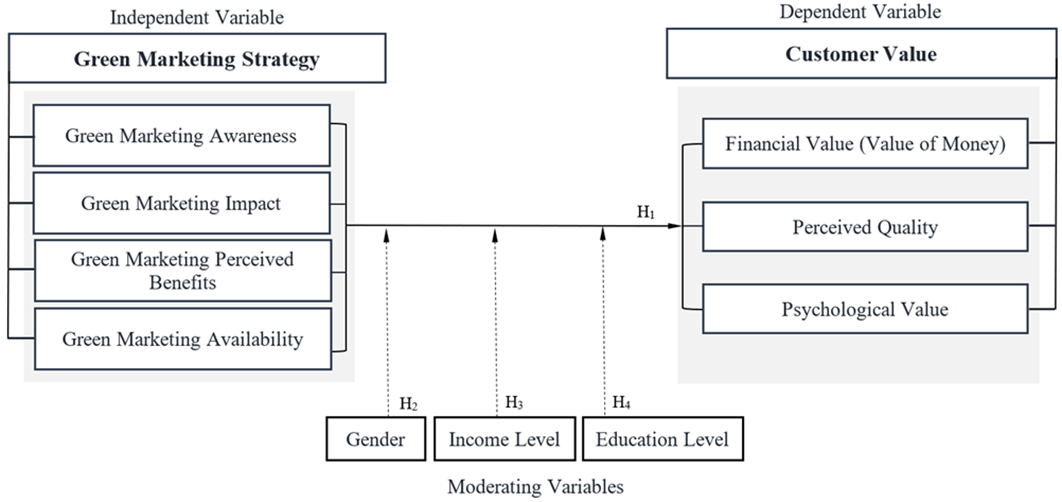
• Finally, to understand the importance of green marketing availability and its impact on customer value. All these variables through focused demographic variables; Gender, Income Level, and Educational Level. The following figure depicts the main arguments of the model (relationships between different variables) which has resulted in the following hypothesis as the main argument exists by the model.
1.3. Research QuestionsThe study has been planned and conducted to find the answer to the following research questions: This study seeks to answer the following questions:
1. How do green marketing strategies influence customer value in the Egyptian OTC pharmaceutical market?
2. What is the level of consumer awareness regarding green pharmaceutical products?
3. How do environmental initiatives affect consumer purchase decisions?
4. What are the key success factors in implementing green marketing strategies?
5. How can pharmaceutical companies effectively communicate their green initiatives?
1.4. Research SignificanceThis study holds substantial significance for multiple stakeholders:
Theoretical Significance:
• Contributes to the existing body of knowledge on green marketing in emerging markets.
• Develops new insights into customer value creation through environmental initiatives.
• Enhances understanding of consumer behaviour in the pharmaceutical sector.
Practical Significance:
• Provides actionable insights for pharmaceutical companies.
• Guides policy makers in developing environmental regulations.
• Assists marketing professionals in strategy development.
• Helps healthcare providers in product recommendations.
According to the green marketing, there is no one universally accepted definition of green marketing, there is more than one definition. Hence, defining green marketing is not a simple task, since several meanings are introduced, and various definitions may intersect with each other. (Macharia, et al., 2017, p. 69; Bagheri, 2014, p. 76). The term of green marketing is used interchangeably with “sustainable marketing”, “ecological marketing”, or “environmental marketing”. (Govender and Govender, 2016, p. 77). 11, 7, 13
The term green marketing was firstly introduced by the American Marketing Association (A.M.A) in 1975 through its first workshop “Ecological Marketing” to examine the impact of marketing on the natural environment. The American Marketing Association (A.M.A) defined green marketing as “marketing of eco-friendly products, combining several activities such as product modifications, changes in production processes, packaging, labelling, advertising strategies, and raising awareness on marketing compliance between industries. (Solihin, et al., 2019, p. 3663; Macharia, 2017, p. 69; Fuiyeng and Yazdanifard, 2015, p. 17). 14, 15, 16
Moreover, AMA described green marketing as the development and promotion of products that are presumed to be environmentally safe (i.e., designed to minimize negative effects on the physical environment or to improve its quality). 17, 18, 19, 20
Macharia, et al. 2017; Ercis and Kalafat, 2016; Kinoti, 2011, stated that “green marketing consists of marketing activities which involve the production, pricing, distribution, and promotion of nature friendly products that help businesses reach its goals, while at the same time meeting customers’ needs and desires with minimal harm to the natural environment.” . 21, 22, 23
Moreover, Kinoti, 2011, p. 264; as well as Macharia, 2017, p. 69 added that “according to AMA, green or ecological marketing refers to the study of the positive and negative aspects of marketing activities on pollution, energy depletion, and non-energy resource depletion. Also, AMA describes green marketing, as the marketing of products that are presumed to be environmentally safe.”
In addition, Dangelico and vocalleli, 2017 defined green marketing as “the process of planning, implementing, and controlling the development, pricing promotion, and distribution of products in a manner that satisfies the following three criteria: (1) customers’ needs are met, (2) organizational goals are attained, and (3) the process is compatible with eco-system.” . 1, 24, 25
Other similar terms used are Environmental Marketing and Ecological Marketing. Thus, Green Marketing is a holistic and responsible strategic management process that identifies, anticipates, satisfies, and fulfils stakeholder needs, for a reasonable reward, that does not adversely affect human or natural environmental well-being (Charter, 1992). The change to "green" may appear to be expensive initially; it will prove to be advantageously invaluable, in the long run. The concept of green marketing is derived solely from traditional marketing. As green marketing was originally created because of people's growing concern for the natural environment. 5, 26, 27
Green marketing and traditional marketing are nearly same, however there are some distinctions (Khan & Rafat, 2015). Regarding the distinction between green marketing and traditional marketing; First of all, green marketing is a comprehensive approach that entails identifying, anticipating, and satisfying customer needs and wants in an environmentally sustainable manner, while traditional marketing entails identifying and satisfying customer needs and wants in the most profitable manner (Khan & Rafat, 2015). Moreover, green marketing carefully mixes social and environmental requirements with economic objectives, whereas traditional marketing concentrates on the company's economic desires. 28, 29, 30, 31, 32, 33
Also, 34 companies that prioritize using green marketing approaches over traditional marketing tactics are proven to gain more credibility with their targeted customers (Khan & Rafat, 2015). Green Marketing (GM) is one strategy that can help the marketers selling their good and services to achieve their primary goals of the business. 35 This type of strategy focuses on the creation of recognizable environmental benefits. GM is a process by which individuals and groups fulfil their demands and desires through a principled approach that minimizes the negative environmental impact. 36, 37, 38, 39. Increased green marketing activities can occur because of internal or external pressures. Among external forces, such as responding to consumer demand and rising environmental pollution can be caused (Syafei, 2020). The biggest challenge for companies is how to create an environmentally friendly marketing communication mix platform that is mandatory for direct dialogue and to build consumer trust, especially when it comes to green marketing activities. Consumers demand new eco-value market offerings by assessing offers based on green marketing elements such as product features, quality, origin, taste, price, packaging, labelling, performance, durability, service, or whatever environmental features might satisfy them (Ganimete and Fatos, 2019). 40, 41
The growing awareness of environmental awareness around the world is beneficial for building consumer awareness of the need for environmentally friendly products or services, which will affect companies' environmentally friendly behavior (Ganimete and Fatos, 2019). In the company practice, the green marketing strategy aims to educate consumers about the awareness of environmental condition based on the consumed product or services.
42 Sustainable development is a corner stone of green marketing and other factors (Kinoti, 2011). According to the framework organization through conventional finance and accounting; production processes and technology; general management practices; marketing; human resources management; research and Development; and other variables contribute to environmental concerns facing the world today (Kinoti, 2011). In addition, macro-environmental factors; Economic, Socio-cultural, Technological, Demographic, Political-legal and individuals also contribute to environmental concerns today (Kinoti, 2011). Other business functional areas can also intervene through various strategies to provide solutions to the environmental problems (Kinoti, 2011). These intervention strategies will result in improved organizational performance and better physical environment, which in turn will result in sustainable development. Firms use green marketing in their sustainable packaging and refuse to use harmful products (Kinoti, 2011). Much of the economic activity is triggered by the marketing process that offers and stimulates consumption to satisfy human needs and wants. However, marketing’s critical role in development will only be appreciated when, through sustainable marketing, it meets the needs of the present without compromising the ability of future generations to meet their own needs (Polonsky et al, 1997). Green marketing focus on undertaking all marketing activities while protecting the environment. (Kinoti, 2011). On the other hand, sustainable development demands that the future generations inherit the natural environment in the same state or better as inherited by the previous generations (Kinoti, 2011). 43, 44
A green product refers to a product which has minimum negative effects on the environment, non-toxic, made from recycled materials, minimally packaged, not tested on animals, not polluting the environment, contains natural ingredients, and includes original growth. (Mantiaha, 2016, p. 60; Govender and Govender, 2016, p. 78; Bagheri, 2014, p. 76). Environmentally friendly features of products could be shown in different stages of product lifecycle, before usage, during usage, and after usage. (Dangelico and Vocalelli, 2017, p. 1271). Most common production strategies for green products are recycling, reusing of the product or part of it, reducing packaging, making products more durable, renewable, repairable, compostable, healthy, safer in shipment, energy - efficient, water efficient, third party certified to public, or transport standard. (Devakumar, et al., 2018, p. 33). For example: Nike is the first among the Athletic Shoe companies to market its Air Jordan shoes as environment friendly, since it has reduced the usage of harmful glue adhesives. (Surya and Banu, 2014, p.3). Another example: 45 Toyota produced an environment friendly car named Pirus which has an environment engine that includes emission – reducing gasoline, resulting in lowering the pollution emitted to the atmosphere. (Yazdanifard, 2014, p. 34). 46
Dangelico and Vocalelli (2017) defined green pricing as “setting prices for green products that offset consumers’ sensitivity to price against their willingness to pay more for products’ environmental performance”. 47, 48, 49.They added that green price is an important element in green marketing mix. Green products require consumers to pay premium price to buy them. (Dangelico and vocalelli, 2017, p. 1271). The term “premium price” refers to the additional cost that consumers will have to pay compared to the traditional product in order to get a product with higher environmental performance. 50 Mayank and Amit (2013) added that; on one hand, consumers may not be willing to pay a premium for green products as they regard them to be more expensive than traditional products. Hence, this may affect company’s sales, profitability as well as market share. 51, 52, 53. On the other hand, consumers may be willing to pay a premium price for green products but only if they perceive additional benefits in those products such as improved performance, function, design, quality, visual appeal, or taste, environmentally safe, fuel efficient, and non-hazardous. (Solihin, et al., 2019, p. 3663, Deva- kumar, et al., 2018, p. 33, Surya and Banu, 2014, p. 6, Mayank and Amit, 2013, p. 6). 54
Solihin, et al. (2019) emphasized that green promotion refers to promoting the company’s green products to the target market. This allows consumers to obtain information about those green products. Green promotion involves organizing various tools for promotion such as advertising, public relations, sales promotion, direct marketing and onsite promotion. Govender and Govender, 2016; Bagheri, 2014 added that advertisements are very effective in increasing consumers’ awareness and knowledge about the environment and green products, thus helping them make informed decisions about the products they consume and their impact on the environment. 55
Green advertising are ads presented to consumers that gives the consumers the chance to compare, to find out what proportion of recycled items are used and what they are made of and provides them with the real environmental information (Phau & Ong, 2007). 56
Green place is an important element of green marketing mix. Green place refers to the physical distribution which is a set of business activities that involve the movement of storing, transporting finished products from production to consumption, while maintaining concern with the environmental responsibility of the firm. (Yazdanifard, 2014, p. 35). He also added that firms must provide green products at a strategic place that is convenient for consumers to access. Moreover, the company’s location must differentiate the company from its competitors. (Solihin, et al., 2019, p. 3663; Surya and Bany, 2014, p. 4). Green distribution focuses on safety precautions and reduces environmental damages during the process of delivering products. Optimize carriers, as well as reduce material consumption. (Dangelico and Vocalelli, 2017, p. 1272). 57
2.2. Consumer ValueTo put it simply, customer value is best defined as how much a product or service is worth to a customer. It’s a measure of all costs and benefits associated with a product or service. Examples include price, quality, and what the product or service can do for that particular person. There are also monetary, time, energy, and emotional costs that consumers consider when evaluating the value of a purchase. It includes customer satisfaction, customer trust, customer loyalty, and purchase intention. 58
2.3. Green Consumer ValueGreen Customer Value means the attitude of customers towards green products has effects on their green purchase intention. The green customer's perceived value, including environmental value and perceived environmental image, have significant and positive influences on attitude towards the green product. 2
H1: Green marketing strategy (i.e., green marketing awareness, green marketing impact, green marketing perceived benefits, green marketing availability) has a statistically significant positive impact on the customer value (i.e., financial value, perceived quality, psychological value) for OTC products in the Egyptian pharmaceutical market.
This main hypothesis is divided into three sub-hypotheses as follows:
H1a: Green marketing strategy (i.e., green marketing awareness, green marketing impact, green marketing perceived benefits, green marketing availability) has a statistically significant positive impact on the customer financial value for OTC products in the Egyptian pharmaceutical market.
H1b: Green marketing strategy (i.e., green marketing awareness, green marketing impact, green marketing perceived benefits, green marketing availability) has a statistically significant positive impact on the customer perceived quality of OTC products in the Egyptian pharmaceutical market.
H1c: Green marketing strategy (i.e., green marketing awareness, green marketing impact, green marketing perceived benefits, green marketing availability) has a statistically significant positive impact on the customer psychological value for OTC products in the Egyptian pharmaceutical market.
H2: Customer’s gender moderates the relationship between green marketing strategy (i.e., green marketing awareness, green marketing impact, green marketing perceived benefits, green marketing availability) and the customer value (i.e., financial value, perceived quality, psychological value) for OTC products in the Egyptian pharmaceutical market.
H3: Customer’s income level moderates the relationship between green marketing strategy (i.e., green marketing awareness, green marketing impact, green marketing perceived benefits, green marketing availability) and the customer value (i.e., financial value, perceived quality, psychological value) for OTC products in the Egyptian pharmaceutical market.

H4: Customer’s education level moderates the relationship between green marketing strategy (i.e., green marketing awareness, green marketing impact, green marketing perceived benefits, green marketing availability) and the customer value (i.e., financial value, perceived quality, psychological value) for OTC products in the Egyptian pharmaceutical market.
Research Design:
The study employs a quantitative research design, which is suitable for examining relationships between variables and testing hypotheses. This design allows for the collection of numerical data that can be statistically analyzed. specifically, a cross-sectional survey design. This design allows for the collection of data at a specific point in time, enabling the examination of the relationships between green marketing strategies and customer value in the Egyptian OTC pharmaceutical market.
Sample Selection:
The target population consists of customers of over-the-counter (OTC) products in the Egyptian pharmaceutical market. A total of 424 participants were initially surveyed, but after data cleaning procedures to eliminate excessive missing data and suspicious response patterns, the final sample size was reduced to 384 valid observations.
Data Collection:
Data were collected using a structured questionnaire was developed to collect preliminary data from a sample of consumers in the Egyptian OTC pharmaceutical market. That included item measuring various constructs related to green marketing awareness, green marketing impact, perceived benefits, availability, and customer value (financial value, perceived quality, and psychological value). The questionnaire likely utilized a 5-point Likert scale to capture participants' attitudes and perceptions. 59
4.1. Research InstrumentA questionnaire was used, built on previous studies, related to the study variables of the specific dimensions of Green Marketing and Customer Value. The questionnaire was divided into three parts. Part one: the green marketing strategy (green marketing awareness, green marketing impact, green marketing perceived benefits, and green marketing availability) includes 14 questions. Part two: measuring the dependent variable, the customer value (Value of money, perceived quality, and psychological value) includes 19 questions. Part three: the moderator factors (gender, income level, and educational level0 includes 3 questions. This study used the 5-point Likert scale as prior studies and to unify the scale among the variables. The 5-point Likert scale ranges from “Strongly Agree” (=5) to “strongly disagree” (=1).
4.2. Sample and PopulationThis is a survey occurred randomly on small samples of pharmacists and end users; pharmacists’ opinion depended on the customer awareness. About customers, they primarily prioritize effectiveness as their top concern. Additionally, if they are familiar with the concept of green marketing, it tends to positively influence their perception. So mainly the main point is the awareness of green marketing concept. In other words, at this part, various perspectives are explored regarding customers and pharmacists' interest in green OTC product like supplements for example besides what if they know that this product is manufactured at certain conditions with sustainability requirements not only in the way of manufacturing, but also in ingredients; which more natural, also packaging; that will be recyclable. These fine details contribute positively to the product's effectiveness, resulting in fewer side effects compared to conventional alternatives. However, this may lead to a higher price point compared to default products. So, here begins the journey gathering diverse insights and information from both pharmacists and customers. When pharmacists were questioned regarding recommending products with these specifications to patients, the majority expressed approval of the idea, while a minority objected cited the high price as a deterrent, noting that not all patients would accept it. On the other hand, when customers were questioned about the green OTC manufactured product, if their pharmacist recommends these products, highlights their benefits, and emphasizes their effectiveness and minimal side effects due to superior manufacturing. Are they open to trying such products? The majority show willingness to embrace the idea and try this product. However, the key factor in customer’s acceptance lies in their trust in the pharmacist and his ability to convincingly convey information and provide comprehensive awareness about the product. Moreover, many customers prioritize the product's efficacy, and they may reject the idea entirely if they perceive the pharmacist's recommendation as merely driven by a desire to sell a more expensive product. Another point to be considered is that most customers highlighted that they would accept and be willing to purchase or switch to the sustainable OTC product; if the pharmacist illustrates the benefits of this product and assures them of the safety and reduced side effects of these products. At this condition, customers will shift from ordinary product to the sustainable one. Only few numbers of customers indicated that they would consult their physician before deciding, especially among the elderly and those taking multiple medications (polymedicated), demonstrating a preference for seeking advice from their doctor beforehand. Also, a small number of customers who did not accept the concept of sustainable OTC products, citing concerns about the higher cost and their contentment with the conventional product believing that it would suffice for their needs, so at their point of view; they are not in need to change their drug at certain time, particularly due to the higher cost associated with the green OTC product. To summarise, according to customers, the majority of them place trust in the opinions of pharmacists, especially if they have a strong familiarity with them. And by default, they will follow their instructions and advice. For example, if the pharmacist advice his patient to shift from the old OTC drug to the new sustainable one and highlighted the benefits and advantages of it mainly focused on safety and efficacy with less side effect, the majority of customers will follow pharmacist’s advice. 60, 61. And from the pharmacist’s perspective, if they find that the customer can afford this type of drugs with its criteria and high price, they will engage in discussions offering them these products, highlighting the positive impact on their health, but if they cannot afford it, the pharmacist will not go forward for this discussion. At all, the awareness of green marketing and green product is very important for both pharmacists and patients. If patients know the value behind it from their trusted pharmacists, they will shift automatically. From my point of view, pharmacists play a golden pivotal role at this stage to deliver benefits towards patients and illustrate the risk benefit ratio. In simple terms, if patients comprehend the benefits and see how it positively impacts them, many will not only try sustainable products but also recommend them to their family members. Pharmacists in Egypt often develop close bonds with their patients, being regarded as reliable sources of health-related information and counsel. Patients often turn to them for guidance on various health matters. Pharmacists in Egypt also play an important role in promoting patient adherence to medication regimens. 62 They may provide reminders and follow-up calls to patients to ensure that they are taking their medications as prescribed. Overall, the relationship between patients and pharmacists in Egypt is characterized by trust, respect, and a commitment to ensuring that patients receive safe and effective treatments. Pharmacists in Egypt are valued members of the healthcare team, and their expertise and patient-centred approach play a critical role in improving patient outcomes and promoting public health. and its sample size is 384 respondents. The participants of the study are random individual leaders in the Egyptian OTC pharmaceutical sector. 500 questionnaires were distributed, and 424 were received, with a response rate of 85 %. 28, 63
Statistical analysis will be applied for the sample using SPSS and inferential statistical analysis using correlational analysis and regression analysis will be analyzed and discussed to prove the existence and the degree of relationships among the Independent Variable dimensions which are the specific dimensions of Green Marketing Strategy; Green Marketing Awareness, Green Marketing Impact, Green Marketing Perceived Benefits, and Green Marketing Availability, and the dependent variable which is the Customer Value; Value of Money, Perceived Quality, and Psychological Value included safety and value relief in the Egyptian OTC pharmaceutical Market. 64, 65, 66
Descriptive statistics were used to summarize the demographic profile of participants and their attitudes toward the constructs under study. This included calculating frequencies and percentages for categorical variables such as gender and income level.
5.2. FindingsGreen marketing availability has a significant positive impact on customer perceived quality and psychological value.
• Green marketing awareness positively impacts customer perceived quality and psychological value.
• Green marketing impact significantly influences customer financial value and perceived quality.
• Green marketing perceived benefits positively affects customer financial value, perceived quality, and psychological value.
• Green marketing availability has a significant positive impact on customer perceived quality and psychological value.
Statistical analysis and hypotheses testing are the focus of Chapter Four. PLS-SEM was used to estimate the path model and assess the measurement model, while Multigroup Analysis was used to test for moderating effects. The sample size of 384 observations was considered sufficient for the PLS-SEM analysis. 67, 68, 69
Cronbach’s alpha was used to assess the reliability of the constructs, but it was found to be sensitive to the number of items and underestimated the reliability. Composite reliability was used as an alternative measure, which considers the different loadings of the observed variables. The results showed that all constructs had composite reliability values above 0.70, indicating satisfactory internal consistency reliability. 7, 14
The study evaluated the discriminant validity of constructs in a structural equation model using cross-loadings and the Fornell-Larcker criterion. The results indicated that all constructs met the discriminant validity criteria, suggesting their uniqueness and distinctiveness from other constructs in the model. 70, 71, 72, 73, 74, 67
Fornell-Larcker criterion supports discriminant validity of constructs, with square roots of AVEs higher than correlations with other constructs. 75, 76
The study examines the relationship between green marketing strategy and customer value for OTC products in the Egyptian pharmaceutical market. The results show that green marketing strategy significantly impacts customer value, with green marketing awareness having the strongest correlation. The study also identifies positive and significant relationships between green marketing strategy and customer value dimensions. 5, 75
Green marketing strategies positively impact customer value for OTC products in the Egyptian pharmaceutical market. Customer gender, income level, and education level moderate the relationship between green marketing strategies and customer value. The results suggest that green marketing awareness and perceived benefits have a significant impact on customer value, while green marketing impact and availability have a moderate impact. 77, 78
Green marketing strategies, including awareness, impact, perceived benefits, and availability, positively impact customer value for OTC products in the Egyptian pharmaceutical market. Gender moderates the relationship between green marketing availability and customer financial value, with a higher effect on male customers. Additionally, gender moderates the relationship between green marketing awareness and customer perceived quality, with a higher effect on female customers. 79, 80, 81, 59
Customer gender and income level moderate the relationship between green marketing strategy and customer value for OTC products in the Egyptian pharmaceutical market. Green marketing impact and perceived benefits have a higher effect on financial value for customers with high- and low-income levels, respectively. Education level moderates the relationship between green marketing impact and customer financial value, as well as green marketing awareness and customer psychological value. 82
Customer education level moderates the relationship between green marketing awareness and psychological value for OTC products in the Egyptian pharmaceutical market. However, it does not moderate the relationship between green marketing impact and financial value.
In conclusion, the study presented a valid and reliable analysis of the relationships between green marketing and customer value in the Egyptian pharmaceutical context. It provided empirical support for the potential of green strategies to enhance perceived benefits for customers.
This research investigated the influence of green marketing strategies on customer value within the Egyptian OTC pharmaceutical market. By examining the relationships between green marketing dimensions (awareness, impact, perceived benefits, and availability) and customer value components (financial, perceived quality, and psychological value), this study aimed to contribute to the understanding of green marketing's role in enhancing customer satisfaction and loyalty.
6.2. ImplicationsBased on the findings of this research, the following implications for practitioners in the Egyptian OTC pharmaceutical industry can be drawn:
• Prioritize Green Marketing: Pharmaceutical companies should prioritize green marketing strategies as a key driver of customer value.
• Enhance Green Marketing Awareness: Invest in effective communication channels to increase consumer awareness of green initiatives and their benefits.
• Highlight Environmental Impact: Clearly communicate the environmental impact of green products and practices.
• Focus on Perceived Benefits: Emphasize the specific benefits that consumers can derive from using green products.
• Ensure Product Availability: Ensure that green products are readily available to customers through a well-established distribution network.
• Tailor Strategies to Demographics: Consider the specific needs and preferences of different demographic segments when implementing green marketing strategies.
6.3. LimitationsWhile this research provides valuable insights into the relationship between green marketing and customer value in the Egyptian OTC pharmaceutical market, it is essential to acknowledge its limitations:
1. Cultural and Contextual Specifics: The findings of this study are specific to the Egyptian context. Generalizing the results to other cultural and economic contexts might require further research.
2. Self-Reported Data: The study relied on self-reported data from respondents, which may be subject to biases and inaccuracies.
3. Cross-sectional Design: The cross-sectional design of the study limits the ability to establish causal relationships between variables and to assess the long-term impact of green marketing strategies.
4. Measurement Issues: The measurement of constructs like customer value and green marketing perceptions can be challenging, and different operationalizations may yield different results.
5. Generalizability: The findings may be limited to the specific sample of respondents and the particular OTC pharmaceutical products included in the study.
6. External Validity: The study's external validity may be limited by the specific context of the Egyptian pharmaceutical market, and the findings may not be directly applicable to other markets.
The study had limitations that were beyond the researcher's control and could have influenced the results (Gelman & Hill, 2006; Gelman & Loken, 2014). Questionnaire research instruments were distributed electronically to individuals representing themselves as leaders, and it is possible that survey recipients forwarded the survey to non-qualified respondents. The survey included sections for respondents to confirm their qualifications, which helped to mitigate the limitation.
6.4. RecommendationsBased on the limitations of the current study, the following recommendations are suggested for future research:
1. Consumer Education: Increasing consumer awareness about the benefits of green products can foster a more positive perception of their value. Educational initiatives, workshops, or informational campaigns can help bridge the knowledge gap and encourage more sustainable purchasing behaviours.
2. Further Research: Future studies should explore the nuances of how different demographic factors influence the effectiveness of green marketing strategies. Longitudinal studies could provide insights into changing consumer attitudes over time, particularly as environmental concerns become more prominent.
3. Quantitative Research: Employ quantitative research methods, such as interviews and focus groups, to gain deeper insights into consumer perceptions and behaviours.
4. Expanded Green Marketing Dimensions: Consider incorporating additional green marketing dimensions, such as green innovation and green supply chain management, into future research.
Policy Implications: Explore the potential policy implications of green marketing and advocate for supportive regulations and incentives.
| [1] | D'Souza, C. et al. (2015) “An evaluation of the role of Green Marketing and a firm’s internal practices for Environmental Sustainability,” Journal of Strategic Marketing, 23(7), pp. 600–615. | ||
| In article | View Article | ||
| [2] | Kamat, S. et al. (2020) ‘Over-the-counter medicines: Global Perspective and Indian scenario’, Journal of Postgraduate Medicine, 66(1), p. 28. | ||
| In article | View Article PubMed | ||
| [3] | Kumar, P. (2016) ‘State of Green Marketing Research over 25 years (1990-2014)’, Marketing Intelligence & Planning, 34(1), pp. 137–158. | ||
| In article | View Article | ||
| [4] | Lee, K., & Shin, M. (2010). Consumers' responses to CSR activities: The linkage between increased awareness and purchase intention. Public Relations Review, 36(2), 193-195. | ||
| In article | View Article | ||
| [5] | Gelderman, C.J. et al. (2021) ‘Green marketing as an environmental practice: The impact on green satisfaction and Green Loyalty in a business‐to‐business context’, Business Strategy and the Environment, 30(4), pp. 2061–2076. | ||
| In article | View Article | ||
| [6] | Lee, K. (2008) ‘Opportunities for green marketing: Young consumers’, Marketing Intelligence & Planning, 26(6), pp. 573–586. | ||
| In article | View Article | ||
| [7] | Chekima, B. et al. (2015) ‘Sustainable consumption: The effects of knowledge, cultural values, environmental advertising, and Demographics’, International Journal of Sustainable Development & World Ecology, 23(2), pp. 210–220. | ||
| In article | View Article | ||
| [8] | Cohen, J. (1992). A power primer. Psychological Bulletin, 112, 155-159. | ||
| In article | View Article PubMed | ||
| [9] | Field, A. (2013). Discovering statistics using IBM SPSS statistics. SAGE Publications Ltd. | ||
| In article | |||
| [10] | Abou-Shouk, M. A., & Hassan, S. (2017). Green marketing orientation and sustainability practices in the Egyptian pharmaceutical industry. Journal of Cleaner Production, 142, 2249-2260. | ||
| In article | |||
| [11] | Amoako, G.K. et al. (2020) ‘Green Marketing and the sdgs: Emerging market perspective, Marketing Intelligence & Planning, 40(3), pp. 310–327. | ||
| In article | View Article | ||
| [12] | Ansar, N. (2013) ‘Impact of green marketing on consumer purchase intention’, Mediterranean Journal of Social Sciences. | ||
| In article | View Article | ||
| [13] | Baktash, Leila & Abdul, Muzalwana. (2019). Green Marketing Strategies: Exploring Intrinsic and Extrinsic Factors towards Green Customers’ Loyalty. Quality - Access to Success. 20. 127-134. | ||
| In article | |||
| [14] | Cohen, J. (1988). Statistical power analysis for the behavioral sciences. Lawrence Erlbaum Associates. | ||
| In article | |||
| [15] | Singh, J., & Kalafatis, S. P. (2014). A green marketing typology: A literature review on green marketing over three decades. Journal of Marketing Management, 30(17-18), 1806-1853 | ||
| In article | |||
| [16] | Tafesse, W., & Wondwosen, M. (2019). Green marketing and consumers’ purchase intention: The mediating effect of green trust and green satisfaction. Journal of Cleaner Production, 232, 112-123. | ||
| In article | |||
| [17] | A review of Green Marketing Strategy Literature: Mini- IEOM society. | ||
| In article | |||
| [18] | Teo, Yee Voon & Yazdanifard, Assoc. Prof. Dr. Rashad. (2014). Green marketing strategies, sustainable development, benefits and challenges/ constraints. | ||
| In article | |||
| [19] | Thogersen, J. (2009). The motivational roots of norms for environmentally responsible behavior. Basic and Applied Social Psychology, 31(4), 348-362. | ||
| In article | View Article | ||
| [20] | The Marketing Review, 2001, 2, 129-146, Cardiff Business School. | ||
| In article | View Article | ||
| [21] | Carrington, M. J., Neville, B. A., & Whitwell, G. J. (2010). Exploring the ethical consumer intention behavior gap. Journal of Business Research, 63(1), 111-124. | ||
| In article | |||
| [22] | Center for Drug Evaluation and Research Understanding over-the-counter medicines, U.S. Food and Drug Administration. | ||
| In article | |||
| [23] | Chan, R.Y.K. (2004) ‘Consumer responses to environmental advertising in China’, Marketing Intelligence & Planning, 22(4), pp. 427–437. | ||
| In article | View Article | ||
| [24] | Ellen, P. S., Wiener, J. L., & Brown, J. S. (1991). Environmental impact of products and consumer willingness to pay for them: Marketing insights from labeling research. Journal of Consumer Policy, 14(2), 173-197. | ||
| In article | |||
| [25] | European Union Politics 2023, Vol. 24(2) 424–434 | ||
| In article | |||
| [26] | Falk, R. F., & Miller, N. B. (1992). A primer for soft modeling. University of Akron Press. | ||
| In article | |||
| [27] | Fuller, D. A., & Ottman, J. A. (2004). Moderating consumer concern for the environment: A comparison of green and non‐green consumers. Journal of Consumer Marketing, 21(3), 181-192. | ||
| In article | |||
| [28] | Heshmat, H. A., & Mostafa, M. M. (2017). Green marketing practices and customer satisfaction in the Egyptian pharmaceutical industry. Journal of Cleaner Production, 147, 341-353. | ||
| In article | |||
| [29] | Ghoshal, Moloy. (2011). Green Marketing. BVIMR Management Edge. 4. 82-92. | ||
| In article | |||
| [30] | The 4th International Conference on Family Business and Entrepreneurship, ICFBE 2020. | ||
| In article | |||
| [31] | ‘The future of the UN sustainable development goals’ (2020) CSR, Sustainability, Ethics & Governance. | ||
| In article | |||
| [32] | Vilkaite-Vaitone, N., Skackauskiene, I. and Díaz-Meneses, G. (2022) ‘Measuring Green Marketing: Scale Development and validation’, Energies, 15(3), p. 718. | ||
| In article | View Article | ||
| [33] | Yazdanifard, R., & Mercy, I. R. (2011). The impact of green marketing on customer satisfaction and environmental safety. 2011 International Conference on Computer Communication and Management, 5, pg637-641. | ||
| In article | |||
| [34] | Yi, H. (2014) ‘Green businesses in a clean energy economy: Analyzing drivers of Green Business Growth in U.S. states’, Energy, 68, pp. 922–929. | ||
| In article | View Article | ||
| [35] | Zhang, Y.; Berhe, H.M. TheImpact of Green Investment and Green Marketing on Business Performance: The Mediation Role of Corporate Social Responsibility Ethiopia’s Chinese Textile Companies. Sustainability 2022, 14, 3883. | ||
| In article | View Article | ||
| [36] | Pharmaceuticals & Healthcare Report - Association Nations emergentes Egypt pharmaceutical survey. | ||
| In article | |||
| [37] | Rahbar, E. and Abdul Wahid, N. (2011) ‘Investigation of Green Marketing Tools’ effect on consumers’ purchase behavior’, Business Strategy Series, 12(2), pp. 73–83. | ||
| In article | View Article | ||
| [38] | Ramirez, E. (1970) Three essays on green marketing strategy, DigiNole: FSU’s Digital Repository. | ||
| In article | |||
| [39] | Ramus, C. A., & Montiel, I. (2005). When are corporate environmental policies a form of greenwashing? Business and Society, 44(4), 377-414. | ||
| In article | View Article | ||
| [40] | International Journal of Advanced Trends in Engineering and Technology (IJATET) Impact Factor: 5.665, ISSN (Online): 2456 – 4664 (www.dvpublication.com) Volume I, Issue I, 2016. | ||
| In article | |||
| [41] | International Journal of Marketing, Financial Services & Management ResearchVol.1 Issue 9, September 2012, ISSN 2277 3622. | ||
| In article | |||
| [42] | Chan, R. Y. K. (2001). Determinants of Chinese consumers' green purchase behavior. Psychology & Marketing, 18(4), 389-413. | ||
| In article | View Article | ||
| [43] | Johansson, U., & Thelander, Å. (2013). Green marketing in B2B firms in Sweden: An exploratory study. Journal of Business and Industrial Marketing, 28(7), 554-563. | ||
| In article | |||
| [44] | Journal of Business Ethics 29: 239–251, 2001. | ||
| In article | View Article | ||
| [45] | Bansal, H. S., & Taylor, S. F. (2019). The power of word-of-mouth: A meta-analysis. Journal of Retailing, 95(2), 221-238. | ||
| In article | |||
| [46] | Journal of Business Research 62 (2009) 260–268. | ||
| In article | View Article | ||
| [47] | Pacific Business Review International Volume 9 Issue 5, Nov. 2016. | ||
| In article | |||
| [48] | Peattie, S., & Crane, A. (2005). Green marketing: Legend, myth, farce or prophesy? Qualitative Market Research: An International Journal, 8(4), 357-370. | ||
| In article | View Article | ||
| [49] | Peattie, S., & Charter, M. (2003). Green marketing: A global legal perspective. Routledge. | ||
| In article | |||
| [50] | Prakash, A. (2002) ‘Green Marketing, public policy and managerial strategies’, Business Strategy and the Environment, 11(5), pp. 285–297. | ||
| In article | View Article | ||
| [51] | OTC pharmaceuticals - egypt: Statista market forecast Statista. | ||
| In article | |||
| [52] | Ottman, J. (2011). The new rules of green marketing: Strategies, tools, and inspiration for sustainable branding | ||
| In article | |||
| [53] | Öztürk, Resul. (2020). Green Marketing. | ||
| In article | |||
| [54] | Kang, J., & Hustvedt, G. (2014). A cross-cultural study of green purchase behavior: test of a cross-regional model. Journal of International Consumer Marketing, 26(1), 36-52. | ||
| In article | |||
| [55] | Kim, Y., & Choi, S. M. (2019). The effect of environmental sustainability on store loyalty: The moderating role of green perceived value. Sustainability, 11(21), 6103. | ||
| In article | |||
| [56] | Khan, P.A., Johl, S.K. and Akhtar, S. (2021) ‘Firm sustainable development goals and firm financial performance through the lens of Green Innovation Practices and Reporting: A Proactive Approach’, Journal of Risk and Financial Management, 14(12), p. 605. | ||
| In article | View Article | ||
| [57] | Kortam, W. and Mahrous, A.A. (2020) “Sustainable marketing: A marketing revolution or a research fad,” Archives of Business Research, 8(1), pp. 172–181. | ||
| In article | View Article | ||
| [58] | Laroche, M., Bergeron, J., & Barbaro-Forleo, G. (2001). Targeting consumers who are willing to pay more for environmentally friendly products. Journal of Consumer Marketing, 18(6), 503-520. | ||
| In article | View Article | ||
| [59] | Sarstedt, M., & Mooi, E. (2014). A Concise Guide to Market Research:The Process, Data, and Methods Using IBM SPSS Statistics. Springer | ||
| In article | View Article | ||
| [60] | Mahmoud, M.A., Hinson, R.E. and Anim, P.A. (2017) “Service innovation and customer satisfaction: The role of Customer Value Creation,” European Journal of Innovation Management, 21(3), pp. 402-422. | ||
| In article | View Article | ||
| [61] | Mekawie, N. and Hany, A. (2019) ‘Understanding the factors driving consumers’ purchase intention of over-the-counter medications using social media advertising in Egypt’, Procedia Computer Science, 164, pp. 698-705. | ||
| In article | View Article | ||
| [62] | Maignan, I., & Ferrell, O. C. (2004). Corporate social responsibility and marketing: An integrative framework. Journal of the Academy of Marketing Science, 32(1), 3-19. | ||
| In article | View Article | ||
| [63] | Henseler, J., Ringle, C. M., & Sinkovics, R. R. (2009). The use of partial least squares path modeling in international marketing. In R. R. Sinkovics & P. N. Ghauri (Eds.), New Challenges to International Marketing (Vol. 20, pp. 277-319). Emerald Group Publishing Limited. | ||
| In article | View Article | ||
| [64] | Maignan, I., & Ferrell, O. C. (2000). Measuring corporate citizenship in two countries: The case of the United States and France. Journal of Business Ethics, 23(3), 283-297. | ||
| In article | View Article | ||
| [65] | Nunnally, J. C., & Bernstein, I. H. (1994). Psychometric Theory (Third ed.). McGraw-Hill. | ||
| In article | |||
| [66] | Ringle, C. M., Wende, S., & Becker, J.-M. (2015). "SmartPLS 3." Boenningstedt: SmartPLS GmbH. In http://www.smartpls.com | ||
| In article | |||
| [67] | Hair, J. F., Hult, G. T. M., Ringle, C. M., & Sarstedt, M. (2017). A Primer on Partial Least Squares Structural Equation Modeling (PLS-SEM) (2nd ed.). SAGE Publications. | ||
| In article | |||
| [68] | Hair, J. F., Ringle, C. M., & Sarstedt, M. (2011). PLS-SEM: Indeed a Silver Bullet. Journal of Marketing Theory and Practice, 19(2), 139-152. | ||
| In article | View Article | ||
| [69] | Hair, J. F. F., Hult, G. T. M., Ringle, C. M., & Sarstedt, M. (2014). A primer on partial least squares structural equation modeling (PLS-SEM). SAGE Publications. | ||
| In article | |||
| [70] | Cohen, J. (1988). Statistical power analysis for the behavioral sciences. Lawrence Erlbaum Associates. | ||
| In article | |||
| [71] | Cohen, J. (1992). A power primer. Psychological Bulletin, 112, 155-159. | ||
| In article | View Article PubMed | ||
| [72] | Field, A. (2013). Discovering statistics using IBM SPSS statistics. SAGE Publications Ltd. | ||
| In article | |||
| [73] | Fornell, C., & Larcker, D. F. (1981). Evaluating Structural Equation Models with Unobservable Variables and Measurement Error. Journal of Marketing Research, 18(1), 39-50. | ||
| In article | View Article | ||
| [74] | Hair, J. F., Black, W. C., Babin, B. J., & Anderson, R. E. (2019). Multivariate Data Analysis. Cengage Learning EMEA. | ||
| In article | |||
| [75] | Fornell, C., & Larcker, D. F. (1981). Evaluating Structural Equation Models with Unobservable Variables and Measurement Error. Journal of Marketing Research, 18(1), 39-50. | ||
| In article | View Article | ||
| [76] | Falk, R. F., & Miller, N. B. (1992). A primer for soft modeling. University of Akron Press. | ||
| In article | |||
| [77] | Leonidou, C.N., Katsikeas, C.S. and Morgan, N.A. (2012) ‘“greening” The marketing mix: Do firms do it and does it pay off?’, Journal of the Academy of Marketing Science, 41(2), pp. 151–170. | ||
| In article | View Article | ||
| [78] | Luchs, M. G., Naylor, R. W., Irwin, J. R., & Raghunathan, R. (2010). The sustainability liability: Potential negative effects of ethicality on product preference. Journal of Marketing, 74(5), 18-31. | ||
| In article | View Article | ||
| [79] | Luchs, M. G., & Mooradian, T. A. (2012). Sex, personality, and sustainable consumer behaviour: Elucidating the gender effect. Journal of Consumer Policy, 35(1), 127-144. | ||
| In article | View Article | ||
| [80] | Roberts, J. A., & Bacon, D. R. (1997). Exploring the subtle relationships between environmental concern and ecologically conscious consumer behavior. Journal of Business Research, 40(1), 79-89. | ||
| In article | View Article | ||
| [81] | Roberts, J. A. (1996). Green consumers in the 1990s: Profile and implications for advertising. Journal of Business Research, 36(3), 217-231. | ||
| In article | View Article | ||
| [82] | Mont, O., & Plepys, A. (2008). Sustainable consumption and the quality of life: A macromarketing challenge to the dominant social paradigm. Journal of Macromarketing, 28(1), 20-34. | ||
| In article | |||
Published with license by Science and Education Publishing, Copyright © 2024 Ola Alaa El-Dien Ahmed Mohamed El-Badawy and Dr. Wael Kortam
 This work is licensed under a Creative Commons Attribution 4.0 International License. To view a copy of this license, visit
https://creativecommons.org/licenses/by/4.0/
This work is licensed under a Creative Commons Attribution 4.0 International License. To view a copy of this license, visit
https://creativecommons.org/licenses/by/4.0/
| [1] | D'Souza, C. et al. (2015) “An evaluation of the role of Green Marketing and a firm’s internal practices for Environmental Sustainability,” Journal of Strategic Marketing, 23(7), pp. 600–615. | ||
| In article | View Article | ||
| [2] | Kamat, S. et al. (2020) ‘Over-the-counter medicines: Global Perspective and Indian scenario’, Journal of Postgraduate Medicine, 66(1), p. 28. | ||
| In article | View Article PubMed | ||
| [3] | Kumar, P. (2016) ‘State of Green Marketing Research over 25 years (1990-2014)’, Marketing Intelligence & Planning, 34(1), pp. 137–158. | ||
| In article | View Article | ||
| [4] | Lee, K., & Shin, M. (2010). Consumers' responses to CSR activities: The linkage between increased awareness and purchase intention. Public Relations Review, 36(2), 193-195. | ||
| In article | View Article | ||
| [5] | Gelderman, C.J. et al. (2021) ‘Green marketing as an environmental practice: The impact on green satisfaction and Green Loyalty in a business‐to‐business context’, Business Strategy and the Environment, 30(4), pp. 2061–2076. | ||
| In article | View Article | ||
| [6] | Lee, K. (2008) ‘Opportunities for green marketing: Young consumers’, Marketing Intelligence & Planning, 26(6), pp. 573–586. | ||
| In article | View Article | ||
| [7] | Chekima, B. et al. (2015) ‘Sustainable consumption: The effects of knowledge, cultural values, environmental advertising, and Demographics’, International Journal of Sustainable Development & World Ecology, 23(2), pp. 210–220. | ||
| In article | View Article | ||
| [8] | Cohen, J. (1992). A power primer. Psychological Bulletin, 112, 155-159. | ||
| In article | View Article PubMed | ||
| [9] | Field, A. (2013). Discovering statistics using IBM SPSS statistics. SAGE Publications Ltd. | ||
| In article | |||
| [10] | Abou-Shouk, M. A., & Hassan, S. (2017). Green marketing orientation and sustainability practices in the Egyptian pharmaceutical industry. Journal of Cleaner Production, 142, 2249-2260. | ||
| In article | |||
| [11] | Amoako, G.K. et al. (2020) ‘Green Marketing and the sdgs: Emerging market perspective, Marketing Intelligence & Planning, 40(3), pp. 310–327. | ||
| In article | View Article | ||
| [12] | Ansar, N. (2013) ‘Impact of green marketing on consumer purchase intention’, Mediterranean Journal of Social Sciences. | ||
| In article | View Article | ||
| [13] | Baktash, Leila & Abdul, Muzalwana. (2019). Green Marketing Strategies: Exploring Intrinsic and Extrinsic Factors towards Green Customers’ Loyalty. Quality - Access to Success. 20. 127-134. | ||
| In article | |||
| [14] | Cohen, J. (1988). Statistical power analysis for the behavioral sciences. Lawrence Erlbaum Associates. | ||
| In article | |||
| [15] | Singh, J., & Kalafatis, S. P. (2014). A green marketing typology: A literature review on green marketing over three decades. Journal of Marketing Management, 30(17-18), 1806-1853 | ||
| In article | |||
| [16] | Tafesse, W., & Wondwosen, M. (2019). Green marketing and consumers’ purchase intention: The mediating effect of green trust and green satisfaction. Journal of Cleaner Production, 232, 112-123. | ||
| In article | |||
| [17] | A review of Green Marketing Strategy Literature: Mini- IEOM society. | ||
| In article | |||
| [18] | Teo, Yee Voon & Yazdanifard, Assoc. Prof. Dr. Rashad. (2014). Green marketing strategies, sustainable development, benefits and challenges/ constraints. | ||
| In article | |||
| [19] | Thogersen, J. (2009). The motivational roots of norms for environmentally responsible behavior. Basic and Applied Social Psychology, 31(4), 348-362. | ||
| In article | View Article | ||
| [20] | The Marketing Review, 2001, 2, 129-146, Cardiff Business School. | ||
| In article | View Article | ||
| [21] | Carrington, M. J., Neville, B. A., & Whitwell, G. J. (2010). Exploring the ethical consumer intention behavior gap. Journal of Business Research, 63(1), 111-124. | ||
| In article | |||
| [22] | Center for Drug Evaluation and Research Understanding over-the-counter medicines, U.S. Food and Drug Administration. | ||
| In article | |||
| [23] | Chan, R.Y.K. (2004) ‘Consumer responses to environmental advertising in China’, Marketing Intelligence & Planning, 22(4), pp. 427–437. | ||
| In article | View Article | ||
| [24] | Ellen, P. S., Wiener, J. L., & Brown, J. S. (1991). Environmental impact of products and consumer willingness to pay for them: Marketing insights from labeling research. Journal of Consumer Policy, 14(2), 173-197. | ||
| In article | |||
| [25] | European Union Politics 2023, Vol. 24(2) 424–434 | ||
| In article | |||
| [26] | Falk, R. F., & Miller, N. B. (1992). A primer for soft modeling. University of Akron Press. | ||
| In article | |||
| [27] | Fuller, D. A., & Ottman, J. A. (2004). Moderating consumer concern for the environment: A comparison of green and non‐green consumers. Journal of Consumer Marketing, 21(3), 181-192. | ||
| In article | |||
| [28] | Heshmat, H. A., & Mostafa, M. M. (2017). Green marketing practices and customer satisfaction in the Egyptian pharmaceutical industry. Journal of Cleaner Production, 147, 341-353. | ||
| In article | |||
| [29] | Ghoshal, Moloy. (2011). Green Marketing. BVIMR Management Edge. 4. 82-92. | ||
| In article | |||
| [30] | The 4th International Conference on Family Business and Entrepreneurship, ICFBE 2020. | ||
| In article | |||
| [31] | ‘The future of the UN sustainable development goals’ (2020) CSR, Sustainability, Ethics & Governance. | ||
| In article | |||
| [32] | Vilkaite-Vaitone, N., Skackauskiene, I. and Díaz-Meneses, G. (2022) ‘Measuring Green Marketing: Scale Development and validation’, Energies, 15(3), p. 718. | ||
| In article | View Article | ||
| [33] | Yazdanifard, R., & Mercy, I. R. (2011). The impact of green marketing on customer satisfaction and environmental safety. 2011 International Conference on Computer Communication and Management, 5, pg637-641. | ||
| In article | |||
| [34] | Yi, H. (2014) ‘Green businesses in a clean energy economy: Analyzing drivers of Green Business Growth in U.S. states’, Energy, 68, pp. 922–929. | ||
| In article | View Article | ||
| [35] | Zhang, Y.; Berhe, H.M. TheImpact of Green Investment and Green Marketing on Business Performance: The Mediation Role of Corporate Social Responsibility Ethiopia’s Chinese Textile Companies. Sustainability 2022, 14, 3883. | ||
| In article | View Article | ||
| [36] | Pharmaceuticals & Healthcare Report - Association Nations emergentes Egypt pharmaceutical survey. | ||
| In article | |||
| [37] | Rahbar, E. and Abdul Wahid, N. (2011) ‘Investigation of Green Marketing Tools’ effect on consumers’ purchase behavior’, Business Strategy Series, 12(2), pp. 73–83. | ||
| In article | View Article | ||
| [38] | Ramirez, E. (1970) Three essays on green marketing strategy, DigiNole: FSU’s Digital Repository. | ||
| In article | |||
| [39] | Ramus, C. A., & Montiel, I. (2005). When are corporate environmental policies a form of greenwashing? Business and Society, 44(4), 377-414. | ||
| In article | View Article | ||
| [40] | International Journal of Advanced Trends in Engineering and Technology (IJATET) Impact Factor: 5.665, ISSN (Online): 2456 – 4664 (www.dvpublication.com) Volume I, Issue I, 2016. | ||
| In article | |||
| [41] | International Journal of Marketing, Financial Services & Management ResearchVol.1 Issue 9, September 2012, ISSN 2277 3622. | ||
| In article | |||
| [42] | Chan, R. Y. K. (2001). Determinants of Chinese consumers' green purchase behavior. Psychology & Marketing, 18(4), 389-413. | ||
| In article | View Article | ||
| [43] | Johansson, U., & Thelander, Å. (2013). Green marketing in B2B firms in Sweden: An exploratory study. Journal of Business and Industrial Marketing, 28(7), 554-563. | ||
| In article | |||
| [44] | Journal of Business Ethics 29: 239–251, 2001. | ||
| In article | View Article | ||
| [45] | Bansal, H. S., & Taylor, S. F. (2019). The power of word-of-mouth: A meta-analysis. Journal of Retailing, 95(2), 221-238. | ||
| In article | |||
| [46] | Journal of Business Research 62 (2009) 260–268. | ||
| In article | View Article | ||
| [47] | Pacific Business Review International Volume 9 Issue 5, Nov. 2016. | ||
| In article | |||
| [48] | Peattie, S., & Crane, A. (2005). Green marketing: Legend, myth, farce or prophesy? Qualitative Market Research: An International Journal, 8(4), 357-370. | ||
| In article | View Article | ||
| [49] | Peattie, S., & Charter, M. (2003). Green marketing: A global legal perspective. Routledge. | ||
| In article | |||
| [50] | Prakash, A. (2002) ‘Green Marketing, public policy and managerial strategies’, Business Strategy and the Environment, 11(5), pp. 285–297. | ||
| In article | View Article | ||
| [51] | OTC pharmaceuticals - egypt: Statista market forecast Statista. | ||
| In article | |||
| [52] | Ottman, J. (2011). The new rules of green marketing: Strategies, tools, and inspiration for sustainable branding | ||
| In article | |||
| [53] | Öztürk, Resul. (2020). Green Marketing. | ||
| In article | |||
| [54] | Kang, J., & Hustvedt, G. (2014). A cross-cultural study of green purchase behavior: test of a cross-regional model. Journal of International Consumer Marketing, 26(1), 36-52. | ||
| In article | |||
| [55] | Kim, Y., & Choi, S. M. (2019). The effect of environmental sustainability on store loyalty: The moderating role of green perceived value. Sustainability, 11(21), 6103. | ||
| In article | |||
| [56] | Khan, P.A., Johl, S.K. and Akhtar, S. (2021) ‘Firm sustainable development goals and firm financial performance through the lens of Green Innovation Practices and Reporting: A Proactive Approach’, Journal of Risk and Financial Management, 14(12), p. 605. | ||
| In article | View Article | ||
| [57] | Kortam, W. and Mahrous, A.A. (2020) “Sustainable marketing: A marketing revolution or a research fad,” Archives of Business Research, 8(1), pp. 172–181. | ||
| In article | View Article | ||
| [58] | Laroche, M., Bergeron, J., & Barbaro-Forleo, G. (2001). Targeting consumers who are willing to pay more for environmentally friendly products. Journal of Consumer Marketing, 18(6), 503-520. | ||
| In article | View Article | ||
| [59] | Sarstedt, M., & Mooi, E. (2014). A Concise Guide to Market Research:The Process, Data, and Methods Using IBM SPSS Statistics. Springer | ||
| In article | View Article | ||
| [60] | Mahmoud, M.A., Hinson, R.E. and Anim, P.A. (2017) “Service innovation and customer satisfaction: The role of Customer Value Creation,” European Journal of Innovation Management, 21(3), pp. 402-422. | ||
| In article | View Article | ||
| [61] | Mekawie, N. and Hany, A. (2019) ‘Understanding the factors driving consumers’ purchase intention of over-the-counter medications using social media advertising in Egypt’, Procedia Computer Science, 164, pp. 698-705. | ||
| In article | View Article | ||
| [62] | Maignan, I., & Ferrell, O. C. (2004). Corporate social responsibility and marketing: An integrative framework. Journal of the Academy of Marketing Science, 32(1), 3-19. | ||
| In article | View Article | ||
| [63] | Henseler, J., Ringle, C. M., & Sinkovics, R. R. (2009). The use of partial least squares path modeling in international marketing. In R. R. Sinkovics & P. N. Ghauri (Eds.), New Challenges to International Marketing (Vol. 20, pp. 277-319). Emerald Group Publishing Limited. | ||
| In article | View Article | ||
| [64] | Maignan, I., & Ferrell, O. C. (2000). Measuring corporate citizenship in two countries: The case of the United States and France. Journal of Business Ethics, 23(3), 283-297. | ||
| In article | View Article | ||
| [65] | Nunnally, J. C., & Bernstein, I. H. (1994). Psychometric Theory (Third ed.). McGraw-Hill. | ||
| In article | |||
| [66] | Ringle, C. M., Wende, S., & Becker, J.-M. (2015). "SmartPLS 3." Boenningstedt: SmartPLS GmbH. In http://www.smartpls.com | ||
| In article | |||
| [67] | Hair, J. F., Hult, G. T. M., Ringle, C. M., & Sarstedt, M. (2017). A Primer on Partial Least Squares Structural Equation Modeling (PLS-SEM) (2nd ed.). SAGE Publications. | ||
| In article | |||
| [68] | Hair, J. F., Ringle, C. M., & Sarstedt, M. (2011). PLS-SEM: Indeed a Silver Bullet. Journal of Marketing Theory and Practice, 19(2), 139-152. | ||
| In article | View Article | ||
| [69] | Hair, J. F. F., Hult, G. T. M., Ringle, C. M., & Sarstedt, M. (2014). A primer on partial least squares structural equation modeling (PLS-SEM). SAGE Publications. | ||
| In article | |||
| [70] | Cohen, J. (1988). Statistical power analysis for the behavioral sciences. Lawrence Erlbaum Associates. | ||
| In article | |||
| [71] | Cohen, J. (1992). A power primer. Psychological Bulletin, 112, 155-159. | ||
| In article | View Article PubMed | ||
| [72] | Field, A. (2013). Discovering statistics using IBM SPSS statistics. SAGE Publications Ltd. | ||
| In article | |||
| [73] | Fornell, C., & Larcker, D. F. (1981). Evaluating Structural Equation Models with Unobservable Variables and Measurement Error. Journal of Marketing Research, 18(1), 39-50. | ||
| In article | View Article | ||
| [74] | Hair, J. F., Black, W. C., Babin, B. J., & Anderson, R. E. (2019). Multivariate Data Analysis. Cengage Learning EMEA. | ||
| In article | |||
| [75] | Fornell, C., & Larcker, D. F. (1981). Evaluating Structural Equation Models with Unobservable Variables and Measurement Error. Journal of Marketing Research, 18(1), 39-50. | ||
| In article | View Article | ||
| [76] | Falk, R. F., & Miller, N. B. (1992). A primer for soft modeling. University of Akron Press. | ||
| In article | |||
| [77] | Leonidou, C.N., Katsikeas, C.S. and Morgan, N.A. (2012) ‘“greening” The marketing mix: Do firms do it and does it pay off?’, Journal of the Academy of Marketing Science, 41(2), pp. 151–170. | ||
| In article | View Article | ||
| [78] | Luchs, M. G., Naylor, R. W., Irwin, J. R., & Raghunathan, R. (2010). The sustainability liability: Potential negative effects of ethicality on product preference. Journal of Marketing, 74(5), 18-31. | ||
| In article | View Article | ||
| [79] | Luchs, M. G., & Mooradian, T. A. (2012). Sex, personality, and sustainable consumer behaviour: Elucidating the gender effect. Journal of Consumer Policy, 35(1), 127-144. | ||
| In article | View Article | ||
| [80] | Roberts, J. A., & Bacon, D. R. (1997). Exploring the subtle relationships between environmental concern and ecologically conscious consumer behavior. Journal of Business Research, 40(1), 79-89. | ||
| In article | View Article | ||
| [81] | Roberts, J. A. (1996). Green consumers in the 1990s: Profile and implications for advertising. Journal of Business Research, 36(3), 217-231. | ||
| In article | View Article | ||
| [82] | Mont, O., & Plepys, A. (2008). Sustainable consumption and the quality of life: A macromarketing challenge to the dominant social paradigm. Journal of Macromarketing, 28(1), 20-34. | ||
| In article | |||