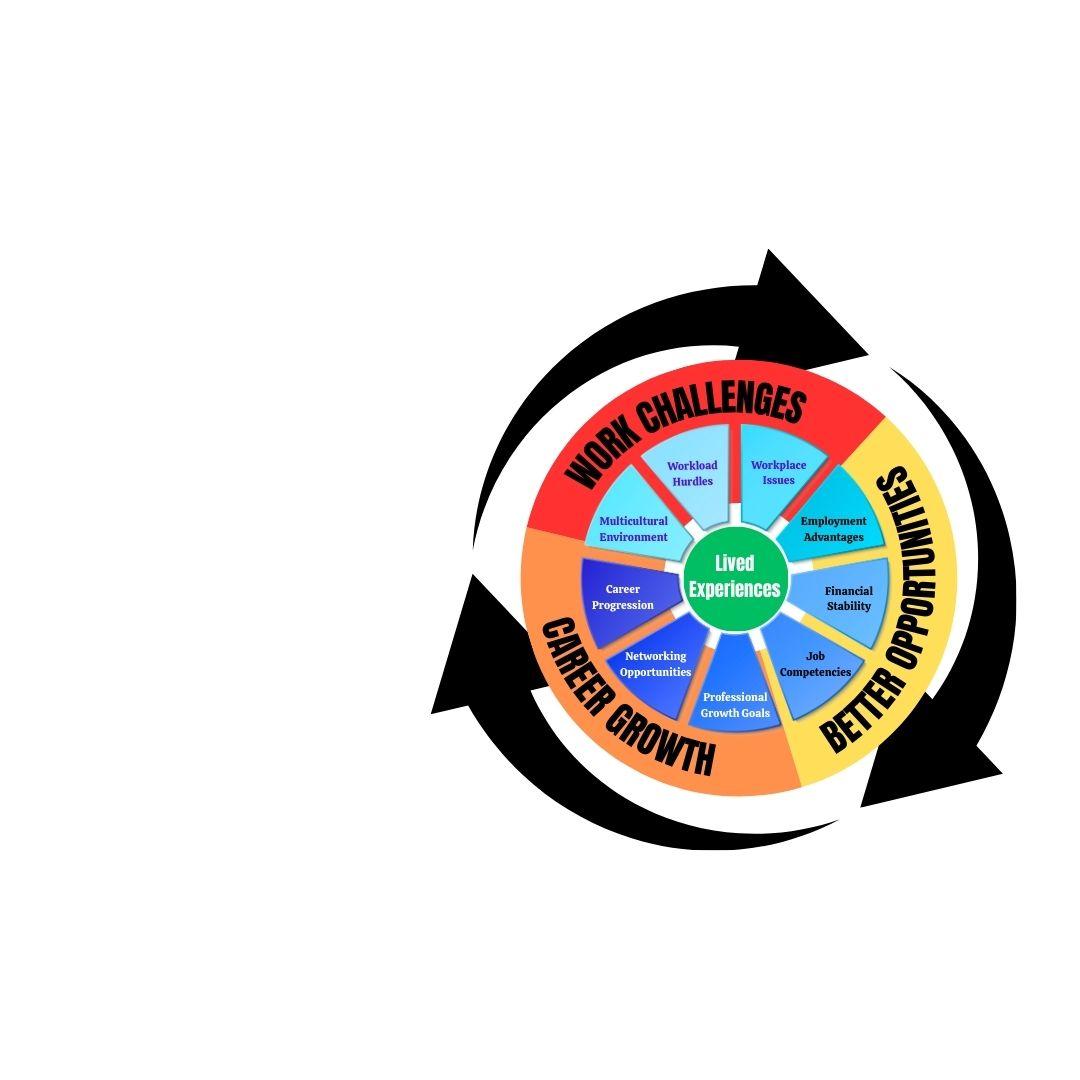
Filipino migrant library professionals encounter challenges in the workplace every now and then. However, it is undeniable that working overseas opens doors to significant opportunities for personal and professional development. The study intends to investigate the lived experiences of the five Filipino library professionals, licensed or unlicensed, from different school settings in Qatar through a qualitative purposive sampling using a descriptive phenomenological approach. The research applied the data triangulation strategy— preliminary interviews, observations, initial and follow-up semi-structured interviews by inductive method. The collected audio data were analyzed by means of thematic analysis. The study utilized NVivo software which facilitated the process of coding, analyzing themes, and customizing reports. The research tools were assessed for validity and reliability by experts in the research field. The findings revealed the interrelationship of the three major themes that emerged— Work Challenges, Better Opportunities, and Career Growth. It signifies that the various challenges encountered by the Filipino library professionals when addressed appropriately led to opportunities. The challenges and opportunities eventually generated pathways for career growth. The research recognizes its limitations considering its scope and sample size. The study concludes that the results serve as implications for guidelines for migrant library professionals. This research thereby recommends that future researchers may include varied participants and a bigger sample size to unfold more ingenious and inclusive findings in the library and information science field of studies.
“Bagong-Bayani.” The recognition given by the former Philippine President Corazon C. Aquino to the Overseas Filipino Workers (OFWs) in 1988, as migrant workers who left their home to live and work abroad on a contract basis, now known as the modern-day heroes 1. The OFWs are the unsung heroes of our time for their sacrifices, grit, and resilience so as to provide a better future for their families 2. There are dozens of reasons why Filipinos choose to work overseas. In the hopes of improving the living condition of their families, to give better education to their children, to provide quality family healthcare through their remittances, and the list goes on.
Nevertheless, the OFWs face personal and professional challenges and difficulties in different shapes or forms on a day-to-day basis. Some of them fail to attend important family functions and miss out on milestones of their loved ones 3. They also experience miscommunication and discrimination in the workplace 4.
There can be no doubt that some people may not even be aware that the State of Qatar as a country exists. Qatar is a small flat peninsula in the Middle East. It has a subtropical climate with summers marked by extreme dry heat reaching above 45°C. On the other hand, winter temperatures are moderate without snow. Also, scarce rainfall may occur in winter and spring whereas sand and dust storms can be experienced all through the year 5. Currently, there are over 270,000 Filipino migrant workers from different sectors and industries in Qatar 6. The political and economic relations of Qatar and Philippines span for 43 years and counting 7. In a 2022 Philippine Statistics Authority (PSA) survey on the leading destinations of around 1.96 million OFWs, Qatar employed 5.8% of the migrant worker population 8.
It all started in the school libraryー a dedicated room or space where the school community can freely access educational resources and services that support information and learning needs. The school libraries in Qatar have a community of locals, children of the migrant workers, and employees from diverse cultural backgrounds, customs, and practices. Dr. S. R. Ranganathan, who was well-known as the Father of Library Science in India, considered the library as an institution in a continuously evolving environment several decades ago 9. It should be emphasized that libraries are currently facing significant challenges in the digital age with the widespread use of the internet and technologies. In the computer age where information is readily available online anywhere anytime in addition to the fast-paced life of the library users. The library users shift from physical books to e-books as a result. There was a remarkable decline in the library visits of the patrons. Hence, the library programs and services should remain relevant to its patrons in this day and age 10. Relatively challenging for the library professionals in Qatar who have to make sure that the aforementioned are in accordance with the Islamic beliefs and practices prior to its implementation.
As stipulated in the Law No (23) of the Amiri Decree of 2015, the school shall form a Learning Resources Committee who are accountable for checking and validating the content of the learning materials for the primary and supplementary learning resources of Arabic language, Islamic education, and Qatari history as compulsory subjects; curriculum materials; and library resources that they are providing to their school community in compliance with the Islamic values and local traditions of the country prior to its distribution to the school population 11 to avoid repercussions 12. It is crucial to emphasize that reference to alcoholic beverages and display pictures of eating pork are restricted. The learning materials should be free of any topics that may provoke disputes among people. All information, image, and illustration that are inconsistent with the teachings of Islam, values, customs, and traditions of the Qatari community are prohibited. In addition, referring to premarital sexual relations, cohabitation, homosexuality, or any other habits which go against the customs and traditions of Qatari society are strictly impermissible, among others.
The study attempts to examine the lived experiences of the five Filipino library professionals working in school libraries in Qatar from different school settings. The term Filipino library professionals refers to the participants of the study with the job title school librarian who are performing the roles and responsibilities of a librarian– including but not limited to managing the library collection, providing reference services, conducting research, teaching classes, and offering programs that will cater to the needs of the community 13, 14.
Filipino migrant library professionals as a category of participants have a wide range of firsthand experience with the school population of locals and diverse nationalities on a daily basis. Their narratives fill a pivotal gap that will advance the wealth of knowledge in the field of librarianship. The data in this region and group of professionals are limited in the current body of literature. The findings of the study sets out implications for guidelines for licensed Filipino school librarians, unlicensed Filipino library professionals who acquired the position by way of appointment or recruitment, Filipino professionals who are presently employed in another industry, and to Filipinos and other nationalities who are considering working overseas in the field of librarianship in Qatar.
The research applied the qualitative method which involves gathering and examining non-numerical data through audio and text 15. In order to understand the phenomenon of interest, the descriptive phenomenological approach was utilized. Phenomenology investigates the concept and essence of the lived experience of the individual 16. Descriptive phenomenology is a significant approach for gaining valuable understanding of human experience 17. It aims to uncover the meaning of the phenomenon by focusing on the individual’s experiences without explaining or interpreting them.
Qualitative research has advantages which are suitable for the target participants of this study. It safeguards insight and standpoint, there is a profound perception of the firsthand experience as the most relevant reference to elucidate the research questions, it can accommodate new concepts or patterns at any given time during the course of the study, and data gathering is done in an authentic environment. On the other hand, qualitative research has disadvantages as well. Independent factors from the authentic environment may influence the data, interpretation of the evidence is subject to bias, results from the small sample size can be unreliable, and this method requires extensive effort on the part of all the parties involved to mitigate biases in the study 18.
2.1. ParticipantsThe study involved five Filipino migrant library professionals with 3 to15 years of work experience as research participants. Four of the participants are licensed Filipino librarians– pertains to a genuine holder of a Professional Identification Card and Certificate of Registration provided by the Professional Regulatory Board for Librarians (PRBL) and Professional Regulation Commission (PRC) as stipulated in the Republic Act No. 9246 of 2004 regulating the Philippine Librarianship Act of 2003. Moreover, one unlicensed Filipino librarian who has a degree in another field of studies and obtained the position by employment is also a participant in the study. Two of the participants are practicing librarians in a British Curriculum school, two are in Philippine Basic Education Curriculum, and one participant in American Curriculum. Four of them are female and one male, ages ranging from 30 to 55. P1, P4, and P5 are married with their families in Qatar, P3 is married while P2 is single and both with their families in the Philippines. P1 and P2 had a bachelor's degree of Bachelor in Library and Information Science, whereas P3 and P4 had Bachelor of Secondary Education Major in Library and Information Science, and P5 had Bachelor in Business Administration.
The research reached out to 21 Filipino migrant library professionals in Qatar from different school settings to participate in the study. However, most of the library professionals who showed their willingness and are qualified to participate did not get the approval from their school administration in spite of constant follow ups via email and messages. On the other hand, the data saturation must be treated as a guiding principle and not as a strict endpoint. In this regard, 5 to 25 participants are the recommended sample size for phenomenology research design. Thus, the study must ensure to include participants with different perspectives, experiences, and varied backgrounds to enhance the credibility and validity of the research 19.
2.2. Research InstrumentThe study utilized the preliminary interview to determine the profile of the participants, such as name, name of school, position, number of years in the position, total number of years as a migrant library professional in Qatar, total number of years in Qatar, recent three employment history, educational background, and qualification. The preliminary interview was administered via Google form as background information of the participants. The scheduled one or two short school visits were conducted to observe the participants' day-to-day routine in the workplace at their most convenient time to gather additional data for the study. The scheduled initial and follow-up semi-structured interviews were administered depending on the availability and venue preference of each participant. The study utilized the 10-item semi-structured interview guide to accumulate supplementary data.
The preliminary interview and the semi-structured interview guide were submitted to the three experts in the research field– two experts in the field of librarianship and a language expert, for validation and approval. The validation process included a thorough review of the content, reliability, and validity of the research tools. The research experts examined its clarity, relevance, and comprehensiveness. The semi-structured interview guide that was originally composed of 15 questions was trimmed down to 10 as per the recommendation of the validators. The comments and recommendations of the experts were prudently considered and applied in refinement of the tools prior to the data gathering.
The verbatim transcription of the semi-structured interview narratives and the categorized semi-structured interviews were submitted to an expert in the research field for validation and approval. The validation process included a thorough review of the narrative’s content, reliability, and validity of the research tools. The research expert assessed the clarity, relevance, and comprehensiveness of the themes, subthemes, and codes in the transcript. Based on the experts' validation, the current themes are accurately reflective of the responses of the participants, thus deemed to be valid and reliable with some minor recommendations for further refinements. The comments and recommendations of the research expert were carefully considered.
2.3. Data Gathering ProcedureThe researcher asked for the target participants’ willingness to participate in the study. As recommended by the participants, the researcher sent the letter to the Principal of the institution via email where the target participants are employed to request for their permission to allow their employee to participate in the study. The objectives of the study were clearly stated and the sequential process of the data collection were thoroughly discussed in the letter. The name of the school as well as the identity of the participants were not disclosed to safeguard their privacy. The interviews were audio recorded to accurately document the information ensuing the ethical considerations. In addition, their responses were kept confidential and were used only for educational purposes. The collected data were properly discarded subsequently.
The study utilized the data triangulation strategy namely; preliminary interview, observation, initial and follow-up semi-structured interviews to strengthen the reliability and plausibility of the results using an inductive approach method 20. The evidence gathered from multiple resources mitigates the possible biases of the study 18.
The study ensured the free, prior and informed consent of the target participants in the conduct of the study. The participants were requested for their participation without coercion or deception. The Letter of Request to the Institution with the consent form containing relevant details about the research was sent to their Principal or immediate supervisor. Upon their consent, the Letter of Request to the Participants with the consent form containing the significant details about the study was either given to the willing candidates personally or sent via email based on their preference. The letter ensured that the participants' identities were not disclosed to safeguard their privacy. Their responses and affiliation were kept confidential and were used for educational purposes only. Upon confirmation of their involvement, the Preliminary Interview Google form was sent via email as background information of the participants. The one or two scheduled short library visits were conducted to observe their day-to-day routine in the workplace at their most convenient time to avoid disturbance to anyone in any way in the process.
Interview protocol was applied to ensure the coherence and reliability of the data collection. The initial and follow-up semi-structured interviews were administered considering the convenience and venue preference of the participants. The informed consent form was collected prior to the interview proper. The participants were also requested to confirm their participation on the record. The interview was audio recorded to accurately document the information as approved by the participants. The study utilized a script as a structure to ensure the ethical manner and smooth flow of the interview. The introduction script contains important details about the study to lead the process into the right direction and information about the researcher to build rapport with the participants. The participants gave approval for the verbatim transcription of their narratives. The 10-item questions are open-ended that started with the basics to possibly challenging questions. The participants were assured that they are heard without bias or prejudice. They were advised that in the event an untoward issue occurs during the data collection they may withdraw their participation if necessary at any given time without repercussion. The participants were notified that their involvement is completely voluntary and not binding. At the conclusion of the interview, the participants were informed that the gathered data may serve as a reference to conduct future research to unravel more insightful and impactful results in the field of librarianship and may be published in academic journals following ethical considerations. The participants were advised that all the factual information they shared and the documents they signed are handled discreetly. The audio recorded interviews are password protected following the ethical conduct. Lastly, they were informed that their data with consent were properly discarded subsequently.
As stated in the Republic Act No. 10173 known as Data Privacy Act of 2012 in the Philippines and Law No. 13 of 2016 on Protecting Personal Data Privacy in Qatar 21, that every individual has the right to protection of personal data and respect to privacy. Violation of the aforementioned laws shall be penalized.
The collected audio data were transcribed exactly as stated by the participants with the aid of the recording device. Thematic analysis is a helpful starting point for understanding how to perform qualitative analysis 22. This research utilized thematic analysis, based on descriptive phenomenology 23, following the six-step procedure– (1) familiarization, (2) coding, (3) developing themes, (4) examining themes, (5) determining and labeling themes, (6) and writing up 24, 25.
In addition, the study applied NVivo, a computer-assisted qualitative data analysis software (CAQDAS) to effectively and efficiently categorize the data. The software facilitated the process of coding and analyzing themes easily. It has features to customize reports in various formats and export the generated contents with ease 26.
The qualitative data from the semi-structured interviews were rigorously classified into groups of codes according to themes and subthemes that emerged during the analysis. The data were methodically tabulated and interpreted through tables and figures to expedite a higher level of understanding.
The phenomenological study investigates the lived experiences of the five Filipino professionals working in school libraries from different school settings in Qatar that lays out implications for guidelines for migrant library professionals. The summary of the semi-structured interviews, preliminary interviews and observations are shown in this section in reference to the three research questions through a rigid investigation of the challenges encountered and learnings acquired, advantages and opportunities, and professional development of the research participants. The qualitative data from the semi-structured interviews were meticulously categorized into groups of codes according to themes and subthemes that developed during the analysis.

The school library plays a crucial role in developing reading habits of the students and helping them improve their reading and comprehension skills. Moreover, it provides equitable access to a collection of different kinds of books and learning resources curated according to the needs of the school community in a welcoming environment, all thanks to the librarian. Nonetheless, like any other organizations, the library professionals encountered challenges in the workplace from time to time. In order to answer the first research question, “What are the challenges encountered and learnings acquired by the Filipino professionals working in school libraries from different school settings and as migrant workers in Qatar that maps out implications for guidelines for migrant library professionals?” the following are the summary of subthemes and codes that emerged from the semi-structured interviews.
Working in a multicultural environment is challenging and rewarding at the same time. The school community members from different backgrounds may approach issues based on cultural nuances which often leads to well-rounded resolutions and perspectives. However, it may also lead to cultural collision prompted by different values and work styles.
Cultural adaptation of the library programs and services
The participants were asked about their typical day in the library and how they differ in the Philippine school library setting. They agreed that the library setting in Qatar is different considering the culture and religion of their library patrons from different backgrounds. The library department is responsible for the review and revision of the primary and supplementary learning resources of their curriculum in compliance with the Islamic values and local traditions of the country prior to its distribution to the school population to avoid problems later on. The Private Schools Affairs Department, on behalf of MOEHE, laid out the Resources Review (RR) Guide as reference for the private schools and kindergartens 27. The library programs and services must adapt to the culture and traditions with no room for compromise.
“The library setting in Qatar is different as you need to be culturally sensitive as there are a lot of restrictions because of their culture and religion. Specially selecting books for the library as it became a burden for us librarians because of the ministry requirements and at the same time we need to align it to our school's cultural values.” (P1)
“One of the main challenges is ensuring that all library resources remain compliant with the country's culture, engaging and relevant to students with diverse backgrounds and reading levels.” (P5)
“The second challenge is the book review of all the library collections, knowing that our Ministry is requiring us to review all our collections in the library. I need to check each book to assure that there are no offensive languages or inappropriate images or anything against the culture of the state.” (P4)
“When there are no students, I focus on cataloging newly acquired books, including donations, and carefully reviewing them for any content that may require censorship.” (P3)
“I normally do the collection analysis or review and development to meet the Ministry of Education requirement” (P4)
One participant shared some of the challenges she encountered and how she handled the situation. She reiterated that the programs and services of the library should adapt to the local culture of the school community.
“The challenges I’m facing are: Behavior of the students in the library. Students here do not consider the library as a quiet space, it’s just a normal space for them where they can socialize, communicate and collaborate. I think it's a cultural reason, too. Students don’t control their voice tones. Here, the library ambience is no longer traditional as before because we don’t shush our students when they have group discussions, collaborations, and group projects in the library. It is student-centered. We call the library a learning hub and the noise is equally described as “vibrant” or dynamic.” (P4)
In Qatar, the regular school timing varies to different schools ranging from 6 to 8 hours a day. In the holy month of Ramadan, every ninth month of the Islamic calendar, the school timing is generally 5 hours only. Despite the limitations, the library tasks remain the same as the regular days.
“My typical day in Qatar school library is I guess so much busier, but I think it is easier than the Philippine school library setting because of the school’s timings, it is shorter here, so I have to maximize and manage my time.” (P4)
Cultural discrimination and cultural differences in the workplace
Four of the participants experienced discrimination because of their race or ethnicity and were treated unfairly in the workplace. Some of them shared how they overcame this kind of treatment.
“Yes, I experienced discrimination, but I managed to overcome those discrimination by showing them how I work and how I engage with the students and with my colleagues and with my teachers and the staff. I think discrimination is always a part of our job here, especially here in other countries. I think if you will just show your capabilities, I think they will see that it’s not about your race, but it’s how you do your job and your profession.” (P1)
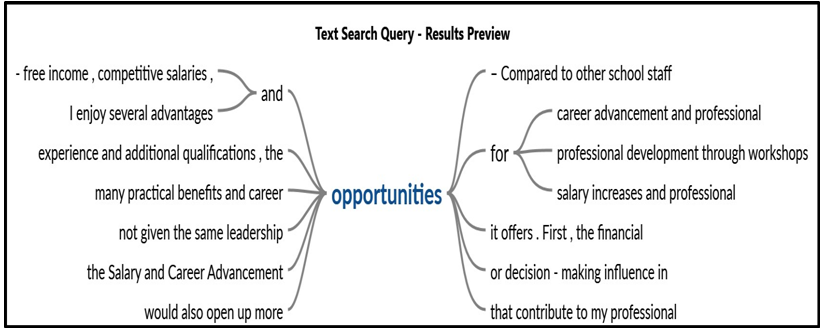
“Yes, of course. Even while working in a Filipino community school, I have experienced discrimination in various forms. These are the major discriminations of a migrant worker as a librarian: Number one the Position and Professional Recognition – The role of a librarian is often seen as merely a support service rather than an essential part of the academic structure. Unlike departments such as Guidance, Prefect of Discipline, and Student Affairs, which hold higher administrative recognition, the library is sometimes undervalued. In reality, librarianship requires professional expertise, just like these other roles, as we contribute significantly to students’ academic growth, research skills, and information literacy. However, despite meeting professional qualifications, librarians are often not given the same leadership opportunities or decision-making influence in school policies. Another one is the Salary and Career Advancement Opportunities – Compared to other school staff with similar educational backgrounds, librarians often receive lower salaries and fewer chances for career growth. There are limited pathways for promotion, as many schools fail to acknowledge the librarian’s role as a key academic professional. Even with years of experience and additional qualifications, the opportunities for salary increases and professional development remain restricted.” (P3)
The social culture and the labor laws of the host country greatly affect the status of the multinational workers in the workplace. The government and companies should fortify the regulations and policies to sustain harmony and equality among employees 28.
“Challenges may be the discrimination, maybe because I am Asian. Because most of the time especially here in GCC countries or in Middle East countries, they favoured more on the Western or the European. So when they see Asian staff or not Western or European staff, they think that they are lower or they think that they are not that good enough at their work, unlike with the Western or European people.” (P1)
“However, as a migrant worker, there can be cultural differences and challenges in adjusting to workplace expectations. Open communication and professionalism have helped me navigate these situations.” (P5)
Filipino women are sometimes mistaken as a Khaddama, an Arabic word for domestic worker or maid. As perceived by the other nationalities, Filipinos have the same physical features, especially the hair, height, and frame. It is common to see a Filipino domestic helper in Qatar. The locals prefer Filipinos for being hardworking, patient specially in taking care of their children, and can speak English very well.
“Some students have a wrong impression with “Filipino professionals” as sometimes you feel belittled when they say - my nanny is also a Filipino. I think it's how you react to the words and I shouldn’t put a negative meaning on it. Now, I’m more open to talk about it when I hear them mentioning their Filipino nannies. As years went on, I was able to make jokes with them and we normally spoke in Filipino language and so it is more comfortable talking about it.” (P4)
Working in a multicultural environment
The participants were asked to name the nationalities they have worked with or served as library patrons in their three-plus years working experience in the school library.
“I worked with locals who are Qataris. I also worked with Egyptians, Jordanians, and Sudanese. Currently our students are Malaysians, Indonesians and Brazilians as well. So I can say that it is a diverse culture that I have been working with for the past years as a librarian” (P1)
“So, in my workplace, most of our students are Filipinos. We have also students coming from Egypt, we have Indonesian, we have also Americans, only a few also Nigerians and we have Qatari students.” (P2)
“Mostly, our students are children of Overseas Filipino Workers, so the majority of our population here in school came from the Philippines or were born here in Qatar but parents are Filipinos or parents are half Filipino or other nationalities. I have had a few foreign students or foreign patrons such as Indians, Africans, Egyptians and Americans so far.” (P3)
“I am serving diverse clients with over 70+ nationalities, including Qataris, Americans, Europeans, Koreans, Turkish, and many more. Working with different levels of skills is both challenging and rewarding for me. In almost two years here in this school, I think I’ve already built a good relationship with my stakeholders. Being a one-man librarian, I learned that it is important to adapt and respect the school culture, and I also do my best to approach students, parents, and colleagues in a proper way to establish and maintain a good rapport with them.” (P4)
“I have worked with colleagues and students from various nationalities, including but not limited to Qatari, Filipino, Indian, Egyptian, Jordanian, Pakistani, Sudanese, Lebanese, and other expatriate communities. The multicultural environment has been an enriching experience.” (P5)
Being a school librarian in a multicultural environment at times is challenging due to language barrier and diverse setting. One rule may be applicable to one patron but not the other. It’s not a one size fits all system. One must try different approaches to figure out what works best. It takes careful thought and planning to eventually discover how to connect with the patrons and address their learning needs.
“At first it was very hard for me, especially when handling students from different cultural backgrounds. Because sometimes, maybe because of language barriers and the way our culture is. Because as Filipinos, I mean for me I believe when you say for one student to stop, they stop. But for the others they do not. It’s really a challenge for me at first to maintain the discipline inside the library. However I think with time and how we establish rules in the library I was able to let the students understand what they should do inside the library.” (P2)
“There is also a greater diversity of students, requiring a more inclusive approach to reading materials and activities.” (P5)
Library professionals also experienced challenges as a result of the workforce structure. It impedes the smooth transition of the library operation with ripple effects. Challenges may include backlogs in processing newly acquired learning materials, overwhelming user demands, library overdues or lost books that would require follow ups and updates, and overworked staff resulting in inefficient and ineffective library services.
Additional workload
Two of the participants stated that they have workload in addition to their regular tasks as school librarians.
“I am also in charge of the library equipment which all the staff are using.” (P1)
“Sometimes I offer service hours to the Upper School students because I believe that I would be able to help them in their research skills and become a lifelong learner.” (P4)
One participant shared her difficulties in acquiring new books related to their school curriculum. She had to find a contact person back in the Philippines to purchase books that they need.
“Also, with books since I mentioned a while back that it’s very hard to purchase books that they really need for the curriculum. So I have to collaborate or talk with library agents from the Philippines. And still we can only purchase a limited number of books.” (P2)
There are learning resources not available in Qatar. There were instances that the librarian had to undergo a tedious process of contacting suppliers from different countries, paying extra for shipping costs and preparing documents for customs clearance.
“…how I purchase books because it’s very hard in Qatar, specially to purchase these materials. So I have to partner with a book agency in the Philippines where they can send books like Phoenix and Rex. Send books for us to use in Qatar” (P2)
Challenging experiences of a one-man librarian
One participant expressed her workload hurdles as a one-man librarian. She had faced professional, social, and operational challenges. Despite her overwhelming situation, she had to make sure that the library remains a welcoming learning space for the library patrons.
“However, in my current role, I am the sole librarian, which means I handle all library operations by myself. From organizing books and conducting library instruction to cataloging, processing new acquisitions, and assisting students and teachers, every task falls under my responsibility. Without student assistants, managing time effectively becomes crucial, as I need to balance administrative duties with daily interactions. Despite these challenges, I strive to ensure the library remains an efficient and welcoming learning space.” (P3)
Although the participant is capable of handling these challenges, other library operations slows down and piles up. This meant devoting extra working hours to finish the other pending tasks.
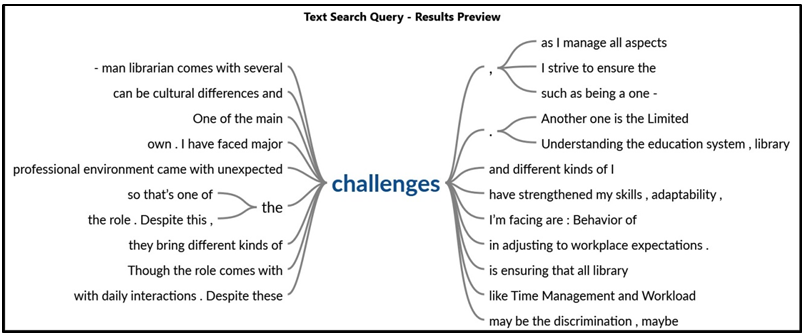
“Being a one-man librarian comes with several challenges, as I manage all aspects of the library on my own. I have faced major challenges like Time Management and Workload – Since I am responsible for everything from cataloging books and assisting students and teachers, balancing multiple tasks efficiently can be overwhelming. Without additional staff, every duty requires careful time management, so that’s one of the challenges. Another one is the Limited Support for Routine Tasks – because in the Philippines where I worked before, student assistants helped with shelving, monitoring the students, and processing book loans. Without their assistance, I have to handle all these tasks alone, which can slow down library operations. Another thing is the Collection Development and Technical Processing – Acquiring, cataloging, and processing new books require a lot of time and effort. Since I do this alone, it delays the availability of new resources for students and teachers. Also, Managing Student Behavior and Library Discipline – Monitoring students is also very challenging. The activities while attending to administrative tasks like without additional supervision, ensuring a quiet, orderly environment can be difficult, especially during peak hours. Also, Balancing Library Instruction with Daily Operations – There are a lot of concerns but Conducting library hours and research instruction for students while managing circulation and technical services is demanding. There are times when I need to pause instructional sessions to assist students with borrowing or returning books, disrupting the flow of lessons.” (P3)
Nonetheless, from these struggles, P3 was able to improve management and intrapersonal skills to carry on with the regular library operations proficiently.
“Working independently has strengthened my skills in time management, decision-making, and adaptability.” (P3)
Traditional perception of the patrons towards the library
Librarians are not just sitting around all day, shushing people or checking in and out books. These are the traditional perceptions of the patrons towards the library. P3 expounded her personal experiences with regard to this issue.
“Another one is the Perception of Workload and Responsibilities – Many people assume that a librarian’s job is simple—just managing books and keeping the library quiet—when, in reality, it involves extensive work, from cataloging and research assistance to curriculum integration and student engagement. Because of this misunderstanding, the demands of the job are often underestimated, and librarians are sometimes expected to take on extra tasks outside their official role, without proper recognition or support.”(P3)
“And lastly the Stereotypes and Undervaluation of Expertise – There is a common stereotype that librarians simply “sit and read books all day” leading to a lack of appreciation for the specialized skills required in the profession. Library science involves knowledge of information management, research methodologies, digital literacy, and curriculum support, yet these skills are often overlooked. As a result, librarians may not be invited to important academic discussions or decision-making processes, despite their critical role in supporting students' learning and research needs.” (P3)
The false perceptions towards the library and the librarians are slowly changing over time. Hence, it is crucial to innovate– introduce changes and new ideas to finally put an end to these wrong impressions.
“However, I believe and I am happy that the perception of teachers and students is changing now because they see us more as librarians. We have our programs and activities already and they can frequently come to the library. We are very open to them. So before they view the librarian as just someone I think in general sitting in the library, safeguarding the books and then students do not come to the library because they thought the librarians are I mean typically terror like that. So it’s not allowed to talk in the library. So the stereotypes for librarians.” (P2)
Different kinds of issues may be experienced in the workplace in many ways. It could be interpersonal or school policy issues, such as management issues, budget cuts, lack of administrative support, and the library as a marginalized department.
Lack of library budget
Due to the limited budget, the library would not be able to provide the various needs of its users which has a consequential effect in the long run. The libraries should adapt to the ever-changing trends. Take into consideration that the information seeking behavior of the library users are also changing, therefore contrive innovative ways to match users’ interests and needs to stay relevant in this day and age 29.
Three of the participants experienced library budget cuts or the library’s needs are not prioritized. As a result, the programs and services of the library are also affected.
“First and foremost, we do not have the library system so what I need to do is to partner with the National Library in the Philippines. I have to email and they have given their help and support through installing for us the KOHA library system. So since the school cannot purchase or subscribe to a library system which will help us in our daily routine specially with reports so we use the system.” (P2)
“Also Lack of Institutional Support and Resources – Unlike other departments that receive adequate funding and administrative backing, the library often struggles with limited resources. Budget allocations for new books, technology upgrades, and professional development are sometimes overlooked, making it challenging to maintain an up-to-date and a dynamic learning environment.” (P3)
“For the school library, I think I have a bit of a hard time purchasing books. Also on how I defend the needs of the library to the administration. So I have to really use data, like these things are really needed in the library.” (P2)
“Another challenge is managing resources efficiently, especially when dealing with limited budgets or outdated materials. I address these by organizing interactive reading programs, collaborating with teachers for curriculum-based activities, and advocating for library improvements.” (P5)
In spite of that, P2 tried to resolve the situation by finding solutions like inviting suppliers for the Book Fair. The library will get books as a profit to augment the needs for the books and learning resources. Also, opening the library earlier than the schedule to accommodate all the students who would like to use the available computers or bring personal laptops and they will be given access to wifi connection.
“And also, sometimes we also face budget cuts since it depends on the administration when they will give the budget for certain resources. However, in our Book Fair, it augments what we lack especially in terms of budget. So what we get from the Book Fair we use it to purchase additional materials for the technology use, though we have limited computers, I ask the administration if they can provide the wifi for our students, so that augments the lack of computer in the library for internet use so we ask our students to just bring their laptops for research and then we can give them the wifi access.” (P2)
“And also, the use of technology, we have computers however they are very limited. We only have I think less than 10. So they cannot accommodate all our students.” (P2)
Lack of library space
The students come to the library for different reasons, such as to find a quiet space to study, use facilities to accommodate their learning needs, and access a cozy area conducive for reading and learning away from the usual classroom atmosphere. Nonetheless, two of the participants have an issue about their small library space.
“Especially now I have the challenge with the library space” (P2)
“I still think my challenge is the library space, so it's a totally small space or very limited to our students. Although we have two libraries, still they cannot accommodate 10% of our population.” (P2)
“The third one is the limited library space for the programs and other activities. I can only accommodate a maximum of 25-30 students at a time. I wish to have a bigger space to conduct more programs and services.” (P4)
Lack of support from the administration
The lack of support from the management often leads to high levels of stress in the workplace. It results in low morale of the employees as they struggle to manage daily tasks and meet expectations. P3 and P4 shared the same experience.
“Additionally, requests for improvements or library-related initiatives may not be prioritized, further reinforcing the perception that the library is secondary to other academic services.” (P3)
“One more thing is I feel like the library is less of a priority in the school. I’ve experienced that the Filipino librarians are less heard and sometimes there is no immediate support in terms of requests, either resources or facilities and any other activities that we want to do in the library.” (P4)
3.2. Better OpportunitiesThe Middle East countries, especially Qatar, have invested heavily in the education sector. These countries generally hire candidates proficient in speaking and writing English from different countries in the world. Working experience in the Arab region is an advantage in the job market. Knowledge in Arabic speaking and writing are highly valued but not required. The library professionals commonly receive competitive salaries with fringe benefits. There are opportunities for career growth into leadership roles and professional development through seminars and conferences all expenses paid by their organization.
So as to answer the second research question, “What are the advantages and opportunities available for Filipino professionals working in school libraries and as migrant workers in Qatar that lays out implications for guidelines for migrant library professionals?” the following are the summary of subthemes and codes that emerged from the semi-structured interviews.
Filipino library professionals, as participants of the study, have a good command of the English language, have formal degrees in Library and Information Science and other field, and with proper training in the field. In addition, Filipino workforce is cost-effective compared to other nationalities from Western countries, generally known for being respectful and adaptable to other customs and norms, and hardworking individuals.
Librarian by experience who was given the opportunity to work in a school library
Like P5, there are Filipino migrant professionals who are practicing school librarians with a different bachelor’s degree in Qatar. The roles and responsibilities of the school librarian differ according to the teaching strategies, curriculum, and fund of the school within local and national legal and economic schemes 30. It is significant to note that requirements to become a school librarian vary by country or state. Librarianship has become a promising career, therefore some of the Filipinos who are currently practicing librarians are pursuing studies to align their profession with their role for better opportunities.
”I am a librarian by experience. My journey into the profession started when I was given the opportunity to work in a school library, where I developed a passion for organizing resources, assisting students, and fostering a love for reading. Over time, I gained hands-on experience in library management, book classification, and literacy programs. This experience helped me secure my current role as a school librarian in Qatar.” (P5)
Licensed librarian by profession and with library experience prior to degree
Four of the participants are licensed librarians with the degree of Library Science. The professional qualification is a strong credential to land a job, however the schools in Qatar do not require their librarians to be licensed. It should be noted that there are practicing unlicensed Filipino librarians with a degree in library science in Qatar, since the schools do not require their librarians to meet the licensing requirements. Work experience is an advantage to gain employment in any company. Candidates with years of experience know how to get the task done promptly and efficiently. Indeed a great addition to the team who can impart invaluable perspectives and insights.
”I am a librarian by profession. I have a bachelor’s degree in library and information science and I also passed my professional license for librarianship. As for my current job I was hired as a Secondary Librarian then eventually becoming a Primary Librarian when my colleague left the school. Regarding my past jobs I started working even before I graduated my bachelor's degree. I used to work in different types of libraries in the Philippines where I gained most of my experiences.” (P1)
”So I think I am both a librarian by profession and by experience. My profession is that I was able to acquire my degree in library and information science. And by experience, I think I have practiced enough since before taking the degree formally I was a library working scholar in my secondary years until a position of my college degree. And then after I finished my degree, I practiced the profession.” (P2)
”Yes. I am a Librarian by profession, with a Bachelor of Secondary Education—major in Library Science and minor in English—and Professional licenses in the Philippines to both of the professions.” (P3)
”I’m a librarian by profession. I obtained my Bachelor of Secondary Education major in Library Science and a Master of Library and Information Science. I have 20 years of experience with library operations and information services in an academic setting.” (P4)
Opportunity to work in private companies or other schools
In Qatar, a No Objection Certificate or NOC is a legal document for different administrative processes. The issuance of NOC is a legal compliance to protect an individual from imminent legal issues. The certificate allows the individual to proceed without any objection. In this case, an employee may switch jobs deliberately on the condition that they follow the contractual obligations and legal notice periods. Filipino migrant workers yield to job mismatch in Qatar as an alternative to possible deportation or unemployment 31.
P1 and P4 were able to change jobs and worked in different schools for personal reasons. At the time, NOC was not given to every employee who would request for it. It depends on the company or school’s discretion at times.
“Upon moving here in Qatar, I also work in private companies and schools as well.” (P1)
“My first job in Doha was as a Secondary Librarian for 3 years then I moved to another school for 1.5 years and served another school for 9 years. Last year, I moved to this school as an Upper School Librarian.” (P4)
In Qatar, the financial stability for library professionals vary considerably depending on several factors, for instance credentials, years of experience, and type of institution that they are employed in, whether it's private or public. It should be emphasized that Qatar has a fairly high cost of living in housing and transportation.
Sustaining a balance between one’s income and expenses is the key component of financial stability. Living within means free of consumer debt, paying the monthly bills with ease, and saving emergency funds for rainy days.
Migrant salary scale and fringe benefits
Qatar does not impose income tax on employee’s salary and no value-added tax (VAT) on goods or services. The employers also offer fringe benefits or additional benefits as part of the employee’s compensation package, including but not limited to paid vacation for 1 to 2 months, paid sick leave and bereavement leave, housing allowance which may include water and electricity, airfare allowance upon completing one or two years of service, healthcare benefits in addition to the free healthcare services provided by the state, and transportation allowance to cover the costs of commuting or school’s shuttle service. It is important to note that these benefits are subject to the employer’s policies and regulations in compliance with the Qatar law.
“There are a lot of advantages being a school librarian here in Qatar. Well first of all, of course the salary is different compared to the Philippines, the salary is much better, much higher.” (P1)
“So as a school librarian here internationally in Qatar, I think the one advantage is having a higher salary than what we receive from the Philippines, since it’s non-taxable.” (P2)
“As a migrant professional, I also benefit from tax-free income, competitive salaries” (P3)
“Aside from less hours of work, I also enjoy school breaks and Qatar official holidays. I’m also grateful for the tax-free salary, plus my family is here with me.” (P4)
“Additionally, the financial benefits and tax-free salary offer a stable income, which is an advantage for migrant professionals.” (P5)
The library professionals are expected to be knowledgeable of traditional librarianship skills, up to date with the emerging trends, and with exemplary communication skills to accommodate the diverse community and their ever-changing needs.
More advanced resources and technology available for efficient and effective library programs and services
Her Excellency Sheikha Alya bint Ahmed bin Saif Al-Thani, Permanent Representative of the State of Qatar to the United Nations, affirmed that the country took long strides in innovation and advanced technology for sustainability. This is in line with the comprehensive Qatar National Vision 2030 (QNV2030) to achieve sustainable development goals (SDGs) across all sectors of the economy 32.
“And to be able to have the chance to use resources that we cannot frequently see in the Philippines. For example, here we can have a collaboration with Qatar National Library. Last year I was lucky to have that collaboration with them because I did the Filipino cultural exhibition for food, culture and the art with Qatar National Library.” (P2)
“One of the perks here is the Qatar National Library because they also offer their free electronic resources services for all schools in Qatar and all the registered members. Any students that are members of QNL would be able to access all the electronic resources and also the physical resources.” (P4)
“Compared to the Philippine school library setting, libraries in Qatar generally have more advanced resources and technology.” (P5)
In line with the country’s national vision, various schools deliberately integrate science, technology, and innovation in the curriculum as essential means to achieve sustainable development goals by 2030.
“The school provides access to modern resources and technology, enhancing my ability to support students with up-to-date learning materials.” (P3)
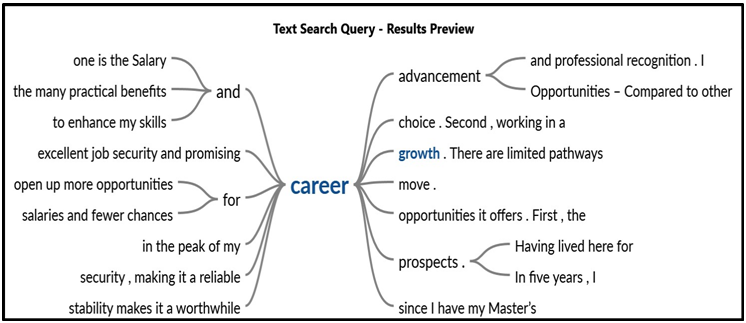
3.3. Career GrowthCareer goals are the specific objectives that individuals set for one’s career either for the next few months or several years. These goals would guide the individual to stay driven, provide direction, and streamline overall work performance.
In the interest of answering the third research question, “What are the possible professional developments that Filipino professionals can obtain from working in school libraries and as migrant workers in Qatar that sets out implications for guidelines for migrant library professionals?” the following are the summary of subthemes and codes that emerged from the semi-structured interviews.
Career progression means moving forward in one's career, such as development of new skills and competencies, wage increase, taking on new opportunities, or switching to better institutions.
Create a career development plan, a personal action plan that serves as a roadmap to career advancement. Identify one’s current role, assess strengths and focus on what needs to improve. Determine one’s destination in the next five to ten years. Assess the skills that need to be acquired through training or experience. Adopt the SMART framework– Specific, Measurable, Achievable, Relevant, and Time-bound. Then, reevaluate every so often by keeping track of one’s progress guided by a timeline 33.
Practical benefits and career opportunities for Filipino migrants and library professionals
All the participants answered yes to the question if they would encourage their friends or colleagues to work overseas in a school library in Qatar. Each one shared key takeaway on the practical benefits and career opportunities based on their experience for a number of years in the country.
“Yes, I would encourage my friends to work overseas in a school library here in Qatar because of the many practical benefits and career opportunities it offers. First, the financial advantages are significant—Qatar provides tax-free income, competitive salaries, and benefits such as housing and healthcare allowances, which allow professionals to save more compared to working in the Philippines. The stable economy and strong support for education also ensure job security, making it a reliable career choice. Second, working in a multicultural environment broadens one’s professional experience. As a librarian, you get to interact with students and educators from different backgrounds, improving your adaptability and communication skills. This exposure enhances your ability to manage diverse library needs and implement global best practices. Additionally, school libraries in Qatar often have access to modern technology and digital resources, allowing librarians to expand their expertise in library automation, digital literacy, and research support. Though the role comes with challenges, such as being a one-man librarian, the experience strengthens time management, independence, and leadership skills, and working in a school library in Qatar is both a financially and professionally rewarding opportunity. It provides growth, stability, and a chance to contribute to a thriving educational community while securing a better future.” (P3)
“Yes, I will encourage them to work overseas, especially in Qatar, because of the opportunity that they will be having not only financially but also the experience that they will gain. And working with a diverse culture, I think they will improve their personality, their views about dealing with different cultures, different people. Because you will be more aware of the different backgrounds where they came from and what are the things that they are doing in school or in their culture as well.” (P1)
“Yes, I would encourage them, especially if they are passionate about library work and open to experiencing a multicultural environment. The opportunity to work in an international setting, gain professional experience, and enjoy financial stability makes it a worthwhile career move.” (P5)
“...when I came here in Qatar I believed that I would love to encourage my friends and colleagues to work overseas because of the professional growth aside from having a much higher salary than what we receive in the Philippines but it’s the exposure to different cultural backgrounds. And you will really know that a librarian’s job is very diverse or very broad and it’s nice to get to know different kinds of patrons coming from different cultural backgrounds. And you will really learn as a librarian. So I love to encourage, because of these benefits. I mean the challenge of coming abroad and the risk of missing your family. But for me because maybe I am still single, the benefit and the exposure of being a professional abroad was really different from what we have back home in the Philippines.” (P2)
The State of Qatar ranked as the eighth safest country in the world and safest country in the Middle East for expats to live in. The organization utilized the Global Peace Index to evaluate the conflict risk and political stability, the Crime Rate Index to assess the level of crime, and the percentage risk of natural disasters to ascertain the probability of such a phenomenon 34, 35.
According to the statistics report, Qatar has a Crime Index of 16.0 as the second lowest crime rate in the world. As a result of the nation’s strict laws and political stability free from protest. Moreover, the police force has a compelling presence around the country. Qatar capitalized on the state-of-the-art surveillance systems, security technology, and the like as crime or threat prevention measures. In addition, the country’s geographical location is not prone to hurricanes, flooding or earthquakes. Nonetheless, it has an arid climate with scarce rains and occasional sandstorms. Indeed, a very comfortable and secure environment to work and live in 34.
“Yes, I would highly encourage my friends or colleagues to consider working in Qatar due to its exceptional quality of life, which encompasses top-tier healthcare, efficient travel and transit options, as well as a high level of safety and security. Additionally, Qatar offers excellent job security and promising career prospects. Having lived here for 17 years, I can confidently say that Qatar is not only one of the wealthiest countries in the world but also one of the safest, providing a stable and thriving environment for both personal and professional growth.” (P4)
The library professionals are using networking opportunities to widen their connections and put oneself or their organization on the roadmap. Forums or conventions are the avenues to increase awareness of news and developments in the field of librarianship.
Networking opportunities that enhances skills and competencies
Developing core competencies, such as collaboration, communication, and creative thinking through networking opportunities. Conventions are avenues to engage with other migrant library professionals from different school settings and various cultural backgrounds to find mentors in the field of librarianship. International conferences allow participants to form connections, learn new skills, and share best practices from experience to grow personally and professionally.
“And also, the opportunity to grow professionally. Because while I was here in Qatar for three years, I was able to attend international conferences. I was able to be exposed to different kinds of libraries, to meet different kinds of librarians and experts in the field.” (P2)
“I think as a professional, there is a bigger world for me because I was able to collaborate with different kinds of agencies and different professionals and cultural backgrounds.” (P2)
“…opportunities for professional development through workshops and training.” (P3)
“Additionally, I get to collaborate with educators from different backgrounds, enriching my teaching strategies and library programs.” (P3)
“One of the most fulfilling parts of my job here is the professional development. During my previous job, I was able to visit the different branches of the school in the United Kingdom. I was able to meet and work with the other librarians and attended symposiums there. I was happy and grateful for that opportunity. During school breaks, I had the opportunity to travel. I visited the public libraries in Rome and Armenia, museums in Georgia and Paris. I’ve met and collaborated with a group of international school and expats librarians, where we share our programs and services to ensure that we are on the same pace along with the library and technology trends.” (P4)
“Working as a school librarian in Qatar provides the advantage of professional growth through exposure to international standards in education and library management.” (P5)
Wealth of experience on cultural awareness, diversity, inclusion, and respect
As migrant workers in Qatar, all the participants agreed that it is imperative to acknowledge and respect the cultural differences of the community with various customs, values, and practices. A benevolent gesture that fosters an inclusive and diverse work environment for balance and harmony.
“At the same time, it’s the opportunity to engage and to work with other cultures so since we are working with different nationalities, the diverse culture is a good opportunity for us to improve ourselves, our skills and to know better how we can handle the library needs of our patrons.” (P1)
“Also, it’s very nice to also work with different kinds of people from different cultural backgrounds because you were able to learn about their cultures. Know their difference between our cultures but how these people live their life. So we learn from them and these library patrons although naughty at times they are also sweet to people. So now I really enjoy working with different kinds of students, different kinds of library patrons, they bring different kinds of challenges and different kinds of I mean different kinds of fulfillment for you as a librarian. Because you were able to connect with different kinds of library patrons. And you were able to help them find the information they needed in the library.” (P2)
“Yes, there are a lot of takeaways dealing with different cultural backgrounds because now you will know how to really take care and be more aware especially on their culture and values specially that we are living or working in an Arab country. So you need to be more aware of the things that you will say or the things that you will buy or you will use for your patrons. So it is good because you will learn a lot, not only to your job but also to other people as well that you will encounter.” (P1)
“As a school librarian in Qatar, I enjoy several advantages and opportunities that contribute to my professional and personal growth. One major benefit is the exposure to a diverse, multicultural work environment, allowing me to develop global perspectives on education and library management.” (P3)
Qatar has around 3.1 million population; 88.4% are migrants and only 11.6% are Qatari citizens. The majority of the population is male which is 74.91% and only 25.09% female. The British Broadcasting Corporation (BBC) quoted Qatar as “a state built by immigrants”. The official language is Arabic, although English is generally used as the second language 36.
“Working as a librarian in a multicultural environment has given me valuable realizations and takeaways about diversity, inclusion, and adaptability. One of the most significant lessons I have learned is the importance of cultural sensitivity. Every student and teacher I interact with comes from a unique background, and understanding their perspectives helps me provide better library services. Respecting different reading preferences, learning styles, and communication approaches has made me more effective in assisting patrons. Another realization is that libraries serve as bridges between cultures. Books and resources are not just for academic purposes; they also help students explore different traditions, histories, and values. By curating a diverse collection, I can create an inclusive space where everyone feels represented and welcome. Moreover, I have learned the value of patience and open-mindedness. Language barriers, differing educational expectations, and varying attitudes toward libraries require me to be flexible and understanding. Through these experiences, I have developed better interpersonal skills, making it easier to connect with students, parents, and faculty members. Also, working in a multicultural setting has reinforced my belief that libraries are more than just book repositories—they are spaces of learning, connection, and cultural exchange, fostering respect and understanding among diverse communities.” (P3)
“Yes, working with diverse cultures has taught me patience, open-mindedness, and the importance of inclusivity. I have learned to appreciate different perspectives and adapt my communication style to foster better collaboration.” (P5)
“Yes. Working with people from different cultural backgrounds is an exceptional experience because I serve diverse patrons with a common interest when it comes to informational needs. It teaches me to adapt to the culture and become more flexible. Also, I learned to be more transparent, effective communicator and more reflective. Interacting with other nationalities also helped me navigate cultural differences, recognize and respect perspectives that lead to a stronger relationship with them.” (P4)
“The multicultural environment enhances my adaptability and interpersonal skills.” (P5)
Professional growth goals are the objectives set to help advance one’s career. Find ways to put these goals into motion and eventually be able to reap the rewards. Follow a timetable to keep the course in the right direction.
Needing guidance and support from organizations and society prior to employment
As the saying goes, “Experience is the best teacher.” It implies that an individual gets impactful understanding and in-depth learning from one’s personal experiences. One cannot discount the power of experience, nevertheless the participants have different take on it.
“Yes, it would have been helpful to receive guidance on library policies, cultural expectations, and best practices before starting. While experience is a great teacher, having prior knowledge would have made the transition smoother.” (P5)
“Yes, I do wish that someone or something had prepared me for the ins and outs of working in a school library in Qatar. While I had the necessary qualifications and experience as a librarian, adapting to a new cultural and professional environment came with unexpected challenges. Understanding the education system, library expectations, and workplace dynamics in an international setting would have helped me adjust more smoothly. Having prior knowledge of the policies, curriculum integration, and technological advancements used in school libraries here would have made my transition easier. Additionally, insights into managing a library as a one-man team, handling diverse student needs, and navigating cultural differences would have been invaluable. While I have learned through experience, proper orientation or mentorship could have better equipped me for the role. Despite this, the challenges have strengthened my skills, adaptability, and problem-solving abilities, making me a more resilient librarian.” (P3)
“Yes. I think everyone needs guidance and preparation on the ins and outs of working in a school library in Qatar. Taking into account the cultural differences, educational system, and local expectations. Proper preparation is crucial, as it will help me understand the educational standards, the technology being used in the libraries, the diverse school population, and the international experience needed to enhance my library skills and how to apply them into the library's services and resources.” (P4)
Nevertheless, P1 & P2 are up for a challenge. They strongly believe that through hard work, open mindedness and determination, the job is manageable. In addition, P2 received help and support from her colleagues that made the transition easier.
“If I wish someone has prepared me, yes of course. Because at least I will be having a background assessment or what I need to do. But actually I’m fine that i did not have anyone that told me about the background or what will I expect because learning on hand makes me more aware and prepared me what to expect and what to do in terms of dealing with my patrons especially the kids since it is a diverse culture and dealing with them is like a daily learning because since they are different nationalities you need to really be more aware and careful of the actions and the things that you need to do in handling their needs especially in their library requests.” (P1)
“I believe it’s better that I was prepared for the work that I have to do here. However still it’s nice that we are challenged as librarians because I believe that we are resourceful and we accept any challenge that we have. However, the people I worked with, especially my fellow Filipinos, the educators, were very welcoming and also the former librarians that were there in my workplace right now. They have really transferred the work smoothly so I was able to adapt very much fast and I think now I am embracing the role. And I am enjoying being the school librarian.” (P2)
Professional growth goals and future plans
The participants were asked if they are planning to pursue their studies and if they can see the direction of their career five years from now. They distinctly stated their future plans and other professional growth goals in place.
“Yes, actually, I am currently pursuing my PhD, as I strongly believe in continuous learning and professional growth. Additionally, I would love to take another Master’s degree in Library and Information Science (LIS) since my current MA is not directly aligned with my profession. Earning a LIS degree would strengthen my expertise in library management, research methodologies, and emerging technologies in the field. It would also open up more opportunities for career advancement and professional recognition. I see this as an essential step in becoming a more competent and effective librarian, capable of adapting to the evolving demands of modern libraries. Five years from now, I envision myself still working as a librarian here in this school in Qatar but with an upgraded and more advanced library set up or facility. I hope to implement innovative programs that integrate digital literacy, research skills, and technology-enhanced learning into the library services. By then, I aim to have expanded the library’s collection, improved access to digital resources, and introduced new initiatives that encourage a stronger reading culture among students. I also see myself taking on a more leadership-oriented role, advocating for the library’s significance in education while continuously growing in my profession.” (P3)
“Currently I am pursuing my doctorate degree in Educational Management, however it is at a halt because of the face to face memo from CHED so I was not able to continue online in the Philippines. But I am taking up my post graduate certificate that is UK certified intro with education. So yeah, I am pursuing my studies and actively having my professional development. But in five years I think I might take another job if there is another opportunity.” (P2)
“Yes, I am considering further studies in library science or education to enhance my skills and career prospects. In five years, I hope to take on a leadership role in library management or contribute to developing literacy programs in schools.” (P5)
Professional growth is more impactful when it is deliberate, centered, and embedded in one’s long-term career objectives and intentions. In the interest of making one’s goals within reach and wasting no time, a professional development plan (PDP) would be very helpful. Evaluate one’s current job title, skills, and competencies. Analyze the specific career goals, skills, and competencies one would like to achieve 5 to 10 years from now. Also, determine a game plan and timeline for short- and long-term goals. Make sure that goals are Specific, Measurable, Achievable, Realistic, and Timely (SMART). Carry out the plan equipped with resilience and persistence toward one’s long-term goals. Lastly, assess the progress against the timeline regularly 37.
The future plans of the two of the participants evidently depend on their family’s welfare. P1 & P4 families are in Qatar living with them. As parents they have a set of priorities, such as education of their children and their day-to-day living conditions.
“Five years from now I cannot say if I will be able to continue my study or what, but definitely I have some plans in five years’ time. But for now I am still thinking about if I will be able to pursue it, my studies, because of the schedules and other things that I need to do aside from my job and also for my family.” (P1)
“I think I am already at the peak of my career since I have my Master’s Degree in Library and Information Science. My only plan is to attend professional development including workshops, symposiums, seminars internationally or locally just to keep learning and applying the knowledge and skills to my workplace. As of now, I don’t have plans for further studies. Five years from now, I think I want to go back to the Philippines for good, Inshallah. I might still be working there as a Library Science teacher in graduate studies or a library consultant.”(P4)

The library programs and services should be in tune with the emerging trends to stay significant 10. The learning needs and information-seeking behavior of the library users have changed dramatically over the past few years. However, the participants revealed that they have a very challenging role to ensure that the books and learning materials are culturally sensitive and with high regard to Islamic beliefs and local traditions before adding them in the collection 38 to avoid unfavorable outcomes 12. These resources must go through rigorous review by the members of the Book Review Committee of the organization to meet the requirements as set forth in the policies and guidelines of the Ministry of Education and Higher Education (MOEHE). MOEHE visits the schools regularly, announced or unannounced, to check the random books in the library or the printed report of the library collection following their format 27. The librarians themselves are members of the Book Review Committee. As a member of the committee, they have to review the content of each book, cover inappropriate images and redact words that are inappropriate for the students if necessary. The burden of making sure that all the learning materials and resources in the library are not against the teachings of Islamic belief is the librarian’s responsibility. The library professionals need to take the role seriously to the point of performing additional workload to avoid repercussions that may also affect their organizations.
Many years ago, Dr. S. R. Ranganathan firmly believed that the library is a growing organism in an ever-changing environment therefore must stay relevant 9. In the digital age where information is readily available online anywhere anytime with the use of the internet and technologies, is one of the challenges of the library professionals. There was a notable decline in the library circulation. Some of the library users prefer e-book than physical books where they are accountable once lost or damaged. It is important to mention that gadgets and other technology devices are cheaper in Qatar. The school library community is composed of locals, children of the migrant workers, and fellow employees from different cultural backgrounds are all generally tech-savvy. Nevertheless, some participants of the study also disclosed that they have issues with the lack of appropriate learning materials aligned with their school curriculum and lack of computer units that will accommodate the ratio of the technology users. Despite the challenges, they were very creative and found ways to mitigate the situation they are in. On the other hand, the library professionals who have issues with the lack of library budget and lack of support from the administration failed to provide learning materials and resources that will cater to the different needs of their patrons.
Even though Qatar has an annual ten-day Doha International Book Fair which is generally participated in by 500 plus publishing houses from 40 plus countries 39, they only showcase books that are approved by the MOEHE in strict compliance with the Islamic beliefs and local traditions of the state. It is crucial to mention that some of the books available in the book fair are in fact marked as inappropriate in some of the schools where the librarians are employed. Take into account the different school curriculum of the participants and sometimes it depends on the prerogative of their administration. Moreover, some of the parents can go straight to the MOEHE to express their dissatisfaction or air out complaints 12. It is a serious matter for school businesses. In this regard, most of the schools really adhere to any policies or rules that the department of education will implement or impose.
The five Filipino migrant library professionals have been in Qatar for 3 to 17 years, and counting. In the beginning, they had difficulty adapting to the local lifestyle and coexisting in a multicultural and multilingual environment. As a result of hard work, understanding, and respect to cultural differences, it translated into balance and harmony in the work environment 40. Also, the Filipino library professionals are accustomed to various school activities and programs in the Philippine education and culture. The participants of the study revealed that although they have so many engaging and creative ideas on library programs and activities, they are not at liberty to implement such without the approval of their immediate supervisor. According to the participants, most of the time these proposals are disapproved due to many limitations and restrictions. This includes the prohibition of the classic children’s literature books like the Harry Potter series and The Diary of a Wimpy Kid as the ever-favorite relatable series of the young readers. As migrant professionals in Qatar, our participants will always adhere to what is mandated of them.
Discrimination was experienced by the public librarians as women of color in one of the diverse communities in the United States of America. Their daily lives and performance were greatly affected by inequity 41. The participants of the study also experienced racial discrimination in the workplace as experienced by other Filipino migrants in Qatar [3-4] 3 42. The participants revealed that Asians like them receive less compared to their colleagues from Western and European countries. It is relevant to mention that the old Philippine curriculum, prior to the adoption of the K-12 curriculum in the Philippines, lacks two years in the university compared to the Western countries 43. In addition, Qatar has English Language Learners (ELL) and the native speakers of the English language have a greater advantage compared to other nationalities. The library professionals also added that it could be their physical features as well since the standard of beauty sometimes influences or affects various factors even in the workplace. The participants stated that the physical appearance should not deceive the employers who are hiring job applicants for the position. Four of the library professionals have been in Qatar for quite some time and they could attest that some employees in their organization are just physically presentable as per beauty standard which vary across cultures, however could not perform the job well. The male participant of the study also confirmed that his gender was likewise in question several times since librarians are usually female. Other nationalities are even surprised that the librarianship is a bachelor’s degree for four years. The traditional perception towards the library and the librarians still exists. Some of the participants are perceived to have a very easy job of checking in and out of books and sitting around all day.
In a multicultural and multilingual environment, neither language must define one’s identity nor lead to discrimination 44. Truth be told that this is not absolutely true especially in the Middle East countries as affirmed by the participants. The library professionals have their fair share of discrimination. However, they are so grateful for their jobs and whatever is available for them. Despite the circumstances, they lighten the situation by hard work and resilience.
Arabic language is one of the widely used languages in the world 45. Therefore, Filipinos should learn the language for better opportunities abroad. In addition, as foreign residents, it is a good gesture to learn simple words to be able to start an easy and friendly conversation with the locals. On the other hand, the library professionals find it difficult to learn the language. The Arabic language has so many sounds and each sound is distinct from another. The reason why even our library professionals who have been staying in Qatar for many years, can only use some very simple Arabic words they know like shukran for “thank you” and afwan for “you are welcome.” In addition, since Arabic language, Qatari history, and Islamic education are compulsory subjects in the school curriculum, there are books and learning resources related to these subjects housed in the libraries. All the participants can neither read nor write in Arabic, hence they are using Google Translate and other translation applications to catalogue the abovementioned books. They also seek assistance from the Arabic faculty or staff as designated by the school administration.

Change is constant. Dr. S. R. Ranganathan’s Five Laws of Library Science that has been generally recognized as a roadmap in the library science field, emphasized that the library is in a constantly developing domain 9. Hence, the libraries around the world are compelled to adapt to changes while the objectives of delivering resources and activities to address the information needs of library users remain the same, including regulations for staffing. Most of the school libraries in Qatar do not require their librarians to be licensed. Licensed and unlicensed librarians can equally perform the library programs and services. One of the participants of the study is an unlicensed librarian and has been in the position for eight years. Some schools even prefer library candidates with educational qualifications. Indeed a promising news especially to those contenders who have interest in changing careers to librarianship. However, two of the Filipino library professionals shared their difficulties working with colleagues who are practicing librarians that acquired the position by experience. Their colleagues are not adept in the primary roles of a librarian, such as proper cataloguing of books, shelving, and poor at generating simple reports. The library professionals have to put in extra effort to assist them in making their libraries synchronized. Some of these colleagues are their immediate supervisors or paid more than them. On the contrary, under Section 26 of Philippine Republic Act 9246, unregistered individuals shall not perform or offer to perform librarianship in the Philippines or accept any position which requires rendering the function of a librarian. Upon conviction of violation shall be penalized by a fine or imprisonment.
The State of Qatar deliberately invested on innovation and advanced technologies in line with its scheme of Qatar National Vision 2030 (QNV2030) 32. These innovations are very evident in the different sectors like healthcare, education, transportation, communication, services, etc., across the country. Qatar has invested greatly in the healthcare infrastructure to accommodate the increasing migrant population 46. The migrant workers have an equal access and advantage to these programs. It brings additional comfort, sense of security, and boosts the morale of the migrant workers in the country. The library professionals who have been in Qatar for many years, cannot refrain from comparing Qatar to the Philippines when it comes to convenience, safety, services and the totally different type of government. All the participants shared that they need to adjust whenever they go on vacation back home. They have to consider the traffic, safety, and the value of commodities and services in the Philippines.
Meanwhile, the country’s vision QNV2030 entails dispute. Innovation alongside the conservation of cultural heritage is indeed a colossal challenge 47. In this regard, the library professionals are conflicted on how to go about the programs and services of the library given the limitations and restrictions in the Islamic belief and local culture.
The lived experiences of the five Filipino migrant library professionals are generally fulfilling and rewarding despite some disappointments. They have the advantage of a competitive salary scale ranging from 5,000 to 10,000 Qatari riyals and other benefits while in Qatar with their families and loved ones. Moreover, Qatar does not impose income tax on employee’s salary and no value-added tax (VAT) on goods or services. The employers also offer fringe benefits or additional benefits as part of the employee’s compensation package, including but not limited to— paid vacation for 1 to 2 months, paid sick leave and bereavement leave, housing allowance which may include water and electricity, airfare allowance upon completing one or two years of service, healthcare benefits in addition to the free healthcare services provided by the state, and transportation allowance to cover the costs of commuting or school’s shuttle service. Nonetheless, these benefits are subject to the employer’s policies and regulations in compliance with the Qatar law. Needless to say, not all the participants of the study have the advantage of these benefits. According to the library professionals, it depends on the outcome of the interview, how one demanded and haggled for their own benefits. They confirmed that Filipinos are naturally timid when it comes to salary and benefits in the interview probably because of the culture. In this regard, the Qatar-Asia relations establish measures to resolve the regional and international issues of migration. Qatar has adopted leading labor rights reforms such as the even-handed minimum wage 6. The participants of the study confirmed that there were significant changes in Qatar since they arrived. They are hopeful for better changes in the near future.
It should be noted that there is no security of tenure in Qatar. The employment may be terminated at any given time once the employer regards the employee as no longer fit for the job. In general, the employment contract in the Middle East is renewed yearly 48. The library professionals are aware of this issue, the reason why they have investment plans and savings. One of the licensed library professionals experienced termination in spite of hard work and dedication to the job. It took a while to look for another job, however the former school was lenient in not cancelling the visa and granting a release until eventually transferring to another company. Once the company cancels the visa, the employee must exit the country as a law and going back to Qatar is another struggle.
Although Qatar is an Islamic state, other religious groups have communities in the country and are free to practice their faith without prejudice. The state even awarded a substantial area called Religions Complex to the Anglican, Greek Orthodox, Catholics, among other religious groups 49. In addition, the different access to the churches are with built-in baggage scanners for security purposes and manned by the local policemen regularly. The government respects the right to religion and cultural practices of the migrant workers. Moreover, any licensed or permit holders can buy pork products and alcoholic drinks for personal consumption at Qatar Distribution Company (QDC) retail stores. The library professionals are very grateful for all these privileges and opportunities. The reason why despite all the challenges in the workplace, very hot weather during summer, and other difficulties, the Filipino librarians are very glad to continue working in Qatar.
Lastly, there are government agencies and programs in the Philippines that cater to the well-being of the OFWs. President Marcos Jr.’s administration conveyed its dedication to safeguard the OFWs and their families, strengthen the process of handling OFW grievances, and provide comprehensive pre-departure orientation through the Department of Migrant Workers (DMW) 50. Furthermore, Overseas Workers Welfare Administration (OWWA) protects the welfare of the OFWs and their dependents on pre-departure, on-site, and upon arrival. The agency is also ready for the livelihood training and programs for the OFW’s reintegration 51. Nonetheless, the government should create a program tailored fit to the specific needs of the OFWs migrating to the West Asian countries like Qatar. There must be training and orientation on decrees and laws of the country, Islamic beliefs and local traditions of its citizens, multicultural environment, educational system, and guidelines for the programs and services of the library prior to employment or departure.

As migrant library professionals, it is vital to remain significant in the field by continuously reskilling and upskilling 52. The participants of the study acknowledge the advantages of networking opportunities to widen their connection and to put their organization on the roadmap. The government offers conventions and forums attended by the different schools with participants from various backgrounds. International conferences promote collaboration, benchmark opportunity, and sharing best practices of the organizations involved. These are the avenues to increase awareness of issues and trends related to librarianship. The library professionals are attending these undertakings for personal and professional growth. However, there were instances they were not allowed by their administration for work-related reasons since at times no one is available to cover for them in the library.
The participants can substantiate the practical benefits and career opportunities for migrant workers in Qatar based on their experience. They have friends and colleagues back home in an unfavorable situation that may experience these advantages and privileges like they do. The State of Qatar ranked as the safest country in the Middle East and eighth safest country in the world for expats to live in [34-35] 34. Qatar has capitalized on the state-of-the-art security technology and surveillance systems for crime or threat prevention measures. The country has political stability and strict laws for crimes and offenses. In addition, the police force has a compelling presence around the country. Human activities that may cause social unrest like public demonstrations are prohibited. The participants feel safe in Qatar most especially the ones with families. They can withstand the arid climate with scarce rains and occasional sandstorms 5. Hence, they look forward to the winter season even without snow. They feel comfortable with the fact that there is no flooding, hurricanes or earthquakes in the country 34 contrary to what other countries in the world are experiencing, even back home in the Philippines.
The library professionals affirmed that it is crucial to recognize and respect the cultural differences of the community with diverse values, customs, and practices. They believe that the differences must not lead to debate of what is righteous or unethical. The library should be a welcoming learning safe space that fosters balance and harmony.
The participants have different points of view on preparation prior to employment. Three of the participants confirmed that they can get impactful understanding and in-depth learning from experience. The other two participants rely on determination, open mindedness, and hard work to make the tasks manageable. They added that support from colleagues can also make a lot of difference especially if there was no proper turnover from the outgoing employee.
Three of the participants clearly stated their plans for the future and career goals in a few years’ time. However, the future plans of the two other participants apparently depend on the welfare of their families who are living with them. They prioritize their day-to-day living conditions and education of their children.
In conclusion, the Filipino library professionals encountered challenges and limitations in the workplace, however there are privileges and opportunities that they benefit from. They were able to channel their challenges and opportunities that resulted into career growth. Reevaluating one’s short-term and long-term career goals every now and then would enable an individual to stay on track 37. Develop a five-year plan and a ten-year plan. Career goals are distinct to everyone. There are goals to grow professionally through advanced skills and competencies. Goals to assume leadership roles or increased responsibilities. Career growth is a big-picture idea for one’s career. Make it happen by taking steps to be closer towards intentions.

The primary intention of the research is to scrutinize the lived experiences of the Filipino migrant library professionals in Qatar. The participants encountered challenges working in a multicultural environment due to the language barrier and cultural differences, nonetheless rewarding with their exposure to different nationalities. Library professionals must make sure that each of the print and nonprint reading materials are meticulously checked and reviewed in compliance with the Islamic values and local traditions of the host country before adding them in the collection to avoid repercussions. The diversity of library users required a more inclusive approach to learning resources and library activities. Four of the participants experienced discrimination because of their race or ethnicity and were treated unfairly in the workplace. The participants of the study also confronted additional workload, lack of library budget, and lack of support from the administration.
The library professionals came across various types of challenges in the workplace, such as the Multicultural Environment, Workload Hurdles, and Workplace Issues. Hence, it is significant to address these difficulties properly by talking to the school administration, form a support group, and keep abreast of the issues and trends since the library plays an important role in the learning needs of the school community.
The participants of the study take pleasure in a no income tax on employee’s salary and no value-added tax (VAT) on goods or services. There are fringe benefits or additional benefits as part of the employee’s compensation package. The financial stability for library professionals varies considerably depending on the employee’s credentials and years of experience. The participants affirmed that they had the chance to utilize more advanced resources and technologies in Qatar. The host country had invested in innovation and advanced technology in line with Qatar National Vision 2030 across all sectors, such as healthcare, education, transportation, communication, services, etc. Equal access and advantage to these programs bring additional comfort, sense of security, and boosts the morale of the Filipino migrant workers in the country.
The library professionals delight in the better opportunities available for them, such as Employment Advantages, Financial Stability, and Job Competencies. There are employment opportunities in the Middle East countries, especially in Qatar. Filipino workforce is generally known for being respectful and adaptable to other customs and norms, cost-effective compared to other nationalities from Western countries, and hardworking individuals.
The participants of the study are taking advantage of the networking opportunities from the all-expenses paid forums and conventions sponsored by the government. Appropriate time to collaborate with other migrant library professionals from different school settings with various cultural backgrounds, adapt library skills in international standards, be aware of the issues and trends, and exchange best practices for personal and professional growth. The participants advocate for an inclusive space where library patrons feel well-represented by curating a diverse collection of print and nonprint materials that caters to their specific needs. Working in a culturally diverse environment widens their professional experience, enhances adaptability, develops communication skills, improves personality, and respects cultural differences. The participants can validate the career opportunities and practical benefits for migrant workers in Qatar based on their experience. They have colleagues and friends in challenging conditions back in the Philippines that may benefit from tax-free income, competitive salaries, fringe benefits, financial stability, high level of safety and security, and access to modern technology and digital resources to advance library management skills.
There are practical means and privileges for the Filipino library professionals to achieve Career Progression, Networking Opportunities, and Professional Growth Goals. The participants stated their short-term and long-term career goals and future plans, such as to develop new skills and competencies, assume leadership roles, or further obligations. However, the participants hoped they were given guidance and orientation on diverse environments, cultural differences, local traditions, and a multicultural professional environment prior to employment.
The study revealed the interrelationship of the three major themes that emerged from the lived experiences of the five Filipino migrant library professionals who participated in the study— Work Challenges, Better Opportunities, and Career Growth. The library professionals came across various types of challenges in the workplace. However, these challenges were addressed appropriately thereby leading to opportunities. The challenges and opportunities created pathways for career growth over the course of time. The Filipino migrant library professionals recognize how to leverage the lived experiences under any circumstances to one’s advantage.
It is important to emphasize that the conclusion of the study is solely based on the lived experiences of the five Filipino migrant library professionals in Qatar who participated in the study. This serves as the limitation of the research, thus implying cautious interpretation.
The findings of the study maps out implications for guidelines for licensed Filipino school librarians, unlicensed Filipino library professionals who acquired the position by way of employment or experience, Filipino professionals who are currently employed in another industry, and to Filipinos and other nationalities who are considering working overseas in the field of librarianship in Qatar. While the study offers valuable knowledge on the lived experiences of the participants, hence it recognizes its limitations considering its scope and sample size. Future researchers may include varied participants and a bigger sample size to unfold more ingenious and inclusive findings in the library and information science field of studies.
The researcher would like to express her profound gratitude and appreciation to the following people who made a significant contribution to the success of this endeavour:
Five Filipino Migrant Library Professionals in Qatar, the participants of the study, for benevolently and confidently sharing their stories. Their firsthand accounts engraved a mark in the literature of the library and information science field. Immense appreciation to their respective Organizations for allowing them to participate in the study.
Dr. Rosette E. Nuera, the research adviser, for her unwavering guidance and support in spite of time difference and inevitable limitations. This research would not have been possible without her motivation and invaluable assistance in every way possible as they journey together in the uncharted areas of qualitative research.
Dr. Raymond Robert L. Santos, Dr. Linda Cangayao, Dr. Jennifer Manalo-Tiburcio, and Dr. Dennis G. Caballes, the Panel of Examiners, for generously sharing their expertise that resulted in significant improvement of this paper. Her immense appreciation for the time and effort they had rigorously put in to guide her all throughout the process.
Research Tools Validators, for their willingness to share their expertise and valued skills to ensure the validity and reliability of the research tools for the study.
National Teachers College (NTC), Inang Tanglaw, for helping the Researcher reach her highest potential inspired by its Core Values KAKAMPI— KAtapatan, KAhusayan, Malasakit, Pagkamalikhain, and Integridad.
Arnel B. Calalo and Isabella Grace C. Calalo, the Researcher’s husband and daughter, for all the support and encouragement whenever the journey gets challenging, demanding, and distressing.
Almighty God, for the knowledge, strength, and wisdom that continuously guides the Researcher from the very beginning of the journey.
And to all the people who one way or another made a meaningful contribution, big or small, to this journey!
The authors have no competing interests.
British Broadcasting Corporation (BBC)
Commission on Higher Education (CHED)
computer-assisted qualitative data analysis software (CAQDAS)
Department of Migrant Workers (DMW)
English Language Learners (ELL)
International Federation of Library Associations and Institutions (IFLA)
Library and Information Science (LIS)
Lived Experiences of the Five Filipino Migrant Library Professionals in Qatar (LEFFMLP-Q)
Ministry of Education and Higher Education (MOEHE)
No Objection Certificate (NOC)
Overseas Filipino Worker (OFW)
Overseas Workers Welfare Administration (OWWA)
Philippine Statistics Authority (PSA)
professional development plan (PDP)
Professional Regulatory Board for Librarians and PRC - Professional Regulation Commission (PRBL)
Qatar Distribution Company (QDC)
Qatar National Vision 2030 (QNV2030)
Resources Review (RR)
Specific, Measurable, Achievable, Realistic, and Timely (SMART)
sustainable development goals (SDGs)
value-added tax (VAT)
| [1] | Eugenio, L. J. (2023, August 11). “Overseas Filipino Workers: The Modern-Day Heroes of the Philippines.” Harvard International Review (HIR). https:// hir.harvard.edu/ overseas-filipino-workers-the-modern-day- heroes-of-the-philippines/. [Accessed 2024]. | ||
| In article | |||
| [2] | Bautista, A. G. & Tamayo, V. T. (2020). “Life Challenges of Overseas Filipino Workers.” Open Access Library Journal. Vol.7 No.10. https:// www.scirp.org/ journal/ paperinformation. aspx?paperid=103483. [Accessed 2024]. | ||
| In article | View Article | ||
| [3] | Sagayadoro, R. E. P., Ajoc, K. D. C., Guro, A. A., Barrientos, J. M. B., Macanip, P. N. R., & Manaor, A. M. B., Nacario, A. L. C., & Ramos, F. L. D. (2021). “Work-life balance: a portrait of Filipino migrants onshore workers in the petroleum industry of Qatar.” Int. J. Res. Appl. Sci. Eng. Technol, 9, 515-530. | ||
| In article | View Article | ||
| [4] | Reyes, J. A., Sangcopan, H. A. D., Dado, N. P., Flores, K. A. O., Diokno, J. D. J., Lu, M. D. M. L., Yap, L. H. C., Hermoso, J. E. B., Ison, M. F. J. (2020). “From Exposition to Adaptation: The Lived Experience of Filipino Educators Working in an International School Setting, A Phenomenology.” International Journal of New Technology and Research (IJNTR). ISSN No:-2456-2165, Volume 5, Issue 12. https:// ijisrt.com/ assets/ upload/ files/IJISRT20DEC093.pdf. [Accessed 2024]. | ||
| In article | |||
| [5] | Qatar Current Climate (2021). “Climatology.” Climate Change Knowledge Portal. https:// climateknowledgeportal. worldbank.org/ country/ qatar/ climate-data-historical. [Accessed 2024]. | ||
| In article | |||
| [6] | The Peninsula Qatar (2024, April 21). “Ever-evolving Qatar-Asia relations stand a good chance of further prosperity.” https:// thepeninsulaqatar.com/ article/21/04/2024/ ever-evolving-qatar-asia-relations -stand-a-good-chance-of-further-prosperity. [Accessed 2024]. | ||
| In article | |||
| [7] | Embassy of the Philippines, Doha, Qatar (2024, April 21). “HIS HIGHNESS THE AMIR COMMENDS FILIPINOS’ CONTRIBUTION TO QATAR PROGRESS.” Republic of the Philippines, Manila. https:// dohape.dfa.gov.ph/ newsroom/ embassy-news/991-his-highness-the-Amir-concludes-2- day-state-visit-to-the-philippines-2.html. [Accessed April 21, 2024]. | ||
| In article | |||
| [8] | Mapa, C. D. S. (2023). “2022 Survey on Overseas Filipinos (Final Result).’’ Republic of the Philippines. Philippine Statistics Authority. https:// psa.gov.ph/statistics/survey/ labor-and-employment/ survey-overseas-filipinos. [Accessed 2024]. | ||
| In article | |||
| [9] | International Federation of Library Associations and Institutions (2022, June 03). International Essay Competition: “Relevance of Ranganathan”. https://www.ifla.org/news/international-essay-competition-relevance-of-ranganathan/. [Accessed 2023]. | ||
| In article | |||
| [10] | Golfo-Barcelona, M.G. (2021). “UP School of Library and Information Studies (UPSLIS) on its 60th Year and Beyond: Challenging Traditions, Embracing Innovations.” https:// phjlis.org/index.php/ phjlis/article/view/72. [Accessed 2024]. | ||
| In article | |||
| [11] | Private Schools Affairs Department (2021). Ministry of Education and Higher Education. State of Qatar. https:// mail.google.com/ mail/u/1/#sent/ QgrcJHsNjpwWLqDfLMFxLzrKFdpjxQqRFjL? projector=1&messagePartId=0.1. [Accessed 2024]. | ||
| In article | |||
| [12] | Naserallah, T. (2021, September 17). “Qatar: Private school facing legal action over offensive material: Parent of student complains about offensive resource distributed at school.” Gulf News. Dubai. https://gulfnews.com/world/gulf/qatar/qatar-private-school-facing-legal-action-over-offensive-material-1.82327406. [Accessed June 2025]. | ||
| In article | |||
| [13] | Bureau of Labor Statistics (2021). “Librarians and Library Media Specialists.” U.S. Department of Labor. Occupational Outlook Handbook. https://www.bls.gov/ooh/education-training-and-library/librarians.htm. [Accessed 2024]. | ||
| In article | |||
| [14] | Library Professionals: Facts & Figures. 2023 FACT SHEET (2023, April 16). Department for Professional Employees (DPE) (AFL-CIO). https://www.dpeaflcio.org/factsheets/library-professionals-facts-and-figures. [Accessed 2024]. | ||
| In article | |||
| [15] | University of Texas Arlington Libraries (2024, October 23). “Quantitative and Qualitative Research.” UTA Libraries. https:// libguides.uta.edu/ quantitative_and_qualitative_research/ differences. [Accessed June 2025]. | ||
| In article | |||
| [16] | Muhammad, D. M. D., Aslam, Z. A. Z., Khan, K. K. K., Ashiq, A. A. A., & Bibi, U. B. U. (2023). “The Phenomenology Qualitative Research Inquiry: A Review Paper: Phenomenology Qualitative Research Inquiry.” Pakistan Journal of Health Sciences, 09-13. https:// www.researchgate.net/ publication/ 369659733_The_Phenomenology_ Qualitative_Research_Inquiry_A_Review_ Paper_Phenomenology_Qualitative_Research_ Inquir. [Accessed 2024]. | ||
| In article | View Article | ||
| [17] | Sinfield, G., Goldspink, S., & Wilson, C. (2023). “Waiting in the Wings: The Enactment of a Descriptive Phenomenology Study.” International Journal of Qualitative Methods, 22. | ||
| In article | View Article | ||
| [18] | Bhandari, P. (2023, June 22). “Triangulation in Research: Guide, Types, Examples.” Scribbr. Retrieved January 6, 2024, from https:// www.scribbr.com/ methodology/ triangulation/. [Accessed 2024]. | ||
| In article | |||
| [19] | Ahmed, S. K. (2025). “Sample size for saturation in qualitative research: Debates, definitions, and strategies. Journal of Medicine, Surgery, and Public Health.” Elsevier. https:// www.sciencedirect.com/science/ article/pii/S2949916X24001245?via%3Dihub. [Accessed June 2025]. | ||
| In article | |||
| [20] | Streefkerk, R. (2023, June 22). “Inductive vs. Deductive Research Approach: Steps & Examples.” Scribbr. Retrieved January 2, 2024, from https://www.scribbr.com/ methodology/ inductive-deductive-reasoning/. [Accessed 2024]. | ||
| In article | |||
| [21] | National Cyber Security Agency (2024). “Personal Data Privacy Protection Law. National Cyber Governance and Assurance Affairs.” State of Qatar. https:// assurance.ncsa.gov.qa/ en/privacy/law. [Accessed 2024]. | ||
| In article | |||
| [22] | Lester, J. N., Cho, Y., & Lochmiller, C. R. (2020). “Learning to do qualitative data analysis: A starting point.” Human resource development review, 19(1), 94-106. | ||
| In article | View Article | ||
| [23] | Sundler, A. J., Lindberg, E., Nilsson, C., Palmér, L. (2019). “Qualitative thematic analysis based on descriptive phenomenology. Nursing Open.” Wiley Library. | ||
| In article | View Article | ||
| [24] | Braun V., Clarke V. (2006). “Using thematic analysis in psychology.” Qualitative Research in Psychology, 3, 77–101.. | ||
| In article | View Article | ||
| [25] | Caulfield, J. (2023, June 22). “How to Do Thematic Analysis: Step-by-Step Guide & Examples.” Scribbr. Retrieved January 4, 2024, from https://www.scribbr.com/ methodology/ thematic-analysis/. [Accessed 2024]. | ||
| In article | |||
| [26] | Bakla, A. (2024). “Nvivo as a Handy Tool in Qualitative Meta-Synthesis Studies in L2 Research. Journal of Language Research.” DergiPark Akademik. | ||
| In article | View Article | ||
| [27] | Private Schools Affairs Department (2021). Ministry of Education and Higher Education. State of Qatar. https:// mail.google.com/ mail/u/1/#sent/ QgrcJHsNjpwWLqDfLMFxLzrKFdpjxQqRFjL? projector=1&messagePartId=0.1. [Accessed 2024]. | ||
| In article | |||
| [28] | Chuang, Y. H. & Huang, Y. J. (2024). “Analysis of the Causes of Discrimination in Transnational Labor: A Case Study of Southeast Asia.” Scientific and Academic Research. https://e-scar.com/index.php/pub/article/view/40. [Accessed 2024]. | ||
| In article | |||
| [29] | Otike, F., & Barát, Á. H. (2021). “Roles and emerging trends of academic libraries in Kenya.” Library Hi Tech News. | ||
| In article | View Article | ||
| [30] | IFLA School Library Manifesto (2021). https://www.ifla.org/wp-content/uploads/2019/05/assets/school-libraries-resource-centers/ publications/ ifla_school_manifesto_ 2021.pdf. [Accessed 2024]. | ||
| In article | |||
| [31] | Acosta, A. S., Narisma, J. E. B., Belarmino, C. G. A., Maragana, T. M. P., Carino, R. M. U., & Torres, M. K. D. (2020). “Doing Things Right: The Lived Experience of Overseas Filipino Workers Having Brain Drain.” International Journal of New Technology and Research (IJNTR). ISSN: 2454-4116, Volume-6, Issue-1, Pages 16-22. https:// www.ijntr.org/ download_data/ IJNTR06010008.pdf. [Accessed 2024]. | ||
| In article | View Article | ||
| [32] | Ministry of Foreign Affairs (2025, March 16). “Qatar Showcases Its Innovations in Technology, Capability in Achieving SDGs.” Media Center.https:// mofa.gov.qa/en/qatar/ latest-articles/ latest-news/details/ 1444/08/24/ qatar-showcases-its-innovations-in-technology-capability-in-achieving-sdgs. [Accessed March 2025]. | ||
| In article | |||
| [33] | Indeed Editorial Team (2025, March 4). “How to create a career development plan in 5 steps.” Indeed. https://uk.indeed.com/career-advice/career-development/how-to-create-a-career-development-plan. [Accessed March 2025]. | ||
| In article | |||
| [34] | Expatriate Group (2024, December 5). “The Safest Countries in the World for Expats 2025.” Expat Blog. https://www.expatriatehealthcare.com/the-safest-countries-in-the-world-for-expats/. [Accessed 2025]. | ||
| In article | |||
| [35] | The Peninsula (2025, January 7). “Qatar safest country for expats to live in 2025: Report. Qatar/General.” https:// thepeninsulaqatar.com/ article/07/01/2025/qatar-safest-country-for-expats-to-live-in-2025-report#:~: text=Over% 20the% 20years%2C%20Qatar%20has,strong%20presence%20throughout%20the%20country. [Accessed March 2025]. | ||
| In article | |||
| [36] | Qatar Population 2025 (2025, May 2). World Population Review. https://worldpopulationreview.com/countries/qatar. [Accessed May 2025]. | ||
| In article | |||
| [37] | NASFAA (2025). “Steps to Create a Professional Development Plan.” NASFAA (National Association of Student Financial Aid Administrators). https://www.nasfaa.org/atp_pdp. [Accessed 2025]. | ||
| In article | |||
| [38] | Ministry of Foreign Affairs (2022). https:// mofa.gov.qa/ en/qatar/history-of-qatar/general-information. [Accessed 2024]. | ||
| In article | |||
| [39] | Qatar News Agency (2024, May 18). “33rd Doha International Book Fair Wraps Up.” https://www.qna.org.qa/en/News-Area/News/2024-05/18/0031-33rd-doha-international-book-fair-wraps-up. [Accessed 2024]. | ||
| In article | |||
| [40] | Ocampo, A. C. G., Restubog, S. L. D., Wang, L., Garcia, P. R. J. M., & Tang, R. L. (2022). “Home and away: How career adaptability and cultural intelligence facilitate international migrant workers’ adjustment.” Journal of Vocational Behavior, 138, N.PAG. https:// search.ebscohost.com/ login.aspx? direct =true& db=ehh& AN=159476320& site=ehost-live. [Accessed 2024]. | ||
| In article | View Article | ||
| [41] | Jalalifard, M. (2023). “The Everyday Work-lives of Public Librarians in a Diverse US City.” https:// search.ebscohost.com/login.aspx?direct=true&db=ddu&AN=ddu.oai.researchrepository.wvu.edu.etd.12569&site=ehost-live. [Accessed 2024]. | ||
| In article | |||
| [42] | Edrosolam, J. M., Burog, J. C. C., Del Rosario, K. L., Ferry, J. A. F., Rendon, A. C. M., Cortez, L. J. C., Dy, F. J. S., & Mendoza, Y. M. R. (2020). “Unity in Diversity: The Assimilation of Culture to Filipino Students in Qatar.” International Journal of New Technology and Research (IJNTR), 62(1), 16-16. https://ijrp.org/paper-detail/1456. [Accessed 2024]. | ||
| In article | View Article | ||
| [43] | iEducation Philippines (2025). “Overview of Philippine Education.” International Affairs Service | Commission on Higher Education. https:// ieducationphl.ched.gov.ph/overview-of-philippine-education/. [Accessed June 2025]. | ||
| In article | |||
| [44] | Craft, J. T., Wright, K. E., Weissler, R. E., & Queen, R. M. (2020). “Language and discrimination: Generating meaning, perceiving identities, and discriminating outcomes.” Annual Review of Linguistics, 6, 389-407. https:// www.annualreviews.org/ content/journals/10.1146/annurev-linguistics-011718-011659. [Accessed 2024]. | ||
| In article | View Article | ||
| [45] | Ferreras, J. (2020). “BECOMING MULTILINGUAL? FILIPINO POLYGLOTS RECOMMEND THESE LANGUAGES.” TripZilla.ph. https://www.tripzilla.ph/best-languages-learn/21205/. [Accessed 2024]. | ||
| In article | |||
| [46] | Rahman, M. M., Umar, S., & Awad Almarri, S. (2023). “Healthcare Provisions for Migrant Workers in Qatar.” Health & Social Care in the Community, 1-13. | ||
| In article | View Article | ||
| [47] | Amiri Diwan (2024). Qatar National Vision 2030. https://www.diwan.gov.qa/about-qatar/qatar-national-vision-2030?sc_lang=en. [Accessed 2024]. | ||
| In article | |||
| [48] | Basbas, A. C. (2021). “EDUCATIONAL PRACTICES IN THE PHILIPPINE SCHOOL IN DUBAI, UNITED ARAB EMIRATES: AN ASSESSMENT BASED ON PAASCU ACCREDITATION STANDARDS.” Asian Journal of Management Sciences & Education, 10(2), 46-56. http:// www.ajmse.leena-luna.co.jp/ AJMSEPDFs/ Vol.10(2) / AJMSE2021(10.2-05).pdf. [Accessed 2024]. | ||
| In article | |||
| [49] | Branch, J. (2022). “At Qatar’s Church City, Sunday Comes on Friday.” The New York Times. https:// www.nytimes.com/ 2022/12/04/ sports/soccer/ at-qatars-church-city- sunday-comes-on-friday.html. [Accessed 2024]. | ||
| In article | |||
| [50] | Moaje, M. (2022, December 16). “PROTECTION OF OFWS, UTMOST PRIORITY OF MARCOS ADMIN: CFO.” Commission for Filipinos Overseas, Komisyon sa Mga Pilipino sa Ibayong Dagat. https://cfo.gov.ph/protection-of-ofws-utmost-priority-of-marcos-admin-cfo/. [Accessed 2024]. | ||
| In article | |||
| [51] | Overseas Workers Welfare Administration (2024). “What is OWWA?” Department of Migrant Workers. https:// owwa.gov.ph/?page_id=115. [Accessed 2024]. | ||
| In article | |||
| [52] | Mujica, G. & Lui, K. (2021). “Venezuelan diaspora in library and information science: A qualitative examination of career outcomes abroad.” Doctoral dissertation, Masterarbeit, Berlin, Humboldt-Universität zu Berlin. https://edoc.hu-berlin.de/ bitstream/handle/ 18452/24406/ BHR482_Gomez.pdf? sequence=1. [Accessed 2024]. | ||
| In article | |||
Published with license by Science and Education Publishing, Copyright © 2025 Maria Grace C. Calalo and Rosette E. Nuera
 This work is licensed under a Creative Commons Attribution 4.0 International License. To view a copy of this license, visit
http://creativecommons.org/licenses/by/4.0/
This work is licensed under a Creative Commons Attribution 4.0 International License. To view a copy of this license, visit
http://creativecommons.org/licenses/by/4.0/
| [1] | Eugenio, L. J. (2023, August 11). “Overseas Filipino Workers: The Modern-Day Heroes of the Philippines.” Harvard International Review (HIR). https:// hir.harvard.edu/ overseas-filipino-workers-the-modern-day- heroes-of-the-philippines/. [Accessed 2024]. | ||
| In article | |||
| [2] | Bautista, A. G. & Tamayo, V. T. (2020). “Life Challenges of Overseas Filipino Workers.” Open Access Library Journal. Vol.7 No.10. https:// www.scirp.org/ journal/ paperinformation. aspx?paperid=103483. [Accessed 2024]. | ||
| In article | View Article | ||
| [3] | Sagayadoro, R. E. P., Ajoc, K. D. C., Guro, A. A., Barrientos, J. M. B., Macanip, P. N. R., & Manaor, A. M. B., Nacario, A. L. C., & Ramos, F. L. D. (2021). “Work-life balance: a portrait of Filipino migrants onshore workers in the petroleum industry of Qatar.” Int. J. Res. Appl. Sci. Eng. Technol, 9, 515-530. | ||
| In article | View Article | ||
| [4] | Reyes, J. A., Sangcopan, H. A. D., Dado, N. P., Flores, K. A. O., Diokno, J. D. J., Lu, M. D. M. L., Yap, L. H. C., Hermoso, J. E. B., Ison, M. F. J. (2020). “From Exposition to Adaptation: The Lived Experience of Filipino Educators Working in an International School Setting, A Phenomenology.” International Journal of New Technology and Research (IJNTR). ISSN No:-2456-2165, Volume 5, Issue 12. https:// ijisrt.com/ assets/ upload/ files/IJISRT20DEC093.pdf. [Accessed 2024]. | ||
| In article | |||
| [5] | Qatar Current Climate (2021). “Climatology.” Climate Change Knowledge Portal. https:// climateknowledgeportal. worldbank.org/ country/ qatar/ climate-data-historical. [Accessed 2024]. | ||
| In article | |||
| [6] | The Peninsula Qatar (2024, April 21). “Ever-evolving Qatar-Asia relations stand a good chance of further prosperity.” https:// thepeninsulaqatar.com/ article/21/04/2024/ ever-evolving-qatar-asia-relations -stand-a-good-chance-of-further-prosperity. [Accessed 2024]. | ||
| In article | |||
| [7] | Embassy of the Philippines, Doha, Qatar (2024, April 21). “HIS HIGHNESS THE AMIR COMMENDS FILIPINOS’ CONTRIBUTION TO QATAR PROGRESS.” Republic of the Philippines, Manila. https:// dohape.dfa.gov.ph/ newsroom/ embassy-news/991-his-highness-the-Amir-concludes-2- day-state-visit-to-the-philippines-2.html. [Accessed April 21, 2024]. | ||
| In article | |||
| [8] | Mapa, C. D. S. (2023). “2022 Survey on Overseas Filipinos (Final Result).’’ Republic of the Philippines. Philippine Statistics Authority. https:// psa.gov.ph/statistics/survey/ labor-and-employment/ survey-overseas-filipinos. [Accessed 2024]. | ||
| In article | |||
| [9] | International Federation of Library Associations and Institutions (2022, June 03). International Essay Competition: “Relevance of Ranganathan”. https://www.ifla.org/news/international-essay-competition-relevance-of-ranganathan/. [Accessed 2023]. | ||
| In article | |||
| [10] | Golfo-Barcelona, M.G. (2021). “UP School of Library and Information Studies (UPSLIS) on its 60th Year and Beyond: Challenging Traditions, Embracing Innovations.” https:// phjlis.org/index.php/ phjlis/article/view/72. [Accessed 2024]. | ||
| In article | |||
| [11] | Private Schools Affairs Department (2021). Ministry of Education and Higher Education. State of Qatar. https:// mail.google.com/ mail/u/1/#sent/ QgrcJHsNjpwWLqDfLMFxLzrKFdpjxQqRFjL? projector=1&messagePartId=0.1. [Accessed 2024]. | ||
| In article | |||
| [12] | Naserallah, T. (2021, September 17). “Qatar: Private school facing legal action over offensive material: Parent of student complains about offensive resource distributed at school.” Gulf News. Dubai. https://gulfnews.com/world/gulf/qatar/qatar-private-school-facing-legal-action-over-offensive-material-1.82327406. [Accessed June 2025]. | ||
| In article | |||
| [13] | Bureau of Labor Statistics (2021). “Librarians and Library Media Specialists.” U.S. Department of Labor. Occupational Outlook Handbook. https://www.bls.gov/ooh/education-training-and-library/librarians.htm. [Accessed 2024]. | ||
| In article | |||
| [14] | Library Professionals: Facts & Figures. 2023 FACT SHEET (2023, April 16). Department for Professional Employees (DPE) (AFL-CIO). https://www.dpeaflcio.org/factsheets/library-professionals-facts-and-figures. [Accessed 2024]. | ||
| In article | |||
| [15] | University of Texas Arlington Libraries (2024, October 23). “Quantitative and Qualitative Research.” UTA Libraries. https:// libguides.uta.edu/ quantitative_and_qualitative_research/ differences. [Accessed June 2025]. | ||
| In article | |||
| [16] | Muhammad, D. M. D., Aslam, Z. A. Z., Khan, K. K. K., Ashiq, A. A. A., & Bibi, U. B. U. (2023). “The Phenomenology Qualitative Research Inquiry: A Review Paper: Phenomenology Qualitative Research Inquiry.” Pakistan Journal of Health Sciences, 09-13. https:// www.researchgate.net/ publication/ 369659733_The_Phenomenology_ Qualitative_Research_Inquiry_A_Review_ Paper_Phenomenology_Qualitative_Research_ Inquir. [Accessed 2024]. | ||
| In article | View Article | ||
| [17] | Sinfield, G., Goldspink, S., & Wilson, C. (2023). “Waiting in the Wings: The Enactment of a Descriptive Phenomenology Study.” International Journal of Qualitative Methods, 22. | ||
| In article | View Article | ||
| [18] | Bhandari, P. (2023, June 22). “Triangulation in Research: Guide, Types, Examples.” Scribbr. Retrieved January 6, 2024, from https:// www.scribbr.com/ methodology/ triangulation/. [Accessed 2024]. | ||
| In article | |||
| [19] | Ahmed, S. K. (2025). “Sample size for saturation in qualitative research: Debates, definitions, and strategies. Journal of Medicine, Surgery, and Public Health.” Elsevier. https:// www.sciencedirect.com/science/ article/pii/S2949916X24001245?via%3Dihub. [Accessed June 2025]. | ||
| In article | |||
| [20] | Streefkerk, R. (2023, June 22). “Inductive vs. Deductive Research Approach: Steps & Examples.” Scribbr. Retrieved January 2, 2024, from https://www.scribbr.com/ methodology/ inductive-deductive-reasoning/. [Accessed 2024]. | ||
| In article | |||
| [21] | National Cyber Security Agency (2024). “Personal Data Privacy Protection Law. National Cyber Governance and Assurance Affairs.” State of Qatar. https:// assurance.ncsa.gov.qa/ en/privacy/law. [Accessed 2024]. | ||
| In article | |||
| [22] | Lester, J. N., Cho, Y., & Lochmiller, C. R. (2020). “Learning to do qualitative data analysis: A starting point.” Human resource development review, 19(1), 94-106. | ||
| In article | View Article | ||
| [23] | Sundler, A. J., Lindberg, E., Nilsson, C., Palmér, L. (2019). “Qualitative thematic analysis based on descriptive phenomenology. Nursing Open.” Wiley Library. | ||
| In article | View Article | ||
| [24] | Braun V., Clarke V. (2006). “Using thematic analysis in psychology.” Qualitative Research in Psychology, 3, 77–101.. | ||
| In article | View Article | ||
| [25] | Caulfield, J. (2023, June 22). “How to Do Thematic Analysis: Step-by-Step Guide & Examples.” Scribbr. Retrieved January 4, 2024, from https://www.scribbr.com/ methodology/ thematic-analysis/. [Accessed 2024]. | ||
| In article | |||
| [26] | Bakla, A. (2024). “Nvivo as a Handy Tool in Qualitative Meta-Synthesis Studies in L2 Research. Journal of Language Research.” DergiPark Akademik. | ||
| In article | View Article | ||
| [27] | Private Schools Affairs Department (2021). Ministry of Education and Higher Education. State of Qatar. https:// mail.google.com/ mail/u/1/#sent/ QgrcJHsNjpwWLqDfLMFxLzrKFdpjxQqRFjL? projector=1&messagePartId=0.1. [Accessed 2024]. | ||
| In article | |||
| [28] | Chuang, Y. H. & Huang, Y. J. (2024). “Analysis of the Causes of Discrimination in Transnational Labor: A Case Study of Southeast Asia.” Scientific and Academic Research. https://e-scar.com/index.php/pub/article/view/40. [Accessed 2024]. | ||
| In article | |||
| [29] | Otike, F., & Barát, Á. H. (2021). “Roles and emerging trends of academic libraries in Kenya.” Library Hi Tech News. | ||
| In article | View Article | ||
| [30] | IFLA School Library Manifesto (2021). https://www.ifla.org/wp-content/uploads/2019/05/assets/school-libraries-resource-centers/ publications/ ifla_school_manifesto_ 2021.pdf. [Accessed 2024]. | ||
| In article | |||
| [31] | Acosta, A. S., Narisma, J. E. B., Belarmino, C. G. A., Maragana, T. M. P., Carino, R. M. U., & Torres, M. K. D. (2020). “Doing Things Right: The Lived Experience of Overseas Filipino Workers Having Brain Drain.” International Journal of New Technology and Research (IJNTR). ISSN: 2454-4116, Volume-6, Issue-1, Pages 16-22. https:// www.ijntr.org/ download_data/ IJNTR06010008.pdf. [Accessed 2024]. | ||
| In article | View Article | ||
| [32] | Ministry of Foreign Affairs (2025, March 16). “Qatar Showcases Its Innovations in Technology, Capability in Achieving SDGs.” Media Center.https:// mofa.gov.qa/en/qatar/ latest-articles/ latest-news/details/ 1444/08/24/ qatar-showcases-its-innovations-in-technology-capability-in-achieving-sdgs. [Accessed March 2025]. | ||
| In article | |||
| [33] | Indeed Editorial Team (2025, March 4). “How to create a career development plan in 5 steps.” Indeed. https://uk.indeed.com/career-advice/career-development/how-to-create-a-career-development-plan. [Accessed March 2025]. | ||
| In article | |||
| [34] | Expatriate Group (2024, December 5). “The Safest Countries in the World for Expats 2025.” Expat Blog. https://www.expatriatehealthcare.com/the-safest-countries-in-the-world-for-expats/. [Accessed 2025]. | ||
| In article | |||
| [35] | The Peninsula (2025, January 7). “Qatar safest country for expats to live in 2025: Report. Qatar/General.” https:// thepeninsulaqatar.com/ article/07/01/2025/qatar-safest-country-for-expats-to-live-in-2025-report#:~: text=Over% 20the% 20years%2C%20Qatar%20has,strong%20presence%20throughout%20the%20country. [Accessed March 2025]. | ||
| In article | |||
| [36] | Qatar Population 2025 (2025, May 2). World Population Review. https://worldpopulationreview.com/countries/qatar. [Accessed May 2025]. | ||
| In article | |||
| [37] | NASFAA (2025). “Steps to Create a Professional Development Plan.” NASFAA (National Association of Student Financial Aid Administrators). https://www.nasfaa.org/atp_pdp. [Accessed 2025]. | ||
| In article | |||
| [38] | Ministry of Foreign Affairs (2022). https:// mofa.gov.qa/ en/qatar/history-of-qatar/general-information. [Accessed 2024]. | ||
| In article | |||
| [39] | Qatar News Agency (2024, May 18). “33rd Doha International Book Fair Wraps Up.” https://www.qna.org.qa/en/News-Area/News/2024-05/18/0031-33rd-doha-international-book-fair-wraps-up. [Accessed 2024]. | ||
| In article | |||
| [40] | Ocampo, A. C. G., Restubog, S. L. D., Wang, L., Garcia, P. R. J. M., & Tang, R. L. (2022). “Home and away: How career adaptability and cultural intelligence facilitate international migrant workers’ adjustment.” Journal of Vocational Behavior, 138, N.PAG. https:// search.ebscohost.com/ login.aspx? direct =true& db=ehh& AN=159476320& site=ehost-live. [Accessed 2024]. | ||
| In article | View Article | ||
| [41] | Jalalifard, M. (2023). “The Everyday Work-lives of Public Librarians in a Diverse US City.” https:// search.ebscohost.com/login.aspx?direct=true&db=ddu&AN=ddu.oai.researchrepository.wvu.edu.etd.12569&site=ehost-live. [Accessed 2024]. | ||
| In article | |||
| [42] | Edrosolam, J. M., Burog, J. C. C., Del Rosario, K. L., Ferry, J. A. F., Rendon, A. C. M., Cortez, L. J. C., Dy, F. J. S., & Mendoza, Y. M. R. (2020). “Unity in Diversity: The Assimilation of Culture to Filipino Students in Qatar.” International Journal of New Technology and Research (IJNTR), 62(1), 16-16. https://ijrp.org/paper-detail/1456. [Accessed 2024]. | ||
| In article | View Article | ||
| [43] | iEducation Philippines (2025). “Overview of Philippine Education.” International Affairs Service | Commission on Higher Education. https:// ieducationphl.ched.gov.ph/overview-of-philippine-education/. [Accessed June 2025]. | ||
| In article | |||
| [44] | Craft, J. T., Wright, K. E., Weissler, R. E., & Queen, R. M. (2020). “Language and discrimination: Generating meaning, perceiving identities, and discriminating outcomes.” Annual Review of Linguistics, 6, 389-407. https:// www.annualreviews.org/ content/journals/10.1146/annurev-linguistics-011718-011659. [Accessed 2024]. | ||
| In article | View Article | ||
| [45] | Ferreras, J. (2020). “BECOMING MULTILINGUAL? FILIPINO POLYGLOTS RECOMMEND THESE LANGUAGES.” TripZilla.ph. https://www.tripzilla.ph/best-languages-learn/21205/. [Accessed 2024]. | ||
| In article | |||
| [46] | Rahman, M. M., Umar, S., & Awad Almarri, S. (2023). “Healthcare Provisions for Migrant Workers in Qatar.” Health & Social Care in the Community, 1-13. | ||
| In article | View Article | ||
| [47] | Amiri Diwan (2024). Qatar National Vision 2030. https://www.diwan.gov.qa/about-qatar/qatar-national-vision-2030?sc_lang=en. [Accessed 2024]. | ||
| In article | |||
| [48] | Basbas, A. C. (2021). “EDUCATIONAL PRACTICES IN THE PHILIPPINE SCHOOL IN DUBAI, UNITED ARAB EMIRATES: AN ASSESSMENT BASED ON PAASCU ACCREDITATION STANDARDS.” Asian Journal of Management Sciences & Education, 10(2), 46-56. http:// www.ajmse.leena-luna.co.jp/ AJMSEPDFs/ Vol.10(2) / AJMSE2021(10.2-05).pdf. [Accessed 2024]. | ||
| In article | |||
| [49] | Branch, J. (2022). “At Qatar’s Church City, Sunday Comes on Friday.” The New York Times. https:// www.nytimes.com/ 2022/12/04/ sports/soccer/ at-qatars-church-city- sunday-comes-on-friday.html. [Accessed 2024]. | ||
| In article | |||
| [50] | Moaje, M. (2022, December 16). “PROTECTION OF OFWS, UTMOST PRIORITY OF MARCOS ADMIN: CFO.” Commission for Filipinos Overseas, Komisyon sa Mga Pilipino sa Ibayong Dagat. https://cfo.gov.ph/protection-of-ofws-utmost-priority-of-marcos-admin-cfo/. [Accessed 2024]. | ||
| In article | |||
| [51] | Overseas Workers Welfare Administration (2024). “What is OWWA?” Department of Migrant Workers. https:// owwa.gov.ph/?page_id=115. [Accessed 2024]. | ||
| In article | |||
| [52] | Mujica, G. & Lui, K. (2021). “Venezuelan diaspora in library and information science: A qualitative examination of career outcomes abroad.” Doctoral dissertation, Masterarbeit, Berlin, Humboldt-Universität zu Berlin. https://edoc.hu-berlin.de/ bitstream/handle/ 18452/24406/ BHR482_Gomez.pdf? sequence=1. [Accessed 2024]. | ||
| In article | |||