The main aim of the current study is to identify the prevalence and determinants of math anxiety from the lens of self-efficacy theory & attribution theory. This study provides valuable data on the prevalence and causes of mathematics anxiety in a non-western setting – specifically, among 341 high school students (164 females/48.1% and 177 males/51.9%) in grade levels 10, 11, and 12 in Riyadh, Saudi Arabia. Using the Mathematics Self-Efficacy Scale (MSES), modified from Betz & Hackett's math anxiety adopted from Fennema-Sherman Mathematics Attitudes Scales and the Attrition Scale procedure implemented by Bar-Tal, this study focuses on the links among three interrelated constructs: math anxiety, perceived self-efficacy, and causal attribution. Results show that most of both male and female students are doubtful about their performance in math, but overall, female students show a higher degree of math anxiety than males. The data also showed a high positive correlation between external attributional and anxiety scores, based on a set of independent variables including confidence, value, enjoyment, motivation, teacher valuation, self-efficacy, internal beliefs, and external beliefs. The most significant independent variables were self-efficacy and enjoyment, while value and motivation were only marginally related to math anxiety. On average, the higher students’ self-efficacy, the lower their math anxiety.
Anxiety is the most common emotional problem in youth and is associated with increased risk for depression, and substance abuse in adults 1. One specific type of academic anxiety that has received much attention through the years is test anxiety, since it is a common manifestation 1. Math anxiety, defined as “feelings of tension and anxiety that interfere with the manipulation of mathematical problems in a wide variety of ordinary life and academic situations” 2, may be manifested in both cognitive and affective processes 3, and it has been linked negatively to various indices of success and detrimental effects on future career development 4. Mathematics anxiety involves “feelings of tension and anxiety that interfere with the manipulation of numbers and the solving of mathematical problems in a wide variety of ordinary life and academic situations” 5.
Math anxiety is commonly defined as a feeling of tension, apprehension, or fear that interferes with math performance 3. Walsh et al 6 agree that anxiety can be helpful or debilitating when it comes to tests. Sarson and Mandler 7 found that high anxiety hurt scores, while low anxiety helped. Notably, not as much work has been done on the causes of math anxiety as on the concept itself. Geist 8 reported the “most consistent risk factor for low achievement in mathematics is family income level. To explain how a connection between income and math achievement occurs, the author suggested that children from low socioeconomic backgrounds can have parents who are math averse or math anxious and pass the trait onto their children. Such an inheritance can cause problems even before a child enters school since many concepts are best learned before the age of five. “The seemingly simple understanding that numbers have a quantity attached to them,” wrote the author, is a complex relationship that children must construct.”
If math anxiety is indeed due to differences in ability, then biological factors might come into play. As brain scans get better and less expensive, more information will be forthcoming. However, a few studies have been done on biological factors related to math anxiety. For individuals with a large working memory and low level of math anxiety, the higher their salivary cortisol, the better their performance. For individuals with a large working memory but higher levels of math anxiety, the higher their salivary cortisol, the worse their performance 9. Wang et al. 10 in a study of 514 twelve-year-old twins found that 40% of the variation in self-reported math anxiety was genetic, and just over half of the total variance was related to nonshared environment factors, such as parental expectations and experiences in math class, a finding “consistent with previous quantitative work on temperamental fearfulness, general anxiety, and various specific phobias”.
1.1. Effects of Math Anxiety on PerformanceThere is general agreement on how math anxiety interferes with math performance. Math anxiety negatively affects performance by “devoting resources to worrying about performance rather than application of problem-solving strategies,” thereby impacting working memory 11. Put another way, math anxiety “disrupts cognitive processing by compromising ongoing activity in working memory” 3. Trezise and Reeve 12 and Maloney and Beilock 13 agree with this processing efficiency theory. The latter two researchers tested this theory by asking students to remember things while working on math problems and then seeing how the students performed as the things they were asked to remember became more complicated. In addition, Ramirez et al 14 found a relation between math anxiety and math achievement for first- and second graders with high working memory but not for those with low working memory.
Recent research focused on academic anxiety has found this widespread form of anxiety to be subject-specific. Gogol et al 15 were able to show that “academic self-concept, interest, and anxiety share (at least for students in Grades 6 and 9) vital structural characteristics: (a) a multidimensional nature concerning different subjects, (b) a hierarchical organization with a general component at the apex of the hierarchy, and (c) a strong separation between the subject-specific components,” thus supporting both the view that academic anxiety has a general factor and the view that it is subject-specific. Other research on academic anxiety has shown a strong link between ethnicity and anxiety. Lobman 16 agrees that minority children may fare worse because of stereotype threat, the fear that their poor performance will reflect poorly on their racial group.
1.2. Self-efficacy and Math AnxietyFurther, the role of self-efficacy and its influence on math anxiety cannot be overlooked. When Albert Bandura came up with the concept of self-efficacy as a mediating factor in performance, he probably suspected that generations of psychology graduate students would either briefly or mightily struggle to understand the difference between self-concept and self-efficacy. As Bandura 17 stated, self-efficacy refers to "people's judgments of their capabilities to organize and execute courses of action required to attain designated types of performances." Pajares, and Kranzler 18 found that “the influence of self-efficacy on math performance was as strong as was the influence of general mental ability.” Self-efficacy theory “suggests that feelings of self-efficacy have their origins in experiences of success or failure that arise through attempts to master actual tasks.” Individuals with high levels of self-efficacy see tasks as challenges to be mastered rather than threats to be avoided. They will try harder and eventually reach equilibrium; self-beliefs and performance modify each other until the individual “comes to a realistic appraisal of his or her self-worth or competence relative to the (mathematics) tasks at hand” 19.
1.3. Attribution and Math AnxietyCorrespondingly, the role of attribution on math anxiety has widely been explored in literature. Attribution theory originated in the late 1950s with theorists such as Heider, who claimed that subjects’ perceptions of causes for success or failure had more impact than the actual causes, such as low intelligence or poor effort. Once people “make a pejorative attribution,” namely an attribution that implies they are to blame, then the problem gets worse 20. Graham and Weiner 21 write that “the inferences that individuals make about the causes of their successes and failures are called attributions”. With regard to the current study, data was examined to determine if self-efficacy is influenced by attribution style, in particular, if internal loci of control positively impact self-efficacy and if self-efficacy mediates and positively impacts math performance directly. Limited research exists on such relationships regarding students in the Middle East.
1.4. Alleviating Math AnxietyResearchers have also turned their attention to ways to alleviate math anxiety. Smith et al. 22 reported that humorous questions within a test helped with the overall performance on the test (although subsequent studies failed to confirm the team’s findings). Geist 8 predicted that a classroom curriculum that is “developmentally appropriate, individualized, and gender-responsive” will prove to be the answer to math anxiety issues. While in theory, this sounds like a goal worth pursuing, achieving such a desired state is difficult, especially in districts where there is little money for the reduction in classroom sizes or innovation. As Geist suggests, computers can help, but they are not a panacea that will “fix” all troubled schools and teachers, as some reformists may secretly hope. Maloney and Beilock 13 also seem to support metacognitive training for math anxiety, suggesting that schools should identify at-risk math students and help them control their negative emotions by, for example, telling them to think positively about tests. Martin et al. 23 have similar suggestions, indicating that schools should help students deal with their fear of failure, develop effective relaxation techniques, prepare for the pressure of tests, and deal with the stress of academic challenges. Despite their conclusion that “genetic risks underlying poor math ability and general anxiety may already predispose children to the development of MA”, Wang et al. 10 still see a need to integrate cognitive and affective domains into the teaching of math.
Salend 24 offers a similar path toward fixing test anxiety. First, identify students with test anxiety, apparently through knowing the symptoms, through interviewing the students and parents, or by using an online test anxiety survey. Second, teach the students’ study skills, provide them with study guides, have students work in groups, use games and stimulated tests to review, and let students know what kind of test is coming up (e.g., essay, multiple choice, etc.). This process should help students set study goals, learn how to outline, and summarize, and take notes. The author also encourages the use of flashcards and mnemonic learning strategies. Third, teach students how to take tests by having them read directions and preview the test first. Working with parents can help reinforce good study and test-taking habits. Fourth, teach anxiety reduction strategies, such as breathing techniques, and encourage students to have positive attributions for good work. Finally, test givers can create good tests by having students help devise possible test questions and by allowing students to write on the test. The schools also need to provide appropriate testing accommodation.
The comprehensive review reveals that math anxiety is indeed a widespread concern that impacts students’ academic achievement, especially in high school, where mathematics is integral to evaluations and prospective career trajectories. This study seeks to elucidate the prevalence of the issue among Saudi students, furnishing essential information that underscores the extent of the problem within this particular educational framework. Mathematics anxiety may result in avoidance behavior, poor achievement, and maybe a lasting reluctance to mathematics and associated disciplines. Determining the magnitude and origins of math anxiety helps guide the development of methods to alleviate its adverse impacts on students' educational experiences and results. The study examines the impact of students' self-efficacy in mathematics on their anxiety levels, utilizing Bandura's self-efficacy theory. Comprehending this link is essential for formulating therapies aimed at not only alleviating anxiety but also bolstering students' confidence and perceived ability in mathematics. The study's emphasis on Saudi high school students is particularly crucial for comprehending the manifestation of math anxiety within a distinct cultural and educational context. Saudi Arabia possesses a distinctive educational system shaped by its cultural values, pedagogical methods, and societal expectations, which may contrast with Western environments where the majority of research on math anxiety has been undertaken.
This study assesses whether math anxiety is a widespread concern for Saudi high school students, together with its psychological causes, by applying self-efficacy theory and attribution theory. The researcher focused on whether self-efficacy and a certain way of explaining events called “attributional style” are linked to math anxiety and if self-efficacy also collects the impact of attribution style on math anxiety. A cross-sectional design was used which is useful for measuring how frequent a condition is and for identifying connections between different variables in one large sample 25. Although there are no causal findings in this design, this method, studies have reported the relevance of cross-sectional studies in finding important connections and for planning future longitudinal studies 26, 27.
2.2. Research Questions and HypothesesA structured, multi-component questionnaire was used in this study to learn about the prevalence and psychological causes of math anxiety among high school students in Riyadh, Saudi Arabia. The survey used three trusted assessment tools: the Mathematics Self-Efficacy and Anxiety Questionnaire (MSEAQ), an adapted version of the Fennema-Sherman Mathematics Attitudes Scales (FSMAS) scales and the Causal Attribution Scale built on a Bar-Tal et al. 28 research model. Together, these instruments allowed full assessment of students’ beliefs in their abilities, how math makes them feel, their attitudes toward learning and mathematics and what they think affects their grades.
The MSEAQ was designed to measure anxiety and self-efficacy in math by combining 29 items with 9 background questions, giving a total of 38 items. Section II asked participants to answer questions on a Likert scale of 1 to 5, related to students’ confidence in asking questions, facing stress over math subjects, their self-rated ability in math and their level of anxiety for math activities. This scale helped the study reach its goals, since it assessed both the emotional part (anxiety) and the cognitive side (self-efficacy) of students’ math experiences which are the main predictors of continuing and doing well in STEM disciplines 29.
The Fennema and Sherman 30 version of the adapted FSMAS had 72 items scored on a 5-point Likert-type scale, from “Strongly Disagree” to “Strongly Agree.” The measuring device tested five different constructs: anxiety, confidence, value, enjoyment, motivation, and the influence of teachers. It presented a detailed, various, and multifactorial explanation of students’ mindsets about mathematics and their perceived influences at school. Since there are connections between math anxiety and social norms, previous education, and the nature of classes, the FSMAS allowed us to see both emotional and cognitive effects in a Turkish setting 31.
In addition, the Causal Attribution Scale required students to judge which elements—such as how much work they put in, how skilled they are, their liking for math, test difficulty and the environment—played a role in their math test result. Each item was given a number between 1 and 9 to represent its truth or falsehood (1 means it’s very not true, 9 means it is very true). This way of assessing students helped identify their attributional style which is known to strongly affect both their school motivation and their emotions. Individuals who see external or unstable causes (Fate or their professor’s teaching) as explanation for their results tend to exhibit more academic anxiety and less faith in their skills 32.
Based on the theoretical frameworks of Bandura’s self-efficacy theory 17 and Weiner’s attribution theory 32, the study was guided by three major research questions: First, to what extent does student self-efficacy influence math anxiety? This question reflects the hypothesis that students who possess higher levels of self-efficacy—defined as confidence in their ability to perform well in mathematics—will demonstrate lower levels of anxiety. This assumption is grounded in extensive empirical evidence showing that self-efficacy beliefs are predictive of emotional regulation and performance in academic settings 33, 34. Therefore, the hypothesis (H1a) posited that high school students with positive self-efficacy would report significantly lower math anxiety. A gender-based sub-hypothesis (H1b) was also explored, proposing that female students would exhibit lower self-efficacy and subsequently higher math anxiety compared to their male counterparts. This aligns with literature suggesting persistent gender gaps in math self-perceptions across diverse educational systems 35.
Second, the study explored how attributional style influences math anxiety, particularly within the Middle Eastern educational context. Cultural studies suggest that collectivist values and hierarchical classroom dynamics may promote externalized attribution patterns, such as blaming failure on teachers, testing conditions, or bad luck 36. Thus, hypothesis (H2a) posited that students who report more external attributional styles would experience higher math anxiety. A related gender hypothesis (H2b) proposed that female students would display a stronger external orientation and correspondingly higher anxiety levels than males.
Finally, the study investigated whether self-efficacy mediates the relationship between attributional style and math anxiety. This question addresses the possibility that students' belief in their mathematical abilities may act as a psychological buffer against the negative emotional impact of external attributes. In other words, while attributing failure to external causes might typically increase anxiety, a strong sense of self-efficacy could reduce this effect by reinforcing students' perceived control over outcomes. Testing this mediating relationship provides deeper insight into how beliefs and emotions interact to influence academic anxiety, as recommended in contemporary educational psychology models 37, 38.
2.3. Participants and SamplingThe study sample consisted of 341 high school students drawn from three grade levels—10th, 11th, and 12th—across three public secondary schools in Riyadh, Saudi Arabia. Of the total participants, 177 were male students, representing 51.9% of the sample, and 164 were female students, accounting for 48.1%. The distribution of students by grade level was as follows: among female participants, 52.3% were in 10th grade, 19.2% were in 11th grade, and 24.5% were in 12th grade; among male participants, 37.0% were in 10th grade, 39.6% in 11th grade, and 23.4% in 12th grade. These proportions reflect a relatively balanced representation across educational stages and gender, thereby supporting the generalizability of the findings within the target population.
To ensure adequate representation and minimize sampling bias, a stratified random sampling approach was used. This method allowed for the intentional inclusion of students from various grade levels and ensured an even gender distribution across the sample. Stratification by school, grade, and gender is considered best practice in educational and psychological research when the goal is to capture variability across key demographic factors 39. Students’ prior academic performance in mathematics was self-reported based on their most recent end-of-term grades, which were categorized into general levels of performance (e.g., poor, acceptable, good, or very good). Additionally, an estimate of each participant's socioeconomic status was derived from parental education and occupational background data, allowing for the consideration of socioeconomic factors as control variables during statistical analysis.
To confirm that the sample size was sufficient to detect statistically meaningful effects, a power analysis was conducted using G*Power 3.1 software 40. The analysis revealed that a minimum of 92 participants would be necessary to detect a medium effect size (f² = 0.15) at a power level of 80% and an alpha level of 0.05 in a multiple regression model with up to five predictors. With 341 participants, the actual sample size significantly exceeded this requirement, ensuring that the study was adequately powered to detect both main and interaction effects with high statistical reliability.
2.4. Ethical Approval and Content ValidityEthical approval for this study was obtained from the Howard University Institutional Review Board (IRB), ensuring that all research procedures complied with institutional and international standards for the ethical treatment of human subjects. Following this approval, seven public high schools in Riyadh, Saudi Arabia, were contacted with requests to participate in the study. Out of these, three schools were randomly selected to ensure unbiased school representation. From each of the selected schools, one classroom from each of the 10th, 11th, and 12th grade levels was recruited to participate in the data collection process.
Before participation, all students were thoroughly briefed about the objectives, procedures, and ethical safeguards of the study. Detailed verbal and written explanations were provided, and informed consent was obtained from both students and their parents. It was clearly communicated that participation in the study was entirely voluntary and that students could choose to withdraw at any stage without facing any negative consequences. This approach was consistent with ethical standards outlined by the American Psychological Association (APA), which emphasize respect for participants' autonomy and the right to discontinue participation.
To maintain the integrity of the academic environment and minimize disruption, data collection was carefully coordinated with school administrators and scheduled to occur immediately after the students completed their regular mathematics examinations. Participants were then asked to complete three standardized instruments: the Mathematics Self-Efficacy Scale (MSES), which required approximately 15 minutes; the adapted Fennema-Sherman Mathematics Attitudes Scale (FSMAS), also requiring 15 minutes; and the Causal Attribution Scale, which took about 10 minutes. The total completion time for all surveys was approximately 40 minutes. The surveys were administered in a controlled, exam-like environment in which students were seated apart to protect their privacy. All identifying information was omitted from the questionnaires to preserve the anonymity of responses. Participants were instructed to seal their completed surveys in envelopes provided by the researcher. These envelopes were then collected and stored securely.
Regarding data security and confidentiality, all collected materials were kept in a locked storage cabinet accessible only to the principal investigator, Dr. Salman Elbedour, and the student researcher, Manal Yamani. The data were de-identified and coded to prevent any direct linkage to individual participants. No compensation was offered for participation, and students were explicitly informed that their decision to participate or withdraw would have no bearing on their academic standing. These procedures were established not only to ensure compliance with institutional ethics guidelines but also to uphold the principles of respect, privacy, and informed consent throughout the research process.
2.5. Statistical AnalysisA comprehensive, multi-tiered statistical analysis framework was employed to evaluate the study's hypotheses and to explore the relationships among mathematics self-efficacy, attributional style, and math anxiety. The analytical process began with the use of descriptive statistics to summarize the central tendencies and distributions of the key variables. This included the calculation of means, frequencies, and standard deviations for all relevant items and subscales, which helped in understanding the general profile of the student sample across dimensions such as self-efficacy, anxiety levels, and attributional beliefs.
To examine potential gender differences in the core psychological constructs, independent samples z-tests were performed. These tests assessed whether male and female students differed significantly in their levels of math anxiety, self-efficacy, and attributional styles. Subsequently, multiple linear regression analyses were conducted to identify the predictive relationships between the independent variables and math anxiety. Specifically, attributional style and self-efficacy were entered as predictor variables, while math anxiety was treated as the outcome variable. To strengthen the model and control for potential confounding factors, demographic variables such as age, grade level, and socioeconomic status (SES) were included as covariates. This approach allowed for a more precise estimation of the unique contribution of each psychological construct in predicting math anxiety 41.
In order to test the hypothesized mediating effect of self-efficacy on the relationship between attributional style and math anxiety, a mediation analysis was performed using the PROCESS macro for SPSS developed by Hayes 37. This method is widely recognized for its ability to assess direct, indirect, and total effects using bootstrapped confidence intervals. The mediation model helped to determine whether the influence of attributional style on anxiety was transmitted through changes in students’ self-efficacy beliefs.
To ensure the validity of the regression models, diagnostic checks for multicollinearity were also conducted. Variance Inflation Factor (VIF) values were calculated for all predictors, and all values were found to be below 2.0, indicating that multicollinearity was not a concern in the present analysis 42. Finally, to enhance the interpretability and transparency of the findings, 95% confidence intervals were reported for all parameter estimates, including means, regression coefficients, and mediation effects. These intervals provided a reliable range within which the true population values were likely to fall, adding further robustness to the analytical process.
This section presents a detailed analysis of the study's findings, focusing on gender differences in math anxiety, self-efficacy, attributional style, and related constructs. The results are based on statistical comparisons, correlation analysis, and regression modeling, and are organized to address each of the research hypotheses and questions outlined in the previous section.
The first key result of this study is the significant gender difference observed in reported math anxiety levels. As illustrated in Table 1, female students reported markedly higher levels of math anxiety than their male counterparts. Specifically, 20.7% of females strongly agreed that they felt anxious about math, compared to only 4.2% of males. Conversely, 16.6% of males agreed that they felt anxious, compared to only 4.1% of females. These results show that while both genders exhibit similar rates of uncertainty (32% of females and 31.7% of males selected "undecided"), the intensity of math anxiety is significantly more pronounced in females. This difference is statistically significant, with a Z-score of -7.064 (p < 0.001), confirming that male students experience substantially less math anxiety.
The findings on math confidence further reinforce this gender divide. As shown in Table 2, both male and female students demonstrated considerable doubt regarding their math abilities. However, 22.5% of male students reported feeling confident, whereas only 4% of females reported the same. Notably, more females (22.6%) rated themselves as very confident than males (4.4%). Despite these findings, the mean confidence score was significantly lower among males than females, as evidenced by a Z-score of -5.427 (p < 0.001), indicating gendered differences in the interpretation of confidence that may reflect deeper psychological or cultural dynamics 18.
When examining students' valuation of mathematics, a different pattern emerged. As presented in Table 3, both genders were largely undecided on the value of math (28.5% for females, 30.3% for males), yet their responses diverged at the extremes. While 21.7% of females strongly disvalued math, only 13.9% of males did the same. Conversely, more males (21%) disagreed with negative perceptions of math than females (16.3%). The mean value score difference was statistically significant (Z = -4.246, p < 0.001), suggesting that although males are more ambivalent in their valuation, they are less likely than females to strongly reject the importance of math.
Enjoyment of mathematics, measured through students' reported levels of liking or disliking the subject, showed no statistically significant gender difference. As indicated in Table 4, 39% of females and 37.5% of males expressed a dislike or strong dislike for mathematics. The distributions were nearly symmetric between genders, and the Z-statistic was insignificant (Z = 0.008, p = 0.994), suggesting that gender is not a decisive factor in students' enjoyment of math.
Motivation toward mathematics also yielded a largely balanced distribution. According to Table 5, approximately 41% of both male and female students indicated low or very low motivation to engage with math. However, differences were seen in the highly motivated category, where 23% of females reported strong motivation compared to only 16.7% of males. Despite this, the overall mean difference in motivation was not statistically significant, with a Z-score of -1.743 (p = 0.0813). This result suggests a modest trend toward greater intrinsic motivation among female students, albeit not at a level that meets conventional significance thresholds.
Teacher evaluation, on the other hand, revealed a significant gender difference. As displayed in Table 6, 28.15% of female students rated their math teachers very positively, compared to only 6.1% of males. While a large proportion of both genders were undecided (38.04% for females and 34.05% for males), the Z-statistic of -2.18 (p < 0.001) confirmed that female students tend to evaluate their teachers more favorably than males.
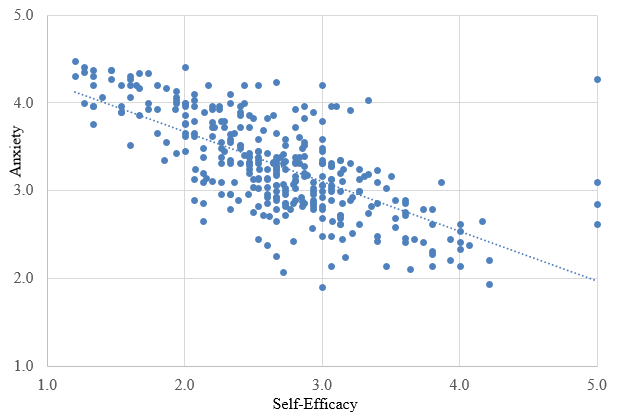
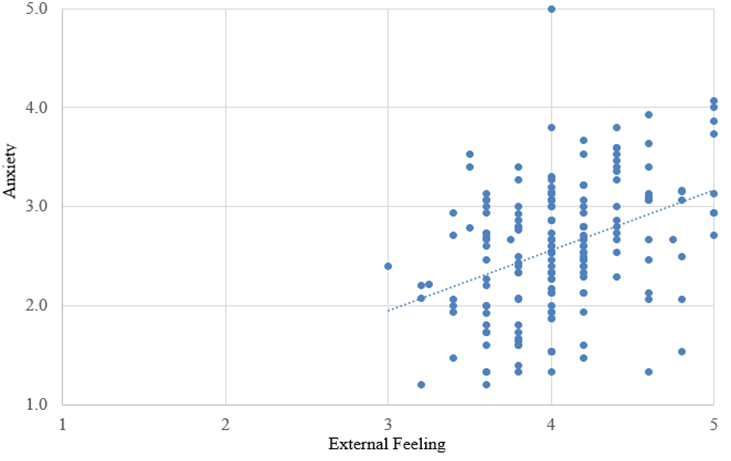
The correlation analysis provided further support for the study’s primary hypotheses. As shown in Table 7, there was a strong and statistically significant negative correlation between self-efficacy and math anxiety (r = -0.666, p < 0.01), affirming that students with higher self-efficacy tend to experience lower levels of math anxiety. Additionally, a positive and statistically significant correlation was found between external attribution and math anxiety (r = 0.384, p < 0.01), indicating that students who attribute their performance to external factors such as luck or test difficulty are more likely to experience anxiety.
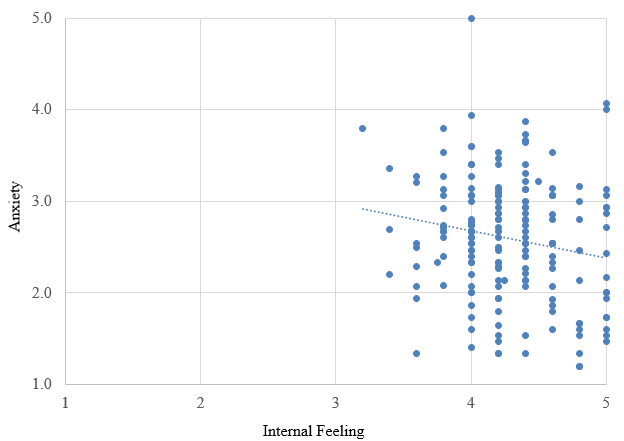
Visual representations of these relationships are presented in Figure 1-Figure 3, which illustrate the correlation between math anxiety and (1) self-efficacy, (2) internal attribution, and (3) external attribution. These figures underscore the strength of the inverse relationship between self-efficacy and anxiety, and the relatively weaker but still significant influence of attributional style.


To further investigate the predictive power of these variables, a multiple regression analysis was conducted. As detailed in Table 8, self-efficacy emerged as the strongest negative predictor of math anxiety (coefficient = -0.444, p < 0.001), followed by enjoyment (coefficient = -0.399, p = 0.009). Value and motivation were marginally significant at the 10% level. In contrast, variables such as confidence, teacher evaluation, internal beliefs, and external beliefs did not significantly predict anxiety levels. These findings confirm the robustness of self-efficacy as a protective factor against math anxiety, consistent with prior research (Bandura, 1997).
Finally, the mediation analysis sought to determine whether self-efficacy served as a mediating variable between attributional style and math anxiety. As presented in Table 9, internal locus of control significantly moderated the relationship between self-efficacy and anxiety (interaction coefficient = 0.047, p = 0.021). This indicates that for students with higher internal attribution, the protective effects of self-efficacy on anxiety are somewhat attenuated but still significant. In contrast, Table 10 shows that external locus of control did not significantly mediate this relationship (interaction coefficient = 0.154, p = 0.267), suggesting that self-efficacy’s impact on anxiety operates independently of students’ tendency to externalize responsibility.
The results of this study provide substantial evidence regarding the relationship between mathematics anxiety and various psychological factors, including gender, self-efficacy, attributional style, confidence, and enjoyment among Saudi high school students. One of the most prominent findings was the significant gender difference in reported levels of math anxiety. Although math anxiety was prevalent among all students, female students reported significantly higher levels of anxiety compared to males. This was especially evident in the extreme categories of response, where 20.7% of females strongly agreed with statements indicating high anxiety levels, in contrast to only 4.2% of males. These findings align with prior studies that consistently report elevated levels of math anxiety among females across different educational systems and cultures 35, 43.
Interestingly, while both genders had comparable proportions of students who were “undecided” about their math anxiety (around one-third of each group), the marked difference appeared at the high-anxiety end of the scale. These differences could suggest that while moderate anxiety may be universally experienced, extreme anxiety is more socially or emotionally salient for female students—potentially influenced by societal expectations or past experiences in math learning environments. Research by Spencer et al. 44 on stereotype threat suggests that females may internalize negative cultural messages about their math abilities, which could exacerbate anxiety in evaluative situations.
In terms of self-reported confidence in mathematics, males and females again displayed interesting contrasts. Although 22.6% of females reported feeling very confident, only 4.4% of males did the same. However, a larger percentage of males (22.5%) reported being moderately confident, compared to just 4% of females. This asymmetry points to possible gender differences in how confidence is interpreted or expressed, as also observed by Pajares and Graham 18. These authors argue that girls may set higher internal standards for competence, thus underreporting confidence despite strong ability or preparation.
Students’ valuation of mathematics presented another dimension where gender differences emerged. A higher percentage of females (21.7%) strongly disvalued mathematics compared to males (13.9%), even though both genders had high proportions of students who were undecided about math’s value. This suggests that female students may have more polarized attitudes toward mathematics—likely reflecting cumulative academic experiences, classroom culture, or perceived support. According to Wigfield and Eccles 45, students’ perceived value of a subject influences their engagement and persistence, suggesting that interventions targeting perceived relevance and utility of math could help reduce anxiety and disinterest, especially among females.
In contrast, the enjoyment of mathematics did not differ significantly between genders. Nearly equal proportions of males and females expressed strong dislike for math, and the statistical analysis confirmed the absence of meaningful gender-based differences. This result implies that dislike of mathematics may stem from broader instructional or systemic issues rather than gender-specific experiences. For example, Hamre and Pianta 46 emphasize that emotionally supportive teaching, rather than gender-targeted instruction, plays a critical role in fostering enjoyment and reducing academic fear.
Motivation, while more complex, revealed some nuanced patterns. Female students were slightly more likely to report being “strongly motivated” compared to males. However, the difference in mean scores was not statistically significant. This suggests that while female students may outwardly display high motivation, it does not necessarily protect them from anxiety—possibly due to lower self-efficacy or greater pressure to succeed. This aligns with findings by Wang et al. 10, who reported that even highly motivated students can experience high levels of academic anxiety if they lack self-confidence or face external pressures.
A significant difference was noted in how students evaluated their math teachers. Female students rated their teachers more positively than males, with 28.15% of females expressing strong approval compared to only 6.1% of males. Despite this, females still reported higher anxiety levels, suggesting that positive teacher perception alone may not be sufficient to mitigate anxiety. Teacher support is known to be crucial in shaping academic emotions 46, but its effects may depend on whether it is accompanied by strategies that directly enhance self-efficacy and reduce fear of failure.
One of the most important findings of the study was the strong negative correlation between self-efficacy and math anxiety. Students with higher levels of self-efficacy consistently reported lower anxiety, confirming Bandura’s 47 theoretical framework that self-efficacy serves as a protective factor against stress and avoidance behaviors. Moreover, a positive correlation was found between external attributional styles and math anxiety, consistent with Weiner’s attribution theory 32. Students who attributed their performance to external factors such as luck or task difficulty tended to report higher anxiety, reinforcing the idea that perceived lack of control exacerbates academic stress.
Interestingly, the results did not support gender differences in either self-efficacy or attributional style. Males and females had nearly identical scores in these areas, indicating that the observed gender differences in anxiety are not mediated by self-efficacy or attribution alone. This suggests the need to explore alternative pathways, possibly involving social identity, instructional practices, or emotional coping mechanisms, to fully understand the gender gap in math anxiety.
Regression analysis further validated the role of self-efficacy in reducing math anxiety. Of all the predictors included in the model—confidence, value, motivation, enjoyment, and attributional beliefs—self-efficacy had the most significant negative effect. Enjoyment also emerged as a statistically significant factor, reinforcing the importance of positive emotional engagement in learning mathematics. These findings align with prior research showing that students who enjoy math are more resilient in the face of academic challenges and less prone to anxiety 48.
Lastly, the mediation analysis provided deeper insights into how self-efficacy interacts with attributional beliefs. Internal locus of control significantly moderated the relationship between self-efficacy and anxiety, suggesting that students who believe in personal agency over outcomes may experience reduced protective effects of self-efficacy if they also internalize excessive responsibility for failure. In contrast, external attribution did not significantly mediate the relationship between self-efficacy and anxiety, indicating that external beliefs may operate independently rather than interactively.
To sum up, the study supports a multidimensional understanding of math anxiety. Self-efficacy stands out as a central variable, strongly and inversely related to anxiety, while enjoyment and teacher perceptions also contribute meaningfully. Gender differences in math anxiety are evident but are not explained by differences in self-efficacy or attribution alone. These findings suggest that interventions aimed at reducing math anxiety should focus on building students’ confidence through mastery experiences, enhancing enjoyment through supportive instruction, and addressing broader cultural and gender-related influences on students’ academic self-concept.
Despite the foundational insights into the relationships among math anxiety, self-efficacy, and attributional style among Saudi high school students, provided in this research, several limitations must be acknowledged. First, the cross-sectional and correlational design limits causal inference. While significant associations were found, the study cannot determine whether self-efficacy and attribution directly cause math anxiety or mediate it through cognitive or motivational processes. Future longitudinal or experimental studies incorporating standardized math performance data are necessary to clarify directionality and causality. Second, the study relies solely on self-report measures, which may be subject to biases such as social desirability or inaccurate self-assessment. Incorporating teacher and parent evaluations or observational data through mixed methods in future studies could enhance the reliability and validity of findings. Additionally, the absence of baseline national data limits the contextualization of math anxiety prevalence in Saudi Arabia. The study also focused on global constructs without disaggregating math topics (e.g., algebra, geometry), potentially overlooking domain-specific patterns. Lastly, this research was confined to high school students; examining younger cohorts would determine whether these relationships hold across developmental stages and whether cultural or gender-specific factors influence them.
This study offers critical insights into the complex interplay between math anxiety, self-efficacy, and attributional styles among Saudi high school students. The findings confirm that math anxiety is widespread, particularly among female students, and is significantly inversely related to self-efficacy. Enjoyment and motivation also emerged as key predictors, while external attribution was positively associated with higher anxiety levels. However, gender differences in math anxiety could not be directly attributed to differences in self-efficacy or attribution alone, suggesting the influence of other sociocultural or instructional factors. The results support the theoretical frameworks of Bandura and Weiner, emphasizing the role of internal beliefs and control perceptions in academic emotion regulation. Furthermore, the regression and mediation analyses underscore the protective effect of self-efficacy and reveal that internal attributions can interact with efficacy beliefs to shape anxiety responses. Given these findings, educational interventions should focus on enhancing students' self-efficacy, creating emotionally supportive classroom environments, and addressing potential gender-based barriers. Future research should expand to younger populations and integrate mixed method approaches to deepen understanding and foster practical, culturally relevant strategies to reduce math anxiety and support academic resilience in mathematics across diverse student groups.
Conflict of Interest: No potential conflict of interest was reported by the author.
Data Availability Statement: The data that support the findings of this study are available from the corresponding author, [Manal Yamani, PhD.], upon reasonable request.
Consent to participate: Upon receiving the Howard University Institutional Review Board (IRB) permit, the student researcher (Manal Yamani) contacted seven high schools in Riyadh, Saudi Arabia, and asked for their participation in this study. Furthermore, consents were obtained from the participants’ parents to maintain the ethical standards within this study.
| [1] | C. F. Weems et al., “Test Anxiety Prevention and Intervention Programs in Schools: Program Development and Rationale,” School Ment. Health, vol. 2, no. 2, pp. 62–71, Jun. 2010. | ||
| In article | |||
| [2] | F. C. Richardson and R. M. Suinn, “The mathematics anxiety rating scale: psychometric data.,” J. Couns. Psychol., vol. 19, no. 6, p. 551, 1972. | ||
| In article | |||
| [3] | M. H. Ashcraft, “Math Anxiety: Personal, Educational, and Cognitive Consequences,” Curr. Dir. Psychol. Sci., vol. 11, no. 5, pp. 181–185, Oct. 2002. | ||
| In article | |||
| [4] | N. E. Betz, “Prevalence, distribution, and correlates of math anxiety in college students.,” J. Couns. Psychol., vol. 25, no. 5, p. 441, 1978. | ||
| In article | |||
| [5] | S. S. Stodolsky, “Telling Math: Origins of Math Aversion and Anxiety,” Educ. Psychol., vol. 20, no. 3, pp. 125–133, Jun. 1985. | ||
| In article | |||
| [6] | R. P. Walsh, R. O. Engbretson, and B. A. O’Brien, “Anxiety and test-taking behavior.,” J. Couns. Psychol., vol. 15, no. 6, p. 572, 1968. | ||
| In article | |||
| [7] | S. B. Sarason and G. Mandler, “Some correlates of test anxiety.,” J. Abnorm. Soc. Psychol., vol. 47, no. 4, p. 810, 1952. | ||
| In article | |||
| [8] | E. Geist, “The anti-anxiety curriculum: Combating math anxiety in the classroom.,” J. Instr. Psychol., vol. 37, no. 1, 2010, Accessed: Jul. 08, 2025. [Online]. Available: https:// www.andrews.edu/ ceis/ gpc/ faculty-research/ montagano-research/the-anti-anxiety-cur.pdf. | ||
| In article | |||
| [9] | A. Mattarella-Micke, J. Mateo, M. N. Kozak, K. Foster, and S. L. Beilock, “Choke or thrive?” The relation between salivary cortisol and math performance depends on individual differences in working memory and math-anxiety.,” Emotion, vol. 11, no. 4, p. 1000, 2011. | ||
| In article | |||
| [10] | W. Wang et al., “Advancing Fine-Grained Visual Understanding with Multi-Scale Alignment in Multi-Modal Models,” Nov. 14, 2024, arXiv: arXiv: 2411 09691. | ||
| In article | |||
| [11] | A. M. Legg and L. Locker Jr, “Math performance and its relationship to math anxiety and metacognition.,” North Am. J. Psychol., vol. 11, no. 3, 2009, Accessed: Jul. 08, 2025. [Online]. Available: https:// www.researchgate.net /profile/Angela-Legg/ publication/264622690_Math_ performance_and_its_relationship_to_ math_anxiety_and_ metacognition/ links/ 55194b500cf21b5da3b828e2/Math-performance-and-its-relationship-to-math- anxiety-and-metacognition. pdf. | ||
| In article | |||
| [12] | K. Trezise and R. A. Reeve, “Cognition-emotion interactions: patterns of change and implications for math problem solving,” Front. Psychol., vol. 5, p. 840, 2014. | ||
| In article | |||
| [13] | E. A. Maloney and S. L. Beilock, “Math anxiety: Who has it, why it develops, and how to guard against it,” Trends Cogn. Sci., vol. 16, no. 8, pp. 404–406, 2012. | ||
| In article | |||
| [14] | G. Ramirez, E. A. Gunderson, S. C. Levine, and S. L. Beilock, “Math Anxiety, Working Memory, and Math Achievement in Early Elementary School,” J. Cogn. Dev., vol. 14, no. 2, pp. 187–202, Apr. 2013. | ||
| In article | |||
| [15] | K. Gogol, M. Brunner, F. Preckel, T. Goetz, and R. Martin, “Developmental dynamics of general and school-subject-specific components of academic self-concept, academic interest, and academic anxiety,” Front. Psychol., vol. 7, p. 356, 2016. | ||
| In article | |||
| [16] | C. Lobman, “‘I Feel Nervous . . . Very Nervous’ Addressing Test Anxiety in Inner City Schools Through Play and Performance,” Urban Educ., vol. 49, no. 3, pp. 329–359, Apr. 2014. | ||
| In article | |||
| [17] | A. Bandura, “Social foundations of thought and action,” Englewood Cliffs NJ, vol. 1986, no. 23–28, p. 2, 1986. | ||
| In article | |||
| [18] | F. Pajares and L. Graham, “Self-efficacy, motivation constructs, and mathematics performance of entering middle school students,” Contemp. Educ. Psychol., vol. 24, no. 2, pp. 124–139, 1999. | ||
| In article | |||
| [19] | T. Williams and K. Williams, “Self-efficacy and performance in mathematics: Reciprocal determinism in 33 nations,” J. Educ. Psychol., vol. 102, no. 2, pp. 453–466, 2010. | ||
| In article | |||
| [20] | T. D. Wilson, M. Damiani, and N. Shelton, “Chapter 5 - Improving the Academic Performance of College Students with Brief Attributional Interventions,” in Improving Academic Achievement, J. Aronson, Ed., in Educational Psychology., San Diego: Academic Press, 2002, pp. 89–108. | ||
| In article | |||
| [21] | S. Graham, B. Weiner. Motivation, past, present and future. Available at: https:// www.academia.edu/ download/ 39592424/ Motivation_-_Past__ Present_and_Future.pdf. | ||
| In article | |||
| [22] | R. E. Smith, J. C. Ascough, R. F. Ettinger, and D. A. Nelson, “Humor, anxiety, and task performance.,” J. Pers. Soc. Psychol., vol. 19, no. 2, p. 243, 1971. | ||
| In article | |||
| [23] | A. J. Martin, J. Anderson, J. Bobis, J. Way, and R. Vellar, “Switching on and switching off in mathematics: An ecological study of future intent and disengagement among middle school students.,” J. Educ. Psychol., vol. 104, no. 1, p. 1, 2012. | ||
| In article | |||
| [24] | S. J. Salend, “Addressing Test Anxiety,” Teach. Except. Child., vol. 44, no. 2, pp. 58–68, Nov. 2011. | ||
| In article | |||
| [25] | B. Capili, “Cross-sectional studies,” AJN Am. J. Nurs., vol. 121, no. 10, pp. 59–62, 2021. | ||
| In article | |||
| [26] | K. A. Levin, “Study design III: Cross-sectional studies,” Evid. Based Dent., vol. 7, no. 1, pp. 24–25, 2006. | ||
| In article | |||
| [27] | L. Cohen, L. Manion, and K. Morrison, “Surveys, longitudinal, cross-sectional and trend studies,” in Research methods in education, Routledge, 2017, pp. 334–360. Accessed: Jul. 08, 2025. [Online]. Available: https:// www.taylorfrancis.com/ chapters/ edit/10.4324/9781315456539-17/surveys-longitudinal -cross-sectional-trend-studies- louis-cohen-lawrence-manion -keith-morrison. | ||
| In article | |||
| [28] | D. Bar-Tal, A. Raviv, A. Raviv, and Y. Bar-Tal, “Consistency of pupils’ attributions regarding success and failure.,” J. Educ. Psychol., vol. 74, no. 1, p. 104, 1982. | ||
| In article | |||
| [29] | F. Pajares and J. Kranzler, “Self-efficacy beliefs and general mental ability in mathematical problem-solving,” Contemp. Educ. Psychol., vol. 20, no. 4, pp. 426–443, 1995. | ||
| In article | |||
| [30] | E. Fennema and J. A. Sherman, “Fennema-Sherman mathematics attitudes scales: Instruments designed to measure attitudes toward the learning of mathematics by females and males,” J. Res. Math. Educ., vol. 7, no. 5, pp. 324–326, 1976. | ||
| In article | |||
| [31] | M. Takunyacı, E. Masal, M. Masal, Ö. Ergene, and K. Erden, “Fennema-Sherman Mathematics Attitude Scales: Adaptaition to Turkish Culture,” Sak. Univ. J. Educ., vol. 9, no. 1, pp. 208–223, 2019. | ||
| In article | |||
| [32] | B. Weiner, “An attributional theory of achievement motivation and emotion.,” Psychol. Rev., vol. 92, no. 4, p. 548, 1985. | ||
| In article | |||
| [33] | G. Hackett, “Role of mathematics self-efficacy in the choice of math-related majors of college women and men: A path analysis.,” J. Couns. Psychol., vol. 32, no. 1, p. 47, 1985. | ||
| In article | |||
| [34] | E. L. Usher and F. Pajares, “Sources of self-efficacy in mathematics: A validation study,” Contemp. Educ. Psychol., vol. 34, no. 1, pp. 89–101, 2009. | ||
| In article | |||
| [35] | N. M. Else-Quest, J. S. Hyde, and M. C. Linn, “Cross-national patterns of gender differences in mathematics: a meta-analysis.,” Psychol. Bull., vol. 136, no. 1, p. 103, 2010. | ||
| In article | |||
| [36] | A. D. Liem, S. Lau, and Y. Nie, “The role of self-efficacy, task value, and achievement goals in predicting learning strategies, task disengagement, peer relationship, and achievement outcome,” Contemp. Educ. Psychol., vol. 33, no. 4, pp. 486–512, 2008. | ||
| In article | |||
| [37] | A. F. Hayes, “Mediation, moderation, and conditional process analysis,” Introd. Mediat. Moderat. Cond. Process Anal. Regres. -Based Approach, vol. 1, no. 6, pp. 12–20, 2013. | ||
| In article | |||
| [38] | R. Pekrun, “The Control-Value Theory of Achievement Emotions: Assumptions, Corollaries, and Implications for Educational Research and Practice,” Educ. Psychol. Rev., vol. 18, no. 4, pp. 315–341, Nov. 2006. | ||
| In article | |||
| [39] | J. W. Creswell and J. D. Creswell, Research design: Qualitative, quantitative, and mixed methods approach. Sage publications, 2017. | ||
| In article | |||
| [40] | F. Faul, E. Erdfelder, A.-G. Lang, and A. Buchner, “G*Power 3: A flexible statistical power analysis program for the social, behavioral, and biomedical sciences,” Behav. Res. Methods, vol. 39, no. 2, pp. 175–191, May 2007. | ||
| In article | |||
| [41] | A. Field, Discovering statistics using IBM SPSS statistics. Sage publications limited, 2024. Accessed: Jul. 08, 2025. [Online]. Available: https:// books.google.com/ books? hl=en& lr=&id= 83L2EAAAQBAJ&oi=fnd&pg= PT8&dq=Field,+A.+(2024).+Discovering+ statistics+using+IBM+ SPSS+statistics.+Sage+publications+ limited.&ots=UbNSxrHPAO&sig=ejILh_DF_Jv6YZ1dybBA5r234Qg. | ||
| In article | |||
| [42] | R. M. O’brien, “A Caution Regarding Rules of Thumb for Variance Inflation Factors,” Qual. Quant., vol. 41, no. 5, pp. 673–690, Sep. 2007. | ||
| In article | |||
| [43] | A. Devine, K. Fawcett, D. Szűcs, and A. Dowker, “Gender differences in mathematics anxiety and the relation to mathematics performance while controlling for test anxiety,” Behav. Brain Funct., vol. 8, no. 1, Dec. 2012. | ||
| In article | |||
| [44] | S. J. Spencer, C. M. Steele, and D. M. Quinn, “Stereotype threat and women’s math performance,” J. Exp. Soc. Psychol., vol. 35, no. 1, pp. 4–28, 1999. | ||
| In article | |||
| [45] | A. Wigfield and J. S. Eccles, “Expectancy–Value Theory of Achievement Motivation,” Contemp. Educ. Psychol., vol. 25, no. 1, pp. 68–81, Jan. 2000. | ||
| In article | |||
| [46] | B. K. Hamre and R. C. Pianta, “Student-teacher relationships.,” 2006, Accessed: Jul. 08, 2025. [Online]. Available: https:// psycnet.apa.org/ record/ 2006-03571-005. | ||
| In article | |||
| [47] | A. Bandura, Self-efficacy: The exercise of control, vol. 11. Freeman, 1997. | ||
| In article | |||
| [48] | R. Trigueros Ramos, J. M. Aguilar Parra, I. M. Mercader Rubio, J. M. Fernández Campoy, and J. J. Carrión Martínez, “Set the Controls for the Heart of the Maths. The Protective Factor of Resilience in the Face of Mathematical Anxiety, 2020, Accessed: Jul. 08, 2025. [Online]. Available: https:// repositorio.ual.es/ handle/ 10835/8474. | ||
| In article | |||
Published with license by Science and Education Publishing, Copyright © 2025 Manal Alyamni
 This work is licensed under a Creative Commons Attribution 4.0 International License. To view a copy of this license, visit
http://creativecommons.org/licenses/by/4.0/
This work is licensed under a Creative Commons Attribution 4.0 International License. To view a copy of this license, visit
http://creativecommons.org/licenses/by/4.0/
| [1] | C. F. Weems et al., “Test Anxiety Prevention and Intervention Programs in Schools: Program Development and Rationale,” School Ment. Health, vol. 2, no. 2, pp. 62–71, Jun. 2010. | ||
| In article | |||
| [2] | F. C. Richardson and R. M. Suinn, “The mathematics anxiety rating scale: psychometric data.,” J. Couns. Psychol., vol. 19, no. 6, p. 551, 1972. | ||
| In article | |||
| [3] | M. H. Ashcraft, “Math Anxiety: Personal, Educational, and Cognitive Consequences,” Curr. Dir. Psychol. Sci., vol. 11, no. 5, pp. 181–185, Oct. 2002. | ||
| In article | |||
| [4] | N. E. Betz, “Prevalence, distribution, and correlates of math anxiety in college students.,” J. Couns. Psychol., vol. 25, no. 5, p. 441, 1978. | ||
| In article | |||
| [5] | S. S. Stodolsky, “Telling Math: Origins of Math Aversion and Anxiety,” Educ. Psychol., vol. 20, no. 3, pp. 125–133, Jun. 1985. | ||
| In article | |||
| [6] | R. P. Walsh, R. O. Engbretson, and B. A. O’Brien, “Anxiety and test-taking behavior.,” J. Couns. Psychol., vol. 15, no. 6, p. 572, 1968. | ||
| In article | |||
| [7] | S. B. Sarason and G. Mandler, “Some correlates of test anxiety.,” J. Abnorm. Soc. Psychol., vol. 47, no. 4, p. 810, 1952. | ||
| In article | |||
| [8] | E. Geist, “The anti-anxiety curriculum: Combating math anxiety in the classroom.,” J. Instr. Psychol., vol. 37, no. 1, 2010, Accessed: Jul. 08, 2025. [Online]. Available: https:// www.andrews.edu/ ceis/ gpc/ faculty-research/ montagano-research/the-anti-anxiety-cur.pdf. | ||
| In article | |||
| [9] | A. Mattarella-Micke, J. Mateo, M. N. Kozak, K. Foster, and S. L. Beilock, “Choke or thrive?” The relation between salivary cortisol and math performance depends on individual differences in working memory and math-anxiety.,” Emotion, vol. 11, no. 4, p. 1000, 2011. | ||
| In article | |||
| [10] | W. Wang et al., “Advancing Fine-Grained Visual Understanding with Multi-Scale Alignment in Multi-Modal Models,” Nov. 14, 2024, arXiv: arXiv: 2411 09691. | ||
| In article | |||
| [11] | A. M. Legg and L. Locker Jr, “Math performance and its relationship to math anxiety and metacognition.,” North Am. J. Psychol., vol. 11, no. 3, 2009, Accessed: Jul. 08, 2025. [Online]. Available: https:// www.researchgate.net /profile/Angela-Legg/ publication/264622690_Math_ performance_and_its_relationship_to_ math_anxiety_and_ metacognition/ links/ 55194b500cf21b5da3b828e2/Math-performance-and-its-relationship-to-math- anxiety-and-metacognition. pdf. | ||
| In article | |||
| [12] | K. Trezise and R. A. Reeve, “Cognition-emotion interactions: patterns of change and implications for math problem solving,” Front. Psychol., vol. 5, p. 840, 2014. | ||
| In article | |||
| [13] | E. A. Maloney and S. L. Beilock, “Math anxiety: Who has it, why it develops, and how to guard against it,” Trends Cogn. Sci., vol. 16, no. 8, pp. 404–406, 2012. | ||
| In article | |||
| [14] | G. Ramirez, E. A. Gunderson, S. C. Levine, and S. L. Beilock, “Math Anxiety, Working Memory, and Math Achievement in Early Elementary School,” J. Cogn. Dev., vol. 14, no. 2, pp. 187–202, Apr. 2013. | ||
| In article | |||
| [15] | K. Gogol, M. Brunner, F. Preckel, T. Goetz, and R. Martin, “Developmental dynamics of general and school-subject-specific components of academic self-concept, academic interest, and academic anxiety,” Front. Psychol., vol. 7, p. 356, 2016. | ||
| In article | |||
| [16] | C. Lobman, “‘I Feel Nervous . . . Very Nervous’ Addressing Test Anxiety in Inner City Schools Through Play and Performance,” Urban Educ., vol. 49, no. 3, pp. 329–359, Apr. 2014. | ||
| In article | |||
| [17] | A. Bandura, “Social foundations of thought and action,” Englewood Cliffs NJ, vol. 1986, no. 23–28, p. 2, 1986. | ||
| In article | |||
| [18] | F. Pajares and L. Graham, “Self-efficacy, motivation constructs, and mathematics performance of entering middle school students,” Contemp. Educ. Psychol., vol. 24, no. 2, pp. 124–139, 1999. | ||
| In article | |||
| [19] | T. Williams and K. Williams, “Self-efficacy and performance in mathematics: Reciprocal determinism in 33 nations,” J. Educ. Psychol., vol. 102, no. 2, pp. 453–466, 2010. | ||
| In article | |||
| [20] | T. D. Wilson, M. Damiani, and N. Shelton, “Chapter 5 - Improving the Academic Performance of College Students with Brief Attributional Interventions,” in Improving Academic Achievement, J. Aronson, Ed., in Educational Psychology., San Diego: Academic Press, 2002, pp. 89–108. | ||
| In article | |||
| [21] | S. Graham, B. Weiner. Motivation, past, present and future. Available at: https:// www.academia.edu/ download/ 39592424/ Motivation_-_Past__ Present_and_Future.pdf. | ||
| In article | |||
| [22] | R. E. Smith, J. C. Ascough, R. F. Ettinger, and D. A. Nelson, “Humor, anxiety, and task performance.,” J. Pers. Soc. Psychol., vol. 19, no. 2, p. 243, 1971. | ||
| In article | |||
| [23] | A. J. Martin, J. Anderson, J. Bobis, J. Way, and R. Vellar, “Switching on and switching off in mathematics: An ecological study of future intent and disengagement among middle school students.,” J. Educ. Psychol., vol. 104, no. 1, p. 1, 2012. | ||
| In article | |||
| [24] | S. J. Salend, “Addressing Test Anxiety,” Teach. Except. Child., vol. 44, no. 2, pp. 58–68, Nov. 2011. | ||
| In article | |||
| [25] | B. Capili, “Cross-sectional studies,” AJN Am. J. Nurs., vol. 121, no. 10, pp. 59–62, 2021. | ||
| In article | |||
| [26] | K. A. Levin, “Study design III: Cross-sectional studies,” Evid. Based Dent., vol. 7, no. 1, pp. 24–25, 2006. | ||
| In article | |||
| [27] | L. Cohen, L. Manion, and K. Morrison, “Surveys, longitudinal, cross-sectional and trend studies,” in Research methods in education, Routledge, 2017, pp. 334–360. Accessed: Jul. 08, 2025. [Online]. Available: https:// www.taylorfrancis.com/ chapters/ edit/10.4324/9781315456539-17/surveys-longitudinal -cross-sectional-trend-studies- louis-cohen-lawrence-manion -keith-morrison. | ||
| In article | |||
| [28] | D. Bar-Tal, A. Raviv, A. Raviv, and Y. Bar-Tal, “Consistency of pupils’ attributions regarding success and failure.,” J. Educ. Psychol., vol. 74, no. 1, p. 104, 1982. | ||
| In article | |||
| [29] | F. Pajares and J. Kranzler, “Self-efficacy beliefs and general mental ability in mathematical problem-solving,” Contemp. Educ. Psychol., vol. 20, no. 4, pp. 426–443, 1995. | ||
| In article | |||
| [30] | E. Fennema and J. A. Sherman, “Fennema-Sherman mathematics attitudes scales: Instruments designed to measure attitudes toward the learning of mathematics by females and males,” J. Res. Math. Educ., vol. 7, no. 5, pp. 324–326, 1976. | ||
| In article | |||
| [31] | M. Takunyacı, E. Masal, M. Masal, Ö. Ergene, and K. Erden, “Fennema-Sherman Mathematics Attitude Scales: Adaptaition to Turkish Culture,” Sak. Univ. J. Educ., vol. 9, no. 1, pp. 208–223, 2019. | ||
| In article | |||
| [32] | B. Weiner, “An attributional theory of achievement motivation and emotion.,” Psychol. Rev., vol. 92, no. 4, p. 548, 1985. | ||
| In article | |||
| [33] | G. Hackett, “Role of mathematics self-efficacy in the choice of math-related majors of college women and men: A path analysis.,” J. Couns. Psychol., vol. 32, no. 1, p. 47, 1985. | ||
| In article | |||
| [34] | E. L. Usher and F. Pajares, “Sources of self-efficacy in mathematics: A validation study,” Contemp. Educ. Psychol., vol. 34, no. 1, pp. 89–101, 2009. | ||
| In article | |||
| [35] | N. M. Else-Quest, J. S. Hyde, and M. C. Linn, “Cross-national patterns of gender differences in mathematics: a meta-analysis.,” Psychol. Bull., vol. 136, no. 1, p. 103, 2010. | ||
| In article | |||
| [36] | A. D. Liem, S. Lau, and Y. Nie, “The role of self-efficacy, task value, and achievement goals in predicting learning strategies, task disengagement, peer relationship, and achievement outcome,” Contemp. Educ. Psychol., vol. 33, no. 4, pp. 486–512, 2008. | ||
| In article | |||
| [37] | A. F. Hayes, “Mediation, moderation, and conditional process analysis,” Introd. Mediat. Moderat. Cond. Process Anal. Regres. -Based Approach, vol. 1, no. 6, pp. 12–20, 2013. | ||
| In article | |||
| [38] | R. Pekrun, “The Control-Value Theory of Achievement Emotions: Assumptions, Corollaries, and Implications for Educational Research and Practice,” Educ. Psychol. Rev., vol. 18, no. 4, pp. 315–341, Nov. 2006. | ||
| In article | |||
| [39] | J. W. Creswell and J. D. Creswell, Research design: Qualitative, quantitative, and mixed methods approach. Sage publications, 2017. | ||
| In article | |||
| [40] | F. Faul, E. Erdfelder, A.-G. Lang, and A. Buchner, “G*Power 3: A flexible statistical power analysis program for the social, behavioral, and biomedical sciences,” Behav. Res. Methods, vol. 39, no. 2, pp. 175–191, May 2007. | ||
| In article | |||
| [41] | A. Field, Discovering statistics using IBM SPSS statistics. Sage publications limited, 2024. Accessed: Jul. 08, 2025. [Online]. Available: https:// books.google.com/ books? hl=en& lr=&id= 83L2EAAAQBAJ&oi=fnd&pg= PT8&dq=Field,+A.+(2024).+Discovering+ statistics+using+IBM+ SPSS+statistics.+Sage+publications+ limited.&ots=UbNSxrHPAO&sig=ejILh_DF_Jv6YZ1dybBA5r234Qg. | ||
| In article | |||
| [42] | R. M. O’brien, “A Caution Regarding Rules of Thumb for Variance Inflation Factors,” Qual. Quant., vol. 41, no. 5, pp. 673–690, Sep. 2007. | ||
| In article | |||
| [43] | A. Devine, K. Fawcett, D. Szűcs, and A. Dowker, “Gender differences in mathematics anxiety and the relation to mathematics performance while controlling for test anxiety,” Behav. Brain Funct., vol. 8, no. 1, Dec. 2012. | ||
| In article | |||
| [44] | S. J. Spencer, C. M. Steele, and D. M. Quinn, “Stereotype threat and women’s math performance,” J. Exp. Soc. Psychol., vol. 35, no. 1, pp. 4–28, 1999. | ||
| In article | |||
| [45] | A. Wigfield and J. S. Eccles, “Expectancy–Value Theory of Achievement Motivation,” Contemp. Educ. Psychol., vol. 25, no. 1, pp. 68–81, Jan. 2000. | ||
| In article | |||
| [46] | B. K. Hamre and R. C. Pianta, “Student-teacher relationships.,” 2006, Accessed: Jul. 08, 2025. [Online]. Available: https:// psycnet.apa.org/ record/ 2006-03571-005. | ||
| In article | |||
| [47] | A. Bandura, Self-efficacy: The exercise of control, vol. 11. Freeman, 1997. | ||
| In article | |||
| [48] | R. Trigueros Ramos, J. M. Aguilar Parra, I. M. Mercader Rubio, J. M. Fernández Campoy, and J. J. Carrión Martínez, “Set the Controls for the Heart of the Maths. The Protective Factor of Resilience in the Face of Mathematical Anxiety, 2020, Accessed: Jul. 08, 2025. [Online]. Available: https:// repositorio.ual.es/ handle/ 10835/8474. | ||
| In article | |||