Background: Central Line-Associated Bloodstream Infection (CLABSI) takes place when bloodstream is invaded by bacteria or pathogens through a central venous catheter (CVC). Serious complications can result from CLABSI as sepsis, endocarditis, thrombophlebitis, prolonged hospitalization, increased mortality, and antibiotic resistance. Aim: The aim of this study was to determine the impact of implementing an educational program about central venous catheters infection prevention on knowledge and practice of nurses, and infection rate at surgical ward. Method: study were performed on a purposive sample of “50” nurses working at surgical ward of gastrointestinal surgical center (GSIC), city of Mansoura, Dakahlia governorate, Egypt, in a form of a Quasi-experimental research design. Data were collected through three tools; structured Interviewing Questionnaire (Demographic questionnaire and nurses’ knowledge questionnaire sheet regarding prevention of CLABSI), Observational checklists, Calculation of infection rate. Results: Regarding total nurses’ knowledge pre and post intervention, there were statistically significant differences, also pre and at follow up (P=0.025*, P=0.005* respectively). Total practice displayed highly statistically significant differences between pre and post intervention as well as pre intervention and at follow up phase with (P<0.001**). As well as, infection rate was 58% in the pre intervention phase which decreased in the post intervention and follow up phase (44% and 36% respectively).Conclusion: The study demonstrated that implementing an educational program significantly enhanced nurses' knowledge and practices related to CLABSI prevention. Recommendations: Periodical and continuous evaluation of nurses’ performance should be done to improve the quality of their performance.
A central line or central venous access is also known as a central Venous Catheter (CVC) that is an indwelling device inserted into major central veins, its terminal lumen located in the right atrium, inferior vena cava, or superior vena cava. 1.
The three primary sites for CVC placement are the internal jugular, femoral, and subclavian veins which are preferred for temporary CVC insertion. Moreover, for peripherally inserted central catheters (PICCs), the basilic and brachial veins can be used. Among these, the internal jugular vein (IJ) is often carefully selected due to its reliable anatomy, ease of access, lower rates of complication, and the facility of using ultrasound guidance. The right IJ is the most direct route to the superior vena cava (SVC) and right atrium as it is wider and more superficial, making it easier to cannulate 2.
In case of critically ill patients, the femoral vein is sometimes favored, mainly because the groin area is usually free of other medical equipment. While patients with femoral CVCs can move their limbs more freely, the site is linked to a higher incidence of thrombotic complications and catheter-associated infections 3, 4.
Regarding the possible serious adverse effects on patient health, complications associated with CVCs are a significant concern in clinical practice which can occur during insertion, through the catheter's use, or after removal. One of the most critical complications is infection of CVCs. CLABSI can cause sepsis, extended hospital stays, and even death if not promptly managed. Infections may result from poor sterile technique during insertion or the catheter becoming colonized by bacteria over time, making them a significant cause of hospital-acquired infections (HAIs) 5.
Definition of CLABSI is an infection arising in patients with a CVC within 48 hours of infection onset, and not associated with another source as stated by the Centers for Disease Control and Prevention (CDC) 6. The incidence of CLABSI in U.S. hospitals has decreased by over 50% since 2008, with a rate of 0.2–0.5 cases per 1,000 central line days in recent years 7. A multi-center study in Egypt found CLABSI rates ranging from 0.8 to 4.3 per 1,000 central line days 8.
Preventing CLABSI is crucial for improving patient outcomes, lowering healthcare costs, and ensuring patient safety. Evidence-based practices, including sterile techniques during insertion, maintenance of central line, proper hand hygiene, and bundled interventions, have been shown to successfully decrease the occurrence of these infections 9.
The implementation of CLABSI bundles has been shown to decrease the occurrence of CLABSI, improving patient outcomes and reducing hospital-acquired complications. The two components of this bundle are insertion and maintenance. Four parts complete the insertion bundle: optimal site selection, hand hygiene, skin preparation by alcohol-based chlorhexidine, and maximum barrier precautions. Whereas The maintenance bundle (HEART):Hand hygiene, Ensure appropriate dressing, Aseptic technique maintained during accessing, changing needless connector and during dressing (scrub the hub for 15 sec), Remove the line when no longer needed, and tubing and devices changed on time 10. Educational programs focused on CLABSI prevention is critical in enhancing healthcare providers' awareness and knowledge about the risks related to central line use and the importance of practices to control infection.
These programs help nurses and other healthcare professionals stay up-to-date with the latest guidelines, evidence-based interventions, and technological advancements aimed at reducing the incidence of CLABSI. When nurses are equipped with the necessary tools and knowledge, they are more likely to implement preventive measures, such as adhering to proper hand hygiene, using maximal sterile barriers during insertion, and regularly assessing the necessity of central lines 11.
1.1. Significant of the StudyNurses have an important role in prevention of CLABSI, they must have the ability to prevent central line complication and provide high quality of care to patient. Using bundles is predictable to simplify central line care, decrease infection rates, improve health and reduce length of hospital stay so, the health care cost decline 12. The Centers for Disease Control and Prevention (CDC) estimates that every year, over 1.7 million hospitalized patients have health-related infections (HAIs), and over 98,000 of them pass away. CLABSI is considered as one of HAIs 13.
1.2. Study AimThe aim of this study was to determine the impact of implementing an educational program about central venous catheters infection prevention on knowledge and practice of nursing staff, and infection rate at surgical ward.
1.3. Research Hypothesis1. Implementation of an educational program would enhance level of nurses’ knowledge about the guidelines for preventing CLABSI.
2. The practice of nurses regarding prevention of CLABSI post the educational program would be better than pre-educational program.
3. CLABSI rate would be decreased after application of the educational program.
A quasi-experimental research design was used to achieve the aim of the present study and to evaluate the effect of an intervention on its participants furthermore, it is practical, practical, and it is more adjustable real setting.
2.2. SettingThe study was directed at surgical ward of gastrointestinal surgical center (GSIC), Mansoura city, Dakahlia governorate, Egypt.
2.3. SampleA purposive sample of 50 nurses working in the previous mentioned setting included in the study. Inclusion criteria involved nurses handled patients with central line, aged less than 60 years, and willing to participate in the study. Whereas exclusion criteria; nurses who were on vacation or already attend formal teaching module about prevention of CLABSI.
2.4. Tools of Data CollectionThree tools were used in this study:
Tool I: Structured Interviewing Questionnaire: It involved two parts: Part one: Demographic data: This tool was to assess demographic data of nurses: It included questionnaire about nurses’ age, gender, education level, years of experience, attending training courses associated with nursing care for central venous catheter. Part two: Nurses' knowledge questionnaire sheet regarding prevention of CLABSI: This tool was developed by the researcher based on relevant old and recent literatures 14, 15 to assess nurse's knowledge related to prevention of CLABSI. Items of this tool were also related to central line insertion sites and uses, definition of CLABSI and its pathogenesis, central line insertion and maintenance bundles, and strategies that help preventing infection.
Scoring system: Questionnaire of this tool divided into two sections: section 1 contained 18 multi choices questions and section 2 contained 10 true or false questions. For multi choices questions, each question had 4 choices, only one is correct. Each answer took a score of (1) for correct answer and (0) for wrong one.
The total score, prolonged from 0 to 28, was the sum of the responses for the 28 questions and the total score was classified as: All scores were transformed into score % as follow: Poor level of knowledge < 50%, Moderate knowledge %50 <75% and good knowledge level ≥ 75 16.
Tool II: Observational Checklists: Observational checklists that used to assess the nurses' practice toward preventing central-line associated bloodstream infection. This tool consisted of five parts: Part one: Hand Hygiene: It included 16 statements tested by the researcher to evaluate the compliance of nurses regarding hand hygiene and hand rub. This part was adapted from 17. Part two: Personal Protective Equipment (PPE) donning (putting on): Adopted from 18. It included 8 statements checked by the researcher to assess if the nurse is putting on PPE properly. Part three: Central line maintenance bundle: It included 6 statements checked by the researcher to assess if the nurses were following the maintenance bundle for decreasing CLABSI. This part was adopted from 19. Part four: Changing central venous catheter dressing: It includes 14 statements checked by the researcher for assessing nurse’s practice regarding changing central line different types of dressing 20. Part five: Personal Protective Equipment (PPE) doffing (putting off): It included 14 statements checked by the researcher to assess if the nurse was putting off PPE properly.
Scoring system: The total score of the nurses' practice enumerated to be 58 steps. The possible choice for each item is scored by Likert scales (not done=0, incomplete done=1 and done =2 degrees). The practice was considered satisfactory if the percent score was ≥75% and unsatisfactory if the percent score <75% 5.
Tool III: Calculation of infection rate: Assessing of CLABSI infection rate with the help of personal digital assistant (PDA) instrument and hospital record, the researcher got the number of blood stream infection cases and estimate rate of infection through the following equation:
 |
Diagnosis criteria for central line associated bloodstream infection that stated by Canadian Nosocomial Infection Surveillance Program (CNISP, 2007):
1. Recognized pathogen cultured from one or more than one blood cultures, different from infection at another site.
2. At least one of the subsequents, fever >38°C, chills, hypotension or signs of infection at insertion site of the catheter.
Pilot study:
The pilot study was carried on 10% of nurses (5) within the selected criteria to estimate the tool's applicability and relevance, the clarity of the study questionnaire and the expected time necessary to complete it. Subsequently, required modifications were implemented. The data obtained from the pilot study were analyzed and no radical modification was done in the assessment tools, so nurses shared in the pilot study were involved again in the actual study sample.
Validity:
Tool 2 (part 2, 3&4) were adopted, tool 1and tool 2 (part 1 &5) were adapted by the researcher. After the tool was established, it was revised and tested by a panel of experts in the field, and necessary modifications were done (two assistant professors from faculty of nursing and three assistant professors from faculty of medicine, Mansoura University, Egypt).
Reliability:
The reliability of knowledge assessment questionnaire and nurses practice checklists were projected using the Cronbach's Alpha test to be (α = 0.903& 0.897 respectively).
Data collection
Collection of data and implementation of the program were accomplished over a 9 months which started from beginning of December 2019 to the end of August 2020. The study was implemented by the following phases;
Phase 1: Preparatory phase:
This phase consist of development of the tools which used to collect data through reviewing relevant literature, books, articles, journals and internet search.
Phase 2: Exploratory phase:
Nurses were separated into small groups (10 groups, 5 nurses for each group) the aim and the nature of the study was explained and took their consents for participation. To collect data, four phases took place (assessment, planning, implementation and evaluation phase).
Assessment phase:
The researcher presented herself to the nurses and explained the goals of the study. The pre-test assessment was done for each of them to evaluate their demographic data, knowledge as well as practice about central venous catheters and how to prevent CLABSI.
Planning phase:
Based on results of pre-test and relevant literature reviewing, an educational program was developed depending on the definite needs assessment of nursing staff. The educational program covered the theoretical and practical skills regarding central venous catheters infection prevention. The booklet is written in a simple Arabic language.
Implementation phase:
Nurses were separated to small groups (5 nurses for each); the study program was implemented in six sessions.
The contents of the program: was delivered through: Theoretical contents: General information about CVC, its uses and insertion sites, and central line bundles. Introduced through two weeks (2 sessions /week for each group) nearly 20:30 minutes for each session. Practical contents: Strategies help preventing CLABSI as hand hygiene, PPE donning, changing dressing for central venous catheter, central venous catheter maintenance bundle and PPE doffing. Presented over two weeks (1 session /week for each group) nearly 30:45 minutes for each session.
Evaluation phase:
Evaluation for nurses was carried out in three times throughout the study time. The first evaluation (pre-test) was done at the assessment phase, the second (post-test) was done immediately post the implementation phase, and the third one (follow up) was done after six months from the second. The same tools for data collection were used in all these phases.
Statistical analysis
Statistical analysis was performed using SPSS for windows version 20.0 (SPSS, Chicago, IL). Study data were expressed in number and percentage. Chi-square test (or fisher’s exact test when applicable) was used to compare variables with categorical data. There are statistical tests used to compare the means of two groups to see significant differences if present. Correlation co-efficient test was used to test for correlations between two variables with constant data. The reliability (internal consistency) test for the questionnaires was calculated. Statistical significance was set at p<0.05.
Ethical considerations
An approval to conduct the study from the Ethical Committee of Faculty of Nursing, Mansoura University was gained (Ref. No. 163); Oral consent from every participant was obtained after fully explanation of the purpose, privacy and confidentiality of the participant nurses kept during data collection. Moreover, nurses had the right to refuse the involvement in the study or take away at any time.
Table 1: Shows that total knowledge score was 13.5 ±5.7with mean and standard deviation which increased into 16.6 ±7.8 in post intervention and 17.2 ±7.2 in follow up phase. There were statistically significant differences related to total nurses’ knowledge pre and post intervention, and pre and follow up (P=0.025*, P=0.005* respectively).
Table 2: Illustrates nurses’ practice regarding hand washing, PPE donning, central line maintenance bundle, changing central line dressing , and PPE doffing , was 57.6 ±8.9 with mean and standard deviation which increased into 85.0 ±7.0 in post intervention and slightly decreased again 79.9 ±6.5 in follow up phase. Total practice shows highly statistically significant differences between pre and post intervention, and pre intervention and follow up phase with (P<0.001**).
Table 3: Shows that there was positive significant correlation between nurses’ knowledge and practice in both post intervention and follow up phase as (p=0.017*& 0.023*) but in the pre intervention phase there was no significance difference as p= 0.587.
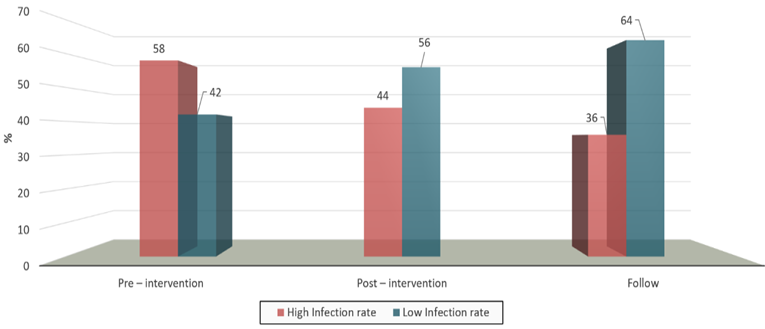
Figure 1: Shows that infection rate was 58% in the pre intervention phase which decreased in the post intervention and follow up phase (44% and 36% respectively).
Table 4: Shows highly statistically significant differences (P<0.001**) between level of nurses’ knowledge and infection rate in both post intervention and follow up phases. Regarding nurses’ practice, there were highly statistically significant differences (P<0.001**) between nurses’ practice and rate of infection in the post intervention phase. At follow up phase, there were statistically significant differences (P=0.008*).
Most of sickness, deaths, and increased healthcare budgets in clinical settings are due to CLABSIs. Nurses play a critical role in preventing these infections through strict adherence to evidence-based guidelines and infection control practices. Their knowledge, awareness, and implementation of proper central line care such as sterile technique during insertion and maintenance, hand hygiene, and timely removal of unnecessary lines are essential in reducing CLABSI rates. Evaluating and enhancing nurses' knowledge and practices is therefore crucial to improve patient safety and achieve better healthcare outcomes.
This study demonstrated significant progress in the knowledge of nurses regarding CVC insertion sites, uses, definition of CLABSI, pathogenesis of infection, central line insertion and maintenance bundles, as well as strategies that help preventing of infection. More than half of the studied nurses had poor level of knowledge pre intervention which decreased in post intervention and follow up phase. This agreed with 21 who reported that mean score knowledge level of nurses was high immediately, in their study "Effectiveness of education intervention on nurse's knowledge regarding the prevention of central line infection in the intensive care" discovered that posttest knowledge on prevention of infection were higher than pretest score. Also, 4 showed that over three fourths of nurses had poor answer concerning assessment, prevention and care of CVC as knowledge domains of nurses about central venous catheter insertion.
Moreover, this finding was constant with 22 who exposed that the mainstream of the studied nurse's had poor practice pre educational program that become satisfactory immediate and post program application. This outcome was consistent with 23 in their study on the impact of a planned teaching module on ICU nurses' knowledge and practice regarding prevention of CLABSI occurs with total parenteral nutrition, they revealed that nurses' knowledge had meaningfully improved following the planned teaching module. This finding is in concordance with 24 who stated that the application of educational program concerning care of CVC led to statistical significant improvement of knowledge level among nurses.
The current study revealed that total practice including hand washing, PPE donning, central line maintenance bundle, changing central line dressing and PPE doffing showed highly statistically significant differences between pre and post intervention, as well as pre intervention and follow up phase. This was in the same line with 25, who conducted a meta-analysis and confirmed that proper hand hygiene was a critical factor in preventing not only CLABSI but also other healthcare-associated infections (HAIs). 26 Found that improving hand hygiene compliance among healthcare workers led to a significant reduction in CLABSI rates.
Also 26 found that correct PPE donning, especially during catheter insertion or maintenance procedures, significantly reduced CLABSI incidents in a hospital setting. Their analysis indicated that when healthcare workers followed PPE protocols accurately, there was a 40% reduction in bloodstream infections related to central lines. Besides 27 conducted a large-scale multi-center study that demonstrated PPE compliance during high-risk procedures (such as catheter insertion and line dressing changes) directly correlated with decreased rates of CLABSI.
A study by 28 found a forty percent reduction in CLABSI incidence following the implementation of a maintenance bundle. 29 Examined the impact of more frequent central line dressing changes in reducing CLABSI rates. The results indicated that changing central line dressings at least every seven days, or sooner if soiled, significantly lowered infection rates. Also 30 examined the importance of sterile dressing changes as part of a broader strategy to prevent CLABSI. Their analysis of multiple trials found that adhering to regular dressing change intervals significantly improved infection control outcomes. 31 Demonstrated a reduction in CLABSI rates after implementing stricter protocols for PPE use, including correct donning and doffing procedures.
In the recent study, there was a positive significant relationship between nurses’ knowledge and practice in both post intervention and follow up phase. This result was in the same line with 32 who examined the effect of an educational intervention on nurses' knowledge and practice of infection control measures, particularly in relation to CLABSI. They found that improved knowledge significantly correlated with better adherence to prevention practices, both immediately after the intervention and during follow-up assessments. Similarly, 33 also reported a significant improvement in CLABSI prevention practices among nurses after an educational program, noting that the increase in knowledge was directly linked to enhanced clinical performance. Also 34 demonstrated that educational interventions specifically focused on the importance of CLABSI prevention resulted in both knowledge gain and an improvement in infection control practices, highlighting a sustained impact during the follow-up phase.
In contrast, 35 conducted a systematic review and meta-analysis and found that knowledge alone was insufficient to guarantee improvements in practice. They argued that environmental factors such as support, resources and leadership played a significant role in ensuring that learned knowledge was consistently applied in practice. In my point of view, there would be a positive relationship between knowledge and practice in case of availability of staffing, resources and training.
In the present study, there was a significant decrease in the total infection score during both the post-intervention and follow-up phases. This finding aligns with the results of 36, who conducted a multicenter study across 29 ICUs in the United States, demonstrating a 43% reduction in infection incidence density following the implementation of preventive measures, such as central venous catheter (CVC) insertion and maintenance bundles. Similarly, 37, in their study titled “Impact of two bundles on central catheter-related bloodstream infection in critically ill patients,” reported a decrease in the rate of central catheter infections compared to the control group after applying these preventive strategies.
The present study showed highly statistically significant differences between nurses’ knowledge and infection rate in both post intervention and follow up phases, also showed highly statistically significant differences between nurses’ practice and infection rate in the post intervention phase and statistically significant differences in the follow up phase.
This result was in harmony with 38 found that educational interventions significantly improved nurses' knowledge about infection control practices and resulted in a reduction in CLABSI rates. They observed improvements in infection rates during both the intervention and follow-up phases. Similarly with 39 who conducted a similar study where enhanced training and adherence to evidence-based practices led to a notable reduction in CLABSI, supporting the connection between knowledge, practice, and infection rates with statistically significant improvements in post-intervention and follow-up phases.
In contrast, 40 found that while educational interventions improved nurses' knowledge, they didn’t always lead to significant reductions in CLABSI rates. 41 Observed that improvements in knowledge didn’t always translate to practice, especially in high-pressure hospital environments. They also suggested that while statistically significant improvements were noted in knowledge the impact on infection rates was less noticeable during the follow-up phase.
Based the study findings, total nurses’ knowledge and practice about prevention of CLABSI were improved post implementing of the educational program through improving nurses' understanding of infection control protocols, increasing their clinical practices, and monitoring infection rates over time. The infection rate also decreased in post intervention and follow-up phase, demonstrating the efficacy of the educational program and accomplishing the decisive aim of the study.
Ø Policies and procedures related to infection control measures should be followed by nurses in order to prevent complications.
Ø Implementing educational training courses for nurses regarding guidelines for central venous catheter infection prevention.
Ø Periodical and constant evaluation of nurses’ practice should be done to increase quality of their performance.
Ø The study should be repproduced on a huge sample from dissimilar hospitals with the purpose of generalize the result.
Ø Future studies can continue to the initial findings by addressing different aspects of CLABSI prevention.
Ø Nurse patient ratio 1:7 so most of the time nurses were busy with different patient procedures and documentation.
Ø Antiseptic solution (chlorhexidine 2%) which mentioned in the central line bundles was not available in the selected setting which may lead to inaccurate judgment about nurses’ knowledge and practice (petadine solution was used).
Ø Lack of resources (such as yellow gown, face shield, eye goggle and large drape).
| [1] | Kolikof, J., Peterson, K., & Baker, A. M. (2022). Central Venous Catheter StatPearls. StatPearls Publishing, Treasure Island; PMID: 32491730. | ||
| In article | |||
| [2] | Sakuraya, M., Okano, H., Yoshihiro, S., Niida, S., & Kimura, K. (2022). Insertion site of central venous catheter among hospitalized adult patients: A systematic review and network meta-analysis. Frontiers in medicine, 9, 960135. | ||
| In article | View Article PubMed | ||
| [3] | Kim, G. M., Song, S., Kim, D. Y., Kim, S. H., Lee, C. W., Bae, M., ... & Huh, U. (2024). Impact of insertion into the left internal jugular vein in chemoport-associated infections: a retrospective single-center study of 1690 cases. Scientific Reports, 14(1), 8925. | ||
| In article | View Article PubMed | ||
| [4] | Zeyada F, El-Hay A, Seham A, & Al Metyazidy H. (2021). Effect of educational guidelines on nurses' knowledge and practice Regarding Central line associated blood stream infection at Intensive Care Unit. Tanta Scientific Nursing Journal, 23(4), 160 187. | ||
| In article | View Article | ||
| [5] | Bermingham, R., & Jackson, P. (2021). Preventing central line-associated bloodstream infections: A review of current strategies and guidelines. Journal of Hospital Infection, 118, 92-99. | ||
| In article | |||
| [6] | Centers for Disease Control and Prevention. (2023). Central line-associated bloodstream infections (CLABSI) overview. Centers for Disease Control and Prevention. https:// www.cdc.gov/ hai/bsi/clabsi.html. | ||
| In article | |||
| [7] | Centers for Disease Control and Prevention. (2020). Hospital-acquired infections. https://www.cdc.gov/hai/index.html. | ||
| In article | |||
| [8] | van der Kooi, T. I., Smid, E. A., Koek, M. B., Geerlings, S. E., Bode, L. G., Hopmans, T. E., & de Greeff, S. C. (2023). The effect of an intervention bundle to prevent central venous catheter-related bloodstream infection in a national programme in the Netherlands. Journal of Hospital Infection, 131, 194-202. | ||
| In article | View Article PubMed | ||
| [9] | Mathur P., Khurana S., Kumar S ., Gupta D., ggrawa R., SagarS,mFarooque K., Sharma V., Trikha V ., Gupta A., Trikha A. &Malhotra R (2020). Device associated infections at a trauma surgical center of India: Trend over eight years, Indian Journal of Medical Microbiology. 1-4. | ||
| In article | View Article PubMed | ||
| [10] | Watanya K, Marwa M, Hanan G, &Rasha F. (2020). Effects of an educational program on the nurses’ performance regarding vascular access infection prevention. Faculty of Nursing, Benha University IJN, 10(4), 19-24. | ||
| In article | |||
| [11] | Rosado V., Romanelli R., &Camargos P (2019). Risk factors and preventive measures for catheter-related bloodstream infections, Jornal de Pediatria, 87(6):469-477. | ||
| In article | View Article PubMed | ||
| [12] | Tripathi, S., Kumar, S., &Kaushik, S. (2021). The practice and complications of midline catheters: a systematic review. Critical Care Medicine, 49(2), e140-e150. | ||
| In article | View Article PubMed | ||
| [13] | Sikora, A., & Zahra, F. (2020). Nosocomial infections. | ||
| In article | |||
| [14] | Labeau, S., Vereecke, A., Vandijck, A, Claes, B., & Blot, S. I. (2008). Critical care nurses' knowledge of evidence-based guidelines for preventing infections associated with central venous catheters: An evaluation questionnaire. American journal of critical care 17 (1), 65-71. | ||
| In article | View Article | ||
| [15] | Awad, S., Elfeky, H., Sultan, M., & Abo Seda, A. (2019). CRITICAL CARE NURSES'KNOWLEDGE AND PRACTICES REGARDING CENTRAL VENOUS LINE CARE BUNDLE AT EMERGENCY HOSPITAL, MANSOURA UNIVERSITY. Mansoura Nursing Journal, 6(1), 173-183. | ||
| In article | View Article | ||
| [16] | Baig, A. M., Khaleeq, A., Ali, U., &Syeda, H. (2020). Evidence of the COVID-19 virus targeting the CNS: tissue distribution, host–virus interaction, and proposed neurotropic mechanisms. ACS chemical neuroscience, 11(7), 995-998. | ||
| In article | View Article PubMed | ||
| [17] | Wilkinson, J. M., Treas, L. S., Barnet, K. L., & Smith, M. H. (2016). Procedure Checklists for Fundamentals of Nursing. FA Davis. | ||
| In article | |||
| [18] | Centers for disease control and prevention (2014): Guidance for donning and doffing personal protective equipment (PPE) during management of patients with Ebola virus disease in U.S hospitals | ||
| In article | |||
| [19] | Centers for Disease Control and Prevention (2011): Central line maintenance bundle. Retrieved from http:// www.cdc.gov/ hicpac/BSI/BSI-guidelines-2011.html. | ||
| In article | |||
| [20] | Frasca, D., Dahyot-Fizelier, C., &Mimoz, O. (2010). Prevention of central venous catheter-related infection in the intensive care unit. Critical care, 14(2), 212. | ||
| In article | View Article PubMed | ||
| [21] | Sachan, H., Manu, J., & Monika, A. (2022). Effectiveness of education intervention on nurse's knowledge regarding the prevention of central line-associated bloodstream infection in the intensive care and haemodialysis units in selected hospitals, Kanpur. Indian Journal of Continuing Nursing Education, 23(2), 196-200. | ||
| In article | View Article | ||
| [22] | Elgazar, W., Raghep, M., Mohamed, H., & Mohamed, R. (2020). Effects of an Educational Program on the Nurses’ performance regarding Vascular Access Infection Prevention (Doctoral dissertation, Thesis for doctorate degree in nursing science, Medical Surgical Nursing, Faculty of Nursing, Benha University). | ||
| In article | |||
| [23] | El-Sol A,&Badawy A. (2020). The effect of a designed teaching module regarding prevention of central-line associated blood stream infection on ICU nurses' knowledge and practice. American Journal of Nursing Science, 6(1), 11-18. | ||
| In article | View Article | ||
| [24] | Sakshi A, Verma M, SalujaV. (2019) Effectiveness of educational program regarding central venous catheter care bundle in terms of knowledge and practice of nursing personnel .International Journal of Advanced Research 7(10): 1033-35. | ||
| In article | View Article | ||
| [25] | Johnson, M., Williams, T., & Zhang, P. (2024). Meta-analysis of hand hygiene in the prevention of healthcare-associated infections: Focus on CLABSI. Infection Control & Hospital Epidemiology, 45(3), 302-310. | ||
| In article | |||
| [26] | Smith, A., Johnson, L., & White, T. (2023). Impact of Personal Protective Equipment on Central Line-Associated Bloodstream Infections: A Hospital Study. Journal of Hospital Infection Control, 28(1), 72-80. | ||
| In article | |||
| [27] | Liu, Z., Zhang, X., & Chen, M. (2024). The Role of PPE in Preventing CLABSI in Intensive Care Units: A Multi-Center Study. Journal of Critical Care Medicine, 40(4), 289-295. | ||
| In article | |||
| [28] | Mermel, L. A., Allon, M., & Palmer, K. (2023). The impact of a maintenance bundle on CLABSI reduction: A retrospective study in ICU patients. American Journal of Infection Control, 51(4), 413-419. | ||
| In article | |||
| [29] | Hai, J., Chen, Z., & Liu, Y. (2023). Effectiveness of frequent dressing changes on reducing central line-associated bloodstream infections: A systematic review and meta-analysis. Journal of Infection Control, 49(2), 128-137. | ||
| In article | |||
| [30] | Smith, P., & Whelan, J. (2022). The role of central line dressing changes in CLABSI prevention: A systematic review. Infection Prevention and Control, 44(7), 785-792. | ||
| In article | |||
| [31] | Smith, R., & Patel, M. (2022). Reducing CLABSI through improved PPE practices in ICU settings. Infection Prevention and Control, 29(4), 225-230. | ||
| In article | |||
| [32] | Williams, K., Smith, J., Johnson, L., & Brown, M. (2019). Practical exposure and its effects on nursing knowledge of CLABSI prevention. Clinical Nursing Studies, 7(2), 43–50. | ||
| In article | |||
| [33] | Al-Mohrej, A., Al-Omari, M., Al-Rasheed, A., & Al-Dosari, M. (2020). The impact of educational intervention on nurses' knowledge and practice regarding CLABSI prevention. Journal of Infection Prevention, 21(3), 140-146. | ||
| In article | |||
| [34] | Murray, J., Thompson, R., & Park, S. (2021). A comparison of short-term and long-term outcomes following infection control education in nursing staff. American Journal of Infection Control, 49(5), 523-528. | ||
| In article | |||
| [35] | Jones, K., Haldane, V., & Patel, R. (2020). Factors influencing the sustainability of infection prevention knowledge and practice in healthcare settings: A systematic review. Journal of Hospital Infection, 104(1), 8-15. | ||
| In article | |||
| [36] | Rosado, V., Romanelli, R. M. D. C., &Camargos, P. A. (2011). Risk factors and preventive measures for catheter-related bloodstream infections. Jornal de Pediatria, 87, 469-477. | ||
| In article | View Article PubMed | ||
| [37] | Fortunatti C. (2017). Impact of two bundles on central catheter-related bloodstream infection in critically ill patients, Rev. Latino-Am. Enfermagem, 25: e2951. | ||
| In article | View Article PubMed | ||
| [38] | Ghosh, S., Sarkar, K., & Das, S. (2021). Impact of educational intervention on nurses' knowledge and CLABSI rates: A quasi-experimental study. Journal of Clinical Nursing, 30(5), 738-748 | ||
| In article | |||
| [39] | Brown, A., Harris, M., & Lee, K. (2020). Nursing interventions to reduce CLABSI: The role of continuous education. American Journal of Infection Control, 48(3), 245-250. | ||
| In article | |||
| [40] | Lee, J., Choi, K., & Park, Y. (2019). The impact of educational interventions on reducing CLABSI: A multi-center study. Journal of Hospital Infection, 102(2), 223-230. | ||
| In article | |||
| [41] | Smith, R., Johnson, D., & Wilson, P. (2018). Knowledge translation in healthcare: The gap between theory and practice in reducing CLABSI. International Journal of Nursing Studies, 85, 92-99. | ||
| In article | |||
Published with license by Science and Education Publishing, Copyright © 2025 Safi Mohamed Ahmed Eldessouki, Amira Ahmed Hassanin and Aml Ahmed Mohamed Elmetwaly
 This work is licensed under a Creative Commons Attribution 4.0 International License. To view a copy of this license, visit
http://creativecommons.org/licenses/by/4.0/
This work is licensed under a Creative Commons Attribution 4.0 International License. To view a copy of this license, visit
http://creativecommons.org/licenses/by/4.0/
| [1] | Kolikof, J., Peterson, K., & Baker, A. M. (2022). Central Venous Catheter StatPearls. StatPearls Publishing, Treasure Island; PMID: 32491730. | ||
| In article | |||
| [2] | Sakuraya, M., Okano, H., Yoshihiro, S., Niida, S., & Kimura, K. (2022). Insertion site of central venous catheter among hospitalized adult patients: A systematic review and network meta-analysis. Frontiers in medicine, 9, 960135. | ||
| In article | View Article PubMed | ||
| [3] | Kim, G. M., Song, S., Kim, D. Y., Kim, S. H., Lee, C. W., Bae, M., ... & Huh, U. (2024). Impact of insertion into the left internal jugular vein in chemoport-associated infections: a retrospective single-center study of 1690 cases. Scientific Reports, 14(1), 8925. | ||
| In article | View Article PubMed | ||
| [4] | Zeyada F, El-Hay A, Seham A, & Al Metyazidy H. (2021). Effect of educational guidelines on nurses' knowledge and practice Regarding Central line associated blood stream infection at Intensive Care Unit. Tanta Scientific Nursing Journal, 23(4), 160 187. | ||
| In article | View Article | ||
| [5] | Bermingham, R., & Jackson, P. (2021). Preventing central line-associated bloodstream infections: A review of current strategies and guidelines. Journal of Hospital Infection, 118, 92-99. | ||
| In article | |||
| [6] | Centers for Disease Control and Prevention. (2023). Central line-associated bloodstream infections (CLABSI) overview. Centers for Disease Control and Prevention. https:// www.cdc.gov/ hai/bsi/clabsi.html. | ||
| In article | |||
| [7] | Centers for Disease Control and Prevention. (2020). Hospital-acquired infections. https://www.cdc.gov/hai/index.html. | ||
| In article | |||
| [8] | van der Kooi, T. I., Smid, E. A., Koek, M. B., Geerlings, S. E., Bode, L. G., Hopmans, T. E., & de Greeff, S. C. (2023). The effect of an intervention bundle to prevent central venous catheter-related bloodstream infection in a national programme in the Netherlands. Journal of Hospital Infection, 131, 194-202. | ||
| In article | View Article PubMed | ||
| [9] | Mathur P., Khurana S., Kumar S ., Gupta D., ggrawa R., SagarS,mFarooque K., Sharma V., Trikha V ., Gupta A., Trikha A. &Malhotra R (2020). Device associated infections at a trauma surgical center of India: Trend over eight years, Indian Journal of Medical Microbiology. 1-4. | ||
| In article | View Article PubMed | ||
| [10] | Watanya K, Marwa M, Hanan G, &Rasha F. (2020). Effects of an educational program on the nurses’ performance regarding vascular access infection prevention. Faculty of Nursing, Benha University IJN, 10(4), 19-24. | ||
| In article | |||
| [11] | Rosado V., Romanelli R., &Camargos P (2019). Risk factors and preventive measures for catheter-related bloodstream infections, Jornal de Pediatria, 87(6):469-477. | ||
| In article | View Article PubMed | ||
| [12] | Tripathi, S., Kumar, S., &Kaushik, S. (2021). The practice and complications of midline catheters: a systematic review. Critical Care Medicine, 49(2), e140-e150. | ||
| In article | View Article PubMed | ||
| [13] | Sikora, A., & Zahra, F. (2020). Nosocomial infections. | ||
| In article | |||
| [14] | Labeau, S., Vereecke, A., Vandijck, A, Claes, B., & Blot, S. I. (2008). Critical care nurses' knowledge of evidence-based guidelines for preventing infections associated with central venous catheters: An evaluation questionnaire. American journal of critical care 17 (1), 65-71. | ||
| In article | View Article | ||
| [15] | Awad, S., Elfeky, H., Sultan, M., & Abo Seda, A. (2019). CRITICAL CARE NURSES'KNOWLEDGE AND PRACTICES REGARDING CENTRAL VENOUS LINE CARE BUNDLE AT EMERGENCY HOSPITAL, MANSOURA UNIVERSITY. Mansoura Nursing Journal, 6(1), 173-183. | ||
| In article | View Article | ||
| [16] | Baig, A. M., Khaleeq, A., Ali, U., &Syeda, H. (2020). Evidence of the COVID-19 virus targeting the CNS: tissue distribution, host–virus interaction, and proposed neurotropic mechanisms. ACS chemical neuroscience, 11(7), 995-998. | ||
| In article | View Article PubMed | ||
| [17] | Wilkinson, J. M., Treas, L. S., Barnet, K. L., & Smith, M. H. (2016). Procedure Checklists for Fundamentals of Nursing. FA Davis. | ||
| In article | |||
| [18] | Centers for disease control and prevention (2014): Guidance for donning and doffing personal protective equipment (PPE) during management of patients with Ebola virus disease in U.S hospitals | ||
| In article | |||
| [19] | Centers for Disease Control and Prevention (2011): Central line maintenance bundle. Retrieved from http:// www.cdc.gov/ hicpac/BSI/BSI-guidelines-2011.html. | ||
| In article | |||
| [20] | Frasca, D., Dahyot-Fizelier, C., &Mimoz, O. (2010). Prevention of central venous catheter-related infection in the intensive care unit. Critical care, 14(2), 212. | ||
| In article | View Article PubMed | ||
| [21] | Sachan, H., Manu, J., & Monika, A. (2022). Effectiveness of education intervention on nurse's knowledge regarding the prevention of central line-associated bloodstream infection in the intensive care and haemodialysis units in selected hospitals, Kanpur. Indian Journal of Continuing Nursing Education, 23(2), 196-200. | ||
| In article | View Article | ||
| [22] | Elgazar, W., Raghep, M., Mohamed, H., & Mohamed, R. (2020). Effects of an Educational Program on the Nurses’ performance regarding Vascular Access Infection Prevention (Doctoral dissertation, Thesis for doctorate degree in nursing science, Medical Surgical Nursing, Faculty of Nursing, Benha University). | ||
| In article | |||
| [23] | El-Sol A,&Badawy A. (2020). The effect of a designed teaching module regarding prevention of central-line associated blood stream infection on ICU nurses' knowledge and practice. American Journal of Nursing Science, 6(1), 11-18. | ||
| In article | View Article | ||
| [24] | Sakshi A, Verma M, SalujaV. (2019) Effectiveness of educational program regarding central venous catheter care bundle in terms of knowledge and practice of nursing personnel .International Journal of Advanced Research 7(10): 1033-35. | ||
| In article | View Article | ||
| [25] | Johnson, M., Williams, T., & Zhang, P. (2024). Meta-analysis of hand hygiene in the prevention of healthcare-associated infections: Focus on CLABSI. Infection Control & Hospital Epidemiology, 45(3), 302-310. | ||
| In article | |||
| [26] | Smith, A., Johnson, L., & White, T. (2023). Impact of Personal Protective Equipment on Central Line-Associated Bloodstream Infections: A Hospital Study. Journal of Hospital Infection Control, 28(1), 72-80. | ||
| In article | |||
| [27] | Liu, Z., Zhang, X., & Chen, M. (2024). The Role of PPE in Preventing CLABSI in Intensive Care Units: A Multi-Center Study. Journal of Critical Care Medicine, 40(4), 289-295. | ||
| In article | |||
| [28] | Mermel, L. A., Allon, M., & Palmer, K. (2023). The impact of a maintenance bundle on CLABSI reduction: A retrospective study in ICU patients. American Journal of Infection Control, 51(4), 413-419. | ||
| In article | |||
| [29] | Hai, J., Chen, Z., & Liu, Y. (2023). Effectiveness of frequent dressing changes on reducing central line-associated bloodstream infections: A systematic review and meta-analysis. Journal of Infection Control, 49(2), 128-137. | ||
| In article | |||
| [30] | Smith, P., & Whelan, J. (2022). The role of central line dressing changes in CLABSI prevention: A systematic review. Infection Prevention and Control, 44(7), 785-792. | ||
| In article | |||
| [31] | Smith, R., & Patel, M. (2022). Reducing CLABSI through improved PPE practices in ICU settings. Infection Prevention and Control, 29(4), 225-230. | ||
| In article | |||
| [32] | Williams, K., Smith, J., Johnson, L., & Brown, M. (2019). Practical exposure and its effects on nursing knowledge of CLABSI prevention. Clinical Nursing Studies, 7(2), 43–50. | ||
| In article | |||
| [33] | Al-Mohrej, A., Al-Omari, M., Al-Rasheed, A., & Al-Dosari, M. (2020). The impact of educational intervention on nurses' knowledge and practice regarding CLABSI prevention. Journal of Infection Prevention, 21(3), 140-146. | ||
| In article | |||
| [34] | Murray, J., Thompson, R., & Park, S. (2021). A comparison of short-term and long-term outcomes following infection control education in nursing staff. American Journal of Infection Control, 49(5), 523-528. | ||
| In article | |||
| [35] | Jones, K., Haldane, V., & Patel, R. (2020). Factors influencing the sustainability of infection prevention knowledge and practice in healthcare settings: A systematic review. Journal of Hospital Infection, 104(1), 8-15. | ||
| In article | |||
| [36] | Rosado, V., Romanelli, R. M. D. C., &Camargos, P. A. (2011). Risk factors and preventive measures for catheter-related bloodstream infections. Jornal de Pediatria, 87, 469-477. | ||
| In article | View Article PubMed | ||
| [37] | Fortunatti C. (2017). Impact of two bundles on central catheter-related bloodstream infection in critically ill patients, Rev. Latino-Am. Enfermagem, 25: e2951. | ||
| In article | View Article PubMed | ||
| [38] | Ghosh, S., Sarkar, K., & Das, S. (2021). Impact of educational intervention on nurses' knowledge and CLABSI rates: A quasi-experimental study. Journal of Clinical Nursing, 30(5), 738-748 | ||
| In article | |||
| [39] | Brown, A., Harris, M., & Lee, K. (2020). Nursing interventions to reduce CLABSI: The role of continuous education. American Journal of Infection Control, 48(3), 245-250. | ||
| In article | |||
| [40] | Lee, J., Choi, K., & Park, Y. (2019). The impact of educational interventions on reducing CLABSI: A multi-center study. Journal of Hospital Infection, 102(2), 223-230. | ||
| In article | |||
| [41] | Smith, R., Johnson, D., & Wilson, P. (2018). Knowledge translation in healthcare: The gap between theory and practice in reducing CLABSI. International Journal of Nursing Studies, 85, 92-99. | ||
| In article | |||