The difficulty of the students in Statistics and Probability subject, and the pedagogical approaches used by the teachers, were the challenges encountered by both students and teachers due to the restrictions during the CoViD-19 pandemic. Hence, this study aimed to determine the pedagogical approaches used in teaching statistics and probability during the pandemic. The study used a qualitative approach, particularly document analysis. The main source of the data was the module in statistics and probability specifically the learning activity sheets in the third quarter because this is the most convenient approach that can be used by the teachers during the pandemic. The pedagogical approaches were identified and validated by three inter-raters. Based on the findings, communication, and study skills, technology-aided instruction, problem-based learning, manipulatives, modules, models and multiple representations, and direct instruction were the identified pedagogical approaches used in the statistics and probability module. However, the effectiveness of the delivery of these approaches cannot be measured because the modality was limited to a modular approach. The teachers were able to use different pedagogical approaches, however, cooperative learning was not used because the CoViD-19pandemic restricted interactions between the teacher and students or students with their classmates.
Individuals today face difficulties in all facets of their lives. People must develop a variety of skills to successfully navigate the world's complicated difficulties today through learning and understanding mathematics 1. One of the branches of mathematics with multiple applications and problem-solving situations which comprise problem-solving skills and critical thinking is statistics and probability. Through this, it is included in the elementary and junior high school curriculum in the spiral progression approach and is a fundamental subject in senior high school 2.
Statistics and probability aid students to improve their understanding, process, and explanation of vast amounts of existing quantitative data, and have a probabilistic logic in uncertain settings. Students can benefit from the skills obtained in learning statistics and probability. Statistics and probability are the branches of mathematics concerned with the laws governing random events, including the collection, analysis, interpretation, and display of numerical data 3.
The instructional process is intended to provide desirable learning results, yet teachers may fail to do so at times. The reasons could stem from the curriculum, student or instructor behavior 4, or the modality used by the teachers. The Covid-19 pandemic has had a negative impact on the global education system; as a result, education has been switched to a distance learning approach 5. During the pandemic, the modality used, and the pedagogical approaches may also be considered as possible factors. Aquino et al. 6 stated that how the material is taught is an important consideration in the teaching-learning process because it has a significant impact on the students.
Pedagogical approaches in the classroom are a significant topic that plays a vital role for students to understand concepts in mathematics particularly in statistics and probability. Pedagogy is the art of teaching. Effective teachers are said to practice an array of teaching approaches because there is no single, universal method that suits all situations 7.
Teachers are to adjust pedagogical skills to hasten the learning process in the classroom even during the pandemic. All good teaching is characterized by proper teaching methods and priority may be given to improving the capacities and professional competencies of the teachers to apply appropriate teaching methods that may enhance the learning of students 7, 8, 9.
In the study, different pedagogical approaches were considered. This includes cooperative learning, communication, and study skills, technology-aided instruction, problem-based learning, manipulatives, models and multiple representations, and direct instruction. Accordingly, the related theories or models to the different pedagogical approaches are discussed in the following:
First, the cooperative learning pedagogical approach. Johnson and Johnson 10 revealed that cooperative learning is the foundation on which many active learning procedures take place. It is the instructional use of small groups for students to work together to maximize their own and each other’s learning. Moreover, cooperative learning is based on two theories: Structure-Process-Outcome theory and Social Interdependence theory. In the Structure-process-outcome Theory, the processes of interaction determine outcomes, not the structure of the situation directly. It focuses on instructors’ structuring goals in learning to generate desired processes of interaction among students and between the students and the instructor. Outcomes will come out naturally when desired interaction processes taking place. Meanwhile, the Social Interdependence Theory suggests that groups are dynamic wholes in which the interdependence among members could vary. For interdependence to exist, each group must have a dynamic impact on the other. Several studies considered cooperative learning to be an effective pedagogical approach in Mathematics. Yemi, Azid, and bin Md Ali 11, Kane 12, Remillard 13, Cardino and Cruz 14, and Gerald and Allan 15 indicated that a cooperative learning strategy increases mathematics achievements in the subjects concerned.
The second pedagogical approach is communication and study skills. Forrest 16 revealed that in Communication Theory, individuals have different premises about the act of communicating, and these thoughts, called message design logics, guide the process of reasoning from goals or intentions to actual messages. Expressive, conventional, and rhetorical are three distinct message design logics identified by communication theorists. Expressive message design logic is a system of talk that simply reacts to circumstances, whereas conventional message design logic is a system that responds to exigencies with some appropriate preconceived remedy. Conventional message design logic is a design wherein responses are limited by historically evolved structures. Rhetorical message design logic, on the other hand, draws on a wider range of structures, while containing within it the knowledge of conventional social forms and relations.
Third, technology-aided instruction. Lynch 17 noted that digital learning is engaging, student-centered, often collaborative, and can increase student achievement but the use of technology must be purposely planned. When considering utilizing technology in the classroom, consider the instructional goals, how technology helps to reach these goals, and the use of technology to help students make connections. There are also five learning theories in this context. First is, the Replacement, Amplification, and Transformation (RAT) model where digital technology can be used as replacement, amplification, or transformation in the classroom. Second, the Technological, Pedagogical, and Content Knowledge (TPaCK) framework points out that teachers must understand how technology relates to both pedagogy and content which are necessary for the effective use of Educational Technology (EdTech). Third, connectivism embraces the idea that learning is no longer a completely internal process. Students should have chances to link knowledge and ideas, independently seek understanding, and connect with others to share knowledge via technology. Fourth, Analyze, Design, Implement, and Evaluate (ADDIE)model is used in the instructional design which ensures effective implementation of technology. Teachers must clarify instructional goals (analysis), then design activities and lesson ideas that will help them reach these goals. Fifth, Online Collaborative Learning (OCL) wherein students brainstorm, compare, and analyze their ideas before synthesizing them and attempting to reach a consensus.
The fourth approach is problem-based learning. Hmelo-Silver and Eberbach 18, discussed that problem-based learning engages students in self-directed learning and then utilizes their new knowledge of the problem and reflects on what they learned, and the effectiveness of the strategies employed. The teacher acts to assist the learning process rather than to provide knowledge. The goal is for the students to develop flexible knowledge, effective problem-solving skills, effective self-directed learning skills, effective collaboration skills, and intrinsic motivation. The first goal is flexible knowledge. This integrates information across multiple domains in long-term memory. The second goal is developing effective problem-solving skills which refer to the ability to apply appropriate metacognitive and reasoning strategies. Third, self-directed learning skills integrate metacognitive strategies that are important for developing lifelong learning skills. These involve awareness of what they do and do not understand to set learning goals for themselves, identify what they need to learn more about for the problem they are solving, plan how to achieve their goals and evaluate whether or not their goals have been attained. The fourth goal is a good collaborator which means efficiently participating in a small group. This encompasses establishing common ground, resolving discrepancies, negotiating the actions that a group is going to take, and coming to an agreement. The fifth goal is to help learners become intrinsically motivated. This happens when learners work on a task to their satisfaction, interest, or challenge.
The fifth approach is the manipulatives, models, and multiple representations. Johnson 19 specified that Lesh’s model of representation of mathematical concepts is one wherein students move within and among five forms of mathematical representation to construct the meaning of mathematical concepts. Representational fluency is the ability to use several different representations and translate among these models with relative ease. This ability is foundational in students’ mathematical proficiency. Mathematical thinking can be “represented” in many ways through drawings and pictures, written or oral words, manipulatives, and all of these, alongside the abstract (numbers). Manipulatives also refer to concrete representations, which are objects designed to allow students to learn a particular mathematical concept by manipulating them. The use of manipulatives allows students to learn difficult concepts in developmentally appropriate, hands-on, experiential ways. Some examples of manipulatives are base ten blocks, Geoboards, pattern blocks, fraction pieces, and attribute blocks. In addition, pictorial representations or pictures refer to anything hand-sketched or computer-generated that represents concrete objects. It could be a photograph, a hand-drawn picture, tallies, a graph, or a chart, or any two-dimensional representation. Another representation is the forum on Public Policy Real-life representation which are events and objects happening in the real world that allow students to make mathematical connections. It may include using money in a grocery store, measuring ingredients when cooking a recipe, or measuring wooden beams when building a garage. Symbolic representation refers to symbols or abstracts which are actual letters, digits, and/or symbols used to represent numbers, formulas, or any other numerical, algebraic, or geometric concept. Technological representation or technology refers to the use of any technology (iPad, computer program, website, app, etc.) that produces moveable replicas of concrete or pictorial representation.
Lastly, the pedagogical approach is called direct Instruction. Heward and Twyman 20 revealed that direct instruction is a teacher-directed teaching method wherein the teacher stands in front and uses lectures or demonstrations to introduce academic content to students. It was created by Siegfried Engelmann and Wesley Becker at the University of Illinois in the 1960s and further developed by Engelmann, Doug Carnine, Ed Kame’enui, Jerry Silbert, and others at the University of Oregon. It combines logical analysis of the content students are to learn, thoughtful selection and sequencing of instructional examples, clear communication between teacher and student, high rates of student engagement, reinforcement and corrective feedback, judicious review, and mastery practice. Two major rules lie beneath direct instruction “Teach more in less time.” and “Control the details of the curriculum.” Teaching “more in less time” allows that even if low-achieving students, disadvantaged students, and those with disabilities are taught by an effective program that enables them to progress at the same rate as their peers, they will always remain behind. Only by teaching at a faster rate can the achievement gap be reduced. The design of the details of the curriculum, and the selection and sequencing of instructional examples are at the heart of the Direct Instruction model.
All these approaches were known to be effective in improving students’ knowledge of a particular subject if these were delivered face-to-face. Learning mathematics is much more convenient from the teachers’ perspective because discussions using the chalkboard are viewed as an effective way of explaining the process of solving problems 21. All approaches can also be integrated into the module, but the question was if these were properly delivered to the students because of the shift in the modality from face-to-face to distance learning approach.
Given the brief descriptions of the different pedagogical approaches in statistics and probability and the main concern on how teachers taught their students during the CoViD-19 pandemic, this study determined the pedagogical approaches used by teachers in teaching the learning competencies of statistics and probability during the pandemic.
The study used a qualitative approach specifically for document analysis. Document scanning is a systematic process for reviewing or evaluating documents 22. This includes analyzing various types of documents including books, newspaper articles, academic journal articles, and institutional reports 23. For this study, document analysis was used to identify the pedagogical approaches present in the materials used by the teachers during the pandemic. The study was conducted at Nueva Vizcaya General Comprehensive High School, the oldest government-operated high school in Nueva Vizcaya. In an initial interview conducted, it turned out that the only source used by the teachers during the pandemic was the module for statistics and probability. This module was created by the Department of Education. It is a nationally circulated module prescribed by the Department of Education.
A checklist for Pedagogical Approaches was utilized to identify the pedagogical approaches present in the third quarter learning activity sheets for statistics and probability. It includes definitions and features of the various pedagogical approaches namely cooperative learning, communication, and study skills, technology-aided instruction, problem-based learning, manipulatives, models and multiple representations, and direct instruction. Moreover, it includes 12 figures identified by the researcher as being present in the module. In each of the images, the inter raters were to identify the applicable pedagogical approaches. Three inter-raters assessed the pedagogical approaches shown in each of the figures and identified which features of the pedagogical approach were applicable in the given figures. The reliability of the identified pedagogical approaches was computed with inter-rater reliability at 70%. The topics covered were random variables and probability distribution, normal distribution, sampling, and sampling distribution, and estimation of parameters.
Ethical Considerations
The researchers conducted the study out of personal interest but solely to enhance the teaching and learning of mathematics. There was no conflict of interest in this study. Confidentiality did not appear to be an issue in this study. It was made sure that no one besides the researchers could access the data gathered. The data collected were all kept confidential, especially in analyzing and interpreting the results of the surveys. As soon as the study was completed and bound in a book, all the data collected were deleted. There was no known risk in the conduct of this study.
The module for statistics and probability particularly the learning activity sheets for the third quarter was scanned and pedagogical approaches were determined. Upon scanning the module, the researchers discovered that among the pedagogical approaches used were direct instruction, manipulatives, multiple representations, problem-based learning, technology-aided instruction, and communication and study skills.
Pedagogical Approach 1: Communication and Study Skills
Communication and Study Skills Mathematical Communication Skills (MCS) refer to the students’ ability to arrange and link their mathematical thinking through communication, communicate their logical and clear mathematical thinking to their friends, teachers, and others, analyze and assess mathematical thinking and strategies used by others, and use mathematical language to express mathematical ideas correctly 24.
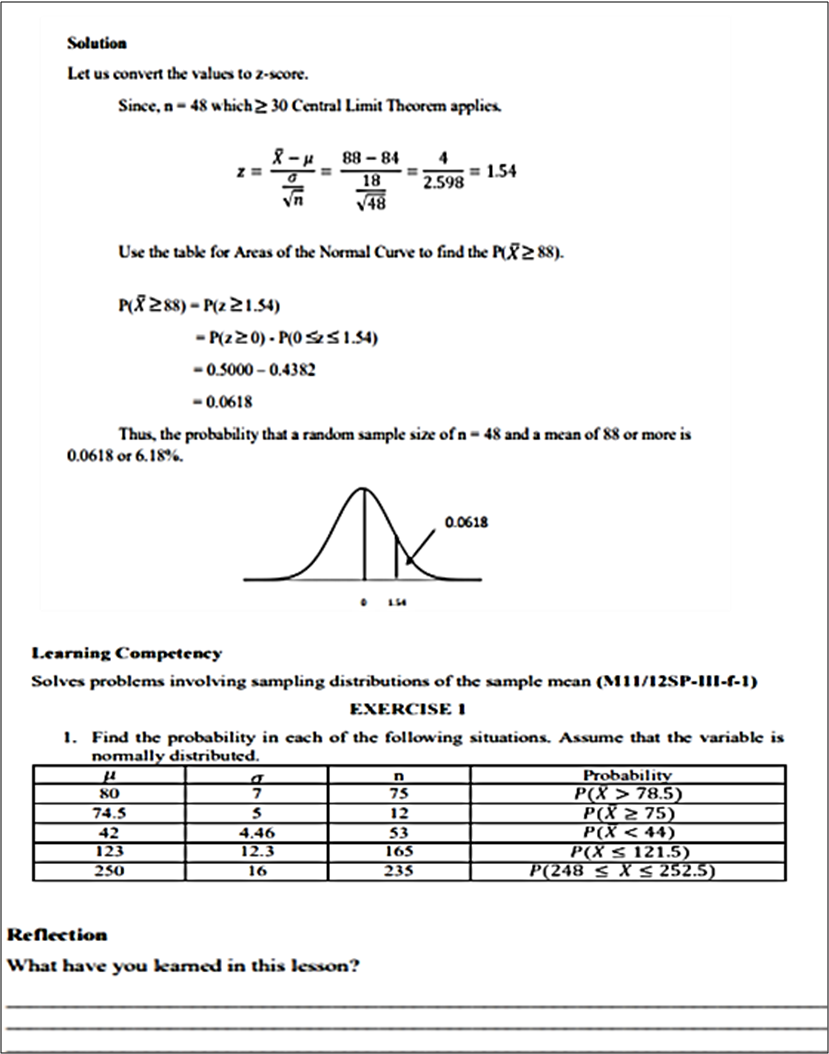
Figure 1 shows the sample communication and study skills.

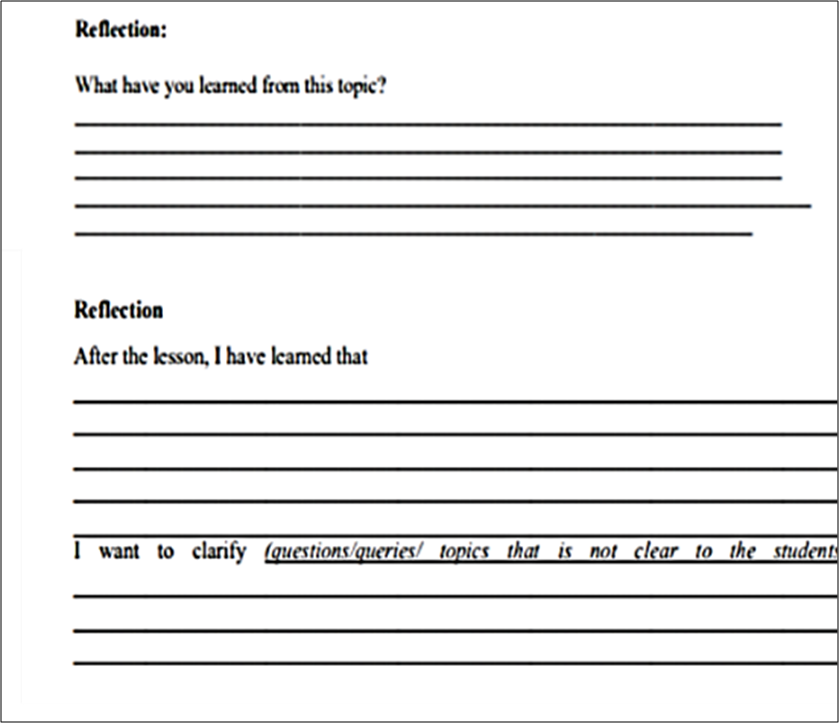
Figure 1 shows the background information given to learners about solving problems involving sampling distribution of the sample mean, a given example, given exercises and a reflection to be answered by the students on the lesson. Figure 1 is considered communication and study skills because it allows students to describe their thought processes orally or in writing, writes their problem-solving strategies, use reading instructional strategies to help them with comprehension, and allows the student to be guided by study skills instruction. Furthermore, this is also considered technology-aided instruction because it allows the student to use calculators for problem-solving instruction, activities, problem-solving strategies, and calculations. This is also considered direct instruction because it allows students to review concepts by emphasizing their comparisons to previously covered concepts, learn by the graduated sequence of instruction, moving from concrete to abstract concepts in defined steps. In addition, Figure 2 shows also communication and study skills and direct instruction about students’ reflection on the topics discussed in statistics and probability.

Figure 2 shows the given activity for every topic in the module. The figures are the sample questions asking students about their ideas or reflection on introduced topics. It is considered to be communication and study skills because it allows students to describe their thought processes orally or in writing during problem-solving and to write about their problem-solving strategies. The questions like “After the lesson, I have learned that” and “I want to clarify” require students to express insights into what they have learned in written form. For instance, “How can I apply the skill of computing probabilities in my daily life?”, “How does the process of finding the mean of the random variable similar/ interrelated in finding the variance?”, and “I want to learn more on” are asked of the students. For topics in normal distribution the questions for reflection are “What insights and learnings have you gained in this topic?”, and “What have you learned from this topic?”. For sampling distribution, the questions are “I learned that”, I want to learn more on”, and “What have you learned from this topic?”. For topics in the estimation of parameters, the reflection questions are “After the lesson, I have learned that”, I want to clarify”, and “What have you learned to from this topic?”. It is considered to be direct instruction because it allows students to learn by a graduated sequence of instruction, moving from concrete to abstract concepts in defined steps.
However, during the covid-19 pandemic, the module was given to the students, and the students were expected to study independently. Even if the material was directed to be delivered through communication and study skills, the intention was only partially met because even if the students were able to express their thoughts in writing, they were not able to hear their classmates' and their teachers' thoughts regarding the items in the sample learning activities in sampling and sampling mean. Communication will only be effective if there will be two-way communication process or mutual understanding, in which participants not only communicate information but also construct and share meaning 25. Feedbacks were very important to the students because this will help them correct their mistakes or misconceptions. Feedback is an important part of the teaching and learning process since students can utilize it to improve their academic performance. It is undoubtedly the most crucial part of an evaluation process, yet its effects vary greatly 26. In other pedagogical approaches like technology–aided instruction and, direct instruction, communication plays also a very important role, and the teacher is the best facilitator for this. Teachers are multi-role educators who may engage pupils in acquiring knowledge and developing independent abilities. A modern teacher's primary responsibility is to provide an educational environment where students can get first-hand knowledge with sufficient instructor support and supervision 27. For effective technology–aided instruction, the guidance of the teacher is needed and for direct – instruction, the teacher is the best person to instruct the students what to do, and how to do it.
The use of a modular approach to effectively deliver the different pedagogical approaches such as communication and study skills, technology-aided instruction and direct instruction cannot replace the role of the teacher to educate the students. Hence, other modalities must be blended into a modular approach.
Pedagogical Approach 2: Technology-Aided Instruction
In this section, technology-aided instruction is shown to be one of the pedagogical approaches present in the statistics and probability module. This is a method of teaching wherein computer software applications and/or hand-held calculators are used 28.
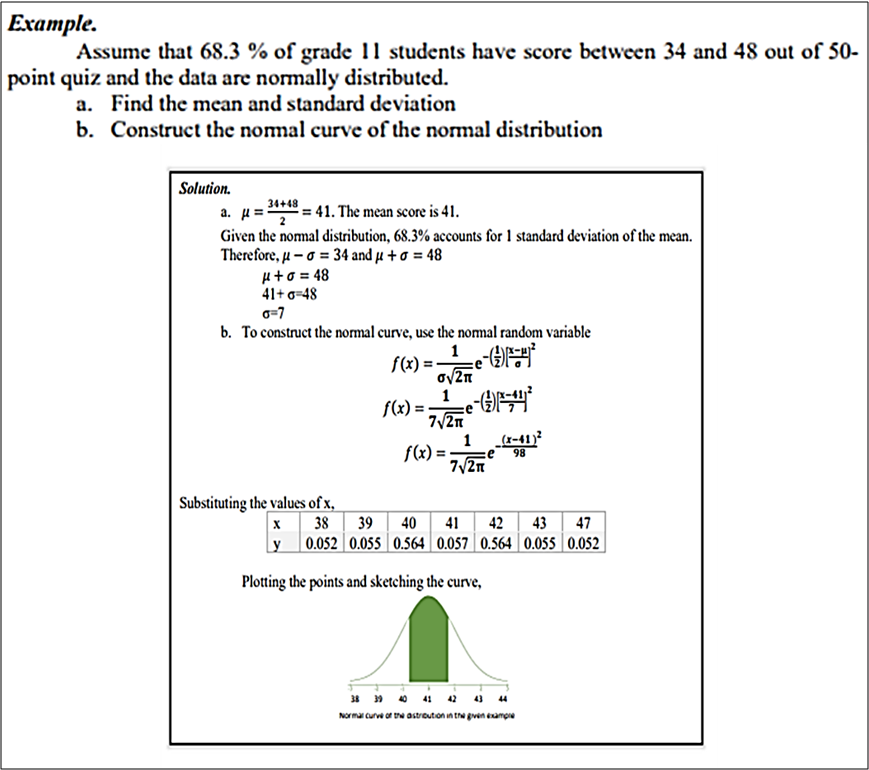
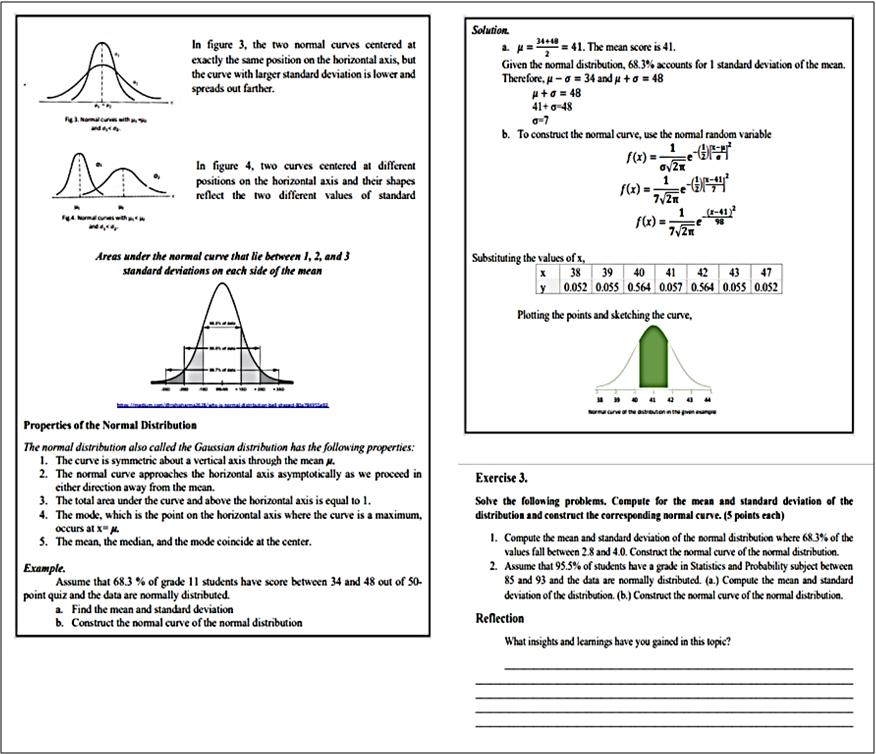
Figure 3 shows the technology-aided instruction for the topic of constructing the normal curve. This is also shown in problem-based learning, manipulatives, models and multiple representations, and direct instruction.

Figure 3 shows the given example for constructing the normal curve. Before constructing a normal curve, the mean and the standard deviation must be computed first. To construct the normal curve the values of the mean and standard deviation must be substituted in the given formula. The computation cannot be done manually. It is considered a technology-aided instruction pedagogical approach because it allows students to use calculators for problem-solving instruction and activities, to help them develop problem-solving strategies, to use calculators for computations, and to use graphing calculators.
In this activity, students were given different representations to better understand the lesson, but the question is, do they still recall the symbols presented in the figure such as the Greek characters called myu and sigma? In the classroom setup, teachers usually start with review or recall. They also constructed the normal curve as a class. With this, most or majority of the students understand how the values of x and y in the table were generated and they will also understand how to construct the normal curve. To better facilitate the use of technology, an interactive app, website, or link should be placed in the module that will redirect them to either explore, watch, or read more about the topic. Technology has the potential to transform learning. It has the potential to strengthen and improve connections between educators and students, reimagines our approaches to learning and collaboration, close long-standing equity and accessibility gaps, and customize learning experiences to meet the needs of all learners. However, educators must properly employ technology in their profession if they are to entirely realize the benefits of technology in our educational system and offer authentic learning experiences 29.
Moreover, in a face-to-face approach using technology-aided instruction, teachers' activities can be categorized into two major tasks: planning and providing; and building good relationships between teachers and learners using technology 30. With the change of modality, the purpose of making computation easier becomes an additional burden for the students because they do not know how to use these kinds of technologies.
Figure 3 is also considered problem-based learning because it allows students to use many alternative problem-solving practices, draw mathematical concepts from "real-life" situations, and create problems from the interests of individual students. It is also considered manipulatives, models, and multiple representations because it allows students to represent distributions with graphs. This is also considered direct instruction because it allows students to learn by a graduated sequence of instruction, moving from concrete to abstract concepts in defined steps and indicating a one-step-at-a-time process in working equations.
Pedagogical Approach 3: Problem-Based Learning
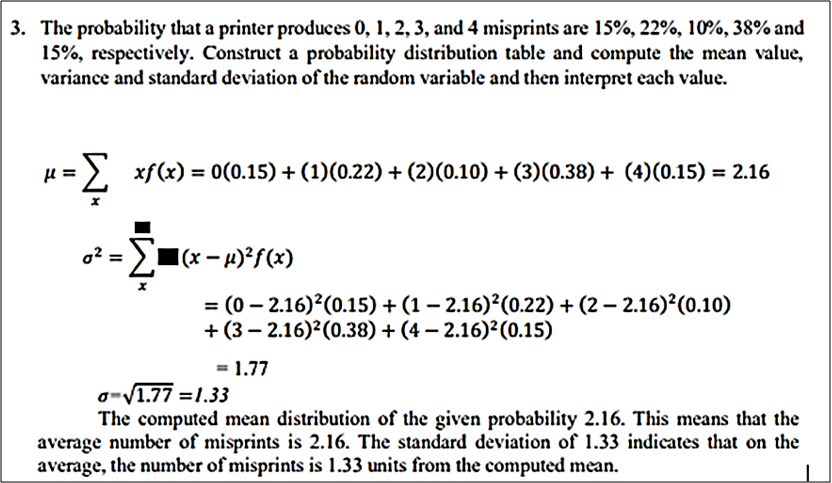
Problem-based learning is a method of teaching through problem-solving where students apply a general rule or draw new conclusions or rules from the information presented in the problem 28. Figure 4 shows problem-based learning on computation for the mean and variance of the probability distribution. This is considered direct instruction and technology-aided instruction.

Figure 4 shows the computation of the mean, variance, and standard solution. PBL is a style of instruction that emphasizes active and practical learning with an emphasis on exploring and looking for solutions to real-world problems. PBL is particularly intriguing because it seems to be a "popular" teaching strategy. It is a technique that has been utilized effectively for many years and is becoming more and more popular in several industries, including engineering, mathematics, and medicine. PBL is used in a setting where issues encourage self-directed learning. However, it was a major task for both the students and the teacher in the pandemic scenario 31.
It is also considered to be direct instruction because it allows students to review concepts by emphasizing their comparisons with previously covered concepts, to identify a new skill or concept at the beginning of instruction and provide a rationale for learning it, to use pre-worked examples to introduce or reinforce topics and to practice work exercises ensuring that majority of the problems given are the review of previously covered material. Moreover, it is considered technology-aided instruction because it allows students to use calculators for computations deviation of the probability distribution. It is a problem-based learning (PBL) because it allows students to use many alternative problem-solving practices and to emphasize the problem-solving process, rather than the Figure 5 shows the problem-based learning pedagogical approach for the topic of normal distribution and its properties. It is also shown to be direct instruction, communication and study skills, and technology-aided instruction.

Figure 5 shows the background information given to learners about the normal distribution and its properties, a given example, given activities and a reflection to be answered by the students about the lesson. It is considered problem-based learning because it allows students to emphasize the problem-solving process, rather than the solution, to draw mathematical concepts from "real-life" situations, and pursue open-ended and extended problem-solving projects. It is also considered to be direct instruction because it allows students to review concepts by emphasizing their comparisons with previously covered concepts. Furthermore, it is communication and study skills because they allow students to describe their thought processes orally or in writing during problem-solving, to write about their problem-solving, to use reading instructional strategies to help them with comprehension and to be guided by study skills instruction. Moreover, it is technology-aide instruction because it allows students to use calculators for problem-solving instruction and activities, to use calculators to help them develop problem-solving strategies, and for computations. In the study of Ajai and Imoko 32, they suggested that problem-based learning should therefore be used as an additional teaching strategy to existing traditional methods of teaching mathematics.
Pedagogical Approach 4: Manipulatives, Models, and Multiple Representation.
One of the pedagogical approaches considered in the study is manipulatives, models, and multiple representations. Johnson 19 considered manipulatives as objects intended for students to learn through manipulation. Other representation also includes pictorial representations, real-life representation, symbolic representation, and technological representations.
Pictorial representations also referred to as pictures, refer to anything hand-sketched or computer-generated that represents concrete objects. It could be a photograph, a hand-drawn picture, tallies, a graph, or a chart. These may include any two-dimensional representations 19.
Meanwhile, symbolic representation refers to symbols or abstracts, to the actual letters, digits, and/or symbols used to represent numbers, formulas, or any other numerical, algebraic, or geometric concepts 19. Mathematics manipulatives are among the most widely used mathematics education instructional strategies 33. Teachers have historically relied on physical manipulatives. During the pandemic, there is a need to use virtual models to facilitate the understanding of the students in the concepts of statistics and probability. There is some evidence that during distance learning, teachers who had never used virtual classrooms (VM) started doing so 34. But, the case in the study is different because there were no virtual manipulatives used since the modality was limited only to the modular approach. Again, even if the material may present different models or representations, the guidance and instruction of the teachers are very important.
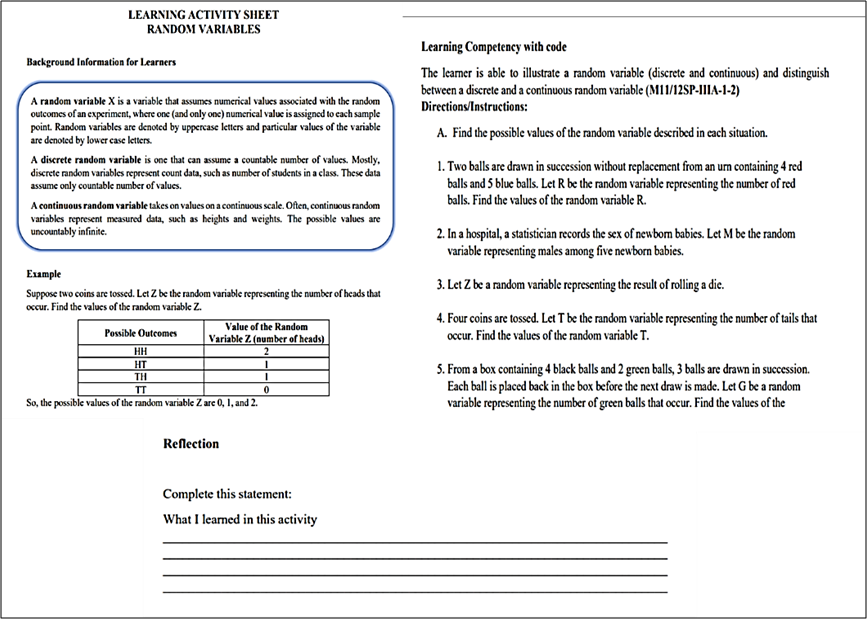
Figure 6 shows manipulatives, models, and multiple representation pedagogical approaches for the topic of random variables, considered as direct instruction.

Figure 6 shows the background information given to learners, a given example, activities and a reflection to be answered by the students about the lesson. These are manipulatives, models, and multiple representations because these allow students to use multiple representations like words, tables, graphs, and symbols and to represent problems with tables.
Figure 6 is also considered to be direct instruction because it allows students to identify a new skill or concept at the beginning of instruction and provide a rationale for learning it, to practice work exercises ensuring that the majority of the problems given are reviews of previously covered material.
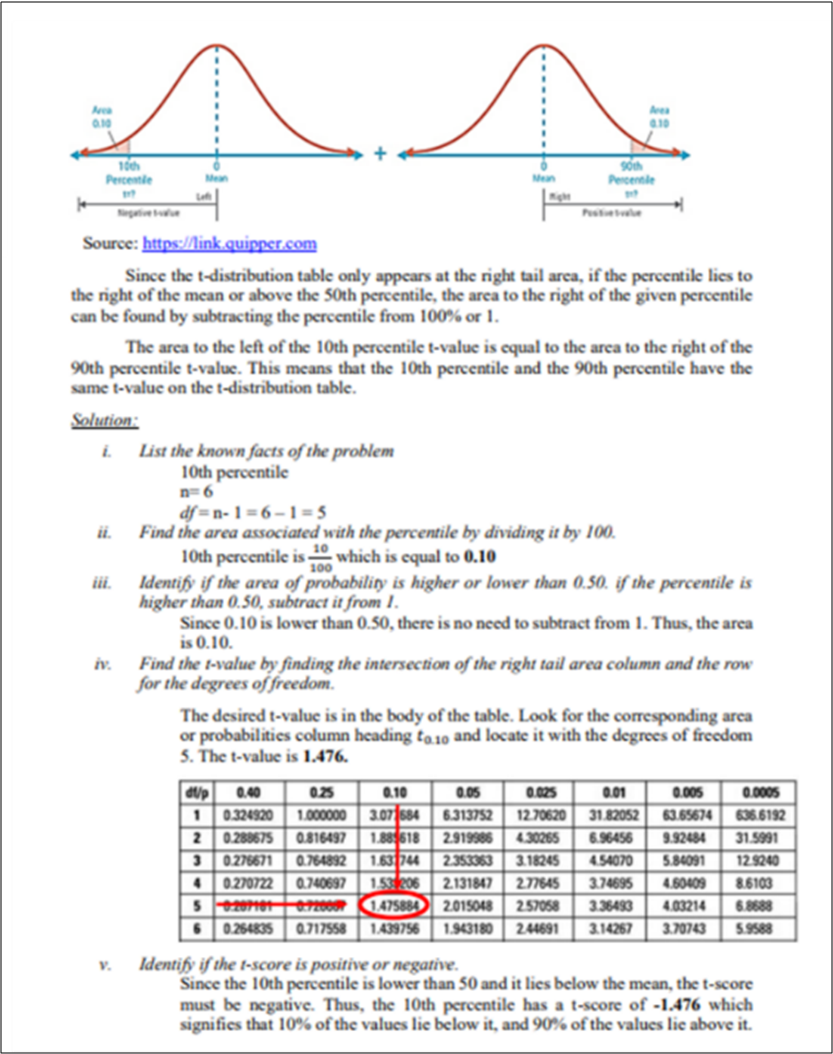
Figure 7 shows the pedagogical approach as manipulatives, models, multiple representations, and direct instruction about the topic, finding the percentiles using the t-distribution.

Figure 7 shows the topic of the percentiles using the t-distribution tables. In the given example, a graph is used to visualize the location of the 10th percentile and 90th percentiles of the normal distribution. Figure 7 is also considered manipulative, model, and multiple representations because it allows students to learn mathematical concepts with pictures. It is also direct instruction because it allows students to indicate a one-step-at-a-time process in working equations.
Pedagogical Approach 5: Direct Instruction.
Direct instruction is a teaching model that consists of the teacher's explanation of students' concepts or skills followed by asking students to test their understanding by doing exercises under his/her guidance and encouraging them to continue to practice under the same guidance 35.
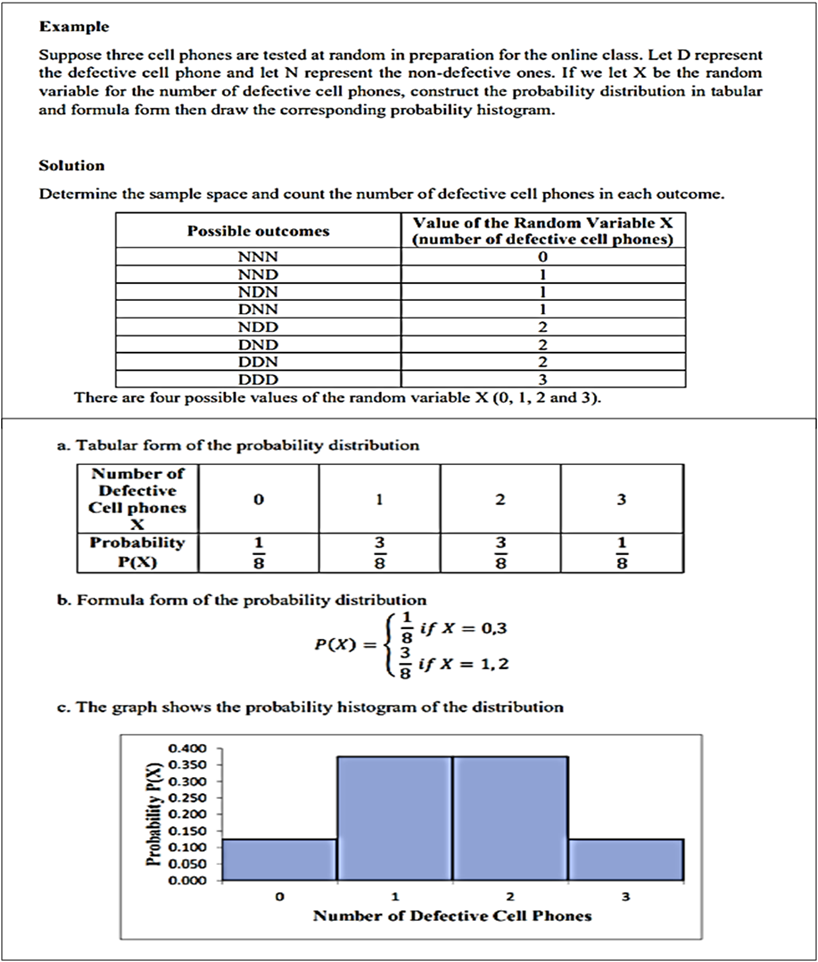
Figure 8 shows the sample of the identified direct instruction and manipulatives, models, and multiple representations for the topic of random variables and probability distribution.

Figure 8 shows that the given sample activity requires the construction of the probability distribution in tabular and formula form and the students must construct the histogram of the probability distribution. This is direct instruction because this allows students to review concepts by emphasizing their comparisons with previously covered materials, allows students to identify a new skill or concept at the beginning of instruction, and provides a rationale for learning it. It is also a one-step-at-a-time process in working equations, uses pre-worked examples to introduce or reinforce topics, and allows students to practice work exercises ensuring that the majority of the problems are the review of previously covered materials.
In a face-to-face class, the role of the teacher to give instructions to the students is very important. It can be seen in the module that instructions are integrated but clarifications cannot be made because the teacher is not present during the time of reading the instruction. Besides, usually, the time frame of the lessons during the pandemic was self-phase. Students can even do their activities at any convenient time for them.
The figure also shows the use of manipulatives, models, and multiple representations because it allows students to learn mathematical concepts with pictures, represents distribution with graphs, represent problems with tables, and represent problems with charts.
Synthesis
Only the learning activity sheets of the statistics and probability were explored because the only modality reported was the modular approach. Each of the selected excerpts from the learning activity sheets shows that pedagogical approaches were present in the module. However, proper implementation of these approaches as explained in each literature cannot be fully realized because of the teaching approach used. It can also be concluded that almost all of the excerpts contained two or more pedagogical approaches. The main concern was the lack of interaction between the students and teachers.
The developers of the module particularly the learning activity sheets contain pedagogical approaches in statistics and probability. These were communication and study skills, technology-aided instruction, problem-based learning, manipulatives, modules, models and multiple representations, and direct instruction. However, due to being dependent on one distance learning modality, the modular approach, the integration of the pedagogical approaches in the module was not delivered properly. Hence, educators may consider the blended learning approach and other engaging pedagogical approaches such as cooperative learning. Integration of further instructions to the learners may also be considered such as providing e-learning or interactive resources that students can visit to better understand the lessons in statistics and probability. This can also be integrated into the modules used even in face-to-face modality because this will serve as supplementary materials to the students in case, they requested further discussion about the topics that they find very difficult.
We thank the Department of Science and Technology – Science Education Institution for the scholarship under the Capacity Building Program in Science and Mathematics Education (CBPSME).
| [1] | Gurat, M. & de Gracia, R. (2016). Predictors of Students’ Competence in Applying Mathematics in Real World Problems. Journal of Studies in Social Sciences, 15 (2): 49-62. | ||
| In article | |||
| [2] | Candelario-Aplaon, Z. (2017, December). Needs assessment of senior high school mathematics teachers in teaching statistics and probability. International Forum Journal. 20 (2). 143-159. | ||
| In article | |||
| [3] | Porter, T. (2020). Probability and statistics. Encyclopædia Britannica; Encyclopædia Britannica. https://www.britannica.com/science/probability. | ||
| In article | |||
| [4] | Gurat, M. G., del Rosario, F. Y. G., Dizon, P. K. L., & Saludarez, M. U. (2018). Assessment of research faculty development program efficacy in writing research proposals. International Research Journal of Management, IT and Social Sciences, 5(4), 1-17. | ||
| In article | View Article | ||
| [5] | Sharma, M., ONta, M., Shrestha, S., Sharma, M. & Bhattarai, T. (2021). The Pedagogical Shift During COVID-19 Pandemic: Emergency Remote Learning Practices in Nursing and its Effectiveness. Asian Journal of Distance Education, 16(1), 98-110. | ||
| In article | |||
| [6] | Aquino, E.T.M., & Gurat, M.G. (2023). Satisfaction of Students in the Methods Used in Mathematics in the Modern World in a New Normal. American Journal of Educational Research. 2023; 11(3): 144-150. | ||
| In article | View Article | ||
| [7] | Bhowmik, M., Banerjee, B., & Banerjee, J. (2013). Role of pedagogy in effective teaching. Basic Research Journal of Education Research and Review, 2 (1), 1-5. | ||
| In article | |||
| [8] | Umugiraneza, O., Bansilal, S., & North, D. (2017). Exploring teachers’ practices in teaching Mathematics and Statistics in KwaZulu-Natal schools. South African Journal of Education, 37 (2). | ||
| In article | View Article | ||
| [9] | Behlol, M. G., Akbar, R. A., & Sehrish, H. (2018). Effectiveness of problem-solving method in teaching mathematics at elementary level. Bulletin of Education and Research, 40 (1), 231-244. | ||
| In article | |||
| [10] | Johnson, D. W., & Johnson, R. T. (2018). Cooperative learning: The foundation for active learning. In (Ed.), Active learning - beyond the future. IntechOpen. | ||
| In article | View Article | ||
| [11] | Yemi, T. M., Azid, N. B. H., & bin Md Ali, M. R. (2018). Cooperative Learning: An approach for teaching mathematics in public school. European Journal of Social Sciences. | ||
| In article | |||
| [12] | Kane, L. (2018). Cooperative learning in math education. https://nwcommons.nwciowa.edu/cgi/viewcontent.cgi?article=1101&context=education_masters. | ||
| In article | |||
| [13] | Remillard, H. A. (2015). The effect of cooperative learning on middle school math students. Online Submission. https://eric.ed.gov/?id=ED565634. | ||
| In article | |||
| [14] | Cardino Jr, J. M., & Cruz, R. A. O. D. (2020). Understanding of learning styles and teaching strategies towards improving the teaching and learning of mathematics. LUMAT: International Journal on Math, Science and Technology Education, 8 (1), 19-43. | ||
| In article | View Article | ||
| [15] | Gerald, B., & Allan, M. (2018). Effect of cooperative learning on students’ attitude and performance towards probability distributions in statistics. Journal of Education and Practice, 9 (14), 43-50. | ||
| In article | |||
| [16] | Forrest, D. B. (2009). Communication theory offers insight into mathematics teachers' talk. The Mathematics Educator, 18 (2) https://files.eric.ed.gov/fulltext/EJ841571.pdf. | ||
| In article | |||
| [17] | Lynch, M. (2018, May 1). Digital learning theories and models that all educators should know. The Edvocate. https://www.theedadvocate.org/digital-learning-theories-and-models-that-all-educators-should-know/. | ||
| In article | |||
| [18] | Hmelo-Silver, C.E., Eberbach, C. (2012). Learning theories and problem-based learning. In: Bridges, S., McGrath, C., Whitehill, T. (eds) Problem-based learning in clinical education. Innovation and change in professional education, 8. Springer, Dordrecht. | ||
| In article | View Article | ||
| [19] | Johnson, E. L. (2018). A new look at the representations for mathematical concepts: Expanding on Lesh's Model of Representations of Mathematical Concepts. In Forum on Public Policy Online, 2018, (1). Oxford Round Table. 406 West Florida Avenue, Urbana, IL 61801. | ||
| In article | |||
| [20] | Heward, W. L., & Twyman, J. S. (2021). Teach more in less time: Introduction to the special section on direct instruction. Behavior Analysis in Practice, 14 (3), 763-765. | ||
| In article | View Article PubMed | ||
| [21] | Hufana, D.A.T & Gurat, M.G. (2023). Individual, Motivational, and Social Support Factors Towards Learning Mathematics of University Students in the Blended Learning Approach. American Journal of Educational Research, 11(4): 175-182. | ||
| In article | View Article | ||
| [22] | Bowen, G. A. (2009). Document analysis as a qualitative research method. Qualitative Research Journal. | ||
| In article | View Article | ||
| [23] | Morgan, H. (2022). Conducting a qualitative document analysis. Qualitative Report, 27 (1). | ||
| In article | View Article | ||
| [24] | Rohid, N., & Rusmawati, R. D. (2019). Students' mathematical communication skills (MCS) in solving mathematics problems: A case in Indonesian context. Anatolian Journal of Education, 4 (2), 19-30. | ||
| In article | View Article | ||
| [25] | Poskey, M. (2013, June 1. ) Effective Communication: easier said than understood. IRMI. https://www.irmi.com/articles/expert-commentary/effective-communication-easier-said-than-understood. | ||
| In article | |||
| [26] | Mackinney, R., Kelly, J., Pulling, C. (2021). The effect of feedback type on academic performance, Practice and Evidence of Scholarship of Teaching and Learning in Higher Education, 15(1), 78-93. | ||
| In article | |||
| [27] | Kudryashova, A., Gorbatova, T., Rybushkina, S., & Ivanova, E. (2016). Teacher’s Roles to Facilitate Active Learning. Mediterranean Journal of Social Sciences, 7(1), 460. | ||
| In article | View Article | ||
| [28] | Haas, M. S. (2002). The influence of teaching methods on student achievement on Virginia's end of course standards of learning test for algebra I (Doctoral dissertation) Virginia Tech. http://hdl.handle.net/10919/29203. | ||
| In article | |||
| [29] | US Department of Education (2017). Reimagining the role of technology in Education. https://tech.ed.gov/files/2017/01/NETP17.pdf. | ||
| In article | |||
| [30] | Mahini, F., Forushan, ZJ.., & Haghani,F. (2012). The Importance of Teacher's Role in Technology-Based Education. Procedia - Social and Behavioral Sciences, 46, 1614-1618. | ||
| In article | View Article | ||
| [31] | Rézio, S., Andrade, M. P., & Teodoro, M. F. (2022). Problem-Based Learning and Applied Mathematics. Mathematics, 10(16), 2862. MDPI AG. | ||
| In article | View Article | ||
| [32] | Ajai, J. T., & Imoko, B. I. (2015). Gender differences in mathematics achievement and retention scores: A case of problem-based learning method. International Journal of research in Education and Science, 1(1), 45-50. | ||
| In article | View Article | ||
| [33] | Carbonneau, K. J., Zhang, X., & Ardasheva, Y. (2018). Preservice educators’ perceptions of manipulatives: The moderating role of mathematics teaching self-efcacy. School Science & Mathematics, 118(7), 300-309. | ||
| In article | View Article | ||
| [34] | Schuck, R. K., & Lambert, R. (2020). “Am I doing enough?” Special educators’ experiences with emergency remote teaching in Spring 2020. Education Sciences, 10(11), 320. | ||
| In article | View Article | ||
| [35] | Hermawan, C. M., Rosfiani, O., & Lutfiana, V. (2020). The effectiveness of direct instruction model in mathematics subjects: A classroom action research in elementary school. International Journal of Scientific & Technology Research, 9 (4), 2506-2509. | ||
| In article | |||
Published with license by Science and Education Publishing, Copyright © 2023 Cathlyn P. Dumale and Melanie G. Gurat
 This work is licensed under a Creative Commons Attribution 4.0 International License. To view a copy of this license, visit
http://creativecommons.org/licenses/by/4.0/
This work is licensed under a Creative Commons Attribution 4.0 International License. To view a copy of this license, visit
http://creativecommons.org/licenses/by/4.0/
| [1] | Gurat, M. & de Gracia, R. (2016). Predictors of Students’ Competence in Applying Mathematics in Real World Problems. Journal of Studies in Social Sciences, 15 (2): 49-62. | ||
| In article | |||
| [2] | Candelario-Aplaon, Z. (2017, December). Needs assessment of senior high school mathematics teachers in teaching statistics and probability. International Forum Journal. 20 (2). 143-159. | ||
| In article | |||
| [3] | Porter, T. (2020). Probability and statistics. Encyclopædia Britannica; Encyclopædia Britannica. https://www.britannica.com/science/probability. | ||
| In article | |||
| [4] | Gurat, M. G., del Rosario, F. Y. G., Dizon, P. K. L., & Saludarez, M. U. (2018). Assessment of research faculty development program efficacy in writing research proposals. International Research Journal of Management, IT and Social Sciences, 5(4), 1-17. | ||
| In article | View Article | ||
| [5] | Sharma, M., ONta, M., Shrestha, S., Sharma, M. & Bhattarai, T. (2021). The Pedagogical Shift During COVID-19 Pandemic: Emergency Remote Learning Practices in Nursing and its Effectiveness. Asian Journal of Distance Education, 16(1), 98-110. | ||
| In article | |||
| [6] | Aquino, E.T.M., & Gurat, M.G. (2023). Satisfaction of Students in the Methods Used in Mathematics in the Modern World in a New Normal. American Journal of Educational Research. 2023; 11(3): 144-150. | ||
| In article | View Article | ||
| [7] | Bhowmik, M., Banerjee, B., & Banerjee, J. (2013). Role of pedagogy in effective teaching. Basic Research Journal of Education Research and Review, 2 (1), 1-5. | ||
| In article | |||
| [8] | Umugiraneza, O., Bansilal, S., & North, D. (2017). Exploring teachers’ practices in teaching Mathematics and Statistics in KwaZulu-Natal schools. South African Journal of Education, 37 (2). | ||
| In article | View Article | ||
| [9] | Behlol, M. G., Akbar, R. A., & Sehrish, H. (2018). Effectiveness of problem-solving method in teaching mathematics at elementary level. Bulletin of Education and Research, 40 (1), 231-244. | ||
| In article | |||
| [10] | Johnson, D. W., & Johnson, R. T. (2018). Cooperative learning: The foundation for active learning. In (Ed.), Active learning - beyond the future. IntechOpen. | ||
| In article | View Article | ||
| [11] | Yemi, T. M., Azid, N. B. H., & bin Md Ali, M. R. (2018). Cooperative Learning: An approach for teaching mathematics in public school. European Journal of Social Sciences. | ||
| In article | |||
| [12] | Kane, L. (2018). Cooperative learning in math education. https://nwcommons.nwciowa.edu/cgi/viewcontent.cgi?article=1101&context=education_masters. | ||
| In article | |||
| [13] | Remillard, H. A. (2015). The effect of cooperative learning on middle school math students. Online Submission. https://eric.ed.gov/?id=ED565634. | ||
| In article | |||
| [14] | Cardino Jr, J. M., & Cruz, R. A. O. D. (2020). Understanding of learning styles and teaching strategies towards improving the teaching and learning of mathematics. LUMAT: International Journal on Math, Science and Technology Education, 8 (1), 19-43. | ||
| In article | View Article | ||
| [15] | Gerald, B., & Allan, M. (2018). Effect of cooperative learning on students’ attitude and performance towards probability distributions in statistics. Journal of Education and Practice, 9 (14), 43-50. | ||
| In article | |||
| [16] | Forrest, D. B. (2009). Communication theory offers insight into mathematics teachers' talk. The Mathematics Educator, 18 (2) https://files.eric.ed.gov/fulltext/EJ841571.pdf. | ||
| In article | |||
| [17] | Lynch, M. (2018, May 1). Digital learning theories and models that all educators should know. The Edvocate. https://www.theedadvocate.org/digital-learning-theories-and-models-that-all-educators-should-know/. | ||
| In article | |||
| [18] | Hmelo-Silver, C.E., Eberbach, C. (2012). Learning theories and problem-based learning. In: Bridges, S., McGrath, C., Whitehill, T. (eds) Problem-based learning in clinical education. Innovation and change in professional education, 8. Springer, Dordrecht. | ||
| In article | View Article | ||
| [19] | Johnson, E. L. (2018). A new look at the representations for mathematical concepts: Expanding on Lesh's Model of Representations of Mathematical Concepts. In Forum on Public Policy Online, 2018, (1). Oxford Round Table. 406 West Florida Avenue, Urbana, IL 61801. | ||
| In article | |||
| [20] | Heward, W. L., & Twyman, J. S. (2021). Teach more in less time: Introduction to the special section on direct instruction. Behavior Analysis in Practice, 14 (3), 763-765. | ||
| In article | View Article PubMed | ||
| [21] | Hufana, D.A.T & Gurat, M.G. (2023). Individual, Motivational, and Social Support Factors Towards Learning Mathematics of University Students in the Blended Learning Approach. American Journal of Educational Research, 11(4): 175-182. | ||
| In article | View Article | ||
| [22] | Bowen, G. A. (2009). Document analysis as a qualitative research method. Qualitative Research Journal. | ||
| In article | View Article | ||
| [23] | Morgan, H. (2022). Conducting a qualitative document analysis. Qualitative Report, 27 (1). | ||
| In article | View Article | ||
| [24] | Rohid, N., & Rusmawati, R. D. (2019). Students' mathematical communication skills (MCS) in solving mathematics problems: A case in Indonesian context. Anatolian Journal of Education, 4 (2), 19-30. | ||
| In article | View Article | ||
| [25] | Poskey, M. (2013, June 1. ) Effective Communication: easier said than understood. IRMI. https://www.irmi.com/articles/expert-commentary/effective-communication-easier-said-than-understood. | ||
| In article | |||
| [26] | Mackinney, R., Kelly, J., Pulling, C. (2021). The effect of feedback type on academic performance, Practice and Evidence of Scholarship of Teaching and Learning in Higher Education, 15(1), 78-93. | ||
| In article | |||
| [27] | Kudryashova, A., Gorbatova, T., Rybushkina, S., & Ivanova, E. (2016). Teacher’s Roles to Facilitate Active Learning. Mediterranean Journal of Social Sciences, 7(1), 460. | ||
| In article | View Article | ||
| [28] | Haas, M. S. (2002). The influence of teaching methods on student achievement on Virginia's end of course standards of learning test for algebra I (Doctoral dissertation) Virginia Tech. http://hdl.handle.net/10919/29203. | ||
| In article | |||
| [29] | US Department of Education (2017). Reimagining the role of technology in Education. https://tech.ed.gov/files/2017/01/NETP17.pdf. | ||
| In article | |||
| [30] | Mahini, F., Forushan, ZJ.., & Haghani,F. (2012). The Importance of Teacher's Role in Technology-Based Education. Procedia - Social and Behavioral Sciences, 46, 1614-1618. | ||
| In article | View Article | ||
| [31] | Rézio, S., Andrade, M. P., & Teodoro, M. F. (2022). Problem-Based Learning and Applied Mathematics. Mathematics, 10(16), 2862. MDPI AG. | ||
| In article | View Article | ||
| [32] | Ajai, J. T., & Imoko, B. I. (2015). Gender differences in mathematics achievement and retention scores: A case of problem-based learning method. International Journal of research in Education and Science, 1(1), 45-50. | ||
| In article | View Article | ||
| [33] | Carbonneau, K. J., Zhang, X., & Ardasheva, Y. (2018). Preservice educators’ perceptions of manipulatives: The moderating role of mathematics teaching self-efcacy. School Science & Mathematics, 118(7), 300-309. | ||
| In article | View Article | ||
| [34] | Schuck, R. K., & Lambert, R. (2020). “Am I doing enough?” Special educators’ experiences with emergency remote teaching in Spring 2020. Education Sciences, 10(11), 320. | ||
| In article | View Article | ||
| [35] | Hermawan, C. M., Rosfiani, O., & Lutfiana, V. (2020). The effectiveness of direct instruction model in mathematics subjects: A classroom action research in elementary school. International Journal of Scientific & Technology Research, 9 (4), 2506-2509. | ||
| In article | |||