A constructive attitude towards Sustainable Development can be contemplated as the pre-requisite towards fulfilling the Sustainable Development Goals (SDGs) and fabricating a well-balanced sustainable planet for us and our upcoming generations. Sustainable Development is the development that immune our various resources as well as our society, economy and environment in a suited manner. The present study was taken up to examine the attitude of trainee teachers in Purulia District of West Bengal towards Sustainable Development. Total 100 trainee teachers of Purulia district were taken as the sample through stratified random sampling for conducting the present study. A self-made Attitude scale on Sustainable Development was used to gather necessary data from the sample. The collected data were analysed by proper statistical techniques using SPSS. The basic results indicated that there were no significant differences on the attitude of male and female trainee teachers, rural and urban trainee teachers, and trainee teachers of arts and science stream respectively towards Sustainable Development. No differences were found between the attitude of rural male and urban male trainee teachers, rural female and urban female trainee teachers, rural male and rural female trainee teachers, male and female trainee teachers of Arts stream and male and female trainee teachers of Science stream. Hence, a significant difference was found between the attitude of urban male and urban female trainee teachers in this regard.
In today’s ameliorating world Sustainable Development is one of the most concerned and sensitive issues of this 21st century. It is one of the most widely used term in this era. Since the time of publication of Our Common Future (World Commission on Environment and Development, 1987) and Agenda 21 (United Nations Conference on Environment and Development, 1992), the concept of Sustainable Development has become a part of people’s everyday lives and has been embroiled in many activities throughout the life 1. There are three parts that are bounded reciprocally to lead a healthy and fruitful life: our society, economy and environment. The concept of Sustainable Development does not concern us only about our present generation. As a matter of fact, it arouses consciousness among us about our upcoming generations. It is only by being compassionate of the environmental services, we would be able to determine how to allocate their use adequately 2. Three aspects are intertwined with each other, and if they are applied properly in real world situations, it can create a healthy sustainable world from which every individual can benefited. This reciprocal relationship between society, economy and environment are the base point of Sustainable Development.
There are two terms ‘Sustainable Growth’ and ‘Sustainable Development’ that we use synonymously but in reality, the scope of Sustainable Development is expansive as compared to Sustainable Growth. In spite of the pervasiveness of this popular term, still there are lacking among people in conceptual clearance of this popular catchphrase. To make the Sustainable Development approach successful, individuals, the government and business must bring a new calculus to the decision-making table so that the process can be run smoothly 3. During the last few decades, it is becoming an elevated demand of human being to devise a sustainable future where the needs of the current as well as future generations will be emphasized. There are so many initiatives taken in this area such as: the setting of international guidelines for reorienting teacher education; the formation of an international network of teacher education and the development of various resources including a multimedia teacher education programme entitled ‘Teaching and Learning for a Sustainable Future’ 4 as well as ‘Learning to Live Together’ 5 which indicate the priority of creating the concept of sustainability among student-teachers. Gradually people are being conscious to secure the sustainable world so that they can reshape the society, economy and environment for fulfilling their present and future needs. The notion of Sustainable Development indicates to such stable and fixed changes that will help to uplift our society into a purer paradise 6. Goals for the national development are mirrored in Sustainable Development Goals (SDGs) and in this regard our India is committed to achieve these goals within the particular time period.
Sustainable Development is that curative manner through which ‘our world’ as well as ‘we’ can be protected. The term ‘Sustainable Development’ was described by the Brundtland commission (1987) stating, “Sustainable Development is development that meets the needs of the present without compromising the ability of future generations to meet their own needs” 7. A proper education can enable the students to acquire adequate skills, capacities and knowledge for ensuring Sustainable Development. In present scenario Sustainability is one of the biggest buzzwords essential for securing our quality lives. If Sustainable Development is the process, Sustainability is the goal to be achieved 8. It can be said that Sustainability is a condition where Sustainable Development is the means by which we will be able to achieve sustainability 9. There are many large organizations and highest thinking bodies which are being conscious about this matter and also taking necessary steps for implementing these practices in real life situations. In this regard, a well-planned education is an essential tool to fulfil the dream of sustainability. If today’s ‘we’ do not pay attention in sustaining our resources then it will be just impossible to create a sustainable world for our future generations. This dream of sustainable future cannot be fulfilled by individual effort; it is a worldwide matter in which all the individuals should take conscious part to preserve and sustain the resources as per their needs and capacities. It was obvious at The World Summit on Sustainable Development (WSSD) that the social and economic aspects of sustainable development are better integrated with the environmental goals than was the case at the Rio Summit 10. There are three components interlinked with each other that are society, economy and environment; these are three basic domains of Sustainable Development. The Commission on Sustainable Development of the United Nations stated sustainable development as having not three but four dimensions, and that newly added dimension is ‘institution’ 11. The continual evolution of realising sustainability is a formidable challenge, which requires a paradigm shift away from the dominant social paradigm towards the embodiment of the sustain-centric paradigm 12. Based on the dimensions of Sustainable Development, the historic United Nations General Assembly conference (September, 2015) has included the 17 Sustainable Development Goals (SDGs) and its 169 targets to fulfil the dream of creating a sustainable future. It is very much essential to ensure equity and participation for advancing the transition to sustainable development across the countries, societies and within the individuals 13. In this 2030 Agenda for Sustainable Development 14, these 17 goals are the milestone of our upcoming better future such as: 1. No Poverty, 2. Zero Hunger, 3. Good Health and Well Being, 4. Quality Education, 5. Gender Equality, 6. Clean Water and Sanitation, 7. Affordable and Clean Energy, 8. Decent Work and Economic Growth, 9. Industry, Innovation and Infrastructure, 10. Reduced Inequalities, 11. Sustainable Cities and Communities, 12. Responsible Consumption and Production, 13. Climate Action, 14. Life Below Water, 15. Life on Land, 16. Peace, Justice and Strong Institutions, 17. Partnerships for the Goals. It is not possible for Government or any individual to make sustainable behaviour and activity overnight in magical way; It is a long-term agenda. The UK Government Sustainable Development Strategy (2005) focused that the Government should take the responsibility to promote a rich understanding of, and commitment to, sustainable development so that each individual can contribute to the achievement of overall goal through their individual decisions 15. The entire process of Sustainable Development is the safeguard of our society, economy and environment that protects our world and enables for further betterment.
1.2. Significance of the StudySustainable Development is the need of our society, environment and economy. It maintains proper balance between social development, environmental protection and economic development. It assures development in a sustainable way so that our present needs can be fulfilled without negotiating the ability of our next generations to satisfy their needs. So, Sustainable Development is concerned as one of the most significant aspects for protecting our future world in respect to modern scenario.
Trainee teachers or B.Ed. students are preparing themselves to be teacher in further. Teachers are role model to the students; in that case they should be more aware about this sustainability for protecting our future for both of us and our next generations. It can be said that adequate knowledge and consciousness are very important for trainee teachers in B.Ed. course. This kind of worldwide matter must be acquired by them so that they can amplify their knowledge, skills, attitudes, values, behaviours etc. for reshaping our society, economy and environment and offer the next generations a better future accordingly. It is the responsibility of trainee teachers to make students sensible about the sustainability so that our resources can be stabilized for our future generations. That’s why the study is conducted by the researchers because it will help us to know the attitude of trainee teachers towards Sustainable Development and also help the students to develop more consciousness about sustainable development in future.
1.3. Operational Definitions of Key TermsAttitude-Attitude refers to an individual’s thought, their feelings and viewpoints. It leads to a person’s behavior on a particular object, people, or event.
Sustainable Development-Sustainable Development refers to the development that helps to meet the need of the present without compromising the needs of future generation so that they can also meet their needs in a sustainable world.
Trainee teachers-A Bachelor of Education (B.Ed.) is an undergraduate professional degree which prepares trainee teachers to work as a teacher in school. In a single word, these trainee teachers are the would-be teachers of educational system of a nation presently engaged in B.Ed. courses.
Elijah (2022) carried out a study entitled, “Education and Training as a tool for Sustainable Development among Secondary School Teachers in Southwest Nigeria” 16. It was found that there was no significant difference in perceptions of in-service training and academic qualifications between male and female secondary school teachers. Sarkar, C. (2020) carried out a study on awareness of Sustainable Development among secondary school students of Hoogly district 17. Findings showed moderate level of awareness among the students regarding Sustainable Development. Significant differences were found between the awareness of rural & urban students and also, between male and female students regarding Sustainable Development. Soysal and Ok (2020) conducted a study for measuring the attitudes of Pre-service classroom teachers towards Sustainable Development 18. It was revealed that Pre-service classroom teachers had positive attitudes towards Sustainable Development. Balakrishnan et al. (2019) conducted a study on Perceptions and Attitudes towards Sustainable Development among Malaysian Undergraduates 19. The findings showed that the respondents had positive perception and attitudes towards Sustainable Development. Kar et al. (2018) have conducted a study entitled, “Behavior towards sustainable development of PG students of Sidho-Kanho-Birsha University” 20. No significant difference was found between male and female students regarding their behavior towards sustainable development but students of science stream had more favourable behavior than the students of humanities stream. Malikand Shafeeq (2018) carried out a study entitled, “Attitude of Undergraduate Students towards Sustainable Development” 21. It was found that undergraduate students have favourable attitude towards Sustainable Development where male and female students did not differ in their attitude. Naikoo (2018) conducted a study to measure the “Attitude regarding Environmental Education and Sustainable Development: A case study of High school Teachers of District Kupwara” 22. It was seen that the majority of teachers have positive attitudes toward environmental education and Sustainable Development. Bhakta, K., & Guha, A. (2017) conducted a study entitled “Knowledge and Attitude of M.Ed. Trainees towards Environmental Sustainability” 23. The result revealed that there was significant difference between male and female trainees in their attitude towards environmental sustainability. No significant difference was found between the trainees of different educational streams (Language, Social Science and Science). Paul and Mehera (2016) have conducted a study entitled, “Impacts of Education on Sustainable Development: A Micro Study in Burdwan District of West Bengal, India” 24. The findings showed a positive association between Education and Sustainable Development irrespective of sex (male and female) and areas (rural and urban). Das et al. (2014) carried out a study to examine the awareness of school students about Sustainable Development in education 25. The result revealed that there is no significant difference between rural and urban students, boys and girls in rural area, boys and girls in urban area regarding their awareness of Sustainable Development in Education. Drayson, R. et al. (2014) carried out a study entitled “Student Attitudes towards and Skills for Sustainable Development” 26. The result revealed that informal learning opportunities enhanced their attitude and skills regarding sustainable development. Khalil, D. et al. (2013) have conducted a study entitled “Perception towards Sustainable Development Concept: Egyptian Students’ Perspective” 27. All the students (part of the study) confirmed interest to apply sustainable development in their lives. Borah & Neog (2012) have conducted a study entitled, “A study on Awareness of Post Graduate Students of Dibrugarh University Regarding Education for Sustainable Development” 28. The result revealed that the Post Graduate students were extremely knowledgeable on Education for Sustainable Development. Syed Sheikh, S. N. et al. (2012) conducted a study to know the perception of new first year Engineering undergraduates on Sustainable Development 29. The results revealed that most of the students were clueless about Sustainable Development at the entry level. Torbjornsson et al. (2011) carried out a study entitled, “Measuring attitudes towards three values that underline sustainable development” 30. Female showed more favourable attitude towards sustainable behavior than male counterparts where unban students had more favourable attitude towards nature preservation than the rural students.
The objectives of the present study are-
1. To study the difference between the attitude of Male and Female trainee teachers towards Sustainable Development.
2. To find out the difference between the attitude of Rural and Urban trainee teachers towards Sustainable Development.
3. To know the difference between the attitude of trainee teachers of Arts and Science stream towards Sustainable Development.
4. To find out the difference between the attitude of Rural Male and Urban Male trainee teachers towards Sustainable Development.
5. To find out the difference between the attitude of Rural Female and Urban Female trainee teachers towards Sustainable Development.
6. To find out the difference between the attitude of Rural Male and Rural Female trainee teachers towards Sustainable Development.
7. To find out the difference between the attitude of Urban Male and Urban Female trainee teachers towards Sustainable Development.
8. To study the difference between the attitude of Male and Female trainee teachers of Arts stream towards Sustainable Development.
9. To study the difference between the attitude of Male and Female trainee teachers of Science stream towards Sustainable Development.
To fulfil the objectives, following hypotheses are formulated such as:
H01. There is no significant difference between the attitude of Male and Female trainee teachers towards Sustainable Development.
H02. There is no significant difference between the attitude of Rural and Urban trainee teachers towards Sustainable Development.
H03. There is no significant difference between the attitude of trainee teachers of Arts and Science stream towards Sustainable Development.
H04. There is no significant difference between the attitude of Rural Male and Urban Male trainee teachers towards Sustainable Development.
H05. There is no significant difference between the attitude of Rural Female and Urban Female trainee teachers towards Sustainable Development.
H06. There is no significant difference between the attitude of Rural Male and Rural Female trainee teachers towards Sustainable Development.
H07. There is no significant difference between the attitude of Urban Male and Urban Female trainee teachers towards Sustainable Development.
H08. There is no significant difference between the attitude of Male and Female trainee teachers of Arts stream towards Sustainable Development.
H09. There is no significant difference between the attitude of Male and Female trainee teachers of Science stream towards Sustainable Development.
All the trainee teachers of B.Ed. colleges of Purulia district of West Bengal are considered as the population of the present study.
5.2. Sample and Sampling of the StudyWhile conducting a study, sample is a representative part of the population. Total 100 trainee teachers of Purulia district were taken as the representative sample of the whole population. Stratified random sampling technique was used to select the required sample. The strata on the basis of which the data was collected were- Gender (Male and Female), Residence (Rural and Urban) and Stream (Arts and Science).
5.3. Delimitation of the StudyIt is not possible to study all the aspects of this topic at a time. Due to shortage of time, limited resource and limited ability of the researchers, the present study was delimited in the following manner:
The study was delimited to only Purulia District of West Bengal (India).
The study was delimited to only the trainee teachers of some Teachers’ Training Colleges of Purulia District (West Bengal). The trainee teachers of semester II and IV were considered as the subjects of the study.
The study was delimited to only 3 B.Ed. colleges in Purulia District of West Bengal that are Gurukul Teachers Training Institute, Sponsored Teacher’s Training College and Manbhum Institute of Education and Social science.
5.4. Tools Used in the StudyA structured self-made attitude scale on Sustainable Development was used by the researchers to collect the data from selected B.Ed. Colleges in Purulia district. The scale consists of 40 statements among which 34 statements are positive and rest 6 negative. Each item has five options – Strongly Agree, Agree, Neutral, Disagree and Strongly Disagree and weights of 5, 4, 3, 2, 1 are given in that order for the favourable statements. The scale is a five-point scale. After the collection of data, the responses of participants were scored accordingly.
5.5. ProcedureA descriptive survey was conducted with the student-teachers by using the attitude measurement scale of Sustainable Development. Primary data was collected from them to verify the hypotheses for conducting the study. Participants were invited to give response and requested to fill up all the data of the scale.
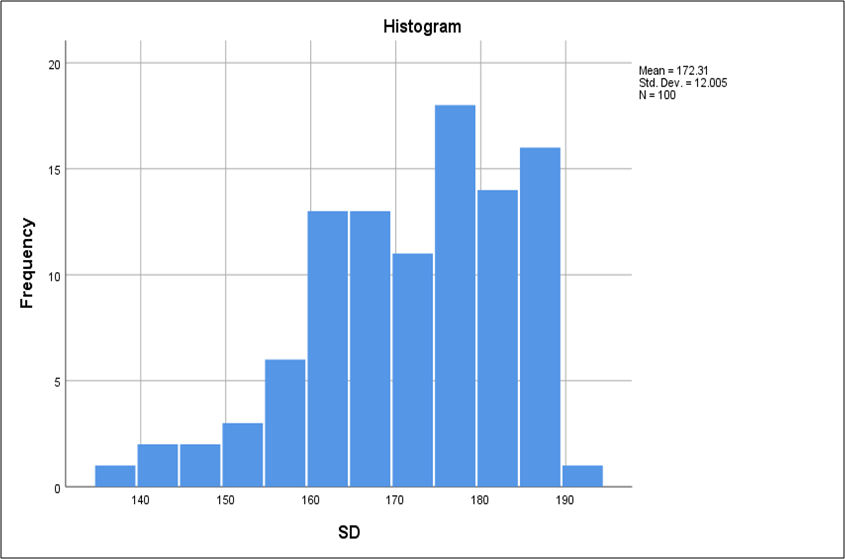
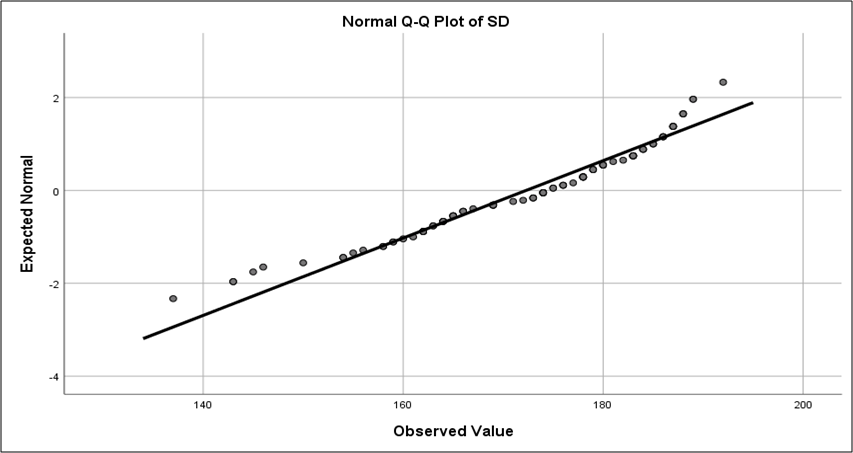
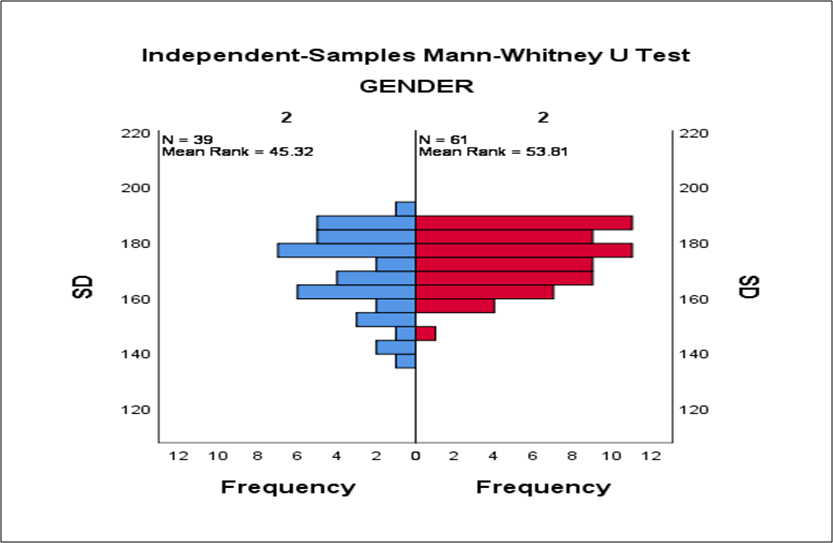
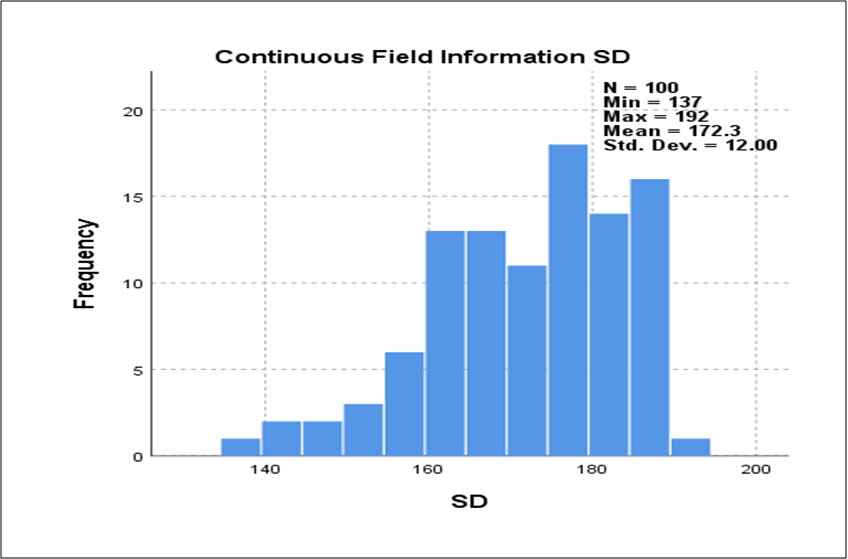
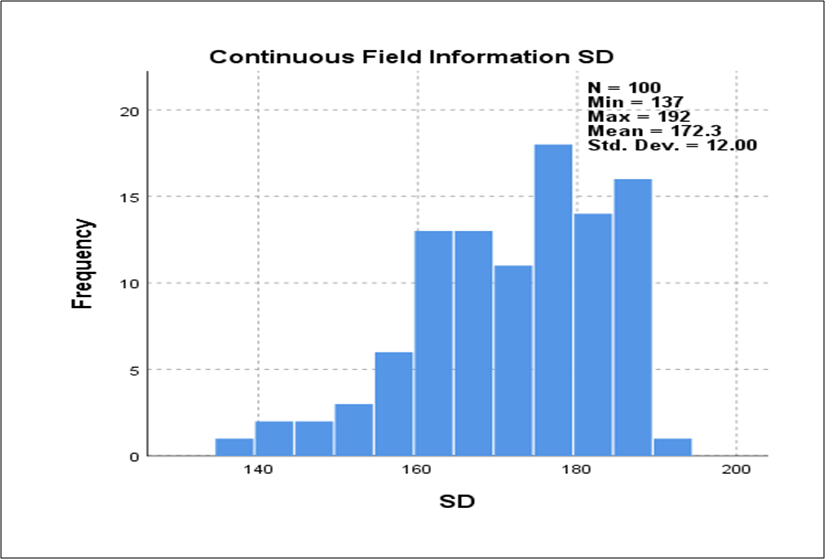
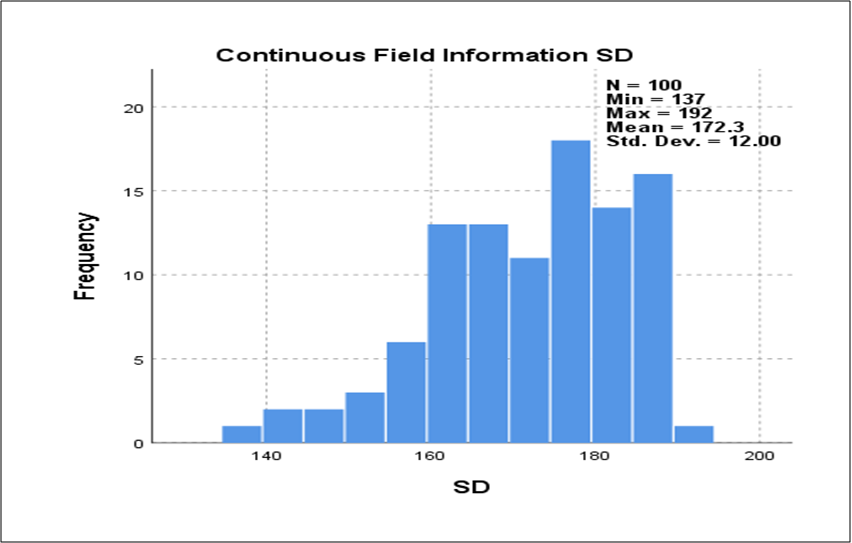
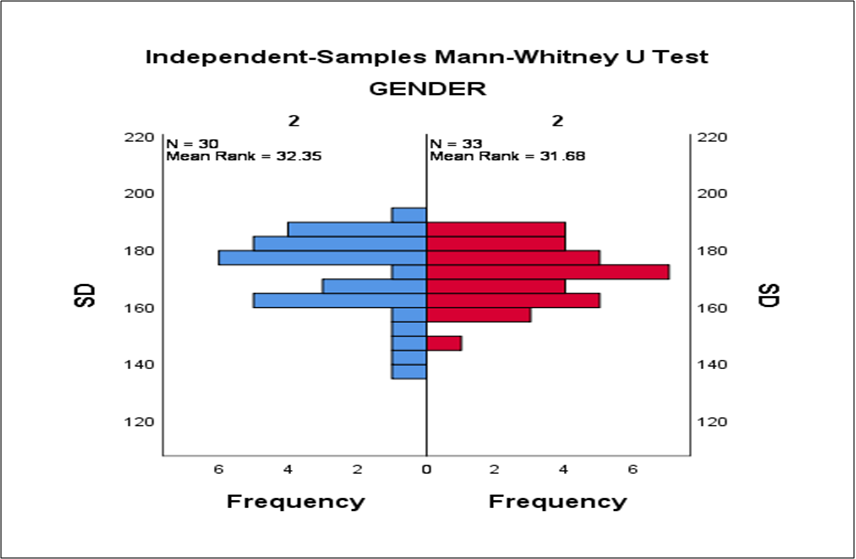
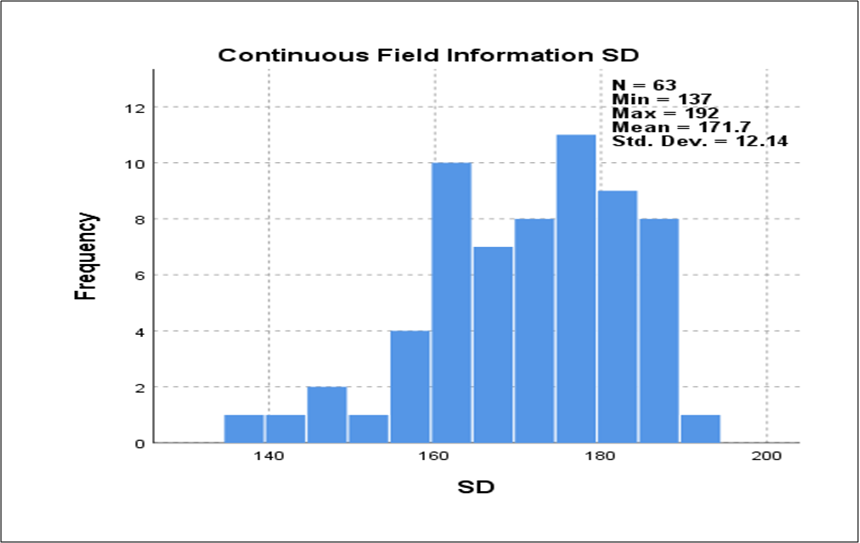
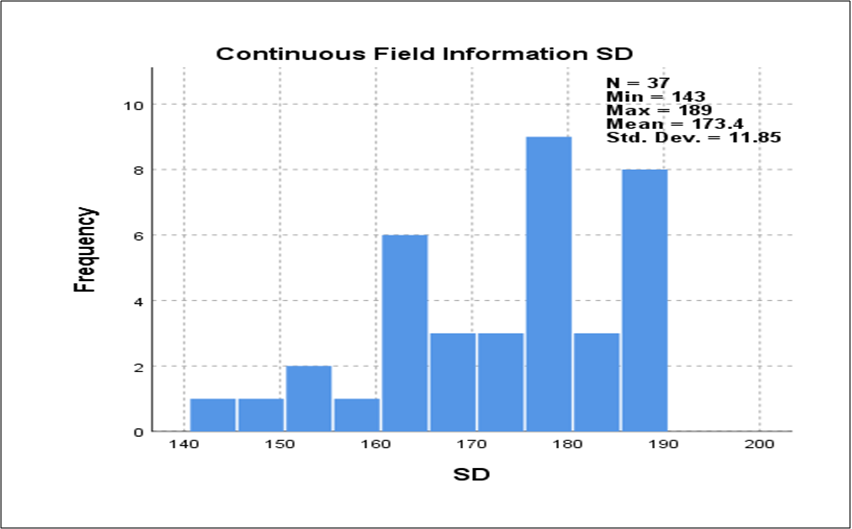
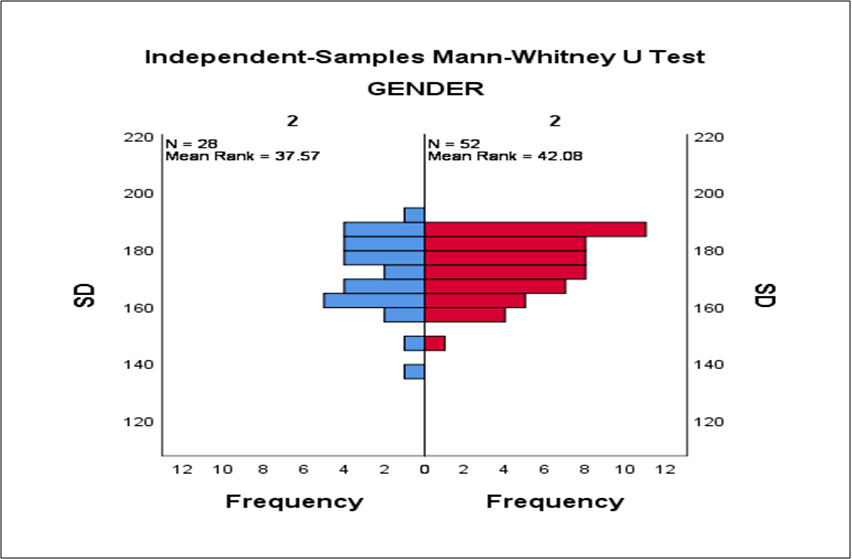
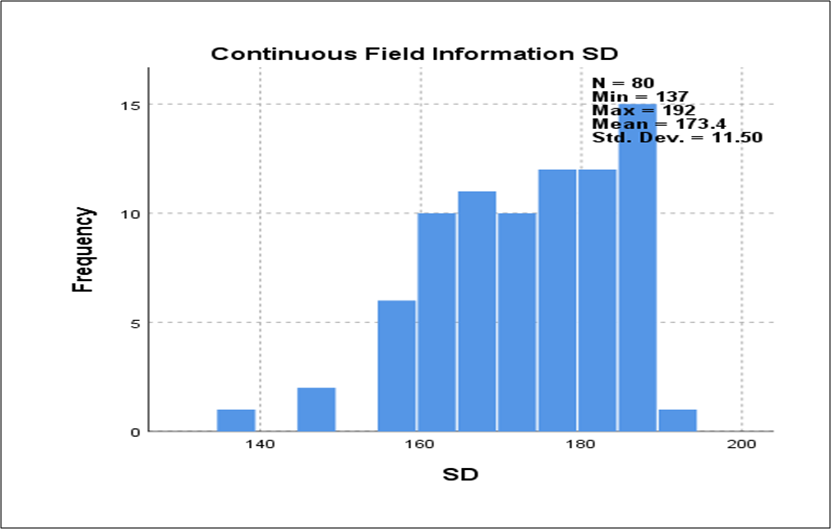
5.6. Statistics UsedAt first the researchers have applied Kolmogorov-Smirnov and Shapiro-Wilk test to check the normality of the collected data with the help of SPSS 26. According to the result, the significance values are 0.003 and 0.001 respectively which are less than 0.05. That’s why we can say that the data does not follow the Normal Probability Curve, so the data is not normally distributed. Hence, the researchers have applied Mann Whitney U Test (non-parametric test) for analysing the data and testing the null hypotheses.
Normality test:

According to Table 2, the significance value is 0.153 which is greater than 0.05. So, it can be said that H01 is accepted at .05 level of significance. It means there is no significant difference between the attitudes of Male &Female trainee teachers towards Sustainable Development.


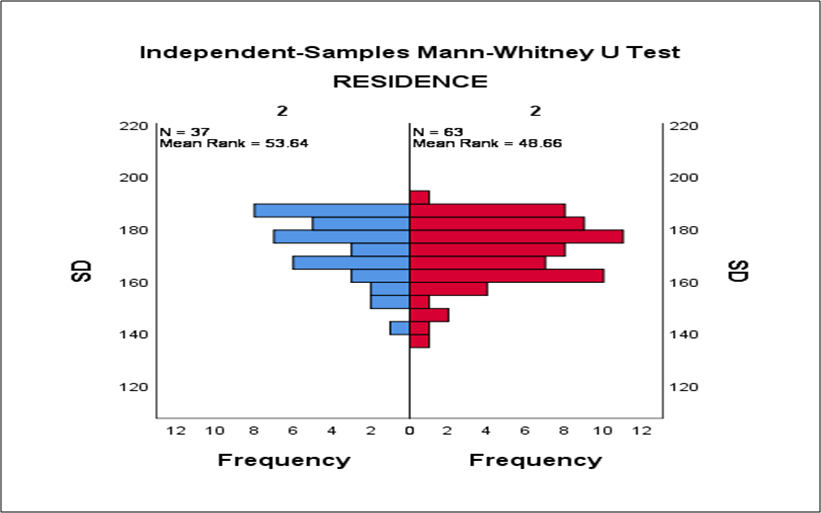
According to this table, the significance value is 0.407 which is greater than 0.05. So, it can be said that H02 is accepted at 0.05 level. It means there is no significant difference between the attitudes of Rural & Urban trainee teachers towards Sustainable Development.


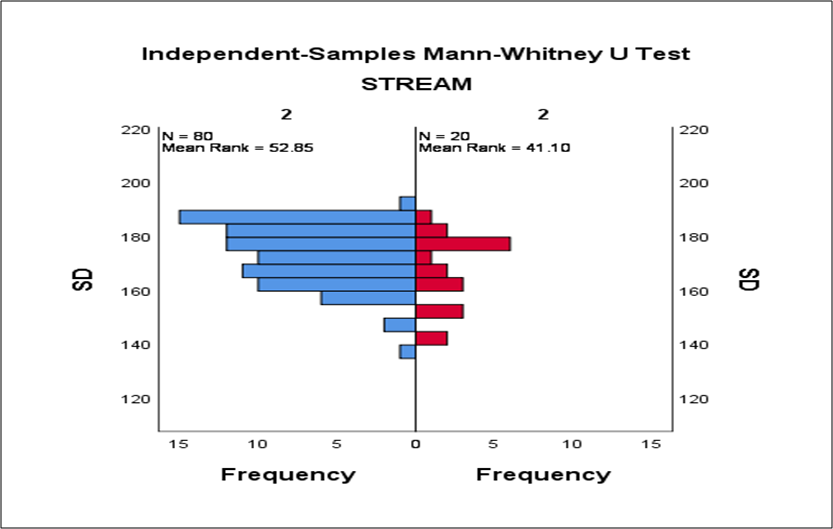
According to this table, the significance value is 0.105 which is greater than 0.05. So, it can be said that H03 is accepted at 0.05 level. It means there is no significant difference between the attitudes of trainee teachers of Arts & Science stream towards Sustainable Development.


According to this table, significance value is 0.123 which is greater than 0.05. So, it can be said that H04 is accepted at 0.05 level. It means there is no significant difference between the attitudes of Rural Male & Urban Male trainee teachers towards Sustainable Development.


According to this table, the significance value is 0.061 which is greater than 0.05. So, it can be said that H05 is accepted at 0.05 level. It means there is no significant difference between the attitudes of Rural Female & Urban Female trainee teachers towards Sustainable Development.


According to this table, the significance value is 0.885 which is greater than 0.05. So, it can be said that H06 is accepted at 0.05 level. It means there is no significant difference between the attitudes of Rural Male & Rural Female trainee teachers towards Sustainable Development.


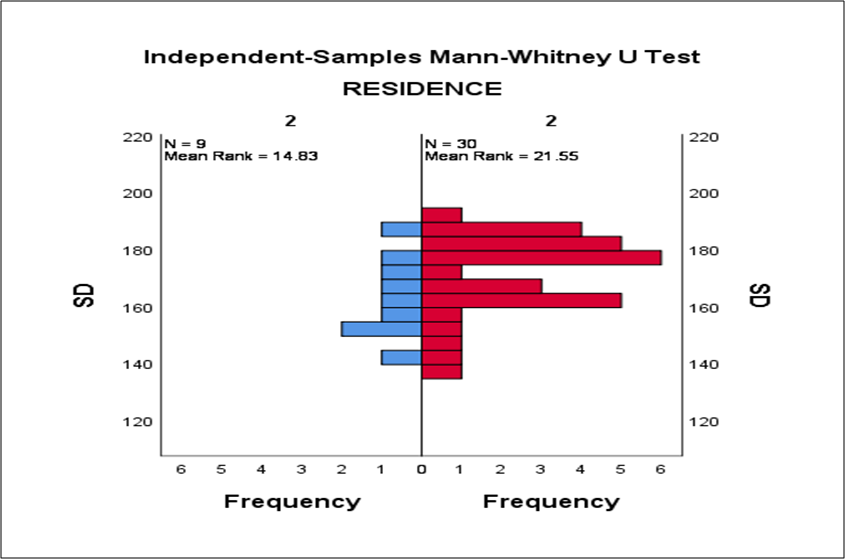
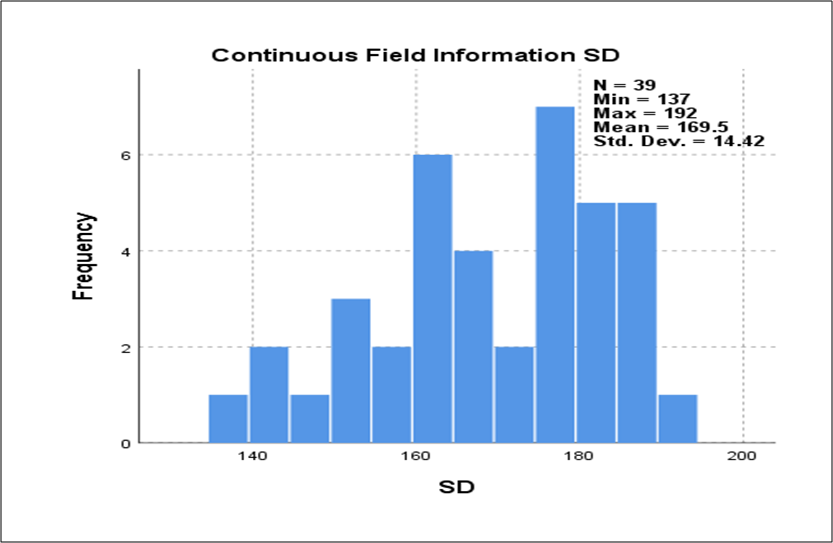
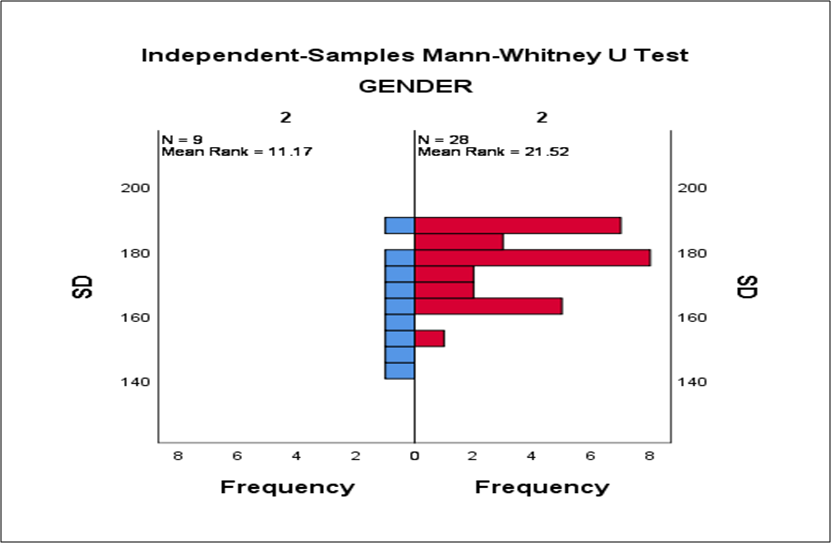
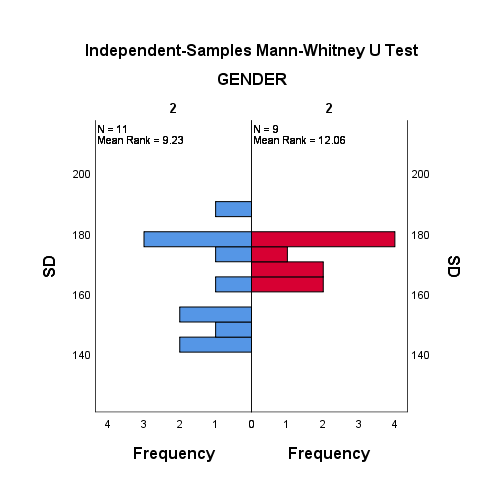
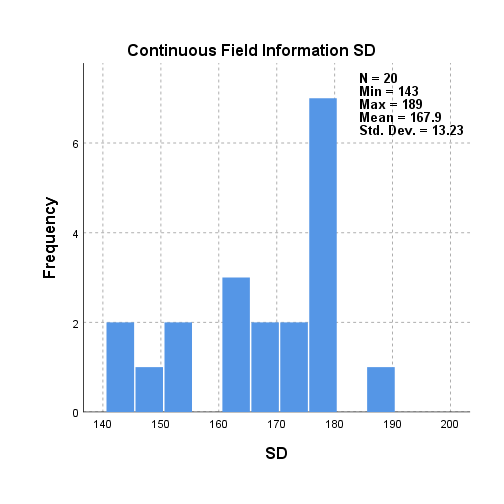
According to this table, the significance value is 0.011 which is less than 0.05. So, it can be said that H07 is failed to be accepted at 0.05 level. It means there is a significant difference between the attitudes of Urban Male & Urban Female trainee teachers towards Sustainable Development.


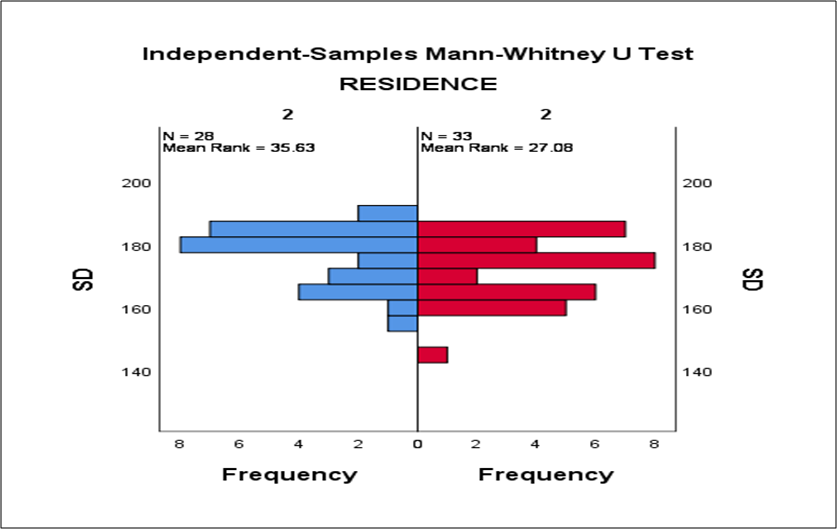
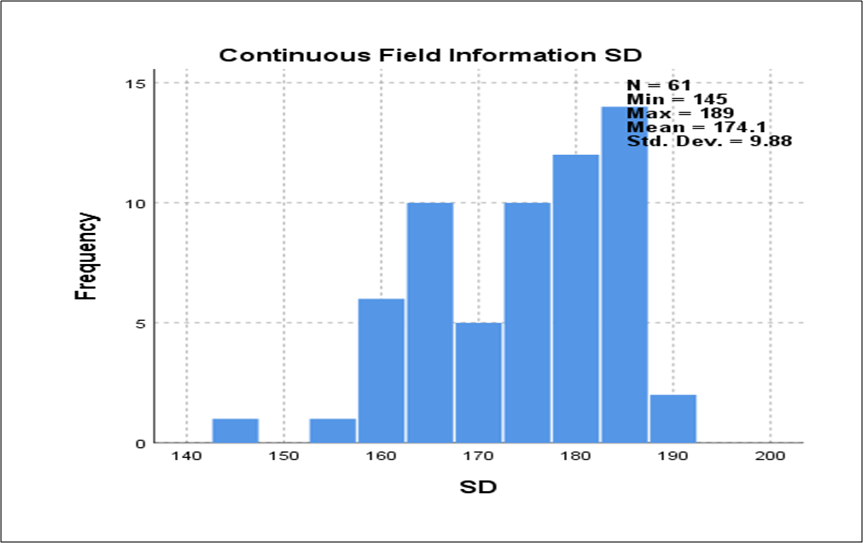
According to this table, the significance value is 0.408 which is greater than 0.05. So, it can be said that H08 is accepted at 0.05 level. It means there is no significant difference between the attitudes of Male and Female trainee teachers of Arts stream towards Sustainable Development.


According to this table, the significance value is 0.295 which is greater than 0.05. So, it can be said that H09 is accepted at 0.05 level. It means there is no significant difference between the attitudes of Male and Female trainee teachers of Science stream towards Sustainable Development.


From the present investigation it was found that Male and Female trainee teachers did not have significant difference in their attitude towards Sustainable Development. Similar result was supported by Kar et al. (2018) 20, Malik and Shafeeq (2018) 21 and, Paul & Mehera (2016) 24 in their study but the result is not consistent with the findings of studies by Sarkar, C. (2020) 17, Bhakta, K., & Guha, A. (2017) 23 and Torbjornsson et al. (2011) 30. The attitude of Rural and Urban trainee teachers regarding Sustainable Development did not differ in the present study. This result is consistent with the findings of the studies by Paul & Mehera (2016) 24 and Das et al. (2014) 25 but not supported by Sarkar, C. (2020) 17 and Torbjornsson et al. (2011) 30. On the other hand, the study showed no significant difference between the attitude of Arts and Science trainee teachers towards Sustainable Development. This result is consistent with the study of Bhakta, K., & Guha, A. (2017) 23 but not with the study of Kar et al. (2018) 20. As per the other findings of the study, no significant differences were found between the attitude of Rural Male and Urban Male trainee teachers, Rural Female and Urban Female trainee teachers, Rural Male and Rural Female trainee teachers, Male and Female trainee teachers of Arts stream and Male and Female trainee teachers Science stream respectively. Hence, a significant difference was found between the attitude of Urban Male and Urban Female trainee teachers towards Sustainable Development.
From the above study it can be concluded that there is no significant difference existing between the trainee teachers regarding Sustainable Development irrespective of their gender, residence and stream. It is very much important to have a positive attitude of trainee teachers towards Sustainable Development as they are the would-be teachers. Sustainable Development Solutions Network has prepared a framework where they stated that it is really tough to imagine a pathway towards the achievement of global sustainability without an ambitious set of shared goals for sustainable development 31. Creation of a sustainable future is never possible with an individual effort; in that case education plays a significant role in developing consciousness among students as well as teachers which contributes a lot in sustaining our present resources for our future use. If positive attitude can be developed among trainee teachers, it will enable them to make students conscious further about the optimum usage of various resources. It will help them to make proper balance between society, economy and environment which are three basic pillars of sustainability. To get rid of several issues regarding Sustainable Development, student awareness is a crucial part. This study will help us to know the overall attitude of trainee teachers of Purulia district towards Sustainable Development.
| [1] | Terlević et al. (2015). Sustainable spatial development in higher education, UrbaniIzziv, 26 (1), 105-120. | ||
| In article | View Article | ||
| [2] | Howarth, R. B. and Norgaard, R. B. (1992). Environmental Valuation under Sustainable Development. The American Economic Review, 82 (2), 473-477. | ||
| In article | |||
| [3] | Karp, J. P. (1994). SUSTAINABLE DEVELOPMENT: TOWARD A NEW VISION. Virginia Environmental Law Journal, 13(2), 239-269. | ||
| In article | |||
| [4] | UNESCO. (2001a). Teaching and Learning for a Sustainable Future Paris: UNESCO Version 1.0 | ||
| In article | |||
| [5] | UNESCO PROAP. (1998). Learning To Live Together in Peace and Harmony; values education for peace, human rights, democracy and sustainable development for the Asia-Pacific region: a UNESCO-APNIEVE sourcebook for teacher education and tertiary level education Bangkok: UNESCO PROAP. | ||
| In article | |||
| [6] | Saha, B. and Maji, S. (2013). BUILDING THE SUSTAINABLE DEVELOPMENT THROUGH ENVIRONMENTAL EDUCATION: A CONCEPTUAL STUDY. Review of Research, 2(4), 1-3. | ||
| In article | |||
| [7] | World Commission on Environment and Development, Our common future (New York, 1987), 43. | ||
| In article | |||
| [8] | Olsson, L. et al. (2014). Sustainable Development in a Globalized World. Journal of Environment and Development, 23(1), 3-14. | ||
| In article | View Article | ||
| [9] | Buchan et al. (2007). Education for sustainability: developing a postgraduate-level subject with an international perspective. International Journal of Sustainability in Higher Education, 8 (1), 4-15. | ||
| In article | View Article | ||
| [10] | Bigg, T. (2002). The World Summit on Sustainable Development: An assessment. International Institute for Environment and Development, URL: http://www.jstor.com/stable/resrep16732. | ||
| In article | |||
| [11] | Spangenberg, J. (2002). Environmental space and the prism of sustainability: frameworks for indicators measuring sustainable development. Ecological Indicators, 2 (3), 295-309. | ||
| In article | View Article | ||
| [12] | Foley et al. (2016). New Conceptual Framework for Sustainability. Irish Studies in International Affairs, Vol. 27, 145-163. | ||
| In article | View Article | ||
| [13] | Miyazawa, I. (2012). What are Sustainable Development Goals? Institute for Global Environmental Strategies, URL: http://www.jstor.com/stable/resrep00768. | ||
| In article | |||
| [14] | Transforming our World: The 2030 Agenda for Sustainable Development, United Nations, sustainabledevelopment.un.org. | ||
| In article | |||
| [15] | Securing the Future, The UK Government Sustainable Development Strategy. March 2005, 16. | ||
| In article | |||
| [16] | Elijah, O. S. (2022). Education and Training as a Tool for Sustainable Development among Secondary School Teachers in Southwest Nigeria. Indonesian journal of contemporary Education, 4(2), 89-94. | ||
| In article | View Article | ||
| [17] | Sarkar, C. (2020). Awareness of Sustainable Development among Secondary School Students of Hoogly District. MuktShabd Journal, 9(4), 2718-2731. | ||
| In article | |||
| [18] | Soysal, N. and Ok, A. (2020). Attitudes of Pre-service Classroom Teachers Towards Sustainable Development. International Journal of Science and Education, 4(1), 28-42. | ||
| In article | View Article | ||
| [19] | Balakrishnan, B. et al. (2019). Perceptions and Attitude towards Sustainable Development among Malaysian Undergraduate. International Journal of Higher Education, 9(1), 44-51. | ||
| In article | View Article | ||
| [20] | Kar, D. et al. (2018). Behavior towards sustainable development of PG students of Sidho-Kanho-Birsha University, IJRAR- International Journal of Research and Analytical Reviews, 5(2), 1578-1581. | ||
| In article | |||
| [21] | Malik, M. and Shafeeq, N. Y. (2018). Attitude of Undergraduate Students towards Sustainable Development. International Research Journal of Human Resources and Social Sciences, 5 (3), 119-132. | ||
| In article | |||
| [22] | Naiko, A. A. (2018). Attitude Regarding Environmental Education and Sustainable Development: A Case Study of High School Teachers of District Kupwara. International Journal of Research in Social Science & Humanities, 6, 479-490. | ||
| In article | |||
| [23] | Bhakta, K., & Guha, A. (2017). Knowledge and Attitude of M.Ed. Trainees towards Environmental Sustainability. International Journal of Research- GRANTHAALAYAH, 5(6), 102-110. | ||
| In article | View Article | ||
| [24] | Paul, P. K. and Mehera, C. (2016). Impacts of Education on Sustainable Development: A Micro Study in Burdwan District of West Bengal, India.American Journal of Educational Research, 4(7), 551-555. | ||
| In article | |||
| [25] | Das, S. K. et al. (2014). Awareness of School Students about Sustainable Development in Education. International Journal of Informative and Futuristic Research, 1(10), 112-116 | ||
| In article | |||
| [26] | Drayson, R. et al. (2014). Student Attitudes towards and Skills for Sustainable Development. The Higher Education Academy, Innovation Way, York Science Park, Heslington, York. | ||
| In article | |||
| [27] | Khalil, D. et al. (2013). Perception towards Sustainable Development Concept: Egyptian Students’ Perspective. Sustainability Accounting, Management and Policy Journal, 4(3), 307-327. | ||
| In article | View Article | ||
| [28] | Borah, S. & Neog, S. (2012). A study on Awareness of Post Graduate students of Dibrugarh University Regarding Education for Sustainable Development. International journal of Science and Research, 3(7), 1446-1448. | ||
| In article | |||
| [29] | Syed Sheikh, S. N. et al. (2012). Perception on Sustainable Development among New First Year Engineering Undergraduates. Procedia- Social and Behavioral Sciences, 56, 530-536. | ||
| In article | View Article | ||
| [30] | Torbjornsson, T. et al. (2011). Measuring attitudes towards three values that underline sustainable development, Utbuilding and Demokrati, 20(1), 97-121. | ||
| In article | View Article | ||
| [31] | A Framework for Sustainable Development. (2012). Sustainable Development Solutions Network. URL: http://www.jstor.com/stable/resrep16082. | ||
| In article | |||
Published with license by Science and Education Publishing, Copyright © 2022 Priti Haldar, Smritikana Roy, Sourav Chandra Gorain, Anasuya Adhikari and Birbal Saha
 This work is licensed under a Creative Commons Attribution 4.0 International License. To view a copy of this license, visit
http://creativecommons.org/licenses/by/4.0/
This work is licensed under a Creative Commons Attribution 4.0 International License. To view a copy of this license, visit
http://creativecommons.org/licenses/by/4.0/
| [1] | Terlević et al. (2015). Sustainable spatial development in higher education, UrbaniIzziv, 26 (1), 105-120. | ||
| In article | View Article | ||
| [2] | Howarth, R. B. and Norgaard, R. B. (1992). Environmental Valuation under Sustainable Development. The American Economic Review, 82 (2), 473-477. | ||
| In article | |||
| [3] | Karp, J. P. (1994). SUSTAINABLE DEVELOPMENT: TOWARD A NEW VISION. Virginia Environmental Law Journal, 13(2), 239-269. | ||
| In article | |||
| [4] | UNESCO. (2001a). Teaching and Learning for a Sustainable Future Paris: UNESCO Version 1.0 | ||
| In article | |||
| [5] | UNESCO PROAP. (1998). Learning To Live Together in Peace and Harmony; values education for peace, human rights, democracy and sustainable development for the Asia-Pacific region: a UNESCO-APNIEVE sourcebook for teacher education and tertiary level education Bangkok: UNESCO PROAP. | ||
| In article | |||
| [6] | Saha, B. and Maji, S. (2013). BUILDING THE SUSTAINABLE DEVELOPMENT THROUGH ENVIRONMENTAL EDUCATION: A CONCEPTUAL STUDY. Review of Research, 2(4), 1-3. | ||
| In article | |||
| [7] | World Commission on Environment and Development, Our common future (New York, 1987), 43. | ||
| In article | |||
| [8] | Olsson, L. et al. (2014). Sustainable Development in a Globalized World. Journal of Environment and Development, 23(1), 3-14. | ||
| In article | View Article | ||
| [9] | Buchan et al. (2007). Education for sustainability: developing a postgraduate-level subject with an international perspective. International Journal of Sustainability in Higher Education, 8 (1), 4-15. | ||
| In article | View Article | ||
| [10] | Bigg, T. (2002). The World Summit on Sustainable Development: An assessment. International Institute for Environment and Development, URL: http://www.jstor.com/stable/resrep16732. | ||
| In article | |||
| [11] | Spangenberg, J. (2002). Environmental space and the prism of sustainability: frameworks for indicators measuring sustainable development. Ecological Indicators, 2 (3), 295-309. | ||
| In article | View Article | ||
| [12] | Foley et al. (2016). New Conceptual Framework for Sustainability. Irish Studies in International Affairs, Vol. 27, 145-163. | ||
| In article | View Article | ||
| [13] | Miyazawa, I. (2012). What are Sustainable Development Goals? Institute for Global Environmental Strategies, URL: http://www.jstor.com/stable/resrep00768. | ||
| In article | |||
| [14] | Transforming our World: The 2030 Agenda for Sustainable Development, United Nations, sustainabledevelopment.un.org. | ||
| In article | |||
| [15] | Securing the Future, The UK Government Sustainable Development Strategy. March 2005, 16. | ||
| In article | |||
| [16] | Elijah, O. S. (2022). Education and Training as a Tool for Sustainable Development among Secondary School Teachers in Southwest Nigeria. Indonesian journal of contemporary Education, 4(2), 89-94. | ||
| In article | View Article | ||
| [17] | Sarkar, C. (2020). Awareness of Sustainable Development among Secondary School Students of Hoogly District. MuktShabd Journal, 9(4), 2718-2731. | ||
| In article | |||
| [18] | Soysal, N. and Ok, A. (2020). Attitudes of Pre-service Classroom Teachers Towards Sustainable Development. International Journal of Science and Education, 4(1), 28-42. | ||
| In article | View Article | ||
| [19] | Balakrishnan, B. et al. (2019). Perceptions and Attitude towards Sustainable Development among Malaysian Undergraduate. International Journal of Higher Education, 9(1), 44-51. | ||
| In article | View Article | ||
| [20] | Kar, D. et al. (2018). Behavior towards sustainable development of PG students of Sidho-Kanho-Birsha University, IJRAR- International Journal of Research and Analytical Reviews, 5(2), 1578-1581. | ||
| In article | |||
| [21] | Malik, M. and Shafeeq, N. Y. (2018). Attitude of Undergraduate Students towards Sustainable Development. International Research Journal of Human Resources and Social Sciences, 5 (3), 119-132. | ||
| In article | |||
| [22] | Naiko, A. A. (2018). Attitude Regarding Environmental Education and Sustainable Development: A Case Study of High School Teachers of District Kupwara. International Journal of Research in Social Science & Humanities, 6, 479-490. | ||
| In article | |||
| [23] | Bhakta, K., & Guha, A. (2017). Knowledge and Attitude of M.Ed. Trainees towards Environmental Sustainability. International Journal of Research- GRANTHAALAYAH, 5(6), 102-110. | ||
| In article | View Article | ||
| [24] | Paul, P. K. and Mehera, C. (2016). Impacts of Education on Sustainable Development: A Micro Study in Burdwan District of West Bengal, India.American Journal of Educational Research, 4(7), 551-555. | ||
| In article | |||
| [25] | Das, S. K. et al. (2014). Awareness of School Students about Sustainable Development in Education. International Journal of Informative and Futuristic Research, 1(10), 112-116 | ||
| In article | |||
| [26] | Drayson, R. et al. (2014). Student Attitudes towards and Skills for Sustainable Development. The Higher Education Academy, Innovation Way, York Science Park, Heslington, York. | ||
| In article | |||
| [27] | Khalil, D. et al. (2013). Perception towards Sustainable Development Concept: Egyptian Students’ Perspective. Sustainability Accounting, Management and Policy Journal, 4(3), 307-327. | ||
| In article | View Article | ||
| [28] | Borah, S. & Neog, S. (2012). A study on Awareness of Post Graduate students of Dibrugarh University Regarding Education for Sustainable Development. International journal of Science and Research, 3(7), 1446-1448. | ||
| In article | |||
| [29] | Syed Sheikh, S. N. et al. (2012). Perception on Sustainable Development among New First Year Engineering Undergraduates. Procedia- Social and Behavioral Sciences, 56, 530-536. | ||
| In article | View Article | ||
| [30] | Torbjornsson, T. et al. (2011). Measuring attitudes towards three values that underline sustainable development, Utbuilding and Demokrati, 20(1), 97-121. | ||
| In article | View Article | ||
| [31] | A Framework for Sustainable Development. (2012). Sustainable Development Solutions Network. URL: http://www.jstor.com/stable/resrep16082. | ||
| In article | |||