The impetus in the formation of teleologic-anthropomorphic explanation emanates from the stimulation of the learners’ personal culture and language. This study ascertains the correctability of teleologic and anthropomorphic language and reasoning of students to abstract ideas and concepts in human reproduction. Employing 24 prospective Elementary Grade teachers under the Explicative-Reductive Method of One Group Pretest-Posttest Research design, this study focused on the determinants of students’ affordance of teleologic-anthropomorphic reasoning to select concepts in human reproduction. It was found out that the respondents had intermittently afforded teleologic-anthropomorphic languages across ages, sexes, and ethnicity before the treatment procedures. However, their affordances were diminished after the initiated classroom interventions. The change attributed to the independent variable is accounted at .673, which implies a great margin affecting the affordances of the respondents’ anthropomorphic and teleologic language and reasoning in human reproduction by 67.30%. Moreover, the age of the respondents is found to be interacting with their ethnic affiliation. Hence, students’ anthropomorphism and teleological language and reasoning are correctable.
The impetus in the formation of teleologic-anthropomorphic explanation emanates from the stimulation of the learners’ personal culture and language. As such, students intuitively accept teleologic-anthropomorphic languages when two conditions are met: the purpose invoked in the explanation plays a causal role in bringing what is explained, and the purpose conforms to general and predictable patterns. Frame of reference, which is coined from their prior knowledge, is theoretically based on what is observed and believed to be true within their local and present parametrical location and experiences.
On the other hand, the utility of teleologic-anthropomorphic analogies in science education particularly in human reproduction is always a burden among teachers as learners intuitively choose teleologic-anthropomorphic explanation as part of their scientific reasoning as learners are preceded by their a-priori knowledge and understanding. Knowledge and understanding taken from an array of sources, e.g., teachers, reading materials, educational films, learning peers, cultural and traditional beliefs, and daily experiences, are re-processed into new forms of information that refocuses the belief and understanding of a learner should it be misconceptions.
Understood in a new sense of cognitive structures, these a-priori knowledge and understanding are taken as imperative information from a merely teleologic-anthropomorphic reasoning to a conceptual meaning. Teleologic-anthropomorphic languages and reasoning are prone to elicit tenacious misconceptions than descriptive analogies 1, 2. However, explanations in good faith both in form and in substance convey a content of the domain (substantive knowledge) and the methods of establishing new knowledge (syntactic knowledge) to a new paradigm of forming new knowledge 3.
Aptly, the impetus in the formation of teleologic-anthropomorphic explanation emanates from the stimulation of the learners’ personal culture and language 1, 3, 4. As such, students intuitively accept teleologic-anthropomorphic languages when two conditions are met: the purpose invoked in the explanation plays a causal role in bringing what is explained, and the purpose conforms to general and predictable patterns 3, 4. Frame of reference, which is coined from their prior knowledge, is theoretically based on what is observed and believed to be true within their local and present parametrical location and experiences.
The crux is: students’ teleologic-anthropomorphic explanation, which is believed to be based on age, learning exposure, and experience, is interpreted in a framework that converts personal beliefs and practices into contextual frameworks. This knowledge shift is affected by their learning exposures through classroom discussions and cognition between teacher and students, student and students, students and select learning modules, and other academic infrastructures; hence, teleologic-anthropomorphic explanations are correctable in nature 3, 4, 5, 6, 7.
The One Group Pretest-Posttest Design of the Pre-experimental Designs was used in this study. It involved a pretest or baseline observation which allowed the proponent to determine the effects of the treatment condition by comparing the pretest and posttest results. Aptly, pretest results were used as covariate values in establishing the causal effects of the treatment condition.
Appositely, the Explicative-Reductive Method was employed in this study focused on the reduction of students’ teleologic-anthropomorhic explanations in human reproduction. The Explicative Method was used to account a context encompassing variables and qualities attributed to the problem. This paved for the determinant of the causal effect of the interventions on the teleologic-anthropomorphic explanations of students. On the other hand, the Reductive Method was used to elicit potential variables of the identified context for enrichment and further analysis. This method involves a systematic investigation using pre-assessment results, interview, and checklist as predominant methods of data collection. Corroboration of findings, vis-à-vis with the identified norms of the context of the study, was used to conclude on the effects of the intervention program in scaffolding learning and academic performances.
This study was conducted at the College of Teacher Education of Quirino State University with 24 prospective elementary teachers enrolled in College Biology as respondents: age, 17 from the age group 18-19 and 7 from 20-21; sex, 19 were females and 5 males; and ethnic affiliations, 18 were ilocanos and 6 were ifugaos. A questionnaire was formulated to determine their teleologic-anthropomorphic explanations on human reproduction. Data were treated using mean, t-test, ANOVA, and ANCOVA.
Results in the foregoing table imply a highly significant difference on the gain scores of the respondents in terms of their teleologic-anthropomorphic affordances in human reproduction. It can be inferred that their affordances are correctable. These results are likened to the explanation on the effects of pedagogical advancements in stimulating students’ cognition in redirecting their teleologic and anthropomorphic reasoning and understanding to learning abstract principles in science 1. Central assumptions in learning science were encapsulated through the following tenets:
• Learning science is an active process of constructing personal knowledge;
• Learners come to science learning with existing ideas about many natural phenomena attributed to their mental readiness and cognition;
• The learner’s existing ideas have consequences for the learning of science;
• It is possible to teach science more effectively if account is taken of the learner’s existing ideas;
• Knowledge is represented in the brain as a conceptual structure;
• Learner’s conceptual structures exhibit both commonalities and idiosyncratic features; and
• It is possible to meaningfully model learners’ conceptual structures. Hence, teleologic and anthropomorphic languages are really correctable.
Results in the foregoing table imply that teleology and anthropomorphism are correctable in nature as indicated by the corrected and intercept models of the study. Moreover, age interacts well on the correction of teleology and anthropomorphism with the respondents’ ethnicity. Age, which is attributed to pedagogical interventions and academic endowment of the respondents, plays a significant role in the correction of such languages and explanations. Concomitant to the ages of the respondents are their academic endowments which progress as they get older be it formal or informal. However, researches showed that informal cognitions contributed by their cultural and societal upbringing are often contributory to their teleologic-anthropomorphic affordances 6, 7, 8.
It may be noted, however, that the impact of the classroom pedagogical interventions is moderately high considering that the coefficient of determination indicated by the adjusted R-squared is 67.3 %. This means that the pedagogical interventions done in the subject account for 67.3 % of the variability in the teleologic and anthropomorphic reasoning of the students. It is construed then that there are other important variables or factors that affect the students’ teleologic and anthropomorphic reasoning, e.g., cognitive and metacognitive, abilities, attitude, and motivation in understanding issues and concepts of human reproduction.
These findings support the claim of Kelemen and Rosset 9 when they said that educational procedures and learning exposures alleviate the learner’s tendency to anthropomorphize. On the other hand, Dorion 4 concluded that anthropomorphic utterances are formed subsets of students’ alternative responses brought about by their intuitions and metacognitions. It was further concluded that students use their prior knowledge in a range of self-reflexivity in their abilities to anthropomorphize. Hence, the typology and heuristics of conceptual thinking among students must also be considered. Leboe and Whitlesea 5 concluded that the human mind has evolved heuristics by using its prior experiences in bridging the missing, lost, and damaged in a framework of conceptual thinking and understanding. It is in this context that the human mind conceptualizes and re-conceptualizes concepts based on his experiences and available explanations within his schema.

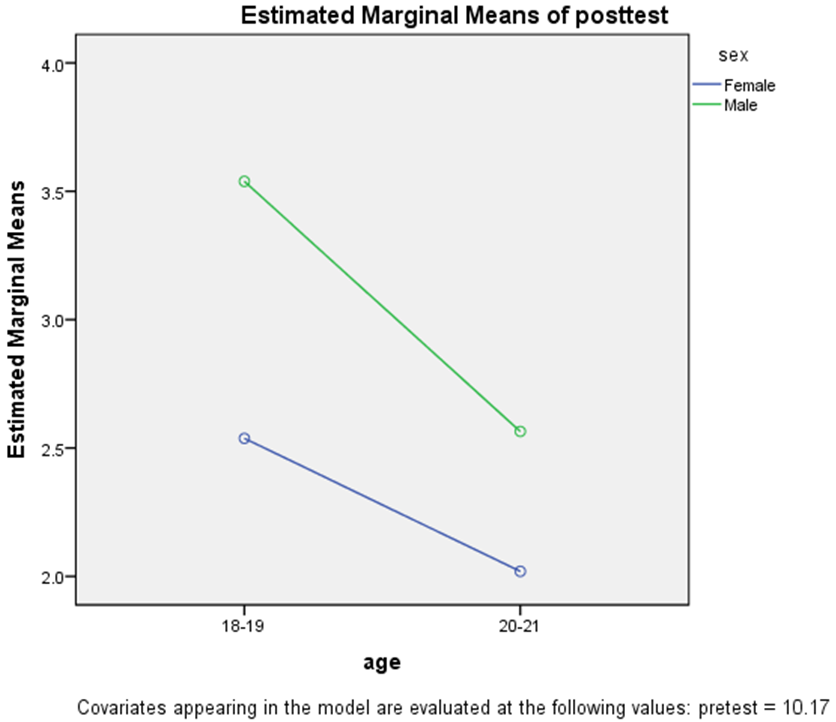
Results reveal that the teleologic-anthropomorphic knowledge and understanding are decreased after classroom pedagogical interventions. However, males opt to hold on to their teleologic-anthropomorphic knowledge and explanations of human reproduction concepts when compared to their affordances with their female counterparts to both age groups in the study.

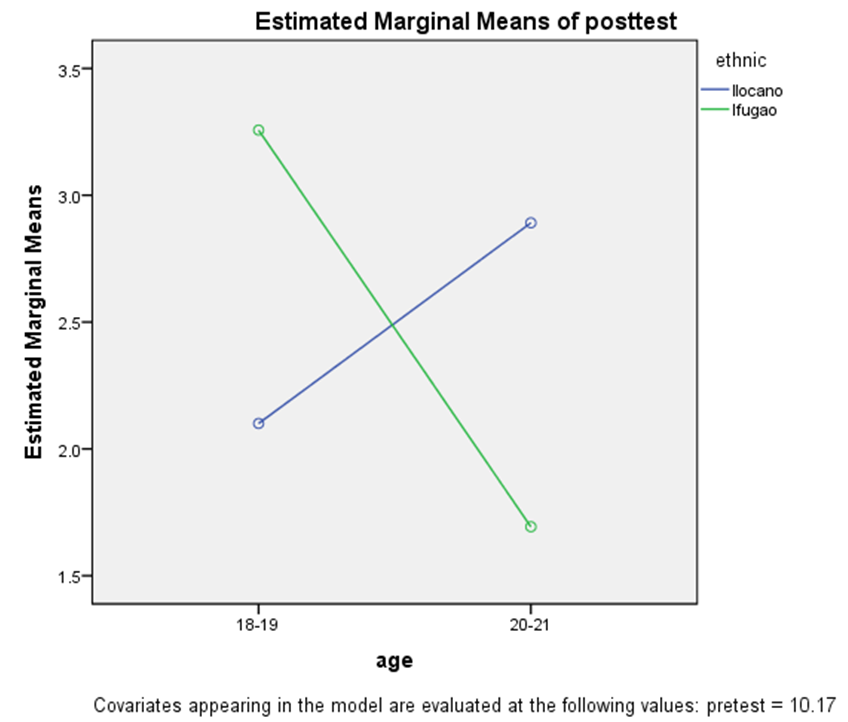
Results in the foregoing figure imply that older Ifugaos in the study afforded lower teleology and anthropomorphism than their younger counterparts. On the other hand, older ilocanos afforded higher teleology and anthropomorphism than their younger counterparts.

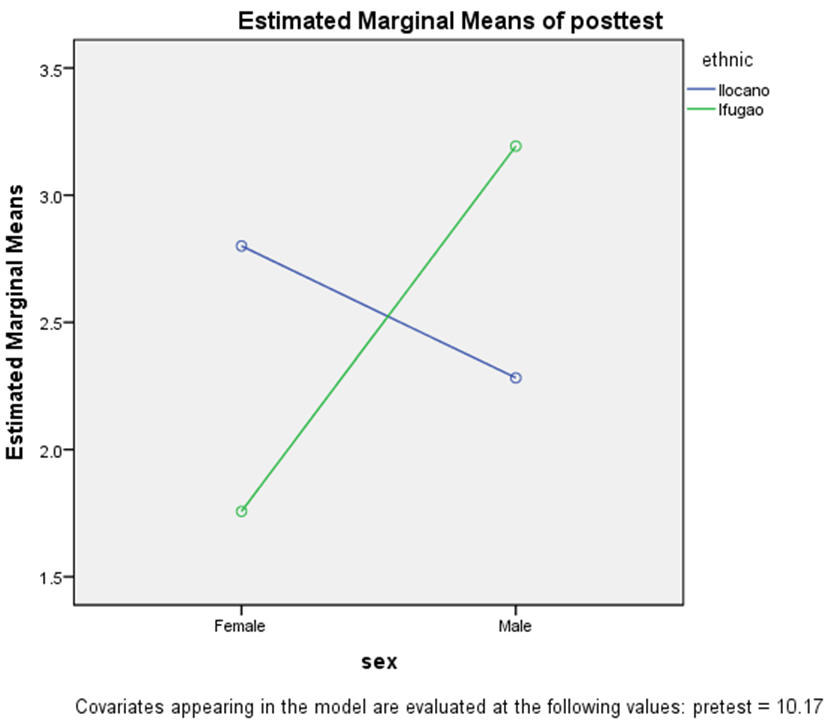
Results reveal that female ifugaos afforded lower teleology and anthropomorphism than their male counterparts while male ilocanos had lower affordances than their female counterparts.
Theories of anthropomorphism explicate well the transition of the different levels of understanding that leads a person formulate his central schema of thinking and reasoning. Corollary to Piaget’s Cognitive Development Theory, these beliefs, which are innate to the person, become his central schema in formulating a pragmatic explanation to a certain phenomenon. The theory explicates further the nature of a person’s conceptual knowledge and understanding and how he comes to gain, create, and apply it to various mental exercise and activities. Cognitive development, in this sense, is a progressive restructuring of intellectual progressions as a result of the learner’s biological maturation and environmental experiences. Learners construct a conceptual understanding on phenomena that takes place around him through his experiences and to what he already knows. They also tend to discover understanding through his environment. Hence, the theory conjectures the idea that cognitive development happens at the center of human organism and language is dependent to cognitive development. Therefore, it can be said that teleologic-and-anthropomorphic affordance to elicit concepts in human reproduction forms a dichotomy of understanding: a springboard to develop a scientific explanation as one is exposed to further studies and explanation. Taber and Watt 1 hypothesized that anthropomorphism is just a stage in the development of an understanding. This affordance is expected to diminish as other levels of explanation become available (cognitive and metacognitive understanding) 6, 9.
Moreover, anthropomorphism, in the context of understanding and explaining phenomena, is a pragmatic response to such objects to make sense of them 7, 8, 10, 11, 12.
Pursuing intended scientific disposition requires initiation and mediation, e.g., scaffolding and reconstruction procedures, in a constructive teaching and learning environment. This is urgent since one of the philosophies of the World Declaration on Higher Education states that “the ideal teacher is not authoritarian but the trustworthy facilitator of the learning processes, who enables the learners to become active constructors of meaning and not passive recipients of information.” Moreover, the Philippines, in its stride to include Sex Education in the basic education, is confronted with many issues whether to include it in its educative curricula. Thus, insofar as the objective of raising the quality of science achievement particularly in Biological Science among students is concerned, the radical change of engendering science instruction is therefore at the helm of all the Higher Education Institutions.
| [1] | Taber, K.S., & Wats, M. (1996). The secret life of the chemical bond: students’ anthropomorphic and animistic references to bonding. International Journal of Science Education, 18(5), 557-568. | ||
| In article | View Article | ||
| [2] | Zohar, A., & Ginossar, S. (1998). Lifting the taboo regarding teleology and anthropomorphism in biology education-heretical suggestions. School of Education and Science Education Center, The Hebrew University of Jerusalem, Jerusalem, Israel. | ||
| In article | View Article | ||
| [3] | Talanquer, V. (2007). Explanations and teleology in chemistry education. International Journal of Science Education. | ||
| In article | View Article | ||
| [4] | Dorion, K. (2011). A learner’s tactic: how secondary students’ anthropomorphic language may support learning of abstract science concepts. Electronic Journal of Science Education, 12(2), 1-22. | ||
| In article | |||
| [5] | Leboe, J., & Whitlesea, B. (2002). The Inferental Basis of Familiarity and Recall: Evidence for a Common Underlying Process. Journal of Memory and Language, 46, 804-829. | ||
| In article | View Article | ||
| [6] | Bautista, RG (2015). Students’ affordance of teleologic explanations and anthropomorphic language in eliciting concepts in physics. Journal of Technology and Science Education, 5(1), 31-40. | ||
| In article | View Article | ||
| [7] | Sarmuyan, R.M., Manuel, F.F.L., Tamangan, E.A., & Bautista, R.G. (2017). Teleologic explanations and anthropomorphic language of students in human reproduction and reproductive system. QSU-CTE Journal of Educational Practices and Standards, 2(1), 1-9. | ||
| In article | |||
| [8] | Isleta-Palatino, L. (2014). Students’ Teleologic and Anthropomorphic References to Select Concepts of Environmental Science. American Journal of Educational Research, 2(2), 102-106. | ||
| In article | View Article | ||
| [9] | Kelemen, D., & Rosset, E. The Human Function Compunction: Teleological Explanation in Adults. Social Cognition, 138-143, 2009. | ||
| In article | View Article PubMed | ||
| [10] | Chartrand, T.L., et al. (2008). Automatic Effects of Anthropomorphized Objects on Behavior. Social Cognition, 26(2), 198-209. | ||
| In article | View Article | ||
| [11] | Jackson, M. (2002). Familiar and Foreign Bodies, A Phenomenological Exploration of the Human-Technology Interface. Journal of The Royal Anthropology Institute, 8, 333-346. | ||
| In article | View Article | ||
| [12] | DiSalvo, C. & Gemperle, F. (2003). From Seduction to Fulfillment: The Use of Anthropomorphic Form in Design, 67-72. | ||
| In article | View Article | ||
Published with license by Science and Education Publishing, Copyright © 2022 Romiro G. Bautista
 This work is licensed under a Creative Commons Attribution 4.0 International License. To view a copy of this license, visit
http://creativecommons.org/licenses/by/4.0/
This work is licensed under a Creative Commons Attribution 4.0 International License. To view a copy of this license, visit
http://creativecommons.org/licenses/by/4.0/
| [1] | Taber, K.S., & Wats, M. (1996). The secret life of the chemical bond: students’ anthropomorphic and animistic references to bonding. International Journal of Science Education, 18(5), 557-568. | ||
| In article | View Article | ||
| [2] | Zohar, A., & Ginossar, S. (1998). Lifting the taboo regarding teleology and anthropomorphism in biology education-heretical suggestions. School of Education and Science Education Center, The Hebrew University of Jerusalem, Jerusalem, Israel. | ||
| In article | View Article | ||
| [3] | Talanquer, V. (2007). Explanations and teleology in chemistry education. International Journal of Science Education. | ||
| In article | View Article | ||
| [4] | Dorion, K. (2011). A learner’s tactic: how secondary students’ anthropomorphic language may support learning of abstract science concepts. Electronic Journal of Science Education, 12(2), 1-22. | ||
| In article | |||
| [5] | Leboe, J., & Whitlesea, B. (2002). The Inferental Basis of Familiarity and Recall: Evidence for a Common Underlying Process. Journal of Memory and Language, 46, 804-829. | ||
| In article | View Article | ||
| [6] | Bautista, RG (2015). Students’ affordance of teleologic explanations and anthropomorphic language in eliciting concepts in physics. Journal of Technology and Science Education, 5(1), 31-40. | ||
| In article | View Article | ||
| [7] | Sarmuyan, R.M., Manuel, F.F.L., Tamangan, E.A., & Bautista, R.G. (2017). Teleologic explanations and anthropomorphic language of students in human reproduction and reproductive system. QSU-CTE Journal of Educational Practices and Standards, 2(1), 1-9. | ||
| In article | |||
| [8] | Isleta-Palatino, L. (2014). Students’ Teleologic and Anthropomorphic References to Select Concepts of Environmental Science. American Journal of Educational Research, 2(2), 102-106. | ||
| In article | View Article | ||
| [9] | Kelemen, D., & Rosset, E. The Human Function Compunction: Teleological Explanation in Adults. Social Cognition, 138-143, 2009. | ||
| In article | View Article PubMed | ||
| [10] | Chartrand, T.L., et al. (2008). Automatic Effects of Anthropomorphized Objects on Behavior. Social Cognition, 26(2), 198-209. | ||
| In article | View Article | ||
| [11] | Jackson, M. (2002). Familiar and Foreign Bodies, A Phenomenological Exploration of the Human-Technology Interface. Journal of The Royal Anthropology Institute, 8, 333-346. | ||
| In article | View Article | ||
| [12] | DiSalvo, C. & Gemperle, F. (2003). From Seduction to Fulfillment: The Use of Anthropomorphic Form in Design, 67-72. | ||
| In article | View Article | ||