sciepub.com
 Quick Submission

Spatial Distribution of Groundwater Quality in Kitwe District, Copperbelt Province, Zambia: A Case Study of Mulenga Informal Settlement
Kenny Nyirenda1, , Daniel Kaputula1, Ronald Ngulube1
1Copperbelt University, P O Box 21692, Kitwe, Zambia
Abstract
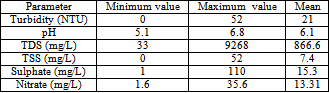
In most informal settlements in Zambia, access to piped water and proper sanitation system still remains a challenge. This has led to people in these settlements to rely on groundwater from shallow wells which are either protected or unprotected. In terms of human waste disposal, the majority of the people depend on traditional pit latrines. In order to help protect and sustainably manage the groundwater resources, a study was undertaken to investigate groundwater quality and its spatial distribution in Mulenga informal settlement in Kitwe district, Copperbelt Province, Zambia. A total of twenty eight (28) groundwater samples were collected from twenty eighty (28) wells in the aforementioned settlement. The samples were analysed for total dissolved solids (TDS), turbidity, total suspended solids (TSS), pH, sulphates, nitrate, total and faecal coliforms using standard techniques. Results were compared with the Zambian Bureau of Standards (ZABS) guideline values for drinking water and in some cases, with WHO guideline values. In terms of microbiological parameters, all water samples in Mulenga informal settlement tested positive for total and faecal coliforms. Parameters such as TDS, TSS and sulphate complied with ZABS drinking water guideline values. Other parameters which include turbidity ranged from 0 to 52NTU, pH from 5.1 to 6.8 and nitrates from 1.6 to 35.6mg/L did not comply with ZABS drinking water guideline values at the majority of the wells. Spatial distribution maps revealed that larger parts of Mulenga informal settlement display pH values less than ZABS and WHO minimum permissible value of 6.5 while sulphate and nitrate levels ranged from 1 to 20mg/L and 10 to 20mg/L respectively. In terms of turbidity and TDS, their spatial distribution maps display significantly high turbidity levels (>20NTU) in the south-eastern and some north-western parts of Mulenga informal settlement while slightly high TDS values (>500m/L) were displayed in south-eastern and north-western parts of the settlement. The highest numbers of total and faecal coliforms were concentrated in the north-eastern and central parts of Mulenga informal settlements.
Keywords: Wells, Pit Latrines, Groundwater, Mulenga informal settlement, Kitwe, Zambia
Copyright © 2016 Science and Education Publishing. All Rights Reserved.Cite this article:
- Kenny Nyirenda, Daniel Kaputula, Ronald Ngulube. Spatial Distribution of Groundwater Quality in Kitwe District, Copperbelt Province, Zambia: A Case Study of Mulenga Informal Settlement. American Journal of Water Resources. Vol. 4, No. 5, 2016, pp 102-110. http://pubs.sciepub.com/ajwr/4/5/1
- Nyirenda, Kenny, Daniel Kaputula, and Ronald Ngulube. "Spatial Distribution of Groundwater Quality in Kitwe District, Copperbelt Province, Zambia: A Case Study of Mulenga Informal Settlement." American Journal of Water Resources 4.5 (2016): 102-110.
- Nyirenda, K. , Kaputula, D. , & Ngulube, R. (2016). Spatial Distribution of Groundwater Quality in Kitwe District, Copperbelt Province, Zambia: A Case Study of Mulenga Informal Settlement. American Journal of Water Resources, 4(5), 102-110.
- Nyirenda, Kenny, Daniel Kaputula, and Ronald Ngulube. "Spatial Distribution of Groundwater Quality in Kitwe District, Copperbelt Province, Zambia: A Case Study of Mulenga Informal Settlement." American Journal of Water Resources 4, no. 5 (2016): 102-110.
| Import into BibTeX | Import into EndNote | Import into RefMan | Import into RefWorks |
At a glance: Figures
1. Introduction
Inadequate water supply and basic sanitation has remained one of the major challenges being experienced in many developing countries. According to reference [1], an estimated 880 million people globally have no access to improved water supply. In Sub-Saharan Africa, 319 million people are without access to improved drinking water sources [2]. The widespread lack of portable water supply especially in rural and peri-urban areas of Africa and Asia has sometimes been attributed to water scarcity by some water experts [3].
According to [4] and [5] there is a rapid increase of the number of people lacking access to water supply and sanitation in urban areas especially in peri-urban neighbourhoods. Consequently, many people in these areas are being forced to use unimproved water sources. [6] reports that 1.3 billion people in the developing world are compelled to use contaminated water for drinking and cooking and over six million children are believed to die every year from water-related illnesses.
In Zambia, approximately 39 percent of the population in 2010 did not use an improved drinking water source and 48 percent did not have improved sanitation facilities [7]. According to [7] water, sanitation and hygiene are the factors responsible for 11.4 percent of all deaths in Zambia.
Although groundwater in Zambia accounts for approximately 28% of domestic water supplies [8], very few chemical data is available on groundwater on which to base an assessment of the quality of the available water resources ([9, 10, 11]). However, limited available chemical data however suggest that the Zambian groundwater has generally very low concentrations of dissolved constituents ([12, 13]). According to [10] and [12], the principal groundwater quality issues in Zambia are likely to be pollution problems associated with anthropogenic activities.
Various studies conducted in selected informal settlements of Lusaka Province in Zambia revealed high levels of groundwater contamination with bacteria especially in areas served by onsite sanitation such as pit latrines and septic tanks ([14, 15]). For instance, in Kanyama informal settlement pit latrines have contributed significantly to high levels of faecal coliforms, most measuring “Too Numerous to Count (TNTC) [15]. Against this background, this study investigated the spatial distribution of groundwater quality parameters in Mulenga informal settlement in Kitwe district, Copperbelt Province, Zambia.
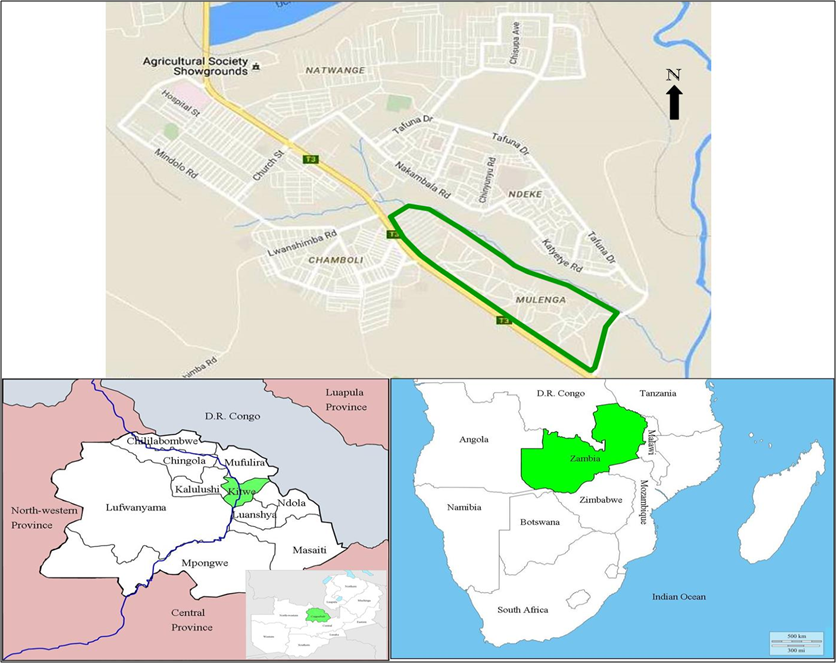
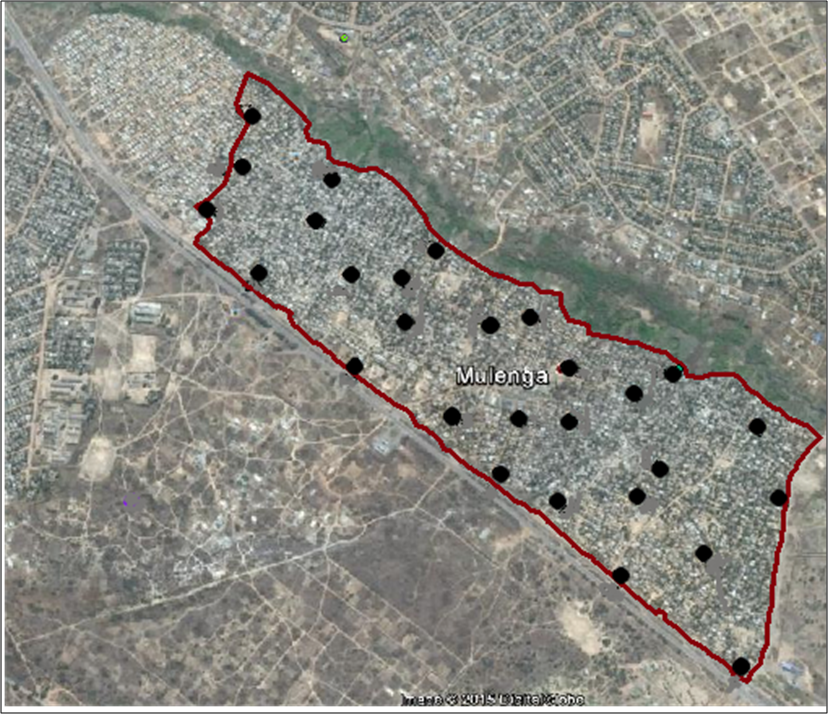
1.1. Site Location and DescriptionMulenga informal settlement is located on the southern part of Kitwe district between Latitude 12°51”00’ S and 12°52”00’ S and longitude 28°13”00’ E and 28°14”00’ E. As of the year 2010, the population of Mulenga informal settlement was estimated at 36, 000 people [16]. The population of Mulenga informal settlement has been steadily increasing over the years and it mainly comprises of the poor, jobless and other vulnerable groups of people. The majority of people in Mulenga informal settlement depend on water from shallow wells for drinking and other domestic uses [17]. In terms of human waste disposal, almost all households use traditional pit latrines thus exacerbating the problem of groundwater pollution [16].

 Download as

2. Methodology
2.1. Water Sampling and Laboratory AnalysisTwenty eight (28) water samples were collected from twenty eight (28) hand dug wells in Mulenga informal settlement in Kitwe between December, 2015 and January, 2016. Polythene bottles rinsed with distilled water were used to collect the water samples. Once water samples were collected, they were immediately placed in a cool box and transported to the laboratory at the Copperbelt University within 24 hours. In each water bottle, some space was left to prolong the life of micro-organisms.
The water samples were analysed for physical, chemical and microbiological parameters using standard technique specific for each parameter. The parameters that were analysed include pH, total dissolved solids (TDS), total suspended solids (TSS), turbidity, nitrates, sulphates, total and faecal coliforms.
3. Data Analysis
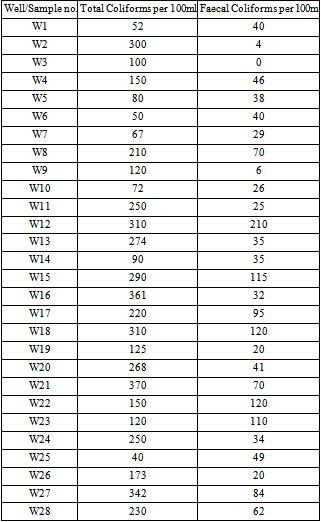
To assess the quality of groundwater for human consumption, the analysed water parameters (in Table 2 and Table 3) were compared to World Health Organisation (WHO) and Zambia Bureau of Standards (ZABS) drinking water guideline values (Table 1).
 Download as
Table 1. Zambia Bureau of Standards Permissible Levels and World Health Organisation Guideline Values for Parameters of Concern in this Study





Table 2. Physiochemical Parameters of Groundwater Samples Collected from Various Wells in Mulenga Informal Settlement


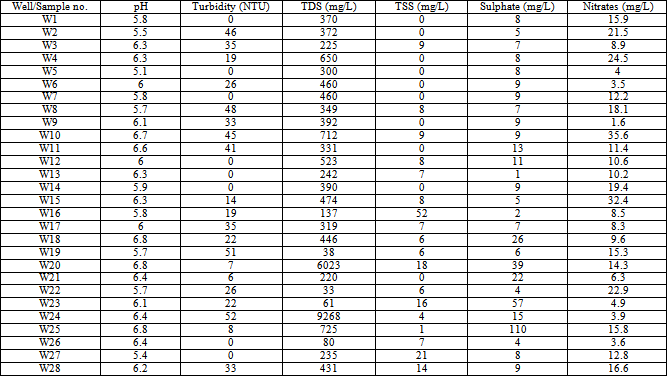


Table 3. Microbiological Parameters of Groundwater Samples Collected from Various Wells in Mulenga Informal Settlement





To develop spatial distribution maps for each water parameter in Table 2 and Table 3 above, Arc-GIS 10.1 software was used. Co-ordinates for all sampling points (wells) in the study area were taken and recorded in the field using a hand held Global Positioning System (GPS), Garmin GPS-60. Water quality attributes for each sampling point were then transferred into Arc-GIS 10.1 software to develop the spatial distribution maps. The Inverse Distance Weighted (IDW) method was used for spatial interpolation of water parameters in Arc-GIS. This method develops estimates based on values at nearby locations weighted only by distance from the interpolation location [18]. IDW method is based on the assumption that the value of an attribute at some unvisited point is a distance weighted average of data points occurring within the neighbour-hood surrounding the unvisited point ([18, 19]).
4. Results and Discussion
It should be noted that thorough understanding of groundwater quality is critical in determining the suitability of water for drinking, domestic and other purposes. In the present study, 28 groundwater supplies were examined for various physical, chemical and microbilogical parameters to assess their suitability for human consumption. Results of the analyses show some variations in water quality properties across the study area.
 Download as
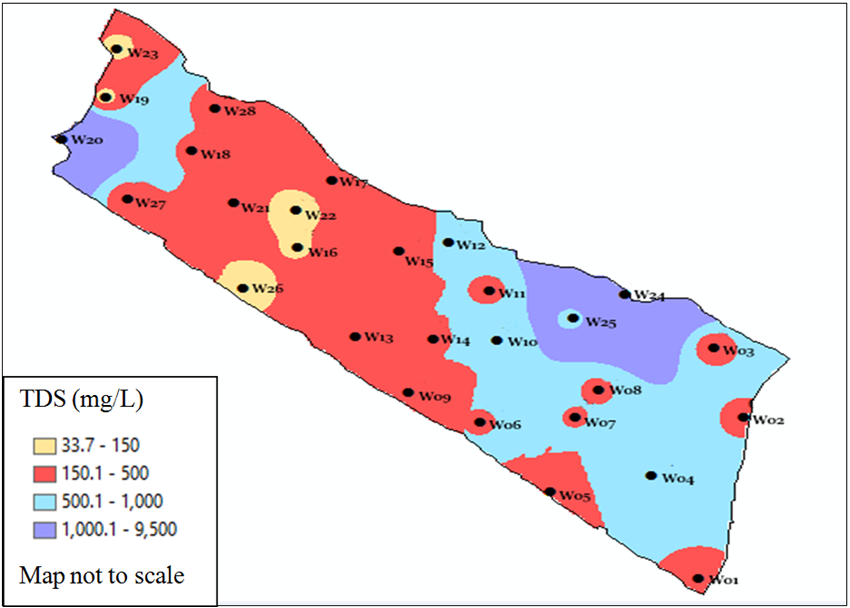
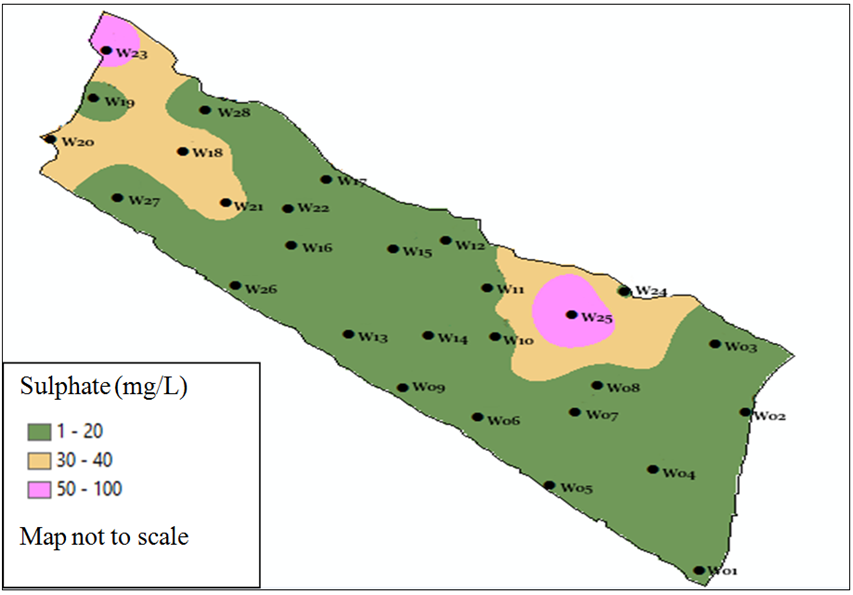
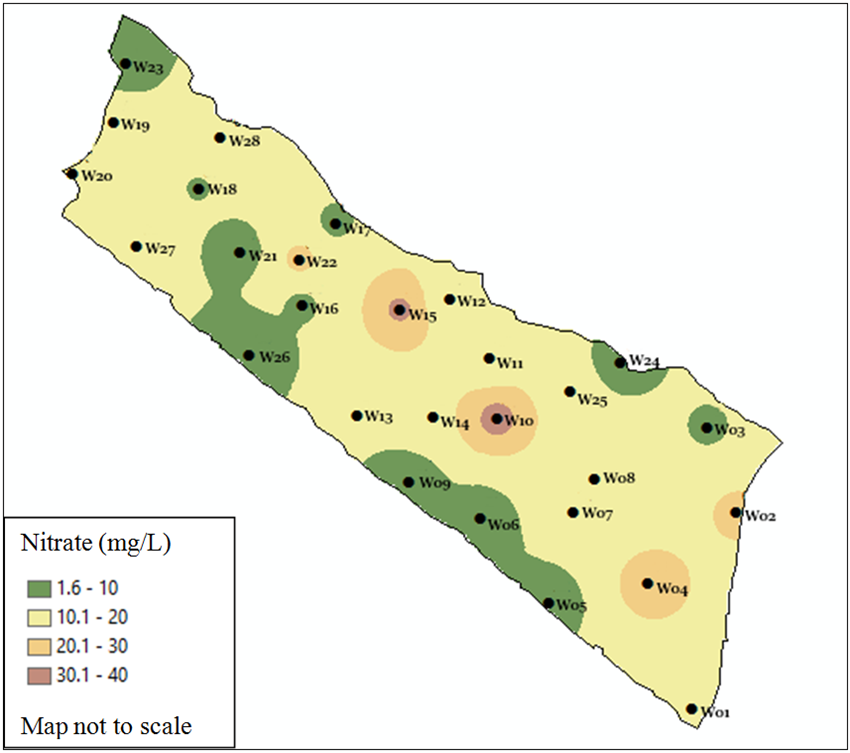
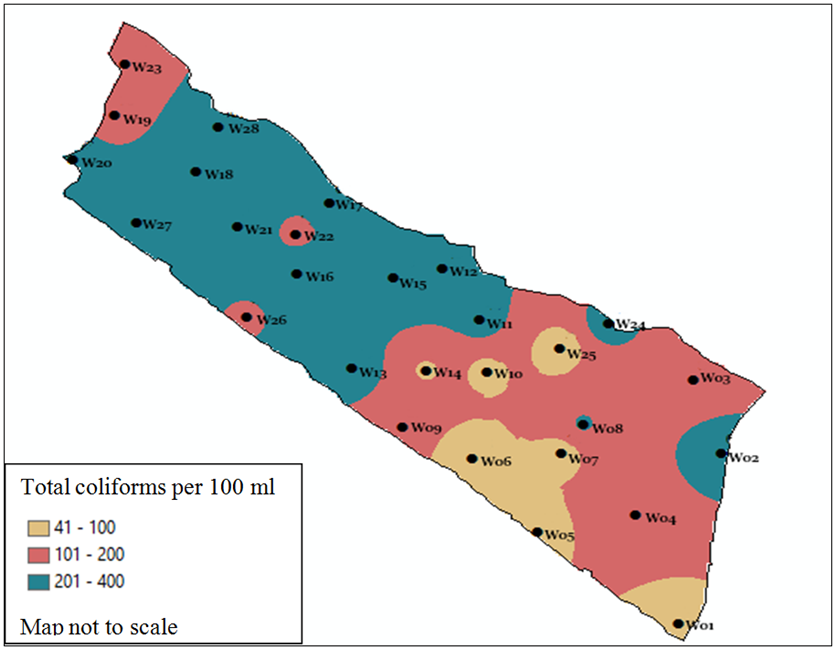
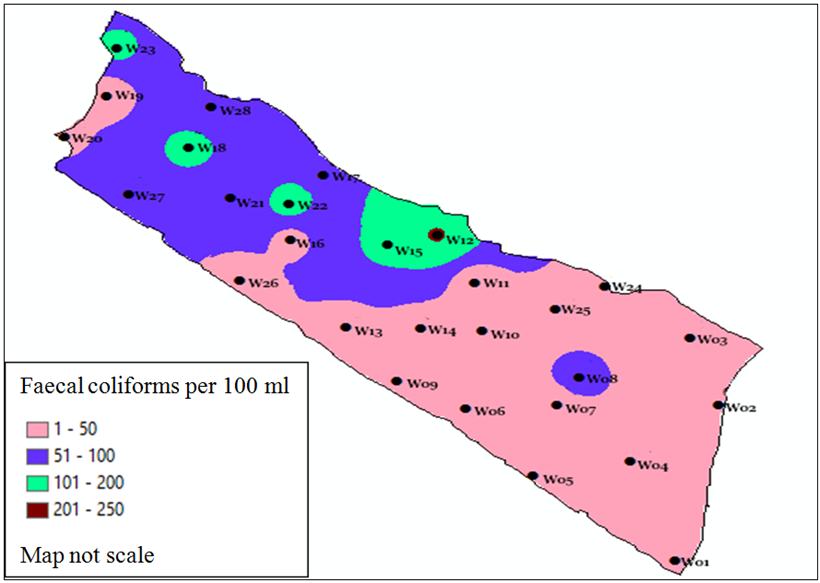
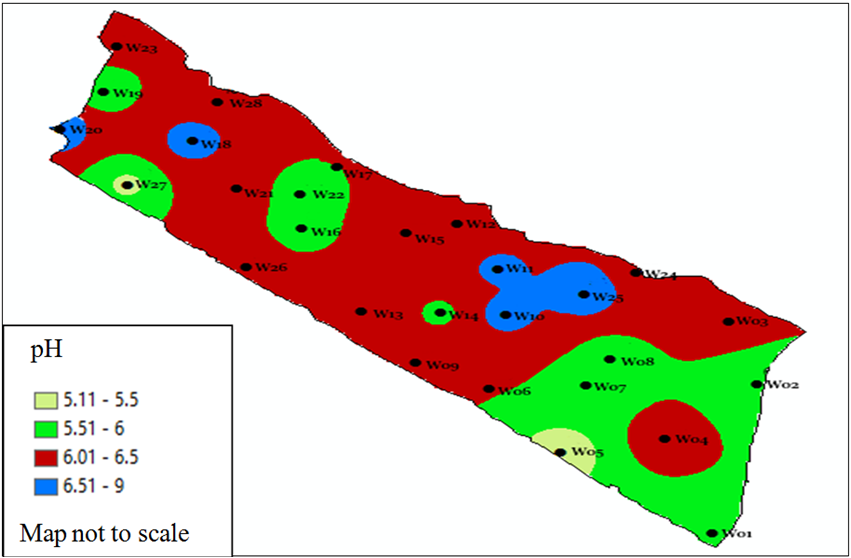
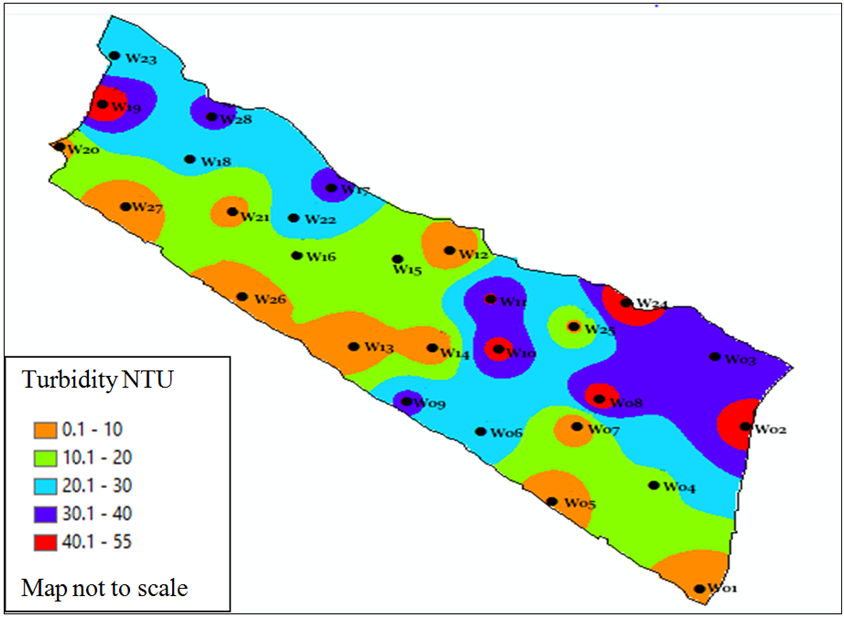
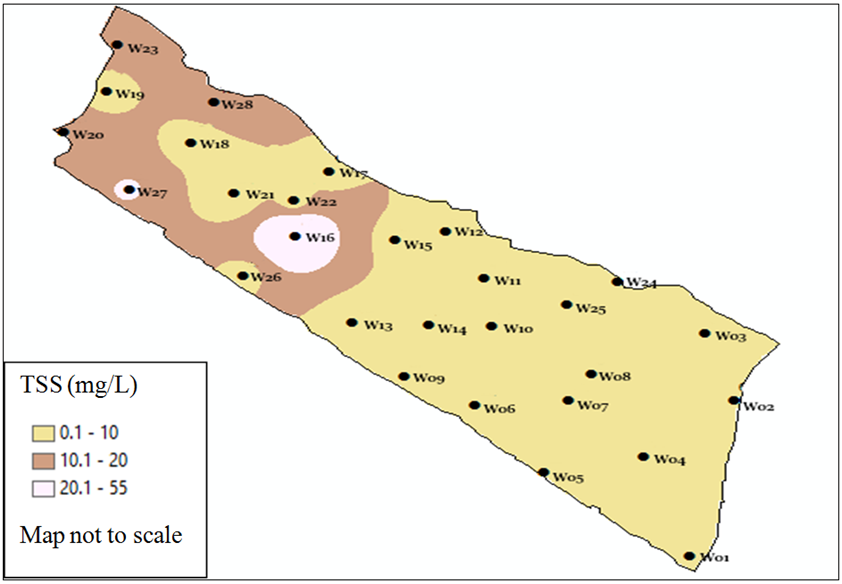
Spatial distribution or zonation maps for groundwater quality were also developed for each water parameter in this study. These maps (Figure 3 to Figure 10) show the distribution of water quality parameters in the study area. Spatial distribution maps are important in the protection and sustainable management of groundwater resources in the area.
4.1. Potential of Hydrogen (pH)The pH values of groundwater in this study ranged from 5.1 to 6.8 with the mean of 6.1. The majority of water samples (about 82%) did not comply with both ZABS and WHO (2008) pH permissible range of 6.5 to 8.0. All the water samples recorded pH values of less than 7 which indicates that groundwater in the study area is slightly acidic. It should be noted that the recorded pH values have no any direct human health effects on the consumers. However, it is advisable to treat slightly acidic water (pH< 6) with hydrated lime to ensure that the pH falls within the allowable range. The spatial distribution map for pH (Figure 3) shows that most parts of the study area display pH values less than ZABS and WHO minimum permissible value of 6.5.
 Download as
 Download as
Turbidity values in water samples ranged from 0 to 52NTU. In the majority of the water samples (about 71%), turbidity levels did not comply with the Zambian Bureau of Standards limit of 5NTU in drinking water. High turbidity levels (>5NTU) recorded in most of the water samples could be attributed to poor well protection which allows various particulate matter to be washed into the wells especially during the rainy season. The presence of particulate matter in water samples can seriously interfere with the disinfection process as they tend to protect the pathogenic organisms [20]. High turbidity values in most wells may also indicate a serious compromise in terms of the sanitary integrity [21] especially that most pit latrines are in close proximity to wells and lack impermeable lining to contain the latrine leachate. The spatial distribution map shown (in Figure 4) above display signifantly high turbidity levels (>20NTU) in south-western and in some north-eastern parts of Mulenga informal settlement.
4.3. Total Suspended Solids (TSS)Values of total suspended solids (TSS) recorded in water samples in this study ranged from 0 to 52mg/L. All water samples complied with the Zambian Bureau of Standards limit of 100mg/L of TSS in drinking water. From the spatial distribution map of TSS as shown in Figure 5 above, it can be observed that the larger part of Mulenga informal settlements display the lowest values of TSS in the range of 0.1 to 10mg/L.
 Download as
 Download as
Total dissolved solids indicates the general salinity nature of water resources [22]. According to [23], although total dissolved solids are not harmful to human health, high levels in water supplies may affect the health of people suffering from heart and kidney related diseases. In this study, almost all (about 93%) of the water samples complied with the maximum limit (800mg/L) of total dissolved solids (TDS) based on the Zambian Bureau of Standards drinking water guideline values. Very high concentrations of 6023mg/L and 9268mg/L of TDS were recorded at well number W20 and W24 respectively. The wells (W20 and W24) which recorded very high values of TDS are located near the main sewer pipeline and stream. Therefore, these excedances could be attributed to groundwater pollution from waste water leakages from the main waste water pipeline which passes within the vicinity of well W20 and also discharges into the stream which passes near well W24. The spatial distribution map for TDS (Figure 6) shows slightly high TDS values (>500mg/L) in the south-eastern parts of Mulenga informal settlement.
4.5. SulphateSulphate is naturally occurring anion in all kinds of natural waters. According to [24], sulphate concentrations in fresh water are within 20mg/L and can range from 0 to 230mg/L in groundwater. The presence of sulphate in drinking-water can cause a noticeable taste, and very high levels might cause a laxative effect in unaccustomed consumers [20]. Taste impairment is generally considered minimal at levels below 250mg/L [25]. In the present study, concentrations of sulphate in water samples ranged from 1 to 110mg/L. All water samples complied with ZABS set limit of 250mg/L of sulphate in drinking water. Since the majority of water samples in Mulenga informal settlement recorded sulphate concentrations within the range of fresh water, groundwater supplies will likely have minimal taste impairment to consumers. The spatial distribution map for sulphate (Figure 7) shows that the larger part of Mulenga informal settlement display sulphate concentrations in the range of 1 to 20mg/L which is common in fresh water.
 Download as
Nitrate concentrations in water samples in this study ranged from 1.6 to 35.6mg/L with the mean of 13.31mg/L. In the majority (about 61%) of water samples, nitrate levels exceeded the Zambian Bureau of Standards limit of 10mg/L of nitrate in drinking water. However, all water samples complied with WHO limit of 50mg/L of nitrate in drinking water which is aimed at protecting the health of infants. The presence of slightly high nitrate concentrations in groundwater in the study area could be as result of the introduction of human and animal waste into unprotected wells and also the seepage of the pit latrine leachate into the underlying aquifers. To reduce the nitrate levels in groundwater in the study area, there is need to encourage proper siting and construction of standard pit latrines with impermeable lining to prevent the leachate from contaminating the aquifers. The spatial distribution map for nitrate (Figure 8) shows that nitrate levels in the larger part of Mulenga informal settlements exceeds ZABS maximum permissible value of 10mg/L of nitrate in drinking water.
 Download as
 Download as
In terms of microbiological quality of groundwater, all water samples tested positive for both total and faecal coliforms. Total coliforms counts varied from 40 to 370 counts in 100ml of each water sample while faecal coliforms counts ranged from 0 to 210 counts in 100ml of each water sample. The spatial distribution maps (Figure 9 and Figure 10) for both microbiological parameters shows that the highest numbers of both total and faecal coliforms are concentrated in the north-eastern and central parts of Mulenga informal settlement. Microbiological contamination of groundwater supplies in Mulenga informal settlement could be attributed to the movement of pathogenic organisms from pit latrines and waste pits that are situated in close proximity to wells. There is need to disinfect or boil groundwater supplies in Mulenga informal settlement before consumption to avoid the breaking out of diarrhoea related diseases.
5. Conclusion
Based on microbiological parameters, groundwater in Mulenga informal settlement is generally contaminated with pathogenic organisms as indicated by the presence of total and faecal coliforms in all the analysed water samples. Parameters such as total dissolved solids, total suspended solids and sulphate complied with ZABS drinking water guideline values. Other parameters which include turbidity, pH and nitrates did not comply with ZABS drinking water guideline values at the majority of the wells.
The developed spatial distribution maps show variations in the distribution of water quality parameters in Mulenga informal settlement. The larger parts of Mulenga informal settlement shows that pH values were less than ZABS and WHO minimum permissible value of 6.5 while sulphate and nitrate concentrations ranged from 1 to 20mg/l and 10 to 20mg/l respectively. In terms of turbidity and TDS, their spatial distribution maps display high turbidity (>20NTU) in the south-eastern and some north-western parts of Mulenga informal settlement while slightly high TDS levels (>500mg/l) are displayed in the south-eastern and north-western parts of the settlement. The spatial distribution maps also shows that the highest numbers of total and faecal coliforms are concentrated in the north-eastern and central parts of Mulenga informal settlements.
Acknowledgement
The authors would like to express our sincere gratuity to the Environmental laboratory personnel at Copperbelt University for their professionalism and commitment during the laboratory analysis of the water samples.
References
| [1] | WHO/UNICEF, Progress on sanitation and drinking-water. Joint Monitoring Programme for Water Supply and Sanitation. Geneva, 2010. | ||
 In article In article | |||
| [2] | World Health Organisation. Key Facts from JMP 2015 Report, 2015. | ||
| In article | |||
| [3] | Mulenga M., McGranahan G, Groundwater Self-Supply In Peri-Urban Settlements in Zambia: 6th Rural Water Supply Network Forum 2011 Uganda Rural Water Supply in the 21st Century, Myths of the Past, Visions for the Future, 2011. | ||
| In article | |||
| [4] | K. Bakker, M. Kooy, N.E. Shofiani and E. Martijn, Disconnected: Poverty, water supply and development in Jakarta, Indonesia. UNDP Human Development Report Occasional Paper, 2006. | ||
| In article | |||
| [5] | P. Hofmann, Falling through the net: access to water and sanitation by peri-urban water poor. International Journal of Urban Sustainable Development, Vol. 3, N0. 1, 40-45, 2011. | ||
| In article | |||
| [6] | T.S. Fernando. Murunga: The Ultimate Answer to Polluted Water, 2000. Available: http://www.infolanka.com/org/diary/13.html. | ||
| In article | |||
| [7] | UN-Water, Zambia Country Brief, 2011. | ||
| In article | |||
| [8] | Zambia Environmental Management Agency, An Environmental and Social Impact Assessment for Musakashi River Catchment and its Tributaries: an independent impact assessment of industrial mining waste pollution in Chambishi, 2012. | ||
| In article | |||
| [9] | L. Norrgren, U. Pettersson, S. Orn, P.A Bergqvist, Environmental monitoring of the Kafue River, located in the Copperbelt, Zambia. Archives of Environmental Contamination and Toxicology, 38, 334-341, 2000. | ||
| In article | View Article PubMed | ||
| [10] | British Geological Survey, Groundwater Quality: Zambia, 2001. | ||
| In article | |||
| [11] | World Bank, Managing Water for Sustainable Growth and Poverty Reduction: A Country Water Resources Assistance Strategy for Zambia, 2008. | ||
| In article | |||
| [12] | Pavelic P., Giordano M., Keraita B., Ramesh V., Rao T., Groundwater Availability and Use in Sub-Saharan Africa: A Review of 15 Countries, 2011. | ||
| In article | |||
| [13] | MacDonald and Partners, Hydrogeological map of Zambia. 1:1,500,000 scale. Philip Print Ltd, London, 1990. | ||
| In article | |||
| [14] | L.J. Banda, A.R. Mbewe, H.S. Nzala, H. Halwindi, Effect of Siting Boreholes and Septic Tanks on Groundwater Quality in St. Bonaventure Township of Lusaka District, Zambia. International Journal of Environmental Science and Toxicology Research (ISSN: 2408-7262) Vol. 2(9) pp. 191-198, 2014. | ||
| In article | |||
| [15] | Nyambe A.I., Fielberg M, Zambia – National Water Resources Report for WWDR3: Water in a Changing World, 2009. | ||
| In article | |||
| [16] | People’s Process on Housing and Poverty in Zambia, Building City-wide Sanitation Strategies from the Bottom Up: A Situation Analysis for Kitwe, Zambia, 2012. | ||
| In article | |||
| [17] | Kitwe City Council, Kitwe District Situation Analysis. Kitwe, Department of Development Planning: KCC, 2011. | ||
| In article | |||
| [18] | H. Tomislav, Practical Guide to Geostatistical Mapping. 2nd Edition EUR 22904 EN, 2009. | ||
| In article | |||
| [19] | C. Childs, Interpolating Surfaces in ArcGIS Spatial Analyst, 2004. | ||
| In article | |||
| [20] | World Health Organisation, Guideline for Drinking Water Quality, 2008. | ||
| In article | |||
| [21] | Department of Water Affairs and Forestry, South African Water Quality Guidelines: Domestic Water Use Second Edition, 1996. Available: https://www.dwa.gov.za/iwqs/wq_guide/Pol_saWQguideFRESH_vol1_Domesticuse.PDF. | ||
| In article | |||
| [22] | N.A. Raju, K.H. Krishna, P. Satyanarayam, P. Suneetha, S.S. Devi., Study on Spatial Distribution of Groundwater Quality in Vizianagaram District of Andhra Pradesh, India. International Journal of Science, Environment and Technology, Vol. 3, No 1, 2014, 148-160, 2014. | ||
| In article | |||
| [23] | J.A.J. Elgali, M. Ekhwan, N. Hashim, The Spatial Distribution of Groundwater Quality in the Region of Derna, Libya. African Journal of Agricultural Research, Vol. 8(16), pp. 1482-1491, 2012. | ||
| In article | |||
| [24] | World Health Organisation, Sulphate in Drinking-water, 2004. | ||
| In article | |||
| [25] | A.M. Grimason, T.D. Morse, T.K. Beattie, S.J. Masangwi, G.C. Jabu, S.C. Taulo, K.K. Lungu, Classification and quality of groundwater supplies in the Lower Shire Valley, Malawi -Part 1: Physico-chemical quality of borehole water supplies in Chikhwawa, Malawi. Water SA Vol. 39.No.4, 2013. | ||
| In article | View Article | ||
 CiteULike
 Mendeley
 StumbleUpon
 Delicious
 Facebook
 Twitter
 LinkedIn

)


)
)