Garcinia kola seeds, an edible neglected wild fruit found in Asia and in tropical African countries, are characterized by interesting pharmacological properties which serve both for functional food and in the traditional treatment of cancer, diabetes, malaria, analgesics, hypertension and many other diseases. In the present study, we evaluated for 28 days the effect of oven dried powder of G. cola seeds in a fructose-salt induced hypertension model by analyzing biochemical and serum markers and organs. Biochemical assays revealed that G. cola seeds powder are rich in bioactive compounds with antioxidant activities higher than 80% and anti-inflammatory up to 60%, respectively. This powder has an antihypertensive strong effect observed by a decrease of systolic blood pressure (SBP) of 19 mmHg. Consumption of aqueous solution of G. kola seeds powder strengthens the immune system of the rats by balancing the components of the blood including HGB, LYM, PLT, WBC, HDL etc.. and protects their heart, liver, kidney. Thus, oven-dried powder of G. Kola has pronounced antihypertensive action with no adverse effects and, could be a sustainable alternative to conventional medical treatments of arterial hypertension.
Hypertension is the widespread modifiable risk factor, the most common for cardiovascular diseases and the leading cause of death worldwide 1. Hypertension contributes to morbidity and mortality thus has socio-economic impacts at individual and societal level, as it affects health costs as well as the labour force 2. In Côte d'Ivoire, the latest report from the national multisectoral nutrition program mentions a high prevalence of nutrient-induced pathologies, including arterial hypertension due to the nutritional transition to sweet, fatty, salty and high-calorie foods resulting from strong urbanization and the galloping industrialization. Although, lowering blood pressure with antihypertensive drugs reduces damage to target organs and prevents the consequences of cardiovascular diseases. However, these drug treatments are expensive, heavy and tedious (usually lifelong) and present several safety problems including unwanted side effects and toxicity (nausea, vomiting, hematological and dermatological reactions, obstructive jaundice, hyponatremia, and intolerance of alcohol and weight gain, …) and are so less acceptable by the patients. Unfortunately, this disease, like all chronic non-communicable diseases, still remains poorly controlled despite technological developments of conventional medicine in recent years 3. The quality of health care relating to these chronic diseases is also insufficient, particularly in developing countries. Thus, despite the remarkable progress with drugs, the search for new alternatives continues. One of the avenues considered and encouraged by the WHO is the consumption of plants such as fruits and vegetables. Plants have many essential vitamins, minerals, fibers, antioxidants (vitamin C, carotenoids, flavonoids) protecting the body against pathologies in which oxidative stress is potentially involved 4. Among these fruits and vegetables in Côte d'Ivoire with high functional potential, there are many wild edible and food or partially domesticated and neglected despite their health-nutritional potential. These wild edible (food) plants that are not cultivated are collected from the surrounding ecosystems, growing there spontaneously and are therefore very cheap (very less expensive) than any other solution…. The most consumed organs of these so-called native plants are fruits, leaves and seeds 5. Among these plants, including moringa (Moringa oleifera), soursop (Annoma muricata), eggplant (Solanum aethiopicum) and baobab fruit (Adansonia digitata L.) which are unanimously accepted as functional foods, Garcinia kola is considered a miracle plant because of its bioactive components and multiple properties (antibacterial, antifungal, antiulcer, anti-inflammatory, antidiabetic, antihypertensive and blood pressure regulating effect, …) giving it traditional medicinal uses 3. Its seeds are a fruit tree from the clusiacae family. Locally called little cola, particularly consumed fresh in wedding ceremonies, G. kola seed is now consumed at any time of the day and sold in Abidjan as a sweet for its stimulating and aphrodisiac properties. Unfortunately, once dry, they become very hard and unsuitable for consumption. This work, therefore, proposes to study in rats model the antihypertensive effect of oven-dried powder of G. Kola seeds as a ready to eat functional food, which could be a sustainable alternative for the preservation of this foodstuff.
Preparation of Garcinia kola seeds powder
The fruits were collected from surrounding ecosystems where they grow naturally. They were then transferred to the National Floristic Center of the University Félix Houphouet-Boigny of Abidjan for identification. The fruits (500g) were destemmed, washed with distilled water, and the seeds oven dried (Memmert, Germany) at 50°C for 72 h 6. The dried materials obtained were ground with a manual grinding machine (Culatti, France). The powder was further sieved using a 0.45μm sieve aperture. The fine particles obtained from the fruit were packaged using polyethylene bag. 20g of Garcinia Kola powder was dissolved in 1L of distilled water. The mixture was stirred for 2H to get a homogeneous solution of concentration 20mg/mL.
Effect of Garcinia Kola seeds powder on body weight and blood pressure in rats
All animal experiments have been carried out in accordance with the EU Directives (2007/526/EC). The rats were kept in plexiglass cages, in the vivarium of the Normal Superior School of Abidjan (Félix Houphouët Boigny University) under standard environmental conditions, temperature 25 ° C, with a light-dark cycle of 12 hours 7. Influence of aqueous solution of Garcinia kola seeds powder on body mass of the treated and control rats was monitored every three days with an electronic scale (BIOBASE). For blood glucose pressure study, 32 healthy male Wistar rats weighing between 130 and 150 grams were recruited for the study. During the acclimatization period, the animals did not receive any pharmacological treatment. The rats were also constantly monitored to detect behavioral patterns such as symptoms of disease, or mortality. After 2 weeks, they were randomly divided into four groups. Batch 1 was the control rats (negative control) which had not undergone any induction and three batches (batch 2 to 4), which had received fructose in 50% concentrated drinking water for 2 weeks followed by 15% concentrated salt water for 2 weeks as well. During the trial period, the body weights and blood pressure of all groups were measured twice a week until complete induction of arterial hypertension after 4 weeks of treatment. During this period, the animals did not receive any pharmacological treatment and then, they were randomized to evaluate the effect of the aqueous extract of G. kola Heckel Seeds (Guttiferea) on fructose- and NaCl-induced high blood pressure. The treatment was administered orally (gavage) once a day for 28 days (4 weeks). Body weight of animals was determined every 3 days following four different batch treatments:
- batch 1: normal rats without hypertension induction (Negative control)
- batch 2: rats received no treatment but distilled water and were kept sick
- batch 3: rats treated with the aqueous solution of Garcinia Kola powder at 200 mg/kg body weight/day,
- batch 4: rats treated with nifedipine®, a calcium channel blocker, at 200 mg/kg body weight/day (Positive control).
Determination of hematological and biochemical parameters of rats
For biochemical and hematological analysis, after a 12-hour fast under anesthesia (ethyl ether, Gifrer ®; France), blood samples were taken by caudal puncture in dry Vacutainer ® tubes to determine the blood glucose levels (weekly) in all groups. The hematological analysis was performed using an automatic hematological analyzer (Coulter STKS, Beckman). In fact, whole blood from Garcinia Kola treated animals was collected in tubes with anticoagulant (EDTA). The parameters included: red blood cell (RBC) count, white blood cell (WBC) count, hemoglobin (Hb), hematocrit (HCT), mean corpuscular hemoglobin concentration (MCHC) and platelet count. The biochemical analysis was carried from the serum obtained after centrifugation of the blood at 1480 rpm for 10 minutes The serum was assayed with a Hycel Lisa 300 for the determination of the following biochemical parameters: aspartate aminotransferase (ASAT), alanine aminotransferase (ALAT), lactate dehydrogenase (LDH), urea, creatinine, alkaline phosphatase (ALP), total cholesterol, triglycerides, low-density lipoproteins (LDL), high-density lipoproteins (HDL).
Histopathological study of liver, kidneys and heart of rats
The histology technique allowed us to obtain thin sections of the following organs: liver, heart and kidneys. This technique includes several successive main steps. The organs are fixed in 10% formalin for 48 hours at room temperature. The purpose of organ fixation is to maintain the cells in a state close to the living state. Fixation causes the organ to harden, which keeps the various tissue formations in place and protects the cells from bacterial attack, distortion and shrinkage. The pieces of each organ were placed individually in labeled cassettes and then dehydrated by successive passage in alcohol baths of increasing degree (80° in 1 hour, 90° in 2 hours and two baths of 100°C in two hours each). After dehydration, the cassettes containing the organ parts were kept in three toluene baths of 2 hours each. This operation allowed us to eliminate the traces of ethanol and to prepare the organs for impregnation. As for the impregnation, it was done in two successive baths of kerosene in the oven (Memmert, Germany) between 58 and 60°C. The cassettes stayed for 2 hours in the first bath and 3 hours in the second bath. The organs were then embedded in kerosene at room temperature in molds and cut with a LEICA microtome model (RM2125 TRS). After roughing, the blocks were placed on ice. After the blocks on the back of the cassettes are clamped on the microtome for the effective realization of the cuts. The thickness of the sections was 5µm. This allows to obtain kerosene ribbons containing organ sections. The ribbons thus formed were placed in a water bath at a temperature of 40°C and then mounted on the slides. The slides with the kerosene strips were placed in an oven (Memmert, Germany) at 58-60°C for 30 min and dewaxed in three successive toluene baths for 15 min each. Rehydration took place in three successive baths of alcohol of decreasing degree (100°, 90° and 80°) for 5 min each. Then, the sections were rinsed with distilled water. After rinsing with distilled water, the sections were stained in a modified Harris hematoxylin solution (2-3 min), rinsed with tap water and then immersed in a 3% yellowish eosin alcohol solution (3-5 min). After staining, the sections were dehydrated in three successive baths of increasing alcohol (75°, 95°, 100°) for 5 min each. The stained slides were protected to allow microscopic examination and preservation without risk of deterioration. For this purpose, the slides were covered with cover slips using EUKITT glue. The analysis of the sections was done using a tri-ocular electron microscope (Olympus CX31, Philippines) topped by a camera (AmScope, MD130) connected to a computer (HP EliteBook Folio 1040, China) 9. The importance of the differences between the treatments were determined using the analysis of variance (ANOVA) of the Tukey- Kramer Multiple Comparison Test. The difference was considered statistically significant when p<0.05 (Figures 4, 5 and 6).
Identification of some biological metabolites of Garcinia kola seeds powder
Phenolic compounds were quantified by 10 method after extraction with methanol. Thus, a quantity (1 g) of dried powdered sample was soaked in 10 ml of 70% (w/v) methanol and centrifuged at 1000 rpm for 10 min. An aliquot (1 ml) of supernatant was oxidized with 1 ml of Folin-Ciocalteu reagent and neutralized with 1 ml of 20% (w/v) sodium carbonate. Reaction mixture was incubated for 30 min at room temperature and the absorbance was measured at 745 nm using a spectrophotometer (PG Instruments, England). A standard range established from a gallic acid stock solution (1mg/mL), under the same conditions as the test determined the amount of polyphenol in the sample.
Flavonoids were quantified by 11 method after extraction with methanol. A volume of 0.5 mL of methanolic extract, 0.5 mL of methanol; 0.5 mL of AlCl3 (10%, w/v); 0.5 mL of potassium acetate (1 M) and 2 mL of distilled water were mixed. The mixture was incubated at room temperature for 30 min. The absorbance was measured with a spectrophotometer at 415 nm against a blank. A calibration range was performed from a 0.1 mg/mL quercetin stock solution.
Subsequently, antioxidant and anti-inflammatory activities were quantified. Anti-inflammatory activity of water-soluble G. Kola extracts was evaluated by the protein denaturation inhibition method 12. The reaction mixture (0.5 ml) consisted of 0.45 ml of bovine serum albumin (SAB: 5% aqueous solution) and 0.05 ml of broths of different concentrations or the reference drug Diclofenac Sodium. Six concentrations were tested from 31.25 to 1000 µg/ml. The pH was adjusted to 6.3 using 1N hydrochloric acid. Samples were incubated at 37°C for 20 minutes, then heated to 57°C for 3 minutes. After cooling, 2.5 ml of phosphate buffer (pH = 6.3) was added to each test tube. The absorbance was measured using a spectrophotometer at 614 nm (Jasco V-630, Deutschland). For the control test tubes, distilled water was used instead of broth. The product control tube did not contain ASB. The percentage inhibition of protein denaturation was calculated as follows:
% Inhibition = 100- [(D.O of sample - D.O of control /D.O of control)] x 10
For antioxidant activity 13 , l g of sample in 20 ml of 70% methanol was prepared. To a volume of 2 ml of methanolic extract at different concentrations was added 1 ml of freshly prepared DPPH (0.3mM). The negative control was prepared under the same conditions. After incubation in the dark for 30 min the absorbances were read at 517 nm using a spectrophotometer, against a blank for each concentration which contained 50 µl of each concentration of the extract and 1.95 ml of methanol. The results will be expressed as anti-free radical activity or free radical inhibition in percentages (I %) by the following formula:
 |
PI: Percentage of anti-free radical activity (AAR%)
A1 : Absorbance of the sample
A0 : Absorbance of the negative control
Statistical analysis
The data were presented as mean ± SEM. The data were analyzed using one- way analysis of variance (ANOVA). Further analysis was done using Tukey test using GraphPad prism 8.0.2. p<0.05 were considered to be statistically significant.
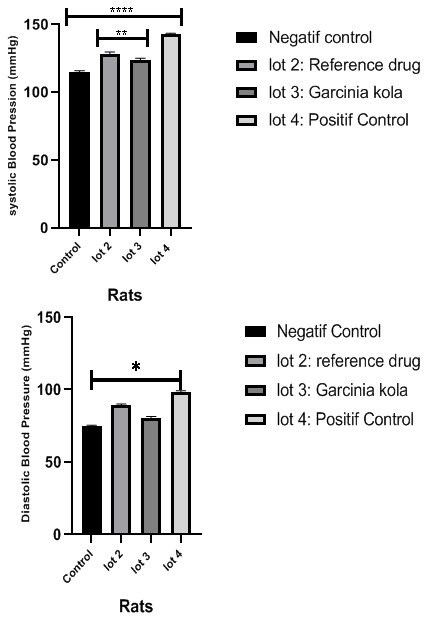
This study has shown that chronic administration of a 20% fructose solution and 10% salt to normotensive rats for 4 weeks resulted in a significant mean increase in diastolic blood pressure (DBP) and systolic blood pressure (SBP) of 25.5 mm Hg and 29.57 mm Hg, respectively, compared with the control (Figure 1). It was observed that the aqueous solution of Garcinia Kola seeds powder and nifedipine are able to reduce DBP and SBP caused by chronic fructose and salt consumption. Compared to fructose-salt treated rats (positive control), DBP and SBP of Garcinia Kola treated rats decreased by 18.37 mmHg and 21.07 mmHg at 200 mg/kg, respectively. Nifedipine resulted in a mean reduction in DBP and SBP of 10.27 and 16.2 mmHg, respectively, compared with controls. Hypertension markers were significantly reduced by Garcinia Kola seeds powder at treated doses and 10 mg/kg of Nifedipine, respectively.
Fructose and salt also caused significant elevation of DBP and SBP in the animals. There was a progressive increase in body weight in all groups of rats during the 4-week experimental period (Figure l). Neither fructose treatment at withdrawal significantly affected the body weight gain. There were no significant differences in body weight among various treatment groups at any time points. Systolic blood pressure (SBP) and pulse rate (PR) in rats during fructose treatment and fructose withdrawal (Figure 1). The figures of the blood pressure of the treated rats with Garcinia Kola at the maximum dose (200 g/kg body weight) were close to those of the rats treated with nifedipine® (120.32 ± 3.63 mm Hg versus 121.5 ± 5.42 mm Hg), with the mean arterial pressure of the rats decreasing to near normal levels.
Blood pressure characteristics of the Wistar rats in the study
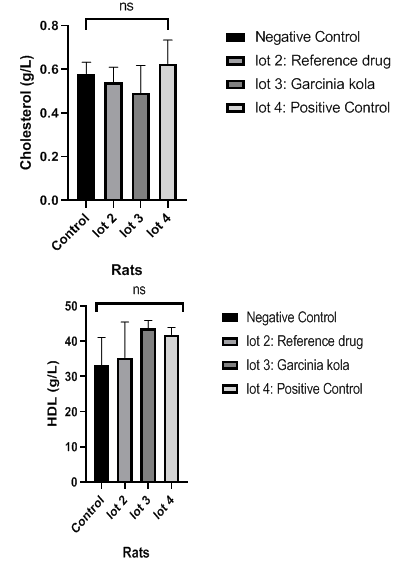
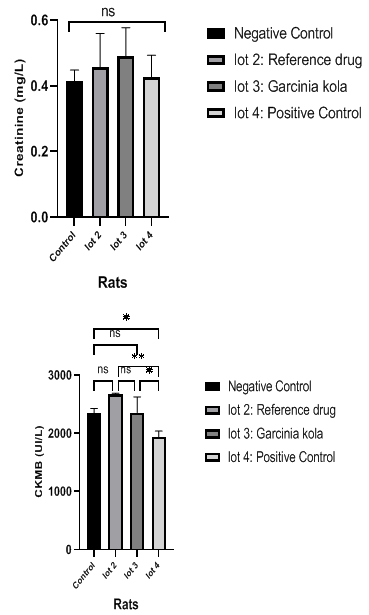
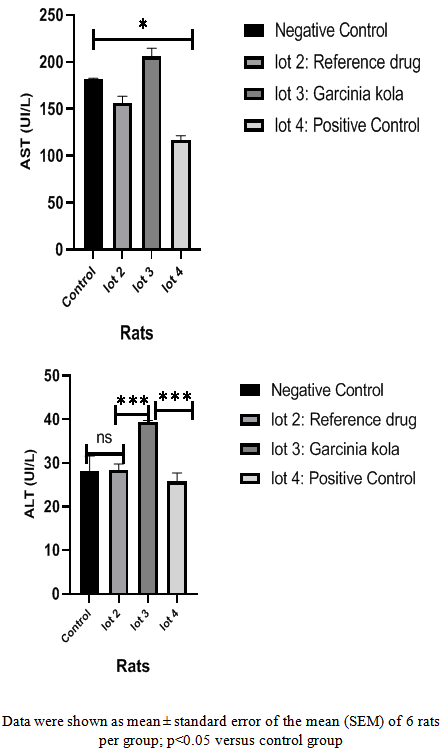
Blood glucose, cholesterol and HDL appeared lower in lot 4 (positive control) compared to the control and treated group, while creatinine values were significantly lower in the treated lots compared to the positive and negative controls. Transaminases (ALAT and ASAT) produced by the liver were significantly higher in the hypertensive control group while lower in the lot treated with Garcinia Kola and the lot treated with nifedipine. In addition, the lowest level is observed in the lot treated with Garcinia Kola compared to the lot treated with nifedipine. On the other hand, there is a significant difference between CKMB and urea of the diseased rats in lot 4 and other lots. Figure 2 shows that the changes in lipid markers of G. Kola and reference drug (Nifedpine)-treated rats, including total cholesterol and HDL levels, were not significant.


Data were shown as mean ± standard error of the mean (SEM) of 6 rats per group; #p<0.05 versus control group; p<0.05 versus
The table shows the blood counts of the different batches of rats. While the level of PDW, MPV, RDW-SD, RDW-CV MCH, P-LCR, MCHC vary very little compared to the controls (-). The results revealed a significant increase in PLT, PCT and P-LCC in the reference lot compared to the other lots. A higher level of LYM and HGB in the control (+) lot compared to the other lots.
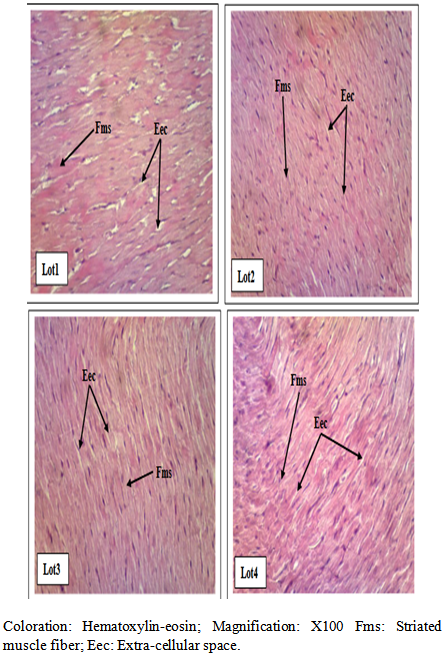
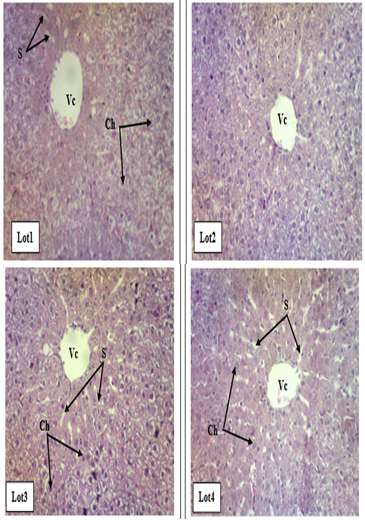
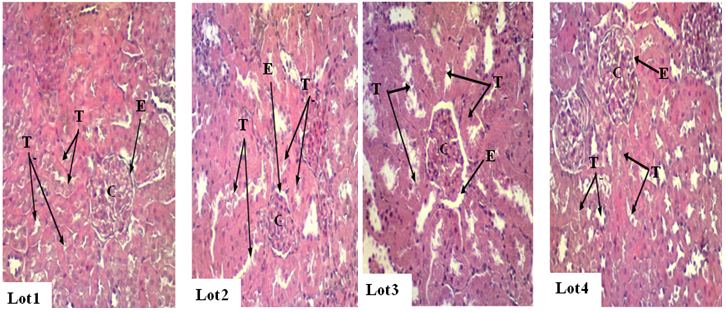
The different histological sections observed (stomach, liver and kidney) show perfectly normal structures (Figures 5a, 5b and 5c).
The figures show the results of the histological sections performed on the heart; rats having received a different matrix in comparison with control rats. No major structural changes are observed.
The figures show the results of the histological sections carried out on the liver of rats gavaged with G. Kola powder solution in comparison with control rats. No major structural changes are observed. The hepatocyte spans are normally separated by sinusoids.


The figures show the results of the histological sections performed on the kidney of rats having received a different matrix in comparison with control rats. No major structural changes are observed.
The biochemical characteristics of G. Kola have revealed the presence of tannins, flavonoids, polyphenols, antioxidant and anti-inflammatory compounds. (Table 1)
In this study, we examined the antihypertensive action of an aqueous solution of Garcinia Kola seeds powder obtained after oven dried in an experimental model of fructose- and salt-induced Hypertension in Wistar rats. Experimental studies have shown that glucose and fructose contribute to an increase in blood pressure through several mechanisms, including dyslipidemia, sodium retention, increased blood volume and increased oxidative stress. Our study showed that G. Kola has an antihypertensive effect comparable to that of nifedipine from the first week of treatment. These results are in agreement with Shepart who obtained a reduction in systolic blood pressure after three weeks of feeding with Garcinia kola seeds 14. In addition, a reduction in systolic blood pressure of 10 mmHg results in a 13% reduction in all-cause mortality 15. Therefore, the reduction in systolic blood pressure of 19 mmHg observed by G. Kola in our study is remarkable for its potential health impact. The powder of the G. Kola seeds is safe for consumption and there are no reports of harmful overdose to date 3. The antihypertensive activity of this powder could be related to different synergistic mechanisms such as its diuretic effect and blocking of the renin-angiotensin-aldosterone system 16, 17. Regarding phytochemicals, the presence of a wide range of chemicals in this matrix confers it several pharmacological properties and nutraceutical potential 18 19. Bioactive molecules such as flavonoids, tannins, polyphenols etc., have been confirmed by various authors (20) and make Garcinia kola the plant with many clothes. First, flavonoids, because of their low molecular weight, have the ability to make free radicals harmless by scavenging 20. Kolaviron, is a flavonoid reported for its effectiveness as a natural antioxidant and therefore beneficial in minimizing oxidative damage. Oxidative stress usually results from excessive production of reactive oxygen species (ROS) or reduced antioxidant activity which has been implicated in severe pathologies including hypertension 21. G. Kola seeds also are an effective hepato-protective agent 20. The tannins express the astringent taste of Garcinia Kola and have also been reported to have remarkable potential in the treatment of intestinal disorders 22. In addition to its ability to reduce blood pressure, there are several pharmacological effects associated with the consumption of Garcinia Kola (antioxidant, anti-inflammatory and nutraceutical potential 20. On the other hand, the presence of tannins and flavonoids is recognized for its properties of increasing capillary strength, venous tone and collagen stability. They have inhibitory activities on decarboxylase, elastase and angiotensin converting enzyme 23. Moreover, kolaviron would be responsible for vasodilatation by stopping the circulation of calcium in the smooth muscle 3 for cardioprotective actions by preventing endothelial dysfunction and for the production of nitric oxide in blood platelets capable of preventing atherosclerosis 24. This highlights the different means or site of action by which high blood pressure is regulated by Garcinia Kola can be used as a curative and also as a preventive. High blood pressure can damage the arteries that supply the kidneys, heart, liver etc. once installed. The lipid profile includes the determination of total cholesterol, HDL cholesterol, etc…. It highlights abnormalities in lipoprotein metabolism for better management 25. All control and treated rats have statistically identical lipid status, however, the rats that received Garcinia Kola have on one hand, the lowest cholesterol level and on the other hand the highest HDL level. Regarding hematological parameters, the results show that Garcinia Kola has effects on hematological, static and biological parameters. The transaminases ALAT and ASAT produced by the liver are a response to inflammation 26. Biochemical metabolic, anti-inflammatory and antioxidant markers of rats treated by G. Kola showed improvement in several of these markers. These data suggest that the seeds have immune stimulating capabilities indicating that G. Kola is a potential candidate for therapeutic uses. These results are in agreement with those of (24). The extract significantly reduced the mean volume of hemoglobin cells in the animals' plasma (p>0.05). Due to its antioxidant properties, G. Kola has hematological effects in stimulating the body's immune system, which could support the claims of ethnomedical efficacy. These results are in agreement with those of 25. In addition to being a regulator of blood pressure, G kola seeds contain important nutrients as proven by our results. Thus, this plant could be more valorized and preserved.
The systolic and diastolic blood pressure of sick rats treated with aqueous solution of oven-dried powder of G. Kola seeds confirm their antihypertensive activity. Moreover, due to their bioactive molecules, the immune system is strengthened and the blood parameters are balanced. This oven-dried powder form with reduced water activity and therefore less subject to physiological and microbial alterations is more stable. It is a sustainable way of preserving foodstuffs. Indeed, once dry, G. Kola seeds become unsuitable for consumption. G. Kola seeds which kept their biological activities intact could be exploited in this oven-dried form into improved functional food or in galenic pharmaceutical formulation more attractive and pleasant but above all regularly available and accessible at any time of the year with no noticeable shortage. Although, clinical studies on human must be associated with these further formulations before their validation and large use.
The authors have stated that they received the following financial support for the research, writing and/or publication of this article: This study was fully funded by the Fund for Science, Technology and Innovation (FONSTI)
All the authors declare that they have no conflict of interest.
| [1] | K. T. Mills, A. Stefanescu, and J. He, “The global epidemiology of hypertension,” Nat. Rev. Nephrol., vol. 16, no. 4, pp. 223–237, 2020. | ||
| In article | View Article PubMed | ||
| [2] | L. Mfeukeu Kuate, R. Carine Negue Kuate, D. Danwe, E. Nnanga, A. Menanga, and E. Sobngwi, “Garcinia kola seed supplementation reduces the blood pressure in patients with high normal blood pressure or grade I hypertension: a single center, single arm non - randomized clinical trial,” J. Integr. Cardiol., vol. 7, no. 1, pp. 1–5, 2021. | ||
| In article | View Article | ||
| [3] | F. J. Olatoye, A. J. Akindele, O. E. Balogun, O. Awodele, and A. A. Adejare, “ Antihypertensive Effect of Kolaviron, a Bioflavonoid From Garcinia kola , in L-NAME Induced Hypertension in Rats ,” Nat. Prod. Commun., vol. 18, no. 3, p. 1934578X2211486, 2023. | ||
| In article | View Article | ||
| [4] | N. Andarwulan, N. C. Puspita, Saraswati, and D. Średnicka-Tober, “Antioxidants such as flavonoids and carotenoids in the diet of Bogor, Indonesia residents,” Antioxidants, vol. 10, no. 4, pp. 1–20, 2021. | ||
| In article | View Article PubMed | ||
| [5] | O. Shelef, P. J. Weisberg, and F. D. Provenza, “The value of native plants and local production in an era of global agriculture,” Front. Plant Sci., vol. 8, no. December, pp. 1–15, 2017. | ||
| In article | View Article PubMed | ||
| [6] | Z. T. Tsegay and K. M. Gebremedhin, “Physicochemical and sensory properties of wine produced from blended cactus pear (opuntia ficus-indica) and lantana camara (L. camara) Fruits,” J. Food Qual., vol. 2019, 2019. | ||
| In article | View Article | ||
| [7] | M. Lebri et al., “Evaluation De L’effet De L’extrait Aqueux Des Feuilles De Abrus Precatorius (Fabaceae) Sur Le Poids Et La Prise Alimentaire Chez Des Rats,” Eur. Sci. J. ESJ, vol. 16, no. 15, pp. 365–377, 2020. | ||
| In article | View Article | ||
| [8] | O. G. Yildirim et al., “High-fructose in drinking water initiates activation of inflammatory cytokines and testicular degeneration in rat,” Toxicol. Mech. Methods, vol. 29, no. 3, pp. 224–232, 2019. | ||
| In article | View Article PubMed | ||
| [9] | A. L. Kouadio, G. Gnahoue, M. K. T. Kple, G. Abizi, S. D. Kone, and M. K. A. Kra, “Effet des extraits des feuilles de Ficus sycomorus sur les paramètres hématologiques et biochimiques des rats Wistar,” Int. J. Biol. Chem. Sci., vol. 16, no. 2, pp. 680–694, 2022. | ||
| In article | View Article | ||
| [10] | A. Meital, D. Avi, G. Liel, B. Aharon, A.-S. Orit, and G. Shmuel, “Effects of Soaking, Cooking, and Steaming Treatments on the Faba Bean Seeds’ Total Bioactive Compounds Content and Antioxidant Activity,” J. Food Nutr. Res., vol. 11, no. 1, pp. 96–101, 2023. | ||
| In article | View Article | ||
| [11] | A. Meda, C. E. Lamien, M. Romito, J. Millogo, and O. G. Nacoulma, “Determination of the total phenolic, flavonoid and proline contents in Burkina Fasan honey, as well as their radical scavenging activity,” Food Chem., vol. 91, no. 3, pp. 571–577, 2005. | ||
| In article | View Article | ||
| [12] | M. V Anoop and A. R. Bindu, “In-vitro Anti-inflammatory Activity Studies on Syzygium zeylanicum (L.) DC Leaves,” Int. J. Pharma Res. Rev., vol. 4, no. 8, p. 18, 2015. | ||
| In article | |||
| [13] | M. Cissé, G. G. Doué, W. Yao, and T. L. Zoué, “Impact of Lactic Acid Fermentation on the Nutritional Potential and Anti-nutritional Factors of Two Widely Consumed Pulses (Vigna unguiculata and Vigna subterranea) Flours in Côte d’Ivoire,” Int. J. Biochem. Res. Rev., vol. 31, no. 6, pp. 13–22, 2022. | ||
| In article | View Article | ||
| [14] | J. P. Sheppard et al., “Blood Pressure Changes Following Antihypertensive Medication Reduction, by Drug Class and Dose Chosen for Withdrawal: Exploratory Analysis of Data From the OPTiMISE Trial,” Front. Pharmacol., vol. 12, no. April, pp. 1–11, 2021. | ||
| In article | View Article PubMed | ||
| [15] | D. Ettehad et al., “Blood pressure lowering for prevention of cardiovascular disease and death : a systematic review and meta-analysis,” Lancet, vol. 387, no. 10022, pp. 957–967, 2016. | ||
| In article | View Article PubMed | ||
| [16] | A. Dermane, S. Gbati, and B. Bakoma, “In vitro Antioxidant, Anti-inflammatory and Antimicrobial Activities of Garcinia kola Seeds (Clusiaceae),” Int. J. Pharm. Chem., vol. 7, p. 111, Jan. 2021. | ||
| In article | View Article | ||
| [17] | C. O. Nwonuma et al., “Antioxidant and the ameliorating effect of Allium cepa (Onion) fortified feed against potassium bromate induced oxidative damage in Wistar rats,” Toxicol. Reports, vol. 8, pp. 759–766, 2021. | ||
| In article | View Article PubMed | ||
| [18] | F. Stephen et al., “Evaluation of the nutraceutical potential of Garcinia kola Seed Oil,” ~ 1894 ~ J. Pharmacogn. Phytochem., vol. 6, no. 5, pp. 1894–1901, 2017. | ||
| In article | |||
| [19] | T. Okoko, “and free radical scavenging activities of Garcinia kola seeds,” Free Radic. Biol. Med., vol. 8, no. 24, pp. 7133–7137, 2009. | ||
| In article | |||
| [20] | A. M. Dogara et al., “Biological Evaluation of Garcinia kola Heckel,” Adv. Pharmacol. Pharm. Sci., vol. 2022, 2022. | ||
| In article | View Article PubMed | ||
| [21] | G. L. Colussi, A. Da Porto, and A. Cavarape, “Hypertension and type 2 diabetes: lights and shadows about causality,” J. Hum. Hypertens., vol. 34, no. 2, pp. 91–93, 2020. | ||
| In article | View Article PubMed | ||
| [22] | S. A. AKINTELU, A. S. FOLORUNSO, and O. T. ADEMOSUN, “Instrumental Characterization and Antibacterial Investigation of Silver Nanoparticles Synthesized From Garcinia Kola Leaf,” J. Drug Deliv. Ther., vol. 9, no. 6-s, pp. 58–64, 2019. | ||
| In article | View Article | ||
| [23] | A. M. Dogara et al., “Évaluation biologique deGarcinia kolaHeckel,” vol. 2022, 2022. | ||
| In article | |||
| [24] | A. Bourqui et al., “Hypertension treatment with Combretum micranthum or Hibiscus sabdariffa, as decoction or tablet: a randomized clinical trial,” J. Hum. Hypertens., vol. 35, no. 9, pp. 800–808, 2021. | ||
| In article | View Article PubMed | ||
| [25] | A. E. Idris et al., “Evaluation of metabolic, antioxidant and anti-inflammatory effects of Garcinia kola on diabetic rats,” Saudi J. Biol. Sci., vol. 27, no. 12, pp. 3641–3646, 2020. | ||
| In article | View Article PubMed | ||
| [26] | N. Habak, D. Bouaichi, H. Abbache, N. OuldBessi, and A. Chikouche, “Interest of fasting in the exploration of the lipid balance,” Batna J. Med. Sci., vol. 7, no. 2, pp. 102–104, 2020. | ||
| In article | View Article | ||
Published with license by Science and Education Publishing, Copyright © 2023 N’Dri K. Eric D, Assamoi A. Antoine, Ouattara H. Djeneba and Yao K. Jean-Noel
 This work is licensed under a Creative Commons Attribution 4.0 International License. To view a copy of this license, visit
https://creativecommons.org/licenses/by/4.0/
This work is licensed under a Creative Commons Attribution 4.0 International License. To view a copy of this license, visit
https://creativecommons.org/licenses/by/4.0/
| [1] | K. T. Mills, A. Stefanescu, and J. He, “The global epidemiology of hypertension,” Nat. Rev. Nephrol., vol. 16, no. 4, pp. 223–237, 2020. | ||
| In article | View Article PubMed | ||
| [2] | L. Mfeukeu Kuate, R. Carine Negue Kuate, D. Danwe, E. Nnanga, A. Menanga, and E. Sobngwi, “Garcinia kola seed supplementation reduces the blood pressure in patients with high normal blood pressure or grade I hypertension: a single center, single arm non - randomized clinical trial,” J. Integr. Cardiol., vol. 7, no. 1, pp. 1–5, 2021. | ||
| In article | View Article | ||
| [3] | F. J. Olatoye, A. J. Akindele, O. E. Balogun, O. Awodele, and A. A. Adejare, “ Antihypertensive Effect of Kolaviron, a Bioflavonoid From Garcinia kola , in L-NAME Induced Hypertension in Rats ,” Nat. Prod. Commun., vol. 18, no. 3, p. 1934578X2211486, 2023. | ||
| In article | View Article | ||
| [4] | N. Andarwulan, N. C. Puspita, Saraswati, and D. Średnicka-Tober, “Antioxidants such as flavonoids and carotenoids in the diet of Bogor, Indonesia residents,” Antioxidants, vol. 10, no. 4, pp. 1–20, 2021. | ||
| In article | View Article PubMed | ||
| [5] | O. Shelef, P. J. Weisberg, and F. D. Provenza, “The value of native plants and local production in an era of global agriculture,” Front. Plant Sci., vol. 8, no. December, pp. 1–15, 2017. | ||
| In article | View Article PubMed | ||
| [6] | Z. T. Tsegay and K. M. Gebremedhin, “Physicochemical and sensory properties of wine produced from blended cactus pear (opuntia ficus-indica) and lantana camara (L. camara) Fruits,” J. Food Qual., vol. 2019, 2019. | ||
| In article | View Article | ||
| [7] | M. Lebri et al., “Evaluation De L’effet De L’extrait Aqueux Des Feuilles De Abrus Precatorius (Fabaceae) Sur Le Poids Et La Prise Alimentaire Chez Des Rats,” Eur. Sci. J. ESJ, vol. 16, no. 15, pp. 365–377, 2020. | ||
| In article | View Article | ||
| [8] | O. G. Yildirim et al., “High-fructose in drinking water initiates activation of inflammatory cytokines and testicular degeneration in rat,” Toxicol. Mech. Methods, vol. 29, no. 3, pp. 224–232, 2019. | ||
| In article | View Article PubMed | ||
| [9] | A. L. Kouadio, G. Gnahoue, M. K. T. Kple, G. Abizi, S. D. Kone, and M. K. A. Kra, “Effet des extraits des feuilles de Ficus sycomorus sur les paramètres hématologiques et biochimiques des rats Wistar,” Int. J. Biol. Chem. Sci., vol. 16, no. 2, pp. 680–694, 2022. | ||
| In article | View Article | ||
| [10] | A. Meital, D. Avi, G. Liel, B. Aharon, A.-S. Orit, and G. Shmuel, “Effects of Soaking, Cooking, and Steaming Treatments on the Faba Bean Seeds’ Total Bioactive Compounds Content and Antioxidant Activity,” J. Food Nutr. Res., vol. 11, no. 1, pp. 96–101, 2023. | ||
| In article | View Article | ||
| [11] | A. Meda, C. E. Lamien, M. Romito, J. Millogo, and O. G. Nacoulma, “Determination of the total phenolic, flavonoid and proline contents in Burkina Fasan honey, as well as their radical scavenging activity,” Food Chem., vol. 91, no. 3, pp. 571–577, 2005. | ||
| In article | View Article | ||
| [12] | M. V Anoop and A. R. Bindu, “In-vitro Anti-inflammatory Activity Studies on Syzygium zeylanicum (L.) DC Leaves,” Int. J. Pharma Res. Rev., vol. 4, no. 8, p. 18, 2015. | ||
| In article | |||
| [13] | M. Cissé, G. G. Doué, W. Yao, and T. L. Zoué, “Impact of Lactic Acid Fermentation on the Nutritional Potential and Anti-nutritional Factors of Two Widely Consumed Pulses (Vigna unguiculata and Vigna subterranea) Flours in Côte d’Ivoire,” Int. J. Biochem. Res. Rev., vol. 31, no. 6, pp. 13–22, 2022. | ||
| In article | View Article | ||
| [14] | J. P. Sheppard et al., “Blood Pressure Changes Following Antihypertensive Medication Reduction, by Drug Class and Dose Chosen for Withdrawal: Exploratory Analysis of Data From the OPTiMISE Trial,” Front. Pharmacol., vol. 12, no. April, pp. 1–11, 2021. | ||
| In article | View Article PubMed | ||
| [15] | D. Ettehad et al., “Blood pressure lowering for prevention of cardiovascular disease and death : a systematic review and meta-analysis,” Lancet, vol. 387, no. 10022, pp. 957–967, 2016. | ||
| In article | View Article PubMed | ||
| [16] | A. Dermane, S. Gbati, and B. Bakoma, “In vitro Antioxidant, Anti-inflammatory and Antimicrobial Activities of Garcinia kola Seeds (Clusiaceae),” Int. J. Pharm. Chem., vol. 7, p. 111, Jan. 2021. | ||
| In article | View Article | ||
| [17] | C. O. Nwonuma et al., “Antioxidant and the ameliorating effect of Allium cepa (Onion) fortified feed against potassium bromate induced oxidative damage in Wistar rats,” Toxicol. Reports, vol. 8, pp. 759–766, 2021. | ||
| In article | View Article PubMed | ||
| [18] | F. Stephen et al., “Evaluation of the nutraceutical potential of Garcinia kola Seed Oil,” ~ 1894 ~ J. Pharmacogn. Phytochem., vol. 6, no. 5, pp. 1894–1901, 2017. | ||
| In article | |||
| [19] | T. Okoko, “and free radical scavenging activities of Garcinia kola seeds,” Free Radic. Biol. Med., vol. 8, no. 24, pp. 7133–7137, 2009. | ||
| In article | |||
| [20] | A. M. Dogara et al., “Biological Evaluation of Garcinia kola Heckel,” Adv. Pharmacol. Pharm. Sci., vol. 2022, 2022. | ||
| In article | View Article PubMed | ||
| [21] | G. L. Colussi, A. Da Porto, and A. Cavarape, “Hypertension and type 2 diabetes: lights and shadows about causality,” J. Hum. Hypertens., vol. 34, no. 2, pp. 91–93, 2020. | ||
| In article | View Article PubMed | ||
| [22] | S. A. AKINTELU, A. S. FOLORUNSO, and O. T. ADEMOSUN, “Instrumental Characterization and Antibacterial Investigation of Silver Nanoparticles Synthesized From Garcinia Kola Leaf,” J. Drug Deliv. Ther., vol. 9, no. 6-s, pp. 58–64, 2019. | ||
| In article | View Article | ||
| [23] | A. M. Dogara et al., “Évaluation biologique deGarcinia kolaHeckel,” vol. 2022, 2022. | ||
| In article | |||
| [24] | A. Bourqui et al., “Hypertension treatment with Combretum micranthum or Hibiscus sabdariffa, as decoction or tablet: a randomized clinical trial,” J. Hum. Hypertens., vol. 35, no. 9, pp. 800–808, 2021. | ||
| In article | View Article PubMed | ||
| [25] | A. E. Idris et al., “Evaluation of metabolic, antioxidant and anti-inflammatory effects of Garcinia kola on diabetic rats,” Saudi J. Biol. Sci., vol. 27, no. 12, pp. 3641–3646, 2020. | ||
| In article | View Article PubMed | ||
| [26] | N. Habak, D. Bouaichi, H. Abbache, N. OuldBessi, and A. Chikouche, “Interest of fasting in the exploration of the lipid balance,” Batna J. Med. Sci., vol. 7, no. 2, pp. 102–104, 2020. | ||
| In article | View Article | ||