Community water fluoridation (CWF) has been recognized as one of the most effective population-based strategies for preventing dental caries and improving oral health equity. However, its continued relevance in developed countries has become a subject of debate due to declining caries rates, widespread use of fluoride-containing products, evolving preventive approaches, and concerns regarding safety and individual autonomy. This comprehensive review evaluates the current evidence on the mechanisms, effectiveness, safety, and global policy perspectives of CWF. Current data support the safety of optimally fluoridated water, with dental fluorosis being the only consistently documented adverse effect, predominantly mild and cosmetic. International experiences demonstrate varied approaches, with some countries continuing CWF as a key public health intervention while others rely on alternative strategies such as fluoride toothpaste, salt fluoridation, school-based programs, fluoride varnish, and silver diamine fluoride. Future caries prevention is likely to involve integration of population-based measures with precision public health, artificial intelligence, assisted risk prediction, and personalized preventive dentistry. Overall, CWF remains a relevant, evidence-based, and equitable public health strategy, particularly when incorporated within a comprehensive approach to oral disease prevention.
Dental caries remains one of the most prevalent chronic diseases worldwide despite significant advances in preventive dentistry. Community water fluoridation (CWF), the controlled adjustment of fluoride levels in public drinking water to an optimal concentration for caries prevention, is widely regarded as one of the most effective population-based oral health interventions. Unlike individual preventive measures, CWF benefits entire communities regardless of age, socioeconomic status, or access to dental care, thereby contributing to the reduction of oral health disparities. 1, 2
The concept of water fluoridation emerged from epidemiological observations in the early twentieth century, when H. Trendley Dean demonstrated that communities with naturally occurring fluoride at optimal concentrations experienced significantly lower rates of dental caries. These findings led to the first controlled fluoridation program in Grand Rapids, Michigan, in 1945, marking the beginning of community water fluoridation as a public health measure. Subsequent studies confirmed its effectiveness, resulting in widespread adoption across several developed countries and recognition by the Centers for Disease Control and Prevention (CDC) as one of the Ten Great Public Health Achievements of the Twentieth Century. 3
Today, community water fluoridation serves approximately 400 million people worldwide, although its implementation varies considerably. Countries such as the United States, Canada, Australia, New Zealand, Ireland, and Singapore continue to support fluoridation programs, whereas many European nations have discontinued or never adopted CWF, relying instead on alternative fluoride delivery methods such as fluoridated toothpaste, salt fluoridation, and school-based preventive programs. 2, 4
Despite decades of evidence supporting its effectiveness, the continued relevance of CWF has become increasingly debated. Improvements in oral hygiene, widespread use of fluoride-containing products, declining caries prevalence in many developed countries, and growing public concerns regarding safety, ethics, and individual autonomy have prompted renewed evaluation of this public health strategy. At the same time, persistent oral health inequalities suggest that universal preventive measures may continue to play an important role, particularly among underserved populations. Therefore, an updated appraisal of the current evidence is warranted to determine whether community water fluoridation remains an effective, safe, and relevant public health intervention in developed countries.
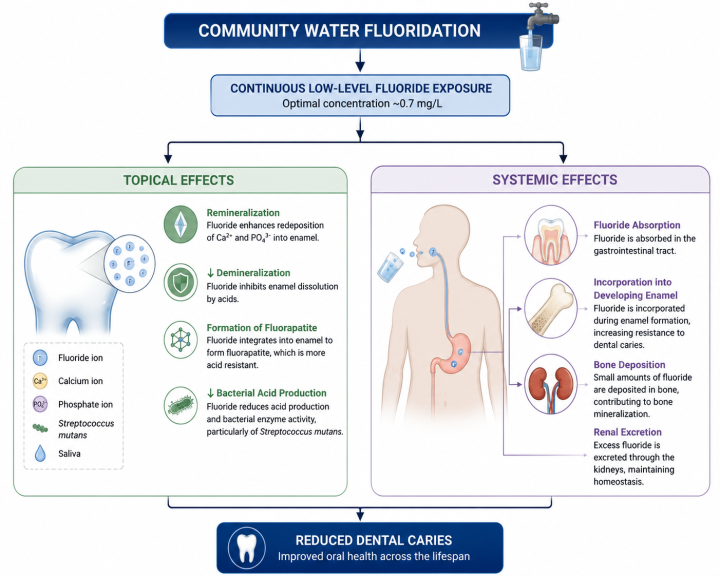
The caries-preventive effect of fluoride is mediated through both topical and systemic mechanisms, although current evidence indicates that its primary benefit is exerted after tooth eruption through continuous topical exposure. This understanding has shifted the focus of preventive strategies from fluoride incorporation during tooth development to maintaining low levels of fluoride in the oral environment throughout life. 5, 6
2.1. Topical EffectsTopical fluoride acts directly on the tooth surface and dental biofilm, making it the principal mechanism responsible for caries prevention. During acid attacks following bacterial metabolism of dietary carbohydrates, fluoride promotes the remineralization of early enamel lesions by enhancing the deposition of calcium and phosphate ions into demineralized enamel. The newly formed fluoridated apatite is more resistant to acid dissolution than hydroxyapatite, thereby increasing enamel resistance to future cariogenic challenges. 5
In addition, fluoride inhibits demineralization by reducing enamel solubility during periods of low pH. At higher concentrations, it also exhibits antimicrobial activity by interfering with bacterial enzymes involved in glycolysis, reducing acid production and slowing the metabolism of cariogenic bacteria such as Streptococcus mutans. These combined actions help maintain the balance between demineralization and remineralization, ultimately reducing the incidence and progression of dental caries. 6
2.2. Systemic EffectsSystemic fluoride is ingested primarily through fluoridated drinking water, dietary sources, and fluoride supplements. During tooth development, fluoride is incorporated into the forming enamel, producing fluoridated apatite crystals that are slightly more resistant to acid dissolution. Although this pre-eruptive effect contributes modestly to enamel strength, it is now considered less significant than the continuous post-eruptive topical action of fluoride. 7
Following ingestion, fluoride is rapidly absorbed from the gastrointestinal tract, distributed through the bloodstream, and deposited mainly in calcified tissues such as bones and developing teeth. Excess fluoride is primarily excreted through the kidneys. While systemic exposure is essential during tooth development, excessive intake may result in dental fluorosis, emphasizing the importance of maintaining fluoride exposure within recommended levels. 6 Overall, contemporary evidence supports that the effectiveness of community water fluoridation is largely attributable to the frequent, low-level topical exposure it provides through saliva and plaque fluid, rather than solely to fluoride incorporation into developing teeth. This understanding underpins current public health recommendations advocating optimal fluoride exposure throughout life for sustained caries prevention. Figure 1
CWF is one of the most extensively studied public health interventions for the prevention of dental caries. Evidence accumulated over more than seven decades consistently demonstrates that optimal fluoride concentrations in drinking water reduce the incidence and severity of dental caries across populations. Although the magnitude of benefit has declined compared with the pre-fluoride toothpaste era, contemporary studies continue to show that CWF provides additional protection against caries beyond that achieved through other fluoride sources. The preventive effect is particularly evident at the population level, where continuous, low-dose fluoride exposure promotes enamel remineralization and inhibits demineralization throughout life (8).
Recent systematic reviews indicate that communities receiving optimally fluoridated water generally experience lower caries prevalence, fewer decayed, missing, and filled teeth (DMFT/dmft), and reduced treatment needs compared with non-fluoridated communities. Moreover, CWF remains one of the most cost-effective public health interventions, with the greatest benefits observed among socioeconomically disadvantaged populations who often have limited access to routine dental care. 9, 10
3.2. ChildrenThe strongest evidence supporting community water fluoridation exists for children. Numerous observational studies and systematic reviews have demonstrated significantly lower caries experience among children residing in fluoridated communities. A recent review by Iheozor-Ejiofor et al. reported that children exposed to fluoridated water had lower dmft/DMFT scores and a greater proportion of caries-free teeth than those in non-fluoridated areas. Although improvements in oral hygiene and widespread use of fluoride toothpaste have reduced the relative magnitude of benefit, CWF continues to provide meaningful protection, particularly for children from low-income families and those with limited access to preventive dental services. 11
Furthermore, evidence from Australia, Canada, and the United Kingdom indicates that discontinuation of water fluoridation has been associated with increased caries rates among children, reinforcing the sustained preventive role of CWF in pediatric populations. 8
3.3. AdultsHistorically, the benefits of water fluoridation were primarily evaluated in children, however, increasing evidence supports its effectiveness throughout adulthood. Continuous exposure to fluoridated water reduces the incidence of coronal and root caries by maintaining low fluoride concentrations in saliva and dental plaque, thereby enhancing remineralization of early lesions.
A systematic review by Griffin et al. reported that adults living in fluoridated communities experience approximately 20-35% fewer carious lesions than those without fluoridated water. The benefits are particularly important for adults with exposed root surfaces, reduced salivary flow, or elevated caries risk associated with chronic diseases and medication use. 12
3.4. Older AdultsThe growing elderly population has highlighted the importance of fluoride in preventing root caries and preserving natural dentition. Gingival recession, xerostomia, multiple medications, and chronic systemic diseases increase caries susceptibility among older adults. Community water fluoridation provides continuous fluoride exposure that helps reduce root surface demineralization and slows lesion progression. Although evidence in older adults is less extensive than in children, observational studies suggest that individuals living in fluoridated communities have lower root caries prevalence, fewer tooth extractions, and improved tooth retention. These findings support the continued public health value of CWF in ageing populations, especially as increasing numbers of adults retain their natural teeth into later life. 13
Overall, current evidence indicates that community water fluoridation remains an effective population-based strategy for reducing dental caries across all age groups. While the absolute reduction in caries has diminished with the widespread availability of fluoride-containing products, CWF continues to provide measurable oral health benefits, particularly for vulnerable populations, and remains an important component of comprehensive caries prevention programs.
Community water fluoridation (CWF) has been extensively evaluated for its safety over more than 75 years of implementation. At the recommended fluoride concentration (approximately 0.7 mg/L), major health organizations, including the World Health Organization (WHO), the Centers for Disease Control and Prevention (CDC), the American Dental Association (ADA), and the National Health and Medical Research Council (NHMRC) of Australia, consider CWF to be a safe and effective public health measure for caries prevention. Nevertheless, concerns regarding potential adverse health effects continue to be debated, necessitating periodic evaluation of emerging evidence. 14
4.1. Dental FluorosisDental fluorosis is the most well-established adverse effect associated with excessive fluoride exposure during enamel formation, typically in children younger than eight years. It results from disruption of enamel mineralization and ranges from barely visible white striations to severe enamel discoloration and pitting. At fluoride concentrations recommended for community water fluoridation, most fluorosis is classified as very mild or mild, presenting primarily as cosmetic changes without compromising tooth function. Severe fluorosis is uncommon in fluoridated communities and is generally associated with prolonged exposure to substantially higher fluoride levels or multiple fluoride sources during early childhood. 15
4.2. Skeletal FluorosisSkeletal fluorosis is a chronic bone disease caused by long-term ingestion of high concentrations of fluoride, usually from naturally fluoridated groundwater containing fluoride levels far exceeding those used in community water fluoridation. Clinical manifestations include joint stiffness, pain, ligament calcification, and, in severe cases, skeletal deformities. Extensive epidemiological evidence indicates that skeletal fluorosis is not associated with optimally fluoridated drinking water. 16
4.3. Neurodevelopmental EvidenceThe relationship between fluoride exposure and neurodevelopment has become one of the most debated aspects of fluoridation research. Several recent observational studies have reported associations between high prenatal or early-life fluoride exposure and small reductions in children's cognitive performance. However, many of these studies were conducted in regions with naturally elevated fluoride concentrations, had methodological limitations, or could not adequately control for important confounding factors. 17
Current evidence does not establish a causal relationship between community water fluoridation at recommended concentrations and impaired neurodevelopment. Recent systematic reviews and governmental assessments emphasize that the certainty of evidence remains low to moderate and that further high-quality prospective studies are needed, particularly in populations exposed to fluoride concentrations typical of fluoridated community water supplies. 17
4.4. Kidney DiseaseBecause fluoride is primarily excreted through the kidneys, concerns have been raised regarding individuals with impaired renal function. Current evidence suggests that fluoride exposure from optimally fluoridated drinking water does not adversely affect kidney function in healthy individuals. Although patients with advanced chronic kidney disease may have reduced fluoride clearance, existing studies have not demonstrated clinically significant adverse effects attributable to community water fluoridation. Nonetheless, further research in vulnerable populations remains warranted. 16
4.5. Thyroid FunctionThe potential relationship between fluoride exposure and thyroid dysfunction has received increasing attention. Earlier studies suggesting an association were largely conducted in regions with excessive fluoride concentrations or iodine deficiency. More recent investigations conducted in fluoridated communities have generally found no consistent evidence linking optimally fluoridated drinking water with hypothyroidism or altered thyroid hormone levels. Current evidence therefore does not support a causal association between community water fluoridation and thyroid disease in iodine-sufficient populations. 18
4.6. CancerThe possible association between fluoride exposure and cancer, particularly osteosarcoma, has been investigated for several decades. Comprehensive reviews conducted by the International Agency for Research on Cancer (IARC), the National Research Council, and other expert bodies have found no convincing evidence that community water fluoridation increases the risk of cancer. Large epidemiological studies and meta-analyses have consistently failed to demonstrate an association between optimally fluoridated drinking water and the incidence of osteosarcoma or other malignancies. 19
4.7. PregnancyPregnancy represents another area of ongoing research because fluoride crosses the placenta. While some observational studies have explored possible associations between maternal fluoride exposure and offspring neurodevelopment, the evidence remains inconsistent and insufficient to establish causality at fluoride concentrations used in community water fluoridation. Current public health agencies have not recommended changes to drinking water fluoridation policies for pregnant women, although continued research is encouraged to clarify potential prenatal effects. 20 Overall, the available evidence indicates that community water fluoridation at recommended concentrations is safe for the general population. Dental fluorosis remains the only consistently documented adverse effect, and in fluoridated communities it is predominantly mild and cosmetic. Concerns regarding skeletal fluorosis, kidney disease, thyroid dysfunction, cancer, adverse pregnancy outcomes, and neurodevelopment have not been supported by high-certainty evidence at fluoride concentrations used for community water fluoridation. Nevertheless, ongoing surveillance and high-quality research remain essential to ensure that fluoridation policies continue to reflect the best available scientific evidence.
Despite decades of evidence supporting the effectiveness and safety of CWF, its adoption varies considerably among developed countries. These differences are influenced not only by scientific evidence but also by healthcare infrastructure, legislation, public attitudes, economic considerations, and the availability of alternative fluoride delivery methods.
5.1. Countries Supporting Community Water FluoridationSeveral developed countries, including the United States, Canada, Australia, New Zealand, Ireland, and parts of the United Kingdom, continue to endorse CWF as a core public health strategy for caries prevention. These countries emphasize its proven effectiveness, cost-effectiveness, and ability to reduce oral health inequalities, particularly among children and socioeconomically disadvantaged populations. National health authorities generally recommend maintaining fluoride concentrations at optimal levels as part of comprehensive oral disease prevention programs. 21
5.2. Countries Using Alternative Preventive StrategiesIn contrast, countries such as Germany, Sweden, the Netherlands, and Switzerland have discontinued or never implemented CWF. Importantly, these decisions were largely influenced by legal, political, ethical, and logistical considerations rather than evidence demonstrating a lack of effectiveness or safety. Instead, these countries rely on alternative preventive approaches, including widespread use of fluoridated toothpaste, salt fluoridation, school-based oral health programs, and comprehensive access to dental care. 21, 22 [Table 1]
5.3. Insights from Global ExperienceInternational experience suggests that there is no universal approach to fluoride delivery. Countries with robust preventive dental services and alternative fluoride programs may achieve substantial reductions in dental caries without CWF, whereas countries with greater socioeconomic disparities continue to regard fluoridation as an effective and equitable population-based intervention. Consequently, decisions regarding CWF should be based on local disease burden, healthcare infrastructure, existing fluoride exposure, cost-effectiveness, and community preferences rather than a single global model. 22
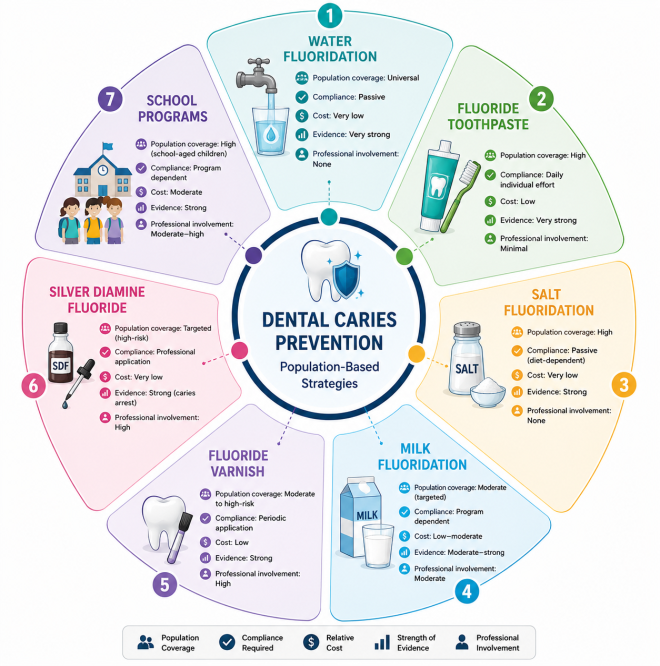
While CWF remains an effective population-based strategy for caries prevention, several alternative fluoride delivery methods are available. These approaches are particularly relevant in countries where CWF has not been adopted or has been discontinued because of legal, political, logistical, or societal considerations. Unlike CWF, which provides passive and continuous fluoride exposure at the population level, most alternative strategies depend on individual compliance, targeted implementation, or access to dental services.
6.1. Fluoride ToothpasteFluoride toothpaste is the most widely used and effective self-administered caries preventive measure worldwide. Regular twice-daily brushing with fluoride toothpaste significantly reduces caries incidence in both children and adults by promoting remineralization and inhibiting enamel demineralization. Because of its widespread availability and strong evidence base, fluoride toothpaste is considered the cornerstone of modern caries prevention. However, its effectiveness depends on consistent use, appropriate brushing habits, and access to oral hygiene products. 23
6.2. Salt FluoridationSalt fluoridation involves the addition of fluoride to table salt and has been successfully implemented in several European and Latin American countries, including Germany, Switzerland, and Mexico. It offers a practical population-based alternative where water fluoridation is not feasible and has demonstrated effectiveness in reducing dental caries. Nevertheless, its public health impact may be influenced by individual dietary habits and national initiatives aimed at reducing salt consumption for cardiovascular health. 24
6.3. Milk FluoridationMilk fluoridation is primarily used in school and community-based programs to improve fluoride exposure among children. Studies have shown that fluoridated milk can reduce caries prevalence, particularly in communities lacking access to fluoridated water. However, its effectiveness depends on regular participation, consistent consumption, and organized program delivery, limiting its applicability as a universal preventive strategy. 25
6.4. School Fluoride ProgramsSchool-based fluoride programs, including supervised toothbrushing, fluoride mouth-rinse programs, and periodic fluoride gel applications, have been widely adopted in many developed countries. These programs effectively reduce caries risk among school-aged children, especially in high-risk or underserved communities. Although they provide targeted prevention, their success relies on sustained funding, trained personnel, and regular participation, making them complementary rather than complete substitutes for population-wide interventions. 26
6.5. Silver Diamine FluorideSilver diamine fluoride (SDF) has emerged as an effective, minimally invasive treatment for arresting active dental caries, particularly in young children, older adults, and individuals with limited access to restorative care. Its high caries-arresting efficacy, ease of application, and low cost make it a valuable option in community and outreach settings. However, because SDF is primarily therapeutic rather than preventive and causes permanent black staining of treated lesions, it should be viewed as an adjunct rather than an alternative to fluoride-based preventive strategies. 26
6.6. Fluoride VarnishFluoride varnish is one of the most widely recommended professionally applied fluoride therapies for individuals at moderate to high risk of dental caries. Regular application, typically two to four times annually, has been shown to significantly reduce caries in both primary and permanent dentitions. Fluoride varnish is safe, easy to apply, and increasingly incorporated into school-based and primary healthcare programs. However, unlike CWF, its effectiveness depends on periodic professional application and access to preventive dental services. 27 Figure 2
The future of CWF is likely to be shaped by advances in preventive dentistry, digital health technologies, and precision public health. While CWF remains an effective population-based intervention, emerging approaches aim to complement universal prevention by identifying individuals and communities at the highest risk of dental caries and delivering more targeted, data-driven preventive care.
7.1. Precision Public HealthPrecision public health applies epidemiological, environmental, and population-level data to tailor public health interventions to specific communities. Rather than adopting a one-size-fits-all approach, future caries prevention strategies may integrate local disease burden, socioeconomic status, access to dental care, and fluoride exposure to optimize preventive programs. Such approaches could help policymakers determine where community water fluoridation provides the greatest public health benefit while allocating resources more efficiently. 28
7.2. Targeted PreventionDespite declining caries prevalence in many developed countries, substantial oral health inequalities persist among children from low-income families, older adults, rural populations, and individuals with limited access to dental care. Future prevention strategies are expected to combine universal measures such as CWF with targeted interventions, including fluoride varnish, silver diamine fluoride, school-based prevention programs, and community outreach for high-risk populations. This integrated approach has the potential to improve health equity while maximizing the effectiveness of preventive resources. 29
7.3. Artificial Intelligence and Caries Risk PredictionArtificial intelligence (AI) is emerging as a valuable tool in preventive dentistry. Machine learning algorithms can analyze demographic, clinical, radiographic, behavioral, and socioeconomic data to predict an individual's risk of developing dental caries with increasing accuracy. AI-assisted risk assessment may enable earlier identification of high-risk patients, support clinical decision-making, and guide population-level preventive strategies. Although these technologies remain in the early stages of implementation, they offer promising opportunities to enhance evidence-based planning and optimize the allocation of preventive interventions, including community water fluoridation. 30
7.4. Personalized DentistryThe growing emphasis on personalized dentistry reflects a shift toward individualized prevention based on a patient's unique risk profile. Advances in genomics, salivary diagnostics, microbiome analysis, and digital health technologies may enable clinicians to tailor preventive strategies according to genetic susceptibility, oral microbial composition, dietary habits, fluoride exposure, and lifestyle factors. Rather than replacing community water fluoridation, personalized dentistry is likely to complement existing population-based approaches by providing additional preventive support for individuals at elevated risk of dental caries. 31
Community water fluoridation remains one of the most effective, safe, and cost-effective population-based strategies for preventing dental caries. Although declining caries prevalence, widespread use of fluoride-containing products, and evolving public attitudes have prompted renewed debate, current evidence supports its continued role in improving oral health, particularly among socioeconomically disadvantaged populations. International experience demonstrates that fluoridation policies should be tailored to local epidemiology, healthcare infrastructure, alternative fluoride exposure, and community preferences rather than adopting a uniform approach. In countries where CWF is not implemented, other evidence-based fluoride interventions can provide effective caries prevention but often require greater individual compliance or healthcare resources.
Looking ahead, the integration of community water fluoridation with targeted prevention, precision public health, artificial intelligence, assisted risk assessment, and personalized dentistry offers an opportunity to optimize caries prevention while reducing oral health inequalities. Continued research and evidence-based policymaking will be essential to ensure that preventive strategies remain effective, equitable, and responsive to changing public health needs.
| [1] | Petersen PE, Lennon MA. Effective use of fluorides for the prevention of dental caries in the 21st century: the WHO approach. Community Dent Oral Epidemiol. 2004; 32(5): 319-321. | ||
| In article | View Article PubMed | ||
| [2] | Iheozor-Ejiofor Z, Worthington HV, Walsh T, O'Malley L, Clarkson JE, Macey R, Alam R, Tugwell P, Welch V, Glenny AM. Water fluoridation for the prevention of dental caries. Cochrane Database Syst Rev. 2015; 6: CD010856. | ||
| In article | View Article | ||
| [3] | Centers for Disease Control and Prevention. Community Water Fluoridation: Statement on the Evidence Supporting the Safety and Effectiveness of Community Water Fluoridation. 2024. | ||
| In article | |||
| [4] | Rugg-Gunn A, Lowry R, Cockcroft B, Walmsley AD. Water fluoridation today: benefits and challenges. Front Oral Health. 2026; 7: 1745916. | ||
| In article | View Article PubMed | ||
| [5] | Featherstone JD. The science and practice of caries prevention. J Am Dent Assoc. 2000; 131(7): 887-899. | ||
| In article | View Article PubMed | ||
| [6] | Buzalaf MAR, Pessan JP, Honório HM, ten Cate JM. Mechanisms of action of fluoride for caries control. Monogr Oral Sci. 2011; 22: 97-114. | ||
| In article | View Article PubMed | ||
| [7] | ten Cate JM. Current concepts on the theories of the mechanism of action of fluoride. Acta Odontol Scand. 1999; 57(6): 325-329. | ||
| In article | View Article PubMed | ||
| [8] | Slade GD, Sanders AE, Do L, Roberts-Thomson K, Spencer AJ. Effects of fluoridated drinking water on dental caries in Australian adults. J Dent Res. 2013; 92(4): 376-382. | ||
| In article | View Article PubMed | ||
| [9] | O'Connell JM, Brunson D, Anselmo T, Sullivan PW. Costs and savings associated with community water fluoridation programs in Colorado. Prev Chronic Dis. 2005; 2(Spec No): A06. | ||
| In article | |||
| [10] | Ran T, Chattopadhyay SK; Community Preventive Services Task Force. Economic evaluation of community water fluoridation: a Community Guide systematic review. Am J Prev Med. 2016; 50(6): 790-796. | ||
| In article | View Article PubMed | ||
| [11] | Zokaie T, Pollick H. Community water fluoridation and the integrity of equitable public health infrastructure. J Public Health Dent. 2022; 82(3): 358-361. | ||
| In article | View Article PubMed | ||
| [12] | Griffin SO, Regnier E, Griffin PM, Huntley V. Effectiveness of fluoride in preventing caries in adults. J Dent Res. 2007; 86(5): 410-415. | ||
| In article | View Article PubMed | ||
| [13] | Walsh T, Worthington HV, Glenny AM, Marinho VC, Jeroncic A. Fluoride toothpastes of different concentrations for preventing dental caries. Cochrane Database Syst Rev. 2019; 3(3): CD007868. | ||
| In article | View Article PubMed | ||
| [14] | Till C, El-Sabbagh J, Goodman C, Subiza-Pérez M, Hall M. How the public's knowledge, attitudes, and practice intersect with scientific evidence about fluoride. Curr Probl Pediatr Adolesc Health Care. 2025; 55(6): 101768. | ||
| In article | View Article PubMed | ||
| [15] | DenBesten P, Li W. Chronic fluoride toxicity: dental fluorosis. Monogr Oral Sci. 2011; 22: 81-96. | ||
| In article | View Article PubMed | ||
| [16] | National Health and Medical Research Council (NHMRC). Information Paper – Water Fluoridation: Dental and Other Human Outcomes. Canberra: NHMRC; 2017. | ||
| In article | |||
| [17] | National Academies of Sciences, Engineering, and Medicine; Division on Earth and Life Studies; Board on Environmental Studies and Toxicology; Committee to Review the NTP Monograph on the Systematic Review of Fluoride Exposure and Neurodevelopmental and Cognitive Health Effects. Review of the Draft NTP Monograph: Systematic Review of Fluoride Exposure and Neurodevelopmental and Cognitive Health Effects. Washington (DC): National Academies Press (US); 2020. | ||
| In article | |||
| [18] | Newton JN, Young N, Verne J, Morris J. Water fluoridation and hypothyroidism: results of this study need much more cautious interpretation. J Epidemiol Community Health. 2015; 69(7): 617-618. | ||
| In article | View Article PubMed | ||
| [19] | Kharb S, Sandhu R, Kundu ZS. Fluoride levels and osteosarcoma. South Asian J Cancer. 2012; 1(2): 76-77. | ||
| In article | View Article PubMed | ||
| [20] | Yang L, Yan F, Peng X, Meng Z, Geng X, Wei W. Protective versus risky: the complex relationship between prenatal fluoride exposure and birth outcomes in a Chinese large-scale population study. Environ Health. 2026; 25(1): 16. | ||
| In article | View Article PubMed | ||
| [21] | Whelton HP, Spencer AJ, Do LG, Rugg-Gunn AJ. Fluoride revolution and dental caries: evolution of policies for global use. J Dent Res. 2019; 98(8): 837-846. | ||
| In article | View Article PubMed | ||
| [22] | Brambilla E. Fluoride—is it capable of fighting old and new dental diseases? An overview of existing fluoride compounds and their clinical applications. Caries Res. 2001; 35(Suppl 1): 6-9. | ||
| In article | View Article PubMed | ||
| [23] | Marinho VC, Higgins JP, Sheiham A, Logan S. Fluoride toothpastes for preventing dental caries in children and adolescents. Cochrane Database Syst Rev. 2003; (1): CD002278. | ||
| In article | View Article | ||
| [24] | Marthaler TM. Salt fluoridation and oral health. Acta Med Acad. 2013; 42(2): 140-155. | ||
| In article | View Article PubMed | ||
| [25] | Bánóczy J, Petersen PE, Rugg-Gunn AJ, editors. Milk Fluoridation for the Prevention of Dental Caries. Geneva: World Health Organization; 2009. | ||
| In article | |||
| [26] | Rashid ME. Effectiveness of silver diamine fluoride in arresting caries in adult patients. J Pharm Bioallied Sci. 2025; 17(Suppl 2): S1288-S1290. | ||
| In article | View Article PubMed | ||
| [27] | Baik A, Alamoudi N, El-Housseiny A, Altuwirqi A. Fluoride varnishes for preventing occlusal dental caries: a review. Dent J (Basel). 2021; 9(6): 64. | ||
| In article | View Article PubMed | ||
| [28] | Rajendran EG, Mohd Hairi F, Krishna Supramaniam R, Mohd TAM. Precision public health, the key for future outbreak management: a scoping review. Digit Health. 2024; 10: 20552076241256877. | ||
| In article | View Article PubMed | ||
| [29] | Parmar D, Sailo JL, Sakhamuri S, Dalapati C, Dutta SD, Arya S, Dixit H. Assessment of oral health disparities and barriers to care among underserved populations in urban and rural settings. J Pharm Bioallied Sci. 2025; 17(Suppl 1): S445-S447. | ||
| In article | View Article PubMed | ||
| [30] | Bhatia S, Gupta VK, Kumar S, Mishra G, Malhotra S, Arif K, Khot AP, Rajput A, Mahajan A. Artificial intelligence-based techniques for caries risk prediction and assessment: a scoping review. J Oral Biol Craniofac Res. 2025; 15(6): 1497-1507. | ||
| In article | View Article PubMed | ||
| [31] | Amato A. Personalized oral and dental care. J Pers Med. 2023; 13(1): 110. | ||
| In article | |||
Published with license by Science and Education Publishing, Copyright © 2026 Dr. Santosh, Yaroslav Herin, Dr. Imran Idrees, Dr. Sree Rekha Movva, Sofia Olena Herin, Dr. Amanpreet Kaur, Dr. Ridhi Bhola and Dr. Sandeep Singh
 This work is licensed under a Creative Commons Attribution 4.0 International License. To view a copy of this license, visit
http://creativecommons.org/licenses/by/4.0/
This work is licensed under a Creative Commons Attribution 4.0 International License. To view a copy of this license, visit
http://creativecommons.org/licenses/by/4.0/
| [1] | Petersen PE, Lennon MA. Effective use of fluorides for the prevention of dental caries in the 21st century: the WHO approach. Community Dent Oral Epidemiol. 2004; 32(5): 319-321. | ||
| In article | View Article PubMed | ||
| [2] | Iheozor-Ejiofor Z, Worthington HV, Walsh T, O'Malley L, Clarkson JE, Macey R, Alam R, Tugwell P, Welch V, Glenny AM. Water fluoridation for the prevention of dental caries. Cochrane Database Syst Rev. 2015; 6: CD010856. | ||
| In article | View Article | ||
| [3] | Centers for Disease Control and Prevention. Community Water Fluoridation: Statement on the Evidence Supporting the Safety and Effectiveness of Community Water Fluoridation. 2024. | ||
| In article | |||
| [4] | Rugg-Gunn A, Lowry R, Cockcroft B, Walmsley AD. Water fluoridation today: benefits and challenges. Front Oral Health. 2026; 7: 1745916. | ||
| In article | View Article PubMed | ||
| [5] | Featherstone JD. The science and practice of caries prevention. J Am Dent Assoc. 2000; 131(7): 887-899. | ||
| In article | View Article PubMed | ||
| [6] | Buzalaf MAR, Pessan JP, Honório HM, ten Cate JM. Mechanisms of action of fluoride for caries control. Monogr Oral Sci. 2011; 22: 97-114. | ||
| In article | View Article PubMed | ||
| [7] | ten Cate JM. Current concepts on the theories of the mechanism of action of fluoride. Acta Odontol Scand. 1999; 57(6): 325-329. | ||
| In article | View Article PubMed | ||
| [8] | Slade GD, Sanders AE, Do L, Roberts-Thomson K, Spencer AJ. Effects of fluoridated drinking water on dental caries in Australian adults. J Dent Res. 2013; 92(4): 376-382. | ||
| In article | View Article PubMed | ||
| [9] | O'Connell JM, Brunson D, Anselmo T, Sullivan PW. Costs and savings associated with community water fluoridation programs in Colorado. Prev Chronic Dis. 2005; 2(Spec No): A06. | ||
| In article | |||
| [10] | Ran T, Chattopadhyay SK; Community Preventive Services Task Force. Economic evaluation of community water fluoridation: a Community Guide systematic review. Am J Prev Med. 2016; 50(6): 790-796. | ||
| In article | View Article PubMed | ||
| [11] | Zokaie T, Pollick H. Community water fluoridation and the integrity of equitable public health infrastructure. J Public Health Dent. 2022; 82(3): 358-361. | ||
| In article | View Article PubMed | ||
| [12] | Griffin SO, Regnier E, Griffin PM, Huntley V. Effectiveness of fluoride in preventing caries in adults. J Dent Res. 2007; 86(5): 410-415. | ||
| In article | View Article PubMed | ||
| [13] | Walsh T, Worthington HV, Glenny AM, Marinho VC, Jeroncic A. Fluoride toothpastes of different concentrations for preventing dental caries. Cochrane Database Syst Rev. 2019; 3(3): CD007868. | ||
| In article | View Article PubMed | ||
| [14] | Till C, El-Sabbagh J, Goodman C, Subiza-Pérez M, Hall M. How the public's knowledge, attitudes, and practice intersect with scientific evidence about fluoride. Curr Probl Pediatr Adolesc Health Care. 2025; 55(6): 101768. | ||
| In article | View Article PubMed | ||
| [15] | DenBesten P, Li W. Chronic fluoride toxicity: dental fluorosis. Monogr Oral Sci. 2011; 22: 81-96. | ||
| In article | View Article PubMed | ||
| [16] | National Health and Medical Research Council (NHMRC). Information Paper – Water Fluoridation: Dental and Other Human Outcomes. Canberra: NHMRC; 2017. | ||
| In article | |||
| [17] | National Academies of Sciences, Engineering, and Medicine; Division on Earth and Life Studies; Board on Environmental Studies and Toxicology; Committee to Review the NTP Monograph on the Systematic Review of Fluoride Exposure and Neurodevelopmental and Cognitive Health Effects. Review of the Draft NTP Monograph: Systematic Review of Fluoride Exposure and Neurodevelopmental and Cognitive Health Effects. Washington (DC): National Academies Press (US); 2020. | ||
| In article | |||
| [18] | Newton JN, Young N, Verne J, Morris J. Water fluoridation and hypothyroidism: results of this study need much more cautious interpretation. J Epidemiol Community Health. 2015; 69(7): 617-618. | ||
| In article | View Article PubMed | ||
| [19] | Kharb S, Sandhu R, Kundu ZS. Fluoride levels and osteosarcoma. South Asian J Cancer. 2012; 1(2): 76-77. | ||
| In article | View Article PubMed | ||
| [20] | Yang L, Yan F, Peng X, Meng Z, Geng X, Wei W. Protective versus risky: the complex relationship between prenatal fluoride exposure and birth outcomes in a Chinese large-scale population study. Environ Health. 2026; 25(1): 16. | ||
| In article | View Article PubMed | ||
| [21] | Whelton HP, Spencer AJ, Do LG, Rugg-Gunn AJ. Fluoride revolution and dental caries: evolution of policies for global use. J Dent Res. 2019; 98(8): 837-846. | ||
| In article | View Article PubMed | ||
| [22] | Brambilla E. Fluoride—is it capable of fighting old and new dental diseases? An overview of existing fluoride compounds and their clinical applications. Caries Res. 2001; 35(Suppl 1): 6-9. | ||
| In article | View Article PubMed | ||
| [23] | Marinho VC, Higgins JP, Sheiham A, Logan S. Fluoride toothpastes for preventing dental caries in children and adolescents. Cochrane Database Syst Rev. 2003; (1): CD002278. | ||
| In article | View Article | ||
| [24] | Marthaler TM. Salt fluoridation and oral health. Acta Med Acad. 2013; 42(2): 140-155. | ||
| In article | View Article PubMed | ||
| [25] | Bánóczy J, Petersen PE, Rugg-Gunn AJ, editors. Milk Fluoridation for the Prevention of Dental Caries. Geneva: World Health Organization; 2009. | ||
| In article | |||
| [26] | Rashid ME. Effectiveness of silver diamine fluoride in arresting caries in adult patients. J Pharm Bioallied Sci. 2025; 17(Suppl 2): S1288-S1290. | ||
| In article | View Article PubMed | ||
| [27] | Baik A, Alamoudi N, El-Housseiny A, Altuwirqi A. Fluoride varnishes for preventing occlusal dental caries: a review. Dent J (Basel). 2021; 9(6): 64. | ||
| In article | View Article PubMed | ||
| [28] | Rajendran EG, Mohd Hairi F, Krishna Supramaniam R, Mohd TAM. Precision public health, the key for future outbreak management: a scoping review. Digit Health. 2024; 10: 20552076241256877. | ||
| In article | View Article PubMed | ||
| [29] | Parmar D, Sailo JL, Sakhamuri S, Dalapati C, Dutta SD, Arya S, Dixit H. Assessment of oral health disparities and barriers to care among underserved populations in urban and rural settings. J Pharm Bioallied Sci. 2025; 17(Suppl 1): S445-S447. | ||
| In article | View Article PubMed | ||
| [30] | Bhatia S, Gupta VK, Kumar S, Mishra G, Malhotra S, Arif K, Khot AP, Rajput A, Mahajan A. Artificial intelligence-based techniques for caries risk prediction and assessment: a scoping review. J Oral Biol Craniofac Res. 2025; 15(6): 1497-1507. | ||
| In article | View Article PubMed | ||
| [31] | Amato A. Personalized oral and dental care. J Pers Med. 2023; 13(1): 110. | ||
| In article | |||