Tobacco use remains one of the leading preventable causes of morbidity and mortality worldwide and continues to pose a major challenge to oral and public health. In recent years, the growing popularity of alternative nicotine delivery systems, including electronic cigarettes, heated tobacco products, and nicotine pouches, has further complicated tobacco control efforts and raised concerns regarding their long-term effects on oral health. This comprehensive review summarizes the current evidence on the biological mechanisms through which tobacco and nicotine products contribute to oral diseases, including dental caries, periodontal disease, oral potentially malignant disorders, oral cancer, impaired wound healing, and complications affecting implant and prosthodontic outcomes. The review also compares the oral health effects of conventional and emerging tobacco products and highlights the influence of social determinants on tobacco-related oral health disparities. Particular emphasis is placed on the expanding role of dental professionals in tobacco prevention and cessation through evidence-based behavioral interventions, pharmacotherapy, patient education, and interdisciplinary collaboration. Finally, emerging innovations such as artificial intelligence, teledentistry, mobile health, salivary diagnostics, and precision public health are discussed as promising approaches to strengthen tobacco cessation and improve population oral health.
Tobacco use remains one of the leading preventable causes of disease and premature mortality worldwide, representing a major public health challenge. Despite ongoing tobacco control efforts, the use of combustible and non-combustible tobacco products continues to contribute significantly to the global burden of non-communicable diseases, healthcare costs, and health inequalities. 1 In parallel, the nicotine landscape has rapidly evolved with the emergence of electronic cigarettes, heated tobacco products, nicotine pouches, and other alternative nicotine delivery systems. Although these products are often promoted as reduced-risk alternatives, their long-term effects on health, particularly oral health, remain incompletely understood. 2
The oral cavity is the primary site of exposure to tobacco smoke, smokeless tobacco, and nicotine-containing aerosols, making it highly vulnerable to their adverse effects. Tobacco constituents induce oxidative stress, inflammation, immune dysregulation, vascular changes, and alterations in the oral microbiome, contributing to the initiation and progression of oral diseases. 2 Tobacco use has been strongly associated with periodontal disease, oral mucosal lesions, oral potentially malignant disorders, oral cancer, impaired wound healing, peri-implant complications, and reduced treatment outcomes. While the harmful effects of conventional tobacco products are well established, emerging nicotine products require continued evaluation due to increasing patterns of use, particularly among younger populations. 3, 4
Dental professionals play a critical role in tobacco control due to their frequent interaction with patients and their ability to identify early oral manifestations of tobacco exposure. Dental visits provide opportunities for tobacco screening, patient education, behavioral counseling, and referral for cessation support. 5 With the emergence of new nicotine products and increasing recognition of oral health within public health frameworks, an updated comprehensive review is needed. This review aims to summarize current evidence regarding the impact of tobacco and nicotine products on oral health, discuss their public health implications, and highlight the expanding role of dental professionals in tobacco prevention and cessation.
A comprehensive literature search was conducted to identify relevant evidence regarding tobacco and nicotine product use, oral health outcomes, public health implications, and the role of dental professionals in tobacco cessation. Searches were performed using major biomedical databases, including PubMed, Scopus, Embase, Web of Science, and the Cochrane Library. Relevant keywords and MeSH terms included tobacco, nicotine, smoking, electronic cigarettes, vaping, heated tobacco products, nicotine pouches, oral health, periodontal disease, oral cancer, tobacco cessation, and dental professionals. Additional relevant articles were identified through reference screening of selected publications.
Peer-reviewed studies, clinical research, epidemiological studies, and relevant review articles addressing the effects of tobacco and nicotine products on oral health, tobacco cessation interventions, and public health strategies were included. Publications unrelated to oral health, non-relevant studies, and articles without sufficient scientific evidence were excluded. The selected literature was critically evaluated and synthesized narratively based on major themes, including tobacco-related oral diseases, emerging nicotine products, prevention strategies, and the role of oral healthcare providers in tobacco cessation. Due to the heterogeneity of available evidence, findings were summarized qualitatively rather than through quantitative analysis.
Tobacco and nicotine products have evolved substantially over recent decades, shifting from traditional combustible and smokeless products to a wide range of alternative nicotine delivery systems. These products differ in their composition, route of administration, nicotine delivery, toxic constituents, and potential effects on oral and systemic health. While combustible tobacco remains the leading contributor to tobacco-related disease burden, emerging products such as electronic nicotine delivery systems, heated tobacco products, and nicotine pouches have gained popularity, creating new challenges for public health surveillance and prevention strategies. 6, 7, 8, 9, 10 Table 1
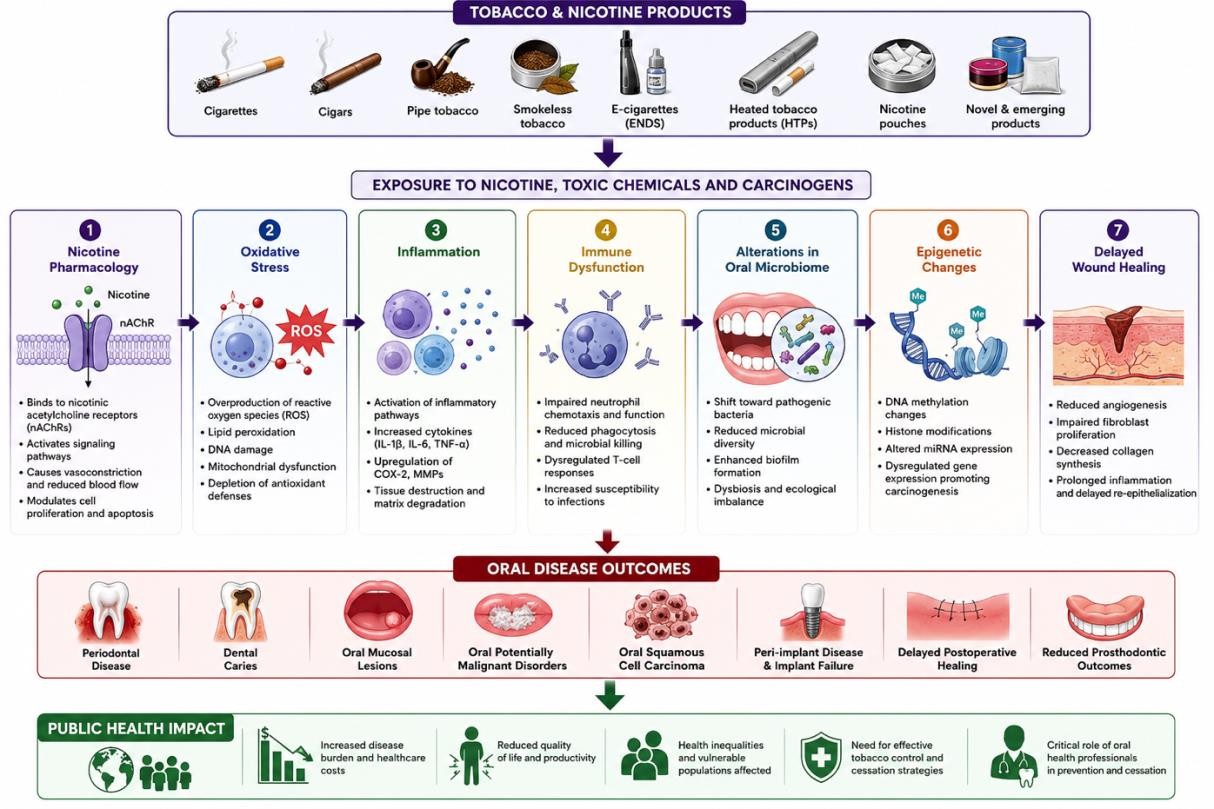
Tobacco and nicotine products exert their harmful effects on the oral cavity through multiple interconnected biological mechanisms. Nicotine and other toxic constituents initiate oxidative stress, chronic inflammation, immune dysregulation, alterations in the oral microbiome, epigenetic modifications, and impaired wound healing, collectively disrupting oral tissue homeostasis. These pathways contribute to the development and progression of periodontal disease, oral potentially malignant disorders, oral cancer, peri-implant complications, and delayed tissue repair. Although the relative contribution of each mechanism varies depending on the type, duration, and intensity of tobacco or nicotine exposure, their cumulative effects significantly increase the risk of oral disease and adversely affect treatment outcomes. 11, 12, 13, 14 Figure 1
Tobacco and nicotine exposure has extensive effects on oral tissues, affecting both hard and soft tissues through multiple biological pathways, including oxidative stress, chronic inflammation, immune dysregulation, vascular impairment, and microbial alterations. The clinical consequences range from reversible conditions such as tooth discoloration and halitosis to severe diseases including periodontal destruction, oral potentially malignant disorders, oral cancer, impaired wound healing, and compromised outcomes of dental rehabilitation. Although the relationship between conventional tobacco use and oral disease is well established, emerging nicotine products require continued investigation to determine their long-term effects on oral health. 14
5.1. Dental CariesThe association between tobacco use and dental caries is complex and influenced by factors such as altered salivary function, oral hygiene practices, dietary behaviors, and socioeconomic determinants. Tobacco exposure may reduce salivary flow, alter saliva composition, promote microbial dysbiosis, and impair protective mechanisms such as buffering capacity and remineralization, potentially increasing susceptibility to dental caries. 15 Smokeless tobacco products containing sweeteners and flavoring agents may further contribute to localized changes in the oral environment. Additionally, individuals who use tobacco products often demonstrate higher prevalence of untreated dental disease due to reduced utilization of preventive dental services. 15
5.2. Periodontal DiseasesPeriodontal disease represents one of the most well-established oral consequences of tobacco use. Smoking increases the risk, severity, and progression of periodontitis through several mechanisms, including impaired neutrophil function, altered inflammatory responses, reduced vascular supply, and changes in the subgingival microbiome. 16 Tobacco users often exhibit increased periodontal attachment loss, alveolar bone destruction, and tooth loss compared with non-users. Nicotine-induced vasoconstriction may mask clinical signs such as gingival bleeding, potentially delaying diagnosis and treatment. 16 Importantly, smoking cessation has been associated with improved periodontal outcomes and enhanced response to periodontal therapy.
5.3. Oral Potentially Malignant DisordersTobacco exposure is a major risk factor for oral potentially malignant disorders (OPMDs), which represent lesions with an increased potential for malignant transformation. 17
Oral leukoplakia is one of the most common tobacco-associated potentially malignant lesions. It presents as a white patch that cannot be clinically characterized as another disease and is strongly associated with tobacco exposure, particularly smokeless tobacco use. 18
Erythroplakia is less common but carries a substantially higher risk of dysplasia and malignant transformation compared with leukoplakia. Tobacco and alcohol exposure are recognized contributing factors. 19
Oral submucous fibrosis is a chronic, progressive fibrotic disorder strongly associated with areca nut and tobacco-containing products. It results in mucosal stiffness, restricted mouth opening, functional impairment, and increased risk of oral squamous cell carcinoma. 20
Tobacco use remains the most significant preventable risk factor for oral cancer, particularly oral squamous cell carcinoma. Carcinogenic compounds in tobacco products induce DNA damage, genetic mutations, oxidative stress, and alterations in cellular signaling pathways that contribute to malignant transformation. The risk varies according to product type, duration and intensity of exposure, and combined exposure with alcohol. Early identification of tobacco-related mucosal changes and routine oral cancer screening by dental professionals are essential components of prevention strategies. 21
Tobacco use is associated with various oral mucosal alterations, including smoker’s melanosis, nicotine stomatitis, tobacco pouch keratosis, and chronic mucosal irritation. These changes may reflect direct chemical irritation, increased melanin production, inflammatory responses, or adaptive epithelial changes caused by prolonged exposure. Recognition of these lesions is important because some may indicate continued carcinogenic exposure and increased risk of malignant transformation. 22
Extrinsic tooth staining and halitosis are common consequences of tobacco use. Tar and other combustion products from tobacco smoke adhere to enamel surfaces, resulting in discoloration and aesthetic concerns. Tobacco also promotes changes in oral microbial composition and reduces salivary cleansing, contributing to persistent malodor and impaired oral hygiene. These effects may negatively influence patient confidence, social interactions, and quality of life. 23
Tobacco and nicotine exposure may contribute to xerostomia through alterations in salivary gland function, reduced salivary secretion, and medication or behavioral factors associated with tobacco use. Reduced salivary flow increases susceptibility to dental caries, mucosal discomfort, difficulty wearing dentures, and impaired oral function. Xerostomia is particularly relevant among older adults and patients requiring prosthodontic rehabilitation. 24
Tobacco use negatively influences implant therapy outcomes by impairing osseointegration, increasing peri-implant inflammation, and delaying healing around implant surfaces. Nicotine-mediated vasoconstriction, reduced oxygen availability, altered immune response, and increased microbial colonization contribute to higher rates of implant failure among smokers compared with non-smokers. Smoking cessation before and after implant placement significantly improves treatment predictability. 25
Tobacco exposure adversely affects surgical outcomes by impairing angiogenesis, fibroblast activity, collagen synthesis, and immune response. These effects contribute to delayed wound healing, increased postoperative complications, and higher risk of infection following oral surgical procedures. Patients undergoing extractions, periodontal surgery, implant placement, or maxillofacial reconstruction may benefit from preoperative tobacco cessation interventions. 26
Tobacco use has important implications in prosthodontic care, affecting both treatment planning and long-term outcomes. Smoking may contribute to periodontal deterioration, implant complications, mucosal irritation, reduced denture tolerance, and compromised tissue adaptation following prosthetic rehabilitation. In patients requiring maxillofacial prosthetic rehabilitation, tobacco cessation is particularly important because improved tissue health and healing are essential for successful functional and aesthetic outcomes. 27
Saliva represents a promising non-invasive diagnostic medium for evaluating the biological effects of tobacco exposure and detecting early disease changes. Tobacco use has been associated with alterations in salivary inflammatory mediators, oxidative stress markers, DNA damage indicators, and microbial profiles. Salivary biomarkers may provide future opportunities for risk assessment, early detection of oral disease, and personalized prevention strategies; however, further validation is required before widespread clinical application. 28
The rapid diversification of tobacco and nicotine products has created challenges in evaluating their relative risks and clinical implications. While combustible cigarettes remain the most harmful and extensively studied tobacco product due to the generation of smoke containing numerous carcinogens and toxic chemicals, alternative nicotine products may also produce biological effects relevant to oral health. The following table summarizes the current understanding of major tobacco and nicotine products, focusing on exposure characteristics, oral health effects, and public health considerations. 29, 30, 31, 32, 33 Table 2
Tobacco-related oral diseases remain a significant public health concern, contributing substantially to the global burden of preventable morbidity and healthcare costs. Tobacco use is a major risk factor for periodontal disease, oral potentially malignant disorders, and oral cancer, disproportionately affecting populations in low- and middle-income countries where tobacco consumption is high and access to preventive healthcare is often limited. The increasing use of emerging nicotine products further highlights the need for effective tobacco control policies, oral health promotion, and early prevention strategies. 34, 35
The burden of tobacco-related oral diseases is strongly influenced by social determinants of health. Individuals with lower socioeconomic status and educational attainment generally have higher tobacco use prevalence and poorer oral health outcomes due to limited health literacy and reduced access to preventive care. 36 Rural communities frequently experience additional barriers, including shortages of dental professionals, financial constraints, and geographic inaccessibility to oral healthcare services. Similarly, racial and ethnic minority populations often face disparities in tobacco exposure, healthcare utilization, and disease burden resulting from broader social and structural inequities. Addressing these disparities requires comprehensive public health approaches that integrate tobacco cessation, oral health education, equitable access to dental care, and policies targeting the social determinants of health. 37
Tobacco cessation is one of the most effective interventions for reducing the burden of tobacco-related oral and systemic diseases. Because tobacco use is associated with periodontal disease, oral potentially malignant disorders, oral cancer, peri-implant diseases, and impaired wound healing, dental professionals are uniquely positioned to identify tobacco users and initiate evidence-based cessation interventions during routine clinical care. Regular dental visits provide repeated opportunities to screen patients, educate them about the oral consequences of tobacco use, assess nicotine dependence, and encourage quitting. Even brief advice delivered by dental professionals has been shown to increase quit attempts and improve long-term abstinence rates. 38
8.2. Evidence Supporting Dental-Based Tobacco CessationA growing body of evidence supports the effectiveness of tobacco cessation interventions delivered in dental settings. Systematic reviews have demonstrated that behavioral counseling provided by dentists and dental hygienists, particularly when combined with pharmacotherapy, significantly improves smoking cessation outcomes compared with usual care. Integrating cessation services into routine dental practice not only reduces tobacco use but also improves periodontal treatment outcomes, wound healing, implant success, and overall oral health. 39
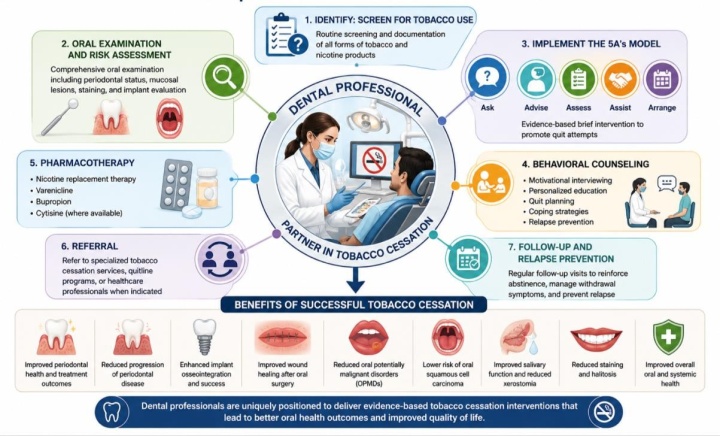
8.3. The 5A's ModelThe 5A's model is the most widely recommended evidence-based framework for tobacco cessation in healthcare settings.
• Ask: Identify and document tobacco use at every patient visit.
• Advise: Provide clear, personalized advice to quit.
• Assess: Determine the patient's willingness to quit.
• Assist: Offer behavioral counseling, pharmacotherapy, and educational resources.
• Arrange: Schedule follow-up visits to monitor progress and prevent relapse.
The 5A's model can be implemented efficiently during routine dental appointments and forms the foundation of tobacco cessation counseling. 40
8.4. The 5R's ModelFor patients who are unwilling or not yet ready to quit, the 5R's model is recommended to enhance motivation for behavior change.
• Relevance: Explain why quitting is personally important.
• Risks: Discuss the oral and systemic risks of continued tobacco use.
• Rewards: Highlight the health and quality-of-life benefits of cessation.
• Roadblocks: Identify barriers that may prevent quitting.
• Repetition: Reinforce these messages during subsequent visits.
This patient-centered approach helps increase readiness to quit while respecting individual motivation and circumstances. 41
8.5. Brief Behavioral CounselingBrief behavioral counseling is a practical intervention that can be delivered within a few minutes during routine dental visits. Counseling should include assessment of tobacco use, discussion of individual triggers, advice on coping with withdrawal symptoms, assistance in selecting a quit date, and reinforcement of the oral health benefits of cessation. Incorporating clinical findings, such as periodontal disease or oral mucosal lesions, can strengthen patient motivation by demonstrating the direct effects of tobacco use on oral health. 42
8.6. Motivational InterviewingMotivational interviewing is a patient-centered counseling technique that aims to resolve ambivalence and strengthen intrinsic motivation for behavior change. It emphasizes empathy, active listening, and collaborative goal setting rather than confrontation. Evidence suggests that motivational interviewing improves patient engagement and increases smoking cessation rates, particularly among individuals who are initially reluctant to quit. 43
8.7. PharmacotherapyPharmacotherapy should be considered for patients with nicotine dependence, particularly when combined with behavioral counseling.
Nicotine replacement therapy is considered first-line treatment for tobacco dependence and is available as transdermal patches, chewing gum, lozenges, inhalers, and nasal sprays. NRT reduces withdrawal symptoms and nicotine cravings by providing controlled doses of nicotine without exposure to harmful combustion products. 44
Varenicline is a partial agonist of the α4β2 nicotinic acetylcholine receptor that reduces nicotine cravings while decreasing the rewarding effects of smoking. It has consistently demonstrated higher smoking cessation rates than placebo and several alternative therapies. 45
Bupropion is an atypical antidepressant that aids smoking cessation by modulating dopaminergic and noradrenergic neurotransmission. It reduces withdrawal symptoms and nicotine cravings and is an effective alternative for patients who cannot use varenicline or nicotine replacement therapy. 46
Cytisine is a plant-derived partial nicotinic receptor agonist that has recently gained attention as a cost-effective smoking cessation medication. Clinical studies suggest that its efficacy is comparable to varenicline, however, its availability varies across countries. 47
8.8. Referral PathwaysPatients with severe nicotine dependence, repeated unsuccessful quit attempts, psychiatric comorbidities, or complex medical conditions should be referred to specialized tobacco cessation services, primary care physicians, behavioral health professionals, or national quitline programs. Collaboration with multidisciplinary healthcare teams enhances treatment success and ensures comprehensive patient care. 46
8.9. Follow-up ProtocolsFollow-up is essential for maintaining long-term abstinence and preventing relapse. Patients should be reassessed after their quit date to evaluate progress, manage withdrawal symptoms, reinforce motivation, and adjust treatment strategies when necessary. Follow-up may be conducted during routine dental appointments or through telephone calls, telehealth services, or digital health applications. Continuous support and repeated reinforcement substantially improve long-term smoking cessation outcomes. 47 [Figure 2]
Advances in digital health, artificial intelligence (AI), and precision medicine are transforming tobacco cessation and oral healthcare. Emerging technologies have the potential to improve early detection of tobacco-related oral diseases, personalize cessation interventions, enhance patient engagement, and expand access to preventive care. Integrating these innovations into routine dental practice and public health programs may strengthen tobacco control efforts and improve long-term oral health outcomes.
9.1. Artificial IntelligenceArtificial intelligence is increasingly being applied in dentistry to support disease detection, risk assessment, clinical decision-making, and patient management. AI algorithms have shown promise in identifying tobacco-related oral lesions, detecting early signs of oral cancer from clinical images, and assisting clinicians in diagnosis. AI-powered decision support systems may also help identify tobacco users at high risk of adverse oral health outcomes and facilitate evidence-based treatment planning. 48
AI-driven predictive models can enable personalized tobacco cessation by analyzing demographic, behavioral, clinical, and genetic factors to tailor counseling strategies and pharmacotherapy. Personalized interventions have the potential to improve patient adherence, optimize treatment selection, and increase long-term quit rates compared with standardized approaches. 49
Machine learning models are increasingly being developed to predict the risk of periodontal disease, oral cancer, treatment failure, and relapse among tobacco users. Early risk prediction may allow targeted preventive interventions and more effective allocation of healthcare resources. 50
9.2. TeledentistryTeledentistry offers an effective platform for delivering tobacco cessation counseling, follow-up consultations, and oral health education, particularly for individuals living in rural and underserved communities. Remote consultations can improve access to care, facilitate timely referrals, and support continuous monitoring of patients attempting to quit tobacco. 51
9.3. Mobile Health (mHealth)Mobile health technologies, including smartphone applications, text messaging services, and wearable-connected platforms, provide accessible tools for tobacco cessation. These technologies can deliver educational content, medication reminders, motivational messages, progress tracking, and real-time behavioral support, improving patient engagement and treatment adherence. 52
9.4. Digital Behavioral InterventionsDigital behavioral interventions, including web-based counseling programs, interactive educational modules, virtual coaching, and chatbot-assisted support, have emerged as effective adjuncts to traditional cessation strategies. These interventions offer scalable, cost-effective solutions that can complement counseling provided in dental settings and facilitate long-term behavior change. 53
9.5. Precision Public HealthPrecision public health combines clinical, behavioral, environmental, and population-level data to develop targeted tobacco control strategies. By identifying high-risk populations and tailoring preventive interventions according to demographic and socioeconomic characteristics, precision public health may enhance the effectiveness of tobacco cessation programs while reducing oral health disparities. 54
9.6. Salivary DiagnosticsSaliva is increasingly recognized as a valuable, non-invasive diagnostic medium for detecting biomarkers associated with tobacco exposure, oxidative stress, inflammation, and early malignant transformation. Advances in salivary diagnostics may facilitate early disease detection, monitor treatment response, and support personalized preventive strategies in tobacco users. 55
9.7. Wearable TechnologiesWearable devices and biosensors represent an emerging area in tobacco cessation and oral healthcare. These technologies can monitor physiological parameters, detect smoking behaviors, provide real-time feedback, and integrate with mobile health platforms to deliver personalized cessation support. Although still in early stages of development, wearable technologies may play an important role in future tobacco control programs and patient-centered oral healthcare. 56
Tobacco and nicotine use continue to pose a significant threat to oral and general health, contributing to a wide spectrum of conditions ranging from periodontal disease and oral potentially malignant disorders to oral cancer and impaired treatment outcomes. While the harmful effects of conventional tobacco products are well established, the increasing use of emerging nicotine products presents new challenges that require continued research and careful public health surveillance.
Dental professionals play a pivotal role in tobacco prevention and cessation through early detection, patient education, behavioral counseling, pharmacotherapy, and timely referral. Integrating evidence-based tobacco cessation strategies into routine dental practice can substantially reduce the burden of tobacco-related oral diseases while improving both oral and systemic health outcomes. From a public health perspective, reducing tobacco-related oral diseases requires a comprehensive approach that combines effective tobacco control policies, equitable access to oral healthcare, community-based prevention programs, and interdisciplinary collaboration. Future efforts should focus on strengthening the role of dentistry in tobacco control while leveraging advances in artificial intelligence, digital health technologies, salivary diagnostics, and precision public health to support personalized prevention and cessation strategies. Continued high-quality research is essential to better understand the long-term oral health effects of emerging nicotine products and to guide evidence-based clinical practice and public health policy.
| [1] | Dye BA. The Global Burden of Oral Disease: Research and Public Health Significance. J Dent Res. 2017 Apr; 96(4): 361-363. | ||
| In article | View Article PubMed | ||
| [2] | World Health Organization. WHO report on the global tobacco epidemic, 2021: addressing new and emerging products. Geneva: World Health Organization; 2021. | ||
| In article | |||
| [3] | Oral Health in America: Advances and Challenges: Executive Summary [Internet]. Bethesda (MD): National Institute of Dental and Craniofacial Research (US); 2021 Dec. Available from: . | ||
| In article | |||
| [4] | Sheiham A, Watt RG. The common risk factor approach: a rational basis for promoting oral health. Community Dent Oral Epidemiol. 2000 Dec; 28(6): 399-406. | ||
| In article | View Article PubMed | ||
| [5] | Holliday R, Hong B, McColl E, Livingstone-Banks J, Preshaw PM. Interventions for tobacco cessation delivered by dental professionals. Cochrane Database Syst Rev. 2021 Feb 19; 2(2): CD005084. | ||
| In article | View Article PubMed | ||
| [6] | O'Connor R, Schneller LM, Felicione NJ, Talhout R, Goniewicz ML, Ashley DL. Evolution of tobacco products: recent history and future directions. Tob Control. 2022 Mar; 31(2): 175-182. | ||
| In article | View Article PubMed | ||
| [7] | Levy DT, Thirlway F, Sweanor D, Liber A, Maria Sanchez-Romero L, Meza R, Douglas CE, Michael Cummings K. Do Tobacco Companies Have an Incentive to Promote "Harm Reduction" Products?: The Role of Competition. Nicotine Tob Res. 2023 Nov 22; 25(12): 1810-1821. | ||
| In article | View Article PubMed | ||
| [8] | Pesola F, Phillips-Waller A, Beard E, Shahab L, Sweanor D, Jarvis M, Hajek P. Effects of reduced-risk nicotine-delivery products on smoking prevalence and cigarette sales: an observational study. Public Health Res (Southampt). 2023 Sep; 11(7): 1-39. | ||
| In article | View Article PubMed | ||
| [9] | Hajek P, Phillips-Waller A, Przulj D, Pesola F, Smith KM, Bisal N, Li J, Parrott S, Sasieni P, Dawkins L, Ross L, Goniewicz M, Wu Q, McRobbie HJ. E-cigarettes compared with nicotine replacement therapy within the UK Stop Smoking Services: the TEC RCT. Health Technol Assess. 2019 Aug; 23(43): 1-82. | ||
| In article | View Article PubMed | ||
| [10] | Afolabi SO, Olaoye SO, Nyamgee A, Njan AA. Comparative effects of alternate tobacco products and traditional tobacco smoking on various organ/systems: A guide to regulators and health policy makers. Toxicol Rep. 2025 Aug 21; 15: 102100. | ||
| In article | View Article PubMed | ||
| [11] | Reibel J. Tobacco and oral diseases. Update on the evidence, with recommendations. Med Princ Pract. 2003; 12 Suppl 1: 22-32. | ||
| In article | View Article PubMed | ||
| [12] | Maki KA, Ganesan SM, Meeks B, Farmer N, Kazmi N, Barb JJ, Joseph PV, Wallen GR. The role of the oral microbiome in smoking-related cardiovascular risk: a review of the literature exploring mechanisms and pathways. J Transl Med. 2022 Dec 12; 20(1): 584. | ||
| In article | View Article PubMed | ||
| [13] | Messner B, Bernhard D. Smoking and cardiovascular disease: mechanisms of endothelial dysfunction and early atherogenesis. Arterioscler Thromb Vasc Biol. 2014 Mar; 34(3): 509-15. | ||
| In article | View Article PubMed | ||
| [14] | Johnson GK, Hill M. Cigarette smoking and the periodontal patient. J Periodontol. 2004 Feb; 75(2): 196-209. | ||
| In article | View Article PubMed | ||
| [15] | Levine RS. Smoking and dental caries. Community Dent Health. 2001. | ||
| In article | |||
| [16] | Tonetti MS. Cigarette smoking and periodontal diseases: etiology and management of disease. Ann Periodontol. 1998 Jul; 3(1): 88-101. | ||
| In article | View Article PubMed | ||
| [17] | Warnakulasuriya S. Global epidemiology of oral and oropharyngeal cancer. Oral Oncol. 2009 Apr-May; 45(4-5): 309-16. | ||
| In article | View Article PubMed | ||
| [18] | Mohammed F, Fairozekhan AT. Oral Leukoplakia. [Updated 2023 Jul 17]. In: StatPearls [Internet]. Treasure Island (FL): StatPearls Publishing; 2026 Jan-. Available from: . | ||
| In article | |||
| [19] | Park BJ, Chiosea SI, Grandis JR. Molecular changes in the multistage pathogenesis of head and neck cancer. Cancer Biomark. 2010; 9(1-6): 325-39. | ||
| In article | View Article PubMed | ||
| [20] | Wollina U, Verma SB, Ali FM, Patil K. Oral submucous fibrosis: an update. Clin Cosmet Investig Dermatol. 2015 Apr 13; 8: 193-204. | ||
| In article | View Article PubMed | ||
| [21] | Boffetta P, Hecht S, Gray N, Gupta P, Straif K. Smokeless tobacco and cancer. Lancet Oncol. 2008 Jul; 9(7): 667-75. | ||
| In article | View Article PubMed | ||
| [22] | Kaabi HH. Smokeless tobacco keratosis in oral mucosa with epithelial dysplasia: A case report. Medicine (Baltimore). 2024 Apr 12; 103(15): e37771. | ||
| In article | View Article PubMed | ||
| [23] | Karanjkar RR, Preshaw PM, Ellis JS, Holliday R. Effect of tobacco and nicotine in causing staining of dental hard tissues and dental materials: A systematic review and meta-analysis. Clin Exp Dent Res. 2023 Feb; 9(1): 150-164. | ||
| In article | View Article PubMed | ||
| [24] | Petrušić N, Posavac M, Sabol I, Mravak-Stipetić M. The Effect of Tobacco Smoking on Salivation. Acta Stomatol Croat. 2015 Dec; 49(4): 309-15. | ||
| In article | View Article PubMed | ||
| [25] | Nazeer J, Singh R, Suri P, Mouneshkumar CD, Bhardwaj S, Iqubal MA, Dinesh. Evaluation of marginal bone loss around dental implants in cigarette smokers and nonsmokers. A comparative study. J Family Med Prim Care. 2020 Feb 28; 9(2): 729-734. | ||
| In article | View Article PubMed | ||
| [26] | Hom DB, Davis ME. Reducing Risks for Poor Surgical Wound Healing. Facial Plast Surg Clin North Am. 2023 May; 31(2): 171-181. | ||
| In article | View Article PubMed | ||
| [27] | Singh G, Agarwal A, Lahori M. Effect of cigarette smoke on the surface roughness of two different denture base materials: An in vitro study. J Indian Prosthodont Soc. 2019 Jan-Mar; 19(1): 42-48. | ||
| In article | View Article PubMed | ||
| [28] | Shreya S, Annamalai M, Jirge VL, Sethi S. Utility of salivary biomarkers for diagnosis and monitoring the prognosis of nicotine addiction - A systematic review. J Oral Biol Craniofac Res. 2023 Nov-Dec; 13(6): 740-750. | ||
| In article | View Article PubMed | ||
| [29] | Cheng HG, Noggle B, Flora JW. Comparative disease risks associated with cigarette smoking and use of moist smokeless tobacco and snus: an umbrella review of epidemiological evidence from the United States and Western Europe. BMC Public Health. 2025 Nov 3; 25(1): 3765. | ||
| In article | View Article PubMed | ||
| [30] | Committee on the Public Health Implications of Raising the Minimum Age for Purchasing Tobacco Products; Board on Population Health and Public Health Practice; Institute of Medicine; Bonnie RJ, Stratton K, Kwan LY, editors. Public Health Implications of Raising the Minimum Age of Legal Access to Tobacco Products. Washington (DC): National Academies Press (US); 2015 Jul 23. 4, The Effects of Tobacco Useon Health. Available from: . | ||
| In article | |||
| [31] | Patterson SL, Duguid I, Clark SA, Noar SM, Lazard AJ, Thrasher JF, Goldstein AO, Kowitt SD. Perceived risks, reasons for use, and barriers to cessation among youth who use multiple tobacco products. PLoS One. 2025 Nov 7; 20(11): e0335019. | ||
| In article | View Article PubMed | ||
| [32] | Vukas, J.; Mallock-Ohnesorg, N.; Rüther, T.; Pieper, E.; Romano-Brandt, L.; Stoll, Y.; Hoehne, L.; Burgmann, N.; Laux, P.; Luch, A.; et al. Two Different Heated Tobacco Products vs. Cigarettes: Comparison of Nicotine Delivery and Subjective Effects in Experienced Users. Toxics 2023, 11, 525. | ||
| In article | View Article PubMed | ||
| [33] | Fisher MT, Tan-Torres SM, Gaworski CL, Black RA, Sarkar MA. Smokeless tobacco mortality risks: an analysis of two contemporary nationally representative longitudinal mortality studies. Harm Reduct J. 2019 Apr 11; 16(1): 27. | ||
| In article | View Article PubMed | ||
| [34] | Carneiro PH, Zhang A, Zhao W, Ojcius DM, Daly L, Almeida-da-Silva CLC. The impact of oral health disparities on smoking prevalence. Front Public Health. 2025 Sep 23; 13: 1667261. | ||
| In article | View Article PubMed | ||
| [35] | Constance Wiener R. Smokeless tobacco use and dental care utilization, using a National dataset. Addict Behav Rep. 2022 Dec 2; 16: 100472. | ||
| In article | View Article PubMed | ||
| [36] | Potter LN, Lam CY, Cinciripini PM, Wetter DW. Intersectionality and Smoking Cessation: Exploring Various Approaches for Understanding Health Inequities. Nicotine Tob Res. 2021 Jan 7; 23(1): 115-123. | ||
| In article | View Article PubMed | ||
| [37] | Coughlin SS. Smoking Cessation Treatment among Rural Individuals. Cardiovasc Dis Med. 2020; 1(1): 10.47496/ nl.CDM.2020.01.01. | ||
| In article | View Article PubMed | ||
| [38] | Gajendra S, McIntosh S, Ghosh S. Effects of tobacco product use on oral health and the role of oral healthcare providers in cessation: A narrative review. Tob Induc Dis. 2023 Jan 25; 21: 12. | ||
| In article | View Article PubMed | ||
| [39] | Asfar T, Livingstone-Banks J, Ward KD, Eissenberg T, Oluwole O, Bursac Z, Ghaddar T, Maziak W. Interventions for waterpipe smoking cessation. Cochrane Database Syst Rev. 2023 Jun 7; 6(6): CD005549. | ||
| In article | View Article PubMed | ||
| [40] | United States Public Health Service Office of the Surgeon General; National Center for Chronic Disease Prevention and Health Promotion (US) Office on Smoking and Health. Smoking Cessation: A Report of the Surgeon General [Internet]. Washington (DC): US Department of Health and Human Services; 2020. Table 6.1, The 5 A’s model for treating tobacco use and dependence. Available from: https: // www.ncbi.nlm.nih.gov/ books/ NBK555596/ table/ ch6.tab1/. | ||
| In article | |||
| [41] | Omole OB, Pretorius D, Von Pressentin KB. An approach to persons who are not willing to engage in behavioural change. S Afr Fam Pract (2004). 2024 Aug 29; 66(1): e1-e5. | ||
| In article | View Article PubMed | ||
| [42] | United States Public Health Service Office of the Surgeon General; National Center for Chronic Disease Prevention and Health Promotion (US) Office on Smoking and Health. Smoking Cessation: A Report of the Surgeon General [Internet]. Washington (DC): US Department of Health and Human Services; 2020. Chapter 6, Interventions for Smoking Cessation and Treatments for Nicotine Dependence. Available from: . | ||
| In article | |||
| [43] | Emery RL, Wimmer M. Motivational Interviewing. [Updated 2023 Feb 9]. In: StatPearls [Internet]. Treasure Island (FL): StatPearls Publishing; 2026 Jan-. Available from: . | ||
| In article | |||
| [44] | Wadgave U, Nagesh L. Nicotine Replacement Therapy: An Overview. Int J Health Sci (Qassim). 2016 Jul; 10(3): 425-35. | ||
| In article | View Article | ||
| [45] | Hays JT, Ebbert JO. Varenicline for tobacco dependence. N Engl J Med. 2008 Nov 6; 359(19): 2018-24. | ||
| In article | View Article PubMed | ||
| [46] | Johnson AL, Kaye J, Baker TB, Fiore MC, Cook JW, Piper ME. Psychiatric comorbidities in a comparative effectiveness smoking cessation trial: Relations with cessation success, treatment response, and relapse risk factors. Drug Alcohol Depend. 2020 Feb 1; 207: 107796. | ||
| In article | View Article PubMed | ||
| [47] | Gc M, Sankaran A, Subramanian K, Subramanian E. Determinants of Treatment Outcome, Follow-Up, and Abstinence Rates Among Patients With Alcohol Use Disorder: A Prospective Study. Cureus. 2022 Nov 11; 14(11): e31356. | ||
| In article | View Article PubMed | ||
| [48] | Vishnu Govind Thekkumbad, Mounica Pinnamaneni, Sruthi Kalakota, Krishma Pandoh, Syeda Hussain, Ridhi Bhola, Sandeep Singh (2025). Artificial Intelligence: A Paradigm Shift in General Dental Practice. Saudi J Oral Dent Res, 10(5): 233-240. | ||
| In article | View Article | ||
| [49] | Liu Y, Calle P, Vadakekut M, Rubin D, Nagykaldi Z, Doescher M, Hightow-Weidman L, Pan C, Shao R. AI-Enabled Personalized Smoking Cessation Intervention With the Aipaca Chatbot: Mixed Methods Feasibility Study. JMIR Form Res. 2025 Dec 11; 9: e73319. | ||
| In article | View Article PubMed | ||
| [50] | Furquim CP, Caruth L, Chandrasekaran G, Cucchiara A, Kallan MJ, Martin L, Feres M, Bittinger K, Divaris K, Glessner J, Kantarci A, Giannobile W, Verma SS, Teles F. Developing Predictive Models for Periodontitis Progression Using Artificial Intelligence: A Longitudinal Cohort Study. J Clin Periodontol. 2025 Oct; 52(10): 1478-1490. | ||
| In article | View Article PubMed | ||
| [51] | Krutika Sangani, Amrit Kaur Gill, Manjiri Chakor, Hoorieh Sadat Alamolhoda, Kiranprasad Chileveru, Ridhi Bhola, Sandeep Singh. Teledentistry: A Comprehensive Review of Methods, Applications, and Future Directions. Sch J Dent Sci, 2025 Jun 12(5): 74-80. | ||
| In article | View Article | ||
| [52] | Ghorai K, Akter S, Khatun F, Ray P. mHealth for Smoking Cessation Programs: A Systematic Review. J Pers Med. 2014 Jul 18; 4(3): 412-23. | ||
| In article | View Article PubMed | ||
| [53] | V D, Jodalli PS, B R A. The role of chatbots and virtual assistants in enhancing tobacco cessation counselling. Front Digit Health. 2025 Apr 16; 7: 1503227. | ||
| In article | View Article PubMed | ||
| [54] | Gallego E, Hinz EM, Massey B, Tilson EC, Tenenbaum JD. Precision Prevention: Using Data to Target the Right Intervention at the Right Intensity in the Right Community at the Right Time. Yearb Med Inform. 2024 Aug; 33(1): 6-17. | ||
| In article | View Article PubMed | ||
| [55] | Sudha G, Nataraj P, Krishnan R, Rameshkumar A. Salivary Oxidative Stress Assessment in Tobacco Users with and without Potentially Malignant Disorders and Micronuclei Estimation using Fluorescent Microscopy. J Microsc Ultrastruct. 2023 Dec 12; 14(1): 47-51. | ||
| In article | View Article PubMed | ||
| [56] | Bold KW, Mestre LM, Garrison KA, Gueorguieva R, O'Malley SS, Fucito LM. Feasibility and efficacy of a real-time smoking intervention using wearable technology. PLOS Digit Health. 2025 Nov 10; 4(11): e0001086. | ||
| In article | View Article PubMed | ||
Published with license by Science and Education Publishing, Copyright © 2026 Dr. Vikram Shad, Dr. Unseba, Dr. Archana Nimale, Dr. Sruthi Kalakota, Dr. Alasifa Arshad, Dr. Syeda Batool Zahra, Dr. Hamedullah Rahimi, Dr Ridhi Bhola and Dr.Sandeep Singh
 This work is licensed under a Creative Commons Attribution 4.0 International License. To view a copy of this license, visit
http://creativecommons.org/licenses/by/4.0/
This work is licensed under a Creative Commons Attribution 4.0 International License. To view a copy of this license, visit
http://creativecommons.org/licenses/by/4.0/
| [1] | Dye BA. The Global Burden of Oral Disease: Research and Public Health Significance. J Dent Res. 2017 Apr; 96(4): 361-363. | ||
| In article | View Article PubMed | ||
| [2] | World Health Organization. WHO report on the global tobacco epidemic, 2021: addressing new and emerging products. Geneva: World Health Organization; 2021. | ||
| In article | |||
| [3] | Oral Health in America: Advances and Challenges: Executive Summary [Internet]. Bethesda (MD): National Institute of Dental and Craniofacial Research (US); 2021 Dec. Available from: . | ||
| In article | |||
| [4] | Sheiham A, Watt RG. The common risk factor approach: a rational basis for promoting oral health. Community Dent Oral Epidemiol. 2000 Dec; 28(6): 399-406. | ||
| In article | View Article PubMed | ||
| [5] | Holliday R, Hong B, McColl E, Livingstone-Banks J, Preshaw PM. Interventions for tobacco cessation delivered by dental professionals. Cochrane Database Syst Rev. 2021 Feb 19; 2(2): CD005084. | ||
| In article | View Article PubMed | ||
| [6] | O'Connor R, Schneller LM, Felicione NJ, Talhout R, Goniewicz ML, Ashley DL. Evolution of tobacco products: recent history and future directions. Tob Control. 2022 Mar; 31(2): 175-182. | ||
| In article | View Article PubMed | ||
| [7] | Levy DT, Thirlway F, Sweanor D, Liber A, Maria Sanchez-Romero L, Meza R, Douglas CE, Michael Cummings K. Do Tobacco Companies Have an Incentive to Promote "Harm Reduction" Products?: The Role of Competition. Nicotine Tob Res. 2023 Nov 22; 25(12): 1810-1821. | ||
| In article | View Article PubMed | ||
| [8] | Pesola F, Phillips-Waller A, Beard E, Shahab L, Sweanor D, Jarvis M, Hajek P. Effects of reduced-risk nicotine-delivery products on smoking prevalence and cigarette sales: an observational study. Public Health Res (Southampt). 2023 Sep; 11(7): 1-39. | ||
| In article | View Article PubMed | ||
| [9] | Hajek P, Phillips-Waller A, Przulj D, Pesola F, Smith KM, Bisal N, Li J, Parrott S, Sasieni P, Dawkins L, Ross L, Goniewicz M, Wu Q, McRobbie HJ. E-cigarettes compared with nicotine replacement therapy within the UK Stop Smoking Services: the TEC RCT. Health Technol Assess. 2019 Aug; 23(43): 1-82. | ||
| In article | View Article PubMed | ||
| [10] | Afolabi SO, Olaoye SO, Nyamgee A, Njan AA. Comparative effects of alternate tobacco products and traditional tobacco smoking on various organ/systems: A guide to regulators and health policy makers. Toxicol Rep. 2025 Aug 21; 15: 102100. | ||
| In article | View Article PubMed | ||
| [11] | Reibel J. Tobacco and oral diseases. Update on the evidence, with recommendations. Med Princ Pract. 2003; 12 Suppl 1: 22-32. | ||
| In article | View Article PubMed | ||
| [12] | Maki KA, Ganesan SM, Meeks B, Farmer N, Kazmi N, Barb JJ, Joseph PV, Wallen GR. The role of the oral microbiome in smoking-related cardiovascular risk: a review of the literature exploring mechanisms and pathways. J Transl Med. 2022 Dec 12; 20(1): 584. | ||
| In article | View Article PubMed | ||
| [13] | Messner B, Bernhard D. Smoking and cardiovascular disease: mechanisms of endothelial dysfunction and early atherogenesis. Arterioscler Thromb Vasc Biol. 2014 Mar; 34(3): 509-15. | ||
| In article | View Article PubMed | ||
| [14] | Johnson GK, Hill M. Cigarette smoking and the periodontal patient. J Periodontol. 2004 Feb; 75(2): 196-209. | ||
| In article | View Article PubMed | ||
| [15] | Levine RS. Smoking and dental caries. Community Dent Health. 2001. | ||
| In article | |||
| [16] | Tonetti MS. Cigarette smoking and periodontal diseases: etiology and management of disease. Ann Periodontol. 1998 Jul; 3(1): 88-101. | ||
| In article | View Article PubMed | ||
| [17] | Warnakulasuriya S. Global epidemiology of oral and oropharyngeal cancer. Oral Oncol. 2009 Apr-May; 45(4-5): 309-16. | ||
| In article | View Article PubMed | ||
| [18] | Mohammed F, Fairozekhan AT. Oral Leukoplakia. [Updated 2023 Jul 17]. In: StatPearls [Internet]. Treasure Island (FL): StatPearls Publishing; 2026 Jan-. Available from: . | ||
| In article | |||
| [19] | Park BJ, Chiosea SI, Grandis JR. Molecular changes in the multistage pathogenesis of head and neck cancer. Cancer Biomark. 2010; 9(1-6): 325-39. | ||
| In article | View Article PubMed | ||
| [20] | Wollina U, Verma SB, Ali FM, Patil K. Oral submucous fibrosis: an update. Clin Cosmet Investig Dermatol. 2015 Apr 13; 8: 193-204. | ||
| In article | View Article PubMed | ||
| [21] | Boffetta P, Hecht S, Gray N, Gupta P, Straif K. Smokeless tobacco and cancer. Lancet Oncol. 2008 Jul; 9(7): 667-75. | ||
| In article | View Article PubMed | ||
| [22] | Kaabi HH. Smokeless tobacco keratosis in oral mucosa with epithelial dysplasia: A case report. Medicine (Baltimore). 2024 Apr 12; 103(15): e37771. | ||
| In article | View Article PubMed | ||
| [23] | Karanjkar RR, Preshaw PM, Ellis JS, Holliday R. Effect of tobacco and nicotine in causing staining of dental hard tissues and dental materials: A systematic review and meta-analysis. Clin Exp Dent Res. 2023 Feb; 9(1): 150-164. | ||
| In article | View Article PubMed | ||
| [24] | Petrušić N, Posavac M, Sabol I, Mravak-Stipetić M. The Effect of Tobacco Smoking on Salivation. Acta Stomatol Croat. 2015 Dec; 49(4): 309-15. | ||
| In article | View Article PubMed | ||
| [25] | Nazeer J, Singh R, Suri P, Mouneshkumar CD, Bhardwaj S, Iqubal MA, Dinesh. Evaluation of marginal bone loss around dental implants in cigarette smokers and nonsmokers. A comparative study. J Family Med Prim Care. 2020 Feb 28; 9(2): 729-734. | ||
| In article | View Article PubMed | ||
| [26] | Hom DB, Davis ME. Reducing Risks for Poor Surgical Wound Healing. Facial Plast Surg Clin North Am. 2023 May; 31(2): 171-181. | ||
| In article | View Article PubMed | ||
| [27] | Singh G, Agarwal A, Lahori M. Effect of cigarette smoke on the surface roughness of two different denture base materials: An in vitro study. J Indian Prosthodont Soc. 2019 Jan-Mar; 19(1): 42-48. | ||
| In article | View Article PubMed | ||
| [28] | Shreya S, Annamalai M, Jirge VL, Sethi S. Utility of salivary biomarkers for diagnosis and monitoring the prognosis of nicotine addiction - A systematic review. J Oral Biol Craniofac Res. 2023 Nov-Dec; 13(6): 740-750. | ||
| In article | View Article PubMed | ||
| [29] | Cheng HG, Noggle B, Flora JW. Comparative disease risks associated with cigarette smoking and use of moist smokeless tobacco and snus: an umbrella review of epidemiological evidence from the United States and Western Europe. BMC Public Health. 2025 Nov 3; 25(1): 3765. | ||
| In article | View Article PubMed | ||
| [30] | Committee on the Public Health Implications of Raising the Minimum Age for Purchasing Tobacco Products; Board on Population Health and Public Health Practice; Institute of Medicine; Bonnie RJ, Stratton K, Kwan LY, editors. Public Health Implications of Raising the Minimum Age of Legal Access to Tobacco Products. Washington (DC): National Academies Press (US); 2015 Jul 23. 4, The Effects of Tobacco Useon Health. Available from: . | ||
| In article | |||
| [31] | Patterson SL, Duguid I, Clark SA, Noar SM, Lazard AJ, Thrasher JF, Goldstein AO, Kowitt SD. Perceived risks, reasons for use, and barriers to cessation among youth who use multiple tobacco products. PLoS One. 2025 Nov 7; 20(11): e0335019. | ||
| In article | View Article PubMed | ||
| [32] | Vukas, J.; Mallock-Ohnesorg, N.; Rüther, T.; Pieper, E.; Romano-Brandt, L.; Stoll, Y.; Hoehne, L.; Burgmann, N.; Laux, P.; Luch, A.; et al. Two Different Heated Tobacco Products vs. Cigarettes: Comparison of Nicotine Delivery and Subjective Effects in Experienced Users. Toxics 2023, 11, 525. | ||
| In article | View Article PubMed | ||
| [33] | Fisher MT, Tan-Torres SM, Gaworski CL, Black RA, Sarkar MA. Smokeless tobacco mortality risks: an analysis of two contemporary nationally representative longitudinal mortality studies. Harm Reduct J. 2019 Apr 11; 16(1): 27. | ||
| In article | View Article PubMed | ||
| [34] | Carneiro PH, Zhang A, Zhao W, Ojcius DM, Daly L, Almeida-da-Silva CLC. The impact of oral health disparities on smoking prevalence. Front Public Health. 2025 Sep 23; 13: 1667261. | ||
| In article | View Article PubMed | ||
| [35] | Constance Wiener R. Smokeless tobacco use and dental care utilization, using a National dataset. Addict Behav Rep. 2022 Dec 2; 16: 100472. | ||
| In article | View Article PubMed | ||
| [36] | Potter LN, Lam CY, Cinciripini PM, Wetter DW. Intersectionality and Smoking Cessation: Exploring Various Approaches for Understanding Health Inequities. Nicotine Tob Res. 2021 Jan 7; 23(1): 115-123. | ||
| In article | View Article PubMed | ||
| [37] | Coughlin SS. Smoking Cessation Treatment among Rural Individuals. Cardiovasc Dis Med. 2020; 1(1): 10.47496/ nl.CDM.2020.01.01. | ||
| In article | View Article PubMed | ||
| [38] | Gajendra S, McIntosh S, Ghosh S. Effects of tobacco product use on oral health and the role of oral healthcare providers in cessation: A narrative review. Tob Induc Dis. 2023 Jan 25; 21: 12. | ||
| In article | View Article PubMed | ||
| [39] | Asfar T, Livingstone-Banks J, Ward KD, Eissenberg T, Oluwole O, Bursac Z, Ghaddar T, Maziak W. Interventions for waterpipe smoking cessation. Cochrane Database Syst Rev. 2023 Jun 7; 6(6): CD005549. | ||
| In article | View Article PubMed | ||
| [40] | United States Public Health Service Office of the Surgeon General; National Center for Chronic Disease Prevention and Health Promotion (US) Office on Smoking and Health. Smoking Cessation: A Report of the Surgeon General [Internet]. Washington (DC): US Department of Health and Human Services; 2020. Table 6.1, The 5 A’s model for treating tobacco use and dependence. Available from: https: // www.ncbi.nlm.nih.gov/ books/ NBK555596/ table/ ch6.tab1/. | ||
| In article | |||
| [41] | Omole OB, Pretorius D, Von Pressentin KB. An approach to persons who are not willing to engage in behavioural change. S Afr Fam Pract (2004). 2024 Aug 29; 66(1): e1-e5. | ||
| In article | View Article PubMed | ||
| [42] | United States Public Health Service Office of the Surgeon General; National Center for Chronic Disease Prevention and Health Promotion (US) Office on Smoking and Health. Smoking Cessation: A Report of the Surgeon General [Internet]. Washington (DC): US Department of Health and Human Services; 2020. Chapter 6, Interventions for Smoking Cessation and Treatments for Nicotine Dependence. Available from: . | ||
| In article | |||
| [43] | Emery RL, Wimmer M. Motivational Interviewing. [Updated 2023 Feb 9]. In: StatPearls [Internet]. Treasure Island (FL): StatPearls Publishing; 2026 Jan-. Available from: . | ||
| In article | |||
| [44] | Wadgave U, Nagesh L. Nicotine Replacement Therapy: An Overview. Int J Health Sci (Qassim). 2016 Jul; 10(3): 425-35. | ||
| In article | View Article | ||
| [45] | Hays JT, Ebbert JO. Varenicline for tobacco dependence. N Engl J Med. 2008 Nov 6; 359(19): 2018-24. | ||
| In article | View Article PubMed | ||
| [46] | Johnson AL, Kaye J, Baker TB, Fiore MC, Cook JW, Piper ME. Psychiatric comorbidities in a comparative effectiveness smoking cessation trial: Relations with cessation success, treatment response, and relapse risk factors. Drug Alcohol Depend. 2020 Feb 1; 207: 107796. | ||
| In article | View Article PubMed | ||
| [47] | Gc M, Sankaran A, Subramanian K, Subramanian E. Determinants of Treatment Outcome, Follow-Up, and Abstinence Rates Among Patients With Alcohol Use Disorder: A Prospective Study. Cureus. 2022 Nov 11; 14(11): e31356. | ||
| In article | View Article PubMed | ||
| [48] | Vishnu Govind Thekkumbad, Mounica Pinnamaneni, Sruthi Kalakota, Krishma Pandoh, Syeda Hussain, Ridhi Bhola, Sandeep Singh (2025). Artificial Intelligence: A Paradigm Shift in General Dental Practice. Saudi J Oral Dent Res, 10(5): 233-240. | ||
| In article | View Article | ||
| [49] | Liu Y, Calle P, Vadakekut M, Rubin D, Nagykaldi Z, Doescher M, Hightow-Weidman L, Pan C, Shao R. AI-Enabled Personalized Smoking Cessation Intervention With the Aipaca Chatbot: Mixed Methods Feasibility Study. JMIR Form Res. 2025 Dec 11; 9: e73319. | ||
| In article | View Article PubMed | ||
| [50] | Furquim CP, Caruth L, Chandrasekaran G, Cucchiara A, Kallan MJ, Martin L, Feres M, Bittinger K, Divaris K, Glessner J, Kantarci A, Giannobile W, Verma SS, Teles F. Developing Predictive Models for Periodontitis Progression Using Artificial Intelligence: A Longitudinal Cohort Study. J Clin Periodontol. 2025 Oct; 52(10): 1478-1490. | ||
| In article | View Article PubMed | ||
| [51] | Krutika Sangani, Amrit Kaur Gill, Manjiri Chakor, Hoorieh Sadat Alamolhoda, Kiranprasad Chileveru, Ridhi Bhola, Sandeep Singh. Teledentistry: A Comprehensive Review of Methods, Applications, and Future Directions. Sch J Dent Sci, 2025 Jun 12(5): 74-80. | ||
| In article | View Article | ||
| [52] | Ghorai K, Akter S, Khatun F, Ray P. mHealth for Smoking Cessation Programs: A Systematic Review. J Pers Med. 2014 Jul 18; 4(3): 412-23. | ||
| In article | View Article PubMed | ||
| [53] | V D, Jodalli PS, B R A. The role of chatbots and virtual assistants in enhancing tobacco cessation counselling. Front Digit Health. 2025 Apr 16; 7: 1503227. | ||
| In article | View Article PubMed | ||
| [54] | Gallego E, Hinz EM, Massey B, Tilson EC, Tenenbaum JD. Precision Prevention: Using Data to Target the Right Intervention at the Right Intensity in the Right Community at the Right Time. Yearb Med Inform. 2024 Aug; 33(1): 6-17. | ||
| In article | View Article PubMed | ||
| [55] | Sudha G, Nataraj P, Krishnan R, Rameshkumar A. Salivary Oxidative Stress Assessment in Tobacco Users with and without Potentially Malignant Disorders and Micronuclei Estimation using Fluorescent Microscopy. J Microsc Ultrastruct. 2023 Dec 12; 14(1): 47-51. | ||
| In article | View Article PubMed | ||
| [56] | Bold KW, Mestre LM, Garrison KA, Gueorguieva R, O'Malley SS, Fucito LM. Feasibility and efficacy of a real-time smoking intervention using wearable technology. PLOS Digit Health. 2025 Nov 10; 4(11): e0001086. | ||
| In article | View Article PubMed | ||