Hypertension remains a leading modifiable risk factor for cardiovascular diseases globally, yet early detection is still limited in many rural settings of low- and middle-income countries. This study evaluated the effectiveness of a Community Health Worker (CHW)–led hypertension screening program by assessing screening performance, referral completion, concordance between CHW and facility-based diagnosis, and changes in facility-level hypertension detection. A quasi-experimental study was conducted in Kakonko District, Tanzania, where CHWs carried out household-based blood pressure screening and referred individuals with elevated readings to nearby health facilities (dispensaries). Participants who completed referral underwent repeat blood pressure measurements at health facilities to assess diagnostic concordance. Routine DHIS2 data were analyzed using a Difference-in-Differences approach to evaluate changes in hypertension detection. A total of 981 adults were screened by CHWs, of whom 224 (22.8%) were identified with elevated blood pressure. Referral slips were available for 201 (89.7%) participants, while referral slips for the remaining 23 (10.3%) participants were not observed. Among those who received referral slips, 161 (80.1%) completed referral to health facilities. Of the participants reassessed at the health facilities, 130 (80.7%) were confirmed to have hypertension, indicating good agreement between community- and facility-based blood pressure measurements. Facility-level hypertension detection increased markedly in intervention facilities compared to control facilities. The Difference-in-Differences analysis showed an additional 6.6 percentage point increase in hypertension detection attributable to the intervention. In conclusion, CHW-led hypertension screening is a feasible, accurate, and effective strategy for improving early detection and linkage to care in rural Tanzania.
Hypertension is a leading contributor to the global burden of cardiovascular disease, stroke, and premature mortality, accounting for approximately 10.9 million deaths annually worldwide 1, 2, 3. It is often referred to as a “silent killer” because it typically remains asymptomatic until severe complications such as stroke, heart failure, or renal disease occur 4. Despite its high burden, global estimates indicate that about 1.28 billion adults are living with hypertension, yet fewer than half are aware of their condition, and even fewer achieve adequate control 5. This persistent gap in awareness and management highlights significant weaknesses in early detection systems, particularly in low-resource settings.
The burden of hypertension is rising more rapidly in low- and middle-income countries, with Sub-Saharan Africa experiencing one of the steepest increases. Regional estimates suggest that approximately one-third of adults are affected, while awareness, treatment, and control rates remain unacceptably low 6, 7. This epidemiological transition is driven by rapid urbanization, lifestyle changes, and weak health system capacity for prevention and long-term management of non-communicable diseases.
In Tanzania, hypertension prevalence is estimated at 26.9%, with substantial variation between urban and rural populations 8, 9, 10. Rural communities bear a disproportionate burden of undiagnosed disease due to limited access to screening services, low health literacy, and shortages of trained healthcare workers. Consequently, many individuals are diagnosed only after developing complications, contributing to avoidable morbidity and mortality.
Kigoma Region, being predominantly rural, faces additional structural and health system challenges, including limited health infrastructure, long travel distances to facilities, and inadequate coverage of preventive services. Evidence from Kakonko District indicates a high burden of undiagnosed hypertension, suggesting substantial unmet need for early detection and intervention 11. However, community-level data on systematic screening approaches remain limited, making it difficult to inform targeted interventions and health planning.
Community Health Workers (CHWs) have been increasingly recognized as a promising strategy to address gaps in hypertension detection and care, particularly in resource-constrained settings. Evidence from several African countries shows that CHW-led interventions can improve screening coverage, enhance early detection, and support linkage to care for individuals with hypertension 12, 13, 14, 15. Despite these promising findings, there remains limited implementation evidence from rural Tanzania, particularly regarding the effectiveness of CHW-led screening programs and the reliability of CHW-generated blood pressure measurements compared to facility-based diagnosis.
Therefore, this study evaluated the effectiveness of a CHW-led hypertension screening and referral program in Kakonko District, Tanzania. Specifically, it assessed community-based screening yield, referral completion rates, concordance between CHW and facility-based diagnosis, and the impact of the intervention on facility-level hypertension detection using a difference-in-differences analytical approach.
This quasi-experimental pilot implementation study was conducted in Kakonko District, a predominantly rural district located in Kigoma Region, Western Tanzania. The study was implemented in ten selected villages, of which five were assigned to the intervention arm and five served as comparison villages.
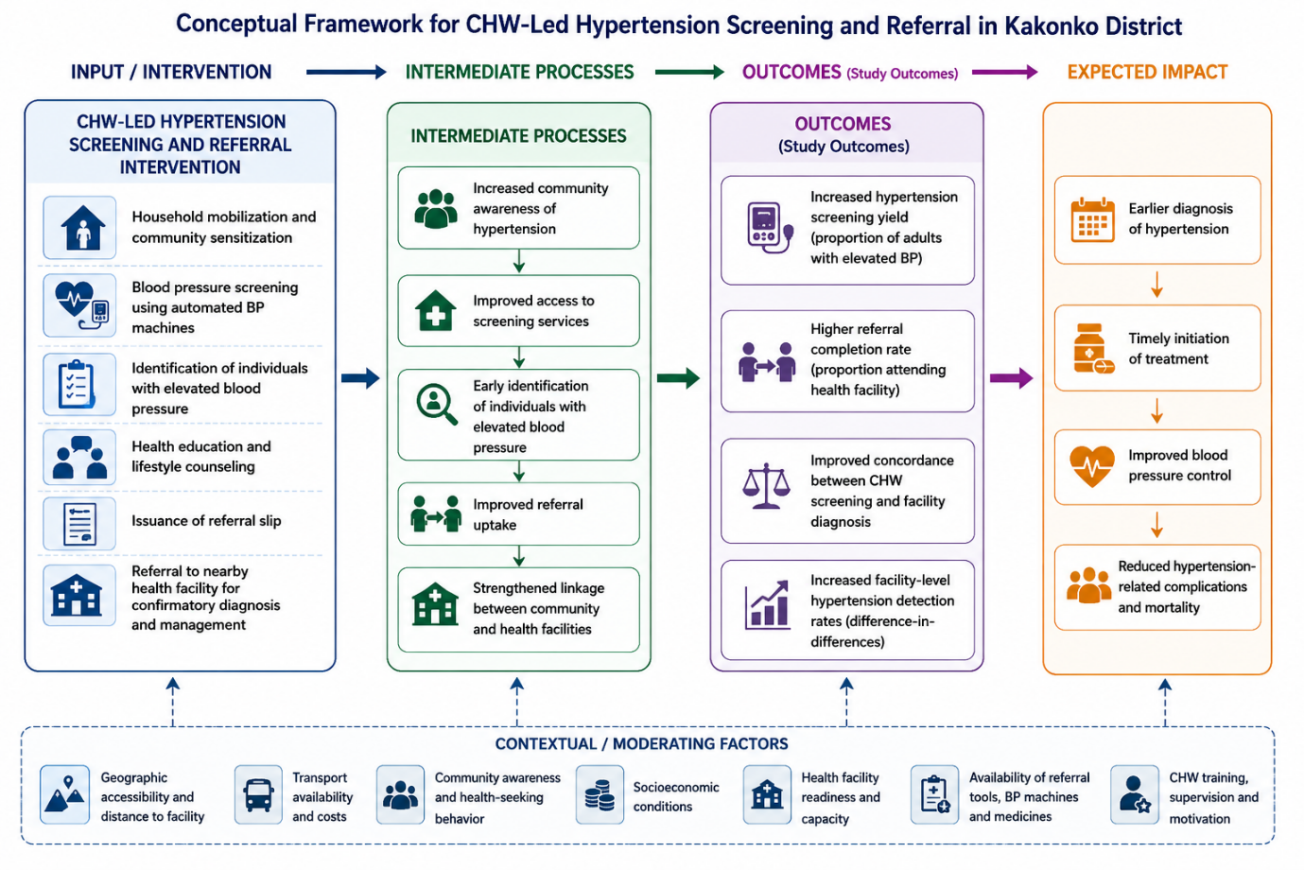
This study was guided by a conceptual framework illustrating how CHW–led hypertension screening and referral activities were expected to improve early detection of hypertension, strengthen linkage to care, and influence facility-level hypertension detection in rural communities. The framework demonstrates the relationship between the intervention components, intermediate processes, study outcomes, and expected health impacts, while also considering contextual factors that may influence implementation effectiveness and continuity of care (Figure 1).

The study population comprised adults aged 18 years and above residing in the selected intervention and comparison villages during the study period. Eligible participants included permanent residents who were available during household visits conducted by CHWs and who voluntarily provided informed consent to participate in the study. By focusing on adult residents who were present and willing to participate, the study sought to ensure meaningful engagement and adequate follow-up throughout the implementation period.
2.3. Inclusion and Exclusion CriteriaAdults aged 18 years and above who were permanent residents of the selected villages were eligible to participate in the study. Eligible participants included individuals who were available at home during household visits conducted by CHWs and who voluntarily provided informed consent to participate. By focusing on adult residents who were present and willing to participate, the study aimed to ensure meaningful engagement and adequate follow-up throughout the implementation period.
Individuals younger than 18 years of age, temporary visitors to the selected villages, and persons who were critically ill or mentally incapacitated were excluded from the study because they might not have been able to participate fully in the screening or interview process. Pregnant women were also excluded due to pregnancy-related physiological changes in blood pressure that could potentially bias hypertension prevalence estimates. In addition, individuals who had already been diagnosed with hypertension and were receiving regular antihypertensive treatment were excluded in order to minimize confounding of baseline screening outcomes. Participants who sought care outside the designated health facility catchment area were excluded from the analysis because follow-up information from external facilities could not be reliably verified. Furthermore, individuals who declined participation or withdrew informed consent at any stage of the study were not included.
2.4. Sampling Technique and Sample SizeIn collaboration with CHWs and village leaders, an updated list of all households in each selected village was developed prior to data collection. Each village in Kakonko District comprised approximately 1,000 households, which served as the sampling frame for participant selection.
A systematic random sampling technique was used to select households for participation in the study. From each intervention village, approximately 200 adult participants were recruited, resulting in a total sample size of 1,000 participants across the five intervention villages.
Households were selected systematically by choosing every 5th household from the household listing. The first household was selected randomly by choosing a number between 1 and 5, after which every subsequent 5th household was included until the required sample size was attained.
The minimum required sample size was estimated using the standard formula for estimating proportions:
n = (Z^2 × P × (1-P)) / E^2
Where:
- n = required sample size
- Z = Z-score for 95% confidence level (1.96)
- P = estimated prevalence of hypertension (0.5, to maximize sample size)
- E = desired margin of error (0.05)
Calculation:
n = (1.96^2 × 0.5 × 0.5) / 0.05^2
n = (3.8416 × 0.25) / 0.0025
n = 0.9604 / 0.0025
n ≈ 384 participants per arm
Thus, the minimum required sample size was approximately 384 participants per study arm.
Given the community-based nature of the study and the likelihood of clustering of observations within villages, a design effect was considered to account for intra-cluster correlation. In addition, adjustments were made for potential non-response and missing data. Accordingly, the sample size was inflated to improve statistical reliability and representativeness across clusters.
The overall expected sample size was therefore adjusted to 1,000 participants, equivalent to approximately 200 participants per village in the intervention arm.
Within each selected household, one eligible adult aged 18 years or older was invited to participate in the study. In households with more than one eligible adult, one participant was selected using the Kish Grid method or a simple random selection procedure, such as drawing folded slips.
If a selected household had no eligible participant or declined participation, the next household on the sampling list was approached as a replacement to maintain the required sample size.
2.5. Intervention ArmIn the intervention villages, trained CHWs conducted household-based blood pressure screening using validated digital sphygmomanometers over a three-month implementation period from October to December 2025. Blood pressure measurements were obtained following standard procedures. Two blood pressure readings were taken at an interval of approximately 10 minutes, and the average of the two readings was recorded for analysis.
Participants with an average systolic blood pressure of ≥140 mmHg and/or diastolic blood pressure of ≥90 mmHg were classified as having elevated blood pressure and were referred to nearby health facilities for further assessment, confirmation of diagnosis, and management. All referrals were directed to the nearest primary health care facilities, which in this study were dispensaries. Referral slips were issued to facilitate linkage to care and follow-up at health facilities.
Prior to implementation, CHWs received structured training on accurate blood pressure measurement techniques, identification of individuals with elevated blood pressure, referral procedures, infection prevention measures, and data recording. Health facility staff in the intervention areas were also oriented on hypertension confirmation procedures, documentation of referred cases, and reporting requirements.
Data were collected from CHW screening registers, outpatient department (OPD) registers, health facility records, and the District Health Information System version 2 (DHIS2). Participants who completed referral at the health facility (dispensary) underwent repeat blood pressure assessment to confirm hypertension status. This enabled evaluation of concordance between CHW screening results and facility-based diagnosis.
The primary outcome measures included screening coverage, hypertension detection rates, referral completion rates, concordance between CHWs and facility diagnoses, and changes in facility-based hypertension detection following implementation of the intervention.
2.6. Control ArmParticipants in the comparison arm received the routine standard of care available within Kakonko District. This consisted of facility-based blood pressure measurement conducted during routine outpatient consultations and documented in outpatient department (OPD) registers.
No additional community-based blood pressure screening, active follow-up, or referral activities by CHWs were implemented in the five comparison villages during the study period. Data from the comparison facilities were used to assess changes in hypertension detection rates in the absence of the intervention.
2.7. Data CollectionData were collected from multiple complementary sources to capture both community-level processes and facility-level outcomes. At the community level, CHWs systematically recorded screening results during household visits, including blood pressure measurements, classification of elevated blood pressure, and referral decisions, using paper based questionnaire and referral form slip.
At the facility level, referral completion was verified through careful review of outpatient department registers and the hypertension register. This ensured objective confirmation of whether individuals identified at the community level successfully accessed facility-based care.
Importantly, individuals who were identified as having elevated blood pressure during community screening and subsequently completed referral were re-evaluated at the health facility using standard clinical procedures. Blood pressure measurements were repeated by trained healthcare providers following routine diagnostic protocols. This process enabled confirmation of hypertension status and provided a critical opportunity to assess concordance between CHW-based screening results and facility-based diagnosis.
In addition to primary data collection, routine health facility data on hypertension diagnosis were extracted from the DHIS2. These data were obtained from both intervention and comparison facilities and covered the pre- and post-intervention periods, allowing assessment of temporal trends in hypertension detection.
2.8. Outcome MeasuresThe study assessed multiple outcomes across the screening and care continuum. Community-level outcomes included the proportion identified with elevated blood pressure and the proportion of referred individuals who completed referral to a health facility.
A key additional outcome was the concordance between CHW screening results and facility-based diagnosis. This was assessed among individuals who completed referral and were re-evaluated at the facility, indicating the diagnostic accuracy and reliability of CHW measurements.
Facility-level outcomes focused on changes in hypertension detection rates derived from DHIS2 data. These outcomes enabled comparison of trends before and after the intervention, as well as between intervention and comparison facilities.
2.9. Data AnalysisData analysis was conducted in several stages to evaluate the effectiveness of the intervention comprehensively. Descriptive statistics were first used to summarize participant characteristics, screening coverage, and hypertension detection at the community level.
The effectiveness of CHW-led screening in screening was assessed by estimating the proportion of individuals identified with elevated blood pressure among those screened. Referral performance was evaluated by calculating the proportion of referred individuals who completed referral at health facilities.
Among individuals who completed referral, concordance analysis was conducted by comparing hypertension status as determined by CHWs with that confirmed at the health facility. Agreement between the two measurements was quantified using proportion agreement.
To evaluate the broader impact of the intervention on health system performance, a difference-in-differences analytical approach was applied using DHIS2 data. This approach allowed estimation of the net effect of the intervention on hypertension detection by comparing changes over time between intervention and comparison facilities.
A total of 981 adults were screened by CHWs) across the intervention villages. The mean age of the participants was 45.5 years (±18.4 SD), with ages ranging from 18 to 98 years. Females constituted the majority of the screened population, accounting for 71.9% (n = 705), while males represented 28.1% (n = 276).
The mean systolic blood pressure among screened participants was 131.7 mmHg (±23.0 SD), with recorded values ranging from 42.5 to 238 mmHg. The mean diastolic blood pressure was 76.3 mmHg (±12.9 SD), with values ranging from 38 to 154 mmHg.
3.2. Detection of hypertension by CHWsA total of 981 adults were screened for hypertension by CHWs across five intervention villages. Overall, 224 individuals were identified as having elevated blood pressure, corresponding to a detection rate of 22.8%. Detection rates varied across villages, ranging from 14.1% in Kanyonza to 43.2% in Nyamtukuza. Detailed facility-level screening results are presented in Table 1.
Of the 224 individuals identified, 201 (89.7%) were issued referral slips for further evaluation at health facilities. A total of 161 individuals completed referral, resulting in an overall referral completion rate of 80.1%. Referral completion varied by village, ranging from 29.2% in Kanyonza to 100% in Nyagwijima and Nyamtukuza (Table 2).
Among the 161 individuals who completed referral, 130 (80.7%) were confirmed hypertensive at health facilities, while 31 (19.3%) were not confirmed. Overall concordance between CHW screening and facility diagnosis was high, with variation observed across villages (Table 3)
Hypertension detection rates in the intervention villages showed a substantial increase following implementation of the CHW-led screening intervention. At baseline, the overall detection rate across intervention facilities was 3.8% (437 cases out of 11,393 OPD attendees), which increased markedly to 12.6% post-intervention (318 cases out of 2,519 OPD attendees (Table 4a).
At facility level, all dispensaries demonstrated improvements in detection rates, although with varying magnitudes. Nyagwijima Dispensary increased from 2.8% to 14.2%, while Kasanda Dispensary rose from 3.8% to 7.7%. Bukirilo Dispensary also showed an increase from 2.5% to 7.3%. The most pronounced improvement was observed in Nyamtukuza Dispensary, where the detection rate increased from 3.8% to 24.2%. Similarly, Kanyonza Dispensary recorded an increase from 6.2% to 15.0%. Overall, these findings demonstrate a consistent and substantial improvement in hypertension case detection across all intervention facilities following implementation of the CHW-led screening strategy (Table 4a).
Hypertension detection rates in the control villages remained relatively low across the study period, with only modest changes observed over time, reflecting routine fluctuations in service delivery in the absence of a targeted intervention. Overall, the aggregate hypertension detection rate in control facilities increased slightly from 1.2% at baseline (75 cases out of 6,480 OPD attendees) to 3.3% in the post-intervention period (34 cases out of 1,024 OPD attendees (Table 4b).
At facility level, mixed patterns were observed. Kasongati Dispensary showed an increase in detection rate from 4.2% to 11.9%, while Kazilamihunda Dispensary increased from 0.4% to 3.8%. In contrast, Kiduduye Dispensary recorded no detected cases post-intervention, and Churazo Dispensary showed an increase in hypertension detection from 0.2% before the intervention to 3.0% after the intervention; however, the absolute number of detected cases remained small. Kihomoka Dispensary did not report post-intervention hypertension cases, limiting comparability. Overall, these findings indicate unstable and generally low detection trends in control villages compared to the marked improvements observed in intervention facilities (Table 4b).
A Difference-in-Differences (DiD) analysis was conducted to evaluate the effect of the (CHW)-led hypertension screening intervention on facility-based hypertension case detection Table 5 and Figure 2.
This study evaluated the effectiveness of a CHW–led hypertension screening and referral intervention in a rural district of Western Tanzania. The findings demonstrate that CHWs can successfully identify individuals with elevated blood pressure, facilitate referral and linkage to care, and contribute to improved facility-based hypertension detection. Overall, the study adds to the growing evidence that community-based and task-shifting approaches can strengthen the prevention and control of non-communicable diseases (NCDs) in resource-limited settings.
The screening yield of 22.8% observed in this study indicates that community-based case finding can identify a substantial number of individuals with previously undiagnosed hypertension in rural populations. This is particularly important because many people in such settings have limited access to routine preventive services and often present late with complications.The high proportion of adults with elevated blood pressure detected during household screening suggests a significant hidden burden of cardiovascular risk in the community. Similar findings have been reported in other low- and middle-income countries (LMICs), where CHW-led interventions have improved early detection of hypertension through household visits, outreach activities, and task-shifting approaches 12, 13, 14, 15.
In rural contexts such as Kakonko District, access to routine preventive services is often constrained by transport costs, limited awareness, and shortages of healthcare workers. In such settings, CHWs play a critical role in bridging the gap between communities and health facilities.Referral performance in this study was generally high, with most individuals identified with elevated blood pressure receiving referral slips and a large proportion subsequently attending nearby health facilities for further evaluation. This indicates that CHWs were effective not only in identifying at-risk individuals but also in promoting care-seeking and facilitating linkage to formal healthcare services.
However, variation in referral completion across villages highlights the influence of contextual and health-system factors on continuity of care. Differences in geographic accessibility, community awareness, socioeconomic conditions, and facility readiness may have contributed to this heterogeneity. Similar variations have been documented in other CHW-led NCD interventions, where community-level barriers and health system capacity significantly affected referral uptake and continuity of care 12, 14, 16, 17. These findings emphasize the need for strengthened referral coordination, improved community sensitization, and enhanced facility preparedness.
The concordance between CHW screening results and facility-based diagnosis was 80.7%, indicating good agreement between community and clinical blood pressure measurements. This finding demonstrates that CHWs, when adequately trained and supervised, can reliably perform blood pressure screening using automated devices in community settings. The results support the feasibility of task-shifting hypertension screening to community-level health workers, particularly in settings facing shortages of skilled healthcare personnel.
Similar studies conducted in LMICs have also reported acceptable accuracy and reliability of CHW-conducted blood pressure measurements following standardized training and supportive supervision 14, 18. The discordance observed among some participants may reflect biological variability in blood pressure, differences in measurement conditions between home and facility environments, or reliance on single-visit confirmation at health facilities.
Importantly, the intervention was associated with a marked improvement in facility-based hypertension detection rates in intervention areas compared to control areas. The difference-in-differences estimate of +6.6 percentage points suggests that this increase was attributable to the CHW-led intervention rather than background temporal trends alone. This finding provides evidence that community-based screening and referral programs can strengthen case detection beyond routine facility-based services.
Similar improvements in hypertension detection and healthcare utilization following CHW engagement have been reported in other implementation studies across LMICs 19, 20. These findings support broader integration of CHWs into NCD prevention and control strategies within primary healthcare systems.
Some implementation gaps were observed, including incomplete referral issuance and variability in referral completion across villages. These gaps may reflect logistical challenges, differences in CHW performance, inconsistent adherence to implementation procedures, or variations in facility capacity and community participation. Strengthening supportive supervision, ensuring continuous refresher training, improving referral tracking systems, and enhancing coordination between CHWs and healthcare facilities could further improve program effectiveness and sustainability.
Overall, the findings support the integration of CHW-led hypertension screening into primary healthcare systems as a feasible and effective strategy for improving early detection and linkage to care for hypertension in rural settings. The study provides important local evidence to inform policy discussions and future scale-up of community-based NCD interventions in Tanzania and other similar LMIC settings.
Community Health Worker–led hypertension screening was a feasible and effective strategy for improving early detection and linkage to care in rural Tanzania. The intervention achieved high referral completion, good diagnostic concordance, and increased facility-based hypertension detection. These findings support scaling up CHW-led screening to strengthen hypertension control in similar resource-limited settings.
This study has several limitations. First, the quasi-experimental design without randomization may introduce selection bias and limit causal inference. Second, blood pressure measurements at the facility level were based on single-visit assessments, which may have led to misclassification due to the natural variability of blood pressure readings over time. Third, referral completion was assessed using records from study facilities only; therefore, participants who sought care outside the designated facilities may not have been captured, potentially resulting in an underestimation of referral completion rates.
In addition, the study did not collect detailed information on behavioral, environmental, and clinical risk factors for hypertension, limiting the ability to assess their contribution to hypertension detection and referral outcomes. Furthermore, the study was designed to evaluate the effectiveness of community-based hypertension screening and referral rather than to investigate hypertension etiology. As a result, diagnostic investigations required to distinguish primary (essential) hypertension from secondary hypertension were not performed, and all hypertension cases were analyzed as a single clinical category.
Finally, the study was conducted over a relatively short implementation period in a limited rural setting, which may restrict the generalizability of the findings to other settings and did not allow assessment of long-term outcomes, sustained referral adherence, or long-term blood pressure control among participants.
Community Health Worker–led hypertension screening should be scaled up and integrated into primary healthcare services to improve early detection and linkage to care in rural settings. Continuous training and supportive supervision of CHWs are essential to maintain measurement accuracy and referral quality. Referral systems should be strengthened using standardized tools and digital tracking platforms to ensure complete follow-up of identified cases. Health facilities should adopt standardized repeat blood pressure measurements for confirmatory diagnosis. Further research is needed to assess long-term outcomes, cost-effectiveness, and scalability of the intervention.
We acknowledge all Community Health Workers and health care workers in the study locations for their valuable contribution and support during data collection and implementation of the study.
Getera Isack Nyangi contributed to study conceptualization, data analysis, and drafting of the manuscript. Olela Manuel Dennish supervised and monitored data collection activities. Witness Erick Macha was responsible for data entry, data cleaning, and supervision of data collection. All authors read and approved the final manuscript.
Ethical approval for this study was obtained from the National Health Research Ethics Committee (NatHREC) of Tanzania under the National Institute for Medical Research (NIMR). The study was approved under Certificate No. NIMR/HQ/R.8a/Vol.IX/5090.
The authors declare no conflict of interest.
| [1] | World Health Organization. Global report on hypertension: the race against a silent killer. Geneva: World Health Organization; 2023. Available from: https: // www.who.int/ publications/ i/item/9789240081062. | ||
| In article | |||
| [2] | Mills KT, Stefanescu A, He J. The global epidemiology of hypertension. Nat Rev Nephrol. 2020; 16 (4): 223-237. | ||
| In article | View Article PubMed | ||
| [3] | O'Connell SS, Whelton PK, Li F, Allouch F, Shapiro L, Vandenburg M, et al. Global hypertension 2000 to 2020: trends, disparities, and progress in awareness, treatment, and control. J Am Coll Cardiol. 2025; 85(16): 1727-1743. | ||
| In article | |||
| [4] | Maffoni C. Hypertension: understanding the silent killer and its impact on health. J Hypertens Open Access. 2024; 13: 487. | ||
| In article | |||
| [5] | World Health Organization. Hypertension. Geneva: World Health Organization; 2023. Available from: https: //www.who.int/news-room/fact-sheets/detail/hypertension. | ||
| In article | |||
| [6] | Ataklte F, Erqou S, Kaptoge S, Taye B, Echouffo-Tcheugui JB, Kengne AP. Burden of undiagnosed hypertension in sub-Saharan Africa: a systematic review and meta-analysis. Hypertension. 2015; 65(2): 291-298. | ||
| In article | View Article PubMed | ||
| [7] | Peer N, Levitt N, Lombard C, George J, Kengne AP. Prevalence and associations of hypertension detection, treatment and control in Cape Town. BMC Public Health. 2025; 25(1): 1674. | ||
| In article | View Article PubMed | ||
| [8] | Ali Issa S, Singh MG, Kilonzo KG, Leyaro BJ, Msuya SE, Ngocho JS. Poor hypertension control among patients attending the Kilimanjaro Christian Medical Centre, Tanzania: a cross-sectional study. Ethiop Med J. 2020; 58(3): 195-201. | ||
| In article | |||
| [9] | Mosha NR, Mahande M, Juma A, Mboya I, Peck R, Urassa M, et al. Prevalence, awareness and factors associated with hypertension in North West Tanzania. Glob Health Action. 2017; 10(1): 1321279. | ||
| In article | View Article PubMed | ||
| [10] | Muhihi AJ, Anaeli A, Mpembeni RNM, Sunguya BF, Leyna G, Kakoko D, et al. Prevalence, awareness, treatment, and control of hypertension among young and middle-aged adults: results from a community-based survey in rural Tanzania. Int J Hypertens. 2020; 2020: 9032476. | ||
| In article | View Article PubMed | ||
| [11] | Nyangi GI, Mlay JA, Mackanja EE. Prevalence and associated factors of hypertension among motorcycle taxi drivers in Kakonko District, Kigoma Region, Western Tanzania. Eur J Med Health Sci. 2025; 7(2): 79-85. | ||
| In article | View Article | ||
| [12] | Kotwani P, Balzer L, Kwarisiima D, Clark TD, Kabami J, Byonanebye D, et al. Evaluating linkage to care for hypertension after community-based screening in rural Uganda. Trop Med Int Health. 2014; 19(4): 459-468. | ||
| In article | View Article PubMed | ||
| [13] | Ogwuh JHI, Okedoye EO. The effectiveness of community health workers (CHWs) in managing non-communicable diseases (NCDs) within Okpe Local Government Area (LGA) of Delta State, Nigeria. Eur J Theor Appl Sci. 2025; 3(1): 121-130. | ||
| In article | View Article | ||
| [14] | Pastakia SD, Ali SM, Kamano JH, Akwanalo CO, Ndege SK, Buckwalter VL, et al. Screening for diabetes and hypertension in a rural low-income setting in western Kenya. Global Health. 2013; 9: 21. | ||
| In article | View Article PubMed | ||
| [15] | Puoane T, Abrahams-Gessel S, Gaziano TA, Levitt N. Training community health workers to screen for cardiovascular disease risk in the community: experiences from Cape Town, South Africa. Cardiovasc J Afr. 2017; 28(3): 170-175. | ||
| In article | View Article PubMed | ||
| [16] | Jeet G, Thakur JS, Prinja S, Singh M. Community health workers for noncommunicable diseases prevention and control in developing countries: evidence and implications. PLoS One. 2017; 12(7). | ||
| In article | View Article PubMed | ||
| [17] | Tsofa B, Munywoki J, Molyneux S, Barasa E, Kibaru EG, Kanya L, et al. Task sharing and task shifting: optimizing the primary health care workforce for improved delivery of noncommunicable disease services in Kenya. Hum Resour Health. 2025; 23(1): 25. | ||
| In article | |||
| [18] | Joshi R, Alim M, Kengne AP, Jan S, Maulik PK, Peiris D, et al. Task shifting for non-communicable disease management in low- and middle-income countries: a systematic review. PLoS One. 2014; 9(8). | ||
| In article | View Article PubMed | ||
| [19] | Mbuthia GW, Magutah K, Pellowski J. Approaches and outcomes of community health worker interventions for hypertension management and control in low- and middle-income countries: systematic review. BMJ Open. 2022; 12. | ||
| In article | View Article PubMed | ||
| [20] | Vedanthan R, Kamano JH, DeLong AK, Naanyu V, Binanay CA, Bloomfield GS, et al. Community health workers improve linkage to hypertension care in Western Kenya. J Am Coll Cardiol. 2019; 74(15): 1897-1906. | ||
| In article | View Article PubMed | ||
Published with license by Science and Education Publishing, Copyright © 2026 Getera Isack Nyangi, Olela Manuel Dennish and Witness Erick Macha
 This work is licensed under a Creative Commons Attribution 4.0 International License. To view a copy of this license, visit
http://creativecommons.org/licenses/by/4.0/
This work is licensed under a Creative Commons Attribution 4.0 International License. To view a copy of this license, visit
http://creativecommons.org/licenses/by/4.0/
| [1] | World Health Organization. Global report on hypertension: the race against a silent killer. Geneva: World Health Organization; 2023. Available from: https: // www.who.int/ publications/ i/item/9789240081062. | ||
| In article | |||
| [2] | Mills KT, Stefanescu A, He J. The global epidemiology of hypertension. Nat Rev Nephrol. 2020; 16 (4): 223-237. | ||
| In article | View Article PubMed | ||
| [3] | O'Connell SS, Whelton PK, Li F, Allouch F, Shapiro L, Vandenburg M, et al. Global hypertension 2000 to 2020: trends, disparities, and progress in awareness, treatment, and control. J Am Coll Cardiol. 2025; 85(16): 1727-1743. | ||
| In article | |||
| [4] | Maffoni C. Hypertension: understanding the silent killer and its impact on health. J Hypertens Open Access. 2024; 13: 487. | ||
| In article | |||
| [5] | World Health Organization. Hypertension. Geneva: World Health Organization; 2023. Available from: https: //www.who.int/news-room/fact-sheets/detail/hypertension. | ||
| In article | |||
| [6] | Ataklte F, Erqou S, Kaptoge S, Taye B, Echouffo-Tcheugui JB, Kengne AP. Burden of undiagnosed hypertension in sub-Saharan Africa: a systematic review and meta-analysis. Hypertension. 2015; 65(2): 291-298. | ||
| In article | View Article PubMed | ||
| [7] | Peer N, Levitt N, Lombard C, George J, Kengne AP. Prevalence and associations of hypertension detection, treatment and control in Cape Town. BMC Public Health. 2025; 25(1): 1674. | ||
| In article | View Article PubMed | ||
| [8] | Ali Issa S, Singh MG, Kilonzo KG, Leyaro BJ, Msuya SE, Ngocho JS. Poor hypertension control among patients attending the Kilimanjaro Christian Medical Centre, Tanzania: a cross-sectional study. Ethiop Med J. 2020; 58(3): 195-201. | ||
| In article | |||
| [9] | Mosha NR, Mahande M, Juma A, Mboya I, Peck R, Urassa M, et al. Prevalence, awareness and factors associated with hypertension in North West Tanzania. Glob Health Action. 2017; 10(1): 1321279. | ||
| In article | View Article PubMed | ||
| [10] | Muhihi AJ, Anaeli A, Mpembeni RNM, Sunguya BF, Leyna G, Kakoko D, et al. Prevalence, awareness, treatment, and control of hypertension among young and middle-aged adults: results from a community-based survey in rural Tanzania. Int J Hypertens. 2020; 2020: 9032476. | ||
| In article | View Article PubMed | ||
| [11] | Nyangi GI, Mlay JA, Mackanja EE. Prevalence and associated factors of hypertension among motorcycle taxi drivers in Kakonko District, Kigoma Region, Western Tanzania. Eur J Med Health Sci. 2025; 7(2): 79-85. | ||
| In article | View Article | ||
| [12] | Kotwani P, Balzer L, Kwarisiima D, Clark TD, Kabami J, Byonanebye D, et al. Evaluating linkage to care for hypertension after community-based screening in rural Uganda. Trop Med Int Health. 2014; 19(4): 459-468. | ||
| In article | View Article PubMed | ||
| [13] | Ogwuh JHI, Okedoye EO. The effectiveness of community health workers (CHWs) in managing non-communicable diseases (NCDs) within Okpe Local Government Area (LGA) of Delta State, Nigeria. Eur J Theor Appl Sci. 2025; 3(1): 121-130. | ||
| In article | View Article | ||
| [14] | Pastakia SD, Ali SM, Kamano JH, Akwanalo CO, Ndege SK, Buckwalter VL, et al. Screening for diabetes and hypertension in a rural low-income setting in western Kenya. Global Health. 2013; 9: 21. | ||
| In article | View Article PubMed | ||
| [15] | Puoane T, Abrahams-Gessel S, Gaziano TA, Levitt N. Training community health workers to screen for cardiovascular disease risk in the community: experiences from Cape Town, South Africa. Cardiovasc J Afr. 2017; 28(3): 170-175. | ||
| In article | View Article PubMed | ||
| [16] | Jeet G, Thakur JS, Prinja S, Singh M. Community health workers for noncommunicable diseases prevention and control in developing countries: evidence and implications. PLoS One. 2017; 12(7). | ||
| In article | View Article PubMed | ||
| [17] | Tsofa B, Munywoki J, Molyneux S, Barasa E, Kibaru EG, Kanya L, et al. Task sharing and task shifting: optimizing the primary health care workforce for improved delivery of noncommunicable disease services in Kenya. Hum Resour Health. 2025; 23(1): 25. | ||
| In article | |||
| [18] | Joshi R, Alim M, Kengne AP, Jan S, Maulik PK, Peiris D, et al. Task shifting for non-communicable disease management in low- and middle-income countries: a systematic review. PLoS One. 2014; 9(8). | ||
| In article | View Article PubMed | ||
| [19] | Mbuthia GW, Magutah K, Pellowski J. Approaches and outcomes of community health worker interventions for hypertension management and control in low- and middle-income countries: systematic review. BMJ Open. 2022; 12. | ||
| In article | View Article PubMed | ||
| [20] | Vedanthan R, Kamano JH, DeLong AK, Naanyu V, Binanay CA, Bloomfield GS, et al. Community health workers improve linkage to hypertension care in Western Kenya. J Am Coll Cardiol. 2019; 74(15): 1897-1906. | ||
| In article | View Article PubMed | ||