Background: Elder abuse is a single or repeated act, or lack of appropriate action, occurring within any relationship where there is an expectation of trust, which causes harm or distress to an older person. This type of violence constitutes a violation of human rights and includes physical, sexual, psychological, and emotional abuse; financial and material abuse; abandonment; neglect; and serious loss of dignity and respect. Also, the abuse can effect on an elder physical and psychological health status. Aim of the study: This study aimed to estimate the prevalence of abuse against elderly persons and its effect on their health status at outpatients’ clinics of Benha Psychiatric Health Hospital. Design: A descriptive was used to conduct the current study. Setting: This study carried out at outpatients’ clinics of Benha Psychiatric Health Hospital. Sample: A purposive sample of 120 elder person (45 female and 75 male) at Benha Psychiatric Health Hospital. Tools: Two tools were utilized for data collection, Tool I. Self-interviewing Questionnaire: it was divided into two parts, pert (I) Elderly’s Socio-demographic characteristic questionnaire, part (II) Adapted Elder Abuse Assessment Tool Kit. Tool II. Adapted Health Status Questionnaire. Results: There is a negative correlation between abuse against elderly person and their health status. Conclusion: This study concluded that there was negative correlation between abuse against elderly persons and their health status. Recommendation: There was an urgent need to educational instruction regarding elderly abuse prevention.
Age classification varied between countries and over time, reflecting in many instances the social class differences or functional ability related to the workforce, but more often than not was a reflection of the current political and economic situation. Many times the definition is linked to the retirement age, which in some instances, was lower for women than men. This transition in livelihood became the basis for the definition of old age which occurred between the ages of 45 and 55 years for women and between the ages of 55 and 75 years for men 1. Elder varies from older in adding a level of respect that older does not. Also, not used when referring to animals or objects. But older is the better word choice in most situations. Finally, it’s used simply to refer to people or things far advanced in years of life 2.
Elderly individuals enjoy the same rights and privileges other populations. Nevertheless, elderly persons are susceptible to abuse, neglect and exploitation 3. Elder abuse (Maltreatment) is defined as a deliberate behavior that cause damage or cause severe damage (whether harm is meant or not) to a fragile elder by a caregiver or other individual who is staying, or a failure by a caregiver to satisfy the elder’s basic needs or to protect the elder from harm.” This definition encompasses two key ideas: that the older individual has suffered injury, deprivation, or unnecessary danger and that a specific other person (or persons) is responsible for causing or failing to prevent it 4.
Elder abuse is prevalent but often underreported, split into physical, psychological, sexual abuse, negligence, and/or financial exploitation. Elder abuse can be a single, or repeated act, or it can be a lack of suitable intervention. Elder abuse happens in a relationship where confidence is expected and presented like spouse, partner, family member, or friend but the elderly individual is unfortunately harmed or distressed. It can also be caused by service providers in institutions and healthcare settings. It is most likely to occur when staff have inadequate training and supervision, or lack sufficient resources to undertake their responsibilities. Abuse can lead to poorer health, injuries and even premature death 5.
In addition, mental health problems in elderly individual are prevalent and expensive, presenting commissioners with numerous difficulties. This diseases like (Dementia, Delirium, Depression and Anxiety Disorder), although such difficulties often manifest differently in elderly age. The Department of Health has estimated that 40% of older people have a mental health problem, rising to 50% of older people in general hospitals and 60% of those in care homes 6.
Elder abuse is a result of complex interactions among factors at the individual, relationship, community and societal levels, which can be conceptualized using an ecological perspective 7. Factors from each level can interact, putting the elderly at risk of abuse. For example, older people with dementia, disabilities and chronic health problems 8 that result in increased dependence on caregivers are particularly at risk of elder maltreatment. Furthermore, low social support, loneliness, social isolation and lack of social networks among the elderly further perpetuate maltreatment 9. Perpetrators’ mental illness, high levels of hostility, substance abuse, psychological distress and their dependence on the victim for accommodation and financial support appear to be strong risk factors that predispose elderly to maltreatment 10.
Consequences of elder abuse can make many diseases like stress. Coping entails changes in an individual’s behaviors and emotional responses in an effort to manage these stressors. If stressors continue to mount, physical and psychological reserves become exhausted, and the susceptibility to disease, or psychological distress increases. In other words, negative events and experiences cause a loss of personal resources – physical, emotional, or otherwise – that reduces one’s ability to resist declines in health and well-being 11.
Abuse, neglect, and exploitation adversely affect physical and mental capacity and impairments, social positions, and structures. In addition, they may exacerbate existing health conditions that already affect an older person's well-being and can render disease and prevention promotion activities ineffective or unrealistic. The risk of death for elder abuse victims are three times higher than for non-victims 12. Furthermore, the health consequences of elder abuse are serious. Elder abuse can destroy an elderly person's quality of life in the forms of: Declining functional abilities, Increased dependency, sense of helplessness and stress, Worsening psychological decline, Premature mortality and morbidity, Depression and dementia, Malnutrition, Bed sores, and Death 13.
Nurses can play a vital role in assisting elder abuse victims by increase in awareness of elder about abuse, through education and training on elder abuse, health care professionals can better assist elder abuse victims. In addition, community involvement in responding to elder abuse can contribute to elderly persons' safety. In general, preventing the occurrence or recurrence of elder abuse helps not only the elder but it may also improve the anxiety and depression of their caregivers too 5.
1.1. Significance of StudyElder abuse is a significant public health problem. Each year, hundreds of thousands of adults over the age of 50 are abused, neglected, or financially exploited. Elder abuse, including neglect and exploitation, is experienced by 1 out of every 10 people, ages 50 and older, who live at home. This statistic is likely an underestimate because many victims are unable or afraid to disclose or report the violence 14.
1.2. Aim of the StudyThis study aimed to estimate the prevalence of abuse against elderly persons and its effect on health status at Benha Psychiatric Health Hospital.
1.3. Research QuestionsQ1. Does the abuse spread against older people at Benha Psychiatric Health Hospital?
Q2. Have the elderly abuse effect on their health status?
Q3. Is there a relation between elderly abuse and their health status?
Research design: Descriptive design was used in carrying out this study.
Research setting: The study was conducted at outpatients’ Clinics of Benha Psychiatric Health Hospital.
2.1. SampleA Purposive sample was used that consisted of all older person who enter Outpatient Clinics in the above-mentioned setting during 3 months. A total number was 120 elder persons (45 female and 75 male). Inclusion criteria was taking only elderly person from outpatient clinic from age 50 years old and exclusion criteria any person refuse to participate in research.
2.2. Tools of the StudyTwo tools were including in this study after reviewing the relevant literature to elicit information and translated into Arabic form.
Tool I: Self-interviewing Questionnaire: It consisted of two parts.
Part one: Elderly’s Socio-demographic characteristic questionnaire: This was constructed to describe an elderly’s sex, age, level of education, marital status and who’s caring the elderly’s people.
Part two: Adapted Elder Abuse Assessment Tool Kit, developed by Keating & Rankin (2011) 15: assessed prevalence of abuse among elderly people at outpatients’ Benha Psychiatric Health Hospital and translated into Arabic form. This tool provides a variety of pictures that can used to illustrate the five main types of elder abuse (physical (4 sub items), emotional/verbal (10 sub items), financial (10 sub items), sexual (4 sub items), and neglect (8 sub items).
Scoring system: Each item was scored on a 2-point Likert scale; yes (1) while no (0). In addition, elderly person’s total elderly abuse score was converted into total percent and graded as the following:
Ÿ Low < 60% of the total score.
Ÿ Moderate 60% < 75% of the total score.
Ÿ Highly abuse 75% -100% of the total score
Tool II: Adapted Health Status Questionnaire developed by Arlington, (2008) 16: assessed health status of elderly people and translated into Arabic form. This described three main types (physical status (8 sub items), mental / emotional status (10 sub items), and life enjoyment (11 sub items).
Scoring system: The questionnaire consisted of five- point Likert scale, Never, Rarely, Occasionally, Regularly, and Constantly. The scoring system for the answer was “5” never, “4” rarely, “3” Occasionally, “2” Regularly, and “1” Constantly. In addition, elderly person’s total health status score was converted into total percent and graded as the following:
Ÿ Worst < 60% of the total score.
Ÿ Much the same 60% < 75% of the total score.
Ÿ Better health 75% -100% of the total score.
2.3. Methods of Data CollectionApproval to conduct the study will be obtained from the Dean of Faculty of Nursing–Benha University, Manager of Benha Psychiatric Health Hospital to carry out the study after explaining the purpose of the study. The elderly persons will be informed that their participation in the study is completely voluntary and there is no harm if they choose not to participate and no individual information is shared outside of the research. Oral consent was established with the completion of the questionnaires.
*Validity: The tools of data collection were submitted to a panel of five nursing experts in the field of psychiatric mental health nursing to test the content validity, modification was carried out according to the panel' judgments on clarity of sentences and the appropriateness of content. The result of content validity index (CVI) delineated strongly accepting tools, it measured (98.6). In addition, the tools were translated into Arabic language.
*Reliability of tools: The reliability was done by Cronbach's Alpha test which revealed that each of the two tools consisted of relatively homogenous items as indicated by the moderate to high reliability of each tool, it was (0.89) for elder abuse assessment tool, (0.913) for health status tool.
2.4. Pilot StudyIt was carried out before starting the study. It included all elderly people available at Benha outpatient Psychiatric Hospital during the period of three weeks to ensure the clarity, simplicity and applicability of the tool and to estimate the time needed to fill in the tool’s items. It consisted of 10% of the study sample selected randomly their number was (12) to test the applicability and clarity of the tools. Data obtained from the pilot study will be excluded from the study results.
2.5. Ethical ConsiderationsThe researchers explained the aim of the study to each elderly person and informed about the confidentiality of obtained data and only used for the purpose of the research. elderly person has ethical rights to participate or withdrawal from the research at any time. Oral consent was taken from them to participate in the study.
2.6. The Field WorkData were collected along three months throughout the period from the June 2016 to the August 2016. The researcher visited the selected outpatients’ clinics from 9.00 a.m. to 12.00 p.m., two days per week. The field work was performed in the following sequences: in the clinic the study aim and importance were clarified to nurse to gain her support and cooperation. The questionnaire sheets were distributed or asked to elderly persons individually.
2.7. Statistical DesignData analysis was performed using IBM SPSS statistical software version 22. The data were explored. Descriptive statistics with mean and standard deviation (SD) for continuous variables and frequency for categorical variables were analyzed. Qualitative variables were compared using qui square test (X2) as the test of significance. Correlation coefficient (r) was used to evaluate association between studied variables. The p-value is the degree of significance. A significant level value was considered when p-value ≤ 0.05 and a highly significant level value was considered when p-value ≤ 0.001, while p-value > 0.05 indicates non-significant results.
Table 1: presents distribution of studied elderly persons according to their personal characteristic; it was found that (45.8%) of them are from 50 to 70 years old and (62.5%) of them are male with mean age (63.62±7.83); they from rural area (76.7%). Regarding their educational level 40% from them were primary level and (50%) of them single and the son (35%) caring for them.
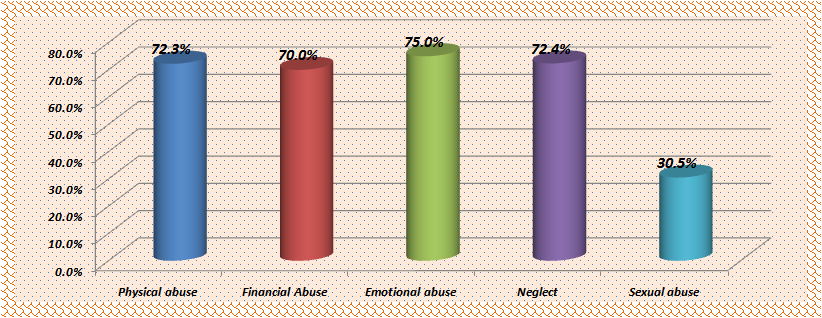
Mean score of abuse domain among studied sample was represents in Figure 1. It showed that (75%) of mean score percent was emotional abuse with equal nearly percent of mean score (72%) regarding to physical and neglect.
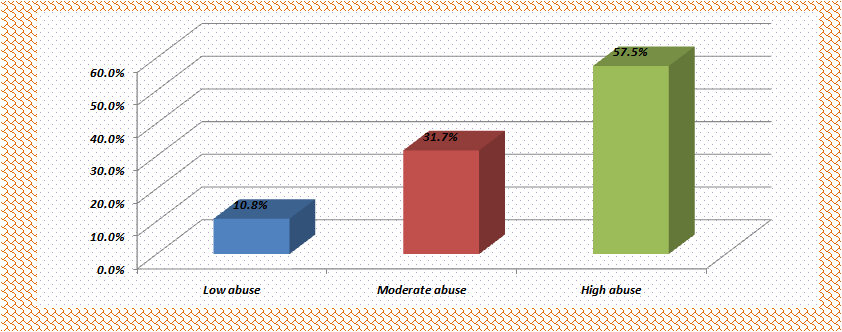
Figure 2 displays the distribution of total abuse score among the studied sample. It noticed that abuse toward elder person was highly abuse (57.5%) then 31.7% of them moderately abuse.
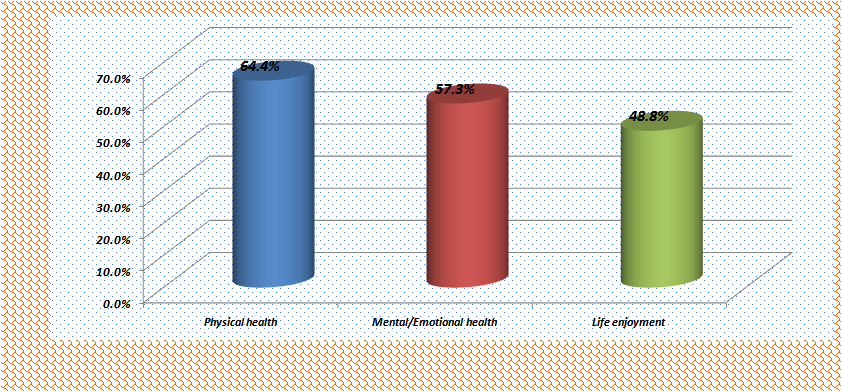
Distribution of the studied sample mean score regarding to their health status presents in Figure 3. It indicated that (64.4%) from elderly persons’ health status was physical health problems and 57.3% from them suffer from mental/ emotional health problems.


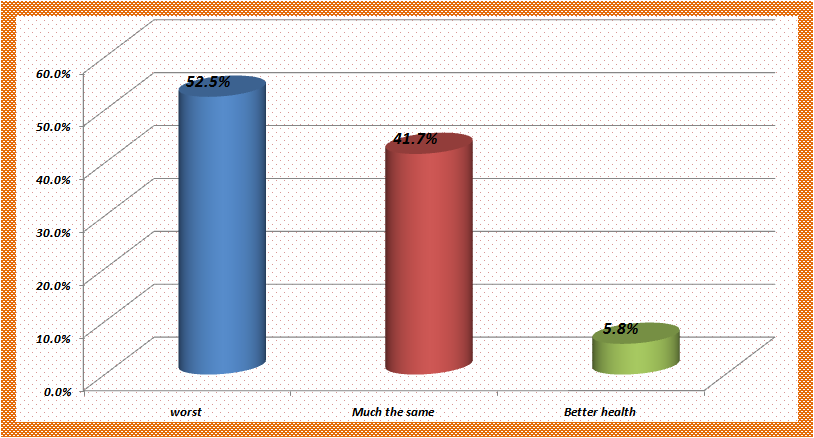
Figure 4: displays that the total health status score among the studied sample. (52.5%) from elderly persons’ total health status was worse but elderly persons health status was much the same before (41.7%)
Table 2: documents that relation between elderly persons’ personal characteristics and total abuse score at Benha psychiatric Health Hospital. There were statistical and highly statistically significant differences regarding all items except care giver for elderly person. 50.7% of them highly abused since aged 60-70 years old. Also, 56.5 from male highly abused than female. Regarding marital status, 58% from single, highly abused than others and 82.6% of rural area.
Table 3: documents that relation between elderly persons’ personal characteristics and total health score at Benha psychiatric Health Hospital. There were statistically and highly statistically significant differences regarding all items. 79.4% of their health status worse since age 60-70 years old. Also, 100% from males' health status worse than female. There was a worse percentage of elderly people (52.4%) compared to others among the widowed.
Table 4: illustrates correlation between abuse against elderly persons and their health status at Benha Psychiatric Health Hospital. It was negative correlation between total abuse against elderly persons and their health status with highly statistically differences.
Based on these important issues the current study was aimed to estimate the prevalence of abuse against elderly people and its effect on health status at Benha Psychiatric Health Hospital. This aim was significantly achieved through the present study findings within the frame of previously mentioned research questions which were: does the abuse spread against older people at Benha Psychiatric Health Hospital? have the elderly abuse effect on their health status? and is there a relation between elderly abuse and their health status?
According to personal characteristics of the studied sample, the present study results showed that, slightly more than two fifth of them from 50 to 70 years old and more than three fifth of them was male with mean age (63.62±7.83). Also, more than three quadrants of them from rural area and half of them was single; less than two fifths of giving care for older persons were their son and two fifth of them were primary educational level. These findings were in accordance with Acharya 17, who stated that more than two fifth from 61 to 70 years old and slightly less than two fifth up to primary educational level also, but disagree about marital status who stated that slightly more than three fifth were married. But this study agrees with Beach, et al. 18, who assured that the majority of abusers are relatives, typically the older adult's spouse/partner or sons and daughters, although the type of abuse differs according to the relationship.
In order to evaluate the prevalence of abuse among the studied elderly persons. The current study revealed that three quadrants of abuse were emotional abuse with more equal nearly less than three quadrants mean score percent were physical and neglect, less than three quadrants of abuse were financial and sexual abuse. This arrangement means displacing older people as heads of households and depriving them of their autonomy in the name of affection are cultural norms that hurt their emotional state. Also, more than half of total abuse against an elder person was highly abused then less than one thirds abuse against them was moderate.
These finding are inconsistent with Soares, et al. 19, who stated that of elderly exposed to psychological abuse, financial abuse, physical abuse, sexual and injuries. Also, this study disagrees with Ferreira-Alves & Joao Santos 20, who implied that the most common types of abuse were: emotional or psychological abuse, followed by financial abuse, violation of personal rights, neglect, sexual abuse and physical abuse.
Regarding, distribution of health status among elderly persons. This study revealed that more than three fifth from elderly persons were physical health problems and more than half of them suffer from mental/ emotional health problems. Moreover, more than half of elderly persons total health status was worse but slightly more than two fifth was much the same before. This result assures the physiological changes related to the ageing process and increased appears of physical diseases.
These findings are congruent with Mohd Sidik, Rampal, and Afifi 21, who stated that three fifth of studied sample had a physical health problem like (hypertension, diabetes mellitus, ischemic heart disease, bronchial asthma or gout); some of them had a combination of two or three illnesses and minor of them have a mental health problem like depression. In addition to the studies of Vargas-Daza et al. 22; Pérez-Rojo et al. 23; and Sharma 24 indicate that violence has myriad health effects beyond those sustained directly from the episode. Victims of violence have higher rates of depression, anxiety and posttraumatic stress disorder, plus worse overall health.
Regarding the relation between elderly persons’ personal characteristics and total abuse score and at Benha psychiatric Hospital. There were statistically and highly statistically significant differences regarding all items except care giver for elderly persons. A half of them highly abused since aged 60-70 years old. Also, more than half from male highly abused than female. Regarding marital status, less than three quadrants from single highly abused than others and the majority of them from of rural area abused. This means that men highly abused than female this may be because the men have financial authority so make the problems with their family. Also, this is prevailing in rural area than urban.
These findings were congruent with Yeung, Cooper, and Dale 25, who stated that there was a significant difference on age. Younger age groups between 60 and 64, and 65 and 69 (p=0.000) were significantly associated with elder abuse. But disagree with them in more than two fifth of men and more than half of the women reported suffering abuse but no significant difference was found in gender among the two groups. Marital status was found to have significant difference between the two groups with more than two thirds of those who were in married or partnered relationships reported to have experienced elder abuse.
Concerning, the relation between elderly persons’ personal characteristics and total health score at Benha psychiatric Hospital. There were statistically and highly statistically significant differences regarding all items. Most of males' health status worse than female. This may be due to more than half from male highly abused than female which have worse effect on male health status
Regarding, the correlation between abuse against elderly persons and their health status at Benha Psychiatric Hospital. It was negative correlation between total abuse against elderly person and their health status with highly statistically differences. This means that if abuse against elderly persons associated with decrease their health status and become worse than before. These findings were in the same lines with Acharya 17, who indicated that elderly people who have suffered physical, sexual and psychological abuse reported greater health problems which was also confirmed by the chi-square test establishing statistically significant (χ²=83.05 is significant at 0.05 level).
This study concluded that of emotional/ psychological abuse was highly abuse domain among elderly person, physical health status was worst domain. In addition, there was highly statistical significance negative association between total abuse and elderly persons’ health status. This means that when abuse increase against elderly person that lead to their health status becomes worst
Based on the study results and conclusions, in relation to This study aimed to estimate the prevalence of abuse against elderly persons and its effect on health status at Benha Psychiatric Health Hospital, the following recommendations are suggested.
- Future work could also include the further development of public health strategies focused on the wider well-being of older people
- There was an urgent need to educational instruction regarding elderly abuse prevention
- Further research is required to assess factors that lead to abuse against elderly persons and improving their health status
- Provided courses for elderly caregivers about prevention of elderly abuse.
| [1] | Thane, P. in: WHO (2002). Proposed working definition of an older person in Africa for the MDS Project, Health statistics and information systems, available at https://www.who.int/healthinfo/survey/ageingdefnolder/e/ | ||
| In article | |||
| [2] | Brook, T., and Hat, V. (2008). What's the Difference Between 'Elder' and 'Older'? An age-old question. | ||
| In article | |||
| [3] | Datta, A. (2006). “Greying Citizenship: The Situation of the Older Persons in India”, Indian Journal of Gerontology, 20 (3), 285-298. | ||
| In article | |||
| [4] | Pillemer, KA., Mueller-Johnson, KU., Mock, SE., Suitor, JJ., and Lachs, MS. (2008). Interventions to Prevent Elder Mistreatment, Chapter 13 pdf, available at http://eknygos.lsmuni.lt/springer/678/241-254.pdf. | ||
| In article | View Article | ||
| [5] | Baker, PRA., Francis, DP., Hairi. NN., Othman, S., and Choo, WY. (2016). Interventions for preventing abuse in the elderly (Review), Cochrane library, Cochrane Database of Systematic Reviews, (8), Published by John Wiley & Sons, Ltd.. | ||
| In article | View Article | ||
| [6] | Social Care Institute for Excellence (2006). Assessing the Mental Health Needs of Older People (SCIE Guide 3). SCIE. | ||
| In article | |||
| [7] | Wolf, R. In: Bonnie, RJ., Wallace, RB. (2003). Elder Abuse and Neglect: History and Concepts. Washington, DC: National Academies Press. | ||
| In article | |||
| [8] | Ansello, EF., and O’Neill, P. (2010). Abuse, neglect, and exploitation: considerations in aging with lifelong disabilities. Journal of Elder Abuse & Neglect; 22: 105-30. | ||
| In article | View Article PubMed | ||
| [9] | Acierno, R., Hernandez, MA., Amstadter, AB., Resnick, HS., Steve, K., Muzzy, W., et al. (2010). Prevalence and correlates of emotional, physical, sexual, and financial abuse and potential neglect in the United States: The National Elder Mistreatment Study. American Journal of Public Health; 100: 292-7. | ||
| In article | View Article PubMed PubMed | ||
| [10] | Jackson, SL., and Hafemeister, TL. (2011). Risk factors associated with elder abuse: the importance of differentiating by type of elder maltreatment. Violence and Victims, 26:738–57 | ||
| In article | View Article PubMed | ||
| [11] | Hobfoll, SE. (2001). The influence of culture, community, and the nested-self in the stress process: Advancing conservation of resources theory. Applied Psychology: An International Review, 50: 337-421. | ||
| In article | View Article | ||
| [12] | Lachs, MS., Williams, CS., O'Brien, S., Pillemer, KA., Charlson, ME. In: the National Academy of Sciences, (2014). Elder Abuse and Its Prevention: Workshop Summary, National Center for Biotechnology Information, U.S. National Library of Medicine, available at https://www.ncbi.nlm.nih.gov/books/NBK208565/. | ||
| In article | |||
| [13] | Dong, X. (2005). "Medical Implications of Elder Abuse and Neglect". Clinics in Geriatric Medicine. 21 (2): 293-313. | ||
| In article | View Article PubMed | ||
| [14] | Centers for Disease Control and Prevention (2016). Elder Abuse Prevention. (Visit Source). Revised June 14, 2016. Accessed July 10, 2016. | ||
| In article | |||
| [15] | Keating, S., and Rankin, T. (2011). Elder Abuse Assessment Tool Kit, Produced By: Durham Elder Abuse Network in partnership with Durham Regional Police Service & Region of Durham, DURHAM REGION, Canada, available at http://docplayer.net/8035085-Elder-abuse-assessment-tool-kit.html.pdf. | ||
| In article | |||
| [16] | Arlington, MA. (2008). Health Status Questionnaire, KNIGHT CHIROPRACTIC Health Care for Children and Adults, (781) 641-2510. | ||
| In article | |||
| [17] | Acharya, AK. (2014). Violence against Elderly Migrants and Its Consequences on Their Health, Social Change Review, 12(2), 161-183. | ||
| In article | View Article | ||
| [18] | Beach, SR., Carpenter, CR., Rosen, T., Sharps, P., Gelles R. (2016). Screening and detection of elder abuse: Research opportunities and lessons learned from emergency geriatric care, intimate partner violence, and child abuse. Journal of Elder Abuse and Neglect; 28(4-5): 185-216. | ||
| In article | View Article PubMed | ||
| [19] | Soares, J., Barros, H., Torres-Gonzales, F., et al. (2010). Abuse and health among elderly in Europe, publication of this book supported by a grant from European commission, executive agency for health and consumer. | ||
| In article | |||
| [20] | Ferreira-Alves, J., and Joao Santos, A.J. (2011). Prevalence study of violence and abuse against older woman results of Portugal survey, University of Minho, Braga. | ||
| In article | |||
| [21] | Mohd Sidik, S., Rampal, L., and Afifi, M. (2004). Physical and Mental Health Problems of the Elderly in a Rural Community of Sepang, Selangor, Malays Journal of Medical Science, 11(1): 52-59. | ||
| In article | |||
| [22] | Vargas-Daza, Emma Rosa, Cecilia Velázquez-Piña, Liliana GaliciaRodríguez, Enrique Villarreal-Ríos and Lidia Martínez-González. (2011). “Tipo de violencia familiar que percibe el adulto mayor.” Revista Enfermería del Instituto Mexicano de Seguro Social 19(2): 63-69. | ||
| In article | |||
| [23] | Pérez-Rojo, Gema, Maria Izal, Ignacio Montorio, and Roberto Nuevo. (2008). ‘Identificación de factores de riesgo de maltrato hacia personas mayores en el ámbito comunitario.” International Journal of Clinical and Health Psychology 8(1): 105-117. | ||
| In article | |||
| [24] | Sharma B. (2012). “Elderly Abuse: An Emerging Public Health Problem.” Health Prospect 11: 57-60. | ||
| In article | View Article | ||
| [25] | Yeung P., Cooper L., and Dale M. (2015). Prevalence and associated factors of elder abuse in a community-dwelling population of Aotearoa New Zealand: A cross-sectional study, AOTEAROA NEW ZEALAND SOCIAL WORK, 27(3). | ||
| In article | View Article | ||
Published with license by Science and Education Publishing, Copyright © 2016 Asmaa Mohammed Ali Alabd
 This work is licensed under a Creative Commons Attribution 4.0 International License. To view a copy of this license, visit
http://creativecommons.org/licenses/by/4.0/
This work is licensed under a Creative Commons Attribution 4.0 International License. To view a copy of this license, visit
http://creativecommons.org/licenses/by/4.0/
| [1] | Thane, P. in: WHO (2002). Proposed working definition of an older person in Africa for the MDS Project, Health statistics and information systems, available at https://www.who.int/healthinfo/survey/ageingdefnolder/e/ | ||
| In article | |||
| [2] | Brook, T., and Hat, V. (2008). What's the Difference Between 'Elder' and 'Older'? An age-old question. | ||
| In article | |||
| [3] | Datta, A. (2006). “Greying Citizenship: The Situation of the Older Persons in India”, Indian Journal of Gerontology, 20 (3), 285-298. | ||
| In article | |||
| [4] | Pillemer, KA., Mueller-Johnson, KU., Mock, SE., Suitor, JJ., and Lachs, MS. (2008). Interventions to Prevent Elder Mistreatment, Chapter 13 pdf, available at http://eknygos.lsmuni.lt/springer/678/241-254.pdf. | ||
| In article | View Article | ||
| [5] | Baker, PRA., Francis, DP., Hairi. NN., Othman, S., and Choo, WY. (2016). Interventions for preventing abuse in the elderly (Review), Cochrane library, Cochrane Database of Systematic Reviews, (8), Published by John Wiley & Sons, Ltd.. | ||
| In article | View Article | ||
| [6] | Social Care Institute for Excellence (2006). Assessing the Mental Health Needs of Older People (SCIE Guide 3). SCIE. | ||
| In article | |||
| [7] | Wolf, R. In: Bonnie, RJ., Wallace, RB. (2003). Elder Abuse and Neglect: History and Concepts. Washington, DC: National Academies Press. | ||
| In article | |||
| [8] | Ansello, EF., and O’Neill, P. (2010). Abuse, neglect, and exploitation: considerations in aging with lifelong disabilities. Journal of Elder Abuse & Neglect; 22: 105-30. | ||
| In article | View Article PubMed | ||
| [9] | Acierno, R., Hernandez, MA., Amstadter, AB., Resnick, HS., Steve, K., Muzzy, W., et al. (2010). Prevalence and correlates of emotional, physical, sexual, and financial abuse and potential neglect in the United States: The National Elder Mistreatment Study. American Journal of Public Health; 100: 292-7. | ||
| In article | View Article PubMed PubMed | ||
| [10] | Jackson, SL., and Hafemeister, TL. (2011). Risk factors associated with elder abuse: the importance of differentiating by type of elder maltreatment. Violence and Victims, 26:738–57 | ||
| In article | View Article PubMed | ||
| [11] | Hobfoll, SE. (2001). The influence of culture, community, and the nested-self in the stress process: Advancing conservation of resources theory. Applied Psychology: An International Review, 50: 337-421. | ||
| In article | View Article | ||
| [12] | Lachs, MS., Williams, CS., O'Brien, S., Pillemer, KA., Charlson, ME. In: the National Academy of Sciences, (2014). Elder Abuse and Its Prevention: Workshop Summary, National Center for Biotechnology Information, U.S. National Library of Medicine, available at https://www.ncbi.nlm.nih.gov/books/NBK208565/. | ||
| In article | |||
| [13] | Dong, X. (2005). "Medical Implications of Elder Abuse and Neglect". Clinics in Geriatric Medicine. 21 (2): 293-313. | ||
| In article | View Article PubMed | ||
| [14] | Centers for Disease Control and Prevention (2016). Elder Abuse Prevention. (Visit Source). Revised June 14, 2016. Accessed July 10, 2016. | ||
| In article | |||
| [15] | Keating, S., and Rankin, T. (2011). Elder Abuse Assessment Tool Kit, Produced By: Durham Elder Abuse Network in partnership with Durham Regional Police Service & Region of Durham, DURHAM REGION, Canada, available at http://docplayer.net/8035085-Elder-abuse-assessment-tool-kit.html.pdf. | ||
| In article | |||
| [16] | Arlington, MA. (2008). Health Status Questionnaire, KNIGHT CHIROPRACTIC Health Care for Children and Adults, (781) 641-2510. | ||
| In article | |||
| [17] | Acharya, AK. (2014). Violence against Elderly Migrants and Its Consequences on Their Health, Social Change Review, 12(2), 161-183. | ||
| In article | View Article | ||
| [18] | Beach, SR., Carpenter, CR., Rosen, T., Sharps, P., Gelles R. (2016). Screening and detection of elder abuse: Research opportunities and lessons learned from emergency geriatric care, intimate partner violence, and child abuse. Journal of Elder Abuse and Neglect; 28(4-5): 185-216. | ||
| In article | View Article PubMed | ||
| [19] | Soares, J., Barros, H., Torres-Gonzales, F., et al. (2010). Abuse and health among elderly in Europe, publication of this book supported by a grant from European commission, executive agency for health and consumer. | ||
| In article | |||
| [20] | Ferreira-Alves, J., and Joao Santos, A.J. (2011). Prevalence study of violence and abuse against older woman results of Portugal survey, University of Minho, Braga. | ||
| In article | |||
| [21] | Mohd Sidik, S., Rampal, L., and Afifi, M. (2004). Physical and Mental Health Problems of the Elderly in a Rural Community of Sepang, Selangor, Malays Journal of Medical Science, 11(1): 52-59. | ||
| In article | |||
| [22] | Vargas-Daza, Emma Rosa, Cecilia Velázquez-Piña, Liliana GaliciaRodríguez, Enrique Villarreal-Ríos and Lidia Martínez-González. (2011). “Tipo de violencia familiar que percibe el adulto mayor.” Revista Enfermería del Instituto Mexicano de Seguro Social 19(2): 63-69. | ||
| In article | |||
| [23] | Pérez-Rojo, Gema, Maria Izal, Ignacio Montorio, and Roberto Nuevo. (2008). ‘Identificación de factores de riesgo de maltrato hacia personas mayores en el ámbito comunitario.” International Journal of Clinical and Health Psychology 8(1): 105-117. | ||
| In article | |||
| [24] | Sharma B. (2012). “Elderly Abuse: An Emerging Public Health Problem.” Health Prospect 11: 57-60. | ||
| In article | View Article | ||
| [25] | Yeung P., Cooper L., and Dale M. (2015). Prevalence and associated factors of elder abuse in a community-dwelling population of Aotearoa New Zealand: A cross-sectional study, AOTEAROA NEW ZEALAND SOCIAL WORK, 27(3). | ||
| In article | View Article | ||


)
.)
)
)
)
)

