Introduction: Subcutaneous heparin administration commonly leads to injection site bruising (Chan, 2001). Previous studies indicate that cold therapy may decrease the size and severity of bruising caused by subcutaneous heparin injections. The primary aim of this study is to evaluate the effectiveness of cold therapy in reducing the size and severity of bruising at the injection site in patients receiving subcutaneous heparin injections. Method: This systematic review examined randomized controlled trials evaluating cold therapy to reduce subcutaneous heparin-induced bruising. The study design involved searching PubMed and Google Scholar databases for relevant keywords (e.g., cold application, cryotherapy, subcutaneous heparin, bruising). Eligible studies enrolled patients who received heparin injections, comparing cold application at the injection site to a control group. The primary outcomes were the incidence and size of injection-site bruising. Exclusion criteria included conditions affecting bruising beyond heparin, interventions beyond cold therapy, a lack of a control group, and failure to assess both bruising incidence and extent. Results: Based on the search criteria, 374 patients were found. We reviewed 581 patients for this systematic review from 10 full-text articles. The results from the six articles indicated a substantial decrease in the severity of bruising, with the experimental group performing better than the control group. However, there was considerable variation across the different studies. Individual research data varied substantially in terms of average bruise intensity. Conclusion: The results indicate that cold application effectively reduces the severity of bruising in patients receiving subcutaneous heparin injections. However, significant heterogeneity is observed across studies, attributable to differences in the language of publication, cold application interventions, and injection methods (e.g., site and needle size). Increased standardization of the cold therapy protocol and injection techniques in future research would help minimize these sources of variability and enable more robust comparative analysis.
Nurses are the primary professionals responsible for administering medications, ensuring that treatments are delivered safely and effectively. Their responsibilities include processing the physician's order, documenting the patient's medical history, monitoring the therapeutic process, and administering prescribed medications 1. In addition to these core duties, nurses play a critical role in assessing the safety and quality of the medication process and monitoring for adverse drug reactions (ADRs), which can occur even at therapeutic doses. ADRs, defined as unintended and harmful reactions to a medication used for treatment, are a significant concern in clinical settings 2. This makes the nurse’s role in evaluating the potential for ADRs, including adverse reactions at injection sites, essential in promoting patient safety. Medications are administered through various routes, including oral and parenteral methods. One common method of parenteral drug administration is subcutaneous injection, which is used for both immunizations and anticoagulant medications, such as heparin. Heparin is widely prescribed to prevent and treat thromboembolic conditions, such as deep vein thrombosis and pulmonary embolism. Patients typically receive two forms of heparin: unfractionated heparin and low-molecular-weight heparin (LMWH), administered either subcutaneously or intravenously 3. LMWH, introduced in the 1970s, is produced by depolymerizing standard heparin to create a drug with higher bioavailability and a lower risk of bleeding, making it a popular choice in clinical practice 4. While LMWH is generally considered safer and more convenient than unfractionated heparin, its subcutaneous administration can lead to complications at the injection site. Common side effects include hematoma formation, bruising, pain, and sclerosis 5. Research indicates that the incidence of hematomas following subcutaneous LMWH injections ranges between 40% and 88%, while bruising occurs in 26.6% to 88.9% of cases 6. These adverse effects can cause significant discomfort and distress for patients, potentially leading to anxiety, altered body image, and a reduction in treatment adherence. Additionally, frequent bruising may limit the availability of future injection sites and decrease patient willingness to continue with the necessary anticoagulation therapy 5. Therefore, minimizing injection-related complications is a critical goal for nurses, as it can improve patient outcomes, enhance satisfaction with nursing care, and foster cooperation with prescribed treatments. Nurses administering subcutaneous injections, particularly of LMWH, must utilize strategies that reduce the likelihood of these adverse effects. Factors such as the injection time, site selection, dose, needle size, and the application of cold therapy have all been found to influence the pain and bruising associated with LMWH injections. Cold therapy, in particular, is a non-pharmacological intervention commonly used to reduce pain and inflammation. It works by constricting peripheral blood vessels, thereby decreasing blood flow to the tissue and reducing the risk of hematoma and bruising formation 7. Cold application also lowers tissue metabolism and delays the transmission of pain signals to the central nervous system, making it a simple yet effective technique for pain management 8.
Despite the physiological rationale for cold therapy, there is conflicting evidence regarding its effectiveness in reducing bruising and pain associated with subcutaneous heparin injections. For instance, Sendir et al. 9 found that a 5-minute application of dry cold before and after the injection significantly reduced both pain and bruising in patients receiving subcutaneous LMWH. In contrast, a study by kuzu and Ucar 10 reported no significant difference in bruising or hemorrhage rates between patients who received cold therapy and those who did not. The discrepancies in findings highlight the need for further research to clarify the impact of cold therapy on injection-related complications.
Significance of the Study
This study is particularly significant for nursing practice as it addresses a fundamental aspect of patient care: minimizing discomfort and adverse effects from necessary treatments. Subcutaneous heparin injections are a routine procedure for nurses, and the ability to reduce associated pain and bruising through a simple, non-invasive intervention such as cold therapy has the potential to greatly improve patient experiences. The objective of this study is to systematically review and synthesize the findings from RCTs evaluating the effectiveness of cold therapy in reducing bruising at the injection site for subcutaneous heparin administration. By consolidating current evidence, this review will determine whether cold application, a widely accessible and cost-effective intervention, should be recommended as part of standard nursing practice to minimize injection-related complications and enhance the quality of care.
This study was conducted as a systematic review and meta-analysis of randomized controlled trials (RCTs) to evaluate the effectiveness of cold application in reducing bruising at subcutaneous heparin injection sites. The review followed the guidelines established by the Preferred Reporting Items for Systematic Reviews and Meta-Analyses (PRISMA) 11. The focus was to consolidate evidence from existing RCTs to determine whether cold therapy is a viable intervention for reducing injection site bruising and to perform a meta-analysis for quantitative synthesis of the results.
2.2. Review of LiteratureA systematic search was conducted in July 2024, using PubMed and Google Scholar databases to identify relevant studies. The search used the following keywords: cold application, cryotherapy, ice, subcutaneous heparin, injection, bruising, ecchymosis, and hematoma. No ethical approval was required for this study as it involved reviewing secondary data from existing studies.
2.3. Methodology for Study SelectionTo identify relevant studies, four independent reviewers screened the titles and abstracts of all identified articles. A fifth, impartial reviewer subsequently evaluated the articles selected for full-text review to ensure consistency and reduce bias. The inclusion criteria for this review were as follows: studies had to be written in English, involve patients who received subcutaneous heparin injections, and include an intervention group that received cold application at the injection site. Furthermore, the studies needed to have a control group that did not receive cold application, and only randomized controlled trials (RCTs) were considered. Finally, eligible studies must have reported outcomes related to the incidence and size of bruising at the injection site. Exclusion criteria included studies not written in English, studies involving patients receiving treatments or conditions other than subcutaneous heparin that could affect bruising, and studies without a clearly defined control group. Non-RCT designs, such as observational studies, case reports, reviews, or quasi-experimental studies, were excluded. Additionally, studies that did not report the outcomes of bruising incidence and size at the injection site were not included.
2.4. Screening and Data Extraction ProcessThe screening process was conducted using Rayyan, an online platform for systematic reviews 12. Four reviewers independently screened the articles, assessing them based on their titles and abstracts. Following this, full-text reviews were conducted to confirm inclusion based on the predetermined criteria. Any disagreements between reviewers were resolved through discussion with an additional author. After completing the selection process, data extraction was performed by the same four reviewers. The extracted data included the author names, year of publication, country, study design, sample size, age range of participants, type of heparin used, duration and timing of cold application (pre- or post-injection), outcomes measured (such as bruising occurrence and size), and a risk of bias assessment.
2.5. Quality and Risk of Bias AssessmentThe quality of the included studies was evaluated using the Cochrane Collaboration Risk of Bias (ROB) tool 13. This tool assesses the risk of bias in randomized controlled trials across six domains: selection bias, performance bias, detection bias, attrition bias, reporting bias, and other potential biases. Each study was rated as having a ‘low’, ‘high’, or ‘unclear’ risk of bias for each domain. Two reviewers independently assessed the risk of bias for each study, and any differences in their assessments were resolved through discussion or consultation with a third reviewer.
2.6. Statistical AnalysisFor the data analysis, pooled estimates from the included studies were calculated to evaluate the effectiveness of cold therapy in reducing the severity of bruising following subcutaneous heparin injections. A random-effects model was employed to account for variability across studies, and the overall effect size (mean difference) for bruising severity between the experimental (cold therapy) and control groups was determined. The I² statistic was used to assess heterogeneity among the studies. In addition to the primary analysis, sensitivity and subgroup analyses were conducted to explore possible sources of heterogeneity, such as differences in treatment modality.
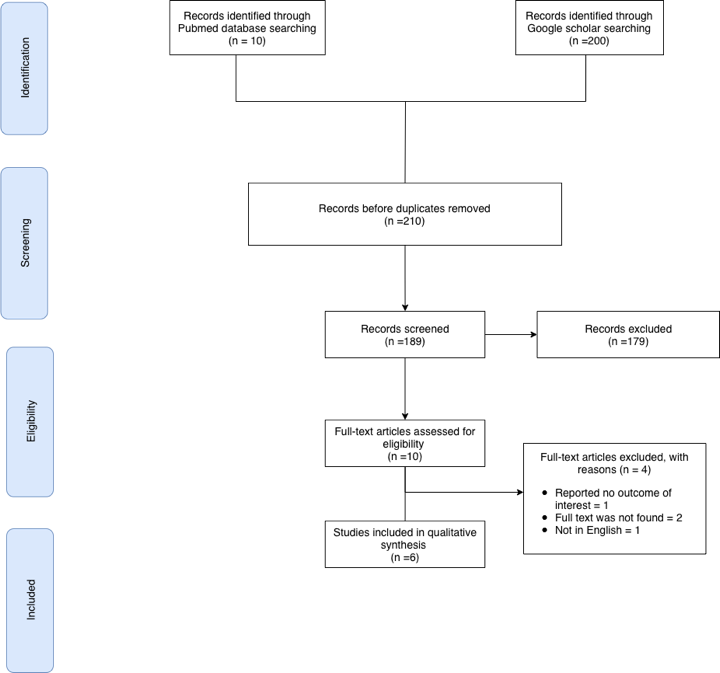
Following the PRISMA (Preferred Reporting Items for Systematic Reviews and Meta-Analyses) guidelines, a total of 210 publications were initially identified through our systematic search, with 200 articles retrieved from Google Scholar (covering the first 20 pages) and 10 from PubMed. After removing duplicates, 189 articles remained for screening. We assessed these articles by reviewing titles and abstracts and subsequently selected 10 full-text publications for a more in-depth review. After applying the pre-established inclusion and exclusion criteria (as detailed in Figure 1, the PRISMA flow diagram), six studies published between February 2001 and October 2023 were included in the final systematic review. The studies that met the inclusion criteria were conducted by 10, 14, 15, 16, 17, 18. All of these studies were randomized controlled trials (RCTs) that focused on the effectiveness of cold application in reducing bruising from subcutaneous heparin injections. A summary of the characteristics of the included studies is provided in Table 1. In terms of geographical distribution, four of the six studies were conducted in Turkey 10, 15, 17, 18. While the other two studies took place in India 16 and Iran 14. Across the six studies, a total of 581 patients were initially included. After applying the inclusion criteria, data from 374 patients who underwent cold application techniques for subcutaneous heparin injection were ultimately analyzed. The study participants were predominantly adults over 18 years of age. Each of the included studies used cold therapy interventions to reduce the incidence and size of bruising at subcutaneous heparin injection sites. Although there were slight variations in sample size, intervention timing, and cold therapy duration, all six studies adhered to randomized controlled trial designs to evaluate the effectiveness of cold therapy.


All six studies included in this systematic review were randomized controlled trials (RCTs) that reported bruising as a primary outcome 10, 14, 15, 16, 17, 18. The majority of the studies measured bruising at multiple time points—12-, 48-, and 72-hours post-injection—with all studies consistently reporting bruising severity at the 48-hour mark. This allowed us to perform a comparative analysis of bruising incidence and severity during this period.
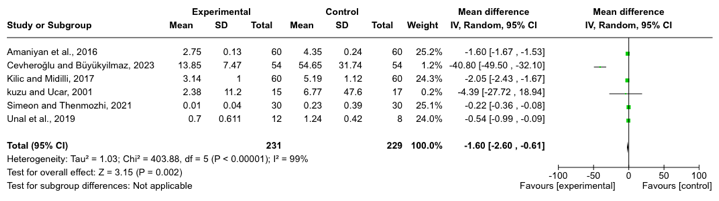
3.3. Meta-Analysis for Bruising SizeAll of the included studies reported the bruising size as the outcome. The bruising size was assessed using a transparent millimeter ruler. The meta-analysis included six studies with a total of 460 patients. Of these, 231 patients received subcutaneous heparin injections in conjunction with cold application techniques aimed at reducing bruising. The pooled results from the included studies demonstrated a statistically significant reduction in bruising severity in the experimental group (cold therapy) compared to the control group. The mean difference was -1.60 (95% CI -2.60 to -0.61), indicating a notable reduction in bruising size for patients who received cold application. However, significant heterogeneity was observed among the studies, with an I² value of 99% (p < 0.00001), suggesting considerable variability in the results across the trials (Figure 2).
3.4. Individual Study FindingsAmaniyan et al. 14 reported a mean bruising severity of 2.75 in the experimental group, compared to 4.35 in the control group, with a mean difference of -1.60 (95% CI -1.67 to -1.53). This finding suggests a significant reduction in bruising with cold application. Kilic and Midilli 15 found a mean bruising severity of 3.14 in the experimental group and 5.19 in the control group, with a mean difference of -2.05 (95% CI -2.43 to -1.67), again favoring the cold application technique. Simeon and Thenmozhi 16 observed smaller bruising differences, with a mean bruising severity of 0.01 in the experimental group and 0.23 in the control group, resulting in a mean difference of -0.22 (95% CI -0.36 to -0.08). Although the bruising severity was minimal in both groups, cold application still showed a statistically significant effect.
Cevheroğlu and Büyükyilmaz 17 reported a more substantial effect, with mean bruising severity of 13.85 in the experimental group compared to 54.65 in the control group. The mean difference was -40.80 (95% CI -49.50 to -32.10), indicating a significant reduction in bruising with cold application. Unal et al 18 contributed to the analysis with a mean difference of -0.54 (95% CI -0.99 to -0.09), showing a modest but significant effect of cold application on bruising reduction. Kuzu and Ucar 10 also reported results, although the mean difference of -4.39 (95% CI -27.72 to 18.94) showed greater variability and less pronounced effects, likely due to a smaller sample size.
Overall, while the magnitude of the effect varied across studies, the meta-analysis demonstrated that cold application consistently reduced bruising severity at subcutaneous heparin injection sites. The high heterogeneity observed (I² = 99%) suggests that the differences in study protocols, patient populations, and methodologies could account for the variation in the results.
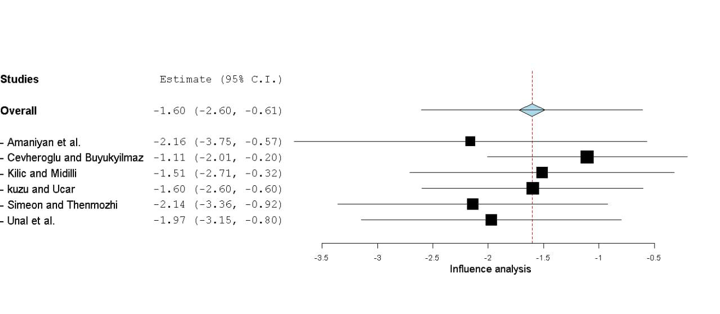
To further investigate the sources of heterogeneity in our meta-analysis, we conducted an influence analysis. This approach involved systematically excluding each study, one at a time, to evaluate its individual impact on the overall effect size and heterogeneity. The analysis revealed that the study by Amaniyan et al. 14 had the most significant influence on both the overall effect size and the heterogeneity. Specifically, the exclusion of this study resulted in an increase in the overall effect size to -1.20 (95% CI -2.16, -0.24), and more notably, the heterogeneity was reduced dramatically to 5.6%. In contrast, excluding other studies, including those by Kuzu and Ucar 10, Kilic and Midilli 15, Simeon and Thenmozhi 16, Cevheroğlu and Büyükyilmaz 17, and Unal et al. 18 had only minor impacts on the overall effect size. The exclusion of these studies did not result in substantial changes in heterogeneity. These findings suggest that the significant heterogeneity observed in the meta-analysis was largely driven by the study conducted by Amaniyan et al. 14, whereas the other studies contributed relatively little to the observed variation. This insight provides a clearer understanding of the sources of variability in the results of our analysis (Figure 3).
3.5. Quality Assessment and Risk of BiasThis systematic review included six randomized controlled trials (RCTs). The risk of bias was independently evaluated by two reviewers using the Cochrane Risk of Bias Tool, which assesses several domains including selection bias, performance bias, detection bias, attrition bias, and reporting bias (Table 2). Each study was evaluated across these domains to determine the potential influence of bias on the validity of the findings.
Among the studies, Kilic and Midilli 15 and Unal et al. 18 demonstrated a low risk of bias across all domains, suggesting high methodological quality and providing greater confidence in their findings. These studies were particularly robust in their design and execution, reducing the likelihood of bias affecting the results.
In contrast, the study by Cevheroğlu and Büyükyilmaz 17 exhibited a high risk of bias, primarily due to concerns about performance bias. This raised questions about the reliability of its conclusions, as performance bias—stemming from the knowledge of treatment allocation—can compromise the validity of the outcomes. Similarly, Kuzu and Ucar 10 also demonstrated high performance bias, which may limit the reliability of the findings, although there was insufficient data to fully assess the overall risk of bias.
The study by Amaniyan et al. 14 was found to have minimal risk of selection and attrition biases, despite lacking comprehensive reporting in some areas. This suggests that while the study had a generally sound design, incomplete reporting may limit a full understanding of its strengths and weaknesses. Simeon and Thenmozhi 16 also demonstrated a low risk of bias in several domains, and the availability of more comprehensive data allowed for a more thorough assessment, confirming the study’s relatively low overall risk of bias.
In summary, while most of the included studies exhibited a low risk of bias, certain studies—particularly those with high performance bias—pose challenges to the interpretation of their results. This variation in bias across studies underscores the importance of carefully considering these factors when evaluating the validity and applicability of the findings. A cautious interpretation of the results is warranted, especially for studies with higher risks of bias, to ensure the most accurate conclusions are drawn.
Heparin, as a widely used anticoagulant for the prevention and treatment of thromboembolic conditions, is associated with the risk of bleeding and bruising, particularly at the injection site when administered subcutaneously. The anticoagulant effect of heparin prolongs bleeding times and increases susceptibility to bruising, which can lead to patient discomfort, anxiety, and potential non-compliance with treatment 3. Given the prevalence of these side effects, identifying effective and practical interventions to minimize these reactions is essential for improving patient outcomes and maintaining adherence to treatment regimens. Cold application, a simple non-pharmacological intervention, has been proposed as an effective method to reduce bruising and pain associated with subcutaneous injections. The mechanism of cold application involves vasoconstriction, where the narrowing of blood vessels reduces blood flow to the injection site, thereby limiting the amount of blood that accumulates under the skin, which can cause bruising 19. By reducing blood flow and local inflammation, cold therapy not only addresses bruising but also has the potential to alleviate pain, which further enhances its utility in clinical practice. The aim of our systematic review and meta-analysis is to evaluate the effectiveness of cold application in reducing the incidence and severity of bruising at subcutaneous heparin injection sites. The findings from this review clearly demonstrate that the application of cold significantly reduces bruising severity. Across six randomized controlled trials (RCTs), which included a total of 460 patients, the pooled mean difference was -1.60 (95% CI -2.60 to -0.61), favoring the experimental groups that received cold application. These findings suggest that cold therapy is an effective and accessible intervention for reducing bruising, and the clinical implications are substantial. Cold therapy is a cost-effective, low-risk intervention that can be easily implemented in a variety of healthcare settings, making it a valuable tool for nurses administering subcutaneous heparin injections. In light of these promising results, it is critical to contextualize the effectiveness of cold therapy in clinical practice by contrasting our findings with those of previous studies.
4.2. Comparison to Relevant LiteratureThe findings of our review were consistent with previous research on the benefits of cold application in minimizing bruising and hematomas following subcutaneous injections. The physiological effects of cold therapy, primarily vasoconstriction, have been well-documented in the literature. This process restricts blood flow to the site of the injection, which in turn reduces the likelihood of hematoma and bruise formation. Amaniyan et al. 14 found that the application of cold significantly reduced the severity of bruising, especially at 12-, 24-, and 48-hours post-injection. Our meta-analysis confirmed these results, demonstrating that cold application consistently led to significant reductions in bruising occurrence at various time points (e.g., 48 hours: OR = 0.17, P < .00001). However, there was some variability in the literature regarding the extent to which cold therapy reduces bruising. For instance, Mohammady and Sadeghi 20 found no statistically significant difference in bruising size or incidence at 48 to 72 hours post-injection, though they did observe a significant reduction in hematoma size (MD = -0.87; 95% CI -1.63 to -0.11) and incidence (OR = 0.35; 95% CI 0.16 to 0.76). This suggests that while bruising may not always be significantly reduced, hematomas—which are often more severe—can be effectively minimized by cold application. This finding is particularly relevant in clinical settings where preventing hematomas is crucial for patient comfort and the success of anticoagulant therapy. The differences between studies may be attributed to several factors, including the timing, duration, and method of cold application, as well as patient-specific factors such as skin type, hydration status, and coagulation profiles. For instance, some studies applied cold for a set period immediately after the injection, while others varied the timing or combined pre- and post-injection applications. Additionally, the variability in injection sites and techniques across studies may have influenced the outcomes, suggesting that standardization in future studies could help clarify the most effective cold therapy protocols.
4.3. Clinical ImplicationsThe clinical implications of these findings are significant. Cold application offers a practical, non-invasive solution for managing one of the most common side effects of subcutaneous heparin injections—bruising. Given its ease of use and cost-effectiveness, cold therapy can be readily integrated into routine clinical practice, particularly in settings where patients are at high risk of bleeding or bruising. By reducing both bruising and the discomfort associated with injections, cold therapy has the potential to improve patient satisfaction, enhance adherence to anticoagulant therapy, and reduce complications associated with frequent injections.
4.4. LimitationsOne limitation of our study is that the inclusion of only English-language publications may have restricted the study’s scope and potentially influenced the results of the pooled analysis. This language limitation could mean that relevant studies published in other languages were overlooked, thereby limiting the generalizability of our findings. We recommend future research to include studies published in multiple languages to enhance the applicability of the results to broader patient populations. Secondly, significant heterogeneity was observed across the included studies. This heterogeneity could be attributed to several factors, including variations in the type and duration of cold application (e.g., applied before, after, or both before and after the heparin injection). Additionally, differences in injection techniques, such as the injection site and method, could have significantly impacted the estimated effect size of the outcomes. These variations highlight the complexity of comparing results across studies and suggest that a standardized approach to cold application and injection methods is needed in future research.
4.5. RecommendationsGiven the evidence presented in this review, future studies should aim to conduct additional randomized controlled trials (RCTs) using standardized cold application protocols to provide stronger evidence-based recommendations. These studies should explore the optimal timing, duration, and method of cold application to refine and standardize this intervention in clinical practice. By doing so, healthcare providers can offer more consistent and effective cold therapy applications in heparin injections, ultimately improving patient care and outcomes. Additionally, the inclusion of studies from diverse populations and languages will ensure broader applicability of the findings, which will further contribute to refining treatment regimens for reducing bruising and other injection-related complications.
Our findings demonstrate that subcutaneous heparin injections can lead to side effects, including hematoma, bruising, and pain. However, the application of cold therapy at the injection site significantly reduces bruising severity and pain. Therefore, cold application is a beneficial and evidence-based nursing intervention that improves patient comfort and care outcomes. To further enhance the generalizability of these results, more studies published in English and other languages are required to evaluate the effects of cold application on hematoma size and severity. Future research should also account for potential confounding factors and control for variability in cold application protocols. This includes standardizing the type of cold therapy used (e.g., ice packs, cold compresses) and ensuring consistent assessment times (e.g., before, after, or before and after heparin injection). By minimizing these methodological variations, researchers can ensure more reliable and comparable results across future studies, ultimately refining clinical recommendations for cold application in subcutaneous heparin administration.
| [1] | Hughes, R. G.; Blegen, M. A. Medication Administration Safety. In Patient Safety and Quality: An Evidence-Based Handbook for Nurses; Hughes, R. G., Ed.; Agency for Healthcare Research and Quality: Rockville, MD, 2008; pp 1-23. | ||
| In article | |||
| [2] | Edwards, I. R.; Aronson, J. K. Adverse Drug Reactions: Definitions, Diagnosis, and Management. Lancet 2000, 356 (9237), 1255-1259. | ||
| In article | View Article PubMed | ||
| [3] | Visvanathan, V. M. N.; CN, C.; CCRN, G. D.; GCert Research Methodologies. Slow vs. Fast Subcutaneous Heparin Injections for Prevention of Pain and Bruising. AJN Am. J. Nurs. 2015, 115 (12), 27. | ||
| In article | View Article PubMed | ||
| [4] | Hiebert, L. M. Repeated Oral or Subcutaneous LMWH Has Similar Antithrombotic Activity in a Rat Venous Thrombosis Model: Antithrombotic Activity Correlates With Heparin on Endothelium When Orally Administered. J. Cardiovasc. Pharmacol. Ther. 2017, 22 (3), 264-272. | ||
| In article | View Article PubMed | ||
| [5] | Chan, H. Effects of Injection Duration on Site-Pain Intensity and Bruising Associated with Subcutaneous Heparin. J. Adv. Nurs. 2001, 35 (6), 882-892. | ||
| In article | View Article PubMed | ||
| [6] | De Campos, J. D. F.; da Silva, J. B.; Beck, A. R. M.; Secoli, S. R.; de Melo Lima, M. H. Subcutaneous Administration Technique of Low-Molecular-Weight Heparins: An Integrative Review. Clin. Nurs. Stud. 2013, 1, 36-44. | ||
| In article | View Article | ||
| [7] | Algafly, A. A.; George, K. P. The Effect of Cryotherapy on Nerve Conduction Velocity, Pain Threshold and Pain Tolerance. Br. J. Sports Med. 2007, 41 (6), 365-369. | ||
| In article | View Article PubMed | ||
| [8] | Quinlan, P.; Davis, J.; Fields, K.; Madamba, P.; Colman, L.; Tinca, D.; Cannon Drake, R. Effects of Localized Cold Therapy on Pain in Postoperative Spinal Fusion Patients: A Randomized Control Trial. Orthop. Nurs. 2017, 36 (5), 344-349. | ||
| In article | View Article PubMed | ||
| [9] | Şendir, M.; Büyükyılmaz, F.; Çelik, Z.; Taşköprü, İ. Comparison of 3 Methods to Prevent Pain and Bruising After Subcutaneous Heparin Administration. Clin. Nurse Spec. 2015, 29 (3), 174-180. L. | ||
| In article | View Article PubMed | ||
| [10] | Kuzu, N.; Ucar, H. The Effect of Cold on the Occurrence of Bruising, Haematoma and Pain at the Injection Site in Subcutaneous Low Molecular Weight Heparin. Int. J. Nurs. Stud. 2001, 38 (1), 51-59. | ||
| In article | View Article PubMed | ||
| [11] | Moher, D.; Liberati, A.; Tetzlaff, J.; Altman, D. G.; PRISMA Group. Preferred Reporting Items for Systematic Reviews and Meta-Analyses: The PRISMA Statement. Ann. Intern. Med. 2009, 151 (4), 264-269. | ||
| In article | View Article PubMed | ||
| [12] | Ouzzani, M.; Hammady, H.; Fedorowicz, Z.; Elmagarmid, A. Rayyan—A Web and Mobile App for Systematic Reviews. Syst. Rev. 2016, 5, 1-10. | ||
| In article | View Article PubMed | ||
| [13] | Higgins, J. P.; Altman, D. G.; Gøtzsche, P. C.; Jüni, P.; Moher, D.; Oxman, A. D.; Savovic, J.; Schulz, K. F.; Weeks, L.; Sterne, J. A.; Cochrane Bias Methods Group; Cochrane Statistical Methods Group. The Cochrane Collaboration's Tool for Assessing Risk of Bias in Randomised Trials. BMJ 2011, 343, d5928. | ||
| In article | View Article PubMed | ||
| [14] | Amaniyan, S.; Varaei, S.; Vaismoradi, M.; Haghani, H.; Sieloff, C. Effect of Local Cold and Hot Pack on the Bruising of Enoxaparin Sodium Injection Site: A Randomized Controlled Trial. Contemp. Nurse 2016, 52 (1), 30-41. | ||
| In article | View Article PubMed | ||
| [15] | Kilic, E. K.; Midilli, T. S. Effects of Cold Application on Pain and Bruising Complications Associated with Subcutaneous Heparin in Intensive Care Patients. Int. J. Health Sci. Res. 2017, 7 (9), 173-183. | ||
| In article | |||
| [16] | Simeon, I.; Thenmozhi, P. Dry Cold Application on Pain and Ecchymosis among Patients Receiving Low Molecular Weight Heparin. Res. J. Pharm. Tech. 2021, 14 (11), 5790-5796. | ||
| In article | |||
| [17] | Cevheroğlu, S.; Büyükyilmaz, F. The Effect of 3 Different Local Cold Applications on Pain and Ecchymosis in Subcutaneous Heparin Injections. Arch. Health Sci. Res. 2023, 10 (3), 160-167. | ||
| In article | View Article | ||
| [18] | Unal, N.; Tosun, B.; Aslan, Ö.; Tunay, S. Effects of Vapocoolant Spray Prior to SC LMWH Injection: An Experimental Study. Clin. Nurs. Res. 2021, 30 (2), 127-134. | ||
| In article | View Article PubMed | ||
| [19] | Karadağ, S.; Aydinli, A.; Yilmaz, C.; Tutar, N. Effect of Cold Application and Compression on Pain and Bruising in Subcutaneous Heparin Injection. J. Vasc. Nurs. 2023, 41 (1), 22-26. | ||
| In article | View Article PubMed | ||
| [20] | Mohammady, M.; Sadeghi, N. Effect of Cold Application on Bruising and Pain Following Heparin Subcutaneous Injection: A Systematic Review and Meta-Analysis. J. Nurs. Scholarsh. 2020, 52 (6), 634-642. | ||
| In article | View Article PubMed | ||
Published with license by Science and Education Publishing, Copyright © 2025 Afaf Almabadi, Atheer Almarri, Areej Almutairi, Mai Alharsan, Shaykhah Almasoud, Hanin Al-Harthiy, Nourah Alzhrani, Rana Alsulami, Rawdhah alsulami, Elaf Alazmi and Ebtsam Abouhashish
 This work is licensed under a Creative Commons Attribution 4.0 International License. To view a copy of this license, visit
http://creativecommons.org/licenses/by/4.0/
This work is licensed under a Creative Commons Attribution 4.0 International License. To view a copy of this license, visit
http://creativecommons.org/licenses/by/4.0/
| [1] | Hughes, R. G.; Blegen, M. A. Medication Administration Safety. In Patient Safety and Quality: An Evidence-Based Handbook for Nurses; Hughes, R. G., Ed.; Agency for Healthcare Research and Quality: Rockville, MD, 2008; pp 1-23. | ||
| In article | |||
| [2] | Edwards, I. R.; Aronson, J. K. Adverse Drug Reactions: Definitions, Diagnosis, and Management. Lancet 2000, 356 (9237), 1255-1259. | ||
| In article | View Article PubMed | ||
| [3] | Visvanathan, V. M. N.; CN, C.; CCRN, G. D.; GCert Research Methodologies. Slow vs. Fast Subcutaneous Heparin Injections for Prevention of Pain and Bruising. AJN Am. J. Nurs. 2015, 115 (12), 27. | ||
| In article | View Article PubMed | ||
| [4] | Hiebert, L. M. Repeated Oral or Subcutaneous LMWH Has Similar Antithrombotic Activity in a Rat Venous Thrombosis Model: Antithrombotic Activity Correlates With Heparin on Endothelium When Orally Administered. J. Cardiovasc. Pharmacol. Ther. 2017, 22 (3), 264-272. | ||
| In article | View Article PubMed | ||
| [5] | Chan, H. Effects of Injection Duration on Site-Pain Intensity and Bruising Associated with Subcutaneous Heparin. J. Adv. Nurs. 2001, 35 (6), 882-892. | ||
| In article | View Article PubMed | ||
| [6] | De Campos, J. D. F.; da Silva, J. B.; Beck, A. R. M.; Secoli, S. R.; de Melo Lima, M. H. Subcutaneous Administration Technique of Low-Molecular-Weight Heparins: An Integrative Review. Clin. Nurs. Stud. 2013, 1, 36-44. | ||
| In article | View Article | ||
| [7] | Algafly, A. A.; George, K. P. The Effect of Cryotherapy on Nerve Conduction Velocity, Pain Threshold and Pain Tolerance. Br. J. Sports Med. 2007, 41 (6), 365-369. | ||
| In article | View Article PubMed | ||
| [8] | Quinlan, P.; Davis, J.; Fields, K.; Madamba, P.; Colman, L.; Tinca, D.; Cannon Drake, R. Effects of Localized Cold Therapy on Pain in Postoperative Spinal Fusion Patients: A Randomized Control Trial. Orthop. Nurs. 2017, 36 (5), 344-349. | ||
| In article | View Article PubMed | ||
| [9] | Şendir, M.; Büyükyılmaz, F.; Çelik, Z.; Taşköprü, İ. Comparison of 3 Methods to Prevent Pain and Bruising After Subcutaneous Heparin Administration. Clin. Nurse Spec. 2015, 29 (3), 174-180. L. | ||
| In article | View Article PubMed | ||
| [10] | Kuzu, N.; Ucar, H. The Effect of Cold on the Occurrence of Bruising, Haematoma and Pain at the Injection Site in Subcutaneous Low Molecular Weight Heparin. Int. J. Nurs. Stud. 2001, 38 (1), 51-59. | ||
| In article | View Article PubMed | ||
| [11] | Moher, D.; Liberati, A.; Tetzlaff, J.; Altman, D. G.; PRISMA Group. Preferred Reporting Items for Systematic Reviews and Meta-Analyses: The PRISMA Statement. Ann. Intern. Med. 2009, 151 (4), 264-269. | ||
| In article | View Article PubMed | ||
| [12] | Ouzzani, M.; Hammady, H.; Fedorowicz, Z.; Elmagarmid, A. Rayyan—A Web and Mobile App for Systematic Reviews. Syst. Rev. 2016, 5, 1-10. | ||
| In article | View Article PubMed | ||
| [13] | Higgins, J. P.; Altman, D. G.; Gøtzsche, P. C.; Jüni, P.; Moher, D.; Oxman, A. D.; Savovic, J.; Schulz, K. F.; Weeks, L.; Sterne, J. A.; Cochrane Bias Methods Group; Cochrane Statistical Methods Group. The Cochrane Collaboration's Tool for Assessing Risk of Bias in Randomised Trials. BMJ 2011, 343, d5928. | ||
| In article | View Article PubMed | ||
| [14] | Amaniyan, S.; Varaei, S.; Vaismoradi, M.; Haghani, H.; Sieloff, C. Effect of Local Cold and Hot Pack on the Bruising of Enoxaparin Sodium Injection Site: A Randomized Controlled Trial. Contemp. Nurse 2016, 52 (1), 30-41. | ||
| In article | View Article PubMed | ||
| [15] | Kilic, E. K.; Midilli, T. S. Effects of Cold Application on Pain and Bruising Complications Associated with Subcutaneous Heparin in Intensive Care Patients. Int. J. Health Sci. Res. 2017, 7 (9), 173-183. | ||
| In article | |||
| [16] | Simeon, I.; Thenmozhi, P. Dry Cold Application on Pain and Ecchymosis among Patients Receiving Low Molecular Weight Heparin. Res. J. Pharm. Tech. 2021, 14 (11), 5790-5796. | ||
| In article | |||
| [17] | Cevheroğlu, S.; Büyükyilmaz, F. The Effect of 3 Different Local Cold Applications on Pain and Ecchymosis in Subcutaneous Heparin Injections. Arch. Health Sci. Res. 2023, 10 (3), 160-167. | ||
| In article | View Article | ||
| [18] | Unal, N.; Tosun, B.; Aslan, Ö.; Tunay, S. Effects of Vapocoolant Spray Prior to SC LMWH Injection: An Experimental Study. Clin. Nurs. Res. 2021, 30 (2), 127-134. | ||
| In article | View Article PubMed | ||
| [19] | Karadağ, S.; Aydinli, A.; Yilmaz, C.; Tutar, N. Effect of Cold Application and Compression on Pain and Bruising in Subcutaneous Heparin Injection. J. Vasc. Nurs. 2023, 41 (1), 22-26. | ||
| In article | View Article PubMed | ||
| [20] | Mohammady, M.; Sadeghi, N. Effect of Cold Application on Bruising and Pain Following Heparin Subcutaneous Injection: A Systematic Review and Meta-Analysis. J. Nurs. Scholarsh. 2020, 52 (6), 634-642. | ||
| In article | View Article PubMed | ||