sciepub.com
 Quick Submission

Enterotoxin Detection by PCR in Klebsiella pneumoniae Isolated from Diarrheal Cases among Children in Kirkuk City - Iraq
Siham Sh. AL-Salihi1, Ali S. Al-Jubouri2, Asa'ad F. Albayati3, , Yusra AR. Mahmood4
1Medical lab, Department, Technical College, Kirkuk, Iraq
2Department of Life Science, Al-Iraqia University, Baghdad, Iraq
3Department of Medical Microbiology, College of medicine, Al-Iraqia University, Baghdad, Iraq
4Department of Pediatrics, College of medicine, Al-Iraqia University, Baghdad, Iraq
Abstract
The presence of genes encoding the heat stable (ST) and heat labile (LT) enterotoxins were detected in Klebsiella spp. using the PCR method with pairs of specific primers designed for the sta, stb, and lth genes described for diarrheagenic Escherichia coli. It was found that the plasmid DNA of the 8 (40%) of the 20 Klebsiella pneumoniae isolates isolated from diarrhea cases in children contained the enterotoxin-encoding genes (sta, stb, lth), sta gene was the most frequently in the strains 7 isolates with (35%), stb genes 2 isolates with (10%) and lth 1 isolates with (5%). Of which (1) K. pneumoniae isolate had plasmid DNA included all three genes and 12 did not have any of the genes. None of the strains of K. oxytoca, K. terrigena and K. ornithinolytica, isolated from children with diarrhea, had genes encoding the tested enterotoxins.
Keywords: Klebsiella pneumonia, Enterotoxin, sta, Kirkuk
Copyright © 2016 Science and Education Publishing. All Rights Reserved.Cite this article:
- Siham Sh. AL-Salihi, Ali S. Al-Jubouri, Asa'ad F. Albayati, Yusra AR. Mahmood. Enterotoxin Detection by PCR in Klebsiella pneumoniae Isolated from Diarrheal Cases among Children in Kirkuk City - Iraq. American Journal of Medical Sciences and Medicine. Vol. 4, No. 5, 2016, pp 92-96. http://pubs.sciepub.com/ajmsm/4/5/1
- AL-Salihi, Siham Sh., et al. "Enterotoxin Detection by PCR in Klebsiella pneumoniae Isolated from Diarrheal Cases among Children in Kirkuk City - Iraq." American Journal of Medical Sciences and Medicine 4.5 (2016): 92-96.
- AL-Salihi, S. S. , Al-Jubouri, A. S. , Albayati, A. F. , & Mahmood, Y. A. (2016). Enterotoxin Detection by PCR in Klebsiella pneumoniae Isolated from Diarrheal Cases among Children in Kirkuk City - Iraq. American Journal of Medical Sciences and Medicine, 4(5), 92-96.
- AL-Salihi, Siham Sh., Ali S. Al-Jubouri, Asa'ad F. Albayati, and Yusra AR. Mahmood. "Enterotoxin Detection by PCR in Klebsiella pneumoniae Isolated from Diarrheal Cases among Children in Kirkuk City - Iraq." American Journal of Medical Sciences and Medicine 4, no. 5 (2016): 92-96.
| Import into BibTeX | Import into EndNote | Import into RefMan | Import into RefWorks |
At a glance: Figures
1. Introduction
The usual pathogenic mechanisms for infectious diarrhea include toxin production, tissue invasion, or invasion of intestinal cells with consequent alteration of their function [1]. Deciding whether they are an etiological factor in a given case poses a great problem [2]. Determining the presence of enterotoxin is a key element in regarding enteropathogens as the cause of diarrhea. Numerous studies have shown that heat labile (LT) and heat stable (ST) enterotoxins are encoded on plasmids. Heat labile enterotoxin is sensitive to increased temperature. It is a protein exotoxin with a high molecular weight and belongs to the so called AB toxins. It is composed of five B components and an enzymatic A component, which is the toxin proper. It activates adenyl cyclase, thus causing an increase in intracellular cAMP concentration. Heat stable enterotoxin is not sensitive to increased temperature. It is a polypeptide exotoxin of low molecular weight which acts in a manner similar to LT, but it activates guanylcyclase in the cell, which leads to an increase in intracellular cGMP concentration [3, 4, 5]. It often happens that both antibiotic resistance and enterotoxicity are encoded on a single plasmid [6]. Klebsiella strains can contain plasmids encoding toxins similar to the ST and LT enterotoxins of E. coli [5, 7, 8]. The LT and ST enterotoxins produced by Klebsiella and E. coli demonstrate great chemical and immunological similarities [9, 10]. Because the role of Klebsiella spp. in the etiology of diarrhea is relatively poorly investigated, and limited attention has been paid to enterotoxin production by Klebsiella spp., the present study was carried out to detect the presence of the sta, stb and lth genes in the plasmid of Klebsiella spp. by PCR
2. Materials and Methods
2.1. Sample CollectionThe study was carried out on children (outpatients as well as inpatients suffering from diarrhea) attended Azadi teaching hospital and Pediatric hospital in Kirkuk city, from June 2009 to June 2011, where a total of (454) children submitted to the study under physician supervision. Stool specimens were collected in disposable, clean screw-capped. All specimens were processed immediately or were kept using Carry Blair transport media in case of delay for 1-2 hours after their collection, and cultured thereafter [11].
2.2. Bacterial Isolation and IdentificationCollected samples were cultured directly on MacConkey agar; XLD agar, SS agar and EMB agar for primary isolation of the Enterobacteriaceae and blood agar to detect beta hemolytic isolates [11]. All isolates were incubated aerobically at 35°C for 24 hours, and then suspicious colonies have been submitted to definitive microscopic examination, identification of culture characteristics, biochemical testing and to the usage of api 20E System (analytical profile index) aiming at identifying Enterobacteriaceae and other gram negative rods [12-17][12].
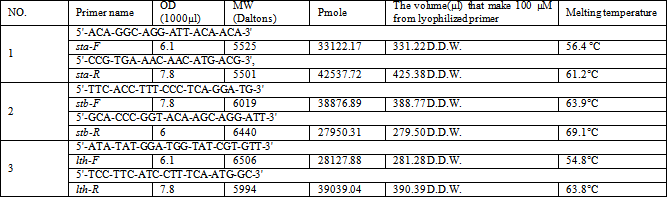
2.3. Plasmid Extraction and Primer PreparationThe bacterial isolates cultured in Luria Bertanni Broth (LB) [18], 1-4 ml of the bacterial broth were used for rapid isolation of plasmid DNA using High-Speed Plasmid Mini Kit (Geneaid: USA). The primers were selected to detect three different enterotoxin genes (sta, stb and lth). According to (CinnaGen) company catalogue, the lyophilized primers (forward and reverse) were suspended in a volume of sterile deionized water as directed by manufacturer company (Table 1) to prepare 100 µM which was used as a stock and stored at -20°C. The primers of the processed PCR mixture have been diluted to 0.01 µM concentration by adding 90 µl sterile deionized water to 10 µl of the stock primers.
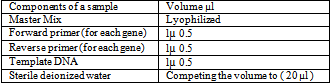
2.4. PCR Experimental ProtocolAccording to the PCR Premix kit (BIONEER/USA) procedure, a mixture of a total of 20 µl (Table 2) reaction volume was prepared.






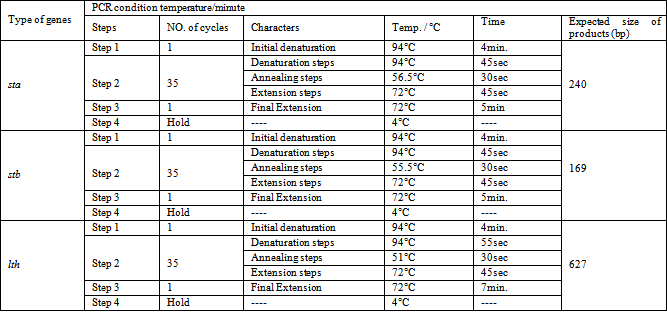
The PCR procedure involves three steps (Table 3); the procedure is repeated many times until the desired level of amplification is achieved [19].



The results of DNA amplification by PCR were interpreted using the running of DNA through agarose gel electrophoresis. UV transilluminator was used to detect DNA binding ethidium bromide which appeared as light fluorescent band [20]. A picture of the fluorescent ethidium bromide stained DNA separation pattern was taken with a digital camera.
3. Results
3.1. Isolation and IdentificationThe results of identification showed that among the 454 cultured stool sample, 433 samples resulted in positive culture and 767 bacteria were isolated from children with diarrhea. E. coli represented 302 (39.4%) of the isolated bacteria, followed by Proteus spp. 102(13.3%) and Klebsiella spp. 93 (12.13%). However, E. coli remained the most common bacterial causative agent for diarrhea.
3.2. Molecular Detection of Klebsiella enterotoxin by PCRThe presence of genes encoding the ST and LT enterotoxins was detected using the PCR method with pairs of primers (Table 1) designed for the sta, stb, and lth genes described for Escherichia coli. Therefore, we have selected one virulent isolate of Escherichia coli as a positive control and Proteus mirabilis isolates as a negative control. It was found that the plasmid DNA of 10 (50%) of the 20 selected Klebsiella pneumoniae strains isolated from diarrhea cases contained the enterotoxin-encoding genes (sta, stb, lth). Sta gene was the most frequently detected one in 7 (35%) of the isolated strains, stb genes was found in 2 (10%) and lth in 1(5%). (Table 4).


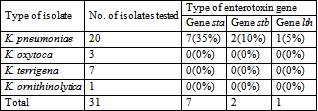

None of the strains of K. oxytoca; K. terrigena and K. ornithinolytica, isolated from patients with diarrhea had genes encoding the tested enterotoxins. Eight of the 20 selected Klebsiella strains isolated from the diarrhea cases had sta, stb, or lth genes, of which 1 had plasmid DNA which included all three genes and 12 did not have any of the genes.
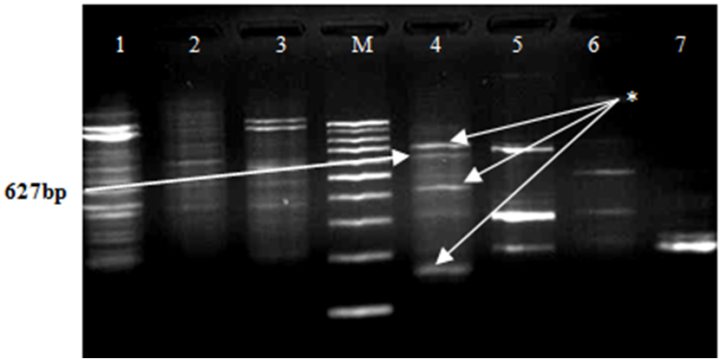
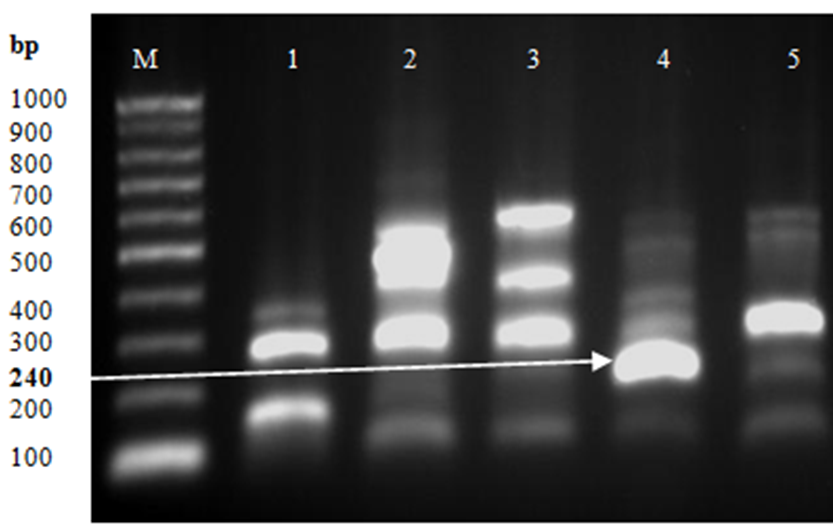
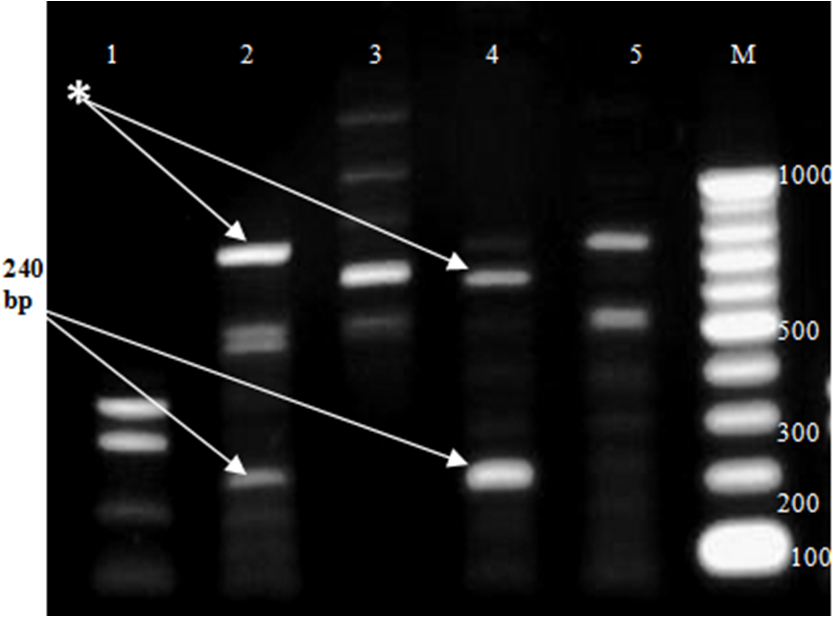
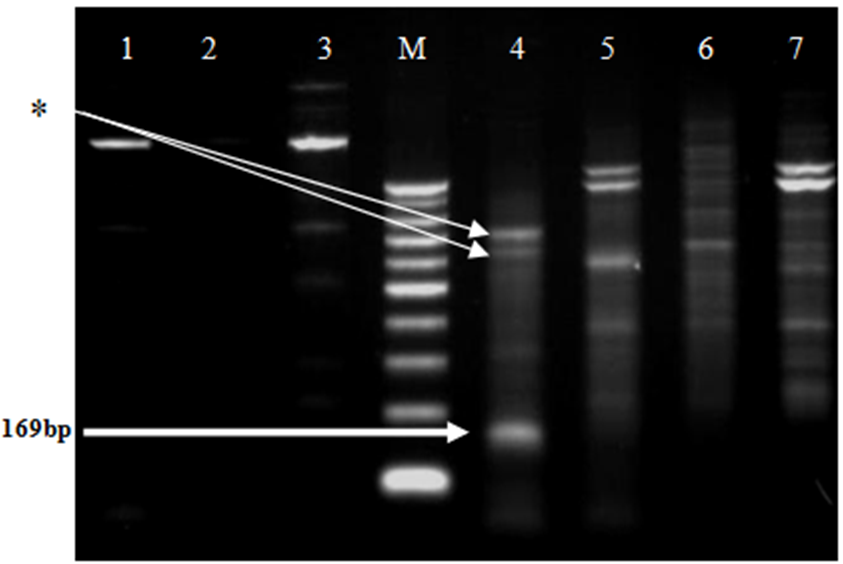
Figure 1 to Figure 4 shows the PCR product and some isolates that showed positive and negative results.

 Download as
 Download as
 Download as
 Download as
4. Discussion
As a cause of nosocomial gram-negative bacteremia, Klebsiella is second only to Escherichia coli [21, 22, 23] in pediatric wards [24]. Klebsiella pneumoniae and Klebsiella oxytoca, both commensals of the human gastrointestinal tract, have been reported to be an occasional cause of diarrhea in humans [25]. K. pneumoniae is found in the intestinal flora of healthy individuals, but usually in small numbers [26]. In the tropics, however, strains of K. pneumoniae have been isolated in high numbers from the small bowel of persons with acute diarrhoea [27, 28], and from malnourished children who have chronic diarrhoea [29, 30].
In our study, the results of identification revealed that 433 samples resulted in positive culture among the 454 cultured stool sample, and 767 bacteria were isolated from children enrolled in the study. E. coli represented the most common bacterial causative agent for diarrhea in the present finding; forming about 40% of the isolated bacteria. This observation is similar to other study [31, 32], where they focused on E. coli as the most common agent, followed by other diarrheagenic bacteria: Salmonella spp., Shigella spp., Aeromonas spp., Plesiomonas shigelloides and Edwardsiella tarda [11, 33].
In addition, the most important element in the pathogenesis of diarrhea is the production of heat stabile (ST) and heat labile (LT) enterotoxins [7, 9], and some studies have shown that LT and ST enterotoxins are encoded on plasmids [3, 4]. Besides, Klebsiella strains can contain plasmids encoding toxins similar to the ST and LT enterotoxins of E. coli [7, 8]. However, we found that the enterotoxin-encoding genes (sta, stb, lth) were detected in the plasmid DNA of half of selected Klebsiella pneumoniae strains isolated from diarrhea cases enrolled in this work. Sta gene composed most of this finding. Because of that, The member of genus Klebsiella especially K. pneumoniae have been linked to epidemics of diarrhea, also because some strains appear to have acquired plasmid from E. coli (that code for heat labile and heat stable enterotoxins) [34]. The enterotoxin of K. pneumoniae investigated and studied by some researchers like Klipstein FA and Engert RF [35], where they found that Cell-free broth filtrates of a strain of K. pneumoniae serotype 5 retained their capacity to induce fluid secretion in the rabbit ileal loop model after heating (100 °C for 30 min), acid treatment (pH 4.4), and his observation indicates that the molecular weight of the enterotoxin is in the range of 1,000-10,000 Daltons. Klebsiella pneumoniae enterotoxin thus resembles the heat-stable enterotoxin of Escherichia coli in a number of respects.
The same scientist with his colleague continued in their studying. In 1983 they found that the purified Klebsiella pneumoniae heat-stable enterotoxin which was obtained by the same techniques used to purify Escherichia coli heat-stable enterotoxin had the same potency in the suckling mouse assay and showed immunological cross-reactivity in enzyme-linked immunosorbent assay, neutralization of secretory activity by specific hyperimmune antisera, and protection against active challenge in rats immunized with a vaccine containing synthetically produced E. coli heat-stable enterotoxin [2]. In addition, Guarino et al. studied the characteristics and mechanism of action of a heat-stable enterotoxin produced by K. pneumoniae isolated from infants with secretory diarrhea. They concluded that K. pneumoniae may induce diarrhea through the production of a ST similar but not identical to E. coli ST [10].
PCR was used by Janczura et al. to detect LT and ST enterotoxins encoded on K. pneumoniae plasmids isolated from different clinical samples, and they were found that none of the strains of the control group, i.e. Klebsiella strains isolated from the blood and respiratory tracts of hospitalized patients without diarrhea, had genes encoding the tested enterotoxins, while 52 of the 61 Klebsiella strains isolated from the diarrhea cases had sta, stb, or lth genes, of which 2 had plasmid DNA which included all three genes and 9 did not have any of the genes. Most often, the Klebsiella strains showed the presence of one or two of the enterotoxin genes.
The significance of the presence of these genes in the etiology of diarrhea is confirmed by the fact that none of them were found in the clinical Klebsiella strains isolated from blood and respiratory tract. The specificity and the regularities of the amplifications were confirmed by the positive control (the model strain of E. coli ATCC 35401 ST+ and LT+) and control group (Acinetobacter and Staphylococcus, which do not have the sta, sta, and lth genes). Thus the results indicate that the determination of the presence of enterotoxin-encoding genes can be useful in diagnosing Klebsiella−related diarrhea [5].
Bacilli of the Klebsiella group are an etiological factor of serious nosocomial infections, which easy acquired new pathogenic features by the transmission of genetic information [36]. The fact that Klebsiella strains can easily exchange plasmids with other members of the Enterobacteriaceae family is the basis of their acquisition of antibiotic resistance, and this is also closely related with their production of enterotoxins [5].
During studying the PCR condition (time, temperature, primer and DNA template concentration and number of cycles), they were optimized but non-specific band appeared (Figure 1), and this may be attributed to troubleshooting such as Mg2+ concentration that incorporated with ready lyophilized premix PCR kit, the template DNA contains high GC region or high secondary structure may be other reason, or the primer design is not appropriate to amplify the target sequence.
5. Conclusion
1. E. coli was the common bacteria isolated from diarrhea cases in children followed by Proteus spp. and Klebseilla spp.
2. Klebseilla pneumoiae subsp. pneumoiae is the most predominant member among Klebseilla spp. isolates.
3. Only Klebseilla pneumoiae subsp. pneumoiae possessed enterotoxin gene and had more than one gene in their plasmids.
4. The determination of the presence of enterotoxin-encoding genes can be useful in diagnosing Klebsiella−related diarrhea.
Acknowledgement
We present our great appreciation and special thanks to the medical staff working in Azadi teaching hospital and Pediatric hospital in Kirkuk city, for their great help in providing and selecting current study cases.
References
| [1] | Carlos CC, Saniel C, “Etiology and Epidemiology of Diarrhea,” Pill. J. Microbial Infect Dis., 19(2), 51-53, 1990. | ||
 In article In article | |||
| [2] | Klipstein FA, Engert RF, “Immunological Properties of Purified Klebsiella pneumoniae Heat-Stable Enterotoxin,” American Society for Microbiology Infect. Immun, 42 (2), 838-841, 1983. | ||
| In article | |||
| [3] | Spangler BD, “Structure and function of cholera toxin and the related Escherichia coli heat-labile enterotoxin,” Microbiol Rev. 56(4), 622-647, 1992. | ||
| In article | PubMed | ||
| [4] | Alessio M, Albano F, Tarallo F, Guarino A, “Interspecific plasmid transfer and modification of heat-stable enterotoxin expression by Klebsiella pneumoniae from infants with diarrhea,” Ped Res, 33, 205-208, 1993. | ||
| In article | View Article PubMed | ||
| [5] | Janczura A, Maczynska B, Kasprzykowska U, Smutnicka D, Przondo−Mordarska A, Junka A, Mokracka−Latajka G, “Presence of Enterotoxin Genes in Klebsiella Strains Isolated from Children with Diarrhea,” Wroclaw Medical University. Adv Clin Exp Med, 18(3), 283-290, 2009. | ||
| In article | |||
| [6] | McConnell MM, Smith HR, Willshaw GA, Scotland SM, Rowe B, “Plasmids coding for heat labile enterotoxin production isolated from Escherichia coli O78: comparison of properties,” J. Bacteriol, 143, 158-167, 1980. | ||
| In article | PubMed | ||
| [7] | Albano F, Thompson MR, Orru S, Scaloni A, Musetta A, Pucci P, Guarino A, “Structural and functional features of modified heat stable toxins produced by enteropathogenic Klebsiella cells,” Ped Res, 48(5), 685-690, 2000. | ||
| In article | View Article PubMed | ||
| [8] | Zhang W, Robertson DC, Zhang C, Bai W, Zhao M, Francis DH, “Escherichia coli construct expressing human or porcine enterotoxins induce identical diarrheal diseases in a piglet infection model,” Appl. Env. Microb, 74, 5832-5837, 2008. | ||
| In article | View Article PubMed | ||
| [9] | Klipstein FA, Engert RF, “Purification and properties of Klebsiella pneurnoniae heat-stable enterotoxin,” Infect. Immun, 13, 373-381, 1976. | ||
| In article | PubMed | ||
| [10] | Guarino A, Guandalini S, Alessio M, Gentile F, Tarallo L, Capano G, Migliavacca M, Rubino A, “Characteristics and mechanism of action of a heat−stable enterotoxin produced by Klebsiella pneumoniae from infants with secretory diarrhea, Ped Res, 25, 514-518, 1989. | ||
| In article | View Article PubMed | ||
| [11] | Baron EJ, Peterson LR, Finegold SM, Baily & Scott's Diagnostic microbiology 9th ed, Mosby Company, USA, 1994. | ||
| In article | |||
| [12] | William H, Ewing and Martin WJ, Enterobacteriaceae In: Lennette EH, Spaulding EH, and Truant JP Manual of Clinical Microbiology, 2nd edition, American Society for Microbiology, Washington, DC., 1976. | ||
| In article | |||
| [13] | Holt JG, Krieg NR, Sneath PHA, Staley JT, Williams ST, Bergey,s manual of determinable bacteriology 9th ed, William and Wilkins, Baltimore, 1994. | ||
| In article | |||
| [14] | World Health Organization (WHO), Manual of basic techniques for a health laboratory References–result and discussion 2nd ed, World Health Organization, Geneva, 2003. | ||
| In article | |||
| [15] | Winn W, Allen S, Janda W, Koneman E, Procop G, Screckenberger P, Woods G, Koneman's Color Atlas and Textbook of Diagnostic Microbiology 6th ed, Lippincott, Williams & Wilkins, 2006. | ||
| In article | |||
| [16] | Cheesbrough M, District Laboratory Practice in Tropical Countries Part 2 2nd ed, USA, 2006. | ||
| In article | |||
| [17] | Brooks GF, Butel JS, Morse SA, Medical Microbiology Jawetz, Melnick and Adelbergs 25th ed, McGraw-Hill Companies, Appleton and Lange, California, 2010. | ||
| In article | |||
| [18] | Sambrook J, Fritsch EFA, Maniatis T, Molecular cloning: a laboratory manual 2nd ed, Cold Spring Harbor Laboratory Press. Cold Spring Harbor, NY, 1989. | ||
| In article | |||
| [19] | Snustad DP, Simmons MJ, Principles of Genetics 2nd ed, John Wiley & Sons, Inc. 2000, 541-567. | ||
| In article | |||
| [20] | Bruce AR, Judy SC, Akbar SK, Protocols for recombinant DNA isolation, Cloning and sequencing. DNA isolation and sequencing (Essential techniques series). John Wiley sons, 1996. | ||
| In article | |||
| [21] | Bryan CS, Reynolds KL, Brenner ER, “Analysis of 1,186 episodes of gram-negative bacteremia in non-university hospitals: the effects of antimicrobial therapy,” Rev. Infect. Dis, 5, 629-638, 1983 | ||
| In article | View Article PubMed | ||
| [22] | Duggan JM Oldfield GS, Ghosh HK, “Septicaemia as a hospital hazard,” J. Hosp. Infect, 6, 406-412, 1985. | ||
| In article | View Article | ||
| [23] | Pittet D, Li N, Wenzel RP, “Association of secondary and polymicrobial nosocomial bloodstream infections with higher mortality,” Eur. J. Clin. Microbiol. Infect. Dis, 12: 813-819, 1993. | ||
| In article | View Article PubMed | ||
| [24] | Gotoff SP, Sepsis in the newborn, In Krugman SL, Katz A, Gershon A, Wilfert CM. (ed.), Infectious diseases of children, 9th ed. Mosby-Year Book, St. Louis, Mo, 1992, 402-418. | ||
| In article | |||
| [25] | Arora DR, Chugh TD, Vadhera DY, “Enterotoxigenicity of Klebsiella pneumonia,” Indian J Pathol Microbiol, 26: 65-70, 1983. | ||
| In article | PubMed | ||
| [26] | Orskov I, The genus Klebsiella (medical aspects), in The prokaryotes, a handbook on habitats, isolation and identification of bacteria, Springer-Verlag, Berlin, Heidelberg, 1981, 1160-1165. | ||
| In article | |||
| [27] | Gorbach SL, Banwell JG, Chatterjee BD, Jacobs B, Sack RB, “Acute undifferentiated human diarrhea in the tropics. I. Alterations in intestinal microflora,” J. Clin. Invest, 50, 881-889, 1971. | ||
| In article | View Article PubMed | ||
| [28] | Coello-Ramirez P, Lifshitz F, Zuniga V, “Enteric microflora and carbohydrate intolerance in infants with diarrhea,” Pediatrics, 49, 233-242, 1972. | ||
| In article | PubMed | ||
| [29] | Gracey M, Stone DE, “Microbial contamination of the gut: another feature of malnutrition,” Am. J. Clin. Nut, 26, 1170-1174, 1973. | ||
| In article | PubMed | ||
| [30] | Heyworth B, Brown J, “Jejunal microflora in malnourished Gambian children, Arch. Dis. Child, 50, 27-33, 1975. | ||
| In article | View Article PubMed | ||
| [31] | Abu Al-Maali HM, “A study of some aerobic diarrheal bacteria in children of Kerballa city and its sensitivity to some antibiotics,” M. Sc. Thesis, Ramadi. College of Science, University of Anbar (In Arabic), 2004. | ||
| In article | |||
| [32] | Ismail AKM, “Diagnostic Study of Some Intestinal Parasites and its Relationship with Pathogenic Bacteria Causing Diarrhoea in Children” Ph.D. Thesis, Tikrit University-College of Medicine, 2006. | ||
| In article | |||
| [33] | Carey RB, Schuster MG, and McGowan KL, Medical Microbiology for the New Curriculum a Case-Based Approach, WILEY-LISS.USA, 2007. | ||
| In article | View Article | ||
| [34] | Ewing, W. H, Edward and Ewing’s Identification of Enterobacteriaceae, 4th ed. Elsevier, New York, 1986. | ||
| In article | |||
| [35] | Klipstein FA, Engert RF, “Enterotoxogenic Intestinal Bacteria in Tropical Sprue. Ill. Preliminary Characterization of Klebsiella pneumoniae Enterotoxin,” THE JOURNAL OF INFECTIOUS DISEASES, 132(2), AUGUST 1975a. | ||
| In article | |||
| [36] | Podschun R, Ullman U, “Klebsiella spp. as nosocomial pathogens: epidemiology, taxonomy, typing methods, and pathogenicity factors,” Clin Microbiol Rev, 11(4), 589-603, 1998. | ||
| In article | PubMed | ||
 CiteULike
 Mendeley
 StumbleUpon
 Delicious
 Facebook
 Twitter
 LinkedIn
, Lane (1) PCR product of Proteus mirabilis no.7 as negative control, Lane (2) PCR product of isolate no. 24 K. pneumoniae, Lane (3) PCR product of isolate no. 73 K. pneumoniae, Lane (4) PCR product of isolate no. 287 K. pneumoniae, Lane (5) PCR product of isolate no. 306 K. pneumonia. Only Lanes 4 showed positive PCR band)
, Lane (1) PCR product of Proteus mirabilis no.7 as negative control, Lane (2) PCR product of isolate no. 488 K. pneumoniae, Lane (3) PCR product of isolate no. 471 K .pneumoniae, Lane (4) PCR product of isolate no. 486 K. pneumoniae, Lane (5) PCR product of isolate no. 451 K. pneumonia. Lanes 2, 4 showed positive PCR band, and Lanes 3, 5 showed negative PCR band. * non- specific band)
, Lane (1) PCR product of K. pneumoniae no.22, Lane (2) PCR product of isolate no. 89 K. pneumoniae , Lane (3) PCR product of isolate no. 24 K. pneumoniae, Lane (4) PCR product of isolate no. 280 K. pneumoniae, Lane (5) PCR product of isolate no. 129 K. pneumoniae, Lane (6) PCR product of isolate no. 287 K. pneumoniae, Lane (7) PCR product of isolate no. 488 K. pneumoniae, and all Lanes showed negative PCR band except lane 4. * non- specific band)
, Lane (1) PCR product of K. pneumoniae no.488, Lane (2) PCR product of isolate no. 287 K. pneumoniae, Lane (3) PCR product of isolate no. 292 K. pneumoniae, Lane (4) PCR product of isolate no. 280 K. pneumoniae, Lane (5) PCR product of isolate no. 139 E. coli, Lane (6) PCR product of isolate no. 73 K. pneumoniae, Lane (7) PCR product of isolate no. 22 K .pneumoniae, and all Lanes showed negative PCR band except lane 4. * non- specific band)