sciepub.com
 Quick Submission

Polyethylene Bearing Stress Fractures after Mobile-bearing Cruciate-retaining Total Knee Arthroplasty: Case Reports
Eshnazarov Kamolhuja Eshnazarovich1, Jong Keun Seon2,
1Department of Orthopedic Surgery, Shinchon Yonsei Hospital, Korea
2Department of Orthopedic Surgery, Chonnam National University Hospital, Korea
Abstract
Some reported bearing fractures are due to entrapment of the bearing between the femoral component and posterior edge of the tibial base plate in unstable meniscal –bearing design TKA. However, so far no cases of bearing fracture has been reported for the rotating platform or anteroposterior gliding designs of mobile bearing TKA. The authors describe two cases of polyethylene stress fracture after primary TKA using a cruciate-retaining floating platform mobile-bearing prosthesis (e.motion-FP, B.Braun-Aesculap, Tuttlingen, Germany), and includes a review of the pertinent literature and a discussion of possible fracture mechanisms.
Keywords: TKA, Mobile-bearing, polyethylene, stress fracture
Copyright © 2016 Science and Education Publishing. All Rights Reserved.Cite this article:
- Eshnazarov Kamolhuja Eshnazarovich, Jong Keun Seon. Polyethylene Bearing Stress Fractures after Mobile-bearing Cruciate-retaining Total Knee Arthroplasty: Case Reports. American Journal of Medical Sciences and Medicine. Vol. 4, No. 2, 2016, pp 23-25. http://pubs.sciepub.com/ajmsm/4/2/1
- Eshnazarovich, Eshnazarov Kamolhuja, and Jong Keun Seon. "Polyethylene Bearing Stress Fractures after Mobile-bearing Cruciate-retaining Total Knee Arthroplasty: Case Reports." American Journal of Medical Sciences and Medicine 4.2 (2016): 23-25.
- Eshnazarovich, E. K. , & Seon, J. K. (2016). Polyethylene Bearing Stress Fractures after Mobile-bearing Cruciate-retaining Total Knee Arthroplasty: Case Reports. American Journal of Medical Sciences and Medicine, 4(2), 23-25.
- Eshnazarovich, Eshnazarov Kamolhuja, and Jong Keun Seon. "Polyethylene Bearing Stress Fractures after Mobile-bearing Cruciate-retaining Total Knee Arthroplasty: Case Reports." American Journal of Medical Sciences and Medicine 4, no. 2 (2016): 23-25.
| Import into BibTeX | Import into EndNote | Import into RefMan | Import into RefWorks |
At a glance: Figures
1. Introduction
Mobile-bearing knees were introduced in the mid to late 1970s in an effort to maximize congruity of the articular bearing surface in total knee arthroplasty (TKA), while allowing tibial motion relative to the polyethylene insert, and thereby, theoretically improve knee flexibility and kinematics. Proponents of this design have indicated that it is more forgiving of surgical technique, and have cited its “self-aligning” characteristics in the axial plane.
Some mobile-bearing TKA retrieval studies based on observations made at revision surgery have shown instability with or without polyethylene insert subluxation, and dislocation [3]. Instability may occur at any time. However, when instability leads to early failure, it can be devastating to the patient and surgeon. One study found that these problems occurred mid-term at 4 and 6 years postoperatively [9], whereas in another, these problems occurred within 6 months of the index procedure [2]. Although many studies have reported bearing dislocations after mobile-bearing TKA, only a few cases of bearing fracture have been reported after TKA, especially after meniscal-bearing LCS TKA.
This report describes two cases of stress polyethylene fracture after primary TKA performed using a cruciate-retaining floating platform mobile-bearing prosthesis (e.motion-FP, B.Braun-Aesculap, Tuttlingen, Germany). In addition, previous reports related to this rare complication are reviewed and the possible mechanisms of fractures are discussed.
2. Case 1
In June 2004, a 65-year-old woman (weight = 58kg, height = 1.43 m, body mass index = 28.4) with a history of symptomatic left knee osteoarthritis underwent TKA using a floating platform mobile-bearing TKA with a 10mm thick polyethylene bearing (e.motion-FP, B.Braun-Aesculap). During the operation, an acceptable joint gap and ligament balance were achieved. No problem was reported during follow-up examinations, and the patient was able to perform high-level activities (she worked as a farmer) for the next five years.

 Download as

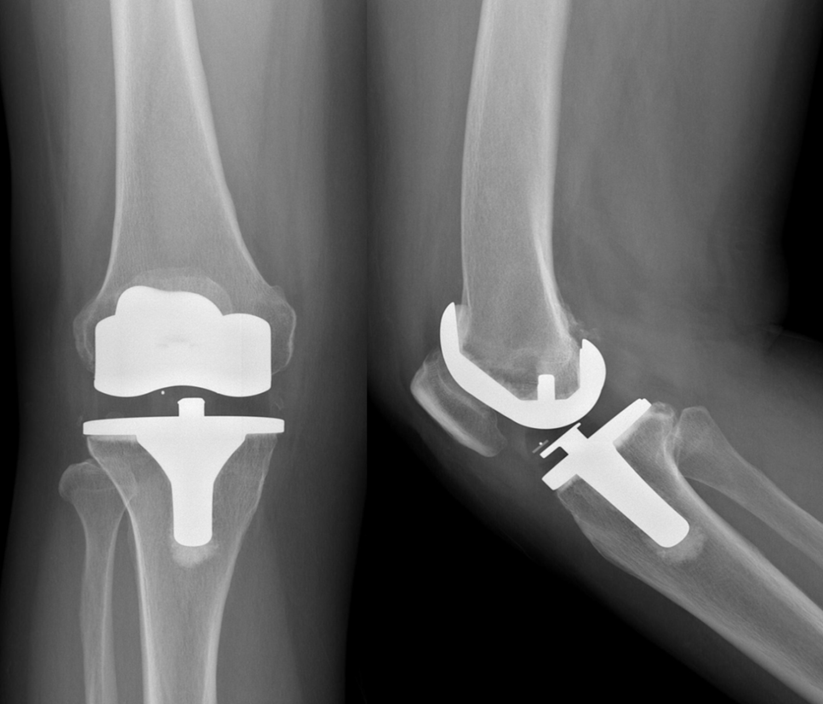
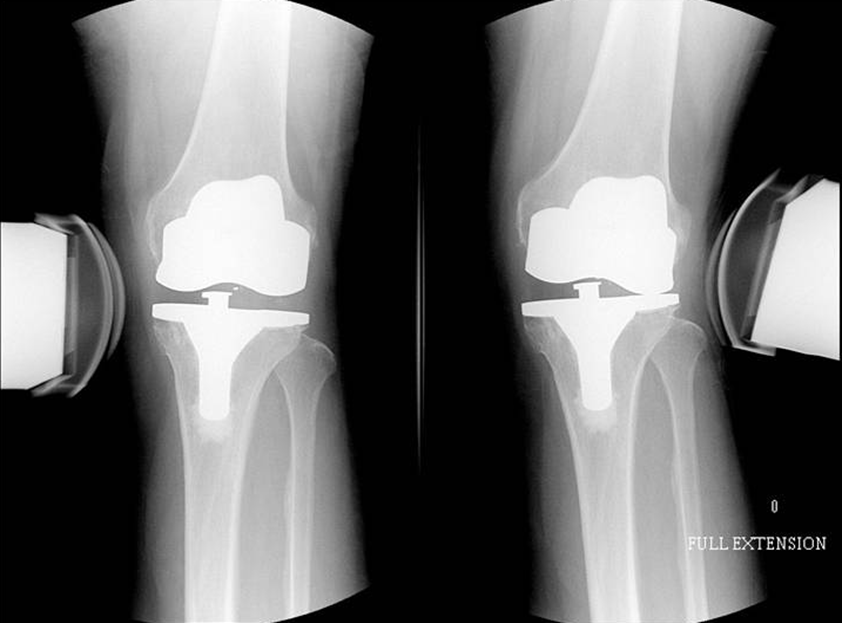
However, five years after surgery, she felt instability and pain in her left knee when she stood up from a seated position. She had no obvious trauma history. Six months after the episode, she returned to our clinic. A physical examination revealed a clicking sound when the knee was in motion. Anteroposterior and lateral view radiographs of the knee showed no remarkable alteration in polyethylene wear, whereas a valgus stress radiograph showed no space for polyethylene bearing on the lateral side of the knee (Figure 1). We considered subluxation of bearing as a tentative diagnosis.
 Download as
 Download as
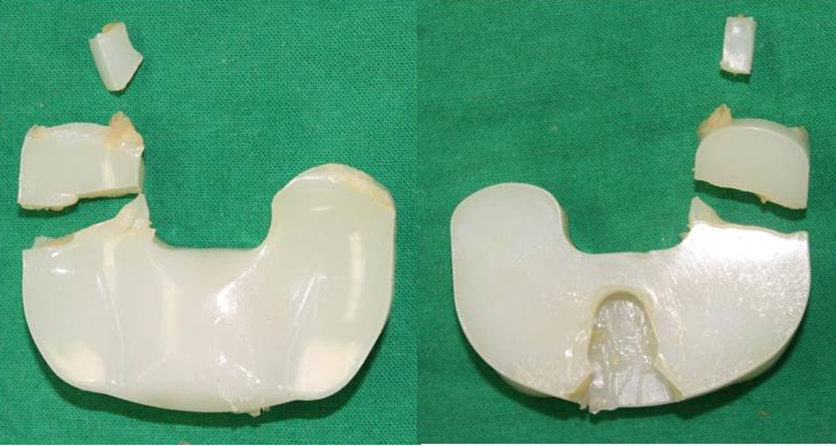
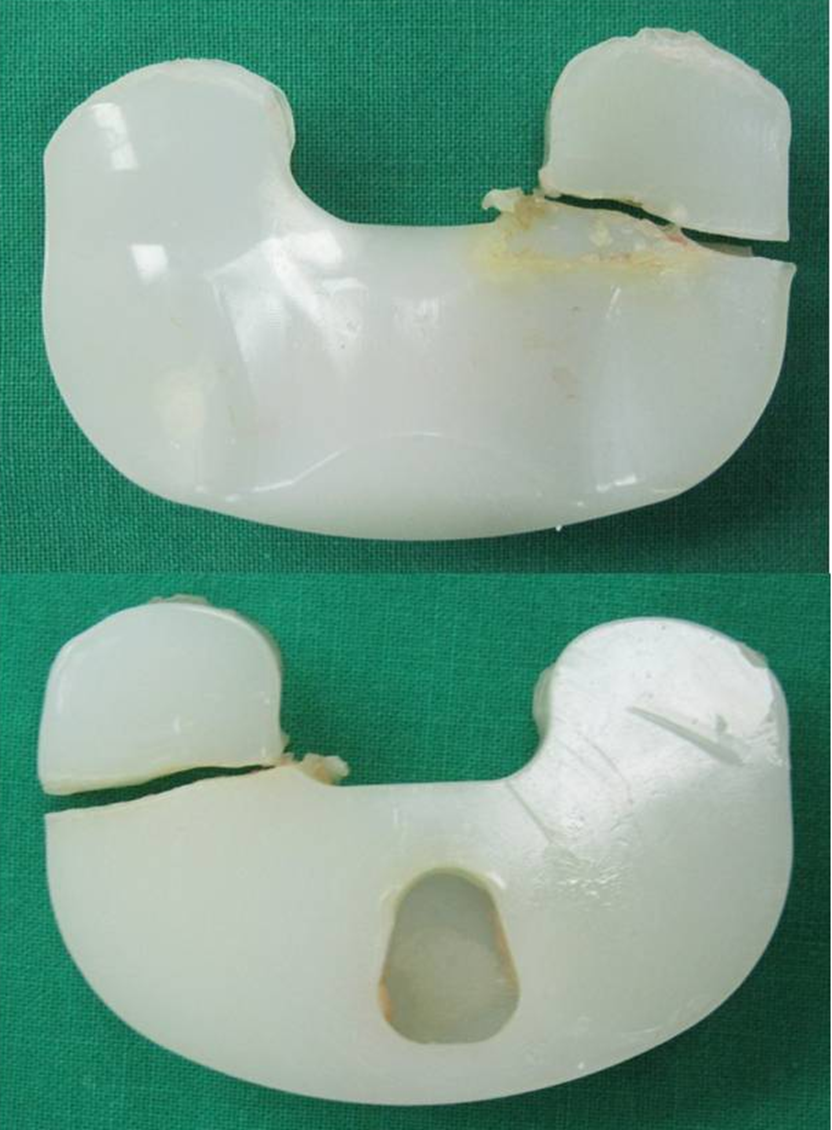
Revision of the left TKA was performed, and a fracture at the posterolateral edge of the polyethylene bearing (Figure 2) and a small osteolytic lesion on the medial tibial plateau without loosening of any component were noted. Flexion and extension instability were observed for a 10 mm trial insert, but a 14 mm polyethylene trial provided balanced extension and flexion gaps in full extension and in 90° of knee flexion. Therefore, the broken 10-mm tibial bearing was replaced with a 14-mm bearing (Figure 3). At her two-year follow-up the patient had recovered complete function of her left knee, and was free from pain and could walk normally without any support.
3. Case 2
A 59-year-old woman underwent right TKA using mobile-bearing TKA with a 10mm thick polyethylene bearing (e.motion-FP, B.Braun-Aesculap). On a follow-up examination at 2 year after surgery, she showed 0° to 130° of motion and reported no pain. However, at 3 years after knee arthroplasty, she felt a sudden onset, sharp pain in her right knee while walking down stairs. No swelling or knee motion limitation was noted at the time. However, subsequently, she was not able to stand up from a sitting position or walk upstairs without support. She did not recall any history of injury or trauma. CT images showed a posterolateral polyethylene defect and a polyethylene fragment at the supra-patellar pouch. A fracture of the mobile-bearing polyethylene was strongly suspected.
 Download as
 Download as
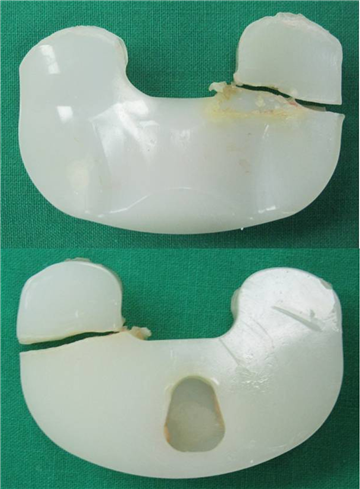
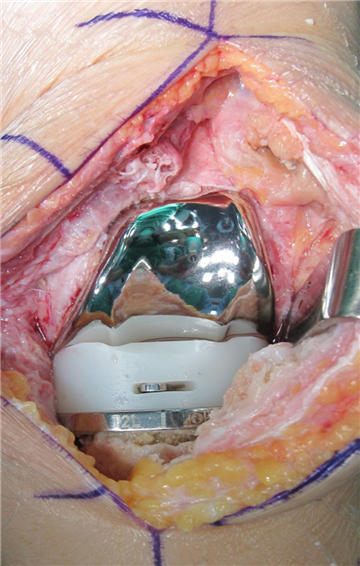
Revision of the right TKA was performed. A fracture was observed a fracture at the posterolateral edge of the polyethylene bearing (Figure 4). With a 12-mm polyethylene bearing, knee showed balanced extension and flexion gaps in full extension and in 90° of knee flexion, and thus, the 12-mm polyethylene trial component was used to replace (Figure 5). At her one-year follow-up, she had no problems her knee was stable knee, and the patient was pleased with the result.
4. Discussion
Some advantages of mobile bearing TKA like the minimization of wear, improved transfer of torsional stress, and a more forgiving nature regarding tibial component rotational mal-alignment, have been postulated and supported by excellent long-term clinical results in numerous studies. However, several authors have reported complications specific to this design, especially subluxation, and dislocation or breakage of the polyethylene insert [1, 2, 3, 4, 5, 7, 8, 9, 10].
It is well known that bearing dislocation is more common for mobile-bearing TKA than fixed-bearing TKA. Several factors facilitate dislocation in mobile-bearing TKA, namely, prosthesis design [5, 7], progressive instability [7, 10], surgical technique issues, or others [6, 7, 8]. However, only a few cases of bearing fracture have been reported, especially for meniscal-bearing LCS TKA. Weaver et al. [11] reported three cases of lateral bearing fractures in meniscal bearing LCS TKA, and concluded that bearing fractures were due to bearing entrapment between the femoral component and posterior edge of the tibial base plate in unstable TKA. However, so far no cases of bearing fracture have been reported for the rotating platform or anteroposterior gliding designs. Hence, as far as I am aware bearing fractures have not been reported to date for the anteroposterior (AP) gliding design. The e-motion FP type mobile-bearing TKA allows the bearing to glide anteroposteriorly and rotate, as occurs for AP gliding TKA. In our cases, bearing fractures occurred at 5 and 3 years postoperatively without any special trauma history, which suggest that high flexion activity, especially sudden movement of knee, increases posterior bearing translation in unstable TKAs, and that the over-hanging posterolateral portion of the bearing can cause high contact stresses. Consequently, bearing fractures might be occurred due to entrapment of the subluxated bearing between the femoral component and the posterior edge of the lateral tibial runner, as postulated by Weaver et al. [11]. Additionally, during revision surgeries, we had to use thicker inserts of 14mm and 12mm, respectively.
Breakage of a polyethylene insert in modern mobile bearing design is rare. In fact, this is the first report to describe bearing breakage in floating platform mobile-bearing cruciate retaining TKR. In the described cases, subluxation of the insert due to flexion instability is believed to have been responsible for the fractures.
References
| [1] | Bert JM (1996) Delayed failure of meniscal bearing elements in total knee arthroplasty. J Arthroplasty 11(5):611-611. | ||
 In article In article | View Article | ||
| [2] | Bert JM (1990) Dislocation/subluxation of meniscal bearing elements after New Jersey low contact stress total knee arthroplasty. Clin Orthop Relat Res 254:211-211. | ||
| In article | View Article | ||
| [3] | Buchel FF, Pappas MJ (1990) Long-term survivorship analysis of cruciate-sparing versus cruciate-sacrificing knee prostheses using meniscal bearings. Clin Orthop Relat Res 260:162-169. | ||
| In article | View Article | ||
| [4] | Chang CW, Lai KA, Yang CY et al (2011) Early mechanical complications of a multidirectional mobile-bearing total knee replacement. J Bone Joint Surg Br 93(4):479-483. | ||
| In article | View Article PubMed | ||
| [5] | Hwang BH, Lee WS, Park KK et al (2011) Anterior-posterior glide mobile-bearing total knee arthroplasty complications related to prosthesis design. J Arthroplasty 26(8):1438-1444. | ||
| In article | View Article PubMed | ||
| [6] | Jahng J, Kim HK, Sohn JM et al (2001) Dislocation of mobile meniscal-bearing element by massive joint effusion-a case report. Acta Orthop Scand 72(2):192-194. | ||
| In article | View Article PubMed | ||
| [7] | Kobayashi H, Akamatsu Y, Taki N et al (2011) Spontaneous dislocation of a mobile-bearing polyethylene insert after posterior-stabilized rotating platform total knee arthroplasty: A case report. Knee 18:496-498. | ||
| In article | View Article PubMed | ||
| [8] | Ridgeway S, Moskal JT (2004) Early instability with mobile-bearing total knee arthroplasty. A Series of 25 cases. J Arthroplasty 19(6):686-693. | ||
| In article | View Article | ||
| [9] | Sa´nchez-Sotelo J, Ordonez JM, Prats SB (1999) Results and complications of the low contact stress knee prosthesis. J Arthroplasty 14(7):815-821. | ||
| In article | View Article | ||
| [10] | Turki H W, Trick L (2011) Complete 180° rotatory dislocation in a mobile-bearing knee prosthesis. J Arthroplasty 26(4): 666. e1-e3. | ||
| In article | |||
| [11] | Weaver JK, Derkash RS, Greenwald AS (1993) Difficulties with bearing dislocation and breakage using a movable bearing total knee replacement system. Clin Orthop Relat Res 290:244-252. | ||
| In article | View Article | ||
 CiteULike
 Mendeley
 StumbleUpon
 Delicious
 Facebook
 Twitter
 LinkedIn
 and valgus (left) stress views at 6 years after primary total knee arthroplasty)
 and inferior (bottom) views of the fractured polyethylene bearting)

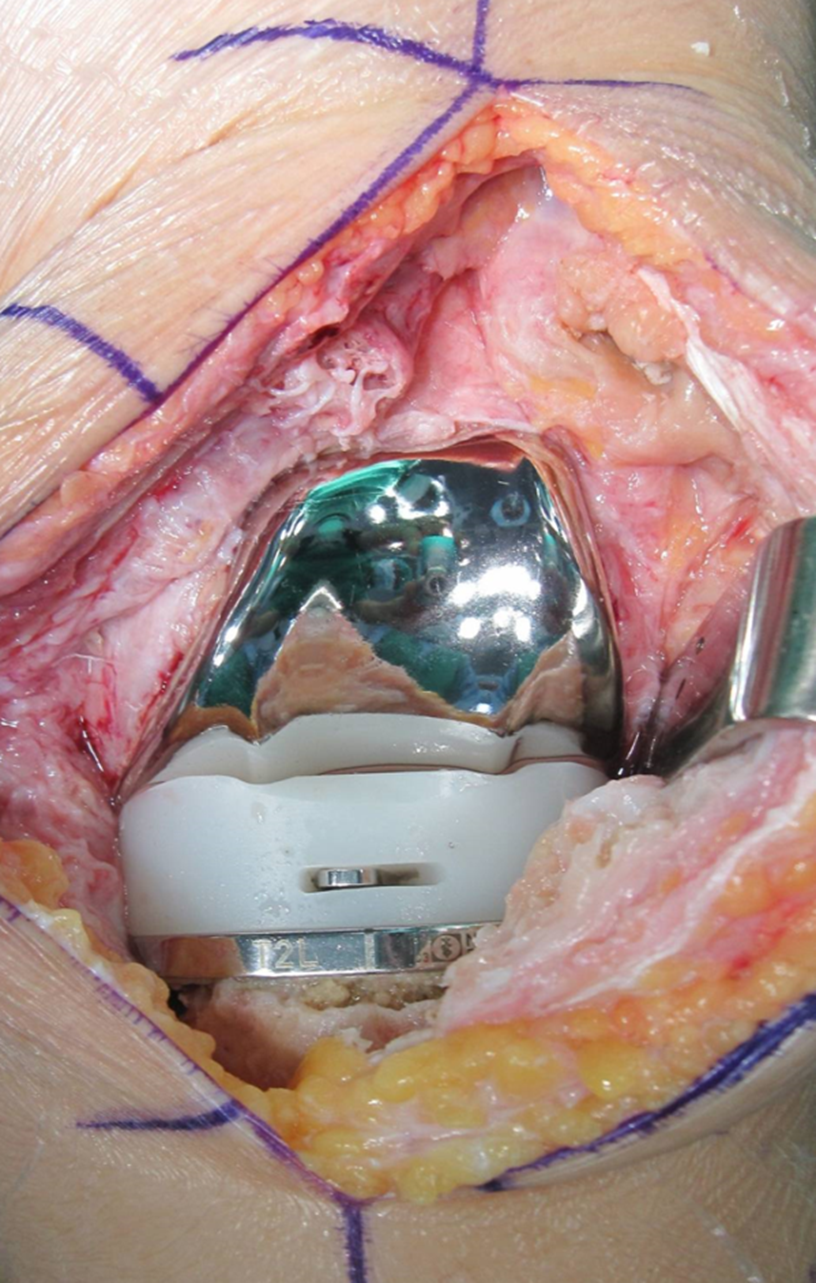
 and inferior (left) views of the polyethylene bearing showing the fracture line at posterolateral portion of bearing and failure of the locking ring)