Background: Anaesthesia and surgical care are essential for the treatment of many health-related conditions presenting in public and private health facilities. This study aimed to evaluate anaesthetic practices in registered private hospitals in the Port Harcourt Metropolis in the year 2025 with a view to improving and/or recommending minimum standards of care for maximum patient safety. Materials and Methods: A cross-sectional analytical study was conducted among registered private hospitals in Port-Harcourt, using questionnaire. Data was analysed with SPSS version 23. Descriptive statistics was presented as frequencies and percentages. Chi-square tests were used to explore associations, with statistical significance set at p < 0.05. Results: Out of the 163 hospitals 160 (98.2%) were registered, most hospitals (n = 121, 74.2%) had 20 beds and less, and 161 (98.8%) performed surgery. Less than half of the hospitals (n = 76, 46.6%) had anaesthetic machine, 161 hospitals (98.8%) had suction machines out of which 10 (6.1%) was non-functional. Airway management equipment was lacking in 60 (63.2%) facilities, oxygen was available in 160 (98.2%) facilities supplied mainly from cylinders (n = 121, 74.2%). Anaesthesia was administered predominantly by physician anaesthetists (93.3%) of which are only 56 (34.4%) hospitals had consultants present. Spinal anaesthesia was the most frequently performed anaesthetic technique reported in all the facilities (n = 163, 100%). Statistically significant relationship (P=0.000) was found between facilities with higher the number of surgeries done and availability of recovery room in the hospital. Conclusion: There were few large private hospitals, and a significant number of the facilities lacked some equipment and accessories needed for safe administration of anaesthesia. Deliberate action is needed by governmental and professional bodies for improvement.
Anaesthesia and surgical care are essential for the treatment of many health related conditions and they are an integral component of a functional, responsible and resilient health facility. 1, 2 An estimated 313 million surgeries are performed globally every year to alleviate disabilities and reduce the risk of death from some common health conditions, but developing countries account for only 6% of this volume. 3 These surgeries are facilitated by anaesthesia both in public and private health facilities. Anaesthesia as a medical discipline and profession is involved in perioperative patient care, critical care and acute chronic pain management. However, anaesthesia services are sometimes found to be severely deficient in resource limited countries due to poor infrastructure and equipment in the health facilities, scarcity of health personnel, poor renumeration and funding.
A global study showed that 5 billion people are unable to access safe surgical treatments. 3 This has resulted in the World Health Organization (WHO) calling on all member states to ensure that anaesthesia and surgery are properly prioritized within the overall context of the health system. 4 Anaesthesia provider is defined as any health worker providing anaesthetic care to patients irrespective of the level of training and supervision. This includes the physician anaesthetists and non-physician anaesthetists. The Physician Anaesthetists encompasses the consultants, senior registrars and registrars. The non-physician anaesthesia providers include the Nurse anaesthetists and anaesthesia technicians. The WFSA Global Anaesthesia Workforce survey of 2017 reported that at least 5 physician Anaesthetists per 100,000 population even in countries with limited resources will be effective in ensuring leadership of anaesthesia services and delivery of emergency and essential patient care. 5 However, a survey by Nnaji and Okoli showed 0.2 Physician Anaesthetists per 100,000 population working in the south Eastern part of Nigeria, 6 which is grossly below the WFSA recommendation.
Anaesthesia practice is evolving along with the modern world. Although it is generally known that anaesthesia seeks to ensure patients’ comfort and safety during surgical operations, global consensus statement on anaesthesia emphasizes safety, effectiveness, individualized care, patient-centeredness, empathetic care, ensuring optimal surgical conditions while enhancing patient outcomes. 7, 8 The goal of health care delivery in private health facilities apart from provision of standard services, is also profit driven. While acknowledging that there are challenges in anaesthesia care in low-income settings, 9, 10, 11 ensuring minimum standards would help to attain global best practices.
There have been reported incidents of anaesthesia-related morbidity and mortality in this subregion, 12, 13 as well as other low-income countries. 14 Recently however, there has been an upsurge of social media criticisms of surgical/anaesthetic care in private hospitals, with medicolegal issues in some cases as more patients become conscious of their rights.
There is a dearth of literature on anaesthetic management of patients in private hospitals in our region of practice, but the findings in a recent study on anaesthetic chart documentation in some private hospitals in Rivers State 17 raised some concern about other aspects of anaesthetic practices in private hospitals. This study therefore aims to evaluate anaesthetic practices in private hospitals in the Port Harcourt metropolis, with a view to improving and/or recommending minimum standards of care for maximum patient safety and also add to the existing literature on the subject.
Research Design: A descriptive cross-sectional study.
Study Area: The study area was Port-Harcourt metropolis, the Capital City of Rivers State, South-South Nigeria.
Study Setting: The study was carried out in registered private hospitals that provided medical and surgical services to individuals living within Port Harcourt City and its environs.
Study Population/Participants: The study population was from registered private hospitals in Port-Harcourt metropolis - being knowledgeable hospital staff. Inclusion criteria: registered private hospitals in Port-Harcourt metropolis. Exclusion criteria: Hospitals without the necessary details to complete the questionnaire.
Sample Size Determination: The sample size was determined using the Cochran’s formula for a descriptive cross-sectional study,  Substituting the values gave a sample size of 382. A non-response rate of 10% was factored in giving a total sample size of 386. Considering that the total number of registered private hospitals in Port-Harcourt is less than the total sample size, the correction factor will be applied using the formula Nf = n/1+n/N where Nf is the corrected sample size, n = sample size determined when the total population is > 10,000, N = size of the population from which the sample is to be selected. For the index study it is 283 hospitals. Substituting the values will give a sample size of 163 which was used for this study.
Sampling Method: A convenience sampling technique was applied.
Study Instrument: The study tool was a structured self-administered questionnaire with consent form administered to knowledgeable hospital staff. The questionnaire has six (6) sections: section A is the facility information, section B is Anaesthetic equipment, section C is administration of anaesthesia, section D is Anaesthesia technique, section E is information on recovery room area, section F is surgical safety checklist.
Data Collection: The private hospital owners usually have their meetings once in a month, we scheduled to join them in one of their meeting, at the meeting they were informed of the aims and objections of the study, and assisted to fill the questionnaires, those not available at the meeting were visited in their private hospitals.
Study Variables: The variables of interest were hospital facility characteristics, anaesthetic equipment, administration of anaesthesia, anaesthesia techniques, recovery room services and use of the WHO surgical safety checklist.
Research Ethics Statement: Ethical approval was obtained from the Association of Private Medical and Dental Practitioners, Rivers State Chapter. Informed consent was also obtained from the participant hospitals.
Bias: None
Data Analysis: Data from the questionnaires were cleaned and exported to Microsoft Excel version 16, analysed using SPSS version 25 (IBM Corporation, Armonk, New York, United States). Categorical data were presented in the form of frequencies and descriptive statistics (frequencies and percentages). Chi-square test analysis was performed to test for association between two categorical variables and their proportions (%) and to determine the level of statistical significance. An observation was said to be statistically significant if the p – value is ≤ 0.05.
Table 1 shows the status and capacity of private health facilities in Port Harcourt. A total of 163 hospitals were surveyed. Majority (n = 160, 98.2%) were registered with the Rivers State government. Most hospitals had less than 20 beds, with 69 (42.3%) representing a capacity of less than 10 beds and 52 (31.9%) between 10 and 20 beds. Almost all the facilities (n = 161, 98.8%) performed surgeries. Most of the hospitals (n = 112, 68.7%) had a single operating suite while 39 (23.9%) had two. Most facilities (n = 128, 78.5%) performed between 1 and 10 surgeries per month; 3 (1.8%) carried out over 40 surgeries monthly.
Table 2 shows availability of anaesthetic equipment in the private hospitals where surgeries are carried out. Seventy-six (46.6%) hospitals had anaesthetic machine while 87 (53.4%) did not have. Out of those who had anaesthetic machine, and 10 (6.1%) were not functional. One hundred and sixty-one hospitals (98.8%) had suction machines, out of which 141(86.5%) were electrical type and non-functional in 10 hospitals (6.1%). Sixty-nine hospitals (42.3%) had only one suctioning machine for the theatre, while 66 (40.5%) had 2. Patient monitors were available in 148 (90.8%) of these hospitals, most (63.8%) of which were multiparameter in type.
Table 3 shows that Less than half of the facilities had different types of airway management equipment. Airway management equipment was lacking in 36.8% of the facilities, and 35% of the facilities reported not having at all. There was availability of oxygen in 98.2% of the facilities supplied mainly from cylinders (74.2%). Few of the facilities (24.5%) reported having a resuscitation cart in the operating room.
Table 4 shows information administration of anaesthesia. Pre-anaesthetic reviews were carried out in 149 (91.4%) of facilities, although 134 (82.2%) were carried out on the day of surgery. About 41 (25.2%) facilities had anaesthetic charts in their operating rooms with just 44 (27%) of the facilities making use of the charts during surgery.

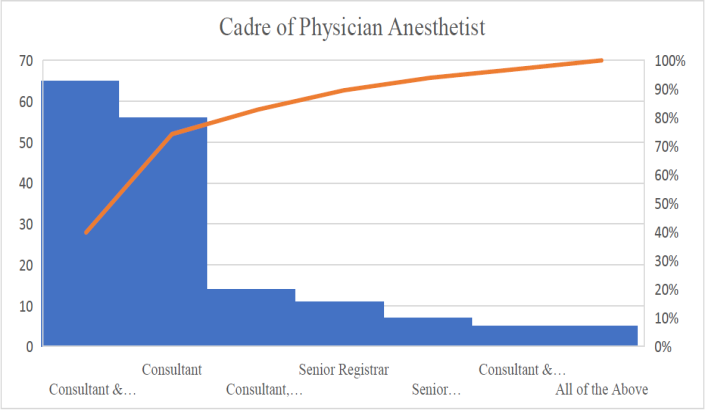
Figure 1 shows the cadre of physician anaesthetists who render anaesthetic services in the private health facilities. Consultants and senior registrars comprise 39.9%, consultant anaesthetist alone 34.4%, and senior registrars alone 6.7%.
Table 5 shows the types of anaesthetic techniques performed in the hospitals. Spinal anaesthesia was the most frequently performed anaesthetic technique reported in all the facilities (n = 163, 100%). This was followed by total intravenous anaesthesia (n = 147, 90.1%), epidural anaesthesia (n = 141, 86.5%), local infiltration (n = 120, 73.6%), general anaesthesia with endotracheal intubation (n = 117, 71.8%), general anaesthesia with facemask (n = 101, 62.0%). Other techniques were less commonly performed.
Table 6 provides information on recovery room area in the private hospitals. Only 66 (40.5%) of facilities reported having a recovery room among which only 48 (29.4%) had patient monitors, 62 (38%) had an oxygen source and 22 (13.5%) reported having a resuscitation cart. Patient monitoring in the recovery room was mainly done by the registered nurses (n = 46, 28.2%) with the medical officers rarely involved (n = 5, 3.1%).
Table 7 shows the use of surgical safety checklist. The knowledge of WHO surgical safety checklist was reported in 103 (63.2%) of facilities. However, only 8 (4.9%) used the checklist, while 106 (65%) admitted to never using it.
Table 8 shows the relationship between number of surgeries per month and availability of recovery room or area in the hospital. The higher the number of surgeries done in the hospital, the higher the possibility of having recovery room in the hospital and this relationship is statistically significant (P=0.000).
This study assessed the status of anaesthetic practice, availability of equipment, perioperative safety measures, and recovery facilities in private hospitals in Port Harcourt. The findings demonstrate significant deficiencies in infrastructure, equipment availability, airway management resources, documentation practices, recovery facilities, and implementation of surgical safety protocols despite widespread performance of surgical procedures in these facilities.
The majority of hospitals surveyed were registered with the Rivers State Government and actively performed surgeries. However, most facilities had low bed capacity and low monthly surgical volumes, suggesting that surgical care in private hospitals is largely delivered in small-scale centres. This finding is similar to observations from other low- and middle-income countries (LMICs), 17 where private hospitals often operate with limited infrastructure and resources while still providing a substantial proportion of surgical services. Limited facility capacity may affect perioperative preparedness, postoperative monitoring, and emergency response capabilities.
A major finding in this study was the inadequate availability of anaesthetic machines. More than half of the hospitals lacked anaesthetic machines, and some available machines were non-functional. Safe anaesthesia practice requires the availability of properly functioning anaesthetic workstations and monitoring devices. The World Health Organization (WHO) emphasizes that safe anaesthesia depends on minimum standards of equipment, trained personnel, and monitoring systems. 15 The absence of anaesthetic machines in many facilities may predispose patients to avoidable anaesthetic complications, especially during general anaesthesia requiring airway control and ventilation support. 8 Although suction machines and patient monitors were available in most facilities, the presence of equipment alone may not guarantee safe practice, particularly when functionality, maintenance, and adequacy are uncertain. Electricity is a challenge in LMIC, and although majority of the hospitals had electrical suction machines, only 8% had manual machines. Manual suction machines are necessary especially during critical times of change-over from national grid to generator, when surgeries are going on.
Multiparameter monitors constituted the commonest monitoring devices, which is encouraging because intraoperative monitoring is essential for patient safety. However, WHO guidelines recommend continuous monitoring during anaesthesia, especially pulse oximetry, blood pressure monitoring, and airway assessment. 15, Inadequate monitoring remains a recognized contributor to perioperative morbidity and mortality in resource-limited settings. 12
The study also revealed inadequate availability of airway management equipment. More than one-third of the facilities lacked airway equipment entirely, while only a few possessed a comprehensive airway management set including laryngoscopes, endotracheal tubes, and laryngeal mask airways. This finding is concerning because airway management is central to safe anaesthetic care. Difficult or failed airway management remains one of the leading causes of anaesthesia-related morbidity and mortality worldwide. The lack of airway devices in facilities where surgeries are routinely performed may place patients at significant perioperative risk. 10
Oxygen availability was reported in most facilities, mainly through cylinders rather than centralized pipeline systems. Dependence on oxygen cylinders may reflect infrastructural limitations common in many LMIC settings. 9, 12 While oxygen availability itself is encouraging, cylinder-based systems may be associated with interruptions in supply, transportation difficulties, and inadequate reserve capacity during emergencies. Similar findings have been reported in many African healthcare settings where oxygen delivery infrastructure remains poorly developed. 9, 16 Another important finding was the poor availability of resuscitation carts both in operating rooms and recovery areas. Only about one-quarter of operating rooms and an even smaller proportion of recovery rooms had resuscitation carts. This indicates poor preparedness for perioperative emergencies such as cardiac arrest, airway obstruction, severe hypotension, and anaphylaxis. Immediate access to emergency drugs and resuscitation equipment is an essential component of perioperative safety and forms part of recommended standards for safe surgery. 21
Pre-anaesthetic reviews were commonly conducted in most facilities; however, the majority were carried out on the day of surgery rather than prior to admission. Although preoperative assessment is an important component of anaesthetic care, same-day reviews may reduce adequate time for optimization of comorbidities, counselling, and risk stratification. Early pre-anaesthetic evaluation has been associated with improved perioperative planning and reduction in surgical cancellations. 9
Anaesthetic documentation practices were notably poor. Only a minority of facilities had anaesthetic charts available and even fewer routinely used them intraoperatively. Proper anaesthetic documentation is essential for continuity of care, medicolegal protection, audit, quality improvement, and postoperative management. Inadequate anaesthetic records may impair patient safety and limit institutional capacity for clinical audit and outcome evaluation. 10 Similar deficiencies in perioperative documentation have been reported in several low-resource healthcare settings. 17, 18 The findings in the study further showed that anaesthesia services were predominantly provided by physician anaesthetists, particularly consultants and senior registrars. This is a positive finding because physician-led anaesthesia care is generally associated with improved perioperative supervision and patient safety, but the noted poor documentation is worrisome in physician-led practice, and should be addressed. However, the high burden of surgical services on relatively few trained personnel may contribute to workforce strain and limit quality assurance in private facilities. This observation might be related to issues of known shortages in Physician anaesthetists in Nigeria, 19 and globally. 5, 20
Spinal anaesthesia was universally practiced and represented the most common anaesthetic technique. This finding likely reflects the relatively lower equipment requirement, cost-effectiveness, and widespread applicability of spinal anaesthesia for obstetric and lower abdominal procedures. Total intravenous anaesthesia and epidural anaesthesia were also commonly practiced. In contrast, advanced regional techniques such as nerve blocks and combined spinal epidural anaesthesia were rarely performed, likely due to limited expertise, equipment constraints, or lack of ultrasound guidance devices.
The study also demonstrated major deficiencies in postoperative recovery care. Less than half of the hospitals had recovery rooms, and among those available, many lacked patient monitors, oxygen supply, and resuscitation equipment. Recovery rooms play a critical role in early postoperative monitoring and identification of complications such as airway obstruction, hypoxia, haemodynamic instability, and delayed recovery from anaesthesia. Inadequate recovery facilities therefore pose substantial risks to patient safety. The finding that monitoring in recovery rooms was mainly performed by nurses aligns with standard perioperative practice; 20 however, the limited involvement of medical officers may reduce the capacity for prompt intervention during emergencies. This thinking aligns with the recommendations of a study on private hospitals carried out in the Northern Senatorial District of Taraba State Nigeria that advocated for upgrade of their facilities and bed capacity of the hospitals. 16
An important observation in this study was the poor implementation of the WHO Surgical Safety Checklist. Although knowledge of the checklist was relatively common, actual routine use was extremely low. This gap between awareness and practice has been documented in other low-resource settings 16, 18 and may result from poor institutional policies, lack of training, resistance to change, or inadequate supervision. The WHO Surgical Safety Checklist has been shown to reduce perioperative morbidity, mortality, surgical site infections, and reoperations by improving communication and adherence to safety protocols. 18, 21, 23 Therefore, the low utilization observed in this study suggests missed opportunities for improving patient safety in private hospitals.
Finally, the study demonstrated a statistically significant relationship between the number of surgeries performed monthly and the availability of recovery rooms. Hospitals with higher surgical volumes were more likely to have recovery facilities, suggesting that increasing surgical workload may drive investment in perioperative infrastructure. This finding may also indicate that larger or busier facilities are more likely to recognize the importance of postoperative monitoring and perioperative safety systems.
Overall, the findings of this study highlight substantial gaps in perioperative infrastructure, equipment availability, emergency preparedness, documentation, recovery care, and safety practices in private hospitals in Port Harcourt. Strengthening regulation, improving equipment standards, expanding perioperative training, and enforcing the implementation of surgical safety protocols are essential steps toward improving the quality and safety of anaesthetic practice in these facilities.
The limitation of this study is that it mainly assessed the availability of equipment and reported practices rather than direct observation of anaesthetic procedures and perioperative care. Therefore, actual compliance with standard anaesthetic and safety protocols could not be independently verified. The study did not also evaluate perioperative morbidity, mortality, or patient satisfaction outcomes, thus, the direct clinical impact of the identified deficiencies on patient care could not be determined.
We thus recommend, that the Rivers State Ministry of Health and relevant regulatory bodies should strengthen inspection and accreditation processes for private hospitals to ensure compliance with minimum standards for anaesthetic practice, equipment availability, and perioperative safety. Private hospitals should be encouraged and mandated to procure essential anaesthetic equipment, including functional anaesthetic machines, airway management devices, patient monitors, suction machines (manual and electric), and resuscitation carts in accordance with internationally recommended standards. Physician anaesthetists providing anaesthesia care in these facilities should also insist on minimum standards
This study demonstrated that although most private hospitals in Port Harcourt actively perform surgical procedures with anaesthesia provided largely by physician anaesthetists, significant deficiencies exist in perioperative infrastructure, anaesthetic equipment availability, emergency preparedness, recovery room facilities, documentation practices, and implementation of surgical safety measures. Overall, the study highlights important patient safety concerns and underscores the need for improved regulation, better provision of essential anaesthetic equipment, enhanced perioperative training, standardized documentation, and strict implementation of international surgical safety protocols in private health facilities. Addressing these gaps will contribute significantly to improving the quality and safety of anaesthetic and surgical care in private hospitals in Port Harcourt and similar resource-limited settings.
Acknowledgement: The authors acknowledge the contributions of the Association of Private Medical and Dental Practitioners, Rivers State Chapter, and the Ministry of Health, Rivers State, for granting permission that facilitated the conduct of this research.
Source of Funding: The study was self-funded by the authors.
Conflict of Interest: None
| [1] | DeVries CR, Price RR. Global surgery and public health: a new paradigm: Jones & Bartlett Publishers; 2012. | ||
| In article | |||
| [2] | Farmer PE, Kim JY. Surgery and global health: a view from beyond the OR. World journal of surgery. 2008; 32(4): 533-6. | ||
| In article | View Article PubMed | ||
| [3] | Meara JG, Leather AJ, Hagander L, Alkire BC, Alonso N, Ameh EA, et al. Global Surgery 2030: evidence and solutions for achieving health, welfare, and economic development. The lancet. 2015; 386(9993): 569-624. | ||
| In article | View Article PubMed | ||
| [4] | Assembly WH. Strengthening emergency and essential surgical care and anaesthesia as a component of universal health coverage. WHA Geneva; 2015. | ||
| In article | |||
| [5] | Kempthorne P, Morriss WW, Mellin-Olsen J, Gore-Booth J. The WFSA global anaesthesia workforce survey. Anaesthesia & Analgesia. 2017; 125(3): 981-90. | ||
| In article | View Article PubMed | ||
| [6] | Chimaobi Tim Nnaji CEO. The Evaluation of Anaesthesia Workforce Capacity, An Index of Safe Perioperative Care in the South-Eastern Nigeria. Journal of Anaesthesia & Clinical Research. 2023; 14(1): 1-7. | ||
| In article | |||
| [7] | Berger-Estilita J, Meco BC, DeRobertis E, Buhre W, Kirkegard P, Jakobsen K, et al. The definition and aims of Anaesthesia: a Delphi-based consensus statement. Anaesthesia Critical Care & Pain Medicine. 2025: 101614. | ||
| In article | View Article PubMed | ||
| [8] | Dobson G, Filteau L, Fuda G, McIntyre I, Milne AD, Milkovich R, et al. Guidelines to the Practice of Anaesthesia–Revised Edition 2022. Canadian Journal of Anaesthesia/Journal canadien d'anesthésie. 2022; 69(1): 24-61. | ||
| In article | View Article PubMed | ||
| [9] | Khan FA, Merry AF. Improving anaesthesia safety in low-resource settings. Anaesthesia & Analgesia. 2018; 126(4): 1312-20. | ||
| In article | View Article PubMed | ||
| [10] | Epiu I, Tindimwebwa JVB, Mijumbi C, Chokwe TM, Lugazia E, Ndarugirire F, et al. Challenges of anaesthesia in low-and middle-income countries: a cross-sectional survey of access to safe obstetric anaesthesia in East Africa. Anaesthesia & Analgesia. 2017; 124(1): 290-9. | ||
| In article | View Article PubMed | ||
| [11] | Ariyo P, Trelles M, Helmand R, Amir Y, Hassani GH, Mftavyanka J, et al. Providing anaesthesia care in resource-limited settings. Anaesthesiology. 2016; 124(3): 561-9. | ||
| In article | View Article PubMed | ||
| [12] | Ogbuanya A, Nnadozie U, Enemuo V, Ewah R, Boladuro E, Owusi O. Perioperative mortality among surgical patients in a low-resource setting: A multi-centre study at District hospitals in Southeast Nigeria. Nigerian Journal of Clinical Practice. 2022; 25(7): 1004-13. | ||
| In article | View Article PubMed | ||
| [13] | Ogunbiyi A, Mato C. Anaesthetic accidents: an experience in sub-Saharan Africa. Southern African Journal of Anaesthesia and Analgesia. 2006; 12(3): 111-3. | ||
| In article | View Article | ||
| [14] | Tao K-m, Sokha S, Yuan H-b. The challenge of safe anaesthesia in developing countries: defining the problems in a medical centre in Cambodia. BMC health services research. 2020; 20(1): 204. | ||
| In article | View Article PubMed | ||
| [15] | World Health Organization. Safe surgery saves lives [Internet]. Geneva: WHO; 2008 [cited 2026 May 24]. Available from: WHO Safe Surgery. | ||
| In article | |||
| [16] | Abdullahi IM, Joseph AO, Peter JO, Vincent N. Classification of private hospitals in Northern Senatorial District of Taraba State, Nigeria. . MOJ Eco Environ Sci. 2022; 7(4): 142-52. | ||
| In article | View Article | ||
| [17] | Uwandu C.B, Hart F, Mato C.N. Audit of anaesthetic chart documentation in private hospitals in Port Harcourt, Rivers State, Nigeria. International journal of science and research archive, 2025, 15 (1), 98-104. | ||
| In article | View Article | ||
| [18] | Otokwala J, Ekeke O. Surgical safety checklist compliance in a private hospital setting: A study from Port Harcourt, Nigeria. GAS Journal of Clinical Medicine and Medical Research. 2025; 2(3): 115-9. | ||
| In article | |||
| [19] | Onajin-Obembe BOI. Analysis of physician anaesthesia workforce crisis in Nigeria: an insider’s action research. Paris, France: The International School of Management; 2020. | ||
| In article | |||
| [20] | Law TL, MS; Morriss, W; Gelb, AW; Mellin-Olsen, J; Filipescu, D; Rowles, J; Rod, P; Khan, F; Yazbeck, P; Zoumenou, E.. The Global Anaesthesia Workforce Survey: Updates and Trends in the Anaesthesia Workforce. Anaesthesia & Analgesia. 2024; 139(1): 15-24. | ||
| In article | View Article PubMed | ||
| [21] | World Health Organization. Safe surgery: tools and resources [Internet]. Geneva: WHO; [cited 2026 May 24]. Available from: WHO Surgical Safety Checklist Resources. | ||
| In article | |||
| [22] | Bielka K, Kuchyn I, Frank M, Sirenko I, Kashchii U, Yurovich A, et al. WHO Surgical Safety Checklist and Anaesthesia Equipment Checklist efficacy in war-affected low-resource settings: a prospective two-arm multicentre study. Anaesthesiol Intensive Ther. 2023; 55(4): 291-296. | ||
| In article | View Article PubMed | ||
| [23] | The WHO Surgical Safety Checklist: A review of outcomes and implementation strategies. Perioper Care Oper Room Manag. 2020; 21: 100117. | ||
| In article | View Article | ||
Published with license by Science and Education Publishing, Copyright © 2026 Christie Nwidum Mato, Chinedu Paul Iwuoha, Damian Uchechukwu Onah, Fiekabo Hart, Chigozie Benedeth Uwandu, Vernatius Chibueze Aniobi, Endurance Oghenemaro Aguwe, Bolaji Majeed Mabadeje, Ayanate Oruobu-Nwogu, Benson Onyeka Ezeobika and Rex Friday Ogoronta Alderton Ijah
 This work is licensed under a Creative Commons Attribution 4.0 International License. To view a copy of this license, visit
http://creativecommons.org/licenses/by/4.0/
This work is licensed under a Creative Commons Attribution 4.0 International License. To view a copy of this license, visit
http://creativecommons.org/licenses/by/4.0/
| [1] | DeVries CR, Price RR. Global surgery and public health: a new paradigm: Jones & Bartlett Publishers; 2012. | ||
| In article | |||
| [2] | Farmer PE, Kim JY. Surgery and global health: a view from beyond the OR. World journal of surgery. 2008; 32(4): 533-6. | ||
| In article | View Article PubMed | ||
| [3] | Meara JG, Leather AJ, Hagander L, Alkire BC, Alonso N, Ameh EA, et al. Global Surgery 2030: evidence and solutions for achieving health, welfare, and economic development. The lancet. 2015; 386(9993): 569-624. | ||
| In article | View Article PubMed | ||
| [4] | Assembly WH. Strengthening emergency and essential surgical care and anaesthesia as a component of universal health coverage. WHA Geneva; 2015. | ||
| In article | |||
| [5] | Kempthorne P, Morriss WW, Mellin-Olsen J, Gore-Booth J. The WFSA global anaesthesia workforce survey. Anaesthesia & Analgesia. 2017; 125(3): 981-90. | ||
| In article | View Article PubMed | ||
| [6] | Chimaobi Tim Nnaji CEO. The Evaluation of Anaesthesia Workforce Capacity, An Index of Safe Perioperative Care in the South-Eastern Nigeria. Journal of Anaesthesia & Clinical Research. 2023; 14(1): 1-7. | ||
| In article | |||
| [7] | Berger-Estilita J, Meco BC, DeRobertis E, Buhre W, Kirkegard P, Jakobsen K, et al. The definition and aims of Anaesthesia: a Delphi-based consensus statement. Anaesthesia Critical Care & Pain Medicine. 2025: 101614. | ||
| In article | View Article PubMed | ||
| [8] | Dobson G, Filteau L, Fuda G, McIntyre I, Milne AD, Milkovich R, et al. Guidelines to the Practice of Anaesthesia–Revised Edition 2022. Canadian Journal of Anaesthesia/Journal canadien d'anesthésie. 2022; 69(1): 24-61. | ||
| In article | View Article PubMed | ||
| [9] | Khan FA, Merry AF. Improving anaesthesia safety in low-resource settings. Anaesthesia & Analgesia. 2018; 126(4): 1312-20. | ||
| In article | View Article PubMed | ||
| [10] | Epiu I, Tindimwebwa JVB, Mijumbi C, Chokwe TM, Lugazia E, Ndarugirire F, et al. Challenges of anaesthesia in low-and middle-income countries: a cross-sectional survey of access to safe obstetric anaesthesia in East Africa. Anaesthesia & Analgesia. 2017; 124(1): 290-9. | ||
| In article | View Article PubMed | ||
| [11] | Ariyo P, Trelles M, Helmand R, Amir Y, Hassani GH, Mftavyanka J, et al. Providing anaesthesia care in resource-limited settings. Anaesthesiology. 2016; 124(3): 561-9. | ||
| In article | View Article PubMed | ||
| [12] | Ogbuanya A, Nnadozie U, Enemuo V, Ewah R, Boladuro E, Owusi O. Perioperative mortality among surgical patients in a low-resource setting: A multi-centre study at District hospitals in Southeast Nigeria. Nigerian Journal of Clinical Practice. 2022; 25(7): 1004-13. | ||
| In article | View Article PubMed | ||
| [13] | Ogunbiyi A, Mato C. Anaesthetic accidents: an experience in sub-Saharan Africa. Southern African Journal of Anaesthesia and Analgesia. 2006; 12(3): 111-3. | ||
| In article | View Article | ||
| [14] | Tao K-m, Sokha S, Yuan H-b. The challenge of safe anaesthesia in developing countries: defining the problems in a medical centre in Cambodia. BMC health services research. 2020; 20(1): 204. | ||
| In article | View Article PubMed | ||
| [15] | World Health Organization. Safe surgery saves lives [Internet]. Geneva: WHO; 2008 [cited 2026 May 24]. Available from: WHO Safe Surgery. | ||
| In article | |||
| [16] | Abdullahi IM, Joseph AO, Peter JO, Vincent N. Classification of private hospitals in Northern Senatorial District of Taraba State, Nigeria. . MOJ Eco Environ Sci. 2022; 7(4): 142-52. | ||
| In article | View Article | ||
| [17] | Uwandu C.B, Hart F, Mato C.N. Audit of anaesthetic chart documentation in private hospitals in Port Harcourt, Rivers State, Nigeria. International journal of science and research archive, 2025, 15 (1), 98-104. | ||
| In article | View Article | ||
| [18] | Otokwala J, Ekeke O. Surgical safety checklist compliance in a private hospital setting: A study from Port Harcourt, Nigeria. GAS Journal of Clinical Medicine and Medical Research. 2025; 2(3): 115-9. | ||
| In article | |||
| [19] | Onajin-Obembe BOI. Analysis of physician anaesthesia workforce crisis in Nigeria: an insider’s action research. Paris, France: The International School of Management; 2020. | ||
| In article | |||
| [20] | Law TL, MS; Morriss, W; Gelb, AW; Mellin-Olsen, J; Filipescu, D; Rowles, J; Rod, P; Khan, F; Yazbeck, P; Zoumenou, E.. The Global Anaesthesia Workforce Survey: Updates and Trends in the Anaesthesia Workforce. Anaesthesia & Analgesia. 2024; 139(1): 15-24. | ||
| In article | View Article PubMed | ||
| [21] | World Health Organization. Safe surgery: tools and resources [Internet]. Geneva: WHO; [cited 2026 May 24]. Available from: WHO Surgical Safety Checklist Resources. | ||
| In article | |||
| [22] | Bielka K, Kuchyn I, Frank M, Sirenko I, Kashchii U, Yurovich A, et al. WHO Surgical Safety Checklist and Anaesthesia Equipment Checklist efficacy in war-affected low-resource settings: a prospective two-arm multicentre study. Anaesthesiol Intensive Ther. 2023; 55(4): 291-296. | ||
| In article | View Article PubMed | ||
| [23] | The WHO Surgical Safety Checklist: A review of outcomes and implementation strategies. Perioper Care Oper Room Manag. 2020; 21: 100117. | ||
| In article | View Article | ||