Saccharum officinarum L. (Poaceae) is a plant used in traditional medicine to treat high blood pressure. In order to provide a scientific basis, this study was undertaken. Thus, we carried out a study of the antioxidant activity and pharmacological tests on the leaves aqueous extract of Saccharum officinarum L. (Poaceae). The DPPH test showed that Esol contains antioxidants with an IC50 of 0.5211 mg/mL. Pharmacological effects showed that Esol induced dose-dependent hypotension at doses ranging from 1 mg/kg B.W. to 20 mg/kg B.W., with a 50% Effective Dose of 5.17 mg/kg B.W. Interactions between the extract and pharmacological substances revealed that atropine had no significant effect (p > 0.05) on Esol-induced hypotension. The extract significantly reduced and cancelled (p < 0.01; p < 0.001) adrenaline and Isoprenalin-induced hypertension by 88.7 ± 6% and 81.88 ± 4.5% respectively, followed by hypotension of 46.9 ± 3.1% and 43.3±2.6%. These results justify the use of Saccharum officinarum in the treatment in cardiovascular disorders.
High blood pressure (hypertension) can cause strokes, myocardial infarction and other cardiovascular damage. More than a quarter of the world's adult population (26.4%) is affected, and this proportion is expected to rise to 29.2% by 2025, ether nearly 1.6 billion hypertensive subjects 1. However, a significant proportion of the world's population continues to use traditional rather than synthetic medicines for primary health care 2. With this in mind, the WHO is encouraging research into new bioactive compounds, particularly in Africa 3. In this context, a number of medicinal plants have been the subject of scientific studies. These include Bridelia ferruginae 4 and Mimosa Invisa 5, whose antihypertensive properties have been demonstrated. In our case, we were interested in the leaves of Saccharum officinarum L. (Poaceae). This plant is used in traditional medicine in Ivory Coast for the treatment of hypertension 6. The decoction of leaves is also used as a diuretic in Madagascar 7. The aqueous extract of this plant has already been the subject of numerous studies on diuretic activity. Indeed, his diuretic 8 and salidiuretic effects have been demonstrated, with a mechanism of action similar to that of aldactone while sparing potassium 9.
The present study investigates the hypotensive and antihypertensive effect of the leaves aqueous extract of Saccharum officinarum on hypertension induced by adrenaline and Isoprenalin in rabbits.
Material
Plant
The plant consists of Saccharium officinarum L. (Poaceae) leaves harvested in the town of Bonoua in Ekresinville in November 2023. They were identified in the Floristic National Center (FNC) at Felix HOUPHOUET-BOIGNY University(Cocody-Abidjan), in comparison with the herbarium n°4099 of this center.
Animal
The rabbits used belong to the species Oryctolaguscuniculus (Leporidae). They come from different breeding farms in Abidjan (Ivory Coast). They were acclimatized for a week in the animal house of the Felix HOUPHOUET-BOIGNY University, so that they had the same rearing conditions to regulate and harmonize their physiological states before the experiments. Only rabbits weighing 2 kg or more are used for pharmacological tests.
This study is conducted in accordance with the European directives of November 24, 1986 (86/609/EEC) and decree of April 19, 1988 on animal experiments in research 10.
Physiological and pharmacological substances
As physiological solution, we used NaCl 9 ‰ for testing and for dissolving and diluting the extract and pharmacological substances. The pharmacological substances used in this work are HeparinChoay (5000 IU) (Sanofi, France) an anticoagulant. Thiopental Inresa (Neon Laboratory Limited, India) for animal anesthesia. Atropine and Adrenaline (FLUKA, Germany) a cholinergic antagonist and a hypertensive agent respectively.
Preparation of the leaves aqueous extract of Saccharum officinarum L. (Poaceae)
Dried Saccharum officinarum L. (Poaceae) leaves are ground into small pieces using a type mill at the pharmaceutical and biological sciences laboratory of the Felix HOUPHOUET-BOIGNY University. The powder obtained is taken to 250 g and boiled in 5000 mL of distilled water for 30 minutes. The resulting homogenate is filtered through poplin cloth, then absorbent cotton and finally Whattman filter paper. The filtrate is dried in a Med center venticell oven at 40°C for 72 hours, to obtain the dry extract we call Esol, which is stored at 4°C.
Evaluation of the in vitro antioxidant activity of leaves aqueous extract of Saccharum officinarum L. (Poaceae) by 1,1-diphenyl-2-Picrylhydrazyl (DPPH)
The method used is that of Blois 11 with little modifications. DPPH is solubilized in absolute ethanol to obtain a solution with a concentration of 0.03 mg/mL. Different concentration ranges (2 mg/mL; 1 mg/mL; 0.5 mg/mL; 0.25 mg/mL; 0.125 mg/mL; 0.0625 mg/mL and 0.03125 mg/mL) of the extract are prepared with ethanol (70%). 1 mL extract solution and 2 mL DPPH solution are added to dry, sterile tubes. After shaking, the tubes are placed in a dark place for 30 min. The absorbance of the mixture is measured at 517 nm against a blank consisting of (2 mL DPPH solution + 1 mL ethanol (70%)).
Ascorbic acid (vitamin C) is used as the positive control.
The percentage of DPPH inhibition is calculated according to the formula:
 |
Ae: Absorbance of sample
Ab: Absorbance of blank
Pharmacological study of the leaves aqueous extract of Saccharum officinarum on rabbit blood pressure
Animal preparation
The study of blood pressure in rabbits is carried out according to the method described in the work of Abo 12. The rabbit is anesthetized with 0.5 mL thiopental sodium at a concentration of 10-1 g/L. The saphenous vein is catheterized to inject the various substances. A carotid artery is then intubated and connected to the Ludwig kymograph to record blood pressure variations on paper.
Study of the dose-response effects of leaves aqueous extract of Saccharum Officinarum L. (Poaceae) on blood pressure
The study of the dose-response effect of Esol on blood pressure was carried out with increasing and cumulative doses of this extract. Doses ranging from 1 to 20 mg/kg B.W. were injected into rabbits at 10 min intervals. The volume injected was 0.5 mL, applied to the saphenous vein, and variations in arterial pressure were recorded on paper.
Study of the interaction of leaves aqueous extract of Saccharum officinarum L. (Poaceae) and atropine on blood pressure.
This study was carried out under the same conditions as the previous one. Only, in this study, an effective dose of leaves aqueous extract of Saccharum officinarum is preceded by increasing doses of atropine. Atropine doses of 5 10-7, 5 10-5 and 5 10-3 mg/kg B.W. are administered 5 seconds, 0.5 mL before the extract.
Antihypertensive study of the dose-response effect of leaves aqueous extract of Saccharum officinarum L. (Poaceae) on blood pressure
This study was carried out using two approaches. In the first study, an adrenaline dose of 5 10-4 mg/kg B.W. was pre-administered before increasing doses of the extract. Esol doses ranging from 1 to 20 mg/kg B.W. were injected 5 seconds after the adrenaline dose.
In another study, a mixture of escalating doses of leaves aqueous extract of Saccharum officinarum is mixed with the adrenaline dose of 5 10-4 mg/kg B.W. The resulting solution is then injected into rabbits in 0.5 mL doses.
Study of the interaction of leaves aqueous extract of Saccharum officinarum L. (Poaceae) with Isoprenalin on blood pressure
This study is carried out by preparing a mixture of increasing doses of Esol with the Isoprenalin dose of 5 10-6 mg/kg B.W. The solution obtained is then injected into rabbits at a rate of 0.5 mL.
Statistical analysis
The results are analyzed using the Tukey-Kramer multiple comparison Anova variance analysis. With the Graph Pad Instat computer program (San Diego CA USA). Values are presented as the mean, followed by the error of the mean (M ± ESM). The difference between two values is considered significant for P < 0.05. Graph Pad Prism software version 5.01 (San Diego CA USA) was used to plot the graphs, and to construct the antioxidant activity curves with XY reference curves. Blood pressure curves were constructed on Colum and (XY) format.
Antioxidant activity of leaves aqueous extract of Saccharum officinarum L. (Poaceae)
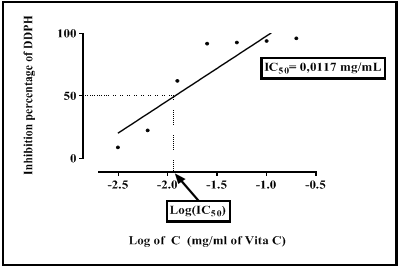
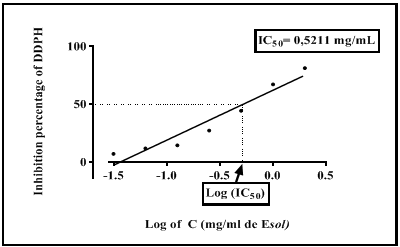
Tests on the antioxidant activity of leaves aqueous extract of Saccharum officinarum L. (Poaceae) (Esol) and vitamin C revealed that both substances reduce DPPH free radical molecules. The Inhibitory Concentrations (50%) obtained were 0.5211 mg/mL for Esol and 0.0117 mg/mL for vitamin C respectively.
Figure 1 and Figure2 show the inhibitions obtained with vitamin C and the leaves aqueous extract of Saccharum officinarum L.(Poaceae).


Pharmacological effect of leaves aqueous extract of Saccharum officinarum L. (Poaceae) on Blood Pressure
Dose-response effect of leaves aqueous extract of Saccharum officinarum L. (Poaceae) on blood pressure in rabbits.
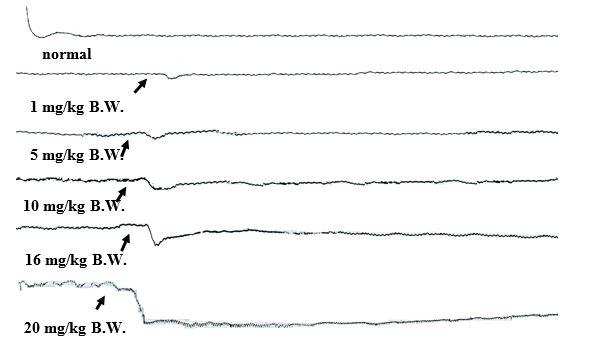
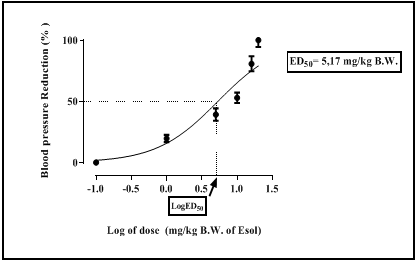
In this series of experiments, the mean value of the normal arterial pressure of the rabbits used was 112.8 ± 17 mmHg. It appears that the extract administered in increasing doses from 1 to 20 mg/ kg B. W induces a drop in normal arterial pressure. For doses ranging from 1 to 20 mg/kg B.W., Esol induces a dose-dependent hypotension
arterial. Reducing in arterial pressure ranged from 1.7 ± 0.2 (p < 0.05) to 40.3 ± 3.20% (p < 0.001) compared with normal arterial blood pressure in rabbits, and these effects of Esol were completely reversible within 4 minutes of injection of this extract.
Figure 3 shows the effects of cumulative doses of Esol on rabbit blood pressure. The different mean values obtained after several experiments were used to plot the decrease in blood pressure as a function of the dose of Esol administered (Figure 4). The 50% Effective Dose of Esol obtained from this graph is 5.17 mg/kg B.W.
Effect of leaves aqueous extract of Saccharum officinarum L. (Poaceae) on rabbit blood pressure in the presence of atropine
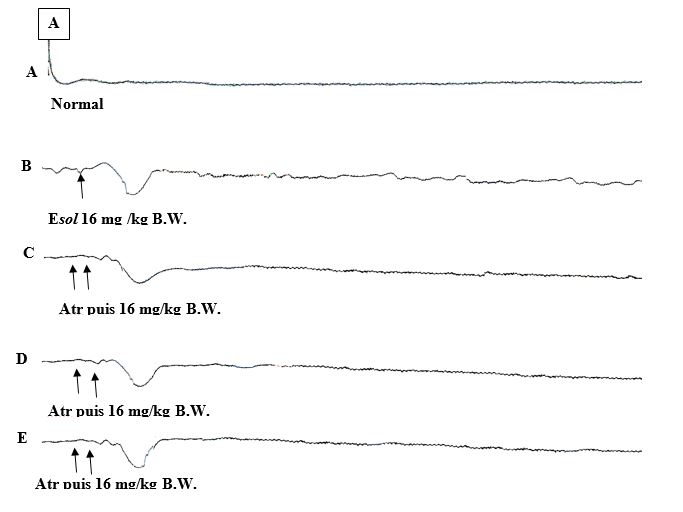
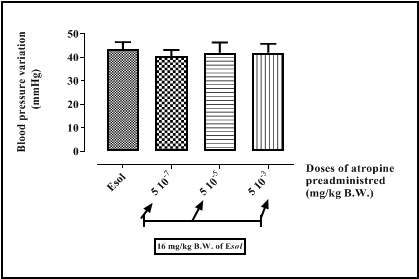
Figure 5-A shows the effect of Esol-atropine interaction on rabbit blood pressure. In this study, it appears that atropine has no significant effect (p > 0.05) on the hypotension induced by Esol at a dose of 16 mg/kg B.W. Indeed, the dose of 16 mg/kg B.W. induces a hypotension of 33.72 ± 6.1% When this dose of Esol is administered after increasing doses of atropine of 5 .10-7, 5 .10-5 and 5 .10-3 mg/kg B.W., the induced hypotension is 34.3 ± 5.6; 34.8 ± 4.8; 33.54 ± 3.3% respectively (Figure 5-B).


C to E: Recording of atropine interaction (5.10-7; 5.10-5 and 5.10-3 mg/kg B.W.) with Esol
Dose-response effect of leaves aqueous extract of Saccharum officinarum L. (Poaceae) on Adrenalin-induced blood pressure elevation in rabbits
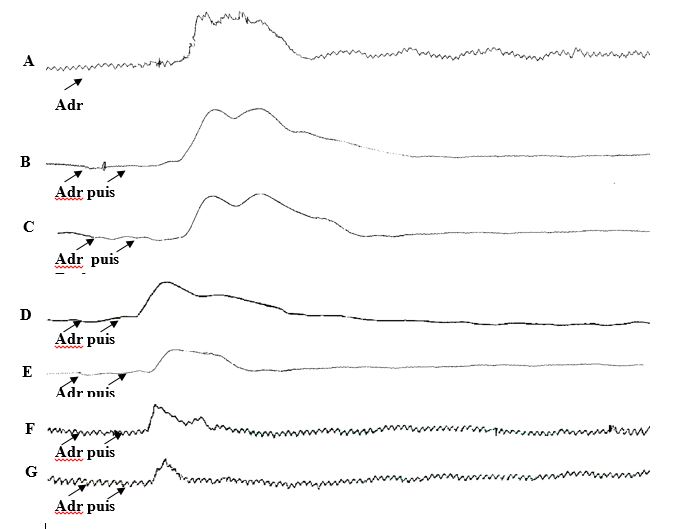
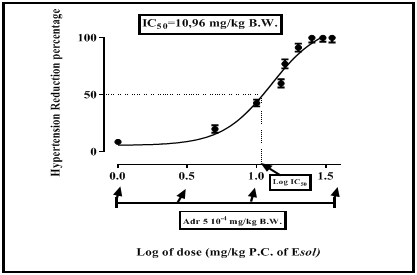
Figure 6 shows the dose-response recording of the interaction of Esol with a single dose of Adrenalin on blood pressure. The mean value of normal arterial pressure in rabbits was 105 ± 3.1 mmHg (n=3). A single dose of Adrenalin at 5.10-4 mg/kg B.W. induced a hypertension of 35 ± 4.6 mmHg. When this dose of adrenalin was followed 10 seconds later by increasing doses of Esol from 1 to 20 mg/kg B.W., the induced hypertension was significantly reduced (p < 0.001) from 8.75± 3.5 to 91.42 ± 4.2%. The Esol dose that inhibited 50% of the hypertension induced by 5.10-4 mg/kg B.W. was 10.96 mg/kg B.W. (Figure 7).

Effect of a combination of Adr + Esol on rabbit blood pressure
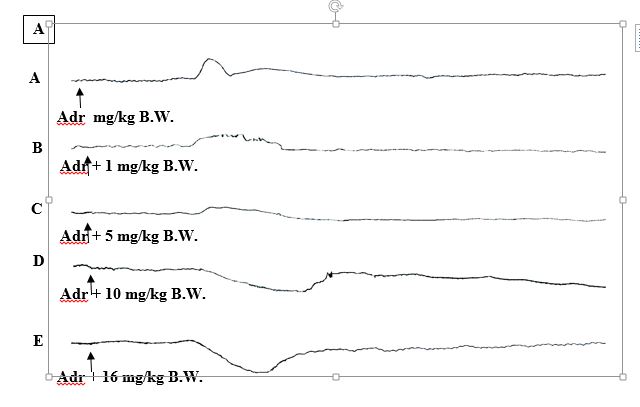
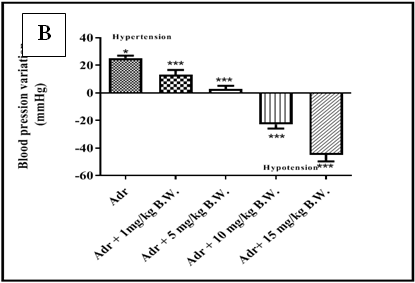
In this study, the effect of Adrenalin at 5.10-4 mg/kg B.W. alone caused arterial hypertension of 30.7±4.5 mmHg (n = 3). When this dose of adrenalin was combined with different doses of Esol 1 and 5 mg/kg B.W., arterial hypertension was significantly reduced (p < 0.05; p < 0.01) by 38.4±3.5 and 88.7±6%. On the other hand, when the adrenaline dose was combined with the extract doses of 10 and 16 mg/kg B.W., significant hypotension (p<0.01; p < 0.001) of 22.5 ± 4.4% and 46.9 ± 3.1% was observed compared with hypertension induced by adrenaline alone (Figure 8-A and 8-B).

A: Recording of adrenaline at 5.10-4 mg/kg B.W.
B to G: Recording of adrenaline at 5.10-4 mg/kg B.W. followed by increasing doses of Esol (1;5;10;15;16;20 mg/kg B.W.).


A: Recording of adrenaline alone at 5.10--4 mg/kg B.W.
B to E: Recording of the combination of Esol (1; 5; 10 and 16 mg/kg B.W.) and adr at 5.10--4 mg/kg B.W.

Effect of combining leaves aqueous extract of Saccharum officinarum L. (Poaceae) with Isoprenalin on rabbit blood pressure
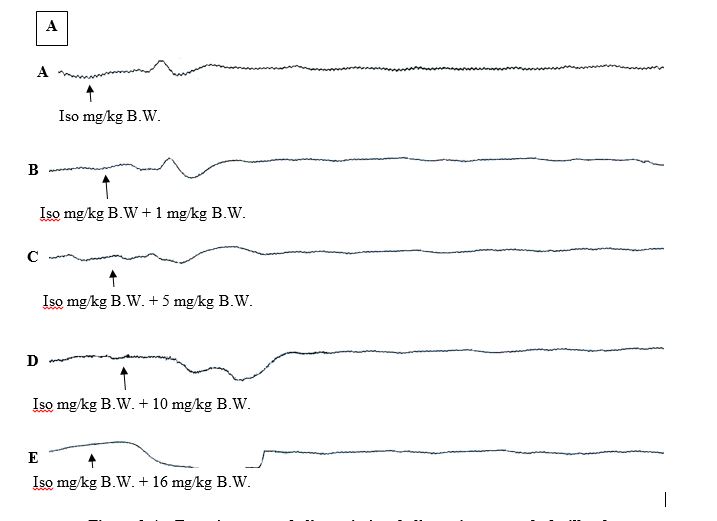
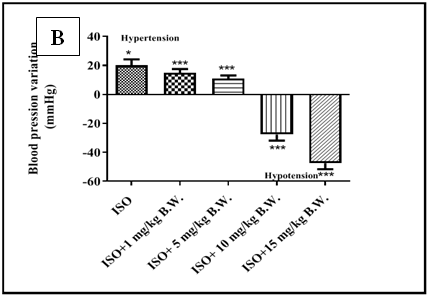
Figure 9-A shows the effect of Esol in combination with a dose of Isoprenalinon rabbit blood pressure. When Isoprenalin 5.10-6 mg/kg B.W. is administered alone, it induces an arterial hypertension of 18 ± 3.5 mmHg. When this dose is combined with Esol doses of 1 and 5 mg/kg B.W., Isoprenalin-induced hypertension is significantly reduced (p < 0.01; p < 0.001) by 32.22±3.8% and 81.88±4.5%. In combination, with Esol doses of 10 and 16 mg/kg B.W., there was a significant (p < 0.01; p < 0.001) dose-dependent hypotension of 27.4±3.8% and 43.3±2.6% compared with Isoprenalin-induced hypertension (Figure 9-B).

A: Recording of Isoprenaline alone at 5.10-6 mg/kg B.W.
B to E: Recording of the combination of Esol (1; 5; 10 and 16 mg/kg B.W.) and isoprenaline at 5.10-6 mg/kg B.W.
In the present study, several tests were carried out to evaluate the antihypertensive effect of the leaves aqueous extract of Saccharum officinarum L. (Poaceae) (Esol).
The DPPH test gave Esol an IC50 of 0.5211 mg/mL, compared with 0.0117 mg/mL for Vitamin C. The results show that Esol's antioxidant power remains low. Indeed, the lower the IC50 value, the greater the antioxidant activity of a compound 13. The antioxidant activity of Saccharum officinarum L. (Poaceae) leaves is similar to that of Zygophyllum album L. (zygophylaceae) extract, with an IC50 value of 0.247 mg/ml 14. Esol's antioxidant activity on DPPH radicals is due to the flavonoids and polyphenols highlighted in previous tests 9. This activity is at the basic of its traditional therapeutic use in a variety of ailments. Indeed, the high antioxidant activity of plants is thought to contribute to their various therapeutic activities. Antioxidants protect the cardiovascular system by preventing the oxidation of fats. This process reduces the amount of bad cholesterol or LDL in the blood 15. The pharmacological effects of Esol applied to rabbit blood pressure have shown that it induces a dose-dependent hypotension for doses between 1 mg/kg B.P. and 20 mg/kg B.W. This hypotension is comparable to that induced by Acetylcholine (Ach) on rabbit blood pressure obtained by Belemtougri 16. Indeed, intravenous injection of Ach induces an immediate drop in blood pressure due to cardiac slowing and vasodilation 17. This would indicate that Esol may contain cholinomimetic substances. The interaction of Esol with atropine on blood pressure showed that atropine had no significant effect on the hypotension induced by the extract, and revealedan absence of cholinomimetic substances. Indeed, atropine is a non-selective, competitive cholinergic antagonist that blocks muscarinic-type cholinergic receptors 18, 19. Binding of atropine to its receptors inhibits the effects of acetylcholine. Leavesaqueous extract of Saccharum officinarum L. (Poaceae) dose-dependently reduces and even virtually reverses arterial hypertension induced by adrenaline administration to rabbits. Adrenalin binds to β-adrenergic receptors and acts on the cardiovascular system to induce hypertension 20. Adrenaline is also a pharmacological substance that acts via β1 and β2 receptors located on the heart and vessels respectively to induce hypertension 21. The cardioactivating and vasoconstrictive effects of adrenaline lead to arterial hypertension 20, 21, 22. Esol's inhibition of adrenalin-induced hypertension indicates that this extract acts by inhibiting the effects of β-adrenergic receptor activation. Leaves aqueous extract of Saccharum officinarum L. (Poaceae) is therefore an antihypertensive substance that contains substances acting as beta-blockers. Beta-blockers are competitive inhibitors of the effects of catecholamin on β-adrenergic receptors 23. They act primarily by reducing the activity of catecholamin on the heart and blood vessels, and also lower blood pressure 23. The interaction between Esol and Isoprenalin was carried out to demonstrate the beta-blocking action of the extract. Isoprenalin is a beta-1 agonist that increases atrioventricular conduction velocity and myocardial contractile force by lowering the myocardial excitability threshold 24. Esol reduces and reverses Isoprenalin-induced arterial hypertension, and even induces hypotension at high doses in the presence of this substance. This would indicate that the extract contains β1-blockers. The flavonoids, polyphenols, alkaloids and saponosides present in the extract could be responsible for the antihypertensive effects observed.
The leaves aqueous extract of Saccharum officinarum L. has antioxidant activity and hypotensive and antihypertensive pharmacological effects through its beta-blocker effect. These effects justify Saccharum officinarum's use in traditional medicine for the treatment of cardiovascular pathologies.
| [1] | Kearney P M., Whelton M. and Reynolds K.Global burden of hypertension: analysis of worldwide data. The Lancet, 2005,365: 217-23pp. | ||
| In article | View Article PubMed | ||
| [2] | WHO. Promoting the role of traditional medicine in the health system: Strategy for the African region. WHO Regional Office for Africa report, 2000, 10p. | ||
| In article | |||
| [3] | WHO. WHO Strategy for Traditional Medicine 2002-2005, World Health Organization. WHO report, Geneva, 2002, 74 p. | ||
| In article | |||
| [4] | Néné Bi S A., Traoré F. and Zahoui O. S. Chemical composition of an aqueous extract of Bridelia ferrugineaBenth (Euphorbiaceae) and studies of its toxicological and pharmacological effects in mammals. Africa Science, 2008, 4(2): 287-305pp. | ||
| In article | |||
| [5] | Irié BJ.S., Abo K.J.C. and Kahou B.G.P.Diuretic and Salidiuretics Activity of an Aqueous Extract of Leafy Branches of Mimosa invisa Mart. ex. Colla (Fabaceae) in Rats. International Journal of Science and Research, 2016, 5(4): 1475-1479pp. | ||
| In article | View Article | ||
| [6] | Tra B.F.H., Irié M.G., N’gamanK.C.C. and Mohou C.H.B. Studies of some therapeutic plants used in the treatment of high blood pressure and diabetes: two emerging diseases in Côte d’Ivoire. Sciences & Nature, 2008, 5 (1): 39-48pp. | ||
| In article | View Article | ||
| [7] | Ralahiravo D.Y. Study of the effect of RG-2 extract on diuresis in rats. Master's thesis, University of Antananarivo, 2018, 38p. | ||
| In article | |||
| [8] | Irie BJS., Kouakou A.A.I. and Kassi Y.Acute Toxicity and Effect of an Aqueous Extract of Saccahrum officinarum L. (Poaceae) on Diuresis in Rat. Scholars Academic Journal of Pharmacy, 2023, 12(3): 53-59pp. | ||
| In article | View Article | ||
| [9] | Irié BJS, Kouakou AAI, Kassi Y and Abo KJC, “Salidiuretic Effect and Diuretic Mechanism of Action of an Aqueous Extract of Saccharum Officinarum Leaves (Poaceae) in Rats.” American Journal of Pharmacological Sciences, 2023, vol. 11, no. 2: 44-48. | ||
| In article | View Article | ||
| [10] | Euro Lex. Council Directive of 24 November 1986 on the approximation of laws, regulations and administrative provisions of the Member States regarding the protection of animals used for experimental and other scientific purposes. Official Journal of the European Communities, 1986; 358, 1-28. | ||
| In article | |||
| [11] | Blois M. S.Antioxydant determinations by the use of a stable free radical. Nature, 1958,181: 1199-1200pp. | ||
| In article | View Article | ||
| [12] | Abo K. J. C., Ehilé E. E., Guédé-Guina F. and Traoré F. Cholinergic Effects of an Aqueous Extract of Mareya micrantha (Euphorbiaceae) on Blood Pressure and Cardiac Activity. AfriqueBiomédicale, 2000, 5(3): 11-20pp. | ||
| In article | |||
| [13] | Hebi M. and Eddouks M. Evaluation of the antioxidant activity of Stevia rebaudiana (Asteraceae). Phytotherapy,2016, 14: 17-22pp. | ||
| In article | View Article | ||
| [14] | Benayad S. and Belbahi R. Evaluation of the antioxidant and antidiabetic activity of Zygophyllum album L. (Zygophylaceae). Master's thesis in Applied Biochemistry, Mohamed Khider University, Biskra, Algeria, 2023, 57p. | ||
| In article | |||
| [15] | Syamsudin, Shirly K. and Broto S.Screening of some extracts from Garcinia parvifoliaMiq (Guttiferae) for antiplasmodial, antioxydant, cytotoxic and antibacterial activities. Asian Journal of Plant Sciences, 2007,6: 972-976pp. | ||
| In article | View Article | ||
| [16] | Belemtougri R., Mounanga C., and Ouedraogo Y. Effects of the total aqueous extract of Lantana camara L. (Verbenaveae) on rabbit blood pressure. Review Medical Pharmacological African, 2001, 15:1–13pp. | ||
| In article | |||
| [17] | Supple E.W. and Powell W.S. Effect of acetylcholine on vascular capacity in the dog. The Journal of Clinical Investigation, 1981, 68:64–74pp. | ||
| In article | View Article PubMed | ||
| [18] | Peralta E. G., Winslow J. W. and Peterson G. I.Primary structure and biochemical properties of an M2 muscarinic receptor. Science, 1987, 236: 600-605pp. | ||
| In article | View Article PubMed | ||
| [19] | Katzung B.G. Basic and Clinical Pharmacology. 7th Edition. PICCIN, Padua, Italy, 2007, 1150 p. | ||
| In article | |||
| [20] | Rang H.P., Dale M.M., Ritter J.M and Gardner P. Noradrenergic transmission. In: Pharmacology. Churchill Livigstone, New York, NY, USA, 4th edition, 2001, 139-163 pp. | ||
| In article | |||
| [21] | Westfall T. C. and Westfall D. P.Adrenergic agonists and antagonists. In: L. L. Brunton, J. S. Lazo, and K. L. Parker (eds) Goodman and Gilman’s The Pharmacological Basis of therapeutics. McGraw-Hill, New York, USA, 11th edition, 2006, 237-295 pp. | ||
| In article | |||
| [22] | Berdeaux A. and Edouard A. Pharmacology of adrenergic and dopaminergic receptors. Current therapeutic implications. Departments of Pharmacology and Anesthesia Resuscitation. Bicêtre Hospital Center, 94275 Le Kremlin Bicêtre Cedex, France, MAPAR, 1997, 397–413 pp. | ||
| In article | |||
| [23] | Wiysonge C. S., Bradley H., Mayosi B. M., Maroney R., Mbewu A., Opie L. H. et Volmink J. 2007. Bet-blockers for hypertension. Cochrane Database System Review, 24(1). | ||
| In article | View Article | ||
| [24] | Leone M., Boyadjeiv I., Boulos E., Antonini F., Visintini P. andAlbanèse J.A reappraisal of Isoproteronol in goal-directed therapy of septic shock. Shock,2006,26:353-357pp. | ||
| In article | View Article PubMed | ||
Published with license by Science and Education Publishing, Copyright © 2025 Irié Bi Jean Sévérin, Kahou Bi Gohi Parfait, Goli Adjo Naomie Franceline, Néné Bi Sémi Anthelme and Abo Kouakou Jean-Claude
 This work is licensed under a Creative Commons Attribution 4.0 International License. To view a copy of this license, visit
http://creativecommons.org/licenses/by/4.0/
This work is licensed under a Creative Commons Attribution 4.0 International License. To view a copy of this license, visit
http://creativecommons.org/licenses/by/4.0/
| [1] | Kearney P M., Whelton M. and Reynolds K.Global burden of hypertension: analysis of worldwide data. The Lancet, 2005,365: 217-23pp. | ||
| In article | View Article PubMed | ||
| [2] | WHO. Promoting the role of traditional medicine in the health system: Strategy for the African region. WHO Regional Office for Africa report, 2000, 10p. | ||
| In article | |||
| [3] | WHO. WHO Strategy for Traditional Medicine 2002-2005, World Health Organization. WHO report, Geneva, 2002, 74 p. | ||
| In article | |||
| [4] | Néné Bi S A., Traoré F. and Zahoui O. S. Chemical composition of an aqueous extract of Bridelia ferrugineaBenth (Euphorbiaceae) and studies of its toxicological and pharmacological effects in mammals. Africa Science, 2008, 4(2): 287-305pp. | ||
| In article | |||
| [5] | Irié BJ.S., Abo K.J.C. and Kahou B.G.P.Diuretic and Salidiuretics Activity of an Aqueous Extract of Leafy Branches of Mimosa invisa Mart. ex. Colla (Fabaceae) in Rats. International Journal of Science and Research, 2016, 5(4): 1475-1479pp. | ||
| In article | View Article | ||
| [6] | Tra B.F.H., Irié M.G., N’gamanK.C.C. and Mohou C.H.B. Studies of some therapeutic plants used in the treatment of high blood pressure and diabetes: two emerging diseases in Côte d’Ivoire. Sciences & Nature, 2008, 5 (1): 39-48pp. | ||
| In article | View Article | ||
| [7] | Ralahiravo D.Y. Study of the effect of RG-2 extract on diuresis in rats. Master's thesis, University of Antananarivo, 2018, 38p. | ||
| In article | |||
| [8] | Irie BJS., Kouakou A.A.I. and Kassi Y.Acute Toxicity and Effect of an Aqueous Extract of Saccahrum officinarum L. (Poaceae) on Diuresis in Rat. Scholars Academic Journal of Pharmacy, 2023, 12(3): 53-59pp. | ||
| In article | View Article | ||
| [9] | Irié BJS, Kouakou AAI, Kassi Y and Abo KJC, “Salidiuretic Effect and Diuretic Mechanism of Action of an Aqueous Extract of Saccharum Officinarum Leaves (Poaceae) in Rats.” American Journal of Pharmacological Sciences, 2023, vol. 11, no. 2: 44-48. | ||
| In article | View Article | ||
| [10] | Euro Lex. Council Directive of 24 November 1986 on the approximation of laws, regulations and administrative provisions of the Member States regarding the protection of animals used for experimental and other scientific purposes. Official Journal of the European Communities, 1986; 358, 1-28. | ||
| In article | |||
| [11] | Blois M. S.Antioxydant determinations by the use of a stable free radical. Nature, 1958,181: 1199-1200pp. | ||
| In article | View Article | ||
| [12] | Abo K. J. C., Ehilé E. E., Guédé-Guina F. and Traoré F. Cholinergic Effects of an Aqueous Extract of Mareya micrantha (Euphorbiaceae) on Blood Pressure and Cardiac Activity. AfriqueBiomédicale, 2000, 5(3): 11-20pp. | ||
| In article | |||
| [13] | Hebi M. and Eddouks M. Evaluation of the antioxidant activity of Stevia rebaudiana (Asteraceae). Phytotherapy,2016, 14: 17-22pp. | ||
| In article | View Article | ||
| [14] | Benayad S. and Belbahi R. Evaluation of the antioxidant and antidiabetic activity of Zygophyllum album L. (Zygophylaceae). Master's thesis in Applied Biochemistry, Mohamed Khider University, Biskra, Algeria, 2023, 57p. | ||
| In article | |||
| [15] | Syamsudin, Shirly K. and Broto S.Screening of some extracts from Garcinia parvifoliaMiq (Guttiferae) for antiplasmodial, antioxydant, cytotoxic and antibacterial activities. Asian Journal of Plant Sciences, 2007,6: 972-976pp. | ||
| In article | View Article | ||
| [16] | Belemtougri R., Mounanga C., and Ouedraogo Y. Effects of the total aqueous extract of Lantana camara L. (Verbenaveae) on rabbit blood pressure. Review Medical Pharmacological African, 2001, 15:1–13pp. | ||
| In article | |||
| [17] | Supple E.W. and Powell W.S. Effect of acetylcholine on vascular capacity in the dog. The Journal of Clinical Investigation, 1981, 68:64–74pp. | ||
| In article | View Article PubMed | ||
| [18] | Peralta E. G., Winslow J. W. and Peterson G. I.Primary structure and biochemical properties of an M2 muscarinic receptor. Science, 1987, 236: 600-605pp. | ||
| In article | View Article PubMed | ||
| [19] | Katzung B.G. Basic and Clinical Pharmacology. 7th Edition. PICCIN, Padua, Italy, 2007, 1150 p. | ||
| In article | |||
| [20] | Rang H.P., Dale M.M., Ritter J.M and Gardner P. Noradrenergic transmission. In: Pharmacology. Churchill Livigstone, New York, NY, USA, 4th edition, 2001, 139-163 pp. | ||
| In article | |||
| [21] | Westfall T. C. and Westfall D. P.Adrenergic agonists and antagonists. In: L. L. Brunton, J. S. Lazo, and K. L. Parker (eds) Goodman and Gilman’s The Pharmacological Basis of therapeutics. McGraw-Hill, New York, USA, 11th edition, 2006, 237-295 pp. | ||
| In article | |||
| [22] | Berdeaux A. and Edouard A. Pharmacology of adrenergic and dopaminergic receptors. Current therapeutic implications. Departments of Pharmacology and Anesthesia Resuscitation. Bicêtre Hospital Center, 94275 Le Kremlin Bicêtre Cedex, France, MAPAR, 1997, 397–413 pp. | ||
| In article | |||
| [23] | Wiysonge C. S., Bradley H., Mayosi B. M., Maroney R., Mbewu A., Opie L. H. et Volmink J. 2007. Bet-blockers for hypertension. Cochrane Database System Review, 24(1). | ||
| In article | View Article | ||
| [24] | Leone M., Boyadjeiv I., Boulos E., Antonini F., Visintini P. andAlbanèse J.A reappraisal of Isoproteronol in goal-directed therapy of septic shock. Shock,2006,26:353-357pp. | ||
| In article | View Article PubMed | ||