sciepub.com
 Quick Submission

Phenotyping Groundnut Rhizobia Native to Phosphorus Deficient Soils in Western Kenya
Velma Okaron1, , Beatrice A. Were1, Benson O. Nyongesa1
1Department of Biological Sciences, University of Eldoret, P.O. Box 1125-30100, Eldoret, Kenya
Abstract
Most soils in western Kenya are characterized by high acidity level and phosphorus (P) deficiency, which affect nodulation and nitrogen fixation of groundnut (Arachis hypogaea L.). This study aimed at characterising rhizobia capable of nodulating groundnut in P deficient soils in Western Kenya. Sixty four isolates out of the 68 were confirmed to be rhizobia due to their ability to nodulate groundnut. Ninety six percent of the isolates exhibited semi-globose to globose colony shape on yeast extract mannitol agar (YEMA). Groundnut was nodulated by both fast and slow growing rhizobia isolates with 81% being fast growers. Fifty one isolates representing 75% produced acid on YEMA medium supplemented with bromothymol blue (BTB). The isolates varied in their response to pH with 39 and 61 growing at pH 4.0 and 5.5, respectively. All the isolates grew at pH 7.0 and 8.5. YEMA medium containing glucose, sucrose, starch and citrate had 64, 61, 56 and 5 isolates growing, respectively. Sixty four isolates exhibited clear zone of solubilization on medium containing dicalcium phosphate as source of inorganic phosphate. Solubilization index (SI) varied from 1.1 to 6.8. Fast-growing rhizobia isolates N01, B02, I06, Q01, F05, C02, E01, Q03, I01 and B01 recorded the highest solubilization index of 3.8, 4.5, 4.6, 4.6, 4.7, 5.0, 5.1, 6.1, 6.1 and 6.8, respectively. Groundnut rhizobia showed variation in their potential to solubilize inorganic phosphate and effectively nodulate the host. The most promising isolates from this study would be used as bio-fertilizer upon further validation in the greenhouse and field.
Keywords: legume nodulating bacteria, characterization, phosphorus deficiency, arachis hypogaea, inoculants
Copyright © 2017 Science and Education Publishing. All Rights Reserved.Cite this article:
- Velma Okaron, Beatrice A. Were, Benson O. Nyongesa. Phenotyping Groundnut Rhizobia Native to Phosphorus Deficient Soils in Western Kenya. American Journal of Microbiological Research. Vol. 5, No. 1, 2017, pp 15-24. http://pubs.sciepub.com/ajmr/5/1/3
- Okaron, Velma, Beatrice A. Were, and Benson O. Nyongesa. "Phenotyping Groundnut Rhizobia Native to Phosphorus Deficient Soils in Western Kenya." American Journal of Microbiological Research 5.1 (2017): 15-24.
- Okaron, V. , Were, B. A. , & Nyongesa, B. O. (2017). Phenotyping Groundnut Rhizobia Native to Phosphorus Deficient Soils in Western Kenya. American Journal of Microbiological Research, 5(1), 15-24.
- Okaron, Velma, Beatrice A. Were, and Benson O. Nyongesa. "Phenotyping Groundnut Rhizobia Native to Phosphorus Deficient Soils in Western Kenya." American Journal of Microbiological Research 5, no. 1 (2017): 15-24.
| Import into BibTeX | Import into EndNote | Import into RefMan | Import into RefWorks |
At a glance: Figures
1. Introduction
Groundnut (Arachis hypogaea L) is a popular legume grown by small scale farmers in Western Kenya due to high nutritional value and potential to fix atmospheric nitrogen (N). The legume fixes up to 188 kg ha-1 of N [1]. It is rated among crops that can withstand phosphorus (P) deficiency and might contribute to improved soil P-availability [2]. In this sense, it has a dual role to play in enhancing both P and N in nutrient deficient soils. Although groundnuts have a high biological N fixation ability, grain yields as low as 200-400 kg ha-1 have been reported in Western Kenya [3]. Low soil P is one of the major constraints to groundnut production in the region. Western Kenya is characterized by acid soils with P deficiency [4]. Due to low solubility and fixation of P in acidic soils, only a small fraction in soil solution is readily available to plants. Orthophosphate (Pi), the fully oxidized form of P, is extremely insoluble in most soils of Western Kenya because it forms a complex with aluminium and iron oxides and gets fixed into organic forms that render it largely inaccessible to plants [5]. Soils with high P fixation capacity require application of chemical phosphate fertilizers in order to achieve adequate amounts of P for optimal plant growth and yield. Unfortunately, 75% to 90% of the phosphatic fertilizers applied to soils precipitate into the insoluble forms and become unavailable to plants hence increasing the P requirement of crops [6]. Owing to continuous application of phosphatic fertilizers, most agricultural soils contain significant reserves of accumulated P that can be mobilized for plant use [7]. One strategy to mobilize such soil P reserves is through inoculation with phosphate solubilizing microorganisms. By using indigenous rhizobia strains with known ability to solubilize P, it would be possible to improve the productivity of groundnut in the P deficient soils of Western Kenya.
Legume nodulating bacteria (LNB) belonging to the genera Rhizobium, Bradyrhizobium and Mesorhizobium are known to solubilize insoluble inorganic phosphates in the soil and consequently increase the availability of nutrient P to the plants [8]. Inoculation of groundnut with rhizobia has been shown to enhance yields through fixation of N in the soil with the help of P solubilizing substances in the cell wall [9]. Therefore, the productivity of groundnut in P deficient soils in Western Kenya could sustainably be improved through the use of rhizobia technology. To harness this technology, there is need to identify suitable strains that can establish effective symbiosis with groundnut under the prevailing field conditions in its production areas. Several indigenous rhizobia that have the potential to fix nitrogen have been isolated from cowpea, green gram and bambara groundnut in various parts of Kenya [10, 11]. Such diversity of rhizobia presents opportunity for strain selection from among indigenous rhizobia in various groundnut growing agro-ecologies. Although groundnut freely nodulates with native rhizobia present in the soils in western Kenya, the capacity of these bacteria to solubilise fixed P is not known. The present study sought to characterize indigenous rhizobia that nodulate groundnut in P deficient soils and identify isolates with ability to efficiently mobilize insoluble P for development of inoculants.
2. Materials and Methods
2.1. Study Area and Collection of Groundnut Root NodulesGroundnut root nodules were collected from Teso South (0.36° N, 34.16° E), Butula (0.34° N, 34.28° E), Mundika (0.42N°, 34.15° E), Samia (0.30° N, 34.14° E), Gem (0.33°N, 34.2° E), Ugenya (0.24° N, 34.9° E) and Rarieda (0.13° N, 34.28° E) in Western Kenya. These sites were chosen because they are in different agro-ecological zones based on altitude, annual rainfall amount & distribution and temperature [12]. The sites also lie within a region known to have P deficient soils [4] and are in the main groundnut growing area of Western Kenya. Agro-ecological zones represented by the collection sites ranged from the Lower Midland (LM1) Sugarcane Zone to the drier Cotton/Sorghum/Sunflower Lower Midlands classified as LM2, LM3 and LM4 [13].
2.2. Soil Sampling and analysisIndividual farms sampled in a given locality were about 3 km apart. Three soil samples were taken from each groundnut field following a zigzag scheme where by five sampling points per acre are considered appropriate [14]. The sampled fields had no previous history of LNB inoculation. From each sampling point, a soil sample was extracted using an Edelman soil auger at a depth of 0 to 20 cm and all undecomposed plant material were removed by hand. The individual soil samples from each field were analyzed for pH and available P following standard procedures [14]. The soil pH was determined from a 1:2.5 suspension of soil in water using a glass pH electrode. Available soil P was determined following the sodium bicarbonate extraction method [15].
2.3. Isolation of Rhizobia from NodulesThree to five well-formed nodules were sampled per plant and categorized depending on the size (small or large) for isolation. Nodules were surface sterilized by immersion in 96% ethanol for 3 seconds followed by immersion in 2% sodium hypochlorite for 3 minutes and finally rinsed several times in sterile water [16]. Nodules from individual plants were crushed in bulk in three drops of sterile water using a sterile glass rod and streaked on Yeast Extract Mannitol Agar (YEMA) media with 10% Congo red (CR) and repeated on YEMA with 0.5% Bromothymol blue (BTB) [17]. The plates were sealed and incubated in dark cabinets at 28°C and observed daily for bacterial growth. Repeated streaking of single colonies on fresh YEMA plates resulted in sixty eight isolates which were allocated identities as per the collection site (Table 1).
2.4. Phenotypic Characterization of Bacterial IsolatesBacterial isolates were morphologically characterized based on size, relative growth, shape, elevation, consistency, gram stain and acid or alkaline reaction [16]. Other biochemical tests including Congo red dye uptake, Hoffer’s alkaline broth and lactose agar were performed to characterize indigenous groundnut rhizobia [2]. Growth on glucose, sucrose, starch, citrate and tolerance to temperature and pH was tested as described by [18].
2.5. Phosphate SolubilizationPhosphate solubilizing ability of each bacteria isolate was tested by plate assay using National Botanical Research Institute’s (NBRIP) growth medium [19] supplemented with insoluble dicalcium phosphate (CaHPO4) as a sole source of P and the pH adjusted to 7.0 to ensure stability of the phosphate. DCP was used for screening in this study because calcium phosphates are major components of rock phosphate which is often applied as supplemental P fertilizer in all soil types. An aliquot of 10 μl of fresh bacterial culture containing 108 cfu/ml was spotted onto the plates and incubated at 28°C for 7 days. Formation of a halo around the colonies indicated solubilizing ability. Solubilization index (SI) of each isolate was determined from colony and halo diameters according to the procedure described by [20] as:
 |
The ability of each isolate to nodulate groundnut as host plant was tested in growth bags containing sterile cotton wool [21]. Healthy Red Valencia groundnut seeds were washed with soap then sterilized using 1% hypochlorite solution for 10 minutes, rinsed thoroughly with sterile distilled water to remove traces of hypochlorite. Seeds were left to imbibe in sterile distilled water for 30 minutes and plated aseptically onto 0.8% (w/v) water agar in Petri dishes. Seeds were germinated in an incubator at 28°C for two days. Pre-germinated groundnut seeds were inoculated with individual rhizobia isolates in triplicate and transferred to the growth bags. The growth bags were irrigated every two days with distilled water and fertilized with quarter-strength of Broughton and Dilworth N-free nutrient solution weekly [22]. The plants were maintained in a growth chamber at a constant temperature of 28°C and 12 h day/night photoperiod. The number of nodules formed per plant was determined after six weeks of growth [21].
2.7. Statistical AnalysisNodulation data was log-transformed to stabilize variance. Phosphate solubilization data was converted to SI [20] prior to analysis. Solubilization index and nodulation data were subjected to one-way analysis of variance and means separated using Turkey’s test at p < 0.05 using the statistical package R 3.2.5 [23].
3. Results
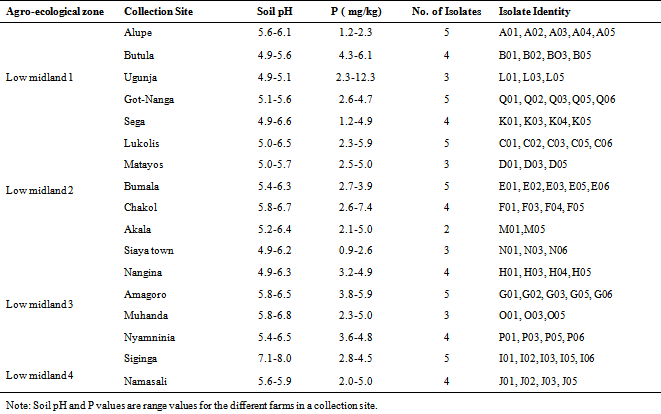
3.1. Soil CharacteristicsThe pH and available P values of the soils from nodule sampling sites in this study are presented in Table 1. Soil samples from Ugunja in LM1 had the lowest pH at 4.9-5.1 while Siginga in LM4 recorded the highest pH of 7.0- 8.0. Results showed that all the study sites had P-deficient soils. Soils sampled from farms around Siaya town in LM2 had the lowest P levels of 0.9 - 2.6 mg P kg-1 of soil.




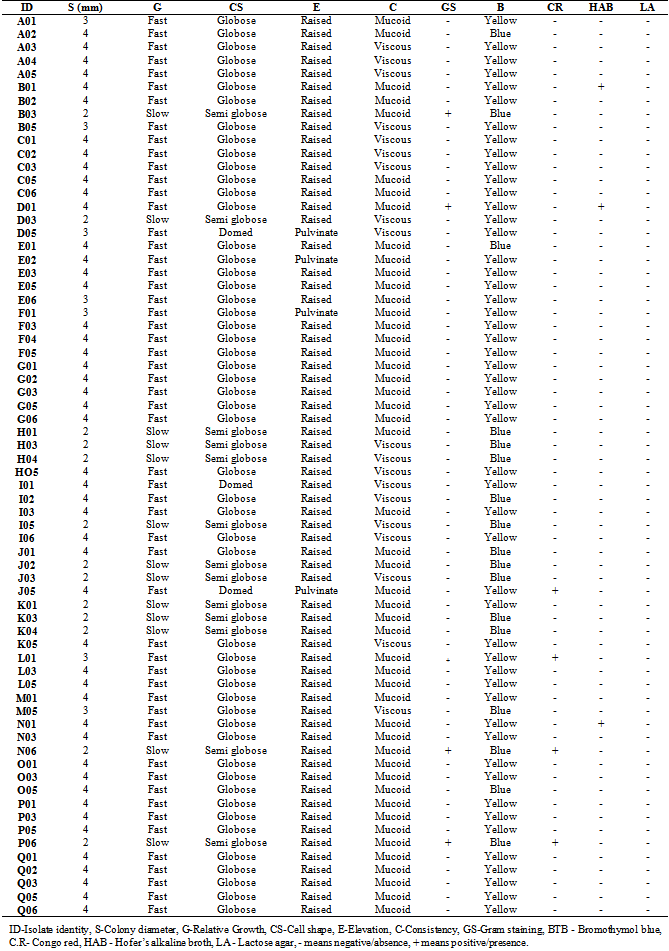
In this study, 68 bacteria isolates were obtained from root nodules of groundnut (Table 1). Bacteria colonies appeared on YEMA medium between 1 to 5 days after incubation at 28°C. The diameter of the colonies ranged from 2 mm to 4 mm. Fifty five of the isolates representing 81% were fast-growing with colonies appearing within 1 to 2 days (Table 2). On other hand, 19% of the isolates were slow growing and showed visible growth in culture after 3 to 5 days of incubation. Sixty five isolates exhibited semi-globose to globose colonies after 1-5 days of incubation on YEMA medium at 28°C. The remaining three isolates D05, I01 and J05 had dome shaped colonies. All colonies had a smooth entire margin and raised surface with exception of D05, E02 and J05 that were pulvinate. The bacterial isolates had white, creamy, translucent and glistering colonies. Forty nine isolates representing 72% produced mucoid colonies while the rest were viscous. Microscopic observation showed that 63 of the isolates were gram negative rod shaped cells occurring in chains (Table 2). Four isolates coded as B03, D01, L01 and N06 were gram positive with single cells while one gram positive isolate, P06, had paired cells. Fifty one isolates altered the colour of YEMA medium supplemented with bromothymol blue (BTB) from blue to yellow within 24 hours of incubation indicating they produced acid while 17 isolates retained the blue colour (Table 2). Among all the isolates only J05, L01, N06 and P06 absorbed Congo red dye. Three isolates B01, D01 and N01 exhibited detectable growth in Hofer’s alkaline broth. None of the isolates demonstrated 3-ketolactose production (Table 2).
Table 2. Morphological and biochemical characteristics of bacterial isolates from groundnut grown in western Kenya




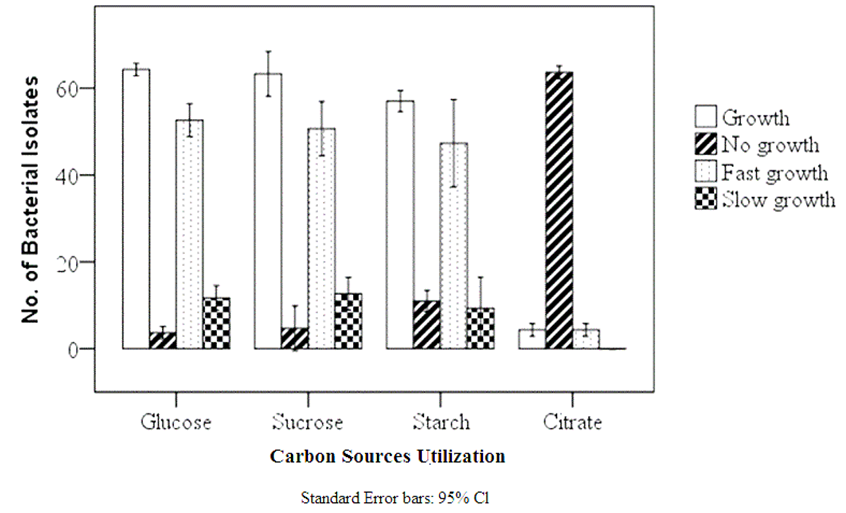
Medium containing glucose (monosaccharide), sucrose (disaccharides), starch (polysaccharides) and citrate as sole sources of carbon supported the growth of 64, 61, 56 and 5 isolates, respectively (Figure 1). Fifty two isolates out of 64 that utilized glucose were fast-growing while 80% of the isolates that utilized sucrose and starch were fast growing. Five isolates Q06, F04, C05, C01 and B02 that used citrate as carbon source were fast growers that could also utilize the other carbohydrates sources. In contrast, among the slow growers 19 % utilized glucose, 20% sucrose and starch respectively while none of them could utilize citrate.

 Download as
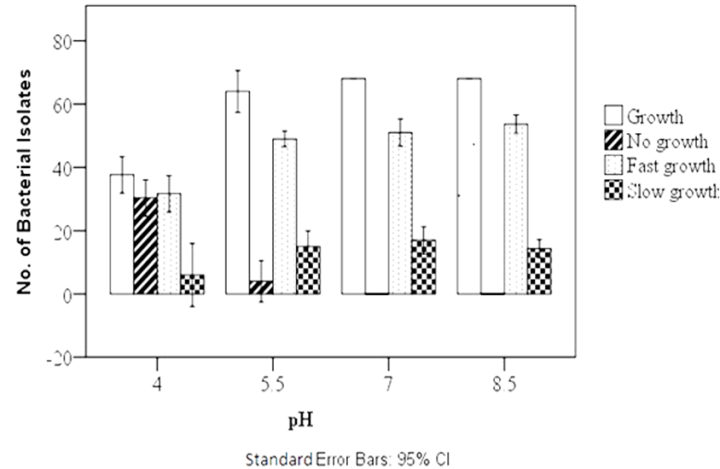
All the isolates showed growth on YEMA upon incubation at the temperature of 28°C. With the exception of isolate L01, all the sixty eight isolates grew when incubated at 37°C. The isolates exhibited variation in their ability to grow on the same medium at pH 4.0, 5.5, 7.0 and 8.5 (Figure 2). Thirty nine and 61 of the isolates grew at pH 4.0 and 5.5 respectively, indicating that they are acid tolerant. Thirty four of the isolates that grew at pH 4.0 were fast growers. All the isolates grew at pH 7.0 and 8.5.
 Download as
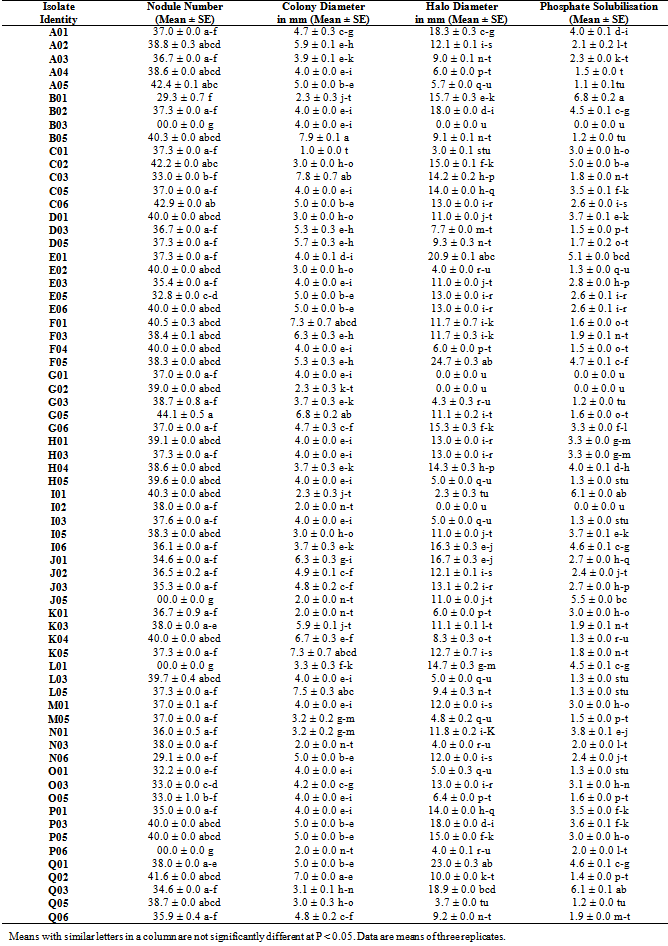
The phosphate solubilization index (SI) of groundnut nodule bacteria varied significantly at P ≤ 0.05 (Table 3). A total of sixty four isolates representing 94% showed a clear zone of solubilisation around the colonies after 7 days of incubation on medium containing insoluble dicalcium phosphate (CaHPO4) as the sole P source (Table 3). The zone of solubilisation showed progressive increase with prolonged incubation. Solubilization index ranged from 1.1 to 6.8. Fast growing isolates N01, B02, L01, I06, Q01, F05, C02, E01, J05, Q03, I01 and B01 recorded the highest SI ranging from 3.8 to 6.8. All the isolates except B03, J05, L01, and P06 were identified as rhizobia. Slow growing bacteria isolates J02, N06, J03, K01, H01, I05 and H04 had fairly high SI of 2.4, 2.4, 2.7, 3.0, 3.3, 3.7 and 4.0, respectively. Four isolates B03, G01, G02, and I02 did not solubilize dicalcium phosphate.
3.4. Confirmation of Rhizobia Isolates through Nodulation TestThe number of nodules formed varied significantly (P ≤ 0.05) among the groundnut nodule bacteria isolates (Table 3). Ninety four percent representing 64 of the isolates were confirmed to be rhizobia due to their ability to nodulate groundnut (Table 3). Four isolates B03, L01, P06 and J05 failed the nodulation test. Five isolates; that were fast growing namely, G05, A05, C06, C02 and Q02 recorded the highest number of nodules (Table 3). In contrast, the slow growing isolate N06 recorded the lowest number of nodules (29). Symbiotically active nodules showing pink colouration occurred on both taproots and lateral roots of the groundnut plants inoculated with the effective rhizobia isolates. The leaves of the nodulated plants appeared dark-green while uninoculated and unfertilized control plants showed yellowing typical of nitrogen deficiency.



4. Discussion
In this study, phenotypic characterization of groundnut nodulating bacteria isolates from P deficient soils in Western Kenya was carried out based on morphological and biochemical attributes. All the isolates produced colonies on YEMA medium with diameter ranging from 2 to 4 mm indicating that they belong to different growth categories and probably distinct taxonomic groups. Colony size variation has been used as the primary character for differentiating rhizobial isolates of various legumes including common bean and Bambara groundnut [11, 24].
The bacterial isolates observed in this study were divided into two groups on the basis of their growth rate on YEMA medium. These were fast and slow growing indigenous groundnut rhizobia. The results showed that groundnut was nodulated by both types of rhizobia. The predominant of either type of rhizobia at each site was dependent on the pH of the sampling location. The presence of fast growers in the sampled sites in Western Kenya is consistent with their appearance in many tropical soils [25]. However, previous studies [26] observed that slow-growing rhizobia are predominant in tropical soils. The present study showed contrary findings with 81% of the isolates comprising fast growing bacteria. These results are in agreement with previous studies which showed that over 54% of root nodule bacteria isolated from Cratylia mollis Mart. ex Benth. Calliandra depauperata Benth and Mimosa tenuiflora (Willd.) Poir [27], selected tree legumes [28] and soybean, respectively were inhabited by fast-growing rhizobia [29]. In another study where Leucaena leucocephala was nodulated by both fast and slow-growing rhizobia, effective nitrogen fixing nodules were only formed with the fast-growing strains [26]. These findings indicate that the fast-growing nodule bacteria are predominant and play critical role in N2 fixation in P deficient soils in Western Kenya.
The colonies were elevated, had smooth entire margins and a white, creamy, translucent, gummy, glistering appearance. Microscopic observation indicated that 63 of the tested bacteria isolates were gram negative. The differences in colony morphology observed in this study suggest existence of high phenotypic diversity in bacteria nodulating groundnut in P deficient soils of Western Kenya. The diversity of the bacterial isolates may be influenced by the different chemical composition of the groundnut root exudates as well as land cultivation history [27]. Rhizobia diversity is correlated to the variety of legume species in the location indicating evolutional adaptations of both symbiotic partners [30]. Morphological diversity of bacteria nodulating different legumes has been reported in various agro-ecologies worldwide [21, 29].
Seventy three percent of the isolates produced mucous. The tendency of the bacterial isolates in the current study to produce mucous could be a reflection of their adaptation to the acid soils of Western Kenya. Mucous production is also important in maintaining minimum moisture in the immediate environment of the microorganisms. Through its high moisture holding capacity, mucous prevents desiccation and serves as a potential source of energy under conditions of scarcity [31]. The ability of the bacterial isolates to produce the mucous in-vitro is an indication that this process is independent of the plant host and that the kind of polysaccharides making up the mucous are completely dependent on the genotype of the bacteria. Seventy percent of bradyrhizobia and indigenous rhizobia isolates from acidic soils of the Brazilian tropical Savannah produced mucous [27, 32].
On the basis of bacterial isolates growth on YEMA medium supplemented with BTB, the isolates were classified as acid producers or as alkalizers. These results showed that groundnut was nodulated by both types of rhizobia although the acid producers were more predominant compared to the alkalizers. Soils at the sampled sites had low pH and therefore, production of acid by majority of the isolates reflects a survival strategy in such adverse acidic conditions. This study suggests that acid producers play an important role in nodulation and nitrogen fixation in groundnut in P-deficient soils of Western Kenya. Acid and alkaline producing bacteria isolates have been reported in different legume root nodules in tropical soils [27, 28].
Most bacterial isolates exhibited typical characteristics of rhizobia species on YEMA medium supplemented with Congo red. However, four isolates J05, L01, N06 and P06 absorbed Congo red dye indicating that these isolates may not belong to groundnut nodulating bacteria [21]. Further, the isolates B01, D01 and N01 showed growth in Hofer’s alkaline broth at pH 11 suggesting tolerance to alkaline conditions. Rhizobia have been reported to show optimal growth at a pH of 6-7 whereas agrobacteria grow in a pH range of 4-11 [18]. Four isolates J05, L01, B03 and P06 did not nodulate the groundnut plants indicating that they could be non-nodulating bacteria [33]. Therefore, molecular characterization of the non-nodulating bacteria that reside in groundnut root nodules using DNA sequencing tools is needed to establish their taxonomic status. Bacterial isolates in this study did not produce ketolactose indicating the absence of agrobacteria. Agrobacteria utilize lactose to form the reduced product 3-ketolactose, through activity of the enzyme ketolactase [25]. In this sense, lactose agar test was unable to discriminate rhizobia from non-nodulating bacteria as Congo red and Hofer’s alkaline tests.
The bacterial isolates were able to degrade different sources of carbon. The degree of utilization varied from one carbon source to another depending on the isolate. Fast growing isolates showed greater ability to utilize different carbon sources than slow growers indicating that they possess both uptake systems and catabolic enzymes for a variety of carbohydrates [29]. Slow growing isolates and majority of the fast growing ones did not utilize citrate as source of carbon suggesting that they may lack enzymes for citrate uptake and breakdown such as permease, citrate lyase and oxaloacetate decarboxylase [34]. Other reports show that fast-growing rhizobia isolates utilize a wider range of carbohydrates than slow growers [29]. Degradation of diverse carbon sources by the bacteria isolates would be useful in preparation of inoculants since it would permit flexibility of choice of carbon source for inoculants production. Similar results where bacterial isolates utilized different sources of carbon has been reported in previous studies [18, 21, 24].
The isolates varied in their response to different temperature levels. Sixty seven isolates showed growth at 37°C. All isolates grew at 28°C indicating it was optimal temperature for their growth. This demonstrates that the isolates in this study are able to tolerate a wide temperature regime. Rhizobia are mesophiles that tolerate temperatures ranging between 10 and 37°C, with 28°C as an optimum temperature for growth [35]. Increased temperature optima of these isolates may be beneficial for their application in temperature stressed conditions since the symbiotic performance of different rhizobial strains under temperature stress has been correlated with their ability to grow in pure culture at elevated temperature [36].
The bacterial isolates differed in their response to pH levels between 4.0 and 8.5. Thirty nine isolates representing 57% of the entire collection grew at a pH of 4.0 whereas thirty four were fast growers. Isolates that showed tolerance to low pH were sampled from the sites with pH ranging from 4.9 to 6.6 hence they were adapted to acidic conditions. The fact that fast growing isolates were dominant in acidic sites in this study suggests adaptation strategy based on the reduction of the generational interval [30]. Tolerance of isolates to low pH could be attributed to expression of acid tolerance genes. Transcriptional analysis of ten mesorhizobia isolated from chickpea showed a relationship between higher levels of transcriptional induction of chaperone genes such as dnaK and groESL upon acidic shock and tolerated low pH [37]. All isolates grew at pH 7.0 and 8.5 indicating that optimal growth occurs in neutral/near-neutral conditions. The optimum pH for rhizobia ranges between 6.5 and 7.0 [38]. The isolates in this study survived on a wide pH range and therefore they are potential candidates for further strain improvement targeting use as inoculants in highly acidic or alkaline conditions.
The isolates demonstrated significant variation in utilising insoluble dicalcium phosphate as a sole P source. Sixty four isolates showed a clear zone of solubilisation with SI ranging from 1.1 to 6.8. The marked differences in the size of the halos, strongly suggests that the phosphate solubilising activity of the isolates might be the result of long-term adaptive changes under acidic soil conditions. Fast growing isolates showed greater solubilisation ratio than slow growers, probably due to increased exudation of protons or acid production [7, 39]. Exudation of gluconic acids has been demonstrated as the main mechanism of P solubilisation by gram negative bacteria 20]. Several genes involved in gluconic acid synthesis including glucose dehydrogenase have been reported in rhizobia [7]. In addition, genes encoding proteins involved in the biosynthesis and transport of glucose dehydrogenase cofactor, pyrroloquinoline quinine have also been implicated [40] as a mechanism to adapt to low –P soils. Isolates B03, G01, G03 and I02 that originated from sites with slightly higher available P did not show a clear zone of solubilisation indicating that they might lack mechanisms to utilize insoluble calcium phosphates. That all the strains of Rhizobium could not solubilize phosphate was reported earlier [20] indicating that phosphate solubilisation is not a widespread character among rhizobia. The strong ability of groundnut rhizobia to solubilise phosphates has already been demonstrated [2]. From the present study, higher SI of isolates (1.1-6.8) was observed as compared to rhizobia isolated in several tropical legumes that had solubilizing index ranging from 1.61 and 2.13 using dicalcium phosphate [8]. In another study, rhizobia isolates from Vigna trilobata recorded SI values ranging from 0.4-1.2 upon screening using tricalcium phosphate as a the insoluble P [39]. This variation may be partly attributed to differences in the source of insoluble P and nitrogen used for screening. Dicalcium phosphate is solubilised more readily than tricalcium phosphate by some bacteria [41], which is consistent with the relative solubilities of the two phosphates. Further, the high SI observed in the present study might indicate a better adaptation of the isolates to efficiently acquire adequate P out of a limited resource in the P-fixing soil environment from which they were obtained. Indigenous rhizobia isolates; N01, B02, I06, Q01, F05, C02, E01, Q03, I01 and B01 should be key in releasing fixed P in the soils in Western Kenya due to their strong solubilising, nodulating and N-fixing capacities.
Ninety five percent of the isolates were confirmed to be rhizobia due to their ability to form effective root nodules on groundnut. These isolates showed significant variation in nodule number indicating that they were compatible with the test plant. Previous studies [42] also reported that lentil rhizobia nodulated their host very well with different level of infectivity. The cross-section of effective nodules showed red coloration, indicating the presence of leghemoglobin, a trait related to nitrogen fixation efficiency. The leaves of the nodulated plants were dark-green, while uninoculated unfertilized control plants showed yellowing typical of nitrogen deficiency. The best nodulation was achieved using the isolates G05, C06, A05, C02, Q02, F01, I01, B05, L03 and P03 that produced 40-44 effective nodules per plant.
5. Conclusion
The study revealed that a high phenotypic diversity of indigenous groundnut rhizobia exists in P deficient soils of Western Kenya. Several rhizobia isolates including N01, B02, I06, Q01, F05, C02, E01, Q03, I01 and B01 demonstrated potential to nodulate, fix nitrogen and solubilize P. These isolates would be useful for formulation of biofertilizer upon further validation under green house and field conditions in P deficient soils
Acknowledgements
This research was supported by funds from National Commission for Science and Technology (NACOSTI), Kenya as part of capacity building for the first author at the University of Eldoret. The authors acknowledge the management of the Biotechnology Centre of the University of Eldoret for providing laboratory space, facilities and technical support.
References
| [1] | Mokgehle, S. N., Dakora, F. D., & Mathews, C. Variation in N2 fixation and N contribution by 25 groundnut (Arachis hypogaea L.) varieties grown in different agro-ecologies, measured using 15 N natural abundance. Agriculture, Ecosystems & Environment, 195, 161-172. 2014. | ||
 In article In article | View Article | ||
| [2] | Taurian, T., Ibañez, F., Fabra, A., & Aguilar, O. M. Genetic diversity of rhizobia nodulating Arachis hypogaea L. in central Argentinean soils. Plant and soil, 282(1-2), 41-52.2006. | ||
| In article | |||
| [3] | Nekesa, P., Maritim, H. K., Okalebo, J. R., & Woomer, P. L. Economic analysis of maize-bean production using a soil fertility replenishment product (PREP-PAC) in western Kenya. African Crop Science Journal, 1999; 7(4): 585-590. | ||
| In article | View Article | ||
| [4] | Owino, C. O., Owuor, P. O., & Sigunga, D. O. Elucidating the causes of low phosphorus levels in ferralsols of Siaya County, Western Kenya. Journal of Soil Science and Environmental Management, 2015; 6(9): 260-267. | ||
| In article | |||
| [5] | Kisinyo, P. O., Othieno, C. O., Gudu, S. O., Okalebo, J. R., Opala, P. A., Ng'etich, W. K., & Opile, W. R. Immediate and residual effects of lime and phosphorus fertilizer on soil acidity and maize production in western Kenya. Experimental Agriculture, 2014; 50(1): 128-143. | ||
| In article | View Article | ||
| [6] | Khan, M. S., Zaidi, A., Ahemad, M., Oves, M., & Wani, P. A. Plant growth promotion by phosphate solubilizing fungi–current perspective. Archives of Agronomy and Soil Science, 2010.; 56(1): 73-98. | ||
| In article | View Article | ||
| [7] | Zhang, D., Zhang, C., Tang, X., Li, H., Zhang, F., Rengel, Z., & Shen, J. Increased soil phosphorus availability induced by faba bean root exudation stimulates root growth and phosphorus uptake in neighbouring maize. New Phytologist, 2016; 209(2): 823-831. | ||
| In article | View Article PubMed | ||
| [8] | Marra, L. M., Oliveira, S. M., Soares, C. R. F. S., & Moreira, F. M. S. Solubilisation of inorganic phosphates by inoculant strains from tropical legumes. Science Agriculture (Piracicaba, Braz.), 2011; 68(5):.603-609. | ||
| In article | |||
| [9] | Divito, G. A., & Sadras, V. O. How do phosphorus, potassium and sulphur affect plant growth and biological nitrogen fixation in crop and pasture legumes. A meta-analysis. Field Crops Research, 2014; 156:161-171. | ||
| In article | View Article | ||
| [10] | Mathu, S., Herrmann, L., Pypers, P., Matiru, V., Mwirichia, R., & Lesueur, D. Potential of indigenous bradyrhizobia versus commercial inoculants to improve cowpea (Vigna unguiculata L. walp.) and green gram (Vigna radiata L. wilczek.) yields in Kenya. Soil science and plant nutrition, 2012; 58 (6):750-763. | ||
| In article | View Article | ||
| [11] | Benson, O., Beatrice, A., Regina, N., Koech, P. K., Skilton, R. A., & Francesca, S. Morphological, genetic and symbiotic characterization of root nodule bacteria isolated from Bambara groundnuts (Vigna subterranea L. Verdc) from soils of Lake Victoria basin, western Kenya. Journal of Applied Biology and Biotechnology; 2015; 3(01): 1-10. | ||
| In article | View Article | ||
| [12] | Jaetzold, R., Schmidt, H., Hornetz, B., & Shisanya, C.. Ministry of Agriculture Farm Management Handbook of Kenya VOL. II-Part C Subpart C1. Nairobi, Kenya: Ministry of Agriculture, 2006. | ||
| In article | |||
| [13] | Muhati, S. I., Shepherd, K. D., Gachene, C. K., Mburu, M. W., Jones, R., Kironchi, G. O., & Sila, A. Diagnosis of soil nutrient constraints in small-scale groundnut (Arachis hypogaea L.) production systems of Western Kenya using infrared spectroscopy. Journal of Agricultural Science and Technology 2011; 111-127. | ||
| In article | |||
| [14] | Okalebo, J. R., Gathua, K. W., & Woomer, P. L. Laboratory methods of plant and soil analysis:a working manual. Tropical Soil Biology and Fertility Programme, Nairobi. 2002 | ||
| In article | |||
| [15] | Hue, Andrade DS, Chueira LM. Isolation and characterization of new efficient and competitive bean (Phaseolus vulgaris L.) rhizobia in Brazil. Soil Biology and Biochemistry, 2000; 32: 1515-1528. | ||
| In article | View Article | ||
| [16] | Vincent, J. M. A manual for the practical study of the root-nodule bacteria. (IBP Handbuch No. 15 des International Biology Program, London . XI u. 164 S., 10 Abb., 17 Tab., 7 Taf. Oxford-Edinburgh: Blackwell Scientific Publ., 45 s.1970. | ||
| In article | |||
| [17] | Gupta, A., Gupta, A. K., Mahajan, R., Singh, D., Khosla, K., Lal, R., & Gupta, V. Protocol for isolation and identification of Agrobacterium Isolates from Stone Fruit plants and sensitivity of native A. tumefaciens isolates against agrocin produced by A. radiobacter strain K84. National Academy Science Letters, 2013; 36(1): 79-84. | ||
| In article | View Article | ||
| [18] | Huang, B,., Lü, C., Wu, B. & Fan, L. A rhizobia strain isolated from root nodule of gymnosperm Podocarpus macrophyllus. Science China Serie. C: Life Science,2007; 50:1-6. | ||
| In article | |||
| [19] | Mehta, S., & Nautiyal, C. S. An efficient method for qualitative screening of phosphate-solubilizing bacteria. Current microbiology, 2001; 43(1): 51-56. | ||
| In article | View Article PubMed | ||
| [20] | Alikhani, H. A., Saleh-Rastin, N., & Antoun, H. Phosphate solubilization activity of rhizobia native to Iranian soils. In First international Meeting on microbial phosphate solubilization , 35-41. Springer Netherlands. 2006. | ||
| In article | View Article | ||
| [21] | Laurette, N. N., Maxémilienne, N. B., Henri, F., Souleymanou, A., Kamdem, K., Albert, N. & François-Xavier, E. Isolation and Screening of Indigenous Bambara Groundnut (Vigna Subterranea) Nodulating Bacteria for their Tolerance to Some Environmental Stresses. American Journal of Microbiological Research, 2015; 3(2): 65-75. | ||
| In article | |||
| [22] | Somasegaran, P., & Hoben, H. J. (1994). Collecting nodules and isolating rhizobia. In Handbook for Rhizobia (pp. 7-23). Springer New York | ||
| In article | View Article | ||
| [23] | Team, R. C. R: A language and environment for statistical computing. R Foundation for Statistical Computing, Vienna, Austria. 2015. URL h ttp. www. R-project. org. Accessed September .13, 2016 | ||
| In article | |||
| [24] | Muthini, M., Maingi, J. M., Muoma, J. O., Amoding, A., Mukaminega, D., Osoro, N. & Ombori, O.Morphological assessment and effectiveness of indigenous rhizobia isolates that nodulate P. vulgaris in water hyacinth compost testing field in Lake. | ||
| In article | |||
| [25] | Sharma, M. P., Srivastava, K., & Sharma, S. K. Biochemical characterization and metabolic diversity of soybean rhizobia isolated from Malwa region of central India. Plant Soil Environ, 56(8), 375-383.2010Victoria Basin. British Journal of Applied Science & Technology,2014; 4(5): 718. | ||
| In article | |||
| [26] | Sanginga, N., Danso, S. K. A., & Bowen, G. D. Nodulation and growth response of Allocasuarina and Casuarina species to phosphorus fertilization. Plant and Soil, 1989; 118 (1-2): 125-132. | ||
| In article | View Article | ||
| [27] | Teixeira, F.C.P., Borges, W. L., Xavier, G. R, Rumjanek, N. G. Characterization of indigenous rhizobia from Caatinga. Brazilian Journal of Microbiology, 2010; 41: 201-208. | ||
| In article | View Article | ||
| [28] | Boakye, E. Y., Lawson, I. Y. D., & Danso, S. K. A. Characterization and diversity of rhizobia nodulating selected tree legumes in Ghana. Symbiosis, 69 (2), 89-99. 2016 | ||
| In article | View Article PubMed | ||
| [29] | Kapembwa, R., Mweetwa, A. M., Ngulube, M., & Yengwe, J. Morphological and Biochemical Characterization of Soybean Nodulating Rhizobia Indigenous to Zambia. Journal of Agricultural Research, 2016; 5: 84. | ||
| In article | View Article | ||
| [30] | Sprent, J.I. Evolution and diversity in the legume-rhizobium symbiosis: chaos theory? Plant Soil, 1994; 161:1-10. | ||
| In article | View Article | ||
| [31] | Sayyed, R. Z., Jamadar, D. D., & Patel, P. R. Production of Exo-polysaccharide by Rhizobium sp. Indian journal of microbiology, 2011; 51(3): 294-300. | ||
| In article | View Article PubMed | ||
| [32] | Batista, J. S. S., Hungria, M., Barcellos, F. G., Ferreira, M. C., & Mendes, I. C. Variability in Bradyrhizobium japonicum and B. elkanii seven years after introduction of both the exotic microsymbiont and the soybean host in a Cerrados soil. Microbial ecology, 2007; 53(2): 270-284. | ||
| In article | View Article PubMed | ||
| [33] | Wahab, A. A., Zahran, H. H., & Abd-Alla, M. H. Root-hair infection and nodulation of four grain legumes as affected by the form and the application time of nitrogen fertilizer. Folia microbiologica, 199 41(4), 303-308. 1996. | ||
| In article | |||
| [34] | Sobczak, I., & Lolkema, J. S. The 2-hydroxycarboxylate transporter family: physiology, structure, and mechanism. Microbiology and Molecular Biology Review, 2005; 69: 665-695. | ||
| In article | View Article PubMed | ||
| [35] | Küçük, Ç., Kivanç, M., & Kinaci, E. Characterization of Rhizobium sp. isolated from bean. Turkish Journal of Biology, 2000; 30(3): 127-132. | ||
| In article | |||
| [36] | Hungria, M., de S Andrade, D., de O Chueire, L. M., Probanza, A., Guttierrez-Mañero, F. J., & Megı́as, M. Isolation and characterization of new efficient and competitive bean (Phaseolus vulgaris L.) rhizobia from Brazil. Soil Biology and Biochemistry, 2000; 32, 1515-1528. | ||
| In article | View Article | ||
| [37] | Brígido, C., & Oliveira, S. Most acid-tolerant chickpea mesorhizobia show induction of major chaperone genes upon acid shock. Microbial Ecology, 2013; 65: 145-153. | ||
| In article | View Article PubMed | ||
| [38] | Rodrigues, C. S., Laranjo, M., & Oliveira, S. Effect of heat and pH stress in the growth of chickpea mesorhizobia. Current Microbiology, 2006; 53(1): 1-7. | ||
| In article | View Article PubMed | ||
| [39] | Kumari, B. S., Ram, M. R., & Mallaiah, K. V. Studies on exopolysaccharide and indole acetic acid production by Rhizobium strains from Indigofera. African Journal of Microbiology Research, 2009; 3(1): 10-14. | ||
| In article | |||
| [40] | Kumar, G. K., & Ram, M. R. Phosphate solubilizing rhizobia isolated from Vigna trilobata. American Journal of Microbiological Research, 2014; 2(3): 105-109. | ||
| In article | View Article | ||
| [41] | Sujatha, E., Grisham, S., Reddy, S. M. Phosphate solubilization by thermophillic microorganisms. Indian Journal of Microbiology, 2004; 44: 101–104. | ||
| In article | |||
| [42] | Harun, M. Sattar, M. A., Uddin, M. I. and Young, J. P. W. Molecular characterization of symbiotic root nodulating rhizobia isolated ntifrom lentil (Lens culinaris Medik.). Journal of Environmental Agriculture and Food Chemistry, 2009; 8: 602-612. | ||
| In article | |||
 CiteULike
 Mendeley
 StumbleUpon
 Delicious
 Facebook
 Twitter
 LinkedIn
)
)