Sexually transmitted infections (STIs) are a public health problem because of their transmissibility, morbidity and possible long-term complications. Chlamydia trachomatis (CT) is the most common of these infections. It is generally asymptomatic and has an impact on fertility due to the lack of early detection and effective treatment. The aim of this retrospective study is to determine the prevalence of chlamydia trachomatis in patients in a public laboratory of Abidjan (Pasteur Institute of Côte d’Ivoire). A total of three thousand one hundred and nine samples (3109) biological specimens were collected and analysed by polymerase chain reaction (PCR) method. Results revealed a prevalence rate of 2.4%. No statistically significant difference between male and female patients so CT occurs in both men and women. The sex most affected by Chlamydia infection is the male sex, in fact Men's positive rate (67,55%) is double that of women's (32,45%). The mean age of patients was 35.5±4.6 years in men and 28.5±3.4 years in women. The study showed a high positivity rate (37.85%) with urethral swabs, semen gave a positivity rate of 29.70% while vaginal swabs gave a positivity rate of (32.45%). Given the low sensitivity of urine samples for screening of Chlamydia infection in the study, urethral swabs could be used as the sample of choice for detecting Chlamydia trachomatis in men. The study provides recent data on chlamydia infection in Abidjan. Despite a relatively low prevalence (2.4%), chlamydia infection remains a major public health issue. The results highlight the importance of strengthening systematic screening using molecular methods in order to improve STIs prevention and control strategies.
Chlamydia trachomatis (CT) is the most common sexually transmitted infection particularly affecting young people of childbearing age, making it a major public health problem 1. The asymptomatic nature of chlamydia trachomatis infection makes diagnosis difficult. The absence of effective screening and treatment of chlamydia trachomatis infection can lead to serious complications and multiple health consequences. In the long term, complications such as infertility, pelvic inflammatory disease, salpingitis, and extra-uterine pregnancies can occur 2. Numerous studies around the world have highlighted the correlation between chlamydia infection and HIV, hence the importance of diagnosis 3, 4.
In Côte d'Ivoire, studies on the prevalence of chlamydia trachomatis were carried out in 1992 and 2003 5, 6, 7. These studies showed a prevalence of 28.4% in men and 13.7% in women, 3,9% and 14% respectively in men and women. Due to the importance of genital CT infection to the public health and in order to update data, this retrospective study was carried out from January 2020 to December 2024 to determine the prevalence of chlamydia trachomatis in patients in a public laboratory of Abidjan.
This study is a retrospective study conducted over 5 years. It was carried out at the molecular biology platform of the Pasteur Institute in Côte d’Ivoire. Samples were obtained from patients consulting for urogenital complaints such us vaginal or urethral discharge, urethral tingling, itching and infertility.
Authorisation to carry out the study was obtained from the Pasteur Institute authorities and the anonymity of the data was respected.
A total of three thousand one hundred and nine samples (3109) biological specimens were collected and analysed. Samples consisted of urethral and vaginal swabs, semen and first urine streams respectively.
2.2. Processing of SamplesSamples were analysed using the polymerase chain reaction (PCR) technique. Tests were performed on endocervical swabs, urine, semen and urethral samples, respectively. As Chlamydia trachomatis is an intracellular bacterium, sample pre-treatment prior to extraction is necessary to increase extraction. Swabs and cytobrushes were discharged into a PBS solution. All samples were mixed by vortexing and heated at 70°C for 2 min in order to weaken the bacterial membrane and achieve complete lysis of the bacterial membrane.
2.3. Extraction of the DNAExtraction is an essential step in molecular biology, so all the steps must be followed to obtain a sufficiently pure extract. The DNA was extracted using the commercial kit QIAamp DNA mini Kit (250) (QIAGEN, Espagne), according to the manufacturer’s recommendation. Absorbances of the extracted DNA were measured at 260 nm and 280 nm using the Qubit spectrophotometer (INVITROGEN) to assess the purity and quantity of extracted DNA. A Polymerase Chain Reaction (PCR) was conducted after extraction.
2.4. Detection of Chlamydia TrachomatisPCR is the gold standard method.for all clinical forms of Chlamydia trachomatis infection 8. Chlamydia trachomatis gene was amplified according to the PCR protocol modified of Meyer which targets the gene of interest the Omp1 gene of Chlamydia trachomatis chromosomal DNA 9. A QuantStudio thermocycler (Applied Biosystem) and an amplification kit (Promega) were used for DNA amplification. A pair of primers and a probe were used: CT 008-F, CT 009-R, CT -10 Probe. Details of the oligonucleotides and probe used are given in Table 1.
The reaction was carried out in a final volume of 25 µl containing 0,75 µl of each primer at 10 µM, 1,25 µl of 5 µM probe, 5 µl of buffer 5X, 1,5 µl of 25 mM MgCl2, 9,8 µl of RNase free water, 0,5 µl of deoxyribonucleotide (dATP, dCTP, dGTP, dTTP), 0,25 µl of Rox-dye, and 0,2 µl of Taq DNA Polymerase (Promega). The reaction mixture was prepared and distributed at a rate of 20 µl in 0.2 ml PCR tubes. A positive control of Chlamydia trachomatis was used to control all the amplification and detection steps and to validate the PCR result. A tube containing only Rnase free water was used as a control to demonstrate the absence of contamination during the biological sample processing steps. The extracted DNA (5 µl), positive and negative controls were added to the previously prepared master mix. Amplification program was: 50°C 2 min, 95°C 10 min, 40 cycles of (95°C 15 sec, 60°C 1 min). The Eppendorf tubes were placed in a Thermal cycler QuantStudio and amplification was perfomed.
2.5. Statistical AnalysisThe results were analysed statistically with R.4.3.3 software. The proportions were compared using Khi2 test in order to assess significant differences and correlations between the data analysed. A value of p < 0.05 was considered statistically significant. Excel 2013 was used to draw graphs.
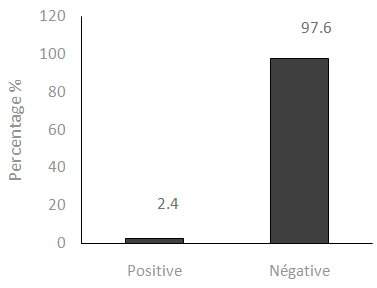
The results of the study are shown in Figure 1. Of the 3109 samples tested, only 74 (2.4%) were found to be positive. Chlamydia trachomatis screening using real-time PCR showed a prevalence rate of 2.4%.

The proportion of negative samples (97.6%) was higher than the proportion of positive samples. This difference is statistically significant (p < 0.05), X-squared = 92.93, df = 1, p-value < 2.2e-16. The study showed a low rate of prevalence of chlamydia trachomatis infection. The low rate (2.4%) reported in our study could probably be explained by a drop in sexually transmitted infections (STIs) due to the measures taken against HIV/AIDS, especially as the correlation between CT and HIV no longer needs to be demonstrated 4, we could also mention asymptomatic nature of the disease, as Chlamydia infections are asymptomatic in 80 % of women and 20 % of men, and as a consequence often go undiagnosed, untreated 10, 11. Our findings are slightly lower than the 2.9% reported by Huai et al., 12, although significant prevalences (9.2% and 9.1%) were noted in Mayotte in 2019 and Côte d'Ivoire in 2012 13, 14. The low prevalence observed in our study may partially reflect the actual situation and suggest a probable underestimation of the disease due to the lack of systematic screening for infection. In this context, strengthening screening strategies would improve early detection and ultimately reduce long-term complications.
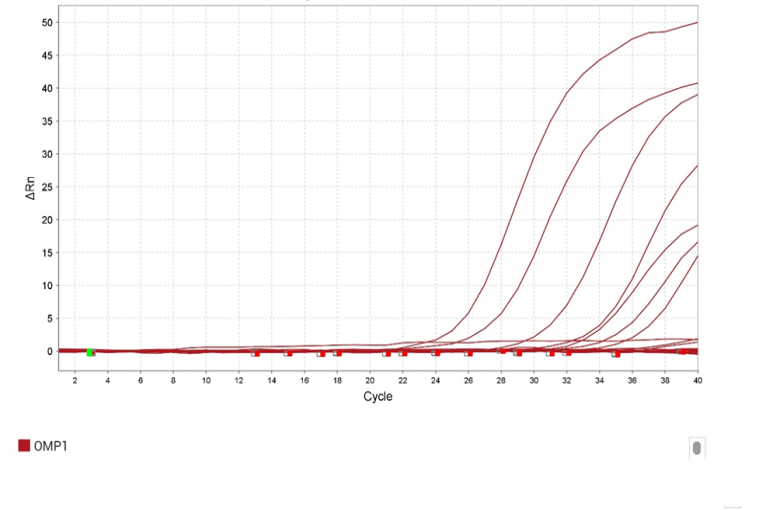
The amplification curves obtained by qPCR targeting the Omp1 gene are shown in Figure 2. Increasing fluorescence indicates amplification of Chlamydia trachomatis bacterial DNA.

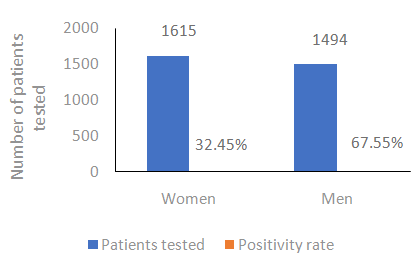
Among patients coming to the laboratory for the diagnosis of Chlamydia trachomatis, women predominated over men. The sex ratio was 0.93, i.e. 100 man for every 108 women, reflecting the feminisation of Chlamydia patients. Women accounted for 51.95% of the sample and men for 48.05% (Table 2). These results highlight the fact that Chlamydia trachomatis infection affects both men and women. Our results are in line with those of several authors who reported in previous studies a predominance of the female population in chlamydia infection 15, 16.
The results of prevalence according to sex showed a higher rate of positivity in men than in women. Chlamydia trachomatis was detected in 50 male patients, giving a positivity rate of 67.55%. In females, 24 patients were found to be positive, giving a positivity rate of 32.45%. Our investigation identified a lower positivity rate in women than in men. Despite women being overrepresented among patients, men have a higher positivity rate (Figure 3).

It should be noted that the anatomical and physiological particularities of the female genital tract could be at the root of the results obtained 15. Also, poor sample quality due to non-compliance with sampling conditions could be justify results obtained. It should be emphasised that, in women, samples should be taken without intimate cleansing, as intimate cleansing products denature nucleic acids and can cause false negative reactions 17. It appeared from our study that the sex most affected by Chlamydia infection is the male sex, despite the fact that women are highly vulnerable to sexual infections by Chlamydia trachomatis as highlighted by several studies that have indicated that women are disproportionately affected by CT infection 18, 19. The study highlights the need to develop inclusive strategies that further integrate men into awareness, prevention, and screening campaigns in order to break the chain of transmission in the population.
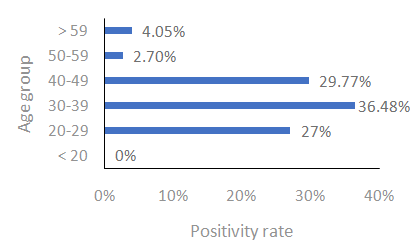
3.3. Distribution and Prevalence According to AgeThe results of the age distribution of the samples analysed are presented in Figure 4.

The results show that Chlamydia trachomatis was not found in patients under 20 years of age. Those over 50 years of age recorded a low positivity rate of 2.70% et 4.05%. However, a higher positivity rate was observed in the 30-39 age groups with a positivity rate of 36.48%, followed by the 40-49 age group with a positivity rate of 29.77%. Chlamydia infection predominates among adults (30-39). This fact was also observed in the Ngangro’s work 14. The average age of patients infected with Chlamydia trachomatis was 35.5±4.6 years in men and 28.5±3.4 years in women. This high positivity rate could be explained by the fact that this age group is more sexually active. More than half (66.17%) of the population infected with CT was over 29 years old. Age is therefore a risk factor for CT infection 20. Our results corroborate those of Beyuo et al., 21 in Ghana who found a mean age of 34.6±5.4 years. The study shows a young population, with the most representative age group (30-39) and (40-49), corresponding to the most sexually active population. Indeed, a number of studies including Kremska's concluded that the most sexually active men and women were in this age group 22. Systematic screening of adults could help reduce silent transmission of chlamydia infection.
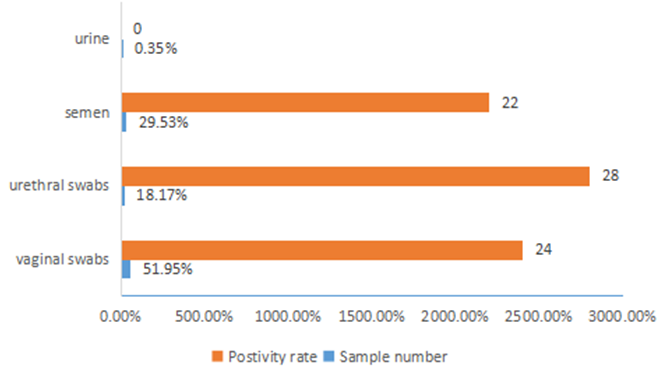
3.4. Distribution and Prevalence According to Sample TypeFigure 5 shows the distribution and positivity rates of biological samples by type. The most represented sample was vaginal swabs (51.95%), followed respectively by semen (29.53%), urethral swabs (18.17%) and urine (0.35%).

The study revealed a high positivity rate (37.85%), with 28 positive results for urethral swabs; semen samples had a positivity rate of 29.70%, or 22 positive results, while vaginal swabs had a positivity rate of 32.45%, corresponding to 24 positive results. Urine did not give positive results throughout the study, which could be explained by a lack of sensitivity of urine compared with other types of samples. Several hypotheses may explain our results, on the one hand, the small number of urine samples analyzed (0.35% of the total) limits statistical power and the ability to detect positive cases. On the other hand, pre-analytical factors such as non-compliance with collection conditions (first urine sample, time between collection and analysis, storage) may have influenced the sensitivity of the test. Finally, the lower bacterial load in urine compared to other samples may explain the lower performance observed. Our result are similar to some authors who mentioned the lack of sensitivity of urine compared with other biological samples 5, on the other hand, several authors displays the effectiveness and very high sensitivity of urine in the diagnosis of Chlamydia trachomatis (CT) 2, 23.
In men, the detection of Chlamydia trachomatis in urethral swabs has shown very good sensitivity compared with semen. The best positivity rates found in our study were in urethral swabs. The higher rate of detection by Chlamydia trachomatis (CT) in the study suggests that urethral swabs could be used as a first choice sample for the detection of Chlamydia trachomatis in men as it appeared much more sensitive than semen, indeed urethral swabs gave the best results in terms of detection despite its painful nature. The study provides essential information to guide public health initiatives in Côte d'Ivoire on the importance of standardizing sample types in the analysis of chlamydia infection in men. Finally, since Chlamydia trachomatis is a STI and a cofactor of HIV, the use of multiplex qPCR for the identification of numerous other STIs (Herpes simplex virus, Haemophilus ducreyi, Treponema pallidum, Mycoplasma genitalium, Neisseria gonorrhae, Trichomonas vaginalis) is necessary. Such an approach would improve epidemiological surveillance of STIs in Côte d'Ivoire and patient care.
The present study was undertaken to determine prevalence of CT infection in patients in a public institution in the city of Abidjan. The results revealed a global prevalence rate of 2.4 % suggesting the need for regular analyses and systematic screening with repeated tests every 3 to 6 months in order to reduce the risk of transmission of the infection and thus the risk of complications, including infertility. Although prevalence rates in the population are slightly low (2.4%), this does not necessarily imply a drop in the rate of CT in the population, nevertheless, many efforts must be made to solve the problem of CT infection. Chlamydia trachomatis is a cofactor of HIV, and given that one STI leads to another, it would be advisable to make a correct diagnosis with multiplex Real-time PCR for the simultaneous detection of STIs in order to increase the sensitivity of screening and to reduce the risk of transmission of CT infection. Therefore, further studies, including a larger number of urine samples and strict standardization of collection conditions, would be necessary to evaluate the sensitivity of different biological samples. The study highlights the importance of examining the state of CT contamination in the population in order to better manage the problem of CT infection. Given the lack of data on all the CT genes circulating in the Ivorian population, this gap needs to be filled.
We are thankful to the management of Pasteur Institute of Côte d’Ivoire for providing the research facility, technical facility and infrastructure. We extend also our gratitude to the manuscript's anonymous readers in advance.
We have not competing interests to declare
MAMBE-ANI Perpétue contributed to the conceptualisation, data collection, data analysis, preparation of the first draft, and writing of the manuscript. YEO Alain, KOUAME-SINA S. Mireille, and BLAVO-KOUAME Ehui participated in data collection. COULIBALY N’golo David, NGAZOA-KAKOU E. Solange supervised, read, and corrected the final document.
| [1] | Rocha, D, Cassia, OM, Adriene, FA, Chlamydia trachomatis infection in women living in remote areas in Amazonas, Brazil a self-collection screening experience, International Journal of STD & AIDS, 0(0), 1-8. 2018. | ||
| In article | |||
| [2] | Azevedo, MJN, Dos Santos, SN, Fabienne, GDO, High prevalence of Chlamydia trachomatis in pregnant women attended at Primary Health Care services in Amazon, Brazil, Revue Institut of Tropical Medicine of São Paulo, 61(e6). 2019. | ||
| In article | View Article PubMed | ||
| [3] | Mahmoud, E, Karim, A, Khaled, MD, Genital Chlamydia Trachomatis Infection in Egyptian Women: Incidence among Different Clinical Risk Groups, J. Obstet. Gynaecol. Res, 5, 467-472. 1996. | ||
| In article | View Article PubMed | ||
| [4] | Piazzetta, RCP, Carvalho, NS, Andrade, RP, Prevalence of Chlamydia trachomatis and Neisseria gonorrhoea infections in sexual actives young women at a Southern Brazilian city, Rev Bras Ginecol Obstet, 33, 328-333. 2011. | ||
| In article | |||
| [5] | Sanon, S, Gershy, DGM, M'boup, S, Prévalence de Chlamydia trachomatis dans les prélèvements génitaux à Abidjan, Bull. Soc. Path. Exo, 85, 209-211. 1992. | ||
| In article | |||
| [6] | Bankole, H, Faye-Kette, H, Ado, M, Diagnostic de l'infection génitale à Chlamydia trachomatis par la coloration de Papanicolaou dans les secrétions génitales de la femme à Abidjan-Côte d'Ivoire, Bull Soc Pathol Exot, 94, 235-238. 1992. | ||
| In article | |||
| [7] | Bankolé, HS, Etude des infections génitales à chlamydia trachomatis en Côte d’Ivoire: Utilisation de méthodes alternatives et polymorphisme des souches, Thèse de doctorat unique à l’Université de Cocody en Biologie Humaine et tropicale option Microbiologie, 164. 2003. | ||
| In article | |||
| [8] | Legkobyt, T, Despeyroux, S, Lombry, Y, Diagnostic biologique de l’infection à chlamydia trachomatis, avis sur les actes,1-79. 2010. | ||
| In article | |||
| [9] | Meyer, T, Brockmeye, NH, Implementation of Lymphgranuloma venereum Identification in Chlamydia trachomatis Testing by Nucleic Acid Amplification Test, Clin Microbiol, 6(1), 1-2. 2017. | ||
| In article | View Article | ||
| [10] | Casper, DJDH, Christian, JPAH, Johanna, HMD, Chlamydia trachomatis and the Risk of Pelvic Inflammatory Disease, Ectopic Pregnancy, and Female Infertility: A Retrospective Cohort Study Among Primary Care Patients, Clinical Infectious Diseases, 9, 1517-1525. 2018. | ||
| In article | View Article PubMed | ||
| [11] | Dos Santos, LM, Vieira, MRMDS, Vieira, RC, Prevalence and circulant genotypes of Chlamydia trachomatis in University women from cities in the Brazilian Amazon, PLoS One, 19, e0287119. 2024. | ||
| In article | View Article PubMed | ||
| [12] | Huai, P, Furong, L, Tongsheng, C, Prevalence of genital Chlamydia trachomatis infection in the general population: a meta-analysis, BMC Infectious Diseases, 20(589), 1-8. 2020. | ||
| In article | View Article PubMed | ||
| [13] | Vuylsteke, B, Gisele, S, Lazare, S, HIV and STI Prevalence among Female Sex Workers in Côte d’Ivoire: Why Targeted Prevention Programs Should Be Continued and Strengthened, PLoS One, 3, e32637. 2012. | ||
| In article | View Article PubMed | ||
| [14] | Ngangro, NN, Cazein, F, Brouard, C, Prévalence des infections à Chlamydia trachomatis, Trichomonas vaginalis, Neisseria gonorrhoeae et à VIH à Mayotte: enquête de santé en population générale « Unono Wa Maore ». Bull Épidémiol Hebd, 25, 525-536. 2023. | ||
| In article | |||
| [15] | Sitz, S, Connaissance et dépistage du chlamydiae trachomatis chez les jeunes. Mémoire de diplôme d’état de sage-femme de l’université de Versailles saint–Quentin–en-yvelines, 1-74. 2014. | ||
| In article | |||
| [16] | Cisse, C, Détermination de la prevalence des infections à Chlamydia trachomatis et Neisseria gonorrhoeae en zone rurale (Niakhar) par la technique Amplicor, Thèse de pharmacie, Université Anta Diop de Dakar, 1-80. 2002. | ||
| In article | |||
| [17] | Hamdad, F, Orfila, J, Diagnostic d’une infection uro-génitale à Chlamydia trachomatis. Apport des techniques d’amplification génique. Laboratoire de Bactériologie Hygiène, CHU, Amiens, France, Progrès en Urologie, 15, 598-601. 2005. | ||
| In article | |||
| [18] | Manca, MF, Laurence, RS, Carod, JF, High prevalence of Chlamydia trachomatis and Neisseria gonorrhoeae in Western French Guiana, Brazilian, Journal of Infectious Diseases, 3, 256-260. 2020. | ||
| In article | View Article PubMed | ||
| [19] | Kanupriya, G, Sally, AH, Nkele, AD, Prevalence of Chlamydia Trachomatis Infection in Young Women and Associated Predictors, Sex Transm Dis, 8, 529-535. 2021. | ||
| In article | View Article PubMed | ||
| [20] | De Barbeyrac, Maithé, Clerc, Sophie, Raherison, Cecile, MB, Christiane B, Infections humaines à Chlamydiae: Diagnostic biologique et épidémiologique, Elsevier, 6(1), 71-76. 2007. | ||
| In article | View Article | ||
| [21] | Beyuo, T, Oppong, SA, Samba, A, Chlamydia trachomatis infection among Ghanaian women undergoing hysterosalpingography for suspected tubal factor infertility, Int J Gynecol & Obstet, 2, 200-205. 2019. | ||
| In article | View Article PubMed | ||
| [22] | Kremska, A, Raba, G, Kraśnianin, E, Sexual behaviour of women in early and middle adulthood, Med Sci Pulse, 14, 31-40. 2020. | ||
| In article | |||
| [23] | Zucotti, A, Bolaño, L, Berruezo, FA, Prevalence of chlamydia trachomatis in pregnant women during the first trimester in a private institution in the city of Cordoba, Rev Fac Cien Med Univ Nac 3,183-188. 2018. | ||
| In article | View Article PubMed | ||
Published with license by Science and Education Publishing, Copyright © 2026 MAMBE-ANI Perpétue, YEO Alain, KOUAME-SINA S. Mireille, BLAVO-KOUAME Ehui, COULIBALY N’golo David and NGAZOA-KAKOU E. Solange
 This work is licensed under a Creative Commons Attribution 4.0 International License. To view a copy of this license, visit
http://creativecommons.org/licenses/by/4.0/
This work is licensed under a Creative Commons Attribution 4.0 International License. To view a copy of this license, visit
http://creativecommons.org/licenses/by/4.0/
| [1] | Rocha, D, Cassia, OM, Adriene, FA, Chlamydia trachomatis infection in women living in remote areas in Amazonas, Brazil a self-collection screening experience, International Journal of STD & AIDS, 0(0), 1-8. 2018. | ||
| In article | |||
| [2] | Azevedo, MJN, Dos Santos, SN, Fabienne, GDO, High prevalence of Chlamydia trachomatis in pregnant women attended at Primary Health Care services in Amazon, Brazil, Revue Institut of Tropical Medicine of São Paulo, 61(e6). 2019. | ||
| In article | View Article PubMed | ||
| [3] | Mahmoud, E, Karim, A, Khaled, MD, Genital Chlamydia Trachomatis Infection in Egyptian Women: Incidence among Different Clinical Risk Groups, J. Obstet. Gynaecol. Res, 5, 467-472. 1996. | ||
| In article | View Article PubMed | ||
| [4] | Piazzetta, RCP, Carvalho, NS, Andrade, RP, Prevalence of Chlamydia trachomatis and Neisseria gonorrhoea infections in sexual actives young women at a Southern Brazilian city, Rev Bras Ginecol Obstet, 33, 328-333. 2011. | ||
| In article | |||
| [5] | Sanon, S, Gershy, DGM, M'boup, S, Prévalence de Chlamydia trachomatis dans les prélèvements génitaux à Abidjan, Bull. Soc. Path. Exo, 85, 209-211. 1992. | ||
| In article | |||
| [6] | Bankole, H, Faye-Kette, H, Ado, M, Diagnostic de l'infection génitale à Chlamydia trachomatis par la coloration de Papanicolaou dans les secrétions génitales de la femme à Abidjan-Côte d'Ivoire, Bull Soc Pathol Exot, 94, 235-238. 1992. | ||
| In article | |||
| [7] | Bankolé, HS, Etude des infections génitales à chlamydia trachomatis en Côte d’Ivoire: Utilisation de méthodes alternatives et polymorphisme des souches, Thèse de doctorat unique à l’Université de Cocody en Biologie Humaine et tropicale option Microbiologie, 164. 2003. | ||
| In article | |||
| [8] | Legkobyt, T, Despeyroux, S, Lombry, Y, Diagnostic biologique de l’infection à chlamydia trachomatis, avis sur les actes,1-79. 2010. | ||
| In article | |||
| [9] | Meyer, T, Brockmeye, NH, Implementation of Lymphgranuloma venereum Identification in Chlamydia trachomatis Testing by Nucleic Acid Amplification Test, Clin Microbiol, 6(1), 1-2. 2017. | ||
| In article | View Article | ||
| [10] | Casper, DJDH, Christian, JPAH, Johanna, HMD, Chlamydia trachomatis and the Risk of Pelvic Inflammatory Disease, Ectopic Pregnancy, and Female Infertility: A Retrospective Cohort Study Among Primary Care Patients, Clinical Infectious Diseases, 9, 1517-1525. 2018. | ||
| In article | View Article PubMed | ||
| [11] | Dos Santos, LM, Vieira, MRMDS, Vieira, RC, Prevalence and circulant genotypes of Chlamydia trachomatis in University women from cities in the Brazilian Amazon, PLoS One, 19, e0287119. 2024. | ||
| In article | View Article PubMed | ||
| [12] | Huai, P, Furong, L, Tongsheng, C, Prevalence of genital Chlamydia trachomatis infection in the general population: a meta-analysis, BMC Infectious Diseases, 20(589), 1-8. 2020. | ||
| In article | View Article PubMed | ||
| [13] | Vuylsteke, B, Gisele, S, Lazare, S, HIV and STI Prevalence among Female Sex Workers in Côte d’Ivoire: Why Targeted Prevention Programs Should Be Continued and Strengthened, PLoS One, 3, e32637. 2012. | ||
| In article | View Article PubMed | ||
| [14] | Ngangro, NN, Cazein, F, Brouard, C, Prévalence des infections à Chlamydia trachomatis, Trichomonas vaginalis, Neisseria gonorrhoeae et à VIH à Mayotte: enquête de santé en population générale « Unono Wa Maore ». Bull Épidémiol Hebd, 25, 525-536. 2023. | ||
| In article | |||
| [15] | Sitz, S, Connaissance et dépistage du chlamydiae trachomatis chez les jeunes. Mémoire de diplôme d’état de sage-femme de l’université de Versailles saint–Quentin–en-yvelines, 1-74. 2014. | ||
| In article | |||
| [16] | Cisse, C, Détermination de la prevalence des infections à Chlamydia trachomatis et Neisseria gonorrhoeae en zone rurale (Niakhar) par la technique Amplicor, Thèse de pharmacie, Université Anta Diop de Dakar, 1-80. 2002. | ||
| In article | |||
| [17] | Hamdad, F, Orfila, J, Diagnostic d’une infection uro-génitale à Chlamydia trachomatis. Apport des techniques d’amplification génique. Laboratoire de Bactériologie Hygiène, CHU, Amiens, France, Progrès en Urologie, 15, 598-601. 2005. | ||
| In article | |||
| [18] | Manca, MF, Laurence, RS, Carod, JF, High prevalence of Chlamydia trachomatis and Neisseria gonorrhoeae in Western French Guiana, Brazilian, Journal of Infectious Diseases, 3, 256-260. 2020. | ||
| In article | View Article PubMed | ||
| [19] | Kanupriya, G, Sally, AH, Nkele, AD, Prevalence of Chlamydia Trachomatis Infection in Young Women and Associated Predictors, Sex Transm Dis, 8, 529-535. 2021. | ||
| In article | View Article PubMed | ||
| [20] | De Barbeyrac, Maithé, Clerc, Sophie, Raherison, Cecile, MB, Christiane B, Infections humaines à Chlamydiae: Diagnostic biologique et épidémiologique, Elsevier, 6(1), 71-76. 2007. | ||
| In article | View Article | ||
| [21] | Beyuo, T, Oppong, SA, Samba, A, Chlamydia trachomatis infection among Ghanaian women undergoing hysterosalpingography for suspected tubal factor infertility, Int J Gynecol & Obstet, 2, 200-205. 2019. | ||
| In article | View Article PubMed | ||
| [22] | Kremska, A, Raba, G, Kraśnianin, E, Sexual behaviour of women in early and middle adulthood, Med Sci Pulse, 14, 31-40. 2020. | ||
| In article | |||
| [23] | Zucotti, A, Bolaño, L, Berruezo, FA, Prevalence of chlamydia trachomatis in pregnant women during the first trimester in a private institution in the city of Cordoba, Rev Fac Cien Med Univ Nac 3,183-188. 2018. | ||
| In article | View Article PubMed | ||