The uncontrolled use of antibiotics to improve the productivity of food-producing animals and to treat human diseases poses a significant risk to public health. Residual antibiotics in animal tissues can promote the selection of resistant bacteria, posing serious health risks to consumers. The aim of this study was to assess the diversity and antibiotic resistance profiles of Enterobacteriaceae isolated from grilled meat and consumer stool samples. A cross-sectional study was carried out in two towns in Chad-Abeche and Mongo-between February and July 2024. Bacteria were identified from grilled meat and stool samples using standard bacteriological methods. The Kirby-Bauer disk diffusion method was used to determine the antibiotic resistance profiles of the isolated strains. A total of 196 samples were collected, including 151 stool samples and 45 grilled meat samples. The culture results identified 37 (24.50%) positive stool samples and 11 (24.44%) positive grilled meat samples. Escherichia coli was the most frequently isolated species (43.53%), followed by Pantoea spp (18.82%) and Serratia ficaria (8.24%). High resistance rates have also been observed against ciprofloxacin (78.33%), ceftriaxone (70%), amoxicillin-clavulanic acid (65%), cefotaxime (51.67%), and cefoletin (50%). Imipenem showed excellent activity (sensitivity of 95%), while gentamicin had moderate effectiveness (31.66%). ESBL-producing isolates were found in both sources (7.06%). The results suggest that the consumption of grilled meat could contribute to the spread of enterobacteria in the population.
Antibiotic resistance poses a serious global threat to human health 1 2. According to 3, 4.71 million deaths were associated with bacterial AMR, of which 1.14 million deaths were attributed to AMR. Low-income countries are particularly vulnerable to antibiotic resistance due to the unregulated sale of antibiotics, their misuse and overuse, inadequate healthcare infrastructures, poor infection control practices and environmental contamination. These factors contribute to the emergence and spread of resistant bacteria, leading to prolonged hospitalization, morbidity, mortality and increased pressure on individual and healthcare system resources 4 5 6. Among resistant bacteria, certain Enterobacteriaceae are of particular concern due to their role in complicating infection management. These bacteria are commonly found in the digestive tracts of humans and animals, and can be transmitted by direct contact or indirectly via contaminated food and water. As a result, they are major contributors to community-acquired and nosocomial infections 7. Enterobacteriaceae are responsible for serious infections, and many members of this family are increasingly resistant to β-lactam antibiotics, including carbapenems 8. Antibiotic resistance in Enterobacteriaceae is a growing global concern due to the production of extended-spectrum β-lactamases (ESBL) and their ability to acquire resistance genes via mobile genetic elements. Beta-lactam antibiotics, once the cornerstone of the treatment of enterobacterial infections, have lost their effectiveness due to widespread misuse in human and veterinary medicine. In Chad, with its galloping population growth and increased demand for food away from home, grilled meat is widely consumed and enjoyed by the entire population. It has even become a dietary habit for Chadians due to its availability and accessibility. However, it could serve as a vehicle for the bacteria responsible for bacterial infections, particularly food-borne toxi infections, if not prepared under hygienic conditions. Most bacterial infections have been treated inconsistently with antibiotics, leading to antibiotic resistance. Like other African countries, Chad faces a major AMR challenge due to limited health resources, lack of specialized training, inadequate regulation, distribution and use of pharmaceutical products 9. The widespread illegal sale of antibiotics in markets and unregulated distribution through pharmacies exacerbate the problem of AMR in Chad. In addition, antibiotics can be consumed indirectly from meat containing antibiotic residues, or contaminated by antibiotic-resistant bacteria during mishandling in restaurants. This transmission of multi-resistant bacteria via grilled meat could represent a major public health challenge. Poor hygiene and sanitation during food processing can lead to contamination, posing serious health risks and economic burdens. Understanding the relationship between resistant strains found in hospital and community settings is essential for tracking the emergence of antibiotic resistance. While some research has looked at antibiotic resistance and unsanitary street food, very little of the research in Chad has explored the correlation between antibiotic-resistant bacteria found in ready-to-eat meat and those isolated from consumers. This study is among the first in Chad to assess the correlation between foodborne and human Enterobacteriaceae resistance profiles.
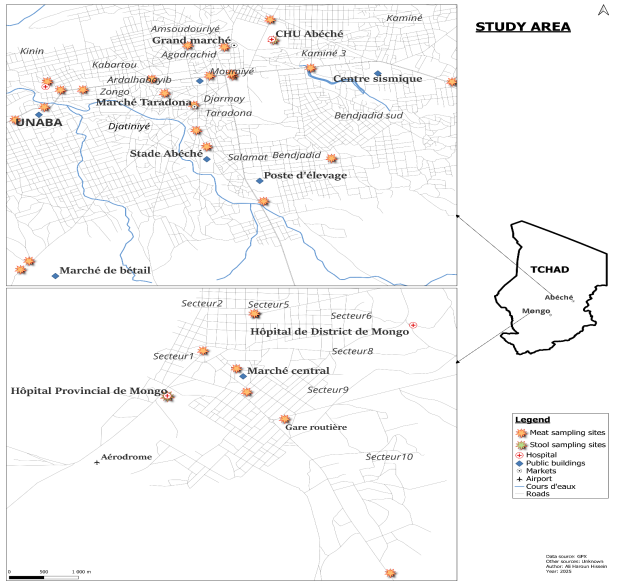
A prospective cross-sectional descriptive study was carried out from February to July 2024 in the laboratories of the Mongo provincial hospital, the Centre Hospitalier Universitaire (CHU) Abeche, the CHU National de Reference and the food analysis laboratory at the Faculty of Human Health Sciences. The two towns selected for the study (Abeche and Mongo) are located in central and eastern Chad (Figure 1). These two Sahelian, livestock-raising areas are characterized by their strategic location (crossroads), the number of collective restaurants, and the availability and accessibility of grilled meat. The study protocol was approved by the Ethnic Committee of Adam Barka University in Abeche (Agrément no 002/PR/PM/MESRSFP/SEM/SG/UNABA/CUERSH/2024). Authorizations to collect stool samples were obtained from hospital directors: CHU-A (no. 430 /CHUA/SAF/SSG/2024), Mongo Provincial Hospital (no. 17 /HPM/SAF/SSG/2024). Verbal informed consent was obtained from each participant or guardian. Consent was administered by the survey team, trained to respect ethical procedures such as professional secrecy, security of information collected and anonymity. Each patient and producer of the grilled meat received a brief explanation of the objective, sample collection methods, anticipated benefits and risks of the study.

Seventeen grilled meat sampling sites were chosen according to consumer traffic and included markets, roadside stops, neighborhoods and road junctions. Suppliers were selected according to the strategic location of the restaurants, the quantity of grilled meat and the regular number of consumers. On the other hand, the selection of eligible patients included those who regularly consumed only grilled meat in the selected locations, were aged 15 or over, regardless of sex, and had digestive symptoms. Patients who were not illegible included those who rarely or occasionally ate grilled meat or other foods, patients from outside the study areas or in transit, patients who had eaten dishes containing several added ingredients, and those with non-digestive illnesses.
2.3. Sample Collection and TransportStool samples were collected in sterile containers, after informed verbal consent from the participants or their guardians. A structured questionnaire was used to record sociodemographic data, including age, sex, place of residence, education level, frequency and place of grilled meat consumption and date of onset of symptoms. Patients who consented to participate and met the inclusion criteria were randomly selected during consultations. Samples collected in the laboratory were labeled with identification numbers and collection dates, and immediately sent to the bacteriology unit for analysis. Samples collected in the city's health centers were also transported to the analysis center in a cooler containing cold accumulators to maintain the cold chain during transport. Sample collection and transport time did not exceed 45 minutes. All samples were processed immediately on arrival, without any prior storage.
The grilled meat tasted was beef, camel, goat and mutton, depending on the customer's preference. A total of 45 samples were collected: 15 from markets, 15 from truck stops, 10 from neighborhoods and 5 from street vendors. Sampling was stratified by location, with a predefined number of samples per stratum. The restaurants were first grouped by crown. Each crown had a predefined number of grilling points. Samples of grilled meat were then collected randomly and aseptically from suppliers in each crown. The sellers cut the meat into small pieces, which were then wrapped in sterile aluminum foil. The interval between sampling and delivery to the laboratory was no more than one hour. During transport, samples were placed in sterile stomacher® bags, labeled and stored in coolers with ice packs. Each stomacher® bag was labeled with a unique sample number, collection date and location. In the laboratory, samples were aseptically processed in a laminar flow hood and equilibrated at room temperature for 30 minutes prior to microbiological analysis.
2.4. Microbiological AnalysisApproximately 0.5 mL of each stool sample was inoculated onto a selective medium for bacteriological analysis. Media included previously prepared Eosin Methylene Blue (EMB), Hektoen Enteric and Salmonella-Shigella (SS) agars (Table 1). Plates were incubated at 37°C for 18 to 24 hours.
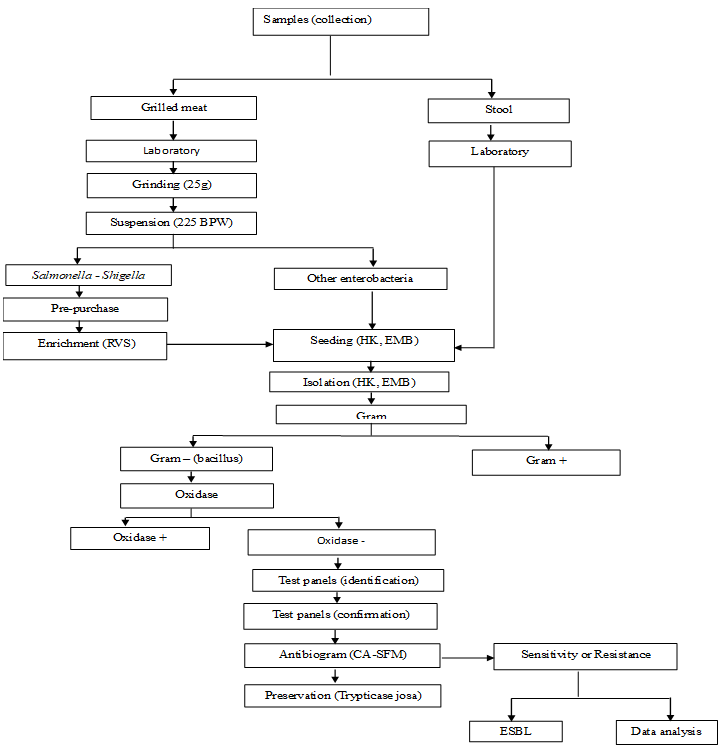
Grilled meat samples were minced with a sterile knife and homogenized in a sterile mortar. Twenty-five grams of homogenized meat were added to 225 mL of peptone water. After a 30 minutes rest at room temperature, 0.1 mL of the solution was inoculated onto EMB agar. Cultures were incubated aerobically at 44°C for fecal coliforms and at 37°C for other germs for 24 hours. Isolation of Salmonella and Shigella followed the NF ISO 6579 (2002) protocol, involving four sequential steps:
- Pre-enrichment step: 25 g of sample meat was aseptically removed and placed in 225 mL of sterile peptone water, then incubated at 37°C for 24 hours.
- Enrichment step: After one night of pre-enrichment, 1 mL of the pre-enriched stock solution was removed and inoculated into Rappaport-Vassiliadis Soja (RVS) broth in tubes under sterile conditions. The tubes were then incubated again at 37°C for 24 hours.
- Isolation step: 0.1mL of Rappaport-Vassiliadis broth was spread on Hektoen or Salmonella-Shigella agar under aseptic conditions. Twenty-four hours after incubation at 37°C.
Green or bluish colonies with or without black centers on Hektoen agar were presumed to be Salmonella or Shigella. Colonies with a metallic green sheen on EMB agar were presumed to be Escherichia coli. A representative isolated colony was subcultured on Mueller-Hinton agar for biochemical characterization after 24 hours incubation in a bacteriological oven at 37°C.
Bacterial identification was based on morphological and biochemical characteristics. Pure colonies were first characterized by Gram staining, followed by a panel of biochemical tests.
Gram staining
Gram staining is the basis of bacteriology. It enabled us to distinguish between Gram-positive (purple) and Gram-negative (pink) bacteria according to their wall structure. Staining was performed after successive use of stains (crystal violet, Lugol's, alcohol acetone, safranin) according to a well-defined time for each reagent. Observation was carried out using a microscope with a 100 mm immersion objective.
Oxidase test
His is a test that allows for the detection of the enzyme oxidase in bacteria. Consequently, a disk impregnated with oxidase reagent was placed on absorbent paper, and then a well-isolated colony of the strain to be studied was taken using a Pasteur pipette and spread on its surface. A positive reaction results in the appearance of a purple color on the surface of the disk, while a negative reaction remains unchanged.
Chemical identification bands
After the Gram stain and the oxidase test, the isolates were subjected to identification using test panels with the following media: Kligler-Hajna, Simmons Citrate, Urea-Indole, Mannitol-Mobility (Table 1). These tests evaluated characteristics such as citrate utilization, indole production, gas and hydrogen sulfide (H2S) production, urease activity, and carbohydrate fermentation.
The species identification was confirmed using the API20E system (Table 1). The species confirmation was performed by suspending one to two well-isolated and purified colonies in 5 mL of physiological saline. The inoculum was adjusted to 0.5 McFarland standard. Then, the bacterial suspension was introduced into each tube of the gallery to avoid bubble formation. The box was then closed and incubated at 37°C for 18 to 24 hours in aerobic conditions. The reactions were interpreted visually or after the addition of specific reagents (TDA, IND, and VP), and the results were converted into numerical code. Table 1 below summarizes all the culture and identification media used.
Eleven isolates were tested for antimicrobial susceptibility using the Muller Hinton agar disk diffusion method, as recommended by the Comité de l'Antibiogramme de la Société Française de Microbiologie (CASFM, 2024). Eleven antibiotics were tested: ciprofloxacin (5 µg), amoxicillin + clavulanic acid (30 µg), ceftriaxone (30 μg), cefotaxime (30 µg), cefepime (30 µg), cefoxitin (30 μg), imipenem (10 µg), gentamicin (10 µg), erythromycin (15 µg), norfloxacin (10 µg) and nalidixic acid (30 µg). Two to three pure colonies of each bacterial isolate were picked and inoculated into a dry tube containing 5 mL of sterile peptone water. The suspension was adjusted to achieve a turbidity equivalent to the 0.5 McFarland standard. The entire dish was flooded and then adjusted to obtain homogeneous inoculation. Excess liquid was discarded and the dishes were left at room temperature for 15 minutes. After incubation, 6 discs of the antibiotics to be tested were placed on the inoculated agar, with 15 mm between the disc and the edge of the plate and 30 mm between two discs. The diameters of the zones of inhibition were measured in millimeters using a graduated ruler and interpreted according to the standards of the Antibiogram Committee of the French Society for Microbiology (EUCAST. V1.0. 2024), comparing critical diameters (mm) in sensitive (S ≥) or resistant (R<). Antibiotic disc cartridges were stored dry in the refrigerator at + 2 to + 8°C. Expiration dates were validated in accordance with the manufacturer's instructions. Escherichia coli ATCC 25922 was used as a quality control strain for disk diffusion tests.
ESBL production was detected using the double-disk synergy test with third-generation cephalosporins and clavulanic acid. The isolate was inoculated into 5 mL of sterile peptone water. The mixture was homogenized to a solution corresponding to the 0.5 McFarland standard, before being poured onto Müeller-Hinton agar. Next, the discs were aseptically placed 30 mm apart on the inoculated plate so that amoxicillin-clavulanic acid (30 µg) was located in the center. After incubation for 24 hours at 37˚C. A positive result was indicated by a keyhole or the appearance of a “champagne cork” between the clavulanic acid and cephalosporin discs.
2.5. Data AnalysisData were entered and analyzed using XLSTAT 2024 software. Strain identification was performed using API Web (version 4.1) and the catalog. The χ² (chi-square) test was applied to compare categorical variables, with significance set at P ≤ 0.05). Multidrug resistance has been defined as resistance to at least three antibiotics from different antimicrobial classes.
The sample analysis process is shown in the following diagram (Figure 2).
A total of 196 samples were collected, including 151 stool samples and 45 grilled meat samples
3.1. Prevalence of Samples Contaminated with EnterobacteriaOf the 151 stool samples, 26 (17.22%) were positive for enterobacteria. In addition, 22 grilled meat samples (48.88%) were culture positive. Some samples contained several species of Enterobacteriaceae, ranging from 2 to 4 per sample. A statistically significant association was found between the presence of Enterobacteriaceae in grilled meat and stool contamination (p-value = 0.0014).
3.2. Distribution of Isolated Enterobacteriaceae by SpeciesOf the 15 species of Enterobacteriaceae identified, Escherichia coli accounted for 43.53% of isolates. The distribution of Enterobacteriaceae species isolated is summarized in Table 2.

The distribution of species isolated in the two types of samples by city is shown in Table 3.
Most Enterobacteriaceae isolates were obtained from stool samples collected at CHU-A, accounting for 55. 29%.
3.4. Overall Antibiotic Resistance Profile of Enterobacteriaceae IsolatesTable 4 shows that E. coli presented the highest overall resistance (57.71%) among both sample types, followed by Pantoea spp (34.90%). Stool samples showed the highest proportion of resistant bacteria (40.91%), with E. coli accounting for 62.30%. Multidrug resistance was observed in Pantoea spp (77.78%) and E. coli: (47.61%). All multidrug-resistant isolates were recovered from stool samples (Table 4).
3.5. Extended-spectrum beta-lactamase (EBLSE)-producing StrainsA total of six EBLSE-producing Enterobacteriaceae strains were identified from grilled meat and stool samples. E. coli was the predominant ESBL-producing species, accounting for 3 isolates (50%) (Table 5).
This study characterized the distribution of Enterobacteriaceae species from grilled meat and stool samples and assessed their antibiotic susceptibility profile. A total of 196 samples were analyzed, including 151 stool samples and 45 grilled meat samples. Enterobacteriaceae were isolated from 60% of stool samples and 40% of grilled meat samples at the study sites. The majority of isolates came from Abeche, with 40% from CHU-A and 32.94% from restaurants. This discrepancy may be attributed to variations in sample size between the two cities. The overall prevalence of Enterobacteriaceae was 17.22% in stool samples and 48.88% in grilled meat samples. Studies sof 10 11 12, in Morocco, Egypt and Chad reported higher prevalence rates of 92.14%, 67.26% and 62.84% respectively. The preence of Enterobacteriaceae may reflect poor personal hygiene and inadequate food handling practices. This detection could be a real indication of contamination of ready-to-eat foods. A total of 15 species belonging to the Enterobacteriaceae family were identified. Escherichia coli (43.53%) was the most frequently isolated species in both types of sample. Similar results were reported in several hospital and meat product studies of 13 in Iran, 14 in Bangladesh, 31% and 27.45% respectively. In addition to E. coli, other species of Enterobacteriaceae were detected. These included Pantoea, Serratia species, Klebsiella species, Enterobacter species, and Citrobacter freundii. Hafnia alvei, salmonella species, and Providencia stuartii 15 16. E. coli is a common intestinal commensal found in humans, animals and the environment. Its detection may indicate fecal contamination of food or water, or cross-contamination during food handling. Contradictory results were found of 17, that the most frequent genus in ready-to-eat foods was Klebsiella spp. This difference could be explained by the unsanitary conditions of the environment used for food production, handling, and possible cross-contamination. Klebsiella spp is a naturally occurring host in humans and can become pathogenic under certain circumstances. This bacterium can infect vulnerable individuals or those who have stayed in the hospital for a long time. Furthermore, our results highlighted a significant association between the consumption of grilled meat and fecal contamination by enterobacteria. No mandatory reportable pathogenic strain was detected in our samples. In line with the conclusions of 18, this study did not detect mandatory pathogens such as Salmonella enterica and Shigella spp. The absence of Salmonella may be explained by competitive flora, limitations of culture media, or the impact of high cooking temperatures. On the other hand, 19 reported in this study the presence of Salmonella spp in the braised carp. Contamination of ready-to-eat grilled meat could occur due to improper handling by sellers, contaminated condiments or utensils, insufficient cooking, or exposure to flies. In this study, 7.06% of Enterobacteriaceae isolates produced extended-spectrum beta-lactamases (ESBLs). This prevalence of ESBL is lower than those reported of 20 in Chad, 21 in Ethiopia, with 30.9% and 21.7% respectively in clinical samples. Among the ESBL-producing strains, E. coli (50%) and K. pneumoniae (33.34%) were the most common. These results are below those of several researchers in African countries who isolated E. coli and K. pneumoniae in hospital and community settings, notably in Thailand of 22 (56.37%), in Ghana of 23 (44.6%), 24 (40.9%). The same conclusion was reported in Ethiopia of 25 26 with 224 (84.8%), (33%) for E. coli, and 39 (14.8%), (32.7%) for K. pneumoniae. The presence of these two strains in food poses a considerable risk to consumers. These bacteria could lead to serious infections and make treatment difficult. The prevalence of Enterobacteriaceae producing extended-spectrum beta-lactamases has been observed in both types of samples, namely 50% in grilled meats and 50% in stool cultures. The identification of bacteria producing ESBL in cooked foods and in humans could have increased repercussions on consumer health due to the production of the enzyme beta-lactamase.
The highest resistance to beta-lactam antibiotics was recorded, particularly for amoxicillin (83.33%) and amoxicillin-clavulanic acid (65%). These results are consistent with those of 27, who reported a resistance of 88.9% each for amoxicillin and amoxicillin-clavulanic acid. On the other hand, higher values were reported in Nigeria of 28, 37 (84.1%) for amoxicillin and 37 (84.1%) for amoxicillin-clavulanic acid. The spread of antibiotic-resistant bacteria decreases the effectiveness of medications and forces stakeholders to resort to toxic drugs that are dangerous to humans. The presence of resistant bacteria in ready-to-eat cooked foods is very concerning and requires urgent and effective intervention from the security policies of Chad. A total of 36 (59.02%) Enterobacteriaceae strains showed resistance to third-generation cephalosporins (C3G). This resistance rate is comparable to that obtained of 29. This could be attributed to the method and media used for the detection of resistance. They used the vitex automated system to assess the sensitivity of bacteria to antibiotics. Resistance to ceftriaxone reached 70%, followed by cefotaxime (51.67%) and cephalothin (50%). Resistance can be acquired in various situations, including through the consumption of contaminated food, in a hospital environment, through unsafe water, or in a community setting. Notable resistance was also recorded among quinolones, particularly nalidixic acid (81.67%), ciprofloxacin (78.33%), norfloxacin (53.37%), and ofloxacin (51.67%). None of the tested isolates showed sensitivity greater than 40% to commonly used antibiotics. This high level of resistance could be explained by the lack of oversight, the non-enforcement of antibiotic monitoring regulations, the low level of hygiene in hospitals, and the illegal sale of drugs on the street. The establishment of a management and monitoring system for antibiotics is essential to guide rational prescribing and control misuse. Antibiotic sensitivity can vary according to bacterial strains based on geographic region, demographic factors, and seasonal trends 30 31. In this study, reduced sensitivity was observed to cefotaxime (51.67%), cefoletin (50%), and gentamicin (31.66%), except for imipenem (95%), which retains good sensitivity to Enterobacteriaceae. The majority of Enterobacteriaceae, including ESBL-producing strains, have remained sensitive to carbapenems. Although carbapenems are the treatment of choice for extended-spectrum beta-lactamase and AmpC producers, the global increase in resistance to carbapenems highlights the need for alternative therapies 32. A recent systematic review of 33 confirmed that carbapenems are often the last-line treatment for multidrug-resistant Enterobacteriaceae, although the rising resistance poses a critical challenge.
The present study provided information on the prevalence and resistance of Enterobacteriaceae to antibiotics in grilled meat and in feces. Of the 196 samples analyzed, 48 were contaminated with Enterobacteriaceae, including six (6) ESBL-producing strains. The strain of E. coli was the most predominant in this study. With the exception of Imipenem, which maintained good activity against enterobacteria, other families of antibiotics showed a rate of resistance among enterobacteria. These data are not sufficient to assert the correlation between enterobacteria found in feces and in grilled meat. Future studies in progress could incorporate molecular typing and whole genome sequencing to better understand the dynamics of transmission. For now, this data should prompt the government to monitor the regulations governing the sale and use of antibiotics, further involve the veterinary sector in meat inspection, and strictly enforce hygiene rules in restaurants.
The authors sincerely thank the Food and Nutrition Research Laboratory (LARSAN) at the University of N'Djamena (Chad), the Abéché University Hospital Center Laboratory, and the Mongo Provincial Laboratory for their support in carrying out this study.
All authors contributed to the manuscript written. They read the final manuscript and approved the final submission.
The authors declare that they have no competing interests.
No financial assistance was received from any organization.
| [1] | Salah, F. D., Adodo, Y. S., Koffi, A., Bawimodom, B., Koffi S. A., Wemboo, A. H., Jacques, S. and Bayaki, S, "Increase in antibiotic resistance of Enterobacteriaceae isolated at the National Institute of Hygiene in Lomé from 2010 to 2017", J. Int. Epidemiol. Public. Health, 4(3). 3. August 2021. | ||
| In article | |||
| [2] | Chaudhari, R., Singh, K. and Kodgire, P, "Biochemical and molecular mechanisms of antibiotic resistance in Salmonella spp ", Res. Microbiol, 174 (1-2). 1-16. January 2023. | ||
| In article | View Article PubMed | ||
| [3] | Naghavi, M., Vollset,S.E., Ikuta, S.K. and Swetschinski, R.L, " Global burden of bacterial antimicrobial resistance 1990-2021: a systematic review with projections to 2050", Lancet, 404(10459). 1199-1226. September 2024. | ||
| In article | |||
| [4] | Hedayatullah, E, " Antibiotic resistance in developing countries: emerging threats and policy Responses", Public Health Challenges, 4 (1).1-11. February 2025. | ||
| In article | View Article | ||
| [5] | Ahmed, K. S., Hussein, S., Qurbani, K., Ibrahim, H.R., Fareeq, A., Mahmood, A. K. and Mohamed, G.M, "Antimicrobial resistance: impacts, challenges and future prospects", J. med. Surg. Public. health., 2(2024). 1- 9. April 2024. | ||
| In article | View Article | ||
| [6] | Zhu, Y., Wei, E. H., E.W. and Yang, O, "Clinical perspective of antimicrobial resistance in bacteria", Infect. Drug Resist, 15. 735–746. Mars 2022. | ||
| In article | View Article PubMed | ||
| [7] | Dortet, L., Poirel, L. and Nordmann, P, "Epidemiology, detection and identification of carbapenemase-producing Enterobacteriaceae. Bacteriology Carbapenemases", feuillets deBiologie, 1 (312).1-13. May2015. | ||
| In article | |||
| [8] | Tekele, GS, Teklu, SD, Legese, HM, Weldehana, GD, Belete, AM, Tullu, DK and Birru, KS, " Multidrug-resistant and carbapenemase-producing Enterobacteriaceae in Addis Ababa, Ethiopia", Bio.Med. Res. Int, 2021(1). 1-10. June 2021. | ||
| In article | View Article PubMed | ||
| [9] | Ministry, S. P, "National Strategic Plan for the Fight Against Antibiotic Resistance", Report of the National Expert Committee for the Fight Against Microbial Resistance. 2018. 1-135. | ||
| In article | |||
| [10] | Aziz, E., Abdeljabbar, R., Chaib, Y. and Aouane, M, "Study of the biochemical characteristics of Enterobacteriaceae isolated from patients at the Sidi Kacem provincial hospital, Morocco ", Int. J. Chem. Biol. Sci, 24 (4). 16-24. January 2023. | ||
| In article | |||
| [11] | El-Jakee, J., Ata, S.N. and Omara, T.S, " Microbiological evaluation of various ready-to-eat foods in Cairo, Egypt, and investigation of possible antibacterial effects of garlic and cumin oils as food additives", Egypt. J. Vet. Sci., 55 (1). 243-257. January 2024. | ||
| In article | View Article | ||
| [12] | Ouchar, M. O., Tidjani, A., Lounnas, M., Hide, M., Benavides, J., Somasse, C. and Godreuil, S, "Fecal carriage of extended-spectrum β-lactamase-producing Enterobacteriaceae in hospital and community settings in Chad ", Resist. Antimicrob. Contrôl. Infect, 8 (169). 1-7. October 2019. | ||
| In article | View Article PubMed | ||
| [13] | Mirzaei, B., Babaei, R., Bazgir, Z.N. et al, "Prevalence of Enterobacteriaceae and its multidrug resistance rates in clinical isolates: a bicenter cross-sectional study", Mol. Biol. Rep, 48 (1). 665-675. January 2021. | ||
| In article | View Article PubMed | ||
| [14] | Ema, A.F., Rifat Noor S. N.R., Zaminur, R. Md., Ariful, I. Md. and Minara, K. M, "Access Isolation, identification, and antibiogram studies of Escherichia coli from ready-to-eat foods in Mymensingh, Bangladesh ", Vet. World, 15 (6). 1497–1505. June 2022. | ||
| In article | |||
| [15] | Erbi, D., Namwin, S. S., Doutoum, A.A., Hassan, M. A., Cissé, H., Hieny E., Tidjani, A. and Savadogo A, " Microbiological quality and antimicrobial resistance of Salmonella spp and Escherichia coli isolated from grilled meat", Int. J. Biol. Chem. Sci., 16(6). 2881-2891. December 2022. | ||
| In article | View Article | ||
| [16] | Somda, S.N; Bonkoungou,I.J.O., Kagambèga,A.,Bassolé,N.H.I., Traoré, Y., Mahillon., Sc ipp o M., Joseph, D., Hounhouigan, D.J. and Savadogo, A, "Safety of ready-to-eat chicken in Burkina Faso: Microbiological quality, Antibiotic resistance, and virulence genes in Escherichia coli isolated from chicken samples of Ouagadougou", Food. Sci. Nutr, 6(4). 1077-1084. June 2018. | ||
| In article | View Article PubMed | ||
| [17] | Elsherbeny, S. M., Rizk, D. E., Al-Ashmawy, M. and Barwa, R," Prevalence and antimicrobial susceptibility of Enterobacteriaceae isolated from retail ready-to-eat foods in Damietta, Egypt ", Egypt. J. Basic. Appl. Sci, 11(1). 116-134. Mars 2024. | ||
| In article | View Article | ||
| [18] | Aduah, M., Adzitey, F., Amoako, D.G., Abia, A.L.K., Ekli, R., Teye, G.A., Shariff, A.H.M. and Huda, N, " Not All Street Food Is Bad: Low Prevalence of Antibiotic-Resistant Salmonella enterica in Ready-to-Eat (RTE) Meats in Ghana Is Associated with Good Vendors’ Knowledge of Meat Safety", Foods, 10 (5).1-13. May 2021. | ||
| In article | View Article PubMed | ||
| [19] | Maffouoa, M. T. D., Mouafob, T. H., Mouokeua, S. R., Linda Manetb, L., Tchuenchieub, A. K., Simoa, N. B., Djeuachia, T. H., Medouab, N. G. and Tchoumbougnanga, F, " Evaluation of sanitary risks associated with the consumption of street food in the city of Yaounde (Cameroon): case of braised fish from Mvog-Ada, Ngoa Ekele, Simbock, Ahala and Olezoa", Heliyon, 7 (8). 1-178. August 2021. | ||
| In article | View Article PubMed | ||
| [20] | Hamadou, A. Ban-bo, B.A., ; Traoré, A.K., ; Kadidja, G., Nikiema, E.M., Mahamat, S.M., Ouoba, B.J., Bako, E., Bouda, S.C., Nadlou, B. and Barro, N, " Prévalence of Esbl-Producing Enterobacteriaceae Strains Isolated to the University Hospital Center of N’djamena and their Sensitivity to Antibiotics", J. Bacteriol.Mycol,10(2). 1-3. August 2023. | ||
| In article | |||
| [21] | Amare, A., Eshetie, S., Kasew, D. and Moges, F, "High prevalence of fecal carriage of Extended-spectrum beta-lactamase and carbapenemase-producing Enterobacteriaceae among food handlers at the University of Gondar, Northwest Ethiopia ", PLoS. ONE, 17(3). 1-21. Mars 2022. | ||
| In article | View Article PubMed | ||
| [22] | Siriphap, A., Kitti, T., Khuekankaew, A., Boonlao, C., Thephinlap, C., Thepmalee, C., Suwannasom, N. and Khoothiam. K, " High prevalence of extended-spectrum beta-lactamase-producing Escherichia coli and Klebsiella pneumoniae isolates: a 5-year retrospective study in a tertiary hospital in northern Thailand. Devant ", Cell. Infect. Microbiol, 8(12). 1-8. August 2022. | ||
| In article | View Article PubMed | ||
| [23] | Karikari, A.B., Kpordze, S.W., Yamik, D.Y. and Saba, C.K.S, " Ready-to-Eat Food as Sources of Extended Spectrum b-Lactamase Producing Salmonella and E. coli in Tamale, Ghana", Front. Trop. Dis; 3 (2022). 1-7. Mars 2022. | ||
| In article | View Article | ||
| [24] | Akenten, C.W., Khan, N.A., Mbwana, J. And et al, " Carriage of Klebsiella pneumoniae and ESBL-producing Escherichia coli among children in rural Ghana: a cross-sectional study", Antimicrob.,Resist. Infect. Control, 12(60). 1- 9. July 2023. | ||
| In article | View Article PubMed | ||
| [25] | Tola, M.A., Abera, N.A., Gebeyehu, Y.M., Dinku, S.F.and Tullu, K.D, " High prevalence of fecal carriage of extended-spectrum beta-lactamase-producing Escherichia coli and Klebsiella pneumoniae among under-five children in Addis Ababa, Ethiopia", PloS. ONE, 16(10). 1-16. Octobre 2021. | ||
| In article | View Article PubMed | ||
| [26] | Ramatla, T., Mafokwane, T., Lekota, K. et al, " One Health perspective on the prevalence of extended-spectrum β-lactamase (ESBL)-producing Escherichia coli and Klebsiella pneumoniae: a comprehensive systematic review and meta-analysis", Ann. Clin. Microbiol. Antimicrob, 22(88).1-17. 2023. | ||
| In article | View Article PubMed | ||
| [27] | Vázquez-López, R., Solano-Gálvez, S., Álvarez-Hernández, D.A., Ascencio-Aragón, J.A., Gómez-Conde, E.,Piña-Leyva, C., Lara-Lozano, M., Guerrero-González, T.and González-Barrios, J.A, "The Beta-Lactam Resistome Expressed by Aerobic and Anaerobic Bacteria Isolated from Human Feces of Healthy Donors", pharm, 14(6). 1- 15. June 2021. | ||
| In article | View Article PubMed | ||
| [28] | Egwu, E., Eze,C.O., Ibiam, F.A., Iroha,I.R., Moses, I.B., Iroha, C.S., I. Orji,I. and Okafor-Alu, F.N, "Antimicrobial susceptibility and molecular characteristics of bêta-lactam- and fluoroquinolone-resistant E. coli from human clinical samples in Nigeria ", ., 21(2023). 1-7. September 2023. | ||
| In article | View Article | ||
| [29] | Gamougam, K., Djibrine, M.A., Hissein, A.O. and Tidjani, A," Phenotypic characterization and antibiotic resistance of enterobacteria strains isolated from samples of patients in the towns of Moundou and Sarh in Chad “, J. Drug. Deliv. Ther, 14(8). 22-27. August 2024. | ||
| In article | View Article | ||
| [30] | Sun, D.S., Kissler, S.M., Kanjilal, S., Olesen, S.W., Lipsitch, M.and Grad, Y.H, "Analysis of multiple bacterial species and antibiotic classes reveals wide variation in the association between seasonal antibiotic use and resistance ", PLoS. Biol., 20(3). 1-18. Mars 2022. | ||
| In article | View Article PubMed | ||
| [31] | Zhan, Z.S., Shi, J., Zheng, Z.S, Zhu, X.X., Chen,J., Zhou, X.Y. and Zhang, S.Y, " Epidemiological insights into seasonal, sexspecific and agerelated distribution of bacterial pathogens in urinary tract infections ", Exp. Ther. Med, 27 (140). 1-8. February 2024. | ||
| In article | View Article PubMed | ||
| [32] | Mihret, T.M., Kassa, Y., Alemu, G. A. and Ashagire, M, "Review of emerging carbapenem-resistant Enterobacteriaceae infection, its epidemiology and new treatment options", Infect. Drug. Resis, 14(2021). 4363–4374. October 2021. | ||
| In article | View Article PubMed | ||
| [33] | Namwin, S.S., Rabbi, N., Fleischer, C.N., Korey Patience, B.T. and Eric, S.D, "A systematic review and méta-analysis of carbapenem-resistant Enterobacteriaceae in West aAfrica", BMC. Med. Genom, 17(267).1-18. November 2024. | ||
| In article | View Article PubMed | ||
Published with license by Science and Education Publishing, Copyright © 2025 Denis Erbi, Sibiri Sylvain Rouamba, Abdelsalam Adoum Doutoum, Hissein Ousman Abdoullahi, Kadidja Gamougam and Aly Savadogo
 This work is licensed under a Creative Commons Attribution 4.0 International License. To view a copy of this license, visit
http://creativecommons.org/licenses/by/4.0/
This work is licensed under a Creative Commons Attribution 4.0 International License. To view a copy of this license, visit
http://creativecommons.org/licenses/by/4.0/
| [1] | Salah, F. D., Adodo, Y. S., Koffi, A., Bawimodom, B., Koffi S. A., Wemboo, A. H., Jacques, S. and Bayaki, S, "Increase in antibiotic resistance of Enterobacteriaceae isolated at the National Institute of Hygiene in Lomé from 2010 to 2017", J. Int. Epidemiol. Public. Health, 4(3). 3. August 2021. | ||
| In article | |||
| [2] | Chaudhari, R., Singh, K. and Kodgire, P, "Biochemical and molecular mechanisms of antibiotic resistance in Salmonella spp ", Res. Microbiol, 174 (1-2). 1-16. January 2023. | ||
| In article | View Article PubMed | ||
| [3] | Naghavi, M., Vollset,S.E., Ikuta, S.K. and Swetschinski, R.L, " Global burden of bacterial antimicrobial resistance 1990-2021: a systematic review with projections to 2050", Lancet, 404(10459). 1199-1226. September 2024. | ||
| In article | |||
| [4] | Hedayatullah, E, " Antibiotic resistance in developing countries: emerging threats and policy Responses", Public Health Challenges, 4 (1).1-11. February 2025. | ||
| In article | View Article | ||
| [5] | Ahmed, K. S., Hussein, S., Qurbani, K., Ibrahim, H.R., Fareeq, A., Mahmood, A. K. and Mohamed, G.M, "Antimicrobial resistance: impacts, challenges and future prospects", J. med. Surg. Public. health., 2(2024). 1- 9. April 2024. | ||
| In article | View Article | ||
| [6] | Zhu, Y., Wei, E. H., E.W. and Yang, O, "Clinical perspective of antimicrobial resistance in bacteria", Infect. Drug Resist, 15. 735–746. Mars 2022. | ||
| In article | View Article PubMed | ||
| [7] | Dortet, L., Poirel, L. and Nordmann, P, "Epidemiology, detection and identification of carbapenemase-producing Enterobacteriaceae. Bacteriology Carbapenemases", feuillets deBiologie, 1 (312).1-13. May2015. | ||
| In article | |||
| [8] | Tekele, GS, Teklu, SD, Legese, HM, Weldehana, GD, Belete, AM, Tullu, DK and Birru, KS, " Multidrug-resistant and carbapenemase-producing Enterobacteriaceae in Addis Ababa, Ethiopia", Bio.Med. Res. Int, 2021(1). 1-10. June 2021. | ||
| In article | View Article PubMed | ||
| [9] | Ministry, S. P, "National Strategic Plan for the Fight Against Antibiotic Resistance", Report of the National Expert Committee for the Fight Against Microbial Resistance. 2018. 1-135. | ||
| In article | |||
| [10] | Aziz, E., Abdeljabbar, R., Chaib, Y. and Aouane, M, "Study of the biochemical characteristics of Enterobacteriaceae isolated from patients at the Sidi Kacem provincial hospital, Morocco ", Int. J. Chem. Biol. Sci, 24 (4). 16-24. January 2023. | ||
| In article | |||
| [11] | El-Jakee, J., Ata, S.N. and Omara, T.S, " Microbiological evaluation of various ready-to-eat foods in Cairo, Egypt, and investigation of possible antibacterial effects of garlic and cumin oils as food additives", Egypt. J. Vet. Sci., 55 (1). 243-257. January 2024. | ||
| In article | View Article | ||
| [12] | Ouchar, M. O., Tidjani, A., Lounnas, M., Hide, M., Benavides, J., Somasse, C. and Godreuil, S, "Fecal carriage of extended-spectrum β-lactamase-producing Enterobacteriaceae in hospital and community settings in Chad ", Resist. Antimicrob. Contrôl. Infect, 8 (169). 1-7. October 2019. | ||
| In article | View Article PubMed | ||
| [13] | Mirzaei, B., Babaei, R., Bazgir, Z.N. et al, "Prevalence of Enterobacteriaceae and its multidrug resistance rates in clinical isolates: a bicenter cross-sectional study", Mol. Biol. Rep, 48 (1). 665-675. January 2021. | ||
| In article | View Article PubMed | ||
| [14] | Ema, A.F., Rifat Noor S. N.R., Zaminur, R. Md., Ariful, I. Md. and Minara, K. M, "Access Isolation, identification, and antibiogram studies of Escherichia coli from ready-to-eat foods in Mymensingh, Bangladesh ", Vet. World, 15 (6). 1497–1505. June 2022. | ||
| In article | |||
| [15] | Erbi, D., Namwin, S. S., Doutoum, A.A., Hassan, M. A., Cissé, H., Hieny E., Tidjani, A. and Savadogo A, " Microbiological quality and antimicrobial resistance of Salmonella spp and Escherichia coli isolated from grilled meat", Int. J. Biol. Chem. Sci., 16(6). 2881-2891. December 2022. | ||
| In article | View Article | ||
| [16] | Somda, S.N; Bonkoungou,I.J.O., Kagambèga,A.,Bassolé,N.H.I., Traoré, Y., Mahillon., Sc ipp o M., Joseph, D., Hounhouigan, D.J. and Savadogo, A, "Safety of ready-to-eat chicken in Burkina Faso: Microbiological quality, Antibiotic resistance, and virulence genes in Escherichia coli isolated from chicken samples of Ouagadougou", Food. Sci. Nutr, 6(4). 1077-1084. June 2018. | ||
| In article | View Article PubMed | ||
| [17] | Elsherbeny, S. M., Rizk, D. E., Al-Ashmawy, M. and Barwa, R," Prevalence and antimicrobial susceptibility of Enterobacteriaceae isolated from retail ready-to-eat foods in Damietta, Egypt ", Egypt. J. Basic. Appl. Sci, 11(1). 116-134. Mars 2024. | ||
| In article | View Article | ||
| [18] | Aduah, M., Adzitey, F., Amoako, D.G., Abia, A.L.K., Ekli, R., Teye, G.A., Shariff, A.H.M. and Huda, N, " Not All Street Food Is Bad: Low Prevalence of Antibiotic-Resistant Salmonella enterica in Ready-to-Eat (RTE) Meats in Ghana Is Associated with Good Vendors’ Knowledge of Meat Safety", Foods, 10 (5).1-13. May 2021. | ||
| In article | View Article PubMed | ||
| [19] | Maffouoa, M. T. D., Mouafob, T. H., Mouokeua, S. R., Linda Manetb, L., Tchuenchieub, A. K., Simoa, N. B., Djeuachia, T. H., Medouab, N. G. and Tchoumbougnanga, F, " Evaluation of sanitary risks associated with the consumption of street food in the city of Yaounde (Cameroon): case of braised fish from Mvog-Ada, Ngoa Ekele, Simbock, Ahala and Olezoa", Heliyon, 7 (8). 1-178. August 2021. | ||
| In article | View Article PubMed | ||
| [20] | Hamadou, A. Ban-bo, B.A., ; Traoré, A.K., ; Kadidja, G., Nikiema, E.M., Mahamat, S.M., Ouoba, B.J., Bako, E., Bouda, S.C., Nadlou, B. and Barro, N, " Prévalence of Esbl-Producing Enterobacteriaceae Strains Isolated to the University Hospital Center of N’djamena and their Sensitivity to Antibiotics", J. Bacteriol.Mycol,10(2). 1-3. August 2023. | ||
| In article | |||
| [21] | Amare, A., Eshetie, S., Kasew, D. and Moges, F, "High prevalence of fecal carriage of Extended-spectrum beta-lactamase and carbapenemase-producing Enterobacteriaceae among food handlers at the University of Gondar, Northwest Ethiopia ", PLoS. ONE, 17(3). 1-21. Mars 2022. | ||
| In article | View Article PubMed | ||
| [22] | Siriphap, A., Kitti, T., Khuekankaew, A., Boonlao, C., Thephinlap, C., Thepmalee, C., Suwannasom, N. and Khoothiam. K, " High prevalence of extended-spectrum beta-lactamase-producing Escherichia coli and Klebsiella pneumoniae isolates: a 5-year retrospective study in a tertiary hospital in northern Thailand. Devant ", Cell. Infect. Microbiol, 8(12). 1-8. August 2022. | ||
| In article | View Article PubMed | ||
| [23] | Karikari, A.B., Kpordze, S.W., Yamik, D.Y. and Saba, C.K.S, " Ready-to-Eat Food as Sources of Extended Spectrum b-Lactamase Producing Salmonella and E. coli in Tamale, Ghana", Front. Trop. Dis; 3 (2022). 1-7. Mars 2022. | ||
| In article | View Article | ||
| [24] | Akenten, C.W., Khan, N.A., Mbwana, J. And et al, " Carriage of Klebsiella pneumoniae and ESBL-producing Escherichia coli among children in rural Ghana: a cross-sectional study", Antimicrob.,Resist. Infect. Control, 12(60). 1- 9. July 2023. | ||
| In article | View Article PubMed | ||
| [25] | Tola, M.A., Abera, N.A., Gebeyehu, Y.M., Dinku, S.F.and Tullu, K.D, " High prevalence of fecal carriage of extended-spectrum beta-lactamase-producing Escherichia coli and Klebsiella pneumoniae among under-five children in Addis Ababa, Ethiopia", PloS. ONE, 16(10). 1-16. Octobre 2021. | ||
| In article | View Article PubMed | ||
| [26] | Ramatla, T., Mafokwane, T., Lekota, K. et al, " One Health perspective on the prevalence of extended-spectrum β-lactamase (ESBL)-producing Escherichia coli and Klebsiella pneumoniae: a comprehensive systematic review and meta-analysis", Ann. Clin. Microbiol. Antimicrob, 22(88).1-17. 2023. | ||
| In article | View Article PubMed | ||
| [27] | Vázquez-López, R., Solano-Gálvez, S., Álvarez-Hernández, D.A., Ascencio-Aragón, J.A., Gómez-Conde, E.,Piña-Leyva, C., Lara-Lozano, M., Guerrero-González, T.and González-Barrios, J.A, "The Beta-Lactam Resistome Expressed by Aerobic and Anaerobic Bacteria Isolated from Human Feces of Healthy Donors", pharm, 14(6). 1- 15. June 2021. | ||
| In article | View Article PubMed | ||
| [28] | Egwu, E., Eze,C.O., Ibiam, F.A., Iroha,I.R., Moses, I.B., Iroha, C.S., I. Orji,I. and Okafor-Alu, F.N, "Antimicrobial susceptibility and molecular characteristics of bêta-lactam- and fluoroquinolone-resistant E. coli from human clinical samples in Nigeria ", ., 21(2023). 1-7. September 2023. | ||
| In article | View Article | ||
| [29] | Gamougam, K., Djibrine, M.A., Hissein, A.O. and Tidjani, A," Phenotypic characterization and antibiotic resistance of enterobacteria strains isolated from samples of patients in the towns of Moundou and Sarh in Chad “, J. Drug. Deliv. Ther, 14(8). 22-27. August 2024. | ||
| In article | View Article | ||
| [30] | Sun, D.S., Kissler, S.M., Kanjilal, S., Olesen, S.W., Lipsitch, M.and Grad, Y.H, "Analysis of multiple bacterial species and antibiotic classes reveals wide variation in the association between seasonal antibiotic use and resistance ", PLoS. Biol., 20(3). 1-18. Mars 2022. | ||
| In article | View Article PubMed | ||
| [31] | Zhan, Z.S., Shi, J., Zheng, Z.S, Zhu, X.X., Chen,J., Zhou, X.Y. and Zhang, S.Y, " Epidemiological insights into seasonal, sexspecific and agerelated distribution of bacterial pathogens in urinary tract infections ", Exp. Ther. Med, 27 (140). 1-8. February 2024. | ||
| In article | View Article PubMed | ||
| [32] | Mihret, T.M., Kassa, Y., Alemu, G. A. and Ashagire, M, "Review of emerging carbapenem-resistant Enterobacteriaceae infection, its epidemiology and new treatment options", Infect. Drug. Resis, 14(2021). 4363–4374. October 2021. | ||
| In article | View Article PubMed | ||
| [33] | Namwin, S.S., Rabbi, N., Fleischer, C.N., Korey Patience, B.T. and Eric, S.D, "A systematic review and méta-analysis of carbapenem-resistant Enterobacteriaceae in West aAfrica", BMC. Med. Genom, 17(267).1-18. November 2024. | ||
| In article | View Article PubMed | ||