The burden of human respiratory syncytial virus (RSV) continues to grow worldwide, particularly among the youngest segment of the population. This study aimed to describe the epidemiological and clinical characteristics of RSV circulating in Côte d'Ivoire between 2022 and 2023, and to characterize the genotypes in circulation. A total of 8,317 patients presenting with severe acute respiratory infections (SARI) or influenza-like illness (ILI) were enrolled in the study. Respiratory specimens were tested for RSV using real-time PCR. Whole-genome sequencing and phylogenetic analyses were conducted to identify circulating genotypes. Among the enrolled patients, 3,208 (38.6%) had SARI and 5,109 (61.4%) had ILI. The overall RSV positivity rate was 5.6%. The proportion of females testing positive was significantly higher than that of males (5.8% vs. 5.4%, p = 0.007). The median age of RSV-positive individuals was 1 year (interquartile range [IQR]: 0–2 years). No significant difference in RSV positivity was observed between SARI and ILI cases (p = 0.870). In terms of seasonality, RSV positivity peaked in August, reaching 12%. Among RSV-positive cases, 81.4% were RSV group B and 18.6% were RSV group A. Phylogenetic analysis revealed that most RSV-A strains belonged to clade A.D.5.1, while RSV-B strains were predominantly of clade B.D.E.1. RSV circulation in Côte d'Ivoire exhibited a clear seasonal pattern, with peak activity during the rainy season. The most affected population was children under two years of age. Molecular analysis indicated that clade B.D.E.1 has replaced B.D.4.1.1 as the dominant RSV-B lineage. Continued genomic surveillance is essential to monitor RSV evolution and inform future prevention strategies, including vaccine development and immunization policies.
The burden of human respiratory syncytial virus (RSV) continues to grow globally, particularly among the youngest segment of the population. RSV is responsible for a substantial proportion of severe respiratory illnesses, especially among infants and the elderly. In 2019, among children under 5 years of age, there were an estimated 33 million RSV-associated episodes of acute lower respiratory tract infection (ALRTI), resulting in 3.6 million hospital admissions, 26,300 in-hospital deaths, and 101,000 RSV-attributable deaths overall - most of which occurred in the community. More than 95% of RSV-related deaths occurred in low- and middle-income countries (LMICs) 1. In most cases, RSV infection initially manifests as an upper respiratory tract illness, which can progress to lower respiratory tract involvement, particularly in patients with risk factors 2. RSV is a seasonal virus with variable epidemiological patterns depending on geographic region and climate. In the Northern Hemisphere, RSV season typically begins between September and January, whereas in the Southern Hemisphere, it usually starts between March and June, closely aligning with cooler temperatures 3. However, RSV seasonality in subtropical climates remains less well defined. Some studies have shown that RSV epidemics peak during the rainy season, while others have observed increased RSV activity during periods of higher temperatures 4, 5. Preventing RSV-associated lower respiratory tract infections (LRTIs) in all infants remains a major public health priority. Vaccination is currently the most promising strategy to prevent severe RSV outcomes and reduce healthcare costs 6, 7. Three new vaccines have recently been approved, showing promising results in reducing RSV-related complications, and several other vaccine candidates are in late-stage clinical trials. These developments represent a significant step forward in RSV prevention strategies 8. RSV was previously classified as a Pneumovirus within the Paramyxoviridae family. Two major antigenic groups of RSV, A and B, are commonly detected in infants 9.
In 2022, RSV was reclassified as Orthopneumovirus hominis, a species within the Pneumoviridae family. Below the species level, two major antigenic groups are recognized; RSV subgroup A (RSV-A) and subgroup B (RSV-B) which were previously referred to as subtypes 10, 11. For both RSV-A and RSV-B subgroups, genotypes have historically been delineated based on phylogenetic groupings derived from the second hypervariable region of the G gene, which encodes the viral attachment glycoprotein. This gene is known for its pronounced genetic and antigenic diversity and has experienced distinct duplication events specifically a 72-nucleotide insertion in RSV-A and a 60-nucleotide insertion in RSV-B. Although numerous genotypes have been reported within each subgroup, a standardized global classification system has not yet been formally adopted. In response to this need, 12 proposed a lineage-based-framework that combines phylogenetic structure with amino acid signatures, offering clear criteria for defining RSV lineages 12. Côte d’Ivoire initiated an influenza surveillance program in 2006 as part of the Global Influenza Surveillance and Response System (GISRS). In 2016, routine RSV surveillance was incorporated into this program, using the influenza case definition. In 2019, the World Health Organization (WHO) developed a strategy and guidelines to integrate RSV surveillance into the existing influenza sentinel surveillance network. These guidelines have since been adopted to strengthen RSV surveillance in Côte d'Ivoire, particularly following the COVID-19 pandemic. The aim of this study was to describe the epidemiological and clinical characteristics, as well as to assess the genetic diversity of RSV detected in the general population during the 2023-2024 season in Côte d'Ivoire
This study was conducted as part of the national influenza sentinel surveillance network. The network has expanded to include ten sentinel sites, five located in Abidjan and five distributed across other regions of Côte d'Ivoire. Patients of all ages presenting with severe acute respiratory infection (SARI) or influenza-like illness (ILI) were enrolled. Nasopharyngeal specimens were collected and sent to the Institut Pasteur of Côte d'Ivoire laboratory in Abidjan for molecular analysis.
2.2. Sample CollectionSamples were collected between January 2022 and December 2023. Nasopharyngeal swabs were obtained using Universal Transport Medium (UTM3LR, COPAN) from patients presenting with ILI or SARI, in accordance with the revised WHO case definitions. Notably, the presence of fever was no longer a mandatory criterion for patient inclusion. Following collection, specimens were stored at +4°C and maintained at this temperature during transportation. Respiratory samples were transported three times per week (Monday, Wednesday, and Friday) from sentinel sites to the National Influenza Center (NIC) located at the Institut Pasteur of Côte d'Ivoire. For each ILI and SARI case, a case-based surveillance form was completed at the time of sample collection. The form included epidemiological and clinical information such as date of symptom onset, date of sample collection, patient name, sex, age, medical history, clinical symptoms, and vaccination status.
2.3. Real Time PCR for RSV DetectionViral RNA was extracted using the QIAamp Viral RNA Mini Kit (Qiagen, Hilden, Germany), following the manufacturer’s instructions. Detection of RSV-positive samples was performed using real-time reverse transcription PCR (RT-qPCR with the following primers and probe: -Forward primer: 5’-GCAAATATGGAAACATACGTGAACA-3’,
-Reverse primer:
5’-GCACCCATATTGTWAGTGATGCA-3’;
-Probe:
ROX-CTTCACGAAGGCTCCACATACACAGCWG-BHQ2.
Amplification was carried out using the SuperScript™ III Platinum® One-Step qRT-PCR Kit (ThermoFisher Scientific). Each 22.5 µL reaction contained 12.5 µL of 2× reaction buffer; 1 µL of MgSO₄ (2 mM); 0.6 µL of RT/Taq Platinum® enzyme mix, and primers and probe at a final concentration of 0.2 µM each. A volume of 2.5 µL of extracted RNA was added per reaction. Thermal cycling was performed as follows: Reverse transcription at 50 °C for 30 minutes; Enzyme activation at 95 °C for 2 minutes; Followed by 40 cycles of 15 seconds at 95 °C and 30 seconds at 55 °C.
2.4. RSV Whole Genome Sequencing and Phylogenetic AnalysisA total of 128 RSV-positive cases with a cycle threshold (Ct) value of 28 or lower were selected for sequencing, including 28 samples from 2022 and 100 samples from 2023. Sequencing was conducted at the WHO Collaborating Centre for Reference and Research on Influenza, Victorian Infectious Diseases Reference Laboratory, Peter Doherty Institute for Infection and Immunity, Melbourne, Australia. The One-step RT-PCR amplification protocol using two primer pools targeting the whole genome of Respiratory Syncytial Virus (RSV) was employed for whole-genome sequencing (WGS). Phylogenetic analysis was performed on the sequenced samples to assess potential temporal and geographical clustering. First, genome assembly and consensus sequence generation were carried out using the CDC IRMA pipeline (available at wonder.cdc.gov/amd/flu/irma and github.com/ammaraziz/wfi). Second, consensus sequences were aligned with a high-quality RSV reference genome and publicly available sequences from GISAID and GenBank (www.ncbi.nlm.nih.gov). Finally, phylogenetic trees were constructed using the Nextstrain Augur pipeline (github.com/nextstrain/augur).
2.5. Statistical AnalysisEpidemiological and clinical characteristics were described using proportions, and group comparisons were assessed through Chi-square test or Fisher’s exact test. Median age between RSV groups were compared by the non-parametric Wilcoxon Rank Test to compare the medians. A p-value of less than 0.05 was considered statistically significant. The seasonality of RSV circulation was studied by analyzing the monthly distribution of incident positive cases, and the proportion of positives over the two study years. This monthly positivity was estimated by dividing positive cases by the total number of suspects cases. The statistical analysis was performed using R Studio version 4.3.2.
During the study period, a total of 8,317 patients were enrolled. Among them, 5,109 (61.4%) presented with influenza-like illness (ILI), and 3,208 (38.6%) had severe acute respiratory infections (SARI) requiring hospitalization. The age of the patients ranged from 1 month to 93 years, with a median age of 5 years. The sex ratio (male/female) was 1.6. Of all participants, 3,517 (42.3%) were aged 0–2 years, 836 (10.1%) were 3–5 years, 597 (7.2%) were 6–14 years, 606 (7.3%) were 15–24 years, 1,688 (20.3%) were 25–49 years, and 900 (10.8%) were aged 50 years or older. RSV infection was detected in 5.6% of the total study population. Table 1 presents a comparison of demographic and clinical characteristics of RSV-positive and RSV-negative patients. The proportion of RSV-positive females (5.8%) was significantly higher than that of males (5.4%) (p = 0.007). The median age of RSV-positive patients was 1 year (IQR: 0-2 years), and the highest positivity rate was observed in children under 2 years of age (9.8%). There was no significant difference in RSV positivity between SARI and ILI cases (p = 0.870). RSV positivity in 2022 (3.7%) was slightly higher than in 2023 (3.4%), and this difference was statistically significant (p < 0.001). Of the 467 RSV-positive cases, 81.4% were identified as RSV type B, and 18.6% as type A.
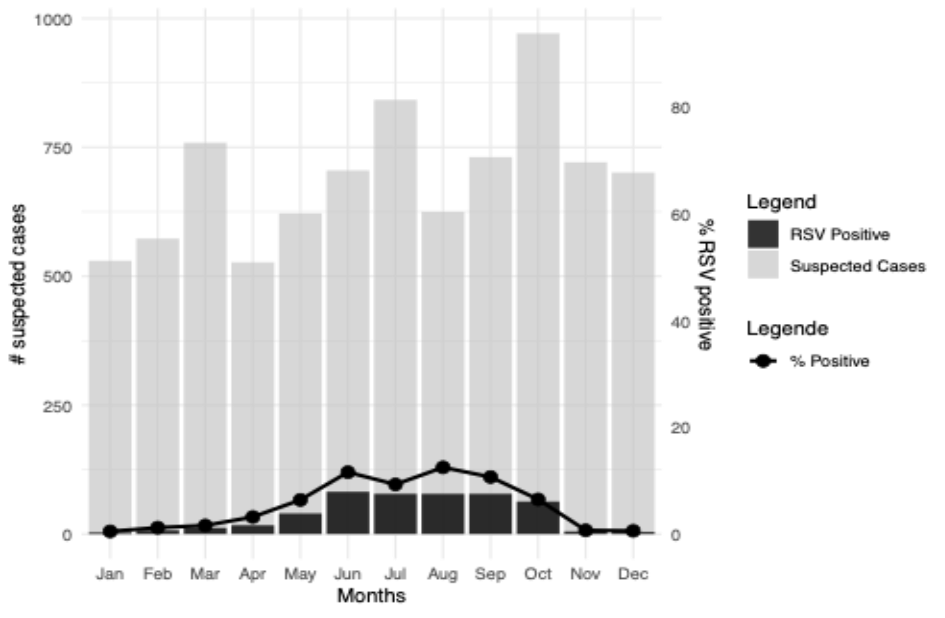
3.1. SeasonalityRSV cases were detected throughout the study period; however, clear seasonal trends were observed. Monthly distribution of both case numbers and positivity rates indicated low RSV circulation from January to April and from November to December, with positivity rates ranging between 0% and 3%. In contrast, a period of increased RSV activity was observed between May and October, during which positivity rates ranged from 6% to 12%. The peak of RSV detection occurred in August, with the highest positivity rate recorded at 12% (Figure 1).
3.2. Phylogenetic analysis of RSVOf the 128 samples that were sequenced, 89 samples produced complete genomes, 7 samples with full F and G sequences, 12 with full G sequences, and 16 samples had partial genomes with gaps in both F and G genes (Table 2). There were 4 samples that failed sequencing. Of note, only 1 whole genome sequence was obtained out of 18 RSV A viruses collected in 2022.
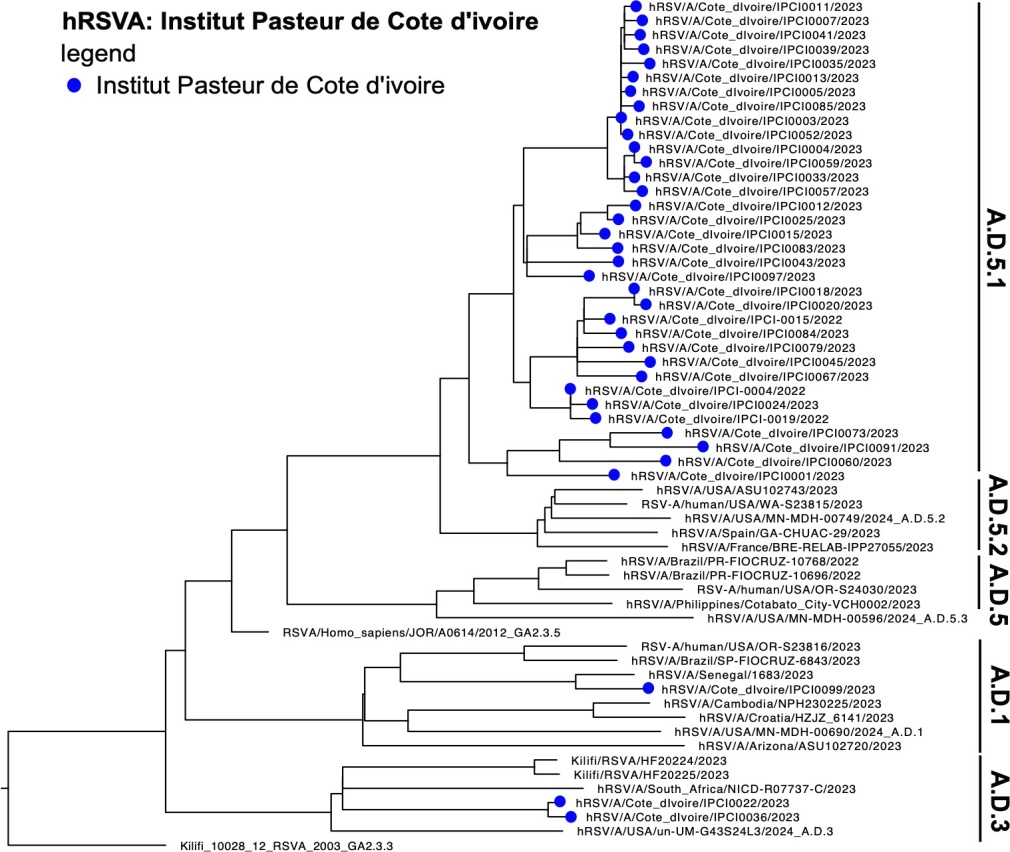
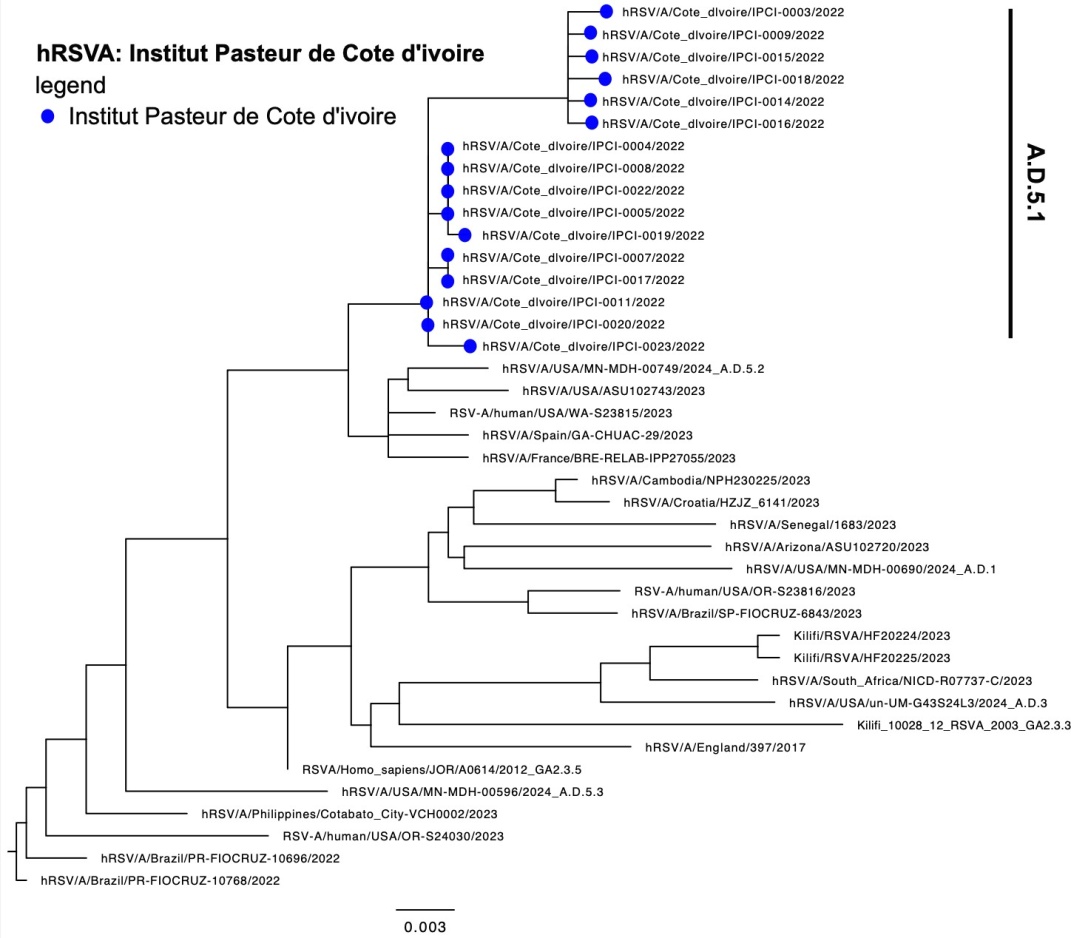
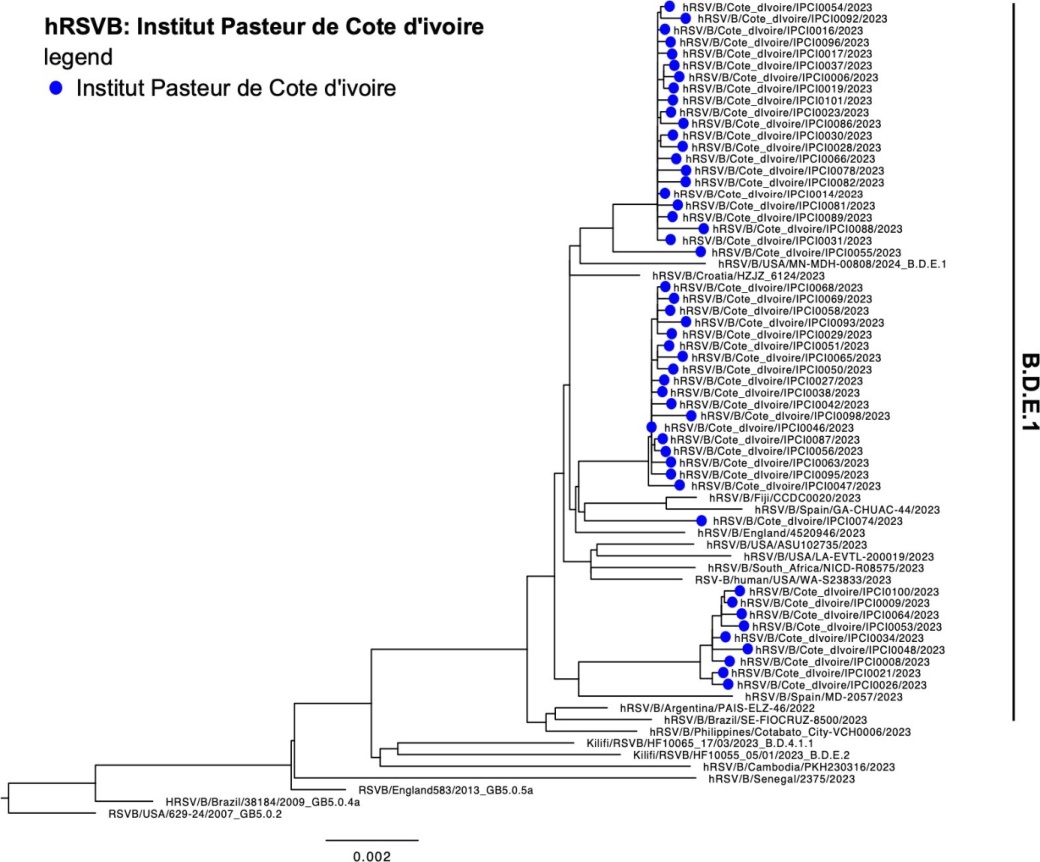
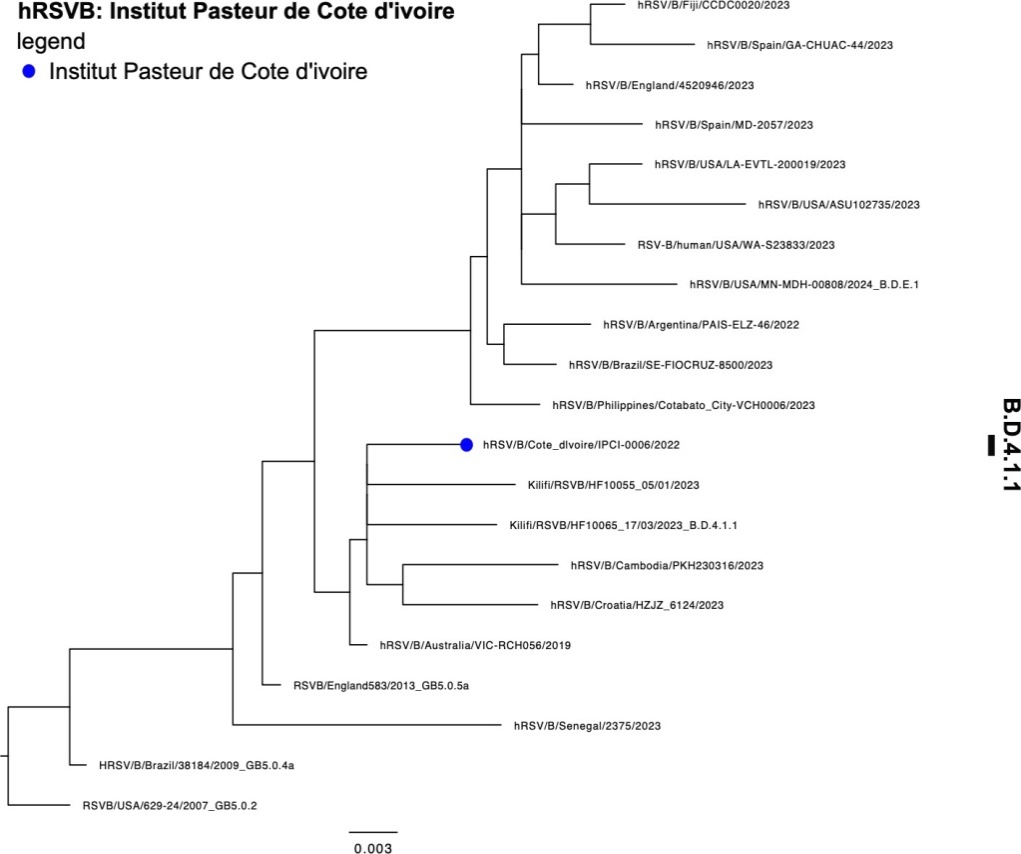
Phylogenetic analysis of the complete genome of RSV A revealed that the majority of viruses from Côte d’Ivoire (indicated by blue circles) belonged to clade A.D.5.1, while two viruses were classified as clade A.D.3 and one as A.D.1. However, due to the limited number of samples and variation in sampling dates, additional sequencing and sampling are needed to more accurately characterize transmission dynamics. Analysis of the full G gene of RSV A showed that all viruses detected in Côte d’Ivoire in 2022 (blue circles) clustered within clade A.D.5.1. For RSV B, phylogenetic analysis of whole-genome sequences indicated that all 50 viruses detected in 2023 in Côte d’Ivoire (blue circles) belonged to clade B.D.E.1. Additionally, analysis of the full G gene of the RSV B virus detected in 2022 (blue circle) showed that it belonged to clade B.D.4.1.1 (Figures 2a, 2b, 3a, and 3b).


Phylogenetic analysis of the whole genome of RSV A showed that majority of the viruses from Côte d’Ivoire (blue circles) belonged to clade A.D.5.1, while 2 viruses belonged to A.D.3 and 1 A.D.1. However, due to the low sample number and difference in sampling dates, more sampling and sequencing are needed to characterize further the transmission dynamics.

Phylogenetic analysis of the full G gene of RSV A showed that all 2022 viruses from Côte d’Ivoire (blue circles) belonged to clade A.D.5.1

Phylogenetic analysis of the whole-genome RSV B sequences showed that all 50 2023 viruses from Côte d’Ivoire (blue circles) belonged to clade B.D.E.1.

Phylogenetic analysis of the full G gene of RSV B showed that the 2022 sample from Côte d’Ivoire (blue circle) belonged to clade B.D.4.1.1.
In this study, we described the epidemiology and genetic diversity of respiratory syncytial virus (RSV) circulating in Côte d'Ivoire between 2022 and 2023, using data from the national influenza sentinel surveillance network. Several studies have demonstrated that RSV accounts for a significant proportion of respiratory infections among children under five years of age (Pneumonia Etiology Research for Child Health (PERCH) Study Group 2019; 13). In Côte d’Ivoire, RSV remains a leading cause of acute respiratory infections (ARI) in this population. Two earlier studies conducted in 2013 and 2020 reported RSV prevalence rates of 9% and 24%, respectively, among children under five 14, 15. The recent COVID-19 pandemic led to a global decline in the circulation of respiratory viruses 16. In Côte d’Ivoire, a series of public health measures were implemented to contain viral spread. These included school closures from March 13, 2020, workplace closures from March 16, 2020, and the declaration of a state of emergency on March 23, 2020. Workplace restrictions were reinstated on July 31, 2020, with mandatory social distancing. Border restrictions and international travel limitations fluctuated, including a full travel ban from March 23 to the end of June 2020, followed by partial restrictions on movement between the capital, Abidjan, and the rest of the country until the end of October 2020. These measures significantly affected the circulation of influenza viruses. It was therefore essential to evaluate their potential impact on RSV transmission and to update the epidemiological profile of RSV in Côte d'Ivoire. In contrast to earlier studies, our findings revealed a marked decrease in RSV circulation, with overall prevalence ranging from 3.4% to 3.7%. This trend is consistent with observations from several other countries 17. Non-pharmaceutical interventions (NPIs) implemented during the COVID-19 pandemic are believed to have contributed to the observed reduction in respiratory virus transmission, as demonstrated by studies conducted in countries such as South Africa 18. Nonetheless, additional factors such as viral interference between SARS-CoV-2 and other respiratory pathogens warrant further investigation. Our study also confirmed that RSV infection was most prevalent among children under two years of age, consistent with earlier reports from Côte d’Ivoire 14. This age group is recognized as the primary target for RSV infection, a pattern also observed in numerous studies globally 19, 20. At this stage of development, the immune system remains immature, and the waning of maternally derived antibodies increases susceptibility to respiratory viruses, especially RSV 21.
Interestingly, we observed a higher RSV positivity rate among females. A similar trend was reported by Jiang Tao Yu et al. in China, who hypothesized that this may be linked to increased exposure of women to infected children 22. However, this explanation is less applicable when the female predominance is observed in the pediatric population. In fact, several studies have shown that females tend to have a more robust immune response, which could theoretically reduce susceptibility to RNA viruses 23. This aligns with findings from Weber et al., who reported a male predominance in RSV infections.
Regarding seasonality, RSV-positive cases in our study were primarily detected between May and October, with a peak in August. Côte d’Ivoire experiences four seasons: the long rainy season (May–July), the short dry season (August-September), the short rainy season (October-November), and the long dry season (December-April). The observed peak in RSV activity coincides with the long rainy season and short dry season. This seasonal pattern is consistent with findings from a previous study by 15, suggesting a well-defined RSV seasonality in Côte d’Ivoire 15. However, the specific climatic drivers underlying this seasonality remain unclear. Although high RSV activity often coincides with the rainy season, peaks during dry periods have also been observed. Several studies in tropical regions have reported that RSV seasonality is not always strongly correlated with rainfall 24. Beyond descriptive epidemiology, phylodynamic and modeling studies based on high-quality, longitudinal datasets are needed to better elucidate the factors influencing RSV seasonality.
In terms of viral diversity, both RSV-A and RSV-B co-circulated throughout the study period, with RSV-B being the predominant subtype. This finding is consistent with recent data reported by 25. However, in other studies conducted during the same period, RSV-A was found to be dominant 26. It is important to note that subtype predominance can shift from year to year 27. Two main hypotheses have been proposed to explain this phenomenon: first, immunity acquired from infection with one subtype may reduce susceptibility to reinfection with related strains, thus favoring the emergence of other subtypes in subsequent seasons 28, 29; second, changes in the G protein the major antigenic determinant may allow certain subtypes to temporarily evade the host immune response, thereby increasing their prevalence.
Phylogenetic analysis of the complete genome and G gene revealed that most RSV-A viruses belonged to the A.D.5.1 sublineage. In contrast, RSV-B viruses were predominantly from the B.D.E.1 clade. The A.D.5.1 sublineage was recently defined as part of the A.D.5 lineage in the updated phylogenetic classification proposed by Goya et al. in 2024 12. This classification organizes RSV-A into hierarchical levels based on whole-genome phylogeny and specific amino acid signatures. A.D.5.1 is distinguished from other A.D.5 sublineages by unique substitutions in the G glycoprotein. This sublineage has been detected in a limited number of countries, generally at low frequencies 30, 31. Other genotypes identified in this study, including A.D.1, A.D.3, and A.D.5.2, have previously been reported in studies from China, the United States, and Europe 32, 33.
Most of the RSV-B genomes sequenced in this study belonged to clade B.D.E.1. One virus from 2022 was classified as B.D.4.1.1. The dominance of B.D.E.1 has been documented in several recent studies 34. Since 2021, B.D.E.1 has become the globally dominant RSV-B clade, gradually replacing B.D.4.1.1. This shift has been observed in countries such as the USA, Canada, and China. A study from the USA found that over 95% of RSV-B strains belonged to the B.D.E.1 clade. This clade is characterized by multiple mutations in the G and F genes, including G135S, S255P, and F: R42K, which may contribute to increased transmissibility and immune evasion 35. An additional hypothesis may explain the disappearance of the B.D.4.1.1 virus detected in 2022: this virus may have been introduced via travel or a localized event but failed to establish sustained transmission in the population. This hypothesis is supported by its absence in 2023.
This study provides epidemiological, clinical, and molecular information on the respiratory syncytial virus (RSV) circulation in Côte d'Ivoire. She has highlighted the prevalence of infection in children under two years old, with a female preponderance and higher activity between the months of May and October. A slight dominance of RSV of type B, specifically the clade B.D.E.1, has been revealed by phylogenetic analysis. The clade A.D.5.1 was significantly more prevalent for RSVs of type A, reflecting global trends. The occasional discovery of other clades (AD 1 and AD 3) suggests sporadic introductions. These findings highlight the need to increase on going RSV virological surveillance in Côte d'Ivoire, particularly among age groups. The extension of the genetic sequence allows for a better understanding of the transmission dynamics and genetic evolution of circulating strains, which is essential for implementing effective preventative measures, such as targeted vaccination.
This work is part of the RSV surveillance pilot project using the Global Influenza Surveillance Network (GISRS) initiated by the WHO. We would like to thank the focal points of the national influenza surveillance network for collecting the samples used in this study. We also extend our sincere thanks to Dr. Ian Barr and Dr. Clyde Dapat of the WHO Collaborating Centre for Reference and Research on Influenza (VIDRL) for their technical support in conducting the study, particularly for sequencing, and to the CDC in Atlanta for financial support
The authors declare no conflict of interest.
This study was conducted with the support of WHO and the CDC in Atlanta, as part of the pilot project for RSV surveillance through the Global Influenza Surveillance and Response System (GISRS).
HAK., investigation, writing, formal analysis, review. VK, YKO, writing original draft preparation; AN, DM data analysis; DC, NK, AM, EA revised the manuscript; MS, project administration. All authors have read and agreed to the published version of the manuscript.
This study was approved by the Ministry of Health of Côte d’Ivoire. The surveillance of influenza and other respiratory viral infections is officially endorsed by the Ministry of Health of Cote d’Ivoire. Patients are informed and their consent is obtained when completing the epidemiological surveillance form and collecting samples. Data were anonymized to ensure confidentiality
| [1] | Wang, X., Li, Y., Shi, T., Bont, L.J., Chu, H.Y., Zar, H.J., Singh, B.W., Yiming, M., Bingbing, C., Sharland, E., Riley, D.R., Jikui, D.J.F.A., Heikkinen, T., Jones, M.H., Johannes, G.L., Joško, M., Asuncion, M., Marta, C.N., Bernhard, R., Ashish, S., Yeo, K.T., Eric, A.F., Simões, Harish, N. and Eurico, A. “ Global disease burden of and risk factors for acute lower respiratory infections caused by respiratory syncytial virus in preterm infants and young children in 2019: a systematic review and meta-analysis of aggregated and individual participant data”.The Lancet 403 (10433): 1241‑53. | ||
| In article | |||
| [2] | Jain, H., Schweitzer, J.W. and Justice, N.A. “Respiratory Syncytial Virus Infection in Children”. In: StatPearls [Internet]. Treasure Island (FL): StatPearls Publishing; [cité 31 janv 2025]. Disponible sur: . 2025. | ||
| In article | |||
| [3] | Obando-Pacheco, P., Justicia-Grande, A.J., Rivero-Calle, I., Rodríguez-Tenreiro, C., Sly, P., Ramilo, O. and Asunción, M. “Respiratory Syncytial Virus Seasonality: A Global Overview”. Journal Infection Diseases, 217(9):1356‑64. April 2018. | ||
| In article | View Article PubMed | ||
| [4] | Pangesti, K.N.A., El, Ghany, M.A., Kesson, A.M., Hill-Cawthorne, G.A. “Respiratory syncytial virus in the Western Pacific Region asystematic review and meta-analysis”. Journal of Global Health, 9(2): 020431. | ||
| In article | View Article PubMed | ||
| [5] | Chadha, M., Hirve, S., Bancej, C., Barr, I., Baumeister, E., Caetano, B. and Malinee, C.“Human respiratory syncytial virus and influenza seasonality patterns-Early findings from the WHO global respiratory syncytial virus surveillance”. Influenza and Other Respiratory Viruses, 14 (6): 638-46. | ||
| In article | View Article PubMed | ||
| [6] | Kampmann, B., Madhi, S.A., Munjal, I., Simões, E.A.F., Pahud, B.A., Llapur, C. and Baker, J.“Bivalent Prefusion F Vaccine in Pregnancy to Prevent RSV Illness in Infants”.The New England Journal of Medicine 388 (16): 1451‑64. | ||
| In article | |||
| [7] | Ison, M.G., Papi, A., Athan, E., Feldman, R.G., Langley, J.M., Lee, D.G. and Leroux-Roelset “Efficacy and Safety of Respiratory Syncytial Virus (RSV) Prefusion F Protein Vaccine (RSVPreF3 OA) in Older Adults Over 2 RSV Seasons”.Clinical Infectious Diseases: An Official Publication of the Infectious Diseases Society of America, 78 (6): 1732‑44. | ||
| In article | |||
| [8] | Kelleher, K., Subramaniam, N. and Drysdale, S.B. “The recent landscape of RSV vaccine research”. Therapeutic Advances in Vaccines and Immunotherapy, 13 (25) 151-355. | ||
| In article | View Article PubMed | ||
| [9] | Piedimonte and Giovanni. “RSV Infections: State of the Art”. Cleveland Clinic Journal of Medicine 82 (11 suppl 1): S13‑18. | ||
| In article | View Article PubMed | ||
| [10] | Salimi, V., Viegas, M., Trento., A, Agoti, C.N., Anderson, L.J., Avadhanula, V. and Justin, B. “Proposal for Human Respiratory Syncytial Virus Nomenclature below the Species Level”. Emerging Infectious Diseases 27 (6): 1‑9. | ||
| In article | |||
| [11] | Peret, T.C., Hall, C.B., Schnabel, K.C., Golub, J.A. and Anderson, L.J.“Circulation patterns of genetically distinct group A and B strains of human respiratory syncytial virus in a community”. The Journal of General Virology.79 (9): 2221‑29. | ||
| In article | View Article PubMed | ||
| [12] | Goya, Stephanie, Christopher, R., Richard, A, Neher, Adam, M., Ammar, A., Angie, S. H. and Anne, V.G. “Standardized Phylogenetic Classification of Human Respiratory Syncytial Virus Below the Subgroup Level”. Emerging Infectious Diseases 30 (8). | ||
| In article | View Article PubMed | ||
| [13] | Pneumonia Etiology Research for Child Health (PERCH) Study Group.“Causes of Severe Pneumonia Requiring Hospital Admission in Children without HIV Infection from Africa and Asia: The PERCH Multi-Country Case-Control Study”. Lancet (London, England) 394 (10200): 757‑79. | ||
| In article | |||
| [14] | Kadjo, H.A., Adjogoua, E., Dia. N., Adagba, M., Abdoulaye, O., Daniel, S. and Bertin, K. “Detection of non-influenza viruses in acute respiratory infections in children nunder five-year-old in cote d’ivoire (january - december 2013)”. ». African Journal of Infectious Diseases 12 (2): 78‑88. | ||
| In article | View Article PubMed | ||
| [15] | Kouakou, V., Kadjo, H., Oulo, N.A., N’guessan, F.D. and N’Douba, A. “Surveillance of Respiratory Syncytial Virus in Children Aged 0-5 years in Côte d’Ivoire”. American Journal of BioScience 9 (6): 185‑91. | ||
| In article | View Article | ||
| [16] | Tang, Y., Dang, X., Lv, M., Norris, S.L., Chen, Y., Ren, L. and Enmei, L. “Changes in the prevalence of respiratory pathogens in children due to the COVID-19 pandemic : A systematic review and meta-analysis”. The Journal of Infection 86 (2): 154‑225. | ||
| In article | View Article PubMed | ||
| [17] | Chuang, Y.C., Lin, K.P., Wang, L.A., Yeh, T.K. and Liu, P.Y. “The Impact of the COVID-19 Pandemic on Respiratory Syncytial Virus Infection”. Infection and Drug Resistance 16 (janvier): 661‑75. | ||
| In article | View Article PubMed | ||
| [18] | Bents, S., Viboud, C., Grenfell, B., Hogan, A., Tempia, S., Gottberg, A.V., Jocelyn, M., Sibongile, W., Cheryl, C. and Rachel, B.’ The impact of COVID-19 non-pharmaceutical interventions on future respiratory syncytial virus transmission in South Africa”. Cold Spring Harbor Laboratory. [cité 29 mars 2025]. | ||
| In article | |||
| [19] | Bardsley, M., Morbey, R.A., Hughes, H.E., Beck, C.R., Watson. C.H., Zhao, H., Joanna, E., Gillian, E.S. and Alex, J.E. “Epidemiology of respiratory syncytial virus in children younger than 5 years in England during the COVID-19 pandemic, measured by laboratory, clinical, and syndromic surveillance a | ||
| In article | |||
| [20] | Retrospective observational study. The Lancet Infectious Diseases. 23 (1): 56‑66. | ||
| In article | |||
| [21] | Vianna,L.A., Siqueira, M.M., Volpini, L.P.B., Louro, I.D. and Resende, P.C. “Seasonality, molecular epidemiology, and virulence of Respiratory Syncytial Virus (RSV): A perspective into the Brazilian Influenza Surveillance Program”.PloS One 16 (5): e0251361. | ||
| In article | View Article PubMed | ||
| [22] | Drunen, V. L.S., Sylvia, V. and Watkiss, E.R. “Pathogenesis of respiratory syncytial virus”. Current Opinion in Virology 2 (3): 300‑305. | ||
| In article | View Article PubMed | ||
| [23] | Yu, J., Liu, N., Zhu, Y., Wang, W., Fan, X., Yuan, X., Xu, J., Zheng, B. and Luan, L. “Comparative study on the epidemiological characteristics and hazards of respiratory syncytial virus and influenza virus infections amongelderly people”. BMC Infectious Diseases. 24 (1): 1129. | ||
| In article | View Article PubMed | ||
| [24] | Congy-Jolivet, N., Cenac, C., Dellacasagrande, J., Puissant-Lubrano, B., Apoil, P.A., Guedj, K. and Flora, A. “Monocytes are the main source of STING-mediated IFN-α production”. eBioMedicine [Internet].[cité 30 mars 2025];80. Disponible sur: https://www.thelancet.com/journals/ebiom/article/PIIS2352-3964(22)00228-6/ fulltext. 80 (juin). | ||
| In article | |||
| [25] | Suryadevara, M., Domachowske, J.B. “Epidemiology and Seasonality of Childhood Respiratory Syncytial Virus Infections in the Tropics”. Viruses 13 (4): 696. | ||
| In article | View Article PubMed | ||
| [26] | Korsun, N., Trifonova, I., Madzharova, I., Alexiev, I., Uzunova, I., Ivanov, I., Petar, V. Tatiana, T. and Iva, C. “Resurgence of respiratory syncytial virus with dominance of RSV-B during the 2022–2023 season”. Frontiers in Microbiology. 1376389. | ||
| In article | |||
| [27] | Zhi, W., Xu, Q., Chen, Z., Jiang, W., Wang, T., Zhou, Y., Yu, H., Yan, Y. and Pan, T.“Respiratory syncytial virus infection in children and its correlation with climatic and environmental factors”. The Journal of International Medical Research 49 (9): 3000605211044593. | ||
| In article | View Article PubMed | ||
| [28] | Hall, C.B.E.E. Walsh, K.C., Schnabel, C.E., Long, K.M., McConnochie, S.W., Hildreth, and L.J.A. “Occurrence of Groups A and B of Respiratory Syncytial Virus over 15 Years: Associated Epidemiologic and Clinical Characteristics in Hospitalized and Ambulatory Children”. The Journal of Infectious Diseases 162 (6): 1283‑90. | ||
| In article | View Article PubMed | ||
| [29] | White, L.J., J.N. Mandl, M.G.M., Gomes, A.T., Bodley-Tickell, P.A., Cane, P., Perez-Brena, J.C. and Aguilar. “Understanding the transmission dynamics of respiratory syncytial virus using multiple time series and nested models”. Mathematical Biosciences 209 (1): 222‑39. | ||
| In article | View Article PubMed | ||
| [30] | Weber, A., Weber, M., and Milligan, P. “Modeling Epidemics Caused by Respiratory Syncytial Virus (RSV)”. Mathematical Biosciences 172 (2): 95‑113. | ||
| In article | View Article PubMed | ||
| [31] | LaVerriere, E., Behar, S., Sher-Jan, C., Liang, Y.M., Sagar, M. and Connor, J.H. “Genomic Epidemiology of Respiratory Syncytial Virus in a New England Hospital System”. medRxiv. medRxiv; 2025 [cité 21 avr 2025]. p. 2025.02.21.25322621. | ||
| In article | |||
| [32] | Yunker, M., Fall, A., Norton, J., Abdullah, O., Villafuerte, D., Pekosz, A., Klein, E. and Mostafa, H. “Genomic Evolution and Surveillance of Respiratory Syncytial Virus during the 2023-2024 Season”. Viruses. 16 (2):161122. | ||
| In article | View Article PubMed | ||
| [33] | Tramuto, F., Maida, C.M., Randazzo, G., Guzzetta, V., Santino, A., Li-Muli, R. and Costantino, C. “Whole-Genome Sequencing and Genetic Diversity of Human Respiratory Syncytial Virus in Patients with Influenza-like Illness in Sicily (Italy) from 2017 to 2023”. Viruses 16 (6): 851. | ||
| In article | View Article PubMed | ||
| [34] | Evans, D., Kunerth, H., Mumm, E., Namugenyi, S., Plumb, M., Bistodeau, S., Scott, A. and Cunningham. “Genomic Epidemiology of Human Respiratory Syncytial Virus, Minnesota, USA, July 2023-February 2024”. Emerging Infectious Diseases 30 (11): 2414‑18. | ||
| In article | View Article PubMed | ||
| [35] | Masson, E.E.M. “Novel imported clades accelerated the RSV surge in Beijing, China, 2023-2024”. Disponible sur: https:// www.em-consulte.com/ article/ 1708000/ novel-imported-clades-accelerated-the-rsv-surge-in. Consulte. [cité 21 April 2025]. | ||
| In article | |||
| [36] | Wei, X., Wang, L., Li, M., Qi, J., Kang, L. and Hu, G. “Novel imported clades accelerated the RSV surge in Beijing, China, 2023-2024”. Journal of Infection 89 (6). | ||
| In article | View Article PubMed | ||
Published with license by Science and Education Publishing, Copyright © 2025 Herve A. Kadjo, Venance Kouakou, Yakoura Karidja Ouattara, Daouda Coulibaly, Anderson Ngattia, Maxime Diane, Nguessan Konan, Adagba Marius, Edgard Adjogoua and Meite Syndou
 This work is licensed under a Creative Commons Attribution 4.0 International License. To view a copy of this license, visit
http://creativecommons.org/licenses/by/4.0/
This work is licensed under a Creative Commons Attribution 4.0 International License. To view a copy of this license, visit
http://creativecommons.org/licenses/by/4.0/
| [1] | Wang, X., Li, Y., Shi, T., Bont, L.J., Chu, H.Y., Zar, H.J., Singh, B.W., Yiming, M., Bingbing, C., Sharland, E., Riley, D.R., Jikui, D.J.F.A., Heikkinen, T., Jones, M.H., Johannes, G.L., Joško, M., Asuncion, M., Marta, C.N., Bernhard, R., Ashish, S., Yeo, K.T., Eric, A.F., Simões, Harish, N. and Eurico, A. “ Global disease burden of and risk factors for acute lower respiratory infections caused by respiratory syncytial virus in preterm infants and young children in 2019: a systematic review and meta-analysis of aggregated and individual participant data”.The Lancet 403 (10433): 1241‑53. | ||
| In article | |||
| [2] | Jain, H., Schweitzer, J.W. and Justice, N.A. “Respiratory Syncytial Virus Infection in Children”. In: StatPearls [Internet]. Treasure Island (FL): StatPearls Publishing; [cité 31 janv 2025]. Disponible sur: . 2025. | ||
| In article | |||
| [3] | Obando-Pacheco, P., Justicia-Grande, A.J., Rivero-Calle, I., Rodríguez-Tenreiro, C., Sly, P., Ramilo, O. and Asunción, M. “Respiratory Syncytial Virus Seasonality: A Global Overview”. Journal Infection Diseases, 217(9):1356‑64. April 2018. | ||
| In article | View Article PubMed | ||
| [4] | Pangesti, K.N.A., El, Ghany, M.A., Kesson, A.M., Hill-Cawthorne, G.A. “Respiratory syncytial virus in the Western Pacific Region asystematic review and meta-analysis”. Journal of Global Health, 9(2): 020431. | ||
| In article | View Article PubMed | ||
| [5] | Chadha, M., Hirve, S., Bancej, C., Barr, I., Baumeister, E., Caetano, B. and Malinee, C.“Human respiratory syncytial virus and influenza seasonality patterns-Early findings from the WHO global respiratory syncytial virus surveillance”. Influenza and Other Respiratory Viruses, 14 (6): 638-46. | ||
| In article | View Article PubMed | ||
| [6] | Kampmann, B., Madhi, S.A., Munjal, I., Simões, E.A.F., Pahud, B.A., Llapur, C. and Baker, J.“Bivalent Prefusion F Vaccine in Pregnancy to Prevent RSV Illness in Infants”.The New England Journal of Medicine 388 (16): 1451‑64. | ||
| In article | |||
| [7] | Ison, M.G., Papi, A., Athan, E., Feldman, R.G., Langley, J.M., Lee, D.G. and Leroux-Roelset “Efficacy and Safety of Respiratory Syncytial Virus (RSV) Prefusion F Protein Vaccine (RSVPreF3 OA) in Older Adults Over 2 RSV Seasons”.Clinical Infectious Diseases: An Official Publication of the Infectious Diseases Society of America, 78 (6): 1732‑44. | ||
| In article | |||
| [8] | Kelleher, K., Subramaniam, N. and Drysdale, S.B. “The recent landscape of RSV vaccine research”. Therapeutic Advances in Vaccines and Immunotherapy, 13 (25) 151-355. | ||
| In article | View Article PubMed | ||
| [9] | Piedimonte and Giovanni. “RSV Infections: State of the Art”. Cleveland Clinic Journal of Medicine 82 (11 suppl 1): S13‑18. | ||
| In article | View Article PubMed | ||
| [10] | Salimi, V., Viegas, M., Trento., A, Agoti, C.N., Anderson, L.J., Avadhanula, V. and Justin, B. “Proposal for Human Respiratory Syncytial Virus Nomenclature below the Species Level”. Emerging Infectious Diseases 27 (6): 1‑9. | ||
| In article | |||
| [11] | Peret, T.C., Hall, C.B., Schnabel, K.C., Golub, J.A. and Anderson, L.J.“Circulation patterns of genetically distinct group A and B strains of human respiratory syncytial virus in a community”. The Journal of General Virology.79 (9): 2221‑29. | ||
| In article | View Article PubMed | ||
| [12] | Goya, Stephanie, Christopher, R., Richard, A, Neher, Adam, M., Ammar, A., Angie, S. H. and Anne, V.G. “Standardized Phylogenetic Classification of Human Respiratory Syncytial Virus Below the Subgroup Level”. Emerging Infectious Diseases 30 (8). | ||
| In article | View Article PubMed | ||
| [13] | Pneumonia Etiology Research for Child Health (PERCH) Study Group.“Causes of Severe Pneumonia Requiring Hospital Admission in Children without HIV Infection from Africa and Asia: The PERCH Multi-Country Case-Control Study”. Lancet (London, England) 394 (10200): 757‑79. | ||
| In article | |||
| [14] | Kadjo, H.A., Adjogoua, E., Dia. N., Adagba, M., Abdoulaye, O., Daniel, S. and Bertin, K. “Detection of non-influenza viruses in acute respiratory infections in children nunder five-year-old in cote d’ivoire (january - december 2013)”. ». African Journal of Infectious Diseases 12 (2): 78‑88. | ||
| In article | View Article PubMed | ||
| [15] | Kouakou, V., Kadjo, H., Oulo, N.A., N’guessan, F.D. and N’Douba, A. “Surveillance of Respiratory Syncytial Virus in Children Aged 0-5 years in Côte d’Ivoire”. American Journal of BioScience 9 (6): 185‑91. | ||
| In article | View Article | ||
| [16] | Tang, Y., Dang, X., Lv, M., Norris, S.L., Chen, Y., Ren, L. and Enmei, L. “Changes in the prevalence of respiratory pathogens in children due to the COVID-19 pandemic : A systematic review and meta-analysis”. The Journal of Infection 86 (2): 154‑225. | ||
| In article | View Article PubMed | ||
| [17] | Chuang, Y.C., Lin, K.P., Wang, L.A., Yeh, T.K. and Liu, P.Y. “The Impact of the COVID-19 Pandemic on Respiratory Syncytial Virus Infection”. Infection and Drug Resistance 16 (janvier): 661‑75. | ||
| In article | View Article PubMed | ||
| [18] | Bents, S., Viboud, C., Grenfell, B., Hogan, A., Tempia, S., Gottberg, A.V., Jocelyn, M., Sibongile, W., Cheryl, C. and Rachel, B.’ The impact of COVID-19 non-pharmaceutical interventions on future respiratory syncytial virus transmission in South Africa”. Cold Spring Harbor Laboratory. [cité 29 mars 2025]. | ||
| In article | |||
| [19] | Bardsley, M., Morbey, R.A., Hughes, H.E., Beck, C.R., Watson. C.H., Zhao, H., Joanna, E., Gillian, E.S. and Alex, J.E. “Epidemiology of respiratory syncytial virus in children younger than 5 years in England during the COVID-19 pandemic, measured by laboratory, clinical, and syndromic surveillance a | ||
| In article | |||
| [20] | Retrospective observational study. The Lancet Infectious Diseases. 23 (1): 56‑66. | ||
| In article | |||
| [21] | Vianna,L.A., Siqueira, M.M., Volpini, L.P.B., Louro, I.D. and Resende, P.C. “Seasonality, molecular epidemiology, and virulence of Respiratory Syncytial Virus (RSV): A perspective into the Brazilian Influenza Surveillance Program”.PloS One 16 (5): e0251361. | ||
| In article | View Article PubMed | ||
| [22] | Drunen, V. L.S., Sylvia, V. and Watkiss, E.R. “Pathogenesis of respiratory syncytial virus”. Current Opinion in Virology 2 (3): 300‑305. | ||
| In article | View Article PubMed | ||
| [23] | Yu, J., Liu, N., Zhu, Y., Wang, W., Fan, X., Yuan, X., Xu, J., Zheng, B. and Luan, L. “Comparative study on the epidemiological characteristics and hazards of respiratory syncytial virus and influenza virus infections amongelderly people”. BMC Infectious Diseases. 24 (1): 1129. | ||
| In article | View Article PubMed | ||
| [24] | Congy-Jolivet, N., Cenac, C., Dellacasagrande, J., Puissant-Lubrano, B., Apoil, P.A., Guedj, K. and Flora, A. “Monocytes are the main source of STING-mediated IFN-α production”. eBioMedicine [Internet].[cité 30 mars 2025];80. Disponible sur: https://www.thelancet.com/journals/ebiom/article/PIIS2352-3964(22)00228-6/ fulltext. 80 (juin). | ||
| In article | |||
| [25] | Suryadevara, M., Domachowske, J.B. “Epidemiology and Seasonality of Childhood Respiratory Syncytial Virus Infections in the Tropics”. Viruses 13 (4): 696. | ||
| In article | View Article PubMed | ||
| [26] | Korsun, N., Trifonova, I., Madzharova, I., Alexiev, I., Uzunova, I., Ivanov, I., Petar, V. Tatiana, T. and Iva, C. “Resurgence of respiratory syncytial virus with dominance of RSV-B during the 2022–2023 season”. Frontiers in Microbiology. 1376389. | ||
| In article | |||
| [27] | Zhi, W., Xu, Q., Chen, Z., Jiang, W., Wang, T., Zhou, Y., Yu, H., Yan, Y. and Pan, T.“Respiratory syncytial virus infection in children and its correlation with climatic and environmental factors”. The Journal of International Medical Research 49 (9): 3000605211044593. | ||
| In article | View Article PubMed | ||
| [28] | Hall, C.B.E.E. Walsh, K.C., Schnabel, C.E., Long, K.M., McConnochie, S.W., Hildreth, and L.J.A. “Occurrence of Groups A and B of Respiratory Syncytial Virus over 15 Years: Associated Epidemiologic and Clinical Characteristics in Hospitalized and Ambulatory Children”. The Journal of Infectious Diseases 162 (6): 1283‑90. | ||
| In article | View Article PubMed | ||
| [29] | White, L.J., J.N. Mandl, M.G.M., Gomes, A.T., Bodley-Tickell, P.A., Cane, P., Perez-Brena, J.C. and Aguilar. “Understanding the transmission dynamics of respiratory syncytial virus using multiple time series and nested models”. Mathematical Biosciences 209 (1): 222‑39. | ||
| In article | View Article PubMed | ||
| [30] | Weber, A., Weber, M., and Milligan, P. “Modeling Epidemics Caused by Respiratory Syncytial Virus (RSV)”. Mathematical Biosciences 172 (2): 95‑113. | ||
| In article | View Article PubMed | ||
| [31] | LaVerriere, E., Behar, S., Sher-Jan, C., Liang, Y.M., Sagar, M. and Connor, J.H. “Genomic Epidemiology of Respiratory Syncytial Virus in a New England Hospital System”. medRxiv. medRxiv; 2025 [cité 21 avr 2025]. p. 2025.02.21.25322621. | ||
| In article | |||
| [32] | Yunker, M., Fall, A., Norton, J., Abdullah, O., Villafuerte, D., Pekosz, A., Klein, E. and Mostafa, H. “Genomic Evolution and Surveillance of Respiratory Syncytial Virus during the 2023-2024 Season”. Viruses. 16 (2):161122. | ||
| In article | View Article PubMed | ||
| [33] | Tramuto, F., Maida, C.M., Randazzo, G., Guzzetta, V., Santino, A., Li-Muli, R. and Costantino, C. “Whole-Genome Sequencing and Genetic Diversity of Human Respiratory Syncytial Virus in Patients with Influenza-like Illness in Sicily (Italy) from 2017 to 2023”. Viruses 16 (6): 851. | ||
| In article | View Article PubMed | ||
| [34] | Evans, D., Kunerth, H., Mumm, E., Namugenyi, S., Plumb, M., Bistodeau, S., Scott, A. and Cunningham. “Genomic Epidemiology of Human Respiratory Syncytial Virus, Minnesota, USA, July 2023-February 2024”. Emerging Infectious Diseases 30 (11): 2414‑18. | ||
| In article | View Article PubMed | ||
| [35] | Masson, E.E.M. “Novel imported clades accelerated the RSV surge in Beijing, China, 2023-2024”. Disponible sur: https:// www.em-consulte.com/ article/ 1708000/ novel-imported-clades-accelerated-the-rsv-surge-in. Consulte. [cité 21 April 2025]. | ||
| In article | |||
| [36] | Wei, X., Wang, L., Li, M., Qi, J., Kang, L. and Hu, G. “Novel imported clades accelerated the RSV surge in Beijing, China, 2023-2024”. Journal of Infection 89 (6). | ||
| In article | View Article PubMed | ||