Leprosy is a disease caused mainly by Mycobacterium leprae. The mode of transmission has yet to be elucidated. In order to understand its etiology, Mycobacterium leprae was genotyped into 4 types and 16 subtypes using molecular biology techniques. The overall aim of this study was to identify the subtypes of genotype 4 identified in clinical strains of M. leprae in leprosy patients in Côte d'Ivoire, using Single Nucleotide Polymorphisms (SNP) genetic markers. The biological material used consisted of dermal juices and nasal mucus collected from 40 patients clinically diagnosed with leprosy at the Institut Raoul Follereau of Côte d'Ivoire (IRFCI). Conventional PCR amplification revealed a high rate of positive M. leprae detection, i.e. 77.5% (62 /80). 5% (4 /80) of the strains identified had all three types of mutation (insertion, deletion and HPT). However, only one strain identified subtype O, characterized by the insertion of a T base at position Ins: 978589 and by the presence of a T base at position Del: 1476519. Subtype O of the identified M. leprae genotype 4 is thought to circulate in Côte d'Ivoire.
Leprosy is a skin condition caused by Mycobacterium leprae (M. leprae) or Mycobacterium lepromatosis, two uncultivable pathogens with exceptionally long generation times ranging from 5 to 20 years 1, 2. It is classified as one of the world's 20 neglected tropical diseases (NTDs) and is the third most common mycobacteriosis after tuberculosis and Buruli ulcer 3, 4. Leprosy remains a disease of public health concern as it causes often irreversible disabilities, deformities, stigmatization and discrimination of those affected 5.
To combat leprosy, the World Health Organization (WHO) introduced treatment with multidrug therapy (MDT) back in 1981 6. The introduction of MDT significantly reduced the prevalence of leprosy by 80% in 10 years and spared a million patients from disability worldwide 7. However, many endemic sites still exist. Indeed, 2021, WHO mentioned 140,594 new cases, with 66% of cases reported in Southeast Asia. In 2021, Africa was ranked by the WHO as the second continent with the highest number of leprosy cases in the world, after Asia. In Côte d'Ivoire, leprosy is endemic. The World Health Organization (WHO) has reported that 514 new cases will be detected in 2021, compared with 515 in 2020, showing a reduction in the number of cases. However, the rate of irreversible disability (degree 2) has risen from 9% in 2020 to 24.32% in 2021 8.
In order to control leprosy, the WHO has adopted the global strategy for the years 2021-2030 entitled "Towards zero leprosy", whose objectives include: (a) no new indigenous cases in 120 countries, (b) a 70% reduction in new annual cases, (c) a 90% reduction in the incidence of new grade 2 disability (G2D) cases. and (d) a 90% reduction in the incidence of pediatric leprosy cases 9.
The exact mode of transmission of leprosy bacilli has yet to be elucidated. However, direct contact via aerosol droplets spread by the respiratory route remains the main route of transmission of M. leprae 10. Frequent exposure is necessary for the development of the disease. Consequently, relatives of untreated leprosy patients are at greater risk of contracting the disease 11. In addition to bacterial exposure, other risk factors associated with leprosy development have been demonstrated, such as genetic polymorphisms, clinical type of leprosy index case within a household, immunosuppression and nutritional factors 12, 13. Also, recent studies have shown that the environment of leprosy cases as well as animals could be sources of contamination, notably armadillos in South America or chimpanzees in Côte d'Ivoire 14, 15.
In view of these probable means of transmission, increased diagnosis of M. leprae is essential. In Côte d'Ivoire, diagnosis is essentially based on clinical examination, but also on microscopy for Acid-Alcohol-Resistant Bacilli (AARB) 16. However, clinical diagnosis of the disease remains delayed due to the late onset of symptoms, resulting in a 24.32% increase in the proportion of grade 2 disability in 2021.
Recently, molecular diagnostics and the molecular epidemiology of infectious diseases have grown rapidly with advances in molecular biology techniques based on DNA analysis. The main diagnostic tool for leprosy is the chain (PCR). It uses several targets, such as repeated elements in the M. leprae genome (RLEP), the enzyme Superoxide dismutase A (Sod A), Ribosomal RNA (16S rRNA) and the bacterial proline-rich gene (prA gene) 17. However, RLEP would be the appropriate target for identification of M. leprae as it has greater sensitivity and specificity 17. It is a 545 bp, 37-copy repeat sequence located throughout the bacterial genome. Following detection of M. leprae, molecular markers such as Variations in Genetic Nucleotide Repeats (VNTRs) and Single Nucleotide Polymorphisms (SNPs) are used for genotyping. Of these two markers, SNPs are said to provide a better understanding of the etiology, transmission and evolution of
M.leprae 18. Recently, thanks to SNPs <<genotype 4>> has been identified as the M. leprae strain circulating in Côte d'Ivoire 19. This genotype can be subtyped on the basis of Insertion-Deletion (InDel) SNPs and Homopolymer (HPT) sequences 18, 20.
The subtypes associated with this strain of M. leprae circulating in Côte d'Ivoire have not yet been identified. Such identification could help in the choice of appropriate treatment against M. leprae
This study was carried out at the Institut Pasteur's molecular biology platform in Côte d'Ivoire, using samples from leprosy patients.
2.1. Ethical ApprovalThis study was approved by the National Ethics Committee for Life Sciences and Health (CNESVS) of Côte d'Ivoire as described in 19.
2.2. Study PopulationThe various samples used in this study came from the Institut Raoul Follereau of Côte d'Ivoire (IRFCI), a leprosy treatment center in Adzopé in the Mé region of Côte d'Ivoire. Forty (40) patients clinically diagnosed with leprosy were used in this study. Samples consisted of dermal juices obtained from the patients' right or left ear lobes and nasal mucus collected from nasopharyngeal swabbing.
2.3. Type of StudyThis is an analytical study to be carried out in 2022.
2.4. DNA ExtractionDNA extraction was performed using the QIAamp® Mini Kit (QIAGEN) according to the manufacturer's protocol.
2.5. PCR Confirmation of Clinical Leprosy CasesConfirmation of clinical cases was carried out by end-point PCR targeting M. leprae RLEP repeat elements, according to the protocol described by 17.
2.6. SNP Sequencing and Subtyping of M. LepraeThe PCR-SNP reaction was performed in a final volume of 25 µL, containing 5 µL genomic DNA, 10 μM of each primer, Gotaq G2 polymerase (PROMEGA, Madison, WI USA). SNP markers at positions HPT-741133, INS-978589 and DEL-1476519 were searched for.
Amplifications were performed using a GeneAmp® 9700 thermal cycler (Applied Biosystems, Singapore) according to the protocol of 20.; i.e. 94˚C for 1 min, 94˚C at 5s for 45 cycles, from 55˚C at 1min and 72˚C at 2 min, 10min at 72˚C. The primers shown in Table 1 were used for subtyping. PCR products were revealed from a 2% agarose gel (Sigma) incorporated with SybrSafe.
For sequencing, PCR products were purified using the promega swift... purification kit (PROMEGA) and sequenced on a 24-capillary Genetic Analyzer sequencer (Applied Biosystem). BioEdit software version 7.0.9.0 was used for sequence analysis and strain subtype characterization. Strain characterization was carried out by BLAST, comparing the reference sequence of Brazilian strain Br4923 with those obtained after strain sequencing and carrying mutations at positions HPT-741133, INS-978589 and DEL-1476519.
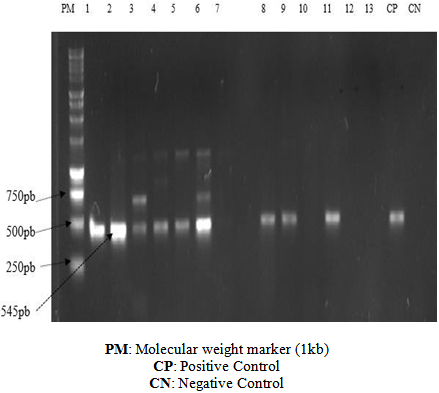
Conventional RLEP-PCR was performed on all extracted DNA, i.e. 80 DNA extracts.
It was used to diagnose 77.5% (62/80) (Figure 1).

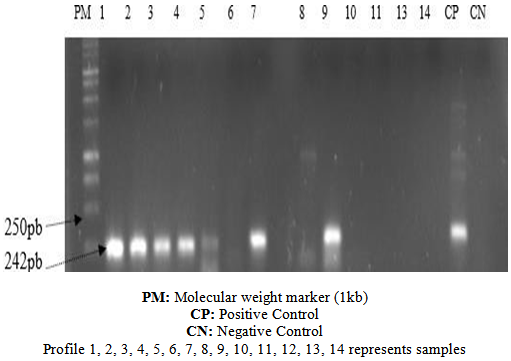
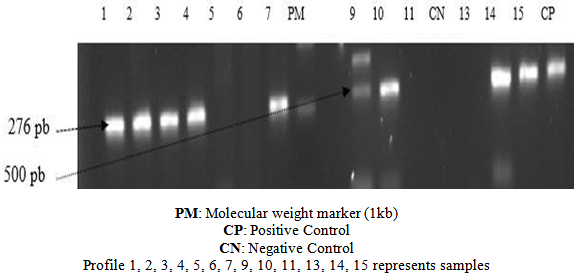
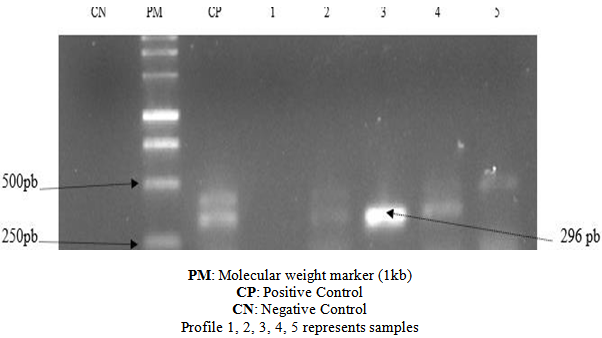
Extracts used to confirm the presence of mutations were those diagnosed as positive for M. leprae, i.e. 46 extracts. Of these extracts, 36.96% (17/46) had insertion-type mutations, 47.83% (22/46) had deletion-type mutations and 15.21% (7/46) had HPT. Only 8.7% (4/46) of extracts had all three types of (Figure 2, Figure 3 and Figure 4).


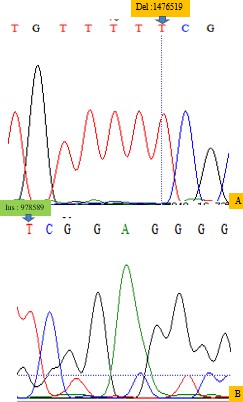
Subtype O, characterized by the insertion of a thymine (T) at position Ins: 978589 and the presence of another thymine at position Del: 1476519, has been identified as the M. leprae strain circulating in Côte d'Ivoire (Figure 5).

Leprosy is present and still rampant in many countries around the world, particularly in Côte d'Ivoire, where diagnosis is mainly clinical. In order to control the spread of this disease, PCR-based molecular diagnosis has recently been developed 16. In fact, many studies have focused on finding methods for better diagnosis of the disease, so that patients can be cared for rapidly in order to break the chain of transmission of leprosy.
To determine the molecular epidemiology of circulating strains in Côte d'Ivoire, single nucleotide polymorphism (SNP) marker analysis was carried out on samples from clinical specimens. In this study, samples samples were collected from patients diagnosed at the Institut Raoul Follereau of Côte d'Ivoire (Leprosy treatment Centre). Despite numerous studies on leprosy, in Côte d'Ivoire the genetic variability of M. leprae strains has not yet been properly elucidated. M.leprae branches are classified into specific SNP types or subtypes 1 including 4 SNP types (1-4) and 16 SNP subtypes (A-P), which provide information on the global distribution and circulation of leprosy 21. Consequently, numerous analyses have been carried out as to the origin and global distribution of leprosy based on SNPs. Branch 0 is the most ancestral branch, found mainly in East Asia (China, New Caledonia and Japan). Branch 1, corresponding to type 1 SNPs, is mainly found in East and South Asia. Type 2 SNPs, corresponding to branch 2, are mainly found in South Asia and the Near East. Branch 3, corresponding to SNP type 3, is found in Latin America. Branch 4, corresponding to SNP type 4, has been detected in West Africa and South America. Recent studies by 19 have reported the presence of genotype 4 in patient samples from Côte d'Ivoire.
In this study, sequence analysis identified genotype O, characterized by the insertion of a T base at position 978589 and the presence of a T base at position 1476519 20. The SNP 4O genotype was thus found in Côte d'Ivoire. This result is in line with studies by 22, who detected a single case of the 4N/O genotype in a West African clinical sample. Several West African countries such as Mali, Guinea and Senegal have the SNP type 4O 23. Analysis of M. leprae strains isolated in Côte d'Ivoire has shown that there is a good correlation between geographical origins M. leprae 4O genotype. The phylogeographic distribution of M. leprae strains worldwide is said to be associated host populations. SNP-type genetic markers have made it possible to learn about the distribution of leprosy in Côte d'Ivoire as it has about the distribution of the disease worldwide 19.
Of the genotype 4 subtypes, only genotype 4O has been determined in clinical samples from patients in Côte d’Ivoire. This genotype has been identified in West African countries. The M.leprae 4O genotype of leprosy cases diagnosed in Côte d’Ivoire is in line with their distribution in different regions of the world.
The authors would like to thank the management of the Institut Pasteur of Côte d'Ivoire for funding the work on this study and the Institut Raoul Follereau of Côte d'Ivoire for the collection of samples.
The authors declare that they have no conflicts of interest
INS: Insertion
DEL: Deletion
HPT: Homopolymer
SNP: Single Nucleotide Polymorphism
RLEP: Repetitive Element of Mycobacterium leprae
PCR: Polymerase Chain Reaction
| [1] | Avanzi, C, Busso, P, Benjak, A, Transmission of drug-resistant leprosy in Guinea- Conakry detected using molecular epidemiological approaches, Clinical Infectious Diseases, 63 (11). 1482-1484. 2016. | ||
| In article | View Article PubMed | ||
| [2] | Cole, S, T, and Singh, P, History and phylogeography of leprosy, In Leprosy and Buruli Ulcer Springer, 3-12. 2022. | ||
| In article | View Article | ||
| [3] | WHO, Global leprosy (Hansen disease) update, 2019: time to step-up prevention initiatives. Weekly Epidemiological Record, 95, 417-438. 2019. | ||
| In article | |||
| [4] | Aubry P, and Gaüzère B, Neglected tropical diseases, Medecine Tropicale. 56, 344-356. 2021. | ||
| In article | |||
| [5] | WHO, Global leprosy update, 2016: Accelerating reduction of disease burden. Weekly Epidemiological Record, 92, 501-520. 2017. | ||
| In article | |||
| [6] | Sigg, N, Marion, E, Gnimavo, R., Johnson, R. , Martin, L. and Habib, A, Interest of quantitative PCR for leprosy diagnosis. A study in rural Benin, Annals of Dermatology and Venereology. 146, 276-277. 2019. | ||
| In article | View Article | ||
| [7] | Ahuja, M, and Pathak, V, K, Ofloxacin resistance in multibacillary new leprosy cases from Purulia, West Bengal: a threat to effective secondary line treatment for rifampicin-resistant leprosy cases, Journal of Global Antimicrobial Resistance, 30, 282-285. 2022. | ||
| In article | View Article PubMed | ||
| [8] | WHO, Global strategy for leprosy control 2016-2020 Cataloguing at source WHO/SEARO Library, 32. 2022. | ||
| In article | |||
| [9] | WHO, towards zero leprosy, Global strategy for leprosy control (Hansen's disease) 2021-2030, 30. 2023. | ||
| In article | |||
| [10] | Pierneef, L, van, Hooij, A, Taal, A, Rumbaut, R, Nobre, M, L., van, Brakel, W and Geluk, A, Detection of anti-M. leprae antibodies in children in leprosy-endemic areas: A systematic review, PLoS Neglected Tropical Diseases, 15, e0009667, 2021. | ||
| In article | View Article PubMed | ||
| [11] | Quilter, E, E, Butlin, C, R, Singh, S, Alam, K and Lockwood, D, N, Patients with skin smear positive leprosy in Bangladesh are the main risk factor for leprosy development: 21-year follow-up in the household contact study (COCOA). PLoS Neglected Tropical Diseases, 14, e0008687. 2020. | ||
| In article | View Article PubMed | ||
| [12] | Sales-Marques, C, Cardoso, C, C, Alvarado-Arnez, L, E, Illaramendi, X, Sales, A, M, Hacker, M, A, Genetic polymorphisms of the IL6 and NOD2 genes are risk factors for inflammatory reactions in leprosy. PLoS Neglected Tropical Diseases, 11, e0005754.2017. | ||
| In article | View Article PubMed | ||
| [13] | Dwivedi, V, P, Banerjee, A, Das, I, Saha, A, Dutta, M and Bhardwaj, B, Diet and nutrition: An important risk factor in leprosy. Microbiolog Pathogen 137, 103714- 103725. 2019. | ||
| In article | View Article PubMed | ||
| [14] | Tió-Coma, M, Wijnands, T, Pierneef, L., Schilling, A, K, Alam, K, Roy, J, C and Geluk, A, Detection of Mycobacterium leprae DNA in soil: multiple needles in the haystack. Scientific Reports, 9, 1-7. 2019. | ||
| In article | View Article PubMed | ||
| [15] | Vera-Cabrera, L, Ramos-Cavazos, C, J, Youssef, N, A, Pearce, C, M, Molina-Torres C, A, Avalos-Ramirez, R and Avanzi C, Mycobacterium leprae Infection in a Wild Nine-Banded Armadillo, Nuevo León, Mexico, Emerging Infectious Diseases, 28, 747- 749. 2022. | ||
| In article | View Article PubMed | ||
| [16] | Coulibaly, N,D, Dehe B, R, Kakou-N’gazoa S, Kouakou H, Amon, A, C, Sylla, A, Bidié P, B, Bamba V, and Dosso, M, Drugs susceptibility testing in leprosy patients from Côte d'Ivoire reveals multidrugs resistance combination cases to dapsone, rifampicin and ofloxacin, American Journal of Microbiological Research, 8, 160-163. 2020. | ||
| In article | |||
| [17] | Dehe, B, R, Coulibaly, N, D, G, Kouakou, H, Amon, A, C, Kakou-Ngasoa, S, E, Bamba, V, and Dosso, M, Comparative assessments of polymerase chain reaction (PCR) assay of repetitive sequence (RLEP) and proline rich antigen (PRA) gene targets for detection of Mycobacterium leprae DNA from paucibacillary (PB) and multibacillary (MB) patients in Côte d'Ivoire, GSC Biological and Pharmaceutical Sciences, 11, 085-092. 2020. | ||
| In article | View Article | ||
| [18] | Blevins K, Crane A, Lum C, Furuta K, Fox K, and Stone, A, Evolutionary history of Mycobacterium leprae in the Pacific Islands, Philosophical Transactions of the Royal Society Biological Sciences, 375, 20190582-20190593. 2020. | ||
| In article | View Article PubMed | ||
| [19] | Amon, A,C, Coulibaly, N,D, Dehe, B,R, Kouakou, H, Kakou-N.S, Djaman, A, J, Bamba V, and Dosso M, "SNP Typing of Mycobacterium leprae Clinical Strains in Côte d'Ivoire Reveals Genotype 4 Circulating," American Journal of Biomedical Research, 9, 30-35. 2021. | ||
| In article | |||
| [20] | Monot, M, Honoré, N, Garnier, T, Araoz, R, Coppée, J and Lacroix, C, Comparative genomic and phylogeographic analysis of Mycobacterium leprae. Nature Genetic, 41, 1282-1289. 2009. | ||
| In article | View Article PubMed | ||
| [21] | Schuenemann, V, J, Avanzi, C, Krause-Kyora, B, Ancient genomes reveal a high diversity of Mycobacterium leprae in medieval Europe, PLoS Pathogen, 14(5):e1006997.2018. | ||
| In article | View Article PubMed | ||
| [22] | Pfrengle, S, Neukamm, J, Guellil, M, Keller, M, Molak,, M., Avanzi, C, Kushniarevich. A, Montes, N, Neumann, G, Reiter, E, Tukhbatova, R, Berezina, N, Buzhilova, A, Korobov, D, Hamre, S, Matos, V, Ferreira, M, González-Garrido, L, Wasterlain, S, Lopes C, Santos, A, Antunes-Ferreira, N, Duarte, V, Silva, A, Melo. L, Sarkic, N, Saag, L, Tambets, K, Busso, P, Stewart, T, Avlasovich, A, Charlotte, A, Alison, S, Craig, C, Robb, J, Krause, J, Scheib, C, Inskip. S, and Schuenemann, V, Mycobacterium leprae diversity and population dynamics in medieval Europe from novel ancient genomes, BMC Biology, 19, 220. 2021. | ||
| In article | View Article PubMed | ||
| [23] | Holanda, M, Marques, L, Macedo, M., Pontes, M, Sabadia, J, Kerr, L, Almeida, R, and Frota, C, Presence of Mycobacterium leprae genotype 4 in environmental waters in Northeast Brazil, Revista da Sociedade Brasileira de Medicina Tropical, 50 (2), 216-222. 2017. | ||
| In article | View Article PubMed | ||
Published with license by Science and Education Publishing, Copyright © 2025 Amon Aby Christiane, Coulibaly Kpanhonri Eve Christelle, Dehe Bahou Roger, Yavo Konan Albert, Kouakou Luc Venance, Coulibaly Gninwélé Anne-Edwige, Kakou N’Gazoa Solange, Tian-Bi Yves-Nathan and Coulibaly N'Golo David
 This work is licensed under a Creative Commons Attribution 4.0 International License. To view a copy of this license, visit
http://creativecommons.org/licenses/by/4.0/
This work is licensed under a Creative Commons Attribution 4.0 International License. To view a copy of this license, visit
http://creativecommons.org/licenses/by/4.0/
| [1] | Avanzi, C, Busso, P, Benjak, A, Transmission of drug-resistant leprosy in Guinea- Conakry detected using molecular epidemiological approaches, Clinical Infectious Diseases, 63 (11). 1482-1484. 2016. | ||
| In article | View Article PubMed | ||
| [2] | Cole, S, T, and Singh, P, History and phylogeography of leprosy, In Leprosy and Buruli Ulcer Springer, 3-12. 2022. | ||
| In article | View Article | ||
| [3] | WHO, Global leprosy (Hansen disease) update, 2019: time to step-up prevention initiatives. Weekly Epidemiological Record, 95, 417-438. 2019. | ||
| In article | |||
| [4] | Aubry P, and Gaüzère B, Neglected tropical diseases, Medecine Tropicale. 56, 344-356. 2021. | ||
| In article | |||
| [5] | WHO, Global leprosy update, 2016: Accelerating reduction of disease burden. Weekly Epidemiological Record, 92, 501-520. 2017. | ||
| In article | |||
| [6] | Sigg, N, Marion, E, Gnimavo, R., Johnson, R. , Martin, L. and Habib, A, Interest of quantitative PCR for leprosy diagnosis. A study in rural Benin, Annals of Dermatology and Venereology. 146, 276-277. 2019. | ||
| In article | View Article | ||
| [7] | Ahuja, M, and Pathak, V, K, Ofloxacin resistance in multibacillary new leprosy cases from Purulia, West Bengal: a threat to effective secondary line treatment for rifampicin-resistant leprosy cases, Journal of Global Antimicrobial Resistance, 30, 282-285. 2022. | ||
| In article | View Article PubMed | ||
| [8] | WHO, Global strategy for leprosy control 2016-2020 Cataloguing at source WHO/SEARO Library, 32. 2022. | ||
| In article | |||
| [9] | WHO, towards zero leprosy, Global strategy for leprosy control (Hansen's disease) 2021-2030, 30. 2023. | ||
| In article | |||
| [10] | Pierneef, L, van, Hooij, A, Taal, A, Rumbaut, R, Nobre, M, L., van, Brakel, W and Geluk, A, Detection of anti-M. leprae antibodies in children in leprosy-endemic areas: A systematic review, PLoS Neglected Tropical Diseases, 15, e0009667, 2021. | ||
| In article | View Article PubMed | ||
| [11] | Quilter, E, E, Butlin, C, R, Singh, S, Alam, K and Lockwood, D, N, Patients with skin smear positive leprosy in Bangladesh are the main risk factor for leprosy development: 21-year follow-up in the household contact study (COCOA). PLoS Neglected Tropical Diseases, 14, e0008687. 2020. | ||
| In article | View Article PubMed | ||
| [12] | Sales-Marques, C, Cardoso, C, C, Alvarado-Arnez, L, E, Illaramendi, X, Sales, A, M, Hacker, M, A, Genetic polymorphisms of the IL6 and NOD2 genes are risk factors for inflammatory reactions in leprosy. PLoS Neglected Tropical Diseases, 11, e0005754.2017. | ||
| In article | View Article PubMed | ||
| [13] | Dwivedi, V, P, Banerjee, A, Das, I, Saha, A, Dutta, M and Bhardwaj, B, Diet and nutrition: An important risk factor in leprosy. Microbiolog Pathogen 137, 103714- 103725. 2019. | ||
| In article | View Article PubMed | ||
| [14] | Tió-Coma, M, Wijnands, T, Pierneef, L., Schilling, A, K, Alam, K, Roy, J, C and Geluk, A, Detection of Mycobacterium leprae DNA in soil: multiple needles in the haystack. Scientific Reports, 9, 1-7. 2019. | ||
| In article | View Article PubMed | ||
| [15] | Vera-Cabrera, L, Ramos-Cavazos, C, J, Youssef, N, A, Pearce, C, M, Molina-Torres C, A, Avalos-Ramirez, R and Avanzi C, Mycobacterium leprae Infection in a Wild Nine-Banded Armadillo, Nuevo León, Mexico, Emerging Infectious Diseases, 28, 747- 749. 2022. | ||
| In article | View Article PubMed | ||
| [16] | Coulibaly, N,D, Dehe B, R, Kakou-N’gazoa S, Kouakou H, Amon, A, C, Sylla, A, Bidié P, B, Bamba V, and Dosso, M, Drugs susceptibility testing in leprosy patients from Côte d'Ivoire reveals multidrugs resistance combination cases to dapsone, rifampicin and ofloxacin, American Journal of Microbiological Research, 8, 160-163. 2020. | ||
| In article | |||
| [17] | Dehe, B, R, Coulibaly, N, D, G, Kouakou, H, Amon, A, C, Kakou-Ngasoa, S, E, Bamba, V, and Dosso, M, Comparative assessments of polymerase chain reaction (PCR) assay of repetitive sequence (RLEP) and proline rich antigen (PRA) gene targets for detection of Mycobacterium leprae DNA from paucibacillary (PB) and multibacillary (MB) patients in Côte d'Ivoire, GSC Biological and Pharmaceutical Sciences, 11, 085-092. 2020. | ||
| In article | View Article | ||
| [18] | Blevins K, Crane A, Lum C, Furuta K, Fox K, and Stone, A, Evolutionary history of Mycobacterium leprae in the Pacific Islands, Philosophical Transactions of the Royal Society Biological Sciences, 375, 20190582-20190593. 2020. | ||
| In article | View Article PubMed | ||
| [19] | Amon, A,C, Coulibaly, N,D, Dehe, B,R, Kouakou, H, Kakou-N.S, Djaman, A, J, Bamba V, and Dosso M, "SNP Typing of Mycobacterium leprae Clinical Strains in Côte d'Ivoire Reveals Genotype 4 Circulating," American Journal of Biomedical Research, 9, 30-35. 2021. | ||
| In article | |||
| [20] | Monot, M, Honoré, N, Garnier, T, Araoz, R, Coppée, J and Lacroix, C, Comparative genomic and phylogeographic analysis of Mycobacterium leprae. Nature Genetic, 41, 1282-1289. 2009. | ||
| In article | View Article PubMed | ||
| [21] | Schuenemann, V, J, Avanzi, C, Krause-Kyora, B, Ancient genomes reveal a high diversity of Mycobacterium leprae in medieval Europe, PLoS Pathogen, 14(5):e1006997.2018. | ||
| In article | View Article PubMed | ||
| [22] | Pfrengle, S, Neukamm, J, Guellil, M, Keller, M, Molak,, M., Avanzi, C, Kushniarevich. A, Montes, N, Neumann, G, Reiter, E, Tukhbatova, R, Berezina, N, Buzhilova, A, Korobov, D, Hamre, S, Matos, V, Ferreira, M, González-Garrido, L, Wasterlain, S, Lopes C, Santos, A, Antunes-Ferreira, N, Duarte, V, Silva, A, Melo. L, Sarkic, N, Saag, L, Tambets, K, Busso, P, Stewart, T, Avlasovich, A, Charlotte, A, Alison, S, Craig, C, Robb, J, Krause, J, Scheib, C, Inskip. S, and Schuenemann, V, Mycobacterium leprae diversity and population dynamics in medieval Europe from novel ancient genomes, BMC Biology, 19, 220. 2021. | ||
| In article | View Article PubMed | ||
| [23] | Holanda, M, Marques, L, Macedo, M., Pontes, M, Sabadia, J, Kerr, L, Almeida, R, and Frota, C, Presence of Mycobacterium leprae genotype 4 in environmental waters in Northeast Brazil, Revista da Sociedade Brasileira de Medicina Tropical, 50 (2), 216-222. 2017. | ||
| In article | View Article PubMed | ||