A 49-year-old man with longstanding anxiety, recurrent panic attacks, significant trauma exposure, and severe freeway-driving avoidance presented for psychiatric treatment. His baseline regimen included quetiapine extended release, aripiprazole, buspirone, and clonazepam during a supervised taper. Treatment incorporated medication restructuring and weekly multimodal psychotherapy. Aripiprazole was discontinued, sertraline was initiated and titrated, and quetiapine was temporarily reduced but restored after worsening baseline anxiety. Psychotherapy included eye movement desensitization and reprocessing (EMDR) targeting childhood memories and maladaptive beliefs involving self-worth, helplessness, control, and safety, while driving avoidance was addressed more directly through graded exposure, cognitive-behavioral strategies, somatic techniques, mindfulness, and related skills. Driving activity increased progressively from brief exposures to several hours at a time. At approximately six months of follow-up, the patient reported driving long distances on freeways, maintaining highway speeds, and passing large trucks without panic attacks or significant anxiety. Clonazepam was successfully discontinued, and mood remained stable without documented manic or hypomanic symptoms. Baseline brain perfusion single-photon emission computed tomography demonstrated mixed relative cortical and subcortical tracer-distribution differences and was included only as a descriptive adjunct to the clinical evaluation. This case illustrates meaningful functional recovery during coordinated multimodal psychotherapy and pharmacotherapy, while the contribution of any individual intervention cannot be determined.
Recurrent panic attacks may be accompanied by persistent anticipatory anxiety and avoidance of situations associated with feared symptoms, resulting in substantial impairment in social, occupational, and everyday functioning 1. Avoidance becomes particularly consequential when it restricts activities necessary for independence. Driving-related fear can arise in association with panic symptoms, prior adverse experiences, specific driving situations, or fears of losing control while operating a vehicle 2. When severe, it may result in substantial restriction or complete avoidance of driving and increasing dependence on others for transportation.
Treatment of panic-related symptoms and avoidance commonly incorporates pharmacotherapy and psychotherapy. Cognitive-behavioral approaches, particularly those incorporating exposure to feared sensations or situations, have substantial evidence supporting their use in panic disorder with or without agoraphobia 3. Selective serotonin reuptake inhibitors are also among the best-studied pharmacologic treatments for panic disorder 4. However, reduction in panic symptoms does not necessarily correspond to restoration of previously avoided activities. Recovery of meaningful everyday function, including the ability to independently engage in a previously feared activity, therefore represents an important clinical outcome.
Eye movement desensitization and reprocessing (EMDR) is a trauma-focused psychotherapy with established evidence in post-traumatic stress disorder 5. EMDR has also been investigated in panic disorder and agoraphobic presentations, although evidence in these populations remains more limited and mixed. An earlier controlled trial did not establish a clear advantage over a credible attention-control condition 6, whereas a later randomized trial found EMDR noninferior to cognitive behavioral therapy for several panic-related outcomes, with less definitive findings for behavioral avoidance 7. Brain perfusion single-photon emission computed tomography (SPECT) depicts relative regional tracer distribution and may provide adjunctive functional imaging information that requires interpretation within the broader clinical context 8. We describe a patient with longstanding recurrent panic symptoms, significant trauma exposure, and severe freeway-driving avoidance who experienced progressive restoration of driving function during multimodal psychotherapy and pharmacotherapy, together with successful discontinuation of clonazepam. Baseline brain perfusion SPECT findings are presented descriptively as an adjunctive component of the clinical evaluation.
A 49-year-old man presented with longstanding anxiety beginning in childhood that had progressively worsened over several years. He reported panic attacks approximately one to two times per week, characterized by chest fullness, shortness of breath, and transient visual perceptual changes described as a “strobe-like” sensation. Freeway driving had become a prominent trigger, eventually resulting in avoidance and increasing reliance on his spouse for transportation. He also described anticipatory anxiety, obsessive rumination, catastrophizing, and marked distress when established routines were disrupted. Although he had a remote history of intermittent depressive symptoms and suicidal ideation, he denied current suicidal ideation, and his Patient Health Questionnaire-9 (PHQ-9) score was 0.
His psychiatric history was notable for a prior diagnosis of atypical rapid-cycling bipolar I disorder and more than a decade of longitudinal psychiatric treatment. At presentation, he was taking quetiapine extended release 300 mg twice daily, aripiprazole 20 mg daily, buspirone 30 mg twice daily, and clonazepam 0.25 mg daily during a supervised taper. He had previously received substantially higher doses of clonazepam. During cancer treatment, difficulty swallowing medications had led to abrupt clonazepam interruption and severe withdrawal characterized by confusion and persistent vomiting requiring hospitalization. Clonazepam was subsequently restarted and tapered under supervision. He also reported stable nightly use of a tetrahydrocannabinol/cannabidiol preparation for anxiety. Obstructive sleep apnea was treated with continuous positive airway pressure, with stable sleep reported during follow-up.
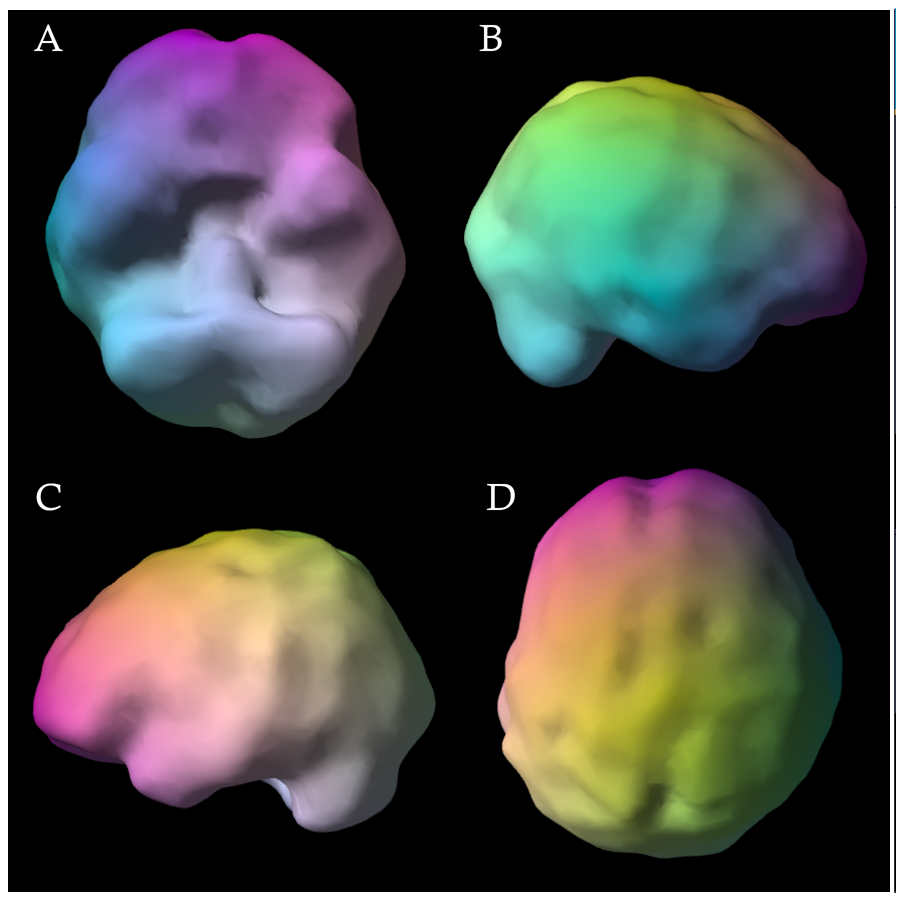
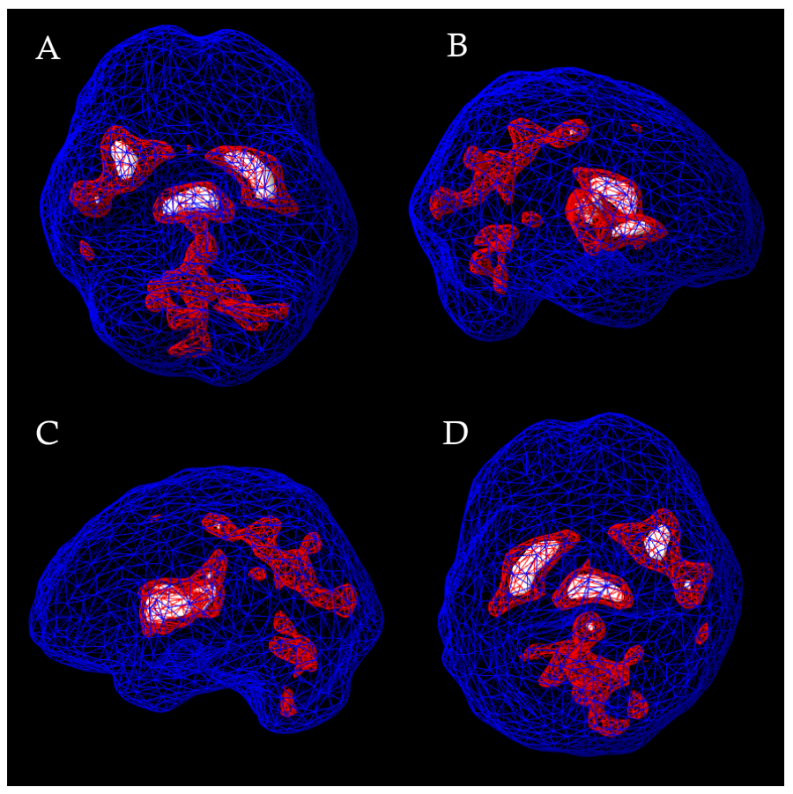
Brain perfusion SPECT was obtained as an adjunctive component of the initial evaluation. Resting surface-rendered images demonstrated relatively decreased tracer activity involving the bilateral temporal lobes, including the region of the left Sylvian fissure, medial dorsal prefrontal cortex, medial dorsal parietal cortex, prefrontal poles, bilateral occipital regions, and cerebellum, with additional very mild right dorsal prefrontal and right parietal decreases and very mild scalloping of the surface rendering (Figure 1). Complementary subcortical renderings demonstrated relatively increased tracer activity involving the anterior cingulate, left greater than right basal ganglia and thalami, right insular cortex, right temporal lobe, and mid cingulate (Figure 2). The regional descriptions reflect the qualitative clinical SPECT interpretation based on relative regional tracer distribution; validated quantitative regional measurements were not available for retrospective analysis. The findings were not used independently to establish diagnosis or determine treatment response.


The initial treatment strategy included discontinuation of aripiprazole, initiation and titration of sertraline for panic and anxiety symptoms, continuation of quetiapine extended release and buspirone, and continuation of the supervised clonazepam taper. Weekly psychotherapy was initiated to address longstanding anxiety, panic, trauma-related experiences, and avoidance, together with gradual engagement in previously feared situations, including driving.
Initial psychotherapy sessions focused on rapport building, psychoeducation, and development of self-regulation resources, including Safe/Calm Place and Container exercises. EMDR began after approximately four sessions and was periodically paused during substantial increases in anxiety to reinforce awareness of the patient’s window of tolerance and ability to self-regulate. Treatment targets included childhood memories involving perceived criticism, inadequate support, and lack of protection, including experiences involving his mother and a hospitalization during adolescence. A recurring negative cognition of “I am not enough” and a broader theme that maintaining control was necessary for safety emerged during treatment. According to the treating therapist’s formulation, these themes were indirectly related to the patient’s driving fear rather than arising from a discrete traumatic driving event. Subjective Units of Disturbance (SUD) ratings for targeted memories initially ranged from approximately 7 to 8.5/10 and decreased substantially during EMDR processing, with the patient subsequently reporting minimal or no disturbance associated with previously processed memories.
Driving anxiety was addressed more directly through graded behavioral exposure, cognitive-behavioral techniques, somatic strategies, breathing exercises, mindfulness, internal dialogue, and Internal Family Systems-informed techniques. The patient initially completed brief driving exposures and gradually increased driving duration, often by approximately 10 minutes as tolerated over successive weeks. Early in treatment, driving was markedly limited by panic and fears of severe injury or death associated with his inability to maintain complete control on the road. Over time, he reported greater ability to observe anxiety without progressing into behavioral spiraling and increasing confidence in his ability to tolerate and manage distress. Successive driving exposures progressed from brief trips to several hours of driving. The treating therapist described him as highly engaged in treatment and consistent in practicing therapeutic skills between sessions.
During early medical follow-up, aripiprazole was successfully discontinued without clinical deterioration, and sertraline was titrated from 50 mg to 100 mg daily. An attempted reduction of quetiapine extended release from 300 mg to 150 mg twice daily was followed by increased baseline anxiety, prompting restoration of the previous 300-mg twice-daily dose. Buspirone 30 mg twice daily was continued with an additional 10 mg afternoon dose, while the clonazepam taper progressed. Despite transient worsening of baseline anxiety during these medication adjustments, the patient reported that symptoms no longer escalated into the severe spiraling episodes experienced previously. He subsequently reported no recurrent panic attacks and little to no use of clonazepam. His mood remained stable without documented manic or hypomanic symptoms.
As treatment progressed, he reported greater emotional consistency and progressively increased his driving activity. He described one transient “out-of-body” sensation while driving but continued to challenge his avoidance. No recurrent panic attacks were reported, and he had not required clonazepam. Importantly, despite this broader symptomatic and functional improvement, he had not yet resumed freeway driving, leaving the principal functional limitation present at baseline unresolved.
At approximately six months of follow-up, the patient reported marked improvement in anxiety and driving-related fear. During a recent trip, he drove long distances on the freeway, maintained highway speeds, and passed large trucks without panic attacks or significant anxiety. He described increased confidence and optimism and attributed his progress to medication management, psychotherapy, personal effort, and faith. His mood remained stable, and clonazepam was formally discontinued. Aripiprazole had not been resumed. His maintenance regimen consisted of quetiapine extended release 300 mg twice daily, sertraline 100 mg daily, and buspirone 30 mg twice daily with an additional 10 mg afternoon dose.
This case highlights recovery from severe panic-associated driving avoidance through coordinated treatment of both the immediate functional behavior and the broader psychological processes that appeared to sustain it. At presentation, freeway driving had become sufficiently distressing that the patient increasingly relied on his spouse for transportation. Improvement occurred gradually: he first resumed limited driving, subsequently increased driving duration while continuing to avoid freeways, and ultimately drove for several hours at highway speeds without panic or significant anxiety. This progression underscores an important distinction between reduction of panic symptoms and restoration of a previously lost function. In patients with longstanding avoidance, meaningful recovery may require not only reducing anxiety but also rebuilding the ability to engage independently in the feared activity.
The psychotherapy course further illustrates that the most visible avoided behavior may not represent the only relevant treatment target. The patient did not report a discrete traumatic driving event. Instead, EMDR focused on childhood memories involving perceived criticism, inadequate support, and lack of protection and on associated cognitions involving self-worth, helplessness, and the perceived need to maintain control to remain safe. According to the treating therapist’s formulation, these themes were indirectly related to the driving fear because driving inherently requires tolerance of uncertainty and incomplete control. The driving behavior itself was addressed more directly through graded exposure, cognitive-behavioral strategies, somatic techniques, mindfulness, breathing exercises, and other skills-based interventions. SUD ratings for selected EMDR targets decreased substantially during processing; however, these ratings reflected distress associated with specific memories rather than standardized measures of panic severity or driving avoidance. Although EMDR has established evidence in trauma-related disorders 5, evidence in panic disorder and agoraphobic presentations remains more limited. Earlier controlled data did not establish a clear advantage over a credible attention-control condition 6, whereas a later randomized trial found EMDR noninferior to cognitive behavioral therapy for several panic-related outcomes 7. The present case therefore does not isolate an independent effect of EMDR but instead illustrates recovery during multimodal psychotherapy addressing both broader maladaptive beliefs and the avoided behavior itself.
Pharmacotherapy represented a parallel component of this multimodal strategy. Aripiprazole was successfully discontinued, sertraline was introduced and titrated to 100 mg daily, and buspirone was continued with an additional afternoon dose. An attempted reduction of quetiapine extended release from 300 mg to 150 mg twice daily was temporally associated with increased baseline anxiety, prompting restoration of the previous dose, after which the patient reported greater emotional consistency. Although this sequence does not establish a causal medication effect, it provided clinically useful information regarding medication simplification in a patient with a prior diagnosis of atypical rapid-cycling bipolar I disorder. Mood remained stable without documented manic or hypomanic symptoms during sertraline treatment. Pharmacotherapy and psychotherapy therefore evolved concurrently, with medication management aimed at reducing panic and baseline anxiety while maintaining mood stability as the patient progressively engaged in previously avoided behaviors.
Successful discontinuation of clonazepam represents an additional clinically meaningful outcome. The patient had previously received substantially higher clonazepam doses and had experienced severe withdrawal requiring hospitalization after an abrupt interruption during cancer treatment. During the present course, clonazepam was tapered gradually while non-benzodiazepine pharmacotherapy and psychotherapy were continued. He progressed from regular use to little or no use before formal discontinuation. Contemporary guidance recommends avoiding abrupt benzodiazepine discontinuation in patients at risk for physical dependence and emphasizes individualized tapering with adjustment based on the clinical response and adjunctive psychosocial support 9. Although benzodiazepine tapering, medication changes, psychotherapy, and behavioral exposure overlapped, the ability to discontinue clonazepam while simultaneously expanding previously avoided driving behavior suggests that restoration of function was not dependent on continued benzodiazepine use.
Brain perfusion SPECT was included only as a descriptive adjunct to the baseline clinical evaluation. The resting study demonstrated a mixed pattern of relative cortical and subcortical tracer differences. No follow-up SPECT examination was used to assess clinical improvement, and the observed imaging pattern therefore cannot be interpreted as a biomarker of psychotherapy response, medication response, panic severity, or restoration of driving function. The regional descriptions were based on the qualitative clinical SPECT interpretation rather than validated quantitative regional analysis. The imaging findings likewise do not establish a causal relationship between regional tracer distribution and panic symptoms, trauma exposure, or driving avoidance. Their role in this report is limited to documenting an adjunctive component of the initial clinical assessment 8.
Several limitations should be acknowledged. This was a single observational case involving multiple concurrent interventions, including medication changes, EMDR, graded exposure, cognitive-behavioral and somatic techniques, and continued behavioral practice. Improvement therefore cannot be attributed to any individual treatment component. Panic symptoms, driving performance, and functional recovery were primarily patient-reported, and no validated longitudinal panic, agoraphobia, or driving-anxiety scale was administered. SUD ratings provided treatment-specific information regarding selected EMDR targets but were not standardized measures of the principal clinical outcome. Continued tetrahydrocannabinol/cannabidiol use, therapeutic alliance, personal effort, faith, and other unmeasured factors may also have influenced the clinical course. In addition, the patient had substantial trauma exposure but was not documented as meeting diagnostic criteria for post-traumatic stress disorder, and the proposed relationship between childhood experiences and later driving avoidance represents a therapeutic formulation rather than an established causal mechanism. Despite these limitations, the progression from severe freeway avoidance to sustained long-distance freeway driving without panic, accompanied by successful clonazepam discontinuation, provides a concrete example of meaningful functional recovery during coordinated multimodal psychiatric treatment.
This case demonstrates meaningful functional recovery in a patient with longstanding panic symptoms and severe freeway-driving avoidance during coordinated multimodal psychiatric treatment. Psychotherapy addressed both the avoided behavior through graded exposure and related cognitive and somatic strategies and broader maladaptive beliefs involving control, safety, self-worth, and helplessness through EMDR. Pharmacotherapy was adjusted concurrently, with successful discontinuation of aripiprazole, titration of sertraline, restoration of the previously effective quetiapine dose after worsening anxiety during dose reduction, and eventual discontinuation of clonazepam. The progression from marked freeway avoidance and dependence on his spouse for transportation to sustained long-distance freeway driving without panic represents a concrete functional outcome. Because multiple interventions were implemented concurrently, the contribution of any individual treatment component cannot be determined. Baseline brain perfusion SPECT findings were descriptive and adjunctive and should not be interpreted as diagnostic or as evidence of treatment response.
| [1] | Hollifield M, Katon W, Skipper B, et al. Panic disorder and quality of life: variables predictive of functional impairment. Am J Psychiatry. 1997; 154: 766-772. | ||
| In article | View Article PubMed | ||
| [2] | Taylor J, Deane F, Podd J. Driving-related fear: a review. Clin Psychol Rev. 2002; 22: 631-645. | ||
| In article | View Article PubMed | ||
| [3] | Papola D, Ostuzzi G, Tedeschi F, et al. Comparative efficacy and acceptability of psychotherapies for panic disorder with or without agoraphobia: systematic review and network meta-analysis of randomised controlled trials. Br J Psychiatry. 2022; 221: 507-519. | ||
| In article | View Article PubMed | ||
| [4] | Chawla N, Anothaisintawee T, Charoenrungrueangchai K, et al. Drug treatment for panic disorder with or without agoraphobia: systematic review and network meta-analysis of randomised controlled trials. BMJ. 2022; 376: e066084. | ||
| In article | View Article PubMed | ||
| [5] | Rasines-Laudes P, Serrano-Pintado I. Efficacy of EMDR in post-traumatic stress disorder: a systematic review and meta-analysis of randomized clinical trials. Psicothema. 2023; 35: 385-396. | ||
| In article | View Article PubMed | ||
| [6] | Goldstein AJ, de Beurs E, Chambless DL, et al. EMDR for panic disorder with agoraphobia: comparison with waiting list and credible attention-placebo control conditions. J Consult Clin Psychol. 2000; 68: 947-956. | ||
| In article | View Article PubMed | ||
| [7] | Horst F, Den Oudsten B, Zijlstra W, et al. Cognitive behavioral therapy vs. eye movement desensitization and reprocessing for treating panic disorder: a randomized controlled trial. Front Psychol. 2017; 8: 1409. | ||
| In article | View Article PubMed | ||
| [8] | Kapucu OL, Nobili F, Varrone A, et al. EANM procedure guideline for brain perfusion SPECT using 99mTc-labelled radiopharmaceuticals, version 2. Eur J Nucl Med Mol Imaging. 2009; 36: 2093-2102. | ||
| In article | View Article PubMed | ||
| [9] | Brunner E, Chen CYA, Klein T, et al. Joint Clinical Practice Guideline on Benzodiazepine Tapering: Considerations When Risks Outweigh Benefits. J Gen Intern Med. 2025; 40: 2814-2859. | ||
| In article | View Article PubMed | ||
Published with license by Science and Education Publishing, Copyright © 2026 Binh Pham DO MPH MS and Paige Porter MS LPCC
 This work is licensed under a Creative Commons Attribution 4.0 International License. To view a copy of this license, visit
http://creativecommons.org/licenses/by/4.0/
This work is licensed under a Creative Commons Attribution 4.0 International License. To view a copy of this license, visit
http://creativecommons.org/licenses/by/4.0/
| [1] | Hollifield M, Katon W, Skipper B, et al. Panic disorder and quality of life: variables predictive of functional impairment. Am J Psychiatry. 1997; 154: 766-772. | ||
| In article | View Article PubMed | ||
| [2] | Taylor J, Deane F, Podd J. Driving-related fear: a review. Clin Psychol Rev. 2002; 22: 631-645. | ||
| In article | View Article PubMed | ||
| [3] | Papola D, Ostuzzi G, Tedeschi F, et al. Comparative efficacy and acceptability of psychotherapies for panic disorder with or without agoraphobia: systematic review and network meta-analysis of randomised controlled trials. Br J Psychiatry. 2022; 221: 507-519. | ||
| In article | View Article PubMed | ||
| [4] | Chawla N, Anothaisintawee T, Charoenrungrueangchai K, et al. Drug treatment for panic disorder with or without agoraphobia: systematic review and network meta-analysis of randomised controlled trials. BMJ. 2022; 376: e066084. | ||
| In article | View Article PubMed | ||
| [5] | Rasines-Laudes P, Serrano-Pintado I. Efficacy of EMDR in post-traumatic stress disorder: a systematic review and meta-analysis of randomized clinical trials. Psicothema. 2023; 35: 385-396. | ||
| In article | View Article PubMed | ||
| [6] | Goldstein AJ, de Beurs E, Chambless DL, et al. EMDR for panic disorder with agoraphobia: comparison with waiting list and credible attention-placebo control conditions. J Consult Clin Psychol. 2000; 68: 947-956. | ||
| In article | View Article PubMed | ||
| [7] | Horst F, Den Oudsten B, Zijlstra W, et al. Cognitive behavioral therapy vs. eye movement desensitization and reprocessing for treating panic disorder: a randomized controlled trial. Front Psychol. 2017; 8: 1409. | ||
| In article | View Article PubMed | ||
| [8] | Kapucu OL, Nobili F, Varrone A, et al. EANM procedure guideline for brain perfusion SPECT using 99mTc-labelled radiopharmaceuticals, version 2. Eur J Nucl Med Mol Imaging. 2009; 36: 2093-2102. | ||
| In article | View Article PubMed | ||
| [9] | Brunner E, Chen CYA, Klein T, et al. Joint Clinical Practice Guideline on Benzodiazepine Tapering: Considerations When Risks Outweigh Benefits. J Gen Intern Med. 2025; 40: 2814-2859. | ||
| In article | View Article PubMed | ||