Artificial intelligence (AI) has emerged as one of the most transformative technologies in modern healthcare, with significant implications for dentistry and digital dental practice. The integration of AI into various dental specialties has enhanced diagnostic accuracy, treatment planning, workflow efficiency, and patient-centered care. Recent advancements in machine learning, deep learning, and neural network algorithms have enabled the development of intelligent systems capable of analyzing radiographic images, predicting treatment outcomes, assisting in orthodontic planning, guiding implant placement, and supporting prosthetic rehabilitation. AI applications have demonstrated promising results across oral radiology, orthodontics, prosthodontics, implantology, periodontology, endodontics, pediatric dentistry, and oral pathology. This narrative review aims to provide a comprehensive overview of the current applications of artificial intelligence across dental specialties, discuss its advantages and limitations, and explore future perspectives that may shape the evolution of digital dentistry and precision oral healthcare.
Artificial intelligence (AI) has rapidly evolved from a theoretical computational concept into a practical clinical decision-support technology in modern healthcare. In medicine, AI systems based on machine learning, deep learning, neural networks, and large multimodal models are increasingly being explored for diagnostic imaging, risk prediction, treatment planning, workflow automation, and personalized care. In dentistry, the emergence of AI has been closely linked to the digitization of clinical records, radiographic imaging, intraoral scanning, cone-beam computed tomography (CBCT), CAD/CAM systems, and digital treatment planning. Recent dental literature shows expanding AI applications across oral and maxillofacial radiology, orthodontics, prosthodontics, implant dentistry, periodontology, endodontics, pediatric dentistry, restorative dentistry, and oral pathology. AI-based systems have been investigated for caries detection, periodontal bone loss assessment, periapical lesion identification, cephalometric landmark detection, implant planning, prosthesis design, oral cancer screening, and prediction of treatment outcomes. 1
Digital dentistry provides the technological foundation that allows AI to be integrated into routine dental practice. Intraoral scanners, CBCT, digital radiography, CAD/CAM platforms, 3D printing, virtual articulators, guided surgery systems, and digital smile design tools generate structured digital data that can be analyzed by AI algorithms. These technologies have improved precision, reproducibility, communication, treatment efficiency, and patient comfort while reducing dependence on conventional analog procedures. As digital workflows become more common, AI is increasingly positioned not as a replacement for clinical judgment but as an adjunctive tool that can support diagnosis, planning, automation, and individualized patient care. 2
Despite its promise, the clinical adoption of AI in dentistry remains limited by several challenges. Many AI models require large, diverse, high-quality datasets for training and validation, yet dental datasets are often fragmented, non-standardized, and institution-specific. Additional concerns include algorithmic bias, limited external validation, lack of explainability, medico-legal uncertainty, data protection issues, cost of implementation, and variability in clinician acceptance. Therefore, critical evaluation of current evidence is necessary before AI-based tools can be fully integrated into dental education, research, and everyday clinical care. 3, 4
This narrative review aims to discuss the current applications of artificial intelligence across major dental specialties, with emphasis on its role in diagnosis, treatment planning, digital workflow integration, clinical decision support, and patient-centered care. It also highlights key challenges, ethical considerations, and future directions that may influence the safe and effective implementation of AI in dentistry.
AI refers to computer systems capable of simulating human intelligence, including learning, reasoning, and decision-making. In dentistry, AI is increasingly used to analyze radiographs, intraoral scans, CBCT images, and clinical records to support diagnosis and treatment planning. 5 Machine learning (ML) is a subset of AI that enables systems to learn from data and improve performance over time. Deep learning (DL), an advanced form of ML, utilizes multilayer neural networks to process large datasets with high accuracy. These technologies are widely applied in dental imaging, caries detection, cephalometric analysis, and prediction of treatment outcomes. 5, 6
Artificial neural networks (ANNs) and convolutional neural networks (CNNs) are commonly used AI models in dentistry. CNNs are especially effective for image interpretation and have demonstrated high accuracy in analyzing panoramic radiographs and CBCT scans. 7 AI-based diagnostic systems assist clinicians in detecting dental diseases, planning treatment, and improving workflow efficiency. Integration of AI with digital dentistry technologies such as CAD/CAM systems, intraoral scanners, CBCT, and 3D printing has contributed significantly to precision dentistry and personalized patient care. 7 (Table 1)
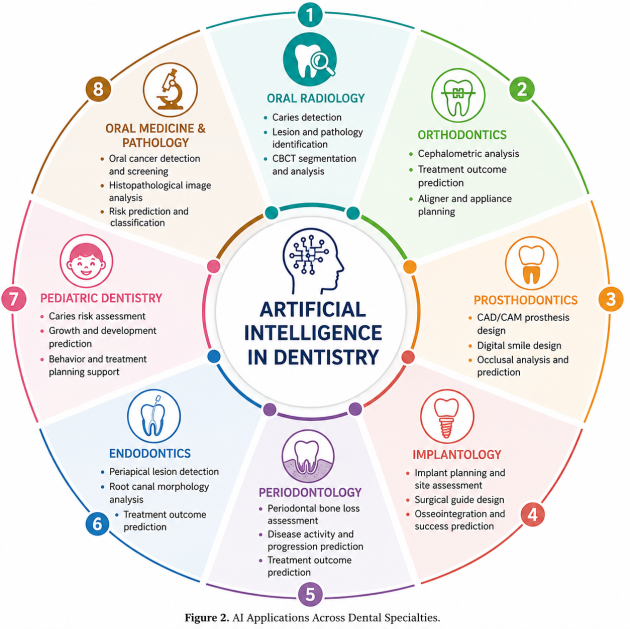
Artificial intelligence has expanded from image-based diagnosis to treatment planning, prediction, workflow automation, and patient-specific decision support. Its greatest current strength in dentistry is pattern recognition, especially in radiographs, CBCT images, intraoral photographs, scanned models, and structured clinical datasets. Across specialties, AI is best understood as an adjunctive tool that improves consistency and efficiency, while final diagnosis and treatment decisions remain clinician-dependent.
3.1. Oral Medicine and Oral PathologyIn oral medicine and oral pathology, AI has shown important potential in screening, early diagnosis, lesion classification, and risk prediction. Deep learning models can analyze clinical photographs, histopathological images, and imaging datasets to identify suspicious mucosal changes, differentiate benign from potentially malignant lesions, and support referral decisions. This is particularly relevant for oral cancer, where early detection strongly influences prognosis. 8
AI-based systems have been studied for the early detection of oral cancer by identifying visual and microscopic patterns that may be difficult to recognize during routine examination. These systems may support clinicians in detecting early mucosal alterations, classifying oral lesions, and prioritizing high-risk patients for biopsy. However, most tools still require stronger external validation before routine clinical use. 9 For oral potentially malignant disorders, AI can assist in lesion recognition, risk stratification, and monitoring of clinical progression. Algorithms trained on intraoral photographs and histopathological datasets may help distinguish leukoplakia, erythroplakia, oral lichen planus, and dysplastic lesions from non-malignant conditions. Such models may be especially useful in screening programs and tele-oral medicine, but diagnostic confirmation remains dependent on clinical examination and histopathology. 9
Salivary diagnostics is another emerging area where AI can be combined with biomarker data. Saliva contains molecular indicators such as proteins, DNA, RNA, metabolites, and inflammatory markers that may reflect oral cancer risk, periodontal inflammation, and systemic disease. AI-based predictive analytics can process these multidimensional biomarker profiles to improve early detection, risk prediction, and personalized monitoring. 10
3.2. Oral and Maxillofacial RadiologyOral and maxillofacial radiology is currently one of the most developed areas for AI application in dentistry. Radiographic interpretation relies heavily on visual pattern recognition, making it well suited for machine learning and deep learning methods. AI systems have been applied to intraoral radiographs, panoramic radiographs, cephalograms, and CBCT scans for detection, segmentation, classification, and anatomical landmark identification. 11
In radiographic interpretation, AI can assist in detecting caries, periodontal bone loss, periapical pathology, impacted teeth, cystic lesions, root fractures, and anatomical structures. These systems may reduce observer variability and improve diagnostic consistency, especially in high-volume clinical settings. Nevertheless, radiographic AI should be used as a second reader rather than a substitute for professional interpretation. 12
AI-based caries detection has been widely investigated using bitewing, periapical, panoramic, photographic, and CBCT images. Deep learning models can detect enamel and dentinal caries, classify lesion depth, and support earlier diagnosis. Systematic reviews suggest promising diagnostic performance, although differences in datasets, imaging methods, and validation standards limit direct comparison between studies. Periapical lesion detection is another important application. AI models can identify radiolucencies associated with apical periodontitis on periapical, panoramic, and CBCT images. These tools may help clinicians detect early lesions, assess lesion size, and monitor healing after endodontic treatment. However, diagnostic accuracy can vary depending on image quality, lesion size, annotation standards, and training data. CBCT-based AI systems are increasingly used for three-dimensional analysis, including tooth segmentation, canal tracing, mandibular canal detection, maxillary sinus evaluation, impacted tooth assessment, and anatomical landmark localization. Automated landmark detection has particular value in orthodontics, implant planning, oral surgery, and maxillofacial diagnosis. 12, 13
3.3. OrthodonticsOrthodontics has benefited significantly from AI because diagnosis and treatment planning involve repeated analysis of cephalograms, photographs, dental casts, intraoral scans, and growth records. AI has been applied to landmark detection, skeletal classification, malocclusion diagnosis, treatment outcome prediction, aligner planning, and growth assessment. 14
Automated cephalometric analysis is one of the most established orthodontic AI applications. Deep learning models can identify cephalometric landmarks, calculate angular and linear measurements, and reduce the time required for manual tracing. These systems improve workflow efficiency, although clinician verification remains necessary, particularly in cases with poor image quality or anatomical variation. AI also supports orthodontic treatment planning by predicting extraction decisions, anchorage requirements, treatment duration, skeletal discrepancies, and potential outcomes. Machine learning models can analyze pretreatment records and assist clinicians in selecting appropriate treatment strategies. However, prediction models must be interpreted cautiously because orthodontic outcomes are influenced by growth, compliance, biomechanics, and biological variability. 15
In clear aligner therapy, AI is used for digital setup, tooth movement simulation, staging, attachment planning, and progress monitoring. AI-supported platforms can compare intraoral scans with planned tooth movement and identify tracking errors. This may improve treatment monitoring and reduce unnecessary appointments, but clinical supervision is essential because biological tooth movement does not always match virtual simulations. 16 AI has also been explored for growth and facial pattern assessment. By analyzing cephalometric records, facial photographs, and longitudinal datasets, AI may help predict craniofacial growth direction, skeletal maturation, and treatment timing. This is particularly relevant in growing patients requiring orthopedic correction. 17
3.4. ProsthodonticsIn prosthodontics, AI is closely connected with digital workflows, including intraoral scanning, CAD/CAM restorations, virtual articulators, digital smile design, shade selection, and prosthesis fabrication. AI can assist in automating design steps, improving prosthetic accuracy, and personalizing restorative outcomes. AI in CAD/CAM dentistry can support margin detection, restoration design, occlusal morphology generation, material selection, and prediction of restoration performance. By learning from existing restoration libraries and clinical datasets, AI systems can generate crown and prosthesis designs that are anatomically and functionally appropriate. 18
Digital smile design is another important application. AI can analyze facial proportions, lip dynamics, gingival display, tooth shape, tooth shade, and smile symmetry to support esthetic planning. These tools improve patient communication by allowing visualization of proposed outcomes before treatment. However, esthetic planning must still consider patient expectations, biological limitations, and clinician judgment. AI-assisted occlusal analysis and prosthesis design may help evaluate occlusal contacts, mandibular movement, prosthetic space, and functional harmony. When integrated with intraoral scanners, jaw-tracking systems, and virtual articulators, AI can support more accurate prosthetic rehabilitation. 19
3.5. Implant DentistryAI has growing relevance in implant dentistry because implant success depends on accurate diagnosis, bone assessment, prosthetically driven planning, surgical precision, and long-term maintenance. AI can assist in CBCT interpretation, bone quality assessment, implant positioning, surgical guide planning, and prediction of implant outcomes. AI-assisted implant planning involves the analysis of CBCT scans, intraoral scans, and prosthetic designs to determine ideal implant position, angulation, length, diameter, and proximity to anatomical structures. AI may help identify the mandibular canal, maxillary sinus, available bone volume, and prosthetic emergence profile. 20
In guided implant surgery, AI can support virtual planning, surgical guide design, navigation workflows, and risk reduction. When combined with digital impressions and CBCT data, AI-based planning may contribute to more accurate implant placement and improved prosthetic outcomes. Prediction of implant success and failure is an emerging application. AI models can analyze patient factors, bone density, implant dimensions, systemic conditions, smoking history, periodontal status, occlusal factors, and radiographic data to estimate risk. Such tools may help personalize treatment planning and maintenance protocols, although current models still require broader clinical validation. 21
3.6. PeriodontologyIn periodontology, AI is mainly used for diagnosis, disease classification, risk assessment, and monitoring of periodontal progression. Since periodontal disease involves radiographic bone loss, clinical measurements, microbial factors, and systemic risk indicators, AI can help integrate multiple data sources for more comprehensive assessment. AI-based periodontal disease detection commonly involves analysis of panoramic, bitewing, and periapical radiographs to identify alveolar bone loss, furcation involvement, calculus deposits, and periodontal defects. Automated systems can support screening and improve consistency in detecting disease severity. 22
AI in periodontal risk assessment can combine age, smoking, diabetes, oral hygiene, previous periodontal history, probing depth, clinical attachment loss, bleeding on probing, and radiographic findings to estimate progression risk. Such models may support personalized recall intervals, preventive strategies, and treatment planning. Monitoring periodontal progression is another important application. AI can compare serial radiographs and clinical records to detect changes in bone levels and disease activity over time. This may help clinicians evaluate response to therapy and identify patients requiring more intensive maintenance. 23
3.7. EndodonticsEndodontics relies heavily on accurate interpretation of radiographs and CBCT images, making it suitable for AI-based image analysis. AI has been applied to root canal morphology detection, periapical lesion diagnosis, working length estimation, vertical root fracture detection, and prediction of treatment outcomes. 24
AI can assist in detecting complex root canal anatomy, including additional canals, canal curvature, root morphology, and anatomical variations. This is particularly useful in molars and teeth with complex canal systems, where missed canals can contribute to treatment failure. Periapical lesion diagnosis is one of the strongest endodontic AI applications. Deep learning systems can detect radiographic signs of apical periodontitis and support objective assessment of lesion presence, size, and healing status. These tools may improve diagnostic consistency, especially when lesions are subtle or image interpretation is difficult. 25
AI in treatment outcome prediction may help estimate the prognosis of root canal therapy by analyzing preoperative radiographic findings, tooth type, lesion size, canal complexity, restoration status, and patient-related factors. Although promising, outcome prediction models require further validation before they can be used routinely for clinical decision-making. 25
3.8. Pediatric DentistryIn pediatric dentistry, AI has potential in caries risk assessment, early childhood caries detection, behavior analysis, preventive planning, and monitoring of growth and development. Pediatric applications are particularly valuable because early diagnosis and prevention can reduce disease burden and avoid invasive treatment. AI-based caries risk prediction can combine dietary habits, oral hygiene, fluoride exposure, socioeconomic factors, medical history, previous caries experience, plaque status, and radiographic findings to identify children at high risk. Such tools may help clinicians personalize prevention plans and recall intervals. 26
Behavior assessment and management may be supported by AI through analysis of facial expressions, voice patterns, anxiety indicators, and previous dental behavior records. Although this area is still developing, AI may eventually help predict dental anxiety and guide behavior management strategies before treatment. Preventive dentistry applications include early detection of enamel lesions, monitoring of eruption patterns, risk-based fluoride recommendations, and individualized preventive care planning. AI may also support parental education and teledentistry-based screening, especially in community oral health programs. 27 (Figure 1)
Artificial intelligence offers significant advantages in dentistry by improving diagnostic accuracy, enhancing treatment planning, optimizing clinical workflows, enabling personalized patient care, and reducing human error; however, challenges such as data privacy concerns, lack of standardized datasets, algorithm bias, high implementation costs, need for clinical validation, and evolving legal and regulatory issues continue to limit its widespread clinical adoption. 28, 29, 30 (Table 2)
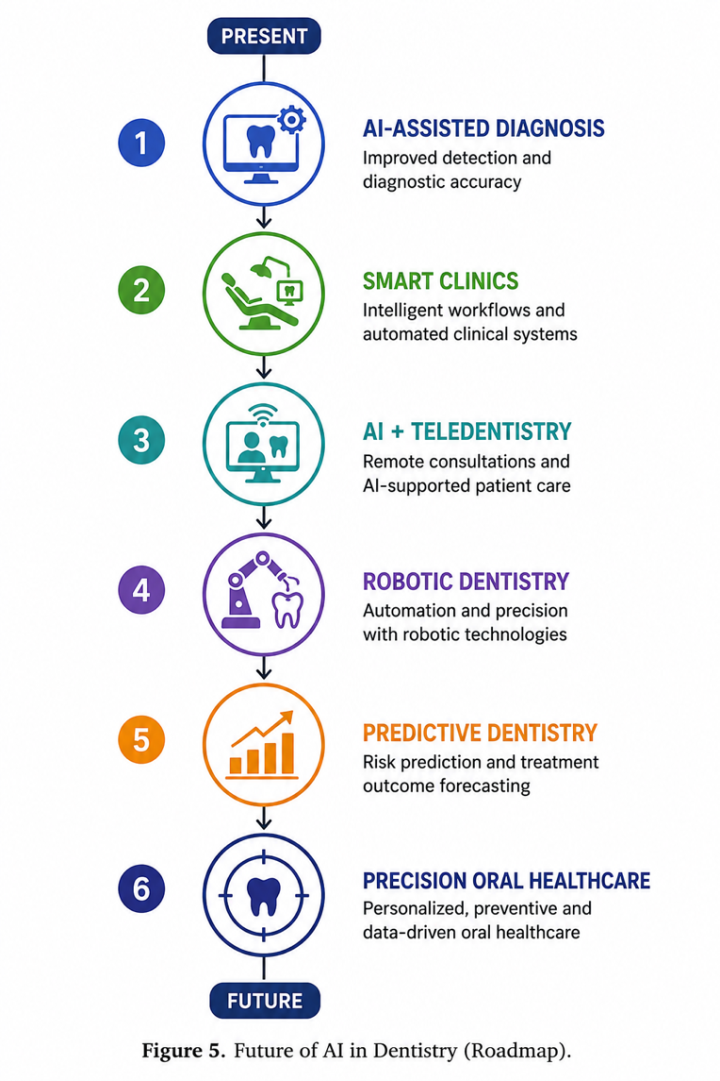
The future of AI in dentistry is expected to extend beyond diagnostic support toward fully integrated digital ecosystems capable of improving precision, efficiency, accessibility, and personalized patient care. Continuous advances in machine learning, robotics, cloud computing, and digital imaging are likely to transform conventional dental practice into a more predictive and data-driven healthcare model. Although several technologies remain in developmental stages, AI is anticipated to become an essential component of future dental workflows.
5.1. AI-Integrated Smart ClinicsAI-integrated smart clinics represent a future model of digital dental practice in which clinical records, imaging systems, intraoral scanners, CAD/CAM platforms, and patient management software function through interconnected AI-driven systems. Such clinics may enable automated diagnosis, real-time treatment planning, predictive scheduling, voice-assisted documentation, and intelligent workflow optimization. Integration of AI with electronic health records and cloud-based platforms may also improve interdisciplinary communication and continuity of care. 31
5.2. Robotics in DentistryRobotics combined with AI has the potential to improve precision and reduce operator-dependent variability in dental procedures. Robotic systems are being investigated for implant placement, endodontic procedures, prosthetic fabrication, and surgical assistance. AI-guided robotic technologies may enhance surgical accuracy, reduce treatment time, and improve minimally invasive approaches. However, the widespread clinical use of robotics in dentistry is currently limited by high costs, technical complexity, and the need for extensive clinical validation. 32
5.3. AI and TeledentistryThe integration of AI with teledentistry may significantly improve access to oral healthcare, particularly in remote and underserved populations. AI-assisted teleconsultation platforms can support screening, preliminary diagnosis, patient triage, and remote monitoring through analysis of intraoral photographs, radiographs, and patient-reported data. These technologies may help reduce healthcare disparities and improve early disease detection. Future developments may also include smartphone-based AI applications for home monitoring and preventive care. 33
5.4. Personalized and Predictive DentistryAI is expected to play a major role in the development of personalized and predictive dentistry. By integrating clinical records, radiographic findings, genetic information, salivary biomarkers, lifestyle factors, and treatment history, AI systems may help predict disease progression and treatment outcomes at an individual level. Predictive analytics may support personalized preventive strategies, risk-based recall schedules, and customized treatment planning, contributing to the advancement of precision oral healthcare. 34
5.5. Future Research Directions
Future research should focus on improving the reliability, transparency, and clinical applicability of AI systems in dentistry. Large multicenter datasets, standardized imaging protocols, and external validation studies are essential to improve generalizability and reduce algorithm bias. Further investigation is also required regarding ethical concerns, data security, explainable AI models, and regulatory frameworks for clinical implementation. In addition, interdisciplinary collaboration between dental professionals, engineers, computer scientists, and policymakers will be critical for the safe and effective integration of AI into routine dental practice. 35 (Figure 2)
Artificial intelligence has emerged as one of the most transformative technologies in modern dentistry, significantly influencing diagnosis, treatment planning, digital workflow integration, and patient-centered care across multiple dental specialties. Current evidence demonstrates that AI has promising applications in oral pathology, radiology, orthodontics, prosthodontics, implant dentistry, periodontology, endodontics, and pediatric dentistry, particularly in image interpretation, predictive analytics, automated planning, and clinical decision support. The integration of AI with digital dentistry technologies such as CBCT, CAD/CAM systems, intraoral scanners, and 3D printing has further enhanced precision, efficiency, and workflow optimization in contemporary dental practice.
The future of AI in dentistry will largely depend on the development of reliable, transparent, and ethically responsible systems supported by strong scientific evidence and interdisciplinary collaboration. Importantly, AI should be viewed as an adjunctive tool designed to assist clinicians rather than replace professional expertise and clinical judgment. Maintaining an appropriate balance between technological innovation and human decision-making will be essential to ensure safe, effective, and patient-centered dental care in the evolving era of digital dentistry.
| [1] | Gao S, Wang X, Xia Z, Zhang H, Yu J, Yang F. Artificial Intelligence in Dentistry: A Narrative Review of Diagnostic and Therapeutic Applications. Med Sci Monit. 2025 Apr 8; 31: e946676. | ||
| In article | View Article | ||
| [2] | Gawali N, Shah PP, Gowdar IM, Bhavsar KA, Giri D, Laddha R. The Evolution of Digital Dentistry: A Comprehensive Review. J Pharm Bioallied Sci. 2024 Jul; 16(Suppl 3): S1920-S1922. | ||
| In article | View Article | ||
| [3] | Tyagi M, Jain S, Ranjan M, Hassan S, Prakash N, Kumar D, Kumar A, Singh S. Artificial Intelligence Tools in Dentistry: A Systematic Review on Their Application and Outcomes. Cureus. 2025 May 29; 17(5): e85062. | ||
| In article | View Article | ||
| [4] | De Vries E, Deshpande S, Kalalota S, Manandhar S, Bhola R, Singh S. Digital dentistry: Evolution, current applications, and future directions. Int J Oral Health Dent. 2025; 11(2): 90–95. | ||
| In article | View Article | ||
| [5] | Ahmed N, Abbasi MS, Zuberi F, Qamar W, Halim MSB, Maqsood A, Alam MK. Artificial Intelligence Techniques: Analysis, Application, and Outcome in Dentistry-A Systematic Review. Biomed Res Int. 2021 Jun 22; 2021: 9751564. | ||
| In article | View Article PubMed | ||
| [6] | Ossowska A, Kusiak A, Świetlik D. Artificial Intelligence in Dentistry-Narrative Review. Int J Environ Res Public Health. 2022 Mar 15; 19(6): 3449. | ||
| In article | View Article PubMed | ||
| [7] | Pethani F. Promises and perils of artificial intelligence in dentistry. Aust Dent J. 2021 Jun; 66(2): 124-135. | ||
| In article | View Article PubMed | ||
| [8] | Vinay V, Jodalli P, Chavan MS, Buddhikot CS, Luke AM, Ingafou MSH, Reda R, Pawar AM, Testarelli L. Artificial Intelligence in Oral Cancer: A Comprehensive Scoping Review of Diagnostic and Prognostic Applications. Diagnostics (Basel). 2025 Jan 24; 15(3): 280. | ||
| In article | View Article PubMed | ||
| [9] | Kamat M, Datar UV, Vimal Kumar V. Insights Into AI-Enabled Early Diagnosis of Oral Cancer: A Scoping Review. Cureus. 2025 Jul; 17(7): e88407. | ||
| In article | View Article | ||
| [10] | Bastías, D.; Maturana, A.; Marín, C.; Martínez, R.; Niklander, S.E. Salivary Biomarkers for Oral Cancer Detection: An Exploratory Systematic Review. Int. J. Mol. Sci. 2024, 25, 2634. | ||
| In article | View Article PubMed | ||
| [11] | Khattak O, Hashem AS, Alqarni MS, Almufarrij RAS, Siddiqui AY, Anis R, Ahmad S, Fareed MA, Alothmani OS, Alkhershawy LHS, Alabidin WWZ, Issrani R, Agarwal A. Deep Learning Applications in Dental Image-Based Diagnostics: A Systematic Review. Healthcare (Basel). 2025 Jun 18; 13(12): 1466. | ||
| In article | View Article PubMed | ||
| [12] | Semerci ZM, Yardımcı S. Empowering Modern Dentistry: The Impact of Artificial Intelligence on Patient Care and Clinical Decision Making. Diagnostics (Basel). 2024 Jun 14; 14(12): 1260. | ||
| In article | View Article PubMed | ||
| [13] | Szabó V, Orhan K, Dobó-Nagy C, Veres DS, Manulis D, Ezhov M, Sanders A, Szabó BT. Deep Learning-Based Periapical Lesion Detection on Panoramic Radiographs. Diagnostics (Basel). 2025 Feb 19; 15(4): 510. | ||
| In article | View Article PubMed | ||
| [14] | Nordblom NF, Büttner M, Schwendicke F. Artificial Intelligence in Orthodontics: Critical Review. J Dent Res. 2024 Jun; 103(6): 577-584. | ||
| In article | View Article PubMed | ||
| [15] | Azizi S, Hatampoor S, Tahamtan S. Applications of artificial intelligence in diagnosis and treatment planning of orthodontics: a narrative review. Saudi Dent J. 2025 Oct 28; 37(7-9): 70. | ||
| In article | View Article PubMed | ||
| [16] | Olawade DB, Leena N, Egbon E, Rai J, Mohammed APEK, Oladapo BI, Boussios S. AI-Driven Advancements in Orthodontics for Precision and Patient Outcomes. Dent J (Basel). 2025 Apr 30; 13(5): 198. | ||
| In article | View Article PubMed | ||
| [17] | Mohammad-Rahimi H, Nadimi M, Rohban MH, Shamsoddin E, Lee VY, Motamedian SR. Machine learning and orthodontics, current trends and the future opportunities: A scoping review. Am J Orthod Dentofacial Orthop. 2021 Aug; 160(2): 170-192.e4. | ||
| In article | View Article PubMed | ||
| [18] | Yeslam HE, Freifrau von Maltzahn N, Nassar HM. Revolutionizing CAD/CAM-based restorative dental processes and materials with artificial intelligence: a concise narrative review. PeerJ. 2024 Jul 19; 12: e17793. | ||
| In article | View Article PubMed | ||
| [19] | Sulaiman TA. Materials in digital dentistry-A review. J Esthet Restor Dent. 2020 Mar; 32(2): 171-181. | ||
| In article | View Article PubMed | ||
| [20] | Neji G, Gasparro R, Tlili M, Dhahri A, Khanfir F, Sammartino G, Aliberti A, Campana MD, Ben Amor F. AI-Powered Predictive Models in Implant Dentistry: Planning, Risk Assessment, and Outcomes. J Clin Med. 2025 Dec 27; 15(1): 228. | ||
| In article | View Article PubMed | ||
| [21] | Macrì M, D'Albis V, D'Albis G, Forte M, Capodiferro S, Favia G, Alrashadah AO, García VD, Festa F. The Role and Applications of Artificial Intelligence in Dental Implant Planning: A Systematic Review. Bioengineering (Basel). 2024 Jul 31; 11(8): 778. | ||
| In article | View Article PubMed | ||
| [22] | Chatzopoulos, G.S.; Koidou, V.P.; Tsalikis, L.; Kaklamanos, E.G. Clinical Applications of Artificial Intelligence in Periodontology: A Scoping Review. Medicina 2025, 61, 1066. | ||
| In article | View Article PubMed | ||
| [23] | Sarakbi RM, Varma SR, Muthiah Annamma L, Sivaswamy V. Implications of artificial intelligence in periodontal treatment maintenance: a scoping review. Front Oral Health. 2025 May 14; 6: 1561128. | ||
| In article | View Article PubMed | ||
| [24] | Doumani M, Almaqboul F, Alduwaysan SSS, Alzahrani MA, Al Ghamdi SA, Alzahrani MN, Alanazi AT, Al Ghamdi NM, Alsalem AH, Alturaif D, Almokayad FH, Alqahtani AS, Alanaz L. Effectiveness of Artificial Intelligence in Endodontic Diagnosis and Treatment Evaluation: A Systematic Review. Cureus. 2025 Nov 4; 17(11): e96091. | ||
| In article | View Article PubMed | ||
| [25] | Karobari MI, Adil AH, Mathur A, Snigdha NT. Applications and clinical translation of artificial intelligence in CBCT-based detection of endodontic lesions: a scoping review. Oral Radiol. 2026 Apr; 42(2): 251-261. | ||
| In article | View Article PubMed | ||
| [26] | Naeimi, S.M.; Darvish, S.; Salman, B.N.; Luchian, I. Artificial Intelligence in Adult and Pediatric Dentistry: A Narrative Review. Bioengineering 2024, 11, 431. | ||
| In article | View Article PubMed | ||
| [27] | Karamüftüoğlu N, Üçpunar BY, Birben İ, Altundağ AE, Mullaoğlu KÖ, Bal C. Artificial Intelligence in Pediatric Dentistry: A Systematic Review and Meta-Analysis. Children (Basel). 2026 Jan 21; 13(1): 152. | ||
| In article | View Article PubMed | ||
| [28] | Bansal RK, Arya A, Singh B, Singla M, Gupta S. Role of Artificial Intelligence and Machine Learning in Conservative Dentistry and Endodontics: A Review. Cureus. 2025 Jul 22; 17(7): e88515. | ||
| In article | View Article | ||
| [29] | Sedano R, Solitano V, Vuyyuru SK, Yuan Y, Hanžel J, Ma C, Nardone OM, Jairath V. Artificial intelligence to revolutionize IBD clinical trials: a comprehensive review. Ther Adv Gastroenterol. 2025 Feb 23; 18: 17562848251321915. | ||
| In article | View Article PubMed | ||
| [30] | Chong PL, Vaigeshwari V, Mohammed Reyasudin BK, Noor Hidayah BRA, Tatchanaamoorti P, Yeow JA, Kong FY. Integrating artificial intelligence in healthcare: applications, challenges, and future directions. Future Sci OA. 2025 Dec; 11(1): 2527505. | ||
| In article | View Article PubMed | ||
| [31] | Mallineni, S.K.; Sethi, M.; Punugoti, D.; Kotha, S.B.; Alkhayal, Z.; Mubaraki, S.; Almotawah, F.N.; Kotha, S.L.; Sajja, R.; Nettam, V.; et al. Artificial Intelligence in Dentistry: A Descriptive Review. Bioengineering 2024, 11, 1267. | ||
| In article | View Article PubMed | ||
| [32] | Lv C, Qin B, He L, Xu B, Wu Y, Li Z, Du L. Accuracy of robot-assisted dental implant surgery and its clinical influencing factors: a retrospective case series of 100 patients. BMC Oral Health. 2025 Aug 23; 25(1): 1365. | ||
| In article | View Article PubMed | ||
| [33] | Krutika Sangani, Amrit Kaur Gill, Manjiri Chakor, Hoorieh Sadat Alamolhoda, Kiranprasad Chileveru, Ridhi Bhola, Sandeep Singh. Teledentistry: A Comprehensive Review of Methods, Applications, and Future Directions. Sch J Dent Sci, 2025 Jun 12(5): 74-80. | ||
| In article | View Article | ||
| [34] | Albuhayri FS, Albshaier SJ, Dashti AI, Alrajhi JF, Alhamidy FK, Busuhail MA, Bujbarah FN, Rizq MK, Thubab NA, Takronni SA, Alharbi JI, Hakami AH, Aloufi HS, Mathar MI. The Expanding Role of Artificial Intelligence in Dentistry: A Cross-Specialty Chairside Perspective. Cureus. 2025 Dec 4; 17(12): e98449. | ||
| In article | View Article PubMed | ||
| [35] | Dhopte A, Bagde H. Smart Smile: Revolutionizing Dentistry with Artificial Intelligence. Cureus. 2023 Jun 30; 15(6): e41227. | ||
| In article | View Article | ||
Published with license by Science and Education Publishing, Copyright © 2026 Dr. Gursewak Singh, Dr. Vikram Shad, Dr. Yosra May, Dr. Sruthi Kalakota, Dr. Amanpreet Kaur, Dr. Sofia Olena Herin, Dr. Tenzin Lhadon and Dr. Sandeep Singh
 This work is licensed under a Creative Commons Attribution 4.0 International License. To view a copy of this license, visit
http://creativecommons.org/licenses/by/4.0/
This work is licensed under a Creative Commons Attribution 4.0 International License. To view a copy of this license, visit
http://creativecommons.org/licenses/by/4.0/
| [1] | Gao S, Wang X, Xia Z, Zhang H, Yu J, Yang F. Artificial Intelligence in Dentistry: A Narrative Review of Diagnostic and Therapeutic Applications. Med Sci Monit. 2025 Apr 8; 31: e946676. | ||
| In article | View Article | ||
| [2] | Gawali N, Shah PP, Gowdar IM, Bhavsar KA, Giri D, Laddha R. The Evolution of Digital Dentistry: A Comprehensive Review. J Pharm Bioallied Sci. 2024 Jul; 16(Suppl 3): S1920-S1922. | ||
| In article | View Article | ||
| [3] | Tyagi M, Jain S, Ranjan M, Hassan S, Prakash N, Kumar D, Kumar A, Singh S. Artificial Intelligence Tools in Dentistry: A Systematic Review on Their Application and Outcomes. Cureus. 2025 May 29; 17(5): e85062. | ||
| In article | View Article | ||
| [4] | De Vries E, Deshpande S, Kalalota S, Manandhar S, Bhola R, Singh S. Digital dentistry: Evolution, current applications, and future directions. Int J Oral Health Dent. 2025; 11(2): 90–95. | ||
| In article | View Article | ||
| [5] | Ahmed N, Abbasi MS, Zuberi F, Qamar W, Halim MSB, Maqsood A, Alam MK. Artificial Intelligence Techniques: Analysis, Application, and Outcome in Dentistry-A Systematic Review. Biomed Res Int. 2021 Jun 22; 2021: 9751564. | ||
| In article | View Article PubMed | ||
| [6] | Ossowska A, Kusiak A, Świetlik D. Artificial Intelligence in Dentistry-Narrative Review. Int J Environ Res Public Health. 2022 Mar 15; 19(6): 3449. | ||
| In article | View Article PubMed | ||
| [7] | Pethani F. Promises and perils of artificial intelligence in dentistry. Aust Dent J. 2021 Jun; 66(2): 124-135. | ||
| In article | View Article PubMed | ||
| [8] | Vinay V, Jodalli P, Chavan MS, Buddhikot CS, Luke AM, Ingafou MSH, Reda R, Pawar AM, Testarelli L. Artificial Intelligence in Oral Cancer: A Comprehensive Scoping Review of Diagnostic and Prognostic Applications. Diagnostics (Basel). 2025 Jan 24; 15(3): 280. | ||
| In article | View Article PubMed | ||
| [9] | Kamat M, Datar UV, Vimal Kumar V. Insights Into AI-Enabled Early Diagnosis of Oral Cancer: A Scoping Review. Cureus. 2025 Jul; 17(7): e88407. | ||
| In article | View Article | ||
| [10] | Bastías, D.; Maturana, A.; Marín, C.; Martínez, R.; Niklander, S.E. Salivary Biomarkers for Oral Cancer Detection: An Exploratory Systematic Review. Int. J. Mol. Sci. 2024, 25, 2634. | ||
| In article | View Article PubMed | ||
| [11] | Khattak O, Hashem AS, Alqarni MS, Almufarrij RAS, Siddiqui AY, Anis R, Ahmad S, Fareed MA, Alothmani OS, Alkhershawy LHS, Alabidin WWZ, Issrani R, Agarwal A. Deep Learning Applications in Dental Image-Based Diagnostics: A Systematic Review. Healthcare (Basel). 2025 Jun 18; 13(12): 1466. | ||
| In article | View Article PubMed | ||
| [12] | Semerci ZM, Yardımcı S. Empowering Modern Dentistry: The Impact of Artificial Intelligence on Patient Care and Clinical Decision Making. Diagnostics (Basel). 2024 Jun 14; 14(12): 1260. | ||
| In article | View Article PubMed | ||
| [13] | Szabó V, Orhan K, Dobó-Nagy C, Veres DS, Manulis D, Ezhov M, Sanders A, Szabó BT. Deep Learning-Based Periapical Lesion Detection on Panoramic Radiographs. Diagnostics (Basel). 2025 Feb 19; 15(4): 510. | ||
| In article | View Article PubMed | ||
| [14] | Nordblom NF, Büttner M, Schwendicke F. Artificial Intelligence in Orthodontics: Critical Review. J Dent Res. 2024 Jun; 103(6): 577-584. | ||
| In article | View Article PubMed | ||
| [15] | Azizi S, Hatampoor S, Tahamtan S. Applications of artificial intelligence in diagnosis and treatment planning of orthodontics: a narrative review. Saudi Dent J. 2025 Oct 28; 37(7-9): 70. | ||
| In article | View Article PubMed | ||
| [16] | Olawade DB, Leena N, Egbon E, Rai J, Mohammed APEK, Oladapo BI, Boussios S. AI-Driven Advancements in Orthodontics for Precision and Patient Outcomes. Dent J (Basel). 2025 Apr 30; 13(5): 198. | ||
| In article | View Article PubMed | ||
| [17] | Mohammad-Rahimi H, Nadimi M, Rohban MH, Shamsoddin E, Lee VY, Motamedian SR. Machine learning and orthodontics, current trends and the future opportunities: A scoping review. Am J Orthod Dentofacial Orthop. 2021 Aug; 160(2): 170-192.e4. | ||
| In article | View Article PubMed | ||
| [18] | Yeslam HE, Freifrau von Maltzahn N, Nassar HM. Revolutionizing CAD/CAM-based restorative dental processes and materials with artificial intelligence: a concise narrative review. PeerJ. 2024 Jul 19; 12: e17793. | ||
| In article | View Article PubMed | ||
| [19] | Sulaiman TA. Materials in digital dentistry-A review. J Esthet Restor Dent. 2020 Mar; 32(2): 171-181. | ||
| In article | View Article PubMed | ||
| [20] | Neji G, Gasparro R, Tlili M, Dhahri A, Khanfir F, Sammartino G, Aliberti A, Campana MD, Ben Amor F. AI-Powered Predictive Models in Implant Dentistry: Planning, Risk Assessment, and Outcomes. J Clin Med. 2025 Dec 27; 15(1): 228. | ||
| In article | View Article PubMed | ||
| [21] | Macrì M, D'Albis V, D'Albis G, Forte M, Capodiferro S, Favia G, Alrashadah AO, García VD, Festa F. The Role and Applications of Artificial Intelligence in Dental Implant Planning: A Systematic Review. Bioengineering (Basel). 2024 Jul 31; 11(8): 778. | ||
| In article | View Article PubMed | ||
| [22] | Chatzopoulos, G.S.; Koidou, V.P.; Tsalikis, L.; Kaklamanos, E.G. Clinical Applications of Artificial Intelligence in Periodontology: A Scoping Review. Medicina 2025, 61, 1066. | ||
| In article | View Article PubMed | ||
| [23] | Sarakbi RM, Varma SR, Muthiah Annamma L, Sivaswamy V. Implications of artificial intelligence in periodontal treatment maintenance: a scoping review. Front Oral Health. 2025 May 14; 6: 1561128. | ||
| In article | View Article PubMed | ||
| [24] | Doumani M, Almaqboul F, Alduwaysan SSS, Alzahrani MA, Al Ghamdi SA, Alzahrani MN, Alanazi AT, Al Ghamdi NM, Alsalem AH, Alturaif D, Almokayad FH, Alqahtani AS, Alanaz L. Effectiveness of Artificial Intelligence in Endodontic Diagnosis and Treatment Evaluation: A Systematic Review. Cureus. 2025 Nov 4; 17(11): e96091. | ||
| In article | View Article PubMed | ||
| [25] | Karobari MI, Adil AH, Mathur A, Snigdha NT. Applications and clinical translation of artificial intelligence in CBCT-based detection of endodontic lesions: a scoping review. Oral Radiol. 2026 Apr; 42(2): 251-261. | ||
| In article | View Article PubMed | ||
| [26] | Naeimi, S.M.; Darvish, S.; Salman, B.N.; Luchian, I. Artificial Intelligence in Adult and Pediatric Dentistry: A Narrative Review. Bioengineering 2024, 11, 431. | ||
| In article | View Article PubMed | ||
| [27] | Karamüftüoğlu N, Üçpunar BY, Birben İ, Altundağ AE, Mullaoğlu KÖ, Bal C. Artificial Intelligence in Pediatric Dentistry: A Systematic Review and Meta-Analysis. Children (Basel). 2026 Jan 21; 13(1): 152. | ||
| In article | View Article PubMed | ||
| [28] | Bansal RK, Arya A, Singh B, Singla M, Gupta S. Role of Artificial Intelligence and Machine Learning in Conservative Dentistry and Endodontics: A Review. Cureus. 2025 Jul 22; 17(7): e88515. | ||
| In article | View Article | ||
| [29] | Sedano R, Solitano V, Vuyyuru SK, Yuan Y, Hanžel J, Ma C, Nardone OM, Jairath V. Artificial intelligence to revolutionize IBD clinical trials: a comprehensive review. Ther Adv Gastroenterol. 2025 Feb 23; 18: 17562848251321915. | ||
| In article | View Article PubMed | ||
| [30] | Chong PL, Vaigeshwari V, Mohammed Reyasudin BK, Noor Hidayah BRA, Tatchanaamoorti P, Yeow JA, Kong FY. Integrating artificial intelligence in healthcare: applications, challenges, and future directions. Future Sci OA. 2025 Dec; 11(1): 2527505. | ||
| In article | View Article PubMed | ||
| [31] | Mallineni, S.K.; Sethi, M.; Punugoti, D.; Kotha, S.B.; Alkhayal, Z.; Mubaraki, S.; Almotawah, F.N.; Kotha, S.L.; Sajja, R.; Nettam, V.; et al. Artificial Intelligence in Dentistry: A Descriptive Review. Bioengineering 2024, 11, 1267. | ||
| In article | View Article PubMed | ||
| [32] | Lv C, Qin B, He L, Xu B, Wu Y, Li Z, Du L. Accuracy of robot-assisted dental implant surgery and its clinical influencing factors: a retrospective case series of 100 patients. BMC Oral Health. 2025 Aug 23; 25(1): 1365. | ||
| In article | View Article PubMed | ||
| [33] | Krutika Sangani, Amrit Kaur Gill, Manjiri Chakor, Hoorieh Sadat Alamolhoda, Kiranprasad Chileveru, Ridhi Bhola, Sandeep Singh. Teledentistry: A Comprehensive Review of Methods, Applications, and Future Directions. Sch J Dent Sci, 2025 Jun 12(5): 74-80. | ||
| In article | View Article | ||
| [34] | Albuhayri FS, Albshaier SJ, Dashti AI, Alrajhi JF, Alhamidy FK, Busuhail MA, Bujbarah FN, Rizq MK, Thubab NA, Takronni SA, Alharbi JI, Hakami AH, Aloufi HS, Mathar MI. The Expanding Role of Artificial Intelligence in Dentistry: A Cross-Specialty Chairside Perspective. Cureus. 2025 Dec 4; 17(12): e98449. | ||
| In article | View Article PubMed | ||
| [35] | Dhopte A, Bagde H. Smart Smile: Revolutionizing Dentistry with Artificial Intelligence. Cureus. 2023 Jun 30; 15(6): e41227. | ||
| In article | View Article | ||