Malignant melanoma is an aggressive malignancy with a strong propensity for distant metastasis. Although melanoma represents a smaller proportion of total skin cancer diagnoses, it accounts for most skin cancer related deaths in the United States. Cutaneous metastases can be recognized as a manifestation of advanced disease. We report the case of a 75-year-old man with significant comorbidities who presented after recurrent falls and was found to have diffuse subcutaneous nodules. Imaging demonstrated extensive metastatic involvement of multiple organ systems and biopsy confirmed metastatic melanoma. Remote history of a skin lesion excision more than a decade earlier without documented diagnosis or surveillance was later identified. This case underscores the diagnostic significance of cutaneous metastases and the importance of long term follow-up after lesion excisions.
Malignant melanoma comprises approximately 1% of all skin cancers but is responsible for most skin cancer related deaths due to its high metastatic potential 1, 2. In the United States, melanoma incidence continues to rise, particularly among older adults and fair-skinned populations, with more than 50,000 invasive cases diagnosed annually 2. While early detection and surgical excision are often curative, melanoma demonstrates an unpredictable clinical course with the capacity for late recurrence and distant dissemination. Melanoma typically metastasizes to the liver, lungs, bone, brain, and subcutaneous tissue. It is the leading cause of cutaneous metastases in men (32.3%) and second in women (12.0%) after breast cancer (70.7%) 4, 5.
Cutaneous metastases are an important but often underrecognized manifestation of systemic disease and may present as firm dermal or subcutaneous nodules with minimal overlying skin changes 3. In some patients, these lesions represent the first or only clinical sign of melanoma recurrence, emphasizing the need for careful physical examination and thorough dermatologic history 6. Delayed diagnosis is particularly concerning in vulnerable populations, including patients with neurocognitive or psychiatric disorders, in whom symptoms may go unreported.
A 75-year-old man with a medical history significant for schizoaffective disorder, bipolar disorder, and dementia was transferred from a memory care facility for evaluation following a fall. Due to worsening memory from dementia, the patient was unable to provide a reliable history. Collateral information obtained from family members revealed that the patient had undergone excision of a skin lesion approximately 13 years ago. No pathology reports, formal diagnosis, or subsequent dermatologic surveillance were available.
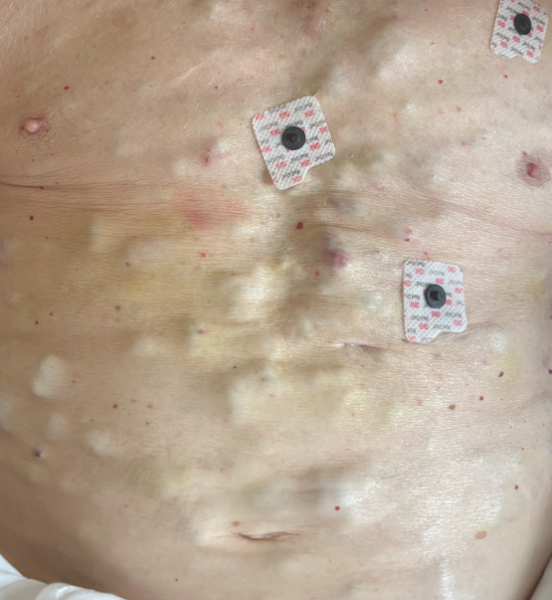
On physical examination, the patient was hemodynamically stable. Dermatologic evaluation revealed numerous firm, non-tender, 1-cm subcutaneous nodules diffusely distributed across the chest and abdomen. The overlying skin was grossly intact, however, some nodules demonstrated pigmentary changes as noted in Figure 1. The patient was oriented to self only, which was consistent with his baseline. There were no other focal neurologic deficits.
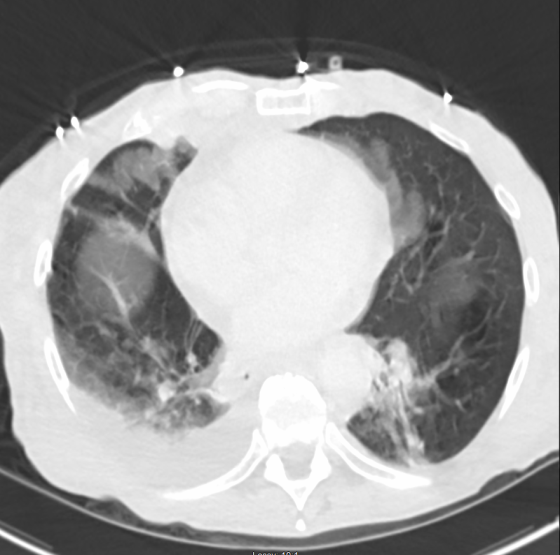
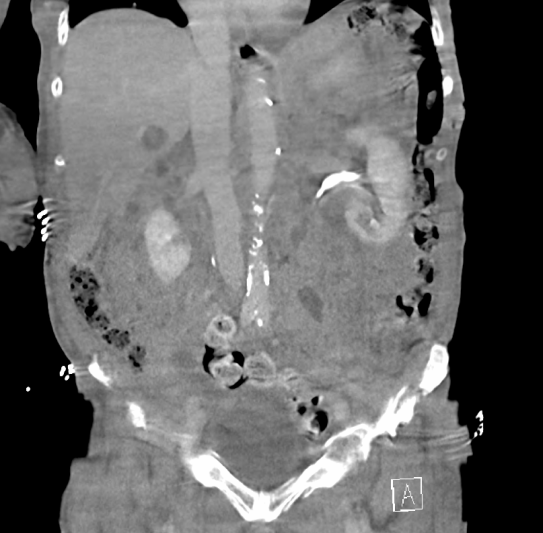
CT imaging of the chest, abdomen, and pelvis demonstrated widespread metastatic disease involving the mediastinum, lungs, liver, adrenal glands, retroperitoneum, osseous structures, and subcutaneous tissues as noted in Figure 2 and Figure 3. MRI of the brain did not show evidence of intracranial metastases. Excisional biopsy of a subcutaneous nodule on the chest was performed, and histopathologic examination confirmed metastatic malignant melanoma.
The patient’s family ultimately decided to return him to his original facility and pursue outpatient oncology follow-up. The patient subsequently passed away approximately one month after discharge from the hospital.


Malignant melanoma is distinguished from other cutaneous malignancies by its aggressive biologic behavior and propensity for widespread metastasis. Although non-melanoma skin cancers are far more prevalent, melanoma accounts for the majority of skin cancer related mortality, reflecting disproportionate lethality 1, 2. This aggressive biology necessitates heightened clinical suspicion when evaluating new or unexplained cutaneous findings, particularly in patients with known or suspected melanoma risk factors. Melanoma skin metastases may precede the detection of visceral disease and, in some cases, constitute the first or only clinical sign of melanoma recurrence 6. Therefore, recognition of cutaneous metastases plays a critical role in staging, prognostication, and therapeutic decision making.
The timing of melanoma recurrence is highly variable. While many recurrences occur within the first five years following diagnosis, late recurrence after prolonged disease-free intervals has been well documented 7, 8. This supports the importance of long-term surveillance and careful dermatologic history, particularly when prior pathology records are unavailable. Additionally, the extent of metastatic burden at diagnosis remains a critical prognostic factor. Data demonstrates that survival declines significantly once distant metastases are present, particularly with multi-organ involvement 9. In our patient case, the widespread distribution of metastatic disease at initial recognition likely reflects delayed detection rather than rapid progression, emphasizing the consequences of missed early recurrence.
Therapeutic advances have significantly altered the prognosis of metastatic melanoma. Immune checkpoint inhibitors targeting PD-1 and CTLA-4 pathways have produced durable responses and improved long-term survival in a subset of patients with advanced disease 10. In a long-term follow up of patients treated with combination nivolumab and ipilimumab, nearly half achieved sustained survival at five years, representing an improvement when compared with previous outcomes 10. Despite these advances, early detection remains essential, especially with confounding factors in vulnerable populations. Communication barriers, neurocognitive comorbidities, and limited access to preventive care are a few factors that may obscure early signs of disease progression. This case highlights the importance of thorough physical examination and heightened clinical awareness, which can assist in detection of advanced malignancy.
This case illustrates the aggressive and unpredictable metastatic behavior of malignant melanoma, including the potential for widespread dissemination many years after the initial lesion excision. Cutaneous metastases may serve as a sentinel marker of systemic disease and warrant prompt diagnostic evaluation. Long-term dermatologic surveillance and careful attention to history and physical examination are essential components of melanoma management, particularly in patients with neurocognitive comorbidities. Early recognition of recurrence may allow timely initiation of systemic therapy and improve clinical outcomes.
| [1] | American Cancer Society. Cancer Facts & Figures 2024. Atlanta: American Cancer Society; 2024. | ||
| In article | |||
| [2] | Siegel, R. L., Miller, K. D., Fuchs, H. E., & Jemal, A. (2023). Cancer statistics, 2023. CA: A Cancer Journal for Clinicians, 73(1), 17–48. | ||
| In article | View Article PubMed | ||
| [3] | Di Raimondo, C., Lozzi, F., Di Domenico, P. P., et al. (2023). The diagnosis and management of cutaneous metastases from melanoma. International Journal of Molecular Sciences, 24(19), Article 14535. MDPI. | ||
| In article | View Article PubMed | ||
| [4] | Tas F, Erturk K. Metastatic behavior in melanoma: Timing, pattern, survival, and influencing factors. J Oncol. 2020; 2020: 1–9. | ||
| In article | View Article PubMed | ||
| [5] | Lookingbill DP, Spangler N, Helm KF. Cutaneous metastases in patients with metastatic carcinoma: a retrospective study of 4020 patients. J Am Acad Dermatol. 1993; 29(2 Pt 1): 228–236. | ||
| In article | View Article PubMed | ||
| [6] | Gershenwald, J. E., Scolyer, R. A., Hess, K. R., et al. (2017). Melanoma staging: Evidence-based changes in the American Joint Committee on Cancer eighth edition. CA: A Cancer Journal for Clinicians, 67(6), 472–492. | ||
| In article | View Article PubMed | ||
| [7] | Faries, M. B., Steen, S., Ye, X., et al. (2013). Late recurrence in melanoma: Clinical implications of lost dormancy. Journal of the American College of Surgeons, 217(1), 27–34. | ||
| In article | View Article PubMed | ||
| [8] | Crowley, N. J., & Seigler, H. F. (1990). Late recurrence of malignant melanoma: Analysis of 168 patients. Annals of Surgery, 212(2), 173–177. | ||
| In article | View Article PubMed | ||
| [9] | Balch, C. M., Gershenwald, J. E., Soong, S. J., et al. (2009). Final version of the American Joint Committee on Cancer staging system for cutaneous melanoma. Journal of Clinical Oncology, 27(36), 6199–6206. | ||
| In article | View Article PubMed | ||
| [10] | Larkin, J., Chiarion-Sileni, V., Gonzalez, R., et al. (2019). Five-year survival with combined nivolumab and ipilimumab in advanced melanoma. New England Journal of Medicine, 381(16), 1535–1546. | ||
| In article | View Article PubMed | ||
Published with license by Science and Education Publishing, Copyright © 2026 Tajala Aman MD, Chelsey Arvin DO, Folake Ishola MD M.Sc, Muhammad Ulusyar Khan MBBS and Lannie Cation MD FACP
 This work is licensed under a Creative Commons Attribution 4.0 International License. To view a copy of this license, visit
http://creativecommons.org/licenses/by/4.0/
This work is licensed under a Creative Commons Attribution 4.0 International License. To view a copy of this license, visit
http://creativecommons.org/licenses/by/4.0/
| [1] | American Cancer Society. Cancer Facts & Figures 2024. Atlanta: American Cancer Society; 2024. | ||
| In article | |||
| [2] | Siegel, R. L., Miller, K. D., Fuchs, H. E., & Jemal, A. (2023). Cancer statistics, 2023. CA: A Cancer Journal for Clinicians, 73(1), 17–48. | ||
| In article | View Article PubMed | ||
| [3] | Di Raimondo, C., Lozzi, F., Di Domenico, P. P., et al. (2023). The diagnosis and management of cutaneous metastases from melanoma. International Journal of Molecular Sciences, 24(19), Article 14535. MDPI. | ||
| In article | View Article PubMed | ||
| [4] | Tas F, Erturk K. Metastatic behavior in melanoma: Timing, pattern, survival, and influencing factors. J Oncol. 2020; 2020: 1–9. | ||
| In article | View Article PubMed | ||
| [5] | Lookingbill DP, Spangler N, Helm KF. Cutaneous metastases in patients with metastatic carcinoma: a retrospective study of 4020 patients. J Am Acad Dermatol. 1993; 29(2 Pt 1): 228–236. | ||
| In article | View Article PubMed | ||
| [6] | Gershenwald, J. E., Scolyer, R. A., Hess, K. R., et al. (2017). Melanoma staging: Evidence-based changes in the American Joint Committee on Cancer eighth edition. CA: A Cancer Journal for Clinicians, 67(6), 472–492. | ||
| In article | View Article PubMed | ||
| [7] | Faries, M. B., Steen, S., Ye, X., et al. (2013). Late recurrence in melanoma: Clinical implications of lost dormancy. Journal of the American College of Surgeons, 217(1), 27–34. | ||
| In article | View Article PubMed | ||
| [8] | Crowley, N. J., & Seigler, H. F. (1990). Late recurrence of malignant melanoma: Analysis of 168 patients. Annals of Surgery, 212(2), 173–177. | ||
| In article | View Article PubMed | ||
| [9] | Balch, C. M., Gershenwald, J. E., Soong, S. J., et al. (2009). Final version of the American Joint Committee on Cancer staging system for cutaneous melanoma. Journal of Clinical Oncology, 27(36), 6199–6206. | ||
| In article | View Article PubMed | ||
| [10] | Larkin, J., Chiarion-Sileni, V., Gonzalez, R., et al. (2019). Five-year survival with combined nivolumab and ipilimumab in advanced melanoma. New England Journal of Medicine, 381(16), 1535–1546. | ||
| In article | View Article PubMed | ||