The long-term effects following a COVID-19 infection vary widely, with that including inappropriate sinus tachycardia as a manifestation. Herein we report the case of a middle-aged woman with a history significant for a COVID-19 infection 2-years prior, following which she developed brief episodes of palpitations, otherwise controlled with Metoprolol Succinate. She presented to the hospital after a 1-week history of worsening palpitations far worse in severity from prior episodes, associated with shortness of breath and pre-syncope. ECG on admission demonstrated sinus tachycardia with a significantly elevated heart rate. Multiple repeat ECGs demonstrated periods of sinus tachycardia when symptomatic alternating with a normal sinus rhythm when asymptomatic. Continuous telemetry monitoring while inpatient reported similar findings, with no other tachyarrhythmias present. Multiple other diagnostic tests were performed to rule out a more malignant cause of autonomic instability, which ultimately yielded negative results. The patient was however additionally diagnosed with orthostatic hypotension, which posed a potential confounding factor in the steadfast diagnosis of inappropriate sinus tachycardia. This case highlights the multiple simultaneous manifestations of post-covid syndrome with significant symptom overlap, leading to a missed diagnosis.
Post-Covid Syndrome, defined by the persistence of viral-like symptoms 12-weeks after an acquired Covid-19 infection is thought to be the culprit for multiple dysautonomic pathologies 1. Inappropriate sinus tachycardia is a dysrhythmia defined by a brief period of pulse rate above 100 bpm, or 24-hour rate averaging above 90 bpm, disproportionately incited by regular physiologic activity and accompanied by distressing symptoms 2, 3. It is often a diagnosis of exclusion, and is to date poorly understood. Similar dysautonomic processes such as postural orthostatic tachycardia syndrome is defined by an increase of 30 or more bpm within 10 minutes of standing from a seated position in the absence of overt orthostatic vital markers 4. Orthostatic hypotension occurs when a drop in systolic blood pressure by more than 20 mm Hg is experienced within 3 minutes of moving from a supine to a standing position, often accompanied by palpitations 5, 6.
We here report the case of a middle aged female who had been previously diagnosed with postural orthostatic tachycardia syndrome, thought to be a consequence of a prior Covid infection. She frequently reported episodes of palpitations which were non-responsive to Metoprolol Succinate prescribed by her primary provider. After careful inpatient work-up, she was subsequently found to have episodes of marked tachycardia provoked by minute movements in the absence of postural changes, thought to be inappropriate sinus tachycardia. She was also separately diagnosed with orthostatic hypotension, explaining palpitations that occurred in response to postural changes, leaving her prior diagnosis of postural orthostatic tachycardia syndrome an incorrect one.
History of Presentation
A 34-year-old female with a reported history of an unknown ‘heart arrhythmia,’ postural orthostatic tachycardia syndrome (POTS), and a history of a SARS-CoV-2 infection 2-years prior presented to the emergency department for a 1-week duration of worsening palpitations associated with dizziness and generalized weakness. She reported having had a Holter Monitor placed for approximately 2-weeks 1-year prior, which revealed a HR of between 50-160 in a normal sinus rhythm. She was prescribed Metoprolol Succinate 12.5 mg oral daily by her primary care provider which did not cease episodes. She reported still having had frequent sporadic episodes of palpitations for 2-years associated with chest discomfort and shortness of breath, however not to the severity reported in the past week.
Investigations
On arrival to the emergency department, blood pressure was 122/71 mm Hg, heart rate was 94 beats per minute, she was afebrile and respiratory rate was 17 cycles per minute. She was saturating at 98% on room air. Complete blood count, liver and renal function tests, as well as electrolytes were all within normal limits. Troponin level was negative. Thyroid stimulating hormone (TSH) drawn later returned normal at 3.212 mIU/L. A urine pregnancy test as well as urine toxicology was negative.
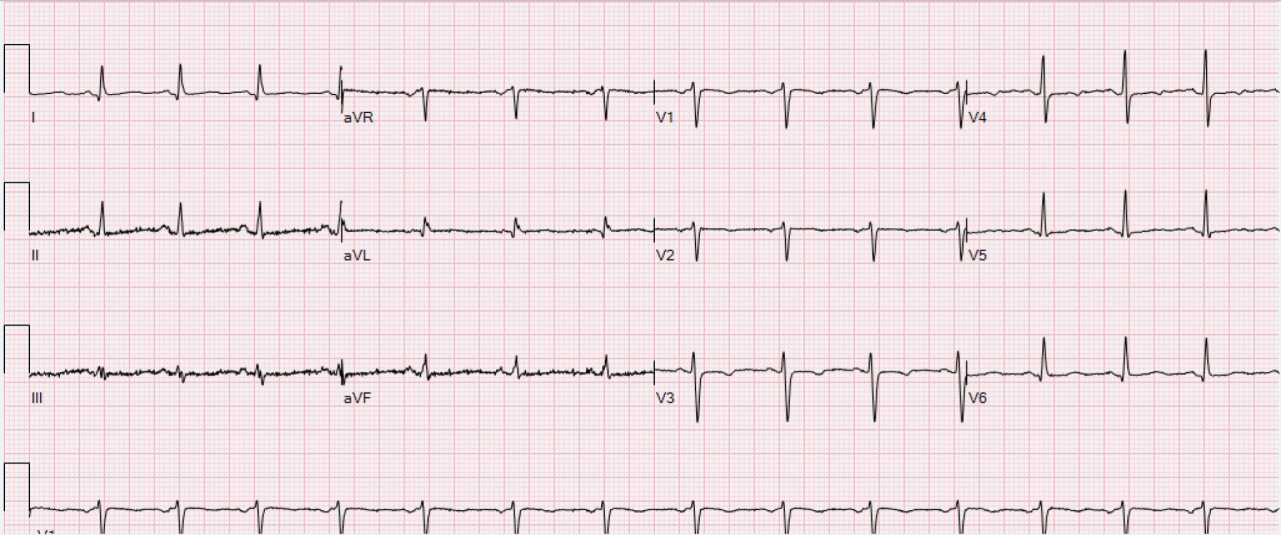
An initial 12-lead electrocardiogram (EKG) displayed a normal sinus rhythm with a heart rate of 88 bpm (Figure 1). A repeat EKG performed several minutes later displayed sinus tachycardia with a heart rate of 144 bpm. The patient was subsequently placed on a cardiac monitor for continuous telemetry monitoring, which displayed drastic increases in HR with even slight movements while lying in bed. In one particular instance, she would turn from the left to right position in bed, resulting in a dramatic increase in HR from 74 bpm to 165 bpm, whilst simultaneously experiencing palpitations and marked dizziness.
A non-contrast CT of the head was taken in order to rule out space occupying lesions or vascular abnormalities due to her reports of dizziness. Due to her complaint of bilateral lower extremity weakness and recent report of flu-like illness, a lumbar puncture was performed with cerebrospinal fluid (CSF) testing to rule out possible Guillain-Barre Syndrome (GBS). CSF findings revealed no evidence of infection or demyelinating disorders (Table 1). For further confirmation, an MRI of the brain with contrast was performed to similarly rule out demyelinating disorders such as multiple sclerosis with normal findings.
A transthoracic echocardiogram (TTE) revealed no focal wall abnormalities with an estimated left ventricular ejection fraction (EF) of 70-75%. Right ventricular systolic function was normal. There were no valvular abnormalities.
An electrophysiology consult was obtained for review of telemetry findings. Additionally, an upright tilt-table test (TTT) was recommended, which revealed a baseline supine blood pressure of 114/68 mmHg with a HR of 88 bpm, and a BP at thirty-minutes of 105/75 mmHg with a HR of 105 bpm. She reported feeling nauseous and dizzy at the thirty minute interval, following which the test was terminated. She was determined to have orthostatic hypotension.

Deductions
All ECGs demonstrated periods of brief sinus tachycardia when symptomatic. Of importance, episodes occurred in the absence of postural changes despite her prior diagnosis of POTS. Palpitations also occurred in the absence of positive orthostatic signs, making it less likely a response to orthostatic hypotension. Rhythm strips from continuous telemetry monitoring displayed similar findings, with baseline recordings of normal sinus rhythm. No other tachyarrhythmias were detected. Additionally, orthostatic testing was positive, leading to 2 independent diagnoses of orthostatic hypotension and inappropriate sinus tachycardia (IST).
Management
As per electrophysiology, the patient was started on Ivabradine 2.5 mg — this was subsequently up-titrated to a dose of 5 mg after 1-week. This dose was thereafter up-titrated to 7.5 mg the following week. For her concomitant orthostatic hypotension, she was prescribed Fludrocortisone 0.1 mg to be taken twice daily. She was also started on Metoprolol Succinate 25 mg oral twice daily, to prevent potential reflex tachycardia. She was also counseled on caffeine avoidance.
During a follow-up appointment in the outpatient electrophysiology clinic 1-week later, an EKG revealed a normal sinus rhythm with a HR of 66 bpm. She reported at least 2 episodes of palpitations since discharge. She was referred for cardiac monitor placement for continued monitoring of her HR and response to therapy.
Etiology & Pathophysiology
Inappropriate sinus tachycardia (IST) is defined by a period of tachycardia with a normal p-axis at a rate of or above 100 bpm, or an average heart rate (HR) above 90 bpm over a 24-hour duration 2, 7, 8. IST is exaggerated by physiologic movements and is accompanied by distressing or debilitating symptoms. It is not associated with structural heart defects, or potential secondary causative agents 2, 7, 8. This is most often a diagnosis made in females between 15 and 45 years of age, with an estimated prevalence of 1% of the middle aged population 8, 9. The syndrome has however been found to also develop in the elderly, albeit at a much lower rate 8.
The pathological process that drives IST is not fully understood, but theories often fall into two broad categories; namely, intrinsic causes and extrinsic causes 7. Intrinsic causes are thought to stem directly from the sinus node, of which there is a proposed increased automaticity within the pacemaker cells 2, 8. This may exist in the presence or absence of simultaneous excess sympathetic stimulation, or deficient vagal input 2, 4. An extrinsic source of IST could be due to hypersensitivity to beta-adrenergic stimulation, with a resulting imbalance in autonomic and neurohormonal regulation 4, 9. A study evaluating the autonomic response to adenosine in persons with IST demonstrated a blunted negative chronotropic effect compared to normal, possibly indicating defective acetylcholine and potassium sensing channels 2.
The presence of anti-beta receptor IgG antibodies has been detected in select patients. In this instance, IST is presumed to occur through a cyclic AMP (cAMP) mediated calcium influx that activates a positive chronotropic response 7, 8. This is a similarly mediated mechanism to that observed in persons afflicted with Chagas disease 7. Familial mediated IST is thought to occur through a gain-of-function mutation in the HCN4 gene, similarly resulting in an increased affinity for cAMP binding, with a resultant increase in sympathetic stimulation 8, 10.
IST is a diagnosis of exclusion, a conclusion in the absence of a clear inciting event or causative factor. The sudden onset of IST following viral infections have been considered in multiple cases, most notably so in persons previously infected with SARS-CoV-2 11, 12. Post-Covid Syndrome (PCS) is defined by the persistence of symptoms 12-weeks after an acquired Covid-19 infection 1. A prospective study analyzing 200 persons with PCS found that IST was prevalent in 20% of the studied population 12. A retrospective study similarly analyzing 524 persons with PCS performed testing with 24-hour Holter monitoring and deductions with regard to time and heart rate variability (HRV), proposed a dysautonomic process leading to an attenuation in parasympathetic regulation 13. The underactive parasympathetic system not only provides a rationale for tachycardia, but also explains many of the concurrent PCS symptoms such as gastrointestinal upset, fatigue, headaches, and neuro-cognitive impairment 5.
Similar in pathogenesis to IST as a post-Covid manifestation is the development of orthostatic hypotension, characterised by a drop in systolic blood pressure by at least 20 mm Hg when moving from a supine to a standing position 6. Following an acute Covid infection, viral replication may induce a systemic inflammatory state leading to cytokine or hypoxia induced neuronal injury, altering normal physiologic responses to postural changes 5, 6. Circulating catecholamines triggered by baroreceptor firing results in tachycardia, resulting in palpitations often experienced by persons following positional changes 14. Multiple dysautonomic conditions may simultaneously occur following a Covid infection, often with significant symptomatic overlap.
Clinical Manifestations
Clinical symptoms of IST are often debilitating, and thought to be a direct consequence of the sudden and dramatically elevated heart rate. The most commonly experienced effect of IST, present in up to 90% of affected persons, are palpitations 8. Other frequently reported symptoms include dizziness, light-headedness, shortness of breath, chest pain, fatigue, or a decreased exercise capacity 3. Frequently reported are pre-syncopal or near fainting events. Rarely are true syncopal events appreciated 2, 8. Symptoms of orthostatic hypotension are similar as persons often report dizziness, light-headedness, presyncope, or even gastrointestinal upset 6, 14.
Diagnosis
For a true diagnosis to be made, appropriate sinus tachycardia secondary to reasonable extraneous causes such as anxiety, panic attacks, stress, caffeine, or stimulant drugs must effectively be excluded 3. Similarly, concomitant medical conditions that result in elevated circulating thyroid hormones, steroids, or catecholamines such as that seen in hyperthyroidism, Cushing’s syndrome, or pheochromocytoma should be ruled out 3. Other potential confounding factors in the steadfast diagnosis of IST is the presence of comorbid anemia or heart failure 8.
Differentiating between IST and postural orthostatic tachycardia syndrome (POTS) is also key in obtaining a true IST diagnosis. Overlapping symptoms between the two conditions are common, and are most often palpitations, dizziness, weakness, tremors, or presyncope 2, 4. Symptoms of POTS are often triggered by orthostatic changes, while IST is often disproportionately triggered by physiologic or emotional stress 4. Persons who fit within a POTS diagnosis often experience an increase of 30 or more bpm within 10 minutes of standing from a seated position. This is accompanied by typical orthostatic symptoms, however in the absence of overt orthostatic hypotension 15. POTS, similarly to IST, is a diagnosis made when other possible contributing conditions are ruled out 2, 15.
Intrinsic heart rate (IHR), defined as the heart rate measured in the presence of simultaneous autonomic blockade by a non-selective beta-antagonist and a muscarinic agonist, reflects the automaticity of the sinus node in the absence of neurohormonal input 16, 17. A study by Nwazue et. Al. that evaluated IHR among POTS and IST patients compared to healthy controls found a higher sympathetic contribution in the IST population, with a minimal difference in vagal contribution 15. This study posits a similar abnormal autonomic modulation with excess sympathetic, and deficient vagal input in both groups 15. Orthostatic vital measurements as well as tilt-table testing should be performed to differentiate between orthostatic hypotension and POTS from IST 2, 8.
A 12-lead EKG is vital in identifying a sinus rhythm, determining heart rate, and differentiating from other atrial tachyarrhythmias 4. Ambulatory monitoring with a temporary cardiac monitor such as a Holter monitor, or an implantable loop recorder is sometimes indicated in order to capture episodes as they occur 2. EKG similarities between IST and sinus node reentrant tachycardia may confound the diagnosis. Performing vagal maneuvers or administration of adenosine can terminate reentrant tachycardia, thereby providing a possible differential between the two diagnoses 8. More invasive testing, such as an electrophysiologic (EP) study may be conducted if the recorded rhythm is particularly difficult to discern from other supraventricular tachycardia morphologies 2, 8. Additionally, a standard transthoracic echocardiogram (TTE) should be performed in order to identify any structural cardiac abnormalities if present 2.
Treatment
Treatment of IST focuses more on terminating episodes and preventing future recurrences for symptomatic relief. Despite its debilitating adverse effect profile, IST is considered a benign condition as studies have not demonstrated an increase in morbidity or mortality in affected persons 7. Patients with isolated IST do not typically develop cardiomyopathy, likely due to the overall preserved diurnal variation in heart rate 7, 8.
Lifestyle modifications are always recommended in the treatment of IST, such as with avoidance of stimulants that may increase sympathetic drive, and subsequently increase the risk of precipitating episodes 4, 8. The use of anxiolytics or antidepressants have limited efficacy in preventing episodes despite psychological issues such as depression or anxiety being a common comorbid complication amongst the IST population 2.
Pharmacological treatment centers on controlling either intrinsic sinus node automaticity, or external sympathetic or vagal stimulation 2. Beta-blockers alone, even at higher doses have proven ineffective in preventing recurrent episodes of IST, and are limited in their use due to the presence of intolerable side effects 2, 3, 7. Persons may report adverse effects including, but not limited to hypotension, fatigue, or gastrointestinal upset 3, 4. Calcium channel blockers, similarly to beta blockers, have had limited efficacy in the treatment of IST 8, 18.
The decision was made to initiate Ivabradine treatment in our patient, a pure chronotropic drug that functions to inhibit the “If” (funny current) ionic channel that is thought to generate spontaneous depolarization activity seen in the pacemaker cells of the sinoatrial node (SAN) 18. A direct response of the medication is a reduction in HR mediated through If attenuation 19. More commonly used for the treatment of chronic systolic heart failure or stable angina that responds poorly to beta-blocker therapy, Ivabradine has had increasing utility in the treatment of IST 19, 20.
A randomized, double-blind, placebo controlled study by Cappato et. Al that investigated the effects of Ivabradine found that persons experienced a >70% reduction in baseline symptoms, with 50% of the treated population reporting a complete elimination in all symptoms 19. Beneficial effects of the medication are likely a therapy mediated reduction in mean and maximal heart rate over a 24-hour period 19. Data from the study also demonstrated a greater degree of HR reduction at 6-months of treatment time, compared to at 3-months, suggesting that the impact of the drug tends to improve over time 19. The effects of Ivabradine were more profound in persons with an abnormal baseline IHR 18. Of note, a study by Pyasynzki et al. demonstrated that combination therapy with Metoprolol Succinate and Ivabradine produced an overall increase in maximal heart rate reduction, as well as better exercise tolerance without producing bradycardia 21.
Radiofrequency ablation is sometimes performed in an attempt to modify the sinus node directly, or alter the way in which sympathetic inputs are received 2, 3. Initial success may be achieved, however the pathogenic process may recur due to differing originating sites of the IST. In certain instances, the impulse may stem from other sites within the sinus node, or from the atrioventricular junction 3, 4. The risks of ablation are frequently thought to outweigh potential benefits, and repeat interventions are often required due to sinus node remodulation over time 4, 22. Other reported adverse outcomes include phrenic nerve damage, the need for permanent pacing, or long-term chronotropic incompetence 2, 7, 19.
In summary, we present a complex case of dysautonomia characterised by simultaneous inappropriate sinus tachycardia and orthostatic hypotension, likely a result of a prior Covid infection. The significant overlap in symptoms between said dysautonomic pathologies including IST, orthostatic hypotension, and POTS may result in a misdiagnosis and failure to treat appropriately. It is imperative to undertake an extensive work-up to properly delineate the specific dysautonomic process in order to treat each condition individually if present, and prevent further episodes.
| [1] | Ahmed, A, Pothineni, N, Charate, R. et al. Inappropriate Sinus Tachycardia: Etiology, Pathophysiology, and Management: JACC Review Topic of the Week. JACC. 2022 Jun, 79 (24) 2450–2462. | ||
| In article | View Article PubMed | ||
| [2] | Amir-Kabirian B, Annie FH, Koontz M, Ihle R. Sinus Tachycardia Following COVID-19 and Its Implications. Cureus. 2024 Mar 31; 16(3): e57320. | ||
| In article | View Article PubMed | ||
| [3] | Brian Olshansky, Renee M Sullivan, Inappropriate sinus tachycardia, EP Europace, Volume 21, Issue 2, February 2019, Pages 194–207. | ||
| In article | View Article PubMed | ||
| [4] | Sheldon RS, Grubb BP 2nd, Olshansky B, Shen WK, Calkins H, Brignole M, Raj SR, Krahn AD, Morillo CA, Stewart JM, Sutton R, Sandroni P, Friday KJ, Hachul DT, Cohen MI, Lau DH, Mayuga KA, Moak JP, Sandhu RK, Kanjwal K. 2015 heart rhythm society expert consensus statement on the diagnosis and treatment of postural tachycardia syndrome, inappropriate sinus tachycardia, and vasovagal syncope. Heart Rhythm. 2015 Jun; 12(6): e41-63. | ||
| In article | View Article PubMed | ||
| [5] | Spera, F.R., Mistrulli, R., Salerno, L. et al. Post-COVID Postural Orthostatic Tachycardia Syndrome and Inappropriate Sinus Tachycardia in the Pediatric Population. Curr Clin Micro Rpt 11, 115–125 (2024). | ||
| In article | View Article | ||
| [6] | Haloot J, Bhavaraju-Sanka R, Pillarisetti J, Verduzco-Gutierrez M. Autonomic Dysfunction Related to Postacute SARS-CoV-2 Syndrome. Phys Med Rehabil Clin N Am. 2023 Aug; 34(3): 563-572. | ||
| In article | View Article PubMed | ||
| [7] | Ruzieh M, Moustafa A, Sabbagh E, Karim MM, Karim S. Challenges in Treatment of Inappropriate Sinus Tachycardia. Curr Cardiol Rev. 2018 Mar 14; 14(1): 42-44. | ||
| In article | View Article PubMed | ||
| [8] | Muzaffar Ali, Abdul Qadir Haji, Asim Kichloo, Blair P Grubb, Khalil Kanjwal. Inappropriate sinus tachycardia: a review. Rev. Cardiovasc. Med. 2021, 22(4), 1331-1339. | ||
| In article | View Article PubMed | ||
| [9] | Femenía F, Baranchuk A, Morillo CA. Inappropriate sinus tachycardia: current therapeutic options. Cardiol Rev. 2012 Jan-Feb; 20(1): 8-14. | ||
| In article | View Article PubMed | ||
| [10] | Vedantham V, Scheinman MM. Familial inappropriate sinus tachycardia: a new chapter in the story of HCN4 channelopathies. Eur Heart J. 2017 Jan 21; 38(4): 289-291. | ||
| In article | |||
| [11] | Sawalha K, Habash F, Vallurupalli S, Paydak H. Inappropriate Sinus Tachycardia Following Viral Illness. Clin Pract. 2021 Apr 9; 11(2): 219-222. | ||
| In article | View Article PubMed | ||
| [12] | Aranyó J, Bazan V, Lladós G, Dominguez MJ, Bisbal F, Massanella M, Sarrias A, Adeliño R, Riverola A, Paredes R, Clotet B, Bayés-Genís A, Mateu L, Villuendas R. Inappropriate sinus tachycardia in post-COVID-19 syndrome. Sci Rep. 2022 Jan 7; 12(1): 298. | ||
| In article | View Article PubMed | ||
| [13] | Bareke P, Danaeian S, Hillman T, et al97 Dysautonomia in post COVID-19 syndrome is driven by parasympathetic suppression and sympathetic activation: an analysis of 24-hour ECG heart rate variabilityHeart 2024;110:A102-A103. | ||
| In article | View Article | ||
| [14] | Dani M, Dirksen A, Taraborrelli P, Torocastro M, Panagopoulos D, Sutton R, Lim PB. Autonomic dysfunction in 'long COVID': rationale, physiology and management strategies. Clin Med (Lond). 2021 Jan; 21(1): e63-e67. | ||
| In article | View Article PubMed | ||
| [15] | Nwazue VC, Paranjape SY, Black BK, Biaggioni I, Diedrich A, Dupont WD, Robertson D, Raj SR. Postural tachycardia syndrome and inappropriate sinus tachycardia: role of autonomic modulation and sinus node automaticity. J Am Heart Assoc. 2014 Apr 10; 3(2): e000700. | ||
| In article | View Article PubMed | ||
| [16] | Tobias Opthof, The normal range and determinants of the intrinsic heart rate in man, Cardiovascular Research, Volume 45, Issue 1, January 2000, Pages 177–184. | ||
| In article | View Article PubMed | ||
| [17] | Marcus B, Gillette PC, Garson A Jr. Intrinsic heart rate in children and young adults: an index of sinus node function isolated from autonomic control. Am Heart J. 1990 Apr; 119(4): 911-6. | ||
| In article | View Article PubMed | ||
| [18] | Kaczmarek K, Klingenheben T, Poddebska I, et al. Baseline intrinsic heart rate and response to ivabradine treatment in patients with inappropriate sinus tachycardia. Ann Noninvasive Electrocardiol. 2020; 25: e12709. | ||
| In article | View Article PubMed | ||
| [19] | Cappato, R, Castelvecchio, S, Ricci, C. et al. Clinical Efficacy of Ivabradine in Patients With Inappropriate Sinus Tachycardia: A Prospective, Randomized, Placebo-Controlled, Double-Blind, Crossover Evaluation. JACC. 2012 Oct, 60 (15) 1323–1329. | ||
| In article | View Article PubMed | ||
| [20] | Abed HS, Fulcher JR, Kilborn MJ, Keech AC. Inappropriate sinus tachycardia: focus on ivabradine. Intern Med J. 2016 Aug; 46(8): 875-83. | ||
| In article | View Article PubMed | ||
| [21] | Ptaszynski P, Kaczmarek K, Ruta J, Klingenheben T, Cygankiewicz I, Wranicz JK. Ivabradine in combination with metoprolol succinate in the treatment of inappropriate sinus tachycardia. J Cardiovasc Pharmacol Ther. 2013 Jul; 18(4): 338-44. | ||
| In article | View Article PubMed | ||
| [22] | Scheinman MM, Vedantham V. Ivabradine: a ray of hope for inappropriate sinus tachycardia. J Am Coll Cardiol. 2012 Oct 9; 60(15): 1330-2. | ||
| In article | View Article PubMed | ||
Published with license by Science and Education Publishing, Copyright © 2025 Resha Reya Ganthan MD, Fadi Yacoub MD, Asher Gorantla MD and Nidal Isber MD FACC FHRS
 This work is licensed under a Creative Commons Attribution 4.0 International License. To view a copy of this license, visit
http://creativecommons.org/licenses/by/4.0/
This work is licensed under a Creative Commons Attribution 4.0 International License. To view a copy of this license, visit
http://creativecommons.org/licenses/by/4.0/
| [1] | Ahmed, A, Pothineni, N, Charate, R. et al. Inappropriate Sinus Tachycardia: Etiology, Pathophysiology, and Management: JACC Review Topic of the Week. JACC. 2022 Jun, 79 (24) 2450–2462. | ||
| In article | View Article PubMed | ||
| [2] | Amir-Kabirian B, Annie FH, Koontz M, Ihle R. Sinus Tachycardia Following COVID-19 and Its Implications. Cureus. 2024 Mar 31; 16(3): e57320. | ||
| In article | View Article PubMed | ||
| [3] | Brian Olshansky, Renee M Sullivan, Inappropriate sinus tachycardia, EP Europace, Volume 21, Issue 2, February 2019, Pages 194–207. | ||
| In article | View Article PubMed | ||
| [4] | Sheldon RS, Grubb BP 2nd, Olshansky B, Shen WK, Calkins H, Brignole M, Raj SR, Krahn AD, Morillo CA, Stewart JM, Sutton R, Sandroni P, Friday KJ, Hachul DT, Cohen MI, Lau DH, Mayuga KA, Moak JP, Sandhu RK, Kanjwal K. 2015 heart rhythm society expert consensus statement on the diagnosis and treatment of postural tachycardia syndrome, inappropriate sinus tachycardia, and vasovagal syncope. Heart Rhythm. 2015 Jun; 12(6): e41-63. | ||
| In article | View Article PubMed | ||
| [5] | Spera, F.R., Mistrulli, R., Salerno, L. et al. Post-COVID Postural Orthostatic Tachycardia Syndrome and Inappropriate Sinus Tachycardia in the Pediatric Population. Curr Clin Micro Rpt 11, 115–125 (2024). | ||
| In article | View Article | ||
| [6] | Haloot J, Bhavaraju-Sanka R, Pillarisetti J, Verduzco-Gutierrez M. Autonomic Dysfunction Related to Postacute SARS-CoV-2 Syndrome. Phys Med Rehabil Clin N Am. 2023 Aug; 34(3): 563-572. | ||
| In article | View Article PubMed | ||
| [7] | Ruzieh M, Moustafa A, Sabbagh E, Karim MM, Karim S. Challenges in Treatment of Inappropriate Sinus Tachycardia. Curr Cardiol Rev. 2018 Mar 14; 14(1): 42-44. | ||
| In article | View Article PubMed | ||
| [8] | Muzaffar Ali, Abdul Qadir Haji, Asim Kichloo, Blair P Grubb, Khalil Kanjwal. Inappropriate sinus tachycardia: a review. Rev. Cardiovasc. Med. 2021, 22(4), 1331-1339. | ||
| In article | View Article PubMed | ||
| [9] | Femenía F, Baranchuk A, Morillo CA. Inappropriate sinus tachycardia: current therapeutic options. Cardiol Rev. 2012 Jan-Feb; 20(1): 8-14. | ||
| In article | View Article PubMed | ||
| [10] | Vedantham V, Scheinman MM. Familial inappropriate sinus tachycardia: a new chapter in the story of HCN4 channelopathies. Eur Heart J. 2017 Jan 21; 38(4): 289-291. | ||
| In article | |||
| [11] | Sawalha K, Habash F, Vallurupalli S, Paydak H. Inappropriate Sinus Tachycardia Following Viral Illness. Clin Pract. 2021 Apr 9; 11(2): 219-222. | ||
| In article | View Article PubMed | ||
| [12] | Aranyó J, Bazan V, Lladós G, Dominguez MJ, Bisbal F, Massanella M, Sarrias A, Adeliño R, Riverola A, Paredes R, Clotet B, Bayés-Genís A, Mateu L, Villuendas R. Inappropriate sinus tachycardia in post-COVID-19 syndrome. Sci Rep. 2022 Jan 7; 12(1): 298. | ||
| In article | View Article PubMed | ||
| [13] | Bareke P, Danaeian S, Hillman T, et al97 Dysautonomia in post COVID-19 syndrome is driven by parasympathetic suppression and sympathetic activation: an analysis of 24-hour ECG heart rate variabilityHeart 2024;110:A102-A103. | ||
| In article | View Article | ||
| [14] | Dani M, Dirksen A, Taraborrelli P, Torocastro M, Panagopoulos D, Sutton R, Lim PB. Autonomic dysfunction in 'long COVID': rationale, physiology and management strategies. Clin Med (Lond). 2021 Jan; 21(1): e63-e67. | ||
| In article | View Article PubMed | ||
| [15] | Nwazue VC, Paranjape SY, Black BK, Biaggioni I, Diedrich A, Dupont WD, Robertson D, Raj SR. Postural tachycardia syndrome and inappropriate sinus tachycardia: role of autonomic modulation and sinus node automaticity. J Am Heart Assoc. 2014 Apr 10; 3(2): e000700. | ||
| In article | View Article PubMed | ||
| [16] | Tobias Opthof, The normal range and determinants of the intrinsic heart rate in man, Cardiovascular Research, Volume 45, Issue 1, January 2000, Pages 177–184. | ||
| In article | View Article PubMed | ||
| [17] | Marcus B, Gillette PC, Garson A Jr. Intrinsic heart rate in children and young adults: an index of sinus node function isolated from autonomic control. Am Heart J. 1990 Apr; 119(4): 911-6. | ||
| In article | View Article PubMed | ||
| [18] | Kaczmarek K, Klingenheben T, Poddebska I, et al. Baseline intrinsic heart rate and response to ivabradine treatment in patients with inappropriate sinus tachycardia. Ann Noninvasive Electrocardiol. 2020; 25: e12709. | ||
| In article | View Article PubMed | ||
| [19] | Cappato, R, Castelvecchio, S, Ricci, C. et al. Clinical Efficacy of Ivabradine in Patients With Inappropriate Sinus Tachycardia: A Prospective, Randomized, Placebo-Controlled, Double-Blind, Crossover Evaluation. JACC. 2012 Oct, 60 (15) 1323–1329. | ||
| In article | View Article PubMed | ||
| [20] | Abed HS, Fulcher JR, Kilborn MJ, Keech AC. Inappropriate sinus tachycardia: focus on ivabradine. Intern Med J. 2016 Aug; 46(8): 875-83. | ||
| In article | View Article PubMed | ||
| [21] | Ptaszynski P, Kaczmarek K, Ruta J, Klingenheben T, Cygankiewicz I, Wranicz JK. Ivabradine in combination with metoprolol succinate in the treatment of inappropriate sinus tachycardia. J Cardiovasc Pharmacol Ther. 2013 Jul; 18(4): 338-44. | ||
| In article | View Article PubMed | ||
| [22] | Scheinman MM, Vedantham V. Ivabradine: a ray of hope for inappropriate sinus tachycardia. J Am Coll Cardiol. 2012 Oct 9; 60(15): 1330-2. | ||
| In article | View Article PubMed | ||