Myeloid sarcoma (MS), also known as granulocytic sarcoma or chloroma, is a rare extramedullary manifestation of acute myeloid leukemia (AML). Mediastinal presentation is exceedingly uncommon and may lead to misdiagnosis, particularly when hematologic parameters are preserved. We report the case of a 44-year-old male who presented with constitutional symptoms and an isolated anterior mediastinal mass without peripheral blood abnormalities. Diagnosis was established through flow cytometry, histopathology, and immunohistochemistry. Molecular profiling revealed a complex mutational landscape including PHF6, TP53, WT1 mutations, and a PICALM–MLLT10 fusion. The patient was treated with AML-directed chemotherapy and remains under close surveillance. This case highlights the diagnostic challenges and prognostic implications of extramedullary AML with rare genetic alterations.
Myeloid sarcoma is a rare neoplastic condition characterized by the extramedullary proliferation of myeloid blasts. It can occur in isolation, precede, or accompany AML, often complicating the diagnostic process. The incidence of MS is estimated to be between 2% and 8% of AML cases, with common sites including the skin, lymph nodes, and soft tissues 1, 2, 3. MS occurs more frequently in males and typically presents in the first five decades of life 1. Mediastinal involvement is less frequent and presents a unique diagnostic challenge 4. This case highlights the importance of an integrated approach utilizing imaging, histopathology, immunohistochemistry (IHC), and flow cytometry for accurate diagnosis.
A 44-year-old Asian male with a past medical history of hypertension, prediabetes, and active smoking for 27 years presented to the emergency department with hyporexia, nausea, dysphonia, weight loss (7 kg in 3 months), and night sweats.
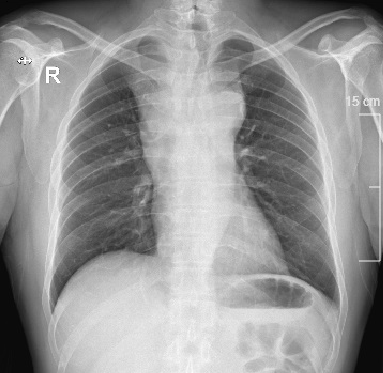
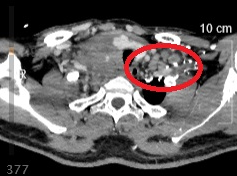
On physical examination, the patient was afebrile, hemodynamically stable, and had no palpable lymphadenopathy or organomegaly. There were no cutaneous lesions or apparent signs of extramedullary involvement. A computed tomography (CT) scan of the head and neck revealed a large mediastinal mass measuring 98 mm (AP) x 93 mm (transversal, cephalocaudal). There was no evidence of additional masses or hilar/axillary adenopathies. Mild pericardial effusion was also noted.


The patient's complete blood count (CBC) showed a hemoglobin level of 13.2 g/dL, a platelet count of 618,000/µL, and a leukocyte count of 4,610/µL with a normal differential count. Biochemical analysis revealed a mildly elevated lactate dehydrogenase (LDH) level of 413 U/L, while renal and hepatic function tests remained within normal limits. Coagulation studies, including prothrombin time (PT) and activated partial thromboplastin time (PTT), were also within the normal range.
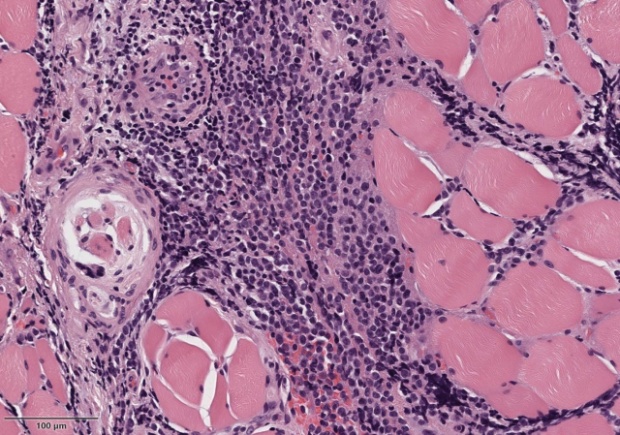
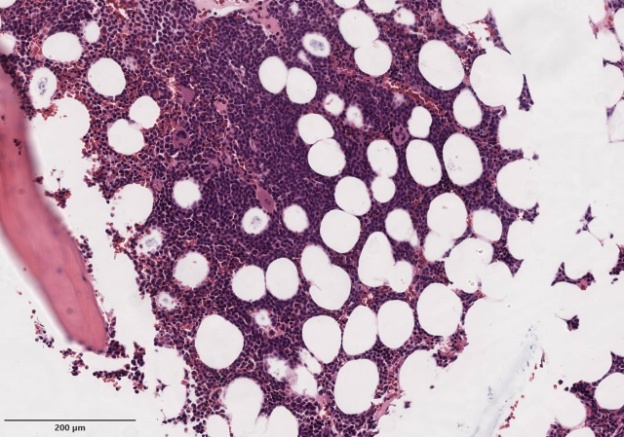
Flow cytometry of both the bone marrow and a biopsy from the mediastinal mass obtained by cervicotomy identified an abnormal population of myeloid precursors, characterized by strong expression of cyMPO, nuTdT, CD34, CD33, and CD13. Additionally, CD19 and CD45 were weakly expressed, whereas cyCD3, CD3, CD117, CD7, CD56, CD71, CD14, CD105, CD36, and CD79a were completely absent. These findings were consistent with a diagnosis of myeloid sarcoma/acute myeloid leukemia (AML), which was subsequently confirmed through histopathology and immunohistochemistry (IHC).
Next-generation sequencing (NGS) analysis of the bone marrow revealed multiple somatic mutations. A frameshift deletion in PHF6 (exon 6, NM_032458.3: c.481_485delAAAAG; p.Lys161SerfsTer9) was identified, potentially contributing to dysregulated transcriptional control 5. Additionally, a missense mutation in TP53 (exon 11, NM_000546.5:c.1123C>A; p.Gln375Lys) was detected, a finding commonly associated with high-risk acute myeloid leukemia and resistance to standard chemotherapy 6. A mutation in WT1 (exon 9, NM_024426.6:c.1432C>T; p.His478Tyr) was also present, further implicating altered transcriptional regulation in leukemogenesis. Furthermore, a fusion between the PICALM and MLLT10 genes (chr11:85687666 - chr10:21875223, variant ID: PICALM-MLLT10.P18M4) was identified, a genetic alteration that has been reported with increased frequency in patients of Asian descent and is associated with aggressive disease and abnormal transcriptional programs 7.
The NGS analysis was performed using the Oncomine Myeloid Assay, with library and template preparation carried out on the Ion Chef system. Sequencing was conducted on an Ion GeneStudio S5 system, and variant annotation was performed using the Oncomine Reporter pipeline.
The patient was initiated on the standard 7+3 induction chemotherapy regimen consisting of cytarabine (100 mg/m² continuous infusion for 7 days) and daunorubicin (60 mg/m² for 3 days). Supportive care, including prophylactic antimicrobials and transfusions as needed, was provided. He initially tolerated induction chemotherapy without major complications. However, post-induction assessment using bone marrow cytomorphology and flow cytometry demonstrated persistent leukemic involvement with 74% of blasts in bone marrow, indicating failure of induction. Additionally, mediastinal disease consistent with residual myeloid sarcoma persisted, accompanied by ongoing dysphonia.


Due to the absence of a related donor, the patient was referred for matched unrelated donor search in anticipation of potential allogeneic hematopoietic stem cell transplantation (HSCT). In parallel, a request for azacitidine combined with venetoclax was submitted, aiming to provide an alternative to FLAG-IDA salvage chemotherapy. Targeted radiotherapy to the mediastinum was initiated for local control of the extramedullary disease.
Following failure of induction chemotherapy, the patient was initiated on a 28-day cycle of venetoclax in combination with azacitidine as salvage therapy. Venetoclax was administered with a standard ramp-up dosing schedule, reaching a target dose of 400 mg daily. The regimen was well tolerated, and interim evaluation at the end of the first cycle demonstrated a significant reduction in bone marrow blast burden to 1.3%, as assessed by measurable residual disease (MRD) using multiparametric flow cytometry. In addition, follow-up computed tomography revealed a 60% reduction in the mediastinal mass volume, indicating a substantial response at the extramedullary site.
In parallel, HLA typing and compatibility testing were conducted for allogeneic hematopoietic stem cell transplantation (HSCT). The patient is currently undergoing donor search and preparatory workup, and is scheduled to receive a cycle of FLAG-IDA (fludarabine, cytarabine, G-CSF, and idarubicin) as bridging therapy prior to transplant. This approach aims to achieve deeper cytoreduction and optimize disease control before proceeding to HSCT.
Myeloid sarcoma (MS) represents a unique diagnostic entity, particularly when it occurs in the absence of overt leukemia. Isolated mediastinal involvement is rare; large retrospective studies report mediastinal localization in <5% of MS cases 1, 2. In such presentations, the differential diagnosis frequently includes lymphoma, thymic neoplasms, germ cell tumors, and metastatic disease. In our case, the absence of peripheral blood or marrow blasts initially diverted suspicion away from a myeloid neoplasm.
Recent data suggest that early and accurate diagnosis of MS critically impacts outcomes, as delays can lead to transformation or systemic dissemination 3. Our diagnosis was facilitated by an integrated panel including flow cytometry and histopathology, aligned with WHO 2022 criteria for MS. The expression of cyMPO, nuTdT, CD34, CD33, and CD13 suggests a myeloid lineage with immaturity, consistent with AML. The absence of CD117, a marker typically present in AML, is unusual but has been reported in some cases of MS 4. Importantly, the presence of weak CD19 expression raises the possibility of early B-cell/myeloid lineage plasticity.
The genetic profile of this case adds a unique perspective. The PICALM–MLLT10 fusion, although rare, has been associated with aggressive disease in AML and T/myeloid mixed phenotype leukemias, especially among Asian populations 8. PHF6 mutations, frequently seen in male patients, are linked to impaired chromatin remodeling and poor prognosis 5. TP53 mutations confer resistance to conventional chemotherapy and are independently associated with inferior survival 6. WT1 mutations, often present in younger AML patients, are implicated in leukemogenesis and predict adverse outcomes 7. This co-ocurrence of high-risk mutations in a single patient underscores the aggressive biology and justifies the consideration of allogeneic stem cell transplantation.
While mediastinal involvement in MS is rare, even fewer cases have been published with comprehensive molecular profiling using next-generation sequencing. This report adds to the limited literature describing the genetic complexity of MS with extramedullary presentation 2, 4. What distinguishes this case is the molecular complexity, the combination of three high-risk somatic mutations, and the identification of the rare PICALM–MLLT10 fusion. Furthermore, the patient had no hematologic abnormalities at presentation, and despite appropriate biopsy, the lack of typical immunophenotypic markers such as CD117 complicated early diagnosis. This highlights the role of extended immunophenotyping and early molecular profiling in cases of atypical mediastinal masses.
In terms of prognosis, MS has historically been associated with poor outcomes, particularly when presenting as isolated disease or with complex cytogenetics. Prognostic factors include age >60, extramedullary relapse, adverse-risk karyotypes, and treatment refractoriness 3, 4. Molecular profiling, as in this case, provides critical insights for risk stratification.
Regarding therapy, the standard approach involves AML-directed induction chemotherapy 3. Isolated MS cases may require local radiation therapy, but in cases like ours, where bone marrow involvement confirms AML, intensive chemotherapy remains the primary approach. The use of hypomethylating agents combined with venetoclax has emerged as a promising alternative in older or refractory patients. Case series and retrospective cohorts have shown venetoclax-based regimens to be effective in relapsed/refractory MS, including extramedullary sites 9, 10. This case supports emerging evidence for the effectiveness of venetoclax-based regimens in relapsed or refractory AML, including cases with extramedullary involvement such as myeloid sarcoma. The therapeutic decision to pursue venetoclax-based therapy and radiotherapy with adequate response in a refractory patient adds practical relevance for clinicians managing similar scenarios. FLAG-IDA or cladribine-based regimens may also be considered in selected patients. HSCT is recommended for patients with high-risk features or those failing to achieve durable remission 3, 4.
Myeloid sarcoma should be considered in patients with mediastinal masses and systemic symptoms, even in the absence of significant hematologic abnormalities. An integrated diagnostic approach, including immunophenotyping and molecular profiling, is critical for early recognition. This case reinforces the prognostic and therapeutic relevance of identifying high-risk mutations and rare fusions in MS. Prompt initiation of AML-directed chemotherapy is essential to improve patient outcomes.
Not applicable.
| [1] | Avni B, Koren-Michowitz M. Myeloid Sarcoma: Current Approach and Therapeutic Options. Ther Adv Hematol. 2011 Oct; 2(5): 309–16. | ||
| In article | View Article PubMed | ||
| [2] | Shallis RM, Gale RP, Lazarus HM, Roberts KB, Xu ML, Seropian SE, et al. Myeloid sarcoma, chloroma, or extramedullary acute myeloid leukemia tumor: A tale of misnomers, controversy and the unresolved. Blood Reviews. 2021 May 1; 47: 100773. | ||
| In article | View Article PubMed | ||
| [3] | Liang J, Yang L, Yang B, Tian Y, Ren J, Yang L. Clinical characteristics, treatment options, and prognosis of myeloid sarcoma: analysis using the SEER database. Hematology. 2023 Dec 31; 28(1): 2247898. | ||
| In article | View Article PubMed | ||
| [4] | Aguilar J, Padmanabhan D, Dyson G, Balasubramanian SK. Meta-Analysis of Clinicopathological and Biological Characteristics of Myeloid Sarcoma. Blood. 2023 Nov 2;142: 3811. | ||
| In article | View Article | ||
| [5] | Mori T, Nagata Y, Makishima H, Sanada M, Shiozawa Y, Kon A, et al. Somatic PHF6 mutations in 1760 cases with various myeloid neoplasms. Leukemia. 2016 Nov; 30(11): 2270–3. | ||
| In article | View Article PubMed | ||
| [6] | Daver NG, Iqbal S, Renard C, Chan RJ, Hasegawa K, Hu H, et al. Treatment outcomes for newly diagnosed, treatment-naïve TP53-mutated acute myeloid leukemia: a systematic review and meta-analysis. J Hematol Oncol. 2023 Mar 6; 16(1): 19. | ||
| In article | View Article PubMed | ||
| [7] | Niktoreh N, Weber L, Walter C, Karimifard M, Hoffmeister LM, Breiter H, et al. Understanding WT1 Alterations and Expression Profiles in Hematological Malignancies. Cancers. 2023 Jul 4; 15(13): 3491. | ||
| In article | View Article PubMed | ||
| [8] | Wang J nuo, Ye B, Cheng F, Yang L, Hu Y, Zheng G, et al. PICALM-MLLT10 fusion gene in hematological neoplasms: clinical features, current practices, and prognoses. Hematology. 2024 Dec 31; 29(1): 2423324. | ||
| In article | View Article PubMed | ||
| [9] | Jian X, Cha J, Lin Z, Xie S, Huang Y, Lin Y, Zhao H, Xu B, Luo Y. Real-world experience with venetoclax-based therapy for patients with myeloid sarcoma. Discover Oncology. 2024 Jun 5; 15(1): 210. | ||
| In article | View Article PubMed | ||
| [10] | Shatilova A, Girshova L, Zaytsev D, Budaeva I, Mirolyubova Y, Ryzhkova D, Grozov R, Bogdanov K, Nikulina T, Motorin D, Zammoeva D. The myeloid sarcoma treated by Venetoclax with hypomethylating agent followed by stem cell transplantation: rare case report. BMC women's health. 2021 May 1; 21(1): 184. | ||
| In article | View Article PubMed | ||
Published with license by Science and Education Publishing, Copyright © 2025 Jorge López Villegas, Leonardo Granados Altamirano, José Rojas Rodríguez and Betzabé Rojas Mena
 This work is licensed under a Creative Commons Attribution 4.0 International License. To view a copy of this license, visit
http://creativecommons.org/licenses/by/4.0/
This work is licensed under a Creative Commons Attribution 4.0 International License. To view a copy of this license, visit
http://creativecommons.org/licenses/by/4.0/
| [1] | Avni B, Koren-Michowitz M. Myeloid Sarcoma: Current Approach and Therapeutic Options. Ther Adv Hematol. 2011 Oct; 2(5): 309–16. | ||
| In article | View Article PubMed | ||
| [2] | Shallis RM, Gale RP, Lazarus HM, Roberts KB, Xu ML, Seropian SE, et al. Myeloid sarcoma, chloroma, or extramedullary acute myeloid leukemia tumor: A tale of misnomers, controversy and the unresolved. Blood Reviews. 2021 May 1; 47: 100773. | ||
| In article | View Article PubMed | ||
| [3] | Liang J, Yang L, Yang B, Tian Y, Ren J, Yang L. Clinical characteristics, treatment options, and prognosis of myeloid sarcoma: analysis using the SEER database. Hematology. 2023 Dec 31; 28(1): 2247898. | ||
| In article | View Article PubMed | ||
| [4] | Aguilar J, Padmanabhan D, Dyson G, Balasubramanian SK. Meta-Analysis of Clinicopathological and Biological Characteristics of Myeloid Sarcoma. Blood. 2023 Nov 2;142: 3811. | ||
| In article | View Article | ||
| [5] | Mori T, Nagata Y, Makishima H, Sanada M, Shiozawa Y, Kon A, et al. Somatic PHF6 mutations in 1760 cases with various myeloid neoplasms. Leukemia. 2016 Nov; 30(11): 2270–3. | ||
| In article | View Article PubMed | ||
| [6] | Daver NG, Iqbal S, Renard C, Chan RJ, Hasegawa K, Hu H, et al. Treatment outcomes for newly diagnosed, treatment-naïve TP53-mutated acute myeloid leukemia: a systematic review and meta-analysis. J Hematol Oncol. 2023 Mar 6; 16(1): 19. | ||
| In article | View Article PubMed | ||
| [7] | Niktoreh N, Weber L, Walter C, Karimifard M, Hoffmeister LM, Breiter H, et al. Understanding WT1 Alterations and Expression Profiles in Hematological Malignancies. Cancers. 2023 Jul 4; 15(13): 3491. | ||
| In article | View Article PubMed | ||
| [8] | Wang J nuo, Ye B, Cheng F, Yang L, Hu Y, Zheng G, et al. PICALM-MLLT10 fusion gene in hematological neoplasms: clinical features, current practices, and prognoses. Hematology. 2024 Dec 31; 29(1): 2423324. | ||
| In article | View Article PubMed | ||
| [9] | Jian X, Cha J, Lin Z, Xie S, Huang Y, Lin Y, Zhao H, Xu B, Luo Y. Real-world experience with venetoclax-based therapy for patients with myeloid sarcoma. Discover Oncology. 2024 Jun 5; 15(1): 210. | ||
| In article | View Article PubMed | ||
| [10] | Shatilova A, Girshova L, Zaytsev D, Budaeva I, Mirolyubova Y, Ryzhkova D, Grozov R, Bogdanov K, Nikulina T, Motorin D, Zammoeva D. The myeloid sarcoma treated by Venetoclax with hypomethylating agent followed by stem cell transplantation: rare case report. BMC women's health. 2021 May 1; 21(1): 184. | ||
| In article | View Article PubMed | ||