A 58-year-old male with a history of smoking presented to a local hospital with cough and dyspnea for one week. He was transferred to our hospital due to decreased right lung transparency and impaired oxygenation. Upon arrival, his PaO2/FiO2 ratio was approximately 70, necessitating intubation and mechanical ventilation. Levofloxacin was initiated due to a positive Mycoplasma antigen test. After admission to the intensive care unit, steroid pulse therapy was also initiated. However, oxygenation and ventilation deteriorated further. It was determined that mechanical ventilation alone could not sustain life, leading to the initiation of venovenous extracorporeal membrane oxygenation (VV-ECMO) on the second day of hospitalization. Subsequently, oxygenation and ventilation showed a trend of improvement. Due to bleeding from the cannula insertion site, the ECMO was weaned off on the fifth day. Respiratory status subsequently stabilized, leading to extubation on the seventh day of illness. Oxygen requirements ceased, and the patient was discharged home walking unaided on the thirty-third day of illness. This case demonstrates the value of using ECMO when indications are met and it is determined that mechanical ventilation alone is unlikely to sustain life in severe Mycoplasma pneumonia.
Most cases of Mycoplasma infection are limited to a single organ and present with only mild systemic symptoms, allowing for full recovery after treatment and generally favorable outcomes. However, reinfection can occur.1,2 In rare cases, fulminant or fatal disease caused by Mycoplasma pneumoniae has been reported, often associated with complications or severe systemic involvement leading to multiple organ failure. 1, 2, 3, 4 Fulminant cases of Mycoplasma pneumonia are estimated to account for 0.2–0.5% of all cases. 1 Severe manifestations are most commonly observed in children and young adults. 3, 4, 5 Herein, we report an adult case of severe Mycoplasma pneumonia requiring multidisciplinary treatment, including mechanical ventilation and veno-venous extracorporeal membrane oxygenation (VV-ECMO).
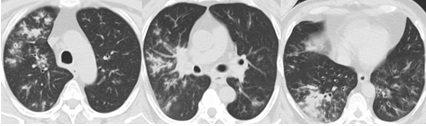
A 58-year-old man with a history of smoking presented to a local clinic with a one-week history of cough and dyspnea. Chest radiography revealed decreased transparency in the right lung, and hypoxemia was also noted. He was transferred to our hospital. On arrival, he exhibited tachycardia and tachypnea with poor oxygenation, necessitating tracheal intubation and mechanical ventilation. Chest computed tomography demonstrated right lung-dominant infiltrates (Figure 1). Laboratory tests revealed a white blood cell count of 12,400/μL (neutrophils 71.2%, monocytes 19.2%, lymphocytes 8.4%) without a left shift, suggesting atypical pneumonia. A rapid diagnostic test was positive for Mycoplasma antigen, and the patient was diagnosed with Mycoplasma pneumoniae pneumonia. Treatment with levofloxacin and steroid pulse therapy was initiated. Despite intensive care unit (ICU) management, oxygenation and ventilation remained inadequate, and progressive respiratory acidosis due to CO₂ retention developed on the following day. Therefore, venovenous extracorporeal membrane oxygenation (VV-ECMO) was initiated. After initiation, oxygenation and radiographic lung transparency showed gradual improvement. However, persistent bleeding from the cannulation site increased transfusion requirements. Although the patient’s P/F ratio remained approximately 130, which did not meet the standard criteria for weaning, VV-ECMO was discontinued on hospital day 5. Because of signs of heart failure, diuretics were administered. Steroid therapy was gradually tapered over one month to prevent the progression to pulmonary fibrosis. The patient’s respiratory condition subsequently stabilized, and he was extubated on hospital day 7. Oxygen supplementation was no longer required, and he was discharged home ambulatory on hospital day 33.

The CT revealed infiltrates predominantly in the right lung.
This case involved a patient with Mycoplasma pneumonia who developed severe disease but improved following multidisciplinary treatment including ECMO. A literature search was conducted using the keywords Mycoplasma and either ECMO or PCPS, which yielded 23 reports comprising 42 cases (Table 1). 6, 7, 8, 9, 10 11, 12, 13, 14, 15 16, 17, 18, 19, 20 21, 22, 23, 24, 25 26, 27, 28 The ages of the patients ranged from 1 to 67 years (mean, 13.4 years), with most cases involving children or adolescents. Regarding sex distribution, excluding one case reported by Masuda et al. in which the sex was not specified, 18 of 23 cases were female, indicating a slight female predominance. As for outcomes, excluding the nine cases reported by Zhou et al. in which the prognosis after ECMO initiation was not described, the mortality rate was 7 of 33 cases (21.2%). The oldest patient was 67 years old, and this case resulted in death. In terms of age among reported ECMO cases, the present patient represents the second oldest, following a 67-year-old patient. As the 67-year-old case resulted in death, the present case is the oldest patient to be successfully treated with ECMO.
Most cases of Mycoplasma pneumonia that progress to severe pneumonia occur in young individuals (Table 1). This is thought to be due to the absence of prior infection with Mycoplasma, together with immature immune function and insufficient acquired immunity during childhood. 4 In contrast, elderly individuals may also develop severe Mycoplasma pneumonia. Possible explanations include the presence of multiple Mycoplasma species, the possibility of infection with different strains, and attenuation of previously acquired active immunity due to age-related decline in immune function or comorbidities. 1, 30, 31, 32 In the present case, the patient was 58 years old, and factors such as age-related immunosenescence and a history of smoking—which can lead to altered ciliary motility, increased nasopharyngeal carriage of organisms, impaired alveolar macrophage function, and increased epithelial permeability—may have contributed to both susceptibility to Mycoplasma infection and progression to severe disease. 33, 34
Delay in diagnosis has also been considered a contributing factor to disease severity. In the present case, however, severe pneumonia without a left shift of leukocytes led us to suspect atypical pneumonia. Prompt diagnostic testing allowed us to establish the diagnosis of Mycoplasma pneumonia on the same day and initiate levofloxacin therapy, which may have contributed to survival. Furthermore, disease progression in severe Mycoplasma pneumonia is thought to be associated with a delayed-type hypersensitivity reaction to Mycoplasma, and reports have demonstrated lower mortality in patients treated with corticosteroids, which suppress this response. In this case as well, the use of steroid pulse therapy followed by a tapering regimen over the course of one month may have played an important role in the favorable outcome. 3
The ECMO is a life-support modality for adults and children with life-threatening cardiac and respiratory failure who are unresponsive to conventional therapies, including cardiopulmonary resuscitation. 35 The ECMO circuit consists of a pump and an oxygenator, providing temporary cardiopulmonary support and allowing time for organ recovery. 35 A review of previous reports of severe pneumonia caused by Mycoplasma pneumoniae (Table 1) indicates that approximately 80% of cases were successfully rescued with ECMO, suggesting that ECMO demonstrates a certain degree of efficacy in severe Mycoplasma pneumonia. While the tendency of Mycoplasma pneumoniae infection to progress to severe disease in children and young adults is likely reflected in the age distribution of ECMO-treated cases, the relatively higher proportion of younger patients may also be due to the more restricted indications for ECMO in the elderly. With an aging society, the incidence of severe Mycoplasma pneumonia in elderly patients with declining immune function is expected to increase. This case highlights that even in elderly patients, if the indications for ECMO are met and mechanical ventilation alone is considered insufficient for survival, the use of ECMO can be justified.
This case represents the oldest surviving patient with severe Mycoplasma pneumonia who was treated with ECMO. This case demonstrates that in elderly patients as well, when the indications for ECMO are met and survival is unlikely with mechanical ventilation alone, the introduction of ECMO can be a reasonable treatment option.
This work was supported in part by a Grant-in-Aid for Special Research in Subsidies for ordinary expenses of private schools from The Promotion and Mutual Aid Corporation for Private Schools of Japan.
| [1] | Lanao AE, Chakraborty RK, Pearson-Shaver AL. Mycoplasma Infections. 2023 Aug 7. In: StatPearls [Internet]. Treasure Island (FL): StatPearls Publishing; 2025 Jan–. | ||
| In article | |||
| [2] | Jiang Z, Li S, Zhu C, Zhou R, Leung PHM. Mycoplasma pneumoniae Infections: Pathogenesis and Vaccine Development. Pathogens. 10: 119, 2021. | ||
| In article | View Article PubMed | ||
| [3] | Zhuo LY, Hao JW, Song ZJ, et al. Predicting the severity of mycoplasma pneumonia pneumonia in pediatric and adult patients: a multicenter study. Sci Rep. 14: 22978, 2024. | ||
| In article | View Article PubMed | ||
| [4] | Zhang X, Sun R, Jia W, Li P, Song C. A new dynamic nomogram for predicting the risk of severe Mycoplasma pneumoniae pneumonia in children. Sci Rep. 14:8260, 2024. | ||
| In article | View Article PubMed | ||
| [5] | Izumikawa K, Izumikawa K, Takazono T, et al. Clinical features, risk factors and treatment of fulminant Mycoplasma pneumoniae pneumonia: a review of the Japanese literature. J Infect Chemother. 20: 181-5, 2014. | ||
| In article | View Article PubMed | ||
| [6] | Ye Z, Chen Y, Tian X. Case report: a co-occurring case of severe Mycoplasma pneumoniae pneumonia and Anti-IgLON5 antibody-associated encephalitis in a pediatric patient. Front Med (Lausanne). 11: 1393540, 2024. | ||
| In article | View Article PubMed | ||
| [7] | Zhu C, Hu B, Li X, Han W, Liang Y, Ma X. A Case Report of Mycoplasma pneumonia induced fulminant myocarditis in a 15-year-old male leading to cardiogenic shock and electrical storm. Front Cardiovasc Med. 11: 1347885, 2024. | ||
| In article | View Article PubMed | ||
| [8] | Zhang X, Yu Y. Severe pediatric Mycoplasma pneumonia as the cause of diffuse alveolar hemorrhage requiring veno-venous extracorporeal membrane oxygenation: A case report. Front Pediatr. 10: 925655, 2023. | ||
| In article | View Article PubMed | ||
| [9] | R R P, Chandran S, Tan YH, et al. Necrotizing pneumonia requiring prolonged extracorporeal membrane oxygenation: Pushing the boundaries in pediatric ECMO. Clin Case Rep. 10: e5973, 2022. | ||
| In article | View Article PubMed | ||
| [10] | Charlotte HJC, Ma HY, Lu CY, et al. Children with Mycoplasma pneumoniae infection in Taiwan: Changes in molecular characteristics and clinical outcomes. Formos Med Assoc. 121: 2273-2280, 2022. | ||
| In article | View Article PubMed | ||
| [11] | Hashimoto K, Kawaguchi T, Yamasaki K, Ikegami H, Kawanami T, Yatera K. Severe infectious acute respiratory failure mimicking COVID-19 in a healthy adolescent. Respirol Case Rep. 10: e0933, 2022. | ||
| In article | View Article PubMed | ||
| [12] | Zhou Y, Shan Y, Cui Y, et al. Characteristics and Outcome of Severe Mycoplasma pneumoniae Pneumonia Admitted to PICU in Shanghai: A Retrospective Cohort Study. Crit Care Explor.; 3: e0366, 2021. | ||
| In article | View Article PubMed | ||
| [13] | Davis J, Ericson JE, Kavanagh R. Severe Pediatric Mycoplasma pneumoniae Infection Requiring Veno-venous Extracorporeal Membrane Oxygenation. Pediatr Infect Dis J. 40: e154-e156, 2021. | ||
| In article | View Article PubMed | ||
| [14] | Meyer Sauteur PM, Kleger GR, Albrich WC. Acute respiratory distress syndrome during the COVID-19 pandemic: not only SARS-CoV-2. New Microbes New Infect. 40: 100836, 2021. | ||
| In article | View Article PubMed | ||
| [15] | Ding L, Zhao Y, Li X, et al. Early diagnosis and appropriate respiratory support for Mycoplasma pneumoniae pneumonia associated acute respiratory distress syndrome in young and adult patients: a case series from two centers. BMC Infect Dis. 20: 367, 2020. | ||
| In article | View Article PubMed | ||
| [16] | Ohno M, Yamada T, Otsuka Y, et al. A case of severe pulmonary thromboembolism in mycoplasma infection during early pregnancy. J Cardiol Cases. 22: 140-142, 2020. | ||
| In article | View Article PubMed | ||
| [17] | Heith CS, Hume JR, Steiner ME, Fischer GA. Fulminant Mycoplasma Infection Requiring ECMO in a Previously Healthy Child: Case Report and Review. J Pediatr Intensive Care. 7: 106-109, 2018. | ||
| In article | View Article PubMed | ||
| [18] | Patel K, Ali N, Nazir H, Mamoona R, Naeem M, Migliore C. Mycoplasma pneumonia as cause of acute respiratory distress syndrome (ARDS) and diffuse alveolar hemorrhage (DAH) requir ing veno-venous extra corporeal membrane oxygenation (VV ECMO). Chest 146: 163A, 2014. | ||
| In article | View Article | ||
| [19] | Masuda Y, Tatsumi H, Imaizumi H, et al. Effect of prone position ing on cannula function and impaired oxygenation during extra corporeal circulation. J Artif Organs 17: 106–109, 2014. | ||
| In article | View Article PubMed | ||
| [20] | Garcia AV, Fingeret AL, Thirumoorthi AS, Kadenhe-Chiweshe A, Kandel JJ. Severe Mycoplasma pneumoniae infection requiring extracorporeal membrane oxygenation with concomitant ischemic stroke in a child. Pediatr Pulmonol. 48: 98-101, 2013. | ||
| In article | View Article PubMed | ||
| [21] | Hoffman P, Yoneda K, Morrissey B, Tzeng D, Black H. Extracorporeal membrane oxygenation coupled with multimodality therapy in an adult with plastic bronchitis. Am J Respir Crit Care Med 187: A4429, 2013. | ||
| In article | |||
| [22] | Hopkins M, Montgomery G, Patel V, Rabi F. Severe Mycoplasma pneumoniae infection with extensive upper airway involvement requiring prolonged extracorporeal membrane oxygenation. Crit Care Med 2012: 1–328, 2012. | ||
| In article | View Article | ||
| [23] | Hsieh YC, Tsao KC, Huang CG, et al. Life-threatening pneumonia caused by macrolide resistant Mycoplasma pneumoniae. Pediatr Infect Dis J. 31: 208-9, 2012. | ||
| In article | View Article PubMed | ||
| [24] | Peng CC, Wu SJ, Chen MR, Chiu NC, Chi H. Clinical experience of extracorporeal membrane oxygenation for acute respiratory distress syndrome associated with pneumonia in children. J Formos Med Assoc 111: 147–152, 2012. | ||
| In article | View Article PubMed | ||
| [25] | Lindstrom SJ, Pellegrino VA, Butt WW. Extracorporeal membrane oxygenation. Med J Aust 191: 178–182, 2009. | ||
| In article | View Article PubMed | ||
| [26] | Daxboeck F, Eisl B, Burghuber C, Memarsadeghi M, Assadian O, Stanek G. Fatal Mycoplasma pneumoniae pneumonia in a previously healthy 18-year-old girl. Wien Klin Wochenschr 119: 379–384, 2007. | ||
| In article | View Article PubMed | ||
| [27] | Yoshida T, Asato Y, Kukita I, et al. A 7-year-old boy with mycoplasmal infection requiring extracorporeal membrane oxygenation. Pediatr. 162: 44-6, 2013. | ||
| In article | View Article PubMed | ||
| [28] | DukeT, ButtW, SouthM, ShannF; Royal Children’s Hospital ECMO Nursing Team. The DCO2 measured by gastric tonometry predicts survival in children receiving extracorporeal life support. Comparison with other hemodynamic and biochemical information. Chest 111:174–179, 1997. | ||
| In article | View Article PubMed | ||
| [29] | Miyashita N, Ouchi K, Kawasaki K, et al. Mycoplasma pneumoniae pneumonia in the elderly. Med Sci Monit. 14: CR387-91, 2008. | ||
| In article | |||
| [30] | Chen R, Zou J, Chen J, Wang L, Kang R, Tang D. Immune aging and infectious diseases. Chin Med J (Engl). 137: 3010-3049, 2024. | ||
| In article | View Article PubMed | ||
| [31] | Baum SG, MDDEPUTY FJ, Mitty J, Bond S. Mycoplasma pneumoniae infection in adults. UpToDate Aug 2025. https:// www.uptodate.com/ contents/mycoplasma-pneumoniaeinfection- in-adults. | ||
| In article | |||
| [32] | Izumikawa K. Clinical Features of Severe or Fatal Mycoplasma pneumoniae Pneumonia. Front Microbiol. 7:800, 2016. | ||
| In article | View Article PubMed | ||
| [33] | Reynolds JH, McDonald G, Alton H, Gordon SB. Pneumonia in the immunocompetent patient. Br J Radiol. 83: 998-1009, 2010. | ||
| In article | View Article PubMed | ||
| [34] | Weiss TW, Schumacher S, Kaun C, et al. Association between smoking and presence of mycoplasma pneumoniae in circulating leukocytes. Swiss Med Wkly. 140:w13105, 2010. | ||
| In article | View Article PubMed | ||
| [35] | Vyas A, Patel V, Wang CF. Extracorporeal Membrane Oxygenation in Adults. StatPearls [Internet]. Last Update: September 14, 2025. | ||
| In article | |||
Published with license by Science and Education Publishing, Copyright © 2025 Ayaka Tashiro, Raiki Tokutsu and Youichi Yanagawa
 This work is licensed under a Creative Commons Attribution 4.0 International License. To view a copy of this license, visit
http://creativecommons.org/licenses/by/4.0/
This work is licensed under a Creative Commons Attribution 4.0 International License. To view a copy of this license, visit
http://creativecommons.org/licenses/by/4.0/
| [1] | Lanao AE, Chakraborty RK, Pearson-Shaver AL. Mycoplasma Infections. 2023 Aug 7. In: StatPearls [Internet]. Treasure Island (FL): StatPearls Publishing; 2025 Jan–. | ||
| In article | |||
| [2] | Jiang Z, Li S, Zhu C, Zhou R, Leung PHM. Mycoplasma pneumoniae Infections: Pathogenesis and Vaccine Development. Pathogens. 10: 119, 2021. | ||
| In article | View Article PubMed | ||
| [3] | Zhuo LY, Hao JW, Song ZJ, et al. Predicting the severity of mycoplasma pneumonia pneumonia in pediatric and adult patients: a multicenter study. Sci Rep. 14: 22978, 2024. | ||
| In article | View Article PubMed | ||
| [4] | Zhang X, Sun R, Jia W, Li P, Song C. A new dynamic nomogram for predicting the risk of severe Mycoplasma pneumoniae pneumonia in children. Sci Rep. 14:8260, 2024. | ||
| In article | View Article PubMed | ||
| [5] | Izumikawa K, Izumikawa K, Takazono T, et al. Clinical features, risk factors and treatment of fulminant Mycoplasma pneumoniae pneumonia: a review of the Japanese literature. J Infect Chemother. 20: 181-5, 2014. | ||
| In article | View Article PubMed | ||
| [6] | Ye Z, Chen Y, Tian X. Case report: a co-occurring case of severe Mycoplasma pneumoniae pneumonia and Anti-IgLON5 antibody-associated encephalitis in a pediatric patient. Front Med (Lausanne). 11: 1393540, 2024. | ||
| In article | View Article PubMed | ||
| [7] | Zhu C, Hu B, Li X, Han W, Liang Y, Ma X. A Case Report of Mycoplasma pneumonia induced fulminant myocarditis in a 15-year-old male leading to cardiogenic shock and electrical storm. Front Cardiovasc Med. 11: 1347885, 2024. | ||
| In article | View Article PubMed | ||
| [8] | Zhang X, Yu Y. Severe pediatric Mycoplasma pneumonia as the cause of diffuse alveolar hemorrhage requiring veno-venous extracorporeal membrane oxygenation: A case report. Front Pediatr. 10: 925655, 2023. | ||
| In article | View Article PubMed | ||
| [9] | R R P, Chandran S, Tan YH, et al. Necrotizing pneumonia requiring prolonged extracorporeal membrane oxygenation: Pushing the boundaries in pediatric ECMO. Clin Case Rep. 10: e5973, 2022. | ||
| In article | View Article PubMed | ||
| [10] | Charlotte HJC, Ma HY, Lu CY, et al. Children with Mycoplasma pneumoniae infection in Taiwan: Changes in molecular characteristics and clinical outcomes. Formos Med Assoc. 121: 2273-2280, 2022. | ||
| In article | View Article PubMed | ||
| [11] | Hashimoto K, Kawaguchi T, Yamasaki K, Ikegami H, Kawanami T, Yatera K. Severe infectious acute respiratory failure mimicking COVID-19 in a healthy adolescent. Respirol Case Rep. 10: e0933, 2022. | ||
| In article | View Article PubMed | ||
| [12] | Zhou Y, Shan Y, Cui Y, et al. Characteristics and Outcome of Severe Mycoplasma pneumoniae Pneumonia Admitted to PICU in Shanghai: A Retrospective Cohort Study. Crit Care Explor.; 3: e0366, 2021. | ||
| In article | View Article PubMed | ||
| [13] | Davis J, Ericson JE, Kavanagh R. Severe Pediatric Mycoplasma pneumoniae Infection Requiring Veno-venous Extracorporeal Membrane Oxygenation. Pediatr Infect Dis J. 40: e154-e156, 2021. | ||
| In article | View Article PubMed | ||
| [14] | Meyer Sauteur PM, Kleger GR, Albrich WC. Acute respiratory distress syndrome during the COVID-19 pandemic: not only SARS-CoV-2. New Microbes New Infect. 40: 100836, 2021. | ||
| In article | View Article PubMed | ||
| [15] | Ding L, Zhao Y, Li X, et al. Early diagnosis and appropriate respiratory support for Mycoplasma pneumoniae pneumonia associated acute respiratory distress syndrome in young and adult patients: a case series from two centers. BMC Infect Dis. 20: 367, 2020. | ||
| In article | View Article PubMed | ||
| [16] | Ohno M, Yamada T, Otsuka Y, et al. A case of severe pulmonary thromboembolism in mycoplasma infection during early pregnancy. J Cardiol Cases. 22: 140-142, 2020. | ||
| In article | View Article PubMed | ||
| [17] | Heith CS, Hume JR, Steiner ME, Fischer GA. Fulminant Mycoplasma Infection Requiring ECMO in a Previously Healthy Child: Case Report and Review. J Pediatr Intensive Care. 7: 106-109, 2018. | ||
| In article | View Article PubMed | ||
| [18] | Patel K, Ali N, Nazir H, Mamoona R, Naeem M, Migliore C. Mycoplasma pneumonia as cause of acute respiratory distress syndrome (ARDS) and diffuse alveolar hemorrhage (DAH) requir ing veno-venous extra corporeal membrane oxygenation (VV ECMO). Chest 146: 163A, 2014. | ||
| In article | View Article | ||
| [19] | Masuda Y, Tatsumi H, Imaizumi H, et al. Effect of prone position ing on cannula function and impaired oxygenation during extra corporeal circulation. J Artif Organs 17: 106–109, 2014. | ||
| In article | View Article PubMed | ||
| [20] | Garcia AV, Fingeret AL, Thirumoorthi AS, Kadenhe-Chiweshe A, Kandel JJ. Severe Mycoplasma pneumoniae infection requiring extracorporeal membrane oxygenation with concomitant ischemic stroke in a child. Pediatr Pulmonol. 48: 98-101, 2013. | ||
| In article | View Article PubMed | ||
| [21] | Hoffman P, Yoneda K, Morrissey B, Tzeng D, Black H. Extracorporeal membrane oxygenation coupled with multimodality therapy in an adult with plastic bronchitis. Am J Respir Crit Care Med 187: A4429, 2013. | ||
| In article | |||
| [22] | Hopkins M, Montgomery G, Patel V, Rabi F. Severe Mycoplasma pneumoniae infection with extensive upper airway involvement requiring prolonged extracorporeal membrane oxygenation. Crit Care Med 2012: 1–328, 2012. | ||
| In article | View Article | ||
| [23] | Hsieh YC, Tsao KC, Huang CG, et al. Life-threatening pneumonia caused by macrolide resistant Mycoplasma pneumoniae. Pediatr Infect Dis J. 31: 208-9, 2012. | ||
| In article | View Article PubMed | ||
| [24] | Peng CC, Wu SJ, Chen MR, Chiu NC, Chi H. Clinical experience of extracorporeal membrane oxygenation for acute respiratory distress syndrome associated with pneumonia in children. J Formos Med Assoc 111: 147–152, 2012. | ||
| In article | View Article PubMed | ||
| [25] | Lindstrom SJ, Pellegrino VA, Butt WW. Extracorporeal membrane oxygenation. Med J Aust 191: 178–182, 2009. | ||
| In article | View Article PubMed | ||
| [26] | Daxboeck F, Eisl B, Burghuber C, Memarsadeghi M, Assadian O, Stanek G. Fatal Mycoplasma pneumoniae pneumonia in a previously healthy 18-year-old girl. Wien Klin Wochenschr 119: 379–384, 2007. | ||
| In article | View Article PubMed | ||
| [27] | Yoshida T, Asato Y, Kukita I, et al. A 7-year-old boy with mycoplasmal infection requiring extracorporeal membrane oxygenation. Pediatr. 162: 44-6, 2013. | ||
| In article | View Article PubMed | ||
| [28] | DukeT, ButtW, SouthM, ShannF; Royal Children’s Hospital ECMO Nursing Team. The DCO2 measured by gastric tonometry predicts survival in children receiving extracorporeal life support. Comparison with other hemodynamic and biochemical information. Chest 111:174–179, 1997. | ||
| In article | View Article PubMed | ||
| [29] | Miyashita N, Ouchi K, Kawasaki K, et al. Mycoplasma pneumoniae pneumonia in the elderly. Med Sci Monit. 14: CR387-91, 2008. | ||
| In article | |||
| [30] | Chen R, Zou J, Chen J, Wang L, Kang R, Tang D. Immune aging and infectious diseases. Chin Med J (Engl). 137: 3010-3049, 2024. | ||
| In article | View Article PubMed | ||
| [31] | Baum SG, MDDEPUTY FJ, Mitty J, Bond S. Mycoplasma pneumoniae infection in adults. UpToDate Aug 2025. https:// www.uptodate.com/ contents/mycoplasma-pneumoniaeinfection- in-adults. | ||
| In article | |||
| [32] | Izumikawa K. Clinical Features of Severe or Fatal Mycoplasma pneumoniae Pneumonia. Front Microbiol. 7:800, 2016. | ||
| In article | View Article PubMed | ||
| [33] | Reynolds JH, McDonald G, Alton H, Gordon SB. Pneumonia in the immunocompetent patient. Br J Radiol. 83: 998-1009, 2010. | ||
| In article | View Article PubMed | ||
| [34] | Weiss TW, Schumacher S, Kaun C, et al. Association between smoking and presence of mycoplasma pneumoniae in circulating leukocytes. Swiss Med Wkly. 140:w13105, 2010. | ||
| In article | View Article PubMed | ||
| [35] | Vyas A, Patel V, Wang CF. Extracorporeal Membrane Oxygenation in Adults. StatPearls [Internet]. Last Update: September 14, 2025. | ||
| In article | |||