OPEN ACCESS
 PEER-REVIEWED
Osteometric Assessment of the Mastoids for Gender Determination in Jordanians by Discriminant Function Analysis
Amin W1, , Saleh M-W2, Othman D3, Salhab D3, Thunaibat H.3
1Department of Prosthodontics, Faculty of Dentistry, University of Jordan, West Amman Province 11942, Amman, Jordan.
2Postgraduate Section, Department of Prosthodontics, Faculty of Dentistry, University of Jordan, Wes Amman Province 11942, Amman, Jordan
3Intern Dental Practitioner, Jordan University Hospital, West Amman Province 11942, Amman, Jordan
Abstract
The purpose of this study was, firstly, to characterize the mastoid process in terms of its size, its surface area, its flare and its medial convergence angle on a sample of Jordanian subjects; and secondly, to assess the validity of the mastoid process in determining the gender of the study subjects. The sample of the study comprised 192 3D skull images with known sex, 96 each male and female, those were obtained by rendering DICOM images from cone-beam computerized tomography of the subjects. Radiographic measurements, using customized software, accurately characterized the subjects’ mastoids. Discriminant function analysis revealed that mastoid process correctly classified the sex in 90.6 percent of the subjects and the intermastoidale distance was found to be the best determinant for sex. A discriminant function equation specific for young and middle age Jordanians has been derived from the mastoid variables.
Keywords: mastoid process, discriminant function, mastoid flare, mastoid medial convergence, surface rendering, cone beam CT, 3D skull image, Solid Planner software
Received May 31, 2015; Revised June 15, 2015; Accepted June 26, 2015
Copyright © 2015 Science and Education Publishing. All Rights Reserved.Cite this article:
- Amin W, Saleh M-W, Othman D, Salhab D, Thunaibat H.. Osteometric Assessment of the Mastoids for Gender Determination in Jordanians by Discriminant Function Analysis. American Journal of Medical and Biological Research. Vol. 3, No. 4, 2015, pp 117-123. http://pubs.sciepub.com/ajmbr/3/4/7
- W, Amin, et al. "Osteometric Assessment of the Mastoids for Gender Determination in Jordanians by Discriminant Function Analysis." American Journal of Medical and Biological Research 3.4 (2015): 117-123.
- W, A. , M-W, S. , D, O. , D, S. , & H., T. (2015). Osteometric Assessment of the Mastoids for Gender Determination in Jordanians by Discriminant Function Analysis. American Journal of Medical and Biological Research, 3(4), 117-123.
- W, Amin, Saleh M-W, Othman D, Salhab D, and Thunaibat H.. "Osteometric Assessment of the Mastoids for Gender Determination in Jordanians by Discriminant Function Analysis." American Journal of Medical and Biological Research 3, no. 4 (2015): 117-123.
| Import into BibTeX | Import into EndNote | Import into RefMan | Import into RefWorks |
At a glance: Figures
1. Introduction
Subsequent to drastic events such as natural disasters, outbreak of wars or air traffic accidents, positive identification of victims’ gender becomes, perhaps, the most difficult task to encounter. [1] Extreme burns; disfigurement, and severe decomposition of bodies render the determination of gender by examination of remains and their radiographs extremely difficult, if not impossible. A major role in gender identification, however, could be played by the osteological criteria that may set the foundation for full identification [2, 3].
Human skeleton is comprised of calcified hard tissue that may sustain severe conditions yet retain important features that may lead to valuable information. The dimorphic variations of gender develop during the intrauterine life and later manifest as differences in bone weight, length, size, and mineral density. There are certain factors such as the role of growth bouts and their pattern, and the attachments of muscles to bones could play a significant role in dimorphic features and have a direct bearing on gender differentiation. [4] Skeletal gender identification relies on dimorphic expression of bony characteristics produced through different patterns, rates and period of adolescent growth. [5] Males having both a longer and more intense growth bouts than females, therefore this extended growth pattern creates difference in size, classically seen in skull, where the growth spurts affect most structures [6].
The secondary sexual changes are influenced by hormones, which play role in development of musculoskeletal system. [7] These changes emerge at adolescence are seen earlier and for a shorter period in girls compared to boys who undergo pubertal changes 2-3 years later, but sustain them for a longer period. Various bones are used as tools in sexual dimorphism, most commonly pelvis and skull. [8] Development of cranium is influenced by growth of neurocranium. Cranial characteristics such as larger male brow ridges, eyes appearing lower in the face, and larger nasal apparatus, are results of extended normal downward and forward growth of the male face relative to the female face. This is due to more intense and extended male growth spurts. The growth of female facial features begins to slow around 13th years of life and maturation is completed soon afterward, while males enter a growth bout that continues through adolescence with maturation completed in early adulthood [9].
In addition to the morphological traits presented by various bones of the craniofacial structures, morphometric measurement methods employing linear, proportional and/or angular dimensions have been used for gender identification. It has been reported that morphological characters such as mastoid processes, among others give valuable idea of gender. [4, 5] Employing supraorbital margin, glabella, mastoid process, crista supramastoid and mandible in sexual dimorphism, Graw et. al., in 1999 [10] and Graw in 2001 [11] reported reliable results related to sex reached 70-91% accuracy. Williams and Rogers in 2006 [12] assessed mastoid size in addition to some other cranial structures, for sex determination, and considered these morphological features as high-quality gender identifiers. Kranioti et. al., in 2008 [13] carried out osteometric measurements on cranio-facial skeletons including mastoid height of 90 males and 88 females. Their results indicated that males were statistically significantly greater than females in all dimensions. Other researchers among them Pavia and Segre in 2003 [14], Patil and Modi in 2005 [15] evaluated the role of mastoid process, in addition to some other parameters, as sexual dimorphism feature; the results of those studies indicated that mastoids were found most reliable gender identifiers, yielding a very high level of accuracy.
2. The Present Study
The objective of this study is twofold, the first to characterize the mastoid process of the temporal bone in terms of its size (length, width, height), its surface area, and its medial convergence angle measured on volumetric images of skulls reconstructed by using a purpose-made software which rendered "Digital Imaging and Communications in Medicine" (DICOM) images obtained from cone-beam computed tomography (CBCT) of the study subjects. The second objective is to assess the reliability of the mastoid’s morphometric parameters in determining the gender of the study subjects with the aid of the discriminant function analysis.
3. Materials and Methods
The investigated sample comprised 192 cone-beam computed tomography (CBCT) images of Jordanian adult patients whose age ranged between 17 and 78 years and their average age was 50.2 years. The study sample was equally divided between the two sexes, i. e., there were 96 CBCT images of either sex. The studied subjects were selected from a larger group of patients who were listed for implant-retained prostheses. The exclusion criteria involved images with gross artifacts and those that did not show anatomic details of the base or the lateral sides of the skull, particularly the mastoid.
Prior to conducting the investigation, and in compliance with the policy of the Clinical Research Authority at the Jordan University Hospital (JUH), signed written informed consents were obtained from all the subjects selected for the study. They were made aware that their CBCT images were included in this investigation as a part of the advanced graduate dental education programs. The experimental protocol was examined and approved by the Ethics Committee and was, therefore performed in accordance with the ethical standards laid down in 1964 Declaration of Helsinki (Edited in 2013) [16].
The CBCT images were acquired with a WhiteFox scanner (WhiteFox, de Götzen SrL ITALY) set at a current voltage of 105 Kv and 9.00 mA, the scan time was set at 9.0 seconds. The CT data were exported from the WhiteFox software (WhiteFox Control 3D-00022, version 2.11.1) in DICOM multi-file format and imported into a custom-made “SolidPlanner Pro” software version 3.2, (Solid Models Co., Amman Jordan) [17] on a Pavilion dv6 Laptop (HP USA) with a dedicated 1GB video card (Rad con HD 6750 AMD). All measurements were performed on the 3D surface models of the skulls on a 17-in, high resolution LCD Laptop color screen. The purpose-designed software (SolidPlanner) converted the DICOM images into 3D surface models of the scanned skulls using the marching cubes algorithm based on surface rendering. Bone surface of the skulls was extracted from the 2D CBCT images by extracting iso surfaces of Hounsfield values of 3000. The customized “SolidPlanner” software provided various views of the skull by rotating and translating the rendered image.

 Download as
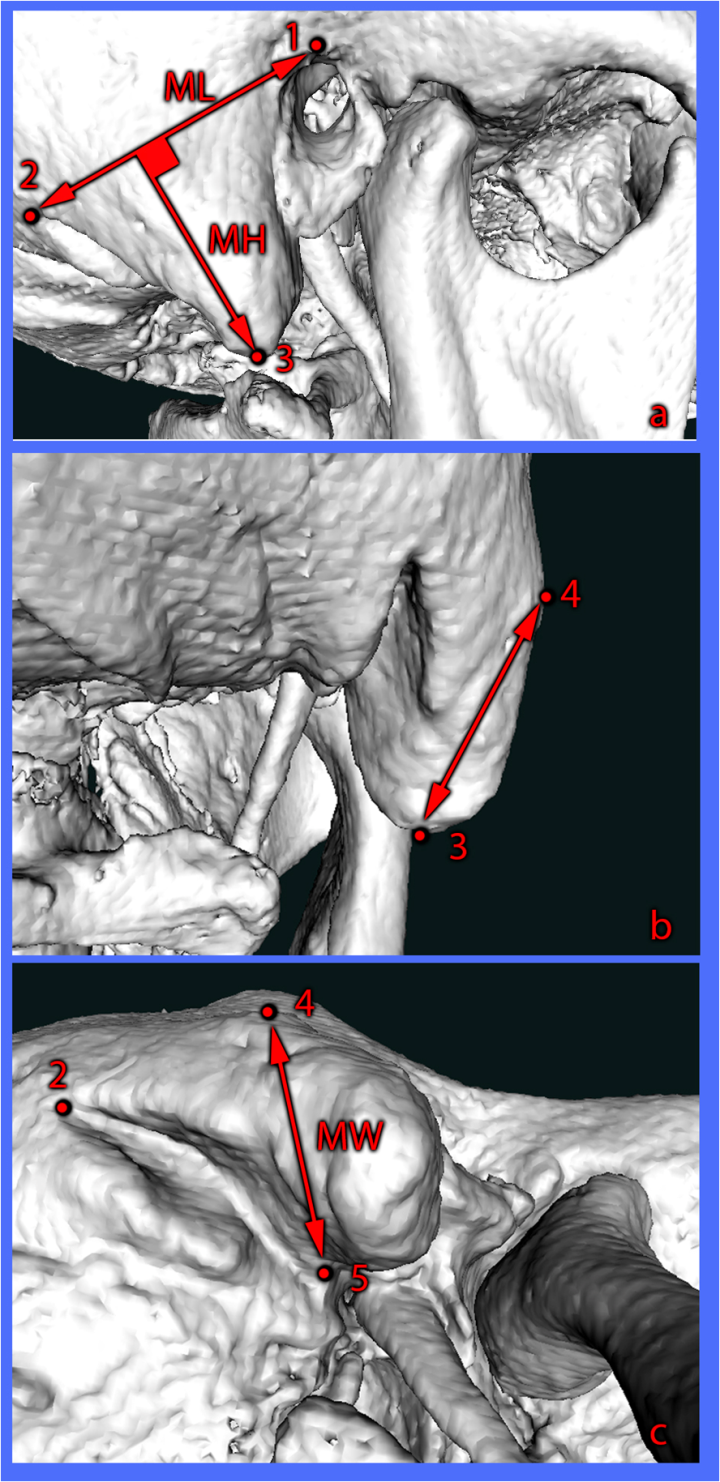
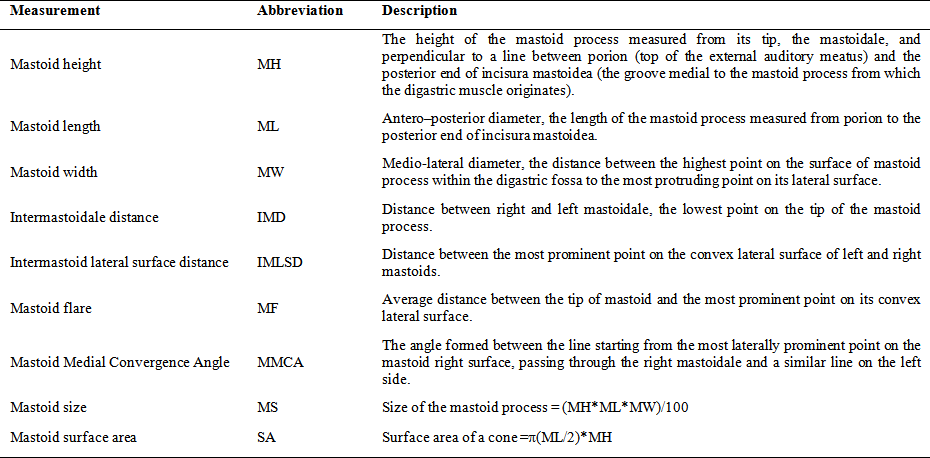
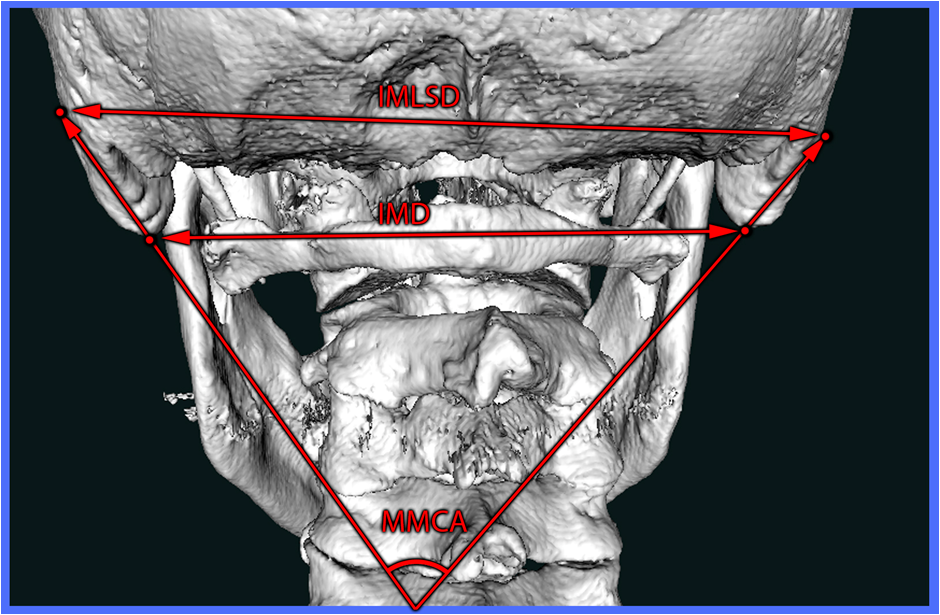
Five anatomic landmarks were selected and digitized on the left and right sides of each 3D model of rendered CBCT skull image for the entire study sample. The selected landmarks on each surface were: (1) porion, (2) posterior end of incisura mastoidea, (3) mastoidale, (4) most prominent point on the convex lateral surface of the body of mastoid, (5) the highest point on the mastoid surface within the digastric fossa (Figure 1 a, b, c). Accordingly, nine measurement targets were defined; eight of which were linear and measured to the nearest 0.01 mm using point-to-point mathematical equations; the ninth was an angular value measured to the nearest 0.1° angle and calculated by using triangulation equations (Table 1; Figure 1a, b, c; Figure 2).
 Download as
 Download as
The planned linear and angular measurements of the mastoids were carried out by three examiners, using high-resolution screen computers. Before starting measurements, the three examiners (D.O, D.S, and H.Th) were trained by the fourth examiner (W.A) in relation to landmarks identification in order to eliminate inter-examiner and intra-examiner variations. The training exercise involved conducting series of tests in which the different examiners measured the same sample at the same time and each examiner measured the same sample at different times. The data sets of the training exercise and the examination results of the entire sample were statistically analyzed using the Statistical Package for the Social Sciences (SPSS) version 15..
3.2. Statistical AnalysesThe inter-examiner variations among the three examiners were analyzed using one-way analysis of variance (ANOVA) and the intra-examiner variations for each observer were analyzed by using Student t- test. The accuracy of the rendering software was expressed by means of the absolute error (AE) and the absolute percentage error (APE):
 |
The mastoid measurement data sets were statistically treated using canonical discriminant function analysis to specify a parameter or combination of parameters that best separate the two sexes. For this purpose, stepwise discriminant function analysis was used (utilizing the Wilks lambda method). A leave one out classification procedure was applied to demonstrate the accuracy of the analysis.
4. Results
4.1. Osteometric Measurements of the MastoidsThe calibration test results of the three examiners showed an excellent concordance among them indicated by the one-way ANOVA, which yielded an f value of 0.024.
The intra-examiner variation evaluation results, using Student t test, showed consistency of measurements that were carried out by the same observer at different times (t = 0.954).
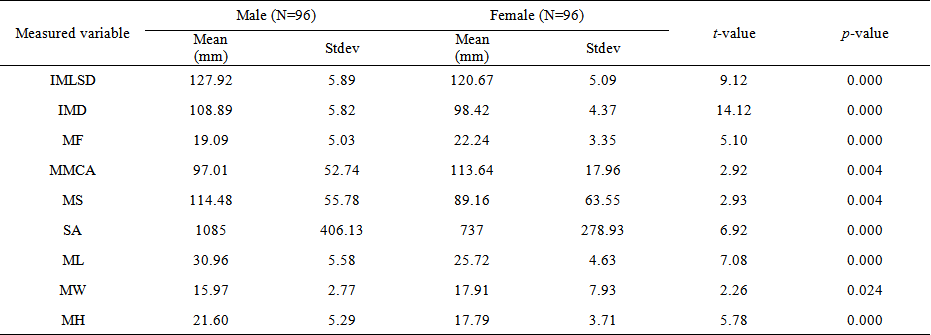
The calculated mean male values of all variables were significantly larger than female measurements at 95% level of confidence except for the mastoid flare “MF”; the mastoid medial convergence angle “MMCA”; and the mastoid width “MW” (Table 2).

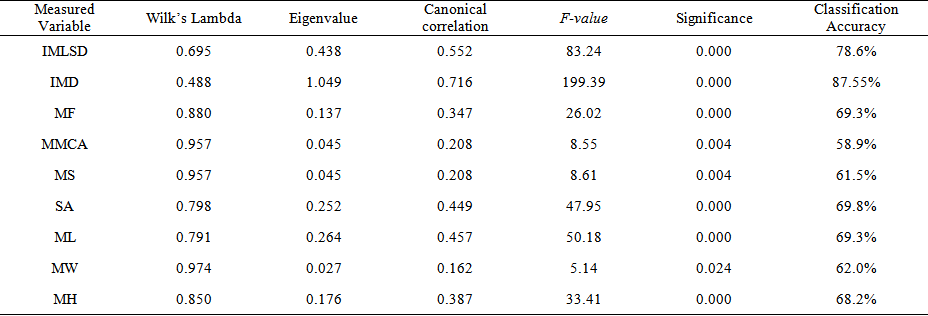
The best of the calculated functions was obtained by the inter-mastoidale distance “IMD” (Table 3) which showed the lowest Wilk’s Lambda (0.49), the highest eigenvalue (1.05), the highest canonical correlation (0.72) and the highest classification accuracy (87.5%). The second best function was obtained by the inter-mastoids’ lateral surface distance “IMLSD”. Contrastingly, the function obtained by the mastoid width “MW” proved to be the least efficient and showed far less discriminative capacity. This function included the highest Wilk’s Lambda (0.97) of all the other functions, the lowest eigenvalue (0.03), the lowest canonical correlation (0.16) and one of the lowest classification accuracy (62%).A cross validation using leave-one-out approach was applied for checking how accurately the studied subjects were classified and allocated to the gender groups. Stepwise discriminant analysis selected four variables (IMD, MMCA, MS and ML) as the most significant contributors to gender discrimination.
 Download as
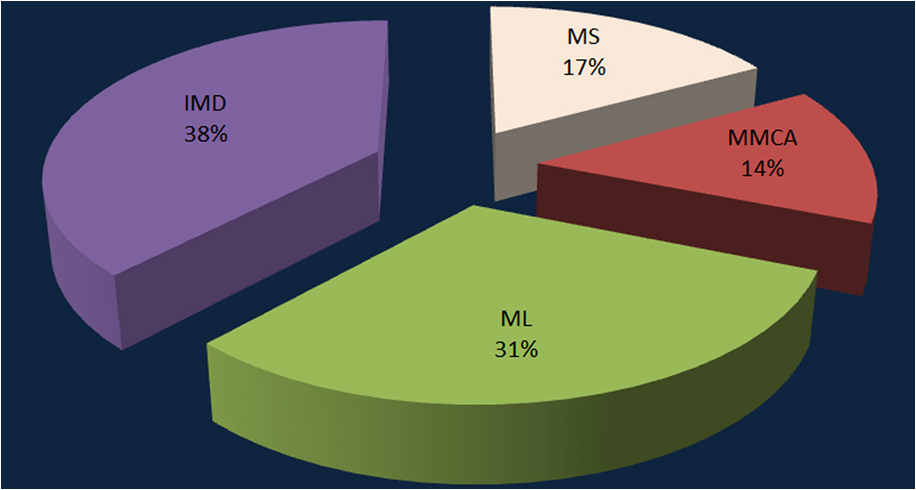
The applied stepwise model revealed that the IMD was the best single predictor of gender with 87.5% prediction accuracy. The contribution of the selected discriminant parameters to gender prediction is presented in Figure 3.
 Download as
The discriminant function predictive equation derived from the coefficients of the four best predictors selected by the stepwise analysis is:
 |
Where the group centroid discriminant score for males was 1.225 and for females -1.225 as indicated by the discriminant analysis, the sectioning point was equal to zero, i. e., the average of the male and female centroid discriminant scores, that is:
 |
It follows, that any DF score equals to or above zero, the sectioning point, probably indicating a male subject, whereas scores below zero likely indicate female subjects.
5. Discussion
A general consensus exists among researchers in the fields of anatomy, physical anthropology, forensic medicine and related sciences on the role played by the mastoids in sex determination. The known fact that the mastoid process is most resistant to damage, due to its anatomic position at the base of skull has made the mastoids a focus of researchers interest and encouraged them considering this bone as an important morphometric trait in their studies of gender identification of human skeletal remains.
All previous studies that dealt with measurement of the mastoids for sex determination were conducted on dry skulls obtained from exhumed identified cadavers of known sex, age and color in which the osteometric linear measurements were carried out directly on the skull using calipers, or on a two-dimensional xerographic copy of the mastoid area of the skull. [9, 18-23]
In the present study, our investigation was conducted on 3D reconstructed skull models obtained from CBCT scanned images of 192 real patients (96 males and 96 females) for whom all linear and angular craniometric measurements were carried out using a computer-guided program, a part of our customized 3D rendering software, the accuracy of its measurements is known to be submillimeter accurate. [17]
The results of this study were in general agreement with those of previous reports in emphasizing the suitability and validity of the mastoids for sex determination from skulls. Compared with most important studies, the accuracy of gender identification obtained in this investigation, 90.6% of 192 subjects, was comparable to some and more accurate than most of the past reports. In the year 2012 Gupta et. al.[24] found that 90% of the 70 skulls they screened for sex determination were correctly classified. The classification accuracy achieved in this investigation agreed with that reported by Gupta et. al. [14] and compared favorably to the 85% accuracy reported by Keen in 1950 [25], the 82% found by Giles and Elliot in 1963 [26],the 80% reported by Kajanoja in 1966 [27] and the 76.7% accuracy reported by Sumati et. al., in 2010. [21]
The present investigation’s results highlighted the significant differences between males and females in all measurements of their mastoids. Whereby, the mean values of the mastoid size, its total surface area, its height, and its antero-posterior diameter were significantly more in males than in females. These results were consistent with the findings reported by Keen in 1950 [25]; Giles and Elliot in 1963 [26]; Sumati et. al., in 2010 [21]; who all concluded that females have smaller mastoids than males. Roger in 2005 [28] emphasized the value of mastoid size as highly quality trait in determining sex. Similar to the past reports’ conclusion, our results also revealed significantly greater mean mastoid size values among males (114.5 mm3) than females (89 mm3) at p= 0.004. This finding could be attributed to the fact that female skulls preserve a juvenile type of small size mastoid process. Whereas, the larger size mastoid of males could be ascribed to the attachment of more vigorous musculature, such as the sternocleidomastoid muscle. This is confirmed by the relatively rougher and more irregular surface of the mastoid process observed in males than in females. Moreover, in male subjects, the stronger muscles attached to their mastoids had affected this boney process to maintain an upright position, i. e., a relatively more vertical and less medially inclined in direction which was more significantly manifested in males than in females of our sample, as indicated by the greater intermastoidale distance (IMD) and greater distance between the lateral surfaces of the left and right mastoids (IMLSD) in males than in females; and it was further substantiated by the greater mastoid flare (MF) and greater mastoid medial convergence angle (MMCA) in females than in males.
All our measurements of the nine mastoid-related parameters of our sample were analyzed with the highly objective discriminant function and it showed that four variables (IMD, MMCA, MS, and ML) when put together, correctly determined the sex in 90.6 percent of our 192 subjects. Off all the nine variables, the intermastoidale distance (IMD) was found to be the best sex determinant that, when used alone, correctly assessed the sex in 87.5 percent of the sample.
This efficient statistical tool, the discriminant function analysis, had also been used in determining the gender of skulls based on mastoid process by Sumati et. al., in 2010 [21] for North Indian population; Nagaoka et. al., in 2008 [19] for Japanese people; Sujarittham et. al., in 2011 [22] for Thai population; Patil and Mody in 2005 [15] for people of Central India; Bernard and Moore-Jensen in 2009 [20] in Wichita-Kansas, USA; Gupta et. al., in 2012 [24] in South India. All these studies showed that the sex within a given population could be best described by a specific discriminant equation.
To this end, the discriminant function equation derived in this study is unique to our sample of adult and middle age Jordanian population.
6. Conclusions
Mastoid process correctly sexed 90.6 percent of the sample of 192 equally distributed male and female subjects. Amongst the sex discriminatory function of nine mastoid related variables, four parameters proved to be the best sex identifiers. When considered individually, their ranking stands as follows: intermastoidale distance > mastoid length> mastoid size> mastoid medial convergence angle. The discriminant function equation derived in the present study is specific for Jordanian population.
Disclosure
The authors declare they have neither financial disclosure nor conflict of interest.
Ethical Approval
The ethics committee of the Jordan University – Faculty of Dentistry approved the present study. The Faculty committee approval was granted after considering the written consent that was obtained from all the subjects of the study sample who were made aware that their CBCT images were going to be included in this study before the investigation started.
Consent
All patients were made aware that their cone beam CT images were selected for inclusion in the present investigation. Accordingly, they all signed written informed consents in compliance with the policy of the Clinical Research Authority at the Jordan University Hospital.
References
| [1] | Balci Y, Yavuz M F, Cagdir S. Predictive accuracy of sexing the mandible by ramus flexure. Homo, 2005; 55: 229-37. | ||
 In article In article | View Article PubMed | ||
| [2] | Krogman W M, Iscan M Y. The human skeleton in forensic medicine. C.C. Thomas Publications: Springfield, IL. 1986. | ||
| In article | PubMed | ||
| [3] | Novotony V, Iscan M Y, Loth S R. Morphologic and osteometric assessment of age, sex and race from the skull. In Iscan M Y and Helmer (eds.): Forensic analysis of the skull. New York; Willy Liss, 1993; pp. 71-88. | ||
| In article | |||
| [4] | Biggerstaff RH.. Craniofacial characteristics as determination of age sex & race in forensic dentistry. Dent Clin North Am. 1977; 21(1): 85-97. | ||
| In article | PubMed | ||
| [5] | Krogman WM. The human skeleton in forensic medicine. Springfield. Illinois, USA. Charles C. Thomas Pub Ltd, 1962; 114-22. | ||
| In article | |||
| [6] | Scheuer L. Application of osteology to forensic medicine. Clin Anat 2002; 15(4): 297-312. | ||
| In article | View Article PubMed | ||
| [7] | Iscan MY. Forensic anthropology of sex and body size. Forensic Science International 2005; 147: 107-12. | ||
| In article | View Article | ||
| [8] | Mall G. Sex determination and estimation of stature from the long bones of the arm. Forensic Science International 2001; 117: 23-30. | ||
| In article | View Article | ||
| [9] | Kalmey JK, Rathbun TA.. Sex determination by Discriminant function analysis of the petrous portion of temporal bone. J Forensic Sci. 1996; 41(5): 865-7. | ||
| In article | PubMed | ||
| [10] | Graw M, Czarnetzki A, Haffner HT. The form of the supraorbital margin as a criterion in identification of sex from the skull: investigations based on modern human skulls. Am J Phy Anthropol 1999; 108(1): 91-6. | ||
| In article | View Article | ||
| [11] | Graw M. Significance of the classical morphological criteria for identifying gender using recent skulls. Forensic Sci Communications 2001; 3(1): 1-8. | ||
| In article | |||
| [12] | Williams BA, Rogers T. Evaluating the accuracy and precision of cranial morphological traits for sex determination. J Forensic Sci. 2006; 51(4): 729-35. | ||
| In article | View Article PubMed | ||
| [13] | Kranioti EF, Iscan MY, Michalodimitrakis M.. Craniometric analysis of the modern Cretan population. Forensic Science International 2008; 180: 110. e1-e5. | ||
| In article | |||
| [14] | Pavia LAS and Segre M. Sexing the human skull through the mastoid process. Rev Hop Clin Fac Med Sao Paulo. 2003; 58(1): 15-20. | ||
| In article | View Article | ||
| [15] | Patil KR, Mody RN. Determination of sex by discriminant function analysis and stature by regression analysis: a lateral cephalometric study. Forensic Sci Int.; 2005; 147(2-3): 175-80. | ||
| In article | View Article PubMed | ||
| [16] | World Medical Association “WMA”. Declaration of Helsinki–Ethical Principles for Medical Research Involving Human Subjects. Proceedings of the 18th General Assembly, Helsinki, Finland, Report; 1-8, June 1964. | ||
| In article | |||
| [17] | Amin W, Saleh M-W. Accuracy of a customized volumetric rendering program in linear measurement of cone beam and multi-slice computed tomography derived three-dimensional images. J Oral and Maxillofacial Radiology 2015; 3 (2):33-38. | ||
| In article | View Article | ||
| [18] | Kemkes A, Gobel T. Metric assessment of “mastoid triangle” for sex determination: A validation study. J Forensic Sci. 2006; 51(5): 985-989. | ||
| In article | View Article PubMed | ||
| [19] | Nagaoka T, Shizushima A, Sawada J, Tomo S, Hoshino K, Sato H, Hirata K. Sex determination using mastoid process measurements: standard for Japanese human skeletons of the medieval and early modern periods. Anthropological Science (Japanese series).2008; 116(2):105-113. | ||
| In article | View Article | ||
| [20] | Bernard K, Moore-Jansen P. Quantifying male and female shape variation in the mastoid region of the temporal bone. Proceedings of the 5th Annual GRASP symposium, Wichita State University. 2009; 80-81. | ||
| In article | |||
| [21] | Sumati, Patnaik VVG, Ajay P. Determination of sex from mastoid process by discriminant function analysis. J Anat Soc India. 2010; 59(2): 222-8. | ||
| In article | View Article | ||
| [22] | Suranjittham S, Vichairat K, Prasitwattanaseree S, Mahakkanukrauh P.. Thai human skeleton sex identification by mastoid process measurement. Chiang Mai Med J 2011; 50(2): 43-50. | ||
| In article | |||
| [23] | Gangrade P, Yadav R, Jain LK. Sexing the human skull using mastoid process measurements. Research and Review J Med H Sci. 2013; 2(1): 35-9. | ||
| In article | |||
| [24] | Gupta A, Banerjee A, Kumar A, Rao S, Jose J. Discriminant function analysis of mastoid measurements in sex determination. J life Sci. 2012; 4(1): 1-5. | ||
| In article | |||
| [25] | Keen JA. Sex differences in skulls.Am J Phy Anthropol. 1950;8: 65-79. | ||
| In article | View Article | ||
| [26] | Giles E. and Elliot O. Sex determination by discriminant function analysis of crania. Am J Phy Anthropol 1963; 21: 53-8. | ||
| In article | View Article | ||
| [27] | Kajanoja P. Sex determination of Finnish crania by discriminant function analysis. Am J Phy Anthropol 1966; 24: 29. | ||
| In article | View Article | ||
| [28] | Rogers TL. Determining the sex of human remains through cranial morphology. J Forensic Sci. 2005; 50(3): 493-500. | ||
| In article | View Article PubMed | ||
 CiteULike
 Mendeley
 StumbleUpon
 Delicious
 Facebook
 Twitter
 LinkedIn
 a skull lateral view at the mastoid region showing the porion (1), the posterior end of incisura mastoidea (2), and the mastoidale (3); the view is also showing the line joining the two points 1 and 2, representing the mastoid length ML; and a perpendicular line from 3 on the 1-2 line, representing the mastoid height MH; (b) a postero-anterior view showing the most laterally prominent point on the convex lateral surface of the body of mastoid (4); the view is also showing the line joining points 4 and 3, the mastoidale; (c) a ventral view showing the highest point on the surface of the mastoid process within the digastric fossa (5); the view is also showing the line joining points 4 and 5representing the mastoid width MW)

, the intermastoidale distance (IMD), and the mastoid medial convergence angle (MMCA))
)