Anisakiasis, commonly referred to as herring worm disease, is an emerging and often under-recognized food-borne parasitic zoonosis caused by the accidental ingestion of third-stage larvae of anisakid nematodes, predominantly Anisakis simplex sensu lato and Anisakis pegreffii, along with species belonging to the genera Pseudoterranova and Contracaecum. Human infection primarily occurs through the consumption of raw, undercooked, or inadequately processed marine fish and seafood contaminated with infective larvae. Although anisakiasis has a global distribution, its epidemiological burden remains largely underestimated due to misdiagnosis, underreporting, and limited awareness, particularly in regions where culinary practices involving raw or minimally processed seafood are gaining popularity. Clinically, anisakiasis presents with a broad spectrum of manifestations ranging from acute gastrointestinal symptoms, such as abdominal pain, nausea, and vomiting, to chronic granulomatous inflammation and severe hypersensitivity reactions, including urticaria and life-threatening anaphylaxis. The pathogenesis involves both direct tissue invasion by larvae and host immune responses, complicating diagnosis and management. The intricate life cycle of anisakid nematodes, involving marine mammals as definitive hosts, crustaceans as intermediate hosts, and fish as paratenic hosts, underscores the ecological complexity and the interconnectedness of marine ecosystems with human health. Given the increasing globalization of seafood trade and changing dietary habits, anisakiasis represents a growing public health concern. Effective control requires enhanced epidemiological surveillance, implementation of stringent food safety measures, and increased consumer awareness regarding proper seafood handling and preparation. Furthermore, the integration of veterinary, medical, and environmental disciplines within a One Health framework is critical for comprehensive risk assessment, prevention, and control of this neglected zoonotic disease.
Food-borne parasitic zoonoses, such as amoebiasis, anisakiasis, ascariasis, balantidiasis, capillariasis, clonorchiasis, dioctophymiasis, diphyllobothriasis, giardiasis, gnathostomiasis, linguatuliasis, mesocestodiasis, opisthorchiasis, paragonimiasis, sarcocystosis, spargonosis, taeniasis, trichinellosis, trichostrongliasis, toxoplasmosis, and others remain a formidable challenge to global public health, particularly amid evolving dietary practices, globalization of food trade, and environmental transformations 1, 2, 3, 4, 5, 6. Among these infections, anisakiasis has emerged as a disease of growing importance but is largely underestimated and underdiagnosed. Anisakiasis is caused by accidental infection of humans with the larval stages of anisakid nematodes, which are naturally maintained in marine ecosystems 2, 7.
Historically, anisakiasis was considered a disease confined mainly to countries with a strong tradition of consuming raw or undercooked fish, such as Japan and other Asian countries. However, in recent decades, cases have been increasingly reported from Europe, the Americas, and other regions, coinciding with the global popularity of dishes such as sushi, sashimi, ceviche, and lightly marinated seafood 8. Improved diagnostic awareness and reporting systems have also contributed to the apparent increase in incidence. The One Health framework, which recognizes the intrinsic interdependence of human, animal, and environmental health, offers a comprehensive approach to understanding the epidemiology and control of anisakiasis 9, 10. The life cycle of anisakid nematodes is complex, involving marine mammals as definitive hosts, crustaceans as intermediate hosts, and fish and cephalopods as paratenic hosts 11. Humans act as incidental hosts and do not contribute to parasite transmission. Consequently, the occurrence of anisakiasis is shaped by a combination of ecological interactions, host–parasite dynamics, food consumption behaviors, and socio-economic drivers such as fisheries management practices, seafood supply chains, and international trade 12, 13. Despite its increasing relevance, awareness of anisakiasis remains limited among clinicians, veterinarians, and public health professionals, often leading to misdiagnosis or delayed diagnosis. Furthermore, its clinical presentation can mimic other gastrointestinal disorders, complicating case identification and surveillance. In addition, the allergenic potential of anisakid antigens has gained attention in recent years, with cases of hypersensitivity and anaphylaxis reported even in the absence of active infection 14.
Recent advances in molecular diagnostics, epidemiological surveillance, and risk assessment have enhanced our understanding of anisakiasis and its public health implications. Studies have highlighted the role of climate change in influencing parasite distribution and transmission dynamics, as well as the increasing importance of food safety regulations in mitigating infection risks 15, 16, 17. Moreover, the growing emphasis on integrated surveillance systems and interdisciplinary collaboration underscores the necessity of adopting a One Health approach for effective disease control. This review aims to comprehensively summarize the etiology, life cycle, epidemiology, clinical manifestations, diagnostic approaches, and preventive strategies associated with anisakiasis, with particular emphasis on its emerging significance within the One Health paradigm.
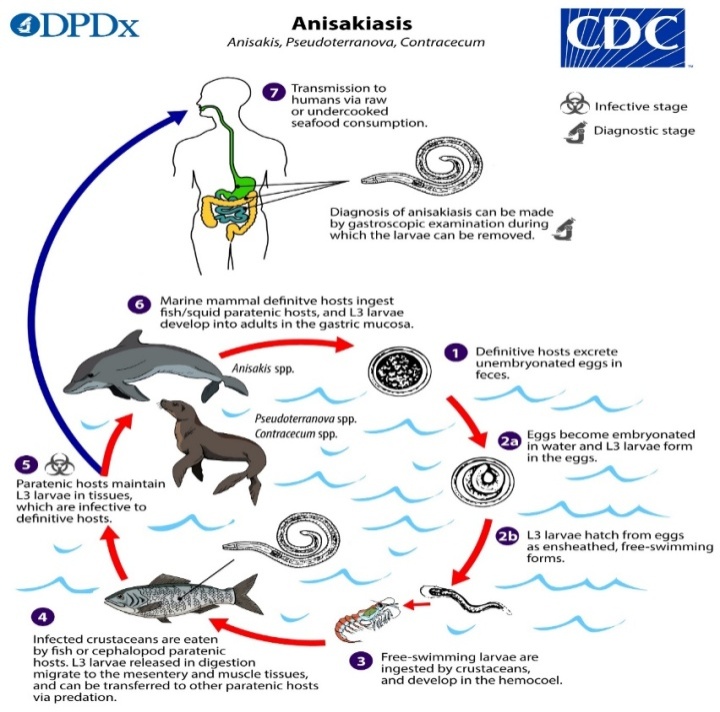
Anisakiasis is primarily caused by nematodes belonging to the genus Anisakis, particularly Anisakis simplex sensu lato and Anisakis pegreffii, which are recognized as the principal etiological agents of human infection 7, 18. Other genera, such as Pseudoterranova and Contracaecum, have also been linked to human infections 8. These parasites are widely distributed in marine ecosystems and are maintained through a complex multi-host life cycle involving both invertebrate and vertebrate hosts. The definitive hosts of anisakid nematodes are marine mammals, such as whales, dolphins, and seals, in whose gastric mucosa the adult worms reside and reproduce. Fertilized eggs are released into the marine environment via the feces of these hosts. Under suitable environmental conditions, the eggs embryonate and develop into first- and second-stage larvae, eventually hatching into free-swimming larvae in the water column 12.
These larvae are subsequently ingested by marine crustaceans, which serve as the first intermediate hosts. Within these hosts, the larvae develop into infective third-stage larvae (L3). Transmission to higher trophic levels occurs when infected crustaceans are consumed by fish and cephalopods, such as squid. These organisms act as paratenic or intermediate hosts, harboring L3 larvae within their visceral organs and musculature 7, 19. The larvae may persist and accumulate through the food chain as larger predatory fish consume smaller infected hosts. The life cycle is completed when marine mammals consume infected fish or cephalopods (Figure 1). Following ingestion, the larvae migrate to the stomach, where they mature into adult worms, thereby perpetuating the cycle. Importantly, humans are accidental or dead-end hosts and do not contribute to further transmission.
Human infection occurs through the consumption of raw, undercooked, or inadequately processed seafood containing viable L3 larvae. Once ingested, the larvae are incapable of completing their development in the human host; however, they can actively penetrate the gastric or intestinal mucosa. This invasion triggers a range of pathological responses, including acute gastrointestinal manifestations such as severe abdominal pain, nausea, and vomiting. In some cases, chronic infection may result in eosinophilic granuloma formation due to prolonged inflammatory responses. Additionally, anisakid antigens can elicit hypersensitivity reactions, ranging from urticaria to severe anaphylaxis, even in the absence of live parasites 8, 18.

Adult stages of anisakid worms live in the stomachs of marine mammals, where they gather in the stomach lining. Female adults produce eggs that are not yet developed, which are excreted in the feces of these mammals. Once in the water, these eggs develop into mature form, go through two stages of growth, and then hatch into larvae that can swim freely. These larvae are then eaten by small sea creatures like crustaceans. Inside the crustaceans, the larvae grow and become capable of infecting fish and squid, which act as intermediate hosts. When marine mammals eat infected fish or squid, the larvae move from the digestive system into the body cavity and eventually into the tissues around the intestines and muscles. These larvae can infect other animals if they are eaten by predators. Fish and squid carry these larvae, which can infect both humans and marine mammals 20. Humans become incidental hosts upon ingestion of contaminated seafood, leading to anisakiasis 20.
Anisakid nematodes are maintained in marine ecosystems through a complex host assemblage comprising definitive, intermediate, and paratenic hosts. The definitive hosts are primarily marine mammals, within which adult worms reside in the gastrointestinal tract and complete sexual reproduction. Among these, several cetacean species (e.g., whales and dolphins) serve as principal definitive hosts for Anisakis simplex sensu lato, whereas pinnipeds (seals and sea lions) are commonly associated with Pseudoterranova decipiens sensu lato 21, 20 In the case of the Contracaecum osculatum complex, definitive hosts include pinniped species such as the bearded seal (Erignathus barbatus) and the grey seal (Halichoerus grypus), which play a critical role in maintaining parasite populations in certain marine ecosystems 15, 20. The larval stages of anisakid nematodes are widely distributed among a diverse range of marine organisms. Crustaceans function as the first intermediate hosts, wherein early larval development occurs following ingestion of free-swimming larvae. Subsequently, numerous species of marine fish and cephalopods act as intermediate or paratenic hosts, harboring infective third-stage (L3) larvae. These larvae are typically located in the visceral organs but may migrate to muscle tissues, increasing the risk of transmission to humans through consumption.
Human-infecting anisakid species are particularly prevalent in a variety of commercially important fish species, with higher infection rates observed in predatory fish due to trophic transmission and bioaccumulation. Commonly implicated species include herring (Clupea harengus), cod (Gadus morhua), mackerel (Scomber scombrus), and sculpin, among others 12, 20.. Recent studies have further demonstrated that ecological factors such as host feeding behavior, geographic distribution, and climate-driven changes in marine biodiversity significantly influence parasite prevalence and transmission dynamics 16, 22. Humans act as incidental or dead-end hosts, acquiring infection through the ingestion of raw or undercooked seafood containing viable L3 larvae. As humans do not contribute to the continuation of the parasite life cycle, their role is epidemiologically limited to that of accidental hosts; however, the public health implications remain significant due to increasing seafood consumption and globalization of dietary practices.
Anisakiasis is a globally distributed food-borne parasitic zoonosis, largely driven by the expansion of international seafood trade and the increasing consumption of raw or minimally processed marine products. Despite its worldwide occurrence, the epidemiology of anisakiasis is strongly influenced by the geographic distribution of anisakid species within their natural marine hosts. Members of the Anisakis simplex complex are widely distributed across both deep-sea and coastal ecosystems, particularly within the Atlantic Basin, Pacific Ocean, and along the Alaskan coast, where A. simplex sensu stricto predominates. In contrast, Anisakis pegreffii is more commonly associated with temperate and warmer waters, especially in the Mediterranean Sea and parts of the Southern Hemisphere 21, 20.
Species within the Pseudoterranova decipiens complex exhibit a comparatively narrower distribution, being predominantly confined to cold-water coastal environments. These include regions of the North Atlantic, Arctic waters, the North Pacific (particularly around Japan), and parts of the Southern Ocean, including areas off the coast of Chile. Similarly, members of the Contracaecum osculatum complex are primarily associated with colder marine ecosystems, where their life cycles are closely linked to pinniped populations 15, 20.
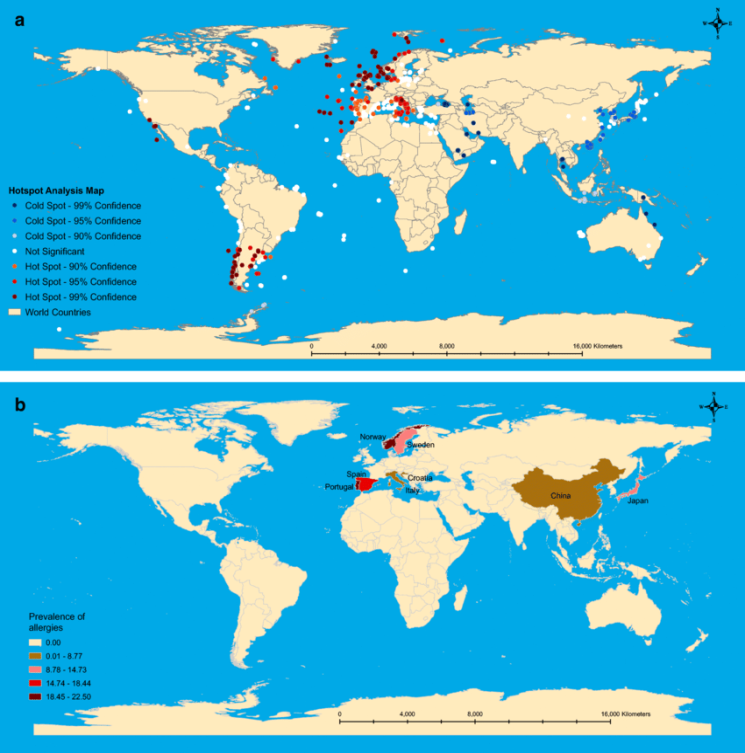
The global epidemiological landscape of anisakiasis has undergone notable changes over recent decades. Historically, the disease was predominantly reported in countries such as Japan, where the consumption of raw seafood is deeply ingrained in dietary culture. However, an increasing number of cases have been documented across Europe, North America, and other regions, reflecting the globalization of culinary practices and improved diagnostic recognition 21, 23. Additionally, advances in molecular identification techniques have revealed cryptic species diversity within anisakid complexes, enhancing understanding of species-specific distribution patterns and zoonotic potential. Despite these developments, the true prevalence of anisakiasis remains substantially underestimated. Underreporting is common due to the non-specific clinical presentation, frequent misdiagnosis as other gastrointestinal disorders, and limited awareness among healthcare professionals. Furthermore, anisakiasis is not a notifiable disease in many countries, resulting in incomplete epidemiological data. Mild, asymptomatic, or atypical cases often go undetected, further obscuring the actual disease burden. Global distribution of anisakiasis-related allergic prevalence, highlighting higher occurrence in regions with significant raw or undercooked seafood consumption, as illustrated in Figure 2.

The widespread occurrence of anisakid larvae in commercially important marine fish and cephalopods represents a persistent public health concern. High infection rates have been documented in commonly consumed species, thereby increasing the risk of human exposure. Recent studies have also emphasized the influence of environmental and climatic factors, such as ocean warming, shifts in marine biodiversity, and changes in host migration patterns, on the transmission dynamics and geographic expansion of anisakid parasites 16, 17, 24.
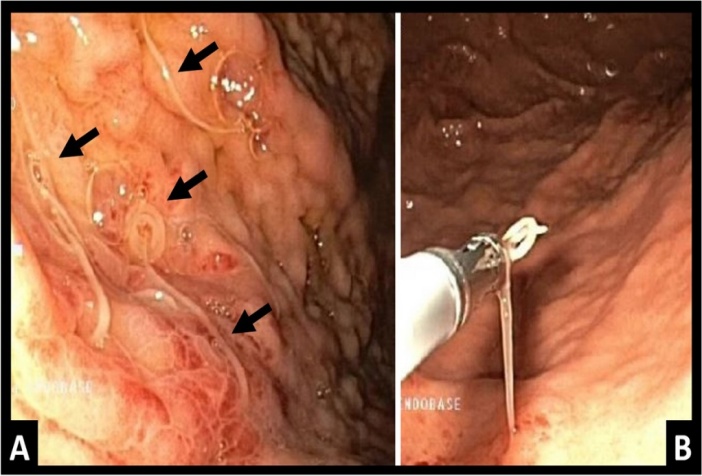
Human anisakiasis exhibits a broad clinical spectrum, classically categorized into gastric, intestinal, and ectopic (extra-gastrointestinal) forms, depending on the site of larval penetration. Among these, gastric anisakiasis represents the most frequently reported presentation and is typically characterized by the sudden onset of epigastric pain, nausea, vomiting, and, in some cases, hematemesis occurring within hours of ingestion of contaminated seafood. Endoscopic examination often reveals embedded larvae within the gastric mucosa, accompanied by localized inflammation 7, 8. Endoscopic visualization of anisakid larvae embedded in the gastric mucosa, with arrows indicating the parasites and their removal using endoscopic forceps, as shown in Figure 3.
Intestinal anisakiasis, although less common, is clinically more challenging to diagnose due to its delayed onset and non-specific presentation. Symptoms may develop several days after ingestion and include diffuse abdominal pain, diarrhea, nausea, and, in severe cases, intestinal obstruction or perforation. Complications such as peritonitis, although rare, have been reported and may lead to fatal outcomes if not promptly managed 2, 21. Ectopic anisakiasis occurs when larvae migrate beyond the gastrointestinal tract into the peritoneal cavity or other tissues, resulting in atypical and often misleading clinical presentations.

A significant and increasingly recognized aspect of anisakiasis is its allergenic potential. Anisakid larvae release potent allergens capable of inducing hypersensitivity reactions ranging from mild urticaria and angioedema to severe, life-threatening anaphylaxis. Notably, sensitization to Anisakis allergens may occur even in the absence of active infection, as allergenic proteins can persist in processed or cooked fish products. This phenomenon complicates diagnosis, particularly in individuals presenting with allergic symptoms following seafood consumption 27, 28.
Chronic or subacute anisakiasis may lead to the formation of eosinophilic granulomas due to prolonged host immune responses to larval antigens. These lesions can mimic a variety of gastrointestinal disorders, including peptic ulcer disease, Crohn’s disease, appendicitis, and even neoplastic conditions, often resulting in misdiagnosis or unnecessary surgical interventions 8, 21. The overlapping clinical features and non-specific symptomatology underscore the importance of considering anisakiasis in the differential diagnosis of acute and chronic gastrointestinal conditions, particularly in individuals with a history of recent seafood consumption. Recent studies have further emphasized the role of host immune responses, including eosinophilia and IgE-mediated mechanisms, in disease pathogenesis and clinical variability. Advances in immunological and molecular diagnostics have improved the detection of both active infection and sensitization, thereby enhancing clinical recognition and management 16, 23, 29.
The diagnosis of anisakiasis relies on a combination of clinical history, detailed dietary history (particularly recent consumption of raw or undercooked seafood), and confirmatory diagnostic procedures. Among available methods, endoscopic examination remains the gold standard for the diagnosis of gastric anisakiasis, as it enables direct visualization and simultaneous removal of embedded larvae from the gastric mucosa. This intervention is both diagnostic and therapeutic, often leading to rapid and complete resolution of symptoms following extraction 7, 8. In cases of intestinal anisakiasis, where endoscopic access is limited, diagnosis is more challenging and typically depends on imaging modalities such as ultrasonography and computed tomography (CT). These techniques may reveal characteristic findings, including localized bowel wall thickening, submucosal edema, and inflammatory masses, although such features are non-specific and may mimic other gastrointestinal conditions. Consequently, intestinal anisakiasis is frequently misdiagnosed, occasionally necessitating exploratory surgery for definitive confirmation 16, 21.
Serological and immunological assays, including detection of specific IgE antibodies against Anisakis allergens, have been increasingly utilized, particularly in cases presenting with allergic manifestations. However, these tests may lack specificity due to cross-reactivity with other parasitic antigens and are therefore considered supportive rather than definitive diagnostic tools 12, 18. Molecular diagnostic techniques, such as polymerase chain reaction (PCR)-based identification, have further enhanced species-level detection and epidemiological investigations, although their routine clinical application remains limited 16, 23.
Currently, no specific antiparasitic pharmacotherapy has been universally established as effective for the treatment of anisakiasis. Management is primarily symptomatic and supportive, focusing on pain relief, anti-inflammatory measures, and management of allergic reactions where present. Endoscopic removal of larvae remains the treatment of choice for gastric anisakiasis. In contrast, intestinal infections are typically managed conservatively, although surgical intervention may be required in cases complicated by obstruction, perforation, or severe inflammatory responses 7, 21.
Preventive strategies constitute the cornerstone of anisakiasis control. Adequate processing of seafood, including thorough cooking and proper freezing, is highly effective in inactivating infective larvae. International food safety guidelines recommend freezing fish at −20°C for at least 24 hours or −35°C for 15 hours prior to raw consumption. Additionally, inspection protocols, public awareness, and adherence to hazard analysis and critical control point (HACCP)-based practices within the seafood industry are essential to minimize the risk of human infection 12, 17.
From a One Health standpoint, anisakiasis represents a paradigmatic example of the interconnectedness between environmental, animal, and human health within marine ecosystems. The transmission dynamics of anisakid nematodes are intrinsically linked to trophic interactions: marine mammals serve as definitive hosts, while crustaceans, fish, and cephalopods function as intermediate and paratenic hosts. Humans become incidental hosts through dietary exposure, thereby bridging ecological processes with public health outcomes 21. This complex life cycle underscores the importance of integrated surveillance systems that encompass wildlife, fisheries, and human health sectors.
Environmental drivers play a critical role in shaping the epidemiology of anisakiasis. Factors such as climate change, ocean warming, overfishing, and alterations in marine biodiversity can significantly influence host distribution, parasite prevalence, and transmission dynamics. Notably, the recovery and population expansion of marine mammals in several regions have been associated with increased anisakid burdens in fish stocks, thereby potentially elevating the risk of human exposure through seafood consumption 15, 16, 24. Consequently, monitoring anisakid infection levels in commercially important fish species not only serves as a critical food safety measure but also provides a valuable bioindicator of marine ecosystem health and stability.
Food safety constitutes a central pillar of the One Health approach to anisakiasis prevention and control. The implementation of stringent inspection protocols for fishery products, along with the adoption of Hazard Analysis and Critical Control Point (HACCP) systems, is essential to minimize contamination risks across the seafood supply chain. Regulatory interventions, including mandatory visual inspection, appropriate freezing treatments, and adequate thermal processing, have demonstrated substantial effectiveness in reducing the likelihood of human infection 12, 17, 21. Furthermore, advancements in rapid detection methods and risk-based monitoring strategies are enhancing the capacity for early identification and control of parasitic hazards in seafood.
Equally important is the role of education and risk communication in mitigating anisakiasis. Increasing awareness among food handlers, seafood processors, clinicians, and consumers is crucial, particularly in regions where the consumption of raw or minimally processed seafood is prevalent. Public health campaigns emphasizing safe handling practices, proper cooking, and freezing protocols can significantly reduce infection risks. In addition, interdisciplinary collaboration among veterinarians, marine biologists, epidemiologists, and public health professionals is fundamental for the effective implementation of One Health strategies aimed at surveillance, prevention, and control of anisakiasis 9, 10.
Overall, addressing anisakiasis through a One Health lens facilitates a holistic understanding of its determinants and supports the development of integrated, sustainable interventions that protect both human health and marine ecosystem integrity.
Effective prevention of anisakiasis is fundamentally dependent on the implementation of rigorous food safety practices across the seafood supply chain. Thermal processing remains the most reliable method for inactivating anisakid larvae; thorough cooking of fish and seafood to safe internal temperatures effectively eliminates infective stages. In addition, controlled freezing protocols are widely recommended, particularly for products intended for raw consumption. International food safety guidelines advise freezing at −20°C for a minimum of 24 hours or at −35°C for at least 15 hours to ensure larval inactivation 12, 30. Complementary measures such as prompt evisceration after catch and proper storage conditions further reduce the risk of larval migration into edible muscle tissues.
Public awareness and risk communication constitute critical components of prevention strategies. Educational initiatives targeting consumers, food handlers, and seafood processors are essential to highlight the risks associated with the consumption of raw or undercooked seafood and to promote safe preparation practices (2). Such interventions are particularly important in regions where culinary traditions or emerging dietary trends favor minimally processed fish products.
From a systems perspective, prevention and control of anisakiasis require coordinated, interdisciplinary efforts aligned with the One Health framework. Collaboration among veterinarians, clinicians, marine biologists, food safety authorities, and public health agencies is crucial for comprehensive surveillance, risk assessment, and management. Integrated monitoring programs can facilitate early detection of changes in anisakid prevalence and distribution, particularly in response to environmental shifts and evolving marine ecosystems 15, 16. Moreover, strengthening diagnostic capacity and clinical awareness enhances timely identification and reporting of human cases.
The application of risk-based control measures within the seafood industry, including Hazard Analysis and Critical Control Point (HACCP) systems, is essential for minimizing contamination risks during processing, handling, and distribution. Regulatory frameworks mandating inspection protocols, freezing requirements, and traceability mechanisms have demonstrated effectiveness in reducing exposure to anisakid larvae 12, 17. Incorporating anisakiasis into broader One Health initiatives further strengthens preparedness and response strategies by addressing the interdependence of environmental health, animal hosts, and human dietary exposure. Collectively, these preventive approaches underscore the importance of a multidisciplinary and proactive strategy to mitigate anisakiasis risk, enhance seafood safety, and protect public health in an increasingly globalized food system.
Anisakiasis is an emerging yet under-recognized food-borne parasitic zoonosis of increasing global significance. Its complex life cycle, wide geographic distribution, and diverse clinical manifestations from gastrointestinal disorders to severe allergic reactions underscore the need for greater scientific and public health attention. The globalization of seafood trade and the rising consumption of raw or minimally processed fish have further contributed to its growing incidence. The One Health approach provides a holistic framework for understanding and managing anisakiasis by integrating environmental, animal, and human health perspectives. Environmental changes, host–parasite dynamics, and food consumption behaviours collectively influence transmission patterns, emphasizing the need for coordinated and interdisciplinary interventions. Strengthening surveillance systems, improving diagnostic awareness, and enforcing stringent food safety measures including proper cooking and freezing protocols are critical for effective prevention. In addition, enhancing public awareness and fostering collaboration among healthcare professionals, veterinarians, marine scientists, and regulatory authorities are essential for reducing disease burden. Overall, adopting a One Health-based, integrated strategy is imperative for the effective prevention, surveillance, and control of anisakiasis, thereby contributing to safer food systems and improved public health outcomes.
We are very grateful to Prof. Dr. R, K. Narayan for going through the manuscript. This paper is dedicated to all the scientists who made significant contribution in the helminthic zoonoses including anisakiasis.
All the authors contributed equally to the conception, drafting, and critical revision of this manuscript.
The authors declare no conflicts of interest.
No external funding was received for this study.
| [1] | Slifko, T.R., Smith, H.V., and Rose, J.B., "Emerging parasite zoonoses associated with water and food", International Journal of Parasitology, 30, 1379–1393. 2000. | ||
| In article | View Article PubMed | ||
| [2] | Pal, M., Zoonoses, 2nd ed., Satyam Publishers, Jaipur, India. 2007. | ||
| In article | |||
| [3] | Dorny, P., Praet, N., Deckers, N., and Gabriel, S., "Emerging foodborne parasites", Veterinary Parasitology, 163, 196–206. 2009. | ||
| In article | View Article PubMed | ||
| [4] | Pal, M., "Linguatulosis: a widely prevalent parasitic zoonosis", International Research Journal of Animal and Veterinary Sciences, 1, 11–13. 2019. | ||
| In article | |||
| [5] | Pal, M., "Amoebiasis: an important foodborne disease of global public health concern", Archives of Nutrition and Public Health, 2, 1–3. 2020. | ||
| In article | View Article | ||
| [6] | Pal, M., "Clonorchiasis: an emerging foodborne disease of public health concern", Journal of Nutrition and Food Processing, 3(1). | ||
| In article | View Article | ||
| [7] | Audicana, M.T., and Kennedy, M.W., "Anisakis simplex: from obscure infectious worm to inducer of immune hypersensitivity", Clinical Microbiology Reviews, 21(2), 360–379. 2008. | ||
| In article | View Article PubMed | ||
| [8] | Hochberg, N.S., Hamer, D.H., Hughes, J.M., and Wilson, M.E., "Anisakidosis: perils of the deep", Clinical Infectious Diseases, 51(7), 806–812. 2010. | ||
| In article | View Article PubMed | ||
| [9] | Destoumieux-Garzón, D., Mavingui, P., Boetsch, G., Boissier, J., Darriet, F., Duboz, P., Fritsch, C., Giraudoux, P., Le Roux, F., Morand, S., and Paillard, C., "The One Health concept: 10 years old and a long road ahead", Frontiers in Veterinary Science, 5, 14. 2018. | ||
| In article | View Article PubMed | ||
| [10] | World Health Organization (WHO), Food and Agriculture Organization (FAO), World Organisation for Animal Health (WOAH), and United Nations Environment Programme (UNEP), "One Health Joint Plan of Action (2022–2026)". 2022. | ||
| In article | |||
| [11] | Nonković, D., Tešić, V., Šimat, V., Karabuva, S., Medić, A., and Hrabar, J., "Anisakidae and anisakidosis: a public health perspective", Pathogens, 14 (3), 217. 2025. | ||
| In article | View Article PubMed | ||
| [12] | EFSA Panel on Biological Hazards (BIOHAZ), "Scientific opinion on risk assessment of parasites in fishery products", EFSA Journal, 8 (4), 1543. 2010. | ||
| In article | View Article | ||
| [13] | Sciortino, C., Giamporcaro, G., Sgroi, F., Costantino, S., Giuffrida, A., Virga, A.N., Bacarella, S., Forgia, S., Di Natale, A., and Modica, F., "Fish consumption and Anisakis risk: an exploratory study of Sicilian consumer awareness", Food and Humanity, 5, 100668. 2025. | ||
| In article | View Article | ||
| [14] | Audicana, M.T., Ansotegui, I.J., de Corres, L.F., and Kennedy, M.W., "Anisakis simplex: dangerous dead and alive", Trends in Parasitology, 18 (1), 20–25. 2002. | ||
| In article | View Article PubMed | ||
| [15] | Klimpel, S., and Palm, H.W., "Anisakid nematode (Ascaridoidea) life cycles and distribution: increasing zoonotic potential in the time of climate change?", Progress in Parasitology, Parasitology Research Monographs, 2, 201–222. 2011. | ||
| In article | View Article | ||
| [16] | Awad, D.A., Masoud, H.A., and Hamad, A., "Climate changes and food-borne pathogens: the impact on human health and mitigation strategy", Climatic Change, 177(6), 92. 2024. | ||
| In article | View Article | ||
| [17] | FAO/WHO, "Multicriteria-based ranking for risk management of foodborne parasites", Food and Agriculture Organization/World Health Organization Report. 2014. | ||
| In article | |||
| [18] | Nieuwenhuizen, N.E., and Lopata, A.L., "Anisakis: a food-borne parasite that triggers allergic host defences", International Journal for Parasitology, 43 (12–13), 1047–1057. 2013. | ||
| In article | View Article PubMed | ||
| [19] | Ramos, P., Ayra-Pardo, C., Oliveira, M.M., Rangel, L.F., Atroch, F., Caner, S., and Santos, M.J., "Anisakis spp. larvae in black scabbardfish (Aphanopus carbo) muscle: consumer health risk and recommendations along the value chain", Food and Waterborne Parasitology, e00305. 2025. | ||
| In article | View Article PubMed | ||
| [20] | CDC. "Anisakiasis", DPDx – Laboratory Identification of Parasitic Diseases of Public Health Concern. Centers for Disease Control and Prevention, January. 2022. | ||
| In article | |||
| [21] | Mattiucci, S., Cipriani, P., Paoletti, M., Levsen, A., Nascetti, G., and Lodola, M., "Anisakiasis and anisakid nematodes: from basic knowledge to clinical practice", Food and Waterborne Parasitology, 12, e00042. 2018. | ||
| In article | |||
| [22] | García-Gallego, A., Puchal-Mejías, A., Gallén, S., Brotons, J.M., Ruiz-García, D., Pool, R., Fraija-Fernández, N., and Aznar, F.J., "Anisakis spp. and Skrjabinisakis spp. infections in teleosts, cephalopods and cetaceans from the western Mediterranean: an integrated food-web perspective", Journal of Sea Research, 102697. 2026. | ||
| In article | View Article | ||
| [23] | Bao, M., Pierce, G.J., Pascual, S., González-Muñoz, M., Mattiucci, S., Mladineo, I., Cipriani, P., Bušelić, I., and Strachan, N.J., "Assessing the risk of an emerging zoonosis of worldwide concern: anisakiasis", Scientific Reports, 7 (1), 43699. 2017. | ||
| In article | View Article PubMed | ||
| [24] | Sazali, M.F., "Importance of hazard analysis critical control points (HACCP): A review", BEJ, 5 (1). December. 2024. | ||
| In article | View Article | ||
| [25] | Rahmati, A.R., Kiani, B., Afshari, A., Moghaddas, E., Williams, M., and Shamsi, S., "World-wide prevalence of Anisakis larvae in fish and its relationship to human allergic anisakiasis: a systematic review", Parasitology Research, 119 (11), 3585–3594. 2020. | ||
| In article | View Article PubMed | ||
| [26] | Fornell-Perez, R., Urizar-Gorosarri, M., Martinez-Urabayen, U., and Perez-Bea, M., "Evaluation of imaging findings in gastrointestinal anisakiasis in emergency CT and ultrasound", Insights into Imaging, 14 (1), 187. 2023. | ||
| In article | View Article PubMed | ||
| [27] | Audicana, M.T., "Anisakis: something is moving inside the fish", Pathogens, 11(3), 326. 2022. | ||
| In article | View Article PubMed | ||
| [28] | Isola, S., Zumbo, E., Dimasi, F., Minciullo, P.L., and Gangemi, S., "Allergic anisakiasis: an integrated review of human, animal and cellular evidence", Biomolecules, 16 (5), 648. 2026. | ||
| In article | View Article PubMed | ||
| [29] | López-Moreno, D., Valmaseda-Angulo, M., Hernández-Orts, J.S., Cruz-Barraza, J.A., Marín-Enríquez, E., Sánchez-Cárdenas, R., Morales-Serna, F.N., et al., "Occurrence and molecular identification of anisakid nematodes in anchovies from the Gulf of California, Mexico", Food Control, 111657. 2025. | ||
| In article | View Article | ||
| [30] | Sugiyama, H., Shiroyama, M., Morishima, Y., Wang, D., and Namihira, T., "Pulsed power treatment demonstrates complete inactivation of anisakid larvae in agar penetration and rabbit infection tests", Parasitology Research, 124: 143, 2025. | ||
| In article | View Article PubMed | ||
Published with license by Science and Education Publishing, Copyright © 2026 Mahendra Pal, Ravindra Zende, Tesfaye Rebuma, Aishwarya Nair and Oskar Nowak
 This work is licensed under a Creative Commons Attribution 4.0 International License. To view a copy of this license, visit
http://creativecommons.org/licenses/by/4.0/
This work is licensed under a Creative Commons Attribution 4.0 International License. To view a copy of this license, visit
http://creativecommons.org/licenses/by/4.0/
| [1] | Slifko, T.R., Smith, H.V., and Rose, J.B., "Emerging parasite zoonoses associated with water and food", International Journal of Parasitology, 30, 1379–1393. 2000. | ||
| In article | View Article PubMed | ||
| [2] | Pal, M., Zoonoses, 2nd ed., Satyam Publishers, Jaipur, India. 2007. | ||
| In article | |||
| [3] | Dorny, P., Praet, N., Deckers, N., and Gabriel, S., "Emerging foodborne parasites", Veterinary Parasitology, 163, 196–206. 2009. | ||
| In article | View Article PubMed | ||
| [4] | Pal, M., "Linguatulosis: a widely prevalent parasitic zoonosis", International Research Journal of Animal and Veterinary Sciences, 1, 11–13. 2019. | ||
| In article | |||
| [5] | Pal, M., "Amoebiasis: an important foodborne disease of global public health concern", Archives of Nutrition and Public Health, 2, 1–3. 2020. | ||
| In article | View Article | ||
| [6] | Pal, M., "Clonorchiasis: an emerging foodborne disease of public health concern", Journal of Nutrition and Food Processing, 3(1). | ||
| In article | View Article | ||
| [7] | Audicana, M.T., and Kennedy, M.W., "Anisakis simplex: from obscure infectious worm to inducer of immune hypersensitivity", Clinical Microbiology Reviews, 21(2), 360–379. 2008. | ||
| In article | View Article PubMed | ||
| [8] | Hochberg, N.S., Hamer, D.H., Hughes, J.M., and Wilson, M.E., "Anisakidosis: perils of the deep", Clinical Infectious Diseases, 51(7), 806–812. 2010. | ||
| In article | View Article PubMed | ||
| [9] | Destoumieux-Garzón, D., Mavingui, P., Boetsch, G., Boissier, J., Darriet, F., Duboz, P., Fritsch, C., Giraudoux, P., Le Roux, F., Morand, S., and Paillard, C., "The One Health concept: 10 years old and a long road ahead", Frontiers in Veterinary Science, 5, 14. 2018. | ||
| In article | View Article PubMed | ||
| [10] | World Health Organization (WHO), Food and Agriculture Organization (FAO), World Organisation for Animal Health (WOAH), and United Nations Environment Programme (UNEP), "One Health Joint Plan of Action (2022–2026)". 2022. | ||
| In article | |||
| [11] | Nonković, D., Tešić, V., Šimat, V., Karabuva, S., Medić, A., and Hrabar, J., "Anisakidae and anisakidosis: a public health perspective", Pathogens, 14 (3), 217. 2025. | ||
| In article | View Article PubMed | ||
| [12] | EFSA Panel on Biological Hazards (BIOHAZ), "Scientific opinion on risk assessment of parasites in fishery products", EFSA Journal, 8 (4), 1543. 2010. | ||
| In article | View Article | ||
| [13] | Sciortino, C., Giamporcaro, G., Sgroi, F., Costantino, S., Giuffrida, A., Virga, A.N., Bacarella, S., Forgia, S., Di Natale, A., and Modica, F., "Fish consumption and Anisakis risk: an exploratory study of Sicilian consumer awareness", Food and Humanity, 5, 100668. 2025. | ||
| In article | View Article | ||
| [14] | Audicana, M.T., Ansotegui, I.J., de Corres, L.F., and Kennedy, M.W., "Anisakis simplex: dangerous dead and alive", Trends in Parasitology, 18 (1), 20–25. 2002. | ||
| In article | View Article PubMed | ||
| [15] | Klimpel, S., and Palm, H.W., "Anisakid nematode (Ascaridoidea) life cycles and distribution: increasing zoonotic potential in the time of climate change?", Progress in Parasitology, Parasitology Research Monographs, 2, 201–222. 2011. | ||
| In article | View Article | ||
| [16] | Awad, D.A., Masoud, H.A., and Hamad, A., "Climate changes and food-borne pathogens: the impact on human health and mitigation strategy", Climatic Change, 177(6), 92. 2024. | ||
| In article | View Article | ||
| [17] | FAO/WHO, "Multicriteria-based ranking for risk management of foodborne parasites", Food and Agriculture Organization/World Health Organization Report. 2014. | ||
| In article | |||
| [18] | Nieuwenhuizen, N.E., and Lopata, A.L., "Anisakis: a food-borne parasite that triggers allergic host defences", International Journal for Parasitology, 43 (12–13), 1047–1057. 2013. | ||
| In article | View Article PubMed | ||
| [19] | Ramos, P., Ayra-Pardo, C., Oliveira, M.M., Rangel, L.F., Atroch, F., Caner, S., and Santos, M.J., "Anisakis spp. larvae in black scabbardfish (Aphanopus carbo) muscle: consumer health risk and recommendations along the value chain", Food and Waterborne Parasitology, e00305. 2025. | ||
| In article | View Article PubMed | ||
| [20] | CDC. "Anisakiasis", DPDx – Laboratory Identification of Parasitic Diseases of Public Health Concern. Centers for Disease Control and Prevention, January. 2022. | ||
| In article | |||
| [21] | Mattiucci, S., Cipriani, P., Paoletti, M., Levsen, A., Nascetti, G., and Lodola, M., "Anisakiasis and anisakid nematodes: from basic knowledge to clinical practice", Food and Waterborne Parasitology, 12, e00042. 2018. | ||
| In article | |||
| [22] | García-Gallego, A., Puchal-Mejías, A., Gallén, S., Brotons, J.M., Ruiz-García, D., Pool, R., Fraija-Fernández, N., and Aznar, F.J., "Anisakis spp. and Skrjabinisakis spp. infections in teleosts, cephalopods and cetaceans from the western Mediterranean: an integrated food-web perspective", Journal of Sea Research, 102697. 2026. | ||
| In article | View Article | ||
| [23] | Bao, M., Pierce, G.J., Pascual, S., González-Muñoz, M., Mattiucci, S., Mladineo, I., Cipriani, P., Bušelić, I., and Strachan, N.J., "Assessing the risk of an emerging zoonosis of worldwide concern: anisakiasis", Scientific Reports, 7 (1), 43699. 2017. | ||
| In article | View Article PubMed | ||
| [24] | Sazali, M.F., "Importance of hazard analysis critical control points (HACCP): A review", BEJ, 5 (1). December. 2024. | ||
| In article | View Article | ||
| [25] | Rahmati, A.R., Kiani, B., Afshari, A., Moghaddas, E., Williams, M., and Shamsi, S., "World-wide prevalence of Anisakis larvae in fish and its relationship to human allergic anisakiasis: a systematic review", Parasitology Research, 119 (11), 3585–3594. 2020. | ||
| In article | View Article PubMed | ||
| [26] | Fornell-Perez, R., Urizar-Gorosarri, M., Martinez-Urabayen, U., and Perez-Bea, M., "Evaluation of imaging findings in gastrointestinal anisakiasis in emergency CT and ultrasound", Insights into Imaging, 14 (1), 187. 2023. | ||
| In article | View Article PubMed | ||
| [27] | Audicana, M.T., "Anisakis: something is moving inside the fish", Pathogens, 11(3), 326. 2022. | ||
| In article | View Article PubMed | ||
| [28] | Isola, S., Zumbo, E., Dimasi, F., Minciullo, P.L., and Gangemi, S., "Allergic anisakiasis: an integrated review of human, animal and cellular evidence", Biomolecules, 16 (5), 648. 2026. | ||
| In article | View Article PubMed | ||
| [29] | López-Moreno, D., Valmaseda-Angulo, M., Hernández-Orts, J.S., Cruz-Barraza, J.A., Marín-Enríquez, E., Sánchez-Cárdenas, R., Morales-Serna, F.N., et al., "Occurrence and molecular identification of anisakid nematodes in anchovies from the Gulf of California, Mexico", Food Control, 111657. 2025. | ||
| In article | View Article | ||
| [30] | Sugiyama, H., Shiroyama, M., Morishima, Y., Wang, D., and Namihira, T., "Pulsed power treatment demonstrates complete inactivation of anisakid larvae in agar penetration and rabbit infection tests", Parasitology Research, 124: 143, 2025. | ||
| In article | View Article PubMed | ||