sciepub.com
 Quick Submission

Predictors of Tuberculosis Treatment Outcome in an Urban Setting: A Retrospective Cohort Study
Hema Darshinee Johnson1, Mano Raj Dayalan1, Chin Cheau Wei1, Ganesh Kasinathan2, , Parasakthi Navarathnam1, Naganathan Pillai1
1Monash University Malaysia, Johor Bahru, Johor, Malaysia
2Department of Internal Medicine, Segamat Hospital, KM 6 Jalan Genuang, 85000 Segamat, Johor, Malaysia
Abstract
This is a retrospective cohort study on tuberculosis in 286 patients aged between 18-60 years who had completed anti-tuberculosis treatment for a minimum of six months for patients diagnosed with pulmonary tuberculosis and nine months for patients diagnosed with extra-pulmonary tuberculosis in an out-patient government clinic in Johor Bahru. Patients were analysed by age group, gender, ethnicity, occupation, types of tuberculosis, smear results, presenting chest X-Ray, presenting clinical symptoms, duration of symptoms, comorbidities and relevant social history. Treatment outcomes of patients were assessed based on clinical symptoms resolution, chest x-ray resolution and smear clearance at two months, four months and six months after commencement of treatment. The data was analyzed using SPSS version 16.0. Male gender, weight loss, night sweats, moderate to severe chest X-Ray findings, involvement of both lungs, smear positivity and smoking history were significant predictors of poor anti-tuberculosis treatment outcomes. On the other hand, smear negativity is a significant predictor of good treatment outcomes. Males, middle aged groups, ethnicity, lower social status and homemakers were at a higher risk of developing tuberculosis and thus further studies on these population groups are required..
Keywords: retrospective, tuberculosis, predictors, treatment, outcomes
Copyright © 2016 Science and Education Publishing. All Rights Reserved.Cite this article:
- Hema Darshinee Johnson, Mano Raj Dayalan, Chin Cheau Wei, Ganesh Kasinathan, Parasakthi Navarathnam, Naganathan Pillai. Predictors of Tuberculosis Treatment Outcome in an Urban Setting: A Retrospective Cohort Study. American Journal of Infectious Diseases and Microbiology. Vol. 4, No. 1, 2016, pp 14-21. http://pubs.sciepub.com/ajidm/4/1/3
- Johnson, Hema Darshinee, et al. "Predictors of Tuberculosis Treatment Outcome in an Urban Setting: A Retrospective Cohort Study." American Journal of Infectious Diseases and Microbiology 4.1 (2016): 14-21.
- Johnson, H. D. , Dayalan, M. R. , Wei, C. C. , Kasinathan, G. , Navarathnam, P. , & Pillai, N. (2016). Predictors of Tuberculosis Treatment Outcome in an Urban Setting: A Retrospective Cohort Study. American Journal of Infectious Diseases and Microbiology, 4(1), 14-21.
- Johnson, Hema Darshinee, Mano Raj Dayalan, Chin Cheau Wei, Ganesh Kasinathan, Parasakthi Navarathnam, and Naganathan Pillai. "Predictors of Tuberculosis Treatment Outcome in an Urban Setting: A Retrospective Cohort Study." American Journal of Infectious Diseases and Microbiology 4, no. 1 (2016): 14-21.
| Import into BibTeX | Import into EndNote | Import into RefMan | Import into RefWorks |
At a glance: Figures
1. Introduction
Tuberculosis (TB) is an infectious disease commonly caused by the organism Mycobacterium Tuberculosis that mainly infects the lungs in addition to other less common organs [1, 2]. Thus, TB is further divided into Pulmonary Tuberculosis (PTB) and Extra-Pulmonary Tuberculosis (EPTB) based on the site of infection. EPTB infection can occur in isolation or coexist with PTB where common site of infections include lymph node, gastrointestinal organ, musculoskeletal, central nervous system and genitourinary organs [2].
TB has been declared as a global emergency by the World Health Organization (WHO) since 1993 [1]. In 2010, 13% out of 6.2 million people who developed TB were diagnosed with EPTB [1, 2]; while in 2012, 8.6 million people developed TB, and 1.3 million people died from TB [1]. Currently, one-third of the world population is infected with TB [3, 4] and 1.8 million new cases of TB arise annually in India [3]. By 2020, the global burden of TB is estimated to remain as high as 2.30 million, and 99% will be in developing countries despite WHOs’ target of 50% reduction by 2015 [5].
29% of the reported TB cases were from Southeast Asia [1], and Malaysia was reported to have 20,000 TB infections and 1,600 deaths from TB in 2011, which has significantly increased compared to past years. This is alarming and was attributed to the increased foreign workers employed in Malaysia [6]. Furthermore, the most concerning issue is that the current success treatment rate in Malaysia is estimated to be 67.24% in a recent study and this is still below the targeted global treatment success rate, which has been set at 85% [7]
Previous studies in Brazil, China and India have shown that having a low socioeconomic status predisposes a person to TB infection [8], and the other demographic factors that predisposes a person to TB are being a male, low education level, age range of 18-60 years old and staying in urban area [2, 9, 10]. In terms of treatment outcome, studies in Ethiopia have identified indicators for poor TB treatment outcome as being a male, aged above 40 years old, unemployment, and alcohol addiction [11, 12], while a study in Malaysia has confirmed similar findings but with addition of being a foreign national [7].
In addition, immunosuppression, mainly due to diabetes, human immunodeficiency virus (HIV) infection, and smoking have been linked to a higher risk of developing TB and having a poorer treatment outcome compared to the normal population [10, 13, 14, 15, 16, 17]. Other causes of immunosuppression associated with TB are hepatitis C infection, COPD (chronic obstructive pulmonary disease) and malignancy [18]. These findings are consistent with the Malaysian setting where studies have found that the prevalence of HIV among TB patients is ranged between 7-14%, and 52% of TB mortality were related to HIV infection [19]. Furthermore, the prevalence of diabetes among TB patients in tertiary centers ranged between 14-33%, and 57% of PTB patients were identified as smokers in studies done in Malaysia [19]. Dose-response relationship was observed for both associations between TB with diabetes and smoking [4, 20].
With regards to EPTB, local studies have concluded that females, aged above 30 years old, alcoholics, smokers, IV drug users, patient of low socio-economical background have higher risk of developing EPTB [21, 22]. The common sites of EPTB were identified to be at the lymph nodes, osteoarticular, milliary and pleura, and 36% of the patients responded well to standard anti- tuberculous chemotherapy [22].
Currently, the first line drug regimen for PTB treatment includes two month intensive phase of four drugs of isoniazid, rifampicin, ethambutol and pyrazinamide and followed by maintenance phase of isoniazid and rifampicin over a period of four months and nine months for patients with EPTB [23]. The main adverse effect of this regimen is hepatotoxicity, which is recorded to be around 3-25% [23, 24]. Other adverse effects include blurred vision, peripheral neuropathy, discoloration of body fluids and deranged coagulation profile [23]. Treatment for at least 6 months showed better outcome among patients with active PTB but a shorter period of drug regimen showed better compliance [25]. Meanwhile, a study established the impact of intermittent thrice weekly therapy in TB patients with HIV infection where a 9-month intermittent drug therapy reduced the recurrence rate by half when compared to those who underwent a 6-month intermittent therapy, but showed no changes in overall treatment outcome and survival rate at 36 months [26].
Predictors for poor treatment outcome include being male, elderly, having resistance to anti-TB drugs, and poor weight gain of less than 5% during the first two months of treatment [27, 28]. Furthermore, predictors for failed treatment include having a positive sputum culture after intensive anti-TB treatment, and having other comorbidities such as HIV infection and diabetes [16, 27, 29, 30, 31].
This study was conducted in the largest government clinic in Johor Bahru, to establish the relationship between socio-demographic factors and prevalence, severity and overall anti-TB treatment outcome in TB patients in Johor Bahru. The study investigates the basis for aggressive intervention and health policies among those with high risk of developing TB, and a baseline for further research on this area in the future.
2. Methodology
This was a retrospective cohort study where the study participants were chosen randomly via the patient database of a government Tuberculosis Outpatient Clinic in Johor Bahru, Malaysia from January 2010 to December 2014. The study participants consisted of patients above the age of 18 who were newly diagnosed with Pulmonary Tuberculosis and Extra Pulmonary Tuberculosis and had completed a minimum of six months of anti-tuberculous treatment. Patients with past history of tuberculosis, latent tuberculosis and those who did not complete their anti-tuberculous treatment for at least six months were excluded from the study. Patients’ age, gender, socio-demographic characteristics, clinical presentation and diagnostic investigations outcomes were retrospectively reviewed and data collected by three of the investigators using a data collection sheets. PTB treatment outcomes were assessed based on chest X-ray findings, clinical symptoms and sputum smear throughout the 6 month post-treatment period. For patients with negative initial sputum smear, treatment was commenced based on abnormal chest x-ray findings, clinical symptoms, positive tuberculin skin test, and the presence of an immunosuppressed state. They were then monitored based on resolution of clinical symptoms and chest radiograph findings. The data was analyzed using IBM SPSS version 16. Statistical analysis was estimated using multiple linear regression and logistic regression which were expressed through p values, Odds Ratio and 95% Confidence Interval.
Abbreviations and Acronyms
Pulmonary tuberculosis, sputum smear positive (PTB+):
Either one of
(1) ≥2 initial sputum smear positive for Acid-Fast Bacilli (AFB)
(2) 1 sputum smear positive for AFB and radiological abnormalities consistent with active PTB,
(3) 1 sputum smear positive for AFB and sputum culture positive for M. tuberculosis.
Pulmonary tuberculosis, sputum smear negative (PTB-):
PTB which does not meet the definitions for smear positive TB, including the following criteria of
(1) ≥3 sputum smear negative for AFB
(2) Radiographic abnormalities consistent with active PTB
(3) No response to a course of broad spectrum antibiotics
(4) Clinician decision to commence on anti-TB treatment.
Extra-pulmonary tuberculosis:
TB of organs other than the lungs, diagnostic criteria should include either one of
(1) A culture positive specimen
(2) Histological or strong clinical evidence consistent with active EPTB
(3) Clinician decision to commence on anti-TB treatment.
Treatment outcome classifications [32]:
Cure: Sputum smear negative in the last month of treatment and on ≥1 previous occasion.
Treatment completed: Completed treatment but who does not meet the criteria to be classified as cured or failure.
Treatment failure: Sputum smear positive at five months or later during treatment.
Died: Dies during the course of treatment.
3. Results
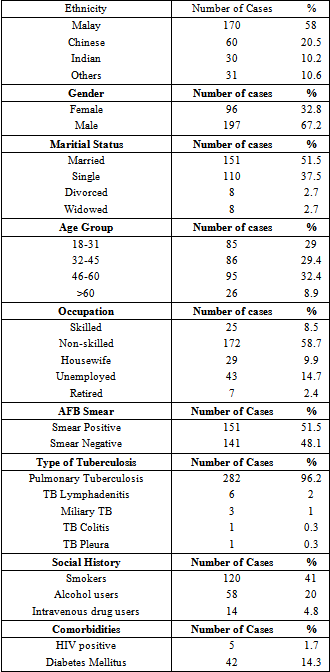
As shown in Table 1, the study population consisted of Malays, 58%, Chinese, 20.5%., Indians, 10.2% and others, 10.6%. The others who consisted of 10.6 % were mainly from Indonesia and South Asia. With regard to gender distribution, the number of male patients were relatively higher at 67.2% while women were 32.8%. As to marital status, majority of the patients were married. 51.5% of the study population were married compared to 37.5% single. The study population was divided into four respective age groups (Table 1). The distribution was even among the first 3 age groups. These groups of patients were aged from 18 to 60 with approximately 29%-32% in each group. 58.7% of the study population was non skilled compared to skilled of 14.7%. Patient’s Acid Fast Bacilli (AFB) sputum smear status at time of presentation was almost evenly divided between the smear positive and negative groups with a slightly higher rate in the smear positive group by 3.8% (10 patients). The majority of the study population presented with Pulmonary Tuberculosis (96.2%). There were 11 cases of extra-pulmonary tuberculosis of which six patients had tuberculosis of the lymph node while three patients had Miliary tuberculosis. Tuberculosis of the colon and pleura was seen in one patient each.
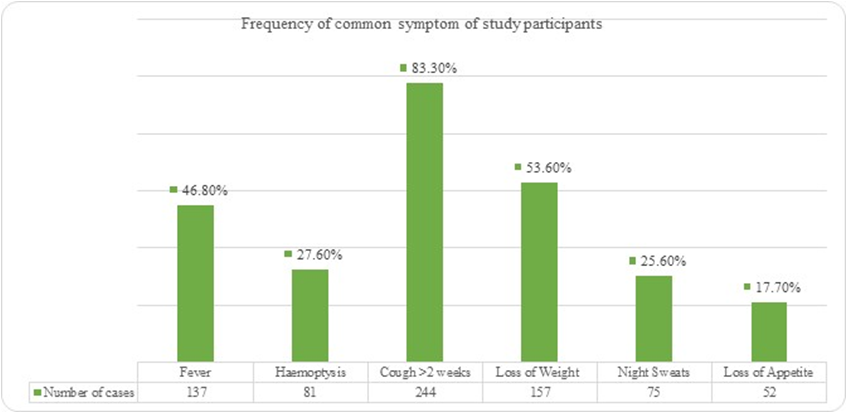
Figure 1 shows the symptoms patient experience at the point of start of treatment. Cough being the most common symptom with a prevalence of 83.3% among the study participants. Loss of weight was also experienced by more than half of the study participants standing at 53.6%. Fever was slightly lower with an estimate of 46.8%. Hemoptysis and night sweat were each present in about a quarter of the patients while loss of appetite was present among 17% of the study population.
Predictors of Poor Radiological Resolution at 6 months, 4 months and 2 months (Refer Table 2)
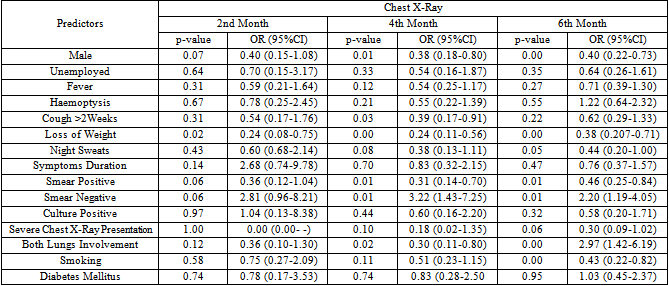
Upon completion of treatment at 6 months, the rate of complete resolution of chest X-Ray was 18.4% with significant predictors of poor chest X-Ray resolution (i.e no complete resolution) at 6 months upon commencement of treatment includes independent variables such as male gender (OR :0.40 95%CI: 0.22-0.73), smoker (OR: 0.43 95%CI: 0.22-0.82) , smear positivity (OR: 0.46 95%CI: 0.25-0.84) , night sweats (OR:0.44 95%CI : 0.20-1.00) , weight loss (OR: 0.38 95%CI: 0.21-0.71) and involvement of both lungs (OR:3.00 95%CI : 0.22-0.82). In addition, sputum smear negativity is a highly significant predictor of complete chest X-Ray resolution at 6 months (OR: 2.20 95%CI: 1.20-.84). The rate of compliance to antituberculous treatment stood at 95-100%.
On the other hand the rate of complete resolution of chest X- Ray at 4 months is 10.9% and the significant predictors of poor chest X-Ray resolution at 4 months upon completion of treatment includes independent variables such as male gender (OR:0.38 95%CI : 0.18-0.80), smoker (OR:0.30 95%CI :0.11-0.80), smear positive (OR:0.31 95%CI: 0.14-0.70) and Involvement of both lungs (OR:0.30 95%CI :0.11-0.80).In addition, smear negative is also a highly significant predictor of complete X-Ray resolution at 4 months (OR:3.22 95%CI: 1.43-7.25).
However, significant predictors of poor chest X-ray resolution at 2 months was only having weight loss as a presenting symptom (OR: 0.24 95%CI: 0.08-0.75). However it is important to note that the rate of complete chest X-Ray resolution at 2 months was rather low (5.8%) regardless of the independent variables.




Predictors of Poor Clinical Symptoms Resolution at 6 Months, 4 Months and 6 Months (Refer Table 3)
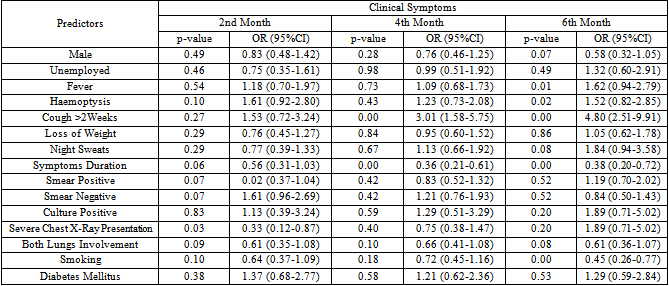
With regards to the clinical symptoms resolution at 6 months, significant predictors of poor resolution included smokers (OR: 0.45 95%:0.26-0.77), duration of symptoms of more than 4 weeks (OR: 0.38 95% CI: 0.20-0.72), and cough (OR: 4.81 95% CI: 2.51-9.20). However, there were no significant predictors of poor resolution of clinical symptoms at 4 months. Meanwhile, significant predictor of poor clinical symptoms resolution at 2 months is the extensive chest X-Ray involvement (OR: 0.33 95%CI: 0.12-0.87).
Predictors of Poor Smear Conversion at 6 Months, 4 Months and 2 Months (Refer Table 4)
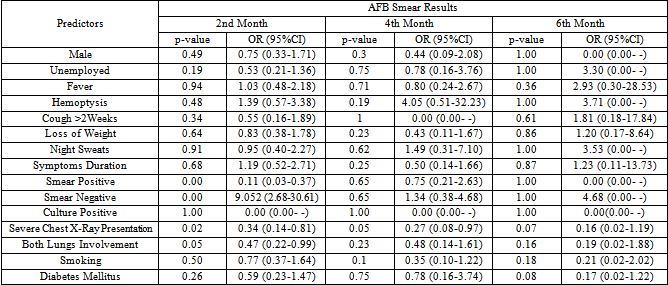
The overall rate of smear conversion at 6 months, 4 months and 2 months were 83.6%, 81.2%, and 72.7% respectively. This could be attributed to extensive lung involvement at presentation.

 Download as







4. Discussion
Gender
In consistent with the finding of this study in which male gender is a significant predictor of poor treatment outcome in terms of chest x-ray resolution, few studies have reported significant association between being male to an overall poor treatment outcome [33, 34]. However, this study found that being a male does not significantly impact the rate of smear conversion although an earlier study in Uganda has concluded otherwise [35]. However, it is crucial to note that the impact of gender on tuberculosis treatment outcome has been rather inconsistent based on previous studies [35]. For instance, women in India has been found to have a significantly higher rate of successful anti-tuberculosis treatment outcome compared to males across all types of tuberculosis [36].
A study on smear positive tuberculosis patients in Mexico has also concluded that women have 88% successful treatment rate in comparison to 79.6% rate of success among male patients [37]. Consequently, studies in Mexico, India and
Taiwan have established higher mortality and treatment failure rate among male patients [36, 37, 38]. However, in contrary, there were no significant differences between male and female in terms of treatment success as per studies conducted in Brazil, Egypt and Syria [39, 40, 41]. The rate of compliance to treatment has however been consistently higher among female patients compared to male patients which could be a possible explanation for the differences in the treatment outcome [36, 37, 38, 39, 42].
Further exploring the biological contribution towards differences in treatment outcome in different genders, in vitro studies have concluded that females have greater immune response compared to males. This is because estrogen in females increases the secretion of interferon alpha gamma and potentiate the macrophage activation whereas testosterone in males on the other hand inhibits immune response [43, 44, 45, 46]. It is rather intriguing to note that this effect is reversed in
tuberculosis patients with HIV co-infection where males have better immune response in comparison to females. However, further study is required to understand the pathogenesis behind this.
High risk behavior
In addition, a poorer successful treatment rate among male patients is often attributed to a greater tendency for high risk behaviors like alcohol, substance and tobacco abuse among men [47].
Smoking has also been established as a significant predictor of poor treatment outcome. In consistent with this, a study has concluded that both ex-smokers and current smokers are less likely to be cured or to complete treatment within two years [48]. In fact, 16.7% of unsuccessful treatment outcome was attributable to smoking. This is mainly because smokers have higher tendency of presenting with extensive lung involvement, lung cavitation, smear and culture positive at baseline which is said to lead to poor physiological response to the treatment. Other than that, the rate of default and mortality is higher among smokers [48]. In addition, it has been recommended to strengthen smoking control measure as part of effort to completely eliminate tuberculosis [49].
Socioeconomic status
Besides, a study in Nigeria has concluded that being a male from urban setting is a significant independent predictor of poor tuberculosis treatment outcome. However, the same study has established that women in rural setting are at greater risk of having a poor treatment outcome than men from similar background. This is postulated to be due to the socio-economical barrier of women from rural background that limits their access to treatment facilities as opposed to their male counterparts; this counteracts their immune response advantage [50]. A study in China has concluded that, low educational attainment, old age and poverty are significant predictors of higher rates of tuberculosis [51]. In the current study, the distribution of tuberculosis favours a particular ethnic group, middle to old age groups and those working under non-professional setting as well as housewives. However, this could probably be skewed due the study population and setting.
Smear positivity
This study has also established smear positivity, night sweats, weight loss, involvement of both lungs and extensive chest radiograph finding as significant predictors of poor treatment outcome while having a smear negativity is a significant predictor of good treatment outcomes.
A study in Iran has established that in comparison to smear negative patients, the rate of calcification, pulmonary hilar adenopathy, incomplete pulmonary destruction, cavity mediastinal widening, bronchiectasis and patchy infiltration were significantly higher in patients with smear positive [52]. Thus, this explains the significance of smear positive status as a predictor of poor chest x-ray resolution. Besides, an Indonesian study has established that negative conversion of smear results at two months is a predictor of poor treatment outcome [56]. The same study has concluded that negative conversion of smear at two months could potentially be due to resistant tuberculosis and more aggressive treatment is thus required [53]. However, in the current study, the smear conversion rates at two months were relatively high and there were no significant predictors for smear conversion.
On the other hand, contrary to the findings of our study, a Sub-Saharan African study has found that smear negative patients had poorer treatment outcome with higher mortality and a higher default rate in comparison to smear positive patients. They have postulated that this is due to underlying retroviral disease, presence of an immunosuppressed state and lesser attention from the clinic staff among smear negative patients [54]. This however, contradicts the findings of our study where smear negative is a significant predictor of good treatment outcome especially in terms of complete radiological resolution at six months. It is important to note that the percentage of HIV/AIDS patients in the study population was less than 5% and we are unable to conclude on such a correlation. Besides, the setting of this research is an out-patient clinic with dedicated staff that manages only tuberculosis patients.
Duration and severity of presenting symptoms
A study in Brazil has found that delay in treatment is a significant predictor of poor treatment outcome given higher rate of treatment failure in such cases [55]. This is consistent with the findings of this study which has established that patients seeking treatment after four weeks of symptoms in comparison to patients who presented with symptoms of a lesser duration had a poorer treatment outcome in terms of clinical symptoms resolution. Presence of lung cavities on chest X-Ray has been proven to contribute to a higher mortality rate in tuberculous patients [56]. In addition, studies in Turkey and China have identified extensive lung involvement as a risk factor of higher mortality among tuberculosis patients [57, 58]. These are consistent with our findings of involvement of both lungs and extensive chest x-ray findings as significant predictors of poor treatment outcome.
Clinical symptoms
In terms of presenting clinical symptoms of tuberculosis, having weight loss or night sweats has been identified as a significant predictor of poor treatment outcome. Although previous studies have concluded significant association between having night sweats and HIV/AIDS in tuberculosis patients, there are no definite conclusions regarding its impact on treatment outcome [59, 60][59, 60]. However, another study has added that the lack of standard definition of night sweats in current literatures is hampering the attempt to establish an association between night sweats and any specific condition [61]. Thus, further studies are required to understand the correlation between night sweats and poor treatment outcome in tuberculosis patients.
Regarding weight loss, one study has inferred that loss of body fat leads to reduction in plasma leptin concentration. Plasma leptin is an important component of cell-mediated immunity. Besides that, ongoing inflammation such as active tuberculosis also further suppresses the synthesis of leptin. Thus, weight loss in active tuberculosis patient is a measure of the disease severity [62]. Consequently, this could potentially explain the findings of this study.
Co-morbidities
Despite various studies establishing a significant correlation between HIV/AIDS and tuberculosis, our study could not establish any significant impact of HIV/AIDS on treatment outcome [63]. In addition, studies have also established that diabetes mellitus contributes to higher incidence of tuberculosis and a poorer treatment outcome [64]. However, due to a small percentage of patients with diabetes mellitus and HIV/AIDS patients in the study population, such significance could not be evaluated.
5. Limitations
One of the limitations of this study is that given the sample size of 300 patients, this may not be an accurate representation of the actual population. Besides that, being an out-patient clinic in an urban setting the demographic distribution of the sample may vary from the actual population in the community which impacts the estimation of sociodemographic factors as predictors of treatment outcome. Other than that, treatment outcome measures namely radiological resolution and clinical symptoms resolution may vary according to the clinical judgment of the health practitioner with varying experience and the patients’ recall bias respectively. In addition to that, given the inclusion and exclusion criteria, the impact of extremes of age on treatment outcome could not be established. Besides that, the factors causing relapse or recurrent tuberculosis which eventually influences the treatment outcome could not be studied. Other than that, high default rate among foreigners due to some of them being sent back to their country of origin upon diagnosis and intensive anti-tuberculosis treatment excludes them from the study sample and thus resulting in the poor estimation of the demographic distribution of tuberculosis.
6. Recommendations
Prevention of tuberculosis should include effective screening especially among high risk groups i.e: males, smokers, low to middle income groups and middle aged groups in order to ensure early detection. Besides that, it is important to implement smoking prevention measures in the population in order to reduce their risk of developing tuberculosis. In fact, tuberculosis patients with a smoking history require aggressive treatment as well as strict smoking control in order to ensure good treatment outcome. Other than that, patients presenting with weight loss, night sweats, extensive chest X-ray involvement and smear positive tuberculosis need aggressive and possibly prolonged anti-tuberculosis treatment to ensure adequate cure. In addition, smear negative patients should attain complete resolution of presenting symptoms and radiological symptoms as indicators of successful treatment completion unless there are confounders. Although in this study population, male gender, middle age group, non- skilled workers and certain ethnic groups are at higher risk of developing tuberculosis, further studies are required to establish its statistical and clinical significance. Screening and tracing of close contacts of patients with tuberculosis is mandatory. Assessment of cure for extra pulmonary tuberculosis may pose more challenges and treatment requires a longer duration. The general assumptions that Malaysians are more prone to pulmonary tuberculosis and others from South and South East Asia being more prone to extra pulmonary tuberculosis need further studies.
7. Conclusion
Male gender, weight loss, night sweats, extensive chest X-Ray involvement, involvement of both lungs, smear positivity and smoking history are significant predictors of poor anti-tuberculosis treatment outcome. On the other hand, smear negative is a significant predictor of good treatment outcome. Male gender, middle aged groups, certain ethnicities, non skilled workers and homemakers are at higher risk of developing tuberculosis and thus further studies in the community are required.
Conflicting of Interest
The authors of this study have no conflicting interest.
Ethics
Ethical approval from National Medical Research Registry (NMRR) and Malaysian Research Ethics Committee (MREC) were obtained prior to commencement of this study.
Aknowledgement
1. Dr. Manoharan R.P.S. Pillay, Medical Officer, Government Health Clinic, Johor Bahru, Malaysia.
2. Mr Cui Chor Sin, Research Assistant, Clinical School, Johor Bahru, Malaysia.
3. Ms Premaa Supramaniam, Statistician, Clinical Research Centre, Hospital Sultanah Aminah, Johor Bahru, Malaysia.
4. Dr Amutha Ramadas, Lecturer, Monash University Malaysia Clinical School, Johor Bahru, Malaysia.
References
| [1] | Organization, W.H., Global tuberculosis report 2013. 2013: World Health Organization. | ||
 In article In article | |||
| [2] | Gomes, T., et al., Extrapulmonary tuberculosis: Mycobacterium tuberculosis strains and host risk factors in a large urban setting in Brazil. PloS one, 2013. 8(10): p. e74517. | ||
| In article | View Article PubMed | ||
| [3] | Gupta, S., et al., Diabetes mellitus and HIV as co-morbidities in tuberculosis patients of rural south India. Journal of infection and public health, 2011. 4(3): p. 140-144. | ||
| In article | View Article PubMed | ||
| [4] | Wang, Q., et al., Screening and intervention of diabetes mellitus in patients with pulmonary tuberculosis in poverty zones in China: Rationale and study design. Diabetes research and clinical practice, 2012. 96(3): p. 385-391. | ||
| In article | View Article PubMed | ||
| [5] | Pednekar, M.S. and P.C. Gupta, Prospective study of smoking and tuberculosis in India. Preventive medicine, 2007. 44(6): p. 496-498. | ||
| In article | View Article PubMed | ||
| [6] | Abdul-Rahman, H., et al., Negative impact induced by foreign workers: Evidence in Malaysian construction sector. Habitat International, 2012. 36(4): p. 433-443. | ||
| In article | View Article | ||
| [7] | Atif, M., et al., Treatment outcome of new smear positive pulmonary tuberculosis patients in Penang, Malaysia. BMC infectious diseases, 2014. 14(1): p. 399. | ||
| In article | View Article PubMed | ||
| [8] | Low, C.-T., et al., Exploring tuberculosis by types of housing development. Social Science & Medicine, 2013. 87: p. 77-83. | ||
| In article | View Article PubMed | ||
| [9] | Augusto, C.J., et al., Characteristics of tuberculosis in the state of Minas Gerais, Brazil: 2002-2009. Jornal Brasileiro de Pneumologia, 2013. 39(3): p. 357-364. | ||
| In article | View Article PubMed | ||
| [10] | Dye, C., et al., Trends in tuberculosis incidence and their determinants in 134 countries. Bulletin of the World Health Organization, 2009. 87(9): p. 683-691. | ||
| In article | View Article PubMed | ||
| [11] | Berhe, G., F. Enquselassie, and A. Aseffa, Treatment outcome of smear-positive pulmonary tuberculosis patients in Tigray Region, Northern Ethiopia. BMC public health, 2012. 12(1): p. 537. | ||
| In article | View Article PubMed | ||
| [12] | Muñoz-Sellart, M., et al, Factors associated with poor tuberculosis treatment outcome in the Southern Region of Ethiopia. The International Journal of Tuberculosis and Lung Disease, 2010. 14(8): p. 973-979. | ||
| In article | |||
| [13] | Reis-Santos, B., et al., Socio-Demographic and Clinical Differences in Subjects with Tuberculosis with and without Diabetes Mellitus in Brazil–A Multivariate Analysis. PloS one, 2013. 8(4): p. e62604. | ||
| In article | View Article PubMed | ||
| [14] | Bhattacharya, M.K., et al., Pulmonary tuberculosis among HIV seropositives attending a counseling center in Kolkata. Indian journal of public health, 2011. 55(4): p. 329. | ||
| In article | View Article PubMed | ||
| [15] | Jiménez-Corona, M.E., et al., Association of diabetes and tuberculosis: impact on treatment and post-treatment outcomes. Thorax, 2013. 68(3): p. 214-220. | ||
| In article | View Article PubMed | ||
| [16] | Baker, M.A., et al., The impact of diabetes on tuberculosis treatment outcomes: a systematic review. BMC medicine, 2011. 9(1): p. 81. | ||
| In article | View Article PubMed | ||
| [17] | Dooley, K.E. and R.E. Chaisson, Tuberculosis and diabetes mellitus: convergence of two epidemics. The Lancet infectious diseases, 2009. 9(12): p. 737-746. | ||
| In article | View Article | ||
| [18] | Sbrana, E., et al., Co-morbidities associated with tuberculosis in an autopsy case series. Tuberculosis, 2011. 91: p. S38-S42. | ||
| In article | View Article PubMed | ||
| [19] | Nantha, S., A Review of Tuberculosis Research in Malaysia. Med J Malaysia, 2014. 69: p. 88. | ||
| In article | |||
| [20] | Alcaide, J., et al., Cigarette smoking as a risk factor for tuberculosis in young adults: a casecontrol study. Tubercle and Lung Disease, 1996. 77(2): p. 112-116. | ||
| In article | View Article | ||
| [21] | Nissapatorn, V., et al., Extrapulmonary tuberculosis in Peninsular Malaysia: retrospective study of 195 cases. Southeast Asian Journal of Tropical Medicine and Public Health, 2004. 35(2): p. 39-45. | ||
| In article | PubMed | ||
| [22] | Hayati, I.N., Y. Ismail, and Y. Zurkurnain, Extrapulmonary tuberculosis: a two-year review of cases at the General Hospital Kota Bharu. Med J Malaysia, 1993. 48(4): p. 417. | ||
| In article | |||
| [23] | 23.Centre_for_Disease_Control, Chapter 6: Treatment of Tuberculosis Disease, in Core Curriculum on Tuberculosis: What the Clinician Should Know. 2013. p. 139-187. | ||
| In article | |||
| [24] | Saukkonen, J.J., K. Powell, and J.A. Jereb, Monitoring for tuberculosis drug hepatotoxicity: moving from opinion to evidence. American journal of respiratory and critical care medicine, 2012. 185(6): p. 598-599. | ||
| In article | View Article PubMed | ||
| [25] | Gelband, H., Regimens of less than six months for treating tuberculosis. Cochrane Database of Systematic Reviews, 1999. 4. | ||
| In article | View Article | ||
| [26] | Swaminathan, S., et al., Efficacy of a 6-month versus 9-month intermittent treatment regimen in HIV-infected patients with tuberculosis: a randomized clinical trial. American journal of respiratory and critical care medicine, 2010. 181(7): p. 743-751. | ||
| In article | View Article PubMed | ||
| [27] | Pefura-Yone, E.W., A.P. Kengne, and C. Kuaban, Non-conversion of sputum culture among patients with smear positive pulmonary tuberculosis in Cameroon: a prospective cohort study. BMC infectious diseases, 2014. 14(1): p. 138. | ||
| In article | View Article PubMed | ||
| [28] | Hoa, N., J. Lauritsen, and H. Rieder, Changes in body weight and tuberculosis treatment outcome in Viet Nam. The International Journal of Tuberculosis and Lung Disease, 2013. 17(1): p. 61-66. | ||
| In article | View Article PubMed | ||
| [29] | Nissapatorn, V., et al., Tuberculosis in HIV/AIDS patients: a Malaysian experience. 2005. | ||
| In article | |||
| [30] | Banerjee, A., et al., HIV testing and tuberculosis treatment outcome in a rural district in Malawi. . Transactions of the Royal Society of Tropical Medicine and Hygiene, 1997. 91(6): p. 707-708. | ||
| In article | View Article | ||
| [31] | Chang, J.-T., et al., Effect of type 2 diabetes mellitus on the clinical severity and treatment outcome in patients with pulmonary tuberculosis: a potential role in the emergence of multidrug-resistance. Journal of the Formosan Medical Association, 2011. 110(6): p. 372-381. | ||
| In article | View Article | ||
| [32] | 32.Nissapatorn, V.e.a., Tuberculosis in Diabetic Patients: A Clinical Perspective. Southeast Asian J Trop Med Public Health 2005. 36 (suppl 4): p. 213-220. | ||
| In article | |||
| [33] | Diel, R. and S. Niemann, Outcome of tuberculosis treatment in Hamburg: a survey, 1997–2001. The International Journal of Tuberculosis and Lung Disease, 2003. 7(2): p. 124-131. | ||
| In article | PubMed | ||
| [34] | Nik, N.R., Mohd, N.S., Wan, M., and Sharina, D., Factors associated with unsuccessful treatment outcome of pulmonary tuberculosis in Kota Bharu, Kelantan. . Malays J Publ Health Med 2011. 11: p. 6-15. | ||
| In article | |||
| [35] | Commission, N.P., The 2006 Population and Housing Census of the Federal Republic of Nigeria. Priority Tables (Volume I). . Abuja, Nigeria: The National Population Commission, 2009. | ||
| In article | |||
| [36] | Balasubramanian, R., et al., Gender disparities in tuberculosis: report from a rural DOTS programme in south India. The International Journal of Tuberculosis and Lung Disease, 2004. 8(3): p. 323-332. | ||
| In article | PubMed | ||
| [37] | Jimenez-Corona, M.-E., et al., Gender differentials of pulmonary tuberculosis transmission and reactivation in an endemic area. Thorax, 2006. 61(4): p. 348-353. | ||
| In article | View Article PubMed | ||
| [38] | Feng, J.Y., et al., Gender differences in treatment outcomes of tuberculosis patients in Taiwan: a prospective observational study. Clinical Microbiology and Infection, 2012. 18(9): p. E331-E337. | ||
| In article | View Article PubMed | ||
| [39] | Belo, M.T.C.T., et al., Tuberculosis and gender in a priority city in the state of Rio de Janeiro, Brazil. Jornal Brasileiro de Pneumologia, 2010. 36(5): p. 621-625. | ||
| In article | View Article PubMed | ||
| [40] | Kamel, M., et al., Gender differences in health care utilization and outcome of respiratory tuberculosis in Alexandria. 2003. | ||
| In article | |||
| [41] | Bashour, H. and F. Mamaree, Gender differences and tuberculosis in the Syrian Arab Republic: patients' attitudes, compliance and outcomes. 2003. | ||
| In article | |||
| [42] | Faustini, A., et al., Treatment outcomes and relapses of pulmonary tuberculosis in Lazio, Italy, 1999–2001: a six-year follow-up study. International Journal of Infectious Diseases, 2008. 12(6): p. 611-621. | ||
| In article | View Article PubMed | ||
| [43] | Neyrolles, O. and L. Quintana-Murci, Sexual inequality in tuberculosis. PLoS Med, 2009. 6(12): p. e1000199. | ||
| In article | View Article PubMed | ||
| [44] | Calippe, B., et al., Chronic estradiol administration in vivo promotes the proinflammatory response of macrophages to TLR4 activation: involvement of the phosphatidylinositol 3-kinase pathway. The Journal of Immunology, 2008. 180(12): p. 7980-7988. | ||
| In article | View Article PubMed | ||
| [45] | Janele, D., et al., Effects of Testosterone, 17β‐Estradiol, and Downstream Estrogens on Cytokine Secretion from Human Leukocytes in the Presence and Absence of Cortisol. Annals of the New York Academy of Sciences, 2006. 1069(1): p. 168-182. | ||
| In article | View Article PubMed | ||
| [46] | Flanagan, K.L., Sexual dimorphism in biomedical research: a call to analyse by sex. Transactions of the Royal Society of Tropical Medicine and Hygiene, 2014. 108(7): p. 385-387. | ||
| In article | View Article PubMed | ||
| [47] | Antoine, D., et al., Tuberculosis treatment outcome monitoring in England, Wales and Northern Ireland for cases reported in 2001. Journal of epidemiology and community health, 2007. 61(4): p. 302-307. | ||
| In article | View Article PubMed | ||
| [48] | Leung, C.C., et al., Smoking adversely affects treatment response, outcome and relapse in tuberculosis. European Respiratory Journal, 2015. 45(3): p. 738-745. | ||
| In article | View Article PubMed | ||
| [49] | Zellweger, J.-P., A. Cattamanchi, and G. Sotgiu, Tobacco and tuberculosis: could we improve tuberculosis outcomes by helping patients to stop smoking? European Respiratory Journal, 2015. 45(3): p. 583-585. | ||
| In article | View Article PubMed | ||
| [50] | Oshi, S., et al., Investigating gender disparities in the profile and treatment outcomes of tuberculosis in Ebonyi state, Nigeria. Epidemiology and infection, 2015. 143(05): p. 932-942. | ||
| In article | View Article PubMed | ||
| [51] | Chan-Yeung, M., et al., Socio-demographic and geographic indicators and distribution of tuberculosis in Hong Kong: a spatial analysis. The International Journal of Tuberculosis and Lung Disease, 2005. 9(12): p. 1320-1326. | ||
| In article | PubMed | ||
| [52] | Ebrahimzadeh, A., M. Mohammadifard, and G. Naseh, Comparison of Chest X-Ray Findings of Smear Positive and Smear Negative Patients with Pulmonary Tuberculosis. Iranian Journal of Radiology, 2014. 11(4). | ||
| In article | View Article PubMed | ||
| [53] | Scheelbeek, P., et al., Risk factors for poor tuberculosis treatment outcomes in Makassar, Indonesia. The Southeast Asian journal of tropical medicine and public health, 2014. 45(4): p. 853-858. | ||
| In article | |||
| [54] | Harries, A., et al., Treatment outcome of patients with smear-negative and smear-positive pulmonary tuberculosis in the National Tuberculosis Control Programme, Malawi. Transactions of the Royal Society of Tropical Medicine and Hygiene, 1999. 93(4): p. 443-446. | ||
| In article | View Article | ||
| [55] | Albuquerque, M.d.F.P.M., et al., Factors associated with treatment failure, dropout, and death in a cohort of tuberculosis patients in Recife, Pernambuco State, Brazil. Cadernos de Saúde Pública, 2007. 23(7): p. 1573-1582. | ||
| In article | View Article | ||
| [56] | Atif, M., et al., Treatment outcome of new smear positive pulmonary tuberculosis patients in Penang, Malaysia. BMC infectious diseases, 2014. 14(1): p. 399. | ||
| In article | View Article PubMed | ||
| [57] | Talay, F., S. Kumbetli, and S. Altin, Factors associated with treatment success for tuberculosis patients: a single center's experience in Turkey. Japanese journal of infectious diseases, 2008. 61(1): p. 25. | ||
| In article | PubMed | ||
| [58] | Bao, Q.-S., Y.-H. Du, and C.-Y. Lu, Treatment outcome of new pulmonary tuberculosis in Guangzhou, China 1993–2002: a register-based cohort study. BMC Public Health, 2007. 7(1): p. 344. | ||
| In article | View Article PubMed | ||
| [59] | Redd, J.T. and E. Susser, Controlling tuberculosis in an urban emergency department: a rapid decision instrument for patient isolation. American journal of public health, 1997. 87(9): p. 1543-1547. | ||
| In article | View Article PubMed | ||
| [60] | El-Solh, A., et al., Validity of a decision tree for predicting active pulmonary tuberculosis. American journal of respiratory and critical care medicine, 1997. 155(5): p. 1711-1716. | ||
| In article | View Article PubMed | ||
| [61] | Mold, J.W., B.J. Holtzclaw, and L. McCarthy, Night sweats: a systematic review of the literature. The Journal of the American Board of Family Medicine, 2012. 25(6): p. 878-893. | ||
| In article | View Article PubMed | ||
| [62] | van Crevel, R., et al., Decreased plasma leptin concentrations in tuberculosis patients are associated with wasting and inflammation. The Journal of Clinical Endocrinology & Metabolism, 2002. 87(2): p. 758-763. | ||
| In article | View Article PubMed | ||
| [63] | Chou, S.-H.S., et al., Thoracic diseases associated with HIV infection in the era of antiretroviral therapy: clinical and imaging findings. RadioGraphics, 2014. 34(4): p. 895-911. | ||
| In article | View Article PubMed | ||
| [64] | Bailey, S.L. and P. Grant, ‘The tubercular diabetic’: the impact of diabetes mellitus on tuberculosis and its threat to global tuberculosis control. Clinical Medicine, 2011. 11(4): p. 344-347. | ||
| In article | View Article PubMed | ||
 CiteULike
 Mendeley
 StumbleUpon
 Delicious
 Facebook
 Twitter
 LinkedIn