Background: Vaginal infections represent a major public health problem, particularly in regions where access to quality medical care is limited. In this context, phytotherapy, especially the use of medicinal plants such as Euphorbia hirta and Ocimum gratissimum, constitutes a popular therapeutic alternative for treating these vaginal infections in northern Benin. This study aims to evaluate the antimicrobial potential, phytochemical profile, and toxicity of Euphorbia hirta and Ocimum gratissimum, two species of medicinal plants used in Beninese traditional medicine. Methodology: Aqueous, ethanolic, and hydroethanolic extracts were prepared by maceration. Antimicrobial activity was assessed using classical microbiology methods on eight clinical strains isolated from women suffering from vaginal infections. The lethal concentration (LC50) of the different extracts was determined using Artemia salina larvae. The identification of biomolecules was carried out using colorimetric methods. Results: Preliminary results suggest notable antimicrobial activity, although significant differences were observed between the two species studied. Inhibition diameters varied significantly (P < 0.05) between 5 mm and 22 mm. The minimum inhibitory concentrations (MICs) and minimum bactericidal concentrations (MBCs) ranged from 1.56 to 50 mg/ml and 6.25 to 50 mg/ml, respectively. All extracts except the aqueous extract of Ocimum gratissimum had a bacteriostatic effect on the tested strains. The extracts tested on Artemia salina proved to be non-toxic at the tested doses. The LC50 ranged between 2.5 and 9.36 ± 3.27 mg/ml. The phytochemical profile of the two species justifies their antimicrobial activity and safety of use. Conclusion: These data confirm the pharmacological interest of these plants while highlighting the need for cautious use and pave the way for further research on these species. As a future perspective, we will evaluate the immunomodulatory potential and study the mechanism of action of the extracts of the two plants on the microbial strains responsible for vaginal infections.
Around the world, and particularly in Benin, the consequences of infectious diseases are at the root of numerous problems from a health, economic, and social perspective, and even at the political level, due to increasing resistance of causal agents to synthetic compounds. Infectious diseases arise from interactions among infectious agents, hosts, and environmental factors. Among these diseases, genital infections not only have a high endemicity in the African region but also, more importantly, lead to serious consequences such as infertility, ectopic pregnancy, miscarriages, and an increased risk of transmission of sexually transmitted infections 1. Depending on the location of the causal agent, genital infections include lower infections affecting the vulva, vagina, and cervix 2. Mulu et al. (2015) 3 and Balkus et al. (2017) 4 reported that vaginal infections represent a global health problem among women of reproductive age. More than half of these women are affected by a vaginal infection, sometimes recurrent, characterized by painful or uncomfortable physical symptoms that may impact their quality of life and self-esteem 5, 6. Vaginal infections are very widespread 7, and are among the most common reasons for gynecological consultations in Benin 8, 9. To address vaginal infections, various modern antimicrobials are commonly used. Thus, treatment by modern medicine is based on the administration of synthetic antibiotics and antifungals, which is not always a panacea. Resistance to synthetic antibiotics, limited access to modern healthcare, the high cost of modern medical treatments, and the occurrence of severe or even toxic side effects in some cases are the main causes of dissatisfaction with conventional treatments 1, 8, 10. In light of this situation, herbal medicine constitutes an effective alternative, which populations with low income turn to for treating vaginal infections 11, 12. Scientific data attest to the general antimicrobial power of medicinal plants 13, 14, 15, 16, 17. However, despite the traditional use of flora for treating various diseases 18, there are very few studies available on the antimicrobial activity and toxicity of medicinal plants in the treatment of vaginal infections in particular. It is therefore appropriate to conduct pharmacological, phytochemical, and biological research aimed at evaluating the phytochemical profile, antimicrobial efficacy, and toxicity of credible plants used in Beninese pharmacopoeia for the treatment of vaginal infections, in order to allow their safer and more efficient use. With the aim of contributing to the development of phytosources within the Beninese pharmacopoeia for treating vaginal infections, this study focused on evaluating the antimicrobial potential and the phytochemical and toxicological profiles of two medicinal species used in the traditional treatment of vaginal infections in northwestern Benin.
Phytochemical Screening
The plant material consists of the leaves of Ocimum gratissimum L. and the leafy stem of Euphorbia hirta, collected from four municipalities in the Atacora and Donga departments located in northwestern Benin. The analyses were carried out at the Laboratory of Natural Sciences and Applications (LSNA) of the Ecole Normale Supérieure (ENS) of Natitingou and at the Laboratory of Biology and Molecular Typing in Microbiology (LBTMM) of the University of Abomey-Calavi. The different organs of the species used were harvested and washed with water, then dried at laboratory temperature (25 ± 2°C) for two weeks. These various organs were then ground separately using a mechanical grinder. The powder thus obtained for each species was weighed and stored in jars away from light until use 19 for phytochemical screening. The identification of biomolecules in the powder of each of the two plant species was carried out by colorimetric methods. These involved the investigation of chemical groups using differential color and precipitation reactions for the main classes of chemical compounds present in the plants, as described by Houghton and Raman, 1998 20, and successfully used by Chabi-Sika et al. (2023) 21, with adaptations to laboratory conditions. Results were reported as positive (+) or negative (-) reactions.
Antimicrobial Potential
The microbial species tested consisted of clinical strains of Escherichia coli, Citrobacter freundii, Serratia marcescens, Klebsiella ornithinolytica, Enterobacter aerogenes, Klebsiella pneumoniae, coagulase-negative Staphylococcus spp, and coagulase-positive Staphylococcus spp isolated from women suffering from vaginal infections and treated at the Natitingou and Djougou district hospitals. The study was conducted by sensitivity testing, determination of the Minimum Inhibitory Concentration (MIC), and determination of the Minimum Bactericidal Concentration (MBC). The sensitivity test of the extracts obtained was carried out using the solid media diffusion method, based on the procedure described by Chabi Sika et al. (2023) 21. The Minimum Inhibitory Concentration (MIC) was determined using the microdilution method, with iodonitrotetrazolium (INT) as a viability indicator 22. The Minimum Bactericidal Concentration (MBC) involved inoculating from the MIC upward to higher concentrations onto Petri dishes containing agar medium. The dishes were examined after 24 hours of incubation at 37°C. The antimicrobial effect was considered according to the MBC/MIC ratio 23.
Cytotoxicity
The biological material consisted of Artemia salina larvae. The evaluation of cytotoxicity consisted of determining the Lethal Concentration (LC50) of the different extracts. Specifically, the cytotoxicity of these extracts was evaluated on Artemia salina larvae according to the method described by Kawsar et al., 2008 24, and successfully used by Chabi-Sika et al., 2023 21.
Data Processing and Analysis
The collected data were entered in Excel 2016 and analyzed with SPSS software version 22. GraphPad Prism 8 was used for graphical representations.
Phytochemical screening
Qualitative phytochemical screening carried out by staining and precipitation reactions directly on the powders of the plants studied reveals the presence of several bioactive molecules (Table 1). The two plants studied do not have the same phytochemical profile. The presence of triterpenoids, tannins, mucilages and reducing compounds is found to be present in the two species studied, but neither of them contains cyanogenic derivatives. Alkaloids, free anthracenes and gallic tannins are present in the powders of the other two species. Flavonoids, catechetical tannins, quinonic derivatives, anthocyanins and leucoanthocyanins are found to be present in Euphorbia hirta but absent in Ocimum gratissimum. Saponosides were only found to be present in Ocimum gratissimum powder.
Antimicrobial potential
The antimicrobial tests concerned the sensitivity of extracts to clinical pathogenic strains with the determination of antibacterial parameters such as minimum inhibitory concentrations (MICs) and minimum bactericidal concentrations (BMCs). Inhibition diameters varied significantly (P < 0.05) between 5 and 19 mm depending on the strains and extracts (Table 2). The lowest sensitivity was obtained for the ethanolic extract of Ocimum gratissimum on K. pneumoniae (5 ± 6.61 mm) and the highest sensitivity for the aqueous extracts of Ocimum gratissimum and hydro-ethanol extracts of Euphorbia hirta on S. marcescens (19±6.22 mm) and K. ornithinolytica (19.25±4.9 mm) respectively.
Table 3 presents the Minimum Inhibitory Concentrations (MICs) and Minimum Bactericidal Concentrations (BMCs) of the extracts on the strains studied. The MICs and BMCs vary between 3.1 and 50 mg/ml, and 6.3 and 50 mg/ml, respectively. The aqueous extract of Euphorbia hirta showed the strongest inhibitory activity on coagulase-negative C. freundii and Staphylococcus spp strains, while the lowest inhibitory activity was obtained in the aqueous extract of Ocimum gratissimum on C. freundii, E. aerogenes, K. pneumoniae, and then in the ethanolic extract of Ocimum gratissimum on K. pneumoniae. Similarly, the hydro-ethanolic extract of Ocimum gratissimum showed the best bactericidal activity on C. freundii.
Only the hydro-ethanolic extract of Euphorbia hirta exhibited a ratio >4 against K. pneumoniae. The ethanolic extract of Euphorbia hirta has a ratio of more than 4 on the coagulase-positive S. marcescens and Staphylococcus spp strains, while the aqueous extract has a ratio of more than 4 on the coagulase-negative E. coli, C. freundii, coagulase-negative Staphylococcus spp and coagulase-positive Staphylococcus spp strains. Only the hydro-ethanolic extract of Ocimum gratissimum has a ratio greater than 4 for coagulase-negative E. coli and Staphylococcus spp. They therefore have a bacteriostatic effect on these respective strains. However, the aqueous and ethanolic extracts of have no bacteriostatic effect on any of the microbial strains studied.


Cytotoxicity
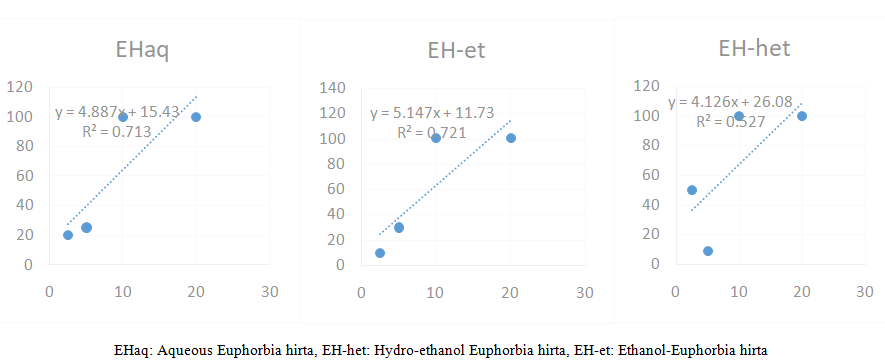
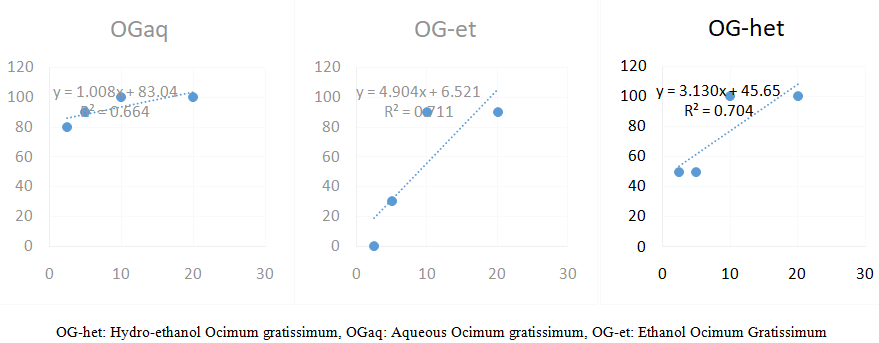
Figure 1 and Figure 2 (Please move Figure 1 and Figure 2 after the paragraph on cytotoxicity) show the results of the toxicity tests of the aqueous, ethanolic and hydro-ethanolic extracts of Euphorbia hirta and Ocimum gratissimum respectively on the larvae of Artemia salina. The results showed a variability in the fatality rate on shrimp larvae of Artemia salina. LC50 lethal concentrations were determined using the linear regression curve equations for each extract. The highest LC50 was obtained with the ethanolic extract of Ocimum gratissimum (8.12±1.05mg/ml) and the lowest with the aqueous extract of Ocimum gratissimum (2.5 mg/ml). It is found that for all the graphs obtained the correlation coefficient R2 is less than 0.8. Referring to the toxicity scale established by Mousseux (1995) 25, extracts with LC50 greater than 0.1 mg/mL are considered to be of no toxicity. Indeed, the extracts tested on Artemia salina were found to be non-toxic at the doses tested. However, the mortality of brine shrimp (Atemia salina) increases as the concentration of extracts increases. The sensitivity of larvae to extracts therefore follows a dose-response relationship.
Vaginal infections are the most common health problem in women. Conventional treatment of these infections is not always effective and refers the population to the use of medicinal plants including Ocimum gratissimum and Euphorbia hirta 7, 12. The objective of this study was to evaluate the antimicrobial potential and the phytochemical and toxic profiles of Ocimum gratissimum and Euphorbia hirta, two medicinal species used in the traditional treatment of infections vaginales au nord-ouest-Bénin. In this study, phytochemical screening performed on powders from the leafy stem of Euphorbia hirta and leaves of Ocimum gratissimum showed that the two plants studied do not have the same phytochemical profile. The presence of triterpenoids, mucilages, alkaloids, free anthracenics, gallic tannins and reducing compounds is evidenced in the two species studied, but neither of them contains cyanogenic derivatives. Flavonoids, catechetical tannins, quinonic derivatives, anthocyanins and leuco-anthocyanins are revealed in Euphorbia hirta but absent in Ocimum gratissimum. While the saponosides were only revealed at the level of Ocimum gratissimum powder. These results are not very similar to those obtained recently by Ndacnou et al., (2020) 26. This difference could probably be explained by the difference between the organs and the botanical and pharmacological characteristics between the two plants used. Other factors that could be responsible for these variations are differences in metabolic mechanisms, the collection area, the nature of the soil, and the stage of development of the plant 27, 28. Secondary metabolites are recognized for their many human biological and physiological activities such as antibacterial, antiviral, antitumor, antifungal activities 29, 30. The presence of these large groups of chemical compounds would therefore be at the origin of the pharmacological properties of these two species of plant and could justify their traditional use against various infectious diseases and especially against vaginal infections in Northern Benin. However, the absence of the cyanogenic derivatives and cardiotonic glycosides shown by the results of the present study is reassuring about their use.
The majority of plant constituents used in the treatment of female genital tract pathologies possess antimicrobial activities 31. In this work, we demonstrated the antimicrobial effect of plants by evaluating their antibacterial activity. The antibacterial activity of the two plant species varies from extract to extract and from one bacterial strain to another. Thus, the antimicrobial activity of extracts of the two species of medicinal plants showed that the extracts had a broad spectrum of antimicrobial activities, inhibiting E. coli, C. freundii, S. marcescens, K. ornithinolytica, E.aerogenes, K.pneumoniae, coagulase-negative Staphylococcus spp and coagulase-postive Staphylococcus spp. These results are consistent with the work of other authors 32, 33. Antibacterial activity is generally correlated with the synthesis of secondary metabolites, including phenolic compounds, tannins, alkaloids, flavonoids, and saponosides that are endowed with antimicrobial properties 34, 35. The antimicrobial potential of Euphorbia hirta and Ocimum gratissimum extracts would therefore be linked to a synergistic effect between the différents phytochemical groups present in this case tannins, flavonoids and triterpenes.
The Minimum Inhibitory Concentrations and the Minimum Bactericidal Concentrations obtained vary according to the type of strain and the type of extract. In this study, the MIC and BMC ranges from 3.1 mg/ml - 50 mg/ml to 6.3 - 50 mg/ml respectively. These relatively low values can be explained by a strong antibacterial activity of the plant species used on the bacterial strains tested. However, the differences observed could be due to the extraction method, the solvents used and the organs of the plants used. As a result, depending on the extraction method, the solvent used and even the organ of the plant, the antimicrobial active ingredients will not have the same concentrations in the extracts 36. These low MIC values obtained in the present study support the idea of the efficacy of the antimicrobial activity of Euphorbia hirta and Ocimum gratissimum in the treatment of infectious diseases. The ratio of the CMB/MIC parameters of the different extracts shows that the hydro-ethanolic extract of Euphorbia hirta exhibits a bacteriostatic effect only on the K. pneumoniae strain. The ethanolic extract of Euphorbia hirta exhibits a bacteriostatic effect on coagulase-positive S. marcescens and Staphylococcus spp., whereas the aqueous extract exhibits a bacteriostatic effect on E. coli, C.freundii, coagulase-negative Staphylococcus spp and Staphylococcus spp strains coagulase-positive. Only the hydro-ethanol extract of Ocimum gratissimum exhibits a bacteriostatic effect on coagulase-negative E. coli and Staphylococcus spp.Work carried out by Oussou et al., (2004) 36 has also shown that ocimum gratissimum has an activity on the in vitro growth of a wide range of bacteria including the genera of Klebsiella, Citrobacter, Enterobacter, Staphylococcus etc. for which bactericidal and bacteriostatic effects were observed depending on the bacterium.
The toxicity assessment of Euphorbia hirta and Ocimum gratissimum extracts on shrimp larvae shows that both plant species do not present toxicity. The highest LC50 was obtained with the ethanolic extract of Ocimum gratissimum (8.12±1.05mg/ml) and the lowest with the aqueous extract of Ocimum gratissimum (2.5 mg/ml). The non-toxic nature of these extracts, revealed by the toxicity test, justifies the results of the phytochemical screening, which showed the absence of cardiotonic glycosides, cyanogenic derivatives and quinonic derivatives, which are generally toxic compounds 37. In addition, these results justify the oral use of these plant species in the treatment of vaginal infections by the population.
The interest of this study was to evaluate the antimicrobial potential and cytotoxicity of two medicinal species traditionally used in the treatment of vaginal infections, in relation to the determination of their phytochemical composition for a better management of vaginal infections. The activities carried out on the different extracts (aqueous, ethanolic and hydro-ethanolic) of Euphorbia hirta and Ocimum gratissimum, reveal a phytochemical composition that justifies their antimicrobial efficacy on the microbial strains tested and an absence of toxicity. These findings could relate to their use in the treatment of vaginal infections. However, further studies on other activities are needed for more scientific evidence.
This study benefited from financial support from the Ecole Normale Supérieure de Natitingou through the “competitive funds” program under the aegis of the rectorate of the National University of Sciences and Technology; Engineering and Mathematics of which the project coordinated by Cyrille A. VODOUNON is a beneficiary. The authors express their deep gratitude to ENS-Natitingou. The authors would also liketo thank professor Abdel Haziz SINA OROU for facilitating manipulations relating to anti-microbial activity at Laboratory of Biology and Molecular Typing in Microbiology, Faculty of Science and Technology, University of Abomey-Calavi.
This work was carried out in collaboration among all authors. Authors AGD, CAV, MADT and AA designed the study, performed the statistical analysis. AGD wrote the protocol, wrote the first draft of the manuscript. AGD, CAV, AA and MADT and managed the analyses of the study. Authors CAV, MADT, TDMA and AA corrected the first version of the manuscript. Authors AGD and TDMA performed the manipulations and collected the Field data and managed the literature searches. All authors read and approved the final manuscript.
Authors have declared that no competing interests exist.
The data underlying this article are available in the article and in its online supplementary material.
| [1] | World Health Organization. Antimicrobial resistance. Regional Office for the Western Pacific, Seventieth Session, Manila, Philippines. P. 2019. | ||
| In article | |||
| [2] | Pellati D., Mylonakis I., Bertoloni G., Fiore C., Andrisani A., Ambrosini G. Genital tract infections and infertility. Eur. J. Obstet. Gynecol. Reprod. Biol., 2008, 140(1): 3-11. | ||
| In article | View Article PubMed | ||
| [3] | Mulu W., Yimer M., Zenebe Y., Abera B. Common causes of vaginal infections and antibiotic susceptibility of aerobic bacterial isolates in women of reproductive age attending at Felegehiwot referral Hospital, Ethiopia: A cross-sectional study. BMC Women’s Health, 2015, 15. | ||
| In article | View Article PubMed | ||
| [4] | Balkus E., Srinivasan S., Anzala O., Kimani J., Andac C., Schwebke J. Impact of periodic presumptive treatment for bacterial vaginosis on the vaginal microbiome among women participating in the preventing vaginal infections trial. Journal of Infectious Diseases. 2017, 215, 723–731. | ||
| In article | View Article PubMed | ||
| [5] | Bilardi E., Walker S., Temple-Smith M., McNair R., Mooney-Somers J., Bellhouse C. The burden of bacterial vaginosis: Women’s experience of the physical, emotional, sexual and social impact of living with recurrent bacterial vaginosis. PLoS One; 2013, 8(9): e74378. | ||
| In article | View Article PubMed | ||
| [6] | Willems HME., Ahmed SS., Liu J., Xu Z., Peters BM. Vulvovaginal Candidiasis: A Current Understanding and Burning Questions. JoF; 2020, 6(1) :27 | ||
| In article | View Article PubMed | ||
| [7] | Palmeira-de-Oliveira R., Palmeira-de-Oliveira A., Martinez-de-Oliveira J. New strategies for local treatment of vaginal infections. Adv. Drug Deliv. Rev. 2015, 92, 105–122. | ||
| In article | View Article PubMed | ||
| [8] | INSAE & ICF. Benin Demographic and Health Survey 2017-2018: Summary Report. Rockville, 2019, Maryland, USA: INSAE and ICF. | ||
| In article | |||
| [9] | Goje O. Presentation of vaginal infections. The MSD manual, 2021, version for the general public. | ||
| In article | |||
| [10] | Superti F., De Seta F. Warding Off Recurrent Yeast and Bacterial Vaginal Infections: Lactoferrin and Lactobacilli. Review. Microorganisms Journal, 2020, 80 (10) 130. | ||
| In article | View Article PubMed | ||
| [11] | Sanogo R., Diallo D., Diarra S., Ekoumou C., Bougoudogo F. Antibacterial and analgesic activity of two traditional recipes used in the treatment of urinary tract infections and cystitis in Mali. Mali Medical, 2006, Volume XXI No. 1. | ||
| In article | |||
| [12] | Dembélé D., Boubacar D., Mahamane H., Claire K., Rokia S. Physicochemical parameters and antibacterial activity of three medicinal plants, used in the management of urinary tract infections in Mali. Journal of the West African Chemical Society, 2022, 051; 10 – 16. | ||
| In article | |||
| [13] | Lègba B., Dougnon V., Ahoyo A., Agbankpè J., Hounmanou G., Aniambossou A. Exploration of the antibacterial and chemical potential of some Beninese pharmacopoiea traditional plants. Microbiol. Medica 32, 2018. | ||
| In article | View Article | ||
| [14] | Gbonsou A., Badou B., Dassou G., Mèdéhouénou E.A. Ethnobotanical knowledge of the Soursop tree (Annona muricata L.) in southern Benin. Journal of Animal & Plant Sciences, 2020, vol.44 (3): 7727-7744. | ||
| In article | |||
| [15] | Fanou A., Klotoe R., Fah L., Dougnon V., Koudokpon C., Toko G., Loko F. Ethnobotanical survey on plants used in the treatment of candidiasis in traditional markets of southern Benin. BMC complementary medicine and therapies, 2020, 20(1), 1-18. | ||
| In article | View Article PubMed | ||
| [16] | Akabassi S., Djossou A., Tchobo F., Tchatcha A., Houénon A., Yovo. Phytochemical screening and evaluation of free radical and antimicrobial activities of Detarium microcarpum organs Guill. & Perr from the Sudanian zone of Benin. Journal of the West African Chemical Society; Ouagadougou Vol. 50, (2021): 68-75. | ||
| In article | |||
| [17] | Dougnon V., Agbodjento E., Hounsa E., Legba B., Deguenon E. An ethnobotanical survey of seventeen plants species used against diarrhoea and other diseases in southern Benin (West Africa). Journal of Biological Research-Bollettino della Società Italiana di Biologia Sperimentale, 2021, 94(1). | ||
| In article | View Article | ||
| [18] | Akoegninou A., van der Burg J., van der Maesen L., Adjakidjè V., Essou P. Flore Analytique du Benin. Université d'Abomey-Calavi, Cotonou, République du Bénin. Cotonou & Wageningen. Backhuys Publishers, 2006; 1034p. | ||
| In article | |||
| [19] | Kuete V., Ngameni B., Fotso C., Kengap R., Tchaleu B., Meyer M., Lall N. Antimicrobial activity of the crude extracts and compounds from Ficus chlamydocarpa and Ficus cordata (Moraceae). Journal of Ethnopharmacology. 2008, 120: 18-24. | ||
| In article | View Article PubMed | ||
| [20] | Houghton P, Raman J. A Laboratory handbook for the fractionation of natural extracts. Chapman et Hall, London. 1998; 199. | ||
| In article | View Article | ||
| [21] | Chabi-Sika K., Sina H., Boya B., Salami HA., Dossou GA., Mama-Sirou I., Dansou G., Socohou A., Nounagnon M., Lehmane H., Adjanohoun A. and Baba-Moussa L. Ethnobotanical Survey and Some Biological Activities of Ageratum conyzoides Collected in Southern-Benin. Int. J. Biochem. Res. Rev. 2023; vol. 32, no. 1, pp. 9-25. | ||
| In article | View Article | ||
| [22] | Amoussa AMO, Sanni A and Lagnika L. Antioxidant activity and the estimation of total phenolic, flavonoid and flavonol contents of the bark extracts of Acacia ataxacantha. J Pharmacogn Phytochem. 2015; 4(2) :172-178. | ||
| In article | |||
| [23] | Kamanzi k. (2002). Plantes médicinales de côte d'Ivoire : investigations phytochimiques guidées par des essais biologiques. Thèse de doctorat, Université de Cocody, Abidjan, p. 176. | ||
| In article | |||
| [24] | Kawsar A., Huq E., Nahar N. Cytotoxicity Assessment of the Aerial Part of Macrotyloma uniflorum Lim. International Journal of Pharmacy, 2008, 4, 297-300pp. | ||
| In article | View Article | ||
| [25] | Mousseux M. Test de toxicité sur les larves d’Artemia salina et d’entretien d’un élevage de balanes, Rapport de stage de deuxième année. Université de la Nouvelle Calédonie, Nouméa, 1995, 75. | ||
| In article | |||
| [26] | Ndacnou K., Pantaleon A., Tchinda S., Mangapche N., Keumedjio F. Phytochemical study and anti-oomycete activity of Ageratum conyzoides Linnaeus. Industrial Crops and Products. 2020; Volume 153, 112589. | ||
| In article | View Article | ||
| [27] | Adjou ES, Aoumanou MM. Efficacité des extraits de plantes dans la lutte contre les moisissures toxinogènes isolées de l’arachide en post-récolte au Bénin. J Appl Biosci. 2013; 70 :5555-66. | ||
| In article | View Article | ||
| [28] | Loe, G. E., Ngaba, G. P., Kamdom, M., Mpondo, E. M., & Dibong, S. D. Evaluation des activités anti-inflammatoire et antiradicalaire de l’extrait au vin de palme des feuilles de Phragmanthera capitata (Sprengel) S. Balle (Loranthaceae) récoltées sur Psidium guajava au Cameroun. International Journal of Biological and Chemical Sciences, 2018; 12 (1), 233-243. | ||
| In article | View Article | ||
| [29] | Wande, O. M., & Babatunde, S. B. In vitro screening of ten Combretaceae plants for antimalarial activities applying the inhibition of bêta-hematin formation. International Journal of Biological and Chemical Sciences, 2017; 11 (6), 2971-2981. | ||
| In article | View Article | ||
| [30] | Truong, D. H., Nguyen, D. H., Ta, N. T. A., Bui, A. V., Do, T. H. & Nguyen, H. C. Evaluation of the use of different solvents for phytochemical constituents, antioxidants, and in vitro anti-inflammatory activities of Severinia buxifolia. Journal of food quality, 2019 (8178294), 1-10. | ||
| In article | View Article | ||
| [31] | Wuyep PA, Musa HD, Ezemokwe GC, Nyam DD, SilaGyang MD. Phytochemicals from Ageratum conyzoides L. Extracts and their Antifungal Activity against Virulent Aspergillus spp. J Academia Industrial Res. 2017; 6(3):32-39. | ||
| In article | |||
| [32] | Omole OA, Oladipo JO, Orimolade BO, Ajetomobi OO, Olorumaiye KS, Dosumu OO. Anti-Oxidant and Anti-Microbial Activities of the Root and Leaf Extracts of Ageratum conyzoides L. Agriculture Conspectus Scientificus; 2019; 84(3):295-304. | ||
| In article | |||
| [33] | Koné, C. Plantes médicinales dans la prise en charge des infections urinaires (Doctoral dissertation, Thèse de Doctorat en pharmacie. Université des Sciences, des Techniques et Technologies de Bamako, Mali), 2020; 98p. | ||
| In article | |||
| [34] | Djague, F., Lunga, P. K., Toghueo, K. R. M., Melogmo, D. Y. K., & Fekam, B. F. Garcinia kola (Heckel) and Alchornea cordifolia (Schumach. & Thonn.) Müll. Arg. from Cameroon possess potential antisalmonellal and antioxidant properties. Journals PLoS One, 2020; 15 (8), e0237076. | ||
| In article | View Article PubMed | ||
| [35] | Triaux, Z. Développement de méthodes d’extraction et d’analyse de molécules terpéniques à activité anti-inflammatoire (Doctoral dissertation, Thèse de Doctorat en Chimie analytique, Université de Strasbourg, France), 2019; 280p. | ||
| In article | |||
| [36] | Oussou K. R., Coffi K., Nathalie G., Séri Y., Gérard K., Mireille D.,Yao T. N., Gilles F. & Jean-Claude C. Activités antibactériennes des huiles essentielles de trois plantes aromatiques de Côte d'Ivoire, C-R Chimie 7 : 2004; 1081-1086. | ||
| In article | View Article | ||
| [37] | Houngbeme G., Gandonou C., Yehouenou B., Kpoviessi S.D.S. Phytochemical analysis, toxicity and antibacterial activity of Benin medicinal plants extract used in the treatment of sexually transmitted infections associated with HIV/AIDS. International Journal of Pharmaceutical Sciences Research: 2014; 1739-1745. | ||
| In article | |||
Published with license by Science and Education Publishing, Copyright © 2025 Atindéhou Gabin DOSSOU, Cyrille Alodé VODOUNON, Michéline AGASSOUNON DJIKPO TCHIBOZO, Tenor Dias-Mendel ALLODE, Arlette ADJATIN and Haziz Abdel SINA OROU
 This work is licensed under a Creative Commons Attribution 4.0 International License. To view a copy of this license, visit
http://creativecommons.org/licenses/by/4.0/
This work is licensed under a Creative Commons Attribution 4.0 International License. To view a copy of this license, visit
http://creativecommons.org/licenses/by/4.0/
| [1] | World Health Organization. Antimicrobial resistance. Regional Office for the Western Pacific, Seventieth Session, Manila, Philippines. P. 2019. | ||
| In article | |||
| [2] | Pellati D., Mylonakis I., Bertoloni G., Fiore C., Andrisani A., Ambrosini G. Genital tract infections and infertility. Eur. J. Obstet. Gynecol. Reprod. Biol., 2008, 140(1): 3-11. | ||
| In article | View Article PubMed | ||
| [3] | Mulu W., Yimer M., Zenebe Y., Abera B. Common causes of vaginal infections and antibiotic susceptibility of aerobic bacterial isolates in women of reproductive age attending at Felegehiwot referral Hospital, Ethiopia: A cross-sectional study. BMC Women’s Health, 2015, 15. | ||
| In article | View Article PubMed | ||
| [4] | Balkus E., Srinivasan S., Anzala O., Kimani J., Andac C., Schwebke J. Impact of periodic presumptive treatment for bacterial vaginosis on the vaginal microbiome among women participating in the preventing vaginal infections trial. Journal of Infectious Diseases. 2017, 215, 723–731. | ||
| In article | View Article PubMed | ||
| [5] | Bilardi E., Walker S., Temple-Smith M., McNair R., Mooney-Somers J., Bellhouse C. The burden of bacterial vaginosis: Women’s experience of the physical, emotional, sexual and social impact of living with recurrent bacterial vaginosis. PLoS One; 2013, 8(9): e74378. | ||
| In article | View Article PubMed | ||
| [6] | Willems HME., Ahmed SS., Liu J., Xu Z., Peters BM. Vulvovaginal Candidiasis: A Current Understanding and Burning Questions. JoF; 2020, 6(1) :27 | ||
| In article | View Article PubMed | ||
| [7] | Palmeira-de-Oliveira R., Palmeira-de-Oliveira A., Martinez-de-Oliveira J. New strategies for local treatment of vaginal infections. Adv. Drug Deliv. Rev. 2015, 92, 105–122. | ||
| In article | View Article PubMed | ||
| [8] | INSAE & ICF. Benin Demographic and Health Survey 2017-2018: Summary Report. Rockville, 2019, Maryland, USA: INSAE and ICF. | ||
| In article | |||
| [9] | Goje O. Presentation of vaginal infections. The MSD manual, 2021, version for the general public. | ||
| In article | |||
| [10] | Superti F., De Seta F. Warding Off Recurrent Yeast and Bacterial Vaginal Infections: Lactoferrin and Lactobacilli. Review. Microorganisms Journal, 2020, 80 (10) 130. | ||
| In article | View Article PubMed | ||
| [11] | Sanogo R., Diallo D., Diarra S., Ekoumou C., Bougoudogo F. Antibacterial and analgesic activity of two traditional recipes used in the treatment of urinary tract infections and cystitis in Mali. Mali Medical, 2006, Volume XXI No. 1. | ||
| In article | |||
| [12] | Dembélé D., Boubacar D., Mahamane H., Claire K., Rokia S. Physicochemical parameters and antibacterial activity of three medicinal plants, used in the management of urinary tract infections in Mali. Journal of the West African Chemical Society, 2022, 051; 10 – 16. | ||
| In article | |||
| [13] | Lègba B., Dougnon V., Ahoyo A., Agbankpè J., Hounmanou G., Aniambossou A. Exploration of the antibacterial and chemical potential of some Beninese pharmacopoiea traditional plants. Microbiol. Medica 32, 2018. | ||
| In article | View Article | ||
| [14] | Gbonsou A., Badou B., Dassou G., Mèdéhouénou E.A. Ethnobotanical knowledge of the Soursop tree (Annona muricata L.) in southern Benin. Journal of Animal & Plant Sciences, 2020, vol.44 (3): 7727-7744. | ||
| In article | |||
| [15] | Fanou A., Klotoe R., Fah L., Dougnon V., Koudokpon C., Toko G., Loko F. Ethnobotanical survey on plants used in the treatment of candidiasis in traditional markets of southern Benin. BMC complementary medicine and therapies, 2020, 20(1), 1-18. | ||
| In article | View Article PubMed | ||
| [16] | Akabassi S., Djossou A., Tchobo F., Tchatcha A., Houénon A., Yovo. Phytochemical screening and evaluation of free radical and antimicrobial activities of Detarium microcarpum organs Guill. & Perr from the Sudanian zone of Benin. Journal of the West African Chemical Society; Ouagadougou Vol. 50, (2021): 68-75. | ||
| In article | |||
| [17] | Dougnon V., Agbodjento E., Hounsa E., Legba B., Deguenon E. An ethnobotanical survey of seventeen plants species used against diarrhoea and other diseases in southern Benin (West Africa). Journal of Biological Research-Bollettino della Società Italiana di Biologia Sperimentale, 2021, 94(1). | ||
| In article | View Article | ||
| [18] | Akoegninou A., van der Burg J., van der Maesen L., Adjakidjè V., Essou P. Flore Analytique du Benin. Université d'Abomey-Calavi, Cotonou, République du Bénin. Cotonou & Wageningen. Backhuys Publishers, 2006; 1034p. | ||
| In article | |||
| [19] | Kuete V., Ngameni B., Fotso C., Kengap R., Tchaleu B., Meyer M., Lall N. Antimicrobial activity of the crude extracts and compounds from Ficus chlamydocarpa and Ficus cordata (Moraceae). Journal of Ethnopharmacology. 2008, 120: 18-24. | ||
| In article | View Article PubMed | ||
| [20] | Houghton P, Raman J. A Laboratory handbook for the fractionation of natural extracts. Chapman et Hall, London. 1998; 199. | ||
| In article | View Article | ||
| [21] | Chabi-Sika K., Sina H., Boya B., Salami HA., Dossou GA., Mama-Sirou I., Dansou G., Socohou A., Nounagnon M., Lehmane H., Adjanohoun A. and Baba-Moussa L. Ethnobotanical Survey and Some Biological Activities of Ageratum conyzoides Collected in Southern-Benin. Int. J. Biochem. Res. Rev. 2023; vol. 32, no. 1, pp. 9-25. | ||
| In article | View Article | ||
| [22] | Amoussa AMO, Sanni A and Lagnika L. Antioxidant activity and the estimation of total phenolic, flavonoid and flavonol contents of the bark extracts of Acacia ataxacantha. J Pharmacogn Phytochem. 2015; 4(2) :172-178. | ||
| In article | |||
| [23] | Kamanzi k. (2002). Plantes médicinales de côte d'Ivoire : investigations phytochimiques guidées par des essais biologiques. Thèse de doctorat, Université de Cocody, Abidjan, p. 176. | ||
| In article | |||
| [24] | Kawsar A., Huq E., Nahar N. Cytotoxicity Assessment of the Aerial Part of Macrotyloma uniflorum Lim. International Journal of Pharmacy, 2008, 4, 297-300pp. | ||
| In article | View Article | ||
| [25] | Mousseux M. Test de toxicité sur les larves d’Artemia salina et d’entretien d’un élevage de balanes, Rapport de stage de deuxième année. Université de la Nouvelle Calédonie, Nouméa, 1995, 75. | ||
| In article | |||
| [26] | Ndacnou K., Pantaleon A., Tchinda S., Mangapche N., Keumedjio F. Phytochemical study and anti-oomycete activity of Ageratum conyzoides Linnaeus. Industrial Crops and Products. 2020; Volume 153, 112589. | ||
| In article | View Article | ||
| [27] | Adjou ES, Aoumanou MM. Efficacité des extraits de plantes dans la lutte contre les moisissures toxinogènes isolées de l’arachide en post-récolte au Bénin. J Appl Biosci. 2013; 70 :5555-66. | ||
| In article | View Article | ||
| [28] | Loe, G. E., Ngaba, G. P., Kamdom, M., Mpondo, E. M., & Dibong, S. D. Evaluation des activités anti-inflammatoire et antiradicalaire de l’extrait au vin de palme des feuilles de Phragmanthera capitata (Sprengel) S. Balle (Loranthaceae) récoltées sur Psidium guajava au Cameroun. International Journal of Biological and Chemical Sciences, 2018; 12 (1), 233-243. | ||
| In article | View Article | ||
| [29] | Wande, O. M., & Babatunde, S. B. In vitro screening of ten Combretaceae plants for antimalarial activities applying the inhibition of bêta-hematin formation. International Journal of Biological and Chemical Sciences, 2017; 11 (6), 2971-2981. | ||
| In article | View Article | ||
| [30] | Truong, D. H., Nguyen, D. H., Ta, N. T. A., Bui, A. V., Do, T. H. & Nguyen, H. C. Evaluation of the use of different solvents for phytochemical constituents, antioxidants, and in vitro anti-inflammatory activities of Severinia buxifolia. Journal of food quality, 2019 (8178294), 1-10. | ||
| In article | View Article | ||
| [31] | Wuyep PA, Musa HD, Ezemokwe GC, Nyam DD, SilaGyang MD. Phytochemicals from Ageratum conyzoides L. Extracts and their Antifungal Activity against Virulent Aspergillus spp. J Academia Industrial Res. 2017; 6(3):32-39. | ||
| In article | |||
| [32] | Omole OA, Oladipo JO, Orimolade BO, Ajetomobi OO, Olorumaiye KS, Dosumu OO. Anti-Oxidant and Anti-Microbial Activities of the Root and Leaf Extracts of Ageratum conyzoides L. Agriculture Conspectus Scientificus; 2019; 84(3):295-304. | ||
| In article | |||
| [33] | Koné, C. Plantes médicinales dans la prise en charge des infections urinaires (Doctoral dissertation, Thèse de Doctorat en pharmacie. Université des Sciences, des Techniques et Technologies de Bamako, Mali), 2020; 98p. | ||
| In article | |||
| [34] | Djague, F., Lunga, P. K., Toghueo, K. R. M., Melogmo, D. Y. K., & Fekam, B. F. Garcinia kola (Heckel) and Alchornea cordifolia (Schumach. & Thonn.) Müll. Arg. from Cameroon possess potential antisalmonellal and antioxidant properties. Journals PLoS One, 2020; 15 (8), e0237076. | ||
| In article | View Article PubMed | ||
| [35] | Triaux, Z. Développement de méthodes d’extraction et d’analyse de molécules terpéniques à activité anti-inflammatoire (Doctoral dissertation, Thèse de Doctorat en Chimie analytique, Université de Strasbourg, France), 2019; 280p. | ||
| In article | |||
| [36] | Oussou K. R., Coffi K., Nathalie G., Séri Y., Gérard K., Mireille D.,Yao T. N., Gilles F. & Jean-Claude C. Activités antibactériennes des huiles essentielles de trois plantes aromatiques de Côte d'Ivoire, C-R Chimie 7 : 2004; 1081-1086. | ||
| In article | View Article | ||
| [37] | Houngbeme G., Gandonou C., Yehouenou B., Kpoviessi S.D.S. Phytochemical analysis, toxicity and antibacterial activity of Benin medicinal plants extract used in the treatment of sexually transmitted infections associated with HIV/AIDS. International Journal of Pharmaceutical Sciences Research: 2014; 1739-1745. | ||
| In article | |||