Chrysophyllum lacourtianum is a species of wild fruit tree in the Sapotaceae family, widely distributed in the Congo, whose fruits commonly known as bamou are consumed locally by the population. Despite the abundance of this resource in the Congo, there is little data on its physicochemical and nutritional composition. The objective of this study was to characterize the physicochemical properties of fruits from the two varieties of Chrysophyllum lacourtianum (Fl and Fm) collected from the localities of Mpouya/Makotipoko and Lekana/Djambala. Basic analyses (moisture content, lipids, protein, ash, carbohydrates, fiber, pH, titratable acidity, ascorbic acid, sucrose and glucose, and energy value) of the Fl and Fm pulps of Chrysophyllum lacourtianum were conducted. Analysis of the results for pH and titratable acidity showed that the pulps of both varieties are acidic, which contributes to their stability and shelf life. The vitamin content is also comparable in both varieties. However, Fl appears to be generally richer and more nutritious, with a higher concentration of fats, fiber, sugars, and minerals, as well as a higher energy density. Fm, on the other hand, are juicier and have a softer, lighter flesh. These results show that both varieties have nutritional value and offer potential for both consumption and food processing.
Since ancient times, humankind has constantly sought to meet its needs by drawing on nature to provide for its nutritional, medicinal and other requirements. Plants are an essential resource for people around the world in a number of areas, such as physical development, nutrition and health 1.
With the growing trend towards healthy eating, nutrition has become a key concern for both consumers and the food industry. Against the backdrop of a global economic crisis, promoting foods with significant nutritional value may offer a solution to the problem of malnutrition facing developing countries such as the Congo. Among the many fruit-bearing plant species with nutritional and medicinal potential, Chrysophyllum lacourtianum holds a special place. It is a wild fruit-bearing plant species belonging to the Sapotaceae family, which grows mainly in the tropical rainforest biome of Central Africa 2, 3. In the Congo, it is widely found throughout the country, particularly in the localities of Pouya/Makotipoko and Lekana/Djambala. The fruit of this plant, commonly known as bamou, is consumed locally by the population; however, despite the abundance of this resource, there is little data on its physicochemical and nutritional composition. This lack of information is hindering efforts to promote and integrate these fruits into local diets, as knowledge of the chemical and nutritional composition of local fruits is an essential step in encouraging their consumption. Furthermore, for many households, selling these fruits at local markets represents a significant source of supplementary income. This study is part of an effort to contribute to the ongoing initiatives in the food sector in the Congo; it focuses on the physicochemical characterization of fruits from two varieties of Chrysophyllum lacourtianum found in the localities of Mpouya/Makotipoko and Lekana/Djambala.

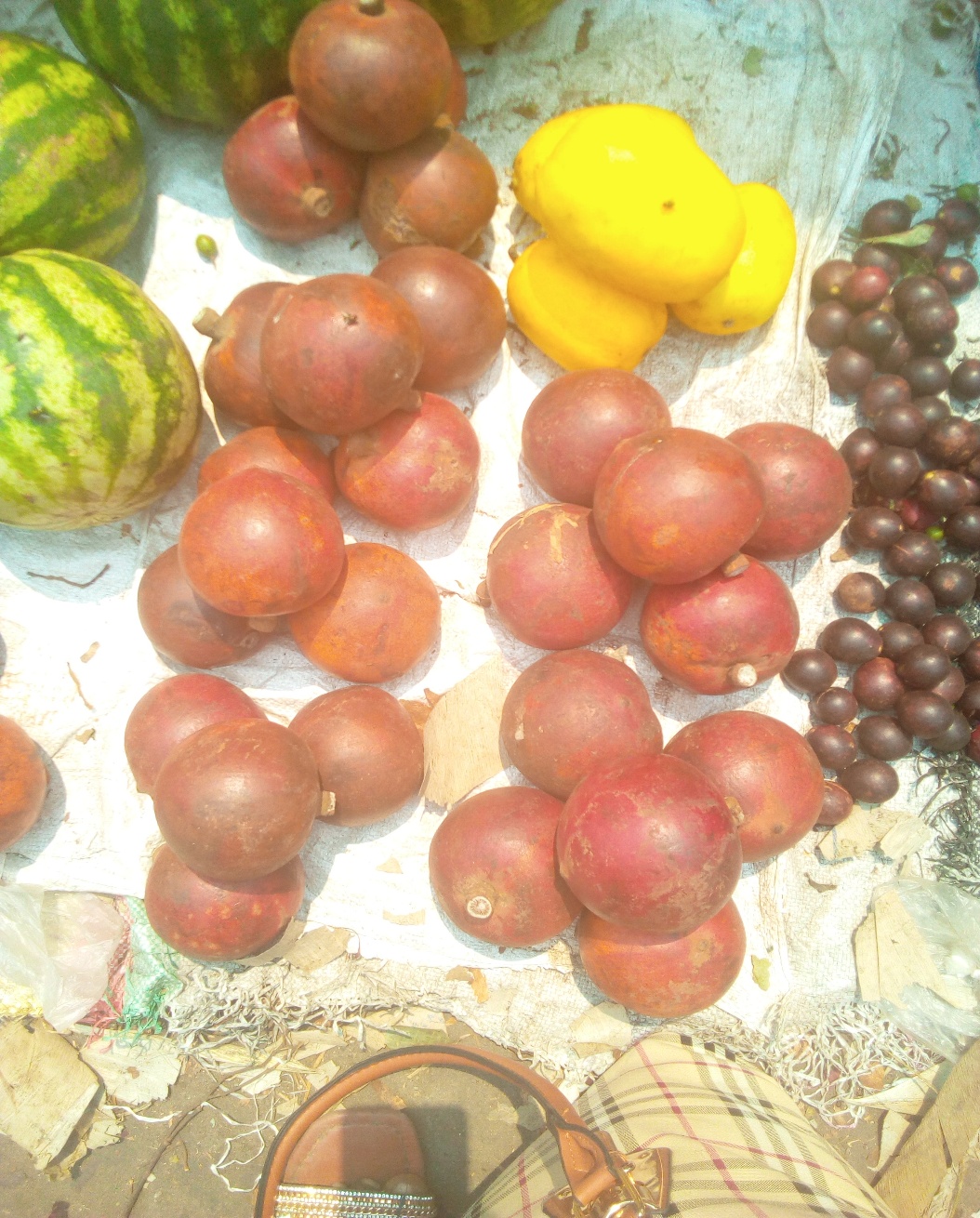
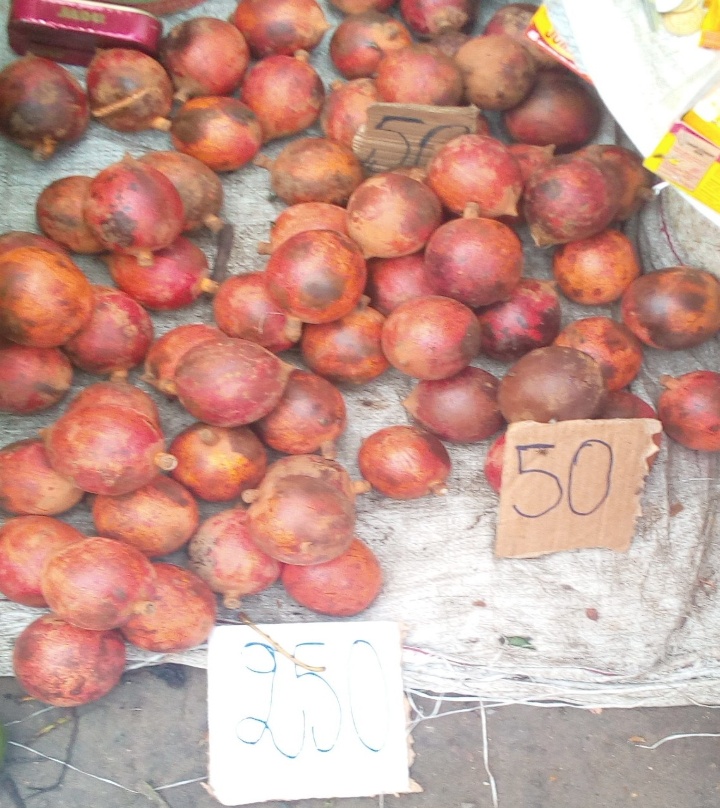
The plant material used in this study consisted of fruits of C. lacourtianum (Bamou) sourced from various markets in Brazzaville (Congo) (Figure 1 and Figure 2).
Where:
√ Fl: large fruit of C. lacourtianum
√ Fm: fruit medium-sized fruit of C. lacourtianum
2.2. MethodsThe samples were purchased at two markets in Brazzaville and, based on their origin, were classified into two varieties, namely: large fruits (Fl) from the Texaco-Tsiémé market, sourced from Djambala in the Plateau district, and medium-sized fruits (Fm) from the Lycéé Thomas Sankara market, sourced from Makotipoko and Mpouya in the Nkéni-Alima district. The samples collected were taken back to the laboratory of the National Institute for Research in Engineering Science, Innovation, and Technology (INRSIIT) for further analysis.
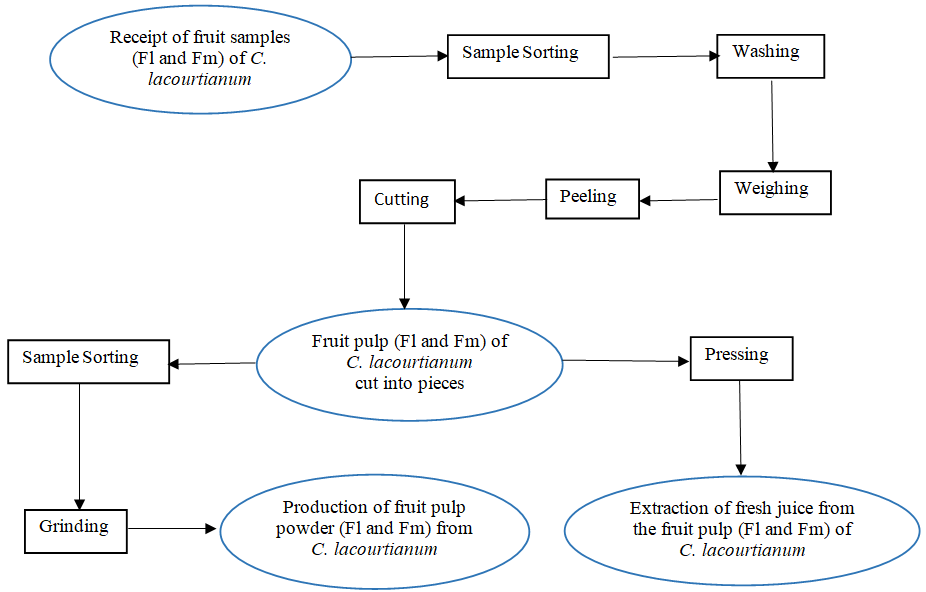
The samples were prepared according to the different types of analyses performed, as shown in the diagram below (Figure 3):

The description of the steps in this diagram for preparing fruit pulp samples from Chrysophyllum lacourtianum outlines the following phases:
• Fruit Receipt: Chrysophyllum lacourtianum fruit is received for processing.
• Sorting: The fruit is sorted to separate sound fruit from damaged fruit.
• Washing: This step cleans the fruit and removes impurities.
• Weighing: The fruit is weighed to establish a baseline.
• Peeling: The skin is removed to retain only the pulp.
• Cutting: The pulp is cut into small pieces
• Pressing: The small pieces of fruit are blended in a blender to extract the juice, which is then used for any further processing
• Drying: The small pieces of pulp are dried in a solar dryer for 48 hours.
• Grinding: The small pieces of dried pulp are ground using a grinder to produce a fine powder
• Storage: The powder is packed into glass jars and stored for use in any future projects
The following basic analyses were conducted: moisture content, fat content, protein content, ash content, carbohydrate content, fiber content, and pH, as well as titrable acidity, ascorbic acid content, sugar content (sucrose, glucose), and energy value. These analyses were conducted in accordance with the standards established by the AOAC (Association of Official Analytical Chemists); and they were performed three times.
The water content of various fresh samples of Chrysophyllum lacourtianum fruit pulp was determined using the AOAC 925.10.1990 method 4. 10 g of various fresh samples of Chrysophyllum lacourtianum fruit pulp are placed in a pre-weighed porcelain crucible, which is then placed in an oven at 105 °C for approximately 24 hours to dry. The samples are then cooled in a desiccator to prevent any reabsorption of moisture, and weighed again. The lossin mass recorded represents the water initially contained in the products.
 | (1) |
Where:
√ mf : fresh mass of the sample;
√ ms: dry mass of the sample.
The fat content of the Chrysophyllum lacourtianum fruit pulp samples was determined using the Soxhlet extraction method in accordance with AOAC 945.16 5.
2 g of powder from each sample of Chrysophyllum lacourtianum fruit pulp is taken, wrapped in filter paper, and then placed in the Soxhlet extraction cartridges. 100 mL of hexane is poured into empty beakers whose masses have been previously determined (denoted as m₀), and the extraction is carried out for 1 hour and 30 minutes. After extraction, the beakers containing the lipid extract are placed in a desiccator to cool in the open air for a few minutes, then weighed, and their mass (m2) recorded. The fat content is determined using the following formula:
 | (2) |
Where:
√ m0: mass of the empty beaker;
√ m1: mass of the sample before extraction;
√ m2: mass of the fat obtained after drying in an oven.
The protein content of various pulp samples from Chrysophyllum lacourtianum fruit was determined using the Kjeldahl method in accordance with ISO 1871 :2009 6. Into the beakers, 0.5 g of powder from each of the Chrysophyllum lacourtianum fruit pulp samples – which had been previously dried and ground – was added, together with two Kjeldahl TCT tablets and one Kjeldahl ST tablet to act as catalysts. Subsequently, 5 mL of hydrogen peroxide was added to minimise fumes during hot mineralisation with 20 mL of 98 per cent concentrated sulphuric acid and three (3) glass beads to reduce thermal shock during heating. The matra is placed on the mineralisation rack (VELP SCIENTIFICA DK 6) and cold-mineralised for 30 minutes. The mineralisation process is then continued at a temperature of 420 °C for one hour, resulting in a green solution. After a cooling period of 30 minutes, the solution in the flasks becomes increasingly clear. This mineralisation stage releases ammonium (NH₄⁺), which is then distilled to produce ammonia (NH₃) containing nitrogen. The hot distillation was carried out for 5 minutes using a distiller coupled with an electronic titrator. Distilled water, followed by caustic soda (30.5 per cent NaOH), was automatically added to the flask containing the mineralised sample in order to recover the nitrogen in the form of ammonia (NH₃). The ammonia is then trapped in a boric acid solution, causing the pH to rise from acidic to basic.
The nitrogen content (%) was determined directly on the titrator, and the protein content was then calculated using the following formula.
 | (3) |
With:
√ % N: Nitrogen content;
√ 6.25: Nitrogen-to-protein conversion factor.
The ash content is determined using the standard method AOAC, 923.03 7. 1 g of each of the dried Chrysophyllum lacourtianum fruit pulp samples was hydrolysed in a flask fitted with a reflux condenser, using 100 mL of 0.255 N sulphuric acid, with the digestion maintained for 30 minutes. After filtration, the residue is thoroughly washed with 100 mL of 0.313 N sodium hydroxide, then digested again for 30 minutes. The resulting mixture is filtered and washed several times with distilled water until neutrality is reached, then rinsed with ethanol and acetone. The wet residue thus obtained is then transferred to a pre-weighed, tared crucible and placed in an oven at 105 °C for 2 hours. After being allowed to cool initially in a desiccator and then weighed, it is calcined in an oven at 600 °C for 30 minutes, then cooled again in the desiccator and weighed one final time. The ash content is then calculated using the following formula.
 | (4) |
Where:
√  : mass in grams of the incineration crucible;
√  : mass in grams of the watch glass loaded with the test sample;
√  : mass in grams of the watch glass loaded with the ash.
The carbohydrate content of Chrysophyllum lacourtianum pulp samples is calculated by subtraction, using the difference between the various contents of lipids, proteins, ash, and water (H₂O) according to the following formula:
 | (5) |
Determination of the fibre content of Chrysophyllum lacourtianum pulp samples in accordance with AOAC 962.09 8. 1g of each dried fruit pulp sample of Chrysophyllum lacourtianum was hydrolyzed in a flask fitted with a reflux condenser using 100 mL of 0.255 N sulfuric acid, with the digestion maintained for 30 minutes. After filtration, the residue is thoroughly washed with 100 mL of 0.313N sodium hydroxide, then digested again for 30 minutes. The resulting mixture is filtered and washed several times with distilled water until it is neutral, then rinsed with ethanol and acetone. The wet residue obtained in this way is then transferred to a pre-weighed, tared crucible and placed in an oven at 105 °C for 2 hours. After being cooled once in a desiccator and then weighed, it is calcined in an oven at 600 °C for 30 minutes, then cooled again in the desiccator and weighed one last time.
The fibre content is then calculated using the following formula:
Where:
√ P1: mass of the crucible
√ P2: mass of the crucible with the sample
√ P3: mass of the sample in the crucible after incineration and drying
The pH (hydrogen ion concentration) of the various samples was determined in accordance with the ISO 1842:1991 9. After calibrating the pH meter with buffer solutions, 10 ml of various samples of Chrysophyllum lacourtianum fruit pulp juice are filtered into a beaker, and the electrode is then immersed in the filtered juice solution. The pH reading is taken directly once the value displayed on the screen has stabilised.
The method used to determine the titrable acidity of Chrysophyllum lacourtianum fruit pulp is the one described in ISO 750:1998 / AFNOR V05-101 10, 11. In a 250-ml Erlenmeyer flask, 25 ml of each sample of pulp juice from Chrysophyllum lacourtianum fruit is added, and the flask is filled with distilled water to the mark. After homogenization, 50 mL of the diluted solution is withdrawn, and a few drops of 1% phenolphthalein are added. The resulting mixture is titrated with a 0.1 N NaOH solution until a pink color persists for 30 seconds, and the titrable acidity is calculated using the following formula:
 | (7) |
Where:
√ V1: volume of NaOH used (mL);
√ N: normality of NaOH (0.1 N);
√ V: volume of the test sample.
Vitamin C (ascorbic acid) in various samples of fresh Chrysophyllum lacourtianum pulp was determined by indirect iodometric titration, according to the methods described by EASTON and MACK (1980), BUCAREST et al. (1993), BRITISH (1988), and CHRISTEL BERTOLDI (2006) 12. Iodine and sodium thiosulphate solutions of 5.10⁻³ mol/L and the starch paste are prepared in advance, and the fresh pulp of the pressed Chrysophyllum lacourtianum fruit is filtered to obtain the juice; The pulp of the Chrysophyllum lacourtianum fruit is pressed; 5 mL of juice, corresponding to V₀, is collected and placed in an Erlenmeyer flask containing 10 mL of iodine solution V1. After letting it stand for 5 minutes, 4 drops of starch paste solution are added to the solution. The graduated burette is filled to the zero mark with the thiosulfate solution, and the excess iodine is titrated with the thiosulfate solution until the solution decolorizes. The volume of thiosulfate added, denoted as V₂E, and the amount of vitamin C0 present in the sample are calculated using the following formula:
Where:
√ C1: concentration of the iodine solution;
√ C2: concentration of the thiosulphate solution.
Depending on the type of parameters programmed, the refractive index and the sucrose and glucose contents were determined. Using an automatic digital refractometer (SGW-733), a few drops of pulp juice from each of the Chrysophyllum lacourtianum pulp samples are placed on the refractometer’s prism until the value is displayed based on the programmed parameters.
The energy value of a food represents the amount of energy it provides to the body when consumed, and it comes from the three macronutrients (protein, carbohydrates, and fats).
It was calculated by multiplying the average values for carbohydrates, fats, and proteins by the Atwater factors of 4, 9, and 4, respectively, and is expressed in kilocalories (kcal) 13. Consequently, the energy value of the fruit pulp of Chrysophyllum lacourtianum was determined using the following formula:
 | (9) |
The results obtained during the study of the physico-chemical characteristics were subjected to statistical analysis. The calculation of means and standard deviations from triplicate trials, based on a normal distribution of the values relating to the parameters determined using Microsoft Excel 2013.
The results obtained for the various physicochemical parameters considered are listed in Table 1.
Ø Water content (%)
The moisture content of the various samples was found to be 76 %for Fl pulp and 80 % for FM pulp: Although the Fm value is higher than that of Fl, both varieties of Chrysophyllum lacourtianum have a high water content, as is the case with most fleshy fruits 14, 15. This difference in juice content between the two varieties means that the Fm fruit is juicier and has a smoother texture. By contrast, the pulp of Fl, which has a slightly higher dry matter content, is denser, more stable and better suited to processing (purée, jam, fruit paste). These water contents are somewhat similar to those of Manguifera indica, which contains an average of 78.85 % water, and other wild fruits such as the fruits of Vitex doniana, with an average of 76.19 % water, and Borassus aethiopum, with 79.13 % and 81.38 % 16, 17, 18. This high water content limits the storage life of these fruits, making them highly perishables.
Ø Fat content (%)
The fat content was found to be 15.5 % for Fl pulp and 12.2 % for Fm pulp. These high fat contents give the Fl and Fm pulps of Chrysophyllum lacourtianum a creamier, smoother, more nutritious and higher-calorie consistency. When compared with other wild fruits such as those of Borassus aethiopum, Vitellaria paradoxa, Parkia biglobosa, Saba comonsis, Clitandra cumulosa and Anisophyllea quangensis, with 0.16 %, 2.36 %, 2.36 %, 0.72 %, 0.79 % and 2.3 % respectively; Both varieties of Chrysophyllum lacourtianum fruit (FL, FM) are rich in lipids and may also contribute to a substantial intake of lipids 18, 19, 20.
Ø Protein content (%)
The results for protein content show that the pulps of the Fl and Fm varieties of Chrysophyllum lacourtianum have the same value of 1.6 %. This low percentage is typical of tropical fruits. This is the case for the fruits of Neocarya macrophylla, Olax subscorpioides and Vitex doniana, with 1.90 %, 1.96 % and 1.2 % respectively 19, 21, 22.
Ø Ash content (%)
The ash content of Chrysophyllum lacourtianum was found to be 3.06 % for the Fl pulp and 2.77 % for the Fm pulp. Bien que la pulpe Fl présente une teneur élevée à celle de Fm, ces proportions font de ces fruits une source non négligeable de minéraux, importants pour la nutrition humaine. These values are roughly the same as those for the fruit of Neocarya macrophylla (3.60 %) 23.; However, these were higher than those obtained from other wild fruits of Vitex donania sweet, which yielded values of 1.5 %, 1.43 %, 1.06 % and those of Clitandra cymulosa, at 1.35 % [16,19,20, 21,24].
Ø Carbohydrate content (%)
Carbohydrates are the fruit’s main source of readily available energy and contribute to its characteristic sweet taste. The table shows that the pulp of Fl has a carbohydrate content of 3.84 % and that of Fm is 3.43 %. The total carbohydrate content is slightly higher in Fl pulp than in Fm pulp. This slight difference gives Fl pulp a sweeter taste, which could offset its more pronounced acidity.
Ø Fibre content (%)
Fl pulp has a fibre content of 12.7 %, whilst that of Fm is 5.2 %. Fl pulp stands out clearly due to its much higher fibre content than that of Fm. Dietary fibre plays an important role in digestive health. Une consommation de fibres alimentaires permet de diminuer le taux de cholestérol-LDL, considéré comme un facteur à risque des maladies cardio-vasculaires 25, 26. This high fibre content gives Fl a considerable functional advantage. On the other hand, a high proportion of fibre makes the texture denser and less fluid, which could influence the sensory perception of Fm, whose pulp is more tender and softer than that of Fl. Compared with other fruits such as Carica papaya (1.5), Manguifera indica (1.8) and Vitis vinifera (1.0), the pulp of both the Fl and Fm varieties of Chrysophyllum lacourtianum is rich in fibre 27.
Ø pH
The pulp samples from Fl and Fm have average pH values of 2.93 and 3.10 respectively. It can be seen that the Fl value is higher than that of Fm, but both varieties are more acidic than some wild fruits, such as those of Vitex doniana, which have higher pH values ranging from 4.5 to 5.11 28. This more pronounced acidity gives the fruit of Chrysophyllum lacourtianum a tangier flavour and acts as a natural preservative by limiting microbial growth.
Ø Titratable acidity
The titratable acidity levels were found to be 360 mm H+ / 100 ml for Fl pulp and 240 mm H+ / 100 ml for Fm pulp. These results show the correlation between the pH value and the titratable acidity of the two pulps; When free acidity increases, the pH decreases. This confirms that the pulp of Chrysophyllum lacourtianum ‘Fl’ is more acidic than that of ‘Fm’. This high acidity can contribute to the microbiological stability and preservation of the product. It also enhances the flavour, adding a characteristic tangy note that can balance out the sweetness of sugars. Compared with other fruits, these values are higher than those of Adansonia digitata (106.06) and Tamarindus indica (160.83) 29.
Ø Brix degrees (Bx°)
The results show that the sucrose content of the pulps is 3.365 Bx° and 2.985 Bx° for Fl and Fm respectively; and the glucose content was 3.10 Bx° for Fl and 2.930 Bx° for Fm. It can be seen that these levels are higher in the pulp of Fl than in that of Fm, but their proportions are balanced. This, combined with their high acidity, gives these fruits (Fl, Fm) a harmonious, sweet-and-tart flavour, which is often sought after in tropical fruits; This is because these sugars contribute directly to the sweet taste and energy content. These levels are higher than those found in Tamarindus indica, which are 2.07 for glucose and 1.21 for sucrose 29.
Ø Refractive index
This parameter reflects the concentration of dissolved solutes (sugars, acids, salts, etc.) in the pulp. Measurements of the refractive index of Fl and Fm yielded values of 1.33641 and 1.337065 respectively. These refractive indices are very similar; the difference observed is minimal, which indicates that the overall concentration of dissolved compounds is almost identical. This index confirms that, despite differences in water and sugar content, the overall composition of soluble solids remains balanced between the two samples.
Ø Vitamin C content
Vitamin C (ascorbic acid) is a key antioxidant that plays a vital role in preventing oxidative stress, strengthening the immune system and protecting cells. The vitamin C (ascorbic acid) concentrations are 0.00325 mol/L for Fl and 0.00275 mol/L for Fm. It can be seen that the Fl variety contains a higher amount of vitamin C than the Fm variety. Overall, these values indicate greater antioxidant capacity for both varieties, as vitamin C itself has antioxidant properties 30.
Ø Energy content (kcal/100 g)
The energy value of Fl is 161.26 kcal/100 g, compared with 129.92 kcal/100 g for Fl. These figures are consistent with the observed chemical composition: Fl, which is higher in fat and fibre, is, as one would expect, more energy-dense. This higher calorie content reflects a higher nutritional density, making Fl better suited to increased energy requirements (children, athletes, rural populations). Fm, which is lighter and more watery, would be better suited to refreshing consumption. These values are quite high compared with those of Vitellaria paradoxa fruit, which has 111.75 kcal/100 g 19.
This study, which focuses on the physico-chemical characterisation of the fruit pulp of Chrysophyllum lacourtianum (Fl, Fm), has enabled an assessment of the nutritional potential of two types of fruit varieties: Large-sized fruit (Fl) and medium-sized fruit (Fm). Analyses of pH and titratable acidity showed that the pulp of both varieties is acidic, which contributes to their stability and shelf life. Fl are characterised by a higher concentration of lipids, fibre, sugars and minerals, as well as a higher energy density. Fm, on the other hand, have a higher water content and a softer, lighter pulp. Although Fl offer greater potential for consumption and food processing; These results show that both varieties have definite nutritional value. The information obtained can therefore serve as a basis for future research aimed at making better use of and enhancing the value of this local resource, thereby contributing to the development of local products in the region.
| [1] | Scalbert, A. (1991). Antimicrobial properties of tannins. Phytochemistry, 30(12), 3875 3883. | ||
| In article | View Article | ||
| [2] | De Wildeman, E. (1905–1907). Mission Émile Laurent (1903–1904). Bruxelles: Imprimerie F. Vanbuggenhoudt. | ||
| In article | |||
| [3] | Wilks, C., & Issembé, Y. (2000). Les arbres de la Guinée Équatoriale: Guide pratique d’identification: région continentale. Bata, Guinée Équatoriale: Projet CUREF, 546 p. | ||
| In article | |||
| [4] | Association of Official Analytical Chemists (AOAC). (1990). Official Method 925.10: Solids (Total) and Loss on Drying (Moisture) in Flour: Air Oven Method. In Official Methods of Analysis of the Association of Official Analytical Chemists (15th ed.). Arlington, VA: AOAC. | ||
| In article | |||
| [5] | Association of Official Analytical Chemists (AOAC). (1990). Official Method 945.16: Oil in Cereal Adjuncts: Petroleum Ether Extraction Method. In Official Methods of Analysis of the Association of Official Analytical Chemists (15th ed.). Arlington, VA: AOAC. | ||
| In article | |||
| [6] | ISO. (2009). ISO 1871:2009. Food and feed products — General guidelines for the determination of nitrogen by the Kjeldahl method. 2nd ed. Geneva: International Organization for Standardization. | ||
| In article | |||
| [7] | AOAC International. (1997). Official Method 923.03: Ash of Flour: Direct Method. In Official Methods of Analysis of AOAC International (16th ed.). Gaithersburg, MD: AOAC International. | ||
| In article | |||
| [8] | AOAC INTERNATIONAL. (2023). Official Method 962.09: Fiber (Crude) in Animal Feed and Pet Food: Ceramic Fiber Filter Method. In G. W. Latimer Jr. (Ed.), Official Methods of Analysis of AOAC INTERNATIONAL (22nd ed.). Rockville, MD: AOAC INTERNATIONAL. | ||
| In article | |||
| [9] | ISO. (1991). ISO 1842:1991. Fruit and vegetable products — Determination of pH. 2nd ed. Geneva: International Organization for Standardization. | ||
| In article | |||
| [10] | ISO. (1998). ISO 750:1998. Fruit and vegetable products — Determination of titratable acidity. 2nd ed. Geneva: International Organization for Standardization. | ||
| In article | |||
| [11] | AFNOR. (1974). NF V05-101. Produits dérivés des fruits et légumes — Détermination de l’acidité titrable. Paris: Association Française de Normalisation. | ||
| In article | |||
| [12] | EASTON et MACK., (1980); Bucarest et Al., (1993); British., (1988); Christel Bertoldi, Mai., (2006): Easton, Pennsylvania: Mack Publishing Co., 1980. Remington's Pharmaceutical Sciences. 16th ed. p. 1213. | ||
| In article | |||
| [13] | Gemede, H. F., Haki, G. D., Beyene, F., Woldegiorgis, A. Z., & Rakshit, S. K. (2015). Proximate, mineral, and antinutrient compositions of indigenous okra (Abelmoschus esculentus) pod accessions: implications for mineral bioavailability. Food Science & Nutrition, 4(2), 223–233. | ||
| In article | View Article PubMed | ||
| [14] | Ekué, M. R. M., Codjia, J. T. C., Fonton, K. B., & Assogbadjo, A. E. (2008). Diversité et préférences en ressources forestières alimentaires végétales des peuples Otammari de la région de Boukoumbé au Nord-Ouest du Bénin. Bulletin de la Recherche Agronomique du Bénin, 60, 1–12. | ||
| In article | |||
| [15] | Balla, A., & Baragé, M. (2008). Analyses physico-chimiques de la pulpe et caractérisation de la fraction lipidique des amandes du fruit du pommier de Cayor (Neocarya macrophylla Sabine). Bulletin de la Recherche Agronomique du Bénin, 61, septembre 2008. | ||
| In article | |||
| [16] | Elie Baudelaire DJANTOU NJANTOU : Optimisation du broyage des mangues séchées (Manguifera indica var Kent) : Influence sur les propriétés physicochimiques et fonctionnelles des poudres obtenues Thèse soutenue à l’INPL le 23 novembre 2006. | ||
| In article | |||
| [17] | Kone Haffiata Soro, Kone Kisselmina Youssouf, Akaki Koffi David, Soro Doudjo, Elleingang Fattoh Eric, Assidjo Nogbou Emmanuel, 2018: Caractérisation Biochimique De La Pulpe des Fruits Du Prunier Noir (Vitex Doniana) De La Côte d’Ivoire) 260p European Scientific Journal January 2018 edition Vol.14, No.3 ISSN: 1857 – 7881 (Print) e - ISSN 1857- 7431. | ||
| In article | View Article | ||
| [18] | Ahmed A., Alhadji D., Tchiegang C., Saïdou C. (2010). Physico-chemical properties of palmyra palm (Borassus aethiopum Mart.) fruits from Northern Cameroon. African Journal of Food Science, 4(3), 115–119. | ||
| In article | |||
| [19] | Makalao M. M., Savadogo A., Zongo C., Traoré A. S. (2015). Composition nutritionnelle de 10 fruits sauvages consommés dans trois départements du Tchad. International Journal of Biological and Chemical Sciences, 9(5), 2385–2400. | ||
| In article | View Article | ||
| [20] | Enzonga J., Ossoko J. P. L., Okandza Y., Makimouha-Kali A., Tsieri M. (2019). Biochemical characterization of four less exploited edible fruits in Congo-Brazzaville: Passiflora edulis f. flavicarpa, Aframomum alboviolaceum, Saba comorensis and Clitandra cymulosa. African Journal of Agricultural Research, 14(34), 1913–1920. | ||
| In article | View Article | ||
| [21] | Ngoulou E. L. (2003). Contribution à la valorisation des fruits de Vitex doniana (prunes noires): analyses physico-chimiques et essais de fabrication des jus. Maîtrise, Sciences et Techniques, Département Biochimie/Microbiologie (C.R.S.B.A.N), 33 p. | ||
| In article | |||
| [22] | Loura b. b., Mapongmetsem.P. M.N.N Nkongmeneck B. A.? Foko.J: Caractérisation physico-chimique des fruits de quatre essences locales : Vitex doniana sweet, vitex madienisoliv, olax subscorpiodes oliv et ximenia americana L. 2003 JOURNAL OF SCIENCES VOL 3 NO 3 (2003). | ||
| In article | |||
| [23] | Balla, A., & Baragé, M. (2008). Analyses physico-chimiques de la pulpe et caractérisation de la fraction lipidique des amandes du fruit du pommier de Cayor (Neocarya macrophylla Sabine). Bulletin de la Recherche Agronomique du Bénin, 61, septembre 2008. | ||
| In article | |||
| [24] | Herzog F. M. (1992). Étude biochimique et nutritionnelle des plantes alimentaires sauvages dans le Sud du V-Baoulé, Côte d'Ivoire. École Polytechnique Fédérale Zürich, Suisse, 8 p. | ||
| In article | |||
| [25] | Brown L., Rosner B., Willett W. M., Sacks F. M. (1999). Cholesterol-lowering effects of dietary fiber: a meta-analysis. The American Journal of Clinical Nutrition, 69, 30–42. | ||
| In article | View Article PubMed | ||
| [26] | Luo X. W. Q., Zheng B., Lin L., Zheng X. J. (2017). Hydration properties and binding capacities of dietary fibers from bamboo shoot shell and its hypolipidemic effects in mice. Food and Chemical Toxicology, 109, 1003–1009. | ||
| In article | View Article PubMed | ||
| [27] | Pamplona-Roger JD. Enciclopedia de los alimentos y su poder curativo: Tratado de bromatología y dietoterapia. Madrid: Safeliz; 2007. | ||
| In article | |||
| [28] | Kone Haffiata Soro, Kone Kisselmina Youssouf, Akaki Koffi David, Soro Doudjo, Elleingang Fattoh Eric, Assidjo Nogbou Emmanuel. (2018). Caractérisation biochimique de la pulpe des fruits du prunier noir (Vitex doniana) de la Côte d’Ivoire. European Scientific Journal, 14(3), 252. | ||
| In article | View Article | ||
| [29] | Kouassi, K. A. (2019). Étude de la valeur nutritive de la pulpe de fruits de trois espèces fruitières sauvages comestibles en Côte d’Ivoire et caractérisation biochimique et sensorielle des nectars dérivés : Adansonia digitata L., Tamarindus indica L. et Parkia biglobosa L. Thèse de doctorat, Université Jean Lorougnon Guédé de Daloa, Côte d’Ivoire. | ||
| In article | |||
| [30] | Carr A, Frei B. Does vitamin C act as a pro-oxidant under physiological conditions? The FASEB Journal. 1999;13(9):1007–1024. | ||
| In article | View Article PubMed | ||
Published with license by Science and Education Publishing, Copyright © 2026 Roniche NGUIE, Jean Paul Latran OSSOKO, Michel ELENGA, Reyes Herdenn GAMPOULA, Arnaud Wenceslas Geoffroy TAMBA SOMPILA, Sylvia Pétronille NTSOSSANI, Benie Chanceline IBARA BONDZO, Claudia BASSOUBA and Lea NKOUKOU
 This work is licensed under a Creative Commons Attribution 4.0 International License. To view a copy of this license, visit
http://creativecommons.org/licenses/by/4.0/
| [1] | Scalbert, A. (1991). Antimicrobial properties of tannins. Phytochemistry, 30(12), 3875 3883. | ||
| In article | View Article | ||
| [2] | De Wildeman, E. (1905–1907). Mission Émile Laurent (1903–1904). Bruxelles: Imprimerie F. Vanbuggenhoudt. | ||
| In article | |||
| [3] | Wilks, C., & Issembé, Y. (2000). Les arbres de la Guinée Équatoriale: Guide pratique d’identification: région continentale. Bata, Guinée Équatoriale: Projet CUREF, 546 p. | ||
| In article | |||
| [4] | Association of Official Analytical Chemists (AOAC). (1990). Official Method 925.10: Solids (Total) and Loss on Drying (Moisture) in Flour: Air Oven Method. In Official Methods of Analysis of the Association of Official Analytical Chemists (15th ed.). Arlington, VA: AOAC. | ||
| In article | |||
| [5] | Association of Official Analytical Chemists (AOAC). (1990). Official Method 945.16: Oil in Cereal Adjuncts: Petroleum Ether Extraction Method. In Official Methods of Analysis of the Association of Official Analytical Chemists (15th ed.). Arlington, VA: AOAC. | ||
| In article | |||
| [6] | ISO. (2009). ISO 1871:2009. Food and feed products — General guidelines for the determination of nitrogen by the Kjeldahl method. 2nd ed. Geneva: International Organization for Standardization. | ||
| In article | |||
| [7] | AOAC International. (1997). Official Method 923.03: Ash of Flour: Direct Method. In Official Methods of Analysis of AOAC International (16th ed.). Gaithersburg, MD: AOAC International. | ||
| In article | |||
| [8] | AOAC INTERNATIONAL. (2023). Official Method 962.09: Fiber (Crude) in Animal Feed and Pet Food: Ceramic Fiber Filter Method. In G. W. Latimer Jr. (Ed.), Official Methods of Analysis of AOAC INTERNATIONAL (22nd ed.). Rockville, MD: AOAC INTERNATIONAL. | ||
| In article | |||
| [9] | ISO. (1991). ISO 1842:1991. Fruit and vegetable products — Determination of pH. 2nd ed. Geneva: International Organization for Standardization. | ||
| In article | |||
| [10] | ISO. (1998). ISO 750:1998. Fruit and vegetable products — Determination of titratable acidity. 2nd ed. Geneva: International Organization for Standardization. | ||
| In article | |||
| [11] | AFNOR. (1974). NF V05-101. Produits dérivés des fruits et légumes — Détermination de l’acidité titrable. Paris: Association Française de Normalisation. | ||
| In article | |||
| [12] | EASTON et MACK., (1980); Bucarest et Al., (1993); British., (1988); Christel Bertoldi, Mai., (2006): Easton, Pennsylvania: Mack Publishing Co., 1980. Remington's Pharmaceutical Sciences. 16th ed. p. 1213. | ||
| In article | |||
| [13] | Gemede, H. F., Haki, G. D., Beyene, F., Woldegiorgis, A. Z., & Rakshit, S. K. (2015). Proximate, mineral, and antinutrient compositions of indigenous okra (Abelmoschus esculentus) pod accessions: implications for mineral bioavailability. Food Science & Nutrition, 4(2), 223–233. | ||
| In article | View Article PubMed | ||
| [14] | Ekué, M. R. M., Codjia, J. T. C., Fonton, K. B., & Assogbadjo, A. E. (2008). Diversité et préférences en ressources forestières alimentaires végétales des peuples Otammari de la région de Boukoumbé au Nord-Ouest du Bénin. Bulletin de la Recherche Agronomique du Bénin, 60, 1–12. | ||
| In article | |||
| [15] | Balla, A., & Baragé, M. (2008). Analyses physico-chimiques de la pulpe et caractérisation de la fraction lipidique des amandes du fruit du pommier de Cayor (Neocarya macrophylla Sabine). Bulletin de la Recherche Agronomique du Bénin, 61, septembre 2008. | ||
| In article | |||
| [16] | Elie Baudelaire DJANTOU NJANTOU : Optimisation du broyage des mangues séchées (Manguifera indica var Kent) : Influence sur les propriétés physicochimiques et fonctionnelles des poudres obtenues Thèse soutenue à l’INPL le 23 novembre 2006. | ||
| In article | |||
| [17] | Kone Haffiata Soro, Kone Kisselmina Youssouf, Akaki Koffi David, Soro Doudjo, Elleingang Fattoh Eric, Assidjo Nogbou Emmanuel, 2018: Caractérisation Biochimique De La Pulpe des Fruits Du Prunier Noir (Vitex Doniana) De La Côte d’Ivoire) 260p European Scientific Journal January 2018 edition Vol.14, No.3 ISSN: 1857 – 7881 (Print) e - ISSN 1857- 7431. | ||
| In article | View Article | ||
| [18] | Ahmed A., Alhadji D., Tchiegang C., Saïdou C. (2010). Physico-chemical properties of palmyra palm (Borassus aethiopum Mart.) fruits from Northern Cameroon. African Journal of Food Science, 4(3), 115–119. | ||
| In article | |||
| [19] | Makalao M. M., Savadogo A., Zongo C., Traoré A. S. (2015). Composition nutritionnelle de 10 fruits sauvages consommés dans trois départements du Tchad. International Journal of Biological and Chemical Sciences, 9(5), 2385–2400. | ||
| In article | View Article | ||
| [20] | Enzonga J., Ossoko J. P. L., Okandza Y., Makimouha-Kali A., Tsieri M. (2019). Biochemical characterization of four less exploited edible fruits in Congo-Brazzaville: Passiflora edulis f. flavicarpa, Aframomum alboviolaceum, Saba comorensis and Clitandra cymulosa. African Journal of Agricultural Research, 14(34), 1913–1920. | ||
| In article | View Article | ||
| [21] | Ngoulou E. L. (2003). Contribution à la valorisation des fruits de Vitex doniana (prunes noires): analyses physico-chimiques et essais de fabrication des jus. Maîtrise, Sciences et Techniques, Département Biochimie/Microbiologie (C.R.S.B.A.N), 33 p. | ||
| In article | |||
| [22] | Loura b. b., Mapongmetsem.P. M.N.N Nkongmeneck B. A.? Foko.J: Caractérisation physico-chimique des fruits de quatre essences locales : Vitex doniana sweet, vitex madienisoliv, olax subscorpiodes oliv et ximenia americana L. 2003 JOURNAL OF SCIENCES VOL 3 NO 3 (2003). | ||
| In article | |||
| [23] | Balla, A., & Baragé, M. (2008). Analyses physico-chimiques de la pulpe et caractérisation de la fraction lipidique des amandes du fruit du pommier de Cayor (Neocarya macrophylla Sabine). Bulletin de la Recherche Agronomique du Bénin, 61, septembre 2008. | ||
| In article | |||
| [24] | Herzog F. M. (1992). Étude biochimique et nutritionnelle des plantes alimentaires sauvages dans le Sud du V-Baoulé, Côte d'Ivoire. École Polytechnique Fédérale Zürich, Suisse, 8 p. | ||
| In article | |||
| [25] | Brown L., Rosner B., Willett W. M., Sacks F. M. (1999). Cholesterol-lowering effects of dietary fiber: a meta-analysis. The American Journal of Clinical Nutrition, 69, 30–42. | ||
| In article | View Article PubMed | ||
| [26] | Luo X. W. Q., Zheng B., Lin L., Zheng X. J. (2017). Hydration properties and binding capacities of dietary fibers from bamboo shoot shell and its hypolipidemic effects in mice. Food and Chemical Toxicology, 109, 1003–1009. | ||
| In article | View Article PubMed | ||
| [27] | Pamplona-Roger JD. Enciclopedia de los alimentos y su poder curativo: Tratado de bromatología y dietoterapia. Madrid: Safeliz; 2007. | ||
| In article | |||
| [28] | Kone Haffiata Soro, Kone Kisselmina Youssouf, Akaki Koffi David, Soro Doudjo, Elleingang Fattoh Eric, Assidjo Nogbou Emmanuel. (2018). Caractérisation biochimique de la pulpe des fruits du prunier noir (Vitex doniana) de la Côte d’Ivoire. European Scientific Journal, 14(3), 252. | ||
| In article | View Article | ||
| [29] | Kouassi, K. A. (2019). Étude de la valeur nutritive de la pulpe de fruits de trois espèces fruitières sauvages comestibles en Côte d’Ivoire et caractérisation biochimique et sensorielle des nectars dérivés : Adansonia digitata L., Tamarindus indica L. et Parkia biglobosa L. Thèse de doctorat, Université Jean Lorougnon Guédé de Daloa, Côte d’Ivoire. | ||
| In article | |||
| [30] | Carr A, Frei B. Does vitamin C act as a pro-oxidant under physiological conditions? The FASEB Journal. 1999;13(9):1007–1024. | ||
| In article | View Article PubMed | ||