This study aims to evaluate the effect of soaking three types of flour, based on white and yellow hybrid corn 'Zea mays (L.)' and millet 'Pennisetum glaucum (L.)', on physicochemical parameters. The soaking times were 0; 6; 12; 24; 48; 72, and 168 hours for the corn varieties, and 0 and 6 hours for the millet. Two corn flours from grains soaked for 168 hours were produced, one of which was marked by the addition of potash. In total, 18 flours were produced. The analyzed physicochemical parameters showed a significant decrease, particularly after 168 hours of soaking. The minimum and maximum values were observed in the pH of white flour (4.73%) and the ash content of yellow flour (75%), respectively. Similarly, the protein, lipid, and carbohydrate contents decreased significantly. A significant decrease in carbohydrate content of yellow flour (77.28%) is observed. Adding potash further reduces protein, lipid, and carbohydrate levels. In white flour, significant decreases in content were observed for magnesium (91.10%), manganese (64.32%), and zinc (81.32%) without the addition of potash. However, a significant increase in iron (146.13%) and calcium (78.39%) content is observed in yellow flour. Similarly, increases in pH and ash content are observed in potash flours. A significant increase was observed in the potassium content of white flour (120%). For millet flour, reductions were predominantly observed in the carbohydrate (12.03%), potassium (32.72%), and fiber (33.61%) contents. The nutritional profile of flours varies depending on the technique used, with soaking having an impact on their biochemical composition.
Cereals are monocotyledons belonging mainly to the Poaceae or grass family, which is sometimes associated with other plants, referred to by some as pseudo-cereals, such as buckwheat, quinoa, amaranth, and chia 1. The term ‘cereal’ is derived from the Latin word ‘cerealis’ relating to Ceres, the Roman goddess of harvests and agriculture. It means ‘a grain’ which is botanically a type of fruit called a caryopsis 2. This term was adopted in the mid-18th century to specifically refer to edible seeds that can be ground into flour. Cereals are plants grown for their starchy grains, which are used for human or animal consumption 1. Excluding rice, global cereal production for the 2023-2024 season is estimated at 2.306 million tons, an increase of 1.7% compared to the previous season 3.
In Burkina Faso, as in other Sahelian countries, agricultural production is dominated by cereals 4. Agriculture is the key sector of the economy employing 81% of the population living in households that practice agriculture. In the Central Plateau, South-Central, and Eastern regions, the population of agricultural households represents more than 95% of their respective populations 5. According to the quarterly food security bulletin for Burkina Faso published in March 2024, cereal production is estimated at 5,3147,924 tons.
Cereals form the basis of the population's diet and are important for human and animal nutrition due to their grain composition 6, 7, 8, 9, 10. They are composed of water, micronutrients, anti-nutritional factors, and mainly macronutrients 11. Macronutrients are composed of carbohydrates (50 to 80% of their weight), proteins (5 to 6%), and lipids (1 to 10%), respectively. Whole grains are an important source of minerals (phosphorus, calcium, magnesium, potassium, iron, zinc and copper) 1.5 to 2.5%, and vitamins, particularly thiamine, and riboflavin 12. Due to their high starch content, cereal grains are an essential source of energy in the diet.
For human consumption, cereals are generally eaten in the form of tô, gappal, galette, zoom-koom, couscous, porridge, akassa, and alcoholic or non-alcoholic drink 13, 14.
To obtain a diverse range of foods, cereals are processed to reduce the grains into flour. This product is a fundamental ingredient of culinary traditions worldwide. It plays an indispensable role in the diet of almost all cultures and is an essential component of traditional and modern gastronomy due to its versatility and nutritional value 15. Flour is mainly obtained using artisanal or semi-artisanal methods in unsanitary conditions by millers with relatively low levels of education 16. The technology varies depending on the end use, but all processes involve common steps, such as winnowing, dehusking, soaking, drying, milling, and packaging 13. Various physical and chemical changes and interactions are expected during these processes, as they further affect the nutritional, textural, sensory, and many other qualities of the products 17. Xu and Chang 18 state that soaking cereals and legumes is a widely used technique at home and industrially to soften the texture of foods. A survey conducted in Ouagadougou also showed that the unitary operation of soaking alone or combined with another substance remains the one that varies according to the production diagrams used 19.
Given the variability of the applied technologies, it would be more appropriate to examine some physicochemical parameters of flours according to the production diagrams used. It is in this perspective that this study was conducted, with the main objective of highlighting the effect of soaking cereal grains on the physicochemical parameters of flours.
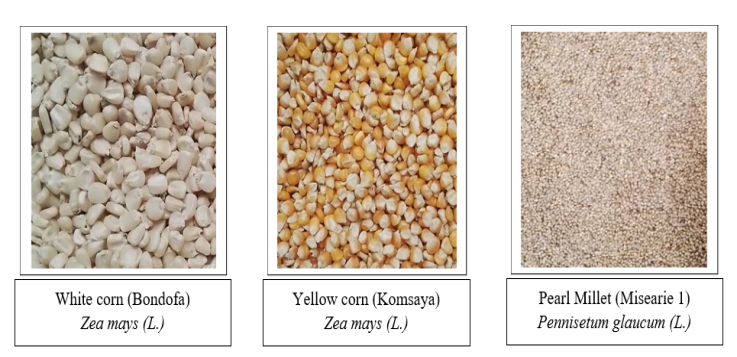
The varieties used were produced in 2023 in the Guiriko region. These are high-yielding hybrid varieties of maize and maize and millet, respectively, from the species Zea mays (L) an and the Pennisetum glaucum (L.). These varieties were produced by the Institute of Environment and Agricultural Research of Burkina Faso (INERA). They are highly appreciated for their very high yield. These are Komsaya and Bondofa for white and yellow maize, and Misearie 1 for millet (Figure 1). The names Komsaya. Bondofa, and Misearie 1 are local designations assigned to each variety.


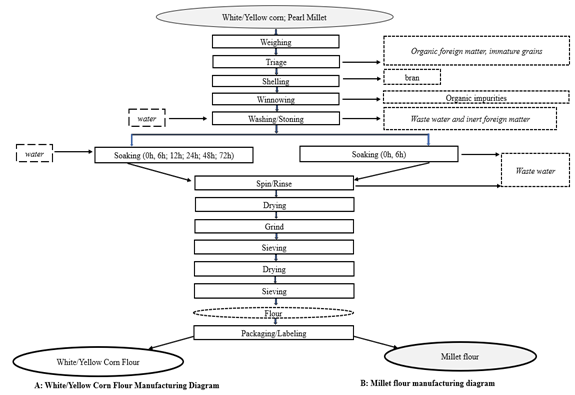
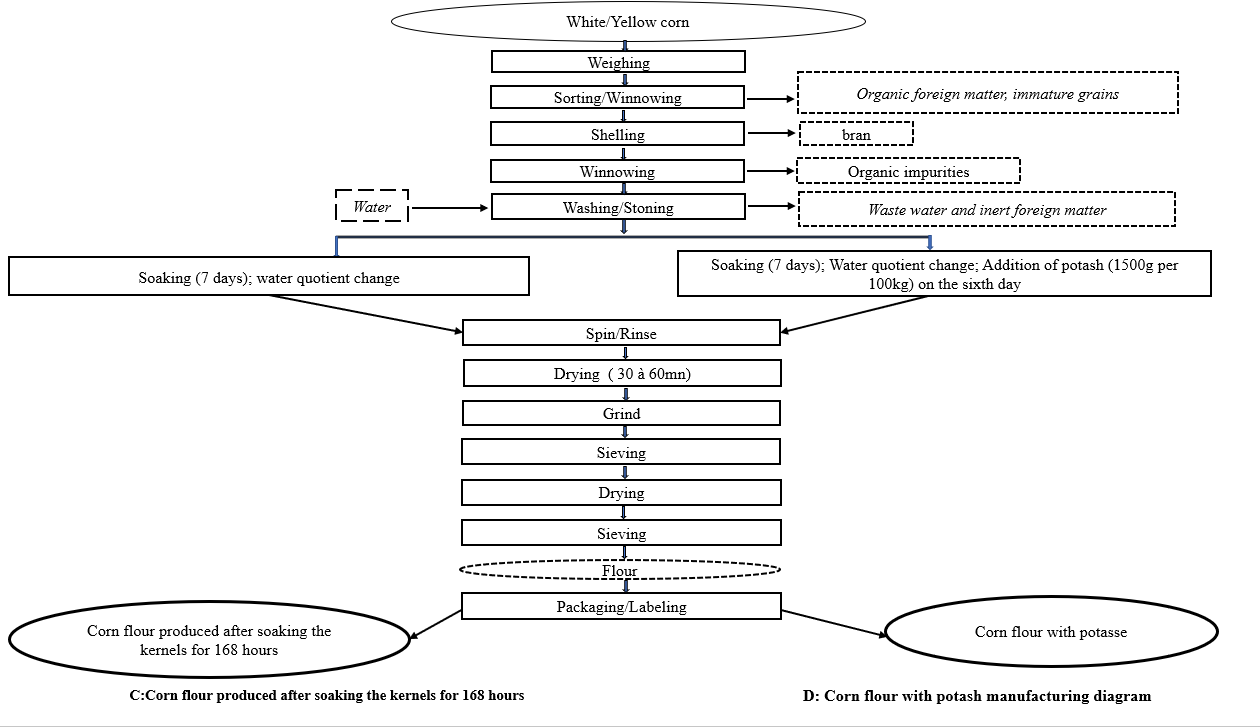
The maize and millet grains used to produce the flours are thoroughly cleaned to remove impurities and then soaked for varying lengths of time. The flours obtained result from different soaking times, either alone or combined with the addition of potash. The soaking water used comes from the main supply and is changed every 24 hours. The different technologies used in the production of the various flours are illustrated by the production diagrams below, shown in Figure 2 and Figure 3.
3.1. Receipt and Preparation of CerealsEach variety of cereal has been received, sorted, and cleaned to remove impurities (organic and inorganic foreign matter, damaged grains, etc.).
3.2. Hulling and WinnowingThe grains were hulled to remove the outer husks and any remaining traces of the cob, and then winnowed to remove any remaining debris.
3.3. WashingThe hulled grains were washed and then spun dry to remove any remaining bran. They were then spun dry again and lightly dried (for around 30 minutes).
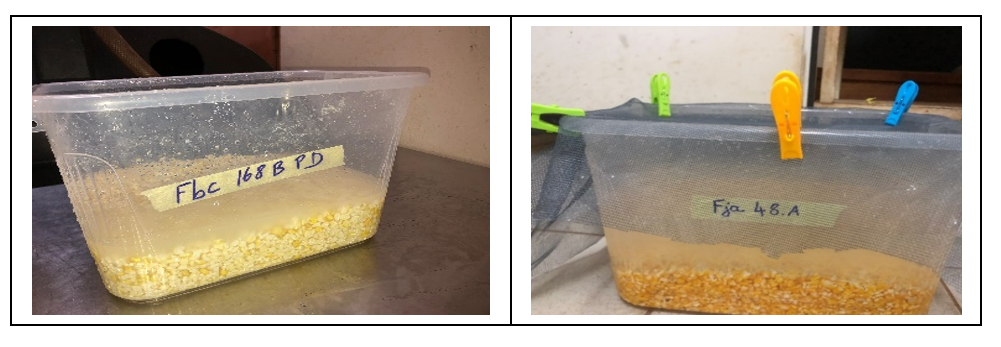
3.4. SoakingFor each batch of flour produced, 2.70 kg of grain was weighed and subjected to varying soaking times: 0 hours, 6 hours, 12 hours, 24 hours, 48 hours, 72 hours and 168 hours (Figure 4). The production of potash-treated flours required the addition of 37.5 g of potash (Figure 4).

After the required soaking time, the grains were drained and then dried for about an hour. This step removed excess moisture before milling. The rapid drying prevented the maize from spoiling and ensured efficient milling.
3.6. GrindingAfter drying, the grains were ground using an Engelberg-type mill to produce flour. The dry flour (0 hours of soaking) was obtained by washing the grains and grinding them immediately afterwards.
3.7. First SievingOnce ground, the flour was sieved through a fine sieve to remove any large clumps. This sieving process resulted in a fine, uniform flour.
3.8. Second DryingThe sieved flours were dried on racks for 3 days in solar dryers. This drying process removed any residual moisture from the flour, making it easier to store.
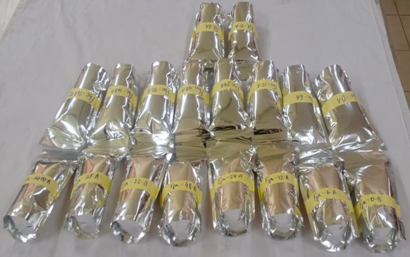
3.9. Second Sieving and PackagingThe resulting products were sieved again to improve their fineness and consistency. In addition, the flours were packaged. A total of 18 flours were produced (Figure 5). They were stored in plastic barrels at room temperature in the laboratory.
The water content of the flours was determined using the AOAC (1990) standard method 20. This involved drying 5 g of flour at a temperature between 103°C and 105°C until a constant weight was obtained, with the water content corresponding to the change in weight of the flour during the operation according to the formula:
 | (1) |
Pe = test load, Po = empty weight of the nacelles, Pf = final weight (nacelle + test load)
4.2. Ash ContentThe ash content was determined in accordance with ISO 2171 (2007) 21. The ash was obtained by differential weighing of a sample after calcination in a muffle furnace (Nabertherm) at 550°C for 4 hours. The calculation was performed using the following formula:
 | (2) |
Pf = final weight (basket + test socket); Pv = Empty weight of the basket; Pe = Test socket.
4.3. pH MeasurementThe pH of the flours was determined by measuring a homogeneous solution of flour and physiological water using a digital pH meter (WTW pH 340) previously calibrated with phosphate pH 7 and acetate pH 4 buffer solutions at room temperature.
4.4. Determination of AcidityThe acidity of the flour was determined in accordance with ISO 7305: 1998 22. It was determined by titration of a solution obtained by dissolving 10 g of flour in 50 ml of distilled water in an Erlenmeyer flask in the presence of phenolphthalein. Sodium hydroxide (0.1N) was used as the titration solution. The amount of lactic acid present was determined using the following formula:
 | (3) |
Eq a.l: Lactic acid equivalent; V: volume of NaOH required to achieve the pH change (in ml); MW: molecular weight of lactic acid (90 g/mol); PE: test sample weight in grams (10 g).
4.5. Protein ContentTotal protein content was determined using the Kjeldahl method for measuring total nitrogen content (AOAC. 1984) 23. This involves mineralizing the flour in concentrated sulfuric acid (98%), followed by distillation of the mineralized product and titration of the distillate using sulfuric acid in the presence of a colored indicator composed of bromocresol green, methyl red, and boric acid. The protein content was determined from the nitrogen content using the following formulas:
 | (4) |
P: Protein; Ve: volume of acid at the equivalence point; V0: volume of the blank; Pe: test sample.
4.6. Determination of Fat ContentThe international standard (ISO 659; 1998) 24 was used for the determination of fats using the Soxhlet extraction method. The extraction was carried out hot (60-70°C) by soaking followed by rinsing the sample with hexane. The lipid content was determined by weighing after evaporation of the hexane using the following formulas:
 | (5) |
%L/DM: lipid content relative to dry matter; Pf: final weight (ball + fat); Pv: empty weight of the balloon; Pe: test portion; %H: percentage by mass of water previously determined.
4.7. Determination of Fiber ContentThe determination of fiber content was carried out according to the differential method described by AOAC (1990) 20. The crude fiber content was obtained according to the following formula:
 | (6) |
 | (7) |
P1: Weight (P) of the dried residue; P2: Weight (P) of the ashes obtained; Pe: Weight (P) of the sample.
4.8. Determination of the Total Sugar ContentThe total sugar content was determined by the sulfuric orcinol colorimetric method described by Montreuil and Spik 25.
4.9. Determination of the Energy ValueThe energy values of the samples were determined using the AOAC 985.29 method based on the protein (P), carbohydrate (G), and lipid (L) contents 26. The energy value of each sample was obtained by the following relationship:
Energy value (Kcal /100g DM) = ((P ×4Kcal) + (G ×4Kcal) + (L ×9Kcal)) (8)
4.10. Determination of the Mineral ContentThe determination of the mineral content was carried out according to the standard (ISO 2171 (2007) 21 and the principle of atomic absorption. The minerals are measured using variable wavelengths.
The data were obtained using Excel 2021 software. The different classes of variables were analyzed using R.4.4.1 software. The relationship between the different variables was analyzed per batch of flour using the XLSTAT software version 2016 for analysis of variance (ANOVA) and the chi-square test (at the 5% significance level (significant if p˂0.05). A principal component analysis PCA was also carried out in order to understand the different correlations between the samples and the parameters analyzed.
The biochemical composition as well as the rates of variation of the parameters are respectively summarized in Table 1 and Table 2.
Mineral content and variations due to soaking are summarized in Table 3 and Table 4.
The water contents of the flours vary, respectively, between 8.31±0.18% and 8.05±0.05% for white corn, 6.07±0.47% and 9.93±0.31 for yellow corn, and 7.38 ± 0.01% and 7.47±0.08% for millet (Table 1). These values are mainly disparate, relatively stable and highly significant (p<0.0001). The water contents of the flours vary, respectively, between 8.31±0.18% and 8.05±0.05% for white corn, 6.07±0.47% and 9.93±0.31 for yellow corn and 7.38±0.01% and 7.47±0.08% for millet (Table 1). These values are mainly disparate, relatively stable, and highly significant (p<0.0001). This finding has been confirmed by several authors 27, 28, 29, 30. All measured moisture contents are below those set by the NBF 01-103(2009) 31 standards for maize flour and semolina, as well as by the NBF 01-104(2009) standard for millet flour 32. These standards recommend a maximum moisture content of less than 11%. The degree of drying may depend on several factors, including the uniformity of the fineness of the flours, the drying conditions, and the amount of sunlight. In his 2017 study, Bassene 33 highlighted a close link between temperature, drying air velocity, and drying kinetics 33. Exposing flours to high temperatures and high air velocity accelerates their drying.
Representing the residual mineral fraction following the incineration of the organic matter, the amount of ash obtained decreased as the soaking time increased (0 h, 6 h, 12 h, 24 h, 48 h, 72 h, and 168 h). The maximum reductions were observed after 168 hours of soaking, amounting to approximately -75.00% and -55.56% for white maize and yellow maize, respectively. As with the two maize flours, the ash content of the millet flours also decreased by approximately 3.08% (Table 2). All these values are statistically significant with P < 0.0001 (Table 1). The observed decreases in center contents were also supported by Sihag et al. 34. This author showed the correlation between the soaking time of millet grains and the reduction in ash content. His study highlights a reduction of around 0.22% correlated with a soaking time of 10 minutes. The decrease can be attributed to the loss of certain minerals and other nutrients 35. Albarracin et al. 36 corroborate this observation by stating that the temperature and soaking time influence ash loss. The increase noted in T-168 P flours could be justified by the ashes resulting from the incorporation of potash as an additive.
The acidity levels of the three types of flour vary depending on the soaking time. These developments are significantly down compared to the reference flours (T-0). These minimum and maximum fluctuations in flour acidity are, respectively, of the order of 6.68% and 83.03% for white corn and 6.07% and 89.18%. For millet flour, the observed value is 17.85% (Table 1). This observed reduction logic is different from the study carried out by Handa et al. 37. This author showed a close correlation between the soaking time and the increase in acidity linked to the fermentation mechanism generated. Titratable acidity is closely dependent on humidity, capable of catalyzing enzymatic reactions 38. This drop-in acidity with soaking time could be linked to dilution and the gradual elimination of acid metabolites.
Like acidity, pH values decrease in the soaking time interval between 6 and 168 hours, then increase considerably with the addition of potash. The minimum and maximum reduction levels are 6.04 and 14.64%, respectively, for white corn flour and 1.22 and 4.74% for yellow flour. The increase observed is around 55.73% for white flour and 69.23% for yellow corn flour. At 6 hours of soaking, the rate of reduction is 2.33% for millet. The increase observed is around 55.73% for white flour and 69.23% for yellow corn flour. At 6 hours of soaking, the rate of reduction is 2.33% for millet (Table 1 and Table 2). This observation is also supported by authors such as Kayodé et al. 39, Osman 40, Nout 41, and Ocheme and Chinma 42. On the other hand, potash flour has an alkaline pH value equal to 10.40, attributable to the introduction of potash on the 7th day of soaking. Very significant differences (p < 0.0001) were observed between the different flours, reflecting the impact of soaking time and alkalinization on the hydrogen potential of the sample. The progressive decrease in pH and acidity with the increase in soaking time (from 0h to 168h), demonstrates the gradual elimination of organic acids generated by leaching, enzymatic activity, and the slight fermentation generated 43.
The analysis of the fibers by the differential method mainly revealed a reduction in the different contents varying according to the soaking time (Table 1 and Table 2). The reductions are observed respectively from 6 hours of soaking time for white corn and millet and from 168 hours for yellow corn. Between 06 and 72 hours of soaking, we note an increase in fibers. The decrease ranges were 1.44-33.80% for white corn flour and 1.42-61.94% for yellow corn flour, respectively. For millet, the drop observed is around 33.61%. The increased effect of soaking is more appreciated from 72 hours of soaking and is even more increased at 168 hours. Corn flours and potash flours are the most indexed. The fiber content obtained overall decreased significantly (< 0.0001) in a solution of water and soda, attesting that the nature of the soaking liquid has an influence on the reduction of fibers. This finding is supported by Obasi and Wogu 44, as well as by the findings of Eltayeb et al. 45 and Keyata et al. 46. In their evaluation studies on the effect of soaking on the nutritional value of sorghum (Sorghum bicolor L.), Eltayeb et al. 45 used a solution consisting of 4% citric acid and distilled water, while Keyata et al. 46 soaked the grains in a 0.2% NaOH solution. The soaking process reduces fiber content as it dissolves water-soluble fibers, known as β-glucans 44. This process could have an adverse effect that may raise blood glucose levels upon ingestion.
The protein analysis highlighted, before soaking, a high content of millet flour (09.71%), seconded by that of white corn flour (9.14%) followed by yellow corn flour (8.99%). It appears that protein contents decreased with increasing soaking duration. This reduction is further increased with the addition of potash to the soaking water. The minimum and maximum reduction rates ranging from 06 hours to 168 hours are 2.19 and 17.18% for white corn flour and 0.22 to 08.34% for yellow corn flour, respectively. Those of millet oscillate between 9.71% and 8.06%. The minimum acceptable protein contents set out in the Burkinabè national standards for corn and millet flours are 7% and 8%, respectively. Despite the protein reduction effect marked by a maximum reduction of 1.99% for millet, 31.76% for white corn and 35.93% for yellow corn, all the samples analyzed meet these requirements with the exception of corn flour soaked for 168 hours with the addition of potash, which guarantees their minimum nutritional value (Table 1 and Table 2). This observation seems to suggest that the effect of soaking depends on the variety and species of cereals. It is corroborated by Abioye et al. 47, but remains different from the results shown by Ali et al. 48. The etiology of these discrepancies can be indexed by the methodology used. Cumulative use of soaking and fermentation increases protein content. This increase is the result of the increase in albumin molecules, globulins, and residual proteins 48. As for the progressive decrease in protein content with increasing soaking time, it can be explained by several mechanisms, including the leaching of soluble compounds (including certain peptides) in the soaking water, enzymatic degradation, or loss of assimilable nitrogen due to microbial activity. In addition, the addition of potash can induce a modification of the structure of proteins, affecting their solubility or their recovery. Also, this decrease can be explained by a reduction in numerous amino acids, including arginine, threonine, glycine, and lysine 40.
The fat contents of the flours decrease from 4.61±0.04 to 1.55±0.03 for white corn, from 5.81±0.01 to 1.47±0.05 for yellow corn, and from 4.93±0.04 to 4.86±0.01% for millet, respectively (Table 1). These maximum reduction rates are noted with the addition of potash to corn flour (66.38%) for white flour and 74.70% for yellow flour (Table 2). The downward trend in the values of fat contents reveals an influence of soaking on fat contents marked by a reduction. These results are similar to those found by Javed et al. 49 but remain opposite to those obtained by Nazal et al. 29. The differences can be explained by the differences between the varieties used 50. However, this reduction is linked to the leaching of lipids, their enzymatic hydrolysis, as well as better solubilization in the aqueous medium. It can also be the result of the loss of a proportion of the dry matter transferred to the soaking water 51.
The total carbohydrate contents indicate high proportions observed in dry flours (which have not been soaked). They are 80.21±0.18% for white corn flour, 80.60±0.05% for yellow corn flour and 81.18±0.1% for millet flour, respectively (Table 1). At different soaking times, the sugar proportions all have a downward trend. Statistical analysis revealed dissimilar values (P< 0.0001). Reduction rates greater than 50% of the initial content are noted from 72 hours of soaking and are intensified with the addition of potash. The data found are consistent with those indexed by El-Safy 52. In their study, they revealed a decrease in sugar levels in cereal grains between 6 and 12 hours of soaking. This observation is also in line with those supported by Agume et al. 53. This clear reduction in total sugars with the extension of the soaking time can be explained by the increasing enzymatic activity during fermentation. This phenomenon uses fermentable sugars (glucose, maltose, and sucrose) as substrates. Furthermore, potash treatment seems to accentuate this reduction, probably by modifying the pH conditions, which favors the enzymatic degradation of complex sugars. Li et al. 54 add by stating that soaking treatment can affect the rate of enzymatic hydrolysis, gelatinization temperature, apparent viscosity and gel strength of starch.
The different energy values obtained vary depending on the flours and the different soaking times. Among the unsoaked flours (T0), yellow corn flour turns out to be more energetic 410.63±0.23 Kcal, followed in order of precedence by white corn flour (398.94±0.27 Kcal) and millet (407.70 ±0.84 Kcal). The values recorded are a clear decrease correlated with the increase in soaking time (P< 0.0001). The different reductions are more marked in white corn flour (Table 1). Compared to unsoaked flours, corn flours are more energetic than millet flours. This deduction is shared by Robet et al. 55. The energy value of cereals depends on the variety. Siyuan et al. 56 showed a difference between corn varieties marked with a low content of the sweet variety. The energy values depend on the macronutrient content, notably carbohydrates, lipids, and proteins. This progressive decrease in energy value is explained by the parallel reduction in energy macronutrients: total sugars, lipids and incidentally proteins. Indeed, prolonged soaking, combined with fermentation and the effect of potash, leads to a partial degradation of these compounds by hydrolysis or leaching, which results in an overall caloric loss. For cereals, the energy value is proportional to the dry matter content and that of carbohydrates 56, 57. Ranum 58 emphasizes that corn contains approximately 72% starch, 10% protein, and 4% fat, providing an energy density of 365 Kcal/100 g.
In most flours, the copper and magnesium contents decrease significantly as soaking time increases. The maximum reductions are detected in white and yellow corn flours (Table 3 and Table 4). These values are of the order of 50.14% observable at the level of white corn flour at 72 hours of soaking for copper and 91.10% perceptible at 168 hours of soaking of flour from yellow corn for magnesium. The observation was also observed in the manganese contents of corn flours, very noticeable at the level of yellow corn soaked at 168 hours and enriched with potash (66.33%). But in terms of millet flour, we see a slight increase after 6 hours of soaking (2.79%). Apart from this increase, all the contents of the other minerals analyzed decline. Zinc, iron, calcium, and potassium levels drop up to 72 hours after soaking for zinc, iron and, calcium. These maximum regression values are respectively of the order of 57.80% (white corn) for zinc, 61.28% (yellow corn) for iron, and 37.79% for calcium (white corn). The potassium contents of corn flours go in the same direction up to 168 hours. Combined with the addition of potash after 168 hours of soaking, the levels of these minerals are significantly increasing. The largest increment value is 120% (white corn). The observed sodium levels decrease after 6 hours of soaking. These different reductions, however, remain stable with the increase in soaking time. In addition, the analysis of the potash shows a high content of potassium and calcium (Table 4). Significant differences are observed in all mineral contents analyzed in corn, with the exception of quantifiable calcium contents in yellow corn flour. Significant differences are observed in all the mineral contents analyzed in corn with the exception of the calcium contents in yellow corn flour. Also, the soaking time only influences the zinc, iron, calcium, and potassium contents of millet flours (P< 0.0001). These results are similar to the data observed by Bindra and Manju 59 but remain different from those found by Javed et al. 49. The reductions in different minerals up to 72 hours of soaking can be justified by the high probability of the phenomenon of minerals leaching outwards in the soaking medium 59. Sihag et al. 34 highlighted the reduction in iron content from 43.23 to 38.51 ppm in pearl millet within 12 hours of soaking was attributed to leaching in the water used for soaking. This justification is also supported by Nsabimana et al. 60. The increase in the proportions of zinc, iron, calcium, and potassium is due to the effect of lactic fermentation causing degradation of phytates. Lactic fermentation of soaked and germinated corn kernels has emerged as the most promising process for improving the bioavailability of essential minerals 60. Increases in iron, calcium and potassium arise from fermentation and the effect of potash added in the production process. The stability of sodium and potassium is probably due to their ionic nature, their high solubility, or the ionic balance between the minerals of the cereal and the soaking water. Magnesium and zinc This loss, greater than 80%, is worrying given the essential role of magnesium in nervous and enzymatic functions.
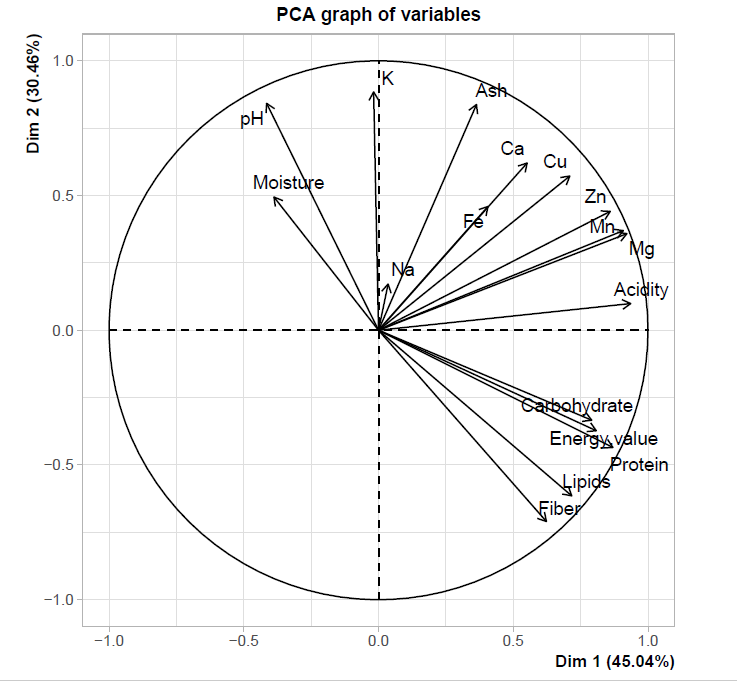
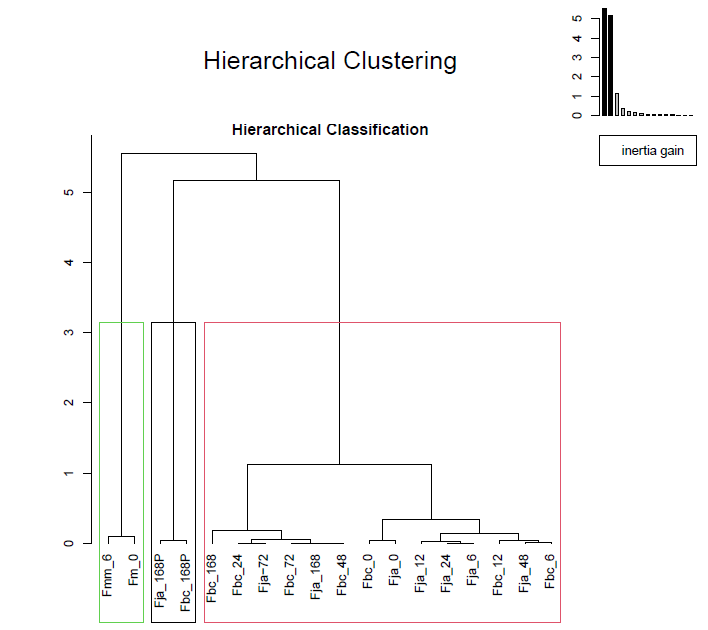
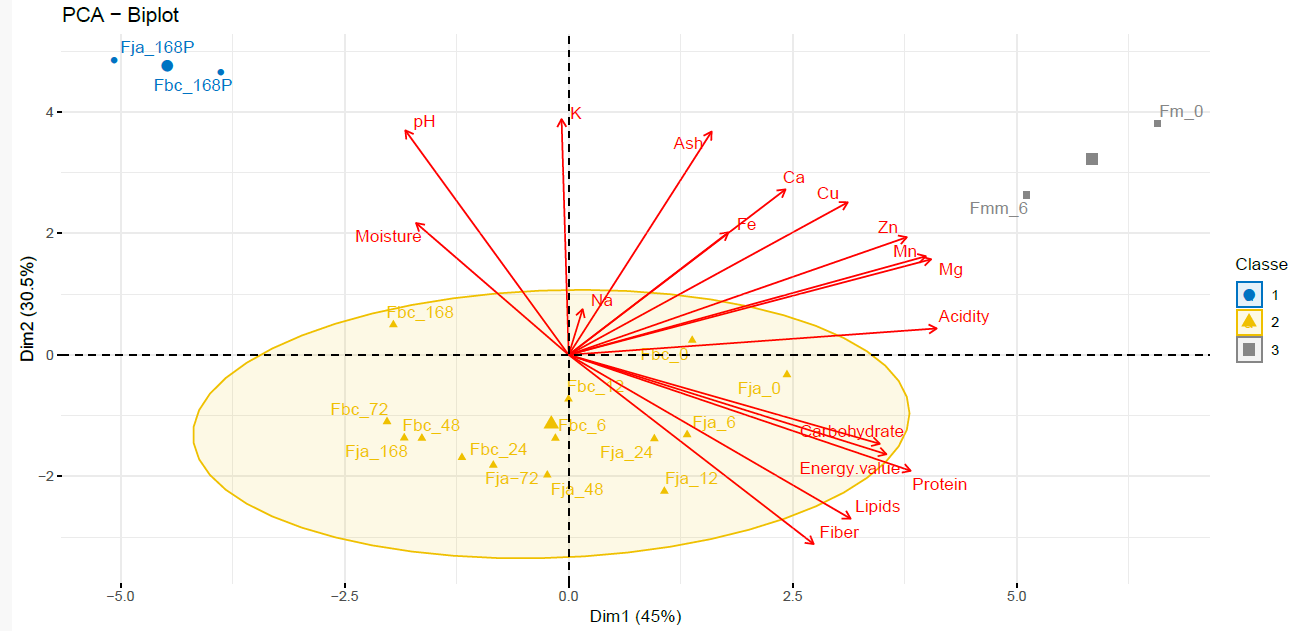
The analysis using the R software produced different distributions (Figure 6) making it possible to classify the flours into three classes. Each class contains similarities in terms of parameters studied. Class 1 includes corn flours (Fbc 168P and Fja 168P) marked by high pH values. Class 2 includes millet flours (Fm-0 and Fm-6) with high proportions of minerals.
In addition, the third class includes the other flours produced. These are illustrated by more or less high energy values. As highlighted in Figures 6 and 7, there is a positive interdependence between high-energy flours and the content of carbohydrates, proteins, and lipids.


These corn flours marked by high energy values tend to have low mineral values. Likewise, there is a close correlation between the ash content and the proportion of sodium (Na). However, a negative consistency between pH values and fiber proportions should be noted.
This study assessed the effect of soaking, either alone or in combination with potash, on the physicochemical parameters of white and yellow maize flours and millet flour. The results highlighted the significant influence of soaking time, as well as the addition of potash, on nutritional quality. In general, certain parameters such as acidity, pH, lipid content, total sugar content, soluble fiber content, and mineral content of the flours showed notable variations depending on processing conditions, reflecting a change in chemical composition linked to the biochemical processes occurring during soaking (fermentation, diffusion, and solubilization). Among these parameters, it is evident that soaking with water removal significantly reduces the levels of total sugars and magnesium. The reductions in sugar content are more pronounced with the addition of potash. For plain flours, these reductions are observable after 168 hours of soaking for both maize varieties. The reductions in sugar content are 77.28% for yellow flour, 76.85% for white flour, and 12.03% for millet flour after 6 hours of soaking. Combined with the addition of potash, these reduction rates are all above 85%. Similarly, after 168 hours of soaking, magnesium levels were reduced by 88.57% for yellow flour and 91.10% for white flour. However, in the case of potassium-treated flours, we observed a significant increase in potassium of around 120% for yellow flour and 93.82% for white flour. These observations provide a better understanding of the effects of soaking, either alone or in combination, on the quality of the flour analyzed. Soaking influences the nutritional characteristics of each cereal variety and thus offers processors the opportunity to expand their product ranges by including varying nutritional values that meet consumer needs. Furthermore, this process can be useful in formulating flours according to a predefined objective.
| [1] | Cruz J F, Hounhouigan D. J, Havard, M. and Ferre, T, La transformation des grains. Agricultures tropicales en poche. Éditions Quæ, CTA, Presses agronomiques de Gembloux, 2019, 181 pp. . | ||
| In article | |||
| [2] | Sarwar, M. H., Sarwar, M. F., Sarwar, M., Qadri, N. A. and Moghal, S., “The importance of cereals (Poaceae: Gramineae) nutrition in human health”, a review. Journal of Cereals and Oilseeds. Vol. 4(3), pp 32-35, June 2013. | ||
| In article | View Article | ||
| [3] | Agreste, Statistics, evaluation and forecasting of the Ministry of Agriculture and Food. Conjunctural synthesis. Republic of French, 2024, December 2024 No. 432, 7pp. https:// agreste.agriculture. gouv.fr/agresteweb/ download/ publication/ publie/ SynGcu24432/ consyn432202412-COP.pdf. | ||
| In article | |||
| [4] | Nadembega S, Balima, M. M. D., Barry, S., Challenges and constraints in the processing of millet and sorghum in the Centre-North and Boucle du Mouhoun regions of Burkina Faso. Vol.36, n° 1 Janvier-Juin2020, Sciences et technique, Lettres, Sciences sociales et humaines, 2020. 22pp. https:// revuesciencestechniquesburkina.org/ index.php/ lettres_sciences_sociales_ et_hum/article/ view/1376/1128. | ||
| In article | |||
| [5] | INSD, Characteristics of farming households in Burkina Faso: an in-depth analysis report, 2023, 128pp. | ||
| In article | |||
| [6] | Verni, M., Rizzello, C. G. and Coda. R., “Fermentation Biotechnology Applied to Cereal Industry By-Products: Nutritional and Functional Insights”, Front. Nutr. 6:42. (2019). | ||
| In article | View Article PubMed | ||
| [7] | Bationo, F., African fermented cereal foods: another way to help meet folate needs. Doctoral thesis. University of Montpelier, 2019, 265pp. . | ||
| In article | |||
| [8] | Skendi, A., Zinoviadou, K. G., Papageorgiou, M. and Rocha, J. M., “Advances on the Valorisation and Functionalization of By-Products and Wastes from Cereal-Based Processing Industry”, 2020,28 pp. | ||
| In article | View Article PubMed | ||
| [9] | Yu, J., Pedroso, I.R., “Mycotoxins in Cereal-Based Products and Their Impacts on the Health of Humans, Livestock Animals and Pets”, Toxins, 2023, 15, 480. | ||
| In article | View Article PubMed | ||
| [10] | Menkovska, M., Gjorgovska, N., Levkov, V., Knežević, D., Pacinovski, N., “The importance of food systemsfor cereal application in human and animal nutrition”, 2024, International Scientific Agribusness Conference, pp 85-95. https:// publication/ 383416226_THE_IMPORTANCE_OF_FOOD_ SYSTEMS_FOR_CEREAL_ APPLICATION_IN_ HUMAN_AND_ANIMAL_NUTRITION. | ||
| In article | |||
| [11] | Lestienne, I., Christèle, IV., Picq, C., Trèche, S., “Effects of soaking cereal and legume seeds and flours on their phytate content and their Phy/Fe and Phy/Zn molar ratios”. 2th International Workshop. Food ways to improve nutritional situations, 2004, 10pp. https:// horizon.documentation.ird.fr/ exldoc/pleins_textes/divers11-08/010036330.pdf. | ||
| In article | |||
| [12] | Bartłomiej, S., Justyna, R.K., Ewa, N., “Bioactive compounds in cereal grains-occurrence, structure, technological significance and nutritional benefits”, 2012, a review. Food Sci Technol Int. (2012) 18: 559-68. | ||
| In article | View Article PubMed | ||
| [13] | Nago, C. M., Traditional food processing of corn in Benin: determination of the physicochemical characteristics of the varieties in use; relationships with the obtaining and quality of the main derivative products, Paris: University of Paris VII, 298 p. State thesis, 1997. . | ||
| In article | |||
| [14] | Trèche. S., Hartog, A.P.D., Nout R.M.J., Traoré, A., Agri-food industries in West Africa: current situation and prospects for a healthy diet. Cah. Agric., 11 (5): 343-8. 2002 | ||
| In article | |||
| [15] | Jamali, A.M., Farine, Identification du produit, 2024. 26pp. | ||
| In article | |||
| [16] | N’Goran-AW E.B.Z., Doudjo, S., Sadat, A., David, A.K., Emmanuel, A.N., “Evaluation of the physicochemical and microbiological characteristics of a traditional donut made from fermented millet (gnomy) marketed in the town of Yamoussoukro (Ivory Coast). 2017, European Scientific Journal, ESJ, 13(9), | ||
| In article | |||
| [17] | Li, Y., Wu, X., “Processing and Properties Analysis of Grain Foods”, Processes, 2023, 11, 95. | ||
| In article | View Article | ||
| [18] | Xu, B. and Chang, S. K., “Effect of soaking, boiling, and steaming on total phenolic contentand antioxidant activities of cool season food legumes”, 008. Food Chemistry, 110(1), 1-13. | ||
| In article | View Article PubMed | ||
| [19] | Ouedraogo, D., Traoré, K., Oumar, A. D., Tarnagda, B., Kagambega, B., Agbokou, K. A. W., Guira, F., Parkouda, C., Savadogo, A. “Production technology and marketing conditions for flours made from local cereals in Burkina-Faso”. Int. J. Biol. Chem. Sci. 19(4): 1631-1648, August 2025. | ||
| In article | View Article | ||
| [20] | AOAC, “Official Method of Analysis of the Association of Official Analytical Chemists,” No. 934.06, Arlington, 1990. | ||
| In article | |||
| [21] | ISO 2171. Cereals, pulses and by-products:Determination of ash yield by incineration, 2007. Genève, 10pp. | ||
| In article | |||
| [22] | ISO 7305. Cereals and milled cereal products. Determination of acidity (titrimetric method), 1998. Genève, 9pp. | ||
| In article | |||
| [23] | ISO 20483. Cereals and pulses. Determination of nitrogen content and calculation of crude protein content – Kjeldahl method, 2013. Second edition, 11 pp.. | ||
| In article | |||
| [24] | ISO 659: Oilseeds. Determination of oil content (Reference method). Genève. 9pp. | ||
| In article | |||
| [25] | Montreuil, J. and Spik, G., Microdosing of carbohydrates. Colorimetric Methods for determination of total carbohydrates, 1969, 1998, Faculty of sciences university of Lille, Lille, 85. | ||
| In article | |||
| [26] | AOAC 985.29, Calculated energy value method in Association of Official Analytical Chemists (2005). Official Methods of Analysis. Method, Gaithersburg, MD, USA: Association of Official Analytical Chemists International. | ||
| In article | |||
| [27] | Sangare, L., Improvement of the fonio processing diagram for industrial production of improved fonio flour (digitaria exilis), 2015, Master's thesis 2. University of Ouagadougou, Burkina-Faso. 44pp. https:// bibliovirtuelle. unaziboni.bf/ biblio/ opaccss/ docume/st/bio/UFRST-2013-SEM-EVA.pdf. | ||
| In article | |||
| [28] | Sempore, N. J., Evaluation of some physicochemical parameters and mycotoxins of bakery flours sold in the city of Ouagadougou. Professional license thesis in biological engineering, 2013. Nazi Boni University, 40pp. | ||
| In article | |||
| [29] | N'Goran-AW, E. B. Z., Coulibaly, J. K., Assidjo, E. N., N’gatta, C., “Microbiological quality of corn flour sold on the markets of the city of Abidjan”, 2018, Rev. Mar. Sci. Agron. Vét. (2018) 6 (4) : 476-482 | ||
| In article | |||
| [30] | Nazal, A. M., Allamine, H. M., Goalbaye, T., Roumane, M., Signaboubo, S., Odette, S. B., “Nutritional quality of cereals grown in Tchad: case of millet, sorghum and corn”, 2023, J. Food. Stab (2023) 6 (4): 34-43. | ||
| In article | |||
| [31] | NBF 01-104, Standard on pearl millet flour and semolina -specifications, 2009, pp7. | ||
| In article | |||
| [32] | NBF 01-103, Standard on degermed corn flour and semolina - specifications, 2009, pp8. | ||
| In article | |||
| [33] | Bassene, P. T., Sambou, V., Talla, A., Gaye, S., Experimental determination and modeling of the drying kinetics of millet flour granules using the drying characteristic curve (CCS) method, 2017. Africa SCIENCE, 13(4) (2017) 241 – 250 241. | ||
| In article | |||
| [34] | Sihag, K. M., Sharma, V., Goyal, A., Arora, S. and Singh, K. A., “Effect of domestic processing treatments on iron, β-carotene, phytic acid and polyphenols of pearl millet”, 2015, Cogent Food & Agriculture (2015), 1: 1109171. | ||
| In article | View Article | ||
| [35] | Laya, A., Siewe F. B., Wangso, H., Falama, D., Djibrilla, H., Koubala, B. B., “Effect of different processing methods on maize, sorghum and millet flours on nutritional couscous quality consumed in the Far North region of Cameroon,” 2022. Journal of Agriculture and Food Research 9 (2022) 100328. | ||
| In article | View Article | ||
| [36] | Albarracin, M., Gonzalez, R. J., and Drago, S. R., “Soaking and extrusion effects on physicochemical parameters, phytic acid, nutrient content and mineral bio-accessibility of whole rice grain”, 2015. Int J Food Sci Nutr, Early Online: 1-6. | ||
| In article | View Article PubMed | ||
| [37] | Handa, V., Kumar, V., Panghal, A., Suri, S., Kaur,J., “Effect of soaking and germination on physicochemical and functional attributes of horsegram flour”, 2020. Journal of Food Science and Technology, 11pp. | ||
| In article | |||
| [38] | N’Guessan, Y. D., “Physicochemical, nutritive and safety evaluation of local cereal flours sold in areas of the District of Abidjan-Côte d’Ivoire. Journal of Applied Biosciences, 83, 7579-7594 | ||
| In article | View Article | ||
| [39] | Kayode, A. P. P., Hounhouigana, J. D., Nout, M. J. R., “Impact of brewing process operations on phytate, phenolic compounds and in vitro solubility of iron and zinc in opaque sorghum beer”, 2006. LWT 40 (2007) 834-841. | ||
| In article | View Article | ||
| [40] | Osman, M. A., “Effect of traditional fermentation process on the nutrient and antinutrient contents of pearl millet during preparation of Lohoh, 2011, 10(1), 1-6. | ||
| In article | View Article | ||
| [41] | Nout, M. J. R., “Rich nutrition from the poorest – Cereal fermentations in Africa and Asia”., 2009, 26(7), 685-692. | ||
| In article | View Article PubMed | ||
| [42] | Ocheme, O. B. and Chinma, C.E., “Effects of soaking and germination on some physicochemical properties of millet flour for porridge production”, 2008. Journal of Food Technology, 6 (5): 185-188, 2008 ISSN: 1684-8462. | ||
| In article | |||
| [43] | Kumari, M., and Platel, P., “Impact of soaking, germination, fermentation, and thermal processing on the bioaccessibility of trace minerals from food grains”, 2020. Journal of Food Processing and Preservation. | ||
| In article | View Article | ||
| [44] | Obasi, N., and Wogu, C., “Effect of Soaking Time on Proximate and Mineral Compositions and Anti-Nutritional Factors of Yellow Maize (zea mays), 2009. Nigerian Food Journal, 26(2). | ||
| In article | View Article | ||
| [45] | Eltayeb, L. F. E. F., “Mohamed, M. A. S, Fageer, A. S. M., Effect of Soaking on Nutritional Value of Sorghum (Sorghum bicolor L), 2016, pp 1360-1365. | ||
| In article | |||
| [46] | Keyata, E. O., Tola, Y. B.; Bultosa, G., Forsido, S. F., “Premilling treatments effects on nutritional composition, antinutritional factors, and in vitro mineral bioavailability of the improved Assosa I sorghum variety (Sorghum bicolor.)” 2021. Food Science & Nutrition, | ||
| In article | View Article PubMed | ||
| [47] | Abioye, V.F., Olatunde, S.J., Ogunlakin, G.O. and Abioye, O. A., “ Effect of soaking conditions on chemical composition, antioxidant activity, total phenols, flavonoids and antinutritional contents of finger millet”, Afr. J. Food Agric. Nutr. Dev. 2022; 22(7): 20942-20956. | ||
| In article | View Article | ||
| [48] | Ali, N. M. M., Abdullahi, H. E. T. and. Elkhalifa, A. E. O., “Alkaline pretreatment and fermentation modify protein fractions and tannins content of karamaka”, A high tannin Sorghum Cultivar. British Journal of Applied Science & Technology 10(6): 1-6, 2015, Article No BJAST.19492. ISSN: 2231-0843. | ||
| In article | View Article | ||
| [49] | Javed, T., Yadav.S., Ahmed, M. and Saini, P., “Impact of hydrothermal processing on the mineral, antinutritional, antioxidant and functional characteristics of proso millet (Panicum miliaceum), Food, Nutrition and Health (2025) 2: 19. | ||
| In article | View Article | ||
| [50] | Majzoobi, M., Jafarzadeh, S., Teimouri, S., Ghasemlou, M., Hadidi, M. and. Brennan, C. S., “The role of ancient grains in alleviating hunger and malnutrition”, 2023, Foods 12 (11):2213. | ||
| In article | View Article PubMed | ||
| [51] | Pan, Z. and Tangratanavalee, W., “Characteristics of Soybeans as Affected by Soaking Conditions”, 2003. LWT-Food Science and Technology, 36, 143151. | ||
| In article | View Article | ||
| [52] | El-Safy, S. F., Salem, R. H. A. and Ensaf, M. Y.Y., “The impact of soaking and germination on Chemical composition, carbohydrate fractions, digestibility, antinutrition al factors and minerals content of some legumes and cereals grain seeds”, 2013. Alexandria science exchange journal, vol.34, No. 4, 499-5013. . | ||
| In article | View Article | ||
| [53] | Agume, A. S. N., Njintang, N. Y., Mbofung C M F, 2017. “Effect of Soaking and Roasting on the Physicochemical and Pasting Properties of Soybean Flour”, Foods, 2017 Feb 9; 6(2):12. | ||
| In article | View Article PubMed | ||
| [54] | Li, T., Huang, J., Yu, J., Tian, X., Zhang, C., Pu, H., “Effects of soaking glutinous sorghum grains on physicochemical properties of starch”, 2024, International Journal of Biologica Macromolecules, 11pp. | ||
| In article | View Article PubMed | ||
| [55] | Robet, E. J., Konan, B., Amoikon, K. E., “Comparative Study of Nutritional Value of Wheat, Maize, Sorghum, Millet, and Fonio: Some Cereals Commonly Consumed in Côte d’Ivoire”, European Scientific Journal edition Vol.16, No.21 ISSN: 1857-7881, July 2020. | ||
| In article | View Article | ||
| [56] | Siyuan. S., Tong, L., RuiHai, L., “Corn phytochemicals and their health benefits,”. Food Science and Human Wellness 7 (2018) 185–195. | ||
| In article | View Article | ||
| [57] | Zahrat, E., Mohamed, M. and Azza, A. O., “Comparative Study of Physicochemical and Technological Characteristics in Some White and Yellow Corn Hybrids”, Food Technology Research Journal, Vol. 6, issue 1, 1-13, 2024.https:// ftrj.journals. ekb.eg/. | ||
| In article | View Article | ||
| [58] | Ranum, P., Peña-Rosas, J. P., Garcia-Casal, M. N., “Global maize production, utilization, and Consumption”, 2014, Annals of the New York Academy of Sciences”, 1312(1), 105-112. | ||
| In article | View Article PubMed | ||
| [59] | Bindra, D. and Dr. Manju.,. “Whole grains and millets as raw ingredients for recipes in diabetes mellitus, International Journal of Home Science”, 2019; 5(3): 214-219. http:// . com. | ||
| In article | |||
| [60] | Nsabimana, S., Ismail, T. and Lazarte, C. E., “Enhancing iron and zinc bioavailability in maize (Zea mays) through phytate reduction: the impact of fermentation alone and in combination with soaking and germination”, 2024. Front. Nutr. 11: 1478155. | ||
| In article | View Article PubMed | ||
Published with license by Science and Education Publishing, Copyright © 2026 Donald OUEDRAOGO, Korotimi TRAORE, Souleymane ZIO, Bakary TARNAGDA, Sibiri NEBIE, Flibert GUIRA, Charles PARKOUDA and Aly SAVADOGO
 This work is licensed under a Creative Commons Attribution 4.0 International License. To view a copy of this license, visit
http://creativecommons.org/licenses/by/4.0/
This work is licensed under a Creative Commons Attribution 4.0 International License. To view a copy of this license, visit
http://creativecommons.org/licenses/by/4.0/
| [1] | Cruz J F, Hounhouigan D. J, Havard, M. and Ferre, T, La transformation des grains. Agricultures tropicales en poche. Éditions Quæ, CTA, Presses agronomiques de Gembloux, 2019, 181 pp. . | ||
| In article | |||
| [2] | Sarwar, M. H., Sarwar, M. F., Sarwar, M., Qadri, N. A. and Moghal, S., “The importance of cereals (Poaceae: Gramineae) nutrition in human health”, a review. Journal of Cereals and Oilseeds. Vol. 4(3), pp 32-35, June 2013. | ||
| In article | View Article | ||
| [3] | Agreste, Statistics, evaluation and forecasting of the Ministry of Agriculture and Food. Conjunctural synthesis. Republic of French, 2024, December 2024 No. 432, 7pp. https:// agreste.agriculture. gouv.fr/agresteweb/ download/ publication/ publie/ SynGcu24432/ consyn432202412-COP.pdf. | ||
| In article | |||
| [4] | Nadembega S, Balima, M. M. D., Barry, S., Challenges and constraints in the processing of millet and sorghum in the Centre-North and Boucle du Mouhoun regions of Burkina Faso. Vol.36, n° 1 Janvier-Juin2020, Sciences et technique, Lettres, Sciences sociales et humaines, 2020. 22pp. https:// revuesciencestechniquesburkina.org/ index.php/ lettres_sciences_sociales_ et_hum/article/ view/1376/1128. | ||
| In article | |||
| [5] | INSD, Characteristics of farming households in Burkina Faso: an in-depth analysis report, 2023, 128pp. | ||
| In article | |||
| [6] | Verni, M., Rizzello, C. G. and Coda. R., “Fermentation Biotechnology Applied to Cereal Industry By-Products: Nutritional and Functional Insights”, Front. Nutr. 6:42. (2019). | ||
| In article | View Article PubMed | ||
| [7] | Bationo, F., African fermented cereal foods: another way to help meet folate needs. Doctoral thesis. University of Montpelier, 2019, 265pp. . | ||
| In article | |||
| [8] | Skendi, A., Zinoviadou, K. G., Papageorgiou, M. and Rocha, J. M., “Advances on the Valorisation and Functionalization of By-Products and Wastes from Cereal-Based Processing Industry”, 2020,28 pp. | ||
| In article | View Article PubMed | ||
| [9] | Yu, J., Pedroso, I.R., “Mycotoxins in Cereal-Based Products and Their Impacts on the Health of Humans, Livestock Animals and Pets”, Toxins, 2023, 15, 480. | ||
| In article | View Article PubMed | ||
| [10] | Menkovska, M., Gjorgovska, N., Levkov, V., Knežević, D., Pacinovski, N., “The importance of food systemsfor cereal application in human and animal nutrition”, 2024, International Scientific Agribusness Conference, pp 85-95. https:// publication/ 383416226_THE_IMPORTANCE_OF_FOOD_ SYSTEMS_FOR_CEREAL_ APPLICATION_IN_ HUMAN_AND_ANIMAL_NUTRITION. | ||
| In article | |||
| [11] | Lestienne, I., Christèle, IV., Picq, C., Trèche, S., “Effects of soaking cereal and legume seeds and flours on their phytate content and their Phy/Fe and Phy/Zn molar ratios”. 2th International Workshop. Food ways to improve nutritional situations, 2004, 10pp. https:// horizon.documentation.ird.fr/ exldoc/pleins_textes/divers11-08/010036330.pdf. | ||
| In article | |||
| [12] | Bartłomiej, S., Justyna, R.K., Ewa, N., “Bioactive compounds in cereal grains-occurrence, structure, technological significance and nutritional benefits”, 2012, a review. Food Sci Technol Int. (2012) 18: 559-68. | ||
| In article | View Article PubMed | ||
| [13] | Nago, C. M., Traditional food processing of corn in Benin: determination of the physicochemical characteristics of the varieties in use; relationships with the obtaining and quality of the main derivative products, Paris: University of Paris VII, 298 p. State thesis, 1997. . | ||
| In article | |||
| [14] | Trèche. S., Hartog, A.P.D., Nout R.M.J., Traoré, A., Agri-food industries in West Africa: current situation and prospects for a healthy diet. Cah. Agric., 11 (5): 343-8. 2002 | ||
| In article | |||
| [15] | Jamali, A.M., Farine, Identification du produit, 2024. 26pp. | ||
| In article | |||
| [16] | N’Goran-AW E.B.Z., Doudjo, S., Sadat, A., David, A.K., Emmanuel, A.N., “Evaluation of the physicochemical and microbiological characteristics of a traditional donut made from fermented millet (gnomy) marketed in the town of Yamoussoukro (Ivory Coast). 2017, European Scientific Journal, ESJ, 13(9), | ||
| In article | |||
| [17] | Li, Y., Wu, X., “Processing and Properties Analysis of Grain Foods”, Processes, 2023, 11, 95. | ||
| In article | View Article | ||
| [18] | Xu, B. and Chang, S. K., “Effect of soaking, boiling, and steaming on total phenolic contentand antioxidant activities of cool season food legumes”, 008. Food Chemistry, 110(1), 1-13. | ||
| In article | View Article PubMed | ||
| [19] | Ouedraogo, D., Traoré, K., Oumar, A. D., Tarnagda, B., Kagambega, B., Agbokou, K. A. W., Guira, F., Parkouda, C., Savadogo, A. “Production technology and marketing conditions for flours made from local cereals in Burkina-Faso”. Int. J. Biol. Chem. Sci. 19(4): 1631-1648, August 2025. | ||
| In article | View Article | ||
| [20] | AOAC, “Official Method of Analysis of the Association of Official Analytical Chemists,” No. 934.06, Arlington, 1990. | ||
| In article | |||
| [21] | ISO 2171. Cereals, pulses and by-products:Determination of ash yield by incineration, 2007. Genève, 10pp. | ||
| In article | |||
| [22] | ISO 7305. Cereals and milled cereal products. Determination of acidity (titrimetric method), 1998. Genève, 9pp. | ||
| In article | |||
| [23] | ISO 20483. Cereals and pulses. Determination of nitrogen content and calculation of crude protein content – Kjeldahl method, 2013. Second edition, 11 pp.. | ||
| In article | |||
| [24] | ISO 659: Oilseeds. Determination of oil content (Reference method). Genève. 9pp. | ||
| In article | |||
| [25] | Montreuil, J. and Spik, G., Microdosing of carbohydrates. Colorimetric Methods for determination of total carbohydrates, 1969, 1998, Faculty of sciences university of Lille, Lille, 85. | ||
| In article | |||
| [26] | AOAC 985.29, Calculated energy value method in Association of Official Analytical Chemists (2005). Official Methods of Analysis. Method, Gaithersburg, MD, USA: Association of Official Analytical Chemists International. | ||
| In article | |||
| [27] | Sangare, L., Improvement of the fonio processing diagram for industrial production of improved fonio flour (digitaria exilis), 2015, Master's thesis 2. University of Ouagadougou, Burkina-Faso. 44pp. https:// bibliovirtuelle. unaziboni.bf/ biblio/ opaccss/ docume/st/bio/UFRST-2013-SEM-EVA.pdf. | ||
| In article | |||
| [28] | Sempore, N. J., Evaluation of some physicochemical parameters and mycotoxins of bakery flours sold in the city of Ouagadougou. Professional license thesis in biological engineering, 2013. Nazi Boni University, 40pp. | ||
| In article | |||
| [29] | N'Goran-AW, E. B. Z., Coulibaly, J. K., Assidjo, E. N., N’gatta, C., “Microbiological quality of corn flour sold on the markets of the city of Abidjan”, 2018, Rev. Mar. Sci. Agron. Vét. (2018) 6 (4) : 476-482 | ||
| In article | |||
| [30] | Nazal, A. M., Allamine, H. M., Goalbaye, T., Roumane, M., Signaboubo, S., Odette, S. B., “Nutritional quality of cereals grown in Tchad: case of millet, sorghum and corn”, 2023, J. Food. Stab (2023) 6 (4): 34-43. | ||
| In article | |||
| [31] | NBF 01-104, Standard on pearl millet flour and semolina -specifications, 2009, pp7. | ||
| In article | |||
| [32] | NBF 01-103, Standard on degermed corn flour and semolina - specifications, 2009, pp8. | ||
| In article | |||
| [33] | Bassene, P. T., Sambou, V., Talla, A., Gaye, S., Experimental determination and modeling of the drying kinetics of millet flour granules using the drying characteristic curve (CCS) method, 2017. Africa SCIENCE, 13(4) (2017) 241 – 250 241. | ||
| In article | |||
| [34] | Sihag, K. M., Sharma, V., Goyal, A., Arora, S. and Singh, K. A., “Effect of domestic processing treatments on iron, β-carotene, phytic acid and polyphenols of pearl millet”, 2015, Cogent Food & Agriculture (2015), 1: 1109171. | ||
| In article | View Article | ||
| [35] | Laya, A., Siewe F. B., Wangso, H., Falama, D., Djibrilla, H., Koubala, B. B., “Effect of different processing methods on maize, sorghum and millet flours on nutritional couscous quality consumed in the Far North region of Cameroon,” 2022. Journal of Agriculture and Food Research 9 (2022) 100328. | ||
| In article | View Article | ||
| [36] | Albarracin, M., Gonzalez, R. J., and Drago, S. R., “Soaking and extrusion effects on physicochemical parameters, phytic acid, nutrient content and mineral bio-accessibility of whole rice grain”, 2015. Int J Food Sci Nutr, Early Online: 1-6. | ||
| In article | View Article PubMed | ||
| [37] | Handa, V., Kumar, V., Panghal, A., Suri, S., Kaur,J., “Effect of soaking and germination on physicochemical and functional attributes of horsegram flour”, 2020. Journal of Food Science and Technology, 11pp. | ||
| In article | |||
| [38] | N’Guessan, Y. D., “Physicochemical, nutritive and safety evaluation of local cereal flours sold in areas of the District of Abidjan-Côte d’Ivoire. Journal of Applied Biosciences, 83, 7579-7594 | ||
| In article | View Article | ||
| [39] | Kayode, A. P. P., Hounhouigana, J. D., Nout, M. J. R., “Impact of brewing process operations on phytate, phenolic compounds and in vitro solubility of iron and zinc in opaque sorghum beer”, 2006. LWT 40 (2007) 834-841. | ||
| In article | View Article | ||
| [40] | Osman, M. A., “Effect of traditional fermentation process on the nutrient and antinutrient contents of pearl millet during preparation of Lohoh, 2011, 10(1), 1-6. | ||
| In article | View Article | ||
| [41] | Nout, M. J. R., “Rich nutrition from the poorest – Cereal fermentations in Africa and Asia”., 2009, 26(7), 685-692. | ||
| In article | View Article PubMed | ||
| [42] | Ocheme, O. B. and Chinma, C.E., “Effects of soaking and germination on some physicochemical properties of millet flour for porridge production”, 2008. Journal of Food Technology, 6 (5): 185-188, 2008 ISSN: 1684-8462. | ||
| In article | |||
| [43] | Kumari, M., and Platel, P., “Impact of soaking, germination, fermentation, and thermal processing on the bioaccessibility of trace minerals from food grains”, 2020. Journal of Food Processing and Preservation. | ||
| In article | View Article | ||
| [44] | Obasi, N., and Wogu, C., “Effect of Soaking Time on Proximate and Mineral Compositions and Anti-Nutritional Factors of Yellow Maize (zea mays), 2009. Nigerian Food Journal, 26(2). | ||
| In article | View Article | ||
| [45] | Eltayeb, L. F. E. F., “Mohamed, M. A. S, Fageer, A. S. M., Effect of Soaking on Nutritional Value of Sorghum (Sorghum bicolor L), 2016, pp 1360-1365. | ||
| In article | |||
| [46] | Keyata, E. O., Tola, Y. B.; Bultosa, G., Forsido, S. F., “Premilling treatments effects on nutritional composition, antinutritional factors, and in vitro mineral bioavailability of the improved Assosa I sorghum variety (Sorghum bicolor.)” 2021. Food Science & Nutrition, | ||
| In article | View Article PubMed | ||
| [47] | Abioye, V.F., Olatunde, S.J., Ogunlakin, G.O. and Abioye, O. A., “ Effect of soaking conditions on chemical composition, antioxidant activity, total phenols, flavonoids and antinutritional contents of finger millet”, Afr. J. Food Agric. Nutr. Dev. 2022; 22(7): 20942-20956. | ||
| In article | View Article | ||
| [48] | Ali, N. M. M., Abdullahi, H. E. T. and. Elkhalifa, A. E. O., “Alkaline pretreatment and fermentation modify protein fractions and tannins content of karamaka”, A high tannin Sorghum Cultivar. British Journal of Applied Science & Technology 10(6): 1-6, 2015, Article No BJAST.19492. ISSN: 2231-0843. | ||
| In article | View Article | ||
| [49] | Javed, T., Yadav.S., Ahmed, M. and Saini, P., “Impact of hydrothermal processing on the mineral, antinutritional, antioxidant and functional characteristics of proso millet (Panicum miliaceum), Food, Nutrition and Health (2025) 2: 19. | ||
| In article | View Article | ||
| [50] | Majzoobi, M., Jafarzadeh, S., Teimouri, S., Ghasemlou, M., Hadidi, M. and. Brennan, C. S., “The role of ancient grains in alleviating hunger and malnutrition”, 2023, Foods 12 (11):2213. | ||
| In article | View Article PubMed | ||
| [51] | Pan, Z. and Tangratanavalee, W., “Characteristics of Soybeans as Affected by Soaking Conditions”, 2003. LWT-Food Science and Technology, 36, 143151. | ||
| In article | View Article | ||
| [52] | El-Safy, S. F., Salem, R. H. A. and Ensaf, M. Y.Y., “The impact of soaking and germination on Chemical composition, carbohydrate fractions, digestibility, antinutrition al factors and minerals content of some legumes and cereals grain seeds”, 2013. Alexandria science exchange journal, vol.34, No. 4, 499-5013. . | ||
| In article | View Article | ||
| [53] | Agume, A. S. N., Njintang, N. Y., Mbofung C M F, 2017. “Effect of Soaking and Roasting on the Physicochemical and Pasting Properties of Soybean Flour”, Foods, 2017 Feb 9; 6(2):12. | ||
| In article | View Article PubMed | ||
| [54] | Li, T., Huang, J., Yu, J., Tian, X., Zhang, C., Pu, H., “Effects of soaking glutinous sorghum grains on physicochemical properties of starch”, 2024, International Journal of Biologica Macromolecules, 11pp. | ||
| In article | View Article PubMed | ||
| [55] | Robet, E. J., Konan, B., Amoikon, K. E., “Comparative Study of Nutritional Value of Wheat, Maize, Sorghum, Millet, and Fonio: Some Cereals Commonly Consumed in Côte d’Ivoire”, European Scientific Journal edition Vol.16, No.21 ISSN: 1857-7881, July 2020. | ||
| In article | View Article | ||
| [56] | Siyuan. S., Tong, L., RuiHai, L., “Corn phytochemicals and their health benefits,”. Food Science and Human Wellness 7 (2018) 185–195. | ||
| In article | View Article | ||
| [57] | Zahrat, E., Mohamed, M. and Azza, A. O., “Comparative Study of Physicochemical and Technological Characteristics in Some White and Yellow Corn Hybrids”, Food Technology Research Journal, Vol. 6, issue 1, 1-13, 2024.https:// ftrj.journals. ekb.eg/. | ||
| In article | View Article | ||
| [58] | Ranum, P., Peña-Rosas, J. P., Garcia-Casal, M. N., “Global maize production, utilization, and Consumption”, 2014, Annals of the New York Academy of Sciences”, 1312(1), 105-112. | ||
| In article | View Article PubMed | ||
| [59] | Bindra, D. and Dr. Manju.,. “Whole grains and millets as raw ingredients for recipes in diabetes mellitus, International Journal of Home Science”, 2019; 5(3): 214-219. http:// . com. | ||
| In article | |||
| [60] | Nsabimana, S., Ismail, T. and Lazarte, C. E., “Enhancing iron and zinc bioavailability in maize (Zea mays) through phytate reduction: the impact of fermentation alone and in combination with soaking and germination”, 2024. Front. Nutr. 11: 1478155. | ||
| In article | View Article PubMed | ||