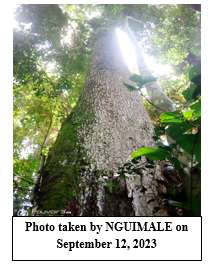
An ethnobotanical survey was conducted in Mbaïki, located in the center of the Lobaye prefecture on National Route 6, 107 km from Bangui, specifically 5 km from Ndolobos in the Moboma commune of Kaou. Its main objective was to understand the traditional uses of Entandrophragma utile (E. utile), a tree known as Sipo, belonging to the Meliaceae family and widely distributed in this area. Information gathered during the ethnobotanical survey and from the literature on the plant enabled chemical screening and the evaluation of its antioxidant activity. Extraction was carried out by sequential cold maceration with four solvents of increasing polarity: cyclohexane (CYHA), dichloromethane (DMC), ethyl acetate (EtOAc) and methanol (MeOH). The methanol extract gave the best yield (10.67%), followed by the ethyl acetate extract (1.1%), dichloromethane (0.84%), and cyclohexane (0.70%). Chemical screening carried out by tube reactions and thin layer chromatography confirmed the presence of: alkaloids (very little present), anthocyanins, catechins, sterols, anthraquinones and triterpenes, flavonoids, very abundant saponosides, narcotics specifically (Tetrahydrocannabinols) and very little coumarins. Chemical family analysis using a 96-well plate reader revealed high polyphenol content in all families compared to others. The polyphenol content of the EtAOc extract was high, at 496.3 ± 18.2 mg eq/g. The EtAOc extract inhibited DPPH more effectively than the others, with an inhibition percentage of 96.00 ± 0.89%. This same extract yielded a resistance index (RI = 0.35) less than one, confirming predominant antiplasmodial activity against the resistant strain. Extracts from the trunk bark of E. utile contained high levels of polyphenols and possessed antioxidant and antiplasmodial activities.
Nature has always provided us with opportunities through plants to address health problems. To date, approximately 250,000 of these plants have been described and cataloged 1.
According to a report published by the WHO in 2002, 80% of African populations use traditional medicine to meet their primary healthcare needs 2. E. utile, a tree belonging to the Meliacea family, has been the subject of particular attention from forestry operators and scientists for several decades. Its phytogeographical range is primarily located in the Guineo-Congolian region 3. Particularly in the Central African Republic, the majority of the population relies on traditional medicine to treat themselves in case of potential infection with certain diseases.
The Central African Republic boasts immense plant biodiversity, the majority of which consists of medicinal plants. Despite this potential, very few of these medicinal plants have been the subject of in-depth phytochemical and biological studies.
In the literature, some authors have revealed the biological activities of E. utile, which include: healing, antiplasmodial, antioxidant, anti-inflammatory, anti-kidney, and anti-insecticidal properties 4, 5, 6, 7.
Consequently, the ethnobotanical survey was conducted in Mbaïki in the Central African Republic. Its main objective was to understand the traditional uses of E. utile in Central African pharmacopoeia. The information gathered during the ethnobotanical survey and from the literature on the plant made it possible to carry out the phytochemical study and to evaluate antioxidant and antiplasmodial activities.
To our knowledge, there are not enough reports on the antiplasmodial characterization of E. utile from the Central African Republic. For this reason, the present study was carried out to evaluate the chemical composition of the organic extracts, as well as the various biological activities (DPPH, antiplasmodial) of E. utile.
The ethnobotanical survey was conducted in Mbaïki, located in the center of the Lobaye prefecture on National Route 6, 107 km from Bangui, specifically 5 km from Ndolobo in the Moboma commune of Kaou. The chosen method was direct interview and/or a questionnaire including the interviewee's name and sex, the plant part used, the pathology treated, the method of preparation, the method of administration, and the vernacular name. After the ethnobotanical survey and information gathered from the literature, one plant was selected: E. utile, from the Meliaceae family.
The plant was identified at the Center for Studies and Research in Pharmacopoeia and Traditional African Medicine (CERPHAMETA) by Dr. Olivia Semboli. The harvest was carried out with the support of Mr. Henri MOTOMBI, a traditional healer at the center, given the plant's organoleptic characteristics.
The bark of the harvested plant trunk was air-dried at the LAARSN Laboratory for two weeks and then ground into a powder. The powder was stored at room temperature for analysis.

The method of Worowounga and his team was used with slight modifications to the solvents and sample quantities to be extracted 8. Extraction was performed by sequential cold maceration with four solvents (CYHA, DMC, EtOAc and MeOH) of increasing polarity, under agitation for four hours.
The process began with the lowest polarity solvent (CYHA). 200 g of E. utile trunk bark powder was macerated with 800 ml of cyclohexane for four hours. After filtration, the residue was dried and then macerated with another 800 ml of a different solvent (the same procedure was repeated until the most polar solvent was used).
The extracts were evaporated with the rotavapor according to the boiling point of each solvent, then the dry extracts were kept in the refrigerator at a temperature of 4°C for analysis.
2.3. Chemical ScreeningChemical screening was performed using qualitative and quantitative analyses.
Qualitative analyses were carried out using the tube staining reaction method and thin-layer chromatography (TLC).
Quantitative analyses were performed using the method of Namkona et al 9 with a multi-scan instrument. The levels of total polyphenols and certain polyphenolic compounds were quantified.
Alkaloids were identified using the Mayer test, a precipitation reaction based on the ability of alkaloids to combine with metals and metalloids.
One ml of sulfuric acid macerate of E. utile bark powder was placed in a test tube, and five drops of Mayer reagent were added. In the presence of alkaloids, a precipitate formed.
Polyphenols were identified from an infusion of powdered plant bark, tannins were identified using FeCl3, anthocyanins by the ammonia reaction, total flavonoids by isoamyl alcohol and a few magnesium shavings, and saponins by the foam test. Triterpenes and steroids were identified using the Liebermann-Burchard test 10. For qualitative analyses, thin-layer chromatography, a rapid analytical technique, was also used to separate and identify some constituents present in the sample. Aluminum silica gel plates (Merck, Darmstadt) were used with binary or ternary eluent systems depending on the constituents to be identified.
To quantify polyphenols, the method of Worowounga and his team 8 was used with a slight modification. The reference used was gallic acid. A stock solution of 2.3 mg/ml gallic acid was prepared in water (solution S0) and diluted 20-fold to obtain solution S. Solution S was then diluted to obtain three solutions of different concentrations.
A 2 N Folin-Ciocalteu reagent solution was prepared and then diluted 10-fold. The 3 mg/mL extract solutions were prepared in dimethyl sulfoxide (DMSO). In each well, 20 µL of each solution was added along with 100 µL of Folin's reagent. After 30 seconds of stirring and 5 minutes of incubation, 80 µL of previously prepared Na₂CO₃ was added and then reintroduced into the plate reader, which was stirred for 30 seconds. Absorbance readings were taken 15 minutes after incubation at a wavelength of 765 nm.
The method of Namkona et al 9 was adopted, with a slight modification of the wavelength. Quercetin was used as the reference; 1 mg of quercetin in 50 mL of water and a 2% AlCl3 solution were prepared. The extract solution (3 mg/mL) was prepared in DMSO. A volume of 100 µL of extract was placed in the wells. 100 µL of 2% AlCl3 was added. For the extract blank, the AlCl3 solution was replaced with MeOH. For the control blank, DMSO was used instead of the extract. The absorbance was measured at 415 nm after 15 minutes of incubation at room temperature.
The method of Namkona and his team 9 was adopted, with a slight modification of the wavelength. Catechin was used as a reference; a 1 mg reference solution in 20 mL of water was prepared. Vanillin was used as a reagent; a 1% solution was prepared in 98% sulfuric acid.
A volume of 150 µL of the 1% vanillin solution in H₂SO₄ was added to 50 µL of extract (3 mg/mL), and the mixture was stirred for 30 seconds. After 15 min incubation, the absorbance was measured at 500 nm at room temperature.
2.4. Antioxidant ActivityTo perform this activity, a calibration curve was first plotted using an antioxidant reference (ascorbic acid 1 mg/mL) tested against a free radical, 2,2-diphenyl 1-picrylhydrazyl (DPPH). The method of Namkona et al 9 was followed with a slight modification.
A DPPH solution with a concentration of 0.35 mg/mL was prepared in MeOH and diluted 10-fold. From the E. utile bark extract solution (3 mg/mL), a range of dilutions of 16/20, 1/2, and 1/5 were prepared. In the well, 180 µL of DPPH was added to 20 µL of the diluted extract solution. The mixture was stirred for 30 seconds and then incubated for 25 minutes. Absorbance was measured at 450 nm.
The percentage of inhibition was calculated using the following formula:
%Inhibition = ([(Ab - Ae)])/Ab × 100
Ab: Blank absorbance
Ae: Extract absorbance
2.5. Antiplasmodial ActivityA drug susceptibility test was performed on 96-well microtiter plates using a fluorescence assay based on SYBR Green I 11.
This test relies on the ability of SYBR Green to emit strong fluorescence only in the presence of parasite DNA during cell proliferation.
Ring-stage parasites, synchronized with sorbitol (hematocrit: 1%, parasitemia: 2%, 90 µL), were incubated under standard culture conditions with 10 µL of extracts and prediluted reference drugs (chloroquine and dihydroartemisinin E) in 96-well flat-bottom plates at various concentrations (100 to 0.16 µg/mL for the extracts).
After incubation at 37 °C under 5% CO2 for 72 hours, 100 μL of a SYBR Green I solution prepared in lysis buffer (0.2 μL of SYBR Green I 10,000× per mL of lysis buffer), composed of Tris (20 mM; pH 7.5), EDTA (5 mM), saponin (0.008% w/v), and Triton X-100 (0.08% v/v), was added to each well.
The mixture was homogenized twice using a multichannel pipette and then incubated in the dark at 37 °C for 1 hour. Fluorescence was then measured using a Victor fluorescence microplate reader (PerkinElmer, Waltham, MA, USA; Infinite M200, Tecan Austria GmbH, Grödig, Flachgau, Austria), with excitation and emission wavelengths centered at 485 and 530 nm respectively.
Fluorescence values were reported as a function of drug concentration, and the 50% inhibitory concentration (IC50) was determined by dose-response curve analysis using nonlinear regression. Resistance indices were calculated using the formula:
RI = (IC50 PfDd2) / (IC50 Pf3D7)
Samples exhibiting predominant activity against the resistant strain are indicated by RI values less than 1 (1), and vice versa.
Antiplasmodial activity was classified according to previously described criteria (IC50 ≤ 5 µg/mL: very good activity; 5 < IC50 ≤ 15 µg/mL: promising activity; 15 < IC50 ≤ 50 µg/mL: moderate activity; IC50 > 50 µg/mL: inactive 12.
Ethnobotanical surveys conducted on E. utile showed that:
- An infusion of powdered bark from the plant's trunk is used to treat viral hepatitis,
- The dry powder is used as an anti-healing agent to treat purulent wounds,
- A decoction of the roots is used to treat stomach and kidney ailments.
Some information 6, 7 from the literature concerning biological activities revealed that E. utile possesses very particular biological properties.
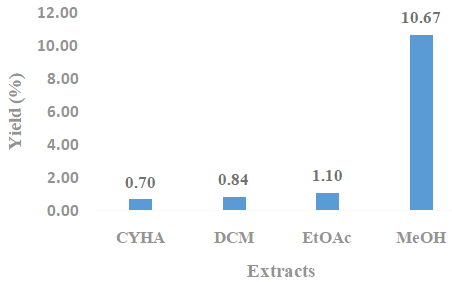
3.2. ExtractionFigure 2 (below) shows the extraction yields; the yields increase with the polarity of the solvents. The methanol (MeOH) extract gave the best yield (10.67%), followed by the ethyl acetate (EtOAc) extract (1.1%), dichloromethane (DMC) (0.84%), and cyclohexane (CYHA) (0.70%). The increase in yield with increasing solvent polarity could be explained by a high concentration of polar compounds in E. utile. Maceration with methanol on the trunk bark of E. cylindricum for 24 hours, as reported in the literature, yielded 12.7% 13.
This slight increase could be attributed to the duration of contact between the bark powder and the methanol, as our maceration was carried out for four hours under magnetic stirring.


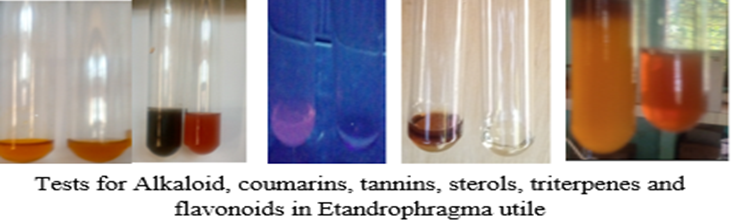
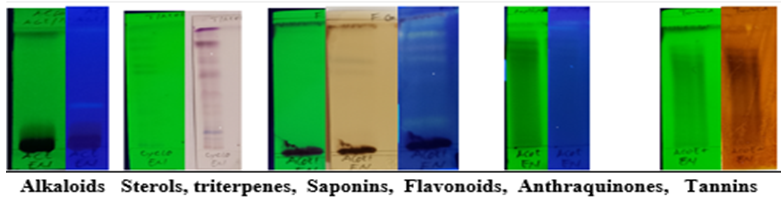
Table 1, Figure 3, and Figure 4 present the results of chemical screening performed on E. utile using tube reactions and thin-layer chromatography. The tests confirmed the presence of: alkaloids (very low levels), anthocyanins, catecholic tannins, sterols, anthraquinones and triterpenes, flavonoids, abundant saponins, narcotics (specifically tetrahydrocannabinols), and very low levels of coumarins.
These results highlight a high concentration of polar compounds (flavonoids, tannins, anthocyanins, saponins) in the E. utile bark powder. This could explain the higher yield with polar solvents. Therefore, the results are consistent with the extraction results.
The work carried out by Nnanga NGA et al 14 confirmed the presence of tannins, flavonoids, alkaloids, saponins, terpenoids, steroids, and phenols in the stem and root bark of E. candollei H, a plant from the same family and genus as E. utile.
The work of Elizabeth et al 15 on the trunk bark of Entandrophragma also confirmed the presence of flavonoids, tannins, terpenoids, glycosides, alkaloids, and saponins.
The results of the quantitative analyses are recorded in Table 2. Values are expressed ± standard deviation in milligrams of gallic acid equivalent, quercetin, and catechin per gram of dry matter. Comparatively, the flavonoid and tannin levels were very low compared to the polyphenol levels in the different extracts.
The polyphenol level in the ethyl acetate extract was highest, followed by the methanol extract.
The low polyphenol levels in the cyclohexane and dichloromethane extracts could be attributed to the polarity of the solvents. The ethyl acetate and methanol extracts may exhibit greater antioxidant activity due to their high polyphenol content. The phenolic compound content analysis carried out by Nnanga NGA and colleagues 14 on the ethyl acetate extract of E. condellei stem bark yielded a high concentration (2.0529 mg GAE/mg) compared to our value (0.496 ± 18.2 mg GAE/mg) from the analysis carried out on the ethyl acetate extract of E. utile trunk bark. This difference could be explained by several factors, firstly by the barks of two different species, from different organs, and secondly by geographical and edaphic parameters.
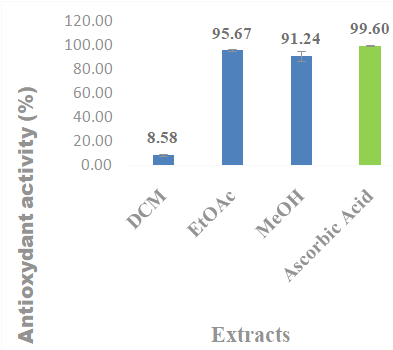
3.4. Antioxidant ActivityFigure 5 presents the results of the antioxidant activity tests performed on extracts of E. utile. The ethyl acetate extract showed the highest percentage of DPPH inhibition (95.67± 0.89%), followed by the methanol extract (91.24±4.08%) and the dichloromethane extract (8.58± 1.0.7%). The percentage of inhibition of the ethyl acetate extract was second only to that of the antioxidant reference, ascorbic acid (99.60 ± 0.05%). These results show that polar extracts provided the highest percentage of inhibition compared to nonpolar extracts, confirming the hypothesis regarding the antioxidant activity of polar extracts with a high polyphenol content.
Comparing the percentages of inhibition of the tested extracts on DPPH with the reference extract, the E. utile bark extract exhibited antioxidant activity very close to that of the reference.
The work conducted by Nanga NGA and his team 14 on the stem bark of E. condellei confirmed the inhibition efficacy of the ethyl acetate extract on DPPH.


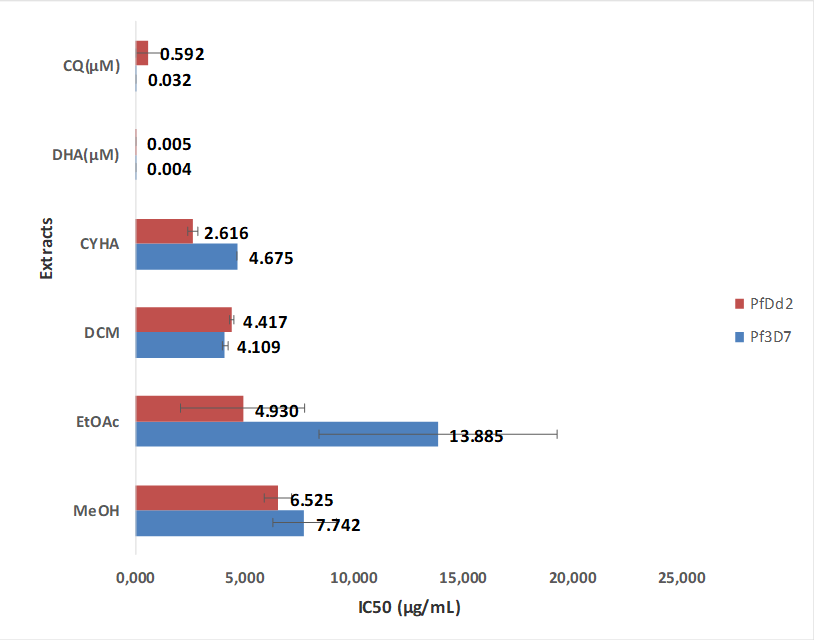
Figure 6 present the antiplasmodial activity results of four extracts of E. utile performed on two strains (Pf3D7: chloroquine-sensitive, Plasmodium falciparum strain and PfDd2: multidrug-resistant Plasmodium falciparum strain). IC50 values are expressed in micrograms per milliliter (µg/mL) ± standard deviation. CYHA and DCM extracts have IC50 values below 5 µg/mL. According to Jonville et al 12 these two extracts have very good antiplasmodial activity.
Methanol and ethyl acetate extracts have IC50 values between 5 and 15 µg/mL. These extracts show promising activity according to the criteria of Jonville et al 12.
The resistance indices (RI) of the methanol, cyclohexane and ethyl acetate extracts are less than one (1), but a sample exhibiting predominant activity against the resistant strain is indicated by a resistance index value of less than one. Consequently, CYHA, MeOH, and EtOAc extracts exhibit predominant activity against the resistant strain. Comparing the IC50 values of four extracts to the criteria of Jonville et al 12, all four extracts of E. utile bark showed antiplasmodial activity.
The work of Kamkumo et al, on the antiplasmodial activity of aqueous extract of the bark of E. angolense Bart, same genus as E. utile, confirmed a very significant antiplasmodial activity 16.
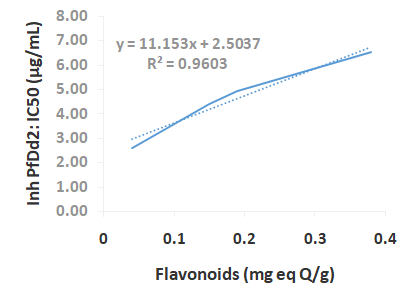
3.6. Correlation between Biological Activity and Chemical CompoundsWe obtained correlation between the activity biological carried out and the chemical compounds identified. The R2 value of the correlations between the antiplasmodial activity and flavonoids have had 0.96 (Figure 7). This correlation obtained have shown that the families quantified compounds contribute to the pathologies treaties in the traditional pharmacopoeia of Central African Republic.
E. utile, a tree known as Sipo, belonging to the Meliaceae family, has been the subject of ethnobotanical research and literature reviews, which have shown that this plant possesses significant therapeutic properties. These properties could be attributed to the presence of several compounds identified through chemical screening. The results of antioxidant activity tests on the four extracts (CYHA, DCM, EtOAc and MeOH) showed antioxidant activity very close to that of the reference compound, ascorbic acid.
Antiplasmodial tests on the four extracts against the two strains were positive, with the EtOAc extract exhibiting predominant antiplasmodial activity against the resistant strain.
To further this work, we plan to fractionate the extracts to separate, isolate, and perform spectral and structural analyses of the compounds responsible for the antioxidant and antiplasmodial activities. Thus, the correlation obtained between the antiplasmodial activities and the chemical composition (flavonoids) of the extracts of the studied plant yielded a better result.
CYHA: cyclohexane; DCM: dichloromethane; EtOAc: ethyl acetate; MeOH: methanol; DMSO: dimethyl sulfoxide; Na3PO4: sodium phosphate; DPPH: 2,2-diphenyl 1-picrylhydrazyl; DHA: Dihydroartemisinin; CQ: Chloroquine; Pf: Plasmodium falciparum; IC50: Inhbitory Concentration 50; µM: micromolar; EDTA: Ethyl Diamine Tetraacetic Acid; Na₂CO₃: Sodium Carbonate;
| [1] | Sophia TECHER., (2013). Criblage des activités biologiques des plantes endémiques ou indigènes de la Réunion, recherche de molécules antivirales ciblant le virus de chikungunya. Thèse de doctorat de l’université de la Réunion. | ||
| In article | |||
| [2] | O.M.S., (2002). Monagraphs on selected médicinal plants. Organisation mondiale de la santé. (2): 300-316. | ||
| In article | |||
| [3] | Kasongo Yakusu E., Monthe F. S., Bourland Nils H., Louppe O.J., Bola Mbele D., Lokanda F., Wannes Hubau. Kahindo Muhongya J. M., Bulcke J.V.D., Acker J. V., Hans Beeckman. (2018). Le genre Entandrophragma (Meliaceae): taxonomie et écologie d’arbres africains d’intérêt économique (synthèse bibliographique). Biotechnol. Agron. Soc. Environ. 22(2). | ||
| In article | View Article | ||
| [4] | Maneerat W., Laphookhied S., Koysomboon S., Chantrapromma, K., (2008). Antimalarial, antimiycobacterial and cytotoxic limonoids from Chisocheton siamensis. Phytomedicine 15, 1130-34. | ||
| In article | View Article PubMed | ||
| [5] | Tchouya G.R.F., Bickii J., Barhé T.A., Boyom F.F., Djakou B.L., Tchouankeu J.C., (2013). Antiplasmodial activities of limonoids from Entandrofragma angolense (Meliaceae) and their semi-synthetic derivatives: Study of the structure activity relationship, Spatula 3, 45-50. | ||
| In article | View Article | ||
| [6] | Vroh Bi Tra A., Ouattara D., KpanguI Kouassi B., (2014). Disponibilité des espèces végétales spontanées à usage traditionnel dans la localité d’Agbaou, de la Cote d’Ivoire. Journal of Applied Biosciences, ISSN 1997-5902.76: 6386 – 6396. | ||
| In article | View Article | ||
| [7] | Konda ku mbuta, Kabakura mwima, Mbembe bitengeli, Itufa y’okolo, Mahuku kavuna, Mafuta mandanga, Mpoyi kalambayi, Ndemankeni Izamajole, Kadima kazembe, Kelela booto, Ngiuvu vasaki, Bongombola mwabonsika, Dumu lody (Eds), (2012). Les plantes medecinales identifiees et étudiées. Dans Plantes médicinales de traditions province de l'équateur (pp.17-147). R.D. Congo. | ||
| In article | |||
| [8] | Worowounga X., Namkona A. F., Semboli O., Issa-Madongo M., Koueni-Ouakounda K.H., And Syssa-Magalé J. L., (2022). Quantification of Total Phenolics, Flavonoids, Tannins, Anthocyannins and Antioxidant Activities of Cola urceolata K. Schum. International Journal of Innovation and Applied Studies, 36: pp. 670-677. | ||
| In article | |||
| [9] | Namkona A.F, Bolevane O. S. F., MOUSTAPHA F., Worowounga X., Ngaissona P., KOANE J. N., Syssa-Magalé J. L., (2017). Biological activities and phytochemical analysis of extracts Afrostyrax lepidophyllus Mildbr seeds. The Journal of Phytopharmacology, 6 (2): 102-106. | ||
| In article | View Article | ||
| [10] | Evans C.E., Banso A., Samuel O.A., (2002). Efficacy of some nupe medicinal plants against Salmonella typhi: an in vitro study. Journal of Ethnopharmacology 80 (1): 21-24. | ||
| In article | View Article PubMed | ||
| [11] | Smilkstein M., Sriwilaijaroen N., Kelly J. X., Wilairat P., and Riscoe M., (2004). Simple and inexpensive fluorescence-based technique for high-throughput antimalarial drug screening. Antimicrob. Agents Chemother. 48: 1803–1806. | ||
| In article | View Article PubMed | ||
| [12] | Jonville M. C., Kodja H., Humeau L., Fournel J., Chariot A., De Mol P., Cao M., Angenot L., Frédérich. M., (2008). Evaluation of medicinal plants from Reunion Island for antimalarial and cytotoxic activities. Planta Med 2008; 74. | ||
| In article | View Article | ||
| [13] | Tatuedom kamgue ostend. (2015). Constituants chimiques des ecorces du tronc de deux plantes medicinales du Cameroun : pauridiantha callicarpoides hiern (rubiaceae- et entandrophragma cylindricum sprague (meliaceae; transformations chimiques et activites anti-inflammatoires de quelques composés. Thèse de doctorat université de Yaoundé1, Cameroun. | ||
| In article | |||
| [14] | Nnanga Nga, Vandi D., Famen Ndel L. C., Sidjui Sidjui L., Sikadeu S., Ngue S. A., Toghueo Kouipou R. M., Nganso Ditchou Y. O., Mpondo Mpond O E., (2016). Phytochemistry and in vitro Antimicrobial, Antioxydant Activities of Entandrophragma candollei H. Journal of Applied Pharmaceutical Science. 6 (05): 073-079. | ||
| In article | View Article | ||
| [15] | Elizabeth A., Balogun S. D., Ayeni Al-Ameen O., Otolorin , Damilare E. R., (2021). Anti-diabetic and Antidyslipidemic Activities of Entandrophargma Cylindricum Extract on Streptozotocin-Induced Diabetic Rats. Biointerface Research in applied chemistry: 11(6): 14251-14259. | ||
| In article | View Article | ||
| [16] | Kamkumo R. G., Betene A.N.M., Tsouh Fokou P.V., Donfack J.H., Tsakem Nangap M.J., Ngako. A., Fokou R., Tchatat Tali. M. B., Ngueguim Tsofack.F D.T., Fekam Boyom F., Dimo T., Fekam Boyom F. (2020). Antimalarial Effects of the Aqueous Extract of Entandrophragma angolense Bark on Plasmodium berghei Infection in Mice. Pharmacognosy J. 12(4): 687-69. | ||
| In article | View Article | ||
Published with license by Science and Education Publishing, Copyright © 2026 NGUIMALE KOUZOULOGBI BAPASSI Theodore, ZINGA Innocent, TCHINDA TIABOU Alembert, NGAISSONA Paul, KOUENI OUAKOUNDA Kevin Herman, YAMTHE Love, MOTOMBI Henri and WOROWOUNGA Xavier
 This work is licensed under a Creative Commons Attribution 4.0 International License. To view a copy of this license, visit
http://creativecommons.org/licenses/by/4.0/
This work is licensed under a Creative Commons Attribution 4.0 International License. To view a copy of this license, visit
http://creativecommons.org/licenses/by/4.0/
| [1] | Sophia TECHER., (2013). Criblage des activités biologiques des plantes endémiques ou indigènes de la Réunion, recherche de molécules antivirales ciblant le virus de chikungunya. Thèse de doctorat de l’université de la Réunion. | ||
| In article | |||
| [2] | O.M.S., (2002). Monagraphs on selected médicinal plants. Organisation mondiale de la santé. (2): 300-316. | ||
| In article | |||
| [3] | Kasongo Yakusu E., Monthe F. S., Bourland Nils H., Louppe O.J., Bola Mbele D., Lokanda F., Wannes Hubau. Kahindo Muhongya J. M., Bulcke J.V.D., Acker J. V., Hans Beeckman. (2018). Le genre Entandrophragma (Meliaceae): taxonomie et écologie d’arbres africains d’intérêt économique (synthèse bibliographique). Biotechnol. Agron. Soc. Environ. 22(2). | ||
| In article | View Article | ||
| [4] | Maneerat W., Laphookhied S., Koysomboon S., Chantrapromma, K., (2008). Antimalarial, antimiycobacterial and cytotoxic limonoids from Chisocheton siamensis. Phytomedicine 15, 1130-34. | ||
| In article | View Article PubMed | ||
| [5] | Tchouya G.R.F., Bickii J., Barhé T.A., Boyom F.F., Djakou B.L., Tchouankeu J.C., (2013). Antiplasmodial activities of limonoids from Entandrofragma angolense (Meliaceae) and their semi-synthetic derivatives: Study of the structure activity relationship, Spatula 3, 45-50. | ||
| In article | View Article | ||
| [6] | Vroh Bi Tra A., Ouattara D., KpanguI Kouassi B., (2014). Disponibilité des espèces végétales spontanées à usage traditionnel dans la localité d’Agbaou, de la Cote d’Ivoire. Journal of Applied Biosciences, ISSN 1997-5902.76: 6386 – 6396. | ||
| In article | View Article | ||
| [7] | Konda ku mbuta, Kabakura mwima, Mbembe bitengeli, Itufa y’okolo, Mahuku kavuna, Mafuta mandanga, Mpoyi kalambayi, Ndemankeni Izamajole, Kadima kazembe, Kelela booto, Ngiuvu vasaki, Bongombola mwabonsika, Dumu lody (Eds), (2012). Les plantes medecinales identifiees et étudiées. Dans Plantes médicinales de traditions province de l'équateur (pp.17-147). R.D. Congo. | ||
| In article | |||
| [8] | Worowounga X., Namkona A. F., Semboli O., Issa-Madongo M., Koueni-Ouakounda K.H., And Syssa-Magalé J. L., (2022). Quantification of Total Phenolics, Flavonoids, Tannins, Anthocyannins and Antioxidant Activities of Cola urceolata K. Schum. International Journal of Innovation and Applied Studies, 36: pp. 670-677. | ||
| In article | |||
| [9] | Namkona A.F, Bolevane O. S. F., MOUSTAPHA F., Worowounga X., Ngaissona P., KOANE J. N., Syssa-Magalé J. L., (2017). Biological activities and phytochemical analysis of extracts Afrostyrax lepidophyllus Mildbr seeds. The Journal of Phytopharmacology, 6 (2): 102-106. | ||
| In article | View Article | ||
| [10] | Evans C.E., Banso A., Samuel O.A., (2002). Efficacy of some nupe medicinal plants against Salmonella typhi: an in vitro study. Journal of Ethnopharmacology 80 (1): 21-24. | ||
| In article | View Article PubMed | ||
| [11] | Smilkstein M., Sriwilaijaroen N., Kelly J. X., Wilairat P., and Riscoe M., (2004). Simple and inexpensive fluorescence-based technique for high-throughput antimalarial drug screening. Antimicrob. Agents Chemother. 48: 1803–1806. | ||
| In article | View Article PubMed | ||
| [12] | Jonville M. C., Kodja H., Humeau L., Fournel J., Chariot A., De Mol P., Cao M., Angenot L., Frédérich. M., (2008). Evaluation of medicinal plants from Reunion Island for antimalarial and cytotoxic activities. Planta Med 2008; 74. | ||
| In article | View Article | ||
| [13] | Tatuedom kamgue ostend. (2015). Constituants chimiques des ecorces du tronc de deux plantes medicinales du Cameroun : pauridiantha callicarpoides hiern (rubiaceae- et entandrophragma cylindricum sprague (meliaceae; transformations chimiques et activites anti-inflammatoires de quelques composés. Thèse de doctorat université de Yaoundé1, Cameroun. | ||
| In article | |||
| [14] | Nnanga Nga, Vandi D., Famen Ndel L. C., Sidjui Sidjui L., Sikadeu S., Ngue S. A., Toghueo Kouipou R. M., Nganso Ditchou Y. O., Mpondo Mpond O E., (2016). Phytochemistry and in vitro Antimicrobial, Antioxydant Activities of Entandrophragma candollei H. Journal of Applied Pharmaceutical Science. 6 (05): 073-079. | ||
| In article | View Article | ||
| [15] | Elizabeth A., Balogun S. D., Ayeni Al-Ameen O., Otolorin , Damilare E. R., (2021). Anti-diabetic and Antidyslipidemic Activities of Entandrophargma Cylindricum Extract on Streptozotocin-Induced Diabetic Rats. Biointerface Research in applied chemistry: 11(6): 14251-14259. | ||
| In article | View Article | ||
| [16] | Kamkumo R. G., Betene A.N.M., Tsouh Fokou P.V., Donfack J.H., Tsakem Nangap M.J., Ngako. A., Fokou R., Tchatat Tali. M. B., Ngueguim Tsofack.F D.T., Fekam Boyom F., Dimo T., Fekam Boyom F. (2020). Antimalarial Effects of the Aqueous Extract of Entandrophragma angolense Bark on Plasmodium berghei Infection in Mice. Pharmacognosy J. 12(4): 687-69. | ||
| In article | View Article | ||