This work aimed to identify wild insects consumed by indigenous peoples living near the forest in the Pissa Sub-prefecture in the Central African Republic. Among the Austrian peoples, we have: The Ngbaka, the Mbati, the Bambenga (pygmies). To do this, ethnobotanical investigations were carried out from May to September 2023 in four villages with 60 randomly selected individuals (predominantly Ngbaka peoples). The survey conducted in the study area identified six (6) Orders of wild insect species include individuals edible to humans. The most commonly consumed insects are caterpillars (Lepidoptera) (38.46%) and beetles (19.23%). These are followed by green grasshoppers, locusts and crickets (Orthoptera) (15.38%), termites (Isoptera) (15.38%), bees and ants (Hymenoptera) (7.7%) and bedbugs (Heteroptera) (3.85%). These insects are usually cooked, fried and eaten at the egg, nymph, larval and adult stages. They are also used as ingredients in the local preparation of various recipes. Also, each insect is prepared according to a traditional process that is specific to it. However, Lepidoptera caterpillars are the most commonly consumed and sold. Apart from use as food and sources of income, the indigenous (Ngbaka, Mbati and Pygmées) people lend insects other virtues. However, Edible wild insects' harvesting techniques, conservation and packaging techniques remain limited and traditional. Faced with the phenomena of deforestation and climate change, many efforts must be made in the scientific and political fields in order to achieve a better knowledge, cultivation, conservation and valorization of these biological resources.
In the world and more particularly in Africa, insects occupy a significant place in the life of living beings where they provide the essential part of nutritional needs. In the future edible insects could replace meat and offer a practical solution in terms of food security 1. The results of studies carried out by Evanson and al 2 (2024), gave an identification of 2205 species of insects, consumed in 128 countries around the world. The use of alternative food sources is strongly encouraged due to the increasing demand for animal proteins and minerals 3.
In general, insects are rich in mineral salts such as iron, zinc, calcium and phosphorus as well as vitamins B and D. Edible insects represent an alternative food source for humans that is rich in proteins, amino acids and minerals Lu and al 4.This has an advantage for humans because the consumption of wild insects provides the body with essential, healthy and healthy micronutrients. Edible insects also offer diverse essential nutrients, antimicrobials, enzymes, and chitin 5, 6. In recent years, recognition of the role of edible insects in food security has increased significantly worldwide due to their nutritional properties. Edible insects have attracted a lot of attention today due to their proper nutritional composition, high mineral content (Fe, Zn, Ca, Mg), and their potential use as a supplement in the human diet 7.
Previous studies have highlighted the nutritional value, types, preprocessing technologies, and health benefits of insects available for human consumption. Previous reviews have highlighted the nutritional value, types, pre-treatment technologies, and health benefits of insects available for human consumption. Therefore, insect proteins can be integrated into food systems as high-value functional ingredients. 8.
In the Central African Republic in particular, insects, like wild mushrooms, occupy a prominent place in the diet of rural and urban populations 9. To date, few studies have been carried out on edible wild insects from a scientific point of view. Nevertheless, they are increasingly taken into account in the human diet. However, there is still an information gap to be filled. Efforts must be made at the national level for a better scientific knowledge of edible insects with a view to their valorization in the food system and consumption habits of Central African populations.
The present study aims to explore and document the insects consumed by different ethnic groups in the study area. The study also aims to determine the diversity and abundance of edible insects in the study area.
To our knowledge, it is for the first time that such a study is carried out in the aforementioned sub-prefecture.
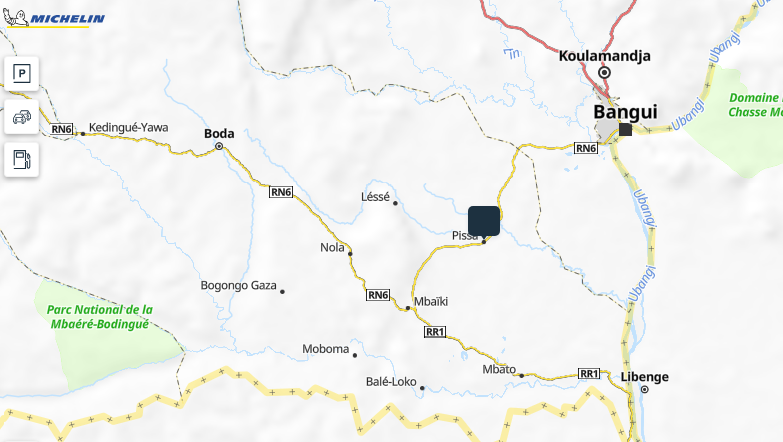
Pissa is located in the Lobaye region of the Central African Republic (Figure 1). It is located southwest of the capital Bangui (Coordinates: 4°3′7"N 18°11′52"E). La Lobaye is one of the twenty (20) prefectures of the Central African Republic. It is located in the south-west of the country, on the border of the Republic of Congo and the Democratic Republic of Congo. It covers an area of 19235 km2 with a population of 246,875 inhabitants (RGPH, 2022) for a density of 12.83 inhabitants per km2. The climate is of the humid tropical type, characterized by the alternation of the dry season and the rainy season. The average temperature is 27°C with an average annual rainfall of 1,800 millimetres. The soil is of the ferralitic type. The flora is represented by large tropical forests. It belongs to the Guineo-Congolese region, to the domain of the Congo Basin. This region is home to significant activity in the informal sector.

The technical equipment used for ethnobotanical investigations consists of a survey sheet, a GPS tracking device, a digital camera, a tool made of plastics and small bottles filled with alcohol for the preservation of samples.
2.3. Biological MaterialThe biological material consists of insects recognized and consumed by the indigenous Ngbaka peoples of the Sub-Prefecture of Pissa. During field investigations, insect samples were collected and stored in alcohol at 95° for subsequent identification. The determination of the species encountered was made with the collaboration of entomologists from the Laboratory of Plant and Fungal Biology of the Faculty of Sciences of the University of Bangui.
2.4. Data CollectionIn this work, ethnobotanical surveys were carried out in four villages, chosen according to their geographical positions near the forest where the collection of edible insects is frequently practiced (Bogbatè, Boyali, Pissa and Kapou). The levels of knowledge of edible insects were only assessed among the indigenous people (Ngbaka, Mbati and Pygmies) and the sub-prefecture of Pissa, after a preliminary survey that led to their identification.
In each village, fifteen (15) people were interviewed, randomly chosen according to their availability, for a total of 60 people surveyed. The main points on which the exchanges are focused are: vernacular names, uses, collection techniques, period, habitat, traditional preparation processes and their origin as well as insect consumption patterns. For all these surveys, the Semi-structured method was used to collect information, using the survey sheet. The ethnobotanical survey period took place from May to September 2023 taking into account the alternating rhythm of the two seasons in the study site.
The survey conducted in the study area identified six (6) Orders of insect species including edible individuals for humans. These insects are eaten at different stages of their development cycles (eggs, nymphs, juveniles and adults). The genus Imbrassia has the highest specific diversity with 5 species. However, the caterpillars of Lepidoptera are most commonly consumed. Other insects are also eaten, but on a smaller scale. These results reveal that the way of life of the Ngbaka indigenous peoples is still traditional and that their diet is still dependent on the harvesting of Non-Timber Forest Products (NTFPs). These results also show the important role of a SAI-based diet in ensuring health and well-being. These peoples surveyed still retain their own food customs, knowledge and traditional knowledge with a diversity of culinary practices specific to them. The endogenous knowledge inherent in edible insects held by this ethnic group can positively influence the management of these biological resources. The following Table 1 provides information on the ethnobotanical data and ecological characteristics of wild insects consumed in the study area.
The results of Table 1 above show that 26 specimens of edible insects have been identified and are distributed in 6 Odres and 12 different families. The Lipidoptera odra is the most diverse with 3 families, followed by Beetles (2 families), Hymenoptera (2 families) and Isoptera (2 families). However, the Odre of the Heteroptera is the least diverse with a single family (Bellostomatidae).
The results of this same table also indicate that the most represented families are Saturniidae (23.07%) and Scarabaeoidae (15.38%). These are followed by Macrotermitinae (11.53%), Grillidae (11.53%), Notodontidae (7.69%) and Nymphalidae (7.69%). However, the family Curculionidae, Tettigonidae, Formicidae, Termidae and Apidae are the least represented with 3.84% of specimens each.
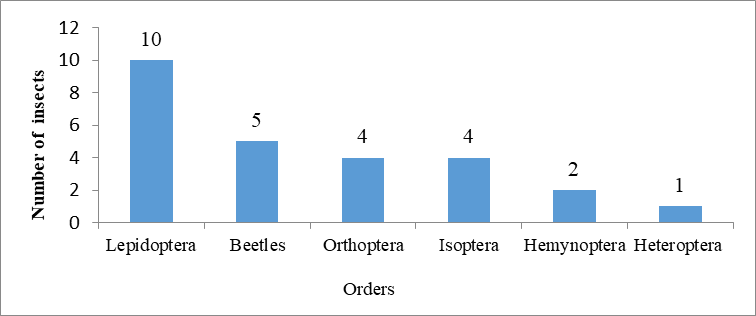
Figure 2 shows the 26 species of wild insects that are actually edible have been identified. They were divided into 6 Orders and 12 different families. The Order of Lepidoptera is the best represented with 10 species or 38.46%. Then come the Beetles with 5 species (19.23%), followed by the Orthoptera and Isoptera with 4 species each encompassing 30.76% and the Hymenoptera with 2 species (7.7%). However, there is a very low representativeness of Heteroptera with only one species consumed, or 3.85% of the total insects recorded. Lepidoptera are usually eaten in the caterpillar stage and Hymenoptera are eaten in the egg, nymph, larval and adult stages. The larvae and adults of beetles are both eaten, while Orthoptera, Isoptera and Heteroptera are mainly eaten in the adult stage. The following Figure 3 provides information on the number of Edible wild insects identified by Recognized Orders.

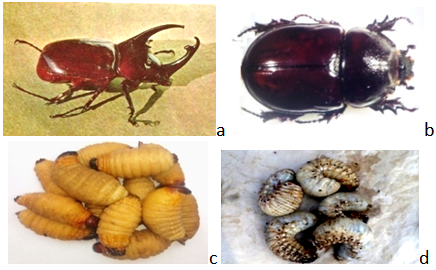
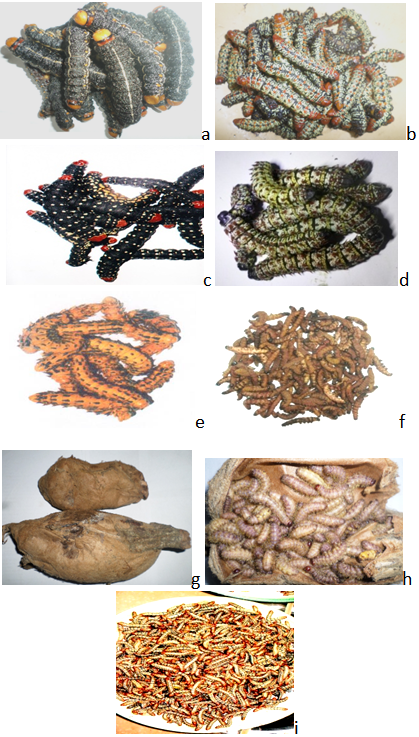
They are eaten at the pupae stage, larvae and rarely at the adult stage. These are mainly: Augosaoma centaurus, Oryctes boas, Oyctes owariensis, Pseudotrocalus schulbotzi, Rhyncophorus phoenicis. By far the most popular edible beetle in the study area is the palm weevil (Rhyncophorus phoenicis). The larvae of this species, assimilated to a white caterpillar is the most appreciated and consumed. They are present all year round, where there are fallen palms that serve as breeding sites and ecological niches. Figure 3 below illustrates some of the beetles consumed in the study area.

The beetles recorded represent an important food resource for the peoples surveyed. These foods are particularly appreciated by households in the prospected villages.
The exploitation of these insects is carried out on an occasional basis. They are plucked with their bare hands from dead, rotten and melted oil palms and raffias. The extraction and collection of these animal resources is carried out by men, skilled in the manufacture of raffia and palm wines. Some female farmers also occasionally collect adult larvae and beetles from their fields. Coffee beetles are harvested when they emerge from the ground in coffee plantations where they are then easy to harvest.
The harvest period of adult beetles is periodic while that of their larvae is annual. The use of larvae is limited to domestic consumption 10. States that the size of the larvae that grow in the trunks of oil palms is small, which is why these species are only harvested for subsistence purposes.
In the villages surveyed, the majority of respondents (80%) say that to support the production of edible larvae that feed on organic dead matter including Rhynchophorus phoenicis, oil palms are intentionally cut down to promote the decomposition process. After two or three weeks, which makes it especially easy to extract larvae that can be found in sufficient quantities. However, any surplus is likely to be sold in local markets. This practice can contribute significantly to the decline of the oil palm population in this surveyed area. The culturally appropriate solution is, among other things, field missions focused on raising awareness among the populations concerned so that they adopt other techniques for the collection of edible larvae.
Once harvested, these products are destined directly for domestic consumption. They are highly perishable products so they are not processed in a dry state.
The production of edible beetles is limited in nature so that they are the subject of a particularly rare economic activity in the study area. However, the larvae of these insects are only available in traditional markets sporadically.
They are usually fried combined with the condiments needed to savor the taste. They can also be seasoned, perforated and put on the bamboo stems and then grilled. Oil palm white weevils (Rhyncophorus phoenicis) are popular throughout the study area and are popular delicacies in many households in Pissa. Among the Ngbaka, according to their custom, the traditional dishes of the larvae of palmiesr (Rhyncophorus phoenicis) are reserved only for village dignitaries during ritual ceremonies.
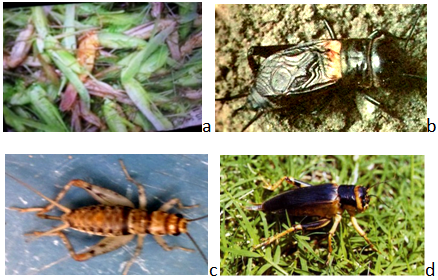
The edible Orthoptera encountered in the study area are mainly green and brown grasshoppers (Ruspolia differens), bush crickets (Brachystrypes membranaceus), country crickets (Gryllus campestris), house crickets (Gryllus domesticus). They are all consumed in the adult stage. In this group, green grasshoppers are the most appreciated and consumed. They have a protein content that varies from 50 to 75, which contributes to well-being and nutritional balance. As for the other Orthoptera, their consumption remains limited. Figure 4 below illustrates the four Orthopthers consumed in the Sub-prefecture of Pissa.
The grasshoppers and the three edible crickets identified are used as an essential part of the diet by the populations surveyed.
Green grasshoppers are harvested assiduously during the favorable period from November to December. They are traditionally picked up by women and children. As for crickets, they are often collected in warm, dark places within fields and in the bush. House crickets are collected occasionally. From this collection, a small quantity of the collected products enters the family self-consumption and the surplus is sent to traditional markets for sale. Grasshoppers and crickets are highly perishable products. Once harvested, they are traditionally kept fresh in metal containers, bottles and plastics for up to three days. In general, they are not processed in a dry state.

Grasshoppers and country crickets are generally sold fresh in the small traditional markets of the villages surveyed and even in front of concessions of dwellings but in small quantities. Except domestic crickets which are not marketed.
Grasshoppers are usually fried. The preparation of these products requires only water, onion and salt because these resources are very rich in oil. On the other hand, in crickets, the preparation consists first of boiling them and then frying them with a good amount of condiments to savor the taste. In most cases, the wings should be removed and cleaned with water before preparation. Prepared Orthoptera are usually eaten fried as a protein food. Usually, grasshoppers are served as a simple dish without accompaniment to vegetables or meat 11.
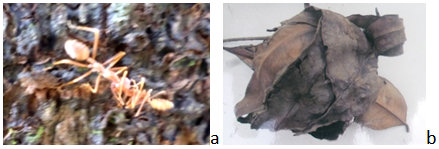
The Hymenoptera consumed are red ants (Oecephylla longinoda) in the adult stage and brood (eggs, nymphs and larvae) of bees (Apis mellifera) (Figure 5). The latter are the most consumed and the most appreciated while red ants are occasionally consumed in the adult stage. Detailed nutritional analysis has shown that bee brood (probably Apis mellifera) is an excellent source of energy, amino acids, essential minerals and B vitamins 12.

Hymenoptera are a food appreciated by the Ngbaka ethnic group. Apart from food use, the peoples surveyed use the acid-flavored hemolymph contained in the abdomen of Oecephylla longinoda to treat tooth decay. In addition, the solution resulting from the maceration of a large amount of Oecephylla longinoda is used in traditional medicine to treat female sterility. As for bees, in addition to serving as a food source, they produce substances used by Ngbaka ethnic groups from ancestral times to this day. In addition to honey, consumed for its sweeter power than sucrose, bees produce royal jelly, which are very rich in nutrients. They also manufacture different building materials such as wax, used in cosmetics and propolis (mortar and anti-infective sanitizing the hive) which is consumed by the Ngbaka for its antibiotic and antifungal properties. Red ants are collected from tree trunks with their nest. Brood (eggs, nymphs, larvae) of bees are often removed from the cells after collection at the swarms. They are traditionally harvested throughout the year.
Red ants are eaten raw. Brood (eggs, nymphs, larvae) of naturally sweet bees are also eaten raw.
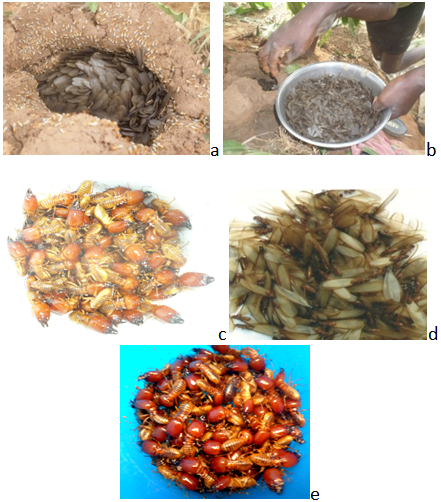
The villages surveyed are home to termites that build their ecological nests in the form of fungi (Cubitermes sp.), medium-sized, brown-colored winged termites (Macrotermes bellicocus) and large brown winged termites (Macrotermes subhyalinus) termite mounds erected above ground, fairly light-winged, medium-sized, dark-colored termites (Pseudocanthotermes militaris). Within this group, the species, Macrotermes bellicocus is the most valued and consumed, followed by Macrotermes subhyalinus. Their content of fatty acids such as linoleic acid is particularly high 13. However, the other two Isoptera are little consumed. Termites serve as food for the inhabitants of Pissa (Ngbaka, bati and Pygmés). They represent an important source of protein and fats providing a quality diet to these populations surveyed (Figure 6). Termites are also used as bait for traditional trap fishing and also to bait wild birds. Sometimes they are ground to powder with a pestle in a mortar and eaten with honey 14. The Azande peoples and Pygmies in the Democratic Republic of Congo fry meat in fatty residues from termites 15, 16. Pygmies use this oil to treat their bodies and hair. Termite oil is extracted by pressing dried termites into a pipe 17. From the point of view of traditional medicine, the indigenous Ngbaka peoples transform the land of the epigeal termite mounds into mud in its raw state to treat mumps disease. From the point of view of traditional medicine, the indigenous Ngbaka peoples transform the land of the epigeal termite mounds into mud in its raw state to treat mumps disease. They also even transform this soil into powder that pregnant women consume to combat lack of appetite and vomiting. They also even transform this soil into powder that pregnant women consume to combat lack of appetite and vomiting. Apart from these medical practices, the Ngbaka peoples use the earth of epigeal termite mounds in the construction of traditional huts, pottery, the making of conservation granaries and traditional stoves, and finally as natural einkorns in cornfields.
In most parts of the Central African Republic, termites are collected at the beginning of the rainy season. Winged forms are picked up manually when they appear in swarming. The soldiers (non-winged form) are picked up in the termite mound using a cut stem of bamboo. Most of the time, it is women and children who take care of the collection to supplement the family diet. The termites harvested are reserved on the one hand for family self-consumption and on the other hand intended for sale on traditional markets.

Once they are collected, they are traditionally kept in bowls, containers, plastic buckets or plates containing a little water. In general, the large quantity harvested is often packaged and preserved to increase the time for later consumption and also for sale in times of scarcity. Termites are sold in a cool or dry state in traditional markets and in front of the concessions of dwellings in the villages surveyed. The sales practice occupies rural women. In many villages and owns in East Africa, sun-dried termites can be purchased in local markets 18.
Fresh winged termites are usually fried. Condiments are added to savor the taste. They can also be incorporated into the preparation of pistachios. Dried termites are used as ingredients in the preparation of various traditional recipes. Termites are rich in protein, fatty acid and various nutrients. Fried or dried, termites contain 32 to 38% protein 13, 19, 20. Outside the Central African Republic, consumption of soldiers of the largest termite species has been recorded in the Democratic Republic of Congo, the Bolivarian Republic of Venezuela and Zimbabwe 15, 16, 18, 21, 22. In Uganda, only heads are eaten 23. Overall, termites are eaten both as a main dish and as a side dish, or simply as a snack after skinning, fried or cooking. Among the Ngbaka, termite queens are considered particularly valuable dishes, often reserved for special occasions or during traditional ceremonies to high dignitaries.
In the villages surveyed, the larvae of Lepidoptera referred to as caterpillars are edible. This is mainly Anaph sp., Anaph venata, Cymonthe aramis, Cymonthe caenis, Imbrassia epimethea, Imbrassia obscura, Imbrassia oyemensis, Imbrassia sp., Imbrassia truncata, Pseudanthera discrepans. The Lepidoptera most appreciated by the ethnic group surveyed are Imbrasia epimethea (particularly rich in protein), Imbrassia oyemensis and Anaphe spp. Figure 8 below shows some species of caterpillars consumed in the study area.

Edible caterpillars are a food resource of great importance in CAR in general and in the Sub-prefecture of Pissa in particular (Figure 7). It is also a source of protein and dietary diversification. They are an integral part of the diet of the Ngbaka indigenous peoples during their seasonal emergence period from June to September. They are a popular food in both urban and rural areas.
The caterpillars are widely responded in the forest of the Sub-prefecture of Pissa from June to September. They are usually collected on the ground, on the base and trunk of host trees. However, in some cases, the harvest of some caterpillars is done unhappily, very often by cutting down host plants. This is detrimental to the natural regeneration of the resource and considerably reduces the seasonal availability of the caterpillars concerned. To reverse the trend, the strategy to improve this activity will, among other things, raise awareness among villagers to avoid this method of harvesting. In the villages surveyed, collection practices involve men and their wives and children who camp for a maximum of four months in forest environments.
There are two techniques for preserving caterpillars among the Ngbaka. On the one hand, they are exposed to smoke until they are completely clogged, and on the other hand, they are boiled in salt water and then exposed to the open air in the sun. The blocked caterpillars are often sent to the Central African diaspora in Europe.
Economically, caterpillars are probably the most important on a rural scale. In the villages surveyed, a modest quantity of live and fresh caterpillars is marketed to wholesalers who leave to stock up on traditional markets and on places close to the forests. During the months of June to September, various caterpillars flood the urban markets of the city of Bangui in modest quantities. Overall, caterpillars of the genus Imbrassia, undoubtedly the most valued and lucrative species on a national scale. Various studies devoted to the sale of edible caterpillars have revealed that this activity is presented as generating significant income 21, 22. Caterpillars are an integral part of non-timber forest food products marketed on local, national, regional and international markets, particularly in France and Belgium 23. Specifically, the female gender of the Ngbaka ethnic group plays a significant role in the research, harvesting, preparation and sale of Lepidoptera referred to as caterpillars in rural areas.
Fresh caterpillars are first cleaned in cold water. Fresh caterpillars are first cleaned in cold water. After removing their intestines, they are fried for about 5 minutes with condiments necessary to make the taste pleasant. After removing their intestines, they are fried for about 5 minutes with condiments necessary to make the taste pleasant. Blocked caterpillars are often used as one of the components of traditional recipes. Blocked caterpillars are often used as one of the components of traditional recipes. Nowadays, you can also find elaborate dishes and traditional African recipes made from caterpillars in the menus of restaurants in the city. Nowadays, elaborate dishes and traditional African recipes made from caterpillars can also be found in the menus of restaurants in the city of Bangui. Among the Ngbaka, a pregnant woman cannot consume Imbrasia truncata caterpillars because she can give a child with large teeth, obese and shy. In the city of Bangui, it has been found that caterpillars of the genus Anaph, locally called Ndossi poorly cooked by some ethnic groups, if consumed, harmful effects include nausea, difficulty swallowing and digesting, vomiting and skin allergies. However, more in-depth research on the consequences of the consumption of these Lepidoptera referred to as caterpillars is necessary. Overall, caterpillars play an important role in food security. They are particularly popular during the rainy season, although their availability is seasonal depending on the country's climatic conditions. In addition, their consumption is correlated with the period of abundant availability of wild edible mushrooms from the forest and Central African savannah.
The species consumed in the survey area is a water bug of the genus Bellostoma. Only adults are edible. According to information gathered from villagers, freshwater bugs are also considered particularly fit for human consumption and are prepared as food for humans in very few households.
Although the bug is considered food, its culinary uses remain much lower in all the villages surveyed. Nevertheless, it makes an important contribution to the diet of indigenous Ngbaka peoples living near the forest in the Sub-prefecture of Pissa.
The edible stink bug lives in fresh water. Their collection takes place during the freshness very early in the morning. From this harvest, the quantity collected is often limited and goes directly into the family self-consumption. As a result, they are not always found in rural markets. Water bugs are usually cooked in the adult stage. They are cleaned in boiling water and then fried with condiments necessary to savor the taste. Although water bugs are edible, their consumption remains limited. Data on the nutritional value of water bugs is scarce, although some reports exist on stink bugs.
On a continental scale and more particularly in the Central African Republic, malnutrition is still present and perceptible. Except insects are a very nutritious and healthy food source, with a content of fats, proteins, vitamins, fiber and minerals. Thus, given their nutritional value and easy access to harvest them from the wild, insects can be an adequate and effective solution to combat poverty and food insecurity by providing emergency food and significantly improving livelihoods and the quality of traditional diets of vulnerable people in rural areas.
In addition, food security is of particular importance for new food sources. In the context of edible insects, there are four major risks to food safety: consumers of insects may experience an allergic reaction; the insect may carry humaic pathogens; the insect itself may be toxic (intrinsic risk) and the insect may carry toxic substances (extrinsic risk).
Insects can also become contaminated during harvest, during storage, during traditional dry processing (smoking and air drying under the sun), during pre-cooking processing, during traditional culinear practices (boiling, cooking, frying, roasting) and when insects are ready to eat. These risks are a major concern for human health. For these reasons, hygienic practices from harvest to consumption are of great importance in order to ensure the food security of edible wild insects.
In view of the above, a more thorough experimental analysis in the laboratory of Edible wild insects would be necessary in order to measure and prevent health risks associated with their consumption. Another point in the field of nutrition is the analysis of the carcinogenic risks of smoked caterpillars. The need for strategies for growing Edible wild insects could also go a long way towards controlling potential biological hazards that could affect insects in their controlled diet and environment.
Of all these data, the exploitation of Edible wild insects in the Central African Republic, particularly in the Sub-prefecture of Pissa, therefore has nutritional and socio-economic advantages. The harvesting and sale of these biological resources not only contribute to strengthening food security, but also contribute to the household economy, especially for women and girls who enter the non-timber forest food products chain, including CSIs in rural areas.
Various studies in Africa have shown the importance of insects in the human diet 23, 24. In the Central African Republic in particular, some studies have been conducted on edible insects 25, 26, 27. However, these data are limited and fragmentary. Many species from Edible wild insects have yet to be documented in the Central African Republic not only for a food perspective but also for scientific knowledge. In addition, of all the existing literature on the species of Edible wild insects, the peculiarity of those consumed in the territory of Pissa is still not available. This situation has drawn our attention to the diversity of wild insects that the indigenous Ngbaka peoples in particular draw in the wild for food use. Filling existing gaps in previous work through this study will provide knowledge for the management of wild populations of edible insects in the Central African Republic. In addition, this study will complement other previous work in Africa.
The present study revealed that the genus Imbrassia has the highest specific diversity with 5 species. The 26 wildlife insect species identified are integral to non-timber forest food products and are harvested from the wild, on agricultural land and in forests. They are one of the main sources of basic food that contribute significantly to the livelihoods and incomes of the people surveyed. Nationally, the popularity of human consumption of edible insects is increasing, especially in the city of Bangui.
The results of our investigations also revealed that the insects identified are generally eaten cooked or fried at the egg, nymph, larval and adult stages. With the exception of termites which can be eaten occasionally raw. Sun-dried termites can be ground into powder and mixed with other food ingredients by cooking, boiling, incorporated into pistachios. Similar results have been obtained in various studies conducted at other sites in Africa 28, 29, 30, 31, 32, 33. From a health point of view, insects have a very interesting nutritional composition and they ensure food security for populations in rural areas. Increased consumption of edible wild insects can be an effective way to combat malnutrition in the Central African Republic. The harvest of insects is generally manual, and can be individual or family. The diversity of Edible wild insects and their life history mean that each year there are a considerable number of their respective individuals and their derivatives in nature, on agricultural land and in forests. Among the Ngbaka, collecting insects is an essential task in the search for food. Traditional methods of preserving CSIs remain air drying in the sun and smoking. It is a strategy for livelihoods, selling and strengthening food security in times of scarcity or hardship. The profits from the sale of these animal resources are significant and are essential for the households surveyed. Similar results have been obtained in other previous studies in Africa 34, 35, 36. Overall, improving harvesting techniques, conservation and processing of Edible wild insects could increase their availability as well as the benefit associated with their consumption and sale.
From all these results, it can be seen that the Edible wild insects identified constitute an important dietary source of animal protein intake for the indigenous Ngbaka peoples living in the Congo Basin. These peoples have an excellent knowledge of the local taxonomy, habitat, production periods, peaks of abundance of insects they use for food each year. All of this empirical knowledge inherent in Edible wild insects is passed down from one generation to the next. To this end, these peoples surveyed constitute a human factor to be sensitized and educated in any program of management and valorization of these biological resources. From a sustainable development perspective, the valuation of Edible wild insects seems more interesting. Such an approach could help fight hunger but can also contribute efficiently to limiting protein deficiencies in the Central African Republic. In addition, it can provide significant income opportunities for people in rural areas. Close collaboration between governments, scientists and rural communities could essentially lead to the significant development of entomology. In addition, scientific research is needed to identify wild edible insects.
Insects containing toxic substances in order to measure and prevent health risks related to their consumption. Similarly, good hygiene practice of well-prepared, ready-to-eat insects is important to avoid the potential risk of microbial contamination. From the above, the need to inform villagers about the good practices of Edible wild insects, and even ready to consume, is paramount to ensure a food product that is microbiologically safe and certain for human health. The study also revealed that women and children play an active role in the SAI sector, engaging in the harvesting, processing and sale of these products. Sustainable management and development policies for the non-timber forest food products
sector need to take into account the different roles played by men and women in SAI-related activities in order to involve them accordingly. In the villages surveyed, activities that degrade the forest endanger the existence of wild populations of edible insects. Although Edible wild insects are very diverse and abundant in the study area, it is evident that these resources are among the most sparing resources given the ever-increasing deforestation as they are naturally attached to specific habitat types. Climate change is likely to affect the distribution and availability of Edible wild insects in even larger proportions. For these reasons, the maintenance of biodiversity remains a major concern. Protecting the forest is considered essential for the indigenous Ngbaka peoples whose way of life is still traditional and their livelihood is still dependent on natural resources.
This study carried out in the Pissa forest area in the Central African Republic identified a diversity of wild edible insects. Edible insects play a crucial role in the food and nutrition security of rural communities in Pissa. These studies highlighted indigenous knowledge about the collection and preparation of edible insects. This knowledge must be preserved, as it can play an important role in promoting edible insects as food. These edible insects contribute to the diet of various rural and urban populations, and have a very important potential in the fight against hunger and undernutrition in the Central African Republic. They also represent a very important potential to generate income and jobs for the rural communities that harvest, process and market them.
In view of the food and economic potential of edible wild insects, their valorization is necessary and indispensable. Therefore, it would be desirable to extend the study to other regions of the country in order to collect sufficient information for a possible plan for the cultivation/domestication/conservation of these natural resources. Such studies could provide insight into the role of edible wild insects in various traditional food systems and provide perspectives on opportunities to develop the sector at the national level. The realization of such studies could also contribute to a better knowledge of African entomology in general and that of the Central African Republic in particular.
|
| [1] | Tchibozo S., Malaisse F., Mergen P (2016). Insectes consommés par l’Homme en Afrique occidentale francophone. Geo-Eco-Trop. 40(2), 105-114. | ||
| In article | |||
| [2] | Evanson R. Omuse, Henri E. Z. Tonnang, Abdullahi Ahmed Yusuf, Honest Machekano, James Peter Egonyu, Emily Kimathi, Samira Faris Mohamed, Menale Kassie, Sevgan Subramanian, Juliet Onditi, Serah Mwangi, Sunday Ekesi & Saliou Niassy (2024). The global atlas of edible insects: analysis of diversity and commonality contributing to food systems and sustainability. scientific reports. 14(1): 5045. | ||
| In article | View Article PubMed | ||
| [3] | Queiroz Lucas Sales., Regnard Marine., Jessen Flemming., Mohammadifar Mohammad Amin., Sloth Jens J., Petersen Heidi Olander., Ajalloueian Fatemeh. Brouzes Chloé Marie Charlotte., Fraihi Wael., Fallquist Heather., Carvalho Antonio Fernandes., Casanova Federico (2021). Physico-chemical and colloidal properties of protein extracted from black soldier fly (Hermetia illucens) larvae. International Journal of Biological Macromolecules, 186, pp: 714-723. | ||
| In article | View Article PubMed | ||
| [4] | Lu Mingxing., Zhu Chenxu., Smetana Sergey., Zhao Ming., Zhang Haibo., Zhang Fang., Du Yuzhou (2024). Minerals in edible insects: A review of content and potential for sustainable sourcing. Food Science and Human Wellness, Volume 13, pp: 65-74. | ||
| In article | |||
| [5] | Tanga, C. M. & Ekesi, S (2023). Dietary and therapeutic benefits of edible insects: A global perspective. Annu. Rev. Entomol. 69, 303. | ||
| In article | View Article PubMed | ||
| [6] | Verner D., Roos N., Halloran A., Surabian G., Tebaldi Edinaldo., Ashwill Maximillian., Vellani Saleema., Konishi Y (2021). Mainstreaming Insect Farming, Insect and Hydroponic Farming in Africa, the New Circular Food Economy 1–240. | ||
| In article | View Article | ||
| [7] | Mingxing L., Chenxu Z., Sergiy S., Ming Z., Haibo Z., Fang Z., YuzhDu (2024). Minerals in edible insects: A review of content and potential for sustainable sourcing. . 13, pp 65-74. | ||
| In article | |||
| [8] | Tae-Kyung Kim, Ji Yoon Cha, Hae In Yong, Hae Won Jang, Samooel Jung, Yun-Sang Choi (2022). Application of Edible Insects as Novel Protein Sources and Strategies for Improving Their Processing. Food Sci Anim Resour. 42(3):372-388. | ||
| In article | View Article PubMed | ||
| [9] | Madiapevo S. N., Ndotar M., Worowounga X., and Mandago J. B (2023). Ethnobotanical survey of indigenous leafy vegetables consumed by the populations of the prefecture of Lobaye in the Central African Republic. International Journal of Innovation and Applied Studies. 40 (1), pp. 179-192. | ||
| In article | |||
| [10] | Balinga M.P. (2006). Edible caterpillars and larvae Edible in the forest zone of Cameroon. Consultation report. FAO. 2006; (1), 37 – 49. | ||
| In article | |||
| [11] | Chung A.Y.C (2010). Edible insects and entomophagy in Borneo. Edible insects in Lao market economy. In P.B. Durst, D.V. Johnson, R.L. Leslie. & K. Shono. Forest insects as food: humans bite back, proceedings of a workshop on Asia-Pacific resources and their potential for development, pp. 131–140. | ||
| In article | |||
| [12] | Finke M.D (2005). Nutrient composition of bee brood and its potential as human food. Ecology of Food and Nutrition. 44(4): 257–270. | ||
| In article | View Article | ||
| [13] | Santos Oliveira J. F., Passos de Carvalho J., Bruno de Sousa, R.F.X. & Madalena Simao M (1976). The nutritional value of four species of insects consumed in Angola. Ecology of Food and Nutrition, 5: 91–97. | ||
| In article | View Article | ||
| [14] | Ogutu, M.A.S (1986). edentary hunting and gathering among the Tugen of Baringo District in Kenya. Sprache und Geschichte in Afrika. 7(2): 323–338. | ||
| In article | |||
| [15] | Bequaert J (1921). Insects as food. How they have augmented the food supply of mankind in early and recent years. Natural History Journal. 21: 191–200. | ||
| In article | |||
| [16] | Bergier E (1941). Peuples entomophages et insectes comestibles : étude sur les moeurs de l’homme et de l’insecte. Avignon, Imprimerie Rullière Frères. | ||
| In article | |||
| [17] | Costermans J.B (1955). Het termieten-stoken bij de Logo-Avokaya (vervolg). Aequatoria. 18(2): 50–55. | ||
| In article | |||
| [18] | Owen D.F (1973). Man’s environmental predicament: an introduction to human ecology in tropical Africa. Oxford, Oxford University Press. | ||
| In article | |||
| [19] | Pagezy, H (1975). Man-fauna interrelationships regarding termites from a dietary point of view. Bull. Agric. du Congo Belge. 37: 865–868. | ||
| In article | |||
| [20] | Nkouka E (1987). Edible insects in Central African societies. CICIBAASC Scientific and Cultural Review LEIDEN. 6(1): 171–178. | ||
| In article | |||
| [21] | Chavanduka D.M (1976). Insects as a source of protein to the Africain. The Rhodesia Science News. 9(7): 217–220. | ||
| In article | |||
| [22] | Paoletti M.G., Dufour D.L., Cerda H., Torres F., Pizzoferrato L. & Pimentel D (2000). The importance of leaf- and litter-feeding invertebrates as sources of animal protein for the Amazonian Amerindians. Proceedings of the Royal Society of London. 267: 1459, 2247–2252. | ||
| In article | View Article PubMed | ||
| [23] | Van Huis A (2005). Insects eaten in Africa (Coleoptera, Hymenoptera, Diptera, Heteroptera, Homoptera). In M.G. Paoletti, ed. Ecological implications of minilivestock. pp. 231–244. | ||
| In article | |||
| [24] | Malaisse F (1997). Feeding in African open forest: ecological and nutritional approach. Gembloux, Les Presses Agronomiques de Gembloux. | ||
| In article | |||
| [25] | Bahuchet S (1975). Ethnozoology of the Babinga Pygmies of Lobaye, Central African Republic. In R. Pujol, ed. Premier Colloque d'Ethnozologie, Paris, International Institute of Ethnoscience, pp. 53–61. | ||
| In article | |||
| [26] | Bahuchet S (1990). The Aka Pygmies: Hunting and gathering in the Lobaye forest. | ||
| In article | |||
| [27] | N'Gasse G (2003). Contribution of forest insects to food security. Non-timber forest products: Working paper 1. Rome, FAO. | ||
| In article | |||
| [28] | DeFoliart G.R. (2005). An overview of role of edible insects in preserving biodiversity. In M.G. Paoletti, ed., Ecological implications of minilivestock: potential of insects, rodents, frogs and snails. pp. 123–140. | ||
| In article | |||
| [29] | Ndoye O. (1995). The markets for non-timber forest products in the humid forest zone of Cameroon and its borders: structure, conduct, performance and policy implications. Report to CIFOR. Bogor, Indonesia. 86p. | ||
| In article | |||
| [30] | Pearce M.J (1997). Termites: biology and pest management. Wallingford. CAB International. | ||
| In article | View Article | ||
| [31] | Kinyuru J.N., Kenji, G.M. & Muhoho S.N (2010). Nutritional potential of longhorn grasshopper (Ruspolia differens) consumed in Siaya District, Kenya. Journal of Agriculture, Science and Technology. 12(1): 1–24. | ||
| In article | |||
| [32] | Ayieko M.A., Oriamo V. & Nyambuga I.A (2010). Processed products of termites and lake flies: improving entomophagy for food security within the Lake Victoria region. African Journal of Food, Agriculture, Nutrition and Development. 10(2): 2085–2098. | ||
| In article | View Article | ||
| [33] | Nonaka K (1996). Ethnoentomology of the Central Kalahari San. African Study Monographs.22: 29–46. | ||
| In article | |||
| [34] | Fasoranti J.O. & Ajiboye D.O (1993). Some edible insects of Kwara State, Nigeria. American Entomologist. 39(2): 113–116. | ||
| In article | View Article | ||
| [35] | Faure J.C (1944). Pentatomid bugs as human food. Journal Ent. Soc. S. Africa. 7: 110–112. | ||
| In article | |||
| [36] | Makuku S.J (1993). All this for a bug! Community approaches to common property resources management: the case of the Norumedzo community in Bikita, Zimbabwe. Forests, Trees and People Newsletter, 22. | ||
| In article | |||
Published with license by Science and Education Publishing, Copyright © 2025 MADIAPEVO Stéphane Nazaire, WOROWOUNGA Xavier, NDOTAR Michel, SEMBOLI Olivia, FATIA Moustapha and MANDAGO Jean Bedel
 This work is licensed under a Creative Commons Attribution 4.0 International License. To view a copy of this license, visit
http://creativecommons.org/licenses/by/4.0/
This work is licensed under a Creative Commons Attribution 4.0 International License. To view a copy of this license, visit
http://creativecommons.org/licenses/by/4.0/
| [1] | Tchibozo S., Malaisse F., Mergen P (2016). Insectes consommés par l’Homme en Afrique occidentale francophone. Geo-Eco-Trop. 40(2), 105-114. | ||
| In article | |||
| [2] | Evanson R. Omuse, Henri E. Z. Tonnang, Abdullahi Ahmed Yusuf, Honest Machekano, James Peter Egonyu, Emily Kimathi, Samira Faris Mohamed, Menale Kassie, Sevgan Subramanian, Juliet Onditi, Serah Mwangi, Sunday Ekesi & Saliou Niassy (2024). The global atlas of edible insects: analysis of diversity and commonality contributing to food systems and sustainability. scientific reports. 14(1): 5045. | ||
| In article | View Article PubMed | ||
| [3] | Queiroz Lucas Sales., Regnard Marine., Jessen Flemming., Mohammadifar Mohammad Amin., Sloth Jens J., Petersen Heidi Olander., Ajalloueian Fatemeh. Brouzes Chloé Marie Charlotte., Fraihi Wael., Fallquist Heather., Carvalho Antonio Fernandes., Casanova Federico (2021). Physico-chemical and colloidal properties of protein extracted from black soldier fly (Hermetia illucens) larvae. International Journal of Biological Macromolecules, 186, pp: 714-723. | ||
| In article | View Article PubMed | ||
| [4] | Lu Mingxing., Zhu Chenxu., Smetana Sergey., Zhao Ming., Zhang Haibo., Zhang Fang., Du Yuzhou (2024). Minerals in edible insects: A review of content and potential for sustainable sourcing. Food Science and Human Wellness, Volume 13, pp: 65-74. | ||
| In article | |||
| [5] | Tanga, C. M. & Ekesi, S (2023). Dietary and therapeutic benefits of edible insects: A global perspective. Annu. Rev. Entomol. 69, 303. | ||
| In article | View Article PubMed | ||
| [6] | Verner D., Roos N., Halloran A., Surabian G., Tebaldi Edinaldo., Ashwill Maximillian., Vellani Saleema., Konishi Y (2021). Mainstreaming Insect Farming, Insect and Hydroponic Farming in Africa, the New Circular Food Economy 1–240. | ||
| In article | View Article | ||
| [7] | Mingxing L., Chenxu Z., Sergiy S., Ming Z., Haibo Z., Fang Z., YuzhDu (2024). Minerals in edible insects: A review of content and potential for sustainable sourcing. . 13, pp 65-74. | ||
| In article | |||
| [8] | Tae-Kyung Kim, Ji Yoon Cha, Hae In Yong, Hae Won Jang, Samooel Jung, Yun-Sang Choi (2022). Application of Edible Insects as Novel Protein Sources and Strategies for Improving Their Processing. Food Sci Anim Resour. 42(3):372-388. | ||
| In article | View Article PubMed | ||
| [9] | Madiapevo S. N., Ndotar M., Worowounga X., and Mandago J. B (2023). Ethnobotanical survey of indigenous leafy vegetables consumed by the populations of the prefecture of Lobaye in the Central African Republic. International Journal of Innovation and Applied Studies. 40 (1), pp. 179-192. | ||
| In article | |||
| [10] | Balinga M.P. (2006). Edible caterpillars and larvae Edible in the forest zone of Cameroon. Consultation report. FAO. 2006; (1), 37 – 49. | ||
| In article | |||
| [11] | Chung A.Y.C (2010). Edible insects and entomophagy in Borneo. Edible insects in Lao market economy. In P.B. Durst, D.V. Johnson, R.L. Leslie. & K. Shono. Forest insects as food: humans bite back, proceedings of a workshop on Asia-Pacific resources and their potential for development, pp. 131–140. | ||
| In article | |||
| [12] | Finke M.D (2005). Nutrient composition of bee brood and its potential as human food. Ecology of Food and Nutrition. 44(4): 257–270. | ||
| In article | View Article | ||
| [13] | Santos Oliveira J. F., Passos de Carvalho J., Bruno de Sousa, R.F.X. & Madalena Simao M (1976). The nutritional value of four species of insects consumed in Angola. Ecology of Food and Nutrition, 5: 91–97. | ||
| In article | View Article | ||
| [14] | Ogutu, M.A.S (1986). edentary hunting and gathering among the Tugen of Baringo District in Kenya. Sprache und Geschichte in Afrika. 7(2): 323–338. | ||
| In article | |||
| [15] | Bequaert J (1921). Insects as food. How they have augmented the food supply of mankind in early and recent years. Natural History Journal. 21: 191–200. | ||
| In article | |||
| [16] | Bergier E (1941). Peuples entomophages et insectes comestibles : étude sur les moeurs de l’homme et de l’insecte. Avignon, Imprimerie Rullière Frères. | ||
| In article | |||
| [17] | Costermans J.B (1955). Het termieten-stoken bij de Logo-Avokaya (vervolg). Aequatoria. 18(2): 50–55. | ||
| In article | |||
| [18] | Owen D.F (1973). Man’s environmental predicament: an introduction to human ecology in tropical Africa. Oxford, Oxford University Press. | ||
| In article | |||
| [19] | Pagezy, H (1975). Man-fauna interrelationships regarding termites from a dietary point of view. Bull. Agric. du Congo Belge. 37: 865–868. | ||
| In article | |||
| [20] | Nkouka E (1987). Edible insects in Central African societies. CICIBAASC Scientific and Cultural Review LEIDEN. 6(1): 171–178. | ||
| In article | |||
| [21] | Chavanduka D.M (1976). Insects as a source of protein to the Africain. The Rhodesia Science News. 9(7): 217–220. | ||
| In article | |||
| [22] | Paoletti M.G., Dufour D.L., Cerda H., Torres F., Pizzoferrato L. & Pimentel D (2000). The importance of leaf- and litter-feeding invertebrates as sources of animal protein for the Amazonian Amerindians. Proceedings of the Royal Society of London. 267: 1459, 2247–2252. | ||
| In article | View Article PubMed | ||
| [23] | Van Huis A (2005). Insects eaten in Africa (Coleoptera, Hymenoptera, Diptera, Heteroptera, Homoptera). In M.G. Paoletti, ed. Ecological implications of minilivestock. pp. 231–244. | ||
| In article | |||
| [24] | Malaisse F (1997). Feeding in African open forest: ecological and nutritional approach. Gembloux, Les Presses Agronomiques de Gembloux. | ||
| In article | |||
| [25] | Bahuchet S (1975). Ethnozoology of the Babinga Pygmies of Lobaye, Central African Republic. In R. Pujol, ed. Premier Colloque d'Ethnozologie, Paris, International Institute of Ethnoscience, pp. 53–61. | ||
| In article | |||
| [26] | Bahuchet S (1990). The Aka Pygmies: Hunting and gathering in the Lobaye forest. | ||
| In article | |||
| [27] | N'Gasse G (2003). Contribution of forest insects to food security. Non-timber forest products: Working paper 1. Rome, FAO. | ||
| In article | |||
| [28] | DeFoliart G.R. (2005). An overview of role of edible insects in preserving biodiversity. In M.G. Paoletti, ed., Ecological implications of minilivestock: potential of insects, rodents, frogs and snails. pp. 123–140. | ||
| In article | |||
| [29] | Ndoye O. (1995). The markets for non-timber forest products in the humid forest zone of Cameroon and its borders: structure, conduct, performance and policy implications. Report to CIFOR. Bogor, Indonesia. 86p. | ||
| In article | |||
| [30] | Pearce M.J (1997). Termites: biology and pest management. Wallingford. CAB International. | ||
| In article | View Article | ||
| [31] | Kinyuru J.N., Kenji, G.M. & Muhoho S.N (2010). Nutritional potential of longhorn grasshopper (Ruspolia differens) consumed in Siaya District, Kenya. Journal of Agriculture, Science and Technology. 12(1): 1–24. | ||
| In article | |||
| [32] | Ayieko M.A., Oriamo V. & Nyambuga I.A (2010). Processed products of termites and lake flies: improving entomophagy for food security within the Lake Victoria region. African Journal of Food, Agriculture, Nutrition and Development. 10(2): 2085–2098. | ||
| In article | View Article | ||
| [33] | Nonaka K (1996). Ethnoentomology of the Central Kalahari San. African Study Monographs.22: 29–46. | ||
| In article | |||
| [34] | Fasoranti J.O. & Ajiboye D.O (1993). Some edible insects of Kwara State, Nigeria. American Entomologist. 39(2): 113–116. | ||
| In article | View Article | ||
| [35] | Faure J.C (1944). Pentatomid bugs as human food. Journal Ent. Soc. S. Africa. 7: 110–112. | ||
| In article | |||
| [36] | Makuku S.J (1993). All this for a bug! Community approaches to common property resources management: the case of the Norumedzo community in Bikita, Zimbabwe. Forests, Trees and People Newsletter, 22. | ||
| In article | |||