Introduction: Abdominal obesity is a major risk factor for cardiometabolic diseases. The waist circumference thresholds currently used in Togo remain based on European population data. The objective of this study was to determine the optimal waist circumference thresholds for diagnosing abdominal obesity associated with the presence of cardiometabolic risk factors in Togo. Methodology: This cross-sectional study, conducted from 2023 to 2025, involved 834 adults aged 15 to 59 years, drawn from the Black African population residing in Togo. A subgroup of 310 subjects, free of any metabolic pathology, was selected to establish reference intervals. Anthropometric measurements were performed according to a standardized protocol, and biochemical assays in accordance with the requirements of ISO 15189 (2022 version). Receiver Operating Characteristic (ROC) curve analysis was used to determine the optimal threshold values associated with abdominal obesity. Results: The analysis revealed distinct waist circumference thresholds according to sex and the cardiometabolic parameters studied. For triglyceridemia ≥ 1.50 g/L, thresholds reached 93 cm in women versus 73 cm in men, and 87 cm and 71 cm respectively for fasting glucose ≥ 1.00 g/L. The mean optimal thresholds were 93 cm in women and 88 cm in men. These values took into account the waist circumference reference intervals in subjects free of any metabolic pathology. Conclusion: This study established that waist circumference thresholds specific to the diagnosis of abdominal obesity in the Black African population differ from those recommended by the International Diabetes Federation for sub-Saharan Africa. These optimal values would thus allow for a prevention of metabolic syndrome better adapted to the characteristics of the local population.
Abdominal obesity, a specific form of obesity characterized by the preferential accumulation of adipose tissue in the abdominal region, is a major risk factor for cardiometabolic diseases such as type 2 diabetes, cardiovascular disease and metabolic syndrome, independently of body mass index (BMI) 1. Its prevalence varies considerably according to sex, age and the waist circumference (WC) criteria used for its diagnosis 1. WC remains the reference anthropometric indicator for the diagnosis of abdominal obesity because of its simplicity, its reproducibility and its strong correlation with visceral adipose tissue 2. The diagnostic thresholds currently available were nevertheless established in Caucasian populations (≥ 94 cm in men, ≥ 80 cm in women) and Asian populations (≥ 90 cm in men, ≥ 80 cm in women), whereas the United States National Cholesterol Education Program (NCEP-ATP III) uses a threshold of ≥ 102 cm in men and ≥ 88 cm in women. In the absence of data specific to Black African populations, the International Diabetes Federation (IDF) and the World Health Organization (WHO) recommend applying the Caucasian criteria (≥ 94 cm in men, ≥ 80 cm in women) 3.
In Togo, the prevalence of abdominal obesity in urban areas reached 29.4% in men versus 85.2% in women in 2018 4, 5, a trend confirmed by the 2021 STEPS survey, which reports that mean WC rose from 77.7 to 80.7 cm in men and from 78.5 to 86.3 cm in women between 2010 and 2021 6.
The absence of thresholds derived from African population data poses a genuine diagnostic problem, given the documented differences in body composition, adipose tissue distribution and metabolic profiles between Black African and Caucasian populations 7. A pooled analysis of 24,181 subjects from eight sub-Saharan African countries has moreover shown that the IDF thresholds underestimate the true extent of abdominal obesity in the general population 8. Several countries have therefore defined their own national thresholds: South Africa (86–95 cm in men, depending on the rural or urban setting) 9, 10, Botswana (91.0 cm in men, 82.3 cm in women) 11 and Benin (88 cm in men, 95 cm in women) 12. This heterogeneity of optimal thresholds across national contexts precludes any direct transposition of a single African threshold and justifies an approach specific to each population.
Despite rapid urbanization, Togo has to date no locally validated WC threshold for the diagnosis of abdominal obesity. The present study aims to fill this gap by determining, using an approach based on receiver operating characteristic (ROC) curves, the optimal diagnostic WC thresholds associated with the presence of cardiometabolic risk factors in Togolese adults living in urban areas.
The objective of this study was to determine, using an approach based on ROC curves, the optimal diagnostic waist circumference thresholds associated with abdominal obesity in Togolese adults.
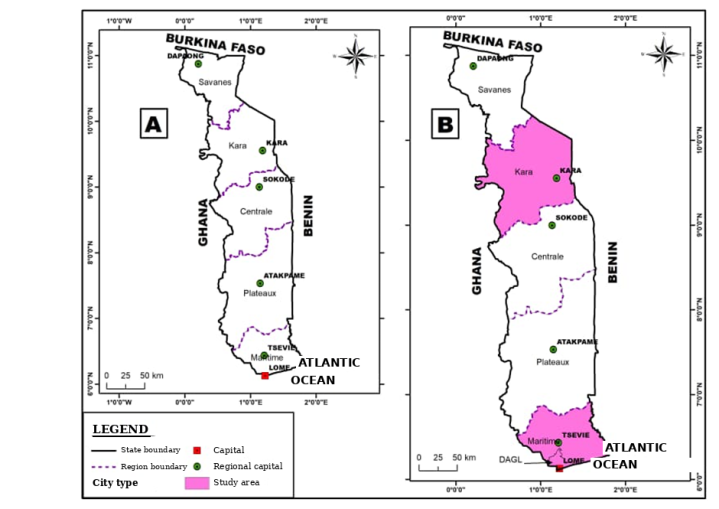
The study was conducted in three geographic areas of Togo, selected for their high urbanization and/or population density, so as to guarantee the representation of the country’s main ethnic groups. Located in West Africa and covering 56,600 km², Togo has approximately 8,280,000 inhabitants (average density: 145 inhabitants/km²). The areas were selected on the basis of urbanization rate and population density. The Greater Lomé Autonomous District (DAGL, 100% urbanization), the rest of the Maritime region, and the Kara region, the country’s second urban hub (28.9% urbanization), were thus retained. In the DAGL, four of the most populated and accessible communes were selected: Aflao-Gakli, Agoè-Nyivé, Adidogomé and Bè. In the rest of the Maritime region, the prefectures of Lacs, Vo and Zio were retained on the same criteria, with Aného, Vogan and Tsévié as their respective administrative centers. In the Kara region, the prefecture of Kozah, the densest and most accessible of the seven prefectures, was chosen, together with its administrative center, the commune of Kozah 1. Recruitment sites were selected according to the presence of a market, a church or a health center, places likely to gather all the targeted age groups. In the DAGL, these were the Centre des Œuvres Universitaires de Lomé (COUL) in Aflao-Gakli, the market and the medical-social center (CMS) of Démakpoe in Agoè-Nyivé, the MECO church in Adidogomé, and the main market of Bè. In the rest of the Maritime region, they were the hospital centers of Vogan (CHP) and Tsévié (CHR) and the main market of Aného. In the commune of Kozah 1, they were the CHU-Kara, the University of Kara and the main market of Kara. Biochemical analyses were centralized at the laboratory of the Wossinu and Gbogbo polyclinic in Lomé. Samples collected in Vogan, Tsévié and Aného were centrifuged and decanted on site, stored at 2–8°C, and transported to Lomé the same day. Those collected in Kara followed the same protocol, before being transported together to Lomé after four days of collection.

This was a cross-sectional study with a prospective aim, conducted over a period of 17 months, from October 2023 to February 2025.
2.3. Study PopulationThe study population consisted of adults of both sexes, aged 15 to 59 years, residing in the Greater Lomé Autonomous District and the Maritime region, irrespective of religion, ethnicity or socioeconomic status, according to the inclusion and exclusion criteria.
Any adult with the capacity to answer the questions of the study was included. All participants freely gave informed consent to their inclusion in the study, including to the blood sampling required for the biochemical tests. Pregnant women, persons aged 60 years and over 13, and subjects whose mental state did not allow them to answer the various questions coherently, or whose physical state did not allow anthropometric measurements, were excluded.
The study population aimed to establish WC threshold and reference values for the diagnosis of abdominal obesity from subjects representative of the selected urban regions. The sample size was calculated to ensure demographic representativeness by age and sex, using data from the 5th General Population and Housing Census (RGPH-5, 2022; Togolese population: 8,095,498 inhabitants). According to the RGPH-5, the DAGL accounted for 27.03% of the national population and the rest of the Maritime region for 16.63%, versus 12.17% for the Kara region and 9.82% for the Central region 14. The calculation relied on the principle of the minimum size required to establish biological reference intervals (95% confidence interval, 2.5th and 97.5th percentiles), namely 120 subjects for the Central region, the least populated 15. By proportional extrapolation, the expected sizes for Kara, the Maritime region and the DAGL were 149, 203 and 330 subjects, respectively, for a total of 682 subjects, distributed according to the weight of the age groups (15–39 years: 39.17%; 40–49 years: 8.4%; 50–59 years: 4.75%). Within this population, only obese subjects were retained for the characterization of abdominal obesity, with measurement of anthropometric, cardiometabolic and biochemical parameters.
2.4. Measurement of Anthropometric, Cardiovascular and Biochemical ParametersThe survey was conducted by a multidisciplinary team (nurses, a senior laboratory technician, a biochemist-nutritionist and a physio-pharmacology biologist) trained in good laboratory practice according to ISO 15189 (2022). The questionnaire, administered in face-to-face interviews, was pre-tested, and prior training in anthropometric measurement was provided to guarantee reproducibility. The data collected included sociodemographic characteristics (age, sex, level of education, region of origin, ethnicity) as well as weight, height, WC, hip circumference and abdominal skinfold (ASF) 16.
Weight was measured with a bathroom scale (precision: 0.5 kg) and height with a SECA® stadiometer (precision: 1 cm). WC was measured with a WIN TAPE measuring tape (precision: 1 cm), midway between the costal margin and the anterior superior iliac spine; hip circumference was taken at the widest point. Abdominal obesity was diagnosed according to two references: the IDF criteria (> 80 cm in women, > 94 cm in men), recommended for West Africa, and those of the NCEP-ATP III (> 88 cm in women, > 102 cm in men), used in African Americans. Its prevalence was estimated both in the overall study population and within the subgroup of obese subjects.
The ASF was measured with a Harpenden caliper (precision: 0.2 mm) at the umbilical point (5 cm to the right of the navel), with the subject standing, the fold taken vertically and the caliper positioned at 90°. Each measurement, read 2 seconds after application of the caliper, was repeated three times and the mean was retained.
BMI, calculated with the Quetelet formula (weight/height²), was used to classify subjects as overweight (≥ 25 kg/m²) or obese (≥ 30 kg/m²) according to the WHO criteria 17.
Blood pressure (systolic/diastolic, mmHg) was measured with a Spengler® sphygmomanometer after 15 minutes of rest, in triplicate, the value retained being the mean of the three measurements.
For the biochemical measurements, 5 mL samples of venous blood were collected in a tube without additive from subjects who had fasted for 12 hours. Standard procedures for blood collection and assays complying with the requirements of ISO 15189 were used. The biochemical analyses were performed on a Mindray BS-430 automated spectrophotometric analyzer (Mindray, India), which was used for the following tests:
• Blood glucose, by glucose oxidase in the Trinder mode (H2O2–peroxidase);
• Total cholesterol, by cholesterol esterase hydrolysis (H2O2 formed in the subsequent enzymatic oxidation of cholesterol by cholesterol oxidase);
• Triglycerides (TG), by lipoprotein lipase;
• High-density lipoprotein cholesterol (HDL-C), by the direct method: polyethylene glycol (PEG)-modified enzyme/sulfate α-cyclodextrin method.
All biochemical analyses were performed using Mindray reagent kits. Multiparametric control sera at “normal and pathological” levels (Multi Control Sera N “Mindray”, Ref. MQ-ClinChem M-162) were used to ensure the reproducibility of the measurements and to identify any bias 18.
2.5. Criteria for Identifying the Cardiometabolic Factors Characteristic of Abdominal ObesityThe metabolic profiles of all study subjects, including those free of any metabolic disease, were established from the following pathological criteria: blood glucose ≥ 1.00 g/L (5.5 mmol/L), triglyceridemia ≥ 1.50 g/L (1.7 mmol/L), HDL-cholesterol < 0.40 g/L in men and < 0.50 g/L in women, and blood pressure ≥ 130/85 mmHg 19, 20.
2.6. Ethical ConsiderationsThis study was authorized by the Bioethics Committee for Health Research of the Ministry of Health and Public Hygiene under number 021/2022/CBRS of 23 June 2022. Informed consent was obtained from each participant before inclusion, and the anonymity of the subjects was strictly preserved throughout the study. The data collected were used exclusively for scientific purposes.
2.7. Data AnalysisData were entered in Microsoft Excel 2020 and then analyzed with R software, version 3.5 (R Foundation for Statistical Computing, Vienna, 2018). Normally distributed variables were expressed as mean ± standard deviation (SD), and the means of the anthropometric parameters were compared by analysis of variance (ANOVA).
The WC thresholds associated with the presence of cardiometabolic risk factors were determined by the Youden index method, retaining the value that maximizes the sum of sensitivity and specificity (≥ 50), from the area under the ROC curve (AUC), a statistical measure of the discriminating performance of a classification model in a diagnostic context. To establish reference values in subjects free of any metabolic disease, the normality of the distribution was checked with the Shapiro–Wilk test and outliers were detected with the Grubbs test. Reference intervals were calculated from the 2.5th and 97.5th percentiles in case of non-normality, or from the mean ± 1.96 SD when the hypothesis of normality was retained. The level of statistical significance was set at 5%.
In total, 987 participants were initially recruited for this study. Exclusion criteria were applied sequentially to obtain a homogeneous sample suited to the research objectives. Figure 2 shows the selection process that led to a final sample of 834 eligible subjects, i.e., 84.5% of the initially expected study population. It also specifies the prevalence of abdominal obesity, calculated on the one hand within the overall study population (n = 834) and on the other hand within the subgroup of obese subjects (n = 180).
This sample of 834 adults comprised 376 men and 458 women, with a male/female sex ratio of 0.82. For both sexes, the minimum age observed was 16 years. The geographic distribution of the sample comprised 223 participants from the Kara region and 409 participants from the Greater Lomé Autonomous District.

Recruitment respected the representativeness of the three age groups of the Togolese population: [15–40[, [40–50[ and [50–60[ years, representing 67.03%, 17.39% and 15.59% of the sample, respectively. Men were significantly younger than women (27.8 ± 12.9 years vs 34.7 ± 14.1 years; p < 0.0001). Figure 3 shows the distribution of subjects by sex within each age group.

The [15–40[age group was the most represented (67.03%). A male predominance was noted in this age group.
3.2. Anthropometric and Biochemical Characteristics of the Study PopulationThe analysis of the anthropometric and biochemical parameters, as well as of the blood pressure values, of the participants made it possible to characterize their metabolic profile. All these results are presented in Table 1.
Apart from blood glucose, HDL-cholesterol and triglycerides, the central values were significantly higher in women for BMI, abdominal skinfold, waist circumference (82 ± 14 cm vs 76 ± 11 cm) and total cholesterol (p < 0.0001).
Among the 834 study subjects, 310 (166 men and 144 women) were free of any metabolic disease while being overweight or obese. This population was used to establish the WC reference values. It represents 37.2% of the total sample, comprising 44.1% of men and 31.4% of women (p < 0.0001). The whole of their metabolic profile parameters is detailed in Table 2.
In metabolically healthy subjects, women had significantly higher anthropometric values than men (BMI: 25.7 ± 5.6 vs 22.2 ± 3.3 kg/m²; WC: 80 ± 13 vs 75 ± 11 cm; ASF: 21.4 ± 7.6 vs 16.1 ± 6.4 mm) as well as a higher total cholesterol (1.81 vs 1.73 g/L; p = 0.0002), with no significant difference for blood glucose, HDL-cholesterol and triglycerides.
The WC thresholds predictive of prediabetes, diabetes, dyslipidemia and hypertension, which characterize the accumulation of fat at the abdominal level, were determined in Table 3 and Table 4 for women and men, respectively. These thresholds correspond to the crossing points between the sensitivity and specificity curves, which make it possible to classify a characteristic as positive. The complete sensitivity and specificity values for each WC level are given in Supplementary Tables S1 and S2.
Table 3 presents the ROC curve analysis evaluating the diagnostic performance of waist circumference (WC) as a predictor of various cardiometabolic abnormalities in 458 women. The optimal threshold retained was the one immediately below the upper limit (95 cm at the 97.5th percentile) of the WC reference interval of subjects free of any metabolic disease and who were not overweight, among threshold values that ranged from 80 to 93. This was the threshold of 93 cm. The mean and median threshold values were 72 and 71, respectively.
Table 4 presents the ROC curve analysis evaluating the diagnostic performance of WC as a predictor of various cardiometabolic abnormalities in men. The optimal threshold retained was the one immediately below the upper limit (93 cm at the 97.5th percentile) of the WC reference interval of male subjects free of any metabolic disease and who were neither overweight nor obese. This was the threshold of 88 cm. The mean and median threshold values were 72 and 70, respectively.
This study involved 834 adults aged 15 to 59 years, with a female predominance and a majority of young adults [15–40[, in line with the young demographic profile of Togo 14, although the proportion of men in this age group was higher than in the overall sample. The sample reflects the ethnic diversity of the country: the majority Ewe/Mina and Kabyè groups were overrepresented, the Ouatchi (8.5% vs 10.0%) and Kotokoli/Tem (6.71% vs 5.8%) groups were proportionally comparable to the general population, as were the minority ethnic groups (Moba, Lama, Akposso/Akébou, Bassar/Konkomba, Ifé/Ana) 21.
4.1. Metabolic ProfilesIn women under 40 years of age, the mean BMI (26.4 ± 6.4 kg/m²) indicated overweight, unlike young men of the same age group. This finding is consistent with the STEPS-Togo 2021 survey, which reported a higher prevalence of overweight in women (23.3%), with a mean BMI of 25.1 kg/m² versus 22.9 kg/m² in men, confirming the greater vulnerability of women to excess weight in the urban Togolese setting 6. This difference could be explained by a more marked sedentary behavior among women: in our study, 71% of women with abdominal obesity reported long periods of sitting, versus 43% of men. African sociocultural representations that value corpulence as a sign of wealth and good health may also reduce the motivation to prevent excess weight 22.
The significantly higher waist circumference in women would be explained by physiological differences in the distribution of abdominal adiposity according to gender 23, consistent with the literature describing a more marked abdominal adiposity in women from sexual maturation onward 24, 25. According to the IDF criteria, the majority of women would thus be in abdominal obesity, unlike men. In subjects free of metabolic disease and neither overweight nor obese, the WC reference interval (2.5th–97.5th percentiles) was 61–95 cm in women versus 62–93 cm in men, the female upper limit exceeding the Caucasian threshold of 80 cm by 15 cm 26. The abdominal skinfold, an independent predictive marker of cardiometabolic risk 27, followed the same trend.
These findings could explain the higher prevalence in women of prediabetes (18.7% vs 12.2%), hypertension (40.3% vs 36.1%) and hypercholesterolemia (29.5% vs 19.3%). The 2021 STEPS survey likewise reported more frequent hyperglycemia in women (5.3% vs 4.4%), and a 2015 Togolese study a higher prevalence of metabolic syndrome in women (1.3% vs 0.8%) 28.
4.2. Determination of the Optimal Waist Circumference ThresholdsThe study established specific waist circumference thresholds, predictive of cardiometabolic risks, in subjects of sub-Saharan African origin living in Togo. These thresholds were determined by the Youden method, as was done in Tunisia in 2006 by Bouguerra and coll. 29, and made it possible to meet a need for data that were not available for Africa 3. In 2020, the study by Ross et al. 30 made it possible to obtain values for each race. That study stipulated that BMI alone was no longer sufficient for the prediction of cardiometabolic risks. In the present study, the optimal thresholds determined for women and men were 93 cm and 88 cm, respectively.
The threshold of ≥ 93 cm in women in the present study is higher than the thresholds established by the IDF and the WHO for the Caucasian race, and then the threshold of 88 cm used for African Americans and also in Canada 31. Among Iranians, a value of 91 cm was also established in women in 2009 32. The thresholds found in Japanese (≥ 90 cm), Tunisian (≥ 85 cm) and Jordanian (≥ 96 cm) women were all, as in the present study, higher than the threshold of 80 cm recommended for sub-Saharan Africa [33, 30] 33, 30. Regarding the male population, the data analysis identified a threshold of 88 cm, lower than the 94 cm of the IDF recommended for sub-Saharan Africa by the WHO. All the thresholds established for men by the Japanese and Tunisians (≥ 85 cm), Chinese (≥ 80 cm) and Iranians (≥ 89 cm) were also lower than the IDF threshold of 94 cm 29.
Would the WC threshold criteria be similar in studies conducted in sub-Saharan African populations? Ekoru et al. 8. in a pan-African meta-analysis of 24,181 participants from 17 studies in eight sub-Saharan African countries, established optimal thresholds of 81.2 cm for men and 81.0 cm for women for the detection of cardiometabolic risk, i.e., a threshold markedly lower than that of the present study for men (88 cm) Did these 71 by Ekoru et al. 8 use the ROC method to determine the thresholds? Did they use the criteria of metabolic syndrome as the cardiometabolic risk factors against which the thresholds were determined? By what criterion did they choose the optimal threshold among the various thresholds found? Is it a mean, a mode, or a comparison with the upper limit of a WC reference interval of subjects who are neither overweight nor obese and are free of any metabolic disease, as in the present study? The reference intervals for WC and hip circumference were determined with the 2.5th and 97.5th percentiles and not with the mean ± 1.96 SD because the data were not normally distributed. Although these intervals were obtained in subjects who were neither obese nor overweight and were free of any metabolic disease according to the criteria of metabolic syndrome, their cholesterolemia was above 2.00 g/L in both men and women. In addition to the HDL-cholesterol criteria, should total cholesterol not be added to the criteria of metabolic syndrome? All these methodological elements should be taken into account if optimal thresholds are to be defined for sub-Saharan Africa.
4.3. Sex-related Epidemiological ParadoxThis study reveals a notable epidemiological paradox: although metabolic complications are more frequent in women, the ROC analysis assigns them higher optimal waist circumference thresholds than men. This finding is consistent with the work of Bouguerra and colleagues, who report a correlation between waist circumference and visceral fat that varies according to sex and ethnic origin 29. Visceral fat is indeed distinguished from subcutaneous fat by its own physiological activity: it secretes pro-inflammatory cytokines that disturb metabolism, increase insulin resistance and promote atherosclerosis 34. These effects, of varying intensity according to ethnic group and sex, justify that waist circumference be interpreted jointly with the presence of associated factors such as prediabetes, dyslipidemia and arterial hypertension 13.
4.4. Comparison with International and Regional Reference StandardsThe majority of studies linking waist circumference and cardiometabolic risk are based on Western, Asian or American populations, which are poorly representative of the bodily realities of the Middle East and sub-Saharan Africa, where the distribution of adiposity differs according to origin. Wang and colleagues thus report a greater subcutaneous fat mass in Asian than in Caucasian populations 35, and in Japan the waist circumference threshold is significantly higher in women (90 cm) than in men (85 cm) 29.
4.5. Strengths of the StudyThe present study has several notable methodological strengths. First, the purposive and proportional sampling technique, based on data from the General Population and Housing Census (RGPH-5, 2022) and taking into account demographic representativeness by age, sex and region. This approach gives the sample satisfactory external validity and allows reliable statistical inference at the scale of the urban Togolese populations studied.
The use of multiple metabolic reference criteria (hyperglycemia, prediabetes, diabetes, arterial hypertension, dyslipidemia) allows a comprehensive and multidimensional evaluation of the diagnostic performance of waist circumference, thereby reinforcing the robustness of the proposed thresholds. The sex-differentiated approach, based on a rigorous analysis of ROC curves and on the calculation of the areas under the curve with their confidence intervals, constitutes a significant methodological advance over the approaches to determining risk thresholds used in several studies.
4.6. Limitations of the StudyDespite these strengths, the present study has several limitations that deserve to be underlined. First, the cross-sectional nature of the study does not allow causal relationships to be established between the variables studied, notably between dietary habits, lifestyle and the development of abdominal obesity. Longitudinal studies would be necessary to confirm the associations observed.
Second, recruitment limited to the Maritime and Kara regions, although representative of urban areas, does not allow the results to be generalized to the whole Togolese territory, notably to the Plateaux, Central and Savanes regions, nor to rural populations, whose anthropometric and metabolic profiles could differ significantly. An extension of the study to these regions, in urban and rural settings, would be necessary to establish definitive national thresholds.
This study made it possible to determine, through a rigorous methodological approach based on the analysis of ROC curves, waist circumference thresholds specific to the diagnosis of abdominal obesity in the Black population of the Maritime region of Togo. The threshold of 93 cm in women makes it possible to avoid falsely declaring female subjects to be in a situation of abdominal obesity, especially if the patient is free of any metabolic disease. It will also make it possible to avoid underdiagnosing abdominal obesity in men when the IDF criteria are used.
It is important to note the existence of women free of any metabolic disease with waist circumferences reaching 93 cm according to the analysis of the 97.5th percentile, which confirms the need for a contextualized interpretation.
The authors declare that they have no competing interests.
• Financial support: SUNU BANK-TOGO, ORABANK-TOGO, FAO, BCEAO-KARA
• Technical support: National Programme for the Control of Non-Communicable Diseases (Professor BELO Mofou) and the Nutrition Division of the Ministry of Health and Public Hygiene.
Role of the Funder: The funding bodies provided financial support for the study but had no role in study design, data collection, data analysis, data interpretation, manuscript writing, or the decision to submit the article for publication.
ANOVA, analysis of variance; ASF, abdominal skinfold; AUC, area under the curve; BMI, body mass index; BP, blood pressure; CI, confidence interval; DAGL, Greater Lomé Autonomous District; HDL-C, high-density lipoprotein cholesterol; IDF, International Diabetes Federation; NCEP-ATP III, National Cholesterol Education Program – Adult Treatment Panel III; RGPH-5, 5th General Population and Housing Census; ROC, receiver operating characteristic; SD, standard deviation; TG, triglycerides; WC, waist circumference; WHO, World Health Organization.
Supplementary Tables S1 and S2 give the complete sensitivity and specificity values for each WC level. Because they exceed one printed page, they are provided as online supporting information, in accordance with the journal’s instructions for tables.
| [1] | Bruckert, É., “L’obésité abdominale : une menace pour la santé” (in French), La Presse Médicale, 37(9), 1407-1414, 2008. | ||
| In article | View Article PubMed | ||
| [2] | Gradidge, P.J.-L., and Crowther, N.J., “Metabolic syndrome in Black South African women”, Ethnicity & Disease, 27(2), 189, 2017. | ||
| In article | View Article PubMed | ||
| [3] | Alberti, K.G., Eckel, R.H., Grundy, S.M., Zimmet, P.Z., Cleeman, J.I., Donato, K.A., et al., “Harmonizing the metabolic syndrome: a joint interim statement of the International Diabetes Federation Task Force on Epidemiology and Prevention; National Heart, Lung, and Blood Institute; American Heart Association; World Heart Federation; International Atherosclerosis Society; and International Association for the Study of Obesity”, Circulation, 120(16), 1640-1645, 2009. | ||
| In article | View Article PubMed | ||
| [4] | Kouassi, K.C., “Corrélation entre habitude alimentaire et prévalence de l’obésité : étude préliminaire chez 106 sujets adultes externes recrutés au CHU Campus de Lomé” (in French), Sciences de la Vie, de la Terre et Agronomie, 8, 2021. | ||
| In article | |||
| [5] | Metzelard, M., Ullmer, A., Schmidt, J., Salle, V., Smail, A., Brault, C., and Duhaut, P., “Indice de masse corporelle, syndrome inflammatoire et maladies auto-immunes” (conference abstract, in French), La Revue de Médecine Interne, 42(Suppl. 1), A63, 2021. | ||
| In article | View Article | ||
| [6] | Ministry of Health and Public Hygiene of Togo, “Rapport final de l’enquête STEPS Togo 2021” (in French), 2024. Available: https://sante.gouv.tg/wp-content/uploads/2024/04/Togo-rapport-enquete-STEPS_2021_VF-10.06-2023-divsmnt_clean-FR-2.pdf | ||
| In article | |||
| [7] | Salaün, H., Thariat, J., Vignot, M., Merrouche, Y., and Vignot, S., “Obésité et cancer” (in French), Bulletin du Cancer, 104(1), 30-41, 2017. | ||
| In article | View Article PubMed | ||
| [8] | Ekoru, K., Murphy, G.A.V., Young, E.H., Delisle, H., Jerome, C.S., Assah, F., et al., “Deriving an optimal threshold of waist circumference for detecting cardiometabolic risk in sub-Saharan Africa”, International Journal of Obesity, 42(3), 487-494, 2018. | ||
| In article | View Article PubMed | ||
| [9] | Motala, A.A., Esterhuizen, T., Pirie, F.J., and Omar, M.A.K., “The prevalence of metabolic syndrome and determination of the optimal waist circumference cutoff points in a rural South African community”, Diabetes Care, 34(4), 1032-1037, 2011. | ||
| In article | View Article PubMed | ||
| [10] | Owolabi, E.O., Ter Goon, D., Adeniyi, O.V., and Ajayi, A.I., “Optimal waist circumference cut-off points for predicting metabolic syndrome among low-income black South African adults”, BMC Research Notes, 11(1), Article 22, 2018. | ||
| In article | View Article PubMed | ||
| [11] | Tladi, D.M., Mokgatlhe, L., Shaibu, S., Nell, T., Mitchell, R., Mokgothu, C.J., et al., “Determination of optimal cut-off values for waist circumferences used for the diagnosis of the metabolic syndrome among Batswana adults (ELS 32)”, Cardiovascular Journal of Africa, 31(6), 314-318, 2020. | ||
| In article | View Article PubMed | ||
| [12] | Mabchour, A.E., Delisle, H., Vilgrain, C., Larco, P., and Sodjinou, R., “Obésité abdominale et autres biomarqueurs de risque cardiométabolique : influence du niveau socioéconomique et du mode de vie dans deux populations noires apparentées, Cotonou (Bénin) et Port-au-Prince (Haïti)” (in French), Pan African Medical Journal, 24, Article 306, 2016. | ||
| In article | View Article PubMed | ||
| [13] | World Health Organization Regional Office for Africa, “L’obésité augmente en Afrique, d’après une étude de l’OMS” (in French), 2025. Available: https://www.afro.who.int/fr/news/lobesite-augmente-en-afrique-dapres-une-etude-loms. | ||
| In article | |||
| [14] | Institut National de la Statistique et des Études Économiques et Démographiques (INSEED). Available: https://inseed.tg/. [Accessed Apr. 30, 2025]. | ||
| In article | |||
| [15] | Ozarda, Y., “Establishing and using reference intervals”, Turkish Journal of Biochemistry, 45(1), 1-10, 2020. | ||
| In article | View Article | ||
| [16] | Kali, A., Gusmanov, A., Aripov, M., and Chan, M.-Y., “Proposing new body mass index and waist circumference cut-offs based on cardiometabolic risks for a Central Asia population: a feasibility study”, Frontiers in Endocrinology, 13, Article 963352, 2022. | ||
| In article | View Article PubMed | ||
| [17] | Vatier, C., Poitou, C., and Clément, K., “Evaluation of visceral fat in massive obesity”, in Nutrition in the Prevention and Treatment of Abdominal Obesity (R.R. Watson, Ed.), Academic Press, 67-77, 2014. | ||
| In article | View Article | ||
| [18] | Fossati, P., and Prencipe, L., “Serum triglycerides determined colorimetrically with an enzyme that produces hydrogen peroxide”, Clinical Chemistry, 28(10), 2077-2080, 1982. | ||
| In article | View Article PubMed | ||
| [19] | Alberti, K.G.M.M., Zimmet, P., and Shaw, J., “The metabolic syndrome – a new worldwide definition”, The Lancet, 366(9491), 1059-1062, 2005. | ||
| In article | View Article PubMed | ||
| [20] | Jellinger, P.S., Handelsman, Y., Rosenblit, P.D., Bloomgarden, Z.T., Fonseca, V.A., Garber, A.J., et al., “American Association of Clinical Endocrinologists and American College of Endocrinology guidelines for management of dyslipidemia and prevention of cardiovascular disease”, Endocrine Practice, 23(Suppl. 2), 1-87, 2017. | ||
| In article | View Article PubMed | ||
| [21] | Chaire pour le développement de la recherche sur la culture d’expression française en Amérique du Nord, “Togo. Aménagement linguistique dans le monde”. Available: https://www.axl.cefan.ulaval.ca/afrique/togo.htm. [Accessed Jun. 21, 2025]. | ||
| In article | |||
| [22] | Correia, J., Pataky, Z., and Golay, A., “Comprendre l’obésité en Afrique : poids du développement et des représentations” (in French), Revue Médicale Suisse, 10(423), 712-716, 2014. | ||
| In article | View Article PubMed | ||
| [23] | Khouloud, B., Bordjiba, S., and Ikram, H., “La prévalence de l’obésité et du syndrome métabolique chez les patients atteints du diabète” (working paper, in French), Faculté SNV.STU, 2020. | ||
| In article | |||
| [24] | Lara-Castro, C., Weinsier, R.L., Hunter, G.R., and Desmond, R., “Visceral adipose tissue in women: longitudinal study of the effects of fat gain, time, and race”, Obesity Research, 10(9), 868-874, 2002. | ||
| In article | View Article PubMed | ||
| [25] | Centre d’Étude et de Recherche sur les Politiques Sociales, “Obépi-Roche 2020 : nouvelles estimations du surpoids et de l’obésité en France” (in French). Available: https://cesp.inserm.fr/fr/evènement/obepi-roche-2020-nouvelles-estimations-du-surpoids-et-de-l'obésité-en-france. [Accessed Jun. 21, 2025]. | ||
| In article | |||
| [26] | Obépi, “Enquête épidémiologique nationale sur le surpoids et l’obésité” (report, in French), Inserm, 2012. Available: https://presse.inserm.fr/wp-content/uploads/2012/10/obepi_2012.pdf | ||
| In article | |||
| [27] | Barbe, P., “Les méthodes d’étude de la composition corporelle” (in French), Métabolisme Hormones Nutrition, 2000. | ||
| In article | |||
| [28] | Kouassi, K.C., Pessinaba, S., Kaaga, L., Lamboni, C., and Damorou, F., “Prévalence du pré-diabète, du syndrome métabolique, du diabète et des dyslipidémies chez 350 sujets recrutés au marché de Hédzranawoé à Lomé (Togo)” (in French), International Journal of Biological and Chemical Sciences, 14(8), 2713-2723, 2020. | ||
| In article | View Article | ||
| [29] | Bouguerra, R., Alberti, H., Smida, H., Salem, L.B., Rayana, C.B., El Atti, J., et al., “Waist circumference cut-off points for identification of abdominal obesity among the Tunisian adult population”, Diabetes, Obesity and Metabolism, 9(6), 859-868, 2007. | ||
| In article | View Article PubMed | ||
| [30] | Ross, R., Neeland, I.J., Yamashita, S., Shai, I., Seidell, J., Magni, P., et al., “Waist circumference as a vital sign in clinical practice: a consensus statement from the IAS and ICCR Working Group on Visceral Obesity”, Nature Reviews Endocrinology, 16(3), 177-189, 2020. | ||
| In article | View Article PubMed | ||
| [31] | Haute Autorité de Santé, “Surpoids et obésité chez la femme : dépistage et accompagnement” (report, in French), Feb. 2025. Available: https://www.has-sante.fr/upload/docs/application/pdf/2025-02/rapport_-_surpoids_et_obesite_chez_la_femme_-_depistage_et_accompagnement_2025-02-27_11-33-25_955.pdf | ||
| In article | |||
| [32] | Delavari, A., Forouzanfar, M.H., Alikhani, S., Sharifian, A., and Kelishadi, R., “First nationwide study of the prevalence of the metabolic syndrome and optimal cutoff points of waist circumference in the Middle East: the National Survey of Risk Factors for Noncommunicable Diseases of Iran”, Diabetes Care, 32(6), 1092-1097, 2009. | ||
| In article | View Article PubMed | ||
| [33] | Faucher, P., and Poitou, C., “Physiopathologie de l’obésité” (in French), Revue du Rhumatisme Monographies, 83(1), 6-12, 2016. | ||
| In article | View Article | ||
| [34] | Bosomworth, N.J., “Obésité centrale malgré un poids normal” (in French), Canadian Family Physician, 65, e251-e260, 2019. | ||
| In article | |||
| [35] | Wang, J., Thornton, J., Russell, M., Burastero, S., Heymsfield, S., and Pierson, R., “Asians have lower body mass index (BMI) but higher percent body fat than do whites: comparisons of anthropometric measurements”, American Journal of Clinical Nutrition, 60(1), 23-28, 1994. | ||
| In article | View Article PubMed | ||
Published with license by Science and Education Publishing, Copyright © 2026 Kafui Codjo Kouassi, Hèzouwè Madjalani, Kossi KODJO, OURO-BERE Tchagbélé, BOURAIMA Mouawiyatou, BEBOU Midassirou, Mamatchi MELILA and Tchacondo TCHADJOBO
 This work is licensed under a Creative Commons Attribution 4.0 International License. To view a copy of this license, visit
http://creativecommons.org/licenses/by/4.0/
This work is licensed under a Creative Commons Attribution 4.0 International License. To view a copy of this license, visit
http://creativecommons.org/licenses/by/4.0/
| [1] | Bruckert, É., “L’obésité abdominale : une menace pour la santé” (in French), La Presse Médicale, 37(9), 1407-1414, 2008. | ||
| In article | View Article PubMed | ||
| [2] | Gradidge, P.J.-L., and Crowther, N.J., “Metabolic syndrome in Black South African women”, Ethnicity & Disease, 27(2), 189, 2017. | ||
| In article | View Article PubMed | ||
| [3] | Alberti, K.G., Eckel, R.H., Grundy, S.M., Zimmet, P.Z., Cleeman, J.I., Donato, K.A., et al., “Harmonizing the metabolic syndrome: a joint interim statement of the International Diabetes Federation Task Force on Epidemiology and Prevention; National Heart, Lung, and Blood Institute; American Heart Association; World Heart Federation; International Atherosclerosis Society; and International Association for the Study of Obesity”, Circulation, 120(16), 1640-1645, 2009. | ||
| In article | View Article PubMed | ||
| [4] | Kouassi, K.C., “Corrélation entre habitude alimentaire et prévalence de l’obésité : étude préliminaire chez 106 sujets adultes externes recrutés au CHU Campus de Lomé” (in French), Sciences de la Vie, de la Terre et Agronomie, 8, 2021. | ||
| In article | |||
| [5] | Metzelard, M., Ullmer, A., Schmidt, J., Salle, V., Smail, A., Brault, C., and Duhaut, P., “Indice de masse corporelle, syndrome inflammatoire et maladies auto-immunes” (conference abstract, in French), La Revue de Médecine Interne, 42(Suppl. 1), A63, 2021. | ||
| In article | View Article | ||
| [6] | Ministry of Health and Public Hygiene of Togo, “Rapport final de l’enquête STEPS Togo 2021” (in French), 2024. Available: https://sante.gouv.tg/wp-content/uploads/2024/04/Togo-rapport-enquete-STEPS_2021_VF-10.06-2023-divsmnt_clean-FR-2.pdf | ||
| In article | |||
| [7] | Salaün, H., Thariat, J., Vignot, M., Merrouche, Y., and Vignot, S., “Obésité et cancer” (in French), Bulletin du Cancer, 104(1), 30-41, 2017. | ||
| In article | View Article PubMed | ||
| [8] | Ekoru, K., Murphy, G.A.V., Young, E.H., Delisle, H., Jerome, C.S., Assah, F., et al., “Deriving an optimal threshold of waist circumference for detecting cardiometabolic risk in sub-Saharan Africa”, International Journal of Obesity, 42(3), 487-494, 2018. | ||
| In article | View Article PubMed | ||
| [9] | Motala, A.A., Esterhuizen, T., Pirie, F.J., and Omar, M.A.K., “The prevalence of metabolic syndrome and determination of the optimal waist circumference cutoff points in a rural South African community”, Diabetes Care, 34(4), 1032-1037, 2011. | ||
| In article | View Article PubMed | ||
| [10] | Owolabi, E.O., Ter Goon, D., Adeniyi, O.V., and Ajayi, A.I., “Optimal waist circumference cut-off points for predicting metabolic syndrome among low-income black South African adults”, BMC Research Notes, 11(1), Article 22, 2018. | ||
| In article | View Article PubMed | ||
| [11] | Tladi, D.M., Mokgatlhe, L., Shaibu, S., Nell, T., Mitchell, R., Mokgothu, C.J., et al., “Determination of optimal cut-off values for waist circumferences used for the diagnosis of the metabolic syndrome among Batswana adults (ELS 32)”, Cardiovascular Journal of Africa, 31(6), 314-318, 2020. | ||
| In article | View Article PubMed | ||
| [12] | Mabchour, A.E., Delisle, H., Vilgrain, C., Larco, P., and Sodjinou, R., “Obésité abdominale et autres biomarqueurs de risque cardiométabolique : influence du niveau socioéconomique et du mode de vie dans deux populations noires apparentées, Cotonou (Bénin) et Port-au-Prince (Haïti)” (in French), Pan African Medical Journal, 24, Article 306, 2016. | ||
| In article | View Article PubMed | ||
| [13] | World Health Organization Regional Office for Africa, “L’obésité augmente en Afrique, d’après une étude de l’OMS” (in French), 2025. Available: https://www.afro.who.int/fr/news/lobesite-augmente-en-afrique-dapres-une-etude-loms. | ||
| In article | |||
| [14] | Institut National de la Statistique et des Études Économiques et Démographiques (INSEED). Available: https://inseed.tg/. [Accessed Apr. 30, 2025]. | ||
| In article | |||
| [15] | Ozarda, Y., “Establishing and using reference intervals”, Turkish Journal of Biochemistry, 45(1), 1-10, 2020. | ||
| In article | View Article | ||
| [16] | Kali, A., Gusmanov, A., Aripov, M., and Chan, M.-Y., “Proposing new body mass index and waist circumference cut-offs based on cardiometabolic risks for a Central Asia population: a feasibility study”, Frontiers in Endocrinology, 13, Article 963352, 2022. | ||
| In article | View Article PubMed | ||
| [17] | Vatier, C., Poitou, C., and Clément, K., “Evaluation of visceral fat in massive obesity”, in Nutrition in the Prevention and Treatment of Abdominal Obesity (R.R. Watson, Ed.), Academic Press, 67-77, 2014. | ||
| In article | View Article | ||
| [18] | Fossati, P., and Prencipe, L., “Serum triglycerides determined colorimetrically with an enzyme that produces hydrogen peroxide”, Clinical Chemistry, 28(10), 2077-2080, 1982. | ||
| In article | View Article PubMed | ||
| [19] | Alberti, K.G.M.M., Zimmet, P., and Shaw, J., “The metabolic syndrome – a new worldwide definition”, The Lancet, 366(9491), 1059-1062, 2005. | ||
| In article | View Article PubMed | ||
| [20] | Jellinger, P.S., Handelsman, Y., Rosenblit, P.D., Bloomgarden, Z.T., Fonseca, V.A., Garber, A.J., et al., “American Association of Clinical Endocrinologists and American College of Endocrinology guidelines for management of dyslipidemia and prevention of cardiovascular disease”, Endocrine Practice, 23(Suppl. 2), 1-87, 2017. | ||
| In article | View Article PubMed | ||
| [21] | Chaire pour le développement de la recherche sur la culture d’expression française en Amérique du Nord, “Togo. Aménagement linguistique dans le monde”. Available: https://www.axl.cefan.ulaval.ca/afrique/togo.htm. [Accessed Jun. 21, 2025]. | ||
| In article | |||
| [22] | Correia, J., Pataky, Z., and Golay, A., “Comprendre l’obésité en Afrique : poids du développement et des représentations” (in French), Revue Médicale Suisse, 10(423), 712-716, 2014. | ||
| In article | View Article PubMed | ||
| [23] | Khouloud, B., Bordjiba, S., and Ikram, H., “La prévalence de l’obésité et du syndrome métabolique chez les patients atteints du diabète” (working paper, in French), Faculté SNV.STU, 2020. | ||
| In article | |||
| [24] | Lara-Castro, C., Weinsier, R.L., Hunter, G.R., and Desmond, R., “Visceral adipose tissue in women: longitudinal study of the effects of fat gain, time, and race”, Obesity Research, 10(9), 868-874, 2002. | ||
| In article | View Article PubMed | ||
| [25] | Centre d’Étude et de Recherche sur les Politiques Sociales, “Obépi-Roche 2020 : nouvelles estimations du surpoids et de l’obésité en France” (in French). Available: https://cesp.inserm.fr/fr/evènement/obepi-roche-2020-nouvelles-estimations-du-surpoids-et-de-l'obésité-en-france. [Accessed Jun. 21, 2025]. | ||
| In article | |||
| [26] | Obépi, “Enquête épidémiologique nationale sur le surpoids et l’obésité” (report, in French), Inserm, 2012. Available: https://presse.inserm.fr/wp-content/uploads/2012/10/obepi_2012.pdf | ||
| In article | |||
| [27] | Barbe, P., “Les méthodes d’étude de la composition corporelle” (in French), Métabolisme Hormones Nutrition, 2000. | ||
| In article | |||
| [28] | Kouassi, K.C., Pessinaba, S., Kaaga, L., Lamboni, C., and Damorou, F., “Prévalence du pré-diabète, du syndrome métabolique, du diabète et des dyslipidémies chez 350 sujets recrutés au marché de Hédzranawoé à Lomé (Togo)” (in French), International Journal of Biological and Chemical Sciences, 14(8), 2713-2723, 2020. | ||
| In article | View Article | ||
| [29] | Bouguerra, R., Alberti, H., Smida, H., Salem, L.B., Rayana, C.B., El Atti, J., et al., “Waist circumference cut-off points for identification of abdominal obesity among the Tunisian adult population”, Diabetes, Obesity and Metabolism, 9(6), 859-868, 2007. | ||
| In article | View Article PubMed | ||
| [30] | Ross, R., Neeland, I.J., Yamashita, S., Shai, I., Seidell, J., Magni, P., et al., “Waist circumference as a vital sign in clinical practice: a consensus statement from the IAS and ICCR Working Group on Visceral Obesity”, Nature Reviews Endocrinology, 16(3), 177-189, 2020. | ||
| In article | View Article PubMed | ||
| [31] | Haute Autorité de Santé, “Surpoids et obésité chez la femme : dépistage et accompagnement” (report, in French), Feb. 2025. Available: https://www.has-sante.fr/upload/docs/application/pdf/2025-02/rapport_-_surpoids_et_obesite_chez_la_femme_-_depistage_et_accompagnement_2025-02-27_11-33-25_955.pdf | ||
| In article | |||
| [32] | Delavari, A., Forouzanfar, M.H., Alikhani, S., Sharifian, A., and Kelishadi, R., “First nationwide study of the prevalence of the metabolic syndrome and optimal cutoff points of waist circumference in the Middle East: the National Survey of Risk Factors for Noncommunicable Diseases of Iran”, Diabetes Care, 32(6), 1092-1097, 2009. | ||
| In article | View Article PubMed | ||
| [33] | Faucher, P., and Poitou, C., “Physiopathologie de l’obésité” (in French), Revue du Rhumatisme Monographies, 83(1), 6-12, 2016. | ||
| In article | View Article | ||
| [34] | Bosomworth, N.J., “Obésité centrale malgré un poids normal” (in French), Canadian Family Physician, 65, e251-e260, 2019. | ||
| In article | |||
| [35] | Wang, J., Thornton, J., Russell, M., Burastero, S., Heymsfield, S., and Pierson, R., “Asians have lower body mass index (BMI) but higher percent body fat than do whites: comparisons of anthropometric measurements”, American Journal of Clinical Nutrition, 60(1), 23-28, 1994. | ||
| In article | View Article PubMed | ||