This paper measured the therapeutic effect of Gum Arabic (GA) on nephritis caused by arginine in rats regarding renal and hepatic performance, oxidative stress, inflammation, lipid profile, glucose homeostasis, as well as antioxidant defense. A group of thirty-five male rats (140–150 g) was categorized into normal control group and nephritic group induced with 2% arginine for 28 days. Nephritic rats were also divided into an untreated category and three categories fed on GA at 4%, 6%, and 8% of the diet. Nephritis induced by arginine decreased body weight gain (−29.26%), feed intake (−22.40%), and feed efficiency ratio (−21.47%). Dose-dependently, GA supplementation improved these parameters, with the 8% dose showing the highest recovery. Renal dysfunction was evidenced by increased serum creatinine (+63.57%), urea nitrogen (+115.48%), and uric acid (+59.03%), which were significantly reduced by GA, particularly at 8% inclusion. Liver enzymes (AST, ALT, and ALP) were significantly elevated in nephritic rats and were reduced following GA administration. Lipid metabolism was disturbed, as indicated by increased triglycerides (+44.05%), total cholesterol (+20.40%), and LDL-c (+29.96%), along with decreased HDL-c (−43.68%); GA supplementation favorably modulated these parameters. Inflammatory markers TNF-α (+83.90%), CRP (+230.34%), and nitric oxide (+97.78%) were markedly elevated and significantly decreased by GA. Oxidative stress was confirmed by increased renal protein carbonyls (+73.08%) and MDA (+30.00%), along with decreased antioxidant enzymes GPx (−38.45%), SOD (−43.42%), and CAT (−35.57%); these alterations were ameliorated by GA. Hyperglycemia (+78.23%) and reduced insulin levels (−42.49%) were also improved. Histopathological examination showed normal renal architecture in the control group, whereas untreated nephritic rats exhibited inflammatory cell infiltration and tubular epithelial degeneration; in contrast, GA-treated groups (4%, 6%, and 8%) showed no detectable histopathological lesions and preserved normal renal structure. Generally, GA demonstrated marked renoprotective, hepatoprotective, antioxidant, anti-inflammatory, hypolipidemic, and metabolic regulatory effects, particularly at the dietary concentration of 8%.
|
A few decades ago, there was a comprehensive research that modern pharmacological interventions were not only expensive but also in most cases, they are linked with various side effects and thus, patient adherence is not expected to be high. Hence, the urgent necessity to discuss alternative treatments, especially the ones that are natural, because they are relatively cheap and related to fewer side effects. In recent times, the use of gum Arabic (GA) as a substitute therapeutic agent has gained more attention by many universities, authorities, and research centers. GA is a biopolymer that exists as an exudate of mature trees of Acacia senegal and Acacia seyal that grow in the African Sahel, especially in Sudan. The exudate is an inorganic liquid that is high in soluble fibers. In cases of stress (e.g., drought, low soil fertility, mechanical damage, etc.), it is normally released by its stems and branches 1. According to Fantahun et al., 2, the number of Acacia species that can produce gum is almost 900 and most of them thrive in tropical zones with about 130 species found in Africa. As a result, the African continent became the main producer of gum and this is how the name Senegal Gum came to be. Gum is nothing more than a secretion of a number of acacia (leguminous) trees. There are up to seventeen species of Acacia that yield gum of different grades and quantity. In Sudan, Gum Arabic is obtained from Acacia senegal to a significant extent of about 80. The other production is that of Acacia laeta and Acacia seyal which provide approximately 10 per cent of the total supply. The Acacia senegal gum is popularly called hard gum, and the Acacia seyal one is called flaky gum.
GA structure implies that it is a neutral or slightly acidic complex polysaccharine salt. It is made up of the galactose, arabinose, rhamnose, glucuronic acid, 4-O-methylglucuronic acid, calcium, magnesium, and potassium. It has also been reported to weigh about 600,000 3. The characteristic feature of GA that distinguishes it among other natural gums is a high level of solubility in water. It is possible to prepare solutions of up to 50 percent whereas most other gums have maximum solubility degrees of 5 percent or lower 4 Within the last 20 years, a number of studies have explored the molecular form of GA and how it correlates with its special emulsifying and rheological characteristics. GA is chemically composed and consists of mostly macromolecules, which are high carbohydrate molecules (~97%), D-galactose and L-arabinose molecules, and low protein molecules (less than 3) 5, 6. Chemical composition of GA might vary a little because of factors like origin, climate, time of harvesting, age of the tree and processing factors such as spray drying 7, 8, 9, 10.
The positive biological functions of GA were validated a few years ago. These are reduction of cholesterol in the plasma of the animals and people 11, 12, anticarcinogenic activity 13, and antioxidant 10, 14 15, 16, 17, with Moreover, GA is reported to counter the consequences of chronic renal failure in human beings 18, 19, 20. GA cannot be digested in human beings and animals. It is not broken down at the small intestine but becomes fermented in the colon giving rise to short-chain fatty acids that have different health benefits 21. A major advantage is the fact that it has a prebiotic effect 22. The study by Calame et al. 23 showed that Bifidobacteria, Lactobacteria, and Bacteroides were significantly increased with 4 weeks of Gum Arabic (10 g/day) supplementation confirming that it is prebiotic. The epidemiological researches also indicate that increasing dietary fiber intake, such as GA, with over 80 percent dietary fiber content to be used, is correlated with the enhanced fat metabolism 24, 25. High fiber consumption can contribute to obesity prevention and avoidance of other related complications of it, including coronary heart disease, stroke and diabetes 26. It is because of these reasons that GA has found extensive application in traditional medicine all over the world. It has been used as an internal medication in treating inflammation of mucosal lining of the intestines and it has been used externally in treating inflamed surfaces 27.
Despite the fact that physiological and pharmacological experiments generally use GA as an inert substance, as a drug vehicle, and that its use in biology does not pose any significant danger, there has been recent reports that GA might have antioxidant, nephroprotective and other biological action 18, 27. GA has been clinically tested on patients with chronic renal failure. It is said to lower plasma urea and creatinine concentration and lower the number of dialysis sessions to three to two times a week 28.
Though the past research has identified the biological impact of GA in kidney diseases, the existing evidence is still little and lacks completeness in terms of covering all the details of this issue. Thus, the current research will also target new therapeutic uses of GA as a nutritional intervention. It will specifically examine intervention of diets with GA on the rats that have kidney disorder caused by arginine, and the aim is to enhance the functions of the organs and specifically the renal functions.
Gum Arabic (Acacia senegal L.) was acquired by SAVANNA Companies Group (Processing Gums, Juices and Confectionery) in Khartoum, Sudan in three batches. (Specification: colour- of appearance- off white, form- appearance- powder, purity, 98.65 0.45). Arginine, which is the analytical grade, and is used in induction of chronic kidney disease (CKD) among rats was bought at Sigma Chemical Co. (St. Louis, MO, USA). Casein was acquired at Morgan Chemical Co., Cairo, Egypt. All other chemicals, reagents and solvents were of analytical quality and were bought at El-Ghomhorya Co. Trading Drugs, Chemicals and Medical Instruments. Cairo, Egypt.
Sigma-Aldrich, St. Louis, MO was a source of arginine. Casein was delivered by Morgan Company to Chemicals, Cairo, Egypt. All other chemicals (unless more specifications are given), vitamin and salt blends, buffers, reagents, and solvents were of analytical grade, available in El-Ghomhorya Company to Trading Drug, Chemicals and Medical Instruments, El-Amiryia, Cairo, Egypt. All biochemical operations were done with a UV-160A spectrophotometer (Shimadzu Corporation, Kyoto, Japan) and a Microplate Reader (Manualslib, BioTek ELx808, USA). The determination of glucose and malondialdehyde (MDA) commercial assays kits were bought at BIODIAGNOSTIC in Dokki, Giza, Egypt. El-Nasr Pharmaceutical Chemicals, Cairo, Egypt purchased kits of alanine aminotransferase (ALT), aspartate aminotransferase (AST), alkaline phosphatase (ALP), creatine, urea, and uric acid.
Animals used in this experiment adult male albino rats (140-150 g per each) were acquired in Research Institute of Ophthalmology, Medical Analysis Department, Giza, Egypt.
The basal diet (BD) was based on Reeves et al. 29 and comprised the following ingredients, protein (10%), corn oil (10%), vitamin mixture (1%), mineral mixture (4%), choline chloride (0.2%), methionine (0.3%), cellulose (5%), and corn starch (69.5%). The formulation of vitamin and mineral combinations was done on the same reference.
2.2. MethodsIn this work, the Scientific Research Ethics Committee (animal care and use) Faculty of Home Economics, Menoufia University, Egypt (approval no. 08-SREC-06-2025) gave its approval to all biological experiments.
All the majority of the conducted biological experiments were carried out in accordance with the decisions of the Institute of Laboratory Animal Resources, Commission on life Sciences, National Research Council 30. Rats (n35 rats), with 140-150g rats/each were individually housed in wire cages in a room maintained at 25 +2 0C and kept in healthy conditions. Rats The experiment was acclimatized by feeding all the rats on basal diet over a period of one-week. One week later the rats were separated into two major groups, namely Group 1 (5 rats) which was fed on basal diet only and Group 2 to 5 which was fed on basal diet in combination with gum arabic (GA) powder 4, 6 and 8 g/100 g diet, respectively to induce chronic kidney disease (CKD). The doses were selected based on the previous studies (6, 10). The groups were released in various cages during the period of carrying out the experiment (28 days).
The gain of body weight (BWG, percent), food intake (FI) and food efficiency ratio (FER) were measured during the experimental period. Over the 28-day study, food intake and body weight that were measured weekly were recorded daily. The equations used to calculate BWG, FI and FER are the same as those proposed by Chapman et al., 31: BWG (%) = (Final body weight) /Initial body weight)-(Initial weight) /Initial body weight × 100. FER = Gain in body weight (g/28days)/ Feed intake (g/28days).
The rats were then fasted overnight after which they were decapitated at the end of the 28 days experimental period. At abdominal aorta, kidneys were removed and the blood sampled immediately and washed with ice-cold saline and dried slightly, blotted and weighed followed by biochemical analysis. Blood that was filtered (EDTA 1 mg/mL) was used to quantify glucose, total cholesterol, HDL-cholesterol, LDL-cholesterol, and triglycerides 32. Additional blood was collected devoid of anticoagulants to isolate the serum in order to determine the insulin levels using the enzyme-linked immunosorbent assay tool.
The samples were centrifuged at 3000 g and 4 to obtain 10 min centrifugation and store the samples under temperature of -20°C to collect plasma and serum samples. Kidney homogenates were prepared as per the procedure proposed by Zhang et al. 33. In a summary, kidney tissue with good weigh homogenization colorless saline was weighed and then homogenized in the ice-cold 0.9% saline using motor driven Teflon homogenizer until the tissue turned into 5% (w/v) suspension. The homogenate was centrifuged further at 5000 rpm/30minutes at 40°C to remove cell debris. The supernatant is collected and left to be used in the event of the biochemical analyses later.
The level of serum glucose was determined using commercial glucose kit (Bioscience, Egypt) and a spectrophotometer (URIT-810, China) as indicated by Tietz 34. There was insulin determination by enzyme amplified sensitivity immune-assay (EASIA) following the Alpha et al. 35 protocol in BioSource (Belgium) kits. The HOMA-IR index was used to calculate the insulin resistance: HOMA-IR = [fasting glucose (mmol/L) x fasting insulin ( µIU/mL)/22.5] 36.
The serum ALT and AST values were analyzed with the help of the modified kinetic technique of Tietz 34, and the ALP was evaluated in line with the approach of Vassault et al. 37. The levels of serum urea, creatinine and uric acids were estimated on the basis of Fawcett and Soctt 38, Bartels et al. 39, and Barham and Trander 40, respectively.
The measurements of triglycerides (TGs), total cholesterol (TC), HDL-Cholesterol and LDL-cholesterol were determined in serum according to the methods of Ahmadi et al., 41, Fossati and Prenape 42, Lopes-Virella et al., 43, and Richmod and Richmond, 44, respectively.
The catalase (CAT) and Hepatic glutathione peroxidase (GSH-Px) were measured by use of the Splittgerber and Tappel methods, 45 and Aebi methods, 46, respectively. The activity of the SOD was determined using a colorimetric assay kit (Creative BioLab, NY) based on the approach of Mett and Muller 47.
The rate of lipid peroxidation in the tissues of the kidney was estimated by assessing the production of malondialdehyde (MDA) which is one of the primary final products of lipid peroxidation by the colorimetric technique described by Buege and Aust, 48 based on the reaction of the thiobarbituric acid (TBA) and MDA.The rate of renal protein carbonyl was also measured using the Sigma Aldrich, Protein Carbonyl Content Assay Kit, Merck KGaA The Kit offers an easy and straightforward method of determining the concentration of carbonyls in a diverse range of biographical samples. The percentage of carbonyl is determined by using 2, 4-dinitrophenylhydrazine (DNPH) to derivatize protein carbonyls to form stable dinitrophenyl (DNP) hydrazones adducts that are detected spectrophotometrically at 375 nm and are proportional to the amount of carbonyls present.
The amount of renal nitric oxide (NO) was measured as a combination of the concentrations of nitrite (NO came from the subtraction of NO 2) and nitrate (NO came from the subtraction of NO 3) based on the description of Miranda et al. 49. The serum tumor necrosis factor-alpha (TNF-α) was analyzed by using a sandwich enzyme-linked immunosorbent assay (ELISA) with two monoclonal antibodies to distinguish between various antigens in the TNF- a rat protein, as per the instructions of the manufacturer. The assay kits were provided by Adlitteram Diagnostic Laboratories Inc. (San Diego, CA, USA). The classical colorimetric methods were used to determine renal C-reactive protein (CRP) using the latex-enhanced turbidimetric immunoassay (LETIA), which is based on the formation of antigen-antibody complex and the photometric measurement 50. Here, the anti-human CRP antibodies that are deposited onto the surface of the latex particles reacts with the CRP that is contained in the serum sample. The antigenantibody interaction results in aggluttination with a resultant turbidity that is directly proportional to the concentration of CRP. The change of turbidity is measured spectrophotometrically at a specified wavelength usually 540nm.The change in absorbance is directly proportional to the concentration of CRP in a given calibration.
Ice-cold normal saline was used to rinse kidneys to eliminate the blood cells, and tissue portions were blotted and dried using filter paper followed by incubating the kidney tissues in 10 percent buffered formalin - saline at 4C at least one week (1ry fixation), followed by dehydrating the tissues using a series of increasing concentration of ethanol between 75 percent and 100 percent. The tissues were then put in xylol and then embedded in paraffin wax. The sample used consisted of cross sections of kidney of a thickness of approximately 1-2 m on the slide subjected to haematoxylin and eosin (H&E) stain to examine the general microscopic features of the kidney to be examined under normal light microscope at magnification power 400 Carleton, 51.
2.3. Statistical AnalysisThe findings are presented in the form of the mean values with the standard deviation (SD). The data is organized using the Microsoft Excel 2016 software. The differences between the groups were analyzed with the help of one-way analysis of variance and the Tukey test. Analysis is done using Minitab software version 12 (Minitab, State College, PA, USA) and the cut-off value P ≤ 0.05 is considered statistically significant as per Steel and Torrie, 52.
The current results in Table (1) suggest that nephritis brought on by arginine dietary supplementation the dietary supplementation with gum Arabic (GA) significantly enhanced the growth performance of rats. There were distinct decreases in body weight gain (BWG), feed intake (FI), and feed efficiency ratio (FER) in the nephritic model group (G2) in comparison to the normal control group (G1). These changes validate the radical changes in metabolism that are linked with inflammation and functional dysfunction of the kidney. The same has also been observed in experimental and clinical kidney diseases, in which nephritis and chronic kidney disease (CKD) is often surrounded by anorexia, systemic inflammation, inadequate nutrient utilization, and augmented muscle protein breakdown 53, 54. The 29.26% reduction in BWG of arginine-induced nephritic rats was found to be significant (p ≤ 0.05) compared to the healthy control. This decrease may be attributed to inflammatory and oxidative stress reactions, which come along with renal injury. These mechanisms trigger faster protein breakdown and disrupt the appetite-regulating mechanisms 55. Moreover, renal dysfunction disturbs the metabolic homeostasis, favors adverse nitrogen balance, and restricts normal somatic development 56.
GA supplementation enhanced BWG dose dependently. The results had an increase of 19.62, 30.73 and 34.02 of 4, 6 and 8 percent GA respectively, in comparison to the untreated nephritic rats. BWG had been nearly normalised at the maximum level of inclusion. These results are also in line with other studies performed in the past that have shown that GA improves growth performance due to its prebiotic activity, as well as its capacity to adjust the composition of gut microbiota 25, 57. In the colon, fermentation of GA yields the short chain fatty acids (SCFAs) especially butyrate and propionate. The metabolites enhance the functionality of the intestinal barriers; they enhance nutrient absorption and reduce systemic inflammation 58. The decrease in the inflammatory load probably increased body mass and repair. Nephritis also had a significant effect on feed intake. The model control group showed the reduction of FI by 22.40% relative to normal rats. Reduced appetite is a typical characteristic of renal disease. It is associated with increased levels of pro-inflammatory cytokines including TNF- cytokine and IL- 6 that interfere with the appetite control of the hypothalamus 59. The uremic toxins might further affect the sensation of taste and feeding 56. Dietary GA was also found to have a graded effect of improving FI. The 8% level of supplementation enhanced intake by 22.37 compared to the untreated nephritic rats. The evidence validates these findings since GA improves gastrointestinal activity and plays a role in the regulation of satiety via the generation of SCFA 60. Furthermore, GA was demonstrated to reduce urea and creatinine levels in blood in CKD patients and this could contribute to the lifting of the anorexia of uremia 25. GA may indirectly re-establish the normal appetite control by decreasing the toxin load and enhancing the renal biochemical indices. In nephritic rats, the feed efficiency ratio was less than that of healthy rats by 21.47 per cent, which implies that the rats were not utilizing the feed efficiently to increase their body mass. This deficiency is probably metabolic acidosis, heightened proteolysis, and mitochondrial pathophysiology related to renal damage. The ubiquitin-proteasome pathway can be initiated by chronic inflammation, which causes the loss of muscle mass and low growth efficiency 61.
There was an improvement in FER of 9.78, 14.67, and 15.63 by 4, 6 and 8 percent, respectively, with GA supplementation. The antioxidant and antinflammatory effects of GA may lead to better feed consumption. It has been experimentally demonstrated that GA reduces the indicators of oxidative stress and improves the endogenous activity of antioxidant enzymes under the conditions of nephrotoxia 62. GA can maintain muscle protein synthesis and nutrient assimilation, thus, increasing feed conversion by inhibiting oxidative damage and inhibiting inflammatory mediators. The positive outcome of GA can be attributed to a number of mechanisms, which are directly linked to each other. Being a fermentable dietary fiber, GA supports the proliferation of beneficial gut microbiota and the generation of SCFA that help to decrease endotoxemia and inflammation in the system 58. It also aids in nitrogen excretion of faecal matter and reduces the amount of urea in the blood alleviating the adverse effects of retained nitrogenous metabolic products 25. Moreover, GA inhibits pro-inflammatory cytokines and spares the renal tissue of additional damage and injury 57. It improves the cellular defense mechanism and decreases the lipid peroxidation of renal tissue 62. This dose and response relationship indicates that increased dose of the inclusion, especially 8% is more effective in metabolic improvement in this study. Nevertheless, the little variation between the 6% and 8% of some parameters suggests that a moderate supplementation can be used to produce an almost maximal benefit. Finally, nephritis caused by arginine had also a significant negative impact on growth performance, expressed in reduced BWG, FI, and FER. GA dietary supplementation reduced such negative effects in a dose dependent fashion. The mechanisms that mediate the improvements are thought to be prebiotic modification of the gut-kidney axis, uremic toxin reduction, anti-inflammatory effect, and antioxidant protection. These findings are correlated with the past experiments and clinical trials which characterize GA as an effective dietary fiber with renoprotective and metabolic effects 29, 57, 62.
According to the data in Table 2, there was a high level of impaired hepatic functioning among nephritic rats. Significant increases in serum aspartate aminotransferase (AST) and (ALT) and alkaline phosphatase (ALP) were observed in the model control group (G2) as compared to the normal control group (G1) (p ≤ 0.05). These biochemical imbalances indicate hepatic engagements due to renal damage. These changes were reduced by progressively increasing the dietary supplementation with Gum Arabic (GA) at 4%, 6 and 8 percent basal diet (G3-G5) which showed a dose-dependent effect against hepatoprotection. The results describe the pathophysiological interconnection between renal dysfunction, systemic inflammation, and hepatic metabolism. The AST activity of the serum was found to be significant in the case of nephritic rats, with a mean of 54.67 U/L as opposed to 34.73 U/L in normal controls, which is an increase of 57.41. AST is a sensitive parameter of damage to hepatocellular membrane and permeability, which is usually linked to oxidative stress and injury through inflammation 63. The effect of the deterioration of the renal clearance in nephritic conditions is the promotion of uremic toxins and reactive oxygen species (ROS) accumulation. All these are causative of systemic oxidative stress and can undermine the integrity of hepatic cells 55. The levels of AST decreased in a progressive way due to the GSA supplementation. The highest improvement was seen in the 8% GA group (39.29 U/L), which is equivalent to a reduction of 28.13% over the nephritic control. Values were similar to healthy rats. The effect can be attributed to the antioxidant property of GA. Past research has shown that GA increases glutathione levels and superoxide dismutases so that lipid peroxidation and cell damage are constrained 25. Also, the fermentation of GA in the colon produces short-chain fatty acids (SCFA), specifically butyrate, which have systemic anti-inflammatory effects and could alleviate hepatic oxidative stress. Within nephritic rats, serum ALT activity, more specific to hepatocellular damage 63, increased significantly to 37.64 U/L compared to normal control (21.71 U/L) and this corresponds to an increase of 73.39. This increased elevating is an indicator of hepatic stress secondary to a renal pathology. Systemic inflammation, endotoxemia, and metabolic imbalance are often linked with chronic kidney disorders, and all of them can lead to hepatocyte dysfunction 55. GA supplementation reduced the ALT activity at 4, 6 and 8 percent inclusion rate by 12.14, 23.67 and 28.26 percent respectively. The fact that the normalization in the 8% group is nearer also points to the hepatoprotective effect of GA. The same improvement was observed by Ali et al. 62, who demonstrated the decreased transaminase and oxidative stress products after GA treatment in the case of experimental renal failure. It can be through inhibition of inflammatory cytokines like TNF-a and IL-6 and repair of the intestinal barrier function that restrains endotoxin translocation and hepatic proinflammatory signaling 64. The serum ALP activity was also found to be elevated to a significant level in nephritic rats (179.93U/L) as opposed to normal controls (131.44 U/L). Increased ALP can show cholestatic changes or biliary dysfunction that is associated with systemic inflammation 63. Abnormal mineral metabolism and uremic toxicity can also increase hepatic stress in a patient in the case of the renal disease 55. GA in the diet lowered the ALP levels in a dose-responsive fashion. The group of 8% also exhibited a -18.49% as compared to the nephritic control. This gradual improvement is an indicator of better hepatobiliary stability and membrane integrity. The possible mechanism of action of GA is the prebiotic, which was used to stabilize the composition of gut microbiota, decrease the levels of inflammatory mediators, and decrease the oxidative load 65. It is also experimentally proven that GA increases the processes of detoxification and inhibits inflammatory reactions, so that the liver functions are preserved 25. Combined, the hepatic enzyme raise in nephritic rats demonstrates that close interaction exists between the renal and hepatic systems, commonly known as the hepatorenal axis. The kidney damage facilitates oxidative stress, chronic inflammation and disruption in metabolism all of which adversely affect hepatocyte viability. The effect of GA supplementation was significant in reversing these disturbances in a dose related manner. The protective measures of GA seem to be multifactorial. Its antioxidant effects boost the inherent defense mechanisms and decrease lipid peroxidation 29. It has anti-inflammatory properties that reduce the circulating cytokines that are involved in hepatic injury 62. GA enhances gut barrier integrity and reduces endotoxemia through fermentation and SCFA formation, thus reducing hepatic inflammatory signaling 64, 65. Moreover, GA can reduce the hepatic metabolic stress caused by nephritis by reducing the load of uremic toxins. To sum up, dietary GA significantly improved dose-dependently nephritis induced AST, ALT, and ALP. The findings confirm the hepatoprotective action of GA and its positive effects as a functional dietary intervention in the conditions with renal-hepatic interaction.
Table 3 data indicate that experimental nephritis had a significant impact on disrupting the serum lipid profiles as compared to normal controls. The levels of triglycerides (TG), total cholesterol (TC), and LDL-cholesterol (LDL-c) were significantly increased in nephritic rats (G2), with a significant decrease in the levels of HDL- cholesterol (HDL-c) (p 0.05). These changes represent dysfunctional lipid metabolism caused by inflammation of renal tubules, oxidative stress and liver dysfunction. The 4, 6, and 8 percent dietary supplementation with Gum Arabic (GA) to basal diet (G3-G5) effectively alleviated these derailments in a dose-dependent fashion, which showed that it offered protection against dyslipidemia caused by nephritis. The serum TG (1.21 mmol/L) was found to increase by 44.05% in nephritic rats as opposed to the normal control (0.84 mmol/L). The reduced lipoprotein lipase (LPL) activity, triglyceride-rich lipoprotein clearance, and augmented hepatic very-low-density lipoprotein (VLDL) production are considered the reasons of hypertriglyceridemia in renal injury 64. Moreover, oxidative stress and inflammation also interfere with the maintenance of hepatic lipid homeostasis by altering signaling by peroxisome proliferator-activated receptor (PPAR) 66. GA supplementation had a significant result in the reduction of TG with the 8% GA obtaining a better result of 23.14% reduction as opposed to the nephritic control. GA is expected to improve this by the fermentable fibers that increase the short-chain fatty acid (SCFA) production, especially propionate, which inhibits hepatic lipogenesis and VLDL release 65. With soluble fibers, fecal bile acid excretion as well, and consequently, halting hepatic cholesterol consumption and indirectly reducing the circulation of TG 67. They are in line with the past results of lipid-lowering in metabolic and renal disorder models of GA 25. The level of HDL-c in the nephritic rats (0.98 mmol/L) compared to normal controls (1.74 mmol/L) decreased significantly (43.68). The decreased levels of HDL-c in renal disease are caused by the deterioration of the synthesis of apolipoprotein A-I, the low level of lecithin-cholesterol acyltransferase (LCAT), and the elevated level of oxidative stress on HDL particles lowering their anti-atherogenic and antioxidant activity 64, 66. Supplementation with GA increased HDL-c in a dose dependent fashion. The 8% GA group had the effect of almost returning HDL-c to normal level (1.68 mmol/L; +71.43% vs. model control). The effect can be intermediated by the lower-level of oxidative stress and enhanced lipid metabolism in the liver through SCFAs and the antioxidant property of GA 25, 65. GA is also likely to modulate gut microbiota and thus systemic inflammation, which further boosts HDL functionality and synthesis 64. The TC in nephritic rats (6.55 mmol/L) was 20.40 percent higher than the normal controls (5.44 mmol/L). Renal hypercholesterolemia is commonly linked to a decrease in the LDL receptor levels, defects in cholesterol clearance, and increased cholesterol biosynthesis in the liver, whereas inflammatory mediators promote the HMG-CoA reductase activity and worsen cholesterol production 66. The TC was reduced by 15.57 with GA supplementation, especially at 8% which brought the values near normal. This is probably the lipid-lowering effect because soluble fibers bind intestinal bile acids, which enhances fecal excretion, and hepatic cholesterol is converted to bile acids 67. The SCFAs produced in the process of fermenting GA can also stop the production of cholesterol in the liver 65. There was significant increase of LDL-c in nephritic rats (3.47 mmol/L) compared to controls (2.67 mmol/L) 29.96%. High LDL-c indicates decreased LDL receptor functioning and enhanced oxidative alteration, which promotes atherogenic peril and sustains inflammation of the renal and vascular systems 64, 66. There was a dose-dependent decrease in LDL-c, which was greatest in the 8% GA group of 20.75%. Mechanistically, GA can increase LDL receptor expression, enhance hepatic lipid regulation, decrease the oxidative stress, and augment bile acid turnover that would lessen the circulating LDL-c 25, 67. The dyslipidemia in nephritic rats signifies a change in lipid metabolism and liver failure caused by the inflammation of the renal organ. Hypertriglyceridemia, hypercholesterol, and increased LDL-c were slowed down by GA supplementation and replaced by HDL-c but induced the strongest effect at the highest concentration of 8%. These effects could be mediated by: 1) Prebiotic fermentation and generation of SCFA, which prevents hepatic lipogenesis 65, 2) Enhanced bile acid secretion, which promotes the use of cholesterol 67, 3) antioxidant and anti-inflammatory activity, which improves lipoprotein metabolism 25, and 4) Restoration of lipid All these results are signs that GA prevents dyslipidemia in nephritis and possibly cardiovascular risk associated with kidney impairments. To sum up, dietary supplementation of Gum Arabic enhanced serum lipid profiles of nephritic rats dose-dependently. The reinstatement of TG, HDL-c, TC, and LDL-c to normal levels evidences that GA is a viable dietary intervention that is able to reverse dyslipidemia caused by renal disease via pre-biotic, antioxidant, and lipid-regulatory pathways.
The results of Table 4 suggest that nephritis induction resulted in severe renal dysfunction as evidenced by the fact that serum creatinine, urea nitrogen, and uric acid levels were significantly higher in model control group (G2) compared to the normal control group (G1) (p ≤ 0.05). Neoprotective potential of Gum Arabic (GA) under conditions of nephritis Dietary supplementation of Gum Arabic (GA) using graded levels (4, 6 and 8 percent w/w of the basal diet) showed significant dose-specific improvements in all the renal biomarkers, indicating its renal-protective ability. Nephritic rats showed a significant rise in serum creatinine 129.78 µmol/L compared to the normal controls 79.34 µmol/L, which is a 63.57 percent increase. The accumulation of creatinine indicates low levels of glomerular filtration rate (GFR) caused by glomerular inflammation, mesangial proliferation, and tubular damage 68, 69. His/her serum creatinine was lowered by 11.47, 19.96, and 30.07 percent in 4, 6, and 8 percent supplementation of GA respectively and the high supplementation approached normal levels. This is probably facilitated by the antioxidant and anti-inflammatory effects of GA that maintains glomerular and tubular integrity 25. Also, fermentable fiber in GA increases colonic nitrogen excretion, which causes the displacement of nitrogen excretion through the kidney by the gut and the mitigation of systemic uremic toxin load 70. The serum urea nitrogen in nephritic rats (6.96 µmol/L) was significantly higher than in normal controls (3.23 µmol/L), and the increase is 115.48 percent, which indicates the decreased renal clearance and the increased protein catabolism related to inflammation and metabolic stress 68. GA supplementation also reduced serum urea nitrogen dose-dependently with 8% inclusion of GA response reduced to 33.05%. This effect can be caused by the prebiotic effect of GA, which increases the use of nitrogenous compounds by microbes in the colon, and anti-inflammatory effects of SCFA, which minimizes tissue damage in the kidneys and increases filtration 65. Protective effects were also similar in adenine-induced renal injury models where GA lowered urea levels through antioxidant and anti-inflammatory pathways 62. The serum uric acid (352.15 µmol/L) of nephritic rats increased a lot more (59.03 percent) than normal controls (221.44 µmol/L). Hyperuricemia is caused by an impaired secretion of the tubules and decreased GFR and can worsen the renal injury through the promotion of oxidative stress, endothelial impairment, and fibrosis 69. Dietary GA had a dose-dependent effect on reducing the level of uric acid, with top dose having the highest effect (27.15%). This reduction is probably because of the enhanced renal clearance and dampening down of the oxidative pressure. The anti-inflammatory effect of GA and the effect of the gut microbiota modulation on systemic metabolic control and minimized renal damage are additional factors that may be proposed 25, 62, 64. The high levels of creatinine, urea nitrogen, and uric acid are in support of high levels of renal impairment in nephritic rats, which is manifested by low GFR, dysfunction in the tubules, and the build-up of nitrogenous wastes. GA supplementation improved these disturbances in a dose-dependent manner, which is evidence that renal filtration and excretory capacity is functionally recovered. The renoprotective effects of GA are probably achieved by various complementary processes: 1) Antioxidant activity, which means the decreasing of reactive oxygen species and lipid peroxidation in renal tissues 25, 2) Anti-inflammatory effects, which mean the suppressing of cytokine-mediated glomerular and tubular damage 62, 3) Enhanced colonic nitrogen excretion which means the reduction of systemic urea burden (Bl The dose related benefits indicate that an increase in GA levels especially to 8 per cent is the most effective in restoring physiological renal functions. Finally, dietary Gum Arabic had a major positive effect on the renal biomarkers of nephritic rats, lowering serum creatinine, urea nitrogen and uric acid. The effects of GA as an antioxidant, anti-inflammatory, and nitrogen-scavenging substance attributed to the presence of fermentable fibers seem to be the cause of the observed protective effects. The results rationalize the possible application of GA as an effective dietary treatment to ameliorate renal dysfunction and the metabolic derangements.
Table 5 results reveal that the nephritis induction had a huge positive effect on the systemic inflammatory responses. Increased concentration of tumor necrosis factor-alpha (TNF- alpha), C-reactive protein (CRP) and nitric oxide (NO) in the model control group (G2) than in normal control (G1) proved this (p ≤ 0.05). These inflammatory indicators were significantly suppressed with the grade of dietary supplementation with Gum Arabic (GA) (4, 6, and 8% w/w of the basal diet) and this effect was dose-dependent, which indicates the strong anti-inflammatory properties of Gum Arabic under the conditions of nephritis. In nephritic rats, there was a significant difference in serum TNF- 2 levels between the rats with nephritis (33.12 ng/L) and normal controls (18.01 ng/L) which is considered an 83.90% increase. One of the pro-inflammatory cytokines in kidney inflammation and kidney injury progression is TNF- 2005. The nephritis process involves the release of TNF-α by activated macrophages and resident renal cells and worsens glomerular and tubular injury via NF- -B signaling and activation of oxidative stress 71. High TNF-alpha also is a cause of endothelial dysfunction and systemic inflammation. The data on the GA supplementation indicated a significant decrease of 12.11, 18.33 and 27.39 percent in the levels of TNF-a at 4, 6 and 8 percent, respectively. Its anti-inflammatory activity could be due to the regulation of the production of cytokines and the NF-KB inhibition. Also, GA fermentation in the colon leads to short-chain fatty acids (SCFA), especially butyrate, which inhibit pro-inflammatory signals 62, 65. The levels of CRP in serum were also elevated to a sharp point in nephritic rats (2.94 mg/L) compared to normal controls (0.89 mg/L) which were raised by 230.34%. CRP, a protein of the acute phase that is produced as a reaction to the stimulation of IL-6 and TNF- a is an indicator of system inflammation of high sensitivity 72. High CRP of renal disease is associated with low prognosis and developmental renal impairment 73. Nutritional GA had a dose-dependent effect on CRP with 8% reduction yielding a 50.34% reduction compared to nephritic controls. Such decrease can probably be attributed to the suppressions of upstream cytokine effects and hepatic acute-phase reaction. The prebiotic effect of GA increases the efficacy of the gut barrier and decreases the endotoxin-translocation, which indirectly suppresses the production of hepatic CRP 64. The nephritic rats showed a significant increase in serum NO levels with the control group showing 36.45 µmol/L of serum nitrite oxide and the nephritic rats showing 72.09 µmol/L of serum nitrite oxide (97.78 percent, p=0.000). Whereas physiological NO promotes vascular homeostasis, too much NO particularly through the inducible nitric oxide synthase (iNOS) wave evokes oxidative and nitrosative stress 71. NO in nephritis combines with superoxide to produce peroxynitrite, which exacerbates cell damage and kidney failure. GA supplementation also lowered the levels of NO in a dose-dependent fashion and 8 percent supplementation lowered NO by 34.96 percent compared to the model control. This action could be caused by down-regulation of iNOS, a reduction in oxidative stress and an increase in antioxidant defenses 25. GA also inhibits excessive synthesis of NO by inhibiting the pro-inflammatory cytokine signaling. The increases in TNF- alpha, CRP, and NO support the fact that nephritis causes severe systemic inflammation and oxidative stress and that these mediators interactively enhance tissue damage of the kidney, endothelial dysfunction and metabolic imbalance.
These inflammatory markers were highly suppressed by GA supplementation in a dose-responsive effect, which indicates that it modulates cytokine production, NF-koviakul pathway, and oxidative physiological pathways. The anti-inflammatory mechanisms of GA presumably include: 1) blockade of pro-inflammatory cytokine synthesis, especially TNF-alpha 62, 2) inhibition of NF-Wrap the inflammatory pathway, and downstream transcription of proinflammatory genes 71, 3) Prebiotic fermentation and the production of SCFA, which have systemic immunomodulatory activity 65 The gradual increase in GA levels suggests that there is dose dependence in the anti-inflammatory action of the substance, and 8 percent supplementation is the one that produced the strongest normalization of the inflammatory biomarkers. Finally, dietary Gum Arabic may inhibit systemic inflammatory biomarkers (TNF- a, CRP and NO) dose-dependently in nephritic rats. The results justify its anti-inflammatory and antioxidative effects, and GA has potential in inflammatory renal ailment treatment as an active dietary supplement.
3.6. Effect of Dietary Gum Arabic on Glucose Homeostasis, Insulin Secretion, and Insulin Resistance in Nephritic RatsThe results, which can be observed in Table 6, state that experimental nephritis significantly disturbed glucose homeostasis. The model control group (G2) demonstrated hyperglycemia, decreased plasma insulin and changed the insulin resistance indices in relation to the normal control (G1) (p≤ 0.05). Dietary supplementation with Gum Arabic (GA) at level doses (4%, 6 and 8 percent w/w of basal diet) have shown a significant modification of these metabolic disturbances in a dose-dependent manner and a positive modulatory effect of GA on the glucose-insulin interaction under nephritic conditions. The plasma insulin levels in nephritic rats (8.12 µU/mL) were lower than in normal controls (14.12 µU/mL), which was equivalent to 42.49 per cent. Renal inflammation and oxidative stress inhibits the function and insulin secretion of pancreatic 8-cells, in part via a mediated cytotoxicity and generation of reactive oxygen species (ROS) by cytokines 74. Insulin metabolism and clearance are also changed by chronic kidney disease (CKD) and has added to insulin dynamics 75. The supplementation of GAs enhanced the plasma insulin levels much better compared to the nephritic control, 11.45, 24.14, and 38.05 at 4, 6, and 8 levels of inclusion. This partial recovery is an indication of better 0 -cell performance and/or less inflammatory silence. GA is a fermentable fiber that increases the production of short-chain fatty acids (SCFA), especially butyrate and propionate, which stimulate insulin release and cell survival in 8 cells 76. Also, antioxidant effects of GA could ensure that pancreatic tissue is not damaged by oxidative stress 25. Nepphritic rats (151.67mg/dL; 8.43mmol/L) had significantly altered serum glucose levels (increased 78.23) relative to the normal controls (85.10mg/dL; 4.73mmol/L). Systemic inflammation, oxidative stress, insulin secretion impairment, and hepatic gluconeogenesis elevation all cause hyperglycemia in renal injury 73. TNF-a and other pro-inflammatory cytokines interfere with insulin signaling, decrease peripheral uptake of glucose, and increase insulin resistance 74. GA supplementation lowered serum glucose dose-dependently and the largest dose (8 percent) lowered serum glucose 35.33 percent compared with the nephritic control. This effect can include slowing down gastrointestinal emptying and carbohydrate absorption 67, SCFA-induced increases in insulin sensitivity and hepatic glucose homeostasis 76, and gut microbiota regulation, which decreases systemic inflammation and reinstates metabolic homeostasis 64. After administering the ultrasensitive enzyme-linked immunosorbent assay on mouse insulin resistance, early insulin resistance was detected in nephritic rats (3.04) relative to the normal controls (2.97). Insulin receptor signaling is dysregulated due to renal inflammation, oxidative stress and overproduction of cytokines by serine phosphorylation of insulin receptor substrate (IRS) proteins 73, 74. GA supplementation had a big impact on decreasing HOMA-IR especially with 6% and 8% inclusion levels ( -10.02% and -10.72%, respectively), which is a demonstration of increased insulin sensitivity. SCFAs stimulate G-protein-coupled receptors (GPR41 and GPR43), enhancing the insulin response and glucose metabolism 76. GA also contributes to the insulin receptor signaling by suppressing the systemic inflammation and decreasing the concentration of TNF-α 66. Nephritis caused severe changes in glucose metabolism, having hyperglycemia, low levels of insulin secretion, and mild levels of insulin resistance. Probably, these changes can be attributed to overproduction of cytokines, oxidative stress, and disrupted renal-pancreatic metabolic interactions. These disturbances were corrected by GA supplementation through a variety of mechanisms: 1) Antioxidant protection of pancreatic 8-cells, preserving insulin secretion 25, 2) The activity of SCFA to activate insulin sensitivity and hepatic glucose regulation 76, 3) Delay of intestinal glucose absorption, reducing the amount of glycemic load 67, 4) Anti-inflam These dose-related enhancements particularly at inclusion of 8% GA is a sign of greater enhancement in metabolic regulation with increased doses with no adverse effects being observed. To conclude, dietary Gum Arabic was found to enhance plasma insulin levels, decrease hyperglycemia and insulin sensitivity in nephritic rats. The findings indicate that GA can be an effective dietary intervention to alleviate metabolic dysregulation associated with renal inflammation by acting as an antioxidant, prebiotic, and insulin respondent.
Table 7 data reveal that nephritis had a great impact in destroying renal antioxidant defenses. The glutathione peroxidase (GPx), superoxide dismutase (SOD) and catalase (CAT) enzymes in the model control group (G2) had significant decreases over the normal control (G1) (p ≤ 0.05). Gum Arabic (GA) dietary supplement with graded inclusions (4 and 6 and 8 percent w/w of basal diet) increased the antioxidant enzymes activities in dose-dependent fashion, and this demonstrated the strong antioxidative capacity of GA in the renal tissue. The GPx activity in nephritic rats was significantly reduced compared to normal controls (8.02 µmol/min/mg protein and 13.03 µmol/min/mg protein, respectively) and the decrease was 38.45%. GPx removes hydrogen peroxide and lipid hydroperoxides, as well as oxidative damages on cellular membranes 77. Excessive reactive oxygen species (ROS) in nephritis overwhelm natural antioxidants and glutathione-dependent enzymes become depleted leading to renal damage . The 4, 6 and 8 percent levels of GA supplementation increased the GPx activity significantly by 18.33, 30.05 and 53.87 percent with the highest supplementation level almost normal. This is probably due to the fact that GA induces the upregulation of endogenous antioxidant responses and lipid peroxidation inhibition 25, 62. Also, fermentation of GA can lead to the release of SCFAs that can activate nuclear factor erythroid 2 related factor 2 (Nrf2), one of the key regulators of the expression of antioxidant enzymes 65. The SOD activity of the kidney was significantly lower in nephritic rats (2.88 IU/mg protein) than in normal control rats (5.09 IU/mg protein), which is a 43.42 percent reduction. SOD is an enzyme that helps in the dismutation of the superoxide radicals into hydrogen peroxide and oxygen, which is one of the initial defenses against oxidative stress 78. Its weakening is an indicator of compromised free radical scavenging, which leads to the process of oxidative injury and renal injury. Supplementation of GA was dose-dependently associated with a higher level of SOD but the dose of 8% restored the activity nearly to normal levels +43.06% vs. model control). Ameliorations can be also connected to the decreased production of ROS, the stimulation of antioxidant enzymes transcription through Nrf2 signaling 77, and the down-regulation of the inflammatory cytokines as TNF-alpha that have a strong correlation with the oxidative stress. The renal CAT activity of the nephritic rats (31.92mmol/min/mg protein) was significantly lower than that of the normal rats (49.54 mmol/min/mg protein) by 35.57 percent. Catalase breaks down hydrogen peroxide to water and oxygen which prevents the formation of the highly reactive hydroxyl radicals 77. The low activity of CAT is an indication of enzyme inactivation of oxidative stress and loss of cellular protection . GA dietary supplementation had great effect on the CAT activities, with 6% and 8% supplementation being more active in dietary supplementation in comparison with the model control of hydrogen peroxide detoxification and renal redox balance, i.e. +22.90% and +43.77%. These results are consistent with the past studies that indicate that GA improves the antioxidant enzyme activities and lessens oxidative biomarkers in experimental renal injury 62. The oxidative stress is the center of the nephritic renal injury as it is established by the reductions in GPx, SOD, and CAT. The surplus of ROS, instigated by cytokines and mitochondrial impairment, exceeds the antioxidant defenses and encourages lipid peroxidation, oxidation of proteins, and damage of DNA 73. GA supplementation dose-dependently restored renal antioxidant enzyme activities by multiple mechanisms: 1) Direct scavenging of free radicals and lipid peroxidation inhibition 25, 2) Upregulation of endogenous antioxidant enzymes, which may be achieved, at least in part, by activating Nrf2 77, 3) by anti-inflammatory effects, which reduce cytok The upper limit of GA (8%) almost restored the activities of enzymes, which showed a high recovery of renal antioxidant defenses. To sum up, dietary Gum Arabic played a significant role in improving renal GPx, SOD and CAT activities in nephritic rats, which exhibits a high antioxidant and renoprotective effect. These increased enzyme defenses with dose implicating GA as having antioxidant, anti-inflammatory and prebiotic effects, and support its future usefulness as a functional dietary intervention in nephritic disease.
The effect of dietary gum arabic on renal oxidative stress markers in nephritic rats The oxidative stress is a primary pathogenic process in experimental and clinical nephritis, which leads to structural and functional renal damage by mediating lipid and protein oxidation, which involves the oxidation of DNA 79. In the current research, the presence of oxidative renal injury was substantiated by the fact that the nephritic rats (G2) had a significant increase in both renal protein carbonyl (PC) and malondialdehyde (MDA) levels in comparison with their normal control group (G1). Gum Arabic (GA) was used as a dietary supplement at various concentrations (4%, 6% and 8% w/w of the basal diet) by which the various oxidative biomarkers were significantly reduced by the supplement in a dose-dependent manner with the 8% GA (G5) group showing almost normal levels. Carbonyls of proteins are early oxidative protein damage markers, which may arise as a result of either direct oxidation of amino acid side chains or a secondary reaction with lipid peroxidation products 80, 81. The renal PC levels of nephritic rats were increased by 73.08% compared to the normal group, which demonstrated that there was a high production of ROS and a breakdown of antioxidant defense. It is also in agreement with earlier models of nephritis, where NADPH oxidase activity and inflammatory cell infiltration triggered ROS generation which caused protein oxidation 82, 83. The 4, 6 and 8 percent groups showed a reduction in renal PC of 10.00, 18.89 and 32.22 percent (n=50) respectively compared to the nephritic control, as a result of GA supplementation. The maximum dose recovered PC values near normal indicating that it offers significant protection against oxidative protein modification. The antioxidant activity of GA is likely to be a combination of several complementary actions: strengthening of endogenous antioxidant activity by regulating the metabolism of glutathione and by increasing the activity of antioxidant enzymes 62, 72; production of SCFA in the process of fermentation with GA, in particular, butyrate, which provides systemic anti-inflammatory and antioxidant effects by inhibiting the activity of NF- MDA is a primary end product of lipid peroxidation and a popular indicator of oxidative damage of polyunsaturated fatty acids in biological membranes 84. The nephritic rats showed a 30.00% rise in the level of renal MDA in comparison with normal controls, which indicated the increase of lipid peroxidation as a result of ROS overproduction, as reported before in glomerulonephritis and other inflammatory kidney diseases 82, 83. The MDA concentration at 4, 6, and 8 percent inclusion levels was reduced significantly by 5.85, 12.54 and 16.22 percent as compared to the nephritic control by GA supplementation. Though the decreases were not as high as in case of protein carbonyls, the 8% GA group was significantly different as compared to the model control (p ≤ 0.05) and was close to normality. The partial normalization can be explained by the fact that GA should stabilize the cell membranes not directly as a free radical scavenger but indirectly as an antioxidant scavenger. Moreover, SCFAs produced based on GA fermentation have the ability to inhibit pro-inflammatory cytokines like TNF-8 and IL-6, which trigger ROS-generating mechanisms within renal tissue 85. The gradual increase in the cases of the progressive enhancement with the increase of the GA concentrations have shown that there is the presence of the dose-response relationship with the 8% supplementation level nearly restoring the oxidative balance. This implies that an adequate amount of fermentable material is necessary to produce optimal systemic antioxidant and anti-inflammatory action, which is in line with nutritional findings that increased dietary fiber consumption can enhance the oxidative and inflammatory phenotypes in chronic kidney disease models 64, 86. Mechanistically, the renoprotective effect of GA probably entails: 1) Stimulation of endogenous antioxidant enzymes (e.g., SOD, CAT, GPx), 2) interference with interactions between the gut and the kidney via the production of SCFA, and 3) the inhibition of inflammatory signaling pathways that can lead to the overproduction of ROS.The large differences between groups (p ≤ 0.05) are evidence that the renoprotective effect of GA supplementation resulted in statist Such results indicate that dietary GA is a good preventer of renal oxidative stress in nephritic rats as shown by decrements in protein carbonyl and MDA concentrations. This beneficial action is dose-dependent and is probably the result of the synergistic action of antioxidant, anti-inflammatory and gut microbiota modulating activity. These findings are also consistent with the experimental and clinical findings that have been previously done on GA as a functional dietary intervention in renal oxidative diseases 62, which GA is likely to be utilized as an adjunct nutritional approach to reduce oxidative renal injury.
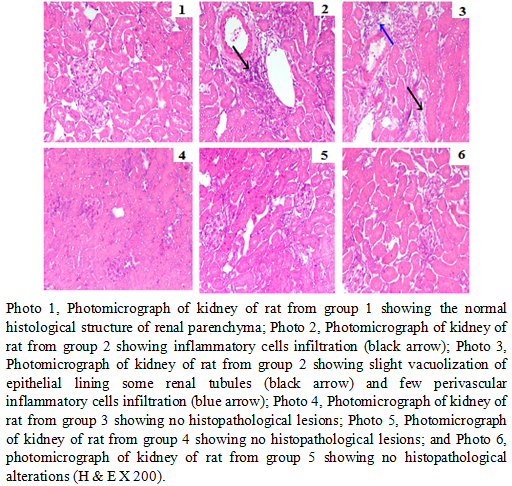
Under microscopic inspection of renal tissues (Figure 1), the different experimental groups appeared to have clear differences. Kidneys of negative control (Group 1) had normal renal architecture, with intact glomeruli, un-atrophic tubular epithelium as well as lack of inflammatory infiltration (Photo 1). This finding is coincidental with the normal histological morphology of normal rat kidneys as reported in experimental nephrology models 87. Conversely, renal sections of the nephritic untreated group (Group 2), showed severe pathological changes, such as the presence of inflammatory cell infiltration in the interstitial tissue (Photo 2), slight vacuolization of the epithelial lining of certain renal tubules, and a limited aggregation of inflammatory cells around them (Photo 3). The results are typical of renal inflammatory damage and tubular degeneration of the epithelial cell as a consequence of nephritic damage. Tubular vacuolization is usually regarded as one of the first signs of reversible injury of cells due to oxidative stress and dysfunction of membranes 88. In its turn, interstitial inflammatory infiltration is at the core of the further development of renal damage that facilitates the formation of cytokines, oxidative stress, and extracellular matrix deposition 89. Stunningly, renal sections of treated groups (Group 3, 4, and 5) which were fed on dietary Gum Arabic supplementation had no observable histopathological lesions (Photos 4 to 6).

The appearance of the renal corpuscles and the tubular structures were similar to the negative control group, which means there was a significant safeguard against nephritic damage. The observed inflammatory infiltration and the changes in tubular epithelia (Group 2) resemble those that occurred in experimental nephritis and have a strong relationship with oxidative stress, immune activation, and the expression of pro-inflammatory cytokines including tumor necrosis factor-alpha (TNF-alpha) and interleukins (IL-1b and IL-6) 90. The nephritic injury is characterized by the activation of nuclear factor kappa B (NF-kB) that prompts the inflammatory cell recruitment and consequentially structural damage of renal tissues 91. It is possible that the identified vacuolar degeneration is caused by mitochondrial dysfunction and the formation of lipid peroxidation as a result of excessive production of reactive oxygen species (ROS) 92. This indicates the presence of a strong nephroprotective effect since there are no histopathological lesions in the Gum Arabic-treated groups. The gum Arabic, which is a soluble dietary fiber, is an antioxidant, anti-inflammatory, and prebiotic compound with proven antioxidant, anti-inflammatory, and prebiotic properties, which is derived by using Acacia senegal 25. The effect of its protective effect can be explained by various interconnected mechanisms. To begin with, Gum Arabic has been reported to raise systemic antioxidant capacity increasing the concentrations of endogenous antioxidants like glutathione and superoxide dismutase (SOD), and consequently decrease oxidative stress-induced renal damages 57. It reduces lipid peroxidation and stabilizes cellular membranes by scavenging free radicals thereby maintaining tubular epithelial integrity. Second, Gum Arabic has immunomodulatory effects. It is reported to decrease the amount of inflammatory markers in the bloodstream and inhibit the production of pro-inflammatory cytokines 62. This anti-inflammatory effect could be associated with the lack of inflammatory cell infiltration in treated groups, which is probably due to the inhibition of the activity of the NF-kappaB signaling pathways and reduced leukocyte recruitment. Third, Gum Arabic, being a fermentable fiber, enhances the proliferation of positive gut microbiota, which increases the production of short-chain fatty acids (SCFA), specifically butyrate and propionate. They are systemic anti-inflammatory metabolites that have been reported to reduce renal inflammation by regulating immune responses and oxidative stress responses 93 New data indicate that the gut-kidney axis regulates renal injury and dietary fibers like Gum Arabic may act as renoprotective factors through microbiota-based actions 94. Moreover, Gum Arabic has been found to favor the metabolism of nitrogen as well as reducing the uremic toxin concentration in chronic kidney disease models and hence lowering the renal workload and structural stress 18. This metabolic enhancing can be one of the reasons of preserving normal histology of the kidneys that is seen in the treated groups. The current evidence supports the existing literature on experimental research that proves that Gum Arabic supplementation prevents renal structural injury, and histological outcome during nephrotoxicity and chronic renal failure models 28. The combination of the protective effect seen in Group 3, 4, and 5 is in support of the hypothesis that dietary Gum Arabic reduces nephritic injury by antioxidant, anti-inflammatory, and microbiota-modulating actions. Supplementation with Dietary Gum Arabic was also found to be effective in the prevention of histopathological renal changes in nephritic rats. Whereas in untreated nephritic animals, there was inflammatory cellular infiltration, tubular epithelial degeneration was observed whereas in treated groups, normal renal architecture was intact. These anti-inflammatory effects probably occur via alleviations of oxidative stress, inhibition of inflammatory signal transduction, and regulation of the gut-kidney axis. The results support the therapeutic effectiveness of Gum Arabic as a supplement dietary intervention in inflammatory renal diseases.
The paper illustrates that dietary Gum Arabic (GA) can prevent actin-nephritis induced by arginine in rats by enhancing growth, kidney and liver functions, lipid metabolism, inflammatory response, oxidative stress and glucose metabolism. The effects of nephritis were weight loss, liver and kidney injury, dyslipidemia, systemic inflammation, oxidative stress, and insulin resistance. These effects were reversible in a dose-dependent fashion by supplementing GA (488) with the highest doses of 8% reversing most of the parameters with the normal range. GA improved renal and hepatic performance, lipid profiles, inflammation and oxidative stress, antioxidants, and glucose homeostasis, and insulin sensitivity. In general, the effects of GA on the body can be described as a renoprotective effect, hepatoprotective effect, anti-inflammatory effect, antioxidant effect, hypolipidemic effect, and metabolic-regulating effect, which are all synergistic with each other. Additional long-term research and clinical trials are advised to maximize dosing, establish the safety and investigate its molecular protective effects in humans.
The authors are particularly grateful to express their sincere appreciations to their colleagues in SAVANNA Companies Group (Processing Gums, Juices and Confectionery) in Khartoum, Sudan for helping them in the process of acquiring the samples of the Gum Arabic samples.
The authors declare that they have no conflicts of interest in this study, and there are no factors that could have influenced the publication of this article.
Yousif Elhassaneen was involved in the development and review of the study protocol, oversaw the execution of the experimental procedures, verified the findings, drafted the initial version of the manuscript, and performed a critical intellectual revision to structure and refine the content. He also approved the final manuscript for publication. Wafaa Refat contributed to supervising the experimental process, participated in the development of the study concept, validated the results, and supported the preparation of the manuscript. Hend Ragab conducted the experimental work, was responsible for data collection, analysis, and tabulation, and contributed to conceptual development as well as manuscript writing.
AA, antioxidant activity, Abs, absorbance, ALP, alkaline phosphatase (ALP), ALT, alanine aminotransferase ; AST, Aspartate aminotransferase, BWG, body weight gain, CAT, catalase, FI, feed intake, dimethyl sulfoxide, G6PD , glucose-6-phosphatase, FER, feed efficiency ratio, GSH, reduced glutathione, GSH-PX, glutathione peroxidase, HDL-c, High density lipoprotein-cholesterol, Igs, immunoglobulin's, LDL-c, low density lipoprotein-cholesterol, MDA, malondialdehyde, NO, nitric oxide, ROS, reactive oxygen species, PC, protein carbonyl, SD, standard deviation, SOD, superoxide dismutase, TGs, triglycerides, TNF-α, tumor necrosis factor-alph
| [1] | Williams, P.A. & Phillips, G.O. (2000). Hydrocolloids handbook. Cambridge: CRC Press. | ||
| In article | View Article | ||
| [2] | Fantahun, M., Pattnaik, G., Wondimu, A., Tadesse, E., Yilma, Z., Seleshi, A., Gebre-Samuel, N., Assen, A., & Abrha, S. (2014). Potential applications of Ethiopian natural gums as pharmaceutical excipients. International Journal of Pharmacy Education and Research, 1(2), 61-67. | ||
| In article | View Article | ||
| [3] | Anderson, D., & Dea, I. (1971). Chemistry of Acacia gums. Journal of the Society of Cosmetic Chemists, 2, 61-73. | ||
| In article | |||
| [4] | Furia, T. (Ed.). (1972). CRC Handbook of Food Additives. CRC Press. | ||
| In article | |||
| [5] | Islam, A.M., Phillips, G.O. & Sljivo, A., (1997). Review of gum Arabic properties. Food Hydrocoll., 11: 493-505. | ||
| In article | View Article | ||
| [6] | Mohammed, N. H. (2013). Chemical and technological studies on some food products supplemented with gum arabic (M.Sc. thesis). Faculty of Home Economics, Menoufia University, Egypt. | ||
| In article | |||
| [7] | Al-Assaf, S., Phillips, G. O., & Williams, P. A. (2005a). Molecular weight of Acacia senegal gum exudate. Food Hydrocolloids, 19(4), 647-660. | ||
| In article | View Article | ||
| [8] | Flindt, C., Al-Assaf, S., Phillips, G.O., & Williams, P.A. (2005). Structure of Acacia seyal gum. Food Hydrocoll., 19: 687-701. | ||
| In article | View Article | ||
| [9] | Hassan, E.A., Al-Assaf, S., Phillips, G.O., & Williams, P.A. (2005). Molecular weight of Acacia seyal gum. Food Hydrocoll., 19: 669-677. | ||
| In article | View Article | ||
| [10] | Hegazy, W. H. I. (2014). New trends for using gum arabic in food processing applications (Ph.D. thesis). Faculty of Home Economics, Menoufia University, Egypt. | ||
| In article | |||
| [11] | Sharma, R.D. (1985). Hypocholesterolemic effect of gum acacia in humans. Nutr Res., 5(12): 1321-1326. | ||
| In article | View Article | ||
| [12] | Tiss, A., Carrière, F., & Verger, R. (2001). Gum Arabic effects on lipase activity. Anal Biochem., 294(1): 36-43. | ||
| In article | View Article PubMed | ||
| [13] | Nasir, O., Wang, K., & Föller, M. (2010). Gum Arabic and carcinoma inhibition. Nutr Cancer., 62: 802-810. | ||
| In article | View Article PubMed | ||
| [14] | Al-Majed, A. A., Mostafa, A. M., Al-Rikabi, A. C., & Al-Shabanah, O. A. (2002). Gum Arabic and gentamicin nephrotoxicity. Pharmacological Research, 46(5), 445-451. | ||
| In article | View Article PubMed | ||
| [15] | Ali, B.H., Al-Qarawi, A.A., Haroun, E.M., & Mousa, H.M. (2003). Effect of gum Arabic on gentamicin nephrotoxicity in rats. Ren Fail., 25(1): 15-20. | ||
| In article | View Article PubMed | ||
| [16] | Trommer, H. & Neubert, R.H. (2005). Polysaccharides as antioxidants. Int J Pharm., 298: 153-163. | ||
| In article | View Article PubMed | ||
| [17] | Ali, B.H. & Al Moundhri, M.S. (2006). Nephrotoxicity of platinum compounds and protective agents. Food Chem Toxicol., 44(8): 1173-1183. | ||
| In article | View Article PubMed | ||
| [18] | Ali, A.A., Ali, K.E., Fadlalla, A., & Khalid, K.E. (2008). Effects of gum Arabic on metabolic profile of chronic renal failure patients on hemodialysis. Nat Prod Res., 22(1): 12-21. | ||
| In article | View Article PubMed | ||
| [19] | Glover, D.A., Ushida, K., Phillips, A.O., & Riley, S.G. (2009). Gum Arabic (Acacia senegal) health benefits in humans. Food Hydrocoll., 23(8): 2410-2415. | ||
| In article | View Article | ||
| [20] | Ali, B.H., Al-Salam, S., & Al-Husseni, I. (2010). Effects of gum Arabic in adenine-induced chronic renal failure in rats. Exp Biol Med., 235(3): 373-382. | ||
| In article | View Article PubMed | ||
| [21] | Phillips, A.O. & Phillips, G.O. (2011). Biofunctional behaviour and health benefits of gum Arabic. Food Hydrocoll., 25(2): 165-169. | ||
| In article | View Article | ||
| [22] | Phillips, G.O., Ogasawara, T., & Ushida, K. (2007). Gum Arabic as dietary fiber. Food Hydrocoll., 22: 24-35. | ||
| In article | View Article | ||
| [23] | Calame, W., Weseler, A.R., Viebke, C., Flynn, C., & Siemensma, A.D. (2008). Gum Arabic establishes prebiotic functionality in healthy human volunteers. Br J Nutr., 100(6): 1269-1275. | ||
| In article | View Article PubMed | ||
| [24] | Slavin, J. (2003). Whole grains and disease prevention mechanisms. Proc Nutr Soc. 62(1): 129-134. | ||
| In article | View Article PubMed | ||
| [25] | Ali, B.H., Ziada, A., & Blunden, G. (2009). Biological effects of gum Arabic: a review. Food Chem Toxicol., 47(1): 1-8. | ||
| In article | View Article PubMed | ||
| [26] | Lear, S.A., Toma, M., & Birmingham, L. (2003). Anthropometric indices and ethnicity. Metabolism., 52(10): 1295-1301. | ||
| In article | View Article PubMed | ||
| [27] | Gamal el-din, A.M., Mostafa, A.M., Al-Shabanah, O.A., Al-Bekairi, A.M., & Nagi, M.N. (2003). Protective effect of arabic gum against acetaminophen-induced hepatotoxicity in mice. Pharmacol Res., 48(6): 631-5. | ||
| In article | View Article PubMed | ||
| [28] | Elamin, S., Alkhawaja, M.J., Bukhamsin, A.Y., Idris, M.A.S., Abdelrahman, M.M., Abutaleb, N.K., & Housawi, A.A. (2017). Gum Arabic Reduces C-Reactive Protein in Chronic Kidney Disease Patients without Affecting Urea or Indoxyl Sulfate Levels. Int J Nephrol. 2017; 2017: 9501470. | ||
| In article | View Article PubMed | ||
| [29] | Reeves, P. G., Nielsen, F. H., & Fahey, G. C. (1993). AIN-93 purified diets for laboratory rodents. The Journal of Nutrition, 123, 1939-1951. | ||
| In article | View Article PubMed | ||
| [30] | NRC, National Research Council. (1996). Guide for the care and use of laboratory animals. National Academy Press. | ||
| In article | |||
| [31] | Chapman, D.G., Castilla, R., & Campbell, J.A. (1959). Evaluation of protein in foods: protein efficiency ratio method. Can J Biochem Physiol. 37: 679-686. | ||
| In article | View Article PubMed | ||
| [32] | Hou, Y., Xiao, Z., Zhu, Y., Li, Y., Liu, Q. & Wang, Z.. (2024). Blood metabolites and chronic kidney disease: a Mendelian randomization study. BMC Med Genomics. 2024 May 28; 17(1): 147. | ||
| In article | View Article PubMed | ||
| [33] | Zhang, S., Ma, J., Sheng, L., Zhang, D., Chen, X., Yang, J., & Wang, D. (2017). Total coumarins from Hydrangea paniculata show renal protective effects in lipopolysaccharide-induced acute kidney injury via anti-inflammatory and antioxidant activities. Frontiers in Pharmacology, 8, 872. | ||
| In article | View Article PubMed | ||
| [34] | Tietz, N. W. (1976). Fundamentals of clinical chemistry (p. 243). W. B. Saunders. | ||
| In article | |||
| [35] | Alpha, B., Cox, L., Crowther, N., Clark, P. M., & Hales, C. N. (1992). Sensitive amplified immunoenzymometric assays (IEMA) for human insulin and intact proinsulin. European Journal of Clinical Chemistry and Clinical Biochemistry, 30(1), 27-32. | ||
| In article | View Article PubMed | ||
| [36] | Yoshinaga, H., & Kosaka, K. (1999). Heterogeneous relationship of early insulin response and fasting insulin with development of type 2 diabetes. Diabetes Research and Clinical Practice, 44, 129-136. | ||
| In article | View Article PubMed | ||
| [37] | Vassault, A., Grafmeyer, D., Graeve, J., Cohen, R., Beaudonnet, A., & Bienvenu, J. (1999). Quality specifications and allowable standards for validation of methods used in clinical biochemistry. Annales de Biologie Clinique, 57(6), 685-695. | ||
| In article | |||
| [38] | Fawcett, J. K., & Scott, J. E. (1960). Determination of urea. Journal of Clinical Pathology, 13, 156-159. | ||
| In article | View Article PubMed | ||
| [39] | Bartels, J., Bohmer, M., & Heirli, C. (1972). Determination of creatinine. Clinica Chimica Acta, 37, 193-197. | ||
| In article | View Article PubMed | ||
| [40] | Barham, D., & Trinder, P. (1972). Determination of uric acid. The Analyst, 97, 142-145. | ||
| In article | View Article PubMed | ||
| [41] | Ahmadi, S. A., Boroumand, M., Gohari-Moghaddam, K., Tajik, P., & Dibaj, S. (2008). The impact of low serum triglyceride on LDL-cholesterol estimation. Archives of Iranian Medicine, 11, 318-321. | ||
| In article | |||
| [42] | Fossati, P., & Prencipe, L. (1982). Serum triglycerides determined colorimetrically with an enzyme that produces hydrogen peroxide. Clinical Chemistry, 28, 2077-2080. | ||
| In article | View Article PubMed | ||
| [43] | Lopes-Virella, M. F., Stone, P., Ellis, S., & Colwell, J. A. (1977). Cholesterol determination in high-density lipoproteins separated by three different methods. Clinical Chemistry, 23(5), 882-884. | ||
| In article | View Article PubMed | ||
| [44] | Richmond, W. (1973). Preparation and properties of a cholesterol oxidase from Nocardia sp. and its application to the enzymatic assay of total cholesterol in serum. Clinical Chemistry, 19, 1350-1356. | ||
| In article | View Article PubMed | ||
| [45] | Splittgerber, A. G., & Tappel, A. L. (1979). Inhibition of glutathione peroxidase by metal ions. Archives of Biochemistry and Biophysics, 197, 534-542. | ||
| In article | View Article PubMed | ||
| [46] | Aebi, H. (1974). Catalase. In H. U. Bergmeyer (Ed.), Methods of enzymatic analysis (pp. 673-677). Academic Press. | ||
| In article | View Article | ||
| [47] | Mett, J., & Müller, U. (2021). The medium-chain fatty acid decanoic acid reduces oxidative stress levels in neuroblastoma cells. Scientific Reports, 11, 6135. | ||
| In article | View Article PubMed | ||
| [48] | Buege, J.A. & Aust, S.D. (1978). Microsomal lipid peroxidation. In: Methods in Enzymology. New York: Academic Press; p. 302-310. | ||
| In article | View Article PubMed | ||
| [49] | Miranda, K. M., Espey, M. G., & Wink, D. A. (2001). A rapid, simple spectrophotometric method for simultaneous detection of nitrate and nitrite. Nitric Oxide, 5(1), 62-71. | ||
| In article | View Article PubMed | ||
| [50] | Price, C. P., Trull, A. K., Berry, D., & Gorman, E. G. (1987). Development and validation of a particle-enhanced turbidimetric immunoassay for C-reactive protein. Journal of Immunological Methods, 99(2), 205-211. | ||
| In article | View Article PubMed | ||
| [51] | Carleton, H. (1978). Histological techniques (4th ed.). Oxford University Press. | ||
| In article | |||
| [52] | Steel, R. G. D., & Torrie, J. H. (1980). Principles and procedures of statistics: A biometrical approach. McGraw-Hill. | ||
| In article | |||
| [53] | Kovesdy, C. P., & Kalantar-Zadeh, K. (2009). Why is protein-energy wasting associated with mortality in chronic kidney disease? Seminars in Nephrology, 29(1), 3-14. | ||
| In article | View Article PubMed | ||
| [54] | Koppe, L., Fouque, D., & Kalantar-Zadeh, K. (2019). Kidney cachexia or protein-energy wasting in chronic kidney disease: facts and numbers. J Cachexia Sarcopenia Muscle, 10(3): 479-484. | ||
| In article | View Article PubMed | ||
| [55] | Stenvinkel, P., Heimbürger, O., Lindholm, B., Kaysen, G.A., & Bergström, J. (2000). Are there two types of malnutrition in chronic renal failure? Evidence for relationships between malnutrition, inflammation and atherosclerosis (MIA syndrome). Nephrol Dial Transplant., 15(7): 953-60. | ||
| In article | View Article PubMed | ||
| [56] | Sung, C. C., Liao, M. T., & Chao, C. T. (2021). Independent determinants of appetite impairment among patients with stage 3 or higher chronic kidney disease. Nutrients, 13(8), 2863. | ||
| In article | View Article PubMed | ||
| [57] | Babiker, R., Merghani, T.H., Elmusharaf, K., Badi, R.M., Lang, F., & Saeed, A.M. (2012). Effects of Gum Arabic ingestion on body mass index and body fat percentage in healthy adult females: two-arm randomized, placebo controlled, double-blind trial. Nutr J. 2012; 11: 111. | ||
| In article | View Article PubMed | ||
| [58] | Slavin, J. (2013). Fiber and prebiotics: mechanisms and health benefits. Nutrients. 5(4): 1417-35. | ||
| In article | View Article PubMed | ||
| [59] | Kalantar-Zadeh, K., Ikizler, T.A., Block, G., Avram, M.M., & Kopple, J.D. (2003). Malnutrition-inflammation complex syndrome in dialysis patients: causes and consequences. Am J Kidney Dis., 42(5): 864-81. | ||
| In article | View Article PubMed | ||
| [60] | Peysepar, E., Soltani, N., Nematbakhsh, M., Eshraghi-Jazi, F., & Taleb, A. (2016). Gamma-aminobutyric acid aggravates nephrotoxicity induced by cisplatin in female rats. J Renal Inj Prev., 5(4): 188-92. | ||
| In article | View Article PubMed | ||
| [61] | Zhang, L., Du, J., Hu, Z., Han, G., Delafontaine, P., Garcia, G., & Mitch, W.E. (2009). IL-6 and serum amyloid A synergy mediates angiotensin II-induced muscle wasting. J Am Soc Nephrol., 20(3): 604-12. | ||
| In article | View Article PubMed | ||
| [62] | Ali, B.H., Al-Husseni, I., Beegam, S., Al-Shukaili, A., Nemmar, A., Schierling, S., Queisser, N., & Schupp, N. (2013). Effect of gum arabic on oxidative stress and inflammation in adenine-induced chronic renal failure in rats. PLoS One., 8(2): e55242. | ||
| In article | View Article PubMed | ||
| [63] | Giannini, E.G., Testa, R., & Savarino, V. (2005). Liver enzyme alteration: a guide for clinicians. CMAJ. 2005; 172(3): 367-79. | ||
| In article | View Article PubMed | ||
| [64] | Vaziri, N.D., Wong, J., Pahl, M., Piceno, Y.M., Yuan, J., DeSantis, T.Z., Ni, Z., Nguyen, T.H., Andersen, G.L.. (2013). Chronic kidney disease alters intestinal microbial flora. Kidney Int., 83(2): 308-15. | ||
| In article | View Article PubMed | ||
| [65] | Al-Baadani, H.H., Alhotan, R.A., Azzam, M.M., Alhidary, I.A., Alharthi, A.S., & Al-Abdullatif, A.A. (2024). Effect of gum Arabic as natural prebiotic on intestinal ecosystem of post-hatched broiler chicks. J Anim Sci Technol., 66(6): 1203-1220. | ||
| In article | View Article PubMed | ||
| [66] | Suh, S.H. & Kim, S.W. (2023). Dyslipidemia in Patients with Chronic Kidney Disease: An Updated Overview. Diabetes Metab J., 47(5): 612-629. | ||
| In article | View Article PubMed | ||
| [67] | Anderson, J.W., Baird, P., Davis, R.H. Jr, Ferreri, S., Knudtson, M., Koraym, A., Waters, V., & Williams, C.L. Health benefits of dietary fiber. Nutr Rev. 2009; 67(4): 188-205. | ||
| In article | View Article PubMed | ||
| [68] | Inker, L.A. & Titan, S.(2021). Measurement and Estimation of GFR for Use in Clinical Practice: Core Curriculum., Am J Kidney Dis. 2021; 78(5): 736-749. | ||
| In article | View Article PubMed | ||
| [69] | Kanbay, M., Jensen, T., Solak, Y., Le, M., Roncal-Jimenez, C., Rivard, .C., Lanaspa, M.A., Nakagawa, T., Johnson, R.J. (2016). Uric acid in metabolic syndrome: From an innocent bystander to a central player. Eur J Intern Med., 29: 3-8. | ||
| In article | View Article PubMed | ||
| [70] | Bliss, D.Z., Stein, T.P., Schleifer, C.R., & Settle, R.G. (1996). Gum Arabic increases nitrogen excretion in renal failure. Am J Clin Nutr., 63: 392-398. | ||
| In article | View Article PubMed | ||
| [71] | Ramesh, G. & Reeves, W.B. (2002). TNF-alpha mediates chemokine and cytokine expression and renal injury in cisplatin nephrotoxicity. J Clin Invest., 110(6): 835-42. | ||
| In article | View Article PubMed | ||
| [72] | Pepys, M.B. & Hirschfield, G.M. (2003). C-reactive protein review. J Clin Invest., 111: 1805-1812. | ||
| In article | View Article PubMed | ||
| [73] | Zager, R.A., Johnson, A.C. & Lund, S. (2009). Uremia impacts renal inflammatory cytokine gene expression in the setting of experimental acute kidney injury. Am J Physiol Renal Physiol., 297(4): F961-70. | ||
| In article | View Article PubMed | ||
| [74] | Donath, M.Y. & Shoelson, S.E. (2011). Type 2 diabetes as an inflammatory disease. Nat Rev Immunol., 11(2): 98-107. | ||
| In article | View Article PubMed | ||
| [75] | DeFronzo, R. A., Alvestrand, A., Smith, D., et al. (1981). Insulin resistance in uremia. Journal of Clinical Investigation, 67(2), 563-568. | ||
| In article | View Article PubMed | ||
| [76] | Canfora, E.E., Jocken, J.W., & Blaak, E.E. (2015). Short-chain fatty acids in control of body weight and insulin sensitivity. Nat Rev Endocrinol., 11(10): 577-91. | ||
| In article | View Article PubMed | ||
| [77] | Brigelius-Flohé, R., & Maiorino, M. (2013). Glutathione peroxidases. Biochimica et Biophysica Acta (BBA) - General Subjects, 1830(5), 3289-3303. | ||
| In article | View Article PubMed | ||
| [78] | McCord, J.M. & Fridovich, I. (1969). Superoxide dismutase discovery. J Biol Chem., 244: 6049-6055. | ||
| In article | View Article PubMed | ||
| [79] | Halliwell, B., & Gutteridge, J. M. C. (2015). Free radicals in biology and medicine (5th ed.). Oxford University Press. | ||
| In article | View Article | ||
| [80] | Levine, R.L., Williams, J.A., Stadtman, E.R., & Shacter, E. (1994). Carbonyl assays for determination of oxidatively modified proteins. Methods Enzymol. 1994; 233: 346-57. | ||
| In article | View Article PubMed | ||
| [81] | Dalle-Donne, I., Rossi, R., Giustarini, D., Milzani, A., & Colombo, R. (2003). Protein carbonyl groups as biomarkers of oxidative stress. Clinica Chimica Acta, 329(1-2), 23-38. | ||
| In article | View Article | ||
| [82] | Cachofeiro, V., Goicochea, M., de Vinuesa, S.G., Oubiña, P., Lahera, V., & Luño, J. (2008). Oxidative stress and inflammation, a link between chronic kidney disease and cardiovascular disease. Kidney Int Suppl. 2008; (111): S4-9. | ||
| In article | View Article PubMed | ||
| [83] | Daenen, K., Andries, A., Mekahli, D., Van Schepdael, A., Jouret, F., & Bammens, B. Oxidative stress in chronic kidney disease. Pediatr Nephrol. 2019; 34(6): 975-991. | ||
| In article | View Article PubMed | ||
| [84] | Del Rio, D., Stewart, A.J., & Pellegrini, N. (2005). A review of recent studies on malondialdehyde as toxic molecule and biological marker of oxidative stress. Nutr Metab Cardiovasc Dis., 15(4): 316-28. | ||
| In article | View Article PubMed | ||
| [85] | Xiong R.G., Zhou D.D., Wu S.X., Huang S.Y., Saimaiti A., Yang Z.J., Shang A., Zhao C.N., Gan R.Y., Li H.B. (2022). Health Benefits and Side Effects of Short-Chain Fatty Acids. Foods. 11(18): 2863. | ||
| In article | View Article PubMed | ||
| [86] | Krishnamurthy, V.M., Wei, G., Baird, B.C., Murtaugh, M., Chonchol, M.B., Raphael, K.L., Greene, T., & Beddhu, S. (2012). High dietary fiber intake is associated with decreased inflammation and all-cause mortality in patients with chronic kidney disease. Kidney Int., 81(3): 300-6. | ||
| In article | View Article PubMed | ||
| [87] | Brenner, B. M., & Rector, F. C. (2012). The kidney (9th ed.). Elsevier Saunders. | ||
| In article | |||
| [88] | Hall, J. E., Guyton, A. C., & Hall, M. E. (2011). Guyton and Hall Textbook of Medical Physiology (12th ed.). Philadelphia, PA: Elsevier Saunders. | ||
| In article | View Article | ||
| [89] | Djudjaj, S., & Boor, P. (2019). Cellular and molecular mechanisms of kidney fibrosis. Molecular Aspects of Medicine, 65, 16-36. | ||
| In article | View Article PubMed | ||
| [90] | Anders, H.J. & Schaefer, L. (2014). Beyond tissue injury-damage-associated molecular patterns, toll-like receptors, and inflammasomes also drive regeneration and fibrosis. J Am Soc Nephrol., 25(7): 1387-400. | ||
| In article | View Article PubMed | ||
| [91] | Liu, M., Liang, K., Zhen, J., Zhou, M., Wang, X., Wang, Z., Wei, X., Zhang, Y., Sun, Y., Zhou, Z, Su, H., Zhang, C., Li, N., Gao, C., Peng, J., Yi, F. (2017). Sirt6 deficiency exacerbates podocyte injury and proteinuria through targeting Notch signaling. Nat Commun. 2017 Sep 4; 8(1): 413. | ||
| In article | View Article PubMed | ||
| [92] | Forbes, J.M., Coughlan, M.T., & Cooper, M.E. (2008). Oxidative stress as a major culprit in kidney disease in diabetes. Diabetes. 57(6): 1446-54. | ||
| In article | View Article PubMed | ||
| [93] | Koh, A., De Vadder, F., Kovatcheva-Datchary, P., & Bäckhed, F. (2016). From Dietary Fiber to Host Physiology: Short-Chain Fatty Acids as Key Bacterial Metabolites. Cell. 165(6): 1332-1345. | ||
| In article | View Article PubMed | ||
| [94] | Evenepoel, P., Poesen, R., & Meijers, B. (2017). The gut-kidney axis. Pediatric Nephrology, 32(11), 2005-2014. | ||
| In article | View Article PubMed | ||
Published with license by Science and Education Publishing, Copyright © 2026 Yousif A. Elhassaneen, Wafaa A. Refat and Hend E. Ragab
 This work is licensed under a Creative Commons Attribution 4.0 International License. To view a copy of this license, visit
http://creativecommons.org/licenses/by/4.0/
This work is licensed under a Creative Commons Attribution 4.0 International License. To view a copy of this license, visit
http://creativecommons.org/licenses/by/4.0/
| [1] | Williams, P.A. & Phillips, G.O. (2000). Hydrocolloids handbook. Cambridge: CRC Press. | ||
| In article | View Article | ||
| [2] | Fantahun, M., Pattnaik, G., Wondimu, A., Tadesse, E., Yilma, Z., Seleshi, A., Gebre-Samuel, N., Assen, A., & Abrha, S. (2014). Potential applications of Ethiopian natural gums as pharmaceutical excipients. International Journal of Pharmacy Education and Research, 1(2), 61-67. | ||
| In article | View Article | ||
| [3] | Anderson, D., & Dea, I. (1971). Chemistry of Acacia gums. Journal of the Society of Cosmetic Chemists, 2, 61-73. | ||
| In article | |||
| [4] | Furia, T. (Ed.). (1972). CRC Handbook of Food Additives. CRC Press. | ||
| In article | |||
| [5] | Islam, A.M., Phillips, G.O. & Sljivo, A., (1997). Review of gum Arabic properties. Food Hydrocoll., 11: 493-505. | ||
| In article | View Article | ||
| [6] | Mohammed, N. H. (2013). Chemical and technological studies on some food products supplemented with gum arabic (M.Sc. thesis). Faculty of Home Economics, Menoufia University, Egypt. | ||
| In article | |||
| [7] | Al-Assaf, S., Phillips, G. O., & Williams, P. A. (2005a). Molecular weight of Acacia senegal gum exudate. Food Hydrocolloids, 19(4), 647-660. | ||
| In article | View Article | ||
| [8] | Flindt, C., Al-Assaf, S., Phillips, G.O., & Williams, P.A. (2005). Structure of Acacia seyal gum. Food Hydrocoll., 19: 687-701. | ||
| In article | View Article | ||
| [9] | Hassan, E.A., Al-Assaf, S., Phillips, G.O., & Williams, P.A. (2005). Molecular weight of Acacia seyal gum. Food Hydrocoll., 19: 669-677. | ||
| In article | View Article | ||
| [10] | Hegazy, W. H. I. (2014). New trends for using gum arabic in food processing applications (Ph.D. thesis). Faculty of Home Economics, Menoufia University, Egypt. | ||
| In article | |||
| [11] | Sharma, R.D. (1985). Hypocholesterolemic effect of gum acacia in humans. Nutr Res., 5(12): 1321-1326. | ||
| In article | View Article | ||
| [12] | Tiss, A., Carrière, F., & Verger, R. (2001). Gum Arabic effects on lipase activity. Anal Biochem., 294(1): 36-43. | ||
| In article | View Article PubMed | ||
| [13] | Nasir, O., Wang, K., & Föller, M. (2010). Gum Arabic and carcinoma inhibition. Nutr Cancer., 62: 802-810. | ||
| In article | View Article PubMed | ||
| [14] | Al-Majed, A. A., Mostafa, A. M., Al-Rikabi, A. C., & Al-Shabanah, O. A. (2002). Gum Arabic and gentamicin nephrotoxicity. Pharmacological Research, 46(5), 445-451. | ||
| In article | View Article PubMed | ||
| [15] | Ali, B.H., Al-Qarawi, A.A., Haroun, E.M., & Mousa, H.M. (2003). Effect of gum Arabic on gentamicin nephrotoxicity in rats. Ren Fail., 25(1): 15-20. | ||
| In article | View Article PubMed | ||
| [16] | Trommer, H. & Neubert, R.H. (2005). Polysaccharides as antioxidants. Int J Pharm., 298: 153-163. | ||
| In article | View Article PubMed | ||
| [17] | Ali, B.H. & Al Moundhri, M.S. (2006). Nephrotoxicity of platinum compounds and protective agents. Food Chem Toxicol., 44(8): 1173-1183. | ||
| In article | View Article PubMed | ||
| [18] | Ali, A.A., Ali, K.E., Fadlalla, A., & Khalid, K.E. (2008). Effects of gum Arabic on metabolic profile of chronic renal failure patients on hemodialysis. Nat Prod Res., 22(1): 12-21. | ||
| In article | View Article PubMed | ||
| [19] | Glover, D.A., Ushida, K., Phillips, A.O., & Riley, S.G. (2009). Gum Arabic (Acacia senegal) health benefits in humans. Food Hydrocoll., 23(8): 2410-2415. | ||
| In article | View Article | ||
| [20] | Ali, B.H., Al-Salam, S., & Al-Husseni, I. (2010). Effects of gum Arabic in adenine-induced chronic renal failure in rats. Exp Biol Med., 235(3): 373-382. | ||
| In article | View Article PubMed | ||
| [21] | Phillips, A.O. & Phillips, G.O. (2011). Biofunctional behaviour and health benefits of gum Arabic. Food Hydrocoll., 25(2): 165-169. | ||
| In article | View Article | ||
| [22] | Phillips, G.O., Ogasawara, T., & Ushida, K. (2007). Gum Arabic as dietary fiber. Food Hydrocoll., 22: 24-35. | ||
| In article | View Article | ||
| [23] | Calame, W., Weseler, A.R., Viebke, C., Flynn, C., & Siemensma, A.D. (2008). Gum Arabic establishes prebiotic functionality in healthy human volunteers. Br J Nutr., 100(6): 1269-1275. | ||
| In article | View Article PubMed | ||
| [24] | Slavin, J. (2003). Whole grains and disease prevention mechanisms. Proc Nutr Soc. 62(1): 129-134. | ||
| In article | View Article PubMed | ||
| [25] | Ali, B.H., Ziada, A., & Blunden, G. (2009). Biological effects of gum Arabic: a review. Food Chem Toxicol., 47(1): 1-8. | ||
| In article | View Article PubMed | ||
| [26] | Lear, S.A., Toma, M., & Birmingham, L. (2003). Anthropometric indices and ethnicity. Metabolism., 52(10): 1295-1301. | ||
| In article | View Article PubMed | ||
| [27] | Gamal el-din, A.M., Mostafa, A.M., Al-Shabanah, O.A., Al-Bekairi, A.M., & Nagi, M.N. (2003). Protective effect of arabic gum against acetaminophen-induced hepatotoxicity in mice. Pharmacol Res., 48(6): 631-5. | ||
| In article | View Article PubMed | ||
| [28] | Elamin, S., Alkhawaja, M.J., Bukhamsin, A.Y., Idris, M.A.S., Abdelrahman, M.M., Abutaleb, N.K., & Housawi, A.A. (2017). Gum Arabic Reduces C-Reactive Protein in Chronic Kidney Disease Patients without Affecting Urea or Indoxyl Sulfate Levels. Int J Nephrol. 2017; 2017: 9501470. | ||
| In article | View Article PubMed | ||
| [29] | Reeves, P. G., Nielsen, F. H., & Fahey, G. C. (1993). AIN-93 purified diets for laboratory rodents. The Journal of Nutrition, 123, 1939-1951. | ||
| In article | View Article PubMed | ||
| [30] | NRC, National Research Council. (1996). Guide for the care and use of laboratory animals. National Academy Press. | ||
| In article | |||
| [31] | Chapman, D.G., Castilla, R., & Campbell, J.A. (1959). Evaluation of protein in foods: protein efficiency ratio method. Can J Biochem Physiol. 37: 679-686. | ||
| In article | View Article PubMed | ||
| [32] | Hou, Y., Xiao, Z., Zhu, Y., Li, Y., Liu, Q. & Wang, Z.. (2024). Blood metabolites and chronic kidney disease: a Mendelian randomization study. BMC Med Genomics. 2024 May 28; 17(1): 147. | ||
| In article | View Article PubMed | ||
| [33] | Zhang, S., Ma, J., Sheng, L., Zhang, D., Chen, X., Yang, J., & Wang, D. (2017). Total coumarins from Hydrangea paniculata show renal protective effects in lipopolysaccharide-induced acute kidney injury via anti-inflammatory and antioxidant activities. Frontiers in Pharmacology, 8, 872. | ||
| In article | View Article PubMed | ||
| [34] | Tietz, N. W. (1976). Fundamentals of clinical chemistry (p. 243). W. B. Saunders. | ||
| In article | |||
| [35] | Alpha, B., Cox, L., Crowther, N., Clark, P. M., & Hales, C. N. (1992). Sensitive amplified immunoenzymometric assays (IEMA) for human insulin and intact proinsulin. European Journal of Clinical Chemistry and Clinical Biochemistry, 30(1), 27-32. | ||
| In article | View Article PubMed | ||
| [36] | Yoshinaga, H., & Kosaka, K. (1999). Heterogeneous relationship of early insulin response and fasting insulin with development of type 2 diabetes. Diabetes Research and Clinical Practice, 44, 129-136. | ||
| In article | View Article PubMed | ||
| [37] | Vassault, A., Grafmeyer, D., Graeve, J., Cohen, R., Beaudonnet, A., & Bienvenu, J. (1999). Quality specifications and allowable standards for validation of methods used in clinical biochemistry. Annales de Biologie Clinique, 57(6), 685-695. | ||
| In article | |||
| [38] | Fawcett, J. K., & Scott, J. E. (1960). Determination of urea. Journal of Clinical Pathology, 13, 156-159. | ||
| In article | View Article PubMed | ||
| [39] | Bartels, J., Bohmer, M., & Heirli, C. (1972). Determination of creatinine. Clinica Chimica Acta, 37, 193-197. | ||
| In article | View Article PubMed | ||
| [40] | Barham, D., & Trinder, P. (1972). Determination of uric acid. The Analyst, 97, 142-145. | ||
| In article | View Article PubMed | ||
| [41] | Ahmadi, S. A., Boroumand, M., Gohari-Moghaddam, K., Tajik, P., & Dibaj, S. (2008). The impact of low serum triglyceride on LDL-cholesterol estimation. Archives of Iranian Medicine, 11, 318-321. | ||
| In article | |||
| [42] | Fossati, P., & Prencipe, L. (1982). Serum triglycerides determined colorimetrically with an enzyme that produces hydrogen peroxide. Clinical Chemistry, 28, 2077-2080. | ||
| In article | View Article PubMed | ||
| [43] | Lopes-Virella, M. F., Stone, P., Ellis, S., & Colwell, J. A. (1977). Cholesterol determination in high-density lipoproteins separated by three different methods. Clinical Chemistry, 23(5), 882-884. | ||
| In article | View Article PubMed | ||
| [44] | Richmond, W. (1973). Preparation and properties of a cholesterol oxidase from Nocardia sp. and its application to the enzymatic assay of total cholesterol in serum. Clinical Chemistry, 19, 1350-1356. | ||
| In article | View Article PubMed | ||
| [45] | Splittgerber, A. G., & Tappel, A. L. (1979). Inhibition of glutathione peroxidase by metal ions. Archives of Biochemistry and Biophysics, 197, 534-542. | ||
| In article | View Article PubMed | ||
| [46] | Aebi, H. (1974). Catalase. In H. U. Bergmeyer (Ed.), Methods of enzymatic analysis (pp. 673-677). Academic Press. | ||
| In article | View Article | ||
| [47] | Mett, J., & Müller, U. (2021). The medium-chain fatty acid decanoic acid reduces oxidative stress levels in neuroblastoma cells. Scientific Reports, 11, 6135. | ||
| In article | View Article PubMed | ||
| [48] | Buege, J.A. & Aust, S.D. (1978). Microsomal lipid peroxidation. In: Methods in Enzymology. New York: Academic Press; p. 302-310. | ||
| In article | View Article PubMed | ||
| [49] | Miranda, K. M., Espey, M. G., & Wink, D. A. (2001). A rapid, simple spectrophotometric method for simultaneous detection of nitrate and nitrite. Nitric Oxide, 5(1), 62-71. | ||
| In article | View Article PubMed | ||
| [50] | Price, C. P., Trull, A. K., Berry, D., & Gorman, E. G. (1987). Development and validation of a particle-enhanced turbidimetric immunoassay for C-reactive protein. Journal of Immunological Methods, 99(2), 205-211. | ||
| In article | View Article PubMed | ||
| [51] | Carleton, H. (1978). Histological techniques (4th ed.). Oxford University Press. | ||
| In article | |||
| [52] | Steel, R. G. D., & Torrie, J. H. (1980). Principles and procedures of statistics: A biometrical approach. McGraw-Hill. | ||
| In article | |||
| [53] | Kovesdy, C. P., & Kalantar-Zadeh, K. (2009). Why is protein-energy wasting associated with mortality in chronic kidney disease? Seminars in Nephrology, 29(1), 3-14. | ||
| In article | View Article PubMed | ||
| [54] | Koppe, L., Fouque, D., & Kalantar-Zadeh, K. (2019). Kidney cachexia or protein-energy wasting in chronic kidney disease: facts and numbers. J Cachexia Sarcopenia Muscle, 10(3): 479-484. | ||
| In article | View Article PubMed | ||
| [55] | Stenvinkel, P., Heimbürger, O., Lindholm, B., Kaysen, G.A., & Bergström, J. (2000). Are there two types of malnutrition in chronic renal failure? Evidence for relationships between malnutrition, inflammation and atherosclerosis (MIA syndrome). Nephrol Dial Transplant., 15(7): 953-60. | ||
| In article | View Article PubMed | ||
| [56] | Sung, C. C., Liao, M. T., & Chao, C. T. (2021). Independent determinants of appetite impairment among patients with stage 3 or higher chronic kidney disease. Nutrients, 13(8), 2863. | ||
| In article | View Article PubMed | ||
| [57] | Babiker, R., Merghani, T.H., Elmusharaf, K., Badi, R.M., Lang, F., & Saeed, A.M. (2012). Effects of Gum Arabic ingestion on body mass index and body fat percentage in healthy adult females: two-arm randomized, placebo controlled, double-blind trial. Nutr J. 2012; 11: 111. | ||
| In article | View Article PubMed | ||
| [58] | Slavin, J. (2013). Fiber and prebiotics: mechanisms and health benefits. Nutrients. 5(4): 1417-35. | ||
| In article | View Article PubMed | ||
| [59] | Kalantar-Zadeh, K., Ikizler, T.A., Block, G., Avram, M.M., & Kopple, J.D. (2003). Malnutrition-inflammation complex syndrome in dialysis patients: causes and consequences. Am J Kidney Dis., 42(5): 864-81. | ||
| In article | View Article PubMed | ||
| [60] | Peysepar, E., Soltani, N., Nematbakhsh, M., Eshraghi-Jazi, F., & Taleb, A. (2016). Gamma-aminobutyric acid aggravates nephrotoxicity induced by cisplatin in female rats. J Renal Inj Prev., 5(4): 188-92. | ||
| In article | View Article PubMed | ||
| [61] | Zhang, L., Du, J., Hu, Z., Han, G., Delafontaine, P., Garcia, G., & Mitch, W.E. (2009). IL-6 and serum amyloid A synergy mediates angiotensin II-induced muscle wasting. J Am Soc Nephrol., 20(3): 604-12. | ||
| In article | View Article PubMed | ||
| [62] | Ali, B.H., Al-Husseni, I., Beegam, S., Al-Shukaili, A., Nemmar, A., Schierling, S., Queisser, N., & Schupp, N. (2013). Effect of gum arabic on oxidative stress and inflammation in adenine-induced chronic renal failure in rats. PLoS One., 8(2): e55242. | ||
| In article | View Article PubMed | ||
| [63] | Giannini, E.G., Testa, R., & Savarino, V. (2005). Liver enzyme alteration: a guide for clinicians. CMAJ. 2005; 172(3): 367-79. | ||
| In article | View Article PubMed | ||
| [64] | Vaziri, N.D., Wong, J., Pahl, M., Piceno, Y.M., Yuan, J., DeSantis, T.Z., Ni, Z., Nguyen, T.H., Andersen, G.L.. (2013). Chronic kidney disease alters intestinal microbial flora. Kidney Int., 83(2): 308-15. | ||
| In article | View Article PubMed | ||
| [65] | Al-Baadani, H.H., Alhotan, R.A., Azzam, M.M., Alhidary, I.A., Alharthi, A.S., & Al-Abdullatif, A.A. (2024). Effect of gum Arabic as natural prebiotic on intestinal ecosystem of post-hatched broiler chicks. J Anim Sci Technol., 66(6): 1203-1220. | ||
| In article | View Article PubMed | ||
| [66] | Suh, S.H. & Kim, S.W. (2023). Dyslipidemia in Patients with Chronic Kidney Disease: An Updated Overview. Diabetes Metab J., 47(5): 612-629. | ||
| In article | View Article PubMed | ||
| [67] | Anderson, J.W., Baird, P., Davis, R.H. Jr, Ferreri, S., Knudtson, M., Koraym, A., Waters, V., & Williams, C.L. Health benefits of dietary fiber. Nutr Rev. 2009; 67(4): 188-205. | ||
| In article | View Article PubMed | ||
| [68] | Inker, L.A. & Titan, S.(2021). Measurement and Estimation of GFR for Use in Clinical Practice: Core Curriculum., Am J Kidney Dis. 2021; 78(5): 736-749. | ||
| In article | View Article PubMed | ||
| [69] | Kanbay, M., Jensen, T., Solak, Y., Le, M., Roncal-Jimenez, C., Rivard, .C., Lanaspa, M.A., Nakagawa, T., Johnson, R.J. (2016). Uric acid in metabolic syndrome: From an innocent bystander to a central player. Eur J Intern Med., 29: 3-8. | ||
| In article | View Article PubMed | ||
| [70] | Bliss, D.Z., Stein, T.P., Schleifer, C.R., & Settle, R.G. (1996). Gum Arabic increases nitrogen excretion in renal failure. Am J Clin Nutr., 63: 392-398. | ||
| In article | View Article PubMed | ||
| [71] | Ramesh, G. & Reeves, W.B. (2002). TNF-alpha mediates chemokine and cytokine expression and renal injury in cisplatin nephrotoxicity. J Clin Invest., 110(6): 835-42. | ||
| In article | View Article PubMed | ||
| [72] | Pepys, M.B. & Hirschfield, G.M. (2003). C-reactive protein review. J Clin Invest., 111: 1805-1812. | ||
| In article | View Article PubMed | ||
| [73] | Zager, R.A., Johnson, A.C. & Lund, S. (2009). Uremia impacts renal inflammatory cytokine gene expression in the setting of experimental acute kidney injury. Am J Physiol Renal Physiol., 297(4): F961-70. | ||
| In article | View Article PubMed | ||
| [74] | Donath, M.Y. & Shoelson, S.E. (2011). Type 2 diabetes as an inflammatory disease. Nat Rev Immunol., 11(2): 98-107. | ||
| In article | View Article PubMed | ||
| [75] | DeFronzo, R. A., Alvestrand, A., Smith, D., et al. (1981). Insulin resistance in uremia. Journal of Clinical Investigation, 67(2), 563-568. | ||
| In article | View Article PubMed | ||
| [76] | Canfora, E.E., Jocken, J.W., & Blaak, E.E. (2015). Short-chain fatty acids in control of body weight and insulin sensitivity. Nat Rev Endocrinol., 11(10): 577-91. | ||
| In article | View Article PubMed | ||
| [77] | Brigelius-Flohé, R., & Maiorino, M. (2013). Glutathione peroxidases. Biochimica et Biophysica Acta (BBA) - General Subjects, 1830(5), 3289-3303. | ||
| In article | View Article PubMed | ||
| [78] | McCord, J.M. & Fridovich, I. (1969). Superoxide dismutase discovery. J Biol Chem., 244: 6049-6055. | ||
| In article | View Article PubMed | ||
| [79] | Halliwell, B., & Gutteridge, J. M. C. (2015). Free radicals in biology and medicine (5th ed.). Oxford University Press. | ||
| In article | View Article | ||
| [80] | Levine, R.L., Williams, J.A., Stadtman, E.R., & Shacter, E. (1994). Carbonyl assays for determination of oxidatively modified proteins. Methods Enzymol. 1994; 233: 346-57. | ||
| In article | View Article PubMed | ||
| [81] | Dalle-Donne, I., Rossi, R., Giustarini, D., Milzani, A., & Colombo, R. (2003). Protein carbonyl groups as biomarkers of oxidative stress. Clinica Chimica Acta, 329(1-2), 23-38. | ||
| In article | View Article | ||
| [82] | Cachofeiro, V., Goicochea, M., de Vinuesa, S.G., Oubiña, P., Lahera, V., & Luño, J. (2008). Oxidative stress and inflammation, a link between chronic kidney disease and cardiovascular disease. Kidney Int Suppl. 2008; (111): S4-9. | ||
| In article | View Article PubMed | ||
| [83] | Daenen, K., Andries, A., Mekahli, D., Van Schepdael, A., Jouret, F., & Bammens, B. Oxidative stress in chronic kidney disease. Pediatr Nephrol. 2019; 34(6): 975-991. | ||
| In article | View Article PubMed | ||
| [84] | Del Rio, D., Stewart, A.J., & Pellegrini, N. (2005). A review of recent studies on malondialdehyde as toxic molecule and biological marker of oxidative stress. Nutr Metab Cardiovasc Dis., 15(4): 316-28. | ||
| In article | View Article PubMed | ||
| [85] | Xiong R.G., Zhou D.D., Wu S.X., Huang S.Y., Saimaiti A., Yang Z.J., Shang A., Zhao C.N., Gan R.Y., Li H.B. (2022). Health Benefits and Side Effects of Short-Chain Fatty Acids. Foods. 11(18): 2863. | ||
| In article | View Article PubMed | ||
| [86] | Krishnamurthy, V.M., Wei, G., Baird, B.C., Murtaugh, M., Chonchol, M.B., Raphael, K.L., Greene, T., & Beddhu, S. (2012). High dietary fiber intake is associated with decreased inflammation and all-cause mortality in patients with chronic kidney disease. Kidney Int., 81(3): 300-6. | ||
| In article | View Article PubMed | ||
| [87] | Brenner, B. M., & Rector, F. C. (2012). The kidney (9th ed.). Elsevier Saunders. | ||
| In article | |||
| [88] | Hall, J. E., Guyton, A. C., & Hall, M. E. (2011). Guyton and Hall Textbook of Medical Physiology (12th ed.). Philadelphia, PA: Elsevier Saunders. | ||
| In article | View Article | ||
| [89] | Djudjaj, S., & Boor, P. (2019). Cellular and molecular mechanisms of kidney fibrosis. Molecular Aspects of Medicine, 65, 16-36. | ||
| In article | View Article PubMed | ||
| [90] | Anders, H.J. & Schaefer, L. (2014). Beyond tissue injury-damage-associated molecular patterns, toll-like receptors, and inflammasomes also drive regeneration and fibrosis. J Am Soc Nephrol., 25(7): 1387-400. | ||
| In article | View Article PubMed | ||
| [91] | Liu, M., Liang, K., Zhen, J., Zhou, M., Wang, X., Wang, Z., Wei, X., Zhang, Y., Sun, Y., Zhou, Z, Su, H., Zhang, C., Li, N., Gao, C., Peng, J., Yi, F. (2017). Sirt6 deficiency exacerbates podocyte injury and proteinuria through targeting Notch signaling. Nat Commun. 2017 Sep 4; 8(1): 413. | ||
| In article | View Article PubMed | ||
| [92] | Forbes, J.M., Coughlan, M.T., & Cooper, M.E. (2008). Oxidative stress as a major culprit in kidney disease in diabetes. Diabetes. 57(6): 1446-54. | ||
| In article | View Article PubMed | ||
| [93] | Koh, A., De Vadder, F., Kovatcheva-Datchary, P., & Bäckhed, F. (2016). From Dietary Fiber to Host Physiology: Short-Chain Fatty Acids as Key Bacterial Metabolites. Cell. 165(6): 1332-1345. | ||
| In article | View Article PubMed | ||
| [94] | Evenepoel, P., Poesen, R., & Meijers, B. (2017). The gut-kidney axis. Pediatric Nephrology, 32(11), 2005-2014. | ||
| In article | View Article PubMed | ||