Benzo[a]pyrene (B[a]P) is the main representative of polycyclic aromatic hydrocarbons (PAHs), and has been repeatedly found in the air, surface water, soil, sediments and foods. Exposure to this ubiquitous environmental and food contaminants is associated with the development of several diseases including liver cancer. The current work was conducted to investigate the possible protective effects of onion (Allium cepa) skin extract (OSE) against toxicity and molecular damage in liver of rats induced by B[a]P. Injected of rats with B[a]P caused a significant increased (p≤0.05) in serum liver enzymes functions (AST, 60.16%, ALT, 111.31%, and ALP, 145.15%), serum lipid profile (total cholesterol, 8.54% and LDL-c, 52.61%), biological oxidants levels in serum such Malondialdehyde, (MDA), serum inflammation parameters (TNF-, 89.17, nitric oxide, 82.42%), hepatic CYP450, 81.41%, oxidative stress parameters (MDA, 59.54% and ROS, 283.67%), and a significant decreased (p≤0.05) in serum triglycerides (-9.09%), serum HDLC-c (-38.69%), and hepatic glycogen (-68.10%). Also, hepatic apoptosis biomarkers were altered, increase in caspase-3 and Bax (67.57 and 104.20%), and decrease in Bcl-2 (-69.43%) compared to normal control rats. Treatment with OSE by a concentrations (50, 100, 150 and 200 mg/kg bw day) led to improve all of these biological parameters by different rates and positively manipulated B[a]P-related histopathological changes in liver tissues. The rate of prevention was recorded a dose-dependent manner as a result of OSE treatment. These findings supported our hypothesis that such plant part extract (OSE) contains several classes of bioactive compounds with different biological activities that are able to prevent and/or inhibit hepatotoxicity induced by B[a]P through one or more of the biochemical and molecular pathways. In conclusion, our present findings suggested that OSE could be used as antihepatotoxic complement of liver disease patients. This may be related to it's improve the liver functions, serum lipid profile, and antioxidant and inflammatory defense systems as well as the anti-apoptotic effect.
Benzo[a]pyrene (B[a]P) is a polycyclic aromatic hydrocarbon (PAH) with the formula C20H12 and the result of incomplete burning of organic (carbon-containing) items at temperatures between 300 °C and 600 °C. It is a ubiquitous compound can be found in residential wood burning, coal tar, especially from ), all smoke resulting from the combustion of organic material including and many foods, especially items 1, 2, 3, 4, 5. For foods, the study of Kazerouni 6 found levels of B[a]P to be significantly higher in foods that were cooked well-done on the , particularly , with skin, and . Also, cooked meat products have been shown to contain up to 4 ng/g of BaP, up to 5.5 ng/g in fried chicken and 62.6 ng/g in overcooked charcoal barbecued beef 7, 8 9. Furthermore, Elhassaneen and Tawfik, 10 stated that fumes generated from the frying process contains B[a]P and could be threaten the public health. The World Health Organization 11 stated that 99% of the oral intake of PAH including B[a]P contributed by food, 0.9% by inhalation and 0.1- 0.3% by drinking water.
Several decades ago, many studies indicated that B[a]P have been shown to be toxic, mutagenic and/or carcinogenic by extensive experiments in vivo and in vitro systems 12, 13, 14, 15, 16, 17, 18. Also, numerous studies since the 1970s have documented links between B[a]P and liver cancer in mammals from fish to human 12, 13, 14, 16, 19, 20, 21, 22. All previous studies and others stated that the toxic and carcinogenic effects of B[a]P comes through three enzymatic reactions as follow: 1) It is first oxidized by to form a variety of metabolites, including (+) B[a]P-7,8-epoxide, 2) This product is metabolized by , opening up the ring to yield (−) B[a]P-7,8-dihydrodiol, and 3) the ultimate carcinogen is formed after another reaction with 1A1 to yield the (+) B[a]P-7,8-dihydrodiol-9,10-epoxide that covalently binds to DNA 12, 14 23 24. On the other side, B[a]P reactive intermediate metabolites (arene oxides, phenols, quinones, dihydrodiols, and epoxides) induced several cytotoxic effects to the liver cells through oxidative stress pathways such as mitochondria and lysosomes dysfunctions, and defects in the cell wall membrane integrity 2, 5, 14, 20, 22, 25, 26, 27.
All previous studies and others emphasize the need to search for treatments used to prevent or treat the harmful effects of B[a]P on the liver. In this direction, the modern pharmaceutical therapy is costly and associated with multiple side effects resulting in patient non-compliance. For that, there is a need to explore alternative therapies particularly from natural sources as these are cost effective and possess minimal side effects. Many of authorities and academic centers of research pay more attention towards the area of hepatotoxicity chemoprevention compounds. One of the most impressive findings in the field of chemoprevention is the very large number of compounds that have been demonstrated to prevent the occurrence of hepatotoxicity. Many of these classes are lies in an enlarged group of compounds called phytochemicals. Scientists have identified thousands of phytochemicals, including phenolics, flavonoids, carotenoids, glucosinolates, alkaloids, terpenes, and phytoestrogens, in vegetables, fruits, grains, legumes, and other plant sources. A vast variety of phytochemicals that are present in the daily human diet have been found to possess substantial antitoxic, antimutagenic and anticarcinogenic properties 17, 18, 21, 22, 27, 28, 29, 30.The results of these and other studies were encouraging to search for more of these plant parts that are highly effective in treating liver damage resulting from exposure to toxic substances.
Onion (Allium cepa L.) belongs to the Lilliaceae family and is grown all over the world. Dehydrated onions in the form of flakes or powder are in extensive demand in several parts of the world such united kigdom, Japan, Russia, Germany, Netherlands, Spain etc. Thus, dehydrated onions are a product of considerable importance in world trade. The predicted size of the global dehydrated onions market in 2022 was close to US$ 1.1 billion (2.25 million kg) (). The global dehydrated onion market is growing due to reasons such as increased consumer demand for fast food as well as ready-to-eat convenience foods. Such food industry produces a large amount of onion wastes, making it necessary to search for possible ways for their utilization. The main onion wastes include onion skins, two outer fleshy scales and roots generated during industrial peeling. One way could be to use these onion wastes as a natural source of high-value functional ingredients, since onion are rich in several groups of compounds 31, 32, 33, 34, 35, 36, 37. Processing and stabilizing onion wastes could solve the environmental problem derived from a great onion wastes disposal 38. Several studies have been established for using the onion skin in different applications include pectin production, pigments extraction, natural antioxidants, vingare production, biogas productions, natural fertilizers, food products etc. 39, 40, 41, 42 43, 44, 45 46, 47, 48. In a trial to open new avenue for the utilization of onion wastes in some new therapeutic applications, the current study was conducted to investigate the possible protective effects of onion (Allium cepa) skin extract against toxicity and molecular damage in liver of rats induced by B[a]P.
Onion skins were obtained from New Bani Suef Company for Preservation, Dehydration and Industratzation of Vegetables, Bani Suef El-Goudida City, Nile east, Bani Suef, Egypt. Benzo[a]pyrene (B[a]P) was purchased from Sigma Chemical Co. (St. Louis, MO, Company agent, Cairo, Egypt). Casein was obtained from Morgan Chemical Co., Cairo, Egypt. All organic solvents, buffers and other chemicals of analytical grade were purchased from El-Ghomhorya Company for Trading in Drug, Chemicals and Medical Instruments, Cairo, Egypt.
2.2. MethodsRed onion skin were washed and dried in a hot air oven (Horizontal Forced Air Drier, Proctor and Schwartz Inc., Philadelphia, PA) at 60 0C until arriving by the moisture in the final product to about 7%. The dried skin was ground into a fine powder in high mixer speed (Toshiba, ElAraby Co., Benha, Egypt). The material that passed through an 80 mesh sieve was retained for the basil diet blending purpose.
Onion skin powder (OSE) was prepared according to the method mentioned by Gharib et al., 49 with some modifications. Briefly, each 100g of onion skin powder were extracted with 1000 ml of hydro-ethanolic solution (methanol and water; 80:20%) on an orbital shaker (Unimax 1010, Heidolph Instruments GmbH & Co. KG, Germany) at 50 0C for 6 h. The extract was filtered (Whatman No. 5 filter paper) on a Buchner funnel. The collected filtrate was evaporated to complete dryness under reduced pressure at 400C using a rotary evaporator (Laborata 4000; Heidolph Instruments GmbH & Co. KG, Germany). The resulted extract was stored at 4 0C for biological experiments.
Animals used in this study, adult male albino rats (170± 7.5 g per each) were obtained from Helwan Station, Ministry of Health and Population, Helwan, Cairo, Egypt. Rats were kept under similar management and hygiene conditions. They were housed individually in wire cages in a room maintained at 25± 3.0 oC, relative humidity (56±4%), and kept under normal healthy conditions. Rats were fed a basal diet (BD) for one week before starting the experiment for acclimation.
The basic diet prepared according to the following formula as mentioned by Reeves et al., 50 as follow: protein (10%), corn oil (10%), vitamin mixture (1%), mineral mixture (4%), choline chloride (0.2%), methionine (0.3%), cellulose (5%), and the remained is corn starch (69.5%). The compositions of salt and vitamin mixtures used in the BD were prepared according to the same reference.
Thirty male albino rats were administrated by intraperitoneal (IP) injection of B[a]P (125 mg/kg/b.wt. dissolved in 0.9% NaCI solution containing 0.1% Tween 20), on the seventh day only following the method described by Shahid et al., 51. Liver intoxication was confirmed by taking a random sample of experimental animals (three rats) and biochemical (liver functions) examined.
For blood and liver samples, rats were deprived of food overnight at the end of the experiment (28 days) and sacrificed by decapitation. Blood samples were collected using the abdominal aorta and the livers were immediately dissected out, washed in ice-cold saline, blotted dry and divided into two parts weight. The first part used for preparation liver homogenates such as mentioned by El-Khawaga et al., 54 for measuring various biochemical parameters, and the second part used for histological studies. Blood samples were received into clean dry centrifuge tubes and left to clot at room temperature, then centrifuged for 10 minutes at 4000 rpm to separate the serum according to Drury and Wallington, 55. Serum was carefully aspirate, transferred into clean covet tubes and stored frozen at -18oC until analysis.
Liver functions
Serum glutamic pyruvic transaminase (ALT) and serum glutamic oxaloacetic transaminase (AST) activities were measured in serum using the modified kinetic method of Tietz et al., 56 by using kit supplied by Biocon Company. Alkaline Phosphatase (ALP) activity was determined using modified kinetic method of Vassault et al., 57 by using kit supplied by Elitech Company.
Liver glycogen level
Liver glycogen levels were determined after digestion of liver and precipitation of glycogen by Glycogen Assay Kit II (Colorimetric, abcam kits Co., ab169558, ).
Serum lipids profile
Triglycerides (TGs), total cholesterol (TC), HDL-Cholesterol and LDL-cholesterol were determined in serum according to the methods of Ahmadi et al., 58, Fossati and Prenape 59, Lopes-Virella et al., 60, and Richmond, 61, respectively.
Drug Metabolizing Enzymes (Cytochrome P450)
Cytochrome P-450 was measured by the carbon monoxide difference spectrophotometry of dithionite-reduced samples by using the method of Omura and Sato 62.
Malonaldehyde (MDA) and Reactive oxygen species (ROS)
Malonaldehyde (MDA) content was measured using the colorimetric method described by Buege and Aust, 63 based on the reaction of thiobarbituric acid (TBA) with MDA, one of the aldehyde products of lipid peroxidation. Reactive oxygen species (ROS) was determined by a colorimetric method described by Erel, 64.
Nitric oxide determination
Nitric oxide (NO) determination was done as the sum of NO2 and NO3 as mentioned by Miranda et al., 65.
TNF-α assay
TNF-α was determined by a sandwich enzyme-linked immeunosorbent assay (ELISA), utilizing two monoclonal antibodies directed against separate antigenic determinants on rat TNF- α according to the manufacturer’s instructions. The kits for the assay were provided by Adlitteram Diagnostic Laboratories Inc. (San Diego, CA, USA).
Liver cell apoptosis assays
Liver samples were prepared and analyzed for B-Cell Lymphoma 2 (Bcl-2), Bcl-2-like Protein 4 (Bax), and caspase-3 by using of flow cytometer instrument (Becton Dickinson, San Jose, CA, USA) according to the method of Gong et al., 66.
Liver samples were collected immediately after slaughtering animals and submerged in 10% neutral buffered formalin. Fixed specimens were then trimmed and dehydrated with increasing concentrations of alcohol, cleared in xylene, embedded in paraffin, sectioned (4-6 µm thickness), stained with hematoxylin and eosin and examined microscopically 67.
2.3. Statistical AnalysisAll measurements were done in triplicate and recorded as mean ±SD. A significance of differences was determined by one-way ANOVA followed by Duncan’s test for multiple comparisons using an MINITAB 12 computer program (Minitab Inc., State College, PA). A probability level of P≤0.05 was considered statistically significant.
Data in Table 1 and Table 2 illustrated the effect of treatment with onion skin ethanolic extract (OSE) on body weight gain (BWG), feed intake (FI) and feed efficiency ratio (FER) of normal and benzo[a]pyrene (B[a]P)-hepatotoxic rats. A significant (p≤0.05) increase in BWG, FI and FER level were observed in B[a]P- treated rats compared with that of normal rats. The rate of decreasing was recorded -18.08, -15.66 and -18.86% for all of these parameters, respectively. However, treatment the hepatotoxic rats with OSE (50, 100, 150 and 200 mg/kg body weight) for 28 days led to significantly (p≤0.05) increase the levels of BWG, FI and FER by the rate of 0.94, 3.80, 11.72 and 14.24%, 0.67, 6.36, 7.71 and 9.22%, 2.88, 6.29, 12.64 and 15.94% compared to the hepatotoxic rats, respectively. The rate of increasing in BWG, FI and FER recorded a dose-dependent manner as a result of OSE treatment. The present data are compatible with those reported by Elhassaneen et al. 68 who found that injection of B[a]P in male albino rats led to a decrease in body weight compared with normal rats. The same results were noticed by Tag Al Deen and Ghozy 69, significant decrease in body weight and feed intake in rats injected with B[a]P compared to normal rats. In contrary, other studies reported that treatment male rats with B[a]P had no significant impact on the body weight as related to the normal group rats 70, 71. Such variation may be related to differences in B[a]P dosage concentration, administration route, age/weight of the animals, experimental duration. The present data exhibited that OSE treatment at high concentrations resulted in a significant improvement in FI, BWG, and FER than at low OSE concentrations in B[a]P-treated rats. The improvement in BWG, FI, and FER of hepatotoxic rats treated with OSE at high concentrations may be due to its high antioxidant capacity, which scavenges different free radicals subsequently alleviates oxidative stress induced by B[a]P. In this direction, several studies reported that hepatotoxicity led to decrease in BWG, FI and FER which were improved by consumption of plant parts contains active secondary metabolites such as found in OSE 30, 72, 73. Other related studies have shown that liver diseases can lead to malnutrition, which may be one of the main causes of malnutrition in people with these diseases, some of whose effects may be poor food intake, poor digestion, poor absorption, metabolic disorders and the level of storage of macro and micronutrients 74, 75.
Effect of four weeks treatment with onion skin ethanolic extract (OSE) on liver functions of normal and benzo[a]pyrene-hepatotoxic rats were shown in Table 3 and Table 4. Such data indicated that a significant (p≤0.05) increase in AST, ALT and ALP levels were observed in B[a]P- treated rats compared with that of normal rats. The rate of decreasing was recorded 60.16, 111.31 and 145.15% for all of these parameters, respectively. However, treatment the hepatotoxic rats with OSE (50, 100, 150 and 200 mg/kg body weight) for 28 days led to significantly (p≤0.05) increase the levels of AST, ALT and ALP by the rate of -7.82, -14.83, -23.71 and -26.64%, -9.27, -13.54, -27.81 and -42.67%, and -11.82, -15.93, -35.12 and -43.07% compared to the hepatotoxic rats, respectively. The rate of increasing in AST, ALT and ALP levels recorded a dose-dependent manner as a result of OSE treatment. Several decades ago, B[a]P was commonly used as a hepatotoxic agent in the experimental studies of liver diseases. The hepatotoxicity induced by B[a]P are extremely large due to the binding of its activated metabolites with the different cellular macromolecules rich in polyunsaturated fatty acids such as cell wall membrane, mitochondria and lysosomes, and induce peroxidative degradation of their membrane lipids 14, 15, 18. Such degradation induced in cellular membranes represents one of the main causes of hepatotoxicity of B[a]P 2, 18. This is confirmed by the razing recorded in the serum marker enzymes namely AST, ALT and ALP. Elevated levels of such enzymes illustrated liver damage, such as that caused by viral hepatitis as well as cardiac infarction and muscle injury 76. In the same context, Elhassaneen and Al-Badawy, 5 found that elevations in liver functions enzymatic activities including AST, ALT and ALP in human samples as the result of B[a]P consumption in charcoal broiled meat diet. Several previous studies reviewed that onion skin is rich in bioactive compounds including phenolics, carotenoids, phytosterols and organosulfur compounds 77, 78. These phytochemicals have the ability to protect the B[a]P-treated animals from hepatotoxicity through their various biological activities that they induce 17, 79. The effect of many plant parts on manipulation the serum liver function enzymes activity could be attributed to their high level content of bioactive compounds such as found in OSE 21, 29 76 80, 81 82, 83. The possible mode of action of liver serum enzymes-lowering activity of the OSE could be explained by one or more of the following process: 1) block the hepatocellular uptake of bile acids 21, 81, 84, 2) improve the antioxidant capacity of the hepatocytes 5, 45, 85, 3) treating the defect in the enzyme systems responsible for the phases of biotransformation processes, 4) improve the of antioxidant defense system in red blood cells 2, 86 and 5) attenuating molecular damage in liver cells 20, 86.
Effect of four weeks treatment with onion skin ethanolic extract (OSE) on liver glycogen concentration of normal and benzo[a]pyrene-hepatotoxic rats were shown in Table 5. From such data it could be noticed that B[a]P induced significantly (p≤0.05) decreasing in liver glycogen content by the ratio of -68.10%. However, treatment the hepatotoxic rats with OSE (50, 100, 150 and 200 mg/kg body weight) for 28 days led to significantly (p≤0.05) increase the levels of glycogen by the rate of 1.47, 23.34, 41.28 and 93.86 compared to the hepatotoxic rats, respectively. The rate of increasing in glycogen levels recorded a dose-dependent manner as a result of OSE treatment. In general, glycogen is represents a complex necessary for production of nutrients and energy in the body. In liver hepatotoxicity, the disorders of carbohydrates play significant roles in hepatotoxic disorders 21, 29, 87. This fact has been observed in the present results in which decreased the levels of hepatic glycogen content when compared to normal-control group. Perhaps this decrease in glycogen content in the liver homogenates of hepatotoxic rats may be due to a decrease of glycogenesis pathway in the liver as a result of B[a]P toxicity 19, 29. Such hepatoprotective effect of OSE in B[a]P-induced hepatotoxic rats may be related to its high content of active secondary metabolites including phenolics, carotenoids, anthocyanins, pigments, essential oils and glycosides 46, 88, 89. Such active secondary metabolites are known for their biological activities including antioxidant and scavenging activities, and inhibition of lipid oxidation which plays an important role in protecting the liver from many complications resulting from many diseases including hepatotoxicity 17, 80, 89. In similar study, Hasegawa et al., 87 found that previous drinking of green tea clearly protected against the changes in liver glycogen content. Such data with the others suggested that secretion of lipoprotein from liver to blood might be blocked because of intracellular structural failure and/or because of the energy depletion suggested by the marked decrease in glycogen content.
Effect of four weeks treatment with onion skin ethanolic extract (OSE) on serum lipid profile of normal and benzo[a]pyrene-hepatotoxic rats were shown in Table 6 and Table 7. Such data indicated that B[a]P induced significantly (p≤0.05) decreasing in serum TG and HDL levels by the ratio of -9.09 and -38.69% whereas, the serum total cholesterol and LDL-c concentration were exhibited the opposite direction. As the result of OSE, serum TGs and HDL were significantly (p≤0.05) decreased and cholesterol was significantly (p≤0.05) elevated. The rate of decreasing in TGs and HDL as well as elevation in total cholesterol and LDL-c exhibited a dose-dependent increase with the OSE treatment. Such data are in agreement with the reported by Fayez 29 and Badawi, 90 as the result of treatment of liver injuries inducing by B[a]P with turmeric powder and reishi mushroom (Ganoderma lucidum) ethanol extract, respectively. Also, the hypocholesterolemic effect of OSE in B[a]P-treated animals is consistent with the results of Mahram and Sayed Ahmed 91 with mulberry leaves (Morus alba L.), and stated that such protective effect could be attributed to its bioactive compounds content, which were partially measured similar to OSE. In general, the possible hypocholesrerolemic effects of several dietary components, such as found in OSE including, flavonoids, phenolics, alkaloids, carotenoids etc., have attracted much interest 32, 92, 93, 94. These bioactive compounds exerts their beneficial effects on cardiovascular health by antioxidant, radicals scavenging and anti-inflammatory activities.
On the other side, serum TGs levels was decreased as the result of P[a]P subjection. Such data are consistent with that reported by several authors 87, 29, 91, 21. All of these studies with the present data may interpreted the decreasing of the serum TGs and HDL as the B[a]P injection by secretion of their components from liver to blood might be blocked because of intracellular structural failure and/or because of the energy depletion suggested by the marked decrease in glycogen content.
Effect of four weeks treatment with onion skin ethanolic extract (OSE) on hepatic malonaldehyde (MDA) and reactive oxygen extract (ROS) of normal and benzo[a]pyrene-hepatotoxic were shown in Table 8 and Table 9. Such data indicated that injection of animals with B[a]P induced a significant increased (p≤0.05) in ROS and MDA by 283.67 and 59.54% compared to normal control rats, respectively. Treatment of hepatotoxic rats with OSE by 50, 100, 150 and 200 mg/kg bw was significantly (p≤0.05) decreased the mean serum ROS and MDA by the rate of -7.45, -18.62, -39.36 and -54.79%, and -6.94, -16.53, -22.53 and -27.13%, respectively. This means, the rate of decreasing in both serum ROS and MDA exhibited a dose- dependent manner with SOE treatment. Increasing the ROS and MDA in model control rats means B[a]P could induced hepatotoxicity through oxidative stress pathways. Oxidative stress defined as "a disturbance in the prooxidant - antioxidant balance in favor of the former, leading to potential damage" 95. In the cells, oxidative stress can cause several toxic effects through the production of (reactive oxygen species, ROS) that damage different cell components including , , and 14, 86. The oxidative stress as the result of causes base damage and 96, 97. Base damage in DNA is mostly indirect and caused by ROS generated, e.g. O2− ( radical), OH ( radical) and H2O2 () 86, 96, 98. Also, oxidative stress induced other cytotoxic effects in cells. With this context, increased lipid peroxidation diminishes the membrane functions through decreasing membrane fluidity subsequently changing the activity of membrane bound enzymes and receptors 99. Several studies reported that lipid peroxidation products are more cytotoxic and steady than ROS that reacts with cellular organelles such as mitochondria, lysosomes and cell wall membrane inducing dysfunction 42, 100. Also, Grune et al., 101 reported that MDA is a modulator of signal transduction pathways that disturb cellular activities. In similar studies, clinical evidences for B[a]P-associated oxidative stress have been provided by measurement of either biomarkers or end-products of free radical-mediated oxidative processes 2, 18. With this context, lipid peroxidation marker such as MDA, one of the most important and major product of the oxidation of polyunsaturated fatty acids, lipid hydroperoxides and conjugated dienes is found to be increased in plasma patients exposed to/ingested B[a]P 2. The possible significance of MDA on human health has been stimulated several decades ago by reports that are mutagenic and carcinogenic compound 102. Data of the present study indicated that four weeks treatment of B[a]P-hepatotoxic rats with OSE leads to decrease MDA and ROS in hepatic cells. Such effect could be attributed to the its high content of bioactive compounds including phenolics, anthocyanin's, carotenoids, essential oil etc. Several studies have documented the potent antioxidant capacity of these compounds where by mitigation of lipid peroxidation and oxidative stress in several tissues 18, 77, 86, 89. Therefore, data of this study prove that OSE is useful in the prevention of oxidative stress and lipid peroxidation caused by exposure of cells to B[a]P.
Effect of four weeks treatment with onion skin ethanolic extract (OSE) on hepatic on serum Tumor necrosis factor-α (TNF-α) and hepatic nitric oxide (NO) content of normal and benzo[a]pyrene-hepatotoxic rats were shown in Table 10 and Table 11. Such data indicated that injection of animals with B[a]P induced a significant increased (p≤0.05) in TNF-α and NO by 89.17 and 82.42% compared to normal control rats, respectively. Treatment of hepatotoxic rats with OSE by 50, 100, 150 and 200 mg/kg bw was significantly (p≤0.05) decreased the mean serum TNF-α and NO by the rate of -1.01, -8.42, -21.21 and -33.67%, and -6.29, -22.50, -31.17 and -37.72%, respectively. This means, the rate of decreasing in both serum TNF-α and NO exhibited a dose- dependent manner with SOE treatment. Increasing the TNF-α and NO in model control rats means B[a]P could induced hepatotoxicity through Inflammation/ immunological pathways. This observation is corresponding with reported by many authors, exposure to B[a]P induces oxidative stress and inflammation in experimental animals 86, 103, 104. B[a]P exposure triggers the activation of different transcription factors, particularly nuclear factor kappa B (NF-κB), which triggers the release of pro-inflammatory cytokines such as TNF-α and interleukin-6 (IL-6) and the production of ROS 86, 105, 106. Also, excessive ROS generated during B[a]P metabolism, after B[a]P-quinone metabolites formation, results in elevated lipid peroxidation and a drop in the antioxidant defense system. This shift in the balance forces B[a]P metabolism towards toxification, resulting in the generation of more reactive metabolites and DNA adducts formation 86, 107. Furthermore, TNF, a cytotoxic pro-inflammatory cytokine, is thought to be involved in the onset of liver damage. High levels of circulating TNF-α activate TNF-α receptors on the cell surface, which induces the stress-related proteins kinase c-Jun N-terminal kinase (JNK) and IκB kinase (IKK). This cascade effect leads to further production of additional inflammatory cytokines 108 Thus, inhibition of TNF-α is considered a therapeutic approach to alleviate liver injury. In this context, the co-treatment of rats with B[a]P + OSE (50 to 200 mg/kg bw/day) showed a marked decrease in TNF-α levels which was statistically significant (p ≤ 0.05) compared to the model control group. This finding indicate a potential anti-inflammatory role for OSE contain diverse phytochemicals. This effect is attributed to its dual capability as a free radical scavenger and inhibitor of lipid peroxidation, as demonstrated in both in vitro and in vivo studies 88, 89. On the other side, nitric oxide (NO) is a small molecule that plays an important role in the communication among liver cells and regulates great liver functions 109. It is generated from catalyzes the conversion of L-arginine to citrulline and highly reactive free radical species, NO by nitric oxide synthase. NO can react with different ROS and cell components as follow: O2 and H2O2 to form nitrite (NO2) and nitrate (NO3), with superoxide anion (O2∙−) to make nitrate, with the amino and thiol groups of protein to form nitrosylated species, and with hemoglobin to form iron-nitrosyl adducts and/or NO3 in blood, 109, 110. The excess production of NO has been implicated in the pathogenesis and tissue destruction of a growing number of immunological and inflammatory diseases including hepatotoxicity 86, 89. Present data indicated that OSE selected in the present study for treatment experiments is rich in bioactive compounds including phenolics, carotenoids, flavonoids, alkaloids and essential oil which exhibited antioxidant and scavenging activities in different biological systems 3, 4, 88, 111. Such antioxidant properties are important in the manipulation of hepatotoxicity and the development of its complications through nitric oxides scavenging processes and enhancing the immunological and inflammation parameters in liver cells.
Effect of four weeks treatment with onion skin ethanolic extract (OSE) on hepatic cytochrome p450 (CYP450) concentration content of normal and benzo[a]pyrene-hepatotoxic rats was shown in Table 12. From such data it could be noticed that injection of rats with B[a]P caused a significant increased (p≤0.05) in cytochrome P450 (81.41%) compared to the normal control rats. Treatment of rats with OSE by 50, 100, 150 and 200 mg/kg bw/day was significantly (p≤0.05) decreased the mean liver cytochrome P450 activity by the rate of -2.47, -6.71, -15.19 and -32.16%, respectively. This means, the rate of decreasing in liver cytochrome P450 showed a dose- dependent manner increase with the OSE treatment. Cytochromes P450 are a subfamily of enzymes that contain heme as a cofactor and act as monooxygenases 112. These enzymes are found in highest concentrations in the liver, while they are found in lower concentrations in other organs throughout the body, especially in the small intestinal mucosal enterocytes. P450 enzymes have versatile substrate specificities that evolved as a primary defense against xenobiotics and in this process are also responsible for the biotransformation of foreign substances (drugs, toxins and carcinogens) and endogenous compounds into more reactive intermediates 14, 113, 114. Thus, measuring the activity level of such enzymes is one of the important biological indicators of the presence of xenobiotic substrates in the liver of all vertebrates. For example, Elhassaneen, 14 reported that B[a]P incubated brought about a significant (p≤0.05) increase in the activities of drug metabolizing enzymes (cytochrome P450 and b5) in liver hepatocytes. Also, Liu et al., 115 found that B[a]P treatment inducing a significant increase in the activities of cytochrome P450 in lungs of mice and the activities of these enzymes were markedly decreased by the treatment with phytochemicals including curcumin and phenolic compounds. Furthermore, Mahram and Sayed Ahmed 91 reported that B[a]P injection induce significant increasing in cytochrome P450 in rats and treatment with mulberry leaves (Morus alba L.) powder stated protective effects. They attributed such protective effect to its different bioactive compounds content, which were measured almost in OSE.
Effect of four weeks treatment with onion skin ethanolic extract (OSE) on liver apoptosis biomarkers of normal and benzo[a]pyrene-hepatotoxic rats were shown in Table 13 and Table 14. Such data indicated that injection of animals with B[a]P induced a significant increased (p≤0.05) in Caspase-3 (a cell apoptosis executor) and Bax (a pro-apoptosis marker) by 67.57 and 104.20% compared to normal control rats, respectively. In contrast, Bcl-2 (an anti-apoptosis marker) protein expression was significantly diminished by a rate of change (-69.43%). On the other side, OSE treatment attenuated these changes significantly (p≤0.05) in a dose-dependent manner by either upregulating the protein expression of Bcl-2 (14.60, 43.58, 91.33 and 151.34 %) or downregulating the expressions of caspase-3 (-6.10, -13.14, -24.66 and -31.28%) and and Bax (-4.79, -16.61, -25.71 and -29.07%) effectively in OSE treated groups (50, 100, 150 and 200 mg/kg bw.day), respectively when compared to the B[a]P-injected control group. Data of the present study confirmed that B[a]P activates apoptosis by altering the expression of proteins related to apoptosis. These findings are in according with those observed by Khattab et al., 116, who noticed a highly marked elevation in Bax and caspase-3 and a highly significant decrease in Bcl-2 in kidney tissues of rats injected with B[a]P. Also, B[a]P in the cellular environment causes a variety of molecular changes, including lipid peroxidation and protein oxidation, leading to oxidative stress 27, 117. Oxidative stress triggers multiple apoptotic signaling pathways due to increased ROS production or reduced antioxidant enzymes activities. ROS is closely linked to the activation of cell apoptosis through changing the redox status of the cell and creating an imbalance in the protective mechanism that results in damage to cellular molecules like lipids, proteins, and DNA, ultimately leading to cell death via necrotic and apoptotic processes 20, 86, 118, 119. Also, ROS plays an important role in triggering apoptosis by promoting caspase activation. The study of Bratton and Cohen 120 reported that caspases, specifically caspase-3, are the key apoptotic effectors that cause cytoskeletal degradation, nuclear demise, and other apoptotic cellular alterations. Furthermore, Kim et al. 121 reported that B[a]P may induce apoptosis through increasing the ROS levels and activating the endoplasmic reticulum stress response. Data of the present study demonstrated that OSE attenuates B[a]P-induced hepatic apoptosis which could be attributed to its content of bioactive compounds including phenolics, flavonoids and carotenoids. These compounds exhibit the potential to inhibit ROS formation, which may explain the extract's anti-hepatic apoptotic action 3, 86, 88. The same study mentioned that phenolics and flavonoids attenuates B[a]P-induced hepatic apoptosis through inhibiting the apoptotic proteins caspase-3 and Bax and activating the anti-apoptotic mediator Bcl-2. Several studies reported to be effective in treating a variety of liver diseases, including hepatocellular carcinoma, chronic liver diseases, and cirrhosis, due to its remarkable antioxidant, anti-inflammatory, and antifibrotic, and anti-apoptotic properties 86, 122, 123, 124, 125.
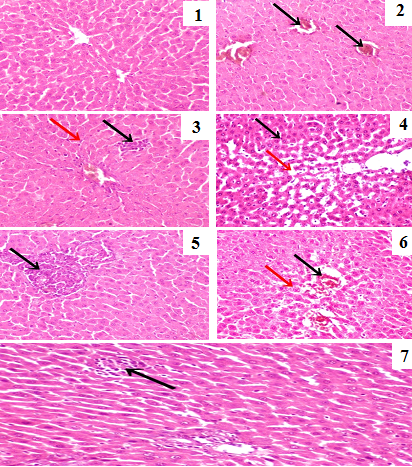
The effect of four weeks treatment with onion skin ethanolic extract (OSE) on liver histology of normal and benzo[a]pyrene-hepatotoxic rats was illustrated in Figure (1). Microscopically, liver sections of rats from normal control group revealed the normal histoarchitecture of hepatic parenchyma (Photo 1). In adverse, hepatic tissue of rats from model control (hepatotoxic) group showed histopathological changes characterized by dilatation and congestion of central veins (Photo 2), Kupffer cells proliferation and focal hepatocellular necrosis associated with inflammatory cells infiltration (Photo 3). Meanwhile, liver of rats from OSET1 group described proliferation of Kupffer cells and dilatation of hepatic sinusoids (Photo 4). On the other hand, some liver sections of rats from OSET2 group exhibited slight proliferation of Kupffer cells and inflammatory cells infiltration in the portal triad (Photo 5). Otherwise, liver of rats from OSET3 group revealed slight congestion of central vein and slight cytoplasmic vacuolization of some hepatocytes (Photo 6). Furthermore, liver of rats from OSET4 group demonstrated small focal hepatocellular necrosis (Photo 7). In similar studies, Kiruthiga et al. 126 found that the liver sections of rats that injected by B[a]P showed hepatic necrosis, hepatocyte degeneration, loss of hepatic plate architecture, and infiltration of mononuclear cells. Also, Rangi et al. 127 noticed that the hepatocytes experience apoptosis, characterized by pyknotic nuclei, along with the manifestation of ballooning degeneration, which was evident through the swollen wispy cytosol and the presence of eosinophilic councilman bodies in B[a]P-injected rats. Furthermore, Elhassaneen and Mahran 21 reported that ROS instigates damage to the membranes of hepatocytes, resulting in destroying, which causes collagen accumulation in the hepatocytes and leads to the development of liver. In additional, hepatic cells subjected to lipoapoptosis due to incomplete biomolecule oxidation and trigger immune reactions in the liver. In contrast, in B[a]P-hepatotoxic rats injected with OSE, liver tissues showed varying degrees of improvement in histopathological changes depending on OSE dose, indicating that the degenerative alterations were mitigated and the liver's histological architecture was improved significantly. These improvements in liver tissue histoarchitecture may be attributed to the antioxidant properties of OSE. Phenolic compounds, an extract from the onion skin, can diminish oxidative stress and subsequent cytotoxicity, thus protecting intact hepatocytes or cells that have not yet sustained irreversible damage 86, 22.

Photo 1, Photomicrograph of liver of rat from control normal group showing the normal histoarchitecture of hepatic parenchyma, Photo 2, Photomicrograph of liver of rat from model (hepatotoxic) group showing dilatation and congestion of central veins (black arrow), Phopto 3, Photomicrograph of liver of rat from model (hepatotoxic) group showing Kupffer cells proliferation (red arrow) and focal hepatocellular necrosis associated with inflammatory cells infiltration (black arrow), Photo 4, Photomicrograph of liver of rat from OSET1 group showing Kupffer cells proliferation (black arrow) and dilatation of hepatic sinusoids (red arrow), Photo 5, Photomicrograph of liver of rat from OSET2 group showing inflammatory cells infiltration in the portal triad (black arrow), Photo 6, Photomicrograph of liver of rat from OSET3 group showing slight congestion of central vein (black arrow) and slight cytoplasmic vacuolization of some hepatocytes (red arrow), Photo 7, Photomicrograph of liver of rat from OSET4 group showing small focal hepatocellular necrosis (black arrow).
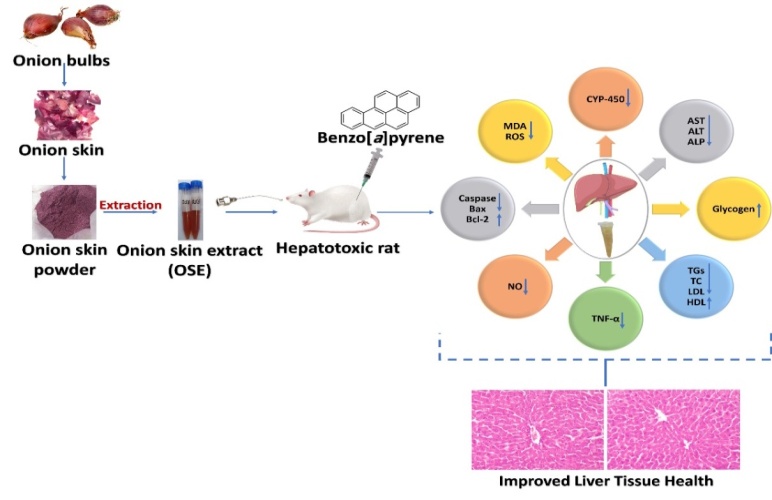
B[a]P is the main representative of polycyclic aromatic hydrocarbons (PAHs), and has been repeatedly found in the air, surface water, soil, sediments and foods. Exposure to this ubiquitous environmental and food contaminant is associated with the development of several diseases including liver cancer. Findings of the present study has demonstrated the potency of the OSE to partially ameliorate hepatotoxicity and related complications in rats exposed to B[a]P. Also, these findings supported our hypothesis that such plant part extract (OSE) contains several classes of bioactive compounds with different biological activities that are able to prevent or inhibit hepatotoxicity induced by B[a]P through one or more of the following pathways (Figure 2): 1) liver serum enzymes-lowering activity, 2) improving the serum lipid profile, 3) decreasing rate on the formation of serum MDA and nitric oxides, 4)improving the antioxidant and inflammatory defense systems, and 5) exhibiting the anti-apoptotic effect. These findings provide a basis for the use of different plant parts extract such OSE for the prevention and/or treatment of hepatotoxicity and related complications induced by B[a]P.

Yousif Elhassaneen cooperated in proposing and improving the study protocol, following up the laboratory experimental part, retrieving conceptual information, reviewing and validating the results and statistical analyses, preparing a draft of the manuscript, conducting a critical review to intellectually organize the content and granting approval to publish the final version of the manuscript. Esraa Salama conducted the laboratory experiments, collected, tabulated, analyzed and interpreted the results as well as involved in retrieving conceptual information and preparing the draft of the manuscript. Mai Garib cooperated in proposing the study protocol, retrieving conceptual information, validating the study results, and preparing the draft manuscript. Asmaa Bayomi cooperated in improving the study protocol, validating the molecular biology results, and submitting contributions to the concept and design of the work.
The ethical issues of this study was reviewed and approved by Scientific Research Ethics Committee (SREC, Approval #19-SREC-03-2023), Faculty of Home Economics, Menoufia University, Shebin El-Kom, Egypt.
No conflicts of interest are declared by the authors.
The authors express many thanks to the staff of New Bani Suef Company for Preservation, Dehydration and Industratzation of Vegetables (Elshinawy), Bani Suef El-Goudida City, Nile east, Bani Suef, Egypt to help collect and prepare samples (onion skin).
ALT, Alanine aminotransferase; ALP, alkaline phosphatase, AST; aspartate aminotransferase; B[a]P, benzo[a]pyrene; Bax, a pro-apoptosis marker; Bcl-2, an anti-apoptotic marker; BD, basal diet; Caspase-3, a cell apoptosis executor; GSH, reduced glutathione; HDL-c, high density lipoprotein; MDA: malondialdehyde; NO, nitric oxide, ROS: reactive oxygen species; OSE, onion skin ethanol extract; TC, total cholesterol; TG's, triglycerides, TNF-α, tumor necrosis factor-alpha.
| [1] | Elhassaneen Y. A. and Tawfik, L. M. (1998). The presence of some carcinogens in human foods distributed in Egyptian local markets. Journal of Home Economics, 8 (3): 23-38. | ||
| In article | |||
| [2] | Elhassaneen, Y. (2004) The effect of charcoal broiled meat consumption on antioxidant defense system of erythrocytes and antioxidant vitamins in plasma. Nutrition Research 24 (6): 435-446. | ||
| In article | View Article | ||
| [3] | El-Wazeer, M. F. A. (2011). Technological, chemical and nutritional studies on by-products of dehydrated food companies, M.Sc. Thesis in Nutrition and Food Science, Faculty of Home Economics, Minoufiya University, Egypt. | ||
| In article | |||
| [4] | Huosein, M. (2011) The effect of phytochemicals on toxic and/or carcinogenic substances formed during cooking and processing of meat. Ph.D. Thesis in Nutrition and Food Science, Faculty of Home Economics, Minoufiya University, Egypt. | ||
| In article | |||
| [5] | Elhassaneen, Y. and El-Badawy, A. (2013) Influence of Charcoal Broiled Meat Consumption on the Liver Functions and Non-Enzymatic Antioxidants in Human Blood. Food and Nutrition Sciences 4 (1): 90- 99. | ||
| In article | View Article | ||
| [6] | Kazerouni, N., Sinha R., Hsub, C., Greenbergb, A. and Rothmana, N. (2001). Erratum to Analysis of 200 food items for benzo(a)pyrene and estimation of its intake in an epidemiologic study’’, Food and Chemical Toxicology 39: 423-436. | ||
| In article | View Article PubMed | ||
| [7] | Kazerouni, N., Sinha, R., and Hsu, C.H. (2002). Analysis of 200 food items for benzo[a]pyrene and estimation of its intake in an epidemiologic study. . 40 (1): 423–36. | ||
| In article | View Article | ||
| [8] | Aygün, S.F, and Kabadayi, F, (2005). Determination of benzo[a]pyrene in charcoal grilled meat samples by HPLC with fluorescence detection. Int J Food Sci Nutr. 56 (8): 581-5. | ||
| In article | View Article PubMed | ||
| [9] | Lee, B.M. and Shim, G.A. (2007). "Dietary exposure estimation of benzo[a]pyrene and cancer risk assessment". Journal of Toxicology and Environmental Health Part A. 70 (15–16): 1391-4. | ||
| In article | View Article PubMed | ||
| [10] | Elhassaneen, Y. and Tawfik, L. (2001). Cooking oil fumes used in some Egyptian food preparation as sources of toxic and carcinogenic substances. Fayoum J. Agricultural Research and Development. 15 (2): 66-79. | ||
| In article | |||
| [11] | WHO (1984): World Health Organization guidelines for drinking water quality, Geneva, 130. | ||
| In article | |||
| [12] | Harvey, R. G. (1985). Polycyclic hydrocarbons and carcinogenesis. ACS Symp. Ser. 283, American Chemical Society, Washington, D.C. | ||
| In article | View Article | ||
| [13] | Hawkins, E. W., Walker, W. W., Overstreet, R. M., Lytle, T. F. and Lytle, J. S. (1990). Carcinogenic effects of some polycyclic aromatic hydrocarbons on the Japanese medaka and Guppy in waterborne exposures. The Science of the Total Environment, 94: 155-167. | ||
| In article | View Article PubMed | ||
| [14] | Elhassaneen, Y. A. (1996). Biochemical and technological studies on pollution of fish with pesticides and polycyclic aromatic hydrocarbons. Ph.D. Thesis., Faculty of Agriculture, Mansoura University, Egypt. | ||
| In article | |||
| [15] | Elhassaneen, Y. A., Khater, O. M. and Morsey, A. A. (1997). The effect of vitamins on the cancer initiation induced by some food chemical carcinogenic pollutants in vitro. The Second Conference: The Role of Women and Egyptian Associations in Environment Protection and Community Development (25-26 August), Dept. of Home Economics, Faculty of Agriculture, Alexandria University, Egypt, pp. 252-282. | ||
| In article | |||
| [16] | Elhassaneen, Y. (2002) New and quickly biological method for detection the potential chemical toxins and/or carcinogens in foods. Proceedings of2nd scientific Conference on Foodborne Contamination and Egyptian’s Health (24–24 April), Faculty of Agriculture, Mansoura University, Mansoura, Egypt 371-394. | ||
| In article | |||
| [17] | Elhassaneen, Y., El-Waseef, S., Fathy, N. and Sayed Ahmed, S. (2016): Bioactive compounds and antioxidant potential of food industry by-products in Egypt. American Journal of Food and Nutrition, 4 (1): 1-7. | ||
| In article | |||
| [18] | Elhassaneen, Y, Ragab, S. and Badawy, R. (2016). Antioxidant activity of methanol extracts from various plant parts and their potential roles in protecting the liver disorders induced by benzo(a)pyrene. Public Health International, 2 (1): 38-50 [http://www.sciencepublishinggroup.com/j/phi]. A.O.A.C. (1995). “Official Methods of the Association of Official analytical Chemists” 16 th Ed. Published by the Association of Official Analytical Chemists. Arlington, Virginia, VA. | ||
| In article | |||
| [19] | Ajami, A. M. (2022). Study the effects of Turmeric on Liver disorder induced by Benzo(a)pyrene. M.Sc. Thesis in Nutrition and Food Science, Faculty of Specific Education, Benha University, Benha, Egypt. | ||
| In article | |||
| [20] | Elhassaneen, Y., Hassab El-Nabi, S. E., Bayomi, A. I. and ElKabary, A.R (2022). Potential of watermelon (Citrullis lanatus) peel extract in attenuating benzo[a]pyrene exposure-induced molecular damage in liver cells in vitro. Journal of Biotechnology Research, 8(3): 32-45. | ||
| In article | |||
| [21] | Elhassaneen, Y.A and Mahran, M.Z. (2024). Potential Protective Effects of Milk Thistle (Silybum Marianum L.) Seeds Against Benzo[a]Pyrene-Induced Hepatic and Nephritic Injuries in Rats: Biochemical and Histopathological Studies. | ||
| In article | View Article | ||
| [22] | Elhassaneen, Y. A., Zaki, A. N., Helmy, B. G. and Bayomi, A. I. (2024). Biological activities of brown algae (Sargassum subrepandum) and their effects on biochemical, molecular and histological liver damage induced by benzo[a]pyrene in rats. American Journal of Medical Sciences and Medicine, 12(3): 64-79. | ||
| In article | View Article | ||
| [23] | Weinstein N D (1978) Individual differences in reactions to noise: a longitudinal study in a college dormitory. Journal of applied psychology 63(4): 458. | ||
| In article | View Article | ||
| [24] | Jiang, H. G., Stacy L. and Mangal, D. (2007). Metabolism of Benzo[a]pyrene in Human Bronchoalveolar H358 Cells Using Liquid Chromatography-Mass Spectrometry". Chem. Res. Toxicol. 20 (9): 1331–1341. | ||
| In article | View Article PubMed | ||
| [25] | Elhassaneen, Y. A. (1999) Toxicological and biochemical effects of polycyclic aromatic hydrocarbon compounds produced in fish by cooking and processing. 6th Arabic Conference on Food Science and Technology, 16 – 18 th march, Egyptian Society of Food Science and Technology, Cairo, Egypt, pp. 249 – 270. | ||
| In article | |||
| [26] | Elhassaneen, Y. (2000). Polycyclic aromatic hydrocarbons in foods: sources, occurrence, toxicological effects and therapy. Proceeding of the First Mansoura Conference of Food Science and Dairy Technology (17–19 October), Faculty of Agriculture, Mansoura University, Mansoura, Egypt. Pp. 319-341. [ISSN 1110-0346]. | ||
| In article | |||
| [27] | Badawy, R. M. (2017). The effect of phytochemical extracts of some plant parts in liver cancer initiation induced by benzo(a)pyrene. Ph.D. Thesis in Nutrition and Farchood Science, Faculty of Home Economics, Minoufiya University, Egypt. | ||
| In article | |||
| [28] | Surh, Y.J. (2002): Anti-tumor promoting potential of selected spice ingredients with antioxidative and antiinflammatory activities: a short review. Food Chem Toxicol., 40: 1091–1097. | ||
| In article | View Article PubMed | ||
| [29] | Fayez, S. (2016) The effect of turmeric and curcumin on liver cancer induced by benzo[a]pyrene in rats. M.Sc. Thesis in Home Economics (Nutrition and Food Science), Faculty of Specific Education, Port Said University, Egypt. | ||
| In article | |||
| [30] | Elhassaneen, Y., Badran.H., Abd EL-Rahman. A. & Badawy, N. (2021). Potential Effect of Milk Thistle on Liver Disorders Induced by Carbon Tetrachloride. Journal of Home Economics, 31 (1): 83-93. | ||
| In article | |||
| [31] | Elhassaneen, Y. A. (2006). Phenolic compounds, sweetness and amino acids content of onion cultivars distributed in Egyptian local markets and their relationship with antioxidant activities. J. Product. & Dev. , 11(2): 297- 315 [ISSN 1110-2643] | ||
| In article | View Article | ||
| [32] | Badawy, F. E. E. (2008). The influence of some chemical, physical and industrial treatments on the antioxidant activity of onion" M. Sc. Thesis in Nutrition and Food Science, Faculty of Home Economics, Minoufiya University, Egypt. | ||
| In article | |||
| [33] | Elhassaneen, Y. A. and Sanad, M. I. (2009). Phenolics, Selenium, Vitamin C, Amino Acids and Pungency Levels and Antioxidant Activities of Two Egyptian Onion Varieties. American J. of Food Technology, 4(6): 241-254. [ISSN 1557- 4571] [http://direct.bl.uk/bld/SearchResults.do]. | ||
| In article | View Article | ||
| [34] | Abo Saida, S. M. A. (2010). Advanced trends in onion dehydration process and their effect on the quality proprieties of the final product " M.Sc. Thesis in Nutrition and Food Science, Faculty of Home Economics, Minoufiya University, Egypt. | ||
| In article | |||
| [35] | Benítez ,V. , Mollá , E., Martín-Cabrejas , M. A., Aguilera ,Y., López-Andréu , F. J. , Cools , K., Terry , L. A. and Esteban , R. M. (2011). Characterization of Industrial Onion Wastes (Allium cepa L.): Dietary Fibre and Bioactive Compounds. Plant Foods Hum. Nutr., 66: 48–57. | ||
| In article | View Article PubMed | ||
| [36] | Elhassaneen, Y. and Al-Abassy, H. (2012). Technological and chemical studies on onion drying by advanced methods. Journal of Home Economics, 22 (3): 183-194. https:// mkas.journals.ekb.eg/? lang=en] [ISSN 1110-2578]. | ||
| In article | |||
| [37] | El-Abasy, H. M. A. (2013).Technological and chemical studies on new methods of Onion Dehydration and Their Effects on the antioxidant properties" M.Sc. Thesis in Nutrition and Food Science, Faculty of Home Economics, Minoufiya University, Egypt. (January, 2013). | ||
| In article | |||
| [38] | Roldán, E., Sánchez-Moreno, C., de Ancos, B. and Cano, M.P. (2008).Characterisation of onion (Allium cepa L.) by-products as food ingredients with antioxidant and antibrowning properties. Food Chem., 108: 907–916. | ||
| In article | View Article PubMed | ||
| [39] | Schieber, A., Stintzing, F. and Carle, R. (2001). By-products of plant food processing as a source of functional compounds recent developments. Trends in Food Science & Technology 12: 401–413. | ||
| In article | View Article | ||
| [40] | El-Beshlawy, N.F., Elwan, N.M. and Y. A. Elhassaneen, (2003). Antioxidant effect of onions against aflatoxin B1-induced lipid peroxidation in rat liver and blood. Ain Shams J. Forensic Med. Clin. Toxicol.1 (1): 1-21. | ||
| In article | |||
| [41] | Hussein, I. and Elhassaneen, Y. (2013). Protection of humans from ultraviolet radiation (UVR) through the use of cotton clothes dyed with aqueous extracts of onion skin as the natural colorant. The Journal of American Science, 9(8): 16-24 [ISSN 1545-1003] [http:// ]. | ||
| In article | |||
| [42] | Elhassaneen Y. and Abd Elhady, Y. (2014). Onion peel powder alleviate acrylamide-induced cytotoxicity and immunotoxicity in liver cell culture. Life Sci J., 11(7): 381-388. | ||
| In article | |||
| [43] | Hussein, A. and Elhassaneen, Y. (2014). Natural Dye from Red Onion Skins and Applied In Dyeing Cotton Fabrics for the Production of Women's Headwear Resistance to Ultraviolet Radiation (UVR), J Am Sci., 10(3): 129-139. [ISSN: 1545-1003] [ www.jofamericanscience.org. 17]. | ||
| In article | |||
| [44] | Elhassaneen Y. and Sayed, R. (2015). Polycyclic aromatic hydrocarbons formation in charcoal broiled meatballs are reduced by addition of onion peel extracts to ground beef. Proceeding of 2nd International Conference on Food and Biosystems Engineering (2nd I.C. FABE2015), 28-31 May, 2015), [Vol. II, PP. 95-104], Mykonos, Greece. | ||
| In article | |||
| [45] | Elhassaneen, Y. and Mashal R. (2016) Improvement of bioactive compounds content and antioxidant properties in crackers with the incorporation of prickly pear and potato peels powder. International Journal of Nutrition and Food Sciences 5(1): 53-61. | ||
| In article | View Article | ||
| [46] | Hallabo, S. A., Helmy, S.A., Elhassaneen, Y. and Shaaban, M. (2018). Utilization of mango, onion and potato peels as sources of bioactive compounds in biscuits processing. BIOSCIENCE RESEARCH, 15(4): 3647-3657. | ||
| In article | |||
| [47] | Elhassaneen, Y., Aly, A. and Ismail, N. (2019). Chemical, Microbiological and Organoleptic Studies on Onion Slices Dehydrated by Steam and Microwave Techniques, Proceeding of the 2nd International Conference (Specific Instruction, map of Future Jobs, faculty of Specific Education, Minia University, 14-15, April, 2019, Minia, Egypt. | ||
| In article | |||
| [48] | Sadeek, R., Elbassiony G. and Elhassaneen, Y. (2019). Aflatoxin B1 induces oxidative stress in rats: possible protective effects of onion juice (Allium cepa L.), Proceeding of the 2nd International Conference (Specific Instruction, map of Future Jobs, faculty of Specific Education, Minia University, 14-15, April, 2019, Minia, EgyptElhassaneen, Y., Goarge, S., Sayed, R. and Younis, M. (2016). Onion, orange and prickly pear peel extracts mixed with beef meatballs ameliorate the effect of alloxan induced diabetic rats. American Journal of Pharmacology and Phytotherapy, 1 (1): 15-24 [http://www.sciencepublishinggroup.com/j/ajpp]. | ||
| In article | |||
| [49] | Gharib, M. A., Radwan, H. A. and Elhassaneen, Y. A. (2022). Nutrients and Nutraceuticals Content and In Vitro Biological Activities of Reishi Mushroom (Ganoderma lucidum) Fruiting Bodies. Alexandria Science Exchange Journal, 43, (2): 301-316. | ||
| In article | View Article | ||
| [50] | Reeves P, Nielsen F , Fahey G (1993) AIN-93 Purified Diets for Laboratory Rodents: Final Report of the American Institute of Nutrition Ad Hoc Writing Committee on the Reformulation of the AIN-76A Rodent Diet. Journal of Nutrition 123(11): 1939-1951. | ||
| In article | View Article PubMed | ||
| [51] | Shahid, A., Ali, R., Ali, N. , Hasan, S. K. , Bernwal, P., Afzal, S.M., Vafa, A. and Sultana, S. (2016) Modulatory effects of catechin hydrate against genotoxicity, oxidative stress, inflammation and apoptosis induced by benzo(a)pyrene in mice. Food and Chemical Toxicology 92: 64–74. | ||
| In article | View Article PubMed | ||
| [52] | NRC, National Research Council (1996). Guide for the Care and Use of Laboratory Animals Washington: National Academy Press. | ||
| In article | |||
| [53] | Chapman, D.G., Castilla, R. and Champbell, J.A. (1959). Evaluation of protein in food. I.A. Method for the determination of protein efficiency ratio. Can. J. Biochemistry Physiology, 37(5): 679-86. PMID: 13651969. | ||
| In article | View Article PubMed | ||
| [54] | El-Khawaga, O. Y., Abou-Seif M.A., El-Waseef A. and Negm A.A. (2010). Hypoglycemic, Hypolipidemic and Antioxidant Activities of Cleome droserifolia in Streptozotocin-Diabetic Rats. Journal of Stress Physiology & Biochemistry, 6 (4): 28-41. | ||
| In article | |||
| [55] | Drury, R.A. and Wallington, E.A. (1980). Carlton's Histological Technique. 5th ed. Oxford University. | ||
| In article | |||
| [56] | Tietz, N.W. (1976). Fundamental of Clinical Chemistry. Philadelphia, W.B. Saunders,P. 243. | ||
| In article | |||
| [57] | Vassault, A.; Grafmeyer, D.; Graeve, J.; Cohen, R.; Beaudonnet, A. and Bienvenu, J. (1999). Quality specifications and allowable standards for validation of methods used in clinical biochemistry. Ann Biol Clin (Paris), 57(6): 685-95. | ||
| In article | |||
| [58] | Ahmadi, S.,A., Boroumand, M., Gohari-Moghaddam, K.,Tajik, P. and Dibaj, S. (2008). The impact of low serum triglyceride on LDL-cholesterol estimation. Arch. Iran. Med, 11, 318–321. | ||
| In article | |||
| [59] | Fossati, P. and , L. (1982). Serum triglycerides determined colorimetrically with an enzyme that produces hydrogen peroxide. Clin Chem., 28(10): 2077-80. | ||
| In article | View Article PubMed | ||
| [60] | Lopes-Virella, M. F. , Stone, S. , Ellis, S. , Collwell, J. A. (1977) Cholesterol determination in high-density lipoproteins separated by three different methods. Clin. Chem 23(5): 882-886. | ||
| In article | View Article | ||
| [61] | Richmond, W. (1973). Preparation and Properties of a Cholesterol Oxidase from Nocardia sp. And its Application to the Enzymatic Assay of Total Cholesterol in Serum.Clinical Chemistry, 19, 1350-1356. | ||
| In article | View Article PubMed | ||
| [62] | Omura, T. and Sato, R. (1964). The carbon monoxide- binding pigment of liver microsomes. I. evidence for its hemoprotein nature. J Biol Chem. 239: 2370-8. | ||
| In article | View Article PubMed | ||
| [63] | Buege, J. A. and Aust, S. D. (1978) Microsomal lipid peroxidation in Packer L., (ed), Methods in enzymology, New York, NY, Academic 52: 302 - 310. | ||
| In article | View Article PubMed | ||
| [64] | Erel, O. A. (2005). New automated colorimetric method for measuring total oxidant status. Clin Biochem., 38:1103–11. | ||
| In article | View Article PubMed | ||
| [65] | Miranda, K.M., Espey, M.G. and Wink, D.A. (2001). A rapid, simple spectrophotometric method for simultaneous detection of nitrate and nitrite. Nitric oxide. 5(1): 62-71. | ||
| In article | View Article PubMed | ||
| [66] | Gong, J., Qian, L., Kong, X., Yang, R., Zhou, L., Sheng, Y., Sun, W., Sun, F., Huang, Y. and Cao, K. (2007). Cardiomyocyte apoptosis in the right auricle of patients with ostium secundum atrial septal defect diseases. Life Sci. 80, 1143–1151. | ||
| In article | View Article PubMed | ||
| [67] | Carleton, H. (1978). Histological Techniques, 4th Ed., London, Oxford, New York, Tornoto. | ||
| In article | |||
| [68] | Elhassaneen, Y., Ghamry, H. and Lotfy, L. (2018). Potential chemoprevention of liver disorders by dietary curcumin in rats treated with benzo(a)pyrene. Proceeding of the 1st Scientific International Conference of the Faculty of Specific Education, Minia University, “Specific Education, innovation and labor market” 16-17 Juli, 2018, Minia, Egypt. | ||
| In article | |||
| [69] | Tag Al Deen, M. and Ghozy, S. (2022). Effect of Fortified Pan Bread with Safflower on Liver Cancer Incident Induced by Benzo[a]pyrene in Rats. Journal of Specific Education Zagazig University, 7(1): 1-15. | ||
| In article | |||
| [70] | Tag Al Deen, R.I. and Ghozy, S.F. (2020). Effect of fortified pan bread with safflower on liver cancer incident by benzopyrene in rats. Journal of studies and searches of specific education. 6(2): 201-214. | ||
| In article | View Article | ||
| [71] | Yang, R. Y., Zongo, A.W., Chen, Y.C., Chiang, M.T., Zogona, D., Huang C.Y. and Yao, H.T. (2022). Correction: Green sweet potato leaves increase Nrf2-mediated antioxidant activity and facilitate benzo[a]pyrene metabolism in the liver by increasing phase II detoxifying enzyme activities in rats. Food Funct. 1; 13(15):8334. | ||
| In article | View Article PubMed | ||
| [72] | Tahoon, S. R. (2019). Hepatoprotective effect of Apricot and Plum kernel on carbon tetrachloride induced hepatic rats. . Thesis in Nutrition and Food Science, Faculty of Home Economics, Minoufiya University, Egypt. | ||
| In article | |||
| [73] | Sayed-Ahmed, S., Shehata, V. and Elhassaneen, Y. (2020). Potential Protective Effects of Ganoderma lucidum Powder against Carbon Tetrachloride Induced Liver Disorders in rats: Biological, Biochemical and Immunological Studies, Egypt. Bulletin of the National Nutrition Institute of the Arab Republic of Egypt, 56(2): 99-132. | ||
| In article | View Article | ||
| [74] | Morresion, G. and Hark, L. (1999). Medical Nutrition and Disease. Second Edition. Black Whily, USA. | ||
| In article | |||
| [75] | Elsemelawy, S., Gharib, M. and Elhassaneen, Y. (2021). Reishi Mushroom (Ganoderma lucidum) Extract Ameliorate Hyperglycemia and Liver/Kidney Functions in Streptozotocin-induced Type 2 Diabetic Rats. Bulletin of the National Nutrition Institute of the Arab Republic of Egypt. 57: 74-107. | ||
| In article | View Article | ||
| [76] | El-Nashar, N. G. (2007). Development of primary liver cell culture from fish as a valuable tool in nutrition and biotechnology research. Ph.D. Thesis, Faculty of Home Economics, Minoufiya University, Shebin El-Kom, Egypt. | ||
| In article | |||
| [77] | Shalaby, H. (2014). The effect of some food products mixed with plant parts on blood sugar levels of rats. Ph. D. Thesis in Nutrition and Food Science, Faculty of Home Economics, Minoufiya University, Egypt. | ||
| In article | |||
| [78] | Shehata, N. and Negm, E. (2016). Phyto-extracts applied in beef meatballs ameliorates alterations in free radical defense mechanisms in alloxan-induced diabetes in rat. Journal of Home Economics, 26 (3): 1-35. | ||
| In article | |||
| [79] | Elhassaneen Y, Ragab S, Thoraya M, Azza E, Abeer A. (2012). Effect of Sweet Violet (Viola odorata L.) Blossoms Powder on Liver and Kidney Functions as well as Serum Lipid Peroxidation of Rats Treated with Carbon Tetrachloride. The Journal of American Science, 9 (5): 88-95. | ||
| In article | |||
| [80] | Hassan, A.A. (2011). The effect of phytochemicals on prevention and/or treatment of liver cancer induced by some food pollutants. Ph.D. Thesis, Faculty of Home Economics, Minoufiya University, Shebin El-Kom, Egypt. | ||
| In article | |||
| [81] | El-Sayed, M.; El- Sherif. F., Elhassaneen, Y. and Abd El-Rahman, A. (2012). Potential Therapeutic Effects of some Egyptian Plant Parts on Hepatic Toxicity Induced by Carbon Tetrachloride in Rats. Life Sci. J., 9(4): 3747-3755. | ||
| In article | |||
| [82] | Sayed Ahmed, S. (2016): Nutritional and technological studies on the effect of phytochemicals on obesity injuries and their related diseases by using experimental animals. Ph.D. Thesis in Home Economics (Nutrition and Food Science), Faculty of Specific Education, Port Said University, Egypt. | ||
| In article | |||
| [83] | Salama, A., Elbassyouny, G. and Elhassaneen, Y. (2017). Studies on the antioxidant properties of vegetables processing by-products extract and their roles in the alleviation of health complications caused by diabetes in rats. Proceeding of the 1st International Conference of the Faculty of Specific Education, Kafrelsheikh University, “Specific Sciences, their Developmental Role and Challenges of Labor Market” PP 1-24, 24-27 October, 2017, Sharm ElSheikh, Egypt. | ||
| In article | |||
| [84] | Dawson, R. M. (1998). The toxicology of microcystins. Toxicon., 36: 953-962. | ||
| In article | View Article PubMed | ||
| [85] | Beattic, J., Crozier, A. and Duthie, G. (2005). Potential Health Benefits of berries. Current Nutrition & Food Science. 1: 71-86. | ||
| In article | View Article | ||
| [86] | Mahran, M.Z and Elhassaneen, Y.A. (2023). Attenuation of benzo[a]pyrene-induced oxidative stress and cell apoptosis in albino rats by wild milk thistle (Silybum Marianum L.) seeds extract. Egyptian Journal of Chemistry, 66(13), 1671-1687. | ||
| In article | View Article | ||
| [87] | Hasegawa, R., Chujo, T., Sai-kato, K.., Umemura, T., Tanimura, A. and Kurokawa, Y (1995). Preventive Effects of Green Tea Against Liver Oxidative DNA Damage and Hepatotoxicity in Rats Treated with 2-Nitropropane, Fd Chem. Toxic. 33 (11): 961-970. | ||
| In article | View Article PubMed | ||
| [88] | Aly, A., Ghada M. and and Elhassaneen, Y. (2017). Studies on the antioxidant properties of vegetables processing by-products extract and their roles in the alleviation of health complications caused by diabetes in rats. Proceeding of the 1st International Conference of the Faculty of Specific Education, Kafrelsheikh University, “Specific Sciences, their Developmental Role and Challenges of Labor Market” PP 1-24, 24-27 October, 2017, Sharm ElSheikh, Egypt. | ||
| In article | |||
| [89] | Mahran, M. Z., Elbassyouny, G.M., Elhassaneen, Y.A. (2018). Preventive effects of onion skin powder against hepatotoxicity in rats treated with benzo(a)pyrene. Proceeding of the Annual Conference (13th Arab; 10th International), 11-12 April, Faculty of Specific Education, Mansoura University," Higher Education in Egypt and the Arab World in the Light of Sustainable Development Strategies", Mansoura, Egypt. | ||
| In article | |||
| [90] | Badawi, A. R. (2023). The effect of reishi mushroom (canoderma lucidum) on liver cancer induced by benzo[a]pyrene in rats. M.Sc. Thesis in Nutrition and Food Science, Faculty of Specific Education, Port Said University, Port Said, Egypt. | ||
| In article | |||
| [91] | Mehram, and Sayed Ahmed, S. (2020) Benzo(a)pyrene induced liver disorders in rats: possible protective effects of mulberry (Morus alba L.) leaves. Research Journal in Specific Education 6 (8): 769-798. | ||
| In article | |||
| [92] | Elhassaneen, Y., A.Tarek and M. Ehdaa. (2020): Study the Effect of Ginger and Flaxseed on Rats Infected with Obesity. J. of Home Economics. 30 (3): 1-26. | ||
| In article | |||
| [93] | Shalaby, H. S., and Elhassaneen, Y. A. E. (2021). Functional and health properties of yogurt supplemented with green tea or green coffee extracts and its effect on reducing obesity complications in rats. Alexandria Science Exchange Journal, 42(2), 559-571. | ||
| In article | View Article | ||
| [94] | Elhassaneen, Y. A., Hassab El-Nabi, S. E., Mahran, M. Z., Bayomi, A. I. and Badwy, E. Z. (2022). Potential Protective Effects of Strawberry (Fragaria Ananassa) Leaves Against Alloxan Induced Type 2 Diabetes in Rats: Molecular, Biological and Biochemical Studies. Sumerianz Journal of Biotechnology, 5(1): 1-15. | ||
| In article | View Article | ||
| [95] | Sies, H. (1985). Introductory remarks. In: Sies H (ed) Oxidative stress. Academic, London, pp 1-8. | ||
| In article | View Article | ||
| [96] | Toshniwal, P.K. and Zarling, E.J. (1992): Evidence for increased lipid peroxidation in multiple sclerosis. Neurochem Res.17:205–207. | ||
| In article | View Article PubMed | ||
| [97] | Rahman, T., Hosen, I., Islam, M. M., & Shekhar, H. U. (2012). Oxidative stress and human health. Advances in Bioscience and Biotechnology, 3(7): 997-1019. | ||
| In article | View Article | ||
| [98] | Abd Elalal, N., Elsemelawy, S. A. and Elhassaneen, Y. A. (2022). Potential Effects of Wild Milk Thistle (Silybum marianum L.) Seed Extract Intervention on Oxidative Stress Induced by Busulfan Drug in Different Organs of Rats. International Journal of Healthcare and Medical Sciences, 8(3): 19-34. | ||
| In article | View Article | ||
| [99] | Baynes, JW. 1991: Role of oxidative stress in development of complications in diabetes. Diabetes 40: 405-412. | ||
| In article | View Article PubMed | ||
| [100] | Esterbauer, H., Schaur, R. J. and Zollner, H. (1991). Chemistry and biochemistry of 4-hydroxynonenal, malonaldehyde and related aldehydes. Free Radical Biology & Medicine, 11(1): 81-128. | ||
| In article | View Article PubMed | ||
| [101] | Grune, T., Siems, W.G. and Ad Petras, T. (1997). Identification of metabolic pathways of the lipid peroxidation product, 4-hydroxynonenal, in in situ perfused rat kidney. J Lipid Res, 38(8): 1660-1665. | ||
| In article | View Article PubMed | ||
| [102] | Shamberger, R.J., Andreone, T.L. and Willis, C.E. (1974). Antioxidants and cancer. IV. Malonaldehyde has initiating activity as a carcinogen. J. Natr. Cancer Inst. 53: 1771. | ||
| In article | |||
| [103] | Ajayi, B.O., Adedara, I.A. and Farombi, E.O. (2016). Benzo(a)pyrene induces oxidative stress, pro-inflammatory cytokines, expression of nuclear factor-kappa B and deregulation of wnt/beta-catenin signaling in colons of BALB/c mice. Food Chem Toxicol. 95: 42-51. | ||
| In article | View Article PubMed | ||
| [104] | Owumi, S.E., Adeniyi, G. and Oyelere, A.K. (2021). The modulatory effect of taurine on benzo(a)pyrene-induced hepatorenal toxicity. Toxicol Res (Camb). 12(3): 389-398. | ||
| In article | View Article PubMed | ||
| [105] | Reuter, S., Gupta, S.C., Chaturvedi, M.M. and Aggarwal, B.B. (2010). Oxidative stress, inflammation and cancer: how are they linked? Free Radic Biol Med. 49: 1603–16. | ||
| In article | View Article PubMed | ||
| [106] | Ji, K., Xing, C., Jiang, F., Wang, X., Guo, H., Nan, J., Qian, L., Yang, P., Lin, J., Li, M., Li, J., Liao, L. and Tang, J. (2013). Benzo[a]pyrene induces oxidative stress and endothelial progenitor cell dysfunction via the activation of the NF-κB pathway. Int J Mol Med. 31(4): 922-30. | ||
| In article | View Article PubMed | ||
| [107] | Jee, S.C., Kim, M., Kim, K.S., Kim, H.S. and Sung, J.S. (2020a). Protective effects of myricetin on benzo[a]pyrene-induced 8-hydroxy-2'-deoxyguanosine and BPDE-DNA adduct. Antioxidants (Basel). 9(5): 446. | ||
| In article | View Article PubMed | ||
| [108] | Feagins, L.A., Flores, A., Arriens, C., Park, C., Crook, T., Reimold, A. and Brown, G. (2015). Nonalcoholic fatty liver disease: a potential consequence of tumor necrosis factor-inhibitor therapy. Eur J Gastroenterol Hepatol. 27(10): 1154-60. | ||
| In article | View Article PubMed | ||
| [109] | Manahan, S.E. (1989). Toxicological chemistry: A guide to toxic substances in chemistry PCR press. NY. | ||
| In article | |||
| [110] | Misko, T., Schilling, R. Salvemini, D., Moore, W. and Currie, M. (1993). A fluorometric assay for the measurement of nitrite in Biological samples. Analytical Biochemistry, 214: 11-16. | ||
| In article | View Article PubMed | ||
| [111] | Farghalli, K. (2015). Phytochemical analysis and antioxidant activity of onion (Allium cepa L.) skin. Journal of Food Science and Technology, 52(4): 2341-2348. | ||
| In article | |||
| [112] | Danielsson, H. (2002). Cytochrome P450 and the detoxication of xenobiotics. In New Trends in Cytochrome P450 Research (pp. 1-14). Springer, Boston, MA. | ||
| In article | |||
| [113] | Shankar, K. and Mehendale, H. M. (2014). Impact of P450 enzymes on the toxicity of xenobiotics. Environmental Toxicology and Pharmacology, 37(2): 347-355. | ||
| In article | |||
| [114] | Elhassaneen, Y., Sabry, S. and Reham, B. (2016). Antioxidant activity of methanol extracts from various plant parts and their potential roles in protecting the liver disorders induced by benzo(a)pyrene. Public Health International, 2 (1): 38-50. | ||
| In article | |||
| [115] | Liu, Y., Wu, Y. and Zhang, Y. (2015). Protective effects of curcumin and quercetin during benzo(a)pyrene induced lung carcinogenesis in mice. European Review for Medical and Pharmacological Sciences, 19: 1736-1743. | ||
| In article | |||
| [116] | Khattab, S.A., Hussien, W.F., Raafat, N. and Ahmed Alaa El-Din, E. (2021). Modulatory effects of catechin hydrate on benzo[a]pyrene-induced nephrotoxicity in adult male albino rats. Toxicol Res (Camb).17; 10(3): 542-550. | ||
| In article | View Article PubMed | ||
| [117] | Guo, B., Feng, D., Xu, Z., Qi, P. and Yan, X. (2021). Acute benzo[a]pyrene exposure induced oxidative stress, neurotoxicity and epigenetic change in blood clam. Tegillarca granosa. Sci. Rep. 11(1):18744. | ||
| In article | View Article PubMed | ||
| [118] | Hussain, T., Tan, B., Yin, Y., Blachier, F., Tossou, M.C.B., and Rahu, N. (2016). Oxidative stress and inflammation: what polyphenols can do for us? Oxid. Med. Cell. Longev. 2016:7432797. | ||
| In article | View Article PubMed | ||
| [119] | Hajam, Y.A., Rani, R., Ganie, S.Y. Sheikh, T.A., Javaid, D., Qadri, S.S., Pramodh, S., Alsulimani, A., Alkhanani, M.F., Harakeh, S., Hussain, A., Haque, S. and Reshi, M.S. (2022). Oxidative Stress in Human Pathology and Aging: Molecular Mechanisms and Perspectives. Cells, 11, 552. | ||
| In article | View Article PubMed | ||
| [120] | Bratton, S.B. and Cohen, G.M. (2001). Apoptotic death sensor: an organelle's alter ego? Trends Pharmacol Sci. 22(6): 306-15. | ||
| In article | View Article PubMed | ||
| [121] | Kim, S.M., Lee, H.M., Hwang, K.A. and Choi, K.C. (2017). Benzo(a)pyrene induced cell cycle arrest and apoptosis in human choriocarcinoma cancer cells through reactive oxygen species-induced endoplasmic reticulum-stress pathway. Food and Chemical Toxicology, 107, 339–348. | ||
| In article | View Article PubMed | ||
| [122] | Kren, V. and Walterová, D. (2005). Silybin and silymarin--new effects and applications. Biomed Pap Med Fac Univ Palacky Olomouc Czech Repub. 149(1): 29-41. | ||
| In article | View Article PubMed | ||
| [123] | Kwon, D.Y., Jung, Y.S., Kim, S.J., Kim, Y.S., Choi, D.W. and Kim, Y.C. (2013). Alterations in sulfur amino acid metabolism in mice treated with silymarin: A novel mechanism of its action involved in enhancement of the antioxidant defense in liver. Planta Med. 79: 997–1002. | ||
| In article | View Article PubMed | ||
| [124] | Federico, A., Dallio, M. and Loguercio, C. (2017). Silymarin/Silybin and Chronic Liver Disease: A Marriage of Many Years. Molecules. 22(2): 191. | ||
| In article | View Article PubMed | ||
| [125] | Elhassaneen, Y. A., Boraey, R. A. and Nasef, A. Z. (2023). Biological activities of ashwagandha (Withania somnifera L.) roots and their effect on the neurological complications of obesity in rats. J. Food Nutr, 11(3): 71-88. | ||
| In article | |||
| [126] | Kiruthiga, P.V., Karthikeyan, K., Archunan, G., Pandian, S.K. and Devi, K.P. (2015). Silymarin prevents benzo(a)pyrene-induced toxicity in Wistar rats by modulating xenobiotic-metabolizing enzymes. Toxicol Ind Health. 31(6): 523-41. | ||
| In article | View Article PubMed | ||
| [127] | Rangi, S., Dhatwalia, S.K., Bhardwaj, P., Kumar, M. and Dhawan, D.K. (2018). Evidence of similar protective effects afforded by white tea and its active component 'EGCG' on oxidative-stress mediated hepatic dysfunction during benzo(a)pyrene induced toxicity. Food Chem Toxicol. 116(Pt B): 281-291. | ||
| In article | View Article PubMed | ||
Published with license by Science and Education Publishing, Copyright © 2025 Yousif A. Elhassaneen, Mai A. Garib, Asmaa I. Bayomi and Esraa E. Salama
 This work is licensed under a Creative Commons Attribution 4.0 International License. To view a copy of this license, visit
http://creativecommons.org/licenses/by/4.0/
This work is licensed under a Creative Commons Attribution 4.0 International License. To view a copy of this license, visit
http://creativecommons.org/licenses/by/4.0/
| [1] | Elhassaneen Y. A. and Tawfik, L. M. (1998). The presence of some carcinogens in human foods distributed in Egyptian local markets. Journal of Home Economics, 8 (3): 23-38. | ||
| In article | |||
| [2] | Elhassaneen, Y. (2004) The effect of charcoal broiled meat consumption on antioxidant defense system of erythrocytes and antioxidant vitamins in plasma. Nutrition Research 24 (6): 435-446. | ||
| In article | View Article | ||
| [3] | El-Wazeer, M. F. A. (2011). Technological, chemical and nutritional studies on by-products of dehydrated food companies, M.Sc. Thesis in Nutrition and Food Science, Faculty of Home Economics, Minoufiya University, Egypt. | ||
| In article | |||
| [4] | Huosein, M. (2011) The effect of phytochemicals on toxic and/or carcinogenic substances formed during cooking and processing of meat. Ph.D. Thesis in Nutrition and Food Science, Faculty of Home Economics, Minoufiya University, Egypt. | ||
| In article | |||
| [5] | Elhassaneen, Y. and El-Badawy, A. (2013) Influence of Charcoal Broiled Meat Consumption on the Liver Functions and Non-Enzymatic Antioxidants in Human Blood. Food and Nutrition Sciences 4 (1): 90- 99. | ||
| In article | View Article | ||
| [6] | Kazerouni, N., Sinha R., Hsub, C., Greenbergb, A. and Rothmana, N. (2001). Erratum to Analysis of 200 food items for benzo(a)pyrene and estimation of its intake in an epidemiologic study’’, Food and Chemical Toxicology 39: 423-436. | ||
| In article | View Article PubMed | ||
| [7] | Kazerouni, N., Sinha, R., and Hsu, C.H. (2002). Analysis of 200 food items for benzo[a]pyrene and estimation of its intake in an epidemiologic study. . 40 (1): 423–36. | ||
| In article | View Article | ||
| [8] | Aygün, S.F, and Kabadayi, F, (2005). Determination of benzo[a]pyrene in charcoal grilled meat samples by HPLC with fluorescence detection. Int J Food Sci Nutr. 56 (8): 581-5. | ||
| In article | View Article PubMed | ||
| [9] | Lee, B.M. and Shim, G.A. (2007). "Dietary exposure estimation of benzo[a]pyrene and cancer risk assessment". Journal of Toxicology and Environmental Health Part A. 70 (15–16): 1391-4. | ||
| In article | View Article PubMed | ||
| [10] | Elhassaneen, Y. and Tawfik, L. (2001). Cooking oil fumes used in some Egyptian food preparation as sources of toxic and carcinogenic substances. Fayoum J. Agricultural Research and Development. 15 (2): 66-79. | ||
| In article | |||
| [11] | WHO (1984): World Health Organization guidelines for drinking water quality, Geneva, 130. | ||
| In article | |||
| [12] | Harvey, R. G. (1985). Polycyclic hydrocarbons and carcinogenesis. ACS Symp. Ser. 283, American Chemical Society, Washington, D.C. | ||
| In article | View Article | ||
| [13] | Hawkins, E. W., Walker, W. W., Overstreet, R. M., Lytle, T. F. and Lytle, J. S. (1990). Carcinogenic effects of some polycyclic aromatic hydrocarbons on the Japanese medaka and Guppy in waterborne exposures. The Science of the Total Environment, 94: 155-167. | ||
| In article | View Article PubMed | ||
| [14] | Elhassaneen, Y. A. (1996). Biochemical and technological studies on pollution of fish with pesticides and polycyclic aromatic hydrocarbons. Ph.D. Thesis., Faculty of Agriculture, Mansoura University, Egypt. | ||
| In article | |||
| [15] | Elhassaneen, Y. A., Khater, O. M. and Morsey, A. A. (1997). The effect of vitamins on the cancer initiation induced by some food chemical carcinogenic pollutants in vitro. The Second Conference: The Role of Women and Egyptian Associations in Environment Protection and Community Development (25-26 August), Dept. of Home Economics, Faculty of Agriculture, Alexandria University, Egypt, pp. 252-282. | ||
| In article | |||
| [16] | Elhassaneen, Y. (2002) New and quickly biological method for detection the potential chemical toxins and/or carcinogens in foods. Proceedings of2nd scientific Conference on Foodborne Contamination and Egyptian’s Health (24–24 April), Faculty of Agriculture, Mansoura University, Mansoura, Egypt 371-394. | ||
| In article | |||
| [17] | Elhassaneen, Y., El-Waseef, S., Fathy, N. and Sayed Ahmed, S. (2016): Bioactive compounds and antioxidant potential of food industry by-products in Egypt. American Journal of Food and Nutrition, 4 (1): 1-7. | ||
| In article | |||
| [18] | Elhassaneen, Y, Ragab, S. and Badawy, R. (2016). Antioxidant activity of methanol extracts from various plant parts and their potential roles in protecting the liver disorders induced by benzo(a)pyrene. Public Health International, 2 (1): 38-50 [http://www.sciencepublishinggroup.com/j/phi]. A.O.A.C. (1995). “Official Methods of the Association of Official analytical Chemists” 16 th Ed. Published by the Association of Official Analytical Chemists. Arlington, Virginia, VA. | ||
| In article | |||
| [19] | Ajami, A. M. (2022). Study the effects of Turmeric on Liver disorder induced by Benzo(a)pyrene. M.Sc. Thesis in Nutrition and Food Science, Faculty of Specific Education, Benha University, Benha, Egypt. | ||
| In article | |||
| [20] | Elhassaneen, Y., Hassab El-Nabi, S. E., Bayomi, A. I. and ElKabary, A.R (2022). Potential of watermelon (Citrullis lanatus) peel extract in attenuating benzo[a]pyrene exposure-induced molecular damage in liver cells in vitro. Journal of Biotechnology Research, 8(3): 32-45. | ||
| In article | |||
| [21] | Elhassaneen, Y.A and Mahran, M.Z. (2024). Potential Protective Effects of Milk Thistle (Silybum Marianum L.) Seeds Against Benzo[a]Pyrene-Induced Hepatic and Nephritic Injuries in Rats: Biochemical and Histopathological Studies. | ||
| In article | View Article | ||
| [22] | Elhassaneen, Y. A., Zaki, A. N., Helmy, B. G. and Bayomi, A. I. (2024). Biological activities of brown algae (Sargassum subrepandum) and their effects on biochemical, molecular and histological liver damage induced by benzo[a]pyrene in rats. American Journal of Medical Sciences and Medicine, 12(3): 64-79. | ||
| In article | View Article | ||
| [23] | Weinstein N D (1978) Individual differences in reactions to noise: a longitudinal study in a college dormitory. Journal of applied psychology 63(4): 458. | ||
| In article | View Article | ||
| [24] | Jiang, H. G., Stacy L. and Mangal, D. (2007). Metabolism of Benzo[a]pyrene in Human Bronchoalveolar H358 Cells Using Liquid Chromatography-Mass Spectrometry". Chem. Res. Toxicol. 20 (9): 1331–1341. | ||
| In article | View Article PubMed | ||
| [25] | Elhassaneen, Y. A. (1999) Toxicological and biochemical effects of polycyclic aromatic hydrocarbon compounds produced in fish by cooking and processing. 6th Arabic Conference on Food Science and Technology, 16 – 18 th march, Egyptian Society of Food Science and Technology, Cairo, Egypt, pp. 249 – 270. | ||
| In article | |||
| [26] | Elhassaneen, Y. (2000). Polycyclic aromatic hydrocarbons in foods: sources, occurrence, toxicological effects and therapy. Proceeding of the First Mansoura Conference of Food Science and Dairy Technology (17–19 October), Faculty of Agriculture, Mansoura University, Mansoura, Egypt. Pp. 319-341. [ISSN 1110-0346]. | ||
| In article | |||
| [27] | Badawy, R. M. (2017). The effect of phytochemical extracts of some plant parts in liver cancer initiation induced by benzo(a)pyrene. Ph.D. Thesis in Nutrition and Farchood Science, Faculty of Home Economics, Minoufiya University, Egypt. | ||
| In article | |||
| [28] | Surh, Y.J. (2002): Anti-tumor promoting potential of selected spice ingredients with antioxidative and antiinflammatory activities: a short review. Food Chem Toxicol., 40: 1091–1097. | ||
| In article | View Article PubMed | ||
| [29] | Fayez, S. (2016) The effect of turmeric and curcumin on liver cancer induced by benzo[a]pyrene in rats. M.Sc. Thesis in Home Economics (Nutrition and Food Science), Faculty of Specific Education, Port Said University, Egypt. | ||
| In article | |||
| [30] | Elhassaneen, Y., Badran.H., Abd EL-Rahman. A. & Badawy, N. (2021). Potential Effect of Milk Thistle on Liver Disorders Induced by Carbon Tetrachloride. Journal of Home Economics, 31 (1): 83-93. | ||
| In article | |||
| [31] | Elhassaneen, Y. A. (2006). Phenolic compounds, sweetness and amino acids content of onion cultivars distributed in Egyptian local markets and their relationship with antioxidant activities. J. Product. & Dev. , 11(2): 297- 315 [ISSN 1110-2643] | ||
| In article | View Article | ||
| [32] | Badawy, F. E. E. (2008). The influence of some chemical, physical and industrial treatments on the antioxidant activity of onion" M. Sc. Thesis in Nutrition and Food Science, Faculty of Home Economics, Minoufiya University, Egypt. | ||
| In article | |||
| [33] | Elhassaneen, Y. A. and Sanad, M. I. (2009). Phenolics, Selenium, Vitamin C, Amino Acids and Pungency Levels and Antioxidant Activities of Two Egyptian Onion Varieties. American J. of Food Technology, 4(6): 241-254. [ISSN 1557- 4571] [http://direct.bl.uk/bld/SearchResults.do]. | ||
| In article | View Article | ||
| [34] | Abo Saida, S. M. A. (2010). Advanced trends in onion dehydration process and their effect on the quality proprieties of the final product " M.Sc. Thesis in Nutrition and Food Science, Faculty of Home Economics, Minoufiya University, Egypt. | ||
| In article | |||
| [35] | Benítez ,V. , Mollá , E., Martín-Cabrejas , M. A., Aguilera ,Y., López-Andréu , F. J. , Cools , K., Terry , L. A. and Esteban , R. M. (2011). Characterization of Industrial Onion Wastes (Allium cepa L.): Dietary Fibre and Bioactive Compounds. Plant Foods Hum. Nutr., 66: 48–57. | ||
| In article | View Article PubMed | ||
| [36] | Elhassaneen, Y. and Al-Abassy, H. (2012). Technological and chemical studies on onion drying by advanced methods. Journal of Home Economics, 22 (3): 183-194. https:// mkas.journals.ekb.eg/? lang=en] [ISSN 1110-2578]. | ||
| In article | |||
| [37] | El-Abasy, H. M. A. (2013).Technological and chemical studies on new methods of Onion Dehydration and Their Effects on the antioxidant properties" M.Sc. Thesis in Nutrition and Food Science, Faculty of Home Economics, Minoufiya University, Egypt. (January, 2013). | ||
| In article | |||
| [38] | Roldán, E., Sánchez-Moreno, C., de Ancos, B. and Cano, M.P. (2008).Characterisation of onion (Allium cepa L.) by-products as food ingredients with antioxidant and antibrowning properties. Food Chem., 108: 907–916. | ||
| In article | View Article PubMed | ||
| [39] | Schieber, A., Stintzing, F. and Carle, R. (2001). By-products of plant food processing as a source of functional compounds recent developments. Trends in Food Science & Technology 12: 401–413. | ||
| In article | View Article | ||
| [40] | El-Beshlawy, N.F., Elwan, N.M. and Y. A. Elhassaneen, (2003). Antioxidant effect of onions against aflatoxin B1-induced lipid peroxidation in rat liver and blood. Ain Shams J. Forensic Med. Clin. Toxicol.1 (1): 1-21. | ||
| In article | |||
| [41] | Hussein, I. and Elhassaneen, Y. (2013). Protection of humans from ultraviolet radiation (UVR) through the use of cotton clothes dyed with aqueous extracts of onion skin as the natural colorant. The Journal of American Science, 9(8): 16-24 [ISSN 1545-1003] [http:// ]. | ||
| In article | |||
| [42] | Elhassaneen Y. and Abd Elhady, Y. (2014). Onion peel powder alleviate acrylamide-induced cytotoxicity and immunotoxicity in liver cell culture. Life Sci J., 11(7): 381-388. | ||
| In article | |||
| [43] | Hussein, A. and Elhassaneen, Y. (2014). Natural Dye from Red Onion Skins and Applied In Dyeing Cotton Fabrics for the Production of Women's Headwear Resistance to Ultraviolet Radiation (UVR), J Am Sci., 10(3): 129-139. [ISSN: 1545-1003] [ www.jofamericanscience.org. 17]. | ||
| In article | |||
| [44] | Elhassaneen Y. and Sayed, R. (2015). Polycyclic aromatic hydrocarbons formation in charcoal broiled meatballs are reduced by addition of onion peel extracts to ground beef. Proceeding of 2nd International Conference on Food and Biosystems Engineering (2nd I.C. FABE2015), 28-31 May, 2015), [Vol. II, PP. 95-104], Mykonos, Greece. | ||
| In article | |||
| [45] | Elhassaneen, Y. and Mashal R. (2016) Improvement of bioactive compounds content and antioxidant properties in crackers with the incorporation of prickly pear and potato peels powder. International Journal of Nutrition and Food Sciences 5(1): 53-61. | ||
| In article | View Article | ||
| [46] | Hallabo, S. A., Helmy, S.A., Elhassaneen, Y. and Shaaban, M. (2018). Utilization of mango, onion and potato peels as sources of bioactive compounds in biscuits processing. BIOSCIENCE RESEARCH, 15(4): 3647-3657. | ||
| In article | |||
| [47] | Elhassaneen, Y., Aly, A. and Ismail, N. (2019). Chemical, Microbiological and Organoleptic Studies on Onion Slices Dehydrated by Steam and Microwave Techniques, Proceeding of the 2nd International Conference (Specific Instruction, map of Future Jobs, faculty of Specific Education, Minia University, 14-15, April, 2019, Minia, Egypt. | ||
| In article | |||
| [48] | Sadeek, R., Elbassiony G. and Elhassaneen, Y. (2019). Aflatoxin B1 induces oxidative stress in rats: possible protective effects of onion juice (Allium cepa L.), Proceeding of the 2nd International Conference (Specific Instruction, map of Future Jobs, faculty of Specific Education, Minia University, 14-15, April, 2019, Minia, EgyptElhassaneen, Y., Goarge, S., Sayed, R. and Younis, M. (2016). Onion, orange and prickly pear peel extracts mixed with beef meatballs ameliorate the effect of alloxan induced diabetic rats. American Journal of Pharmacology and Phytotherapy, 1 (1): 15-24 [http://www.sciencepublishinggroup.com/j/ajpp]. | ||
| In article | |||
| [49] | Gharib, M. A., Radwan, H. A. and Elhassaneen, Y. A. (2022). Nutrients and Nutraceuticals Content and In Vitro Biological Activities of Reishi Mushroom (Ganoderma lucidum) Fruiting Bodies. Alexandria Science Exchange Journal, 43, (2): 301-316. | ||
| In article | View Article | ||
| [50] | Reeves P, Nielsen F , Fahey G (1993) AIN-93 Purified Diets for Laboratory Rodents: Final Report of the American Institute of Nutrition Ad Hoc Writing Committee on the Reformulation of the AIN-76A Rodent Diet. Journal of Nutrition 123(11): 1939-1951. | ||
| In article | View Article PubMed | ||
| [51] | Shahid, A., Ali, R., Ali, N. , Hasan, S. K. , Bernwal, P., Afzal, S.M., Vafa, A. and Sultana, S. (2016) Modulatory effects of catechin hydrate against genotoxicity, oxidative stress, inflammation and apoptosis induced by benzo(a)pyrene in mice. Food and Chemical Toxicology 92: 64–74. | ||
| In article | View Article PubMed | ||
| [52] | NRC, National Research Council (1996). Guide for the Care and Use of Laboratory Animals Washington: National Academy Press. | ||
| In article | |||
| [53] | Chapman, D.G., Castilla, R. and Champbell, J.A. (1959). Evaluation of protein in food. I.A. Method for the determination of protein efficiency ratio. Can. J. Biochemistry Physiology, 37(5): 679-86. PMID: 13651969. | ||
| In article | View Article PubMed | ||
| [54] | El-Khawaga, O. Y., Abou-Seif M.A., El-Waseef A. and Negm A.A. (2010). Hypoglycemic, Hypolipidemic and Antioxidant Activities of Cleome droserifolia in Streptozotocin-Diabetic Rats. Journal of Stress Physiology & Biochemistry, 6 (4): 28-41. | ||
| In article | |||
| [55] | Drury, R.A. and Wallington, E.A. (1980). Carlton's Histological Technique. 5th ed. Oxford University. | ||
| In article | |||
| [56] | Tietz, N.W. (1976). Fundamental of Clinical Chemistry. Philadelphia, W.B. Saunders,P. 243. | ||
| In article | |||
| [57] | Vassault, A.; Grafmeyer, D.; Graeve, J.; Cohen, R.; Beaudonnet, A. and Bienvenu, J. (1999). Quality specifications and allowable standards for validation of methods used in clinical biochemistry. Ann Biol Clin (Paris), 57(6): 685-95. | ||
| In article | |||
| [58] | Ahmadi, S.,A., Boroumand, M., Gohari-Moghaddam, K.,Tajik, P. and Dibaj, S. (2008). The impact of low serum triglyceride on LDL-cholesterol estimation. Arch. Iran. Med, 11, 318–321. | ||
| In article | |||
| [59] | Fossati, P. and , L. (1982). Serum triglycerides determined colorimetrically with an enzyme that produces hydrogen peroxide. Clin Chem., 28(10): 2077-80. | ||
| In article | View Article PubMed | ||
| [60] | Lopes-Virella, M. F. , Stone, S. , Ellis, S. , Collwell, J. A. (1977) Cholesterol determination in high-density lipoproteins separated by three different methods. Clin. Chem 23(5): 882-886. | ||
| In article | View Article | ||
| [61] | Richmond, W. (1973). Preparation and Properties of a Cholesterol Oxidase from Nocardia sp. And its Application to the Enzymatic Assay of Total Cholesterol in Serum.Clinical Chemistry, 19, 1350-1356. | ||
| In article | View Article PubMed | ||
| [62] | Omura, T. and Sato, R. (1964). The carbon monoxide- binding pigment of liver microsomes. I. evidence for its hemoprotein nature. J Biol Chem. 239: 2370-8. | ||
| In article | View Article PubMed | ||
| [63] | Buege, J. A. and Aust, S. D. (1978) Microsomal lipid peroxidation in Packer L., (ed), Methods in enzymology, New York, NY, Academic 52: 302 - 310. | ||
| In article | View Article PubMed | ||
| [64] | Erel, O. A. (2005). New automated colorimetric method for measuring total oxidant status. Clin Biochem., 38:1103–11. | ||
| In article | View Article PubMed | ||
| [65] | Miranda, K.M., Espey, M.G. and Wink, D.A. (2001). A rapid, simple spectrophotometric method for simultaneous detection of nitrate and nitrite. Nitric oxide. 5(1): 62-71. | ||
| In article | View Article PubMed | ||
| [66] | Gong, J., Qian, L., Kong, X., Yang, R., Zhou, L., Sheng, Y., Sun, W., Sun, F., Huang, Y. and Cao, K. (2007). Cardiomyocyte apoptosis in the right auricle of patients with ostium secundum atrial septal defect diseases. Life Sci. 80, 1143–1151. | ||
| In article | View Article PubMed | ||
| [67] | Carleton, H. (1978). Histological Techniques, 4th Ed., London, Oxford, New York, Tornoto. | ||
| In article | |||
| [68] | Elhassaneen, Y., Ghamry, H. and Lotfy, L. (2018). Potential chemoprevention of liver disorders by dietary curcumin in rats treated with benzo(a)pyrene. Proceeding of the 1st Scientific International Conference of the Faculty of Specific Education, Minia University, “Specific Education, innovation and labor market” 16-17 Juli, 2018, Minia, Egypt. | ||
| In article | |||
| [69] | Tag Al Deen, M. and Ghozy, S. (2022). Effect of Fortified Pan Bread with Safflower on Liver Cancer Incident Induced by Benzo[a]pyrene in Rats. Journal of Specific Education Zagazig University, 7(1): 1-15. | ||
| In article | |||
| [70] | Tag Al Deen, R.I. and Ghozy, S.F. (2020). Effect of fortified pan bread with safflower on liver cancer incident by benzopyrene in rats. Journal of studies and searches of specific education. 6(2): 201-214. | ||
| In article | View Article | ||
| [71] | Yang, R. Y., Zongo, A.W., Chen, Y.C., Chiang, M.T., Zogona, D., Huang C.Y. and Yao, H.T. (2022). Correction: Green sweet potato leaves increase Nrf2-mediated antioxidant activity and facilitate benzo[a]pyrene metabolism in the liver by increasing phase II detoxifying enzyme activities in rats. Food Funct. 1; 13(15):8334. | ||
| In article | View Article PubMed | ||
| [72] | Tahoon, S. R. (2019). Hepatoprotective effect of Apricot and Plum kernel on carbon tetrachloride induced hepatic rats. . Thesis in Nutrition and Food Science, Faculty of Home Economics, Minoufiya University, Egypt. | ||
| In article | |||
| [73] | Sayed-Ahmed, S., Shehata, V. and Elhassaneen, Y. (2020). Potential Protective Effects of Ganoderma lucidum Powder against Carbon Tetrachloride Induced Liver Disorders in rats: Biological, Biochemical and Immunological Studies, Egypt. Bulletin of the National Nutrition Institute of the Arab Republic of Egypt, 56(2): 99-132. | ||
| In article | View Article | ||
| [74] | Morresion, G. and Hark, L. (1999). Medical Nutrition and Disease. Second Edition. Black Whily, USA. | ||
| In article | |||
| [75] | Elsemelawy, S., Gharib, M. and Elhassaneen, Y. (2021). Reishi Mushroom (Ganoderma lucidum) Extract Ameliorate Hyperglycemia and Liver/Kidney Functions in Streptozotocin-induced Type 2 Diabetic Rats. Bulletin of the National Nutrition Institute of the Arab Republic of Egypt. 57: 74-107. | ||
| In article | View Article | ||
| [76] | El-Nashar, N. G. (2007). Development of primary liver cell culture from fish as a valuable tool in nutrition and biotechnology research. Ph.D. Thesis, Faculty of Home Economics, Minoufiya University, Shebin El-Kom, Egypt. | ||
| In article | |||
| [77] | Shalaby, H. (2014). The effect of some food products mixed with plant parts on blood sugar levels of rats. Ph. D. Thesis in Nutrition and Food Science, Faculty of Home Economics, Minoufiya University, Egypt. | ||
| In article | |||
| [78] | Shehata, N. and Negm, E. (2016). Phyto-extracts applied in beef meatballs ameliorates alterations in free radical defense mechanisms in alloxan-induced diabetes in rat. Journal of Home Economics, 26 (3): 1-35. | ||
| In article | |||
| [79] | Elhassaneen Y, Ragab S, Thoraya M, Azza E, Abeer A. (2012). Effect of Sweet Violet (Viola odorata L.) Blossoms Powder on Liver and Kidney Functions as well as Serum Lipid Peroxidation of Rats Treated with Carbon Tetrachloride. The Journal of American Science, 9 (5): 88-95. | ||
| In article | |||
| [80] | Hassan, A.A. (2011). The effect of phytochemicals on prevention and/or treatment of liver cancer induced by some food pollutants. Ph.D. Thesis, Faculty of Home Economics, Minoufiya University, Shebin El-Kom, Egypt. | ||
| In article | |||
| [81] | El-Sayed, M.; El- Sherif. F., Elhassaneen, Y. and Abd El-Rahman, A. (2012). Potential Therapeutic Effects of some Egyptian Plant Parts on Hepatic Toxicity Induced by Carbon Tetrachloride in Rats. Life Sci. J., 9(4): 3747-3755. | ||
| In article | |||
| [82] | Sayed Ahmed, S. (2016): Nutritional and technological studies on the effect of phytochemicals on obesity injuries and their related diseases by using experimental animals. Ph.D. Thesis in Home Economics (Nutrition and Food Science), Faculty of Specific Education, Port Said University, Egypt. | ||
| In article | |||
| [83] | Salama, A., Elbassyouny, G. and Elhassaneen, Y. (2017). Studies on the antioxidant properties of vegetables processing by-products extract and their roles in the alleviation of health complications caused by diabetes in rats. Proceeding of the 1st International Conference of the Faculty of Specific Education, Kafrelsheikh University, “Specific Sciences, their Developmental Role and Challenges of Labor Market” PP 1-24, 24-27 October, 2017, Sharm ElSheikh, Egypt. | ||
| In article | |||
| [84] | Dawson, R. M. (1998). The toxicology of microcystins. Toxicon., 36: 953-962. | ||
| In article | View Article PubMed | ||
| [85] | Beattic, J., Crozier, A. and Duthie, G. (2005). Potential Health Benefits of berries. Current Nutrition & Food Science. 1: 71-86. | ||
| In article | View Article | ||
| [86] | Mahran, M.Z and Elhassaneen, Y.A. (2023). Attenuation of benzo[a]pyrene-induced oxidative stress and cell apoptosis in albino rats by wild milk thistle (Silybum Marianum L.) seeds extract. Egyptian Journal of Chemistry, 66(13), 1671-1687. | ||
| In article | View Article | ||
| [87] | Hasegawa, R., Chujo, T., Sai-kato, K.., Umemura, T., Tanimura, A. and Kurokawa, Y (1995). Preventive Effects of Green Tea Against Liver Oxidative DNA Damage and Hepatotoxicity in Rats Treated with 2-Nitropropane, Fd Chem. Toxic. 33 (11): 961-970. | ||
| In article | View Article PubMed | ||
| [88] | Aly, A., Ghada M. and and Elhassaneen, Y. (2017). Studies on the antioxidant properties of vegetables processing by-products extract and their roles in the alleviation of health complications caused by diabetes in rats. Proceeding of the 1st International Conference of the Faculty of Specific Education, Kafrelsheikh University, “Specific Sciences, their Developmental Role and Challenges of Labor Market” PP 1-24, 24-27 October, 2017, Sharm ElSheikh, Egypt. | ||
| In article | |||
| [89] | Mahran, M. Z., Elbassyouny, G.M., Elhassaneen, Y.A. (2018). Preventive effects of onion skin powder against hepatotoxicity in rats treated with benzo(a)pyrene. Proceeding of the Annual Conference (13th Arab; 10th International), 11-12 April, Faculty of Specific Education, Mansoura University," Higher Education in Egypt and the Arab World in the Light of Sustainable Development Strategies", Mansoura, Egypt. | ||
| In article | |||
| [90] | Badawi, A. R. (2023). The effect of reishi mushroom (canoderma lucidum) on liver cancer induced by benzo[a]pyrene in rats. M.Sc. Thesis in Nutrition and Food Science, Faculty of Specific Education, Port Said University, Port Said, Egypt. | ||
| In article | |||
| [91] | Mehram, and Sayed Ahmed, S. (2020) Benzo(a)pyrene induced liver disorders in rats: possible protective effects of mulberry (Morus alba L.) leaves. Research Journal in Specific Education 6 (8): 769-798. | ||
| In article | |||
| [92] | Elhassaneen, Y., A.Tarek and M. Ehdaa. (2020): Study the Effect of Ginger and Flaxseed on Rats Infected with Obesity. J. of Home Economics. 30 (3): 1-26. | ||
| In article | |||
| [93] | Shalaby, H. S., and Elhassaneen, Y. A. E. (2021). Functional and health properties of yogurt supplemented with green tea or green coffee extracts and its effect on reducing obesity complications in rats. Alexandria Science Exchange Journal, 42(2), 559-571. | ||
| In article | View Article | ||
| [94] | Elhassaneen, Y. A., Hassab El-Nabi, S. E., Mahran, M. Z., Bayomi, A. I. and Badwy, E. Z. (2022). Potential Protective Effects of Strawberry (Fragaria Ananassa) Leaves Against Alloxan Induced Type 2 Diabetes in Rats: Molecular, Biological and Biochemical Studies. Sumerianz Journal of Biotechnology, 5(1): 1-15. | ||
| In article | View Article | ||
| [95] | Sies, H. (1985). Introductory remarks. In: Sies H (ed) Oxidative stress. Academic, London, pp 1-8. | ||
| In article | View Article | ||
| [96] | Toshniwal, P.K. and Zarling, E.J. (1992): Evidence for increased lipid peroxidation in multiple sclerosis. Neurochem Res.17:205–207. | ||
| In article | View Article PubMed | ||
| [97] | Rahman, T., Hosen, I., Islam, M. M., & Shekhar, H. U. (2012). Oxidative stress and human health. Advances in Bioscience and Biotechnology, 3(7): 997-1019. | ||
| In article | View Article | ||
| [98] | Abd Elalal, N., Elsemelawy, S. A. and Elhassaneen, Y. A. (2022). Potential Effects of Wild Milk Thistle (Silybum marianum L.) Seed Extract Intervention on Oxidative Stress Induced by Busulfan Drug in Different Organs of Rats. International Journal of Healthcare and Medical Sciences, 8(3): 19-34. | ||
| In article | View Article | ||
| [99] | Baynes, JW. 1991: Role of oxidative stress in development of complications in diabetes. Diabetes 40: 405-412. | ||
| In article | View Article PubMed | ||
| [100] | Esterbauer, H., Schaur, R. J. and Zollner, H. (1991). Chemistry and biochemistry of 4-hydroxynonenal, malonaldehyde and related aldehydes. Free Radical Biology & Medicine, 11(1): 81-128. | ||
| In article | View Article PubMed | ||
| [101] | Grune, T., Siems, W.G. and Ad Petras, T. (1997). Identification of metabolic pathways of the lipid peroxidation product, 4-hydroxynonenal, in in situ perfused rat kidney. J Lipid Res, 38(8): 1660-1665. | ||
| In article | View Article PubMed | ||
| [102] | Shamberger, R.J., Andreone, T.L. and Willis, C.E. (1974). Antioxidants and cancer. IV. Malonaldehyde has initiating activity as a carcinogen. J. Natr. Cancer Inst. 53: 1771. | ||
| In article | |||
| [103] | Ajayi, B.O., Adedara, I.A. and Farombi, E.O. (2016). Benzo(a)pyrene induces oxidative stress, pro-inflammatory cytokines, expression of nuclear factor-kappa B and deregulation of wnt/beta-catenin signaling in colons of BALB/c mice. Food Chem Toxicol. 95: 42-51. | ||
| In article | View Article PubMed | ||
| [104] | Owumi, S.E., Adeniyi, G. and Oyelere, A.K. (2021). The modulatory effect of taurine on benzo(a)pyrene-induced hepatorenal toxicity. Toxicol Res (Camb). 12(3): 389-398. | ||
| In article | View Article PubMed | ||
| [105] | Reuter, S., Gupta, S.C., Chaturvedi, M.M. and Aggarwal, B.B. (2010). Oxidative stress, inflammation and cancer: how are they linked? Free Radic Biol Med. 49: 1603–16. | ||
| In article | View Article PubMed | ||
| [106] | Ji, K., Xing, C., Jiang, F., Wang, X., Guo, H., Nan, J., Qian, L., Yang, P., Lin, J., Li, M., Li, J., Liao, L. and Tang, J. (2013). Benzo[a]pyrene induces oxidative stress and endothelial progenitor cell dysfunction via the activation of the NF-κB pathway. Int J Mol Med. 31(4): 922-30. | ||
| In article | View Article PubMed | ||
| [107] | Jee, S.C., Kim, M., Kim, K.S., Kim, H.S. and Sung, J.S. (2020a). Protective effects of myricetin on benzo[a]pyrene-induced 8-hydroxy-2'-deoxyguanosine and BPDE-DNA adduct. Antioxidants (Basel). 9(5): 446. | ||
| In article | View Article PubMed | ||
| [108] | Feagins, L.A., Flores, A., Arriens, C., Park, C., Crook, T., Reimold, A. and Brown, G. (2015). Nonalcoholic fatty liver disease: a potential consequence of tumor necrosis factor-inhibitor therapy. Eur J Gastroenterol Hepatol. 27(10): 1154-60. | ||
| In article | View Article PubMed | ||
| [109] | Manahan, S.E. (1989). Toxicological chemistry: A guide to toxic substances in chemistry PCR press. NY. | ||
| In article | |||
| [110] | Misko, T., Schilling, R. Salvemini, D., Moore, W. and Currie, M. (1993). A fluorometric assay for the measurement of nitrite in Biological samples. Analytical Biochemistry, 214: 11-16. | ||
| In article | View Article PubMed | ||
| [111] | Farghalli, K. (2015). Phytochemical analysis and antioxidant activity of onion (Allium cepa L.) skin. Journal of Food Science and Technology, 52(4): 2341-2348. | ||
| In article | |||
| [112] | Danielsson, H. (2002). Cytochrome P450 and the detoxication of xenobiotics. In New Trends in Cytochrome P450 Research (pp. 1-14). Springer, Boston, MA. | ||
| In article | |||
| [113] | Shankar, K. and Mehendale, H. M. (2014). Impact of P450 enzymes on the toxicity of xenobiotics. Environmental Toxicology and Pharmacology, 37(2): 347-355. | ||
| In article | |||
| [114] | Elhassaneen, Y., Sabry, S. and Reham, B. (2016). Antioxidant activity of methanol extracts from various plant parts and their potential roles in protecting the liver disorders induced by benzo(a)pyrene. Public Health International, 2 (1): 38-50. | ||
| In article | |||
| [115] | Liu, Y., Wu, Y. and Zhang, Y. (2015). Protective effects of curcumin and quercetin during benzo(a)pyrene induced lung carcinogenesis in mice. European Review for Medical and Pharmacological Sciences, 19: 1736-1743. | ||
| In article | |||
| [116] | Khattab, S.A., Hussien, W.F., Raafat, N. and Ahmed Alaa El-Din, E. (2021). Modulatory effects of catechin hydrate on benzo[a]pyrene-induced nephrotoxicity in adult male albino rats. Toxicol Res (Camb).17; 10(3): 542-550. | ||
| In article | View Article PubMed | ||
| [117] | Guo, B., Feng, D., Xu, Z., Qi, P. and Yan, X. (2021). Acute benzo[a]pyrene exposure induced oxidative stress, neurotoxicity and epigenetic change in blood clam. Tegillarca granosa. Sci. Rep. 11(1):18744. | ||
| In article | View Article PubMed | ||
| [118] | Hussain, T., Tan, B., Yin, Y., Blachier, F., Tossou, M.C.B., and Rahu, N. (2016). Oxidative stress and inflammation: what polyphenols can do for us? Oxid. Med. Cell. Longev. 2016:7432797. | ||
| In article | View Article PubMed | ||
| [119] | Hajam, Y.A., Rani, R., Ganie, S.Y. Sheikh, T.A., Javaid, D., Qadri, S.S., Pramodh, S., Alsulimani, A., Alkhanani, M.F., Harakeh, S., Hussain, A., Haque, S. and Reshi, M.S. (2022). Oxidative Stress in Human Pathology and Aging: Molecular Mechanisms and Perspectives. Cells, 11, 552. | ||
| In article | View Article PubMed | ||
| [120] | Bratton, S.B. and Cohen, G.M. (2001). Apoptotic death sensor: an organelle's alter ego? Trends Pharmacol Sci. 22(6): 306-15. | ||
| In article | View Article PubMed | ||
| [121] | Kim, S.M., Lee, H.M., Hwang, K.A. and Choi, K.C. (2017). Benzo(a)pyrene induced cell cycle arrest and apoptosis in human choriocarcinoma cancer cells through reactive oxygen species-induced endoplasmic reticulum-stress pathway. Food and Chemical Toxicology, 107, 339–348. | ||
| In article | View Article PubMed | ||
| [122] | Kren, V. and Walterová, D. (2005). Silybin and silymarin--new effects and applications. Biomed Pap Med Fac Univ Palacky Olomouc Czech Repub. 149(1): 29-41. | ||
| In article | View Article PubMed | ||
| [123] | Kwon, D.Y., Jung, Y.S., Kim, S.J., Kim, Y.S., Choi, D.W. and Kim, Y.C. (2013). Alterations in sulfur amino acid metabolism in mice treated with silymarin: A novel mechanism of its action involved in enhancement of the antioxidant defense in liver. Planta Med. 79: 997–1002. | ||
| In article | View Article PubMed | ||
| [124] | Federico, A., Dallio, M. and Loguercio, C. (2017). Silymarin/Silybin and Chronic Liver Disease: A Marriage of Many Years. Molecules. 22(2): 191. | ||
| In article | View Article PubMed | ||
| [125] | Elhassaneen, Y. A., Boraey, R. A. and Nasef, A. Z. (2023). Biological activities of ashwagandha (Withania somnifera L.) roots and their effect on the neurological complications of obesity in rats. J. Food Nutr, 11(3): 71-88. | ||
| In article | |||
| [126] | Kiruthiga, P.V., Karthikeyan, K., Archunan, G., Pandian, S.K. and Devi, K.P. (2015). Silymarin prevents benzo(a)pyrene-induced toxicity in Wistar rats by modulating xenobiotic-metabolizing enzymes. Toxicol Ind Health. 31(6): 523-41. | ||
| In article | View Article PubMed | ||
| [127] | Rangi, S., Dhatwalia, S.K., Bhardwaj, P., Kumar, M. and Dhawan, D.K. (2018). Evidence of similar protective effects afforded by white tea and its active component 'EGCG' on oxidative-stress mediated hepatic dysfunction during benzo(a)pyrene induced toxicity. Food Chem Toxicol. 116(Pt B): 281-291. | ||
| In article | View Article PubMed | ||