The Grands-Ponts region, like other areas in Côte d’Ivoire, faces significant food security challenges. This study aimed to identify the determinants of household food insecurity in this region. A survey was conducted with 1,059 participants across the departments of Dabou, Jacqueville, and Grand-Lahou. Food insecurity was assessed using the Household Dietary Diversity Score (HDDS) and Food Consumption Score (FCS). Multinomial logistic regression was applied to identify explanatory factors. The results revealed that low HDDS prevalence was highest in Dabou (20.7%), followed by Jacqueville (15.6%) and Grand-Lahou (13.9%). Regarding FCS, 77.2% of households had acceptable diets, distributed as 78.2% in Grand-Lahou, 77.3% in Dabou, and 76.2% in Jacqueville. However, limited diets affected 23.8% of households in Jacqueville, 22.7% in Dabou, and 21.8% in Grand-Lahou. Overall, 48.9% of the population was food secure, with 50.4% in Dabou, 49.3% in Grand-Lahou, and 47% in Jacqueville. Conversely, severe food insecurity impacted 12.8% of households in Grand-Lahou, 10.5% in Jacqueville, and 9.3% in Dabou. Key determinants identified were education level, household size, and income. These findings highlight the structural and socio-economic factors influencing food security in the region, underscoring the need for targeted interventions to address inequalities and improve resilience.
Food security is a fundamental pillar for ensuring health and holistic development, regardless of origin, age, gender, or social status. It aims not only to improve population health and well-being but also to foster harmonious collective development.
Food insecurity, a key indicator of inequalities in access to sufficient and balanced food, highlights barriers to obtaining adequate quantities and quality of food. This concept is closely linked to food security, defined by the Food and Agriculture Organization 1 through four pillars: availability, accessibility, proper utilization, and stability. These interconnected dimensions determine the ability of populations to maintain a balanced and diverse diet 2.
In Côte d’Ivoire, despite notable economic progress, significant disparities persist in access to food resources, exacerbated by structural, climatic, and social challenges 3. The Grands-Ponts region, comprising Dabou, Grand-Lahou, and Jacqueville, possesses substantial agroecological potential. Its fertile lands and abundant fishery resources 4 are major assets. However, these natural riches do not guarantee universal access to sufficient and diverse diets.
Several factors contribute to this situation, including climatic variability, economic fluctuations, and local agricultural and dietary practices 5. Furthermore, cultural traditions and economic constraints often limit the inclusion of micronutrient-rich foods in diets 6.
This issue underscores the need to identify areas of food security and insecurity within the region. A thorough analysis of the factors influencing these dynamics is essential to better understand local challenges and propose tailored solutions.
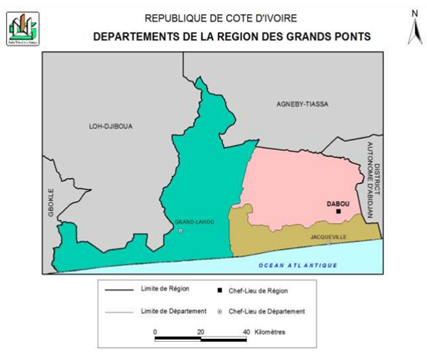
This study was conducted in the Grands-Ponts region (Figure 1) in Côte d’Ivoire, with Dabou as its capital, located 53 kilometers from Abidjan, the economic capital. The study area includes the departments of Jacqueville (72,993 inhabitants), Dabou (192,987 inhabitants), and Grand-Lahou (196,149 inhabitants), according to the General Population and Housing Census 7.

The study was a cross-sectional, descriptive, and analytical survey, combining quantitative and qualitative data collection methods. It was conducted over six months, from July 3 to December 3, 2023, among 1,059 households in the Grands-Ponts region. Participants were primarily household heads.
2.3. SamplingThe sample size was calculated with a 95% confidence level using Daniel Schwarz's formula (Authors). The estimation yielded 1,059 households, evenly distributed across the departments of Dabou, Jacqueville, and Grand-Lahou, with 353 households surveyed in each. Household selection followed the Epi method (Authors), adapted for emergency contexts, ensuring equal selection probability for all households.
2.4. Data Collection Tools and ProcedureData collection took place simultaneously in the three departments from July 3 to December 3, 2023. A structured questionnaire, developed based on FAO tools for assessing Household Dietary Diversity Score (HDDS) and Food Consumption Score (FCS), was used 8, 9. The questionnaire was implemented on the Kobocollect mobile platform 10.
The HDDS was calculated using a 24-hour recall and included 12 food groups: cereals, fish and seafood, roots and tubers, legumes, vegetables, fruits, dairy products, oils and fats, meat and offal, sugar and honey, eggs, and miscellaneous items 11, 12. This indicator reflects household dietary diversity based on the number of food groups consumed during the 24 hours preceding the survey.
The FCS was determined using a 7-day recall and included eight weighted food groups: cereals and tubers, pulses, vegetables, fruits, meat and fish, eggs, milk, sugar, and oil 13, 14. It was calculated by summing the scores of the eight food groups, with each score obtained by multiplying consumption frequency by a universal weight.
2.5. Data Processing and Statistical AnalysisData were entered into Excel 2013 and analyzed with SPSS v.27.0. Qualitative variables were presented as percentages with one decimal point, and statistical comparisons between the departments of Dabou, Jacqueville, and Grand-Lahou were performed. These analyses highlighted differences in dietary dynamics within the Grands-Ponts region.
To explore factors associated with dietary diversity, a multinomial logistic regression analysis was conducted. This method provided detailed insights into the determinants of HDDS and FCS. Using these scores as indicators, the analysis examined the interactions between households' sociodemographic characteristics, dietary habits, and economic constraints. This statistical approach contributed to an in-depth evaluation of food security and identified intervention levers tailored to the region's realities.
2.6. Ethical ConsiderationsThe study received approval from the National Ethics Committee for Life and Health Sciences (CNESVS) of Côte d’Ivoire (Ref: 249-23/MSHPCMU/CNESVS-Km). Informed consent was obtained from participants, ensuring data anonymity and confidentiality.
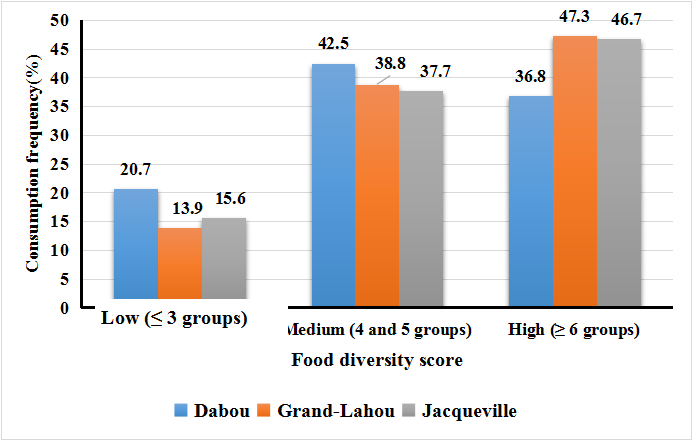
Figure 2 presents the classification of household dietary diversity scores (HDDS) by department. According to the survey departments, the highest HDDS is observed in Grand-Lahou with 47.3%, followed by Jacqueville with 46.7% and Dabou with 36.8%. The medium HDDS is most frequent in Dabou with 42.5%, then in Grand-Lahou with 38.8% and Jacqueville with 37.7%. The lowest HDDS is recorded in Dabou with 20.7%, followed by Jacqueville with 15.6% and Grand-Lahou with 13.9%. This comparison of HDDS across the departments shows a negligible difference between the three areas.

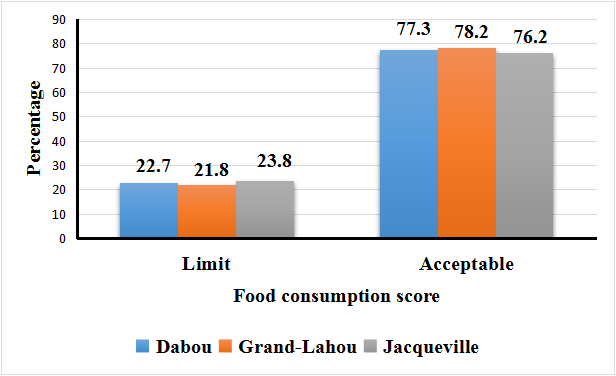
Figure 3 presents data on food consumption in the Grands-Ponts region. The analysis shows that more than three-quarters of households have acceptable food consumption: 73.30% in Dabou, 78.20% in Grand-Lahou, and 76.20% in Jacqueville. On the other hand, a significant proportion of the population has limited food consumption, with proportions of 22.70% in Dabou, 21.80% in Grand-Lahou, and 23.80% in Jacqueville.

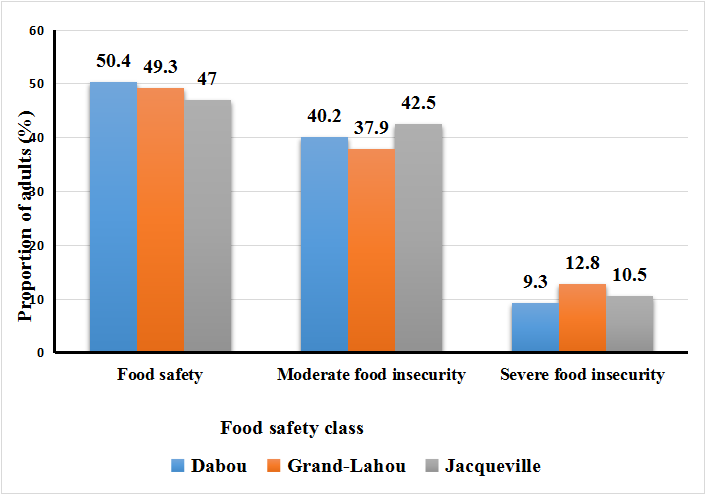
Figure 4 illustrates the distribution of food insecurity across the region. Nearly half of the population is food secure, with 50.4% in Dabou, 49.3% in Grand-Lahou, and 47% in Jacqueville. However, food insecurity remains a concern, with 40.2% in Dabou, 37.9% in Grand-Lahou, and 42.5% in Jacqueville experiencing moderate food insecurity. In addition, a significant proportion of the population experiences severe food insecurity, with 9.3% in Dabou, 12.8% in Grand-Lahou, and 10.5% in Jacqueville.

Table 1 highlights the sociodemographic factors influencing dietary diversity (low or high) in Dabou, Grand-Lahou, and Jacqueville. The results reveal that certain variables, such as the level of education (P=0.000 for Dabou and Grand-Lahou, P= 0.004 for Jacqueville), the size (P=0.000 for Dabou, Grands-Lahou and Jacqueville) and household income (P=0.000 for Dabou, Grands-Lahou and Jacqueville), show significant associations with diversity. Heads of households with secondary or higher education, smaller households, or high incomes are more likely to achieve high diversity.
This study aimed to assess food security in the Grands-Ponts region. The results reveal that most households generally consume sufficient food in terms of quantity. However, low dietary diversity remains a major concern. Despite adequate access to staple foods, dietary choices are limited, restricting the intake of essential micronutrients. This situation could lead to long-term nutritional deficiencies, particularly in vitamins and minerals, despite sufficient caloric consumption. Consequently, the population faces a risk of hidden hunger, characterized by invisible but significant nutritional deficiencies 15.
Approximately 40% of households experienced moderate food insecurity. This reflects recurring challenges in maintaining adequate diets, often linked to economic constraints, unstable food supplies, or limited dietary diversity. Severe food insecurity affected 9% to 12.8% of the population, depending on the locality. This indicates critical situations where basic food needs are unmet. These proportions highlight increased vulnerabilities influenced by poverty, limited resources, and climatic or economic disruptions 16.
Notable disparities were observed between the studied localities. Dabou showed better food security compared to Grand-Lahou and Jacqueville. This difference may be attributed to Dabou’s proximity to Abidjan, only 40 km away, which facilitates access to markets and economic resources. This proximity supports more diverse and higher-quality diets 7. In contrast, Grand-Lahou and Jacqueville, located 70 km and 50 km from the metropolis, respectively, face supply challenges. Although near production zones, these localities are influenced by urban market dynamics, where high demand increases prices and reduces the availability of certain products 4. Other factors, such as economic inequalities, traditional food practices, climate variability, and limited infrastructure, exacerbate these disparities 17, 18, 19.
Multinomial logistic regression analysis confirms that dietary diversity is influenced by structural factors, including education level, household size, and income. The analysis shows that education level is strongly correlated with better dietary diversity (p < 0.05). Individuals with higher education levels better understand the benefits of a diverse and balanced diet, encouraging favorable eating habits. These findings align with Renko 20 and 21, who emphasize that education promotes healthy and varied dietary choices.
Household size also influences dietary diversity. Small households (1 to 5 members) exhibit better dietary diversity due to greater economic flexibility. In contrast, large households (6 or more members) have reduced diversity, linked to budget constraints and resource distribution among multiple individuals (p < 0.05). These findings align with FAO 22 and 23, who note that large households in sub-Saharan Africa have less access to varied diets.
Finally, household income emerges as a major determinant. Low-income households (≤ 60,000 FCFA) show low dietary diversity, while higher-income households access more varied products, including animal proteins, fruits, and fresh vegetables. These often costly items are essential for a balanced diet. Previous studies, including INRAE 24 and Caroline 25, confirm that higher income improves access to diverse and quality foods, thereby strengthening food security.
This study highlights significant disparities in food security within the Grands-Ponts region and identifies key factors influencing dietary diversity. While staple food availability is generally adequate, access to diverse diets remains a major challenge. This reflects pronounced structural inequalities and persistent socio-economic constraints.
These findings underscore the need for targeted initiatives to enhance the population’s food resilience. Tailored interventions, combining infrastructure improvements, nutritional education, and economic support, could promote sustainable and diverse dietary habits. Finally, a comprehensive review is essential to guide public policies toward equitable and sustainable food security in this region.
Conflict of interest: The authors have reported no conflicts of interest.
Data availability: All data is included in the article content.
Financing Statement: No funding was received for this research.
Human studies: The study obtained approval from the ethics committee. The results of the analyses were validated by the thesis supervision committee at University of Nangui ABROGOUA. The principles set out in the Declaration of Helsinki, including consent, confidentiality and anonymity, were rigorously respected.
| [1] | FAO, IFAD, UNICEF, WFP and WHO. (2020). The State of Food Security and Nutrition in the World 2020. Transforming food systems for affordable healthy diets. Rome, FAO. | ||
| In article | |||
| [2] | NESHEIM C. Malden, ORIA Maria and YIH Tsai Peggy (2015). A Framework for Assessing Effects of Food System. Food Systems. National Academies Press (USA); June 17, 2015. | ||
| In article | |||
| [3] | N'GUESSAN Jonathan Beugré 1 (2021). Gender Disparity in Food Security in Côte d'Ivoire: Explanatory Factors. GENERAL POLICY DOCUMENT October 2021 / No.779. https:// aercafrica.org/old-website/wp-content/uploads/2021/12/PB779-French.pdf(accessed November 26, 2024). | ||
| In article | |||
| [4] | N'GUESSAN Vivien Alexandre Aka and TOURE Mamoutou. (2022). The Grands-Ponts region near Abidjan: opportunities and risks. DaloGéo Review, Jean Lorougnon Guédé University, Daloa, Ivory Coast. P. 128-144. | ||
| In article | |||
| [5] | WIEBE Keith D., ROBINSON Sherman., and CATTANEO Andrea., (2019). Climate change, agriculture and food security: Impacts and the potential for adaptation and mitigation. In Sustainable Food and Agriculture: An Integrated Approach, eds. Clayton Campanhola and Shivaji Pandey. Section 1: Food and Agriculture at a Crossroads, Chapter 4, Pp. 55-74. Food and Agricultural Organization of the United Nations (FAO) and Elsevier. | ||
| In article | View Article | ||
| [6] | MICHA Renata., PEÑALVO José L., CUDHEA Frédéric., IMAMURA Fumiaki, REHM Colin D., & MOZAFFARIAN Dariush (2017). Association Between Dietary Factors and Mortality From Heart Disease, Stroke, and Type 2 Diabetes in the United States. JAMA, 317(9), 912–924. | ||
| In article | View Article PubMed | ||
| [7] | GENERAL CENSUS OF POPULATION AND HOUSING STATISTICS (RGPH 2021). Directory of localities: GRANDS-PONTS region. | ||
| In article | |||
| [8] | NDIAYE M. 2014. Food Security Indicators: Integrating Nutrition and Food Security Programs in Emergency Situations and for Strengthening Resilience, Regional Training Workshop: 10-12 June 2014 West Africa/Sahel - Saly, Senegal. 2014; 27. | ||
| In article | |||
| [9] | PISA PT, LANDAIS E, MARGETTS B, VORSTER HH, FRIEDENREICH CM, HUYBRECHTS I et al. (2018). Inventory on the dietary assessment tools available and needed in Africa: a prerequisite for setting up a common methodological research infrastructure for nutritional surveillance, research, and prevention of diet-related non-communicable diseases. Crit Rev Food Sci Nutr. 2018 Jan 2; 58 (1): 37-61. PubMed| Google Scholar. | ||
| In article | View Article PubMed | ||
| [10] | KoBoToolbox. (3 Jul 2023). Datea Collection Tools for Challenging Environments. KoBoToolbox. Quoted. | ||
| In article | |||
| [11] | World Food Programme (WFP). 2023. Food Security Monitoring System-Burundi (FSMS). Fighting World Hunger. Ministry of Agriculture and Livestock. December 2015. Accessed 25 Jan 2023. | ||
| In article | |||
| [12] | SWINDALE Anne, BILINSKY Paula. 2022. Household Dietary Diversity Score (HDDS) for Measurement of Household Food Access: Indicator Guide. Sweetpotato Knowl. Portal. 2006. Cited 2022 Aug 27. | ||
| In article | |||
| [13] | World Food Programme (WFP).2009. ManualFood Security Assessment in Emergencies - Second Edition. 2009. p 358. | ||
| In article | |||
| [14] | World Food Programme (WFP) 2017. Rapid assessment of the food security situation of displaced populations in Mont Péko. 2017 p 24. | ||
| In article | |||
| [15] | HEATHER A. Eicher-Miller1, LISA Graves2, BETHANY McGowan3, BARBARA J Mayfield4, BLAKE A. Connolly5, WANDA Stevens5, ANGELA Abbott5(2023). A Scoping Review of Household Factors Contributing to Dietary Quality and Food Security in Low-Income Households with School-Age Children in the United States. National library of medicine, National center for biotechnology information. | ||
| In article | View Article PubMed | ||
| [16] | WAÏGALO AKD, (2018). Determinants and persistence of food insecurity in the Sahel: the case of Mali. TROPICULTURA, 36, 2,392-399.https://popups.uliege.be/2295-8010/ index.php? id=885 & file=1 (accessed November 25, 2024). | ||
| In article | |||
| [17] | PAWLAK Karolina., KOLODZIEJCZAK Małgorzata (2020). The Role of Agriculture in Ensuring Food Security in Developing Countries: Considerations in the Context of the Problem of sustainable food production. Sustainability. file: ///C: /Users/Miss% 20KRAIDY/Downloads/ sustainability-12-05488-v2.pdf(accessed November 26, 2024). | ||
| In article | View Article | ||
| [18] | BALINEAU Gaëlle (2021). Food Systems in Africa: Rethinking the Role of Markets. | ||
| In article | View Article | ||
| [19] | MEKONNEN SA, JALATA DD & ONYEAKA H (2024). 'Building resilience in Sub‐Saharan Africa's food systems: Diversification, traceability, capacity building and technology for overcoming challenges', Food and Energy Security, vol. 13, no. 4, e563. | ||
| In article | View Article | ||
| [20] | RENKO. S. (2018). The role of education in promoting healthy eating: croatian parents` and teachers` perspectives. Proceedings of ICERI2018. | ||
| In article | View Article | ||
| [21] | SANDRI Elena 1,2, PARDO Juan 3*, LARUMBE Eva Cantín 4, OLMEDO Germán Cerdá 1 and FALCO Antonio 5 (2024). Analysis of the influence of the level of education on the nutritional status and lifestyle habits of the young Spanish population.Frontiers Public Health. Volume 12 2024. | ||
| In article | View Article PubMed | ||
| [22] | Food and Agriculture Organization (FAO). 2019. The State of Food Security and Nutrition in the World 2019: Safeguarding against Economic Slowdowns and Downturns. Rome: Food and Agriculture Organization. | ||
| In article | |||
| [23] | ANTWI1 Janet, QUAIDOO Esi 2, OHEMENG Agartha 3 * and BANNERMAN Boateng 4 (2022). Household food insecurity is associated with child's dietary diversity score among primary school children in two districts in Ghana. Food & Nutrition Research 2022, 66: 7715. | ||
| In article | View Article PubMed | ||
| [24] | INRAE, (2023).Eating healthily and to your heart's content, a question of income?Food, overall health. https:// www.inrae.fr/ dossiers/alimentation-sortir-inegalites/manger-sain-sa-faim-question-revenus#:~: text=dans% 20un% 20contexte% 20de%20crise, % c3%89tat% 20of%20places. (accessed November 26, 2024). | ||
| In article | |||
| [25] | SAMSON Caroline (2024), Between 2009 and 2019, the share of household food budgets devoted to meat products declined. Transformations in agriculture and food consumption-Insee References – 2024. Edition. https:// www.insee.fr/ fr/statistiques/7728897? sommaire=7728903#:~:text=Glossaire-,Entre% 202009% 20et% 202019% 2C%20la% 20part%20du%20budget% 20alimentaire%20des,consacr%C3%A9e% 20aux%20produits%20carn%C3%A9s% 20recule&text=En%20France%20m%C3%A9tropolitaine% 2C%20les%20d%C3%A9penses,consommation%20totale% 20reste%20globalement%20stable. (accessed November 26, 2024). | ||
| In article | |||
Published with license by Science and Education Publishing, Copyright © 2025 Atchiman Esther Blandine Kraidy, Audrey Herbert Yepie, Jean-Jacques Diagou, Gnelle Assita Coulibaly and Anin L. Anin-Atchibri
 This work is licensed under a Creative Commons Attribution 4.0 International License. To view a copy of this license, visit
http://creativecommons.org/licenses/by/4.0/
This work is licensed under a Creative Commons Attribution 4.0 International License. To view a copy of this license, visit
http://creativecommons.org/licenses/by/4.0/
| [1] | FAO, IFAD, UNICEF, WFP and WHO. (2020). The State of Food Security and Nutrition in the World 2020. Transforming food systems for affordable healthy diets. Rome, FAO. | ||
| In article | |||
| [2] | NESHEIM C. Malden, ORIA Maria and YIH Tsai Peggy (2015). A Framework for Assessing Effects of Food System. Food Systems. National Academies Press (USA); June 17, 2015. | ||
| In article | |||
| [3] | N'GUESSAN Jonathan Beugré 1 (2021). Gender Disparity in Food Security in Côte d'Ivoire: Explanatory Factors. GENERAL POLICY DOCUMENT October 2021 / No.779. https:// aercafrica.org/old-website/wp-content/uploads/2021/12/PB779-French.pdf(accessed November 26, 2024). | ||
| In article | |||
| [4] | N'GUESSAN Vivien Alexandre Aka and TOURE Mamoutou. (2022). The Grands-Ponts region near Abidjan: opportunities and risks. DaloGéo Review, Jean Lorougnon Guédé University, Daloa, Ivory Coast. P. 128-144. | ||
| In article | |||
| [5] | WIEBE Keith D., ROBINSON Sherman., and CATTANEO Andrea., (2019). Climate change, agriculture and food security: Impacts and the potential for adaptation and mitigation. In Sustainable Food and Agriculture: An Integrated Approach, eds. Clayton Campanhola and Shivaji Pandey. Section 1: Food and Agriculture at a Crossroads, Chapter 4, Pp. 55-74. Food and Agricultural Organization of the United Nations (FAO) and Elsevier. | ||
| In article | View Article | ||
| [6] | MICHA Renata., PEÑALVO José L., CUDHEA Frédéric., IMAMURA Fumiaki, REHM Colin D., & MOZAFFARIAN Dariush (2017). Association Between Dietary Factors and Mortality From Heart Disease, Stroke, and Type 2 Diabetes in the United States. JAMA, 317(9), 912–924. | ||
| In article | View Article PubMed | ||
| [7] | GENERAL CENSUS OF POPULATION AND HOUSING STATISTICS (RGPH 2021). Directory of localities: GRANDS-PONTS region. | ||
| In article | |||
| [8] | NDIAYE M. 2014. Food Security Indicators: Integrating Nutrition and Food Security Programs in Emergency Situations and for Strengthening Resilience, Regional Training Workshop: 10-12 June 2014 West Africa/Sahel - Saly, Senegal. 2014; 27. | ||
| In article | |||
| [9] | PISA PT, LANDAIS E, MARGETTS B, VORSTER HH, FRIEDENREICH CM, HUYBRECHTS I et al. (2018). Inventory on the dietary assessment tools available and needed in Africa: a prerequisite for setting up a common methodological research infrastructure for nutritional surveillance, research, and prevention of diet-related non-communicable diseases. Crit Rev Food Sci Nutr. 2018 Jan 2; 58 (1): 37-61. PubMed| Google Scholar. | ||
| In article | View Article PubMed | ||
| [10] | KoBoToolbox. (3 Jul 2023). Datea Collection Tools for Challenging Environments. KoBoToolbox. Quoted. | ||
| In article | |||
| [11] | World Food Programme (WFP). 2023. Food Security Monitoring System-Burundi (FSMS). Fighting World Hunger. Ministry of Agriculture and Livestock. December 2015. Accessed 25 Jan 2023. | ||
| In article | |||
| [12] | SWINDALE Anne, BILINSKY Paula. 2022. Household Dietary Diversity Score (HDDS) for Measurement of Household Food Access: Indicator Guide. Sweetpotato Knowl. Portal. 2006. Cited 2022 Aug 27. | ||
| In article | |||
| [13] | World Food Programme (WFP).2009. ManualFood Security Assessment in Emergencies - Second Edition. 2009. p 358. | ||
| In article | |||
| [14] | World Food Programme (WFP) 2017. Rapid assessment of the food security situation of displaced populations in Mont Péko. 2017 p 24. | ||
| In article | |||
| [15] | HEATHER A. Eicher-Miller1, LISA Graves2, BETHANY McGowan3, BARBARA J Mayfield4, BLAKE A. Connolly5, WANDA Stevens5, ANGELA Abbott5(2023). A Scoping Review of Household Factors Contributing to Dietary Quality and Food Security in Low-Income Households with School-Age Children in the United States. National library of medicine, National center for biotechnology information. | ||
| In article | View Article PubMed | ||
| [16] | WAÏGALO AKD, (2018). Determinants and persistence of food insecurity in the Sahel: the case of Mali. TROPICULTURA, 36, 2,392-399.https://popups.uliege.be/2295-8010/ index.php? id=885 & file=1 (accessed November 25, 2024). | ||
| In article | |||
| [17] | PAWLAK Karolina., KOLODZIEJCZAK Małgorzata (2020). The Role of Agriculture in Ensuring Food Security in Developing Countries: Considerations in the Context of the Problem of sustainable food production. Sustainability. file: ///C: /Users/Miss% 20KRAIDY/Downloads/ sustainability-12-05488-v2.pdf(accessed November 26, 2024). | ||
| In article | View Article | ||
| [18] | BALINEAU Gaëlle (2021). Food Systems in Africa: Rethinking the Role of Markets. | ||
| In article | View Article | ||
| [19] | MEKONNEN SA, JALATA DD & ONYEAKA H (2024). 'Building resilience in Sub‐Saharan Africa's food systems: Diversification, traceability, capacity building and technology for overcoming challenges', Food and Energy Security, vol. 13, no. 4, e563. | ||
| In article | View Article | ||
| [20] | RENKO. S. (2018). The role of education in promoting healthy eating: croatian parents` and teachers` perspectives. Proceedings of ICERI2018. | ||
| In article | View Article | ||
| [21] | SANDRI Elena 1,2, PARDO Juan 3*, LARUMBE Eva Cantín 4, OLMEDO Germán Cerdá 1 and FALCO Antonio 5 (2024). Analysis of the influence of the level of education on the nutritional status and lifestyle habits of the young Spanish population.Frontiers Public Health. Volume 12 2024. | ||
| In article | View Article PubMed | ||
| [22] | Food and Agriculture Organization (FAO). 2019. The State of Food Security and Nutrition in the World 2019: Safeguarding against Economic Slowdowns and Downturns. Rome: Food and Agriculture Organization. | ||
| In article | |||
| [23] | ANTWI1 Janet, QUAIDOO Esi 2, OHEMENG Agartha 3 * and BANNERMAN Boateng 4 (2022). Household food insecurity is associated with child's dietary diversity score among primary school children in two districts in Ghana. Food & Nutrition Research 2022, 66: 7715. | ||
| In article | View Article PubMed | ||
| [24] | INRAE, (2023).Eating healthily and to your heart's content, a question of income?Food, overall health. https:// www.inrae.fr/ dossiers/alimentation-sortir-inegalites/manger-sain-sa-faim-question-revenus#:~: text=dans% 20un% 20contexte% 20de%20crise, % c3%89tat% 20of%20places. (accessed November 26, 2024). | ||
| In article | |||
| [25] | SAMSON Caroline (2024), Between 2009 and 2019, the share of household food budgets devoted to meat products declined. Transformations in agriculture and food consumption-Insee References – 2024. Edition. https:// www.insee.fr/ fr/statistiques/7728897? sommaire=7728903#:~:text=Glossaire-,Entre% 202009% 20et% 202019% 2C%20la% 20part%20du%20budget% 20alimentaire%20des,consacr%C3%A9e% 20aux%20produits%20carn%C3%A9s% 20recule&text=En%20France%20m%C3%A9tropolitaine% 2C%20les%20d%C3%A9penses,consommation%20totale% 20reste%20globalement%20stable. (accessed November 26, 2024). | ||
| In article | |||