Ebola virus disease (EVD) is a zoonotic disease of great public health importance. It is characterized by a high case fatality rate, causes outbreaks, and can lead to major social and economic disruption. First recognised in 1976 in Sudan and the Democratic Republic of the Congo, the disease has since emerged in different parts of Africa. The most significant outbreak occurred between 2014 and 2016 in West Africa. EVD is caused by species of the genus Orthoebolavirus, including Ebola virus, Sudan virus, and Bundibugyo virus. These viruses differ in fatality rates and in the availability of medical countermeasures. Fruit bats are believed to be the natural reservoir. Transmission to humans occurs through contact with infected animals, body fluids of infected persons, and contaminated environments, including during unsafe burial practices. The early stages present with non-specific symptoms, followed by gastrointestinal and hemorrhagic symptoms. Laboratory confirmation involves molecular, antigen-based, serological, and virological methods. Treatment options include supportive care, monoclonal antibodies for cases caused by Orthoebolavirus zaire, and vaccination. However, major gaps remain in the treatment and prevention of Sudan and Bundibugyo virus infections. Despite progress in EVD management, further research is needed to improve preparedness, diagnosis, treatment, and control. Therefore, this review discusses the etiology, epidemiology, transmission, pathogenesis, clinical spectrum, diagnosis, treatment, control, and One Health implications of Ebola virus disease, while highlighting existing knowledge gaps and future research needs.
Ebola virus disease (EVD), earlier known as Ebola haemorrhagic fever, is a severe and often fatal zoonotic viral disease of major public health concerns. It is caused by viruses belonging to the genus Orthoebolavirus in the family Filoviridae 1. These viruses are enveloped, filamentous, non-segmented, negative-sense RNA viruses that are capable of causing outbreaks with high morbidity and mortality in humans and non-humans’ primates 2. The disease was first recognized in 1976, during two near-simultaneous outbreaks in Sudan and Zaire, now the Democratic Republic of the Congo, with the latter occurring near the Ebola River, from which the virus derives its name 3, 4. The published review EVD as a highly contagious zoonotic disease, emphasizing the role of the fruit bats and non-human primates in virus maintenance and transmission, as well as the importance of surveillance, diagnosis, biosecurity, and preparedness 5, 6. Six Orthoebolavirus species are currently recognized: Orthoebolavirus zairense associated with Ebola virus, Orthoebolavirus sudanense associated with Sudan virus, Orthoebolavirus bundibugyoense associated with Bundibugyo virus, Orthoebolavirus taiense associated with Tai Forest virus, Orthoebolavirus restonense is associated with Reston virus, while Orthoebolavirus bombaliense is associated with Bombali virus. Among these, Ebola virus, Sudan virus, and Bundibugyo virus are known to cause large outbreaks in humans 7. WHO states that Ebola disease is severe and often fatal, with average case fatality around 50%, although past outbreaks have ranged from 25% to 90% 8.
EVD is primarily a zoonotic infection, and available evidence suggests that fruit bats are probable natural reservoirs of Orthoebolavirus. Spillover to humans may occur through direct contact with infected wildlife, including bats, non-human primates, forest antelopes, or other animals found ill or dead in forest environments 9. Human-to-human transmission occurs through direct contact with blood, secretions, organs, or other body fluids of infected persons, as well as contaminated materials and unsafe burial practices. In particular, healthcare workers are at risk when infection prevention and control measures are insufficient 10. Published reports have also identified Ebola virus–specific antibodies and viral RNA in several species of fruit bats, consistent with a possible role for fruit bats as reservoirs 11. Clinical presentation of EVD is characterised by nonspecific symptoms such as fever, fatigue, headache, myalgia, sore throat, vomiting, diarrhoea, and abdominal pain that may progress to haemorrhagic manifestations, shock, multiorgan dysfunction, and death 12. Early signs are like malaria, typhoid, shigellosis, meningitis and other viral haemorrhagic fevers and laboratory confirmation is needed 13. Reverse transcription polymerase chain reaction (RT-PCR), antigen-detection assays, antibody-capture ELISA, and virus isolation remain important diagnostic approaches, although handling of suspected specimens requires strict biosafety precautions. WHO highlights RT-PCR, antigen-capture tests, antibody-capture ELISA, and virus isolation as diagnostic methods and notes that patient samples are an extreme biohazard risk 14.
The 2014-2016 West African epidemic was the largest Ebola outbreak recorded to date, causing more than 28,600 reported cases and over 11,300 deaths, and exposing major gaps in surveillance, preparedness, laboratory capacity, infection prevention, and community engagement 15. Since then, outbreaks have continued to occur in Central and East Africa, including the 2025 Sudan virus disease outbreak in Uganda and the 2026 Bundibugyo virus disease outbreak involving the Democratic Republic of the Congo and Uganda 16. In May 2026, WHO declared the Bundibugyo virus disease outbreak in DRC and Uganda a Public Health Emergency of International Concern, reflecting the risk of regional and international spread, the involvement of health care workers, and the absence of licensed Bundibugyo-specific vaccines or therapeutics 17. EVD clearly illustrates the importance of the One Health approach, as its emergence and spread are shaped by interactions among humans, animals, wildlife, health-care systems, cultural practices, mobility, and environment change 18. The role of veterinarians and allied public health professionals is especially important in zoonotic disease surveillance, wildlife monitoring, risk assessment, food safety, biosecurity, public education, and outbreak preparedness 19. The published One Health paper emphasizes that veterinarians are central to disease prevention, surveillance, environmental stewardship, and sustainable health systems, and that integrated surveillance across human, animal, and environmental sectors improves early detection of zoonotic threats 20.
Therefore, EVD remains a continuing global health challenge despite advances in diagnostics, supportive care, vaccination for Ebola virus disease, and outbreak response systems. Recurrent outbreaks, viral persistence in survivors, ecological uncertainty regarding reservoirs, health-care-associated transmission, and gaps in preparedness demonstrate the need for sustained surveillance and multidisciplinary collaboration. This review summarizes that etiology, natural reservoir, epidemiology, transmission, pathogenesis, clinical features, diagnosis, treatment, prevention, control strategies, and One Health implications of EVD, current challenges with emphasis on strengthening preparedness and coordinated response to reduce the impact of future outbreaks.
Ebola virus disease is caused by infection with Orthoebolavirus, a group of enveloped, filamentous, non-segmented, negative-sense single stranded RNA viruses belonging to the family Filoviridae. Members of this family are known for their thread-like morphology, high pathogenic potential, and ability to produce severe viral haemorrhagic disease in humans and non-human primates. The virions are pleomorphic and may appear as long filaments, branched structures, or U-shaped particles 21. The viral genome is approximately 19kb in length and encodes seven major structural and functional proteins, namely nucleoprotein (NP), viral proteins such as viral protein 35 (VP35), viral protein 40 (VP40), viral protein 30 (VP30) and viral protein 24 (VP24), glycoprotein (GP), and RNA-dependent RNA polymerase (L). These proteins are essential for viral attachment, entry, replication, assembly, budding, and immune evasion 22.
Proteins that make up the structure of the Ebola viruses play an integral role in their ability to infect cells and cause a serious illness. The surface glycoprotein plays an important role in attaching to cells and invading them. Once the cells are infected, other viral proteins help in the replication and regulation of the immune system response. Two specific proteins called VP35 and VP24 inhibit the interferon-mediated immune response and thus promote the replication of viruses before the host’s immune system has time to respond 23. Another protein VP40 acts as a matrix protein involved in assembly and release of the virions. And, finally, the L protein acts as an RNA-dependent RNA polymerase required for viral genome replication 24, 25. Taxonomically, Ebola viruses are classified under the genus Orthoebolavirus in the family Filoviridae. Six species are currently recognized, namely Orthoebolavirus zairense, Orthoebolavirus sudanense, Orthoebolavirus bundibugyoense, Orthoebolavirus taiense, Orthoebolavirus restonense, and Orthoebolavirus bombaliense, which correspond to Ebola virus, Sudan virus, Bundibugyo virus, Tai Forest virus, Reston virus, and Bombali virus, respectively 26. Among these, Ebola virus, Sudan virus, and Bundibugyo virus have caused the most important human outbreaks, with Ebola virus being responsible for the largest and most devastating epidemic in West Africa during 2014-2016. Tai Forest virus has been linked with human infection, but only rarely 27. Reston virus has mainly been reported in non-human primates and pigs and has not been associated with severe human disease, while Bombali virus has been detected in bats and its public health significance remains unclear. The zoonotic origin of Ebola virus disease is therefore a key part of its etiology, with fruit bats considered the most likely natural reservoirs 8. Other wildlife, including non-human primates, forest antelopes, and porcupines, may become infected and serve as intermediate or incidental hosts. Human infection typically starts after contact with infected wildlife, carcasses or body fluids, followed by person-to-person transmission through blood, secretions, organs and other body fluids. Thus, proper viral classification is important not only for taxonomy but also for diagnosis, outbreak investigation, vaccine use, therapeutic planning, and public health preparedness 12.
Ebola virus disease is a zoonotic disease and fruit bats are widely considered the most likely natural reservoir hosts of Ebola viruses 28. The detection of Ebola virus RNA and virus-specific antibodies in several fruit bat species supports this association and suggests their possible role in maintaining the virus in nature. Non-human primates including gorillas, chimpanzees and monkeys, and forest antelopes, porcupines and other wild animals may be infected but are considered as intermediate or incidental hosts rather than true reservoirs 7. Humans are commonly infected after contact with infected wildlife, their carcasses or body fluids, particularly when hunting, handling, slaughtering or consuming bush meat 29. Increased contact between humans and wildlife, along with deforestation, habitat encroachment and population movement, all contribute to a higher risk of spillover from animals to humans 30.
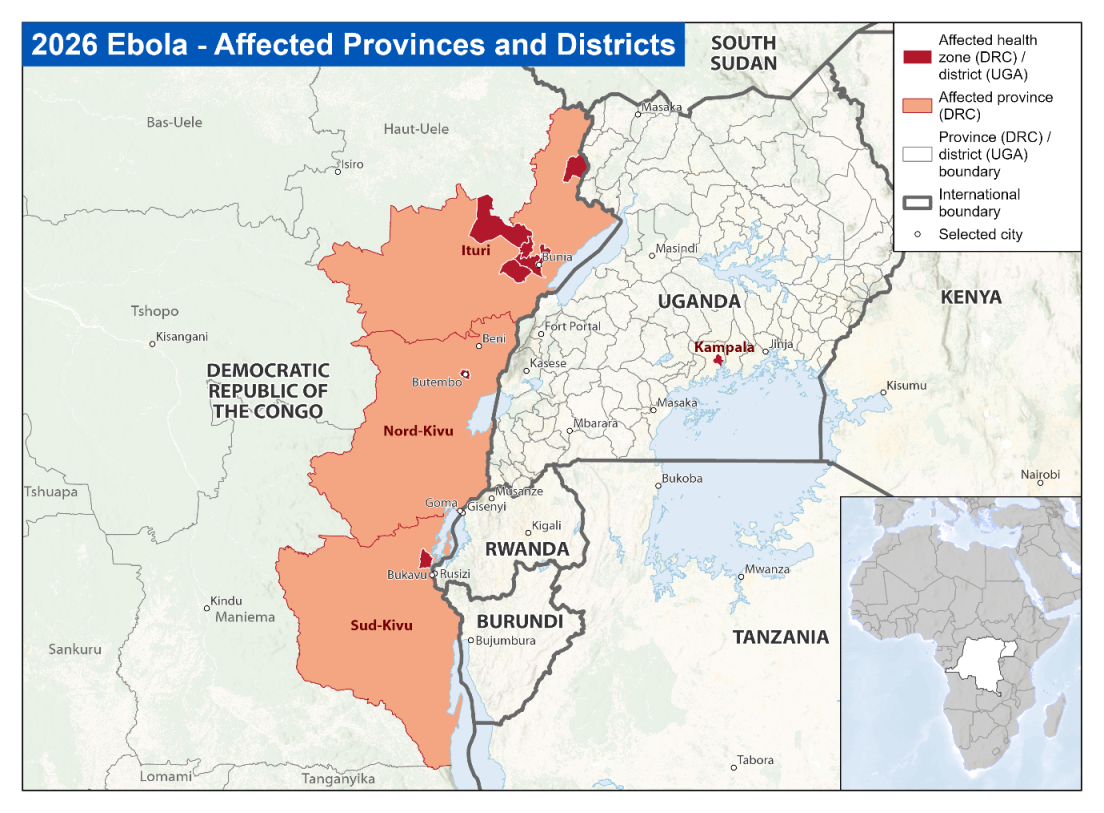
Ebola virus disease was first reported in 1976, in two almost simultaneous outbreaks in Sudan and Zaire, now Democratic Republic of Congo 3. Since then, re-emergence of the disease has been reported mainly in Central and West Africa, notably in Democratic Republic of Congo, Uganda, Sudan, South Sudan, Goban, Republic of Congo, Guinea, Liberia and Sierra Leone. The largest outbreak was in West Africa (2014–2016), primarily in Guinea, Liberia and Sierra Leone, with >28,600 cases and >11,300 deaths 31. Recent outbreaks demonstrate that Ebola virus disease continues to be a threat to public health. Sudan virus disease was reported in Uganda in 2025. Bundibugyo virus disease was reported in the Democratic Republic of Congo in 2026 with spread to Uganda. The 2026 outbreak occurred in eastern DRC, including the provinces of Iturbi, Nord-Kivu, and Sud-Kivu, and in one affected district in Kampala, Uganda 20. This cross-border distribution highlights the need for strong surveillance, early diagnosis, contact tracing, infection control, and coordinated regional response as shown in Figure 1 32.

Ebola virus disease usually begins with zoonotic spillover from infected wildlife to humans. Infection may occur during hunting, handling, slaughtering, or consumption of bushmeat, especially when people come into contact with blood, tissues, organs, or body fluids of infected animals 29. Bats, non-human primates, forest antelopes, and other wild animals have been linked with Ebola virus transmission 33.
5.2. Human-to-human TransmissionAfter the virus enters the human population, transmission occurs mainly through direct contact with infected body fluids. Blood, vomitus, urine, faeces, saliva, sweat, breast milk, semen, and other secretions may contain infectious virus, particularly during the symptomatic phase of disease. Family members and caregivers are at high risk when protective measures are not followed 18.
5.3. Contaminated Materials and FomitesEbola virus may also spread through contaminated needles, syringes, medical instruments, bedding, clothing, and other materials soiled with infectious body fluids. Reuse of needles or poor sterilization practices can amplify transmission, especially in healthcare arrangements with limited resources 31.
5.4. Unsafe Burial PracticesTraditional burial practices are an important risk factors during outbreaks. Washing, touching, or preparing the body of a person who died from Ebola can expose relatives and community members to highly infectious body fluids. Safe and dignified burial is therefore essential for outbreak control 12.
5.5. Healthcare-associated TransmissionHealthcare workers face a high risk of infection when caring for suspected or confirmed cases without adequate personal protective equipment. Poor infection prevention, delayed diagnosis, overcrowded treatment areas, and improper handling of specimens can contribute to hospital-based transmission 34.
5.6. Sexual Transmission from SurvivorsEbola virus can persist in immune-protected sites after recovery, especially in semen. Sexual transmission from male survivors has been reported months after clinical recovery; therefore, survivor counselling, semen testing where available, and safe sexual practices are important parts of post-outbreak control 35.
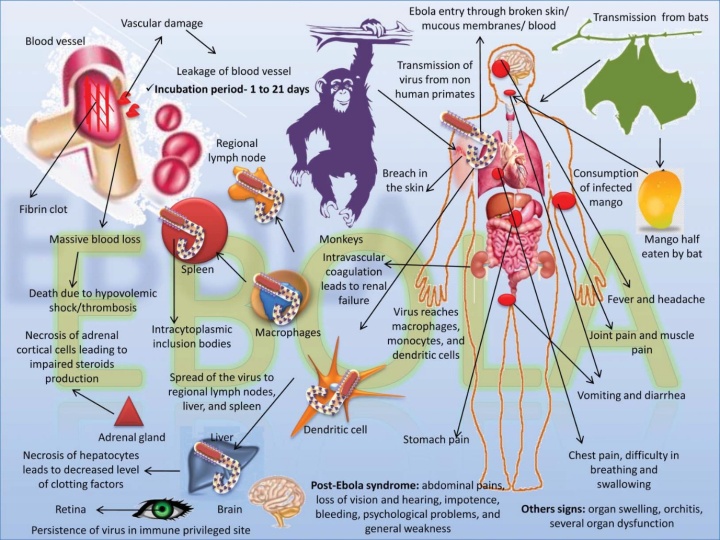
Infection by Ebola virus occurs through mucosal surfaces, damaged skin, or parenterally, and begins with infection of monocytes, macrophages, and dendritic cells 21. Once infected, the virus spreads via the lymphatic and blood vessels to local lymph nodes, the liver, spleen, adrenals, and other organs 42. The viral proteins interfere with the actions of the innate immune system, including inhibition of antiviral effects mediated by interferon, allowing for replication and distribution throughout the body 5. Cytokine storms caused by production of inflammatory cytokines and chemokines from infected immune cells lead to injury to the endothelium and increased vascular permeability 5. Coagulation processes become highly disturbed during the course of the infection, leading to thrombocytopenia, disseminated intravascular coagulation, bleeding, and poor organ perfusion. Severely affected Ebola virus disease leads to hypovolemic shock, metabolic disturbances, multiple organ dysfunction syndrome, and death 37, 38.
The incubation period of Ebola virus disease ranges from 2 to 21 days, with clinical signs most commonly appearing around 8-10 days after exposure. The early phase is usually abrupt and non-specific, presenting with sudden fever, headache, fatigue, myalgia, arthralgia, and sore throat 5. Because these symptoms resemble other illness such as malaria, typhoid fever, dengue, and influenza-like infections, early clinical diagnosis is often difficult without laboratory confirmation 12.
7.2. Progressive DiseaseAs the infection advances, gastrointestinal and systemic manifestations become more prominent. Patients commonly develop vomiting, profuse diarrhoea, abdominal pain, conjunctivitis, and sometimes a maculopapular rash. Fluid loss due to vomiting and diarrhoea may rapidly lead to dehydration, electrolyte imbalance, weakness, and worsening clinical condition. At this stage, patients become highly infectious because body fluids contain large amounts of virus 29.
7.3. Severe DiseaseSevere Ebola virus disease is marked by haemorrhagic manifestations, shock, neurological involvement, and multiorgan failure. Gastrointestinal haemorrhage, haematemesis, melaena, haematuria, and bleeding from mucosal surfaces may occur in advanced cases, although bleeding is not present in all patients. Progressive vascular leakage, coagulation disturbances, and impaired tissue perfusion contribute to hypovolemic shock and organ dysfunction. The average case-fatality rate is approximately 50%, but mortality may vary from 25% to 90% depending on the virus species, outbreak setting, timing of diagnosis, and quality of supportive care. Survivors may develop long-term sequelae such as arthralgia, chronic fatigue, visual impairment, hearing loss, and neuropsychiatric complications 16.
Early diagnosis of Ebola virus disease is challenging because the initial clinical features are non-specific and closely resemble several endemic illnesses. Fever, headache, fatigue, myalgia, vomiting, and diarrhoea may also occur in malaria, typhoid fever, dengue, leptospirosis, Marburg virus disease, and other viral haemorrhagic fevers. Therefore, clinical suspicion should be based on a combination of symptoms, travel or residence in an affected area, contact with a suspected or confirmed case, exposure to infected animals, or participation in burial rituals. In outbreak settings, every suspected case must be rapidly isolated and investigated to reduce the risk of further transmission 39.
Laboratory confirmation is essential for accurate diagnosis. Reverse transcription polymerase chain reaction (RT-PCR) and real-time RT-PCR are the most widely used methods for detecting Ebola viral RNA during acute infection. Antigen detection ELISA may be useful in early disease, while IgM and IgG antibody detection are more useful during later stages of infection or for sero-epidemiological studies 1. Immunohistochemistry can help detect viral antigen in tissue samples, especially in fatal cases. Virus isolation is confirmatory but requires high-containment biosafety laboratories because clinical specimens from suspected patients are highly infectious. Strict biosafety precautions during sample collection, packaging, transport, and testing are therefore essential 40.
There is no single universal treatment that is effective against all Ebola virus species. Early supportive care remains the foundation of case management and can significantly improve survival when started promptly. Treatment includes correction of hydration level, fluid and electrolyte replacement, oxygen support, nutritional care, pain and fever management, and treatment of secondary bacterial infections or co-existing illnesses such as malaria. In severe cases, patients may require management of shock, bleeding, renal impairment, liver dysfunction, and multiorgan failure. Careful monitoring of vital signs, urine output, blood glucose, electrolytes, and organ function is important throughout the clinical course 41.
Specific monoclonal antibody therapies have improved the management of Ebola virus disease caused by Zaire ebolavirus. REGN-EB3, also known as Inmazeb, and mAB 114, also known as Ebanga or ansuvimab, have shown benefit in reducing mortality when administered early in the course of illness. However, these therapies are approved for disease caused by Ebola virus, corresponding to Orthoebolavirus sudanense, and are not considered universal treatments for all Orthoebolavirus. At present, there is no licensed species-specific therapeutic option for Sudan virus disease or Bundibugyo virus disease, making supportive care, early diagnosis, and outbreak control especially important for these infections 42.
Vaccination has become an important component of Ebola outbreak response, particularly for disease caused by Zaire ebolavirus. The recombinant vesicular stomatitis virus vaccine, Ervebo or rVSV-ZEBOV, is used for the prevention of Ebola virus disease caused by Zaire ebolavirus and has been applied in outbreak settings through ring vaccination strategies 43. Ring vaccination targets contacts, contacts of contacts, frontline health workers, and other high-risk groups around confirmed cases, thereby helping to interrupt chains of transmission. This approach is most effective when combined with rapid case detection, contact tracing, community engagement and infection prevention measures 44.
Despite this progress, important vaccine gaps remain crucial, approved vaccines do not provide broad protection against all Ebola virus species. Vaccine candidates for Sudan virus disease have been evaluated in outbreak and trials, but no licensed vaccine is currently available for routine prevention of Sudan virus disease 45. Similarly, Bundibugyo virus disease lacks a licensed vaccine, which limits outbreak response options during events caused by this virus. Future research should therefore focus on developing safe, effective, and accessible vaccines against multiple Orthoebolavirus, especially Sudan virus and Bundibugyo virus 41.
Prevention and control of Ebola virus disease require rapid, coordinated, and community-centred public health action. The first priorities during an outbreak are early case detection, laboratory confirmation, isolation of suspected and confirmed patients, and prompt contact tracing 8. Contacts should be monitored for 21 days after their last exposure, and any person who develops symptoms should be immediately assessed and isolated. Active surveillance, rapid reporting, and field investigation are essential to identify transmission chains and prevent silent spread within communities 46.
In healthcare, strict infection prevention and control measures are critical. Healthcare workers should use appropriate personal protective equipment, follow safe procedures for patient care, and avoid direct contact with blood and body fluids without protection. Safe injection practices, proper disinfection, sterilization of instruments, waste management, and safe handling of clinical specimens are necessary to prevent hospital-based transmission. Ebola treatment units should be organized in a way that separates suspected, confirmed, and recovering patients to reduce cross-infection 47.
Community participation is equally important for successful outbreak control. Safe and dignified burial practices reduce exposure to highly infectious bodies while respecting local customs as much as possible. Public education should address symptoms, transmission routes, early reporting, safe caregiving, and avoidance of contact with infected wildlife or bushmeat. Cross-border surveillance and travel or movement monitoring is also important during outbreaks, especially in regions with population mobility, trade, insecurity, or weak health infrastructure 47.
The Ebola virus disease demonstrates the One Health concept in that it relates to the relationship between humans, animals, wildlife, and the environment. The fruit bat is thought to be the reservoir for the Ebola virus, but other wildlife species, such as non-human primates, forest antelopes, and porcupines, can also become infected 29. Many of these animals are in contact with humans due to human activities that impact their natural environments and habitats, such as deforestation, mining, agriculture, hunting, and settlement or intermediate hosts. Environmental change, population movement, and climate-related ecological shifts may further influence the risk of emergence 30.
A One Health approach to Ebola prevention should integrate human health, veterinary, wildlife, and environmental sectors. Wildlife surveillance, bat population monitoring, ecological studies, and community education about safe wildlife contact are important for identifying and reducing spillover risks. Veterinarians, physicians, epidemiologists, ecologists, wildlife biologists, laboratory scientists, and public health workers should collaborate in surveillance, risk assessment, outbreak investigation, and response planning. Integrated human-animal-environmental surveillance can improve early warning systems and help detect unusual animal deaths, ecological changes, or human cases before outbreaks become widespread 14.
Several challenges limit Ebola virus prevention and control. The ecology of the natural reservoir of Ebola viruses is not yet fully understood. Additionally, the symptoms of Ebola virus disease can be similar to those of other tropical diseases, making early diagnosis difficult. The lack of healthcare infrastructure in the affected regions can make response to Ebola outbreaks challenging. These regions may have limited access to medical facilities and laboratory testing, transportation issues, and a lack of health workers to treat patients with the virus. Additionally, the virus can remain in individuals who have survived an Ebola infection, leading to challenges in counselling and preventing the spread of the virus 10.
The future of preventing Ebola virus disease can include the development of rapid diagnostic tools for the virus, improving the healthcare infrastructure in affected areas, and providing training to health care workers. Additionally, research can be undertaken to develop vaccines and therapeutics for other ebolaviruses, such as the Sudan virus, Bundibugyo virus, and other members of the Orthoebolavirus genus. Through international cooperation and the efforts to implement One Health practices in affected regions, the future management of Ebola virus disease can be significantly improved 20.
Ebola virus disease is one of the most severe zoonotic viral diseases that affects Africa and poses a threat to global public health. Although there are various treatments and interventions for Ebola virus disease, including diagnostics, supportive care for infected individuals, monoclonal antibodies, and vaccines against Zaire ebolavirus, there is still much work to be done. The various outbreaks of Ebola caused by different Orthoebolavirus indicate that preparedness for such an illness should not be focused on just one species of the Ebola virus. The absence of licensed vaccines and therapeutics for Sudan virus disease and Bundibugyo virus disease is a major concern and requires urgent scientific attention. Control of Ebola virus disease depends on early detection, rapid laboratory confirmation, isolation of cases, contact tracing, safe burial, infection prevention, and community trust. Health systems in outbreak-prone regions should be strengthened through improved laboratory capacity, trained healthcare workers, adequate personal protective equipment, and emergency response planning. Greater investment is needed in broad-spectrum vaccines, antiviral agents, survivor follow-up and ecological research on reservoirs. Since Ebola emerges at the human-animal-environment interface, veterinarians and wildlife experts should be fully included in surveillance and preparedness programs. A coordinated One Health approach offers the most practical and sustainable strategy for reducing the risk and impact of future Ebola outbreaks.
EVD: Ebola Virus Disease
RNA: Ribonucleic Acid
RT-PCR: Real Time Polymerase Chain Reaction
ELISA: Enzyme Linked Immunosorbent Assay
WHO: World Health Organisation
DRC: Democratic Republic of Congo
NP: Nucleoprotein
VP: Viral Protein
GP: Glycoprotein
The authors are highly grateful to Prof. Dr. R.K. Narayan for going through our manuscript and giving his constructive suggestions. This paper is dedicated to the scientists who made significant contribution in the field of Ebola virus disease.
All authors contributed significantly to the manuscript.
The authors declare no conflict of interest.
No financial support was received from any organization.
| [1] | Broadhurst M.J., Kelly J.D., Miller A., Semper A., Bailey D., Groppelli E., et al., “ReEBOV antigen rapid test kit for point-of-care and laboratory-based testing for Ebola virus disease: a field validation study.”, The Lancet, 386(9996), 867-874, 2015. | ||
| In article | View Article PubMed | ||
| [2] | Weyer J., Grobbelaar A. and Blumberg L., “Ebola virus disease: history, epidemiology and outbreaks.”, Current Infectious Disease Reports, 17(5), 480, 2015. | ||
| In article | View Article PubMed | ||
| [3] | Bowen E.T., Platt G.S., Lloyd G., Baskerville A., Harris W.J. and Vella E.E., “Viral haemorrhagic fever in southern Sudan and northern Zaire. Preliminary studies on the aetiological agent.”, The Lancet, 1(8011), 571-573, 1977. | ||
| In article | View Article PubMed | ||
| [4] | Pal M., Tariku F., Upadhyay D. and Zende R., “Current innovations in the diagnosis and immunization of emerging and re-emerging zoonoses.”, American Journal of Epidemiology and Infectious Disease, 12(2), 23-28, 2024. | ||
| In article | View Article | ||
| [5] | Feldmann H. and Geisbert T.W., “Ebola haemorrhagic fever.”, The Lancet, 377(9768), 849-862, 2011. | ||
| In article | View Article PubMed | ||
| [6] | Baize S., Pannetier D., Oestereich L., Rieger T., Koivogui L., Magassouba N.F., et al., “Emergence of Zaire Ebola virus disease in Guinea.”, New England Journal of Medicine, 371(15), 1418-1425, 2014. | ||
| In article | View Article PubMed | ||
| [7] | Hayman D.T.S., Yu M., Crameri G., Wang L.F., Suu-Ire R., Wood J.L.N., et al., “Ebola virus antibodies in fruit bats, Ghana, West Africa.”, Emerging Infectious Diseases, 18(7), 1207-1209, 2012. | ||
| In article | View Article PubMed | ||
| [8] | Kuhn J.H., Adachi T., Adhikari N.K., Arribas J.R., Bah I.E., Bausch D.G., et al., “New filovirus disease classification and nomenclature.”, Nature Reviews Microbiology, 17(5), 261-263, 2019. | ||
| In article | View Article PubMed | ||
| [9] | Leroy E.M., Kumulungui B., Pourrut X., Rouquet P., Hassanin A., Yaba P., et al., “Fruit bats as reservoirs of Ebola virus.”, Nature, 438(7068), 575-576, 2005. | ||
| In article | View Article PubMed | ||
| [10] | Olival K.J. and Hayman D.T.S., “Filoviruses in bats: current knowledge and future directions.”, Viruses, 6(4), 1759-1788, 2014. | ||
| In article | View Article PubMed | ||
| [11] | Deen G.F., Broutet N., Xu W., Knust B., Sesay F.R., McDonald S.L., et al., “Ebola RNA persistence in semen of Ebola virus disease survivors.”, New England Journal of Medicine, 377(15), 1428-1437, 2017. | ||
| In article | |||
| [12] | Singh R.K., Dhama K., Malik Y.S., Ramakrishnan M.A., Karthik K., Khandia R., et al., “Ebola virus - epidemiology, diagnosis, and control: threat to humans, lessons learnt, and preparedness plans - an update on its 40 year’s journey.”, Veterinary Quarterly, 37(1), 98-135, 2017. | ||
| In article | View Article PubMed | ||
| [13] | Gonzalez V., Hurtado-Monzón A.M., O'Krafka S., Mühlberger E., Letko M., Frank H.K., et al., “Studying bats using a One Health lens: bridging the gap between bat virology and disease ecology.”, Journal of Virology, 98(12), e01453-24, 2024. | ||
| In article | View Article PubMed | ||
| [14] | Pal M., Zende R., Rebuma T., Nair A. and de Avila Botton S., “The role of veterinarians in One Health implementation: bridging animal, human and environmental health.”, American Journal of Public Health Research, 14(2), 18-24, 2026. | ||
| In article | View Article | ||
| [15] | Pourrut X., Délicat A., Rollin P.E., Ksiazek T.G., Gonzalez J.P. and Leroy E.M., “Spatial and temporal patterns of Zaire ebolavirus antibody prevalence in the possible reservoir bat species.”, The Journal of Infectious Diseases, 196(Supplement 2), S176-S183, 2007. | ||
| In article | View Article PubMed | ||
| [16] | Vetter P., Kaiser L., Schibler M., Ciglenecki I. and Bausch D.G., “Sequelae of Ebola virus disease: the emergency within the emergency.”, The Lancet Infectious Diseases, 16(6), e82-e91, 2016. | ||
| In article | View Article PubMed | ||
| [17] | World Health Organization, “Epidemic of Ebola disease caused by Bundibugyo virus in the Democratic Republic of the Congo and Uganda determined a public health emergency of international concern.”, World Health Organization, 17 May 2026. Available at: https://www.who.int/news/item/17-05-2026-epidemic-of-ebola-disease-in-the-democratic-republic-of-the-congo-and-uganda-determined-a-public-health-emergency-of-international-concern. Accessed July 13, 2026. | ||
| In article | |||
| [18] | Smout E., “Communicating in a crisis like Ebola: facts and figures.”, SciDev.Net, 22 April 2015. Available at: https://www.scidev.net/global/features/communicating-crisis-ebola-facts-figures/. Accessed July 13, 2026. | ||
| In article | |||
| [19] | Kabami Z., Ario A.R., Harris J.R., Ninsiima M., Ahirirwe S.R., Ocero J.R., et al., “Ebola disease outbreak caused by the Sudan virus in Uganda, 2022: a descriptive epidemiological study.”, The Lancet Global Health, 12(10), e1684-e1692, 2024. | ||
| In article | |||
| [20] | Boum II Y., Dereje N., Mercy K., Fallah M., Aragaw M., Tsague L., et al., “Ebola disease outbreak caused by Bundibugyo virus in Africa: a defining moment for Africa’s health security and sovereignty.”, Journal of Public Health in Africa, 17(1), a2069, 2026. | ||
| In article | View Article PubMed | ||
| [21] | Basler C.F. and Amarasinghe G.K., “Evasion of interferon responses by Ebola and Marburg viruses.”, Journal of Interferon and Cytokine Research, 29(9), 511-520, 2009. | ||
| In article | View Article PubMed | ||
| [22] | Kuhn J.H., Amarasinghe G.K., Basler C.F., Bavari S., Bukreyev A., Chandran K., et al., “ICTV virus taxonomy profile: Filoviridae.”, Journal of General Virology, 100(6), 911-912, 2019. | ||
| In article | View Article PubMed | ||
| [23] | Ahmad S.I. (Ed.), Human Viruses: Diseases, Treatments and Vaccines: The New Insights, Springer, Cham, Switzerland, 2021. | ||
| In article | View Article | ||
| [24] | Milambo M.J.P., “Drivers of Ebola virus disease resurgence in DRC: a root cause analysis of the 16th outbreak in Mweka, Kasai Province (2025).”, Zoonotic Diseases, 6(2), 25, 2026. | ||
| In article | View Article | ||
| [25] | Nicastri E., Kobinger G., Vairo F., Montaldo C., Mboera L.E.G., Ansunama R., et al., “Ebola virus disease: epidemiology, clinical features, management, and prevention.”, Infectious Disease Clinics of North America, 33(4), 953-976, 2019. | ||
| In article | View Article PubMed | ||
| [26] | Cheng N., Ye R.Z., Li Y.Y., Kargbo K.B., Ren L.L. and Cao W.C., “Global distribution and genetic diversity of orthoebolaviruses: mapping and evolutionary analysis.”, One Health, 21, 101236, 2025. | ||
| In article | View Article PubMed | ||
| [27] | Jain S., Martynova E., Rizvanov A., Khaiboullina S. and Baranwal M., “Structural and functional aspects of Ebola virus proteins.”, Pathogens, 10(10), 1330, 2021. | ||
| In article | View Article PubMed | ||
| [28] | Omoleke S.A., Mohammed I. and Saidu Y., “Ebola viral disease in West Africa: a threat to global health, economy and political stability.”, Journal of Public Health in Africa, 7(1), 534, 2016. | ||
| In article | View Article PubMed | ||
| [29] | Leroy E.M., Rouquet P., Formenty P., Souquière S., Kilbourne A., Froment J.M., et al., “Multiple Ebola virus transmission events and rapid decline of central African wildlife.”, Science, 303(5656), 387-390, 2004. | ||
| In article | View Article PubMed | ||
| [30] | Olivero J., Fa J.E., Real R., Márquez A.L., Farfán M.A., Vargas J.M., et al., “Recent loss of closed forests is associated with Ebola virus disease outbreaks.”, Scientific Reports, 7(1), 14291, 2017. | ||
| In article | View Article PubMed | ||
| [31] | Judson S.D. and Munster V.J., “The multiple origins of Ebola disease outbreaks.”, The Journal of Infectious Diseases, 228(Supplement 7), S465-S473, 2023. | ||
| In article | View Article PubMed | ||
| [32] | Centers for Disease Control and Prevention, “Ebola outbreak: current situation.”, CDC, 2026. Available at: https:// ebola/ situation-summary/index.html. Accessed July 13, 2026. | ||
| In article | |||
| [33] | Chowell G. and Nishiura H., “Transmission dynamics and control of Ebola virus disease (EVD): a review.”, BMC Medicine, 12(1), 196, 2014. | ||
| In article | View Article PubMed | ||
| [34] | Kaner J. and Schaack S., “Understanding Ebola: the 2014 epidemic.”, Globalization and Health, 12(1), 53, 2016. | ||
| In article | View Article PubMed | ||
| [35] | Mate S.E., Kugelman J.R., Nyenswah T.G., Ladner J.T., Wiley M.R., Cordier-Lassalle T., et al., “Molecular evidence of sexual transmission of Ebola virus.”, New England Journal of Medicine, 373(25), 2448-2454, 2015. | ||
| In article | View Article PubMed | ||
| [36] | Bray M. and Geisbert T.W., “Ebola virus: the role of macrophages and dendritic cells in the pathogenesis of Ebola hemorrhagic fever.”, The International Journal of Biochemistry & Cell Biology, 37(8), 1560-1566, 2005. | ||
| In article | View Article PubMed | ||
| [37] | Martines R.B., Ng D.L., Greer P.W., Rollin P.E. and Zaki S.R., “Tissue and cellular tropism, pathology and pathogenesis of Ebola and Marburg viruses.”, The Journal of Pathology, 235(2), 153-174, 2015. | ||
| In article | View Article PubMed | ||
| [38] | Messaoudi I., Amarasinghe G.K. and Basler C.F., “Filovirus pathogenesis and immune evasion: insights from Ebola virus and Marburg virus.”, Nature Reviews Microbiology, 13(11), 663-676, 2015. | ||
| In article | View Article PubMed | ||
| [39] | McElroy A.K., Erickson B.R., Flietstra T.D., Rollin P.E., Nichol S.T., Towner J.S., et al., “Ebola hemorrhagic fever: novel biomarker correlates of clinical outcome.”, The Journal of Infectious Diseases, 210(4), 558-566, 2014. | ||
| In article | View Article PubMed | ||
| [40] | Warsame A., Eamer G., Kai A., Robles Dios L., Rohan H., Keating P., et al., “Performance of a safe and dignified burial intervention during an Ebola epidemic in the eastern Democratic Republic of the Congo, 2018-2019.”, BMC Medicine, 21(1), 484, 2023. | ||
| In article | View Article PubMed | ||
| [41] | Adepoju P., “Uganda launches vaccine trial for Sudan virus disease.”, The Lancet Microbe, 6(4), 101110, 2025. | ||
| In article | View Article PubMed | ||
| [42] | Mulangu S., Dodd L.E., Davey R.T. Jr., Tshiani Mbaya O., Proschan M., Mukadi D., et al., “A randomized, controlled trial of Ebola virus disease therapeutics.”, New England Journal of Medicine, 381(24), 2293-2303, 2019. | ||
| In article | View Article PubMed | ||
| [43] | Henao-Restrepo A.M., Camacho A., Longini I.M., Watson C.H., Edmunds W.J., Egger M., et al., “Efficacy and effectiveness of an rVSV-vectored vaccine in preventing Ebola virus disease: final results from the Guinea ring vaccination, open-label, cluster-randomised trial (Ebola Ça Suffit!).”, The Lancet, 389(10068), 505-518, 2017. | ||
| In article | View Article PubMed | ||
| [44] | Gupta N., Mora-Rillo M., Gkrania-Klotsas E., Drexler J.F., Jokelainen P., Pellejero-Sagastizabal G., et al., “Bundibugyo ebolavirus outbreak in the Democratic Republic of the Congo and Uganda: rapid assessment from the ESCMID Emerging Infections Subcommittee.”, Clinical Microbiology and Infection, published online May 30, 2026. | ||
| In article | View Article PubMed | ||
| [45] | Ilunga Kalenga O., Moeti M., Sparrow A., Nguyen V.K., Lucey D. and Ghebreyesus T.A., “The ongoing Ebola epidemic in the Democratic Republic of Congo, 2018-2019.”, New England Journal of Medicine, 381(4), 373-383, 2019. | ||
| In article | View Article PubMed | ||
| [46] | West T.E. and von Saint André-von Arnim A., “Clinical presentation and management of severe Ebola virus disease.”, Annals of the American Thoracic Society, 11(9), 1341-1350, 2014. | ||
| In article | View Article PubMed | ||
| [47] | Balinandi S., Mulei S., Whitmer S., Nyakarahuka L., Cossaboom C.M., Shedroff E., et al., “Crimean-Congo hemorrhagic fever cases diagnosed during an outbreak of Sudan virus disease in Uganda, 2022–23.”, PLoS Neglected Tropical Diseases, 18(10), e0012595, 2024. | ||
| In article | View Article PubMed | ||
Published with license by Science and Education Publishing, Copyright © 2026 Mahendra Pal, Mahek Desai, Dhwani Upadhyay and Sônia de Avila Botton
 This work is licensed under a Creative Commons Attribution 4.0 International License. To view a copy of this license, visit
http://creativecommons.org/licenses/by/4.0/
This work is licensed under a Creative Commons Attribution 4.0 International License. To view a copy of this license, visit
http://creativecommons.org/licenses/by/4.0/
| [1] | Broadhurst M.J., Kelly J.D., Miller A., Semper A., Bailey D., Groppelli E., et al., “ReEBOV antigen rapid test kit for point-of-care and laboratory-based testing for Ebola virus disease: a field validation study.”, The Lancet, 386(9996), 867-874, 2015. | ||
| In article | View Article PubMed | ||
| [2] | Weyer J., Grobbelaar A. and Blumberg L., “Ebola virus disease: history, epidemiology and outbreaks.”, Current Infectious Disease Reports, 17(5), 480, 2015. | ||
| In article | View Article PubMed | ||
| [3] | Bowen E.T., Platt G.S., Lloyd G., Baskerville A., Harris W.J. and Vella E.E., “Viral haemorrhagic fever in southern Sudan and northern Zaire. Preliminary studies on the aetiological agent.”, The Lancet, 1(8011), 571-573, 1977. | ||
| In article | View Article PubMed | ||
| [4] | Pal M., Tariku F., Upadhyay D. and Zende R., “Current innovations in the diagnosis and immunization of emerging and re-emerging zoonoses.”, American Journal of Epidemiology and Infectious Disease, 12(2), 23-28, 2024. | ||
| In article | View Article | ||
| [5] | Feldmann H. and Geisbert T.W., “Ebola haemorrhagic fever.”, The Lancet, 377(9768), 849-862, 2011. | ||
| In article | View Article PubMed | ||
| [6] | Baize S., Pannetier D., Oestereich L., Rieger T., Koivogui L., Magassouba N.F., et al., “Emergence of Zaire Ebola virus disease in Guinea.”, New England Journal of Medicine, 371(15), 1418-1425, 2014. | ||
| In article | View Article PubMed | ||
| [7] | Hayman D.T.S., Yu M., Crameri G., Wang L.F., Suu-Ire R., Wood J.L.N., et al., “Ebola virus antibodies in fruit bats, Ghana, West Africa.”, Emerging Infectious Diseases, 18(7), 1207-1209, 2012. | ||
| In article | View Article PubMed | ||
| [8] | Kuhn J.H., Adachi T., Adhikari N.K., Arribas J.R., Bah I.E., Bausch D.G., et al., “New filovirus disease classification and nomenclature.”, Nature Reviews Microbiology, 17(5), 261-263, 2019. | ||
| In article | View Article PubMed | ||
| [9] | Leroy E.M., Kumulungui B., Pourrut X., Rouquet P., Hassanin A., Yaba P., et al., “Fruit bats as reservoirs of Ebola virus.”, Nature, 438(7068), 575-576, 2005. | ||
| In article | View Article PubMed | ||
| [10] | Olival K.J. and Hayman D.T.S., “Filoviruses in bats: current knowledge and future directions.”, Viruses, 6(4), 1759-1788, 2014. | ||
| In article | View Article PubMed | ||
| [11] | Deen G.F., Broutet N., Xu W., Knust B., Sesay F.R., McDonald S.L., et al., “Ebola RNA persistence in semen of Ebola virus disease survivors.”, New England Journal of Medicine, 377(15), 1428-1437, 2017. | ||
| In article | |||
| [12] | Singh R.K., Dhama K., Malik Y.S., Ramakrishnan M.A., Karthik K., Khandia R., et al., “Ebola virus - epidemiology, diagnosis, and control: threat to humans, lessons learnt, and preparedness plans - an update on its 40 year’s journey.”, Veterinary Quarterly, 37(1), 98-135, 2017. | ||
| In article | View Article PubMed | ||
| [13] | Gonzalez V., Hurtado-Monzón A.M., O'Krafka S., Mühlberger E., Letko M., Frank H.K., et al., “Studying bats using a One Health lens: bridging the gap between bat virology and disease ecology.”, Journal of Virology, 98(12), e01453-24, 2024. | ||
| In article | View Article PubMed | ||
| [14] | Pal M., Zende R., Rebuma T., Nair A. and de Avila Botton S., “The role of veterinarians in One Health implementation: bridging animal, human and environmental health.”, American Journal of Public Health Research, 14(2), 18-24, 2026. | ||
| In article | View Article | ||
| [15] | Pourrut X., Délicat A., Rollin P.E., Ksiazek T.G., Gonzalez J.P. and Leroy E.M., “Spatial and temporal patterns of Zaire ebolavirus antibody prevalence in the possible reservoir bat species.”, The Journal of Infectious Diseases, 196(Supplement 2), S176-S183, 2007. | ||
| In article | View Article PubMed | ||
| [16] | Vetter P., Kaiser L., Schibler M., Ciglenecki I. and Bausch D.G., “Sequelae of Ebola virus disease: the emergency within the emergency.”, The Lancet Infectious Diseases, 16(6), e82-e91, 2016. | ||
| In article | View Article PubMed | ||
| [17] | World Health Organization, “Epidemic of Ebola disease caused by Bundibugyo virus in the Democratic Republic of the Congo and Uganda determined a public health emergency of international concern.”, World Health Organization, 17 May 2026. Available at: https://www.who.int/news/item/17-05-2026-epidemic-of-ebola-disease-in-the-democratic-republic-of-the-congo-and-uganda-determined-a-public-health-emergency-of-international-concern. Accessed July 13, 2026. | ||
| In article | |||
| [18] | Smout E., “Communicating in a crisis like Ebola: facts and figures.”, SciDev.Net, 22 April 2015. Available at: https://www.scidev.net/global/features/communicating-crisis-ebola-facts-figures/. Accessed July 13, 2026. | ||
| In article | |||
| [19] | Kabami Z., Ario A.R., Harris J.R., Ninsiima M., Ahirirwe S.R., Ocero J.R., et al., “Ebola disease outbreak caused by the Sudan virus in Uganda, 2022: a descriptive epidemiological study.”, The Lancet Global Health, 12(10), e1684-e1692, 2024. | ||
| In article | |||
| [20] | Boum II Y., Dereje N., Mercy K., Fallah M., Aragaw M., Tsague L., et al., “Ebola disease outbreak caused by Bundibugyo virus in Africa: a defining moment for Africa’s health security and sovereignty.”, Journal of Public Health in Africa, 17(1), a2069, 2026. | ||
| In article | View Article PubMed | ||
| [21] | Basler C.F. and Amarasinghe G.K., “Evasion of interferon responses by Ebola and Marburg viruses.”, Journal of Interferon and Cytokine Research, 29(9), 511-520, 2009. | ||
| In article | View Article PubMed | ||
| [22] | Kuhn J.H., Amarasinghe G.K., Basler C.F., Bavari S., Bukreyev A., Chandran K., et al., “ICTV virus taxonomy profile: Filoviridae.”, Journal of General Virology, 100(6), 911-912, 2019. | ||
| In article | View Article PubMed | ||
| [23] | Ahmad S.I. (Ed.), Human Viruses: Diseases, Treatments and Vaccines: The New Insights, Springer, Cham, Switzerland, 2021. | ||
| In article | View Article | ||
| [24] | Milambo M.J.P., “Drivers of Ebola virus disease resurgence in DRC: a root cause analysis of the 16th outbreak in Mweka, Kasai Province (2025).”, Zoonotic Diseases, 6(2), 25, 2026. | ||
| In article | View Article | ||
| [25] | Nicastri E., Kobinger G., Vairo F., Montaldo C., Mboera L.E.G., Ansunama R., et al., “Ebola virus disease: epidemiology, clinical features, management, and prevention.”, Infectious Disease Clinics of North America, 33(4), 953-976, 2019. | ||
| In article | View Article PubMed | ||
| [26] | Cheng N., Ye R.Z., Li Y.Y., Kargbo K.B., Ren L.L. and Cao W.C., “Global distribution and genetic diversity of orthoebolaviruses: mapping and evolutionary analysis.”, One Health, 21, 101236, 2025. | ||
| In article | View Article PubMed | ||
| [27] | Jain S., Martynova E., Rizvanov A., Khaiboullina S. and Baranwal M., “Structural and functional aspects of Ebola virus proteins.”, Pathogens, 10(10), 1330, 2021. | ||
| In article | View Article PubMed | ||
| [28] | Omoleke S.A., Mohammed I. and Saidu Y., “Ebola viral disease in West Africa: a threat to global health, economy and political stability.”, Journal of Public Health in Africa, 7(1), 534, 2016. | ||
| In article | View Article PubMed | ||
| [29] | Leroy E.M., Rouquet P., Formenty P., Souquière S., Kilbourne A., Froment J.M., et al., “Multiple Ebola virus transmission events and rapid decline of central African wildlife.”, Science, 303(5656), 387-390, 2004. | ||
| In article | View Article PubMed | ||
| [30] | Olivero J., Fa J.E., Real R., Márquez A.L., Farfán M.A., Vargas J.M., et al., “Recent loss of closed forests is associated with Ebola virus disease outbreaks.”, Scientific Reports, 7(1), 14291, 2017. | ||
| In article | View Article PubMed | ||
| [31] | Judson S.D. and Munster V.J., “The multiple origins of Ebola disease outbreaks.”, The Journal of Infectious Diseases, 228(Supplement 7), S465-S473, 2023. | ||
| In article | View Article PubMed | ||
| [32] | Centers for Disease Control and Prevention, “Ebola outbreak: current situation.”, CDC, 2026. Available at: https:// ebola/ situation-summary/index.html. Accessed July 13, 2026. | ||
| In article | |||
| [33] | Chowell G. and Nishiura H., “Transmission dynamics and control of Ebola virus disease (EVD): a review.”, BMC Medicine, 12(1), 196, 2014. | ||
| In article | View Article PubMed | ||
| [34] | Kaner J. and Schaack S., “Understanding Ebola: the 2014 epidemic.”, Globalization and Health, 12(1), 53, 2016. | ||
| In article | View Article PubMed | ||
| [35] | Mate S.E., Kugelman J.R., Nyenswah T.G., Ladner J.T., Wiley M.R., Cordier-Lassalle T., et al., “Molecular evidence of sexual transmission of Ebola virus.”, New England Journal of Medicine, 373(25), 2448-2454, 2015. | ||
| In article | View Article PubMed | ||
| [36] | Bray M. and Geisbert T.W., “Ebola virus: the role of macrophages and dendritic cells in the pathogenesis of Ebola hemorrhagic fever.”, The International Journal of Biochemistry & Cell Biology, 37(8), 1560-1566, 2005. | ||
| In article | View Article PubMed | ||
| [37] | Martines R.B., Ng D.L., Greer P.W., Rollin P.E. and Zaki S.R., “Tissue and cellular tropism, pathology and pathogenesis of Ebola and Marburg viruses.”, The Journal of Pathology, 235(2), 153-174, 2015. | ||
| In article | View Article PubMed | ||
| [38] | Messaoudi I., Amarasinghe G.K. and Basler C.F., “Filovirus pathogenesis and immune evasion: insights from Ebola virus and Marburg virus.”, Nature Reviews Microbiology, 13(11), 663-676, 2015. | ||
| In article | View Article PubMed | ||
| [39] | McElroy A.K., Erickson B.R., Flietstra T.D., Rollin P.E., Nichol S.T., Towner J.S., et al., “Ebola hemorrhagic fever: novel biomarker correlates of clinical outcome.”, The Journal of Infectious Diseases, 210(4), 558-566, 2014. | ||
| In article | View Article PubMed | ||
| [40] | Warsame A., Eamer G., Kai A., Robles Dios L., Rohan H., Keating P., et al., “Performance of a safe and dignified burial intervention during an Ebola epidemic in the eastern Democratic Republic of the Congo, 2018-2019.”, BMC Medicine, 21(1), 484, 2023. | ||
| In article | View Article PubMed | ||
| [41] | Adepoju P., “Uganda launches vaccine trial for Sudan virus disease.”, The Lancet Microbe, 6(4), 101110, 2025. | ||
| In article | View Article PubMed | ||
| [42] | Mulangu S., Dodd L.E., Davey R.T. Jr., Tshiani Mbaya O., Proschan M., Mukadi D., et al., “A randomized, controlled trial of Ebola virus disease therapeutics.”, New England Journal of Medicine, 381(24), 2293-2303, 2019. | ||
| In article | View Article PubMed | ||
| [43] | Henao-Restrepo A.M., Camacho A., Longini I.M., Watson C.H., Edmunds W.J., Egger M., et al., “Efficacy and effectiveness of an rVSV-vectored vaccine in preventing Ebola virus disease: final results from the Guinea ring vaccination, open-label, cluster-randomised trial (Ebola Ça Suffit!).”, The Lancet, 389(10068), 505-518, 2017. | ||
| In article | View Article PubMed | ||
| [44] | Gupta N., Mora-Rillo M., Gkrania-Klotsas E., Drexler J.F., Jokelainen P., Pellejero-Sagastizabal G., et al., “Bundibugyo ebolavirus outbreak in the Democratic Republic of the Congo and Uganda: rapid assessment from the ESCMID Emerging Infections Subcommittee.”, Clinical Microbiology and Infection, published online May 30, 2026. | ||
| In article | View Article PubMed | ||
| [45] | Ilunga Kalenga O., Moeti M., Sparrow A., Nguyen V.K., Lucey D. and Ghebreyesus T.A., “The ongoing Ebola epidemic in the Democratic Republic of Congo, 2018-2019.”, New England Journal of Medicine, 381(4), 373-383, 2019. | ||
| In article | View Article PubMed | ||
| [46] | West T.E. and von Saint André-von Arnim A., “Clinical presentation and management of severe Ebola virus disease.”, Annals of the American Thoracic Society, 11(9), 1341-1350, 2014. | ||
| In article | View Article PubMed | ||
| [47] | Balinandi S., Mulei S., Whitmer S., Nyakarahuka L., Cossaboom C.M., Shedroff E., et al., “Crimean-Congo hemorrhagic fever cases diagnosed during an outbreak of Sudan virus disease in Uganda, 2022–23.”, PLoS Neglected Tropical Diseases, 18(10), e0012595, 2024. | ||
| In article | View Article PubMed | ||