Digital dentistry is rapidly evolving from isolated digital workflows toward integrated, patient-specific systems capable of supporting diagnosis, treatment planning, simulation, and longitudinal monitoring. Digital twins represent an emerging concept in this transition, providing dynamic virtual representations of patients that can integrate multimodal and longitudinal data from CBCT, intraoral and facial scanning, clinical records, artificial intelligence, and other digital technologies. This review explores the concept and technological foundations of dental digital twins and examines their emerging applications across prosthodontics, implant dentistry, orthodontics, restorative dentistry, oral and maxillofacial surgery, periodontology, endodontics, maxillofacial prosthetics, and preventive dentistry.
The evolution of dentistry from predominantly analogue workflows toward digitally integrated care has transformed diagnosis, treatment planning, and clinical execution. Digital radiography, cone-beam computed tomography (CBCT), intraoral scanning, computer-aided design and manufacturing (CAD/CAM), three-dimensional (3D) printing, and artificial intelligence (AI)-based tools have progressively expanded the ability to acquire, process, and reproduce patient-specific information. These technologies have also enabled more efficient communication and increasingly integrated clinical and laboratory workflows. 1
The next step in this progression is the development of integrated, patient-specific digital representations that extend beyond isolated digital records or static 3D models. By combining data from multiple sources, including CBCT, intraoral and facial scans, clinical records, and longitudinal patient information, these systems can provide a more comprehensive representation of an individual's oral and maxillofacial characteristics. Such integration creates the technological foundation for patient-specific simulation, treatment planning, and monitoring. 2
The concept of the digital twin (DT), originally developed in engineering and manufacturing, has increasingly entered healthcare and is now emerging in dentistry. A digital twin can be broadly described as a patient-specific virtual representation that integrates multidimensional data and can be updated over time to support simulation, monitoring, prediction, and clinical decision-making. Importantly, a conventional digital model represents selected patient characteristics at a particular point in time, whereas a digital patient may integrate multiple sources of information without necessarily maintaining a dynamic connection with the individual. A true digital twin is distinguished by its patient-specific nature, ongoing data linkage, and capacity to generate clinically meaningful predictions or inform decisions. 3
Although still an emerging concept in dentistry, digital twins have potential applications across prosthodontics, implant dentistry, orthodontics, restorative dentistry, oral and maxillofacial surgery, periodontology, endodontics, and maxillofacial prosthetics. A recent scoping review identified applications involving patient-specific modeling, treatment simulation, predictive analysis, performance monitoring, and dental education, while also highlighting the limited number of studies and the need for stronger clinical validation. 4 This review therefore aims to examine the concept and technological foundations of digital twins in dentistry, critically discuss their current and emerging clinical applications, and evaluate their potential to support personalized, predictive, and increasingly adaptive oral healthcare.
A digital twin is a dynamic, patient-specific virtual representation of a physical entity that is continuously informed by data from its real-world counterpart and can be used for simulation, monitoring, prediction, and decision support. In healthcare, a patient digital twin may integrate multidimensional clinical, imaging, physiological, and other patient-specific information to model the current state of an individual and explore potential future outcomes. 5
A key distinction exists between a conventional digital model and a true digital twin. A digital model generally represents selected anatomical or clinical characteristics at a particular point in time, whereas a digital twin incorporates dynamic data exchange and computational capabilities that allow the virtual representation to evolve with the patient. Thus, patient specificity, dynamic updating, integration of multiple data sources, and the ability to support simulation or prediction are important characteristics of a true digital twin. However, there is currently no universally accepted definition of a patient digital twin, and many systems described as digital twins in healthcare do not yet fulfill all of these characteristics. 6
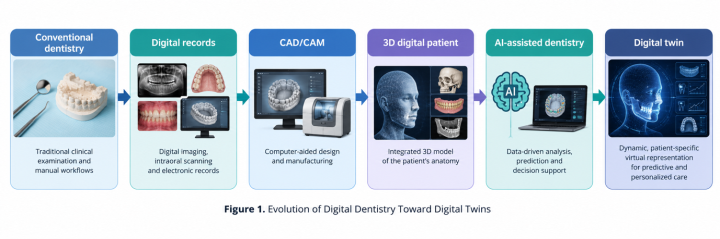
2.2. Evolution from Digital Models to Digital TwinsThe development of dental digital twins represents a progression from increasingly sophisticated forms of digital patient representation. Digital records initially enabled the electronic storage and retrieval of clinical information, while digital radiography and other imaging technologies introduced increasingly detailed representations of oral structures. Subsequently, 2D and 3D digital models generated from CBCT, intraoral scanning, and CAD/CAM systems enabled more accurate visualization and manipulation of patient anatomy. Integration of these individual datasets has led to the concept of the virtual patient, in which multiple anatomical and clinical datasets are combined into a unified digital representation. Digital twins extend this concept further by introducing dynamic updating, computational simulation, and predictive capabilities that connect the virtual representation with the patient's evolving clinical state. 7 Figure 1

A dental digital twin requires integration of multiple sources of patient-specific information rather than reliance on a single imaging modality. CBCT and other radiographic imaging provide information regarding teeth, bone, and craniofacial structures, while intraoral scanning captures detailed dental surface morphology and facial scanning provides extraoral soft-tissue and facial information. Clinical photographs, electronic health records, treatment history, periodontal findings, and other patient-reported or functional information can further enrich the virtual representation. Recent dental literature identifies multimodal imaging, artificial intelligence, and computational modeling as important technological foundations for constructing patient-specific digital twins. 8
AI and computational modeling can facilitate segmentation, registration, reconstruction, pattern recognition, and prediction within the digital-twin framework. Longitudinal data are particularly important because they allow the digital representation to reflect changes in anatomy, disease status, treatment response, and other patient characteristics over time. Consequently, the value of a dental digital twin lies not simply in creating a highly detailed 3D model, but in integrating multimodal and longitudinal data into a dynamic computational representation capable of supporting clinical decision-making. 9
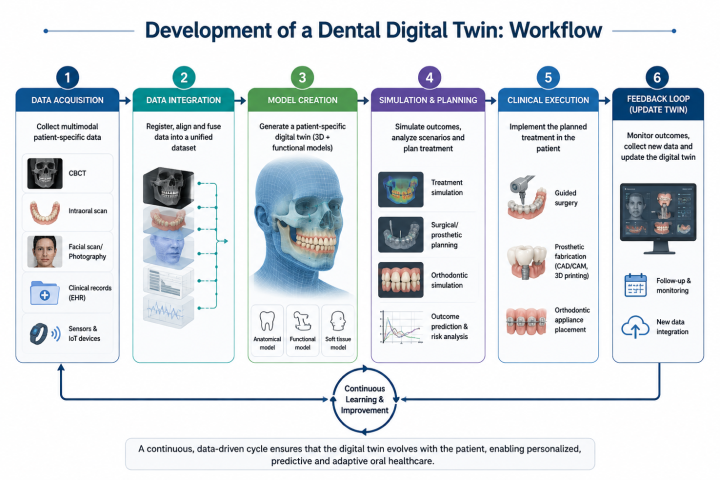
2.4. Development of a Dental Digital TwinThe development of a dental digital twin can be conceptualized as a sequential but iterative process. Data acquisition begins with the collection of relevant anatomical, clinical, imaging, and functional information. These datasets are then integrated and registered to create a comprehensive three-dimensional representation of the patient's oral and maxillofacial structures. AI-based segmentation and computational techniques may be used to generate and refine the virtual patient model. 8
Once established, the digital twin can be used for simulation, treatment planning, monitoring, and prediction. For example, alternative treatment strategies may be modeled virtually before clinical intervention, while computational analyses may be used to estimate potential treatment outcomes. Importantly, the process does not end with creation of the initial model. As new clinical or imaging data become available, the digital twin can be updated to reflect the patient's changing condition, creating a potentially continuous cycle of data acquisition, integration, simulation and prediction, clinical intervention, and subsequent updating. Current dental evidence, however, remains largely at the conceptual or prototype stage, with limited clinical validation and substantial variation in how digital twins are developed and defined. 9 Figure 2
Digital twins have the potential to extend digital dentistry from static visualization and treatment planning toward patient-specific simulation, prediction, and longitudinal monitoring. However, the current evidence base remains limited, with a scoping review identifying only seven eligible dental studies, primarily involving orthodontics, prosthodontics, endodontics, and dental education. Most available studies remain conceptual or prototype-based, emphasizing the need to distinguish established digital workflows from emerging true digital-twin applications. 10
3.1. ProsthodonticsProsthodontics is particularly suited to digital-twin applications because successful rehabilitation requires integration of dental, skeletal, facial, and functional information. Multimodal datasets from CBCT, intraoral scans, facial scans, photographs, and digital wax-ups can contribute to a patient-specific virtual model for diagnosis and treatment planning. Such models may facilitate virtual smile design, occlusal analysis, complete-mouth rehabilitation, and prosthetic outcome simulation. Integration of DICOM and STL files is already an established digital workflow in prosthodontics, while the digital-twin concept could extend this approach by incorporating longitudinal changes and predictive analysis. 11
Digital twins may also improve communication among prosthodontists, technicians, and patients by allowing proposed restorations to be visualized and evaluated before treatment. In complete-mouth rehabilitation, virtual articulation and occlusal simulation could potentially allow alternative treatment designs to be compared before clinical intervention. For esthetic rehabilitation, integration of facial and intraoral data may support facially driven treatment planning and patient-specific prosthesis design. Nevertheless, most current applications represent advanced virtual-patient workflows rather than fully dynamic digital twins. 12
3.2. Implant DentistryIn implant dentistry, digital twins may support patient-specific assessment of anatomy, implant positioning, prosthetic requirements, and surgical risk. Integration of CBCT data with intraoral scans allows three-dimensional visualization of bone, teeth, and prosthetic structures, facilitating prosthetically driven implant planning. Virtual implant placement and surgical simulation can help evaluate implant position, angulation, available bone, and the relationship between the proposed implant and the definitive restoration. 13
The digital-twin framework could further connect virtual planning with guided surgery and subsequent clinical data, allowing the planned and achieved implant positions to be compared and the patient's digital representation updated. Such an approach could ultimately support prediction of treatment outcomes and longitudinal monitoring of peri-implant conditions. Current evidence, however, is stronger for integrated digital implant workflows than for validated predictive dental digital twins. 14
3.3. OrthodonticsOrthodontics represents one of the most extensively explored areas for dental digital-twin development. Multimodal integration of CBCT, intraoral scanning, facial scanning, and orthodontic treatment data can generate patient-specific models for diagnosis and treatment planning. Digital twins may facilitate virtual tooth movement, individualized treatment simulations, and assessment of alternative treatment strategies before appliance delivery. 15
In clear-aligner therapy, computational and biomechanical models may be used to simulate tooth movement and evaluate the effects of different treatment protocols. Continuous integration of intraoral scans and clinical observations could further enable treatment monitoring and adaptive modification of treatment plans. Predicting individual biological and biomechanical responses remains challenging, but this represents one of the major future applications of digital twins in orthodontics. 16
3.4. Restorative DentistryDigital twins may facilitate tooth-specific restorative planning by integrating three-dimensional tooth morphology, occlusion, imaging, and functional information. Digital restoration design can be evaluated virtually before fabrication, while occlusal simulation may help assess the interaction between proposed restorations and the existing dentition. Such approaches may be particularly useful for complex restorative cases requiring precise control of anatomy and occlusion. Longitudinal digital data could eventually allow restoration performance, wear, fracture, marginal changes, and other outcomes to be monitored over time. However, evidence for these predictive applications remains limited, and current capabilities largely derive from conventional digital restorative workflows rather than clinically validated dynamic digital twins. 17
3.5. Oral and Maxillofacial SurgeryDigital twins may provide a comprehensive platform for patient-specific surgical planning by integrating CBCT, facial scans, intraoral scans, and other anatomical information. In craniofacial and orthognathic surgery, virtual surgical planning can be used to simulate skeletal movements and evaluate the anticipated postoperative facial and occlusal relationships. Patient-specific surgical guides and digitally manufactured components can then facilitate transfer of the virtual plan to the operating room. 18
A more advanced digital-twin approach could compare the planned surgical outcome with postoperative imaging and update the patient's virtual representation. This could facilitate postoperative assessment, longitudinal follow-up, and potentially prediction of functional or esthetic outcomes. At present, however, these applications should largely be considered extensions of virtual surgical planning rather than mature, continuously synchronized digital twins. 18
3.6. PeriodontologyPeriodontology may benefit from digital twins through longitudinal integration of periodontal measurements, radiographic imaging, intraoral scans, and clinical records. Serial datasets could provide patient-specific representations of periodontal tissues and allow changes in gingival architecture and alveolar bone levels to be monitored over time.
Such models could potentially support individualized periodontal risk assessment, disease progression monitoring, and evaluation of treatment response. Future systems may combine longitudinal clinical data with predictive algorithms to identify patients at greater risk of periodontal deterioration and facilitate risk-based preventive interventions. Nevertheless, periodontal applications remain less mature than those in prosthodontics and orthodontics, with current evidence focusing primarily on monitoring and longitudinal documentation rather than validated predictive modeling. 19
3.7. EndodonticsIn endodontics, digital-twin concepts may assist in representing complex root and canal anatomy through integration of CBCT and other three-dimensional imaging data. Patient-specific anatomical models could facilitate identification of additional canals, assessment of challenging morphology, and treatment planning before clinical intervention.
Computational simulation may further allow clinicians to evaluate instrumentation pathways or other treatment strategies in complex cases. Longitudinal integration of postoperative imaging and clinical findings could eventually support outcome assessment and refinement of patient-specific models. Current evidence, however, remains limited, with endodontic digital-twin applications still primarily focused on anatomical modeling, treatment planning, and precision rather than dynamic predictive systems. 20
3.8. Maxillofacial ProstheticsMaxillofacial prosthetics represents a particularly promising application because rehabilitation frequently requires integration of facial anatomy, soft-tissue contours, intraoral structures, and surgical information. Digital facial and intraoral scanning combined with CBCT can facilitate three-dimensional reconstruction of defects and development of patient-specific virtual models. These models may support the design of orbital, auricular, nasal, and other facial prostheses and improve coordination between surgical and prosthetic treatment planning. 21, 22
Digital twins could further enable simulation of prosthetic contours and their relationship with surrounding facial structures before fabrication. Repeated scanning could also support longitudinal monitoring of tissue changes and prosthesis fit, allowing the virtual model to evolve with the patient. However, evidence specifically demonstrating dynamic digital-twin workflows in maxillofacial prosthetics remains limited. 23
3.9. Preventive and Community DentistryThe application of digital twins to preventive and community dentistry is more prospective than established. By integrating clinical records, intraoral imaging, radiographs, behavioral information, and longitudinal disease data, patient-specific models could potentially support caries and periodontal risk assessment. Predictive analytics could identify individuals at increased risk and facilitate targeted preventive interventions rather than relying solely on population-level risk categories.
At the individual level, longitudinal digital monitoring could support personalized prevention and early detection of changes in oral health. At the community level, aggregated and appropriately anonymized data could potentially support risk stratification and targeted oral-health programs. However, these applications require substantial longitudinal datasets, validated predictive models, interoperability, and careful attention to privacy and equity before routine implementation can be considered. 24
Digital twins do not function as isolated technologies; their clinical utility depends on integration with complementary digital systems that enable data acquisition, analysis, visualization, fabrication, and real-time feedback. In dentistry, artificial intelligence, extended reality, CAD/CAM, additive manufacturing, sensors, and robotic systems can collectively transform a static virtual representation into a more interactive and clinically useful digital twin. However, current dental implementations remain largely conceptual or at the prototype stage. 25
4.1. Artificial Intelligence and Machine LearningAI and ML provide the analytical capabilities required to transform large, heterogeneous datasets into clinically meaningful information. Within a dental digital twin, AI can assist with image segmentation, anatomical reconstruction, disease detection, pattern recognition, treatment simulation, and outcome prediction. Machine-learning models may also allow the twin to identify changes over time and generate patient-specific predictions, thereby supporting personalized clinical decision-making. 26
4.2. Extended RealityExtended reality technologies can provide an interactive interface between clinicians, patients, and their digital twins. Virtual reality [VR] can facilitate immersive treatment simulation and dental education, whereas augmented reality [AR] can overlay virtual anatomical or treatment information onto the patient's physical environment. Mixed reality [MR] may combine physical and virtual environments to support complex procedures, surgical planning, and real-time visualization. These technologies could therefore translate information contained within a digital twin into clinically actionable visual guidance. 27
4.3. CAD/CAM and 3D PrintingCAD/CAM systems provide the digital design and manufacturing infrastructure necessary to convert information from a digital twin into physical dental restorations, prostheses, surgical guides, and anatomical models. Three-dimensional printing further enables rapid fabrication of patient-specific components directly from digital datasets. Integration of these technologies with digital twins could create a continuous workflow from patient data acquisition, virtual design, simulation, fabrication, and clinical evaluation, with subsequent clinical data used to refine the digital representation. 28
4.4. Sensors and Wearable TechnologiesSensors and wearable devices can provide continuous or repeated data that are difficult to obtain through conventional dental visits. Intraoral sensors, physiological monitors, smart appliances, and other connected devices could contribute information regarding oral function, treatment progress, patient behavior, or biological changes. Such longitudinal data are particularly important for transforming a static virtual patient into a dynamic digital twin capable of monitoring changes and potentially supporting early detection and predictive care. 29
4.5. Robotics and Automated Dental SystemsRobotic and automated systems may represent the action-oriented component of future dental digital twins. Once a digital twin has been used to analyze anatomy, simulate treatment, and determine an optimal intervention, robotic systems could potentially assist in transferring the virtual plan into clinical practice with high precision. Applications may include robot-assisted implant placement, automated fabrication, and computer-guided procedures. Although these applications are still developing, integration of robotics with digital twins could ultimately establish a closed-loop system in which data, prediction, clinical intervention, and outcome monitoring continuously inform one another. 30
The principal value of digital twins lies in their ability to integrate patient-specific information into a dynamic virtual representation that can support diagnosis, treatment planning, simulation, monitoring, and prediction. By connecting multimodal digital data with longitudinal clinical information, digital twins may facilitate a transition from conventional treatment approaches toward more personalized, predictive, and adaptive oral healthcare. However, the clinical benefits currently described in the literature should be interpreted as emerging potential rather than established outcomes, as robust clinical validation remains limited. 31, 32, 33, 34, 35
|
The future of dental digital twins will depend less on creating increasingly complex 3D models and more on transforming these models into dynamic, clinically validated systems that can continuously incorporate patient data and support reliable prediction and decision-making. Current dental evidence remains limited, with most reported applications still at the conceptual or prototype stage; therefore, future research should focus on validation, interoperability, longitudinal data, and clinical translation.
7.1. From Static Models to Dynamic Patient TwinsFuture systems should progress beyond static representations of dental anatomy toward continuously updated models that reflect changes in dentition, periodontal tissues, bone, occlusion, treatment status, and other clinically relevant characteristics. This transition will require reliable bidirectional data exchange between the patient and the virtual model, allowing the digital twin to evolve throughout the patient's treatment and follow-up. 36
7.2. Real-Time and Continuous Patient MonitoringIntegration of intraoral sensors, wearable technologies, repeated digital scans, imaging, and electronic health records could enable more frequent or near-real-time monitoring of oral health. Such systems may allow clinically relevant changes to be detected earlier and provide longitudinal information that cannot be captured during periodic dental visits. The development of secure and efficient continuous-data pipelines will be essential for achieving this capability. 37
7.3. Predictive and Adaptive Treatment PlanningFuture digital twins may progress from describing the current clinical state to predicting how an individual patient is likely to respond to different interventions. Treatment alternatives could be simulated virtually, with subsequent patient data used to refine predictions and adapt treatment plans. However, predictive and adaptive functions require substantially stronger evidence than descriptive modeling, including appropriate calibration, external validation, uncertainty assessment, and prospective clinical evaluation. 38
7.4. Integration of Biological, Clinical, and Digital DataA truly comprehensive dental digital twin will require integration beyond anatomical imaging and digital surface data. Future platforms may combine clinical records, imaging, oral microbiome information, biomarkers, behavioral factors, functional measurements, and longitudinal treatment outcomes. Such multimodal integration could provide a more complete representation of the patient's biological and clinical state and potentially improve individualized risk assessment and prediction. 39
7.5. Toward the Fully Integrated Virtual Dental PatientThe long-term vision is a fully integrated virtual dental patient in which anatomical, biological, functional, behavioral, and treatment-related information are represented within a continuously evolving digital environment. Such a platform could connect diagnosis, treatment simulation, clinical intervention, monitoring, and outcome assessment within a single patient-centered ecosystem. Achieving this vision will require interoperability between imaging systems, scanners, electronic records, AI platforms, CAD/CAM systems, and other digital technologies. 40
7.6. Requirements for Clinical TranslationSuccessful clinical translation will require a shift from technological demonstration toward evidence-based implementation. Priorities should include standardized definitions and data pipelines, interoperable platforms, prospective and multicenter validation, transparent AI models, uncertainty quantification, privacy-preserving data management, ethical and regulatory frameworks, and assessment of real-world clinical benefit. 41
Digital twins represent a potential next step in the evolution of digital dentistry, extending conventional digital models from static representations toward dynamic, patient-specific systems capable of integrating multimodal and longitudinal data. Their emerging applications across prosthodontics, implant dentistry, orthodontics, restorative dentistry, oral and maxillofacial surgery, and other specialties highlight their potential to support individualized diagnosis, treatment simulation, monitoring, and clinical decision-making. However, widespread clinical adoption remains dependent on improvements in data interoperability, accuracy, security, standardization, and prospective clinical validation. Future development should therefore focus on establishing reliable and clinically meaningful digital-twin frameworks rather than simply increasing technological complexity. Ultimately, digital twins may help dentistry progress from digital workflows to patient-specific, predictive, personalized, and adaptive dentistry, creating a more integrated and data-driven model of oral healthcare.
| [1] | Wadhwa S. Digital dentistry: an overview and future prospects. Br Dent J. 2024; 237: 22. | ||
| In article | View Article | ||
| [2] | Eggmann F, Blatz MB. Recent advances in intraoral scanners. J Dent Res. 2024 Dec; 103(13): 1349-1357. | ||
| In article | View Article PubMed | ||
| [3] | Drummond D, et al. Definitions and characteristics of patient digital twins being developed for clinical use: scoping review. J Med Internet Res. 2024; 26: e58504. | ||
| In article | View Article PubMed | ||
| [4] | Roy S, Richert R, Tavares JMRS, Lahoud P. Editorial: applications of digital twin technology in dentistry. Front Bioeng Biotechnol. 2025 Jun 11; 13: 1624734. | ||
| In article | View Article PubMed | ||
| [5] | Katsoulakis E, Wang Q, Wu H, Shahriyari L, Fletcher R, Liu J, et al. Digital twins for health: a scoping review. NPJ Digit Med. 2024 Mar 22; 7(1): 77. | ||
| In article | View Article PubMed | ||
| [6] | Sharma M, Savage C, Nair M, Larsson I, Svedberg P, Nygren JM. Artificial intelligence applications in health care practice: scoping review. J Med Internet Res. 2022; 24(10): e40238. | ||
| In article | View Article PubMed | ||
| [7] | Dashti A, Reda M, AlAdwani A, Shukrallah A, Dashti H, Alkandari A, et al. The 4D virtual patient in digital dentistry: can multimodal data integration and specialty-specific applications pave the road toward dental digital twins? Int J Community Med Public Health. 2026; 13: 4665-4678. | ||
| In article | View Article | ||
| [8] | Thamsopinkull C. Digital twins in dentistry: technological foundations and clinical applications. Asian Health Sci Technol Rep. 2026; 34(2): 4504. | ||
| In article | View Article | ||
| [9] | Duggal I, Tripathi T, Gupta V. Exploring the scope and applications of digital twin technologies in dentistry: a scoping review. Evid Based Dent. 2026; 27: 41. | ||
| In article | View Article PubMed | ||
| [10] | Sarani Rad F, Jafarpour M, Bitaraf E, Khaleghdadi K, Li J. Digital twin applications in diabetes management: scoping review. JMIR Diabetes. 2026 Jun 18; 11: e83059. | ||
| In article | View Article PubMed | ||
| [11] | Joda T, Balmer M, Jung RE, Ioannidis A. Clinical use of digital applications for diagnostic and treatment planning in prosthodontics: a scoping review. Clin Oral Implants Res. 2024 Aug; 35(8): 782-792. | ||
| In article | View Article PubMed | ||
| [12] | Joda T, Zarone F, Ferrari M. The complete digital workflow in fixed prosthodontics: a systematic review. BMC Oral Health. 2017 Sep 19; 17(1): 124. | ||
| In article | View Article PubMed | ||
| [13] | Eweis IAM, Rakha R, Badve S, Nimale A, Chokshi R, Rodil MMP, et al. Embracing digital technology in implantology: from current practice to future potential. Int J Dent Mater. 2026; 8(1): 16-25. | ||
| In article | View Article | ||
| [14] | Elbanna L, et al. Fundamentals of dental implantology: a comprehensive review. Saudi J Oral Dent Res. 2025; 10(8): 308-315. | ||
| In article | View Article | ||
| [15] | Bhardwaj I, Jose NP, Nambiar S, Ahuja D, Rao S, Prasad S. Integration of digital twin technology in orthodontics: a scoping review. Int J Dent. 2026 Jun 20; 2026: 3347380. | ||
| In article | View Article PubMed | ||
| [16] | Olawade DB, Ede IC, Olawuyi OF, Egbon E, Makanjuola BD, Alabi JO. Advancing orthodontic care through digital twin technology. Transl Dent Res. 2026; 2(3): 100088. | ||
| In article | View Article | ||
| [17] | Elbanna L, Karne S, Zamora Lopez D, Mansoor M, Daniel AO, Movva SR, Singh S. The digital transformation of dentistry: AI-driven innovations and clinical challenges. Am J Med Sci Med. 2026; 14(1): 7-12. | ||
| In article | View Article | ||
| [18] | Coopman R, De Kock L, Denoiseux B, Ureel M, Bogaert C. Enriching the virtual twin: clinical benefits of facial scan integration in orthognathic surgery planning. Br J Oral Maxillofac Surg. 2026 Jul; 64(6): 470-477. | ||
| In article | View Article PubMed | ||
| [19] | Asciak L, Kyeremeh J, Luo X, Kazakidi A, Connolly P, Picard F, et al. Digital twin assisted surgery: concept, opportunities, and challenges. NPJ Digit Med. 2025 Jan 15; 8(1): 32. | ||
| In article | View Article PubMed | ||
| [20] | Chatzopoulos GS, Koidou VP, Tsalikis L, Kaklamanos EG. Clinical applications of artificial intelligence in periodontology: a scoping review. Medicina (Kaunas). 2025 Jun 10; 61(6): 1066. | ||
| In article | View Article PubMed | ||
| [21] | Wadhwa B, Bhandari S, Khanna M, et al. Prosthetic rehabilitation of a hemifacial defect using hybrid digital-conventional workflow. BMJ Case Rep. 2026; 19: e267064. | ||
| In article | View Article PubMed | ||
| [22] | Wadhwa B, Bhandari S, Khanna M, Singh S, Singh U. Custom ocular prostheses incorporating braille for a patient with bilateral anophthalmia: a clinical report. J Prosthet Dent. 2025 Dec; 134(6): 2573-2576. | ||
| In article | View Article PubMed | ||
| [23] | Wadhwa B, Bhandari S, Singh U, Khanna M, Singh S. Custom ocular prosthesis fabrication and dispensing in a day leveraging evaluation under anesthesia in retinoblastoma children: a case series. Indian J Ophthalmol Case Rep. 2026; 6(2): 593-598. | ||
| In article | View Article | ||
| [24] | Lam WYH, Ling Z, Mao K, Park JM, Zandinejad A, Carreiro ADFP, et al. Digital dentistry in clinical practice: a scoping review of current capabilities and future directions. Int Dent J. 2026 Feb; 76(1): 109296. | ||
| In article | View Article PubMed | ||
| [25] | Khoshfekr Rudsari H, Tseng B, Zhu H, Song L, Gu C, Roy A, et al. Digital twins in healthcare: a comprehensive review and future directions. Front Digit Health. 2025 Nov 18; 7: 1633539. | ||
| In article | View Article PubMed | ||
| [26] | Bansal RK, Arya A, Singh B, Singla M, Gupta S. Role of artificial intelligence and machine learning in conservative dentistry and endodontics: a review. Cureus. 2025 Jul 22; 17(7): e88515. | ||
| In article | View Article | ||
| [27] | Iqbal AI, Aamir A, Hammad A, Hafsa A, Basit A, Oduoye MO, et al. Immersive technologies in healthcare: an in-depth exploration of virtual reality and virtual reality and augmented reality in enhancing patient care, medical education, and training paradigms. J Prim Care Community Health. 2024 Jan-Dec; 15: 21501319241293311. | ||
| In article | View Article PubMed | ||
| [28] | Picado Duarte IV, Rambhatla N, Daniel AO, Karthik A, Chileveru K, Pinnamaneni M, Singh S. Digital dentistry in routine clinical practice: applications and advancements. EAS J Dent Oral Med. 2026; 8(1): 9-18. | ||
| In article | View Article | ||
| [29] | Li Y, Wang M, Qiu S, Chen J, Wang F. Current status and future perspectives of wearable technologies for oral health in clinical applications. Diagnostics. 2026; 16: 1015. | ||
| In article | View Article PubMed | ||
| [30] | Maddahi Y, Chen S. Applications of digital twins in the healthcare industry: case review of an IoT-enabled remote technology in dentistry. Virtual Worlds. 2022; 1: 20-41. | ||
| In article | View Article | ||
| [31] | Silva A, Vale N. Digital twins in personalized medicine: bridging innovation and clinical reality. J Pers Med. 2025 Oct 22; 15(11): 503. | ||
| In article | View Article PubMed | ||
| [32] | Vallée A. Digital twins for personalized medicine require epidemiological data and mathematical modeling: viewpoint. J Med Internet Res. 2025 Aug 5; 27: e72411. | ||
| In article | View Article PubMed | ||
| [33] | Saratkar SY, Langote M, Kumar P, Gote P, Weerarathna IN, Mishra GV. Digital twin for personalized medicine development. Front Digit Health. 2025 Aug 7; 7: 1583466. | ||
| In article | View Article PubMed | ||
| [34] | Belbase P, Bhusal R, Ghimire SS, Sharma S, Banskota B. Assuring assistance to healthcare and medicine: Internet of Things, artificial intelligence, and artificial intelligence of things. Front Artif Intell. 2024 Dec 13; 7: 1442254. | ||
| In article | View Article PubMed | ||
| [35] | Aravazhi PS, Gunasekaran P, Benjamin NZY, Thai A, Chandrasekar KK, Kolanu ND, et al. The integration of artificial intelligence into clinical medicine: trends, challenges, and future directions. Dis Mon. 2025 Jun; 71(6): 101882. | ||
| In article | View Article PubMed | ||
| [36] | Saghiri MA, Vakhnovetsky J, Saghiri AM. The future of digital twins in precision dentistry. J Oral Biol Craniofac Res. 2023 Jan-Feb; 13(1): 19. | ||
| In article | View Article PubMed | ||
| [37] | McGrath C, Chau CWR, Molina GF. Monitoring oral health remotely: ethical considerations when using AI among vulnerable populations. Front Oral Health. 2025 Apr 14; 6: 1587630. | ||
| In article | View Article PubMed | ||
| [38] | Chaparro-Cárdenas SL, Ramirez-Bautista JA, Terven J, Córdova-Esparza DM, Romero-Gonzalez JA, Ramírez-Pedraza A, et al. A technological review of digital twins and artificial intelligence for personalized and predictive healthcare. Healthcare (Basel). 2025 Jul 21; 13(14): 1763. | ||
| In article | View Article PubMed | ||
| [39] | Papachristou K, Katsakiori PF, Papadimitroulas P, Strigari L, Kagadis GC. Digital twins’ advancements and applications in healthcare, towards precision medicine. J Pers Med. 2024; 14: 1101. | ||
| In article | View Article PubMed | ||
| [40] | Surdu A, Foia CI, Luchian I, Trifan D, Budala DG, Scutariu MM, et al. Telemedicine and digital tools in dentistry: enhancing diagnosis and remote patient care. Medicina (Kaunas). 2025 Apr 30; 61(5): 826. | ||
| In article | View Article PubMed | ||
| [41] | Miao JH, Mohamed OAE, Straus C, Peters V, Miller E, Dawoud B, et al. Can artificial intelligence really help? A practicing radiologist’s simplified guide to AI, with a critical appraisal of the use of AI in cancer-associated thromboembolism. Cancers. 2026; 18: 2753. | ||
| In article | View Article PubMed | ||
Published with license by Science and Education Publishing, Copyright © 2026 Dr. Ramsha Parwez, Dr. Urmi Reshamdalal, Dr. Sruthi Kalakota, Dr. Santosh, Dr. Mohammad Kashif Noorani, Dr. Shimoli Shah, Dr. Ridhi Bhola and Dr. Sandeep Singh
 This work is licensed under a Creative Commons Attribution 4.0 International License. To view a copy of this license, visit
http://creativecommons.org/licenses/by/4.0/
| [1] | Wadhwa S. Digital dentistry: an overview and future prospects. Br Dent J. 2024; 237: 22. | ||
| In article | View Article | ||
| [2] | Eggmann F, Blatz MB. Recent advances in intraoral scanners. J Dent Res. 2024 Dec; 103(13): 1349-1357. | ||
| In article | View Article PubMed | ||
| [3] | Drummond D, et al. Definitions and characteristics of patient digital twins being developed for clinical use: scoping review. J Med Internet Res. 2024; 26: e58504. | ||
| In article | View Article PubMed | ||
| [4] | Roy S, Richert R, Tavares JMRS, Lahoud P. Editorial: applications of digital twin technology in dentistry. Front Bioeng Biotechnol. 2025 Jun 11; 13: 1624734. | ||
| In article | View Article PubMed | ||
| [5] | Katsoulakis E, Wang Q, Wu H, Shahriyari L, Fletcher R, Liu J, et al. Digital twins for health: a scoping review. NPJ Digit Med. 2024 Mar 22; 7(1): 77. | ||
| In article | View Article PubMed | ||
| [6] | Sharma M, Savage C, Nair M, Larsson I, Svedberg P, Nygren JM. Artificial intelligence applications in health care practice: scoping review. J Med Internet Res. 2022; 24(10): e40238. | ||
| In article | View Article PubMed | ||
| [7] | Dashti A, Reda M, AlAdwani A, Shukrallah A, Dashti H, Alkandari A, et al. The 4D virtual patient in digital dentistry: can multimodal data integration and specialty-specific applications pave the road toward dental digital twins? Int J Community Med Public Health. 2026; 13: 4665-4678. | ||
| In article | View Article | ||
| [8] | Thamsopinkull C. Digital twins in dentistry: technological foundations and clinical applications. Asian Health Sci Technol Rep. 2026; 34(2): 4504. | ||
| In article | View Article | ||
| [9] | Duggal I, Tripathi T, Gupta V. Exploring the scope and applications of digital twin technologies in dentistry: a scoping review. Evid Based Dent. 2026; 27: 41. | ||
| In article | View Article PubMed | ||
| [10] | Sarani Rad F, Jafarpour M, Bitaraf E, Khaleghdadi K, Li J. Digital twin applications in diabetes management: scoping review. JMIR Diabetes. 2026 Jun 18; 11: e83059. | ||
| In article | View Article PubMed | ||
| [11] | Joda T, Balmer M, Jung RE, Ioannidis A. Clinical use of digital applications for diagnostic and treatment planning in prosthodontics: a scoping review. Clin Oral Implants Res. 2024 Aug; 35(8): 782-792. | ||
| In article | View Article PubMed | ||
| [12] | Joda T, Zarone F, Ferrari M. The complete digital workflow in fixed prosthodontics: a systematic review. BMC Oral Health. 2017 Sep 19; 17(1): 124. | ||
| In article | View Article PubMed | ||
| [13] | Eweis IAM, Rakha R, Badve S, Nimale A, Chokshi R, Rodil MMP, et al. Embracing digital technology in implantology: from current practice to future potential. Int J Dent Mater. 2026; 8(1): 16-25. | ||
| In article | View Article | ||
| [14] | Elbanna L, et al. Fundamentals of dental implantology: a comprehensive review. Saudi J Oral Dent Res. 2025; 10(8): 308-315. | ||
| In article | View Article | ||
| [15] | Bhardwaj I, Jose NP, Nambiar S, Ahuja D, Rao S, Prasad S. Integration of digital twin technology in orthodontics: a scoping review. Int J Dent. 2026 Jun 20; 2026: 3347380. | ||
| In article | View Article PubMed | ||
| [16] | Olawade DB, Ede IC, Olawuyi OF, Egbon E, Makanjuola BD, Alabi JO. Advancing orthodontic care through digital twin technology. Transl Dent Res. 2026; 2(3): 100088. | ||
| In article | View Article | ||
| [17] | Elbanna L, Karne S, Zamora Lopez D, Mansoor M, Daniel AO, Movva SR, Singh S. The digital transformation of dentistry: AI-driven innovations and clinical challenges. Am J Med Sci Med. 2026; 14(1): 7-12. | ||
| In article | View Article | ||
| [18] | Coopman R, De Kock L, Denoiseux B, Ureel M, Bogaert C. Enriching the virtual twin: clinical benefits of facial scan integration in orthognathic surgery planning. Br J Oral Maxillofac Surg. 2026 Jul; 64(6): 470-477. | ||
| In article | View Article PubMed | ||
| [19] | Asciak L, Kyeremeh J, Luo X, Kazakidi A, Connolly P, Picard F, et al. Digital twin assisted surgery: concept, opportunities, and challenges. NPJ Digit Med. 2025 Jan 15; 8(1): 32. | ||
| In article | View Article PubMed | ||
| [20] | Chatzopoulos GS, Koidou VP, Tsalikis L, Kaklamanos EG. Clinical applications of artificial intelligence in periodontology: a scoping review. Medicina (Kaunas). 2025 Jun 10; 61(6): 1066. | ||
| In article | View Article PubMed | ||
| [21] | Wadhwa B, Bhandari S, Khanna M, et al. Prosthetic rehabilitation of a hemifacial defect using hybrid digital-conventional workflow. BMJ Case Rep. 2026; 19: e267064. | ||
| In article | View Article PubMed | ||
| [22] | Wadhwa B, Bhandari S, Khanna M, Singh S, Singh U. Custom ocular prostheses incorporating braille for a patient with bilateral anophthalmia: a clinical report. J Prosthet Dent. 2025 Dec; 134(6): 2573-2576. | ||
| In article | View Article PubMed | ||
| [23] | Wadhwa B, Bhandari S, Singh U, Khanna M, Singh S. Custom ocular prosthesis fabrication and dispensing in a day leveraging evaluation under anesthesia in retinoblastoma children: a case series. Indian J Ophthalmol Case Rep. 2026; 6(2): 593-598. | ||
| In article | View Article | ||
| [24] | Lam WYH, Ling Z, Mao K, Park JM, Zandinejad A, Carreiro ADFP, et al. Digital dentistry in clinical practice: a scoping review of current capabilities and future directions. Int Dent J. 2026 Feb; 76(1): 109296. | ||
| In article | View Article PubMed | ||
| [25] | Khoshfekr Rudsari H, Tseng B, Zhu H, Song L, Gu C, Roy A, et al. Digital twins in healthcare: a comprehensive review and future directions. Front Digit Health. 2025 Nov 18; 7: 1633539. | ||
| In article | View Article PubMed | ||
| [26] | Bansal RK, Arya A, Singh B, Singla M, Gupta S. Role of artificial intelligence and machine learning in conservative dentistry and endodontics: a review. Cureus. 2025 Jul 22; 17(7): e88515. | ||
| In article | View Article | ||
| [27] | Iqbal AI, Aamir A, Hammad A, Hafsa A, Basit A, Oduoye MO, et al. Immersive technologies in healthcare: an in-depth exploration of virtual reality and virtual reality and augmented reality in enhancing patient care, medical education, and training paradigms. J Prim Care Community Health. 2024 Jan-Dec; 15: 21501319241293311. | ||
| In article | View Article PubMed | ||
| [28] | Picado Duarte IV, Rambhatla N, Daniel AO, Karthik A, Chileveru K, Pinnamaneni M, Singh S. Digital dentistry in routine clinical practice: applications and advancements. EAS J Dent Oral Med. 2026; 8(1): 9-18. | ||
| In article | View Article | ||
| [29] | Li Y, Wang M, Qiu S, Chen J, Wang F. Current status and future perspectives of wearable technologies for oral health in clinical applications. Diagnostics. 2026; 16: 1015. | ||
| In article | View Article PubMed | ||
| [30] | Maddahi Y, Chen S. Applications of digital twins in the healthcare industry: case review of an IoT-enabled remote technology in dentistry. Virtual Worlds. 2022; 1: 20-41. | ||
| In article | View Article | ||
| [31] | Silva A, Vale N. Digital twins in personalized medicine: bridging innovation and clinical reality. J Pers Med. 2025 Oct 22; 15(11): 503. | ||
| In article | View Article PubMed | ||
| [32] | Vallée A. Digital twins for personalized medicine require epidemiological data and mathematical modeling: viewpoint. J Med Internet Res. 2025 Aug 5; 27: e72411. | ||
| In article | View Article PubMed | ||
| [33] | Saratkar SY, Langote M, Kumar P, Gote P, Weerarathna IN, Mishra GV. Digital twin for personalized medicine development. Front Digit Health. 2025 Aug 7; 7: 1583466. | ||
| In article | View Article PubMed | ||
| [34] | Belbase P, Bhusal R, Ghimire SS, Sharma S, Banskota B. Assuring assistance to healthcare and medicine: Internet of Things, artificial intelligence, and artificial intelligence of things. Front Artif Intell. 2024 Dec 13; 7: 1442254. | ||
| In article | View Article PubMed | ||
| [35] | Aravazhi PS, Gunasekaran P, Benjamin NZY, Thai A, Chandrasekar KK, Kolanu ND, et al. The integration of artificial intelligence into clinical medicine: trends, challenges, and future directions. Dis Mon. 2025 Jun; 71(6): 101882. | ||
| In article | View Article PubMed | ||
| [36] | Saghiri MA, Vakhnovetsky J, Saghiri AM. The future of digital twins in precision dentistry. J Oral Biol Craniofac Res. 2023 Jan-Feb; 13(1): 19. | ||
| In article | View Article PubMed | ||
| [37] | McGrath C, Chau CWR, Molina GF. Monitoring oral health remotely: ethical considerations when using AI among vulnerable populations. Front Oral Health. 2025 Apr 14; 6: 1587630. | ||
| In article | View Article PubMed | ||
| [38] | Chaparro-Cárdenas SL, Ramirez-Bautista JA, Terven J, Córdova-Esparza DM, Romero-Gonzalez JA, Ramírez-Pedraza A, et al. A technological review of digital twins and artificial intelligence for personalized and predictive healthcare. Healthcare (Basel). 2025 Jul 21; 13(14): 1763. | ||
| In article | View Article PubMed | ||
| [39] | Papachristou K, Katsakiori PF, Papadimitroulas P, Strigari L, Kagadis GC. Digital twins’ advancements and applications in healthcare, towards precision medicine. J Pers Med. 2024; 14: 1101. | ||
| In article | View Article PubMed | ||
| [40] | Surdu A, Foia CI, Luchian I, Trifan D, Budala DG, Scutariu MM, et al. Telemedicine and digital tools in dentistry: enhancing diagnosis and remote patient care. Medicina (Kaunas). 2025 Apr 30; 61(5): 826. | ||
| In article | View Article PubMed | ||
| [41] | Miao JH, Mohamed OAE, Straus C, Peters V, Miller E, Dawoud B, et al. Can artificial intelligence really help? A practicing radiologist’s simplified guide to AI, with a critical appraisal of the use of AI in cancer-associated thromboembolism. Cancers. 2026; 18: 2753. | ||
| In article | View Article PubMed | ||