Introduction Recent studies suggest that cardiovascular diseases contribute substantially to childhood morbidity in Sub-Saharan Africa where paediatric cardiac services are scarce. We aim to provide empirical data on disease types, frequencies, demographic distribution, to influence health policy formulation, better resource allocation and targeted interventions. Materials and Methods A four-year retrospective review of records of patients aged 0 -15years from August 2020 to July 2024, with cardiac diseases at the University of Medical Sciences Teaching Hospital (UNIMEDTH), Ondo, Nigeria. Age at presentation, sex, presenting complaints, anthropometric measurements, echocardiographic findings, treatment received, and the outcome of care were extracted and analyzed using the Statistical Package for the Social Sciences (SPSS) version 21.0 Results A total of 45 patients aged 0 to 15 years were included in this study. Their mean age was 65.4 months (SD ± 49.1) with a M: F of 1.2:1. (25: 20). Congenital heart diseases (CHDs) accounted for 88.9% (n = 40) of all cases while acquired heart diseases constituted 11.1% (n = 5). Within the congenital group, acyanotic and cyanotic lesions were 75.0% (n = 30) and 25.0% (n = 10) respectively. The most frequently echocardiographic diagnosed lesions were ventricular septal defect (VSD), 28.9% (n=13), Patent ductus arteriosus (PDA), 20.0% (n=9), and atrioventricular canal defect (AVCD) 7 (15.6%), Three patients (6.7%) had open heart surgery. Twenty-seven of the patients (60.0%) were alive and followed-up till the end of the study period, 13 patients (28.9%) were lost to follow-up and mortality was recorded in 11.1% (n=5). Conclusion This study demonstrates a high burden of paediatric cardiac disease in a semi-urban Nigerian tertiary hospital, with CHDs being the most prevalent and largely untreated surgically. The findings call for urgent improvements in screening, diagnostics, referral pathways, and surgical access.
Across the globe, cardiovascular diseases (CVDs) have emerged as the leading cause of morbidity and mortality, overtaking infectious diseases in many regions. 1 This shift is particularly striking in Sub-Saharan Africa, where the burden of non-communicable diseases is growing rapidly amidst limited healthcare infrastructure 2, 3 Within this broader public health concern, paediatric cardiac conditions, ranging from congenital heart defects to acquired diseases such as rheumatic heart disease, represent a significant yet underexplored challenge in many African settings, including Nigeria 4.
Recent studies suggest that cardiovascular diseases now contribute substantially to childhood morbidity in Sub-Saharan Africa. Paediatric cardiac services in the region are sparse, with significant limitations in diagnostic, surgical, and long-term management capabilities 4. The few studies that exist on the burden of paediatric heart diseases often focus on urban centres or specialised institutions, leaving a knowledge gap regarding rural and semi-urban regions like Ondo State, Nigeria.
While it is well established that congenital heart diseases (CHDs) affect roughly 8 per 1,000 live births globally, estimates for Sub-Saharan Africa remain inconsistent due to poor reporting and limited access to diagnostic tools 5. In Ghana, for example, only 0.5% of expected CHD cases underwent surgical intervention within the first two years of life, illustrating the severe treatment gap across the region 6. Nigeria, being the most populous country in Africa, is believed to carry a disproportionately large share of this burden 7. Yet, paediatric cardiac epidemiology in many of its tertiary centres remains poorly documented.
One of the critical gaps in the literature is the lack of comprehensive, long-term data on the patterns and prevalence of paediatric cardiac diseases in secondary and tertiary care facilities in Nigeria. Most existing reports are cross-sectional or focused on narrow diagnostic categories. This leaves clinicians and policymakers without the robust evidence needed to design effective interventions. Additionally, there is limited information on the evolution of disease patterns over time, which could reflect changing environmental factors, healthcare access, or diagnostic capacity.
Addressing these issues is urgent. The public health consequences of untreated paediatric cardiac disease are severe. Children with uncorrected congenital or acquired cardiac anomalies are at increased risk of early mortality, reduced quality of life, poor cognitive development, and increased socioeconomic dependency. At a broader level, the economic burden on families and the healthcare system is substantial, with ripple effects on national development. In Nigeria alone, over 10 million children are estimated to be living with undiagnosed or untreated cardiovascular conditions 2.
Moreover, the need for improved paediatric cardiac care is strongly aligned with Sustainable Development Goal 3, which aims to ensure healthy lives and promote well-being for all at all ages. Reducing child mortality and improving the management of non-communicable diseases are key targets under this goal. In Nigeria, the National Strategic Health Development Plan II (2018–2022) also emphasises strengthening non-communicable disease services, including cardiovascular care.
Considering these concerns, this study seeks to review the patterns of paediatric cardiac diseases diagnosed over a four-year period at the University of Medical Sciences Teaching Hospital (UNIMEDTH), Ondo. Our aim is to provide empirical data on disease types, frequencies, demographic distribution, and changes in presentation over time. By identifying the prevailing trends and gaps, we aim to support better resource allocation, early diagnosis, and policy formulation. This study is novel in its focus on a previously underrepresented region and its use of a retrospective hospital-based design to uncover real-world disease patterns.
Ultimately, the findings from this research have the potential to inform clinical guidelines, influence health policy, and catalyse targeted interventions. By contributing data from an emerging tertiary health centre in South-Western Nigeria, the study also helps decentralize Paediatric cardiac research in the country, broadening the evidence base needed for national planning and global comparisons.
Study Design
This study adopted a retrospective descriptive design aimed at reviewing the clinical and echocardiographic records of paediatric patients diagnosed with cardiac diseases at the University of Medical Sciences Teaching Hospital (UNIMEDTH), Ondo, Nigeria. The review covered a four-year period, spanning from August 2020 to July 2024. Retrospective studies of this nature are particularly suited for exploring disease patterns and trends in institutional settings, especially in contexts where prospective follow-up may be limited or resource constrained.
Study Setting
The University of Medical Sciences Teaching Hospital (UNIMEDTH) is a tertiary healthcare institution affiliated with the University of Medical Sciences, the first specialized medical university in Nigeria. The hospital was established in August 2018 through the restructuring and upgrading of former secondary-level facilities in Ondo State. It currently provides advanced medical services and serves as a referral centre not only for Ondo State but also for neighboring states including Ekiti, Osun, Ogun, and Edo.
The Paediatric Cardiology Clinic, the focus of this study, operates on a weekly basis within the Children’s Outpatient Department. It is managed by a team of paediatricians and a paediatric cardiologist who provide diagnostic, therapeutic, and follow-up care for children with suspected or confirmed cardiac conditions. Echocardiographic services are provided as part of the clinic using portable and standard echocardiographic machines.
Study Population
The study population comprised all paediatric patients aged 0 to 15 years who attended the Paediatric Cardiology Clinic of UNIMEDTH during the review period and were confirmed to have cardiac diseases. These diagnoses were based on a combination of clinical assessment and echocardiographic evaluation.
Inclusion and Exclusion Criteria
All children aged 0 to 15 years who presented to the Paediatric Cardiology Clinic between August 2020 and July 2024 and had a confirmed diagnosis of cardiac disease were included in the study. Cardiac diagnoses were validated through echocardiography performed by Paediatric cardiologists. Only patients with complete clinical records and documented echocardiographic findings were included.
Patients whose medical records were incomplete or whose diagnostic data were inconclusive or missing were excluded from the study. This was done to ensure the integrity of the dataset and the reliability of the analytical findings.
Data Collection Procedure
Patient data were obtained through a manual review of individual case files retrieved from the medical records department. A structured data extraction form, developed specifically for the study, was used to collate relevant clinical and demographic information. The form was pretested and revised to ensure it captured all necessary parameters.
The data extracted included age at presentation, sex, presenting complaints, anthropometric measurements (weight and height), echocardiographic findings, treatment received, and the outcome of care. Presenting complaints were recorded verbatim from the clinical notes, and each case was carefully reviewed to identify co-morbidities and syndromic features such as dysmorphism suggestive of conditions like Down syndrome.
To enhance data accuracy and minimize errors, two independent reviewers carried out the data extraction. Any discrepancies were resolved through consensus or consultation with a third reviewer where necessary. The anonymised data were then entered into an electronic database for analysis.
Data Management and Analysis
All data were entered and analysed using the Statistical Package for the Social Sciences (SPSS) version 21.0 (IBM Corp., Armonk, NY, USA). Descriptive statistics were used to summarise the demographic and clinical characteristics of the patients. Continuous variables such as age were summarised using means and standard deviations, while categorical variables such as sex, presenting symptoms, and types of cardiac disease were presented as frequencies and percentages.
Tables and charts were employed to enhance the presentation and interpretation of the findings. Where relevant, cross-tabulations were conducted to explore patterns across age groups and between congenital and acquired cardiac conditions. Although the focus of the study was descriptive, additional inferential analysis may be applied in future work to test specific hypotheses related to clinical outcomes and demographic predictors.
Ethical Considerations
This study was conducted in accordance with the ethical principles outlined in the Declaration of Helsinki. Ethical approval was obtained from the Health Research Ethics Committee of the University of Medical Sciences Teaching Hospital, Ondo State (UNIMEDTH/ ERC/ 0260/01820/08/2025). All patient data were anonymised to protect confidentiality, and no identifying information was retained in the analytical dataset. The study posed minimal risk to participants as it involved secondary use of existing medical records without direct patient contact.
Characteristics of the Study Population
A total of 45 paediatric patients aged 0 to 15 years were included in this retrospective review. The mean age at presentation was 65.4 months (SD ± 49.1), with ages ranging from infancy to mid-adolescence. The cohort was nearly evenly distributed by sex, with males slightly more represented than females. The majority of the children presented in their infancies while children within the 1–5 year age category and adolescents aged 11–15 years constituted smaller proportions. The age and sex breakdown is summarised in Table 1.
Anthropometric assessments indicated a wide range in weight and height among the patients, reflecting the diverse age groups represented. The mean weight was 17.1 kg and the mean height was approximately 100 cm. Vital signs at presentation, including heart rate and peripheral oxygen saturation, also varied substantially across the cohort, with average values remaining within clinically acceptable limits for age, as detailed in Table 1.
In terms of clinical presentation, notable symptoms included failure to thrive, easy fatigability, fast breathing, and chronic cough (Table 1). A significant proportion of patients also exhibited audible cardiac murmurs on examination. Dysmorphic features suggestive of possible syndromic conditions were recorded in a subset of patients.
Clinical Co-morbidities
Clinical co-morbidities were commonly observed among the paediatric cardiac patients included in this review. The most frequently documented co-morbidity was failure to thrive, reported in 11 children. The spectrum of presenting features include fast breathing, noted in 22 patients and easy fatigability, which was recorded in 10 children, persistent cough was also a presenting feature in 9 patients while dysmorphic features—indicative of possible syndromic associations—were identified in 7 children, comprising 15.5% of the study group. These findings suggest that a substantial proportion of children with cardiac disease present with overlapping clinical symptoms that may reflect the severity and chronicity of their underlying cardiac pathology (Table 1).
Pattern and Classification of Cardiac Diagnoses
Among the 45 paediatric patients included in this review, congenital heart diseases (CHDs) were overwhelmingly predominant, accounting for 88.9% (n = 40) of all diagnosed cases. In contrast, acquired heart diseases constituted 11.1% (n = 5). Within the congenital group, acyanotic lesions were more frequent than cyanotic lesions, representing 75.0% (n = 30) and 25.0% (n = 10) of the cases respectively. Among the patients with acquired heart disease, 80.0% (n = 4) had rheumatic heart disease while 20.0% (n = 1) had dilated cardiomyopathy (Table 2).
Age and Sex Disparities in Diagnosis Patterns
Analysis of the distribution of cardiac diagnoses by age group and sex revealed noteworthy disparities. Among infants aged less than one year, congenital heart disease was universally diagnosed. In this age group, 5 cases were recorded in males and 18 cases in females all classified as congenital, with no instances of acquired heart disease documented. In the 1–5 year age category, congenital heart disease also predominated. In the males 1 case of congenital heart disease was documented and no acquired condition was reported, while among females, 6 were diagnosed with congenital heart disease and 1 with an acquired condition. The 6–10 year group showed a more mixed pattern. Among the males 4 were diagnosed with congenital heart disease and an additional 2 were found to have acquired cardiac conditions while in the females, 5 cases of congenital heart disease were identified, with no acquired cases. In the oldest age group, 11–15 years, one male was diagnosed with congenital heart disease and none with acquired forms whereas 2 female patients were diagnosed with acquired conditions. Overall, congenital heart disease was more frequently observed across all age groups, particularly in younger children. Acquired heart conditions were documented exclusively in females within the older age brackets, suggesting age and sex-related differences in disease type distribution (Table 3).
Echocardiographic Findings
Table 4 shows echocardiographic spectrum of structural and functional cardiac abnormalities among the 45 paediatric patients. The most frequently observed lesion was ventricular septal defect (VSD), observed in 13 children, accounting for 28.9% of the cohort. Patent ductus arteriosus (PDA) was the second most common defect, present in 9 children (20.0%), followed by Atrioventricular canal defect (AVCD) 7 (15.6%), atrial septal defect (ASD), and tetralogy of Fallot (TOF) were present in 6 patients each. representing (13.3%). Pulmonary arterial hypertension (PAH), a functional complication often associated with late diagnosis or progression of structural heart defects, was also noted in 7 cases (15.6%).
Other lesions identified included double outlet right ventricle (DORV) and transposition of the great arteries (TGA), both recorded in 3 patients (6.7%) each. Valve-related abnormalities were less common: mitral regurgitation (MR) and tricuspid regurgitation (TR) were each present in 5 cases (11.1%), while valvular stenosis occurred in 3 cases (6.7%). Rare lesions such as truncus arteriosus, Ebstein’s anomaly, and dilated cardiomyopathy (DCM) were observed in only 1 patient each, representing 2.2% of the total cohort per condition.
Medical Management and Clinical Outcomes
Pharmacological treatment constituted the primary mode of management for most of the paediatric cardiac patients in the study. Hydrochlorothiazide was the most frequently prescribed medication administered to 35 (77.8%) of the 45 patients in the study. This was followed by spironolactone administered to 24 patients, accounting for 53.3% of the cohort. Other agents used included angiotensin-converting enzyme inhibitors (ACEIs) and sildenafil, each prescribed in 11.1% of cases (5 patients each). Penicillin prophylaxis was also given to five patients, particularly those with suspected rheumatic involvement or a history of recurrent infections. Less commonly prescribed drugs included furosemide (Laxis) in 6.7% (3 patients), propranolol in 4.4% (2 patients), and digoxin in 2.2% (1 patient) (Table 5).
Surgical intervention was infrequent. Only three patients (6.7%) were documented to have undergone open heart surgery, reflecting the limited availability and accessibility of paediatric cardiac surgical services within the study setting.
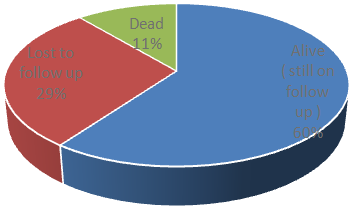
Clinical outcomes showed that 27 patients (60.0%) were alive and continued on follow-up at the end of the review period. However, a significant proportion—13 patients (28.9%)—were lost to follow-up, raising concerns about continuity of care and long-term monitoring. Mortality was recorded in five patients, representing 11.1% of the study population. The distribution of these outcomes across diagnostic categories is visualised in Figure 1, which shows that patients with congenital heart disease were more likely to remain in follow-up compared to those with unspecified or complex diagnoses.
This four-year retrospective review conducted at the University of Medical Sciences Teaching Hospital (UNIMEDTH), Ondo, provides crucial insights into the burden, patterns, and characteristics of paediatric cardiac diseases in a semi-urban Nigerian setting. The findings highlight the dominance of congenital heart diseases (CHDs), which accounted for nearly 89% of all diagnosed cardiac conditions in children aged 0 to 15 years. Among these, acyanotic CHDs—especially ventricular septal defects (VSDs)—were the most commonly identified lesions, followed by patent ductus arteriosus (PDA) and atrial septal defect (ASD). A progressive increase in diagnoses from 2020 to 2023 suggests enhanced clinical awareness, improved access to echocardiographic services, and possibly rising community referrals.
These findings are consistent with broader trends in Nigeria and Sub-Saharan Africa, 8, 9, 10, 11, 12 where CHDs have increasingly been recognised as a significant cause of childhood morbidity. In a national multicentre study Sokunbi et al. 4 also reported a high prevalence of CHDs, with VSDs being the most common anomaly—similar to the pattern observed in our cohort. Ekure et al 7 and Abah et al 13 also reported similar pattern. Data from other West African countries, including Ghana, have shown that despite the high burden, the rate of timely surgical intervention remains extremely low, with less than 1% of affected children receiving corrective surgery in the early years of life 6. Our study echoes this concern, with only three children (6.7%) undergoing surgical repair over the four-year period, underlining the critical limitations in access to definitive care.
Interestingly, this study observed a non-negligible number of children with dysmorphic features, particularly among those diagnosed with atrioventricular septal defects. This suggests a potential syndromic basis for some CHDs, such as in children with Down syndrome, a relationship previously established in similar studies from Southern Nigeria 14, 15, 16. However, the lack of routine genetic evaluation and inconsistent documentation in some records indicates a need for improved diagnostic capacity and interdisciplinary collaboration involving genetics and cardiology.
Although CHDs predominated, acquired cardiac conditions such as dilated cardiomyopathy and possible rheumatic heart disease were also present—particularly among children older than six years. This age-related shift aligns with earlier findings by Hamid et al 2, 17 who noted that acquired cardiovascular diseases, though often overshadowed by infectious conditions are emerging as significant causes of morbidity among older children and adolescents in Sub-Saharan Africa. The presence of acquired conditions in our study underscores the dual burden of congenital and acquired heart diseases and calls for a more integrated approach to paediatric cardiac care.
From a public health perspective, the implications of our findings are considerable. Untreated or late-diagnosed cardiac diseases in children contribute to avoidable morbidity, developmental delays, and early mortality. Furthermore, chronic conditions such as pulmonary arterial hypertension, observed in a notable proportion of our patients, reflect the consequences of delayed intervention. Failure to thrive, a common co-morbidity documented in nearly a quarter of patients, is not merely a clinical concern but a social one, as it directly impacts educational attainment, productivity, and long-term health.
The increasing number of cases diagnosed over the study period also suggests that public health systems are beginning to identify paediatric heart diseases more systematically. However, this progress is not matched by an equivalent expansion in treatment services. With surgical access still limited, most children in our study were managed pharmacologically. While this may offer temporary relief, it does not provide a cure, particularly for structural defects. This gap between diagnosis and definitive treatment represents a critical area for policy intervention.
In terms of health policy and practice, our findings advocate for several urgent actions. Firstly, routine neonatal and early childhood screening for congenital heart diseases should be institutionalized, especially in secondary and tertiary healthcare centres. This will facilitate earlier diagnosis and timely referral. Secondly, investment in paediatric cardiac surgical infrastructure and workforce development is imperative. Most centres in Nigeria, including UNIMEDTH, currently lack on-site paediatric cardiothoracic surgical units, relying instead on referrals to distant and overburdened facilities. Decentralising surgical services and developing regional centres of excellence would significantly reduce the treatment gap.
Additionally, task-shifting and training of general paediatricians in basic echocardiographic interpretation could improve early case identification in peripheral settings. Strengthening community-based awareness campaigns is equally important, as early recognition of symptoms such as fast breathing, failure to thrive, and recurrent respiratory infections could prompt families to seek care earlier.
Another policy consideration involves financial protection. The out-of-pocket cost of cardiac surgery is often prohibitive, especially in semi-urban and rural populations. Community-based health insurance schemes or government-subsidised cardiac care programmes, such as those advocated by Ejughemre 18 could help mitigate these barriers and ensure equitable access to life-saving treatment.
Importantly, this study helps fill the longstanding knowledge gap regarding paediatric cardiac disease epidemiology in Nigeria's less urbanised regions. While most previous reports have focused on metropolitan centres with established paediatric cardiology units, our study provides valuable data from a growing tertiary institution in South-Western Nigeria. By highlighting real-world disease patterns and service limitations, the findings can support national efforts toward evidence-based health planning.
That said, some limitations should be acknowledged. The retrospective design may introduce bias due to incomplete or inconsistent documentation. These limitations reinforce the need for improved data systems and electronic health records that can support more robust clinical research and service evaluation.
In conclusion, this study demonstrates a high burden of paediatric cardiac disease in a semi-urban Nigerian tertiary hospital, with CHDs being the most prevalent and largely untreated surgically. The findings call for urgent improvements in screening, diagnostics, referral pathways, and surgical access. They also provide a solid foundation for regional and national policymakers to prioritise paediatric cardiovascular health within the broader non-communicable disease agenda. As Nigeria moves toward achieving universal health coverage, addressing the unmet needs of children with heart disease must become a central component of public health strategy and clinical practice.
Acknowledgement: The authors acknowledged all the staff in Paediatrics department who are involved in the care of the patients both on admission and in clinic and also staff of the Health information management unit who assisted in sorting the record files of the patients.
| [1] | Rossano JW. Congenital heart disease: a global public health concern. Lancet Child Adolesc Health. 2020 Mar; 4(3): 168-169. | ||
| In article | View Article PubMed | ||
| [2] | Hamid, S., Groot, W. and Pavlova, M., 2019. Trends in cardiovascular diseases and associated risks in sub-Saharan Africa: a review of the evidence for Ghana, Nigeria, South Africa, Sudan and Tanzania. The Aging Male, 22(3), pp.169–176. | ||
| In article | View Article PubMed | ||
| [3] | Meghan S Zimmerman, Alison Grace Carswell Smith, Craig A Sable, Michelle Marie Echko et al GBD 2017 Congenital Heart Disease Collaborators. Global, regional, and national burden of congenital heart disease, 1990-2017: a systematic analysis for the Global Burden of Disease Study 2017. Lancet Child Adolesc Health. 2020 Mar; 4(3): 185-200. | ||
| In article | |||
| [4] | Sokunbi, O.A., Okoromah, C.N., Ogunkunle, O.O., Adeyemi, O.A., Ekure, E.N. and Adeyemi, L.A., 2020. Patterns of paediatric heart diseases in Nigerian tertiary centres: A national multicentre study. Cardiovascular Diagnosis and Therapy, 10(2), pp.254–263. | ||
| In article | |||
| [5] | Zimmerman, M. and Sable, C., 2020. Congenital heart disease in low‐ and middle‐income countries: Focus on sub-Saharan Africa. American Journal of Medical Genetics Part C: Seminars in Medical Genetics, 184(1), pp.36–46. | ||
| In article | View Article PubMed | ||
| [6] | Edwin, F., Mamorare, H., & Tettey, M. (2016). Paediatric cardiac services in sub-Saharan Africa: A review. Cardiology in the Young, 26(2), 286–293. | ||
| In article | |||
| [7] | Ekure EN, Bode-Thomas F, Sadoh WE, et al. Congenital Heart Defects in Nigerian Children: Preliminary Data from the National Pediatric Cardiac Registry. World Journal for Pediatric and Congenital Heart Surgery. 2017; 8(6): 699-706. | ||
| In article | View Article PubMed | ||
| [8] | Abah RO Ochoga MO Audu OP Idoko A Eseigbe EE Dabit JO Pattern of cardiac diseases among children in a tertiary hospital in North Central, Nigeria: A three and half years retrospective cohort echocardiographic study Niger J Paediatr 2018; 45 (1): 6-9. | ||
| In article | View Article | ||
| [9] | Chinawa JM, Eze JC, Obi I, Arodiwe I, Ujunwa F, Daberechi AK, et al. Synopsis of congenital cardiac disease among children attending University of Nigeria Teaching Hospital Ituku Ozalla, Enugu. BMC Res Notes 2013; 6: 475. | ||
| In article | View Article PubMed | ||
| [10] | Bosede E Adebayo, Oluwatoyin O Ogunkunle, Samuel I Omokhodion, Ronita D Luke1The spectrum of structural heart defects seen in children at the University College Hospital, Ibadan Nigerian Journal of Cardiology | July - December 2016 | Vol 13 | Issue 2. | ||
| In article | View Article | ||
| [11] | Asani MO, Sani MU, Karaye KM, Adeleke SI, Baba U. Structural heart diseases in Nigerian children. Niger J Med. 2005 Oct-Dec; 14(4): 374-7. | ||
| In article | View Article PubMed | ||
| [12] | Kennedy N, Miller P. The spectrum of paediatric cardiac disease presenting to an outpatient clinic in Malawi. BMC Res Notes. 2013 Feb 7; 6: 53. | ||
| In article | View Article PubMed | ||
| [13] | Abah, Rose & Ochoga, Martha & Abdallah, Ramatu. (2026). Spectrum of Paediatric Cardiac Diseases Recorded in a Private Echocardiography Centre in Makurdi, Nigeria. NIGERIAN JOURNAL OF PAEDIATRICS. 52. 330-337. 10.63270/ njp.v52i4.2000033. | ||
| In article | View Article | ||
| [14] | Otaigbe BE, Tabansi PN, Agbedeyi GO. Pattern of congenital heart diseases in children with Down syndrome at the University of Port Harcourt Teaching Hospital, Port Harcourt. Niger J Paed 2012; 39: 164-167. | ||
| In article | View Article | ||
| [15] | Okeniyi, John & Onakpoya, Uvie & Samuel, I. & Adegoke, O.T. & Okolugbo, J.. (2017). Spectrum of congenital heart disease in children with down syndrome in ile-ife, Nigeria. Current Pediatric Research. 21. 410-415. | ||
| In article | |||
| [16] | Ujuanbi, Amenawon & Onyeka, Chiemerie. (2022). Prevalence and pattern of congenital heart disease among children with Down syndrome seen in a Federal Medical Centre in the Niger Delta Region, Nigeria. Journal of Cardiology and Cardiovascular Medicine. 7. 030-035. 10.29328/journal.jccm.1001129. | ||
| In article | View Article | ||
| [17] | Animasahun BA, Madise-Wobo AD, Kusimo OY. Nigerian Children with Acquired Heart Disease: The Experience in Lagos. J Tehran Heart Cent. 2017 Oct; 12(4): 160-166. PMID: 29576783; PMCID: PMC5849588. | ||
| In article | |||
| [18] | Ejughemre, U. (2013). Scaling-up health insurance through community-based schemes in rural sub-Saharan African communities. Journal of Hospital Administration, 3(1), 14. | ||
| In article | View Article | ||
Published with license by Science and Education Publishing, Copyright © 2026 Akinkunmi B.F, Odunlade C.O, Kumolalo F.O, Afe D, Osundare Y.J, Adegbola J.O, Akinduro-Ajiga E and Akinkunmi O.E
 This work is licensed under a Creative Commons Attribution 4.0 International License. To view a copy of this license, visit
http://creativecommons.org/licenses/by/4.0/
This work is licensed under a Creative Commons Attribution 4.0 International License. To view a copy of this license, visit
http://creativecommons.org/licenses/by/4.0/
| [1] | Rossano JW. Congenital heart disease: a global public health concern. Lancet Child Adolesc Health. 2020 Mar; 4(3): 168-169. | ||
| In article | View Article PubMed | ||
| [2] | Hamid, S., Groot, W. and Pavlova, M., 2019. Trends in cardiovascular diseases and associated risks in sub-Saharan Africa: a review of the evidence for Ghana, Nigeria, South Africa, Sudan and Tanzania. The Aging Male, 22(3), pp.169–176. | ||
| In article | View Article PubMed | ||
| [3] | Meghan S Zimmerman, Alison Grace Carswell Smith, Craig A Sable, Michelle Marie Echko et al GBD 2017 Congenital Heart Disease Collaborators. Global, regional, and national burden of congenital heart disease, 1990-2017: a systematic analysis for the Global Burden of Disease Study 2017. Lancet Child Adolesc Health. 2020 Mar; 4(3): 185-200. | ||
| In article | |||
| [4] | Sokunbi, O.A., Okoromah, C.N., Ogunkunle, O.O., Adeyemi, O.A., Ekure, E.N. and Adeyemi, L.A., 2020. Patterns of paediatric heart diseases in Nigerian tertiary centres: A national multicentre study. Cardiovascular Diagnosis and Therapy, 10(2), pp.254–263. | ||
| In article | |||
| [5] | Zimmerman, M. and Sable, C., 2020. Congenital heart disease in low‐ and middle‐income countries: Focus on sub-Saharan Africa. American Journal of Medical Genetics Part C: Seminars in Medical Genetics, 184(1), pp.36–46. | ||
| In article | View Article PubMed | ||
| [6] | Edwin, F., Mamorare, H., & Tettey, M. (2016). Paediatric cardiac services in sub-Saharan Africa: A review. Cardiology in the Young, 26(2), 286–293. | ||
| In article | |||
| [7] | Ekure EN, Bode-Thomas F, Sadoh WE, et al. Congenital Heart Defects in Nigerian Children: Preliminary Data from the National Pediatric Cardiac Registry. World Journal for Pediatric and Congenital Heart Surgery. 2017; 8(6): 699-706. | ||
| In article | View Article PubMed | ||
| [8] | Abah RO Ochoga MO Audu OP Idoko A Eseigbe EE Dabit JO Pattern of cardiac diseases among children in a tertiary hospital in North Central, Nigeria: A three and half years retrospective cohort echocardiographic study Niger J Paediatr 2018; 45 (1): 6-9. | ||
| In article | View Article | ||
| [9] | Chinawa JM, Eze JC, Obi I, Arodiwe I, Ujunwa F, Daberechi AK, et al. Synopsis of congenital cardiac disease among children attending University of Nigeria Teaching Hospital Ituku Ozalla, Enugu. BMC Res Notes 2013; 6: 475. | ||
| In article | View Article PubMed | ||
| [10] | Bosede E Adebayo, Oluwatoyin O Ogunkunle, Samuel I Omokhodion, Ronita D Luke1The spectrum of structural heart defects seen in children at the University College Hospital, Ibadan Nigerian Journal of Cardiology | July - December 2016 | Vol 13 | Issue 2. | ||
| In article | View Article | ||
| [11] | Asani MO, Sani MU, Karaye KM, Adeleke SI, Baba U. Structural heart diseases in Nigerian children. Niger J Med. 2005 Oct-Dec; 14(4): 374-7. | ||
| In article | View Article PubMed | ||
| [12] | Kennedy N, Miller P. The spectrum of paediatric cardiac disease presenting to an outpatient clinic in Malawi. BMC Res Notes. 2013 Feb 7; 6: 53. | ||
| In article | View Article PubMed | ||
| [13] | Abah, Rose & Ochoga, Martha & Abdallah, Ramatu. (2026). Spectrum of Paediatric Cardiac Diseases Recorded in a Private Echocardiography Centre in Makurdi, Nigeria. NIGERIAN JOURNAL OF PAEDIATRICS. 52. 330-337. 10.63270/ njp.v52i4.2000033. | ||
| In article | View Article | ||
| [14] | Otaigbe BE, Tabansi PN, Agbedeyi GO. Pattern of congenital heart diseases in children with Down syndrome at the University of Port Harcourt Teaching Hospital, Port Harcourt. Niger J Paed 2012; 39: 164-167. | ||
| In article | View Article | ||
| [15] | Okeniyi, John & Onakpoya, Uvie & Samuel, I. & Adegoke, O.T. & Okolugbo, J.. (2017). Spectrum of congenital heart disease in children with down syndrome in ile-ife, Nigeria. Current Pediatric Research. 21. 410-415. | ||
| In article | |||
| [16] | Ujuanbi, Amenawon & Onyeka, Chiemerie. (2022). Prevalence and pattern of congenital heart disease among children with Down syndrome seen in a Federal Medical Centre in the Niger Delta Region, Nigeria. Journal of Cardiology and Cardiovascular Medicine. 7. 030-035. 10.29328/journal.jccm.1001129. | ||
| In article | View Article | ||
| [17] | Animasahun BA, Madise-Wobo AD, Kusimo OY. Nigerian Children with Acquired Heart Disease: The Experience in Lagos. J Tehran Heart Cent. 2017 Oct; 12(4): 160-166. PMID: 29576783; PMCID: PMC5849588. | ||
| In article | |||
| [18] | Ejughemre, U. (2013). Scaling-up health insurance through community-based schemes in rural sub-Saharan African communities. Journal of Hospital Administration, 3(1), 14. | ||
| In article | View Article | ||