This study explores the potential of rice husk ash (RHA) and thermally treated sugarcane bagasse (SCB) as partial substitutes in concrete and mortar formulations. Cement is replaced by 10% RHA, and 3% of sand by SCB. The formulations are carried out using the Dreux-Gorisse method, in a sustainable construction approach. At 28 days, the incorporation of RHA significantly improved compressive strength: the modified concrete reached 39.14 MPa compared to 33.69 MPa for the reference concrete, representing a 16.2% gain. The mortar with the same substitution reaches 38.02 MPa. For flexural strength, the addition of SCB led to 7.40 MPa for concrete and 7.13 MPa for mortar, compared to 5.81 MPa for the initial concrete corresponding to increases of 27.3% and 22.7%, respectively. These performances are related to the pozzolanic reactivity of RHA and the fiber-bridging effects induced by SCB. The environmental analysis shows a reduction in CO₂ emissions of about 8.7%, attributed to the lower cement content. Moreover, this research focuses on concrete for its use in load-bearing elements due to its ability to support significant loads. Unlike mortar, concrete includes aggregates that enhance mechanical strength, reduce shrinkage, and ensure better transmission of internal stresses.
Modern construction faces a dual challenge: reducing its environmental footprint while maintaining optimal structural performance. Portland cement, widely used in the industry, accounts for approximately 8% of global CO₂ emissions 1, 2.
To address these issues, this study explores the use of recycled agricultural materials rice husk ash (RHA) and sugarcane bagasse (SCB) as partial substitutes for cement and sand in concrete. These materials are locally available, low-cost, and exhibit promising mechanical and thermal properties.
The cement used in this study is SUPER CPJ45, classified as CEM II/A-LL 42.5R according to EN 197-1 standards 3. Its average chemical composition, based on manufacturer data and scientific literature 4, 5 is presented in the table below:
This cement also contains major mineral phases such as alite (C₃S), belite (C₂S), tricalcium aluminate (C₃A), and tetracalcium aluminoferrite (C₄AF), which impart its hydraulic and mechanical properties 6, 7.
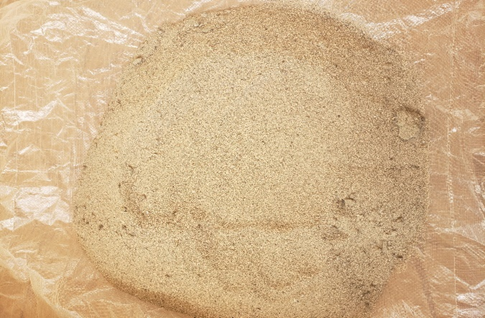
The sand used in this study is natural river sand collected from the Dèkoungbé area (southern Benin). This sand is commonly used in concrete production due to its well-graded particle size distribution and good cleanliness. Its fineness modulus is 2.4, classifying it as medium sand, suitable for conventional concrete 4.
The material complies with the NF EN 12620 standard for aggregates used in concrete production 8. No treatment was applied other than dry sieving to remove oversized or overly fine particles.

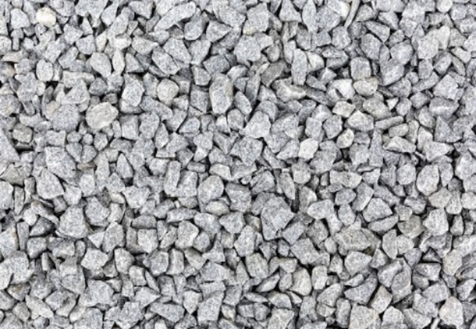
The coarse aggregates used in this study are crushed, washed, and graded aggregates sourced from the Dan quarry, located in southern Benin. The selected particle size range is 5 to 15 mm, in accordance with the NF EN 12620 standard 8. This choice ensures proper coating by the cement paste, optimal packing density of the granular skeleton, and reduced capillary porosity in the hardened concrete [4, 9] 4, 9.
Pre-washing was performed to remove fine particles, dust, and organic matter that could impair the paste-aggregate bond and the durability of the concrete 5, 10. The 5/15 mm grading is commonly recommended for structural concrete, as it promotes mechanical strength and reduces the risk of segregation within the mix 11, 12.

In this study, rice husk ash (RHA) was produced through controlled calcination at 600 °C for 2 hours, to promote the formation of highly reactive amorphous silica 13. After cooling, the ash was sieved through an 80 µm mesh to ensure adequate fineness and uniform dispersion within the cementitious matrix.
The measured reactive silica content was 86.46%, classifying this ash as a high-quality pozzolan in accordance with ASTM C618. The incorporation of RHA as a mineral additive improves paste density, reduces capillary porosity, and enhances concrete durability 9, 14.

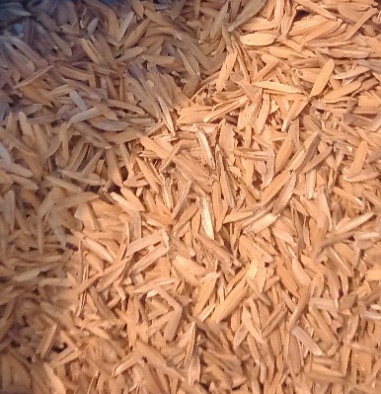
The fibers used in this study are derived from sugarcane bagasse residues collected in the Matéri region, located in northwestern Benin (Atacora Department). After artisanal juice extraction, the bagasse was air-dried, then mechanically ground and sieved to 5 mm to ensure uniform distribution within the cementitious matrix.
These plant-based fibers, primarily composed of cellulose, hemicellulose, and lignin, are known for their moderate mechanical properties and their ability to limit plastic shrinkage cracking in cement-based materials 15, 16. The use of bagasse in concrete aligns with efforts to valorize local agro-industrial waste, thereby contributing to the reduction of the environmental footprint of construction materials.

a) Optimized Concrete Mix Design Using the Dreux-Gorisse Method
The Dreux-Gorisse method was used to determine the optimal proportions of the concrete constituent’s cement, sand, gravel, and water based on the physical characteristics of locally available materials (particle size distribution, bulk density, moisture content, etc.). This rational method relies on the establishment of a well-graded granular skeleton and the adjustment of the water-to-binder ratio to produce a plastic, homogeneous, and high-performance concrete, while meeting consistency and mechanical strength requirements 17, 18, 19.
In this study, the base mix design was modified by introducing two types of partial material substitutions:
• RHA10: 10% of the cement (by mass) was replaced with rice husk ash, produced through controlled calcination at 600 °C for 2 hours and sieved to 80 µm.
• SCB3: 3% of the sand (by mass) was replaced with sugarcane bagasse fibers from the Matéri region, which were dried, ground, and sieved to 5 mm.
These substitution rates were defined based on experimental findings from scientific literature 9, 15, 20, to ensure a balance between mechanical strength, durability, and the valorization of local renewable resources.
b) Mortar Mix Design
The mortar mixtures were prepared in accordance with the requirements of NF EN 196-1 22. The sand-to-cement ratio (S/C) was set at 3.0, while the water-to-cement ratio (W/C) was set at 0.5. Two mixtures were investigated: a mortar incorporating 10% rice husk ash (RHA) as a partial replacement for cement (RHA10) and a mortar incorporating 3% sugarcane bagasse fibers (SCB) as a partial replacement for sand.
The replacement rates of RHA and SCB were kept identical to those used in the concrete mixtures. This approach makes it possible to investigate and compare the influence of these two locally available materials on the mechanical properties of mortar and concrete under comparable experimental conditions.
The particle size distribution of solid constituents plays a fundamental role in achieving homogeneous, compact, and high-performance concrete 17, 18, 19. In this context, the grading curves of the materials used gravel, sand, and sugarcane bagasse fibers (SCB) were established to assess their suitability for rational concrete mix design. This step ensures the desired granular continuity, which is essential for optimal packing of the granular skeleton 4.
a) Gravel Particle Size Distribution
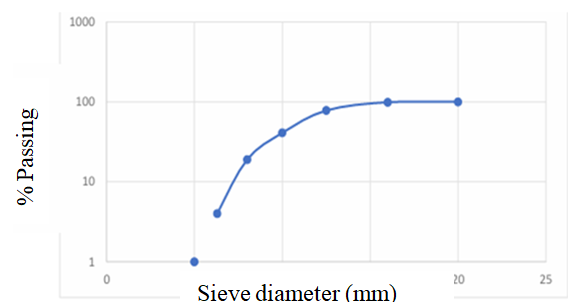
The particle size distribution curve of gravel (Figure 5) exhibits a well-graded profile, with a gradual increase in the percentage passing between 5 mm and 20 mm. This distribution reflects good granular continuity, which promotes optimal packing density of the granular skeleton, as recommended. The gravel used thus meets the requirements for high-performance concrete mix design, by minimizing intergranular voids and ensuring the stability of the mix.

b) Sand Particle Size Distribution
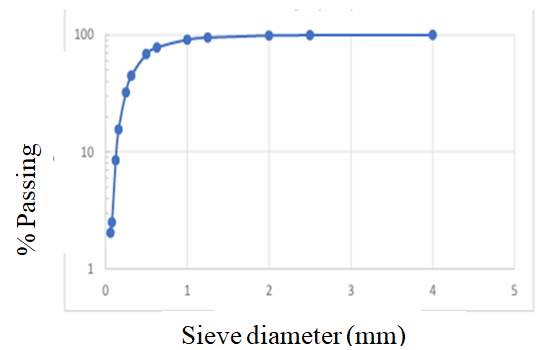
The particle size distribution curve of the sand (Figure 6) shows that most particles have a diameter of less than 1 mm, with a passing percentage approaching 100% at the first sieves. This behavior indicates a fine grading, which is favorable for achieving good packing density and reducing porosity in cementitious mixes. According to Neville 4 , a well-graded sand with a high proportion of fine particles improves the workability of concrete and allows for better void filling.
Thus, the sand analyzed meets the particle size requirements for materials used in mortar and concrete formulations.

c) Particle Size Distribution of Sugarcane Bagasse Fibers (SCB)
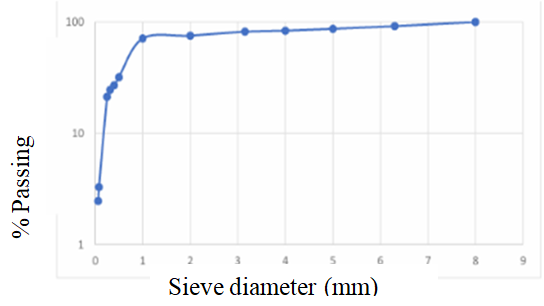
The particle size distribution curve of sugarcane bagasse (SCB), shown in Figure 7, reveals a wide distribution of particles, with over 90% passing through the first sieves. This indicates a high proportion of fine particles, as well as the presence of coarser particles up to 8 mm. Such a relatively broad particle size range can promote better packing density in cementitious or earthen mixtures, provided that the proportion of long fibers is adequately controlled. According to Neville 4, well-graded particles help improve cohesion, workability, and mechanical strength in composite materials. Thus, due to its varied particle size, SCB can be valorized as an additive or reinforcement in sustainable construction materials, particularly in bio-based concrete or bricks.

d) Specimen Preparation and Curing Protocol
Two types of materials were investigated in this experimental study: mortar and concrete. For each material, two mixtures incorporating bio-based materials were considered. The mixtures investigated are as follows:
v For concrete:
√ Mix 1: Cement + Rice Husk Ash (RHA) + Sand + Gravel + Water
√ Mix 2: Cement + Sugarcane Bagasse Fibers (SCB) + Sand + Gravel + Water
v For mortar:
√ Mix 1: Cement + Rice Husk Ash (RHA) + Sand + Water
√ Mix 2: Cement + Sugarcane Bagasse Fibers (SCB) + Sand + Water
These compositions are inspired by the works of Habeeb & Mahmud 14, as well as Datchossa, Doko et al. 21, which highlight the relevance of alternative materials such as organic ashes and plant fibers in the formulation of sustainable concretes. These materials allow for partial substitution of cement or aggregates, while maintaining acceptable mechanical performance and promoting the use of local resources.
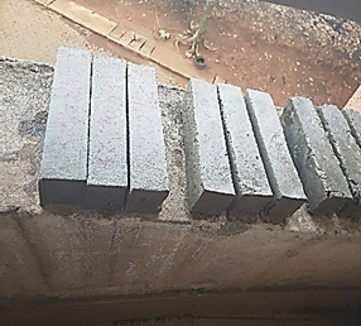
For both materials, the constituents were weighed according to the selected proportions and then dry-mixed to ensure homogeneity. Water was subsequently added gradually during mixing. The SCB fibers were progressively incorporated to ensure proper dispersion within the matrix. The resulting mixtures were cast and compacted in 4 × 4 × 16 cm³ molds. in accordance with the NF EN 196-1 standard 22.

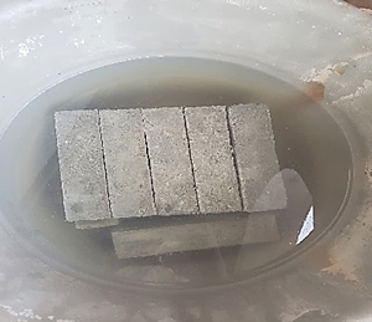
After a setting period of 24 h, the specimens were demolded and subsequently cured by immersion in water maintained at a controlled temperature of 20 ± 1°C.
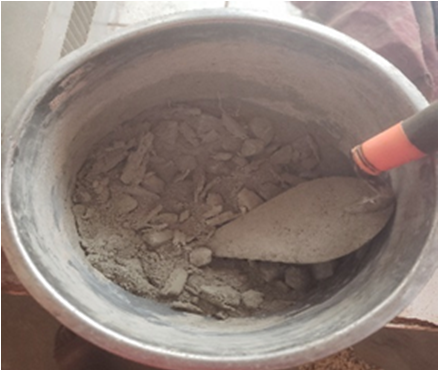
Figure 8 to Figure 10 illustrate the main steps of specimen fabrication. The dry mixing of the components is shown, followed by casting in molds (Figure 8). After 24 hours, the specimens are demolded (Figure 9), then cured in water for 7 and 28 days (Figure 10).


a) Objective
The purpose of the slump flow test is to assess the consistency of fresh concrete, that is, its ability to flow under its own weight or vibration. This property is essential to ensure proper placement, especially in areas with high reinforcement density or complex geometries 4.
b) Principle
Fresh concrete was placed into a truncated cone mould positioned on a flow table. The mould was filled in two equal layers, each compacted with 15 tamping strokes. After carefully removing the mould by vertical lifting, without disturbing the specimen, the flow table was subjected to a standardized series of drops. The average spread diameter, determined from two measurements taken along perpendicular directions, was used to assess the workability of the concrete. This test was conducted in accordance with NF EN 12350-5 23 and was used to determine the corresponding consistency class.
c) Equipment
Shaking table, slump cone (200 mm base diameter, 130 mm top diameter, 200 mm height), fresh concrete, measuring ruler.
d) Procedure
n Moisten the table before starting the test.
n Place the cone in the center of the table and fill it in two equal layers, tapping lightly each time to prevent voids.
n Lift the cone vertically without disturbing the concrete.
n Apply 15 shakes to the table using the crank.
n Measure two perpendicular diameters of the resulting spread and calculate the average.
e) Interpretation
The average spread diameter, measured along two perpendicular directions, was used to classify the concrete according to the consistency classes defined in NF EN 206 24. This classification provides a standardized assessment of workability and facilitates the optimization of mix designs to meet specific placement and handling requirements.
a) Objective
To assess the compactness of the concrete and the quality of mold filling.
b) Principle
The density is calculated from the mass of fresh concrete contained in a container of known volume.
c) Equipment
Rigid container (≥ 5 L), precision balance (0.01 kg), trowel.
d) Procedure
n Weigh the empty container (m₁).
n Fill it with fresh concrete in compacted layers.
n Weigh the full container (m₂).
n Calculation
 | (1) |
where  et
et  are expressed in kilograms (kg)and V is in cubic meters (m³)
a) Objective
To assess the compactness, internal structure, and permeability of the hardened concrete.
b) Principle
After drying and immersion of the specimen, the amount of absorbed water and the accessible porosity are calculated.
c) Equipment
Hardened concrete specimens, precision balance, immersion tank, stopwatch.
d) Procedure
n Weigh the dry specimen after drying it in an oven at 105 °C until constant mass is reached
n Immerse the specimen in water for 24 hours.
n Remove, surface-dry with a damp cloth, and weigh again
n Optionally, weigh the specimen while suspended in water
n Calculation formulas:
 | (2) |
 | (3) |
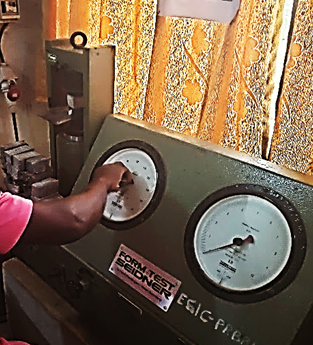
a) Compressive Strength
n Objective: To determine the capacity of hardened concrete to withstand compressive loads, which is essential for structural elements.
n Principle: The specimen is subjected to an increasing axial load until failure, to measure the maximum stress it can resist.
n Equipment: Hydraulic compression testing machine.
n Procedure:
- Demold the specimen after 24 hours and cure it until the test age.
- Precisely align the specimen in the testing machine.
- Apply the load continuously until failure.
- Record the maximum load and calculate the compressive strength (in MPa).
b) Flexural strength
n Objective: To assess the concrete’s ability to resist bending or transverse loads, particularly relevant for slabs and beams.
n Principle: A load is applied at the midpoint of a simply supported prismatic specimen until rupture.
n Equipment:
○ Flexural testing machine (three-point bending test),
○ Prismatic specimens (4×4×16 cm3).
n Procedure:
○ Prepare and cure the specimens after demolding.
○ Place each specimen on two rigid supports.
○ Apply the load progressively until failure.
○ Record the maximum load and calculate the flexural strength using the appropriate formula:
 | (4) |
Where: P = maximum applied load (N), L= span between supports (mm), b= width of the specimen (mm), d = height of the specimen (mm).

The complete combustion of carbon contained in rice husk is represented by the following reaction:
 | (5) |
The mass of CO₂ released is calculated using the formula:
 | (6) |
Where: mass of carbon in the rice husk,
  = 44 g/mol = molar mass of
  ,
,  = 12 g/mol = molar mass of carbon.
Clinker production involves a decarbonation reaction of limestone, represented by:
 | (7) |
The mass of  released can be calculated using the formula:
 | (8) |
The results of the slump test and fresh density for the various concrete mixes are presented in Table 3. A decreasing trend is observed for both parameters as substitution materials are introduced.
The results show a progressive reduction in slump, from 60 cm for the reference mix (B0) to 52 cm for the formulation containing 3% sugarcane bagasse (SCB3). This decrease in workability can be attributed to the fibrous and absorptive nature of the substitution materials (RHA, bagasse), which tend to retain part of the mixing water and slightly disrupt the fluidity of the fresh concrete.
Moreover, the fresh density also decreases from 2395 kg/m³ to 2285 kg/m³, due to the lower specific gravity of the incorporated materials, particularly sugarcane bagasse. This reduction is technically advantageous, as it results in lightweight concrete, which contributes to the reduction of permanent loads on structural elements.
3.2. Hardened ConcreteThe table below presents the mechanical test results for three formulations (B0, RHA10, and SCB3). For each formulation and curing age, six specimens (n = 6) were subjected to experimental testing. Compressive strength (Rc) and flexural strength (Rf) were measured at 7 and 28 days. The results are expressed in megapascals (MPa) and reported as mean values with standard deviations, reflecting the variability of the measurements.
a) Compressive strength (Rc)
The RHA10 formulation exhibits the highest compressive strength, reaching 39.14 MPa at 28 days, followed by B0 (33.69 MPa), and finally SCB3 (23.60 MPa). This indicates that RHA10 is the most efficient formulation in terms of mechanical strength development under compression.
The increase in compressive strength from 7 to 28 days is noticeable for all three formulations, reflecting good hydration kinetics and material hardening. This progression is particularly pronounced for RHA10 (+6.51 MPa), suggesting extended pozzolanic reactivity.
b) Flexural strength (Rf)
Contrary to the compressive strength results, the SCB3 formulation shows the highest flexural performance, reaching 7.40 MPa at 28 days, surpassing both RHA10 (6.2 MPa) and B0 (5.81 MPa). This behavior may be attributed to enhanced ductility due to the presence of fine or fibrous components in the mix, which improve tensile resistance.
c) Hardened mortar
After presenting the mechanical strengths of concrete (Table 4), the average compressive (Rc) and flexural (Rf) strengths measured at 7 and 28 days for mortars prepared with the same substitution materials are presented in Table 5. For each formulation and curing age, six mortar specimens (n = 6) were experimentally tested in the present study, following an approach similar to that described by T. A. Datchossa, Doko, et al. 21.
d) Statistical Analysis of the Experimental Results
To assess the statistical significance of the differences observed among the formulations, a one-way analysis of variance (ANOVA) was performed. This parametric test was selected for several reasons. First, it allows the simultaneous comparison of the mean values of three independent formulations (B0, RHA10, and SCB3) for both concrete and mortar specimens, whereas Student's t-test is limited to comparisons between only two groups. Second, ANOVA controls the Type I error rate associated with multiple comparisons, unlike a series of t-tests, which would artificially increase the probability of detecting a significant difference when none exists. Prior to conducting the ANOVA, its underlying assumptions were verified. The normality of residuals was confirmed using the Shapiro-Wilk test (p > 0.05), while the homogeneity of variances was assessed using Levene's test (p > 0.05), thereby ensuring the validity of the statistical inferences. The level of significance was set at α = 0.05.
The results presented in Table 1 indicate that the formulation had a significant effect on all mechanical properties investigated for both concretes and mortars, as evidenced by consistently high F-values and very low p-values (p < 0.001 for all eight properties analyzed). For concrete, the F-statistics ranged from 21.69 (flexural strength at 28 days, Rf 28d) to 442.93 (compressive strength at 7 days, Rc 7d), whereas for mortars, they varied from 110.94 (flexural strength at 7 days, Rf 7d) to 233.49 (flexural strength at 28 days, Rf 28d). The magnitude of these F-values, combined with p-values as low as 4.579 × 10⁻¹⁴, clearly demonstrates that the observed differences among formulations cannot be attributed to experimental variability or random error. These findings confirm that mix formulation is a key factor governing the mechanical performance of cementitious materials and strongly support the conclusions regarding the superiority of specific formulations depending on the targeted mechanical property.
e) Comparison Between Concrete and Mortar Strengths
√ Compressive strength
Concrete exhibits slightly higher compressive strength (Rc) than mortar for each formulation, due to the presence of coarse aggregates which enhance load-bearing capacity and overall compactness of the material.
Conversely, the formulation containing 3% sugarcane bagasse ash (SCB3) shows a noticeable reduction in compressive strength in both cases. SCB3 concrete reaches a Rc of 23.60 MPa at 28 days, compared to 22.77 MPa for mortar. This reduction may be attributed to the organic and fibrous nature of bagasse, which decreases the compactness of the granular skeleton.
√ Flexural strength
Regarding flexural strength (Rf), the results show that mortars perform closely to concretes, despite the absence of coarse aggregates.
For the RHA10 formulation, the Rf at 28 days reaches 6.20 MPa in concrete and 5.71 MPa in mortar. Although slightly lower, the mortar performance remains satisfactory.
The SCB3 formulation stands out with the highest flexural strengths in both materials. Rf reaches 7.40 MPa in concrete versus 7.13 MPa in mortar. This performance may be attributed to the fibrous nature of sugarcane bagasse, which acts as a dispersed reinforcement within the matrix, enhancing tensile and flexural resistance. However, the slightly higher flexural strength in concrete confirms the added benefit of combining fibers with aggregates to optimize such mechanical behavior.
3.2. Environmental Comparison between Portland Cement and Rice Husk Ash (RHA)A partial substitution of Portland cement with rice husk ash (RHA) is assessed here from the standpoint of CO₂ emissions.
Two concrete formulations are compared: a reference mix (B0), composed of 350 kg/m³ of Portland cement, and an alternative mix (RHA10), in which 10% of the cement is replaced with RHA, i.e., 315 kg of cement + 35 kg of RHA.
Based on emission factors from the literature 0.94 kg CO₂/kg of cement 2, 29 and 0.12 kg CO₂/kg of RHA 30 the total emissions are calculated as follows:
√ For B0 (100% cement):
CO₂_B0 = 350 × 0,94 = 329 kg CO₂/m³(9)
√ For RHA10 (315 kg cement + 35 kg RHA) :
CO₂_RHA10 = 315 × 0,94 + 35 × 0,12 = 300,3 kg CO₂/m³ (10)
The emission reduction achieved is therefore:
 | (11) |
The estimated 8.7% reduction in CO₂ emissions highlights the potential environmental benefits of the proposed solution. However, this result is based on the assumptions, system boundaries, and emission factors adopted in the present study and should not be interpreted as a comprehensive assessment conducted within a full Life Cycle Assessment framework. Consequently, the actual environmental benefits may vary depending on real production and service conditions, including logistical constraints, the energy intensity of the calcination and CBR processing operations, and the carbonation processes that may occur throughout the concrete's service life. These aspects warrant further investigation through future studies dedicated to a comprehensive environmental assessment.
Hence, RHA is not only a technically viable solution as a pozzolanic admixture, but also a significant lever for reducing the carbon footprint of construction materials.
The results obtained in this study highlight the dual performance both mechanical and environmental formulations incorporating rice husk ash (RHA) and thermally treated sugarcane bagasse (SCB). The compressive strength of RHA enhanced concrete exceeds that of the reference mix by over 16%, and the improved mortar achieves value closely approaching the concrete benchmark, thereby narrowing the conventional performance gap between the two materials. This suggests that, in specific cases, optimized mortar can be considered a viable alternative to concrete for targeted applications.
In terms of flexural behavior, the incorporation of thermally treated SCB significantly enhances the performance of both matrices, with improvements exceeding 20%. The strengthening effect of the natural fibers present in SCB contributes to better tensile behavior, which is particularly beneficial for components exposed to cyclic loading or potential cracking.
Furthermore, the substantial reduction in CO₂ emissions achieved through the partial replacement (10%) of Portland cement with RHA confirms the environmental potential of these alternative materials. The use of valorized agricultural residues such as SCB and RHA supports a circular economy approach, promoting more sustainable construction practices- especially in tropical regions with limited resources such as Benin.
Moreover, one of the key advantages of using concrete lies in the presence of aggregates, which significantly contributes to their overall mechanical strength. These aggregates, acting as a mineral skeleton, facilitate improved transmission of internal stress and reduced deformation under load. Their inclusion also leads to lower shrinkage compared to mortar, making concrete a preferred material for load-bearing elements subjected to high stress.
| [1] | G. Habert, «1 - Environmental impact of Portland cement production», in Eco-Efficient Concrete, F. Pacheco-Torgal, S. Jalali, J. Labrincha, et V. M. John, Éd., in Woodhead Publishing Series in Civil and Structural Engineering. , Woodhead Publishing, 2013, p. 325. | ||
| In article | |||
| [2] | K. N. Shivaprasad, H.-M. Yang, et J. K. Singh, «A path to carbon neutrality in construction: An overview of recent progress in recycled cement usage», Journal of CO2 Utilization, vol. 83, p. 102816, mai 2024. | ||
| In article | View Article | ||
| [3] | AFNOR. NF EN 197-1: Cement - Part 1: Composition, Specifications and Conformity Criteria for Common Cements. AFNOR Éditions, Saint-Denis, France, 2012. | ||
| In article | |||
| [4] | Neville, A. M., Properties of Concrete, 5th Edition, Pearson Education Limited, Harlow, United Kingdom, 2011. | ||
| In article | |||
| [5] | Hewlett, P. C., and Liska, M. (Eds.), Lea's Chemistry of Cement and Concrete, 5th Edition, Butterworth-Heinemann, Oxford, United Kingdom, 2019. | ||
| In article | |||
| [6] | Taylor, H. F. W., Cement Chemistry, 2nd Edition, Thomas Telford Publishing, London, United Kingdom, 1997. | ||
| In article | |||
| [7] | K. Scrivener, R. Snellings, et B. Lothenbach, Éd., A Practical Guide to Microstructural Analysis of Cementitious Materials. Boca Raton: CRC Press, 2018. | ||
| In article | View Article | ||
| [8] | AFNOR, NF EN 12620+A1: Aggregates for Concrete, AFNOR Éditions, Saint-Denis, France, 2008. | ||
| In article | |||
| [9] | Mehta, P. K., and Monteiro, P. J. M., Concrete: Microstructure, Properties, and Materials, 4th Edition, McGraw-Hill Education, New York, United States, 2014. | ||
| In article | |||
| [10] | Mindess, S., Young, J. F., and Darwin, D., Concrete, 2nd Edition, Prentice Hall, Upper Saddle River, New Jersey, United States, 2003. | ||
| In article | |||
| [11] | American Concrete Institute (ACI), ACI 221R-96: Guide for Use of Normal Weight and Heavyweight Aggregates in Concrete (Reapproved 2001), American Concrete Institute, Farmington Hills, Michigan, United States, 2001. | ||
| In article | |||
| [12] | de Larrard, F., Concrete Mixture Proportioning: A Scientific Approach, 1st Edition, E & FN Spon, London, United Kingdom, 1999. | ||
| In article | View Article | ||
| [13] | M. H. Zhang, R. Lastra, et V. M. Malhotra, « Rice-husk ash paste and concrete: Some aspects of hydration and the microstructure of the interfacial zone between the aggregate and paste », Cement and Concrete Research, vol. 26, no 6, p. 963977, juin 1996, doi: 10.1016/0008-8846(96)00061-0. | ||
| In article | View Article | ||
| [14] | Habeeb, G. A., and Mahmud, H. B., “Study on Properties of Rice Husk Ash and Its Use as Cement Replacement Material,” Materials Research, Vol. 13, No. 2, pp. 185-190, 2010. | ||
| In article | View Article | ||
| [15] | H. Savastano, P. G. Warden, et R. S. P. Coutts, «Microstructure and mechanical properties of waste fibre–cement composites», Cement and Concrete Composites, vol. 27, no 5, p. 583592, mai 2005. | ||
| In article | View Article | ||
| [16] | Bentur, A., and Mindess, S., Fibre Reinforced Cementitious Composites, 2nd Edition, CRC Press, London, United Kingdom, 2006. | ||
| In article | View Article | ||
| [17] | Dreux, G., Béton hydraulique. Composition des bétons, Techniques de l'Ingénieur, Paris, France, 1982, pp. 1-14. | ||
| In article | View Article | ||
| [18] | Dreux, G., Nouveau Guide du Béton, 3rd ed., Eyrolles, Paris, France, 1981. | ||
| In article | |||
| [19] | Dreux, G., Nouveau guide du béton, 8th ed., Eyrolles, Paris, France, 1990. | ||
| In article | |||
| [20] | Aboshio, A., Ogork, E. N., and Balami, D. A., “Rice Husk Ash as Admixture in Concrete,” Journal of Engineering Technology, Vol. 4, No. 2, pp. 95-101, 2009. | ||
| In article | |||
| [21] | Datchossa, A. T., Doko, V. K., and Omur, T., “Evaluation of the Effects of Untreated and Treated Sugarcane Bagasse Fibers and RHA on the Physicomechanical Characteristics of Cementitious Composites,” Iranian Journal of Science and Technology, Transactions of Civil Engineering, Vol. 48, No. 1, pp. 25-40, 2024. | ||
| In article | View Article | ||
| [22] | AFNOR, NF EN 196-1: Methods of Testing Cement - Part 1: Determination of Strength. AFNOR Éditions, Saint-Denis, France, 2016. | ||
| In article | |||
| [23] | AFNOR, NF EN 12350-5: Testing Fresh Concrete - Part 5: Flow Table Test, AFNOR Editions, Saint-Denis, France, 2009. | ||
| In article | |||
| [24] | AFNOR, NF EN 206: Concrete - Specification, Performance, Production and Conformity, AFNOR Editions, Saint-Denis, France, 2014. | ||
| In article | |||
| [25] | AFNOR, NF EN 12350-6: Testing Fresh Concrete - Part 6: Density, AFNOR Editions, Saint-Denis, France, 2019. | ||
| In article | |||
| [26] | AFNOR, NF EN 12390-3: Testing Hardened Concrete - Part 3: Compressive Strength of Test Specimens, AFNOR Editions, Saint-Denis, France, 2019. | ||
| In article | |||
| [27] | AFNOR, NF EN 12390-5: Testing Hardened Concrete - Part 5: Flexural Strength of Test Specimens, AFNOR Editions, Saint-Denis, France, 2019. | ||
| In article | |||
| [28] | AFNOR, NF EN 12390-7: Testing Hardened Concrete - Part 7: Density of Hardened Concrete, AFNOR Editions, Saint-Denis, France, 2019. | ||
| In article | |||
| [29] | Telschow, S., Frandsen, F., Theisen, K., & Dam-Johansen, K., Cement Formation: A Success Story in a Black Box: High Temperature Phase Formation of Portland Cement Clinker, Ind. Eng. Chem. Res., Vol. 51, No. 34, 2012, pp. 10983-11004. | ||
| In article | View Article | ||
| [30] | Steven, S., et al., “Thermodynamics Simulation Performance of Rice Husk Combustion with a Realistic Decomposition Approach on the Devolatilization Stage,” Waste and Biomass Valorization, Vol. 13, No. 5, pp. 2735-2747, May 2022. | ||
| In article | View Article | ||
Published with license by Science and Education Publishing, Copyright © 2026 AYELEROU Léké Audry, DOKO Kouandété Valéry, DOUWEDO Hensen and GIBIGAYE Mohamed
 This work is licensed under a Creative Commons Attribution 4.0 International License. To view a copy of this license, visit
http://creativecommons.org/licenses/by/4.0/
This work is licensed under a Creative Commons Attribution 4.0 International License. To view a copy of this license, visit
http://creativecommons.org/licenses/by/4.0/
| [1] | G. Habert, «1 - Environmental impact of Portland cement production», in Eco-Efficient Concrete, F. Pacheco-Torgal, S. Jalali, J. Labrincha, et V. M. John, Éd., in Woodhead Publishing Series in Civil and Structural Engineering. , Woodhead Publishing, 2013, p. 325. | ||
| In article | |||
| [2] | K. N. Shivaprasad, H.-M. Yang, et J. K. Singh, «A path to carbon neutrality in construction: An overview of recent progress in recycled cement usage», Journal of CO2 Utilization, vol. 83, p. 102816, mai 2024. | ||
| In article | View Article | ||
| [3] | AFNOR. NF EN 197-1: Cement - Part 1: Composition, Specifications and Conformity Criteria for Common Cements. AFNOR Éditions, Saint-Denis, France, 2012. | ||
| In article | |||
| [4] | Neville, A. M., Properties of Concrete, 5th Edition, Pearson Education Limited, Harlow, United Kingdom, 2011. | ||
| In article | |||
| [5] | Hewlett, P. C., and Liska, M. (Eds.), Lea's Chemistry of Cement and Concrete, 5th Edition, Butterworth-Heinemann, Oxford, United Kingdom, 2019. | ||
| In article | |||
| [6] | Taylor, H. F. W., Cement Chemistry, 2nd Edition, Thomas Telford Publishing, London, United Kingdom, 1997. | ||
| In article | |||
| [7] | K. Scrivener, R. Snellings, et B. Lothenbach, Éd., A Practical Guide to Microstructural Analysis of Cementitious Materials. Boca Raton: CRC Press, 2018. | ||
| In article | View Article | ||
| [8] | AFNOR, NF EN 12620+A1: Aggregates for Concrete, AFNOR Éditions, Saint-Denis, France, 2008. | ||
| In article | |||
| [9] | Mehta, P. K., and Monteiro, P. J. M., Concrete: Microstructure, Properties, and Materials, 4th Edition, McGraw-Hill Education, New York, United States, 2014. | ||
| In article | |||
| [10] | Mindess, S., Young, J. F., and Darwin, D., Concrete, 2nd Edition, Prentice Hall, Upper Saddle River, New Jersey, United States, 2003. | ||
| In article | |||
| [11] | American Concrete Institute (ACI), ACI 221R-96: Guide for Use of Normal Weight and Heavyweight Aggregates in Concrete (Reapproved 2001), American Concrete Institute, Farmington Hills, Michigan, United States, 2001. | ||
| In article | |||
| [12] | de Larrard, F., Concrete Mixture Proportioning: A Scientific Approach, 1st Edition, E & FN Spon, London, United Kingdom, 1999. | ||
| In article | View Article | ||
| [13] | M. H. Zhang, R. Lastra, et V. M. Malhotra, « Rice-husk ash paste and concrete: Some aspects of hydration and the microstructure of the interfacial zone between the aggregate and paste », Cement and Concrete Research, vol. 26, no 6, p. 963977, juin 1996, doi: 10.1016/0008-8846(96)00061-0. | ||
| In article | View Article | ||
| [14] | Habeeb, G. A., and Mahmud, H. B., “Study on Properties of Rice Husk Ash and Its Use as Cement Replacement Material,” Materials Research, Vol. 13, No. 2, pp. 185-190, 2010. | ||
| In article | View Article | ||
| [15] | H. Savastano, P. G. Warden, et R. S. P. Coutts, «Microstructure and mechanical properties of waste fibre–cement composites», Cement and Concrete Composites, vol. 27, no 5, p. 583592, mai 2005. | ||
| In article | View Article | ||
| [16] | Bentur, A., and Mindess, S., Fibre Reinforced Cementitious Composites, 2nd Edition, CRC Press, London, United Kingdom, 2006. | ||
| In article | View Article | ||
| [17] | Dreux, G., Béton hydraulique. Composition des bétons, Techniques de l'Ingénieur, Paris, France, 1982, pp. 1-14. | ||
| In article | View Article | ||
| [18] | Dreux, G., Nouveau Guide du Béton, 3rd ed., Eyrolles, Paris, France, 1981. | ||
| In article | |||
| [19] | Dreux, G., Nouveau guide du béton, 8th ed., Eyrolles, Paris, France, 1990. | ||
| In article | |||
| [20] | Aboshio, A., Ogork, E. N., and Balami, D. A., “Rice Husk Ash as Admixture in Concrete,” Journal of Engineering Technology, Vol. 4, No. 2, pp. 95-101, 2009. | ||
| In article | |||
| [21] | Datchossa, A. T., Doko, V. K., and Omur, T., “Evaluation of the Effects of Untreated and Treated Sugarcane Bagasse Fibers and RHA on the Physicomechanical Characteristics of Cementitious Composites,” Iranian Journal of Science and Technology, Transactions of Civil Engineering, Vol. 48, No. 1, pp. 25-40, 2024. | ||
| In article | View Article | ||
| [22] | AFNOR, NF EN 196-1: Methods of Testing Cement - Part 1: Determination of Strength. AFNOR Éditions, Saint-Denis, France, 2016. | ||
| In article | |||
| [23] | AFNOR, NF EN 12350-5: Testing Fresh Concrete - Part 5: Flow Table Test, AFNOR Editions, Saint-Denis, France, 2009. | ||
| In article | |||
| [24] | AFNOR, NF EN 206: Concrete - Specification, Performance, Production and Conformity, AFNOR Editions, Saint-Denis, France, 2014. | ||
| In article | |||
| [25] | AFNOR, NF EN 12350-6: Testing Fresh Concrete - Part 6: Density, AFNOR Editions, Saint-Denis, France, 2019. | ||
| In article | |||
| [26] | AFNOR, NF EN 12390-3: Testing Hardened Concrete - Part 3: Compressive Strength of Test Specimens, AFNOR Editions, Saint-Denis, France, 2019. | ||
| In article | |||
| [27] | AFNOR, NF EN 12390-5: Testing Hardened Concrete - Part 5: Flexural Strength of Test Specimens, AFNOR Editions, Saint-Denis, France, 2019. | ||
| In article | |||
| [28] | AFNOR, NF EN 12390-7: Testing Hardened Concrete - Part 7: Density of Hardened Concrete, AFNOR Editions, Saint-Denis, France, 2019. | ||
| In article | |||
| [29] | Telschow, S., Frandsen, F., Theisen, K., & Dam-Johansen, K., Cement Formation: A Success Story in a Black Box: High Temperature Phase Formation of Portland Cement Clinker, Ind. Eng. Chem. Res., Vol. 51, No. 34, 2012, pp. 10983-11004. | ||
| In article | View Article | ||
| [30] | Steven, S., et al., “Thermodynamics Simulation Performance of Rice Husk Combustion with a Realistic Decomposition Approach on the Devolatilization Stage,” Waste and Biomass Valorization, Vol. 13, No. 5, pp. 2735-2747, May 2022. | ||
| In article | View Article | ||