In response to the rapid urbanization of Bangladesh, the leather industry, as well as the production of leather waste, has increased significantly. Unfortunately, the methods for treating or disposing of dry tannery sludges remain poorly developed. Tannery sludge is inappropriate for direct disposal due to its high concentration of heavy metals and toxic metal salts. In this study, an exploratory investigation was carried out on the suitability of utilizing solid tannery waste as a partial substitute for fine aggregates in concrete to evaluate a sustainable management approach for the waste. A total of 63 concrete cylinders were cast with 0%, 2%, 4%, 6%, 8%, 10%, and 15% replacement of fine aggregates by dry sludge and evaluated for compressive strength and leaching of total chromium. The 28-day compressive strengths of the 2%, 4%, 6%, 8%, 10%, and 15% sludge-containing concrete cylinders were found to be 26.24 MPa, 22.02 MPa, 16.05 MPa, 9.79 MPa, 3.13 MPa, and 1.17 MPa, respectively. Thus, the optimum compressive strength, after replacement with tannery sludge, was 26.24 MPa at a 2% replacement.To determine leaching characteristics, a total of 18 cylinders from each batch were immersed in three different leachants of pH 4, pH 7, and pH 10 for 3, 7, 15, and 30 days. The sludge-concrete leached a maximum of 9.4 mg/kg, 1.37 mg/kg, and 3.21 mg/kg of chromium for acidic, neutral, and alkaline media, respectively. Results from the study indicate that, with increasing sludge percentage, compressive strength decreased while chromium leaching potential increased. Up to 4% sludge incorporation is considered suitable for both structural and environmental perspectives. This research presents a promising solution for the tannery waste pollution in Bangadesh by utilizing the waste in concrete.
The leather processing and tannery industries in Bangladesh contributes significantly to the national economy and upholds a praiseworthy reputation all over the world. The leather products of Bangladesh are renowned over the entire world having some remarkable features, including high-quality raw materials, diversity of leather, consistent fiber structure, competitive pricing, innovation, and durability. According to Leather Goods and Footwear Manufacturers & Exporters Association of Bangladesh (LFMEAB), currently there are 90 large firms, 200 tanneries, 3500 MSMEs, and 2500 footwear units, representing 10% of the world’s total leather market 1. The leather sector is the second largest industry in terms of exports after the ready-made garments sector 2. In the financial year 2020-2021, the exported leather and leather goods were worth 941.75 million US dollars, which is 2.43 percent of the total export earnings of the country. Some of the major export destinations for Bangladeshi leather products are the United States of America, European Union countries, Middle East countries, African countries, Canada, Australia, Japan, and neighboring countries.
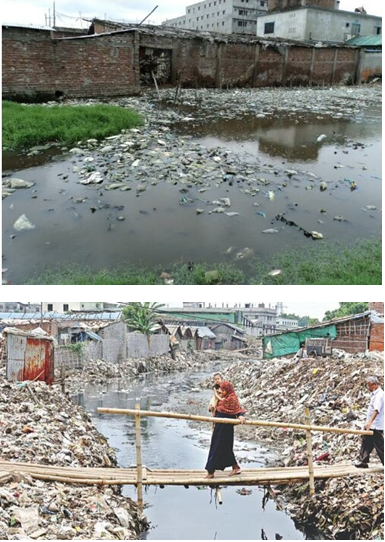
However, the tannery sectors pose a critical environmental threat to the country, especially for the capital of Bangladesh. For decades, Hazaribagh has been the most concentrated tanning industrial area. It is also one of the most densely populated regions in Dhaka. The tannery industries discharge untreated effluents into the Buriganga River, which flows from east to west across the area shown in Figure 1. The process is a potential risk to the ecosystem as it is contaminating the soil and water sources and causing detrimental health problems for both workers and the surrounding communities.

Considering the potential risk factors, the Government of Bangladesh took the step to establish BSCIC Tannery Industrial Estate on 200 acres of land at Savar, Dhaka, in 2003. Almost all the tanneries were shifted to Hemayetpur from Hazaribagh. But the industry can hold 25000 m3 of liquid waste per day, whereas the total discharge of liquid waste by the industry is 40000 m3 per day. Additionally, there is no solid management in this area. To solve the problem, the government is planning to create a leather industrial park of 400 acres in addition to BSCIC Tannery Industrial Estate and two more tannery villages, one at Rajshahi and another at Chittagong.
The transformation of raw materials into leather products is a complicated process that involves a number of mechanical and chemical operations. Chemical operation involves chemicals, including acids, tanning agents, salts, surfactants, sulfonated oils, etc., that lead to the discharge of hazardous chemicals into ETP 5. Mechanical and chemical operations and the types of pollutants released can vary from country to country. 6 studied the major pollutants discharged from tannery industries in Bangladesh. According to the study, solid pollutants such as salt, trimming and keratinous waste, fleshing waste, dust in addition to the liquid waste including Cr, BOD, COD, TDS, Proteoglycans, ammonia, fats, blood, acid and dyes are released during the pre-tanning, tanning, post-tanning and finishing stages.
The chemical composition of dry tannery sludge can vary widely across countries and individual factories. However, chromium has been one of the predominant constituents in tannery waste. A comparison of the chemical composition of tannery sludge from three different countries- Bangladesh, India and China and from different tannery factories are shown in Table 1.
The chromium tanning process requires a huge amount of chromium as it provides greater stability for the processed leather. Among the total amount of applied chromium, only 60–80% of the chromium is used, and the rest of the chromium is discharged into the sewage system as trivalent chromium Cr3+ and hexavalent chromium Cr6+ 12. Besides chromium, the tannery waste also contains the chemicals used in the manufacturing process, such as dyes, salts, sulfides, surfactants, syntans, etc. 7. The Environmental Protection Agency (EPA) classifies chromium and chromium compounds as harmful elements in waste materials 13. On the other hand, the German Environmental Regulations classify all waste elements created during the leather and hide manufacturing process as hazardous for the environment 14. This chromium-rich sludge may become a potential threat to soil, surface water, groundwater, and other natural resources if it is not disposed of or treated properly.
The tannery sludge management and disposal practices vary between countries. A lot of solutions about the utilization of sludge have been developed, tested, and applied to a large scale. The methods of treatment are different for dry and wet tannery waste. The common treatment methods for tannery wastewater from the year 2000 to 2021 are biological treatment, membrane filtration, coagulation and flocculation, electro chemical treatment, adsorptions and AOPs 15. However, the dry tannery sludge treatment practices are- landfilling, composting, incineration, pyrolysis, solidification and stabilization, anaerobic digestion. Among them, landfilling is the most common practice of tannery sludge management. As there is a presence of high concentrations of chromium in the tannery sludge, the landfilling process is a potential risk to the water, air, and soil environment. It also generates additional cost of construction of landfills meeting the requirements of specific environmental protection 16. Composting is another common method that has been used in developing countries. The tannery sludge contains all these important parameters for composting within the standard values, but it remains toxic for the environment as leaching of chromium pollutes groundwater and surface runoff 17.
There are three common disposal practices of dry tannery sludge in Bangladesh- landfilling, incineration and using as composting or fertilizers. Landfilling is the mostly used disposal method, and it affects the environment more than the other methods 11. In Bangladesh, the landfill practice is not appropriate. Due to the high concentration of total chromium, the improper disposal methods are causing serious diseases including reproductive problems, respiratory, gastrointestinal, and immunological 18. According to WHO, more than 8000 workers of the tannery industry in Hazaribagh suffer from the mentioned diseases and die before the age of 50 19. As a result, a new, alternative, safe and ecofriendly disposal method needs to be invented and practiced. The dry sludge has good compressive strength and water holding capacity that meets the specification of the raw material of concrete and bricks 20 . Acting as a filler of concrete, the dry tannery waste may improve the strength properties and water absorption of the concrete 21.
Some studies have shown that dry tannery sludge can be effectively used in brick manufacturing 7, 22, 23. There is no such chemical reaction between the waste products and the materials, but this utilization of tannery waste has been proved effective and less toxic to the environment. However, the effectiveness, toxicity, strength, and performance of bricks and concrete depends upon the type of waste, process of stabilization and particle size distribution.
In some other studies, the researchers showed the suitability of using dry tannery sludge to stabilize ordinary portland cement (OPC) and portland pozzolana cement (PPC) (Hills et al., 1993; Malaiškienė et al., 2019; Patel and Pandey, 2012). Besides other physical and chemical properties, they also observed that the leaching characteristics from cyanide rich waste is reduced after solidification with cement and the chromium leaching potential is within the restriction limit according to Directive 2003/33/EC.
To offer a sustainable treatment process of tannery sludge in developing countries, some researchers have replaced the sand with dry tannery sludge in some percentages and analyzed the mechanical properties of concrete cylinders or cubes 9, 11, 27, 28, 29. However, there is a great variation in the percentage of fine aggregates replacement in these studies due to the type of waste, meteorological characteristics of the location of study, standard of concrete mixing, and particle size distribution. The focus of these studies was to check the structural integrity of the concrete cylinders not the environmental concerns. As a result, it remains unclear whether utilizing the dry tannery sludge in concrete possesses any environmental risks or not.
The purpose of this research is to assess the impact of adding dry tannery sludge to concrete. There are different types of dry tannery sludge among which we have utilized the buffing tannery dust to replace the fine aggregates partially. To find the potential use of sludge-concrete in construction purposes, compressive strength was determined. After that, a chromium leaching test on sludge concrete was also performed to prove the effectiveness of the treatment approach in preventing chromium leakage into the environment.
BDS EN 197-1:2003, CEM-1, 52.5 N ASTM C150, Type – 1 ordinary portland cement produced by Seven Rings Cement Limited, was used as cement for the study. The cement consists of 95%-100% clinker and 0%-5% gypsum and the specific gravity was 3.15.
2.2. Tannery SludgeIn this study, buffing tannery dust was used and it was collected from SAF Leather Limited, which is situated in Taltoa, Noapara, Abhaynagar, Jashore, Bangladesh. This location is positioned between Latitude 23˚ 01’0088’’ N and Longitude 89˚ 24’39.60” E. The project has an area of approximately 30591.42 m2. Since 1958, SAF Leather Limited has been one of Bangladesh's largest manufacturers of leather goods, with a monthly production capacity of 12077.39 m2. Their biochemical ETP is 2508.38 m2 in size, with a daily capacity of 800 m3. The industry gathers the finest raw hides, processes, tests them, and generates finished leather of the highest quality.
To determine the physical and chemical properties of buffing dust, it was dissolved at a 1:20 ratio with distilled water and stirred for 24 hours. Then the pH of the solid sample was measured using the colorimetric method. After that, a 50 ml sample was created by adding 30 ml distilled water to the sample to determine other properties. To determine chloride and sulfate content, solid tannery waste and water were mixed at a 1:5 (W: V) ratio and the mixture was stirred vigorously for about 30-40 minutes. Then the mixture was allowed to settle for about one hour. After that, the mixture was filtered through a filter paper, and the filtrate was collected. Finally, the chloride content was determined using titration method and the sulfate content was determined using DR 2700 spectrophotometer, using sulfaVer4 reagents. For the determination of nitrate content buffing dust and water were mixed at a 1:10 (W: V) ratio. The rest of the process is the same as sulfate content except reagent type. NitraVer 5 reagent was used to operate DR 2700 spectrophotometer this time.
The shape and appearance of the dry sludge were analyzed using eye estimation. The percentage of organic matter, moisture content and ash content were determined using ASTM D2974–14 standard method. In the present study, the chemical composition of buffing dust was not analyzed. Therefore, the chemical composition reported 30 for the same source of material was adopted for characterization shown in Table 2. The major constituents were SO3 (45.5926) and Cr2O3 (31.9617) with some small amount of SiO2, Al2O3, CaO, Fe2O3, MgO, P2O5, K2O and ZrO2.
After the collection of coarse aggregates and fine aggregates from Stone Sale, 86, Rupsha, Khulna, the physical properties such as fineness modulus, compacted unit weight, loose unit weight, bulk specific gravity (bulk, apparent and bulk SSD), moisture content, absorption, and %voids were determined. The test methods to determine the physical properties of aggregates are shown in Table 3.
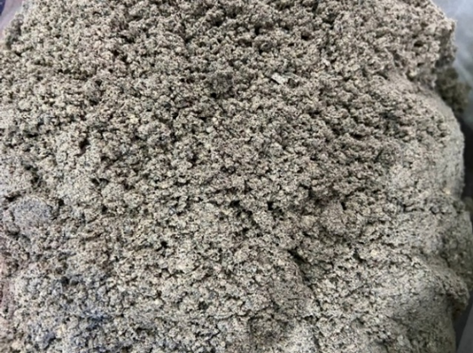
2.4. Utilization of Dry Sludge in Concrete PreparationBuffing tannery dust was collected, and the oven dried at 105°C ± 5°C for about 2 hours. Then to achieve uniform grading, the dust was passed through a 2.36 mm sieve for the replacement of fine aggregates in Figure 2.

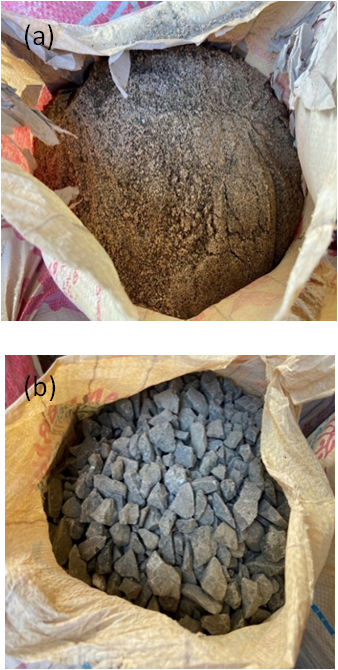
The ACI mix design method was adopted throughout the study. Following a weight-based analysis, the mix proportion used in the research was 1: 1.79: 2.23 (cement: fine aggregate: coarse aggregate). Sylhet sand was used as fine aggregates and stones was used as the coarse aggregate as shown in Figure 3. The sand was replaced by the sludge by 0%, 2%, 4%, 6%, 8%, 10% and 15% by weight. The cylinders of 4-inch diameter and 8-inch height were cast using coarse aggregate, fine aggregate, cement, and buffing dust.

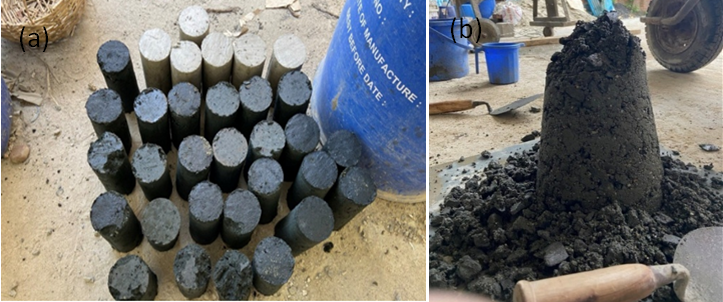
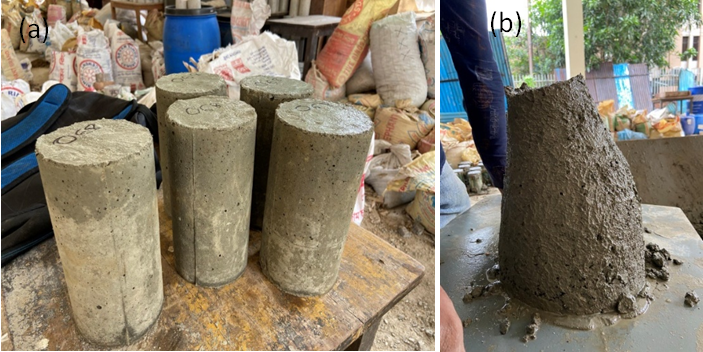
The targeted slump value was 75-100 mm; water cement ratio was 0.45 and the maximum size of the coarse aggregate was 19 mm. In the first trial, dry tannery sludge was used as 20%, 30%, 40% and 50% replacement of the total weight of fine aggregates without adding water reducing admixtures. But it did not form hard concrete as shown in Figure 4. The cylinder was being broken by pressing using hands or released from a height. In the second trial, 20% and 25% replacement were used using water reducing admixtures as 0.3% of cement weight. The result was quite similar as the first trial. As a result, the percentage of tannery sludge was reduced and started from only 2% replacement of sand. The replacement of sludge used to replace fine aggregates were 0%, 2%, 4%, 6%, 8%, 10% and 15%. For proper mixing, water-reducing admixture was used as 0.015 kg, 0.030 kg, 0.045 kg, 0.061 kg, 0.076 kg and 0.101 kg for 2%, 4%, 6%, 8%, 10% and 15% replacement of sand respectively. This resulted in a proper concrete mix with desired slump value in Figure 5.
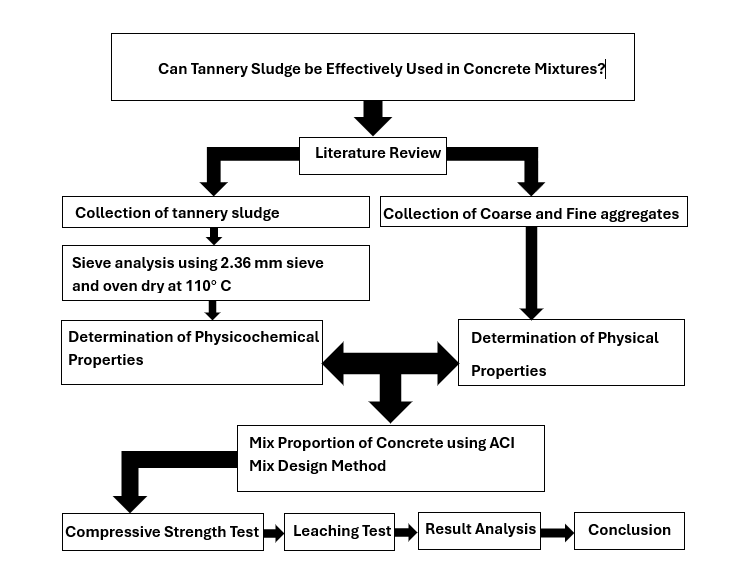
The concrete was designed for 25 MPa. In every batch a total of 9 cylinders were prepared. 3 cylinders were crushed for a 7-day strength test and 3 were crushed for a 28-day strength test. And the last 3 cylinders were left for leaching test at neutral, acidic, and alkaline medium. The proportions of the materials of concrete are shown in Table 4. A flowchart illustrating the logical sequencing of the whole methodology is presented in Figure 6.


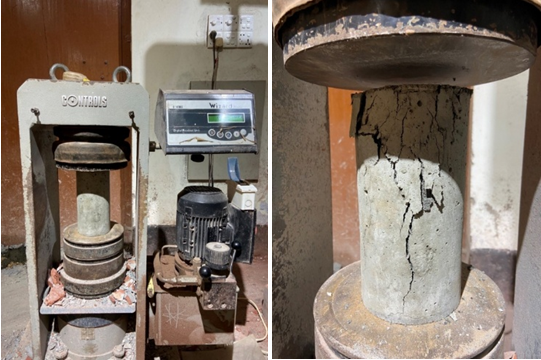
Concrete is strong in compression and extremely weak in tension. Hence compressive strength is the major property of concrete. In this study, ASTM C39 guideline was followed to determine the compressive strength. According to this guideline, the concrete cylinder specimen is placed in the Universal Testing Machine (UTM) and the compressive strength is calculated by dividing the compressive axial load by the cross-sectional area. The experimental setup is shown in Figure 7. The 7-day and 28-day strength of the cylinder were calculated and reported in MPa.
2.6. Leaching Test of ConcreteIn this study, tank leaching test was conducted with the variation of pH at constant temperature. Three different conditions such as acidic condition, neutral condition and alkaline condition were selected to analyze leaching characteristics. In the test, the sample is immersed in leachant to determine the concentration of total chromium. Leachant refers to the solution used for leaching and leachate refers to the solution obtained by leaching after filtration.
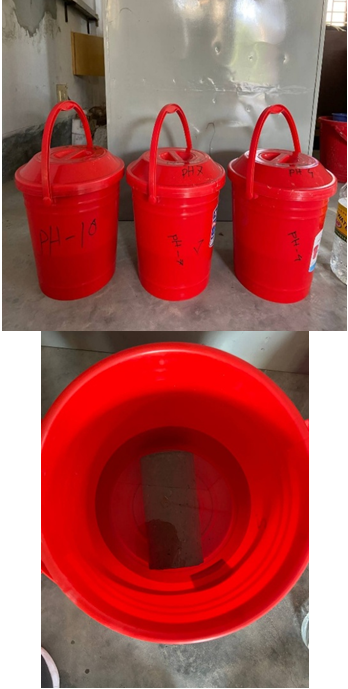
5 ml distilled water was used for 100 mm2 of the surface area of the cylinder (2π r h + 2π r²) considering the draft proposal of CEN/TC51. The temperature of the leachant was ensured 20° ±2° C in advance and the cylinder was immersed in the leachant as shown in Figure 8. The cylinder was placed in a test chamber in a way that minimizes the contact area of the surface of cylinder and the bottom of chamber. For acidic conditions, Nitric acid (HNO3) was used to maintain a pH of 4. And for alkaline conditions, Sodium Hydroxide (NaOH) was used to maintain a pH of 10. The neutral condition was ensured by using distilled water. Then a total of 3 concrete cylinders were immersed in there types of leachants to analyze their chromium leaching behavior. The leachant was removed from the test chamber after 3 days, 7 days, 15 days, and 30 days and filtered through Hoffman filter paper. Then the leachate was stored at a temperature of 0-10°C. The leachability of chromium was computed using Atomic Absorption Spectrophotometer (AAS) in Jashore University of Science & Technology, Jashore.
The physical and chemical properties of the buffing tannery waste were analyzed to determine their appearance and toxicity. Table 5 shows the physicochemical properties such as shape of the sludge, color of the sludge, pH, moisture content, volatile solids, ash content, sulfate content, chloride content, silica content, sulfide content and nitrate content of dry tannery sludge.
The amount of chloride, sulfate and nitrate content was 425 mg/kg, 1272 mg/kg and 1120 mg/kg respectively. The shape and appearance of the dry sludge were analyzed using eye estimation. The shape was irregular, and the color of the dry sludge was light ash brown. The value of pH was 8.0 that indicates slight alkalinity.
3.2. Properties of Coarse and Fine AggregateTable 6 shows the physical properties of coarse and fine aggregates. The maximum size of the coarse aggregate used in the study was 19 mm. The moisture content of the coarse and fine aggregates was 3.9 and 3.8 respectively. Sieve analysis was done to determine the fineness modulus of coarse and fine aggregates. The fineness modulus of coarse aggregate was 7.62, which lies within the standard limit. And the fineness modulus of fine aggregate was 2.89 which defines the sand as local Sylhet sand of medium coarse.
A total of three types of specific gravity were determined- bulk specific gravity, bulk specific gravity in saturated surface dry condition, and apparent specific gravity. The bulk specific gravity (SSD) of the coarse and fine aggregates used in the mix design are 2.65 and 2.51 respectively. The ACV value measures the resistance of coarse aggregates to crushing under gradually compressive load and the AIV value measures the resistance of coarse aggregates to sudden impact. Both the ACV and AIV values lie within the standard limit. The AIV value is 8% which indicates the coarse aggregate is strong and can provide good compressive strength.
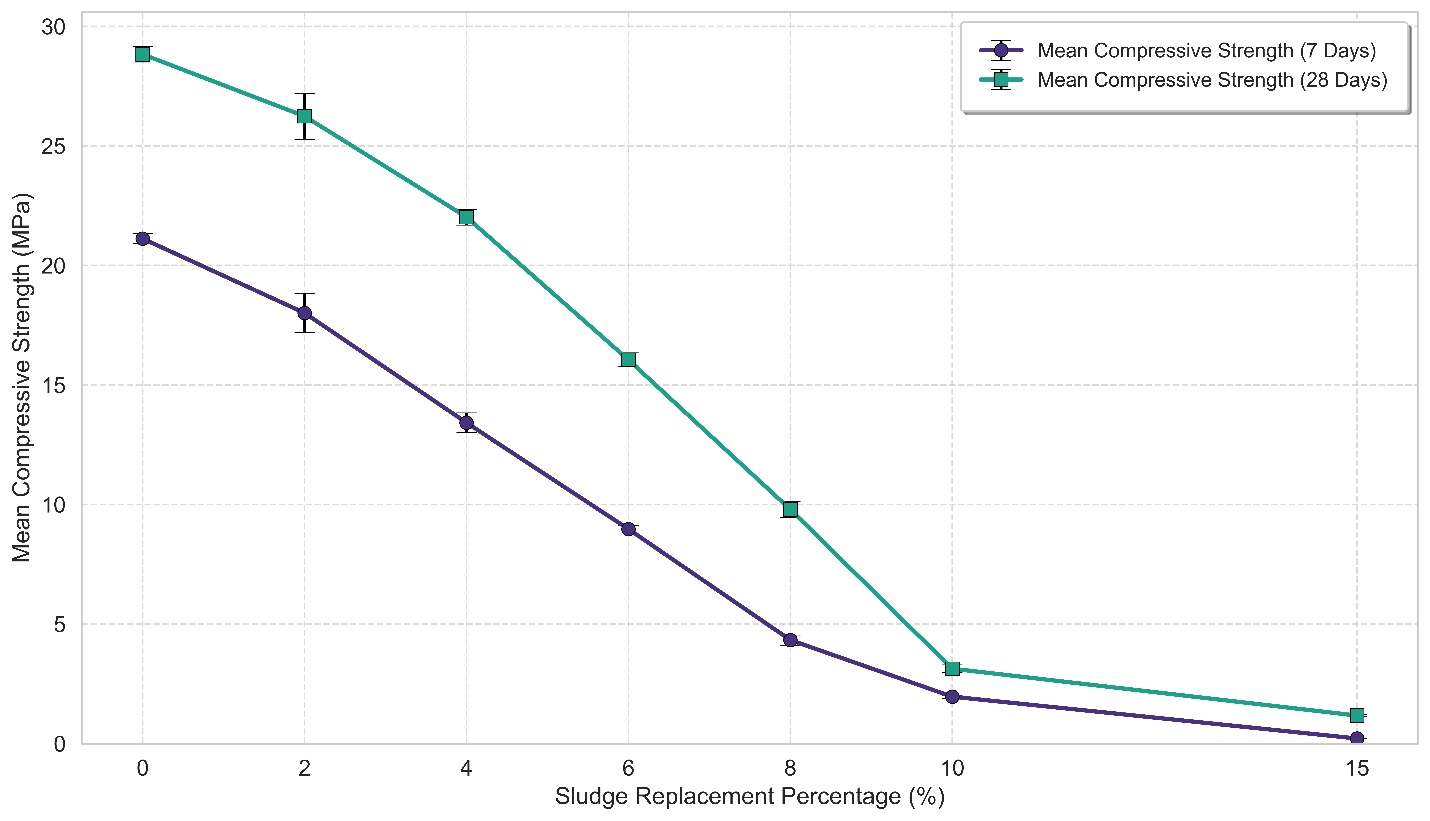
3.3. Compressive Strength of Concrete CylindersThe ACI 211.1 method was followed by the mix design procedure. From Table 7, the compressive strength after 7 days of curing was 21.12 MPa,18.01 MPa, 13.42 MPa, 8.97 MPa, 4.33 MPa, 1.96 MPa, and 0.21 MPa for 0%, 2%, 4%, 6%, 8%, 10%, and 15% replacement of fine aggregates by dry sludge. The strength decreased by increasing the sludge content. This happened due to the presence of high organic matter in the sludge.
One of the most important parameters of concrete is 28- day compressive strength (f’c). From Table 8, f’c for 2%, 4% and 6% replacement of fine aggregates were 26.24 MPa, 22.02 MPa, and 16.05 MPa. These sludge-concrete can be used in some reinforced or non-reinforced structures. The strength reached the value of 1.17 MPa after replacing 15% sand with tannery sludge. The strength is very low to be used in any structural purposes.
Some statistical measures such as variance, standard deviation and coefficient of variation were calculated to check the consistency of compressive strength results. Standard deviation was calculated to check the absolute dispersion of compressive strength from the mean value. From Table 7 and Table 8, the standard deviation throughout the study was below 1 MPa that indicates great consistency in mixing and testing process. In addition, a lower CV indicates great uniformity. Most of the tests exhibits CV less than 5% which indicates standard testing environment and consistent compressive strength development. Table 9 represents the compressive strength value after 7 days and 28 days of curing. Using this data, Figure 9 is drawn to visualize the strength properties of the sludge-concrete.

One of the main focuses of this study is to develop a treatment method of chrome-based tannery sludge. As a result, it is necessary to find if the concrete leaches chromium in the environment or not. In this research, the leaching behavior was analyzed after 3, 7, 15 and 30 days of soaking of sludge-concrete in the leachants. Three types of leachants were used- acidic (pH 4), neutral (pH 7) and alkaline (pH 10). After collecting the leachates, they were analyzed using Atomic Absorption Spectrophotometer (AAS) in Jashore University of Science and Technology (JUST).
From Table 9 the rate of total chromium leaching in acidic medium is higher than the leaching in neutral and alkaline mediums. This happened due to the lower solubility of chromium in neutral and alkaline medium than in acidic medium. In addition, the leaching potential gets higher in increasing the amount of tannery sludge due to the chemical composition of sludges. Based on total concentration of chromium leaching, a line chart in Figure 10 was constructed to illustrate the variation in chromium concentration in three different mediums.
From analyzing the behavior of chromium leaching, the concrete leached maximum amount of chromium in 3 days and over time the presence to total chromium was gradually decreased. In the initial phase of concrete, the chromium ion remains near the surface of it and is easily leached to the mediums. Over time, the chromium ion can chemically bind with cement hydration products and traps inside the smaller pores of concrete. This may be a reason for the early rapid leaching of chromium ions.
Combining the data from compressive strength and leaching of chromium, it can be said that the concrete having tannery sludge up to 4% replacement of sand is safe to use in structural purposes without violating environmental regulations. If the percentage is increased to 6%, the concrete may be used as unreinforced concrete, but the leaching of chromium violates the restriction limit of USEPA, 1997. Concrete cylinders containing more than 6% sludge is unsafe for the structure and environment. From Table 9, the permissible value of Cr in water according to WHO is 0.05 mg/L. As a result, the tannery sludge-concrete cannot be used in any structures that are exposed to or near water bodies as there is a huge chance of water pollution by chromium leaching.
The authors have no competing interests
In this study, the 28th day compressive strength, f’c and leaching concentration of total chromium from the sludge containing concrete cylinders were studied to determine the suitability of utilizing dry tannery waste in concrete. It was found that:
• The increase in sludge percentage decreased the compressive strength of concrete cylinders. Up to 6% replacement of sand, the concrete may be used in structural purposes but beyond 6% it is totally unsafe to use in any kind of structures.
• The higher percentage of tannery sludge resulted in higher concentration of chromium leaching. Sludge percentage up to 4% does not violate environmental regulations and is safe to use in structures.
• It is totally unsafe to use tannery sludge in structures that are near any water bodies such as rivers, lakes, ponds and so on.
The results obtained from the research indicate that using tannery sludge as a potential replacement for sand in concrete can be a sustainable treatment method of the tannery sludge. In the context of Bangladesh, the idea can be effectively used rather than uncontrolled land disposal of tannery waste. However, further field-based studies are required to evaluate its environmental impact, economic aspects and structural integrity.
| [1] | LFMEAB, “Leather goods And Footwear Manufacturers & Exporters Association of Bangladesh (LFMEAB).” | ||
| In article | |||
| [2] | Md. A. Rakib, “Export Trend of the Leather Industry of Bangladesh: Challenges to Sustainable Development,” BUFT Journal of Business & Economics, vol. 1, no. 1, pp. 381–394, Aug. 2020. | ||
| In article | View Article | ||
| [3] | F. Safiul Azam et al., “Advances in Environmental Biology Phytoremediation and Prospects of Cleaning up a Tannery Waste Contaminated Site in Dhaka, Bangladesh,” 2014. [Online]. Available: http://www.aensiweb.com/AEB/. | ||
| In article | |||
| [4] | Pinaki Roy, “Tannery Relocation Impact: Situation getting better, slowly,” The Daily Star, Dhaka, Jul. 16, 2017. | ||
| In article | |||
| [5] | Z. Houshyar, A. B. Khoshfetrat, and E. Fatehifar, “Influence of ozonation process on characteristics of pre-alkalized tannery effluents,” Chemical Engineering Journal, vol. 191, pp. 59–65, May 2012. | ||
| In article | View Article | ||
| [6] | B. Saha and F. A. Bin Azam, “Probable Ways of Tannery’s Solid and Liquid Waste Management in Bangladesh ‒ An Overview,” Textile & Leather Review, Mar. 2021. | ||
| In article | |||
| [7] | M. A. I. Juel, A. Mizan, and T. Ahmed, “Sustainable use of tannery sludge in brick manufacturing in Bangladesh,” Waste Management, vol. 60, pp. 259–269, Feb. 2017. | ||
| In article | View Article PubMed | ||
| [8] | Md. S. Milu, Md. A. Hashem, S. Payel, and Md. A. Hasan, “Leather buffing dust in brick production: Solid waste management in tanneries,” Case Studies in Construction Materials, vol. 17, p. e01625, Dec. 2022. | ||
| In article | View Article | ||
| [9] | S. Chen, Y. Liu, Y. Bie, P. Duan, and L. Wang, “Multi-scale performance study of concrete with recycled aggregate from tannery sludge,” Case Studies in Construction Materials, vol. 17, p. e01698, Dec. 2022. | ||
| In article | View Article | ||
| [10] | M. Jin, Z. Wang, F. Lian, and P. Zhao, “Freeze-thaw resistance and seawater corrosion resistance of optimized tannery sludge/metakaolin-based geopolymer,” Constr. Build. Mater., vol. 265, p. 120730, Dec. 2020. | ||
| In article | View Article | ||
| [11] | M. Karthikeyan, B. Asha, and P. R. Ramachandran, “Application of Fine Aggregate by Replacement of Tannery Dry Sludge in Concrete,” 2014. [Online]. Available: http:// www. ripublication. com. | ||
| In article | |||
| [12] | N. F. Fahim, B. N. Barsoum, A. E. Eid, and M. S. Khalil, “Removal of chromium(III) from tannery wastewater using activated carbon from sugar industrial waste,” J. Hazard. Mater., vol. 136, no. 2, pp. 303–309, Aug. 2006. | ||
| In article | View Article PubMed | ||
| [13] | P. Sharma, S. P. Singh, S. K. Parakh, and Y. W. Tong, “Health hazards of hexavalent chromium (Cr (VI)) and its microbial reduction,” Bioengineered, vol. 13, no. 3, pp. 4923–4938, Mar. 2022. | ||
| In article | View Article PubMed | ||
| [14] | T. Basegio, F. Berutti, A. Bernardes, C. Pe´rez, and P. Bergmann, “Environmental and technical aspects of the utilisation of tannery sludge as a raw material for clay products,” 2002. [Online]. Available: www.elsevier.com/locate/jeurceramsoc. | ||
| In article | View Article | ||
| [15] | J. Zhao, Q. Wu, Y. Tang, J. Zhou, and H. Guo, “Tannery wastewater treatment: conventional and promising processes, an updated 20-year review,” Dec. 01, 2022, Springer. | ||
| In article | View Article | ||
| [16] | P. Celary and J. Sobik-Szołtysek, “Vitrification as an alternative to landfilling of tannery sewage sludge,” Waste Management, vol. 34, no. 12, pp. 2520–2527, Dec. 2014. | ||
| In article | View Article PubMed | ||
| [17] | S. P. Gautam, P. S. Bundela, A. K. Pandey, M. K. Awasthi, and S. Sarsaiya, “Composting of Municipal Solid Waste of Jabalpur City,” 2010. | ||
| In article | |||
| [18] | N. Sunmathi, R. Padmapriya, J. S. Sudarsan, and S. Nithiyanantham, “Optimum utilization and resource recovery of tannery sludge: a review,” 2022, Institute for Ionics. | ||
| In article | View Article | ||
| [19] | M. R. Azom, K. Mahmud, S. M. Yahya, A. Sontu, and S. B. Himon, “Environmental Impact Assessment of Tanneries: A Case Study of Hazaribag in Bangladesh,” International Journal of Environmental Science and Development, pp. 152–156, 2012. | ||
| In article | View Article | ||
| [20] | K. Senthilkumar, V. Sivakumar, and P. Akilamudhan, “Experimental Studies on Disposal of Various Industrial Solid Wastes,” Mod. Appl. Sci., vol. 2, no. 6, Nov. 2008. | ||
| In article | View Article | ||
| [21] | M. Jamshidi, M. Jamshidi, A. Jamshidi, and N. Mehrdadi, “Application of sewage dry sludge in concrete mixtures A r c h i v e o f S I D APPLICATION OF SEWAGE DRY SLUDGE IN CONCRETE MIXTURES,” 2012. [Online]. Available: https://www.researchgate.net/publication/268293501. | ||
| In article | |||
| [22] | K. M. Hassan, K. Fukushi, K. Turikuzzaman, and S. M. Moniruzzaman, “Effects of using arsenic–iron sludge wastes in brick making,” Waste Management, vol. 34, no. 6, pp. 1072–1078, Jun. 2014. | ||
| In article | View Article PubMed | ||
| [23] | J. A. Cusidó and L. V. Cremades, “Environmental effects of using clay bricks produced with sewage sludge: Leachability and toxicity studies,” Waste Management, vol. 32, no. 6, pp. 1202–1208, Jun. 2012. | ||
| In article | View Article PubMed | ||
| [24] | C. D. Hills, C. J. Sollars, and R. Perry, “Ordinary portland cement based solidification of toxic wastes: The role of OPC reviewed,” Cem. Concr. Res., vol. 23, no. 1, pp. 196–212, Jan. 1993. | ||
| In article | View Article | ||
| [25] | J. Malaiškienė, O. Kizinievič, and V. Kizinievič, “A Study on Tannery Sludge as a Raw Material for Cement Mortar,” Materials, vol. 12, no. 9, p. 1562, May 2019. | ||
| In article | View Article PubMed | ||
| [26] | H. Patel and S. Pandey, “Evaluation of physical stability and leachability of Portland Pozzolona Cement (PPC) solidified chemical sludge generated from textile wastewater treatment plants,” J. Hazard. Mater., vol. 207–208, pp. 56–64, Mar. 2012. | ||
| In article | View Article PubMed | ||
| [27] | M. Vijaya, S. Reddy, K. Ashalatha, and K. Sasi, “Partial Replacement of Fine Aggregate by Tannery Shredded Waste in Concrete,” vol. 1, no. 4, pp. 149–151, 2016. | ||
| In article | |||
| [28] | Y. Ibrahim, M. Ayisha Sidiqua, Sufiyan Ahmed Jeddy, and R. Tauseef Ahamed, “FragmentarySubstitution_article_Ibrahim,” Indian Journal of Environmental Protection, vol. 38, no. 6, pp. 506–510, 2018. | ||
| In article | |||
| [29] | A. M. Borhan Badruzzaman, M. Abed Hossain, M. Ahmed Noor, A. B. M Badruzzaman, and M. A. Noor, “Stabilization of industrial sludge with concrete: A possible safe disposal option,” 2004. [Online]. Available: https:// www.researchgate.net/ publication/309589092. | ||
| In article | |||
| [30] | Md. A. Hashem, Md. E. Hasan Zahin, Md. S. Haque, Md. S. Milu, Md. A. Hasan, and S. Payel, “Leather shaving dust utilization in brick preparation: Solid waste management in tannery,” Constr. Build. Mater., vol. 400, p. 132769, Oct. 2023. | ||
| In article | View Article | ||
Published with license by Science and Education Publishing, Copyright © 2026 Rafi Bin Shahadat, Dr Khondoker Mahbub Hassan and Sayma Sultana Keya
 This work is licensed under a Creative Commons Attribution 4.0 International License. To view a copy of this license, visit
http://creativecommons.org/licenses/by/4.0/
This work is licensed under a Creative Commons Attribution 4.0 International License. To view a copy of this license, visit
http://creativecommons.org/licenses/by/4.0/
| [1] | LFMEAB, “Leather goods And Footwear Manufacturers & Exporters Association of Bangladesh (LFMEAB).” | ||
| In article | |||
| [2] | Md. A. Rakib, “Export Trend of the Leather Industry of Bangladesh: Challenges to Sustainable Development,” BUFT Journal of Business & Economics, vol. 1, no. 1, pp. 381–394, Aug. 2020. | ||
| In article | View Article | ||
| [3] | F. Safiul Azam et al., “Advances in Environmental Biology Phytoremediation and Prospects of Cleaning up a Tannery Waste Contaminated Site in Dhaka, Bangladesh,” 2014. [Online]. Available: http://www.aensiweb.com/AEB/. | ||
| In article | |||
| [4] | Pinaki Roy, “Tannery Relocation Impact: Situation getting better, slowly,” The Daily Star, Dhaka, Jul. 16, 2017. | ||
| In article | |||
| [5] | Z. Houshyar, A. B. Khoshfetrat, and E. Fatehifar, “Influence of ozonation process on characteristics of pre-alkalized tannery effluents,” Chemical Engineering Journal, vol. 191, pp. 59–65, May 2012. | ||
| In article | View Article | ||
| [6] | B. Saha and F. A. Bin Azam, “Probable Ways of Tannery’s Solid and Liquid Waste Management in Bangladesh ‒ An Overview,” Textile & Leather Review, Mar. 2021. | ||
| In article | |||
| [7] | M. A. I. Juel, A. Mizan, and T. Ahmed, “Sustainable use of tannery sludge in brick manufacturing in Bangladesh,” Waste Management, vol. 60, pp. 259–269, Feb. 2017. | ||
| In article | View Article PubMed | ||
| [8] | Md. S. Milu, Md. A. Hashem, S. Payel, and Md. A. Hasan, “Leather buffing dust in brick production: Solid waste management in tanneries,” Case Studies in Construction Materials, vol. 17, p. e01625, Dec. 2022. | ||
| In article | View Article | ||
| [9] | S. Chen, Y. Liu, Y. Bie, P. Duan, and L. Wang, “Multi-scale performance study of concrete with recycled aggregate from tannery sludge,” Case Studies in Construction Materials, vol. 17, p. e01698, Dec. 2022. | ||
| In article | View Article | ||
| [10] | M. Jin, Z. Wang, F. Lian, and P. Zhao, “Freeze-thaw resistance and seawater corrosion resistance of optimized tannery sludge/metakaolin-based geopolymer,” Constr. Build. Mater., vol. 265, p. 120730, Dec. 2020. | ||
| In article | View Article | ||
| [11] | M. Karthikeyan, B. Asha, and P. R. Ramachandran, “Application of Fine Aggregate by Replacement of Tannery Dry Sludge in Concrete,” 2014. [Online]. Available: http:// www. ripublication. com. | ||
| In article | |||
| [12] | N. F. Fahim, B. N. Barsoum, A. E. Eid, and M. S. Khalil, “Removal of chromium(III) from tannery wastewater using activated carbon from sugar industrial waste,” J. Hazard. Mater., vol. 136, no. 2, pp. 303–309, Aug. 2006. | ||
| In article | View Article PubMed | ||
| [13] | P. Sharma, S. P. Singh, S. K. Parakh, and Y. W. Tong, “Health hazards of hexavalent chromium (Cr (VI)) and its microbial reduction,” Bioengineered, vol. 13, no. 3, pp. 4923–4938, Mar. 2022. | ||
| In article | View Article PubMed | ||
| [14] | T. Basegio, F. Berutti, A. Bernardes, C. Pe´rez, and P. Bergmann, “Environmental and technical aspects of the utilisation of tannery sludge as a raw material for clay products,” 2002. [Online]. Available: www.elsevier.com/locate/jeurceramsoc. | ||
| In article | View Article | ||
| [15] | J. Zhao, Q. Wu, Y. Tang, J. Zhou, and H. Guo, “Tannery wastewater treatment: conventional and promising processes, an updated 20-year review,” Dec. 01, 2022, Springer. | ||
| In article | View Article | ||
| [16] | P. Celary and J. Sobik-Szołtysek, “Vitrification as an alternative to landfilling of tannery sewage sludge,” Waste Management, vol. 34, no. 12, pp. 2520–2527, Dec. 2014. | ||
| In article | View Article PubMed | ||
| [17] | S. P. Gautam, P. S. Bundela, A. K. Pandey, M. K. Awasthi, and S. Sarsaiya, “Composting of Municipal Solid Waste of Jabalpur City,” 2010. | ||
| In article | |||
| [18] | N. Sunmathi, R. Padmapriya, J. S. Sudarsan, and S. Nithiyanantham, “Optimum utilization and resource recovery of tannery sludge: a review,” 2022, Institute for Ionics. | ||
| In article | View Article | ||
| [19] | M. R. Azom, K. Mahmud, S. M. Yahya, A. Sontu, and S. B. Himon, “Environmental Impact Assessment of Tanneries: A Case Study of Hazaribag in Bangladesh,” International Journal of Environmental Science and Development, pp. 152–156, 2012. | ||
| In article | View Article | ||
| [20] | K. Senthilkumar, V. Sivakumar, and P. Akilamudhan, “Experimental Studies on Disposal of Various Industrial Solid Wastes,” Mod. Appl. Sci., vol. 2, no. 6, Nov. 2008. | ||
| In article | View Article | ||
| [21] | M. Jamshidi, M. Jamshidi, A. Jamshidi, and N. Mehrdadi, “Application of sewage dry sludge in concrete mixtures A r c h i v e o f S I D APPLICATION OF SEWAGE DRY SLUDGE IN CONCRETE MIXTURES,” 2012. [Online]. Available: https://www.researchgate.net/publication/268293501. | ||
| In article | |||
| [22] | K. M. Hassan, K. Fukushi, K. Turikuzzaman, and S. M. Moniruzzaman, “Effects of using arsenic–iron sludge wastes in brick making,” Waste Management, vol. 34, no. 6, pp. 1072–1078, Jun. 2014. | ||
| In article | View Article PubMed | ||
| [23] | J. A. Cusidó and L. V. Cremades, “Environmental effects of using clay bricks produced with sewage sludge: Leachability and toxicity studies,” Waste Management, vol. 32, no. 6, pp. 1202–1208, Jun. 2012. | ||
| In article | View Article PubMed | ||
| [24] | C. D. Hills, C. J. Sollars, and R. Perry, “Ordinary portland cement based solidification of toxic wastes: The role of OPC reviewed,” Cem. Concr. Res., vol. 23, no. 1, pp. 196–212, Jan. 1993. | ||
| In article | View Article | ||
| [25] | J. Malaiškienė, O. Kizinievič, and V. Kizinievič, “A Study on Tannery Sludge as a Raw Material for Cement Mortar,” Materials, vol. 12, no. 9, p. 1562, May 2019. | ||
| In article | View Article PubMed | ||
| [26] | H. Patel and S. Pandey, “Evaluation of physical stability and leachability of Portland Pozzolona Cement (PPC) solidified chemical sludge generated from textile wastewater treatment plants,” J. Hazard. Mater., vol. 207–208, pp. 56–64, Mar. 2012. | ||
| In article | View Article PubMed | ||
| [27] | M. Vijaya, S. Reddy, K. Ashalatha, and K. Sasi, “Partial Replacement of Fine Aggregate by Tannery Shredded Waste in Concrete,” vol. 1, no. 4, pp. 149–151, 2016. | ||
| In article | |||
| [28] | Y. Ibrahim, M. Ayisha Sidiqua, Sufiyan Ahmed Jeddy, and R. Tauseef Ahamed, “FragmentarySubstitution_article_Ibrahim,” Indian Journal of Environmental Protection, vol. 38, no. 6, pp. 506–510, 2018. | ||
| In article | |||
| [29] | A. M. Borhan Badruzzaman, M. Abed Hossain, M. Ahmed Noor, A. B. M Badruzzaman, and M. A. Noor, “Stabilization of industrial sludge with concrete: A possible safe disposal option,” 2004. [Online]. Available: https:// www.researchgate.net/ publication/309589092. | ||
| In article | |||
| [30] | Md. A. Hashem, Md. E. Hasan Zahin, Md. S. Haque, Md. S. Milu, Md. A. Hasan, and S. Payel, “Leather shaving dust utilization in brick preparation: Solid waste management in tannery,” Constr. Build. Mater., vol. 400, p. 132769, Oct. 2023. | ||
| In article | View Article | ||